Romantic vs. Minimal: Dress Ideas for Wedding Guest Style Guide
The most stressful part of getting dressed for a wedding often isn’t finding something “pretty”—it’s decoding what kind of pretty the room expects. One venue says airy garden romance, another calls for candlelit polish, and suddenly your closet feels like it belongs to someone with a different social calendar. That’s where thoughtfully chosen dress ideas for wedding guest style come in: not as a single answer, but as a clear point of view.
Two aesthetics tend to dominate the conversation and get mixed together: romantic, floaty dressing (the kind that looks made for golden-hour photos) and sleek, tailored minimalism (the kind that reads instantly “formal,” especially indoors). Both can be wedding-appropriate; both can miss the mark if they’re worn in the wrong fabric, length, or level of structure for the dress code. And both can be adapted—whether you’re dressing as one of the formal wedding guests, looking for a wedding outfit guest spring moment, or simply trying to avoid feeling overdone.
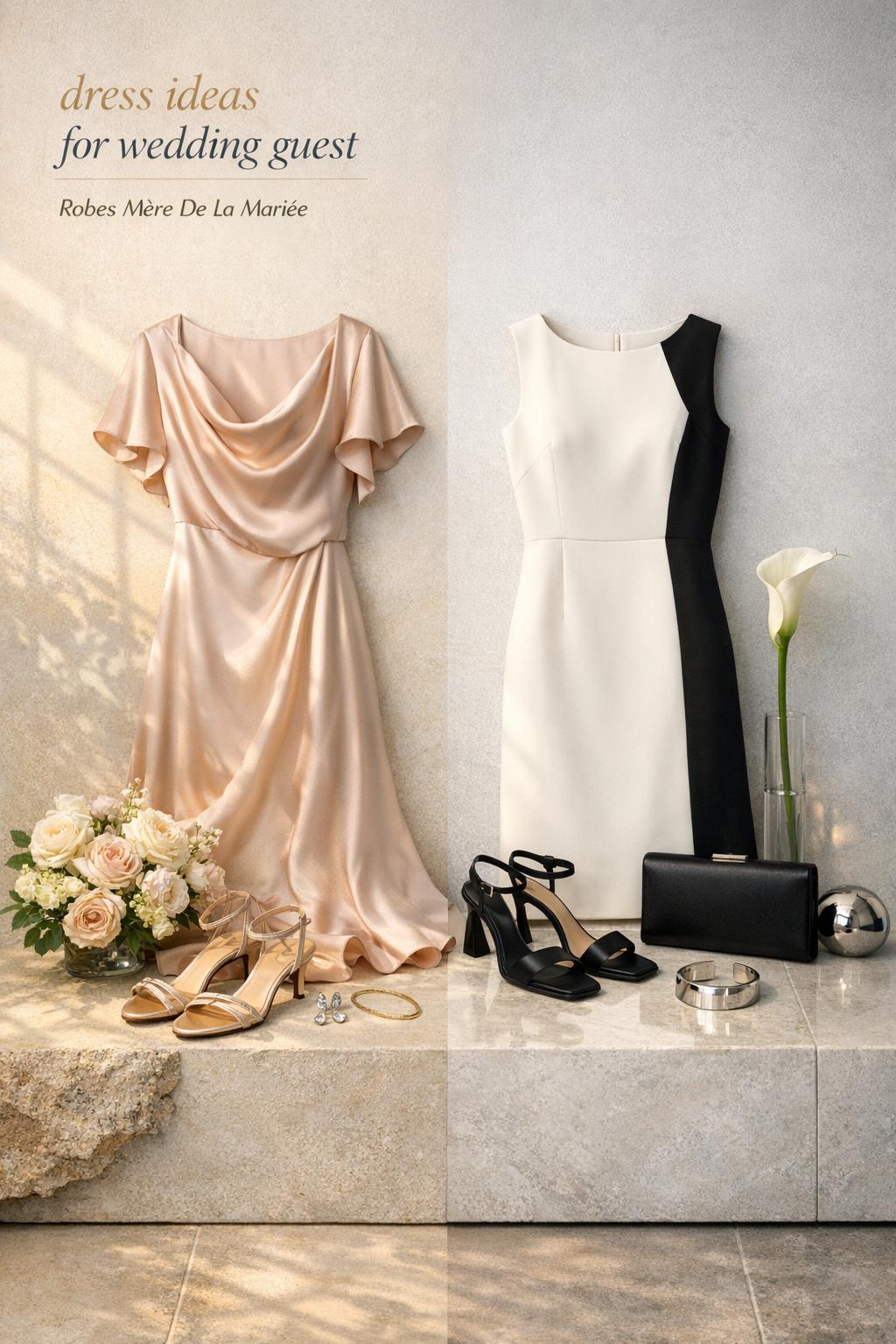
This comparison breaks down the two approaches—romantic soft glamour versus modern minimal polish—so you can see how they differ in silhouette, texture, and styling logic. Along the way, you’ll find practical outfit comparisons, venue-based guidance, and a few etiquette-minded tips, including how roles like robes mère de la mariée and even groom dress conversations influence the overall tone of what guests wear.
Style overview: romantic soft glamour (the “floating through the reception” look)
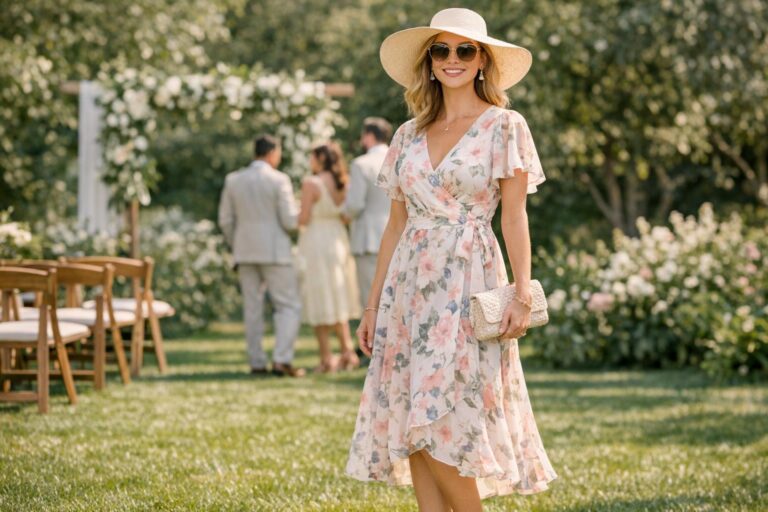
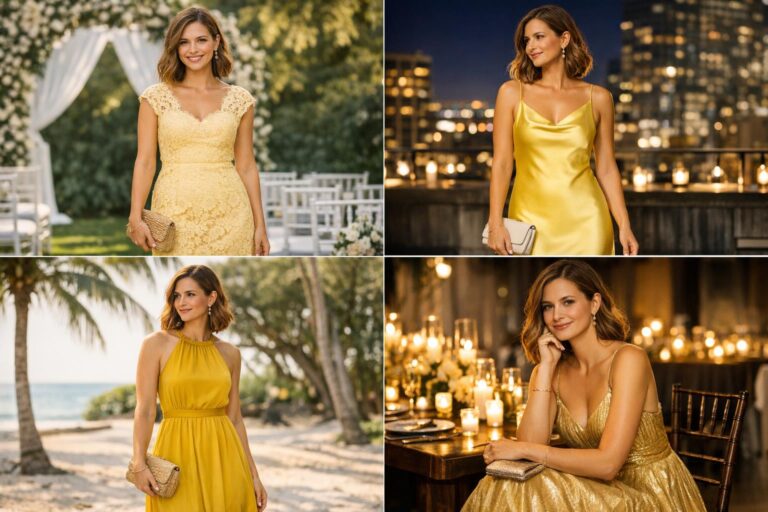
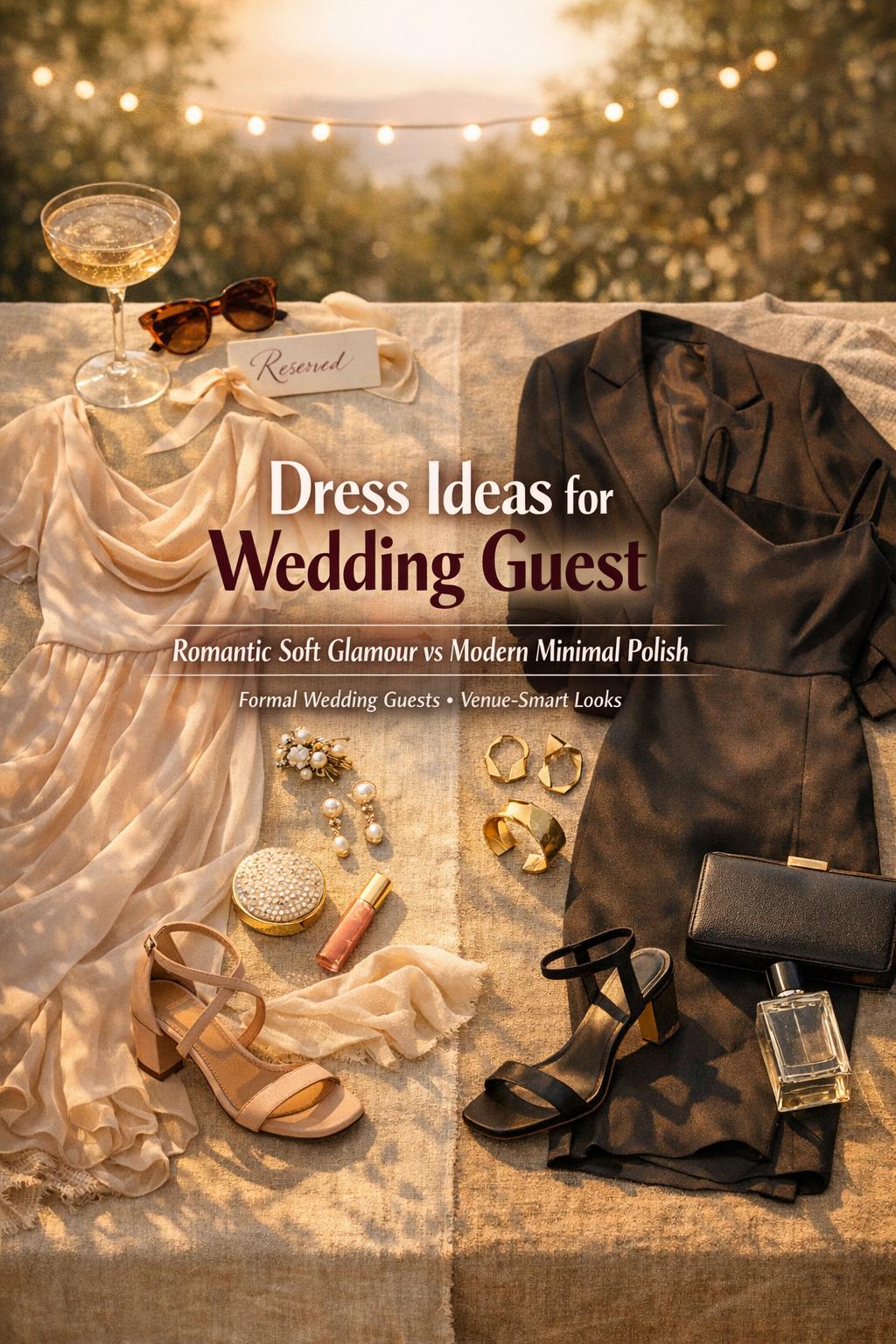
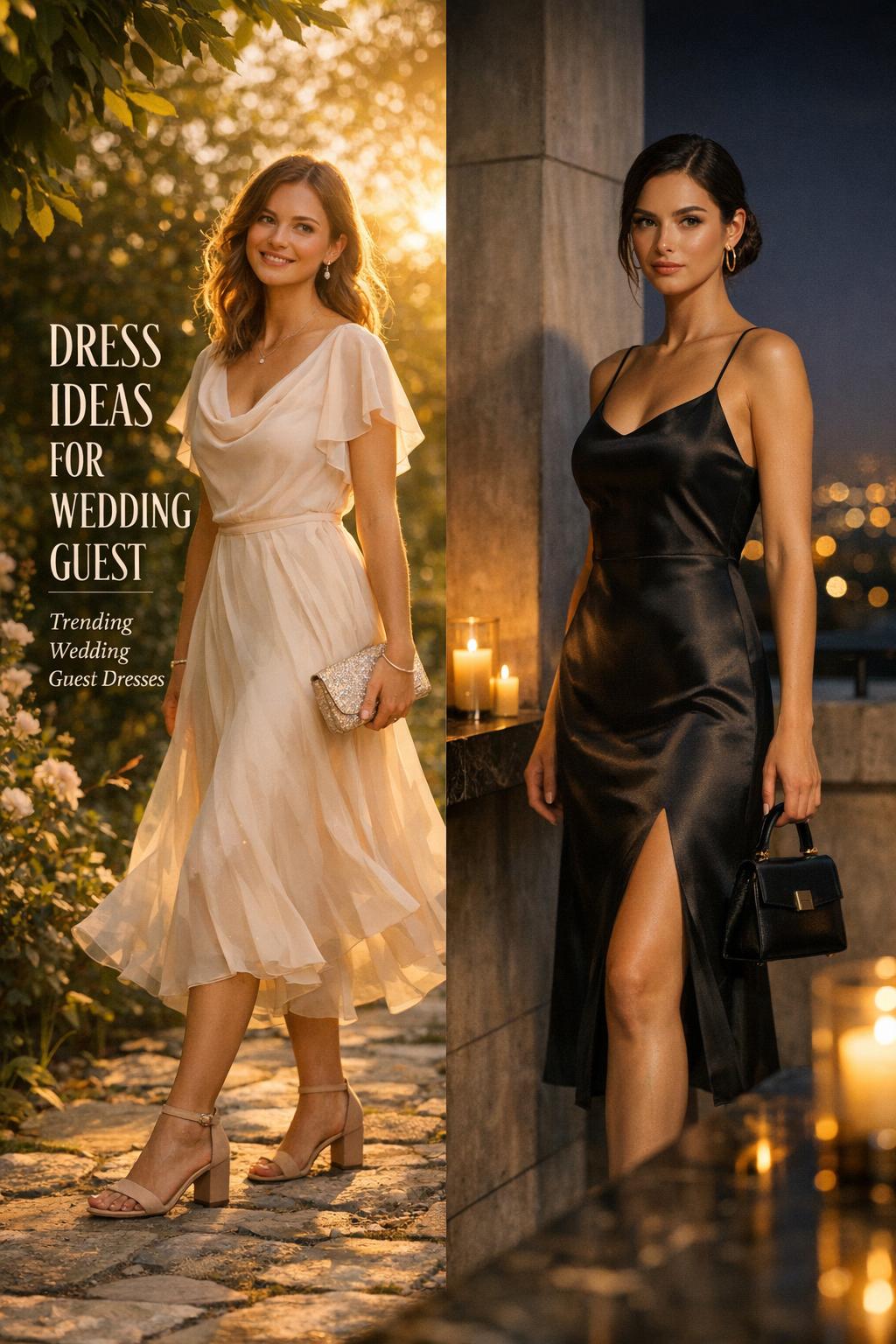
Romantic soft glamour is built on movement. Think silhouettes that sway when you walk to your seat and fabrics that catch light without looking stiff. This style is often chosen for outdoor ceremonies—gardens, vineyards, courtyards—where the atmosphere already leans poetic and you want your outfit to echo it.
Your wedding look is only the beginning.
Keep your guest list, vendors, timeline, and every important detail together with Zarellea — so your day feels as considered as your style.
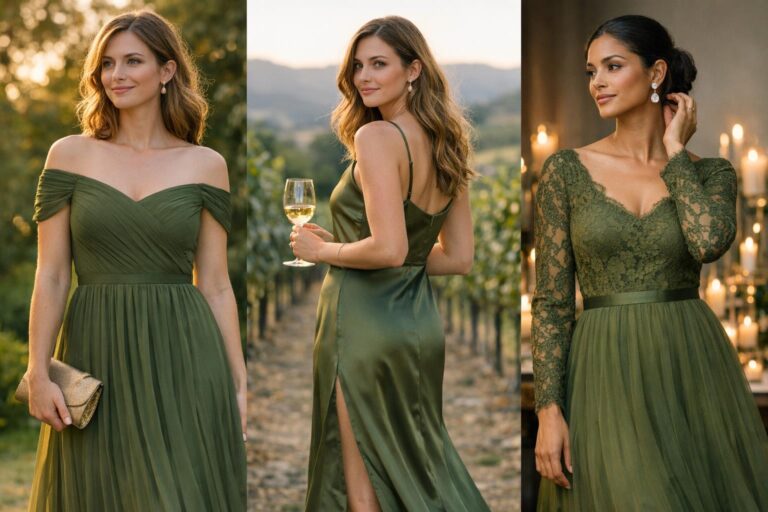
Defining characteristics typically include gentler structure and a more “storybook” mood: softly defined waists, draped necklines, fluttery sleeves, and skirt shapes that feel airy rather than architectural. Color often follows the same logic—lighter, smoother, and more luminous—though the key is less about a specific shade and more about an overall softness in effect.
When people talk about trending wedding guest dresses that feel romantic, they’re usually describing this: a dress that looks intentional in photos, comfortable during a long ceremony, and forgiving as the day shifts from sun to evening.
Style overview: modern minimal polish (the “clean lines, formal confidence” look)
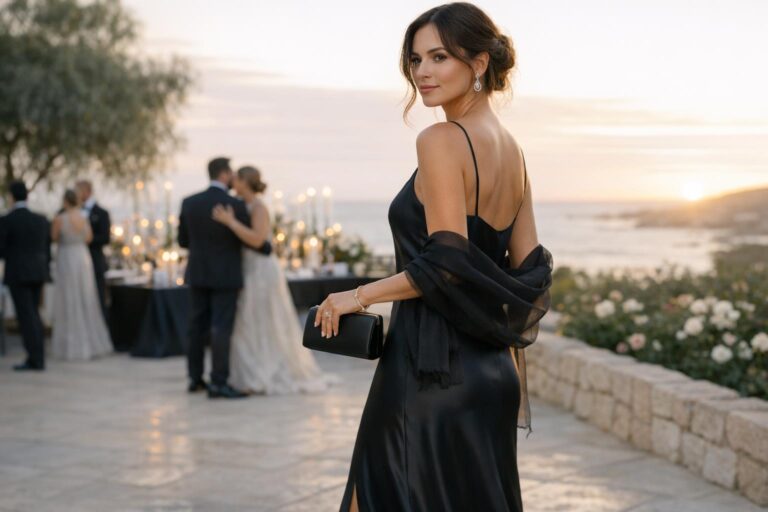
Modern minimal polish is the crisp counterpoint. It relies on clean geometry—sleek straps, tailored seams, purposeful hemlines—and tends to look especially at home in ballrooms, city venues, and evening receptions where the lighting is lower and the room feels more structured.
Instead of softness and volume, the focus here is precision: a streamlined silhouette, a controlled drape, and styling choices that are edited rather than layered. The palette often reads more restrained because the shapes are meant to do the talking. The overall aesthetic mood is quietly elevated—less “whimsical,” more “composed.”
This is the direction many formal wedding guests instinctively reach for when an invitation hints at elevated attire and you want your outfit to feel undeniably appropriate without needing a lot of decorative detail.
Why these two styles are often confused
In wedding guest dressing, romance and minimalism overlap more than people expect. Both can be elegant, both photograph beautifully, and both can be styled with refined accessories. The confusion usually happens when the dress code is vague—“cocktail,” “dressy casual,” or “formal-ish”—and guests rely on mood rather than specifics.
Another reason: weddings are full of visual cues. The bridal party’s choices, the groom dress level of formality, and family attire (including robes mère de la mariée in certain circles) can subtly steer the room toward either softness or structure. Even if you’re not matching anyone, you’re participating in a shared aesthetic.
Understanding the styling philosophy behind each approach makes it easier to choose confidently—and to avoid the most common wedding guest problem of all: feeling like you’re in the “wrong” kind of dressed up.
Key differences that change the whole outfit
Silhouette and structure
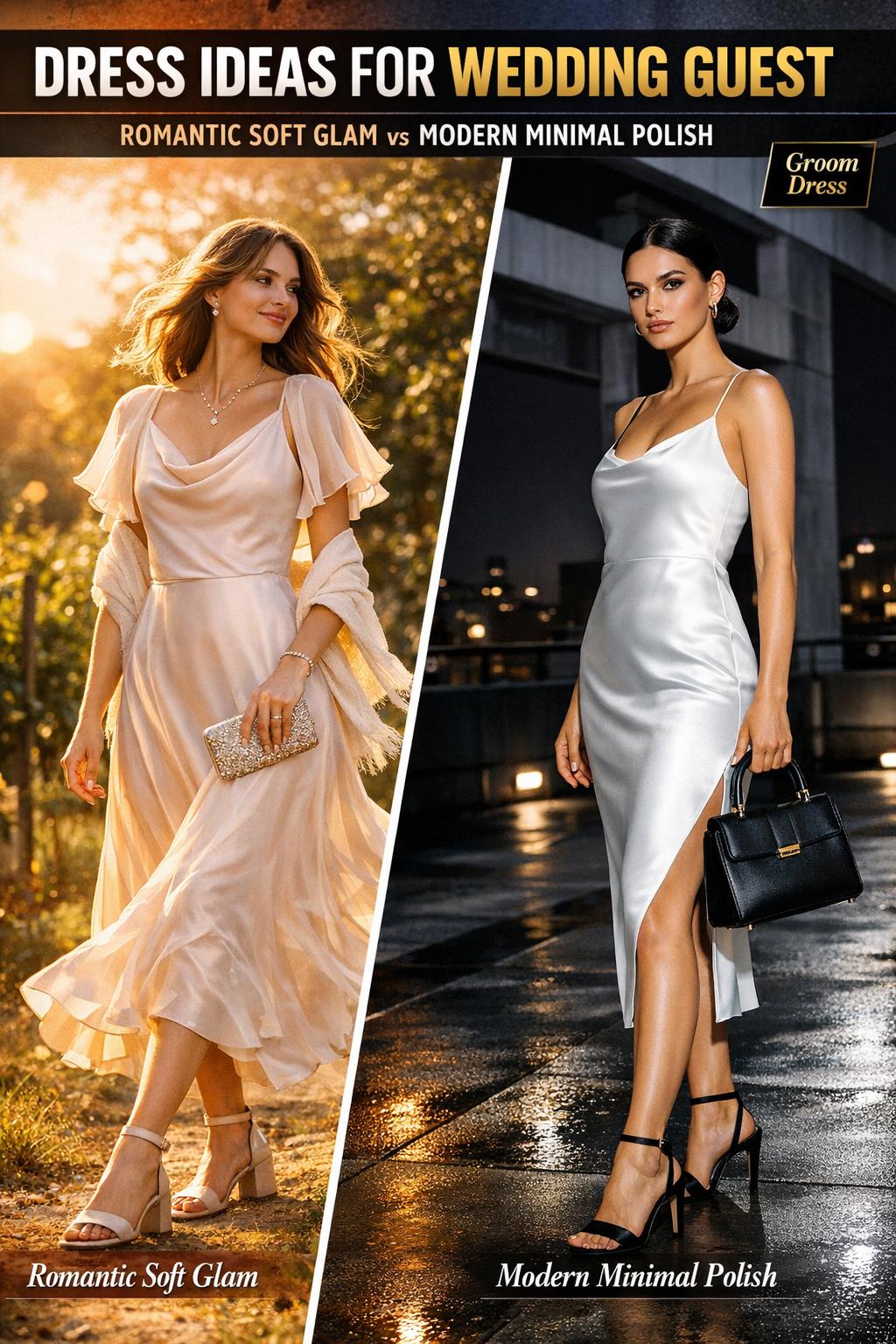
Romantic soft glamour typically uses flexible structure—waist shaping that’s gentle, skirts that move, necklines that drape or flutter. Even when fitted, it aims to feel light on the body. Modern minimal polish is the opposite: the silhouette is the statement. Clean lines and deliberate proportions give it that “instant formality,” especially in indoor settings.
Color story and visual softness
Romantic styling reads “soft” even when the color is saturated, because the fabric and detailing tend to diffuse the look. Minimal polish can be just as romantic in a subtler way, but it often reads more graphic—color appears flatter and more intentional because the surface is smoother and the lines are sharper.
Texture and light
Soft glamour relies on texture that catches light as you move—think gentle shine, transparency in layers, or delicate finishes. Minimal polish tends to keep texture controlled. The effect is elegant, but less “sparkle in motion” and more “quiet sheen,” which is why it plays so well at evening receptions.
Level of formality (and how it’s communicated)
Both styles can work for formal wedding guests, but they communicate formality differently. Soft glamour becomes formal through refinement—length, fabric quality, and thoughtful styling. Minimal polish becomes formal through restraint and fit—sharp tailoring, simplified accessories, and a more composed outline.
Styling philosophy: layered romance vs edited clarity
Romantic soft glamour often welcomes a “complete story”: a wrap, a special earring, a textured heel, perhaps a subtle hair accessory. Minimal polish prefers one or two focal points and leaves negative space—an uncluttered neckline, a clean shoe, a single strong accessory choice.
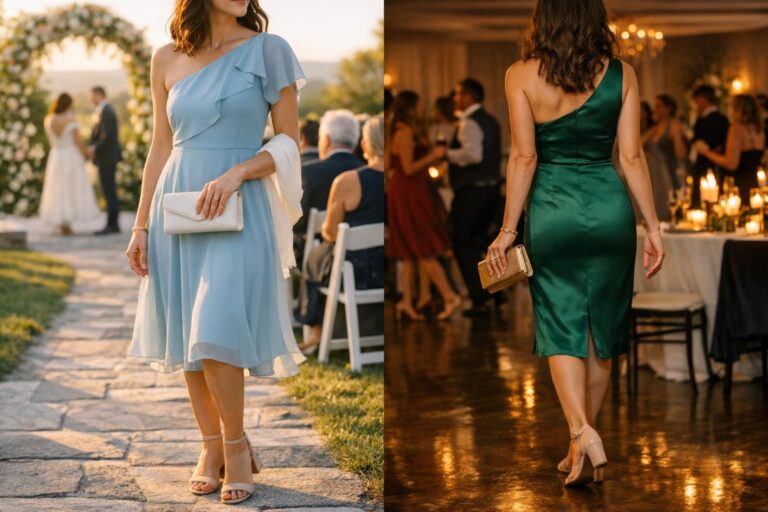
Visual style breakdown: how the two aesthetics look in real wedding settings
Layering approach from ceremony to reception
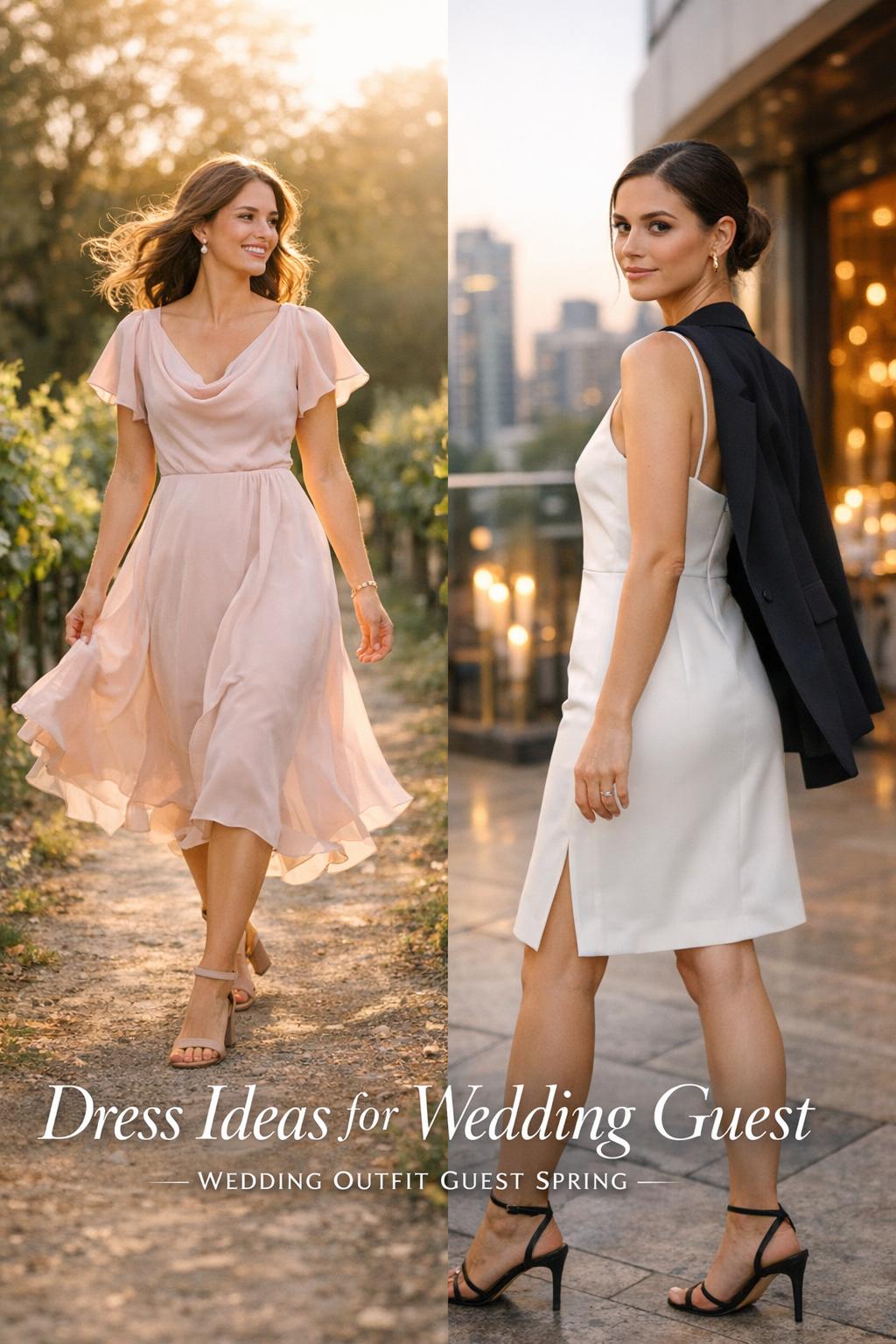
Soft glamour layers in a way that feels part of the outfit’s romance: a light wrap for an outdoor ceremony, a delicate layer that doesn’t interrupt movement, and an easy removal for the dance floor. Minimal polish layers with intention and clean lines—if you add a layer, it should look architectural and seamless, not busy.
Proportions and how they photograph
In photos, romantic dressing tends to create gentle volume—fabric that lifts slightly, hems that ripple, sleeves that add softness near the face. Minimal dressing photographs in clean shapes: strong vertical lines, clear waist definition (or a purposeful lack of it), and an overall sense of editorial calm.
Accessories: sparkle placement vs sculptural restraint
Soft glamour often uses accessories to echo the dress’s delicacy—sparkle that feels like punctuation. Minimal polish uses accessories more like design elements: a simplified shoe, a streamlined bag, and jewelry that looks intentional rather than ornate. The goal is to keep the silhouette dominant.
Footwear logic: terrain matters
Soft glamour is frequently chosen for outdoor venues, so footwear has to survive grass, gravel, or uneven stone. Minimal polish often appears at indoor venues where sleek footwear is easier to manage. This is one of the most practical distinctions: the wrong shoe can undo an otherwise perfect look.
Wedding outfit guest spring: choosing romance or minimalism by venue mood
Spring weddings ask you to dress for shifting conditions: sun at the ceremony, a cool breeze at cocktail hour, and a warmer dance floor later. The decision between soft glamour and minimal polish becomes easier when you start with the venue’s “temperature”—not just the weather, but the atmosphere.
- Garden, vineyard, countryside: Romantic soft glamour blends naturally with floral surroundings and open-air light; minimal polish can still work, but it needs softening details so it doesn’t feel severe against a romantic backdrop.
- Beach or waterfront: Soft glamour tends to feel effortless and fluid; minimal polish can look stunning if the fabric drape remains comfortable and the hemline is practical for sand and wind.
- City rooftop or modern venue: Minimal polish reads current and confident; romantic glamour works best when it’s refined and not overly busy, so it feels intentional against a sleek setting.
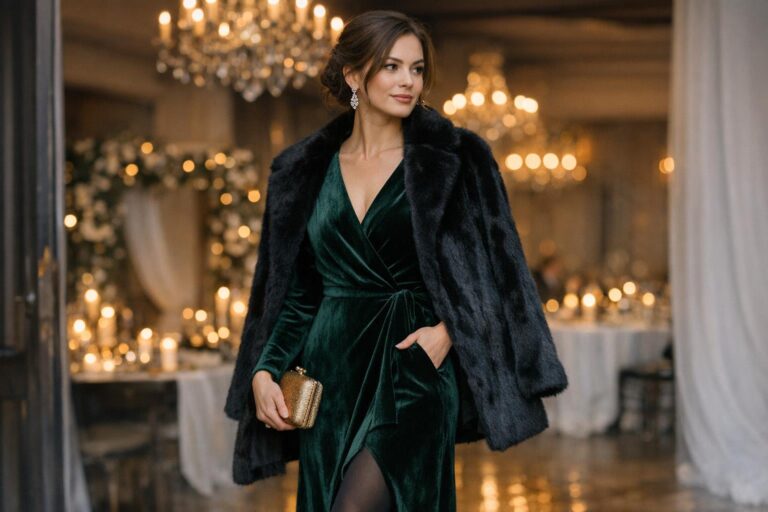
- Ballroom or historic interior: Minimal polish can look exceptionally formal under chandeliers; romantic soft glamour becomes more evening-appropriate when the fabric and length feel elevated.
If you’re browsing trending wedding guest dresses for spring, look past the trend label and ask one question: does this dress rely on softness and motion, or on structure and line? That single answer usually tells you which styling rules to follow.
Outfit comparisons: the same scenario, two styling philosophies
Scenario: afternoon garden ceremony with a golden-hour reception
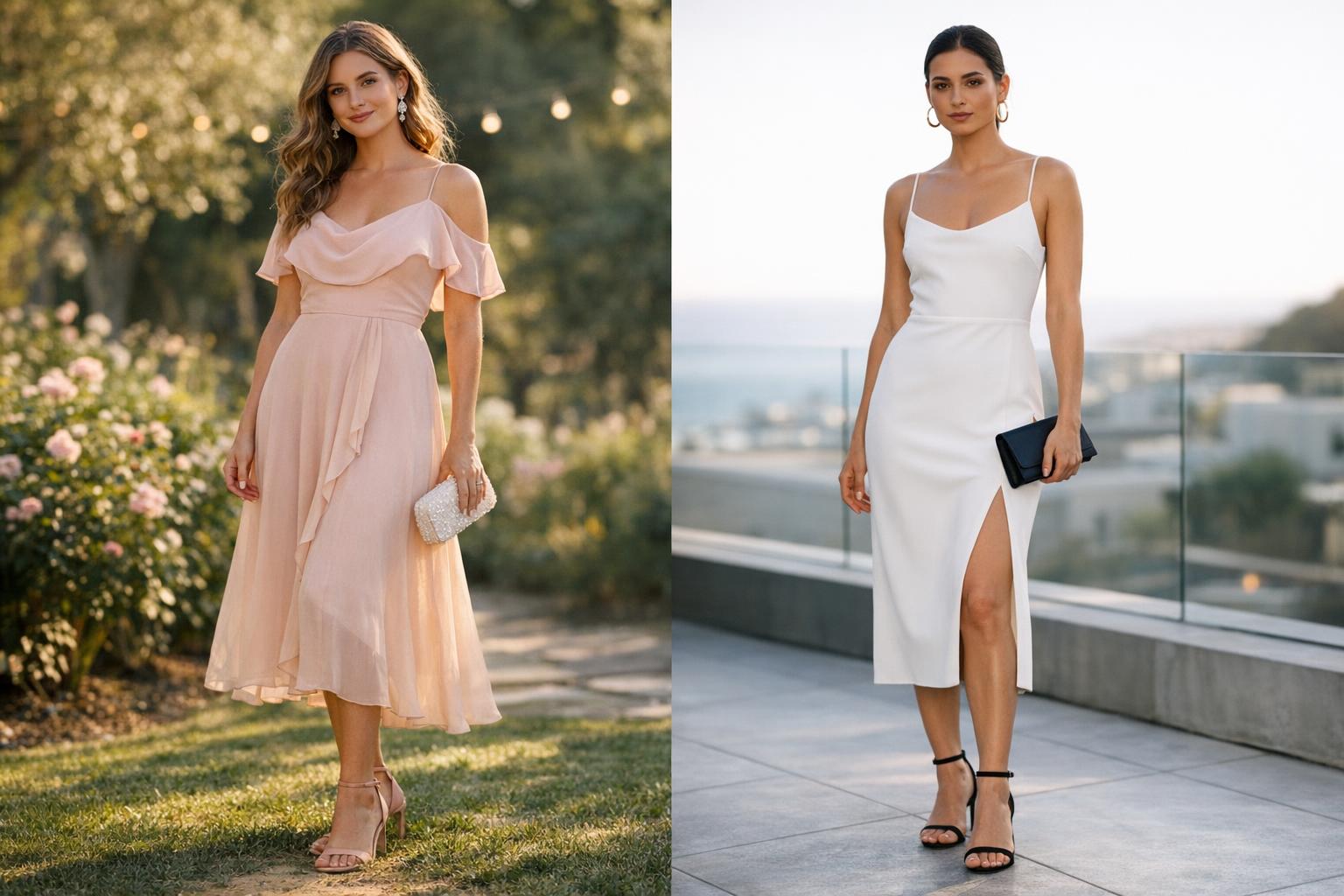
Romantic soft glamour approach: Choose a dress whose movement becomes part of the look—an airy midi or longer hem that catches the breeze without becoming fussy. Keep the accessories luminous rather than heavy. The overall goal is to look natural in sunlight, with softness near the face and ease in the skirt for walking on grass.
Modern minimal polish approach: Choose a streamlined silhouette that still feels gentle in daylight—clean straps, a refined neckline, and a hem that won’t fight the terrain. Keep the styling edited: one statement element (like a sleek clutch shape or a single piece of jewelry) and everything else quiet. The goal is crisp elegance that doesn’t look overly “evening” before sunset.
Scenario: formal evening reception (the room is candlelit, photos are flash-lit)
Romantic soft glamour approach: Lean into deeper, richer visual weight through fabric choice and finish—something that reads luxurious under low light, with soft draping that still looks elevated. Because evening lighting can flatten detail, prioritize a silhouette that creates dimension through movement and shape rather than tiny embellishments that disappear in photos.
Modern minimal polish approach: This is where minimalism shines. Choose a sharply defined silhouette with clean lines that hold up in flash photography. Keep jewelry intentional and not too delicate—thin pieces can vanish in evening photos. The goal is a composed outline that looks expensive even with very few elements.
Scenario: destination wedding with travel wrinkles and long hours
Romantic soft glamour approach: Prioritize fabrics and shapes that forgive a day in a suitcase and still look like a deliberate choice. Softer silhouettes also tend to handle long wear well—especially if the event includes walking between ceremony and reception spaces.
Modern minimal polish approach: Minimal looks can travel beautifully if you choose a dress that maintains its line. The trade-off is that minimalism shows creases more quickly and fit has to be precise. If the dress relies on a perfectly smooth surface, build in time for steaming or choose a texture that hides travel stress.
Scenario: “cocktail” dress code with an ambiguous invitation
Romantic soft glamour approach: Interpret cocktail as “polished but light.” Keep the romance refined: a balanced hemline, a clearly defined shape, and accessories that elevate without looking costume-like. If the dress has a lot of detail, keep everything else quiet.
Modern minimal polish approach: Cocktail becomes about clean tailoring and confident simplicity. A sleek shape paired with a purposeful accessory choice can read perfectly “cocktail” without any overt sparkle. The risk is looking too understated if the room leans festive—so ensure something in the look signals celebration, even if it’s subtle.
How roles and family styling can shape the room (and your choices)
Weddings aren’t only about the couple’s style; they’re also about the visual ecosystem around them. If the wedding party looks highly structured—think a very formal groom dress direction and a bridal party with crisp, uniform silhouettes—the room often leans toward modern minimal polish, even among guests. If the family styling feels more traditional and ceremonious, you may see elevated looks like robes mère de la mariée influencing the overall tone toward formal elegance with softness.
This doesn’t mean you should match anyone. It means you can read the atmosphere and choose your version of wedding-appropriate: soft glamour that feels refined rather than whimsical, or minimal polish that feels celebratory rather than severe. The best dress ideas for wedding guest styling take the room seriously without losing your personal point of view.
Tips from a wedding stylist’s perspective: make the dress code do the work
Most wedding guest outfit mistakes aren’t dramatic—they’re subtle misreads. A dress can be beautiful but land as “wrong” because the fabric reads too casual, the proportions fight the venue, or the styling doesn’t match the formality of the crowd. When you’re deciding between romantic and minimal, let the dress code guide the finish.
- If the invite signals formal: Both styles must look intentional in fit and fabric. Soft glamour should feel elevated (not beachy). Minimal polish should look immaculate (not like an everyday slip silhouette).
- If the venue is outdoors: Soft glamour has a natural advantage for comfort and movement; minimal polish can still work if the silhouette and footwear are terrain-aware.
- If you’ll be seated for a long ceremony: Soft glamour can be forgiving and comfortable; minimal polish can be comfortable too, but only if the fit allows easy movement without constant adjusting.
- If photos matter to you: Choose shapes that hold their identity in the lighting you expect—daylight rewards soft dimension; evening rewards clean contrast and structure.
One quiet rule that helps: decide what you want to lead—movement or line. If you pick movement, style for romance. If you pick line, style for minimalism. Mixing the two without a plan is what creates confusion.
The hidden trade-offs: what each style does well (and where it can fall short)
Romantic soft glamour: strengths and limitations
Soft glamour excels in natural light and open-air venues because it looks alive—fabric moves, the silhouette feels gentle, and the overall effect reads “celebration.” The limitation is that too much softness can drift into casualness if the fabric looks overly light or the styling becomes busy. For formal wedding guests, romance needs refinement: clean finishing, thoughtful accessories, and a silhouette that feels intentional.
Modern minimal polish: strengths and limitations
Minimal polish excels when you need clarity: it reads immediately dressy, photographs cleanly, and feels modern in a way that doesn’t compete with the bridal look. The limitation is that minimalism is unforgiving—fit, underpinnings, and wrinkles matter more. If you’re attending a wedding outfit guest spring event outdoors, minimal lines can look stark unless you soften the styling in a controlled way.
Blending the aesthetics: how to look current without losing coherence
Many trending wedding guest dresses live in the overlap: a clean, minimal silhouette made more romantic through a soft drape, or a romantic dress edited down with modern, restrained styling. The key is to blend intentionally—one aesthetic should remain dominant, and the other should appear as a supporting note.
A practical way to do this is to keep the dress in one camp and the accessories in the other. A romantic dress can be grounded with minimal, sculptural styling so it feels modern. A minimal dress can be warmed with a romantic finish—something soft near the face, or a subtle, luminous detail—so it reads celebratory rather than austere.
Common wedding guest styling mistakes (and how to avoid them)
Even experienced dressers fall into predictable traps when the invitation is vague or the venue is unfamiliar. These are less about “rules” and more about proportion, practicality, and the social temperature of the event.
- Over-layering a romantic look: Too many delicate elements can feel costume-like. Choose one romantic feature to spotlight and let the rest breathe.
- Under-styling a minimal look: Minimal doesn’t mean unfinished. Add one clear focal point so the outfit reads wedding-ready, not weekday.
- Ignoring the walk: Outdoor venues demand shoes and hemlines that can handle terrain. A gorgeous dress becomes a burden if you can’t move comfortably.
- Forgetting the room’s formality: If the groom dress direction and family attire are very formal, guests who dress too casually will feel out of place—even in a pretty outfit.
The best prevention is a quick mental run-through of the day: arriving, sitting, walking, standing for photos, moving to cocktail hour, then dancing. Your dress should be beautiful in each chapter, not just at the mirror.
When to choose each style (and how to decide in five minutes)
Choose romantic soft glamour when:
You’re attending an outdoor ceremony, the setting is naturally romantic, or the wedding outfit guest spring energy is part of the invitation’s mood. This approach also suits long celebrations where comfort, movement, and a gentle silhouette help you feel at ease through hours of socializing.
Choose modern minimal polish when:
The venue is city-forward or formal, the reception is evening-heavy, or you want a look that reads instantly elevated with less decorative detail. Minimal polish is also a smart choice when you prefer an edited wardrobe and want your outfit to feel timeless in photos.
A quick decision framework
If you’re truly torn, decide based on what will be most challenging that day: if terrain, breeze, and long hours are the concern, lean romantic for flexibility. If the concern is looking appropriately formal among formal wedding guests, lean minimal for clarity—then add a controlled soft note so it still feels wedding-celebratory.
Dress ideas for wedding guest styling: a curated mini-capsule of approaches
Rather than treating wedding guest dressing as a one-off purchase, it helps to think in “approaches” you can repeat. Below are a few idea frameworks—each can be expressed through romantic soft glamour or modern minimal polish, depending on your venue, dress code, and comfort needs.
The elegant midi approach (balanced, versatile, and reception-ready)
A midi length often strikes the most effortless balance: it feels dressed, it moves well, and it adapts across venues. In a romantic interpretation, the midi feels airy and fluid, especially for daytime ceremonies. In a minimal interpretation, the midi looks tailored and clean, ideal for city venues and cocktail dress codes.
The long, formal line (for formal wedding guests without overstatement)
A longer hemline naturally raises the formality, but the styling direction changes everything. Romantic soft glamour uses the length to amplify movement and elegance; minimal polish uses it to create a striking, uninterrupted line. Either can work when the room leans formal—just ensure the finishing details match the setting.
The sleeved silhouette (ceremony comfort and a polished presence)
Sleeves can be practical—coverage for a ceremony space, warmth in spring transitions, or simply a more composed feel in photos. Romantic styling makes sleeves feel delicate and expressive, while minimal styling keeps sleeves clean and architectural. This is a particularly helpful choice when you want to look refined from first photo to last dance.
The understated statement (how to be memorable without competing)
Weddings invite celebration, but guests still want to respect the couple’s spotlight. Romantic soft glamour achieves “statement” through softness and glow; minimal polish achieves it through precision and bold simplicity. In both cases, the most sophisticated move is restraint—one focal idea carried through with intention.
Conclusion: the difference is movement versus line—and you can borrow from both
Romantic soft glamour and modern minimal polish are both legitimate answers to wedding guest dressing, but they’re built on different foundations. Romance prioritizes movement, softness, and an atmosphere of ease; minimalism prioritizes line, restraint, and a composed kind of formality. Once you identify which foundation your dress has, the styling decisions become clearer.
The most modern approach is often a thoughtful blend: a romantic silhouette with edited accessories, or a minimal silhouette softened just enough to feel celebratory. Whether you’re navigating a wedding outfit guest spring invitation, dressing among formal wedding guests, or reading the room shaped by groom dress formality and robes mère de la mariée traditions, choosing a coherent style logic will always look more elegant than chasing every trend at once.
FAQ
What are the most reliable dress ideas for wedding guest outfits when the dress code is unclear?
When the dress code feels vague, choose a polished silhouette you can elevate or soften with accessories: romantic soft glamour if the venue is outdoors or daytime-forward, and modern minimal polish if the venue is indoors, evening-heavy, or clearly formal; the key is to commit to one styling philosophy so the look feels intentional.
How do I decide between romantic soft glamour and modern minimal polish for a spring wedding?
For a wedding outfit guest spring scenario, start with the venue and weather shifts: romantic soft glamour handles breeze, terrain, and long wear comfortably, while modern minimal polish looks especially right in city venues and formal interiors; pick the one that best matches the setting, then adjust warmth and formality with a clean layer or refined accessories.
Can trending wedding guest dresses still look timeless in photos?
Yes—timelessness comes less from avoiding trends and more from choosing a coherent silhouette and finish; a trending wedding guest dress can photograph beautifully for years if it fits well, suits the venue’s mood, and is styled with restraint rather than piled-on details.
What makes an outfit read “formal” for formal wedding guests without feeling overdone?
Formality is communicated through refinement: in romantic soft glamour, that means elevated fabric behavior and intentional styling; in modern minimal polish, that means precise fit and clean lines—either way, the outfit should look deliberate from head to toe and appropriate to the room’s overall level of dress.
How do roles like robes mère de la mariée affect what wedding guests should wear?
If family attire such as robes mère de la mariée is visibly formal or traditional, it can lift the overall formality of the event, meaning guests often look best in more refined choices—either a carefully elevated romantic look or a clean minimal look—so they feel aligned with the room rather than underdressed.
Does the groom dress level of formality really change what guests should wear?
It can, because the groom dress formality often signals how dressed-up the wedding party will be overall; when the couple’s styling is clearly formal, guests typically feel most comfortable choosing a look that reads polished at a glance—either structured minimalism or romantic elegance with elevated finishing.
How can I make a minimal dress feel more wedding-appropriate?
Minimal dresses become wedding-ready through one intentional celebratory element—such as a refined accessory focus or a soft, romantic styling note—while keeping the overall look edited so the clean lines remain the main statement.
How can I keep a romantic dress from looking too casual at a formal reception?
For a formal reception, romantic dressing needs refinement: prioritize a more elevated finish and a silhouette that looks intentional under low light, then keep accessories controlled so the look reads elegant rather than overly playful.