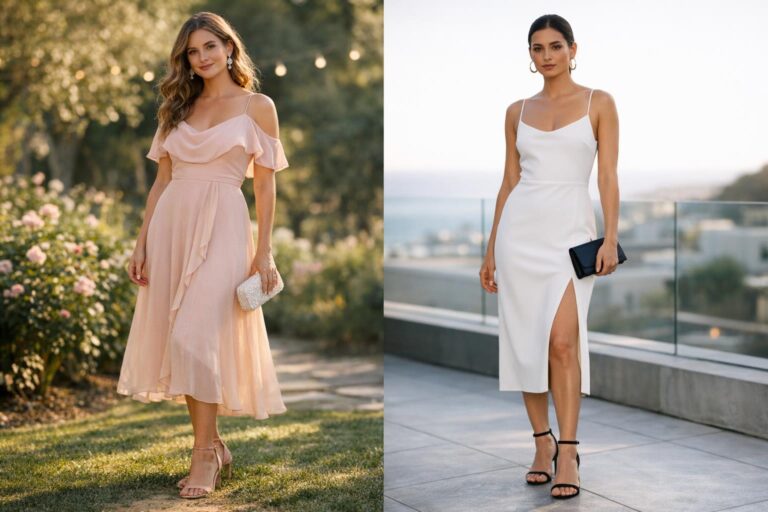
Short wedding Guest Dress: Cocktail Tailored or Romantic?
Short wedding guest dress, decoded: two aesthetics that look similar in photos—but wear very differently
The invitation says “cocktail,” the venue is glowing with candlelight, and you want a short wedding guest dress that feels celebratory without ever looking casual. This is where most guests hesitate: the same hemline can read refined or risky depending on fabric, structure, and how you balance coverage. In wedding style, the difference is rarely the length alone—it’s the styling logic.
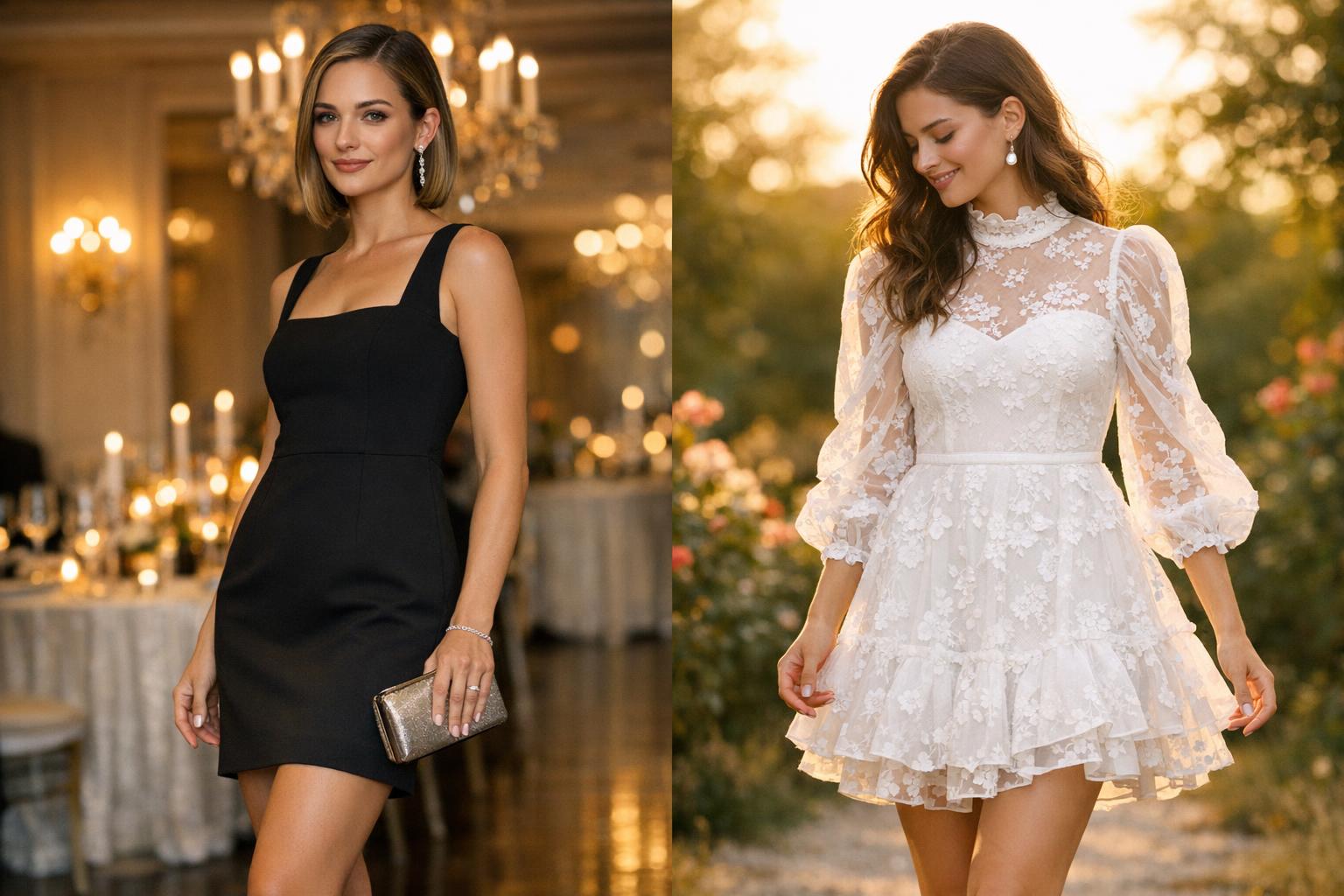
Two approaches dominate the conversation around short dresses for wedding guests. The first is the polished cocktail route—think short cocktail dresses with intentional tailoring, elevated fabrics, and accessories that feel planned. The second is the romantic statement mini—often defined by sleeves, ruffles, shimmer, or embellishment, where the dress carries the drama and the styling stays disciplined. They’re frequently confused because both can look “dressy” online, both appear under the same shopping filters, and both can be marketed as elegant dresses. But at a wedding—where photos, etiquette, and comfort matter—they behave very differently.
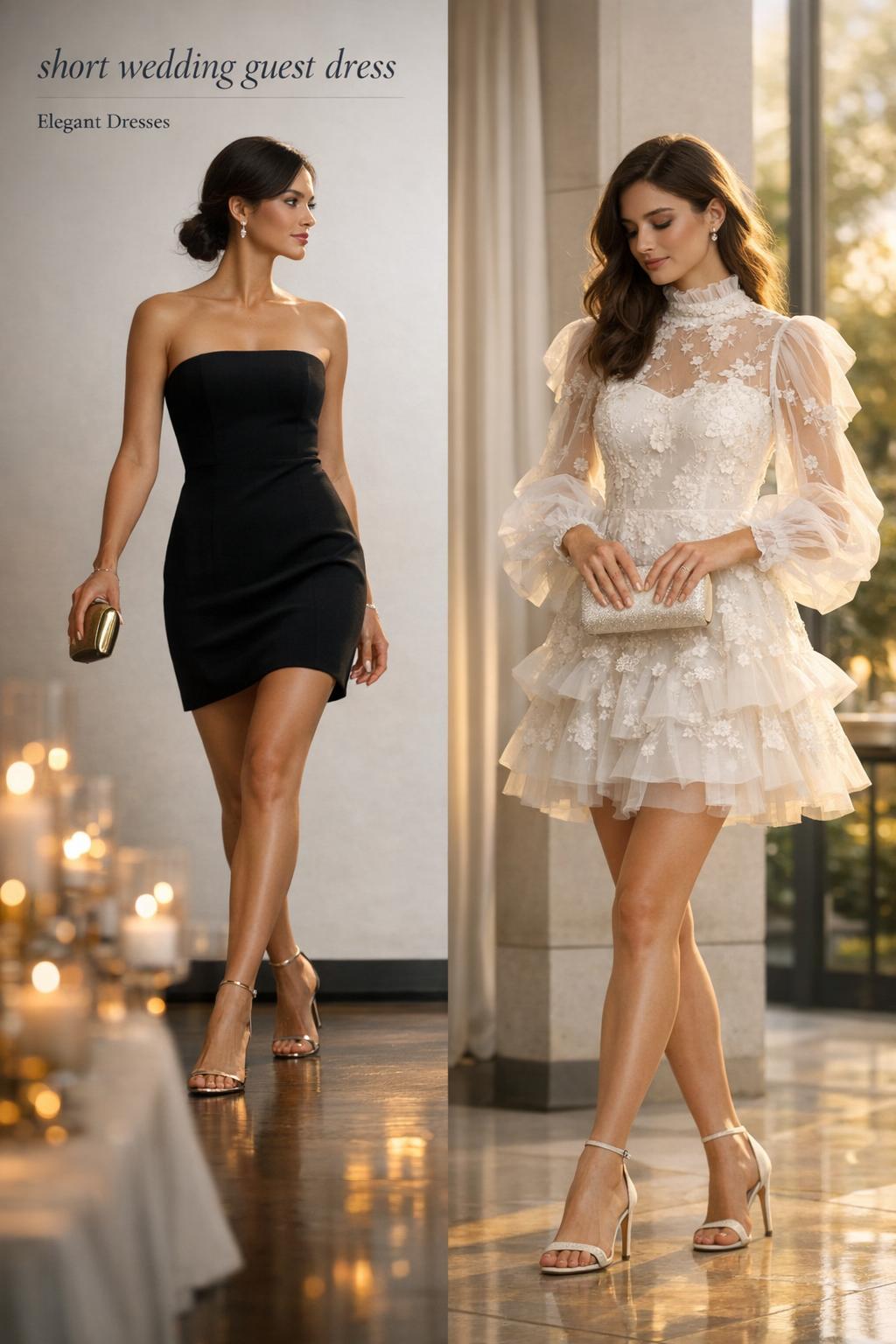
Below, you’ll find a clear style breakdown: what makes each aesthetic work, how to interpret formal versus semi-formal versus casual dress codes in a shorter silhouette, and how to build an outfit that looks appropriate from ceremony to reception. Along the way, we’ll ground the guidance with editor-favorite brand references—ASOS Edition, Mac Duggal, Nadine Merabi, Eloquii, Tadashi Shoji, Milly, Trina Turk—and a professional perspective echoed by Francesca Prudente of Karen Millen: a short hemline can be wedding-ready when it’s balanced with thoughtful coverage, proportion, and finish.
Style overview: the polished cocktail short dress
The polished cocktail approach treats a wedding guest dress like a complete look, not just a pretty piece. The defining characteristic is restraint: cleaner lines, intentional structure, and an emphasis on fabric quality and fit. In this category, “short” feels tailored rather than tiny—an above-the-knee hem that reads confident and composed.
Your wedding look is only the beginning.
Keep your guest list, vendors, timeline, and every important detail together with Zarellea — so your day feels as considered as your style.
Silhouettes tend to be streamlined: a refined mini that skims rather than clings, or a structured shape that holds its form through hours of standing, sitting, and dancing. The palette can be anything from soft to bold, but the aesthetic mood stays polished—less about spectacle, more about quiet sophistication. Fabrics and textures do the heavy lifting here: lace, chiffon, velvet, or subtle shimmer become the reason the dress feels wedding-appropriate, even without a longer hem.
This is the style family that most naturally translates into elegant dresses in the traditional sense—especially for semi-formal weddings and cocktail dress codes, where the goal is celebratory but not formal-gown territory.
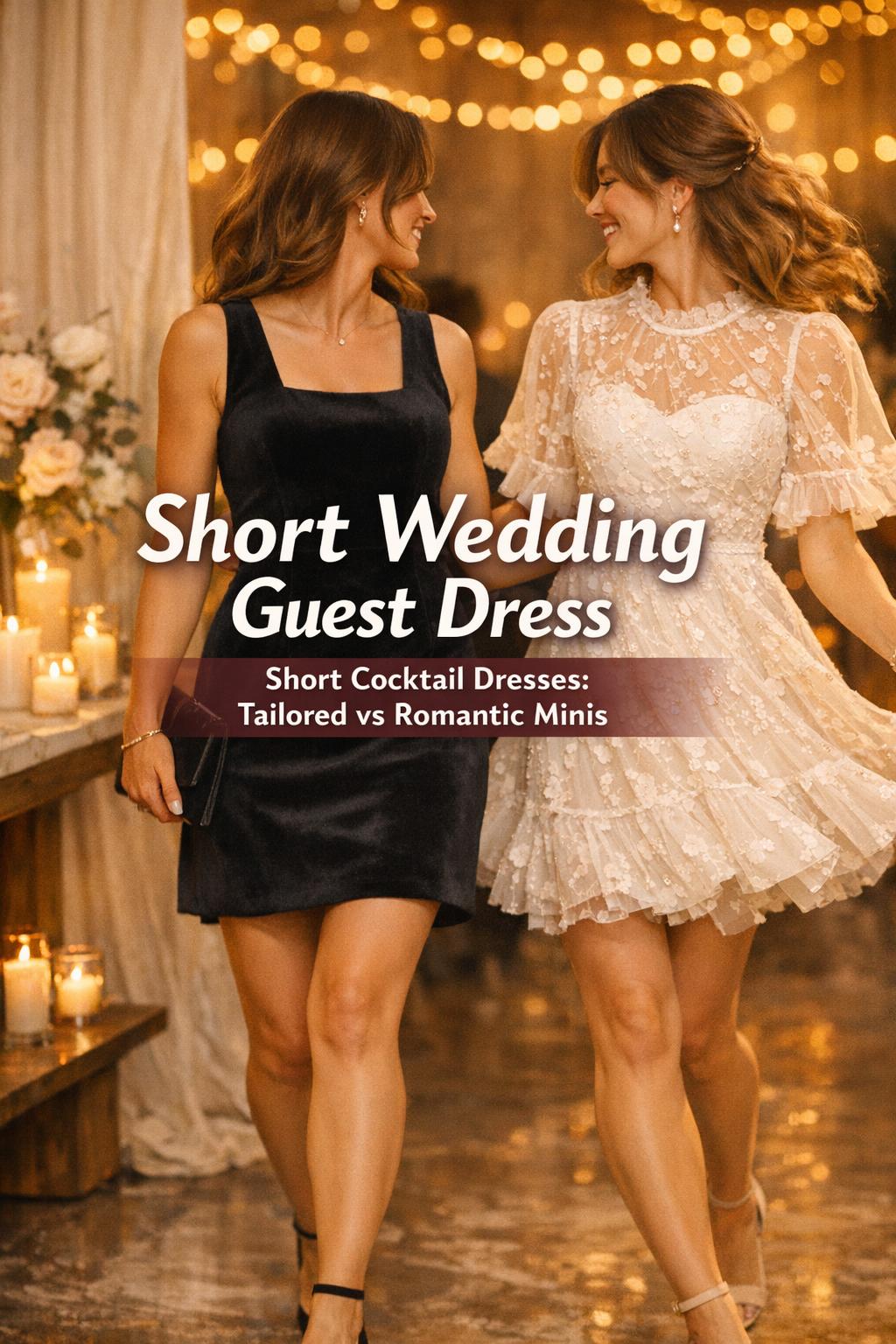
Style overview: the romantic statement short dress
The romantic statement mini is built for the guest who wants the dress to feel like an event. Here, the “short” silhouette is balanced by design details that add coverage, texture, and ceremony: long sleeves, high necklines, embroidered overlays, ruffles, or embellishment that catches the light during golden hour and again under reception lighting.
Instead of relying on strict tailoring, this style leans into storytelling through fabric and detail. Organza sleeves, sheer layers, or embroidered motifs can make a mini feel elevated and intentional. The mood is expressive but still respectful of the setting: the dress is the focal point, so everything else—shoes, jewelry, outerwear—should support rather than compete.
Many editor-approved short dresses for wedding guests sit in this category because the built-in drama helps a shorter hemline feel “occasion” immediately. Think of the difference between a simple mini and a mini that looks designed for photographs.
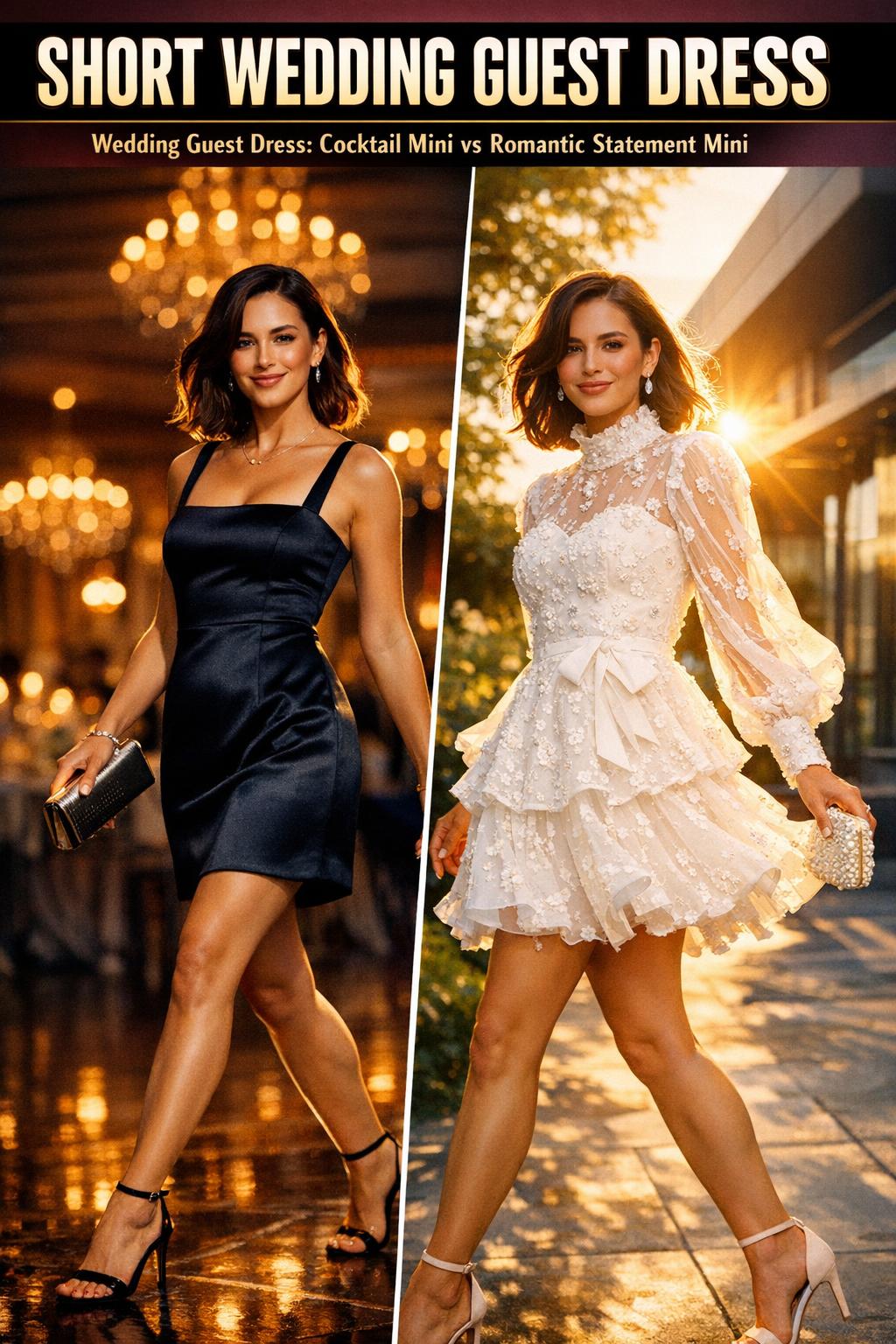
The shared foundation: what makes a short wedding guest dress appropriate
Before comparing the two aesthetics directly, it helps to name what they have in common. A short wedding guest dress works when it respects the dress code and looks intentional in motion—walking across grass, sitting through the ceremony, hugging relatives, and staying comfortable long after the first dance.
As Francesca Prudente of Karen Millen emphasizes in wedding-guest guidance, balance is the point: if the hemline is higher, consider a sleeve, a higher neckline, a more structured fit, or a fabric that reads formal. The result isn’t “covered up”—it’s composed.
- Length and proportion: Above-the-knee can work beautifully, especially when the dress doesn’t ride up as you move or sit.
- Fabric cues: Lace, chiffon, velvet, and shimmer signal dressiness more reliably than a bare, casual weave.
- Finish and detail: Embroidery, ruffles, and refined construction turn a mini into a wedding guest dress rather than a weekend dress.
- Dress code alignment: “Formal,” “semi-formal,” “cocktail,” and “casual” aren’t interchangeable—your styling should change accordingly.
With that foundation, the differences between polished cocktail and romantic statement become much clearer—especially across formal, semi-formal, and casual wedding settings.
Key differences: polished cocktail vs romantic statement
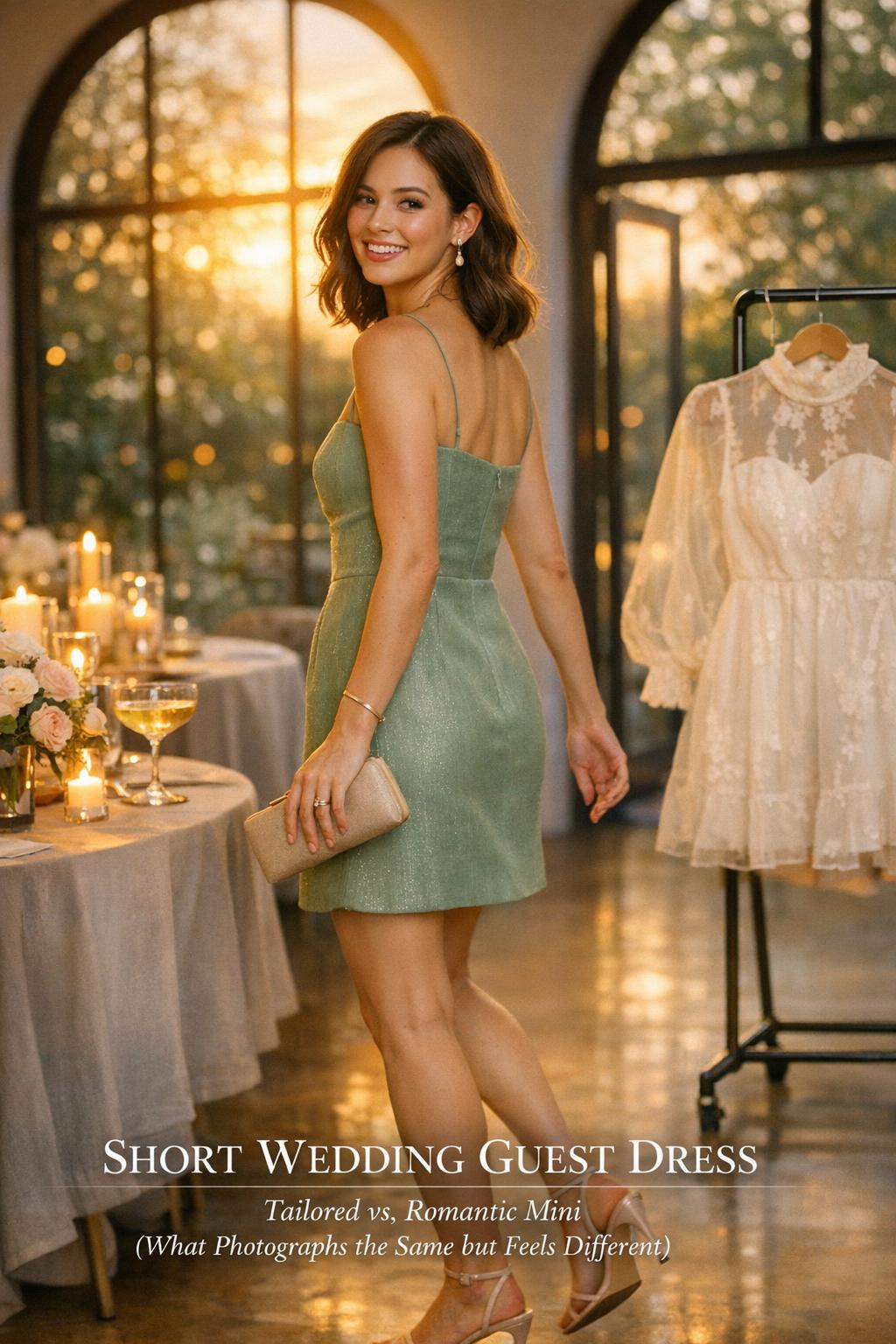
Silhouette and structure
The polished cocktail dress relies on shape: clean lines, controlled volume, and fit that stays consistent from ceremony to reception. It’s the kind of short cocktail dress that looks the same in photos as it does in real life—no constant adjusting, no surprise sheerness when the light changes. The romantic statement mini can be looser or more layered because it gains its “dressy” quality from design elements like ruffles, sleeves, embroidery, or textured overlays. It’s less about a sculpted outline, more about a crafted impression.
Color palette and visual impact
Both aesthetics can work in a wide palette, but they telegraph differently. Polished cocktail styling tends to look most modern when the color feels deliberate and uninterrupted—letting fabric and fit create the interest. Romantic statement styling often looks strongest when color supports the detailing: embroidered motifs, sheer sleeves, or shimmer stand out best when the hue doesn’t fight them.
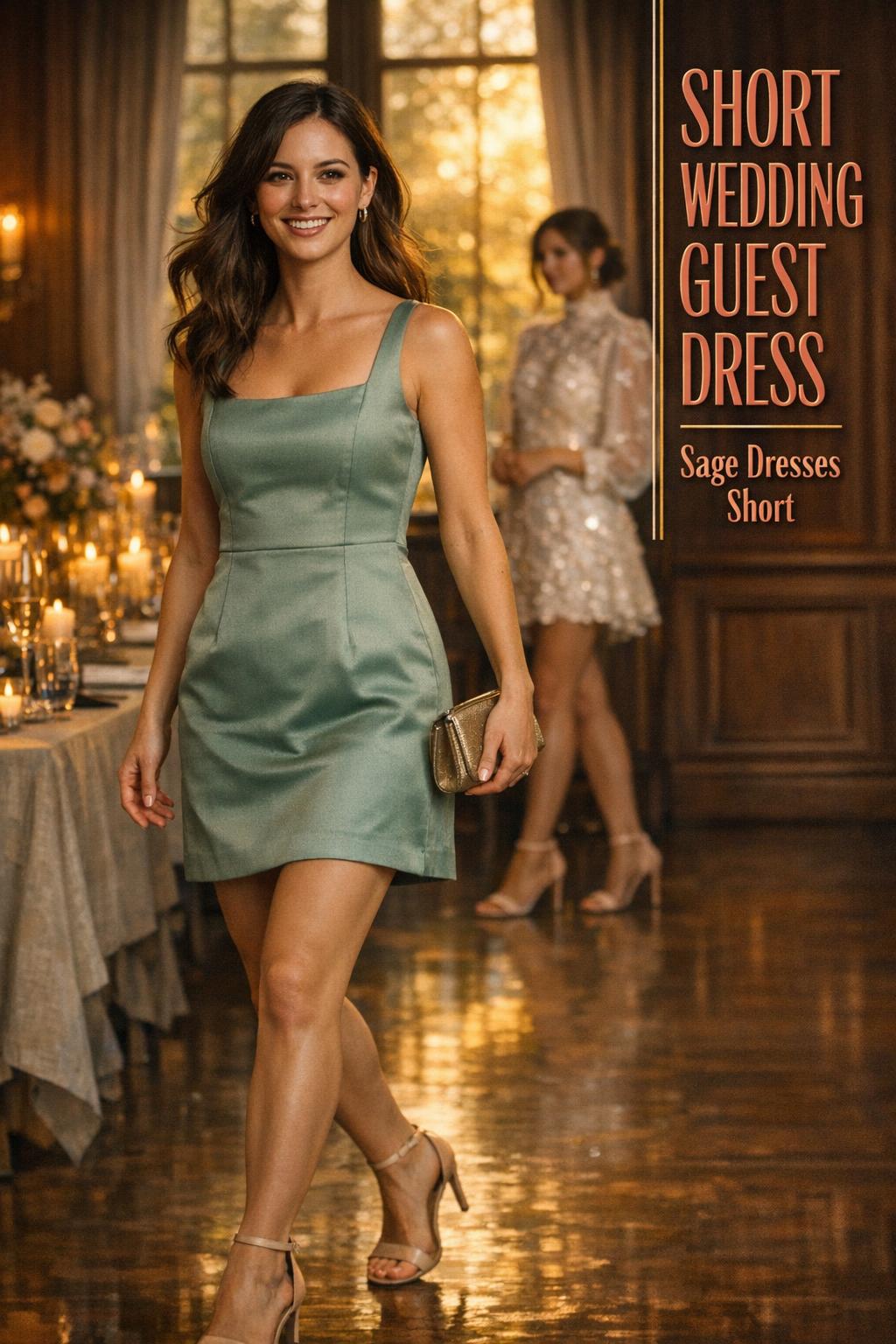
If you’re drawn to a sage short dress—or you’re specifically searching sage dresses short—the shade can live in either category. In polished cocktail form, sage reads sleek and understated; in romantic statement form, sage becomes soft and atmospheric, especially when paired with textured elements like lace, organza, or subtle shimmer.
Level of formality: where each style sits
For formal and black-tie-optional weddings, both aesthetics require extra care. A short hemline can be appropriate, but it must look elevated—fabric, neckline, and overall finish become non-negotiable. The romantic statement mini often has an advantage here because sleeves, high necks, and embellished textures naturally read formal. The polished cocktail mini can also work, but it must feel luxe and intentional rather than minimal to the point of casual.
For semi-formal and cocktail, both styles shine. This is the dress-code sweet spot for short wedding guest dress shopping: hemlines feel festive and comfortable, and you can choose whether you want your elegance to come from structure (polished cocktail) or from detail (romantic statement).
Styling philosophy: what you “add” to finish the look
Polished cocktail styling expects support pieces—shoes, jewelry, and outerwear—to complete the sophistication. Romantic statement styling expects restraint: if the dress has embroidered sleeves, ruffles, or shimmer, you keep everything else clean so the look stays wedding-appropriate rather than costume-like.
Dress-code translation: formal, semi-formal, cocktail, and casual in a shorter hemline
Formal / black-tie-optional: make “short” feel intentional
A formal invitation doesn’t automatically forbid a short dress, but it does raise the bar. In practice, that means choosing elegant dresses with a clear occasion signal—richer fabrics, elevated texture, and balanced coverage. A high neckline, long sleeve, or couture-like detail helps a mini feel “evening” rather than “after-party.”
This is where designer-leaning options like Mac Duggal can make sense for guests who want a mini without sacrificing formality. A long sleeve, high neck, ruffle sleeve, and sheer top effect reads deliberately dressed—especially for a candlelit ballroom reception where the atmosphere does some of the styling work for you.
Semi-formal and cocktail: the natural home of short cocktail dresses
This is the territory where most wedding guest dress questions live, and where short cocktail dresses feel not only acceptable but expected. Here, you can choose your aesthetic based on mood and venue: polished cocktail for sleek sophistication, romantic statement for a look that photographs with extra texture and movement.
Brands like Milly and Trina Turk often sit comfortably in this space: celebratory, event-ready, and designed with enough fashion perspective to feel special without drifting into bridal territory.
Casual / daytime weddings: short can work, but avoid “everyday” signals
A casual or daytime wedding—think garden ceremony or relaxed outdoor setting—often invites lighter fabrics and easier silhouettes. A short wedding guest dress can be perfect here, but the goal is still “guest,” not “errands.” Choose breathable-feeling materials like chiffon or lace rather than anything that reads overly simple, and keep the look composed with thoughtful finishing touches.
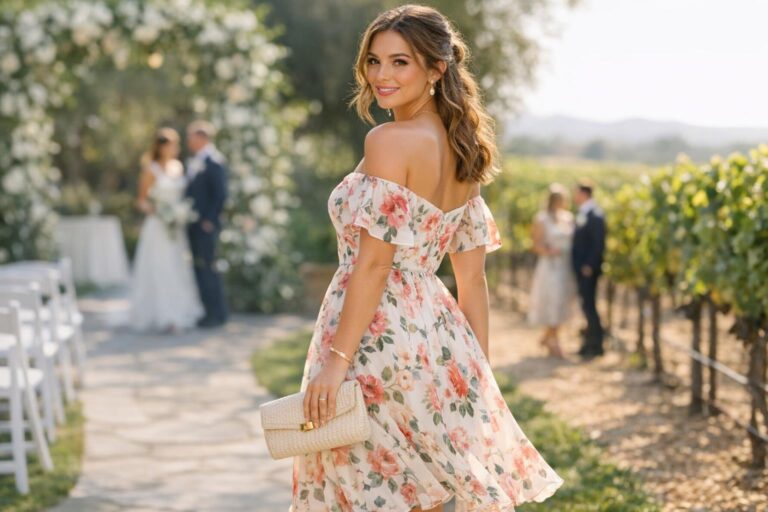
In these settings, a sage short dress can feel especially appropriate: soft, romantic, and understated in a way that blends beautifully with floral landscapes and natural light. The key is making sure the cut and fabric look intentional enough for a ceremony.
Visual style breakdown: how the two aesthetics look at real weddings
Layering and coverage: the “balance” principle in action
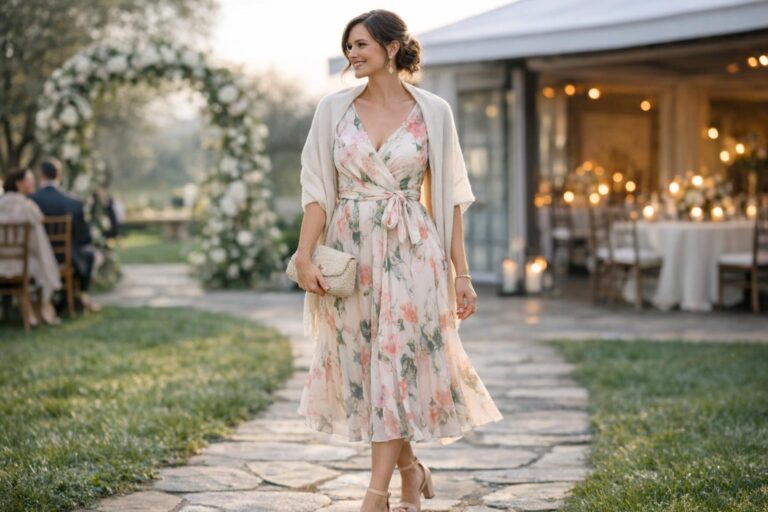
In polished cocktail styling, layering is typically external: a refined outer layer or a sleek addition that elevates the dress’s simplicity. In romantic statement styling, the layering is built into the dress—sheer sleeves, organza overlays, embroidered panels—so you can keep outerwear minimal and avoid interrupting the design.
When you’re deciding between the two, consider the setting. A breezy garden ceremony may call for an extra layer that won’t fight your proportions, while a warm evening reception may reward a dress with integrated sleeves or texture that feels complete on its own.
Proportions and outfit balance
A short hemline makes proportion visible immediately. Polished cocktail dressing often balances the leg line with a slightly more structured bodice or a clean neckline. Romantic statement dressing balances a shorter skirt with visual weight up top—high necks, long sleeves, ruffles, or embellishment—so the silhouette reads intentional rather than “short by default.”
Accessories and footwear: the finishing logic
Because the dress is shorter, accessories become more noticeable in photos and in motion. For polished cocktail, jewelry and shoes can be the elements that declare formality. For romantic statement, accessories are quieter by design—your goal is to keep the look elevated but not busy, letting embroidery, shimmer, or lace be the focal point.
The most consistent wedding-ready signal across both aesthetics is cohesion: a short wedding guest dress looks expensive and appropriate when every element appears chosen with the same dress code in mind.
Brand-based comparisons: how editor favorites express each style
It helps to see how recognizable names tend to “speak” in these two aesthetics. Not every brand is one-note, but these references clarify the design language you’ll often find while shopping.
ASOS Edition: romantic detail, modern event energy
ASOS Edition is often associated with occasion-ready detailing that flatters a short silhouette—like the Organza Long Sleeve Embroidered Tie Back Mini Dress, where sleeve volume and embroidery add presence. For a semi-formal wedding with a festive crowd, this style delivers that “fashion moment” feeling while keeping the overall look wedding-appropriate through coverage and texture.
Mac Duggal: formal-leaning minis with high-impact finish
Mac Duggal’s eventwear sensibility—illustrated by a Long Sleeve High Neck Ruffle Sleeve Sheer Top Mini Dress—tends to fit the romantic statement category, but with a formality that can stretch into formal or black-tie-optional when styled with restraint. The design does the speaking, so your role is to keep the rest of the look clean and composed.
Nadine Merabi: party polish that still reads “occasion”
Nadine Merabi (including the Kimberly Dress) often sits in the sweet spot between polished cocktail and statement glamour. For weddings that lean festive—cocktail dress code, evening reception energy—this is where a short dress can feel confident, elevated, and unmistakably event-ready without needing excessive layering or complicated styling.
Eloquii: modern wedding guest dressing with presence
Eloquii appears in editor-approved short dress selections because the designs can deliver a complete, styled impression—especially helpful when you want your wedding guest dress to feel considered without overcomplicating the look. This can be particularly useful when you’re choosing a short hemline and want the rest of the silhouette to feel secure and intentional through hours of wear.
Tadashi Shoji: refined elegance through fabric and detail
Tadashi Shoji is a natural reference point for elegant dresses because of the brand’s association with elevated detail and occasion finish. In a short wedding guest dress, that translates to a look that leans formal in mood even when the hemline is higher—especially when the dress uses lace or other refined textures to signal ceremony.
Milly and Trina Turk: cocktail confidence, color-forward celebration
Milly and Trina Turk often align with the polished cocktail mood for semi-formal and cocktail weddings: a confident, celebration-ready feel that works beautifully in bright venues—rooftop ceremonies, modern indoor spaces, or sunlit receptions. These are the kinds of short cocktail dresses that look effortless, but only because the fabric and cut carry enough structure to hold up in photos.
Tips from a stylist’s lens: making a short hemline feel wedding-right
A short wedding guest dress asks you to think about the whole day, not just the first impression. The most common misstep isn’t choosing “too short”—it’s choosing a dress that behaves unpredictably once you’re actually living in it. Weddings are long. You sit, stand, hug, dance, and move through different temperatures and lighting.
- Do a movement check at home: Sit the way you’ll sit at a ceremony, raise your arms, and take a few steps. If the dress rides up or needs constant adjusting, it will feel less elegant no matter how beautiful it looks on a hanger.
- Use coverage strategically: If the hem is high, consider sleeves, a higher neckline, or richer texture. This is the balance principle Francesca Prudente highlights—and it’s the quickest way to make “short” feel appropriate.
- Let fabric communicate dress code: Lace, chiffon, velvet, and shimmer naturally read more formal than flatter, overly casual materials.
- Keep the styling philosophy consistent: Polished cocktail looks benefit from refined accessories; romantic statement looks benefit from restraint.
One more practical note: if you’re torn between buying and renting, consider your calendar. A distinctive statement mini might feel very “this wedding,” while a polished cocktail mini can reappear at multiple events with a change of accessories. If you’re exploring Rent the Runway for this reason, it’s often a useful way to test a more dramatic silhouette without committing your closet to a dress you’ll only wear once.
The sage short dress question: where this color fits in both aesthetics
Sage has become a frequent search point because it reads romantic without demanding attention—especially in outdoor light. A sage short dress can look serenely modern in a garden setting, and it can also feel quietly elevated for cocktail when the fabric has dimension.
In the polished cocktail camp, sage works best when the dress is clean and structured, allowing the color to feel intentional and sophisticated. In the romantic statement camp, sage is at its most beautiful when it’s paired with detail—lace, embroidery, or a sheer sleeve effect—so the shade feels layered and editorial rather than flat.
If you’re browsing sage dresses short and everything starts to look the same, use this quick filter: ask whether the design’s “elegance” comes from construction (polished cocktail) or from embellishment and texture (romantic statement). Then style accordingly.
Outfit comparisons: the same wedding, two styling approaches
Golden-hour garden ceremony (semi-formal)
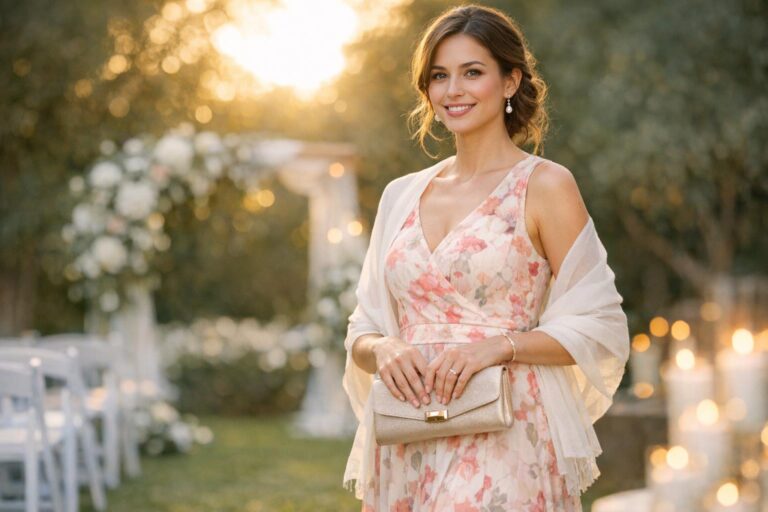
Polished cocktail interpretation: Choose a short wedding guest dress with a streamlined silhouette and an elevated fabric like chiffon or lace. The styling goal is clean and composed—your accessories quietly confirm the dress code, and your proportions feel intentional for outdoor movement.
Romantic statement interpretation: Lean into a design with sleeves or embroidered detail, like an ASOS Edition-style organza sleeve moment. Because the dress has its own texture and presence, keep the finishing touches restrained so the look stays airy and wedding-appropriate in natural light.
Candlelit evening reception (cocktail)
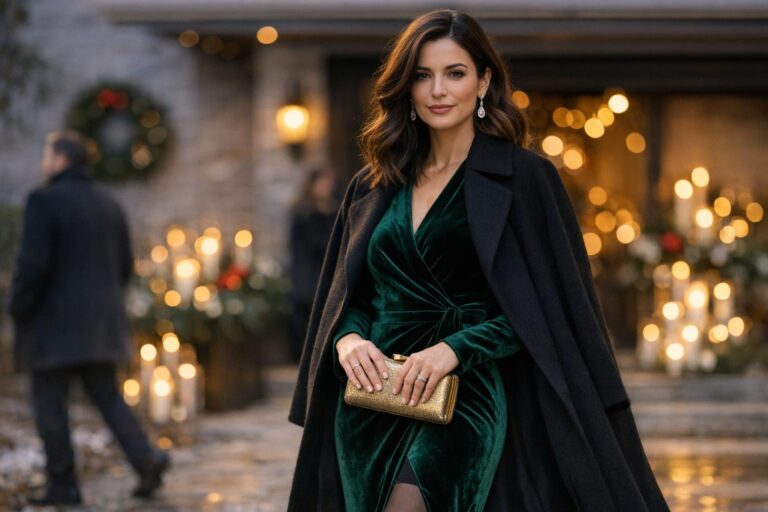
Polished cocktail interpretation: A sleek mini in a richer-feeling fabric—velvet or subtle shimmer—creates an evening mood without needing heavy embellishment. The elegance comes from the way the dress holds its line in low light and photographs without distraction.
Romantic statement interpretation: A Mac Duggal-inspired combination of high neck, long sleeves, and ruffle detail can look spectacular under reception lighting. The key is discipline: when the dress is dramatic, keep everything else refined so it reads as elegant dresses territory, not nightlife.
Modern indoor venue (formal-leaning, black-tie-optional)
Polished cocktail interpretation: If you choose a short cocktail dress here, it must look undeniably elevated. Prioritize a luxe finish and balanced coverage so the look sits comfortably beside longer gowns without feeling underdressed.
Romantic statement interpretation: Choose a mini that signals formality through detail—refined lace or a couture-like texture reminiscent of Tadashi Shoji styling. In a formal room, the dress should feel designed, not simply shortened.
Relaxed daytime celebration (casual)
Polished cocktail interpretation: Keep the silhouette easy but intentional, letting fabric choice do the work. This is a smart place for a sage short dress that looks fresh and composed, especially when the setting is outdoors and the mood is light.
Romantic statement interpretation: A softer mini with gentle detail—light ruffles, lace texture, or a subtle shimmer—can feel festive without looking overdressed. The styling should stay practical for daytime: the dress remains the focal point, but never at the expense of comfort.
Common styling mistakes with short dresses for wedding guests (and how to correct them)
Short dresses for wedding guests can go slightly off course when a look is built for a mirror rather than a full day of celebrating. Most corrections are simple—small shifts that bring the outfit back into balance.
- Mistake: treating “short” as the only design feature. Correction: Look for another element that adds elegance—sleeves, a higher neckline, lace, chiffon, velvet, or shimmer—so the dress reads occasion-ready.
- Mistake: pairing a statement mini with competing accessories. Correction: With embroidered or ruffled designs (ASOS Edition or Mac Duggal-inspired), choose quieter finishing pieces so the look stays refined.
- Mistake: going minimal without enough polish. Correction: If your dress is sleek and simple, make sure the fabric and fit look elevated. This is where polished cocktail styling either succeeds beautifully or falls flat.
- Mistake: ignoring dress-code language. Correction: Formal, semi-formal, cocktail, and casual each ask for a different level of finish. A short wedding guest dress can work across all of them, but not in the same exact form.
When in doubt, return to the most reliable rule: a shorter hemline needs either a more elevated material, more thoughtful coverage, or a more intentional overall styling story—ideally two of the three.
When to choose each aesthetic (and how to blend them)
Choosing between polished cocktail and romantic statement isn’t about right versus wrong—it’s about matching your dress to the setting and to how you want to feel. If you prefer calm, clean sophistication and you want a wedding guest dress you can re-wear, polished cocktail is often the smarter wardrobe decision. If the wedding calls for visual romance—an evening venue, a dressier crowd, or a celebration that feels particularly photogenic—the romantic statement mini often delivers the “special occasion” mood immediately.
Blending the two can be the most modern solution. You might choose a romantic statement dress—like a Nadine Merabi-inspired mini with texture or shimmer—then style it with polished cocktail restraint. Or you might choose a sleek, polished mini and add a single romantic element, such as a lace fabric choice, to keep the look wedding-soft rather than corporate.
Above all, remember what the best editor-approved short dresses share: they respect the moment. They look considered in photographs, comfortable in motion, and aligned with the couple’s dress code—so you can be fully present for the celebration, not preoccupied with your hemline.
FAQ
Can you wear a short dress to a wedding?
Yes—a short wedding guest dress can be appropriate when it’s balanced with elevated fabric, thoughtful coverage (such as sleeves or a higher neckline), and styling that matches the wedding’s dress code (formal, semi-formal, cocktail, or casual).
Can you wear a short dress to a formal or black-tie-optional wedding?
You can, but the dress must feel intentionally formal: prioritize luxe-looking fabrics (like velvet or subtle shimmer), refined details (like lace or embellishment), and balanced proportions so the overall look holds its own in a more elevated room.
What’s the best short dress style for a cocktail dress code?
Cocktail is the most natural setting for short cocktail dresses; the best options typically pair an above-the-knee hem with elevated fabric and a polished finish, whether you choose a streamlined cocktail silhouette or a romantic statement mini with sleeves, ruffles, or embroidery.
How short is too short for a wedding guest dress?
Rather than a single measurement, focus on behavior and balance: if the dress rides up when you walk or sit, requires constant adjusting, or lacks any balancing element (coverage, structure, or dressy fabric), it’s more likely to read inappropriate for a wedding.
What fabrics make a short wedding guest dress look more elegant?
Fabrics and finishes commonly associated with elegant dresses—such as lace, chiffon, velvet, and shimmer—help a shorter hemline read occasion-ready because they signal formality more clearly than simpler, casual-looking materials.
Is a sage short dress appropriate for a wedding?
A sage short dress can be a beautiful choice, especially for daytime or garden settings; the key is choosing a silhouette and fabric that read intentional (structured and polished for a cocktail mood, or textured and detailed for a romantic statement mood).
How do I choose between a polished cocktail mini and a romantic statement mini?
Choose polished cocktail if you want elegance through structure and a look that’s easy to re-wear; choose romantic statement if you want elegance through sleeves, ruffles, embroidery, or shimmer—then keep accessories more restrained to maintain a wedding-appropriate finish.
Are there editor-approved brands to look at for short dresses for wedding guests?
Common editor-approved references for short dresses for wedding guests include ASOS Edition, Mac Duggal, Nadine Merabi, Eloquii, Tadashi Shoji, Milly, and Trina Turk, with options that range from polished cocktail silhouettes to romantic statement designs.