Plus Size Bridesmaid Dresses for Every Wedding Style
The moment a bridal party starts shopping, one question tends to shape every other decision: how do you choose plus size bridesmaid dresses that feel flattering, comfortable, photo-ready, and genuinely aligned with the wedding style? That answer is rarely about one “perfect” dress. It usually comes down to silhouette, fabric, color coordination, sizing support, and the realities of a long wedding day—from getting ready in the morning to the last dance at the reception. Today’s size-inclusive options across the U.S. market are far broader than a single rack of formalwear, with brands such as David’s Bridal, Birdy Grey, JJ’s House, Macy’s, Adrianna Papell, Jenny Yoo, Azazie, Ellen Bridals, Mondressy, Yours Clothing, and ColorsBridesmaid offering different takes on fit, finish, and budget.
This guide is designed for brides, bridesmaids, and planners who want visual inspiration with real styling logic behind it. Whether the wedding is a candlelit ballroom evening, a soft garden ceremony, or a breezy destination celebration, the best choice is the one that respects body diversity, movement, season, and the mood of the event while still feeling beautiful in photos.
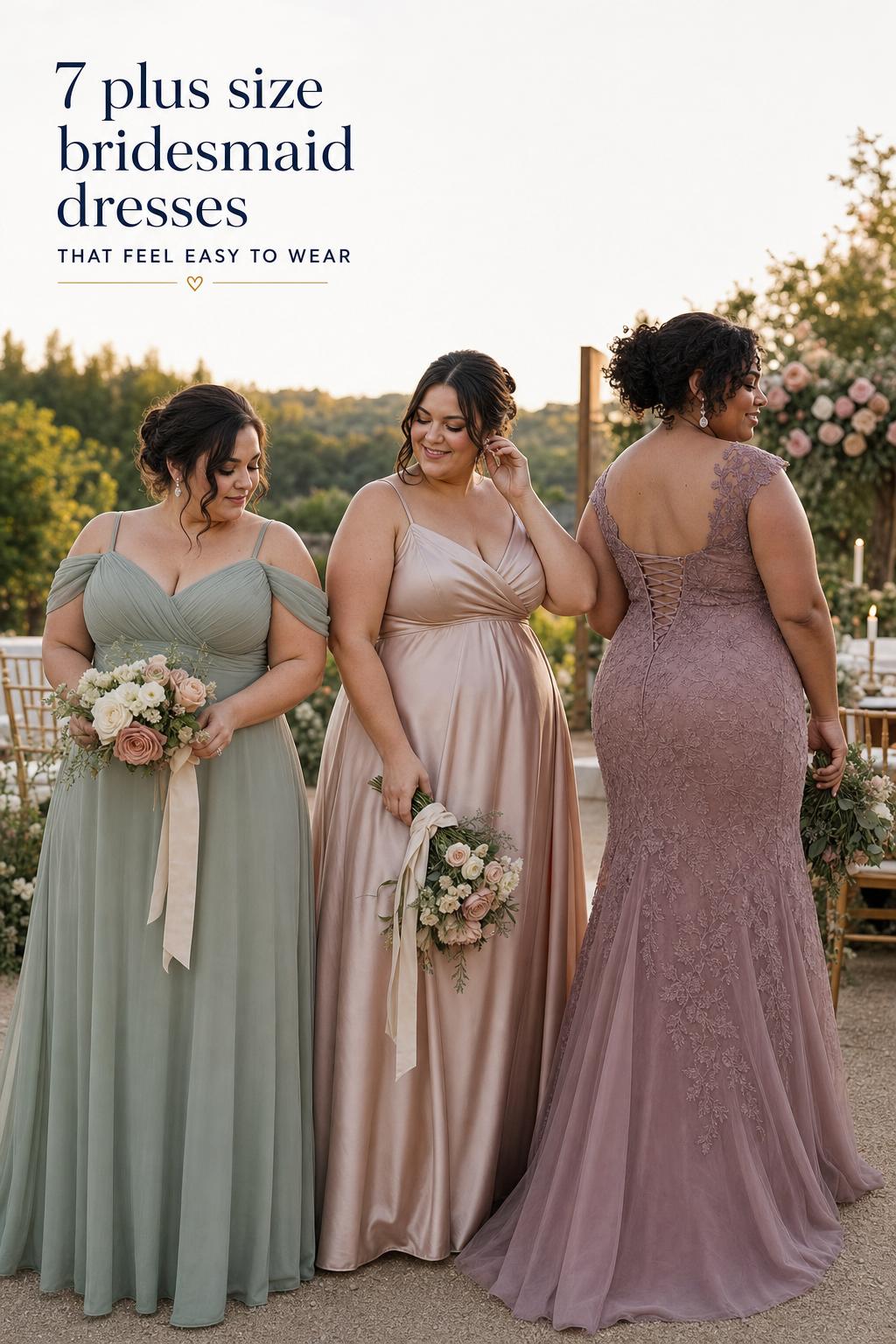
Start with the wedding setting, not just the dress rack
One of the easiest ways to narrow the options is to picture the wedding day as a full scene rather than a single fitting-room moment. A floor-length chiffon gown that looks ethereal in golden-hour garden light may feel more natural than a heavily embellished silhouette for an outdoor ceremony. A richer satin finish can look especially polished in a formal evening venue where candlelight and deeper color palettes are part of the atmosphere. The venue, the season, and the level of formality should guide the dress before details like neckline or embellishment come into play.
That perspective also helps bridal parties avoid one of the most common mistakes: selecting a dress based only on trend appeal. A mermaid shape may look dramatic on a product page, but if the wedding includes stairs, dancing, long walks between ceremony and reception, or hours of seated dinner conversation, comfort and movement matter just as much as the initial look.
Your wedding look is only the beginning.
Keep your guest list, vendors, timeline, and every important detail together with Zarellea — so your day feels as considered as your style.
- Best for: bridal parties trying to balance aesthetics with all-day wearability
- Style tip: match fabric weight and silhouette to the venue’s mood
- Avoid this: choosing a highly structured dress without considering sitting, walking, and dancing
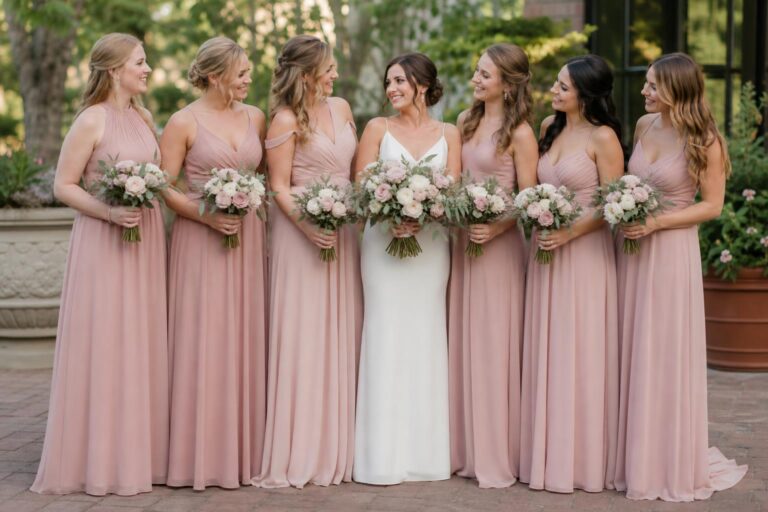
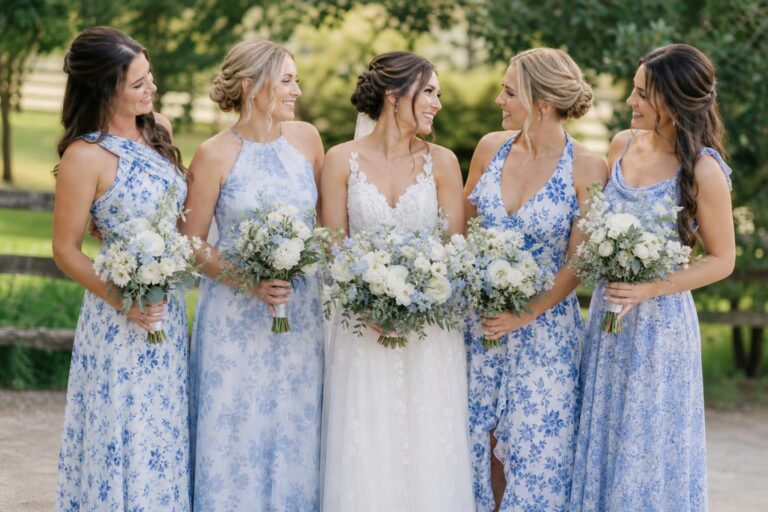
- Pinterest-worthy idea: floor-length chiffon in a romantic color family for outdoor golden-hour portraits
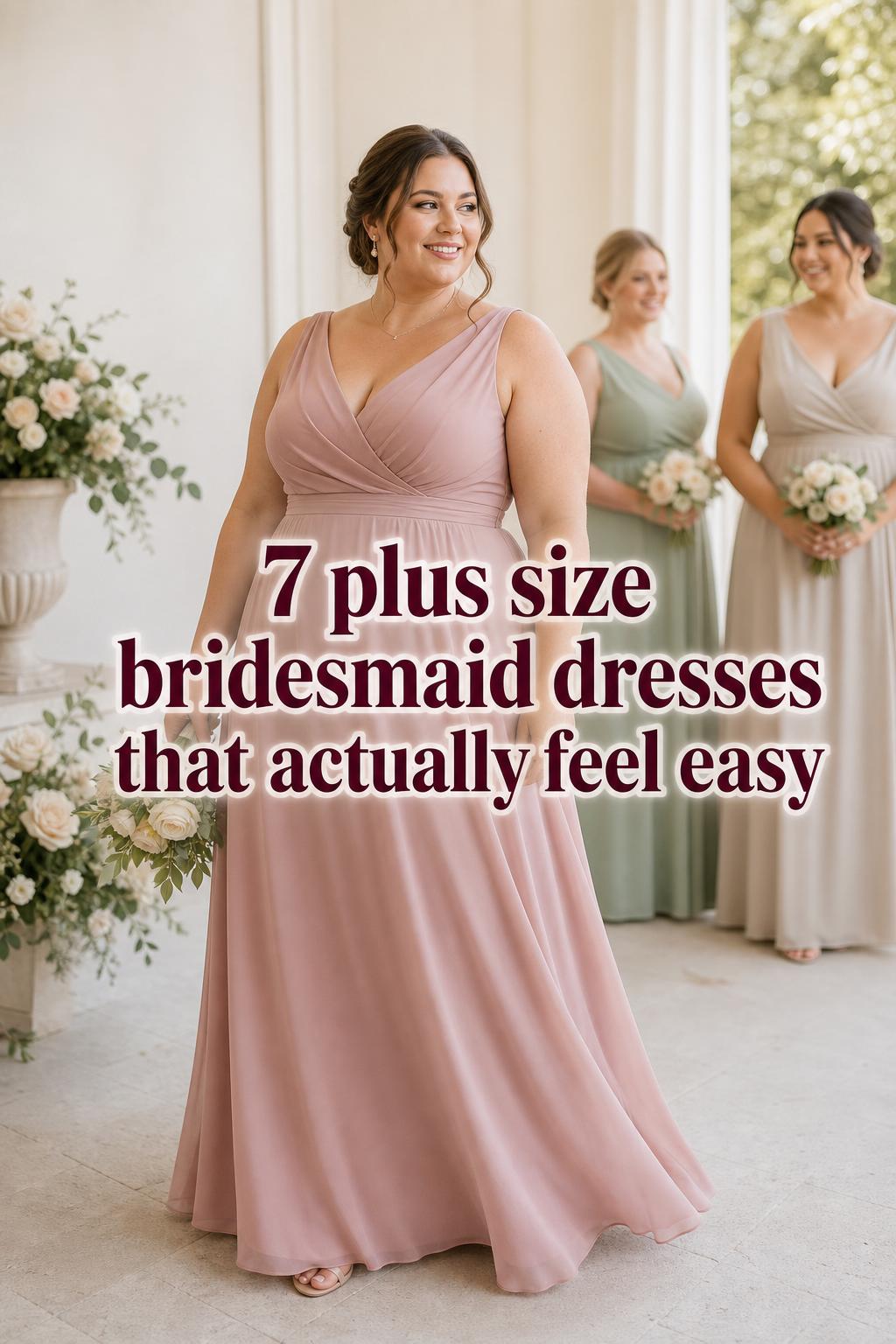
How to choose silhouettes that actually work for different bodies
Silhouette is the foundation of flattering plus size bridesmaid dresses. It shapes how the fabric falls, how the waist is defined, how movement feels, and how the dress photographs from every angle. The strongest options are not “slimming” in a vague sense. They are balanced. They create proportion, support, and ease.
A-line and empire waist for the most flexible fit
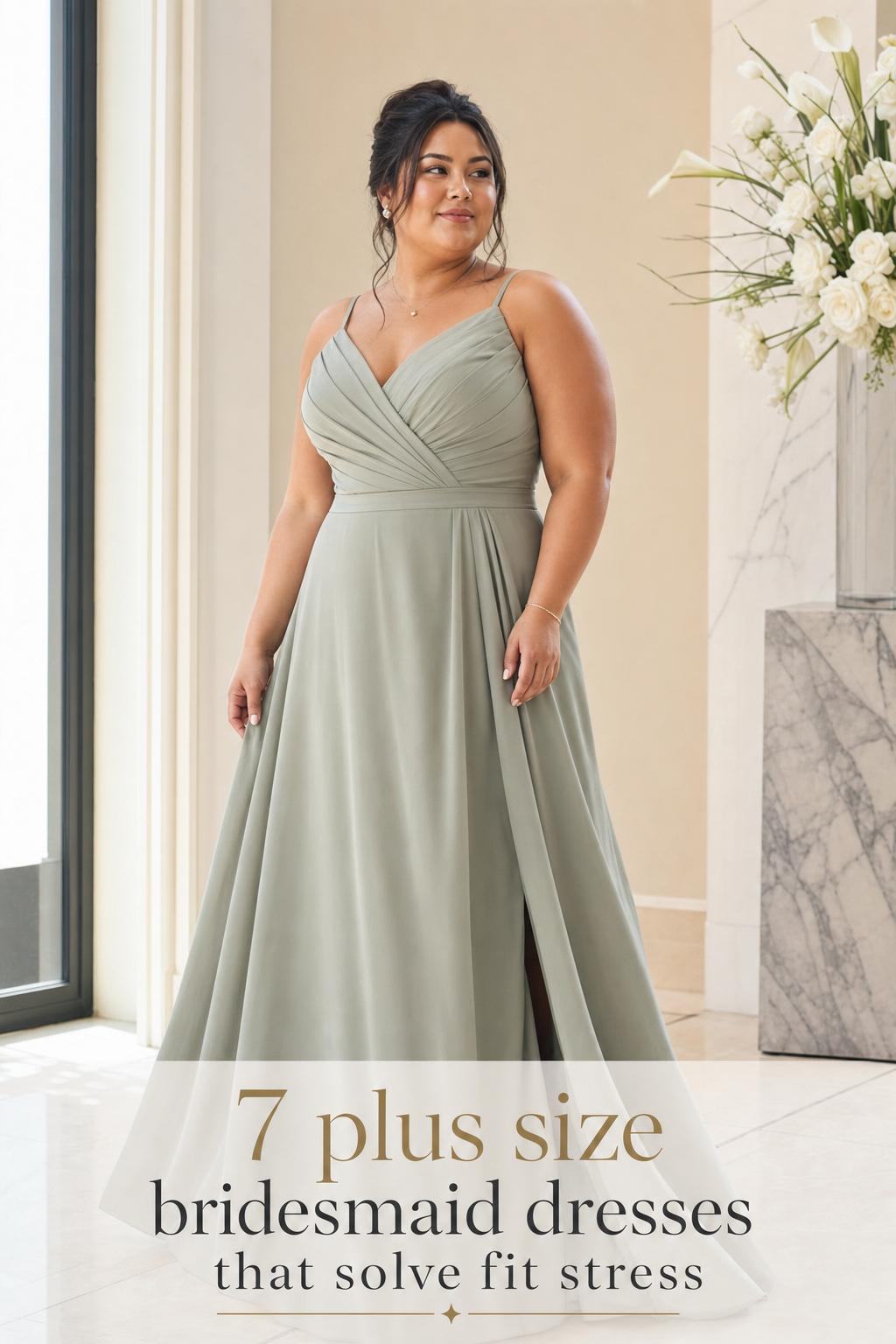
A-line remains one of the most dependable choices because it creates structure through the bodice while allowing the skirt to fall away softly from the body. In chiffon, lace, or satin, it tends to feel elegant rather than restrictive. That matters for mixed bridal parties where not everyone wants the same level of body definition. Empire waist dresses can also be especially effective when comfort around the midsection is a priority, since the line of the dress begins higher and lets the skirt skim rather than cling.
For weddings with a romantic or traditional mood, these silhouettes often photograph beautifully in motion. A-line skirts catch movement naturally during a walk down the aisle, while empire waist dresses can create a softer, lighter line in outdoor or destination settings.
When ballgown, mermaid, and sheath make sense
Ballgown silhouettes bring ceremony and drama. They can feel especially fitting in classic ballroom weddings or formal evening venues where the bridal party is meant to look elevated and distinctly dressed. The trade-off is volume. A fuller skirt changes how the bridesmaid moves through narrow aisles, crowded getting-ready rooms, and reception seating.
Mermaid silhouettes work best when the bridal party wants a sculpted, fashion-forward look and the wearer is comfortable with a closer fit through the hips and thighs. They tend to feel more directional and can be stunning in satin, but they are not always the easiest option for a long, active wedding day.
Sheath styles offer a clean, minimal line and can feel modern, especially for contemporary city weddings or streamlined ceremonies. The challenge with sheath dresses is that fabric choice becomes even more important. A soft drape may feel graceful, while a fabric with no forgiveness can feel less comfortable over several hours.
Petite and tall considerations that change the final look
Length is not a small detail. It changes proportion entirely. Petite bridesmaids often benefit from silhouettes that do not overwhelm the frame, with careful attention to hem and waist placement. Tall bridesmaids may find floor-length styles particularly elegant, but the line of the dress still needs to feel intentional rather than simply long. In both cases, alterations can be the difference between a dress that merely fits and one that feels polished.
Choose this if: you want the safest all-around silhouette for a mixed-size bridal party, start with A-line. If the wedding is more formal and dramatic, ballgown or mermaid can work beautifully—but only if comfort and movement have been tested honestly.
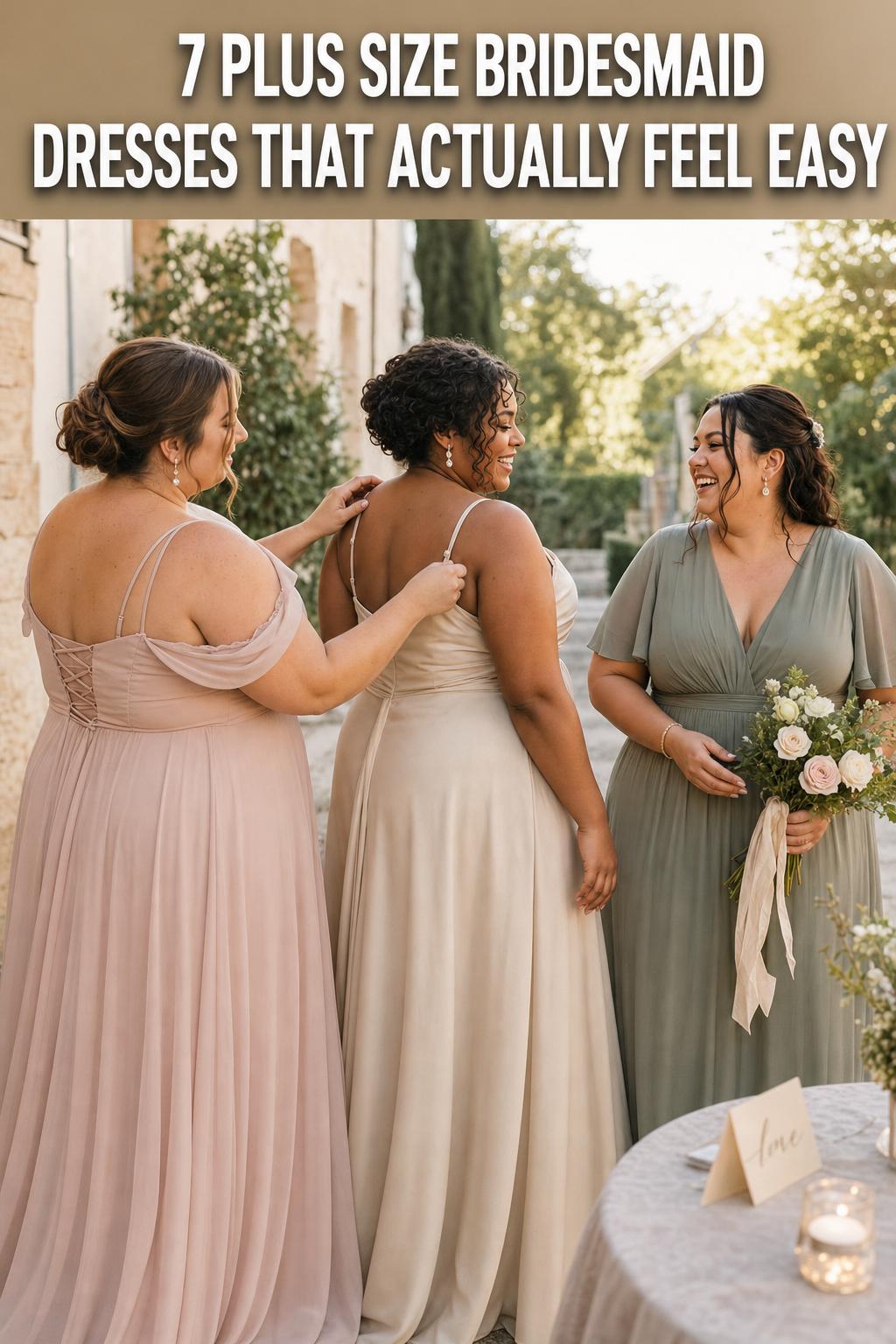
Fabric is where comfort, drape, and polish come together
Fabric determines how the dress feels on the body and how it behaves throughout the day. It also affects temperature, movement, shine, and the visual weight of the dress in photos. Two dresses in the same silhouette can feel completely different depending on whether they are cut in chiffon, satin, lace, or tulle.
Chiffon for softness and movement
Chiffon is one of the most consistently useful choices for bridesmaid dressing because it tends to drape gently and move well. In floor-length gowns, it creates a soft, romantic effect that suits outdoor ceremonies, garden venues, and weddings with a lighter, more airy visual story. It also tends to feel less rigid than heavier formal fabrics, which is helpful for long days and mixed body preferences.
This is also why chiffon appears so often across size-inclusive collections from retailers and bridal brands. It balances elegance with wearability. For bridesmaids who are nervous about cling or stiffness, chiffon usually feels reassuring.
Satin for richer formality and clean lines
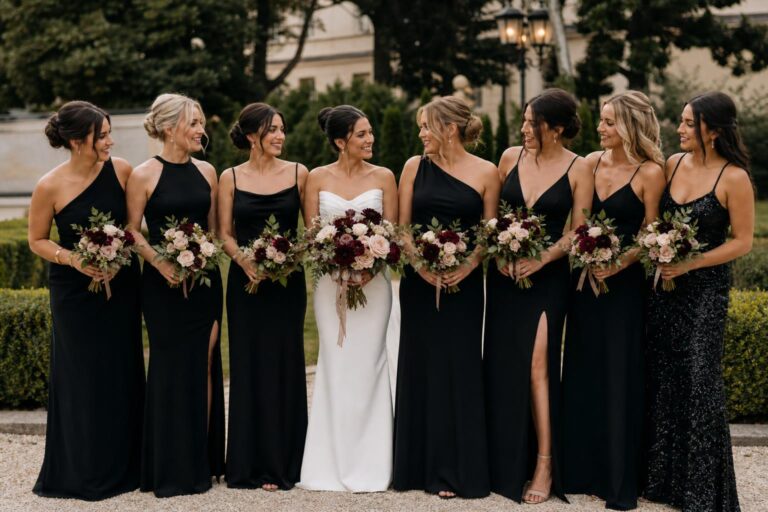
Satin brings more shine, more structure, and often a more elevated evening mood. It can look especially striking in deeper palettes or candlelit settings, where the fabric reflects light in a way that feels sophisticated rather than flat. Satin also works beautifully when the bridal party wants a more modern, sleek finish instead of an overtly soft or romantic one.
The consideration with satin is that it can reveal fit issues more clearly than chiffon. Accurate sizing, proper understructure, and thoughtful alterations matter. For some bridesmaids, that makes satin worth the effort. For others, it may feel less forgiving than a lighter draped fabric.
Lace, tulle, and embellishment for texture
Lace introduces romance and detail, especially in bodices or overlay designs. Tulle can add softness or subtle volume. Embellishments such as floral appliqués, sequins, or refined decorative details can elevate a dress, but they should suit the wedding’s level of formality. In a clean, contemporary wedding, too much embellishment may compete with the overall look. In a traditional or glamorous setting, those details can feel exactly right.
Works especially well with: chiffon for outdoor weddings, satin for formal receptions, lace for classic bridal styling, and tulle when the wedding calls for softness and dimension in photos.
The fit features that matter more than people expect
Many bridesmaids focus first on neckline or color, but fit features often make a greater difference in how confident the dress feels. Small construction details can improve adjustability, support, and comfort in a way that is especially important in plus-size formalwear.
Corset-back, adjustable straps, and stretch details
A corset-back can be a practical advantage because it offers flexibility through the bodice and can help fine-tune fit without making the dress feel rigid. Adjustable straps are equally valuable, especially when bridesmaids have different proportions through the bust and shoulders. Stretch fabrics or stretch components can improve comfort, though the dress should still maintain enough structure to feel event-appropriate.
These details are not simply technical notes on a product page. They affect whether a bridesmaid can breathe comfortably through the ceremony, sit through dinner, and still feel secure by the end of the night.
Why sizing guides and alterations should be part of the plan
Inclusive sizing is a major strength across the current bridal market, but the range itself does not eliminate the need for careful measuring. Some collections emphasize size 0–26W, some point to 0–30, and some focus on custom sizing or made-to-measure messaging. That variety is useful, but it also means the smartest shopping process begins with measurements, a close review of size charts, and enough lead time for tailoring.
Alterations are not a sign that the dress was wrong. They are often the final step that brings the silhouette into proportion—adjusting length, refining the waist placement, or improving bust support. For bridal parties shopping online, this step matters even more because the first delivery is rarely the true final fit.
- Best for: bridesmaids ordering online from size-inclusive collections
- Style tip: prioritize adjustable features if the bridal party is spread across multiple sizes and body proportions
- Avoid this: waiting until the last minute to schedule hemming or tailoring
- Choose this if: you want more flexibility in fit, especially through the bodice
Where to shop: brands and retailers with strong inclusive sizing options
The current landscape for plus size bridesmaid dresses includes pure bridal retailers, department-store style marketplaces, and editorially strong designer brands. Each one serves a slightly different bridal party. Some are strongest on affordability, some on customization, some on broad color and neckline choice, and some on an elevated design point of view.
David’s Bridal, Macy’s, and Birdy Grey for broad U.S. accessibility
David’s Bridal stands out for accessible shopping support, including the appeal of in-store service alongside online browsing. For bridal parties that want fitting help, silhouette guidance, or a more hands-on process, that practical layer can be very reassuring. Macy’s brings a department-store catalog approach, useful for comparing lengths, colors, embellishments, and a wide mix of product styles in one place. Birdy Grey places strong emphasis on plus-size as a dedicated collection category, making it easier to shop with size inclusion in mind from the start.
JJ’s House and Azazie for customization-minded shoppers
JJ’s House is associated with broad sizing, color variety, and affordability messaging, with custom sizing as part of the appeal. Azazie is often linked with inclusive sizing and made-to-measure convenience. These brands tend to attract bridal parties who are comfortable ordering online and want to compare options across silhouettes, necklines, and shades without being limited to a small in-store selection.
This route can be especially useful for bridal parties in different states who still need a coordinated look. The main caution is timing. Customization and online ordering should always leave room for production, shipping, and any final tailoring.
Adrianna Papell and Jenny Yoo for a more designer-led finish
Adrianna Papell brings a more design-focused, occasionwear-driven point of view, often with elegant detailing and a polished event feel. Jenny Yoo is frequently associated with bridal authority and modern bridesmaid style, making it a natural reference point for brides who want a refined, cohesive bridal party aesthetic. These names often appeal when the visual story of the wedding matters deeply and the bride wants dresses that feel considered rather than purely functional.
Ellen Bridals, Mondressy, Yours Clothing, and ColorsBridesmaid for specialized browsing angles
Ellen Bridals highlights silhouettes and fit details such as corset-back construction. Mondressy leans into affordability and mix-and-match energy. Yours Clothing emphasizes curve-friendly dressing and inclusive messaging. ColorsBridesmaid offers a color-family-first experience, which can be very helpful when the wedding palette is already set and the next challenge is finding dresses that align with it.
Pinterest-worthy idea: create a bridal party inspiration board by brand and fabric, not only by dress image. One folder for chiffon, one for satin, one for lace, and one for color family can make decision-making far clearer.
Color strategy that feels intentional in photos
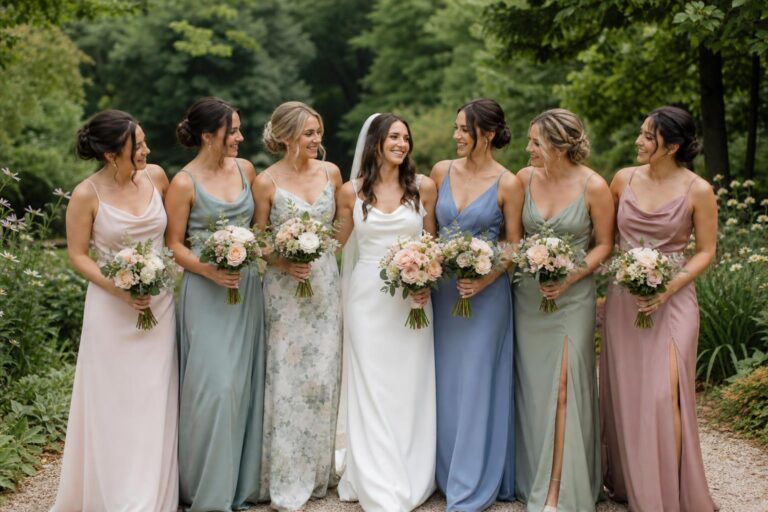
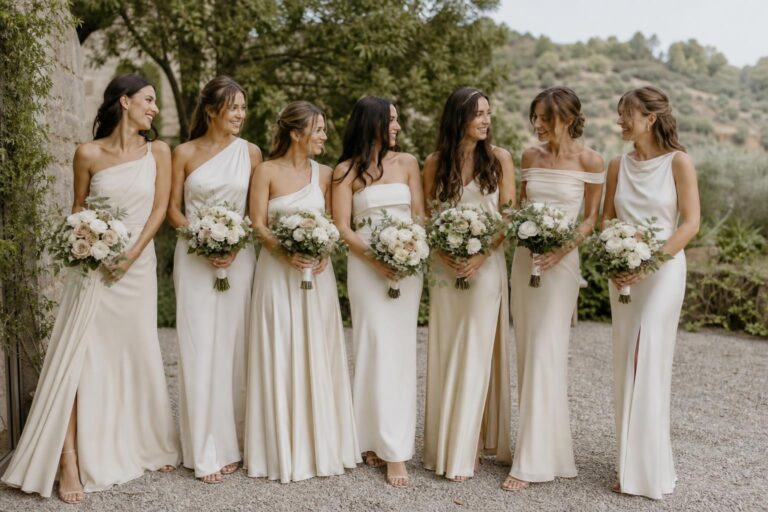
Color can completely shift how a bridesmaid dress reads. The same silhouette in blush feels soft and romantic, while navy or emerald can feel deeper and more formal. Champagne brings warmth. Sea fog and tan or beige can feel understated and elegant. The smartest palette choices are not only pretty on a swatch card; they make sense for the venue, the season, and the bridal party as a whole.
Seasonal palette thinking
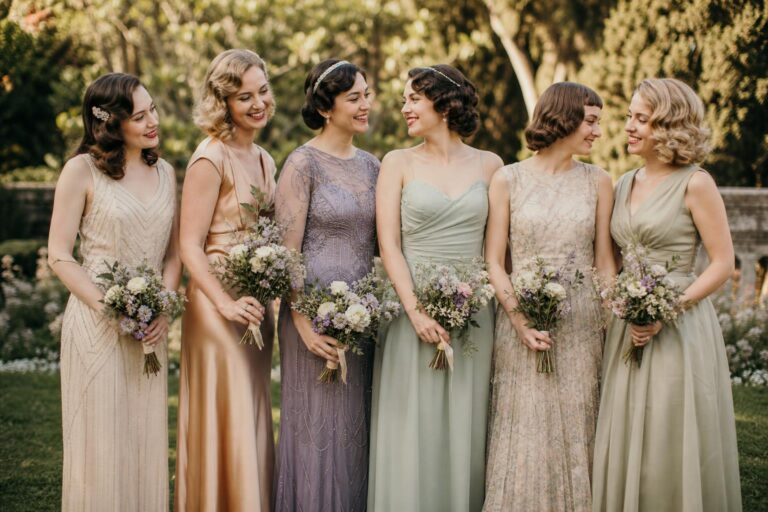
Soft tones such as blush or champagne often suit garden ceremonies, daytime celebrations, and lighter floral styling. Navy and emerald tend to feel richer and more grounded, which works beautifully in evening receptions, colder months, or more formal settings. Neutral families such as tan, beige, or muted sea fog can create a calm, elegant bridal-party image that feels modern and easy to style around.
Color should also support the flowers, venue materials, and overall bridal mood. If the wedding aesthetic is light, airy, and romantic, a heavy dark palette may feel visually disconnected. If the setting is a dramatic ballroom or sophisticated evening event, very pale shades may need richer styling details to hold their own in photos.
Mix-and-match or one unified shade?
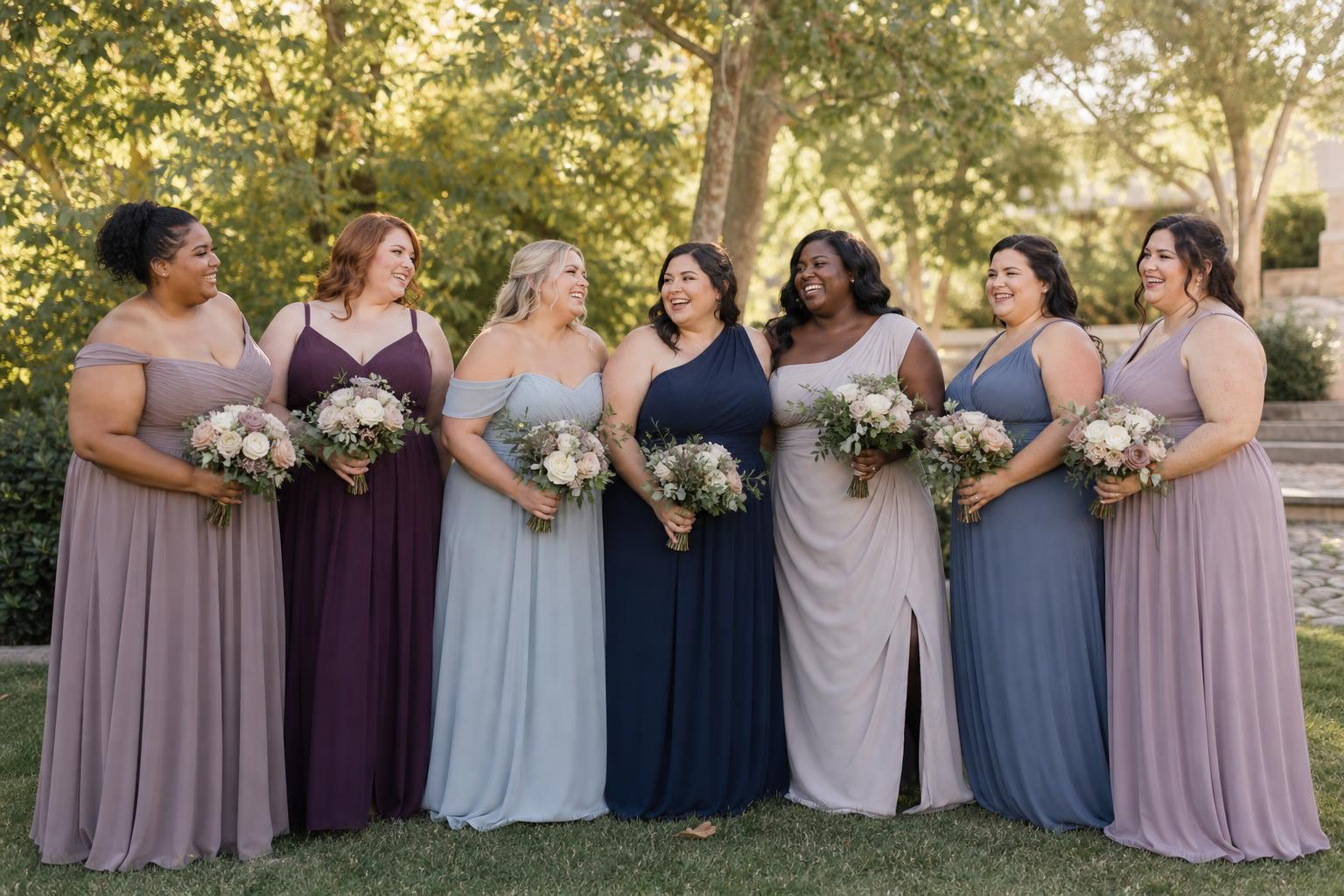
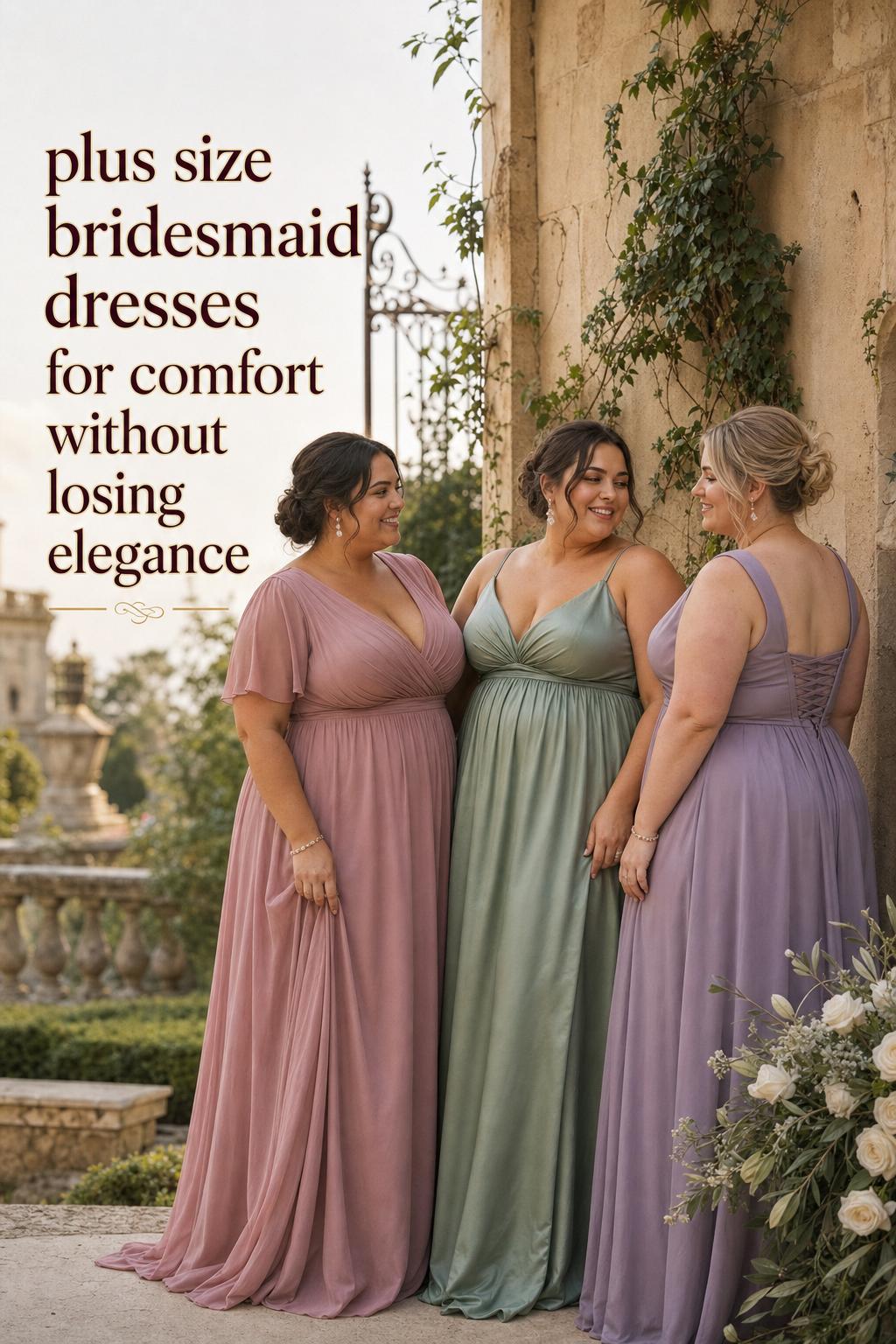
Mix-and-match dressing can be particularly effective for plus-size bridal parties because it allows each person to choose a silhouette that suits her body and comfort level while staying within one coordinated color story. The result often feels modern and thoughtful rather than forced. Uniform dresses create a cleaner, more traditional visual line, especially in formal weddings. Neither is automatically better; it depends on whether the priority is exact cohesion or individualized fit.
- Best for: bridal parties with varied style preferences and body proportions
- Style tip: keep the fabric or the color family consistent if silhouettes differ
- Avoid this: mixing too many finishes at once, such as satin, lace, sequins, and tulle without a clear plan
- Works especially well with: a bride who wants a curated but less rigid bridal-party look
How to match the dress to the wedding mood
A well-chosen bridesmaid dress should feel like part of the wedding environment. That means the styling logic shifts depending on whether the celebration is romantic and natural, classic and formal, or minimalist and contemporary.
Garden, vineyard, and outdoor ceremonies
Outdoor weddings usually favor movement, softness, and breathable fabrics. Chiffon A-line or empire waist dresses tend to suit this setting because they move well in light wind, feel comfortable over long standing periods, and photograph beautifully against natural backgrounds. Lighter palettes and gentle textures often look especially harmonious in this kind of environment.
Ballroom and evening receptions
Formal interiors often support more polished finishes. Satin, subtle embellishments, or a more structured silhouette can look striking under candlelight or reception lighting. This is where a floor-length gown in navy, emerald, or champagne can feel especially elevated. If the mood is glamorous, a touch of sequins or refined floral appliqué may fit naturally.
Minimal modern weddings
For a modern ceremony with clean florals and streamlined decor, sheath or sleek A-line dresses in satin or simple chiffon often make more sense than heavily embellished gowns. The elegance comes from line, proportion, and color discipline rather than decorative excess.
Style tip: if you can describe the wedding mood in three words—romantic, classic, modern, festive, airy, formal—it becomes much easier to eliminate dresses that belong to a different visual story.
The practical shopping plan that saves stress later
Even the most beautiful dress becomes a problem if the process is rushed. Bridesmaid shopping is partly aesthetic and partly logistics. The best outcomes usually come from a plan that respects lead times, return policies, alterations, and the difference between online inspiration and real-life fit.
Measure before browsing too deeply
It is tempting to start with saved images, favorite colors, and trend boards, but accurate measurements should come first. This is especially important when comparing collections from different brands. A bride may love one silhouette from Birdy Grey and another from JJ’s House or Adrianna Papell, but the fit approach can differ. Measurements help narrow the field before emotional decisions take over.
Use online and in-store shopping differently
In-store appointments can clarify silhouette preferences quickly, especially for bridesmaids who are unsure whether they prefer A-line, mermaid, or empire waist. Online catalogs are stronger for comparing colorways, necklines, and budget across a larger group of options. Bridal parties often get the best result by using both methods strategically rather than relying on only one.
Build in time for tailoring and returns
Returns policies, rush orders, stock status, and tailoring windows deserve attention at the same time as style details. A dress that arrives quickly but fits poorly may still create more stress than a made-to-measure option ordered earlier. Likewise, a dress with a better return structure may feel safer for a bridesmaid who is ordering from a new brand for the first time.
Avoid this: treating delivery as the finish line. In most real wedding timelines, delivery is simply the point where final fit decisions begin.
An editorial note on affordability versus finish
Affordable plus-size bridesmaid dresses are widely available, and that is a positive shift for bridal parties managing real budgets. But “affordable” should not only mean the lowest listed price. It should also account for whether the dress needs extensive alterations, whether the fabric suits the event, and whether the construction will remain comfortable through a full wedding day.
A lower-cost chiffon gown that fits well and needs minimal adjustment may be a better value than a more dramatic dress that requires multiple tailoring appointments. Likewise, a designer-led option from Adrianna Papell or a polished style from Macy’s may justify a higher spend if the finish is stronger and the dress aligns more naturally with the event.
That balance is why many bridal parties compare affordability, customization, and visual finish all at once rather than shopping by price alone. Budget matters, but so does how the dress performs on the day itself.
Real-world styling scenarios bridesmaids actually face
Some of the most helpful dress decisions happen when you imagine a real wedding scenario rather than an abstract style category. A bridesmaid attending a summer garden ceremony may prioritize breathable chiffon, softer colors, and a silhouette that allows easy movement over grass and outdoor paths. Someone standing in a formal indoor reception may prefer satin, floor-length polish, and a bodice with more structure.
Another common scenario is the mixed bridal party, where one bridesmaid wants more support through the bodice, another prefers looser movement through the waist, and another is balancing height or hem concerns. In that situation, matching color and fabric while allowing silhouette flexibility often leads to a more elegant final result than forcing everyone into one cut.
Maternity-friendly needs and body-type differences also matter. Not every bridesmaid will want the same waist placement, neckline depth, or fit through the hips. Dresses with adjustability, softer drape, or custom sizing options can help the group stay coordinated without making anyone feel boxed into a shape that does not serve her.
Common mistakes to avoid when choosing plus-size bridesmaid dresses
Many bridal-party frustrations are preventable. The styling itself is important, but the mistakes that create stress are often logistical or proportion-related.
- Choosing a silhouette for trend appeal without testing comfort, sitting, and walking.
- Ignoring fabric behavior and assuming every floor-length dress will drape the same way.
- Selecting one rigid dress for every bridesmaid when a coordinated mix-and-match approach would flatter the group better.
- Waiting too long to measure, order, or plan alterations.
- Focusing on color alone without considering venue, lighting, and season.
- Overloading the look with embellishments when the wedding mood is actually minimal or modern.
Style tip: when a dress checks three boxes—comfortable fit, strong movement, and visual alignment with the wedding—it is usually a stronger choice than a more dramatic option that only wins on first glance.
Pinterest-worthy ideas to save for later
If you are building a board for bridesmaid inspiration, save images by mood and detail rather than only by brand name. That makes it easier to spot patterns in what you are actually drawn to, whether that is soft chiffon, clean satin, lace texture, corset-back support, or a specific palette like blush, emerald, navy, champagne, or sea fog.
- A-line chiffon gowns in one color family with varied necklines for a romantic outdoor ceremony
- Floor-length satin dresses in a deep palette for a formal evening reception
- Lace-bodice dresses paired with soft skirts for a classic bridal-party look
- Mix-and-match silhouettes in the same shade for a more individualized, modern bridal party
- Color-first boards using neutrals, blush, navy, emerald, champagne, tan, beige, or muted sea tones
Pinterest-worthy idea: save one board for “shape and fit,” one for “fabric and texture,” and one for “color palette.” Bridesmaid decisions become much easier when inspiration is organized by the actual factors that influence the final choice.
Final checklist before you choose
Before the bridal party commits, pause and review the decision through a stylist’s lens. Does the silhouette support movement? Does the fabric suit the season and venue? Is the color right for the wedding mood and photography? Is there enough time for production, returns, or tailoring? And most importantly, does each bridesmaid feel like herself in the dress rather than simply compliant with the plan?
- Confirm the wedding setting and level of formality
- Choose silhouette before obsessing over details
- Compare chiffon, satin, lace, and tulle based on comfort and visual finish
- Review size charts carefully and measure first
- Prioritize adjustable details like corset-back or straps when helpful
- Decide between uniform dresses and a mix-and-match approach
- Allow time for alterations, returns, and shipping
The safest and most stylish path is usually a dress that balances proportion, softness or structure, and wedding-day practicality. For many bridal parties, that means an A-line or empire waist silhouette in chiffon or satin, chosen in a color family that supports the venue and season. For more formal celebrations, richer satin, refined embellishment, or a more sculpted silhouette can be beautiful when comfort has been considered carefully. The best choice is the one that feels polished in photos, comfortable through the event, and true to the overall wedding mood.
FAQ
What size is considered plus-size in bridesmaid dresses?
Plus-size in bridesmaid dresses is usually presented through inclusive size ranges rather than one universal starting point. Many bridal brands and retailers highlight expanded sizing such as 0–26W or 0–30, so the most reliable approach is to use the brand’s own size chart instead of assuming the same number will fit the same way everywhere.
What silhouette is most flattering for plus-size bridesmaids?
A-line is often the most versatile and widely flattering option because it creates shape through the bodice and allows softer movement through the skirt. Empire waist can also work well when comfort through the midsection is a priority, while mermaid, sheath, and ballgown styles can be beautiful when they suit the wearer’s preferences, the venue, and the level of comfort needed for the day.
Are chiffon or satin dresses better for plus-size bridesmaids?
Neither fabric is automatically better; it depends on the wedding and the fit. Chiffon is often favored for movement, softness, and comfort, especially in outdoor or romantic settings. Satin offers a more polished, formal finish and works beautifully for evening weddings, but it usually requires more attention to sizing and alterations because it can show fit details more clearly.
Can plus-size bridesmaid dresses be altered?
Yes, alterations are often an expected part of getting the final fit right. Hemming, adjusting straps, refining the bodice, or improving waist placement can make a major difference in comfort and proportion. Ordering with enough time for tailoring is one of the most practical steps a bridal party can take.
Which brands are known for inclusive sizing in bridesmaid dresses?
Widely recognized names in this space include David’s Bridal, Birdy Grey, JJ’s House, Adrianna Papell, Macy’s, Jenny Yoo, and Azazie, along with retailers such as Ellen Bridals, Mondressy, Yours Clothing, and ColorsBridesmaid. Each offers a slightly different balance of design, accessibility, affordability, customization, or color selection.
Is it better to choose matching dresses or mix-and-match styles?
Matching dresses create a clean, traditional bridal-party look, while mix-and-match styles often work especially well for plus-size bridesmaids because they allow different silhouettes to suit different bodies. The most successful mix-and-match approach usually keeps either the color family or the fabric consistent so the group still looks cohesive in photos.
How early should bridesmaids order their dresses?
Early ordering is wise because the full timeline may include production, shipping, exchanges, returns, and alterations. This is even more important when ordering online or using custom sizing. Waiting until the wedding is close can limit choices and add unnecessary pressure to the fitting process.
Are there plus-size bridesmaid options for maternity needs?
Yes, maternity-friendly needs can often be supported through softer silhouettes, empire waist designs, adjustable features, and custom sizing options. The key is to prioritize comfort, flexibility, and timing, especially if measurements may change between ordering and the wedding date.
What should bridesmaids check before ordering online?
Before ordering online, review the size chart carefully, check whether the dress offers adjustable details such as a corset-back or straps, confirm shipping timelines, and understand the return policy. It also helps to compare fabric descriptions and silhouette notes closely, since those details usually determine whether the dress feels comfortable and polished in real life.