Why Forest Green Bridesmaid Dresses Suit Every Venue
Few bridal party colors feel as quietly assured as forest green. It has the depth of a formal shade, the softness to sit beautifully in natural light, and the versatility to move from a windswept mountain ceremony to a candlelit ballroom without feeling misplaced. That is why forest green bridesmaid dresses are so often discussed alongside dark green, emerald green, and olive green options: they belong to the same family, yet they create distinctly different moods once fabric, silhouette, and setting enter the picture.
This comparison-style guide looks closely at the styling approaches surrounding forest green bridesmaid dresses and the adjacent aesthetics they are most often confused with. Rather than treating every green gown as interchangeable, it breaks down how forest green behaves in satin, chiffon, crepe, and velvet; how it differs from brighter emerald or softer olive; and how venue, photography, sleeve choice, and overall palette shape the final effect. For brides, stylists, and wedding parties making decisions that need to work in real life as well as in photographs, those distinctions matter.
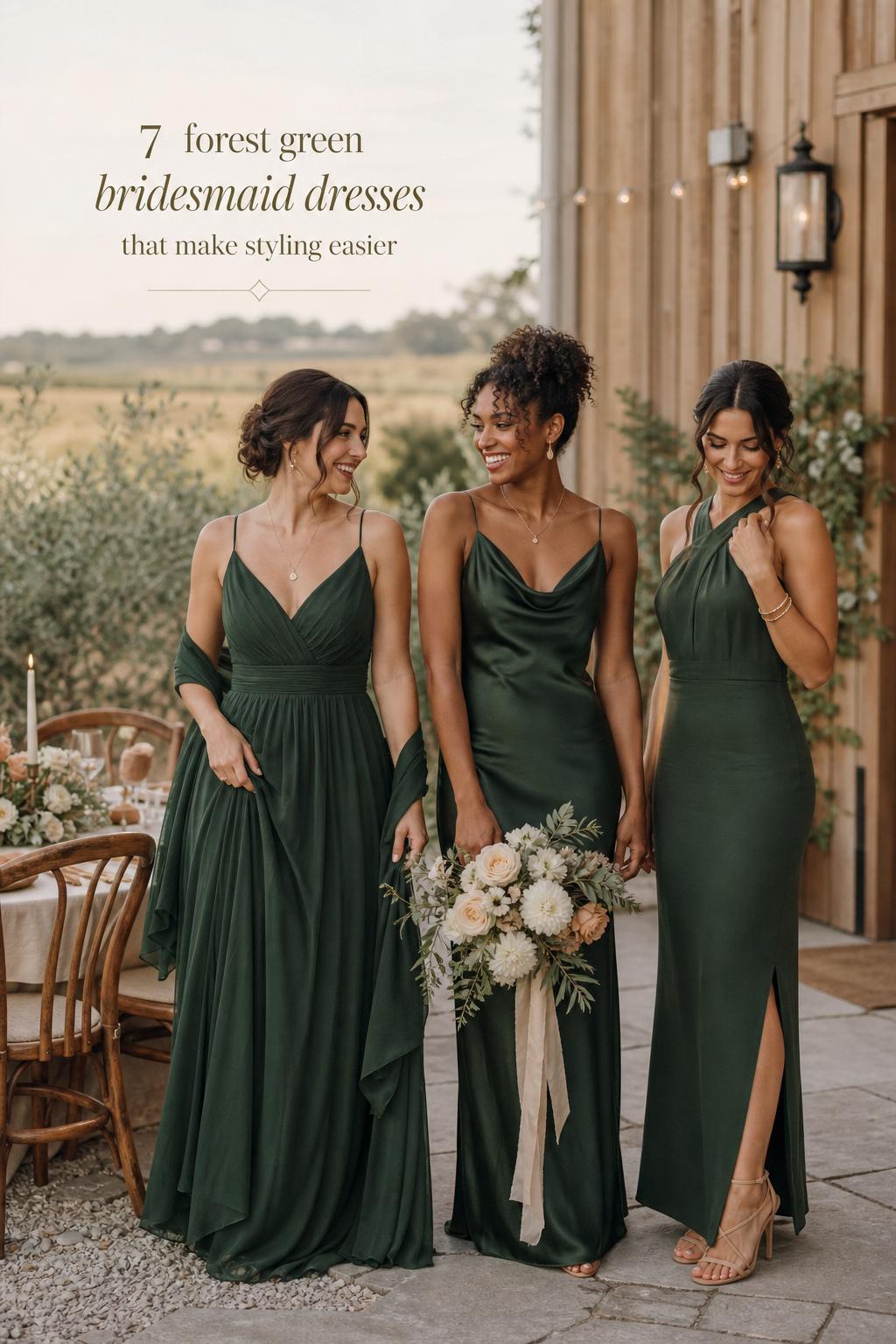
The forest green mood: what defines the look
Forest green sits at the richer, deeper end of the green spectrum used in bridesmaid fashion. It is often chosen for its grounded elegance: more dramatic than sage, less jewel-bright than emerald, and more formal than many lighter greens. In wedding styling, it tends to carry a romantic, nature-connected quality that works especially well with outdoor weddings, garden settings, mountain venues, and evenings where the light turns warm at golden hour.
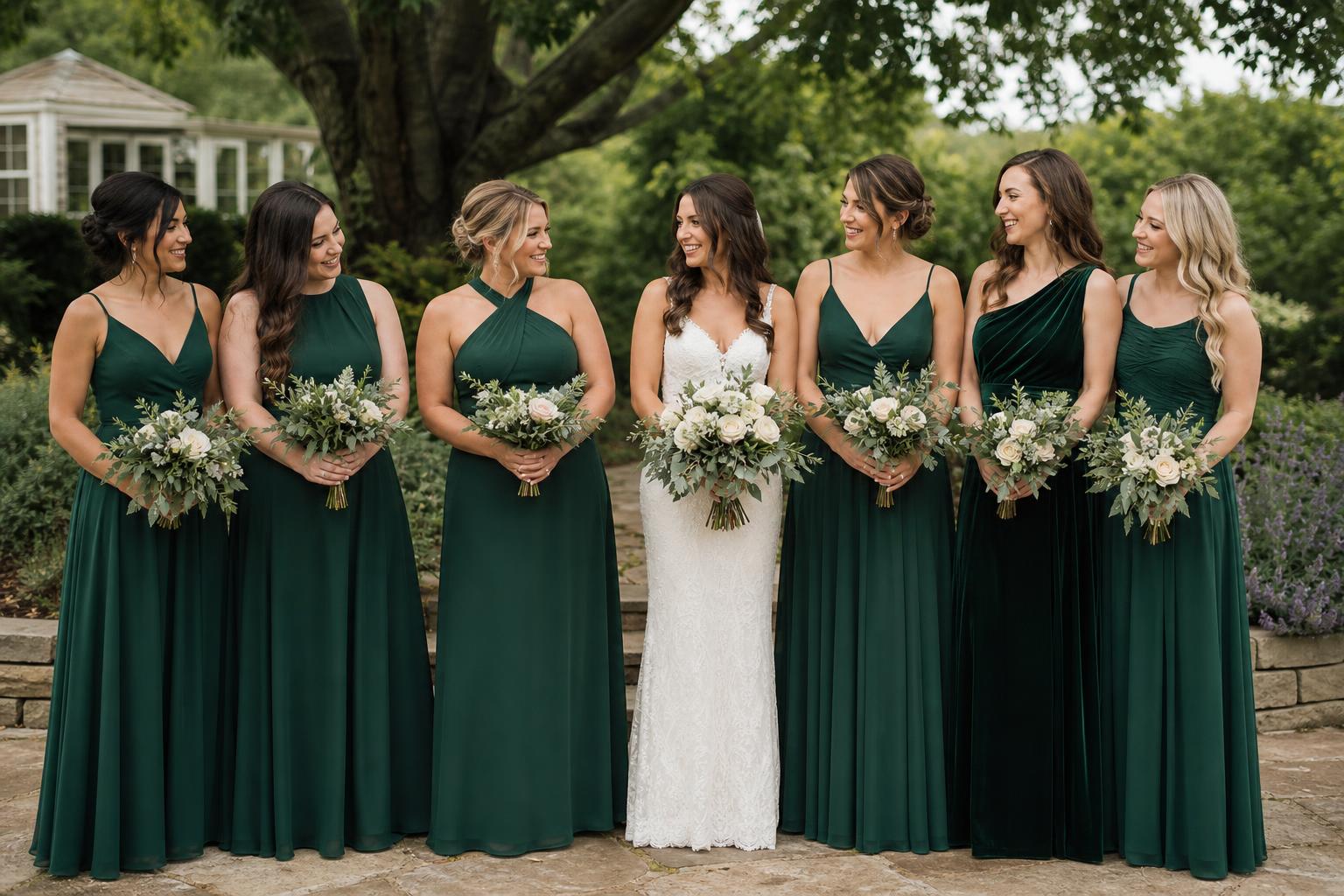
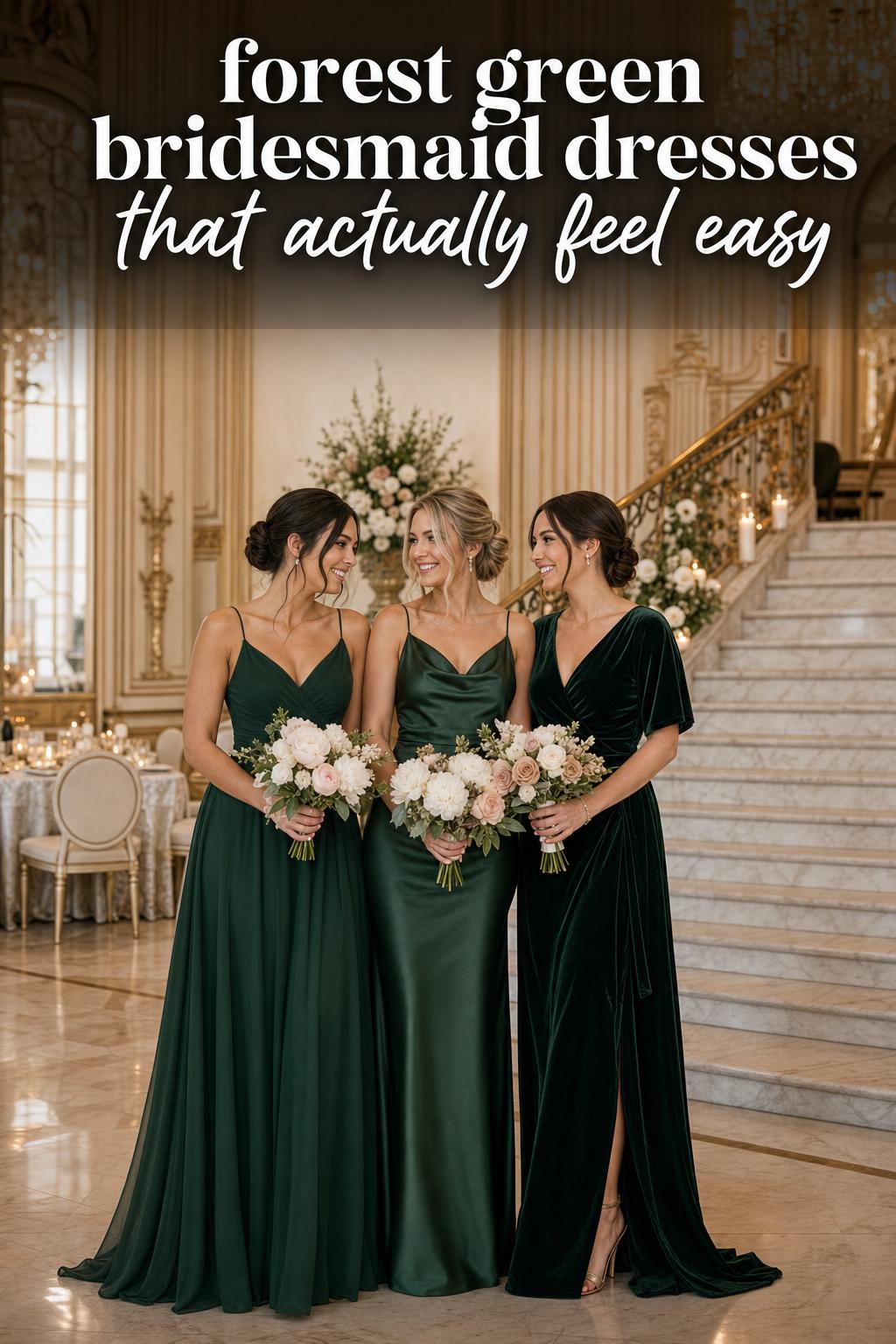
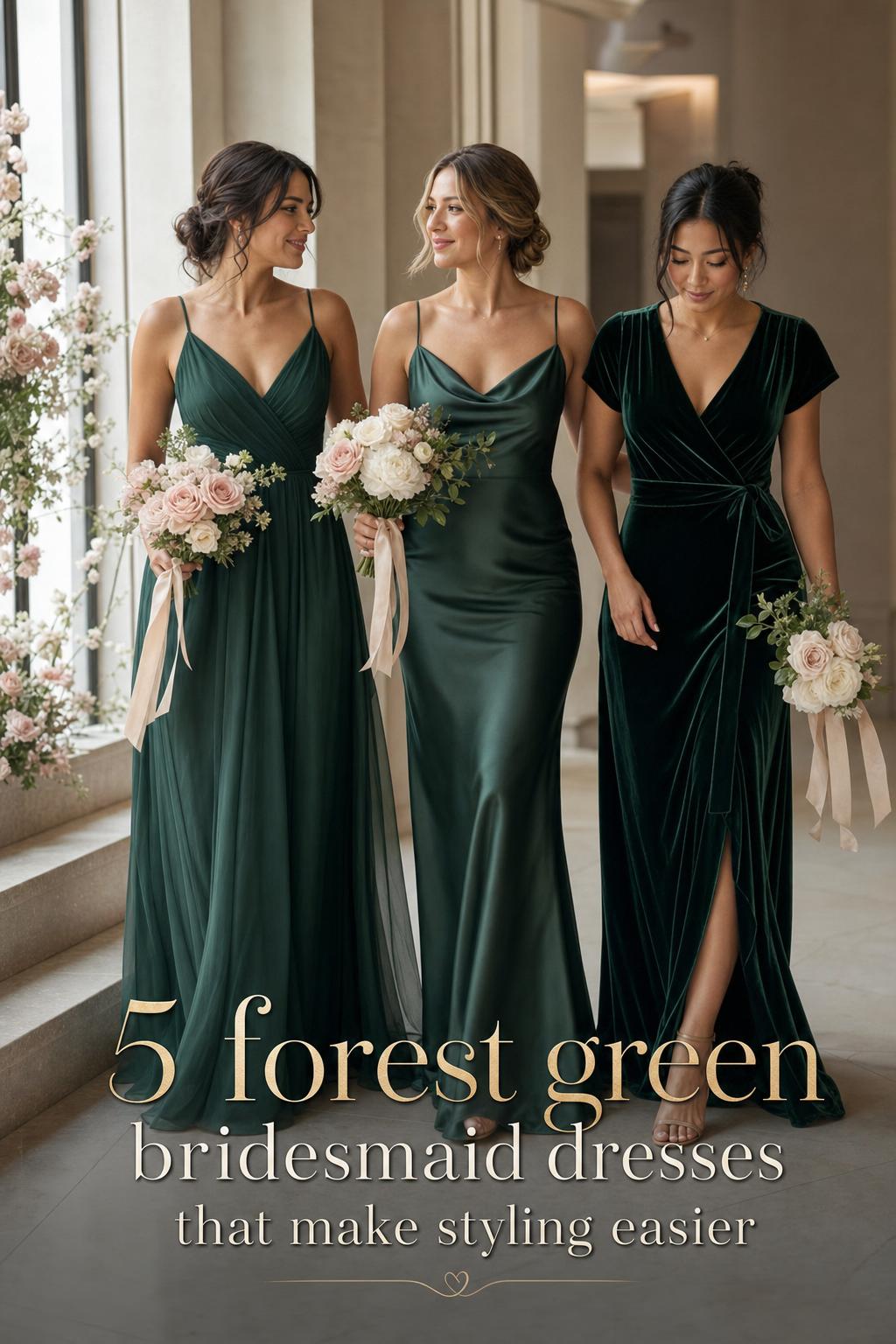
Visually, forest green dresses often look strongest in fluid fabrics that let the color reveal dimension as the wearer moves. Chiffon gives it softness, satin gives it glow, crepe gives it restraint, and velvet brings a more textural richness. Across brands such as Birdy Grey, Kennedy Blue, Rewritten, VowSatin, Ever-Pretty, Lulus, and PrettyLittleThing, the appeal is similar: a color that feels polished without becoming severe.
Your wedding look is only the beginning.
Keep your guest list, vendors, timeline, and every important detail together with Zarellea — so your day feels as considered as your style.
Typical silhouettes in the forest green category
Forest green is frequently shown in maxi and floor-length gowns because the shade benefits from uninterrupted line and drape. A-line shapes, bias-cut silhouettes, sheath styles, and convertible dresses all appear repeatedly in the category. Sleeve variations also matter. Long sleeves and fuller coverage can make the color feel even more formal, while off-shoulder or lighter strap styles let the shade feel more relaxed, particularly for garden or destination celebrations.
Style overview: forest green vs emerald green bridesmaid dresses
Forest green and emerald green are often grouped together because both belong to the deep green family and both are commonly used in wedding party palettes. Yet their styling logic is not the same. Emerald green tends to read brighter and more jewel-toned, while forest green feels moodier and more natural. If emerald catches the eye first, forest green tends to settle into the scene with more depth.
In practical bridal styling terms, emerald green bridesmaid gowns often suit couples who want a higher-contrast, more glamorous look. Forest green bridesmaid dresses usually appeal to those who want elegance with a softer edge, especially when the backdrop includes greenery, woodland tones, or muted neutrals.
Defining characteristics of emerald green
Emerald green is more vivid and jewel-like. It tends to create a stronger statement in photographs and can feel especially striking in satin, where shine intensifies the color. It works well when the wedding palette includes metallics or other rich tones and when the desired mood leans festive, formal, or evening-oriented.
Where forest green differs
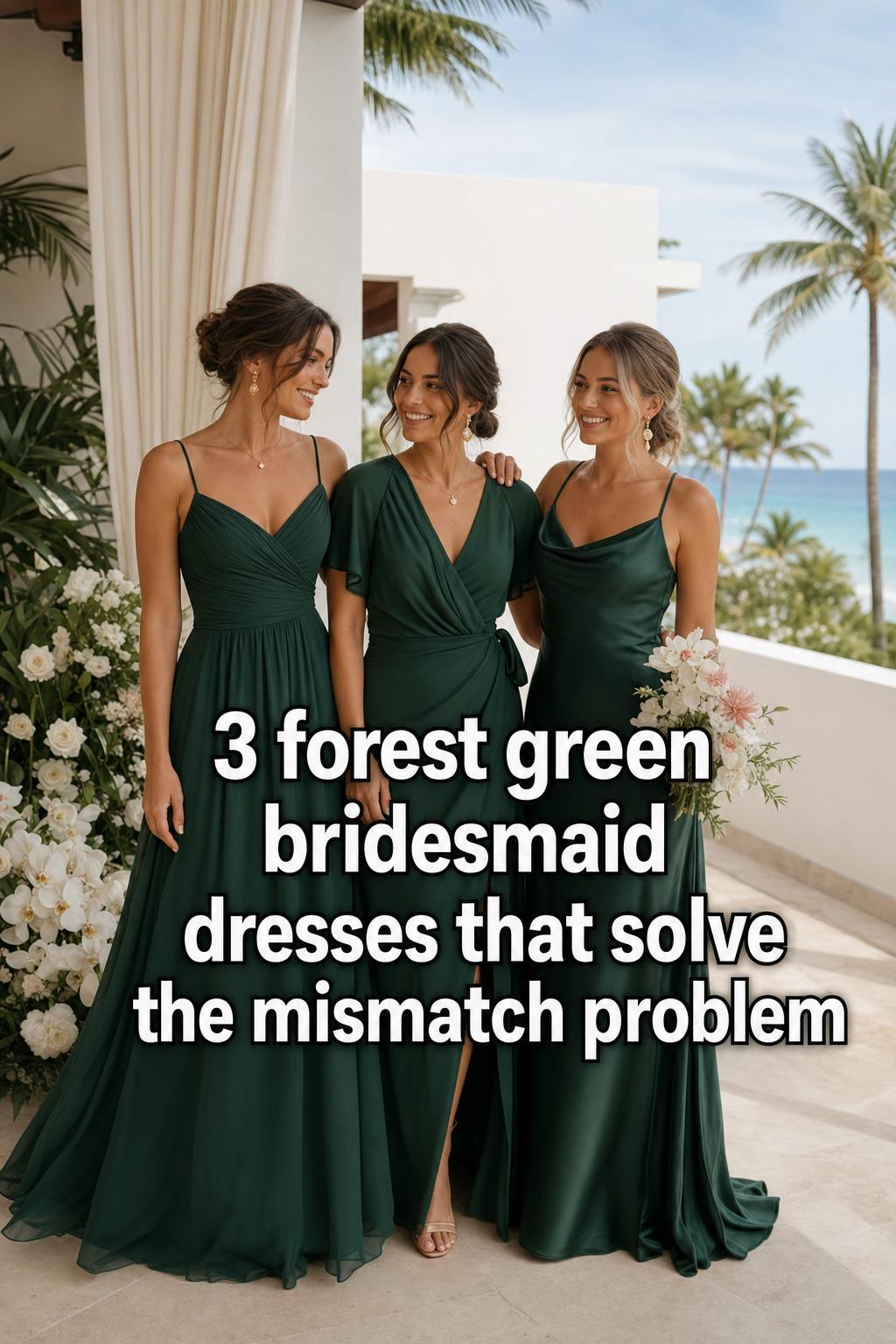
Forest green is quieter and often more adaptable across venues. It pairs especially naturally with outdoor surroundings and can look sophisticated without requiring a high-glam finish. For wedding parties mixing silhouettes, this can be useful: the color holds cohesion even when different necklines, sleeve styles, or fabrics are involved.
Style overview: forest green vs olive green bridesmaid dresses
Olive green enters the conversation because many couples searching for green wedding party dresses are deciding between a moody green and a softer, earthier one. Olive usually reads warmer and more casual. Forest green reads deeper and more formal. Both can work beautifully, but they tell different visual stories.
Olive green bridesmaid dresses often suit rustic countryside venues, softer daytime styling, or wedding palettes that lean muted and earthy. Forest green dresses, by contrast, tend to maintain more presence in lower light and more polish in formal settings. If the reception extends into evening or the event includes a traditional ballroom component, forest green generally feels more elevated.
How olive changes the atmosphere
Olive introduces a more relaxed, sun-washed mood. It can be lovely for rural settings and understated celebrations, but it does not usually create the same depth in photographs as forest green. Bridesmaid groups wearing olive can look intentionally soft and organic; groups in forest green usually appear more defined and dressy.
Where confusion usually happens: dark green, forest green, and the broader green family
Retail categories often blur these shades together. Ever-Pretty, for example, uses dark green language that can include forest and emerald-adjacent tones, while shoppers on Etsy may find handmade listings described with broader wording such as dark green bridesmaid dresses or green wedding party dresses. This is useful for browsing, but less useful when the goal is consistency across an entire bridal party.
The simplest way to think about it is this: dark green is the umbrella, forest green is a specific mood within it, emerald is the brighter jewel-toned version, and olive is the earthier offshoot. Once swatches, fabrics, and lighting enter the conversation, the distinctions become much clearer than category labels suggest.
Fabric changes the story more than most bridesmaids expect
A forest green dress in chiffon is not the same style statement as a forest green dress in satin, even if the cut is nearly identical. This is one of the most important comparisons in the entire category because fabric controls not only the visual finish but also comfort, movement, and how the color is read in photographs.
Forest green satin: luminous and more formal
Satin-focused collections such as those associated with VowSatin and satin-led styles from Rewritten show how much shine can elevate forest green. The result is sleek, fluid, and evening-leaning. Satin often suits bias-cut silhouettes especially well, allowing the color to catch light and reveal subtle movement. For a formal reception or a black-tie-leaning wedding party, satin is often the sharper, more dramatic choice.
The trade-off is that satin asks for more attention to fit, drape, and photo angles. It tends to reveal structure more clearly, which can be beautiful, but it is less forgiving than chiffon if the party is mixing body types, maternity needs, or broad silhouette preferences.
Forest green chiffon: soft, romantic, and adaptable
Chiffon is often the easiest path to a universally flattering bridal party look. In forest green, it becomes lighter in spirit without losing depth. A garden ceremony, vineyard setting, or mountain venue often benefits from chiffon because the fabric moves gently in breeze and photographs with softness. Brands that emphasize chiffon and varied silhouettes, including Birdy Grey and several larger retail collections, lean into this quality.
Chiffon usually works well for mixed bridal parties because it handles A-line cuts, convertible dresses, and sleeve variation gracefully. It is also a practical option for long celebrations, where comfort and movement matter from ceremony through reception.
Forest green crepe: clean lines and quiet structure
Crepe brings restraint. In forest green, it often feels modern, polished, and less overtly romantic than chiffon or satin. It can be especially effective when the wedding aesthetic is minimalist or when the bridal party wants streamlined silhouettes rather than volume or sheen. Birdy Grey’s inclusion of crepe within its forest green assortment reflects the demand for that cleaner line.
Forest green velvet: richer texture, more seasonal drama
Velvet is the most atmospheric option of the group. It gives forest green additional depth and a tactile quality that suits cooler-weather celebrations or more dramatic evening settings. The limitation is versatility: velvet can feel too weighty for some outdoor daytime weddings, whereas satin and chiffon move more easily across different seasons and dress codes.
Tips for choosing by fabric first
- Choose satin when the wedding leans formal, evening, or high-shine.
- Choose chiffon when softness, movement, and broad wearability matter most.
- Choose crepe for a cleaner, more understated bridal party aesthetic.
- Choose velvet when texture and seasonal richness are part of the mood.
Silhouettes in comparison: the same shade can feel entirely different
One reason forest green bridesmaid dresses remain so popular is that the color supports many silhouettes without losing coherence. A-line, sheath, maxi, midi, off-shoulder, cap sleeve, long sleeve, and convertible options can all sit side by side if the shade is consistent. This makes forest green especially useful for wedding parties where individual comfort and body confidence are part of the styling brief.
A-line and flowing maxi styles
These are often the most universally approachable. In chiffon especially, they create softness at the waist and length through the skirt, which suits outdoor ceremonies and larger bridal parties where coordinated but not identical dressing is the goal. The effect is romantic and photogenic, particularly in motion.
Bias-cut and sheath silhouettes
Seen in more satin-led and fashion-forward collections, these shapes create a longer, sleeker line. Rewritten’s bias-cut approach illustrates how forest green can feel refined and modern rather than rustic or traditionally romantic. These silhouettes work best when the overall wedding aesthetic is polished and the bridal party is comfortable with a more body-skimming fit.
Sleeves, straps, and coverage options
Kennedy Blue and similar style-guide-driven brands often highlight sleeve length, coverage, and silhouette flexibility because these details determine whether the color feels formal, seasonal, or easy to wear. Long sleeves deepen the mood and can be elegant in cooler weather or evening venues. Off-shoulder cuts soften the shade and feel more romantic. Cap sleeves and fuller-coverage necklines often appeal to wedding parties balancing comfort, movement, and personal preference.
The key differences at a glance
- Forest green vs emerald green: forest green is moodier and more natural; emerald is brighter and more jewel-toned.
- Forest green vs olive green: forest green is more formal and deeper; olive is warmer and more relaxed.
- Satin vs chiffon: satin adds shine and drama; chiffon adds softness and movement.
- Crepe vs velvet: crepe feels minimal and structured; velvet feels textural and seasonally rich.
- A-line vs bias-cut: A-line feels classic and accommodating; bias-cut feels sleek and fashion-led.
Color pairings: how forest green behaves beside other wedding shades
Color pairing is where forest green shows its range. It can anchor a bridal party quietly or become the deepest note in a richer palette. Across collection pages and style guides, a few companions appear repeatedly: champagne, blush, burgundy, navy, gold, and neutrals. Each changes the feeling of the dress without changing the dress itself.
Forest green with champagne, blush, and soft neutrals
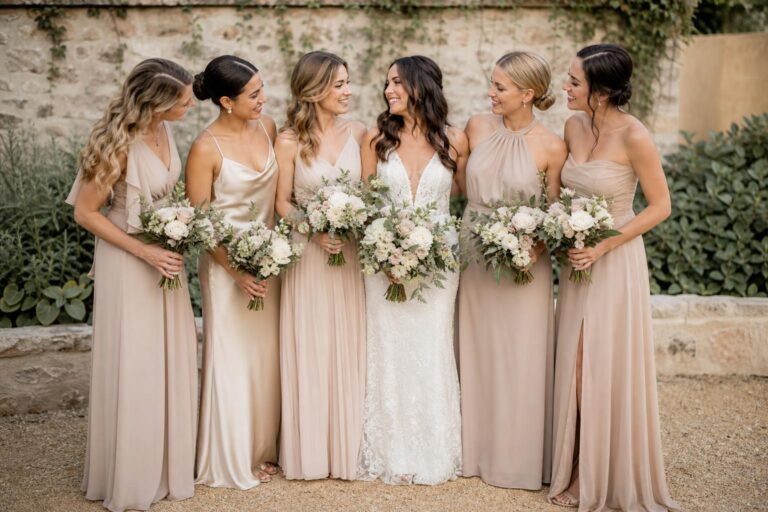
This pairing creates a romantic contrast. The green holds the bridal party in place visually, while the lighter tones keep the overall palette airy. For garden ceremonies and daytime venues, this balance is especially effective. It allows forest green to look luxurious without becoming too heavy against florals, stone paths, and soft natural light.
Forest green with burgundy or navy
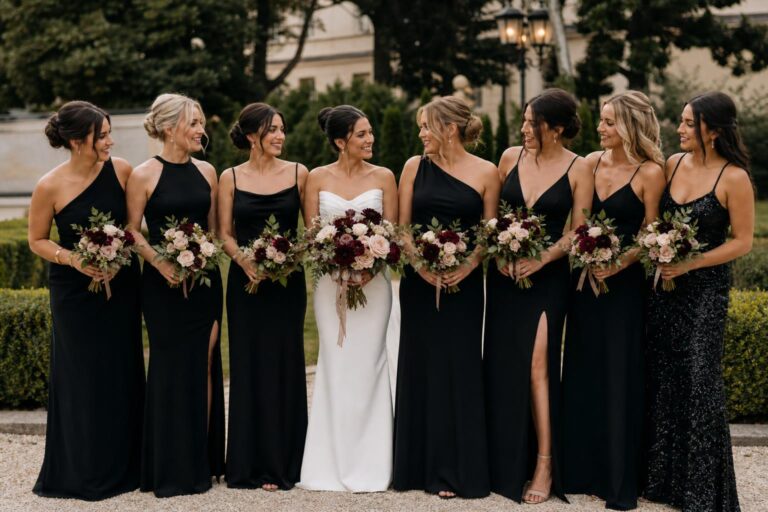
These combinations feel more saturated and formal. Burgundy introduces warmth and richness, while navy adds depth through cool contrast. In evening spaces, especially where candlelight or lower ambient light shapes the atmosphere, these pairings can feel especially composed and dramatic.
Forest green with gold accents
Gold gives forest green a more polished finish. Even a restrained metallic note in accessories or styling details can shift the color from grounded to festive. This is one reason forest green is so effective for weddings that want natural romance during the ceremony and a more elevated reception mood later in the day.
Tips for palette decisions
If the wedding setting already includes abundant greenery, softer neutrals help forest green stand out without blending into the backdrop. If the event is indoors or later in the evening, richer pairings such as burgundy, navy, or gold can give the palette more definition. The most successful combinations usually echo the venue and light rather than competing with them.
The venue comparison: forest green outdoors vs forest green indoors
Forest green has a rare ability to feel at home in both natural and architectural settings, but it does not look identical in each. This is one of the reasons it remains a favored bridesmaid shade across so many brands and shopping styles, from curated collection hubs to marketplace listings.
In outdoor weddings
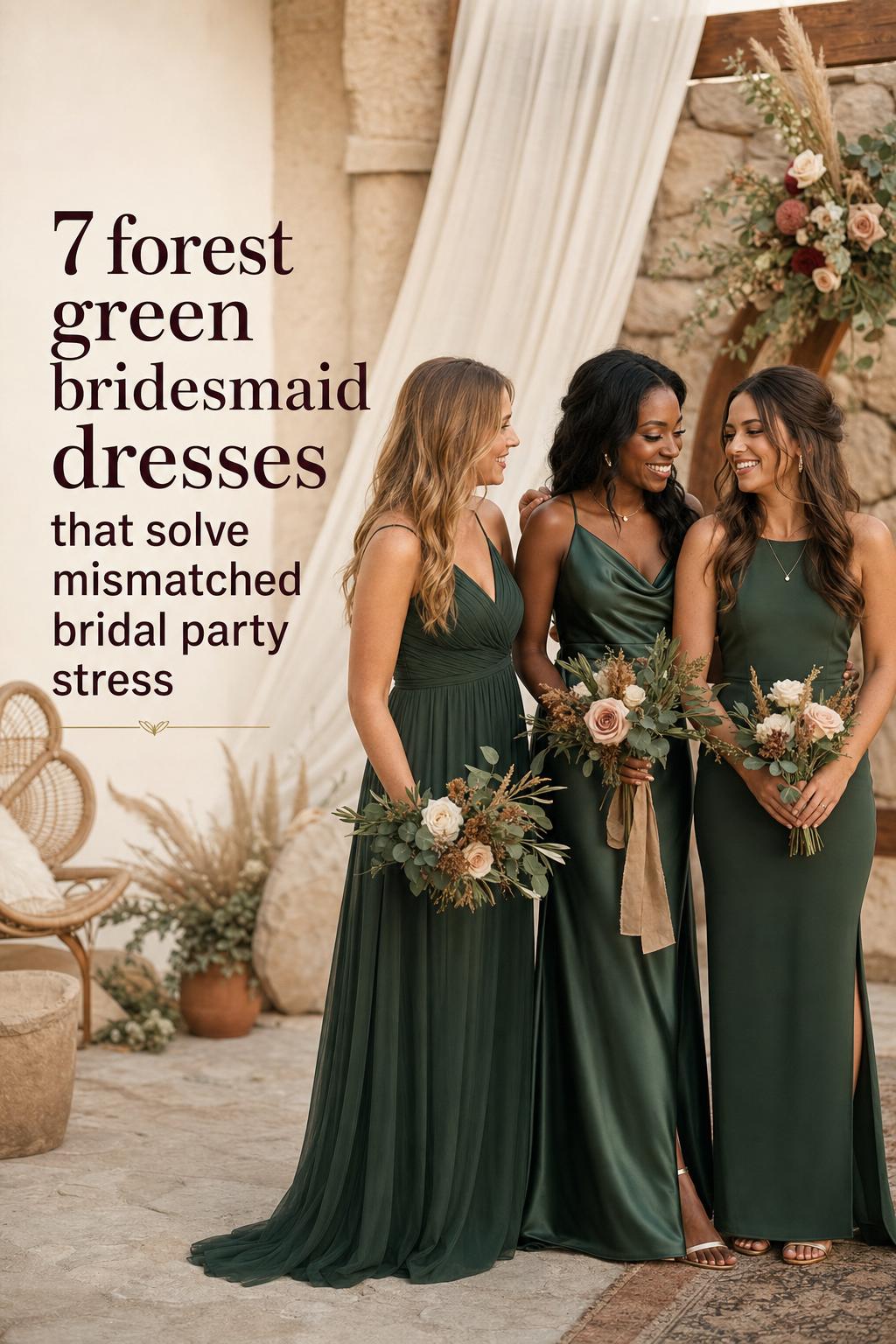
Birdy Grey’s focus on garden-to-mountain settings reflects an important truth about this color: forest green tends to look especially cohesive against natural backdrops. It complements trees, lawns, stone, and changing outdoor light. Chiffon and convertible styles often work well here because they respond gracefully to movement and uneven terrain. For a Pacific Northwest forest aesthetic or a mountain ceremony mood, forest green rarely feels forced.
In indoor weddings
Inside a ballroom or more formal reception space, forest green becomes richer and more concentrated. Satin and crepe often come into their own in these settings because artificial or candlelit conditions reward smoother finishes and stronger line. The shade can look especially elegant when the room includes warm metallic accents or deeper floral arrangements.
Lighting and photography considerations
Forest green generally photographs well, but the finish matters. Satin captures highlights. Chiffon diffuses them. Crepe holds color more steadily. In golden hour light, the shade can look softer and more dimensional; in shaded outdoor spots or evening interiors, it often appears deeper and more formal. Bridesmaid styling should account for that shift, particularly if the ceremony and reception take place in very different lighting environments.
Visual style breakdown: how the look comes together in real outfits
The everyday fashion language of layering, proportion, and accessories still applies to bridal parties, but with more sensitivity to dress code, movement, and group cohesion. Forest green can support a range of styling approaches, yet each one changes the final visual balance.
Layering approach
A lighter, outdoor wedding approach favors airy layers and flowing fabrication. A more polished evening approach favors cleaner surfaces and less visual interruption. This is why chiffon reads naturally in open-air venues, while satin or crepe often feels sharper indoors. If wraps or outer layers are needed, they should preserve the line of the dress rather than break the silhouette abruptly.
Garment proportions
Forest green tolerates both soft volume and narrow line, but not every venue treats those choices equally. Full skirts and flowing maxis look romantic in gardens and rural settings. Slimmer sheaths and bias-cut dresses feel more intentional in modern city venues or evening receptions. The proportion should echo the architecture and movement of the day.
Accessories and finishing details
Accessories are an underused part of the conversation around forest green bridesmaid dresses. Yet the right finishing pieces can decide whether the look feels rustic, sleek, or softly romantic. Gold-adjacent accents tend to elevate. More understated jewelry keeps the attention on color and silhouette. If the wedding includes outdoor paths, practical footwear considerations become as important as visual styling, especially for long celebrations that move from ceremony to reception.
Outfit comparisons for wedding settings
Garden ceremony interpretation
A garden wedding in forest green usually leans toward chiffon, softer A-line movement, and a palette supported by blush, champagne, or other neutrals. The styling logic is gentle and breathable, allowing the dresses to sit naturally among florals and greenery. The emerald version of the same setting would likely feel more vivid and dressier, while an olive approach would read softer and more rustic.
Ballroom reception interpretation
In a ballroom, forest green often shifts toward satin or crepe, with sleeker sheath or bias-cut silhouettes carrying the color into evening. The overall impression is composed and formal without needing a brighter jewel tone. Emerald green in this setting would create more glamour and contrast; forest green keeps the mood elegant and rich but slightly more restrained.
Mountain or outdoor venue interpretation
For mountain venues and similar outdoor celebrations, forest green can look almost site-specific, especially in flowing fabrics. A chiffon maxi or convertible dress works well where movement, terrain, and natural wind are part of the day. Olive may feel more casual here, while forest green preserves a sense of occasion. That balance is one of the color’s strongest advantages.
Inclusive dressing: why forest green works across size ranges and life stages
Several players in the category emphasize plus-size, maternity, and broader size inclusivity, and that matters because green can behave differently depending on fabric and cut. Rewritten’s inclusion of maternity and plus-size options and Kennedy Blue’s attention to style guidance reflect a practical reality: bridesmaid dressing succeeds when the shade is consistent but the fit is flexible.
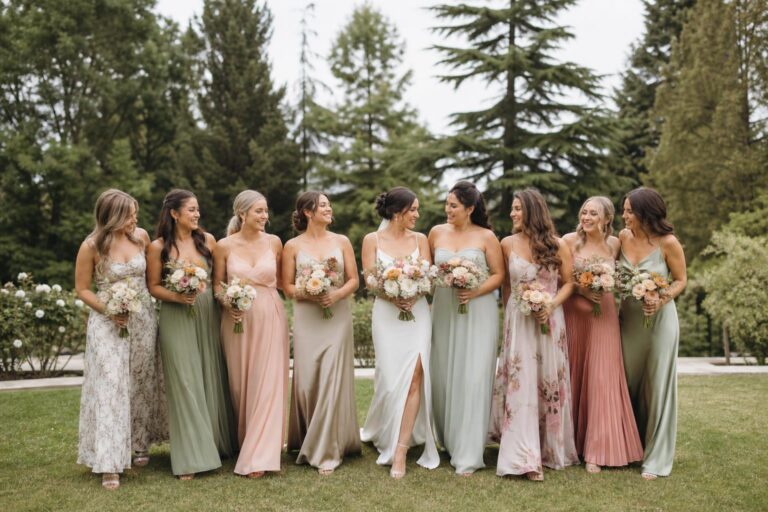
Forest green is especially effective for mixed-size bridal parties because it provides visual unity even when dress shapes vary. Chiffon A-line styles may feel easier for one bridesmaid, while a bias-cut satin option may suit another. The color remains cohesive, which reduces the pressure to force identical silhouettes across different needs and comfort levels.
Tip for mixed bridal parties
If the party includes different body types, coverage preferences, or maternity needs, choose the color family and fabric direction first, then allow variation in neckline, sleeve, or silhouette. Forest green is strong enough to unify the group without requiring identical dress construction.
Brand spotlights and how their forest green approaches compare
Different retailers shape the forest green category in distinct ways, and understanding those differences can help narrow the search. Some focus on collection depth, some on trend-led styling, and others on guidance-driven shopping.
- Birdy Grey: strong collection-hub approach, with forest green framed around fabrics, outdoor weddings, color pairing, and convertible styling.
- PrettyLittleThing: trend-oriented, fashion-forward silhouettes with broad category-style discovery.
- Rewritten: satin, drape, bias-cut styling, with plus-size and maternity relevance and a London brand identity.
- VowSatin: satin-led forest green gowns with length and sleeve variety.
- Kennedy Blue: article-style guidance around shade matching, sleeves, silhouettes, inclusivity, and palette coordination.
- Ever-Pretty: broader dark green category including forest and emerald-adjacent options in chiffon and satin.
- Lulus: category-led browsing with length, neckline, silhouette, and price-point variety.
- Etsy: marketplace flexibility with customization and handmade appeal across many sellers.
- JJ’s House: guide-oriented support around color coordination and dress selection.
No single approach suits every wedding. A bridal party wanting precise moodboards and collection consistency may gravitate toward a brand collection such as Birdy Grey. A group prioritizing broader market browsing may find Lulus, Ever-Pretty, Etsy, or PrettyLittleThing more useful. A party wanting style guidance before purchasing may appreciate the educational approach associated with Kennedy Blue or JJ’s House.
Common styling mistakes with forest green bridesmaid dresses
The most common mistake is assuming all green dresses coordinate simply because they fall within the same color family. Forest green, emerald, dark green, and olive can look close on a product grid and noticeably different in person or in photos. That difference becomes especially visible when fabrics vary.
A second issue is ignoring venue light. A dress selected for indoor polish may feel too heavy outdoors at midday, while a very soft chiffon choice for a formal evening room may not deliver enough visual presence. Another frequent problem is choosing identical silhouettes in the name of uniformity when the bridal party would look more comfortable and polished in coordinated variations.
Practical correction
Review shade, fabric, and silhouette together rather than as separate decisions. Forest green works best when all three are aligned with the venue, the season, and the movement expected throughout the celebration.
When to choose each style approach
Choosing among forest green, emerald-adjacent, olive-adjacent, satin-led, or chiffon-led bridesmaid styling becomes easier when the decision is tied to occasion and atmosphere rather than trend alone.
Choose forest green when the wedding needs depth and versatility
This is often the strongest choice for couples balancing ceremony romance with reception polish. It works across outdoor and indoor settings, supports mixed silhouettes, and pairs comfortably with neutrals, metallics, burgundy, and navy.
Choose emerald when the desired effect is brighter and more jewel-toned
Emerald suits weddings that want the bridal party color to read with more glamour and intensity, especially in evening or high-contrast spaces.
Choose olive when the mood is softer and earthier
Olive is often better suited to understated celebrations, rustic settings, or daytime atmospheres where a more muted, relaxed palette is the goal.
Choose satin when formality leads the brief
Satin works best for evening receptions, polished interiors, and bridal parties comfortable with a more defined drape and light-catching finish.
Choose chiffon when ease, movement, and softness matter most
Chiffon is often the practical favorite for garden weddings, larger bridal parties, and celebrations where comfort through many hours is an important part of the decision.
How to shop thoughtfully for forest green bridesmaid dresses
The smartest shopping process starts with visual direction, not product volume. Decide first whether the wedding calls for romantic softness, sleek evening polish, or a more natural outdoor mood. Then match that direction to fabric, silhouette, and retailer style. This avoids the common problem of browsing hundreds of dresses without a clear filter.
- Set the shade direction first: forest green, not just “green” or “dark green.”
- Choose a fabric family based on venue and formality.
- Decide whether dresses should match exactly or coordinate through color only.
- Use sleeve, neckline, and length preferences as secondary filters.
- Review return and fit considerations before final selection.
For some bridal parties, a collection-driven retailer offers the easiest path because the dresses are already built around a unified shade story. For others, broader search environments such as Etsy or major multi-style retailers may offer more customization or price flexibility. The best choice depends on whether consistency, individuality, trend-forward shape, or guidance-led shopping matters most.
A final editorial note on the appeal of forest green
Forest green remains one of the most adaptable bridesmaid colors because it does not rely on a single styling formula. It can look soft in chiffon, sleek in satin, clean in crepe, or richly atmospheric in velvet. It can support an outdoor wedding framed by trees, a city celebration with modern lines, or a reception that unfolds from daylight into evening. Few colors hold that many possibilities while still feeling coherent.
The clearest way to identify the forest green approach is by its balance: deeper than soft green palettes, less bright than jewel tones, and polished without feeling overworked. For bridal parties deciding between neighboring shades or competing dress styles, that balance is often exactly what makes forest green the right answer.
FAQ
Do forest green bridesmaid dresses work better for outdoor or indoor weddings?
They work well in both settings, but they read differently. Outdoors, forest green tends to feel natural, romantic, and especially strong against garden, forest, or mountain backdrops. Indoors, particularly in ballroom or evening spaces, it appears richer and more formal, especially in satin or crepe.
What colors pair best with forest green bridesmaid dresses?
Forest green pairs especially well with champagne, blush, soft neutrals, burgundy, navy, and gold. Lighter pairings create a softer, romantic palette, while deeper or metallic accents make the look feel more formal and evening-ready.
Is forest green the same as emerald green for bridesmaid dresses?
No. They are closely related, but emerald green is usually brighter and more jewel-toned, while forest green is moodier and more grounded. That difference becomes even more noticeable in photographs and when different fabrics are compared side by side.
Which fabric is best for forest green bridesmaid dresses?
The best fabric depends on the mood of the wedding. Satin gives forest green a more polished, formal finish. Chiffon makes it softer and easier for outdoor settings. Crepe feels cleaner and more structured, while velvet adds texture and seasonal richness.
Are forest green bridesmaid dresses flattering on different body types?
Yes, especially when the bridal party is allowed to vary silhouettes while keeping the color consistent. Forest green works across A-line, sheath, bias-cut, maxi, midi, sleeve, and maternity-friendly options, which makes it a strong choice for size-inclusive styling.
How does forest green photograph in wedding pictures?
It generally photographs well because it has depth without being overly bright. Satin catches more highlight, chiffon softens the color, and crepe tends to hold it more evenly. In golden hour light, forest green can appear softer, while in lower light it often looks deeper and more formal.
Can bridesmaids wear different styles in the same forest green shade?
Yes, and this is often one of the best ways to style the color. Forest green is cohesive enough to unify a group even when necklines, sleeves, or silhouettes vary, which helps each bridesmaid choose a shape that feels comfortable and flattering.
Where can I shop for forest green bridesmaid dresses?
Well-known options in this category include Birdy Grey, PrettyLittleThing, Rewritten, VowSatin, Kennedy Blue, Ever-Pretty, Lulus, Etsy, and JJ’s House. Some are more collection-focused, some are more trend-led, and some offer guidance or customization alongside shopping.
What is the difference between forest green and dark green bridesmaid dresses?
Dark green is often used as a broader category label, while forest green is a more specific shade within that family. A dark green category may include forest, emerald, and similar tones, so it is worth checking shade details carefully if matching across a bridal party is important.