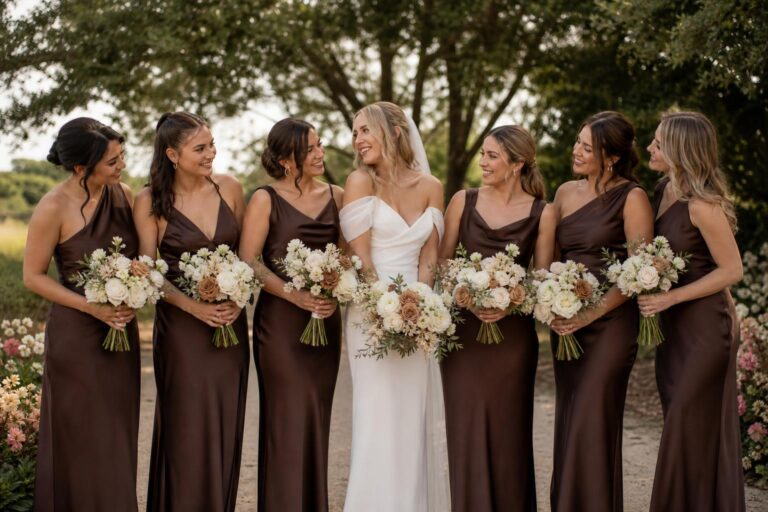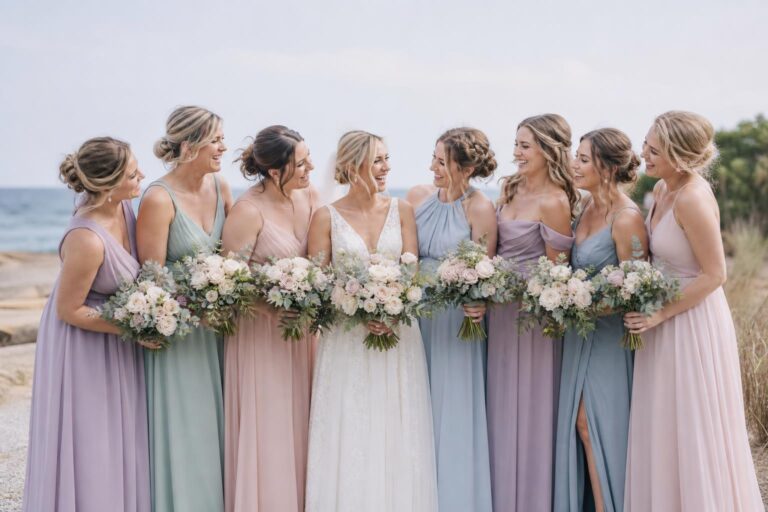
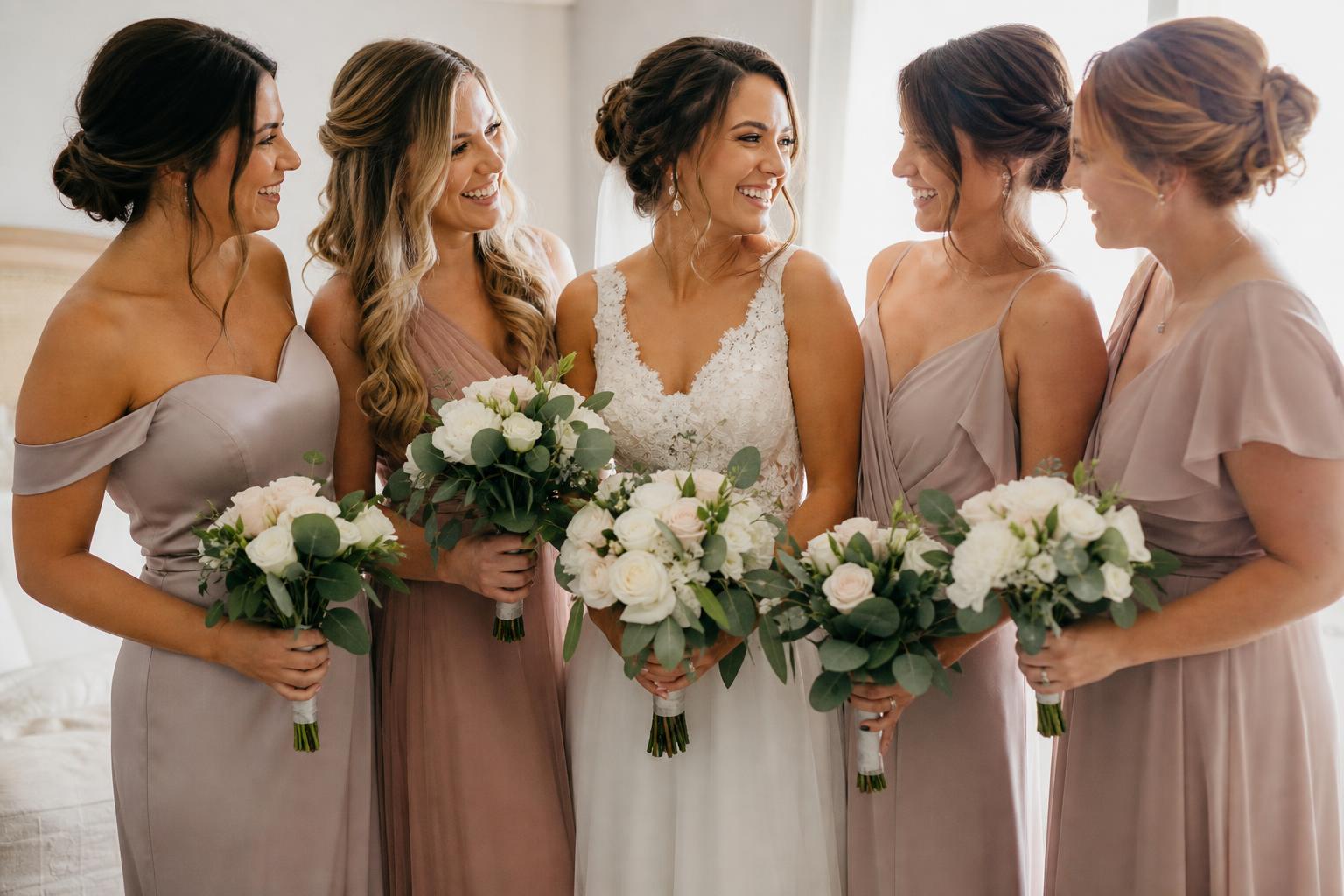
Maid Of Honor Outfit Ideas for Every Wedding Setting
Some wedding roles are defined by responsibility; others are defined by presence. The maid of honor occupies both. She is often the person standing closest to the bride in photographs, moving through the ceremony with purpose, delivering a toast, adjusting a train, and remaining visible from the first processional moment to the last dance. That is why the maid of honor outfit is discussed so often alongside bridesmaid dresses: the two need to feel connected, yet not identical.
In modern U.S. weddings, the comparison usually centers on two styling approaches. One is the coordinated maid of honor look, where the outfit follows the bridal party palette and silhouette language with subtle distinction. The other is the standout maid of honor look, where color, fabric, structure, or accessories create a clearer difference from the bridesmaids. Both approaches can be elegant, appropriate, and visually cohesive. The difference lies in how the role is expressed through fashion.
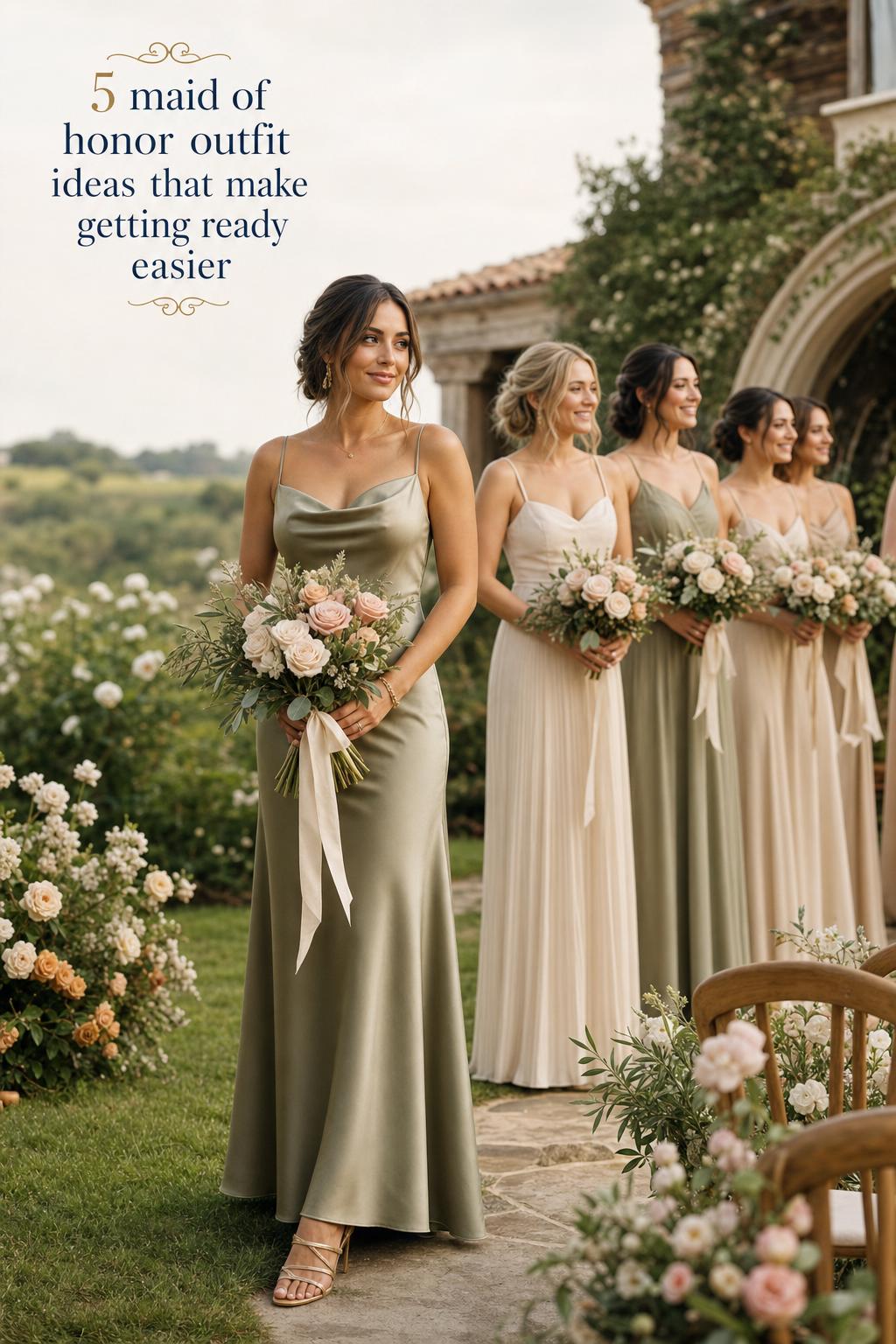
This guide breaks down those approaches in a practical, editorial way. You will see how they differ in silhouette, fabric, color theory, formality, accessories, venue suitability, and overall styling logic. You will also find guidance on body-friendly fit, comfort during long wedding days, shopping considerations, and etiquette, so the final look feels polished in photographs and easy to wear through every part of the celebration.
Two common directions for a maid of honor outfit
Style overview: the coordinated maid of honor look
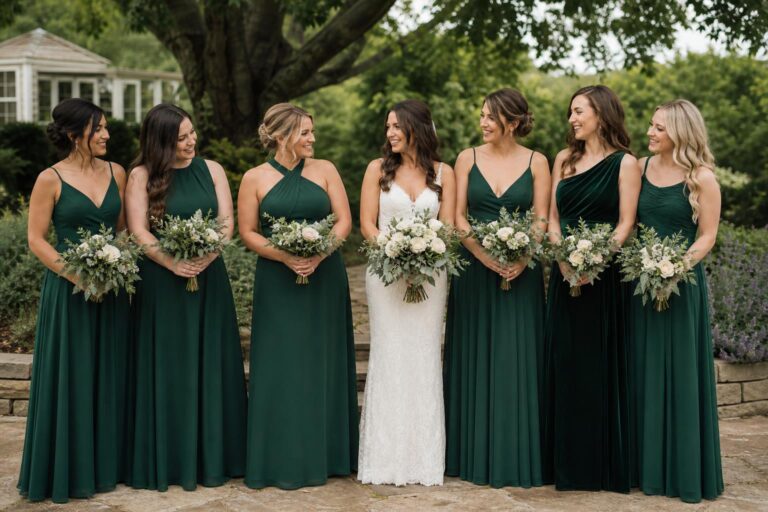
This approach keeps the maid of honor visually aligned with the bridesmaids while allowing just enough distinction to signal her role. The defining characteristic is harmony. The outfit usually shares the same color family, tone-on-tone palette, or overall wedding scheme, but may differ in neckline, fabric, or silhouette. Think of satin instead of chiffon-like softness, lace instead of a plain finish, or an A-line shape where the bridesmaids wear a simpler column silhouette.
Your wedding look is only the beginning.
Keep your guest list, vendors, timeline, and every important detail together with Zarellea — so your day feels as considered as your style.
The mood is refined and cohesive rather than dramatic. It suits weddings where the bride wants the bridal party to read as one story, especially in garden ceremonies, church settings, and classic receptions where symmetry in photographs matters. This is the styling philosophy often reflected in bridal-party guidance from wedding publications and bridal retailers such as The Knot and Bella Bridesmaids: the maid of honor can stand out, but she should still belong to the same visual language as the bridesmaids.
Style overview: the standout maid of honor look
The standout approach gives the maid of honor a more visibly distinct identity. The difference may come from a richer fabric, a stronger silhouette, a deeper or softer shade within the same palette, or a more formal finish. A bridesmaid group in matte dresses might be paired with a maid of honor in satin; a party in one silhouette might be balanced by the maid of honor in a mermaid or ballgown-inspired shape; a muted color-family scheme might place her in the darkest or lightest variation.
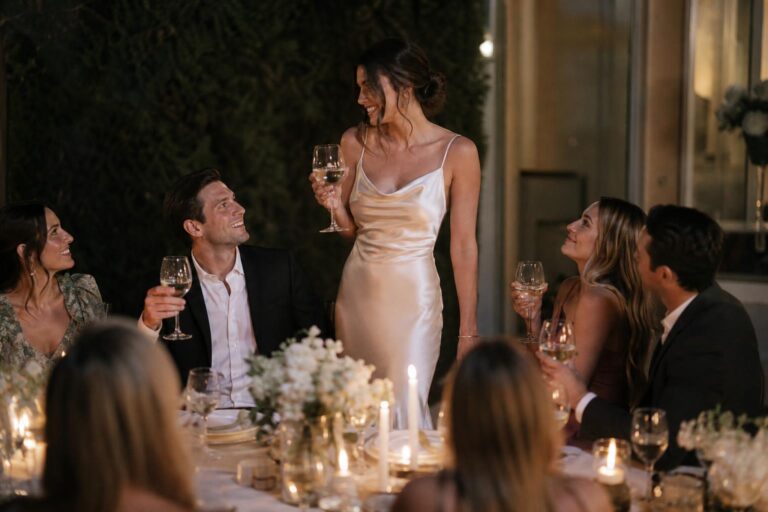
This style feels intentional and slightly more directional. It works especially well when the bride wants to highlight hierarchy without departing from wedding etiquette. It also suits visually expressive celebrations, including candlelit evening receptions, destination weddings, or venue settings where the maid of honor’s role extends into speeches, planning, and frequent movement through the event. Retailers and brand-led guides like Goddiva, Carlyna, MadameBridal, and Windsor often support this perspective by presenting maid of honor dresses as occasion pieces with their own texture, neckline, or formalwear character.
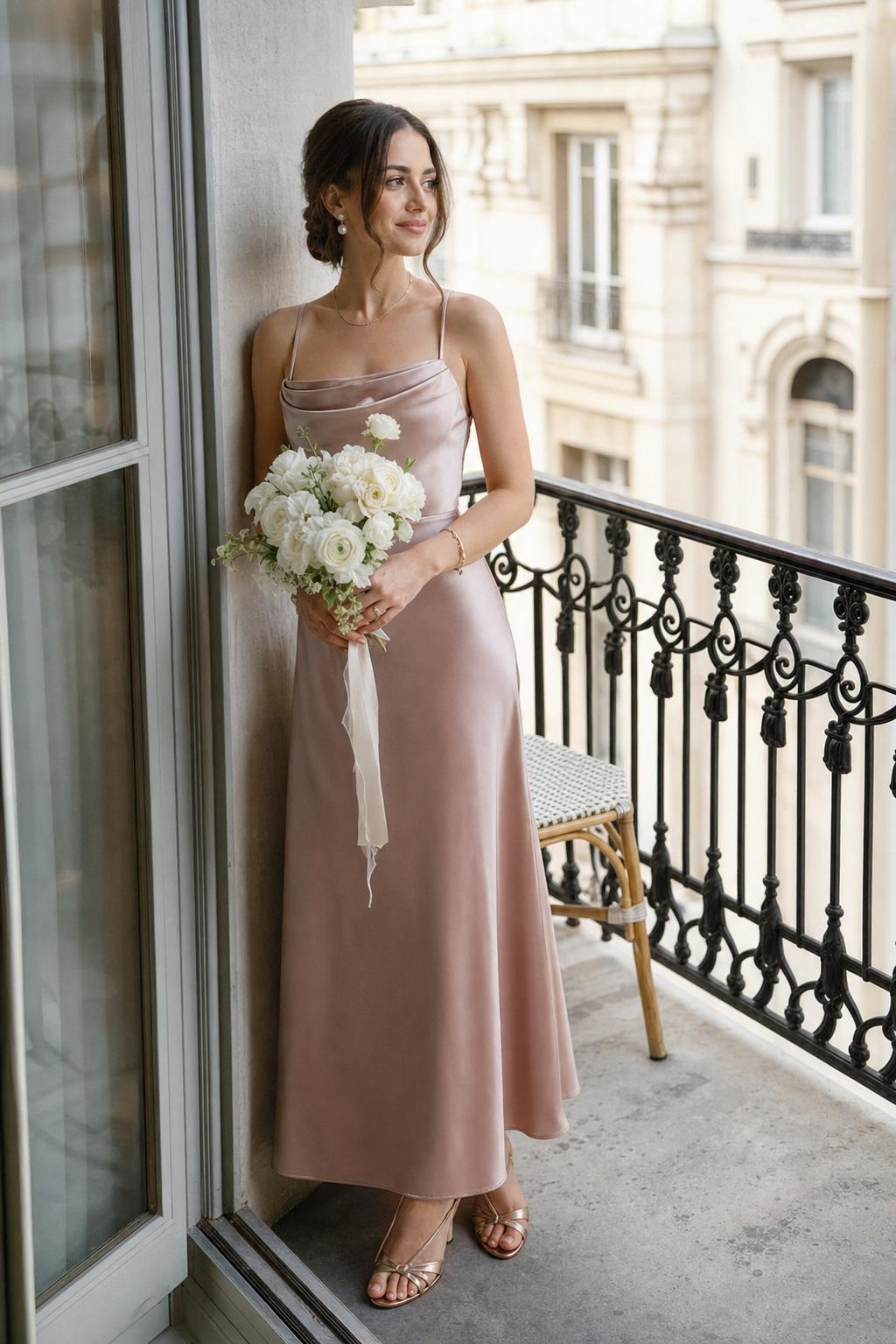
Where the maid of honor and bridesmaid looks diverge
Silhouette and structure
The first major difference is structure. Bridesmaid dresses are often selected for consistency across a group, which can lead to simpler lines or flexible silhouettes that work on multiple body types. A maid of honor dress, by contrast, can carry more shape and individuality. Common silhouettes mentioned across maid of honor styling include A-line, mermaid, ballgown, sheath, and empire waist. The choice changes the visual message.
A-line reads balanced and traditional, making it one of the easiest bridges between bridesmaid cohesion and maid of honor distinction. Mermaid introduces a more sculpted, formal feel, which can elevate the maid of honor role in evening weddings. Ballgown styling creates the strongest sense of occasion but must be handled carefully so it does not compete with the bride. Sheath and empire waist styles tend to feel more relaxed or fluid, which can be especially useful in outdoor, beach, or destination settings where movement matters.
Color palette and visual hierarchy
Color is often where confusion begins. Many people assume the maid of honor should always wear a different color from the bridesmaids, but the more accurate distinction is hierarchy within a palette. A coordinated approach might keep everyone in the same color family, with the maid of honor in a slightly different tone. A standout approach may place her in a complementary shade, a neutral, or a stronger version of the wedding hue.
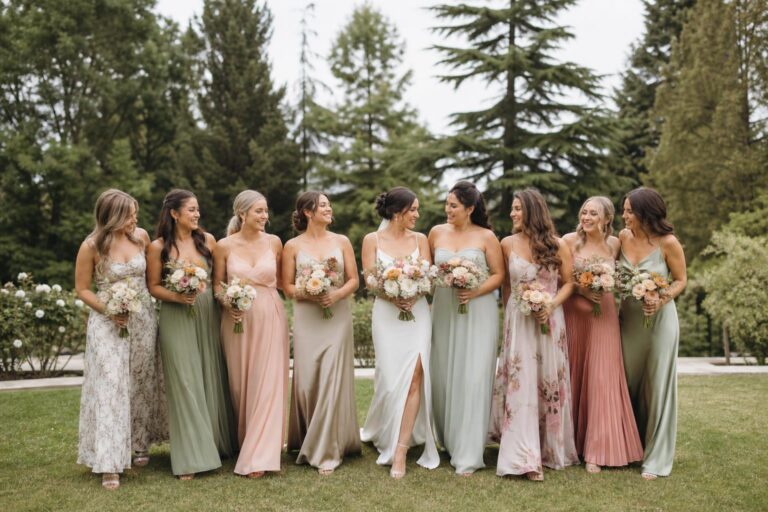
Tone-on-tone coordination is especially useful because it creates difference without visual disruption. In practical terms, that means the bridesmaids and maid of honor still look related in ceremony photographs, bouquet shots, and reception images. This is often more graceful than placing the maid of honor in an entirely unrelated color. Color-family dressing also leaves room for personal fit and fabric preferences while preserving the bride’s broader vision.
Fabrics and surface texture
Fabric is one of the most understated ways to distinguish a maid of honor outfit. Across the bridal style guidance most often associated with this topic, lace, satin, and tulle appear repeatedly because they shift the mood quickly without forcing a dramatic color change. Satin tends to read cleaner and more formal, especially under evening lighting. Lace adds dimension and romance, which can be beautiful in classic ceremonies and portrait-heavy weddings. Tulle introduces softness and volume, often creating a more ethereal profile.
This distinction matters because surface texture is what gives a gown visual presence from a distance. In a wedding party wearing streamlined dresses, even a small change in lace overlay or satin sheen can set the maid of honor apart. The effect is polished rather than obvious, which is often the ideal balance.
Level of formality
The maid of honor look is usually not a separate dress code from the bridal party, but it can sit one degree higher in formality. That might mean a longer hem, more considered drape, a subtle train, a slit handled with restraint, or a neckline with more structure. Product-led examples from brands like Mori Lee and Windsor show this clearly: details such as a back zipper finish, a train, lace placement, or a specific neckline can make a dress feel more event-defining even when it remains within the same category as the bridesmaids’ dresses.
The key is proportion. A church wedding or traditional indoor ceremony generally benefits from moderation, while a ballroom or evening venue can support richer texture and stronger construction. The maid of honor should appear elevated, not disconnected from the rest of the party.
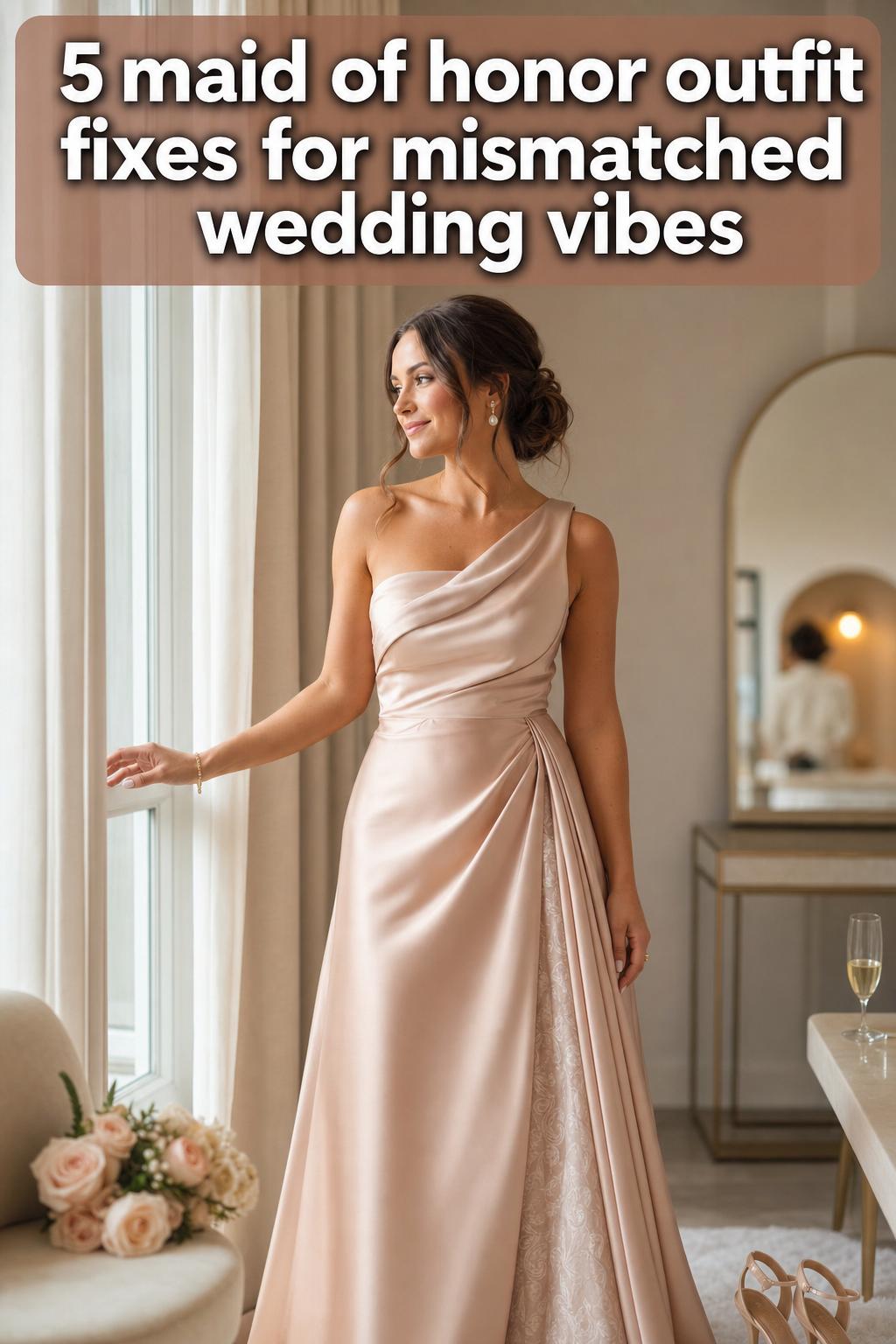
How these styles look in real wedding settings
Garden ceremony at golden hour
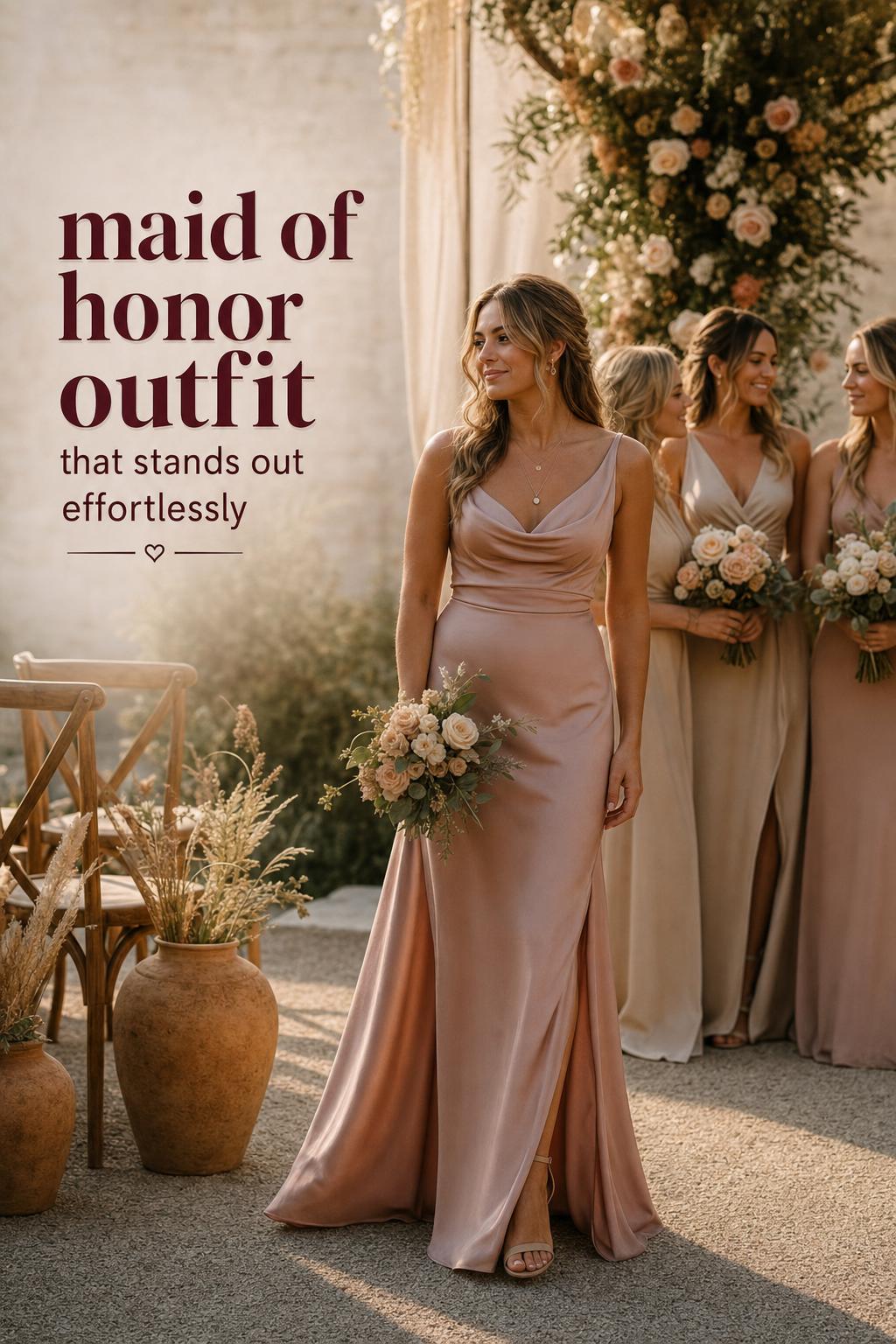
In a romantic garden setting, the coordinated maid of honor look often feels most natural. The visual environment already provides softness through greenery, flowers, and warm outdoor light, so a maid of honor dress in the same palette as the bridesmaids but with a slightly different silhouette or lace finish tends to look graceful. An A-line dress in a related tone, perhaps with a more refined bodice treatment, keeps the bridal party feeling unified.
The standout version in the same setting works best when the distinction is still gentle. Instead of a dramatic color break, a satin finish or a more defined shape can offer contrast. This is where fabric weight and movement matter. The maid of honor will likely walk on grass, stand for ceremony photos, and move between outdoor and reception spaces, so a look with structure but ease is more practical than one that feels heavily formal.
Beach or destination wedding
Beach weddings shift the priorities immediately. Here, comfort, mobility, and fabric behavior take on more importance. A coordinated maid of honor outfit may rely on lighter-looking lines such as sheath or empire waist silhouettes that move well and do not feel overly rigid. The advantage of this approach is that it supports the relaxed atmosphere while preserving bridal-party continuity.
A standout maid of honor look at a beach ceremony should be created carefully. Too much volume or overly weighty fabric can feel out of place. The better route is distinction through color-family nuance or subtle accessory direction rather than heavy structure. In destination weddings, the maid of honor often handles planning details and transitions across multiple events, so the outfit needs to be visually special without creating practical strain.
Church ceremony and formal reception
Traditional ceremonies tend to reward restraint. In this setting, the coordinated approach often appears more timeless, especially when the bridesmaids and maid of honor share a unified palette. Lace, satin, and modest structural differences can add distinction without breaking the formality of the space. A refined A-line or elongated sheath is often easier to balance than a highly theatrical silhouette.
For the standout approach, this is where a dress with more defined tailoring, elegant neckline detail, or a subtle train can be especially effective. Product pages such as the Mori Lee styles sold through MadameBridal illustrate the kind of finishing elements that elevate a gown for formal wedding use. The distinction comes not from excess, but from precision.
Candlelit evening reception or ballroom wedding
Evening receptions can carry more visual depth. Under lower light, richer surfaces such as satin or detailed lace are especially effective, which is why the standout maid of honor approach often thrives in this setting. A mermaid silhouette, a clean formal line, or a slightly more structured gown gives the maid of honor the presence her role naturally carries during speeches and key reception moments.
The coordinated version still works beautifully, but it should avoid reading flat against the setting. If the bridal party is dressed in softer textures, the maid of honor can remain in the same color story while using a more luminous fabric to gain presence. This is often enough to create hierarchy without introducing contrast that feels abrupt in photographs.
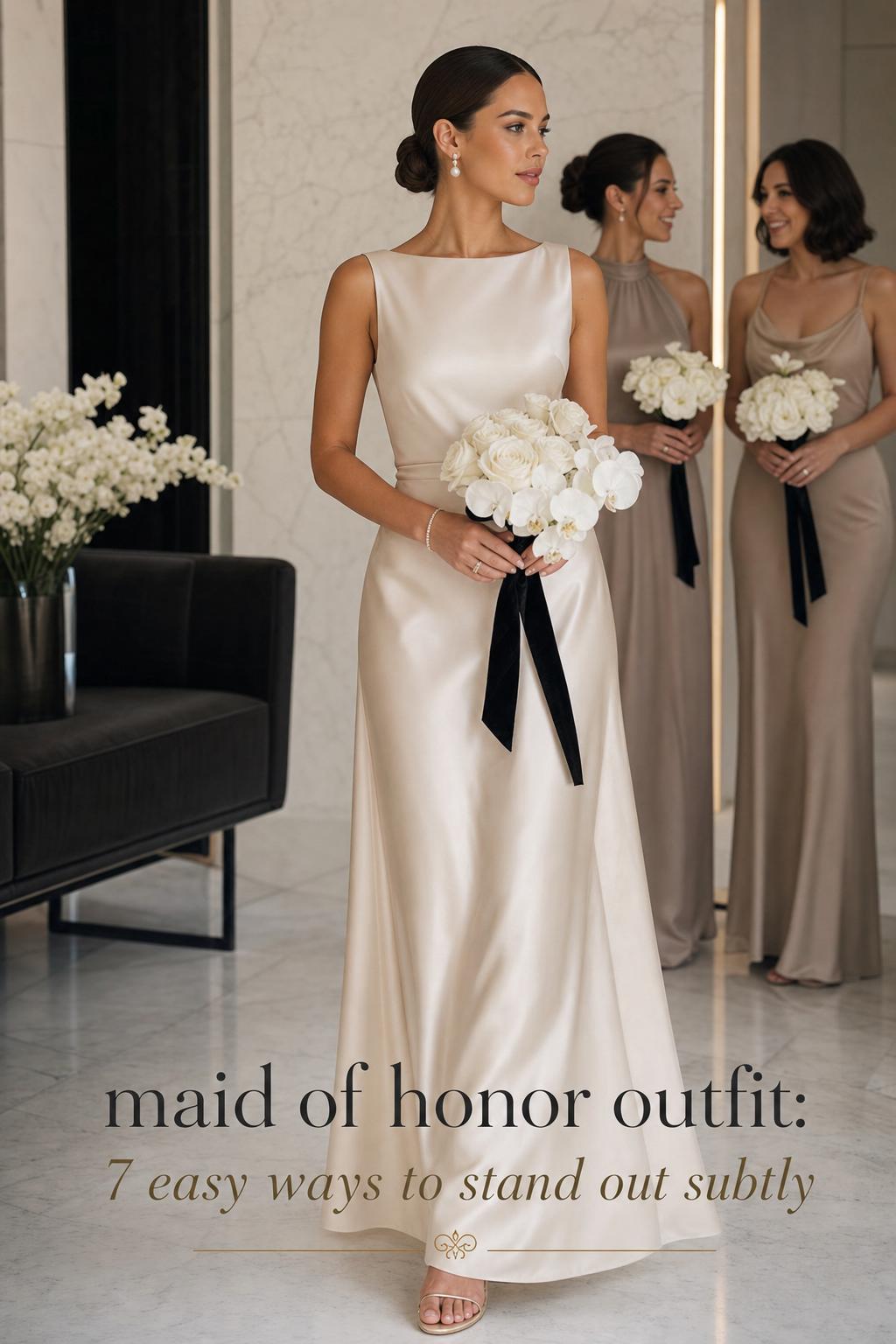
Visual style breakdown: proportions, accessories, and finishing touches
Layering approach
Layering is not always discussed in bridal-party fashion, but it matters for ceremony-to-reception transitions. A coordinated maid of honor outfit usually supports discreet layering: a shrug, refined outerwear, or an added layer that blends with the bridal-party look. This is especially relevant in cooler seasons or venues with temperature shifts.
A standout maid of honor outfit can use layering as part of its distinction. The difference might come from a slightly richer outer layer, a more polished wrap, or a finishing piece that signals her role without changing the core gown. The best layering choices feel intentional in both practical and visual terms. They should not interrupt the silhouette.
Garment proportions
Proportion is what keeps a maid of honor look elegant rather than overstated. A bridal party in fluid dresses can support a maid of honor in a more sculpted line, but the overall balance still needs to fit the venue and the bride’s vision. If the bridesmaids wear simple floor-length looks, the maid of honor can introduce a stronger bodice or more shaped skirt. If the group already wears dramatic silhouettes, the maid of honor distinction is often better achieved through texture or shade rather than added volume.
Accessories and footwear choices
Accessories are one of the clearest points of comparison between coordinated and standout styling. In a coordinated maid of honor look, jewelry, shoes, and bouquet treatment usually echo the bridal party. The effect is clean and intentional. In a standout version, accessories become a finer tool for emphasis. The maid of honor might wear slightly more defined jewelry, a shoe that aligns with the gown’s formality, or an outerwear piece that has a touch more structure.
Footwear should always be considered in relation to venue conditions. Outdoor celebrations, beach settings, and long receptions require comfort and stability. The maid of honor is often on her feet more than the rest of the bridal party, and that practical reality should influence every finishing choice.
Overall outfit balance
The easiest way to read a maid of honor outfit in real life is to step back and look at balance. Coordinated styling says, “I belong to this bridal party, with a slightly elevated role.” Standout styling says, “I belong to this bridal party, and my role is visible at first glance.” Neither is inherently better. What matters is whether the outfit balances the bride’s preferences, the bridal party’s visual language, and the demands of the event itself.
Silhouettes compared: what each shape communicates
Silhouette is often the point where personal style and wedding styling meet. It is also where many maid of honor decisions become easier, because each shape carries a different social and visual message within the wedding party.
- A-line: versatile, balanced, and especially effective when the goal is subtle distinction without visual disruption.
- Mermaid: more sculpted and formal, often best for evening receptions or ballroom settings where the maid of honor look can carry extra structure.
- Ballgown: the most dramatic of the common options, best used cautiously so it enhances occasion dressing without competing with the bride.
- Sheath: streamlined and clean, often appropriate for destination, beach, or modern weddings where ease and movement matter.
- Empire waist: softer and more fluid in mood, useful when comfort and lightness are priorities.
Designers and retailers associated with bridal styling, including Mori Lee, Bella Bridesmaids, and collection-led stores like Carlyna, often present these silhouette choices as tools for hierarchy and cohesion rather than isolated trends. That is a useful way to think about them. A maid of honor dress should not just flatter in isolation; it should function inside the larger wedding composition.
Body-friendly dressing and the reality of a long wedding day
A maid of honor does far more than stand in one place and pose for portraits. She walks, sits, lifts bouquets, helps manage timelines, moves between ceremony and reception spaces, and may give a toast or assist the bride throughout the day. That means fit and comfort are not secondary concerns. They are part of the style decision itself.
For curvy figures, structured silhouettes can feel elegant, but they should still allow movement through the hips and waist. For petite proportions, a line that does not visually overwhelm the frame is often easier to wear through a long celebration. In both cases, alterations matter. A gown that looks polished in still photographs but restricts movement on the day can quickly become distracting. The best maid of honor outfit is one that maintains its shape while allowing the wearer to perform the role comfortably.
Comfort is especially relevant when choosing between coordinated and standout styles. A more dramatic standout look may look compelling on a hanger or product page, but if the wedding involves outdoor transitions, travel, or many hours of wear, a simpler coordinated silhouette may prove more successful. Fashion decisions in weddings are always partly practical, even when the final effect feels effortless.
Tips for choosing a flattering and functional fit
- Choose silhouette first, then refine with fabric and color.
- Use alterations to improve movement, not just appearance.
- Consider how the dress behaves when sitting, walking, and standing for long periods.
- Match fabric weight to the venue and season so comfort supports the overall look.
- If the bridal party is mixed in silhouette, keep the maid of honor’s distinction intentional rather than accidental.
Color theory in practice: subtle coordination versus visible contrast
The language of maid of honor dressing is increasingly less about exact matching and more about controlled coordination. Color-family styling, tone-on-tone dressing, and palette-based differentiation all allow the maid of honor to stand apart while remaining connected to the bridal party. This is one of the clearest modern shifts in wedding styling.
In practical terms, subtle coordination works best when the bride wants a polished, editorial group look. The maid of honor might wear a slightly darker tone, a lighter variation, or the same color rendered in a richer fabric. Visible contrast is better suited to weddings where the bride wants the role distinction to register immediately. Even then, the contrast should still feel derived from the wedding scheme rather than detached from it.
This is also where bridal-party communication matters. The bride, maid of honor, and bridesmaids all contribute to the final visual result. A beautiful gown can feel wrong if it ignores the palette logic of the group. Likewise, a simpler dress can feel deeply successful if it respects the scheme and supports the bridal party as a whole.
Outfit comparisons for different wedding moments
For a spring garden wedding
The coordinated approach leans into softness: an A-line maid of honor dress in the wedding color family, perhaps with lace detail or a slightly more refined bodice than the bridesmaids. The logic is to echo the floral environment and natural light without interrupting the group’s harmony.
The standout approach would keep the same romantic spirit but create distinction through a more luminous fabric such as satin or a stronger silhouette. The result is still garden-appropriate, but it brings the maid of honor forward more clearly in portraits and processional moments.
For a summer beach or destination ceremony
The coordinated version favors ease: a sheath or empire waist line, minimal visual heaviness, and a palette that stays close to the bridal party. This keeps the maid of honor comfortable during movement-heavy parts of the day and ensures the outfit feels natural in an open-air setting.
The standout version should remain restrained. Instead of relying on volume, it might use a clearer tone difference within the same color family or a slightly more polished accessory story. This works well when the bride wants role distinction but the venue calls for lighter styling choices.
For a formal evening reception
The coordinated maid of honor look might stay within the bridesmaids’ palette but introduce satin, lace, or a more defined shape. Under evening lighting, these texture shifts read beautifully and maintain a refined group presence.
The standout version can go farther here: a mermaid silhouette, a dress with elegant formal detailing, or a richer interpretation of the wedding hue. This is one of the few contexts where stronger structure feels especially natural, because the setting itself supports a heightened level of occasion dressing.
Shopping paths: editorial inspiration versus product-led decisions
Many maid of honor choices begin in one of two places. Some start with editorial inspiration, using wedding publications and style galleries to understand etiquette, color palettes, and how the maid of honor differs from bridesmaids. Others begin with specific products, looking at collections and gown pages from brands and retailers such as Windsor, Carlyna, MadameBridal, Bella Bridesmaids, and Goddiva. Neither approach is wrong. They simply answer different questions first.
Editorial-first shoppers often arrive at more cohesive decisions because they understand the visual role before choosing the dress. Product-first shoppers may find a silhouette or fabric they love more quickly, but they need to step back and check whether the gown supports the broader bridal-party story. The strongest results usually combine both approaches: first decide whether the maid of honor should coordinate or stand out, then select a dress that expresses that decision through silhouette, fabric, and color.
Tips for keeping the decision practical
- Start by confirming whether the bride wants subtle distinction or obvious differentiation.
- Use retailer collections for silhouette comparison, not just impulse selection.
- Check how the dress functions for the venue, season, and likely hours of wear.
- Compare texture and tone against the bridesmaids’ outfits before deciding the maid of honor should wear a different style.
- If using a statement dress, make sure the statement comes from one element only, such as fabric, silhouette, or shade.
The etiquette behind the outfit
Etiquette is less about rigid rules than about role clarity and collaboration with the bride. The maid of honor should not be treated as visually identical by default, but she also should not style herself in a way that draws attention away from the bride or fragments the bridal party. That balance is the foundation of good decision-making.
The best conversations usually begin with a simple question: should the maid of honor be recognized instantly, or should the distinction emerge more subtly? From there, choices about silhouette, color palettes, fabrics, accessories, and overall formal level become much easier. This is also where practical realities, including budget, season, and venue, can be discussed honestly.
Because the maid of honor often has responsibilities beyond appearance, etiquette also includes comfort. A gown that looks beautiful but restricts movement during planning, processional moments, or speeches does not fully support the role. Collaboration with the bride should always include that practical dimension.
An insight stylists return to: distinction is strongest when it feels deliberate
One of the most common mistakes in maid of honor styling is creating difference without a clear reason. A random color change, an unrelated silhouette, or accessories that belong to a different dress code can make the maid of honor appear separated from the bridal party rather than elevated within it. Deliberate distinction always ties back to one visual principle: same palette, different texture; same silhouette family, different structure; same formal level, different finish.
This is why modern maid of honor outfit planning often feels more sophisticated than older matching traditions. It allows room for body-type considerations, personal comfort, venue appropriateness, and the bride’s aesthetic, all while preserving group cohesion. Whether the final choice comes from a bridal publication, a Bella Bridesmaids guide, a Carlyna collection, a Windsor formal dress, or a Mori Lee gown through MadameBridal, the decision works best when it answers the same central question: how should the maid of honor be distinguished in this particular wedding story?
When each style makes the most sense
The coordinated maid of honor look tends to suit weddings where visual unity matters most. It is ideal for classic ceremonies, traditional family weddings, church settings, and events where the bride wants the bridal party to feel serene and cohesive. It also tends to be more adaptable across body types and easier to manage when the day includes many different responsibilities.
The standout maid of honor look makes more sense when the bride wants hierarchy to be more visible or when the reception setting supports richer occasion dressing. Ballroom weddings, evening celebrations, and fashion-conscious destination events often carry this direction well. It can also be a smart solution when the maid of honor has a very different silhouette preference from the bridesmaids but still needs to look integrated through color and styling.
There is also room for a blended approach. Many of the most successful maid of honor outfits are not fully coordinated or fully standout. They sit in between: the same wedding palette, a slightly more formal fabric, a distinct but not dramatic silhouette, and accessories that feel a touch more polished. That middle ground is often the most modern interpretation of the role.
Conclusion
The real distinction between maid of honor styling approaches is not simply whether the dress is different from the bridesmaids’ dresses. It is how that difference is expressed. Coordinated styling relies on harmony, subtle hierarchy, and shared palette logic. Standout styling uses texture, silhouette, tone, or formality to bring the maid of honor forward more clearly.
You can usually identify the coordinated look by its closeness to the bridal party and the standout look by its stronger visual emphasis. Both can be elegant, role-appropriate, and memorable. The most successful maid of honor outfit is the one that supports the bride’s vision, respects the venue and season, and allows the wearer to move through the day with ease. In many weddings, the most polished answer is not choosing one approach completely, but blending elements of both.
FAQ
What is the difference between a maid of honor outfit and a bridesmaid dress?
A maid of honor outfit is usually distinguished by silhouette, fabric, color variation, or accessories, while still coordinating with the bridesmaids. The key difference is role visibility: the maid of honor often looks slightly more elevated or distinct, but not disconnected from the bridal party.
Does the maid of honor have to wear a different color from the bridesmaids?
No. A different color is only one option. Many modern weddings use tone-on-tone or color-family coordination, where the maid of honor wears a related shade or the same color in a different fabric. This usually creates a more cohesive result than a completely unrelated color.
Which silhouettes work best for a maid of honor dress?
A-line, mermaid, ballgown, sheath, and empire waist are all common choices. A-line is often the easiest for subtle distinction, mermaid works well for formal evening weddings, ballgown creates the strongest statement, and sheath or empire waist can be especially useful for destination or beach settings.
How can the maid of honor stand out without clashing with the bridal party?
The safest way is to change one visual element rather than several at once. A richer fabric like satin, a lace finish, a more defined silhouette, or a slight shade variation can all create distinction while preserving the bridal party’s overall color palette and style direction.
What fabrics are most common for a maid of honor outfit?
Lace, satin, and tulle are among the most frequently referenced fabrics because they change the mood of a dress quickly. Satin reads polished and formal, lace adds romantic texture, and tulle creates softness and volume. The best choice depends on the venue, season, and level of formality.
Can the maid of honor wear a suit or a non-traditional outfit?
Yes, non-traditional maid of honor attire can work when it aligns with the bride’s vision and the wedding’s dress code. The same principles still apply: the outfit should coordinate with the bridal party, suit the venue, and communicate the maid of honor role clearly and respectfully.
How should the maid of honor choose accessories?
Accessories should support the gown rather than compete with it. In coordinated looks, they often echo the bridal party. In standout looks, they can be slightly more polished or structured. Shoes should always be chosen with the venue and long hours of wear in mind, especially for outdoor ceremonies and receptions.
What should the maid of honor consider for seasonal or venue-specific weddings?
Season and venue affect both appearance and comfort. Garden and outdoor weddings often suit softer silhouettes and lighter movement, beach weddings require ease and practicality, and formal evening venues can support richer fabrics and more structured gowns. The outfit should always reflect both atmosphere and function.
How important are alterations for a maid of honor dress?
They are very important because the maid of honor usually has a highly active role throughout the day. Alterations help the dress look polished, but they also improve mobility, comfort, and confidence during walking, sitting, standing, and participating in ceremony and reception duties.