Flower Girl Dresses Toddler for Weddings With Grace and Ease
Choosing flower girl dresses toddler families will genuinely love is rarely as simple as picking the sweetest silhouette on a screen. A toddler has to walk, sit, be carried, pose for photos, and stay comfortable through a ceremony and reception, all while wearing formal clothes designed for a wedding setting. What looks dreamy in ivory lace or champagne tulle can feel very different once movement, sizing, and the pace of a real celebration enter the picture.
That is why the best toddler flower girl dress is not only beautiful. It needs the right fabric, the right fit, and the right level of formality for the wedding itself. A garden ceremony, a ballroom reception, and a beach wedding may all call for a different balance of softness, structure, and practicality. This guide brings those decisions into focus, so you can choose a dress that looks polished in photographs and still works for a very young child.
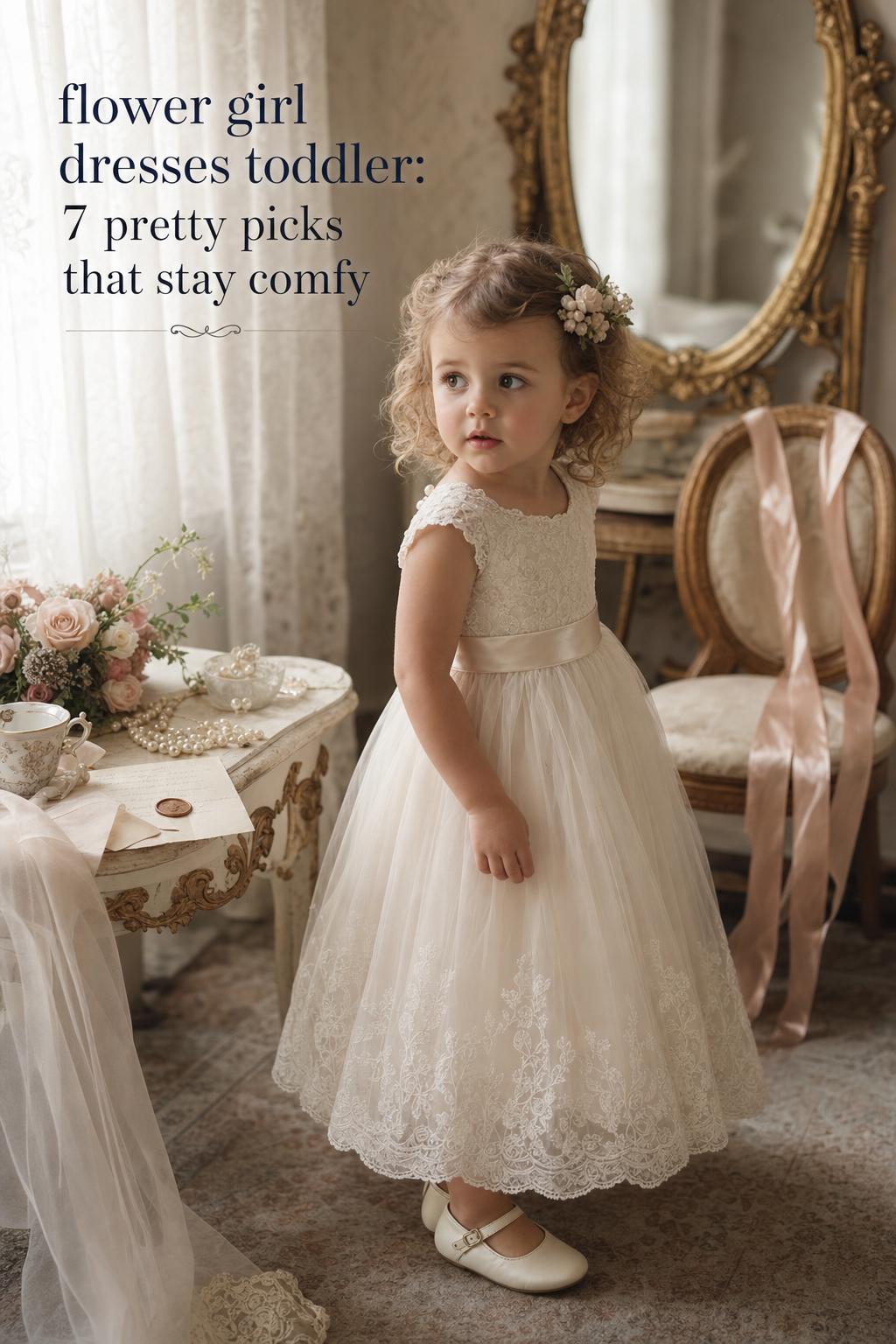
The real challenge behind dressing a toddler for a wedding
Toddler formalwear sits at an unusual intersection of bridal styling and everyday child comfort. Flower girl dresses are expected to coordinate with a wedding palette, echo the tone of the bridal party, and feel special enough for a once-in-a-lifetime event. At the same time, toddlers are sensitive to scratchy embellishment, awkward hems, and stiff construction. The challenge is not only style; it is function.
Many popular dress categories reflect this tension. Lace, tulle, satin, beading, and ball gown shapes create that classic flower girl presence, but they also change how a dress feels and moves. Size adds another layer. Shoppers often search by toddler, baby, infant, or a specific size like 2T or 3T because age alone is not enough. A dress that is too long becomes a tripping risk, while one that is too snug can make a long wedding day feel even longer.
Your wedding look is only the beginning.
Keep your guest list, vendors, timeline, and every important detail together with Zarellea — so your day feels as considered as your style.
Weather and venue matter too. A winter ceremony may support richer textures and fuller skirts, while a summer celebration often benefits from a lighter silhouette and more breathable feel. The most successful choices come from treating the dress as part of the day’s logistics, not just part of the photo album.
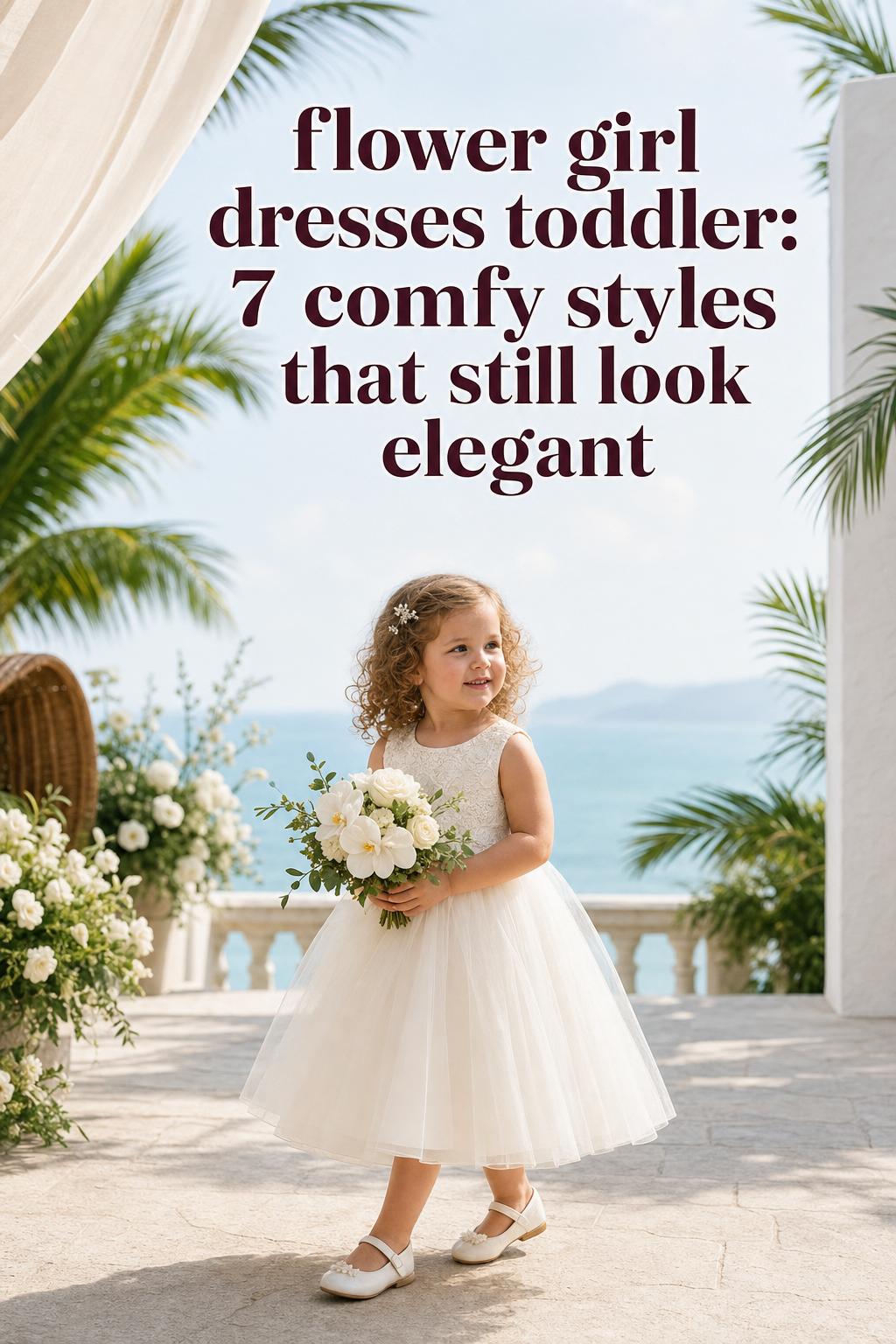
What makes a toddler flower girl look successful
The strongest flower girl styling follows a few clear principles. First, the dress should match the event mood without overwhelming the child. Second, the silhouette should allow easy movement. Third, the materials should feel appropriate for the setting and season. This is where many wedding outfits become easier to evaluate: instead of asking only whether a dress is pretty, ask whether it will still work after an hour of walking, hugging, and dancing.
- Choose fabrics that suit both the wedding atmosphere and toddler comfort, especially lace, tulle, and satin.
- Keep hemlines manageable for walking and stairs.
- Use color to connect the flower girl to the bridal party, especially ivory, white, champagne, or blush tones.
- Consider accessories such as shoes or headpieces as finishing details, not the foundation of the look.
- Prioritize accurate sizing over buying “room to grow” if the event date is close.
These principles work whether you are browsing an affordable retailer, a department store assortment, or a boutique-style collection. The visual language may change from embellished mesh to vintage-inspired fine fabrics, but the decision-making stays surprisingly consistent.
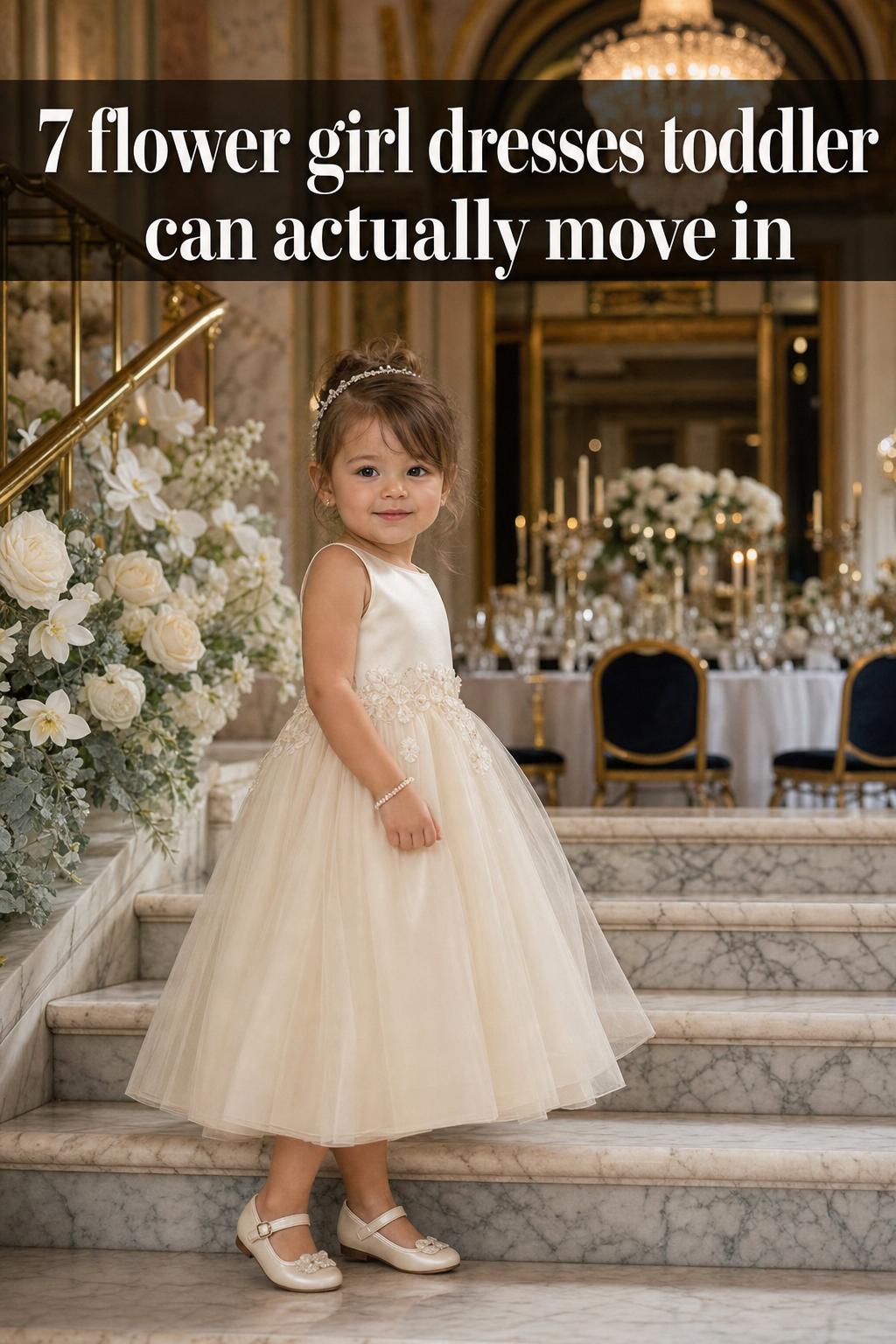
Fabrics and silhouettes that solve the biggest comfort problems
Most flower girl dress categories revolve around a handful of familiar materials and shapes. Understanding them makes shopping far more efficient, especially when retailer pages present dozens of nearly similar options. For toddlers, fabric and silhouette are often more useful than brand names when narrowing the field.
Lace and embellishment for classic ceremony style
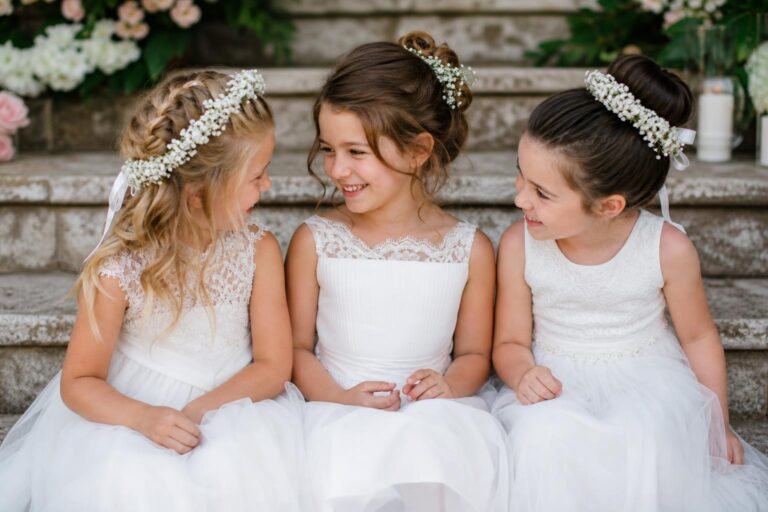
Lace remains one of the strongest style signals in this category because it immediately reads as bridal. Ivory lace flower girl dresses and white lace options appear across many US retailers because they coordinate naturally with wedding ceremonies and formal portraits. Embellishment can elevate the look further, especially in a candlelit reception or traditional church setting, but it should be approached with restraint for toddlers. The more heavily detailed the bodice, the more important fit and comfort become.
This style works especially well for formal weddings, classic bridal parties, and heirloom-inspired aesthetics. Brands and retailers such as The Children’s Place, Victoria’s Queen, Kohl’s, Macy’s, and Feltman Brothers all reflect some version of this approach, whether through floral lace, beaded accents, or vintage-inspired finishes.
Tulle and ball gown silhouettes for a soft, romantic presence
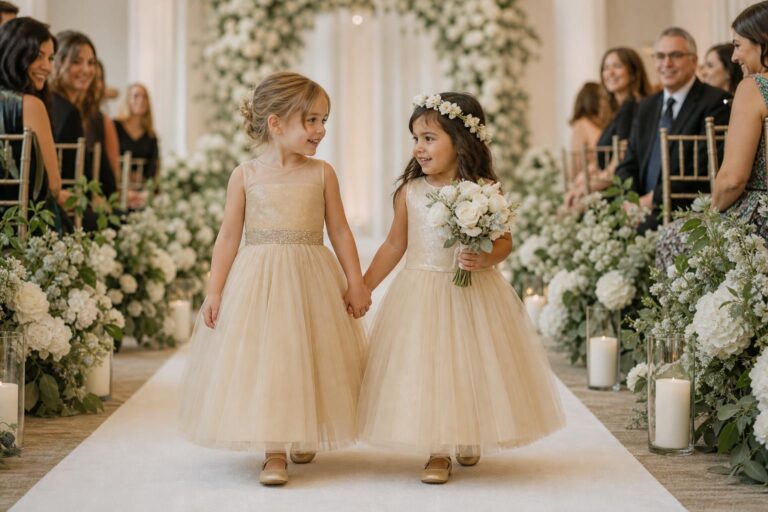
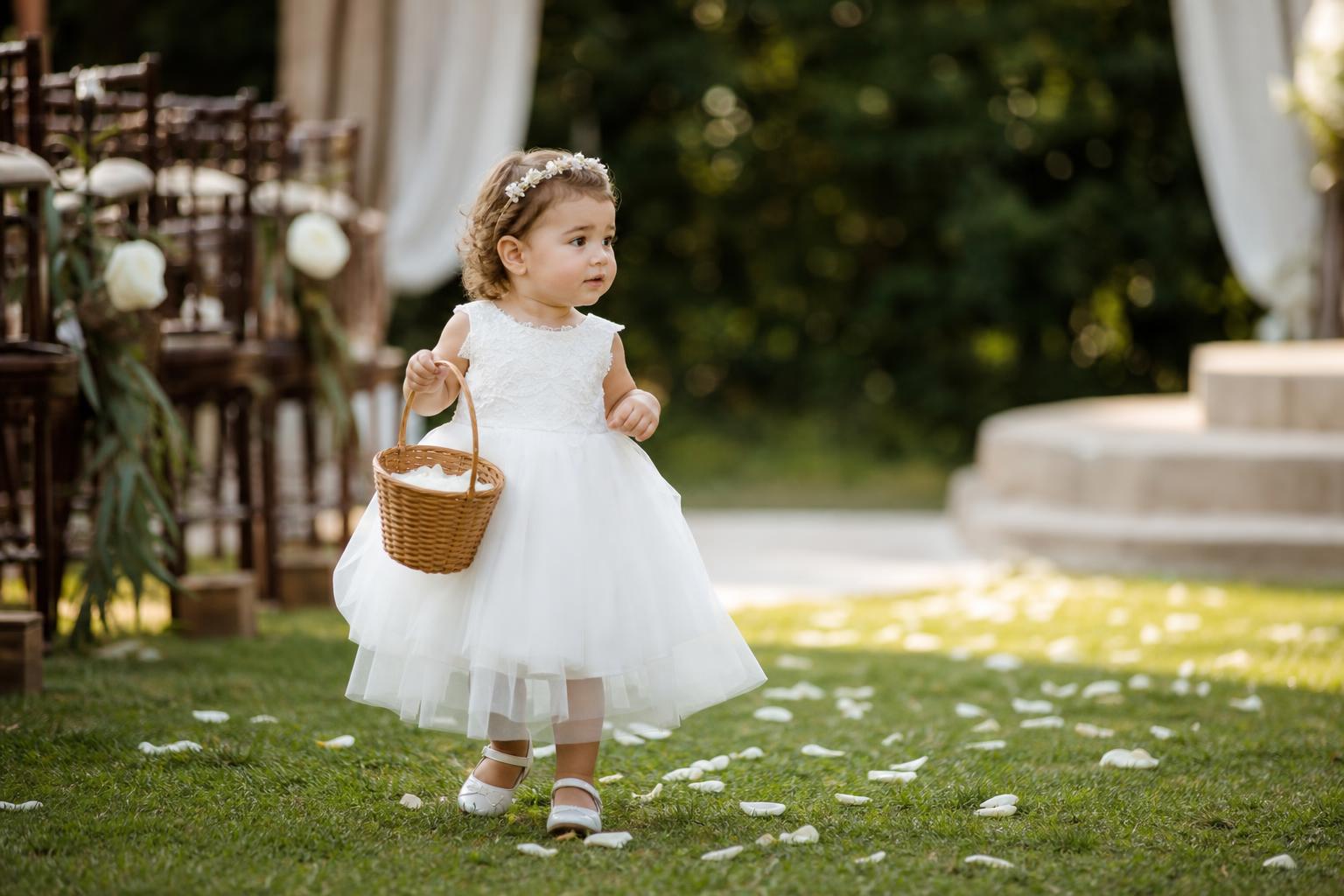
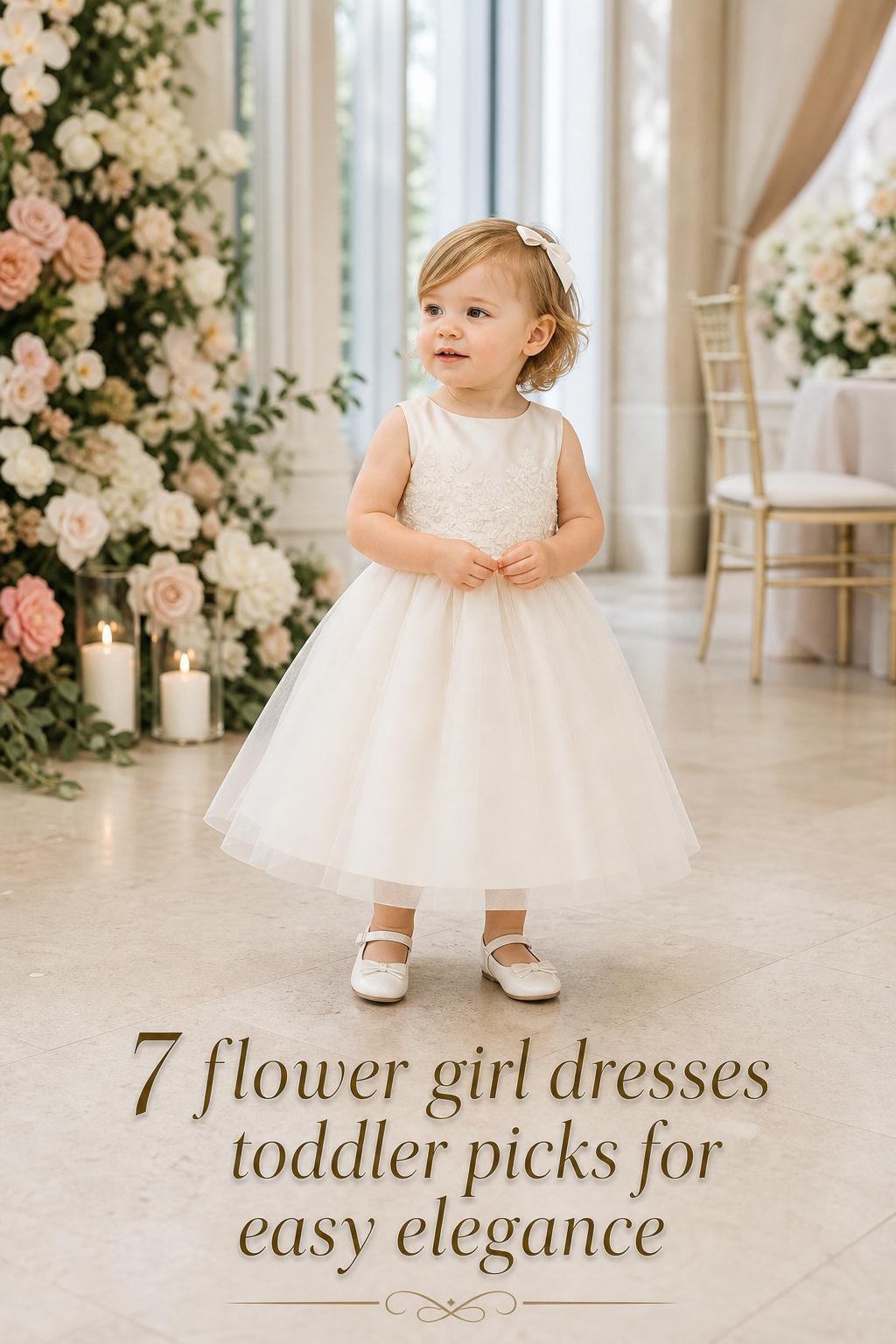
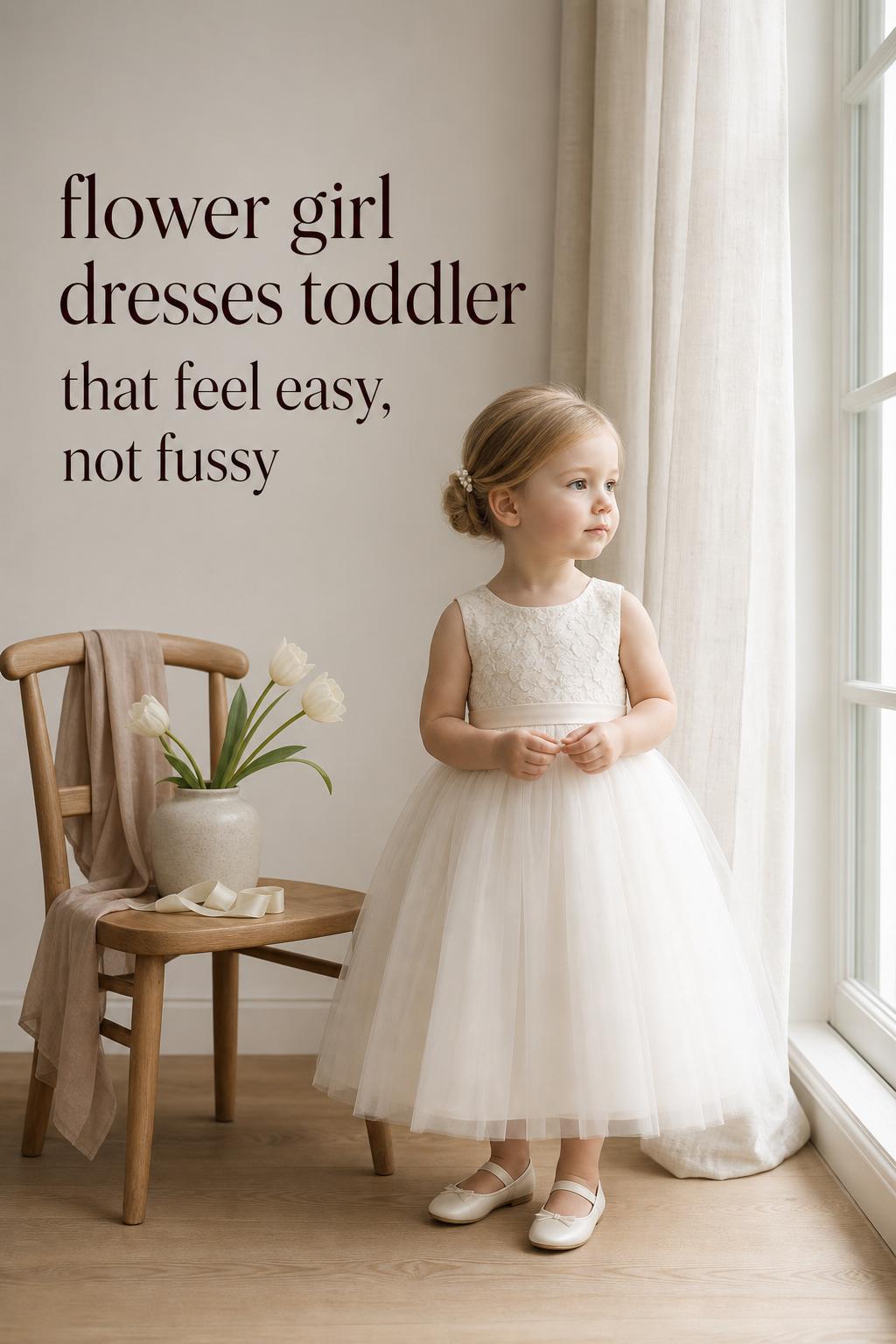
Tulle is the fabric most likely to create that storybook flower girl effect. It photographs beautifully, carries volume well, and feels especially fitting for ballroom venues, golden-hour garden weddings, and romantic receptions. A toddler ball gown in tulle can be striking, but proportion matters. Too much volume can feel cumbersome on a very young child, particularly if the wedding includes outdoor paths, stairs, or a long aisle.
Retailers such as Victoria’s Queen, Fairytale Tutus, FlowerGirlDresses.com, and Us Angels lean into tulle and fuller silhouettes, often with ivory, champagne, or blush styling cues. For a toddler, the most practical version is usually a soft, lightweight construction that still gives shape without becoming difficult to manage.
Satin and structured shapes for a polished finish
Satin brings smoothness and formality. It can look especially refined in evening weddings or more traditional bridal settings, where a cleaner surface feels elegant beside bridesmaid dresses and tailored suiting. Structured silhouettes such as fit-and-flare styles, highlighted in retailers like Macy’s, offer a neat compromise between movement and shape. They look dressy without becoming as expansive as a full ball gown.
For parents who want a dress that feels crisp and timeless, satin or satin-accented options can be easier to coordinate with bridal party looks. They may, however, feel less forgiving than softer fabrics if sizing is slightly off, so careful measuring matters.
How to choose size without turning the dress into a guessing game
One of the biggest reasons toddler formalwear fails on the wedding day is that shoppers rely too heavily on age labels. A 2T flower girl dress, 3T option, or infant flower girl dress category can help narrow the search, but sizing alone does not guarantee comfort or proportion. Retailers organize these dresses by toddler, little kid, big kid, and age ranges from infant through 7–16, which tells you how broad the market really is.
For toddlers, visual fit matters in three places: the bodice, the shoulder area, and the hem. If the bodice is too tight, the dress looks formal but feels restrictive. If the shoulder line is awkward, sleeves and straps can shift during the day. If the hem is too long, even the most beautiful tulle or lace dress becomes impractical. This is especially important for toddlers serving as flower girls in active wedding settings where they may walk on grass, move across dance floors, or be lifted in and out of seats.
- Start with the exact size range you need, such as toddler, baby, infant, or 2T.
- Compare silhouette as much as size label, since ball gowns and fit-and-flare dresses sit differently on the body.
- Be realistic about timing. If the wedding is soon, avoid buying too far ahead in hopes of growth.
- Treat hemming and minor alterations as practical finishing steps, not signs of a bad purchase.
Size-specific collections, like a dedicated 2T page, are especially useful because they remove some of the visual clutter and keep the focus on proportion. This is one reason niche categories such as 2T flower girl dresses are so valuable for parents who already know the general fit they need.
Color stories that actually work in wedding settings
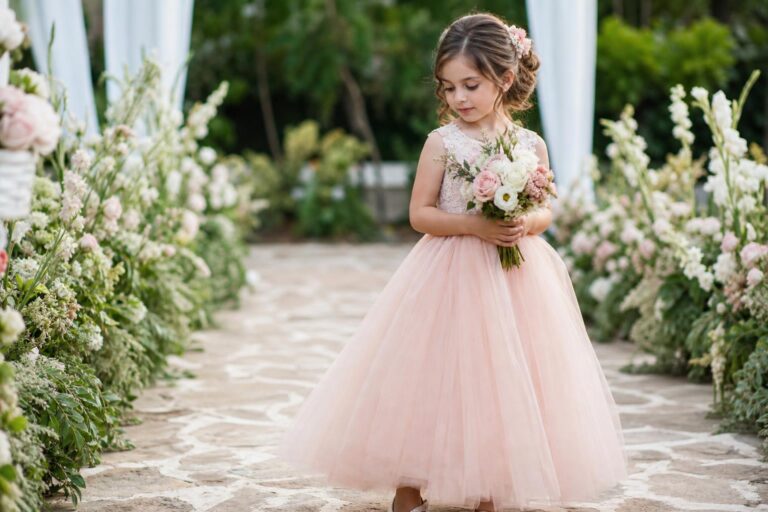
Color is where flower girl styling begins to feel truly integrated into a wedding. In the US market, ivory, white, champagne, and blush appear repeatedly because they complement a wide range of bridal party palettes and ceremony styles. These shades are soft enough for a toddler, photogenic in natural light, and easy to coordinate with lace, tulle, satin, and embellishment.
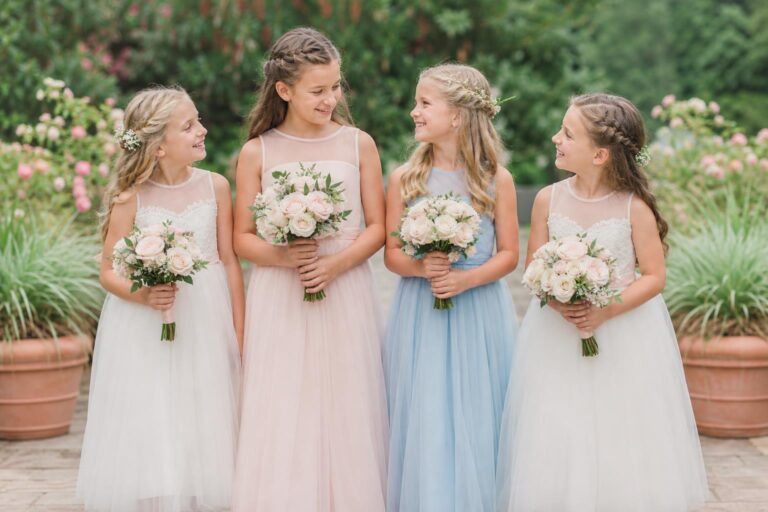
Ivory is often the easiest starting point for a classic wedding because it feels bridal without looking too stark. White can look especially fresh in formal or religious ceremonies where the overall palette is crisp and traditional. Champagne introduces warmth and works beautifully in late-afternoon vineyard weddings, candlelit receptions, or romantic neutral palettes. Blush and other pastels help soften the look further and can connect naturally to bridesmaid dresses or floral design.
Seasonal wedding pairings
A spring garden ceremony often suits airy tulle, floral lace, and light ivory or blush tones. Summer celebrations benefit from lighter-feeling construction and simpler silhouettes that still look formal in bright daylight. For fall or winter weddings, richer styling details such as satin, beading, or fuller skirts can feel more in step with the setting. The visual effect should always connect back to the atmosphere of the day rather than exist separately from it.
When coordinating with bridesmaids and groomsmen, the goal is harmony rather than an exact replica. A toddler flower girl dress can echo the wedding palette through color, fabric, or silhouette details, even if the overall look remains softer and more age-appropriate than the adult bridal party styling.
Where to shop in the US: matching the retailer to the problem you need to solve
Not every family shops for the same reason. Some need a quick, budget-conscious solution with size filters and fast comparison tools. Others want boutique styling, heirloom details, or a very specific dress type such as an ivory lace toddler gown or a champagne tulle 2T style. Choosing the right retailer depends on what problem you are trying to solve first: price, size, fabric, brand preference, or visual style.
Budget-friendly and accessible options
The Children’s Place, Kohl’s, Macy’s, Next US, and Zappos are useful starting points when you want broad selection and easy filtering. These retailers typically present flower girl dresses through size, color, and price, making them practical for families who need to compare multiple options quickly. The Children’s Place emphasizes affordable toddler formalwear with lace, mesh, and embellished styles, while Kohl’s and Macy’s offer department-store breadth across different labels and silhouettes. Zappos adds multi-brand variety, including names such as Janie and Jack and Polo Ralph Lauren.
Boutique and style-led collections
If the wedding vision leans more curated, retailers such as Victoria’s Queen, Dorris Wedding, FlowerGirlDresses.com, Fairytale Tutus, Feltman Brothers, Misdress, and Us Angels may be more aligned. These collections often emphasize wedding-first aesthetics: ball gowns, tutus, fine fabrics, vintage inspiration, beading, or classic silhouettes. They can be especially helpful when the family already knows they want a stronger bridal look rather than a general occasion dress.
Us Angels is helpful for coordinating across age ranges because its collection extends from younger children through older sizes, while FlowerGirlDresses.com offers a focused path for shoppers searching by a size like 2T. Feltman Brothers appeals to those drawn to heritage style and fine-fabric presentation. Misdress and Dorris Wedding suit families who want a more formal bridalwear lens, especially for wedding parties with a polished, upscale aesthetic.
How to compare retailers intelligently
Rather than opening dozens of tabs and comparing dresses at random, narrow the search by one decision at a time. If fit is your main concern, prioritize retailers with clear size groupings such as toddler, infant, or 2T and 3T. If style is the challenge, start with fabric and silhouette. If budget matters most, focus on broad catalogs with price sorting. If the wedding aesthetic is highly specific, boutique collections may save time because the visual language is already closer to what you want.
Style direction by wedding setting
The most useful flower girl dress decisions happen when the outfit is viewed inside the wedding scene. A toddler standing in soft grass at a spring ceremony requires a different styling logic than a flower girl entering a formal ballroom under evening lighting. Venue awareness brings order to the selection process.
Garden and outdoor ceremonies
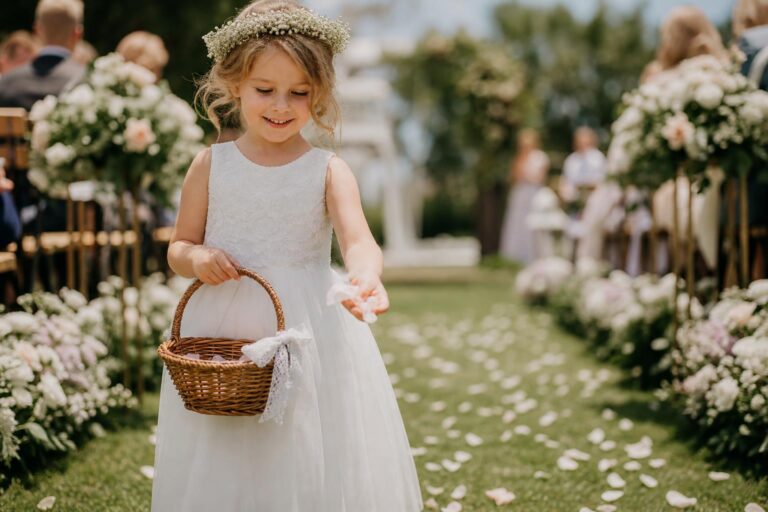
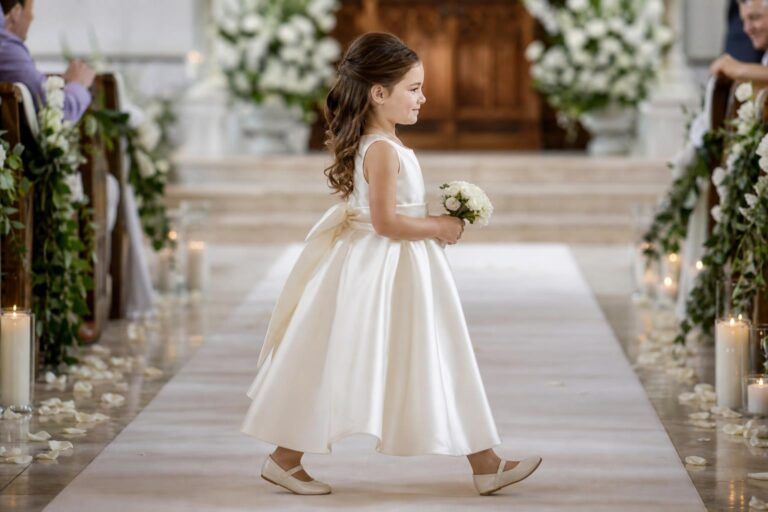
For outdoor weddings, softer silhouettes usually perform best. An ivory lace bodice with a lighter tulle skirt feels romantic without looking heavy, and it suits the natural movement of open-air venues. Shoes and hemlines deserve extra attention here because grass, gravel, and uneven paths can quickly make a full-length or overlong style impractical. This is where a fit-and-flare shape or a less voluminous A-line feel especially useful.
Ballroom and formal evening receptions
In a more formal indoor setting, satin, beading, and fuller skirts come into their own. A toddler can wear a more dramatic silhouette in a ballroom because the environment supports it visually. The key is to keep the dress manageable in scale. A polished ball gown or embellished lace style feels entirely appropriate under candlelight and formal décor, but it should still allow sitting, walking, and being carried comfortably.
Beach or destination-style celebrations
For lighter, breezier ceremonies, simplicity often wins. A softer tulle dress or a cleaner silhouette with minimal embellishment makes more sense than a heavily layered gown. The goal is to preserve the sweetness of flower girl styling without fighting the setting. In these weddings, ease of movement matters just as much as the romantic finish.
Accessories that complete the look without creating new problems
Accessories should support the dress, not compete with it. Many retailers pair flower girl dresses with headwraps, headpieces, or shoes, and these additions can be useful as styling tools. Still, toddlers do best when accessories stay simple and secure. A delicate headpiece can finish an ivory lace look beautifully, but if it shifts constantly or bothers the child, it will distract from the whole outfit.
Shoes deserve more attention than they often get. The flower girl may need to walk down an aisle, stand during photos, and move through a long reception. Shoes should feel stable and easy to manage with the hemline. If a dress has a fuller skirt or tulle overlay, footwear becomes even more important because the child cannot always see where her feet are landing.
- Use headpieces as a finishing touch rather than the main visual focus.
- Match shoes to the formality of the dress, but keep movement in mind.
- Pair elaborate dresses with simpler accessories to avoid visual overload.
- Let color coordination come from the dress first, then echo it in the accessories.
Care, maintenance, and preserving the dress after the celebration
Toddler formalwear benefits from practical aftercare because wedding days can be unpredictable. Lace, tulle, satin, and beading all need thoughtful handling, and this matters even more when a dress may be kept as a keepsake or passed along to another child. Families often spend most of their attention on the buying stage, but care and storage are part of the decision too.
Washing and drying considerations
Dresses with delicate layers or embellishment should be treated more carefully than a simple everyday occasion dress. Tulle can lose its airy shape if handled roughly, and lace or beaded details deserve a gentler approach. Before the wedding, it helps to decide whether the dress is mainly a one-day formalwear piece or something the family hopes to keep looking beautiful for years.
Storage and longevity
Heirloom-inspired brands such as Feltman Brothers remind shoppers that some flower girl dresses are chosen not only for the wedding but also for their lasting charm. If preservation matters, the dress should be stored carefully after the event and kept away from unnecessary crushing of tulle or lace overlays. This is one reason fabric choice influences value beyond appearance: a dress is not just worn, it is also maintained.
A few mistakes families make when shopping for toddler flower girl dresses
Most shopping mistakes happen because adults evaluate the dress through a bridal lens only, rather than through a toddler lens as well. The result can be a beautiful purchase that never feels easy to wear.
- Choosing too much volume for the venue, which can make walking and sitting difficult.
- Buying based only on age label instead of checking the likely fit and hem length.
- Prioritizing embellishment over comfort, especially around the bodice.
- Adding too many accessories, which can make the look fussy rather than refined.
- Ignoring the wedding setting, so the dress feels disconnected from the ceremony style.
The best alternative is a more balanced approach. Start with the setting, narrow by fabric and silhouette, then finish with size and accessories. That order tends to produce a look that feels both polished and realistic.
Practical tips before you place the order
A little structure makes online dress shopping far easier, especially when comparing brands, department stores, and niche bridal retailers. Whether you are browsing The Children’s Place for affordability, Macy’s for silhouette options, Next US for occasion wear, or boutique collections like Us Angels and FlowerGirlDresses.com, a pre-purchase checklist helps keep decisions calm and clear.
- Write down the wedding palette first: ivory, white, champagne, blush, or another soft tone.
- Decide whether the dress should look more classic, whimsical, vintage-inspired, or polished.
- Choose your lead fabric before you compare brands: lace, tulle, satin, mesh, or embellished finishes.
- Confirm whether the child needs toddler sizing, infant sizing, or a specific option like 2T or 3T.
- Add accessories only after the dress has been chosen and fitted into the overall wedding look.
One practical insight worth remembering: a slightly simpler dress that fits beautifully often looks more elevated than a highly detailed dress that feels awkward on the child. In wedding styling, proportion is often what makes a look appear luxurious.
The final styling perspective
The right toddler flower girl dress solves more than a fashion question. It helps a child move comfortably through an important day while still looking perfectly in tune with the wedding atmosphere. Lace, tulle, satin, fit-and-flare shapes, ball gowns, and heirloom-inspired details all have their place, but each works best when matched carefully to venue, season, color palette, and size.
Whether you are drawn to accessible US retailers such as Kohl’s, Macy’s, Next US, Zappos, and The Children’s Place, or more bridal-focused collections from Victoria’s Queen, Dorris Wedding, Us Angels, FlowerGirlDresses.com, Fairytale Tutus, Misdress, and Feltman Brothers, the smartest choice is usually the one that balances wedding beauty with toddler reality. That is the combination that always photographs best and feels easiest on the day itself.
FAQ
What is the best fabric for a toddler flower girl dress?
The best fabric depends on the wedding setting and the child’s comfort needs, but lace, tulle, and satin are the most common choices. Lace gives a classic bridal feel, tulle creates softness and volume, and satin offers a polished finish. For toddlers, the ideal option is usually the one that looks formal without feeling overly stiff or heavy.
How do I choose between a 2T, 3T, or other toddler size?
Start with the child’s current fit rather than relying only on age. A 2T flower girl dress or 3T option can narrow the search, but the bodice, shoulders, and hemline matter just as much as the size label. A dress that fits neatly through the top and does not drag at the hem is usually the safest choice for a wedding day.
Are ivory or white flower girl dresses better for weddings?
Both work well, but they create slightly different effects. Ivory tends to feel softer and easier to blend into many wedding palettes, while white looks crisp and traditional. Champagne and blush can also be beautiful choices when the bridal party styling has warmer or more romantic tones.
What silhouette is easiest for toddlers to wear?
Fit-and-flare and lighter A-line shapes are often the easiest because they balance structure with movement. Full ball gowns can be beautiful, especially for formal weddings, but they need to be carefully proportioned so the toddler can still walk, sit, and move comfortably.
Where can I buy flower girl dresses for toddlers in the US?
Families often shop broad US retailers such as The Children’s Place, Macy’s, Kohl’s, Next US, and Zappos for variety and easier comparison. More style-specific or bridal-focused options include Victoria’s Queen, Dorris Wedding, FlowerGirlDresses.com, Us Angels, Fairytale Tutus, Feltman Brothers, and Misdress.
How should a toddler flower girl dress match the wedding theme?
The dress should echo the wedding through color, fabric, or overall mood rather than imitate the bridal gown too closely. An ivory lace dress may suit a traditional ceremony, while champagne tulle can feel more romantic for a vineyard or evening reception. The goal is coordination, not exact duplication.
What accessories are worth adding to a toddler flower girl outfit?
Simple accessories usually work best. Shoes and a subtle headpiece can complete the look without making it difficult for the child to move or stay comfortable. If the dress already has beading, lace, or a full tulle skirt, understated accessories often look more refined.
How do I care for a lace or tulle flower girl dress after the wedding?
Delicate fabrics should be handled carefully after the event, especially if the dress includes embellishment. Tulle can lose shape if compressed too much, and lace details benefit from gentle storage. If you hope to keep the dress as a keepsake, preservation matters almost as much as the original purchase.
Should I buy a very detailed dress or a simpler one for a toddler?
That depends on the wedding formality, but a simpler dress with the right fit often works better than a heavily embellished dress that feels awkward. Toddlers usually look most polished when the silhouette is manageable and the details feel intentional rather than overwhelming.