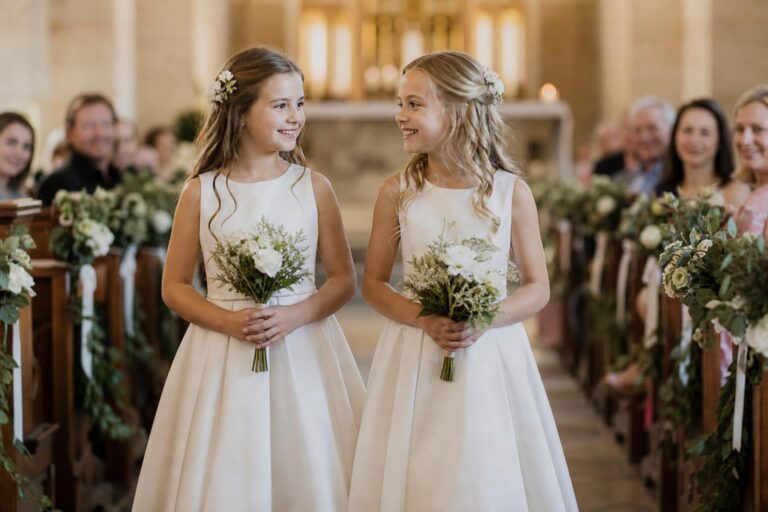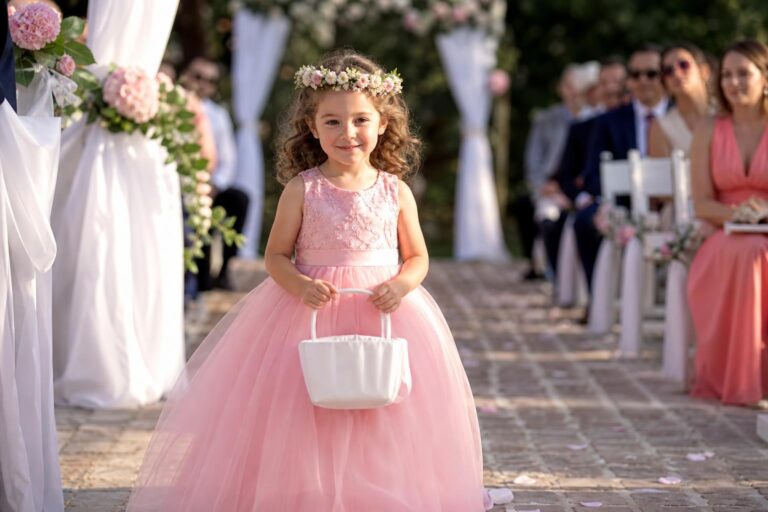
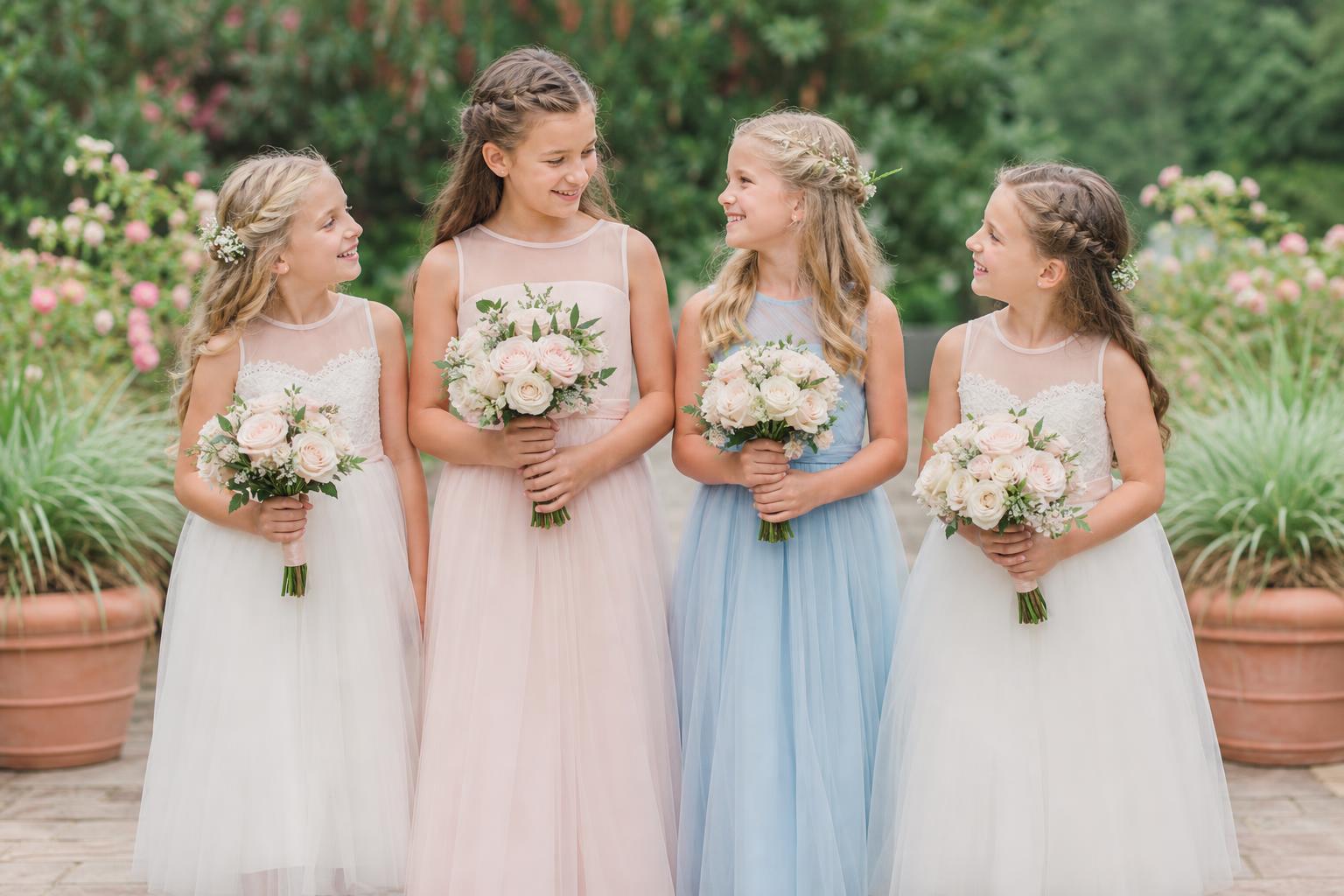
Junior Bridesmaid Dresses for a Soft, Romantic Wedding
There is a particular charm to junior bridesmaid dresses that sits somewhere between childhood sweetness and the more polished rhythm of the adult bridal party. In a wedding procession, a junior bridesmaid often becomes the visual bridge between the flower girl and the bridesmaids, so her dress carries a subtle styling responsibility: it should feel beautifully connected, never overdone, and always age-appropriate.
The mood is soft, celebratory, and carefully balanced. Think chiffon catching light at a garden ceremony, tea-length hems moving easily during a daytime reception, or a modest A-line silhouette that echoes the wedding palette without mimicking an adult gown too closely. This category is popular because it solves a very real styling question for families and couples: how to include a tween or young teen in the wedding party in a way that feels graceful, comfortable, and right for the occasion.
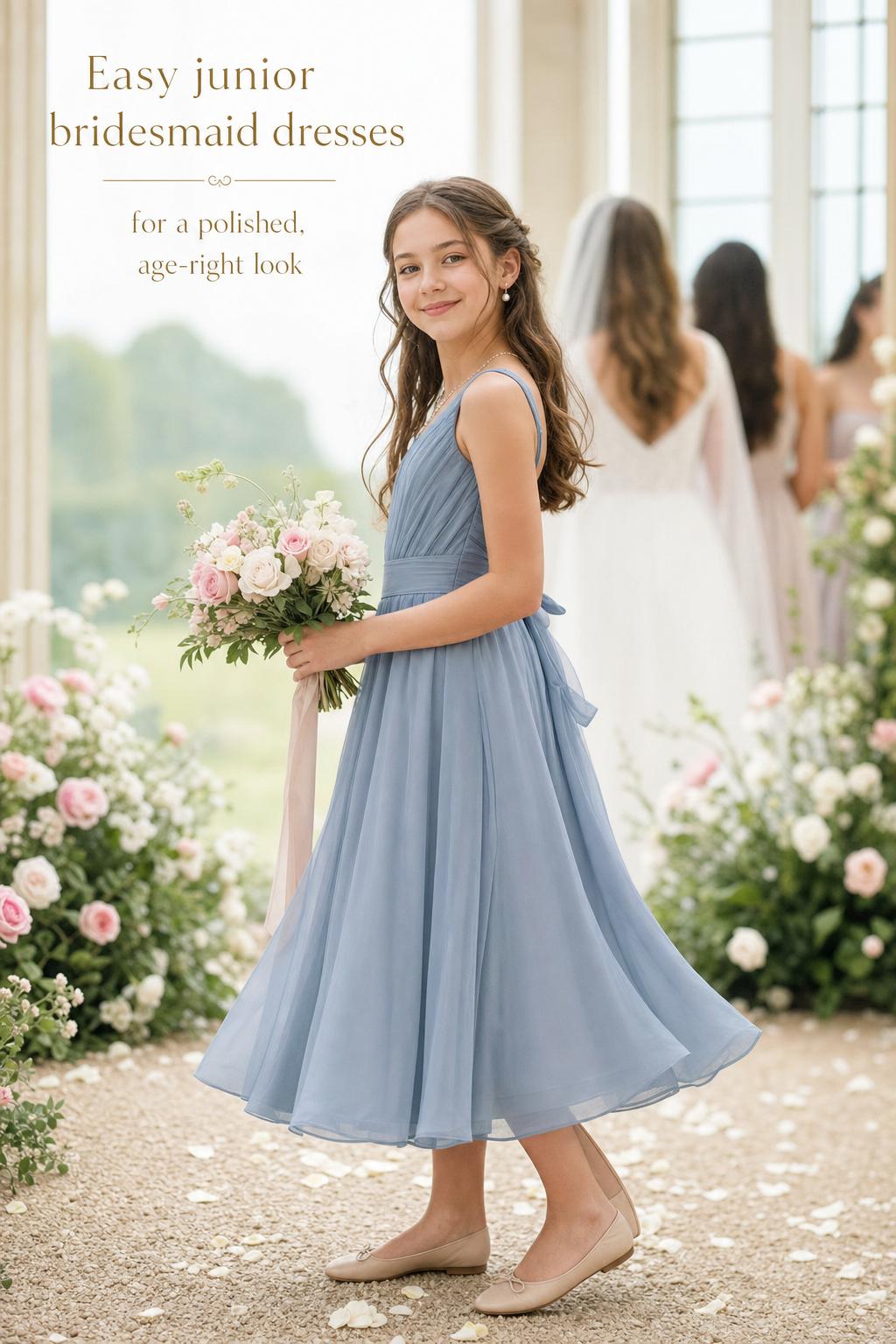
Across U.S. weddings, from semi-formal afternoon celebrations to more formal evening events, junior bridesmaid dresses are chosen for harmony, movement, and ease. The best choices do not simply match the bridal party; they create a cohesive visual story through color, fabric, and silhouette, while still honoring the age, comfort, and role of the junior bridesmaid herself.
The role behind the dress: understanding the junior bridesmaid
A junior bridesmaid is typically a wedding party member between about 8 and 16 years old. She is usually older than a flower girl but younger than an adult bridesmaid, which is why the styling conversation around junior bridesmaid dresses is so distinct. The dress needs to acknowledge that in-between role: polished enough for the bridal party, but never styled in a way that feels too mature.
Your wedding look is only the beginning.
Keep your guest list, vendors, timeline, and every important detail together with Zarellea — so your day feels as considered as your style.
That distinction matters in photographs, in movement during the ceremony, and in the way the junior bridesmaid feels throughout the day. A dress that is too childlike can make her look disconnected from the rest of the party, while an overly adult design can feel uncomfortable or out of step with wedding etiquette. The strongest approach is always visual alignment without exact imitation.
Why age-appropriate styling always comes first
Age-appropriate styling is the foundation rule throughout this category. That usually means modest necklines, comfortable construction, easy movement, and silhouettes that flatter without looking formal in an adult way. Many wedding style guides consistently favor A-line shapes for juniors because they are balanced, elegant, and easy to wear through a long ceremony and reception.
For younger juniors especially, avoiding strapless or revealing cuts keeps the look refined and practical. The point is not to make the junior bridesmaid disappear into the background, but to let her look included and confident while still looking like herself.
Flower girl, junior bridesmaid, and adult bridesmaid: the visual ladder
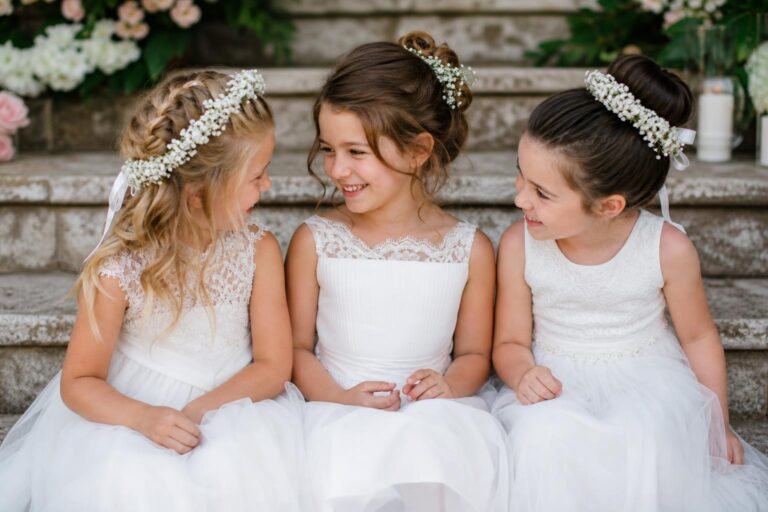
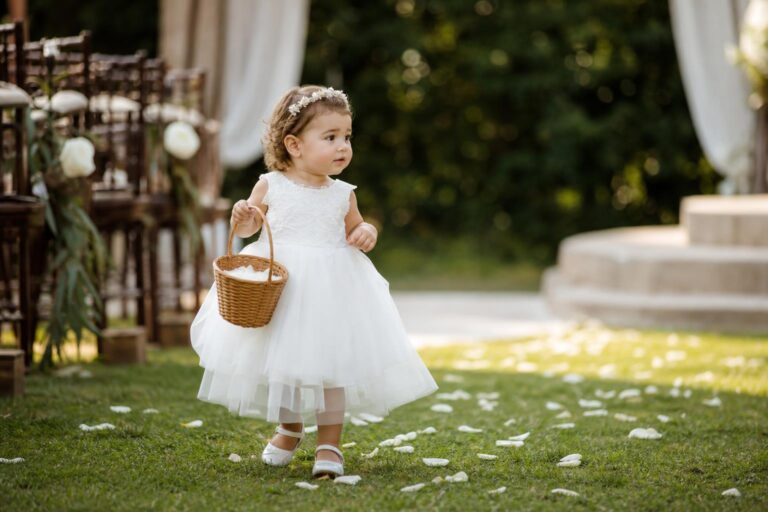
One of the most useful ways to think about wedding party styling is as a visual ladder. The flower girl often wears the sweetest, most youthful look. The adult bridesmaids carry the most formal, coordinated silhouette. The junior bridesmaid stands between them. Her dress can borrow color from the bridesmaids, softness from the flower girl, and structure from the wedding’s overall dress code.
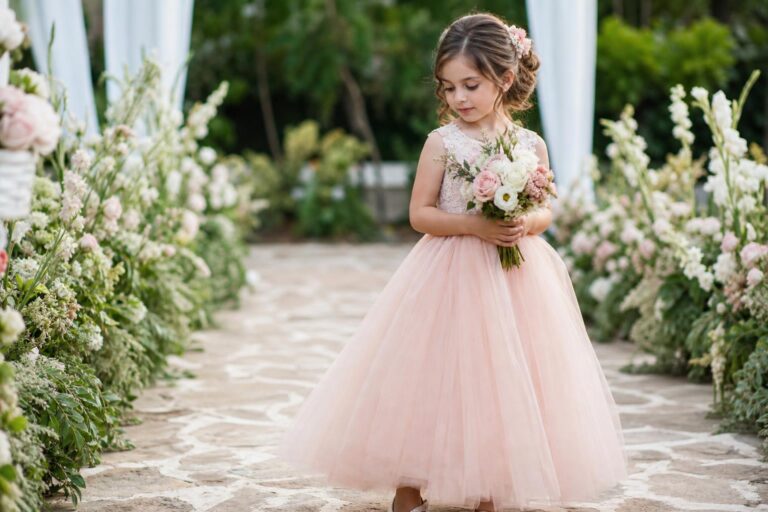
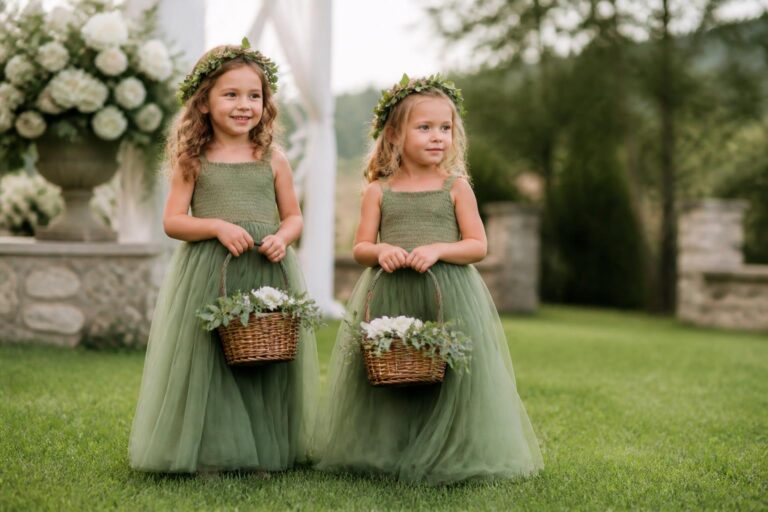
This is why coordinated color often works better than an exact match. A blush junior dress next to deeper blush adult bridesmaid gowns, or a sage A-line junior silhouette that echoes the same palette in a lighter finish, tends to feel more intentional than a perfect replica of an adult gown scaled down.
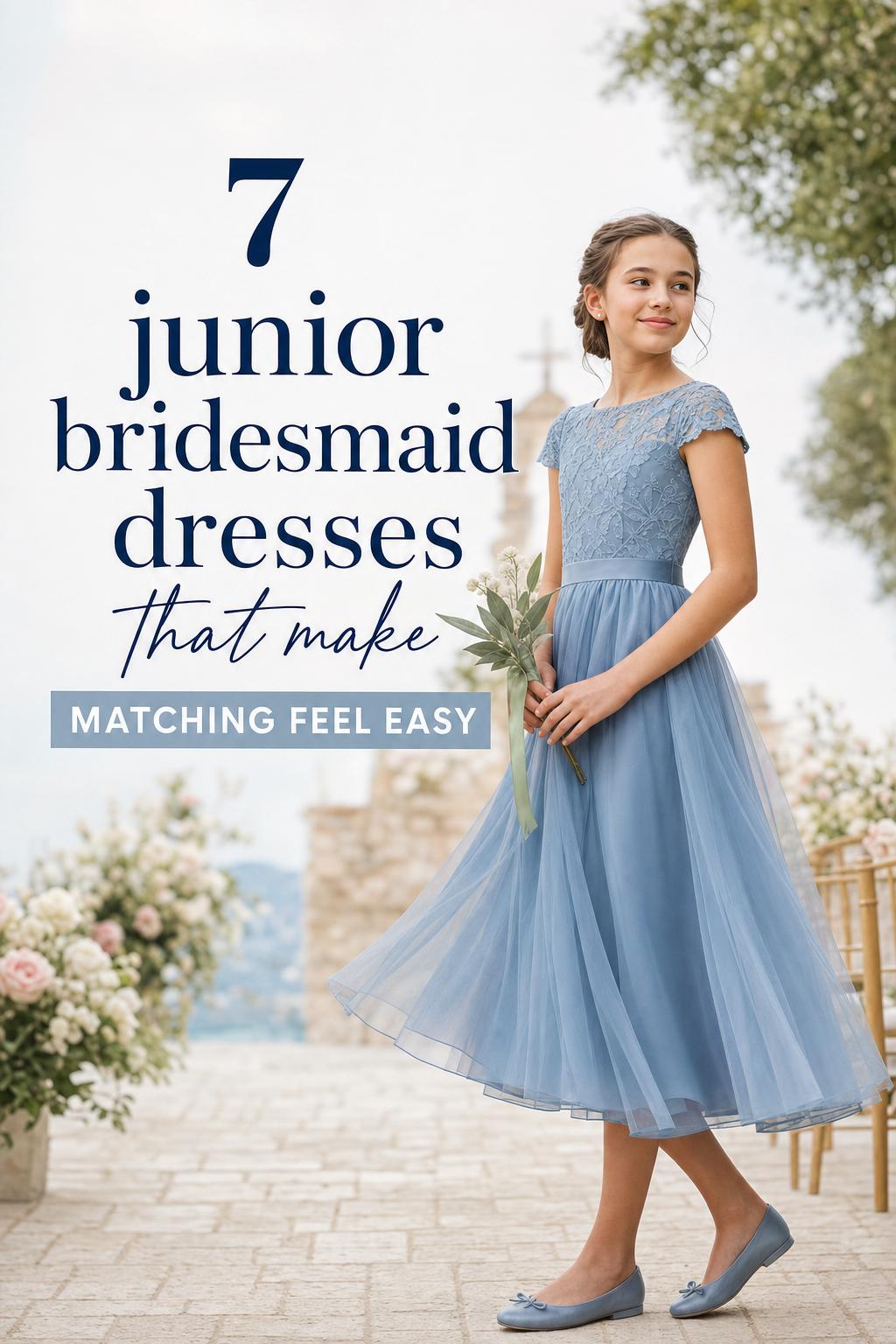
Look: the soft A-line ceremony silhouette
If there is one look that defines junior bridesmaid dresses with the most universal appeal, it is the soft A-line ceremony silhouette. This is the dress style that feels instantly right in nearly any wedding setting, whether the backdrop is a romantic garden aisle, a classic church ceremony, or a softly lit reception room where movement and comfort matter as much as photographs.
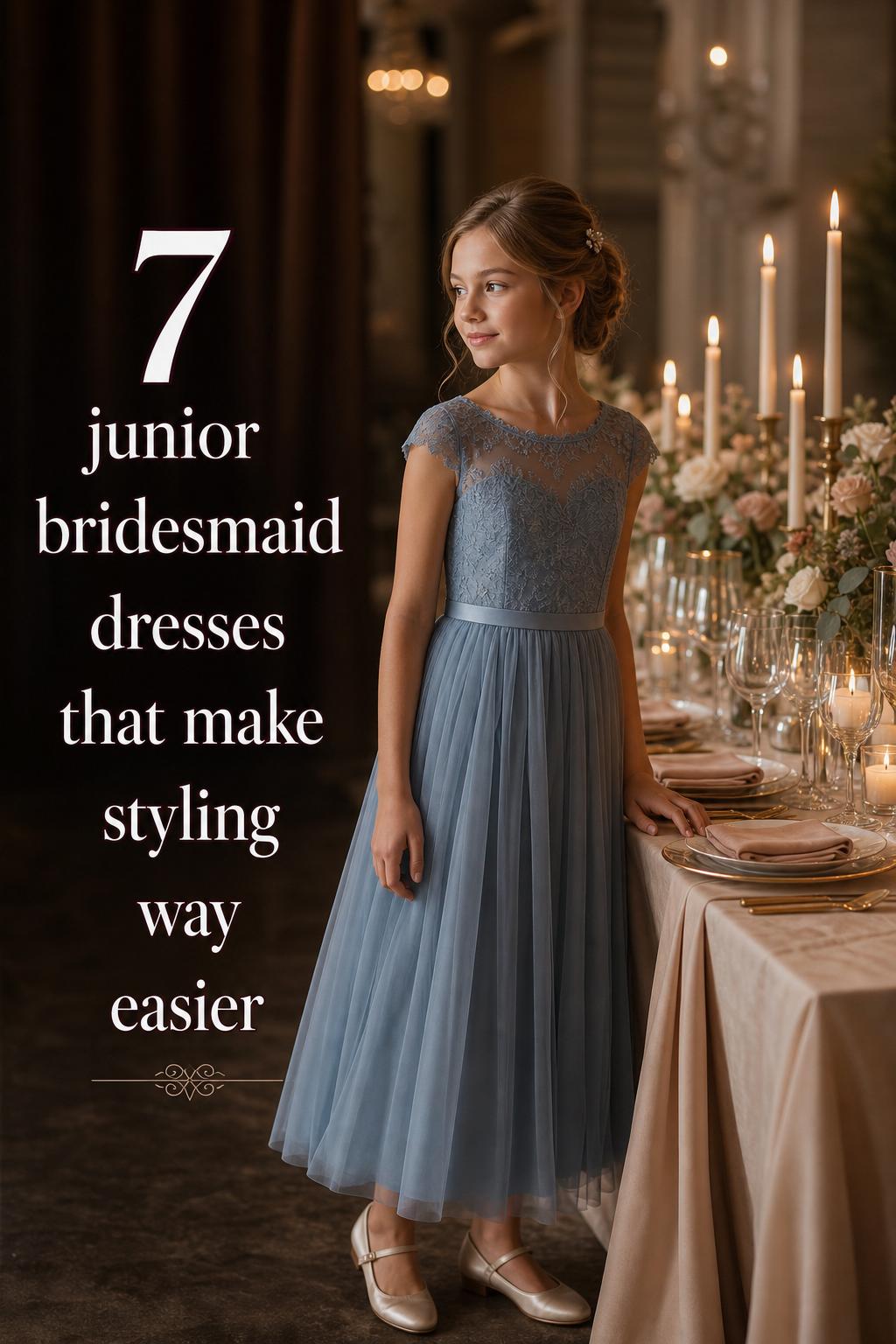
The beauty of the A-line lies in its restraint. It skims the body without clinging, opens gently through the skirt, and creates a polished shape that suits different ages within the 8 to 16 range. In chiffon, tulle, or lace accents, the silhouette reads delicate and occasion-ready. In terms of color, dusty blue, blush, and sage all lend themselves beautifully to this look because they coordinate naturally with common bridal party palettes without feeling severe.
- Key garments: A-line dress, lightly fitted bodice, softly flared skirt
- Best fabrics: chiffon, tulle, lace details
- Ideal settings: garden weddings, semi-formal afternoon ceremonies, romantic indoor celebrations
This look works because it translates wedding formality into a junior-friendly proportion. It also solves a practical challenge: a young attendant needs to walk, sit, stand for photos, and often remain dressed for many hours. The A-line silhouette keeps the visual mood elegant while reducing fuss.
Age-by-age styling logic that actually works
Not every junior bridesmaid dress should follow the same formula. Age matters, not only for etiquette, but for proportion, comfort, and confidence. A dress that feels lovely on a 15-year-old at a formal evening wedding may not feel appropriate on a 9-year-old at the same event.
For ages 8 to 10: lighter silhouettes and tea-length movement
For younger juniors, tea-length styles are often the most natural choice. The shorter hem feels youthful, easier to manage, and especially suitable for daytime weddings or celebrations where walking outdoors is part of the experience. The overall mood should be light, simple, and polished rather than dramatic.
Chiffon and tulle are especially effective here because they create softness without visual heaviness. A modest neckline and uncomplicated bodice keep the look in step with the role. If the adult bridesmaids are in floor-length dresses, a tea-length junior style in the same color family can be an elegant compromise.
For ages 11 to 13: the refined midi wedding look
The midi range often feels ideal for the middle years. It introduces a more refined line than tea-length, but still preserves the freshness that makes junior bridesmaid styling distinct. A midi dress can feel especially right at a vineyard wedding, a countryside venue, or any semi-formal event where the bridal party wants cohesion without strict sameness.
This age group often benefits from slightly more structured styling, but still within a modest framework. Lace can appear as a detail rather than the main statement, and the skirt should move easily rather than feel heavy. The overall effect should be polished, not formalized beyond the junior’s age.
For ages 14 to 16: floor-length, with restraint
Older juniors can often wear floor-length gowns, especially for formal weddings and evening ceremonies, but the same age-appropriate rules still apply. A floor-length hem may echo the adult bridesmaids, yet the neckline, sleeve treatment, and overall cut should remain modest and comfortable.
This is where color coordination and fabric choice become especially important. A floor-length chiffon gown in the same palette as the adult bridal party can look beautifully integrated, while a more adult fabric or a revealing bodice can shift the tone too far. Formality should come from length and finish, not from styling the junior to look older.
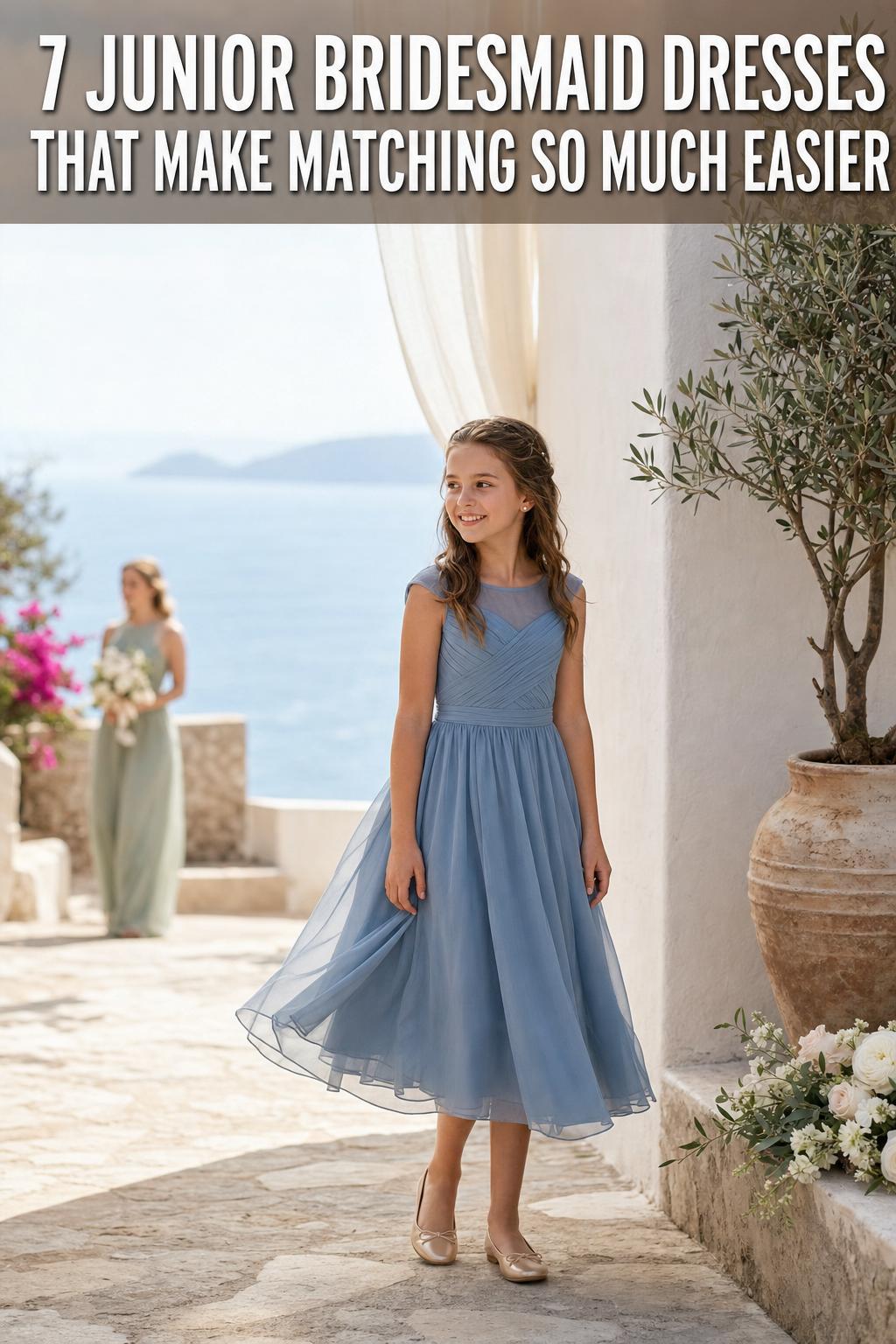
Look: tea-length romance for a daytime wedding
There is something especially charming about a tea-length junior bridesmaid dress at a daytime wedding. The silhouette feels buoyant and easy, the sort of look that suits garden ceremonies, spring celebrations, or a sunny outdoor aisle where lighter proportions simply make more visual sense.
The most graceful version of this look leans into movement. Chiffon is particularly lovely because it keeps the dress airy, while a layer of soft tulle can add volume without stiffness. Blush, dusty blue, and sage all work beautifully in tea-length forms, especially when the adult bridesmaids wear longer gowns in matching or harmonized shades.
This look fits the junior bridesmaid aesthetic because it embraces youthfulness without sacrificing occasion dressing. It is also practical on uneven outdoor ground, where a shorter hem can reduce tripping and make walking more relaxed.
Fabric, finish, and comfort: what gives the dress its mood
Fabric does more than change the appearance of junior bridesmaid dresses; it changes how they move, how they photograph, and how they feel over the course of a wedding day. The most consistently useful fabrics in this category are chiffon, tulle, and lace, all of which offer softness and visual romance without making the dress feel too rigid.
Chiffon is often the easiest choice for weddings that span ceremony, portraits, and reception because it is breathable and fluid. Tulle creates a more whimsical finish and works especially well for younger juniors or for parties that want a fuller skirt. Lace is best used thoughtfully, often as an overlay or detail, to add texture without making the look feel heavy. By contrast, more substantial, overly adult fabrics can weigh the silhouette down and shift the mood away from junior-friendly styling.
Look: chiffon harmony for a garden aisle
At a garden ceremony, the visual language is often soft light, natural movement, and color palettes that feel romantic rather than severe. A chiffon junior bridesmaid dress fits this atmosphere effortlessly. The dress reads elegant in photos, but it also responds well to wind, walking, and long stretches of wear.
Picture an A-line chiffon silhouette in sage or dusty blue, paired with simple shoes and minimal accessories. If the adult bridesmaids are also wearing chiffon, even in a different neckline or deeper shade, the bridal party looks visually connected without appearing too uniform.
The styling logic here is simple: matching fabric families often creates more cohesion than matching every design detail. For junior bridesmaids, that distinction can make the difference between coordinated and costume-like.
Look: lace-detail elegance for a formal reception
For a more formal wedding, a lace-detail dress brings a slightly elevated mood while still respecting the age of the wearer. This look suits candlelit receptions, classic indoor venues, and ceremonies where the adult bridesmaids are dressed in richer, more polished styles.
The strongest interpretation uses lace as texture, not excess. A lace bodice over a modest lining, or a lace overlay combined with a clean A-line skirt, gives the dress enough occasion presence without making it feel overly mature. Blush and soft neutral tones work well here, especially if the palette elsewhere in the wedding is romantic and understated.
This is one of those looks where balance matters more than embellishment. The lace adds visual depth, but the silhouette should remain easy, graceful, and unmistakably junior.
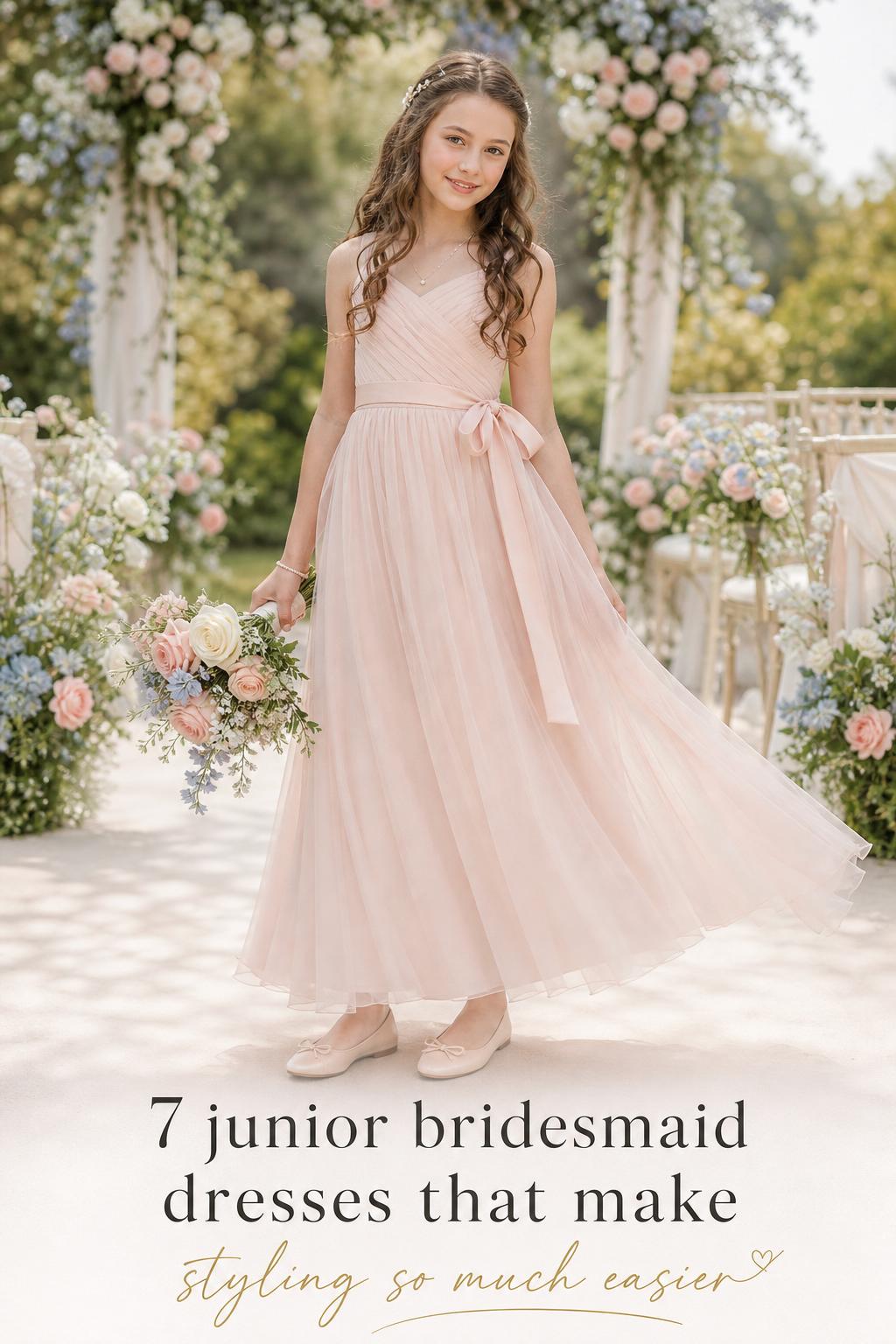
Color coordination without forcing an exact match
Among the most useful principles in styling junior bridesmaid dresses is this: harmony is usually more beautiful than duplication. Many bridal parties look stronger when the junior bridesmaid coordinates with the adult bridesmaids instead of wearing a direct replica. This approach also allows the dress to suit her age and body proportions more naturally.
Color can create that bridge elegantly. If the bridesmaids are in blush satin, the junior might wear blush chiffon. If the adults are in sage floor-length gowns, the junior could wear sage in tea-length or midi. The shared palette carries the connection; the altered silhouette preserves age-appropriateness.
- Exact match works best when the adult bridesmaid dresses are already modest and simple.
- Harmonized shades work well when the junior needs a different hemline or softer fabric.
- Matching within the same color family often photographs more beautifully than forcing one identical design across ages.
A color coordination cheatsheet
Some of the easiest palettes for junior bridesmaid dresses are the ones that already feel soft and wedding-ready: dusty blue, blush, and sage. These shades tend to work across seasons and can move comfortably between flower girl styling and adult bridesmaid styling.
For a semi-formal daytime wedding, dusty blue chiffon with simple accessories feels refined and fresh. For a romantic evening celebration, blush with lace details can echo a softer candlelit atmosphere. Sage is especially effective for outdoor ceremonies where the bridal palette leans natural and understated.
Look: modern midi coordination with the adult bridal party
Some weddings call for a cleaner, more contemporary mood, especially when the bridal party wants polished coordination without a traditional princess effect. In those settings, a midi junior bridesmaid dress can feel especially current. The line is neat, the proportion is elegant, and the overall effect is quietly sophisticated.
A midi A-line silhouette in chiffon or a light lace finish works beautifully when the adult bridesmaids are wearing longer gowns in the same palette. The dress might share the same sage, blush, or dusty blue tone while using a simpler neckline and a slightly softer skirt. Minimal accessories and comfortable footwear keep the look editorial rather than over-styled.
This interpretation works because it respects the wedding’s visual language while giving the junior bridesmaid her own place within it. She looks connected, but not copied.
Shopping in the U.S.: what to look for before you order
Shopping for junior bridesmaid dresses in the U.S. usually blends emotional decisions with practical ones. Families often begin with the wedding palette or with the adult bridesmaid gowns, but the better starting point is usually role, age, and comfort. Once those are clear, silhouette, length, and retailer become much easier decisions.
Brands and retailers commonly associated with this category include Jovani, Kennedy Blue, Lucy’s, Robe Marie, and Ve’Lace Bridal, while wedding media and style resources such as The Knot and OneFabDay often help shape expectations around silhouettes, color coordination, and where to shop. Some shoppers want a polished designer feel, others prioritize straightforward sizing or a wider range of lengths. What matters most is whether the dress aligns with the wedding’s formality and the junior’s actual needs.
What to check before choosing a retailer or collection
- Available lengths, especially tea-length, midi, and floor-length
- Fabric options such as chiffon, tulle, and lace
- Sizing guidance for tweens and teens
- Whether the brand offers colors that coordinate with adult bridesmaid collections
- How simple the dress will be to alter if the junior grows before the wedding
Collection pages can be helpful for color and silhouette comparisons, but they often give less etiquette guidance than long-form editorial content. That is why it helps to evaluate a dress as both a fashion choice and a wedding role choice.
Practical fit notes parents and brides are glad they considered early
One of the most overlooked realities of junior bridesmaid dresses is that growing children and teens do not shop on the same timeline as adults. A gown that fits perfectly months before the ceremony may need adjustment closer to the date, particularly in hem length or bodice fit. That makes sizing and alterations a central part of the planning process rather than a final afterthought.
A little room for growth can be useful, but too much extra fabric can distort the silhouette and make the dress feel cumbersome. The goal is not simply to size up. It is to choose a shape, like an A-line, that remains forgiving while still looking tailored enough for photographs and formal procession moments.
Tip: plan alterations around growth, not around optimism
In real wedding planning, the smoothest approach is usually to select the dress early enough to secure color and style, then delay final alterations until closer to the ceremony. This is particularly helpful for hems, because tea-length, midi, and floor-length all depend on proportion more than they do on label size alone. A junior bridesmaid who is active, growing quickly, or between sizes often benefits from this more cautious timeline.
It is also wise to have the junior try on the full look, including shoes, before finalizing hem decisions. A dress that appears perfect barefoot or in flats may fall differently once wedding shoes are added, and that affects both comfort and finish.
Look: floor-length grace for a formal evening wedding
For a formal evening celebration, floor-length junior bridesmaid dresses can be genuinely beautiful when approached with restraint. The setting might be a ballroom, a classic reception venue, or any ceremony that moves into a richer nighttime atmosphere. In these spaces, longer hems bring visual continuity to the bridal party.
The strongest version of this look relies on fluidity rather than weight. A floor-length chiffon gown in blush or dusty blue, cut in an A-line shape with a modest neckline, carries the elegance of formal dressing without pushing into adult styling. If the adult bridesmaids are wearing coordinated shades, the junior can mirror the palette while keeping her own silhouette simpler and softer.
This look succeeds because it understands formal does not have to mean complicated. For juniors, elegance is often clearest when the lines are clean, the movement is easy, and the details stay quiet.
Who pays, how to budget, and what affects the final cost
Budget questions come up quickly with junior bridesmaid dresses because the role sits in a gray area between children’s occasionwear and bridal party attire. In some weddings, the family of the junior bridesmaid takes care of the dress. In others, the couple may contribute, especially if a very specific look is required. The key is to clarify expectations early, before a dress is chosen.
Several factors can influence cost: brand, fabric, level of detail, and whether alterations are needed. A simpler chiffon or tea-length design may be easier to manage than a more formal floor-length gown with lace features. The practical side of budgeting is not only the dress itself, but also shoes, accessories, and possible fittings.
Style tip: keep the budget aligned with the role
It is easy to overspend when trying to make the junior bridesmaid match the adult party exactly. In many cases, a better result comes from choosing a coordinated dress that reflects the same color palette and overall wedding mood, then keeping accessories simple. This protects both the budget and the age-appropriate tone of the look.
Accessories, hair, and shoes that complete the aesthetic gently
Once the dress is settled, the finishing touches should support the look rather than compete with it. Junior bridesmaid dresses are usually strongest when accessorized lightly. Weddings already provide visual richness through bouquets, ceremony décor, and the movement of the bridal party itself, so the junior rarely needs more than a few restrained details.
Comfortable shoes matter more than trend-driven ones, particularly for outdoor ceremonies, church steps, portrait sessions, and long receptions. Hair should also feel secure and age-appropriate. Simple styling often looks better by the end of the evening than anything too intricate, especially for younger attendants.
- Choose comfortable shoes that support walking and standing
- Keep jewelry minimal and modest
- Select hair ideas that feel polished but not overly formal
- Coordinate accessories with the palette rather than adding new statement colors
Look: simple finishing touches for an effortless bridal party feel
This look is less about the dress shape and more about the total impression. Imagine a sage or blush junior bridesmaid dress, softly styled hair, and shoes chosen for stability rather than drama. The accessories are subtle enough that the fabric and silhouette remain the focus.
That restraint is exactly what makes the styling feel modern. The result is a bridal party image that looks intentional, calm, and elegant across different ages.
Where formality changes the dress: daytime, semi-formal, and evening weddings
Wedding formality should influence junior bridesmaid dresses just as much as color palette does. A daytime garden ceremony calls for breathable fabrics and lighter visual weight. A semi-formal countryside or vineyard wedding often suits midi or tea-length silhouettes with soft structure. An evening reception may invite floor-length gowns, but still within the same age-appropriate rules.
This is where many styling decisions become clearer. If the venue is outdoors and movement matters, chiffon and tea-length or midi shapes usually feel easier. If the venue is more formal and the bridal party is dressed in a longer line, a floor-length A-line may be appropriate for older juniors. Matching the venue mood creates cohesion without needing to force every person into the same dress logic.
How to recreate the right mood for the wedding setting
For garden weddings, prioritize soft fabrics and airy movement. For formal indoor receptions, elevate the finish with longer hems or lace detail, but keep the overall cut modest. For weddings that move from daylight into evening, a midi or floor-length chiffon dress often bridges both parts of the day beautifully. The most successful junior bridesmaid style always looks connected to the event around it.
Common styling mistakes that can disrupt the bridal party look
Even a beautiful dress can feel wrong if the styling logic is off. One of the most common mistakes is treating the junior bridesmaid like a smaller adult bridesmaid without adjusting for age, movement, or comfort. Another is leaning too far in the opposite direction and choosing something so childlike that it breaks the visual rhythm of the party.
Other issues are more practical: heavy fabrics that feel uncomfortable, hems that are difficult to walk in, accessories that distract from the dress, or an exact color match in a fabric that makes the junior appear visually disconnected anyway. These are not dramatic errors, but they are the sort that show up clearly in photographs and throughout a long wedding day.
- Avoid overly adult necklines or strapless cuts for younger juniors
- Avoid fabrics that feel too heavy for the junior to move in comfortably
- Avoid forcing an exact match when a coordinated shade would look more natural
- Avoid waiting too long to think about alterations and shoe height
The better goal is always balance: coordinated, graceful, and true to the role.
A thoughtful style perspective on newer priorities
As families become more intentional about occasionwear, a few additional considerations are beginning to matter more in the junior category. Some shoppers now want to know more about sustainability and eco-fabrics, while others are paying closer attention to size-inclusive and adaptive options for juniors with different fit needs. These areas are not always covered thoroughly in standard dress guides, yet they can shape the final decision in meaningful ways.
The same is true of fit planning and care. A junior bridesmaid dress should not only look right for the ceremony; it should also be manageable for fittings, comfortable for long wear, and realistic for the family coordinating it. In other words, the best dress is not merely a pretty one. It is the one that supports the wedding day with as little friction as possible.
Key pieces for this aesthetic
- A-line silhouettes for flexible, flattering shape
- Tea-length, midi, or floor-length hems chosen by age and formality
- Chiffon, tulle, and lace for softness and movement
- Dusty blue, blush, and sage for easy bridal party coordination
- Simple shoes, minimal accessories, and comfortable styling throughout
Bringing the whole bridal party into focus
The loveliest junior bridesmaid dresses do more than stand alone well. They help connect the wedding party as a whole. When the flower girl, junior bridesmaid, and adult bridesmaids all feel visually related through color, fabric, or overall mood, the ceremony looks considered from every angle. That is often more memorable than chasing perfect sameness.
Whether the final dress comes from Jovani, Kennedy Blue, Lucy’s, Robe Marie, Ve’Lace Bridal, or another bridal retailer, the strongest result comes from asking the right questions first: Is the silhouette age-appropriate? Does it coordinate with the adult bridesmaids? Will it feel comfortable through the wedding day? Does the fabric suit the venue and formality? Once those answers are clear, the aesthetic usually falls into place with much less effort.
That is the quiet appeal of this category. Junior bridesmaid style is not about shrinking an adult bridal trend. It is about creating a graceful in-between look that feels romantic, wearable, and fully at home in the celebration.
FAQ
What age is a junior bridesmaid?
A junior bridesmaid is typically between about 8 and 16 years old, generally older than a flower girl and younger than an adult bridesmaid. That in-between age range is why her dress should feel coordinated with the bridal party while still remaining clearly age-appropriate.
How should junior bridesmaid dresses coordinate with adult bridesmaids?
The most elegant approach is often color coordination rather than an exact dress match. Using the same palette, such as blush, dusty blue, or sage, while adjusting the junior’s fabric, length, or neckline creates visual harmony without making the style feel too mature.
What is the best silhouette for a junior bridesmaid dress?
An A-line silhouette is one of the most reliable choices because it is flattering, modest, easy to move in, and appropriate across many wedding styles. It works especially well in chiffon, tulle, or lace-accented designs and adapts easily to tea-length, midi, or floor-length hems.
Should a junior bridesmaid wear tea-length, midi, or floor-length?
Length usually depends on age and wedding formality. Tea-length often suits ages 8 to 10, midi can work especially well for ages 11 to 13, and floor-length is often best reserved for older juniors, particularly at formal weddings, as long as the overall dress remains modest and comfortable.
What fabrics work best for junior bridesmaid dresses?
Chiffon, tulle, and lace are among the most suitable fabrics because they create softness, movement, and a romantic wedding feel without adding too much visual weight. Chiffon is especially useful for comfort and breathability, while lace works best as a refined detail rather than an overpowering feature.
Are strapless junior bridesmaid dresses appropriate?
For younger juniors, strapless styles are generally less favored than modest necklines and more secure constructions. Age-appropriate styling remains the central principle, so dresses that provide comfort, coverage, and easy movement are usually the better choice.
Who usually pays for a junior bridesmaid dress?
Payment arrangements can vary by wedding, which is why it helps to discuss expectations early. In some cases, the junior bridesmaid’s family pays; in others, the couple may contribute if a specific dress or coordinated bridal party look is required.
When should alterations be done for a junior bridesmaid dress?
Because children and teens may grow between ordering and the wedding, final alterations are usually best handled closer to the event. Hem adjustments are especially important, and the dress should be tried on with the intended shoes before the final fit is confirmed.
What accessories should a junior bridesmaid wear?
The most polished choice is usually a simple one: comfortable shoes, minimal jewelry, and easy hair styling that feels secure and age-appropriate. Accessories should support the dress and overall palette rather than compete with them.
Can a junior bridesmaid dress be different from the flower girl dress?
Yes, and it often should be. The flower girl, junior bridesmaid, and adult bridesmaids each occupy a different place in the wedding party, so their dresses usually work best when they are visually connected but not identical. Color, fabric, and overall mood can tie the looks together while preserving each role.