Classic Winter Wedding: 4 Elegant Style Directions
A classic winter wedding does not have to look like a Christmas party, a snow-globe set, or a room filled with one predictable color combination. The most polished celebrations make a clear choice about what winter should feel like, then repeat that decision in the venue, attire, flowers, lighting, paper details, and guest experience. That is what makes the design feel intentional.
If you are choosing between timeless winter wedding ideas, start with the atmosphere you want guests to remember. Do you picture candlelight and warm metallics, a formal navy room with icy details, rich velvet and evergreen, or an airy white setting with restrained greenery? Each direction can be classic. The difference is how it handles color, texture, formality, and the season’s practical limits.
This comparison guide helps you make that choice before you order linens or finalize flowers. It also shows where each look works best, what it costs you in visual complexity, and how to keep a winter celebration elegant rather than overly themed.
Choose the classic winter direction that fits your venue
The venue should narrow your options, not force you into a theme. A ballroom with warm chandeliers can carry white and gold beautifully, while a modern hotel room may need navy and silver to give the space definition. A stone estate or mountain lodge can support burgundy and emerald without feeling heavy. A bright gallery or conservatory may be the natural home for all-white florals and clean greenery.
Your wedding look is only the beginning.
Keep your guest list, vendors, timeline, and every important detail together with Zarellea — so your day feels as considered as your style.
Look at the room at the hour when your reception will begin. Winter changes the balance between daylight and artificial light. A palette that looks delicate at noon can disappear after sunset, while deep colors may become dramatic in a candlelit room. Ask for photographs of the venue during a similar season, and note the fixed elements you cannot change: carpet, wall color, chairs, chandeliers, wood, stone, and window treatments.
- Choose white and gold if you want warmth, tradition, and a softly luxurious ballroom feel.
- Choose navy and silver if you want crisp formality, contrast, and an evening-gala mood.
- Choose burgundy and emerald if you want intimacy, depth, and a more tactile estate or lodge atmosphere.
- Choose all-white with greenery if you want modern restraint, a light-filled room, and an unmistakably winter setting.
Do not select a palette only because it looks beautiful in a saved image. Ask whether it supports your actual venue, season, dress code, and budget. A classic design is repeatable. You should be able to describe it in one sentence and make a confident decision about any new detail without starting over.
Compare four classic winter wedding style systems
The strongest winter designs work as systems rather than collections of unrelated details. Below, each system includes a palette, material language, floral direction, attire cue, and the kind of setting it naturally complements. Use the descriptions to identify the look that feels most like your relationship, not simply the one that photographs well.
White and gold: warm, formal, and enduring
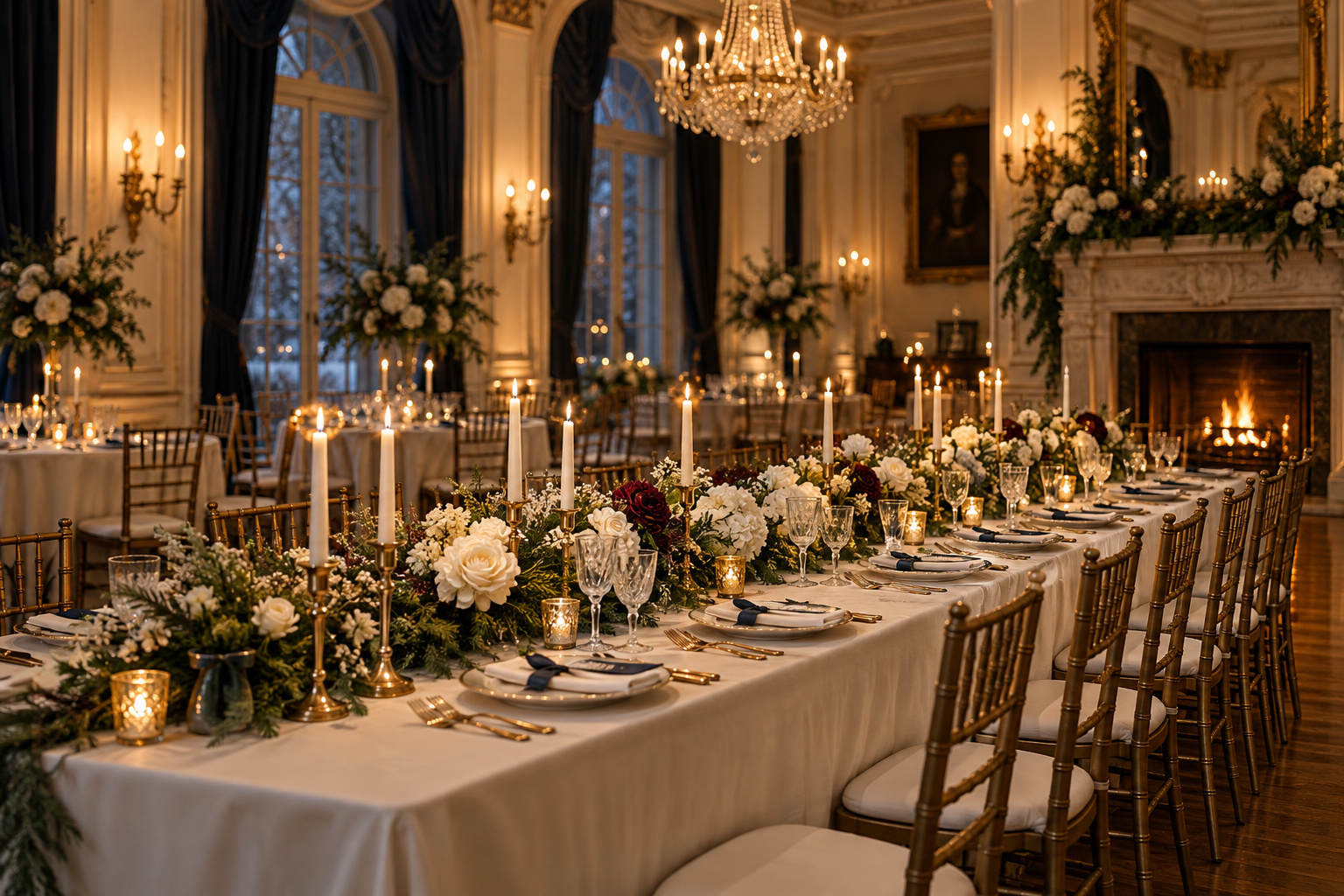
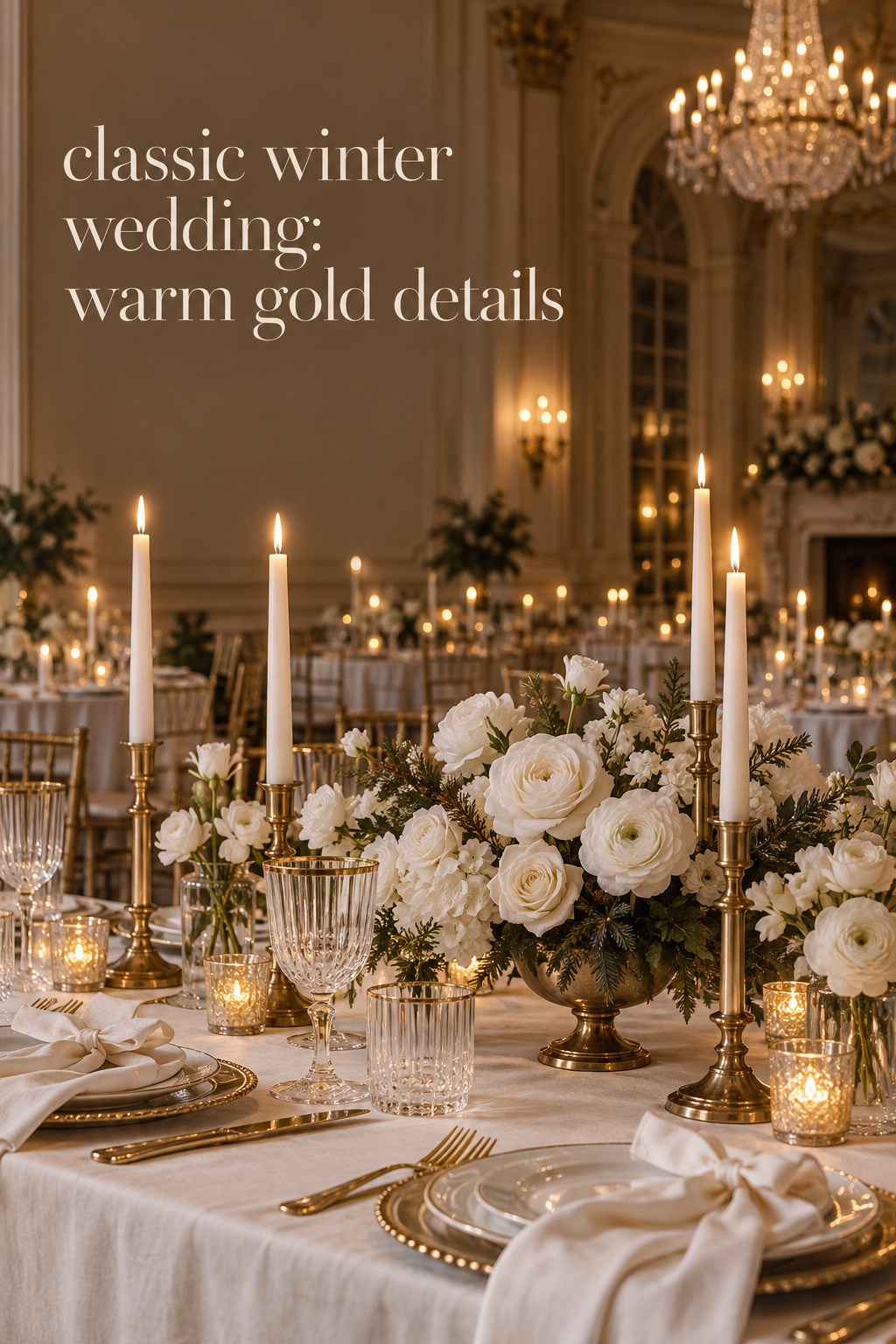
White and gold is the safest choice when you want a classic winter wedding to feel festive without becoming holiday-specific. Use ivory rather than a stark optic white when the venue has warm lighting, then add antique gold through candleholders, flatware, paper edging, or a restrained ribbon. White roses, ranunculus, anemones, and textured greenery keep the flowers bridal and dimensional.
This direction works especially well for a formal hotel, historic ballroom, or restaurant with brass, wood, or cream-colored architectural details. Its advantage is flexibility. You can make it grand with tall arrangements and layered linens, or intimate with low white flowers, taper candles, and one metallic accent. Its risk is looking generic if every surface is white and every metallic is bright yellow gold. Vary finishes and include one tactile element, such as velvet ribbon or ribbed glass.
Navy and silver: crisp, elegant, and evening-focused
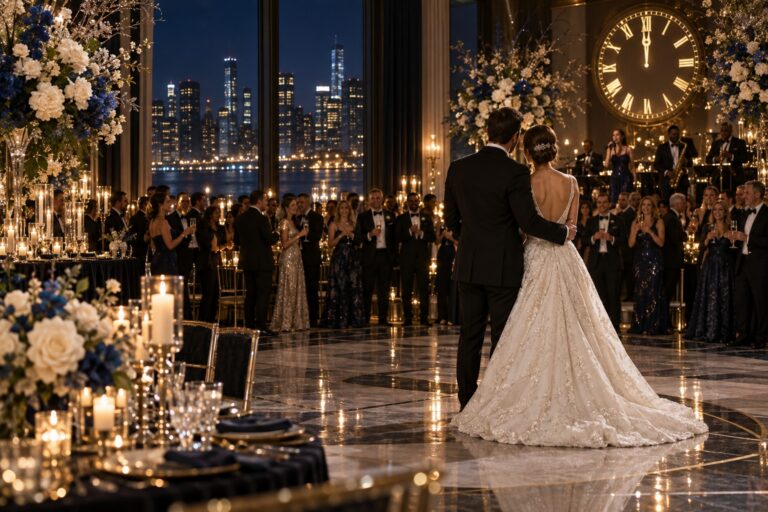
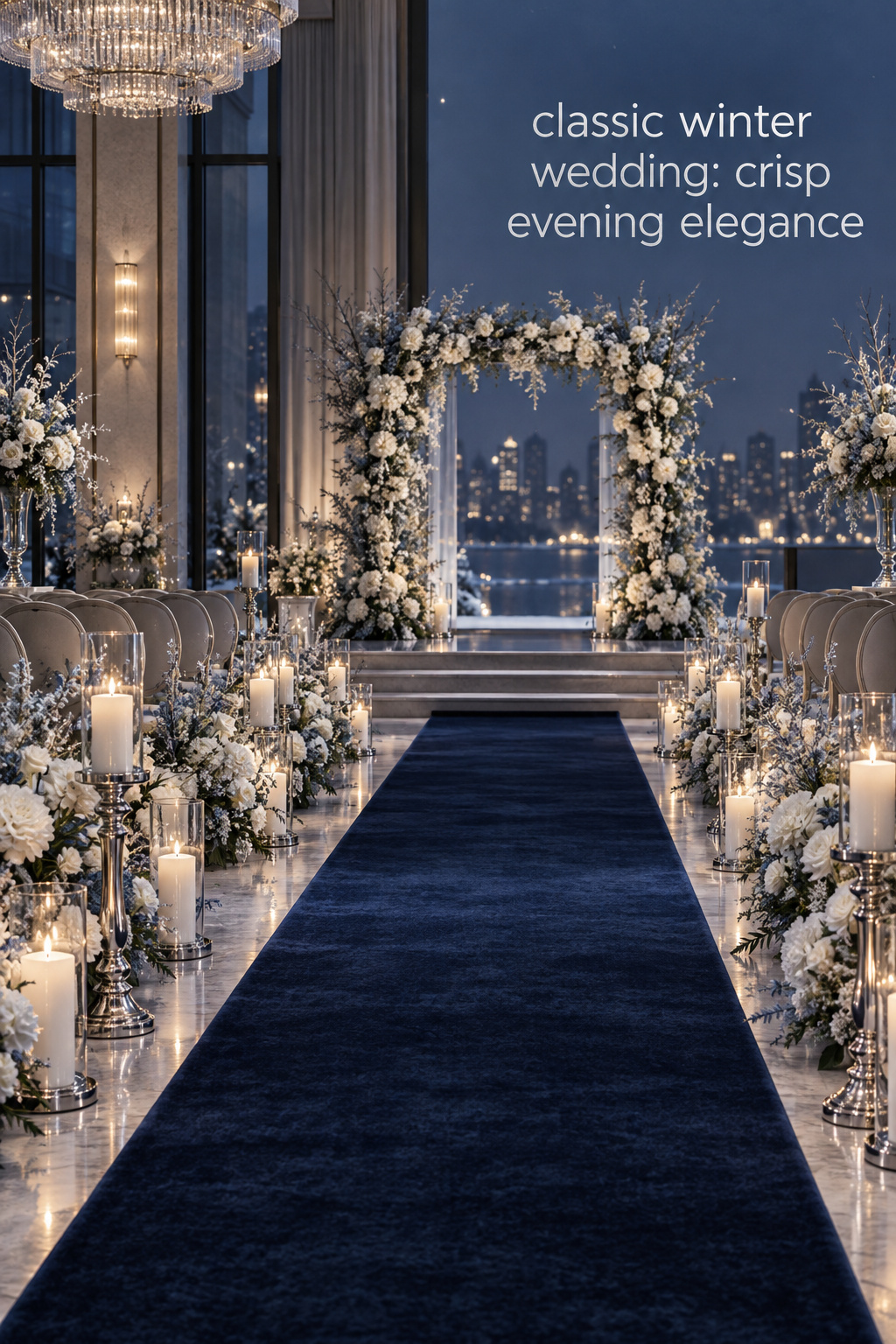
Navy and silver gives a classic winter wedding a cooler, more formal point of view. Think navy table linens or paper, silver candlesticks, white florals, crystal, and soft blue-gray accents. It is a strong option for an evening reception because the dark base holds its shape after sunset. It also gives the wedding party a straightforward attire path: navy suits or tuxedos, silver-gray accessories, and dresses in navy, slate, or a carefully chosen icy tone.
The trade-off is that cool palettes can feel distant if the lighting is too white. Build in warmth through candlelight, cream stationery, champagne-toned paper, or a small amount of brushed brass. Avoid mixing too many shades of blue. One deep navy, one pale blue-gray, and white are enough. Silver should catch the light, not cover every object in the room.
Burgundy and emerald: rich, romantic, and textural
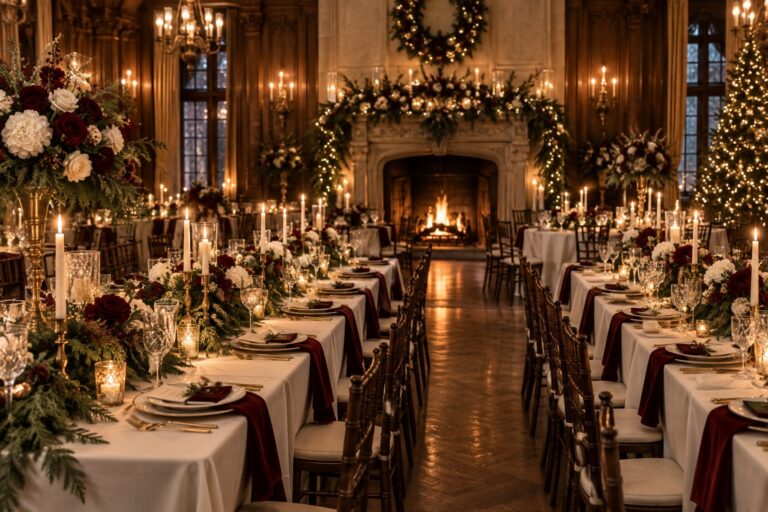
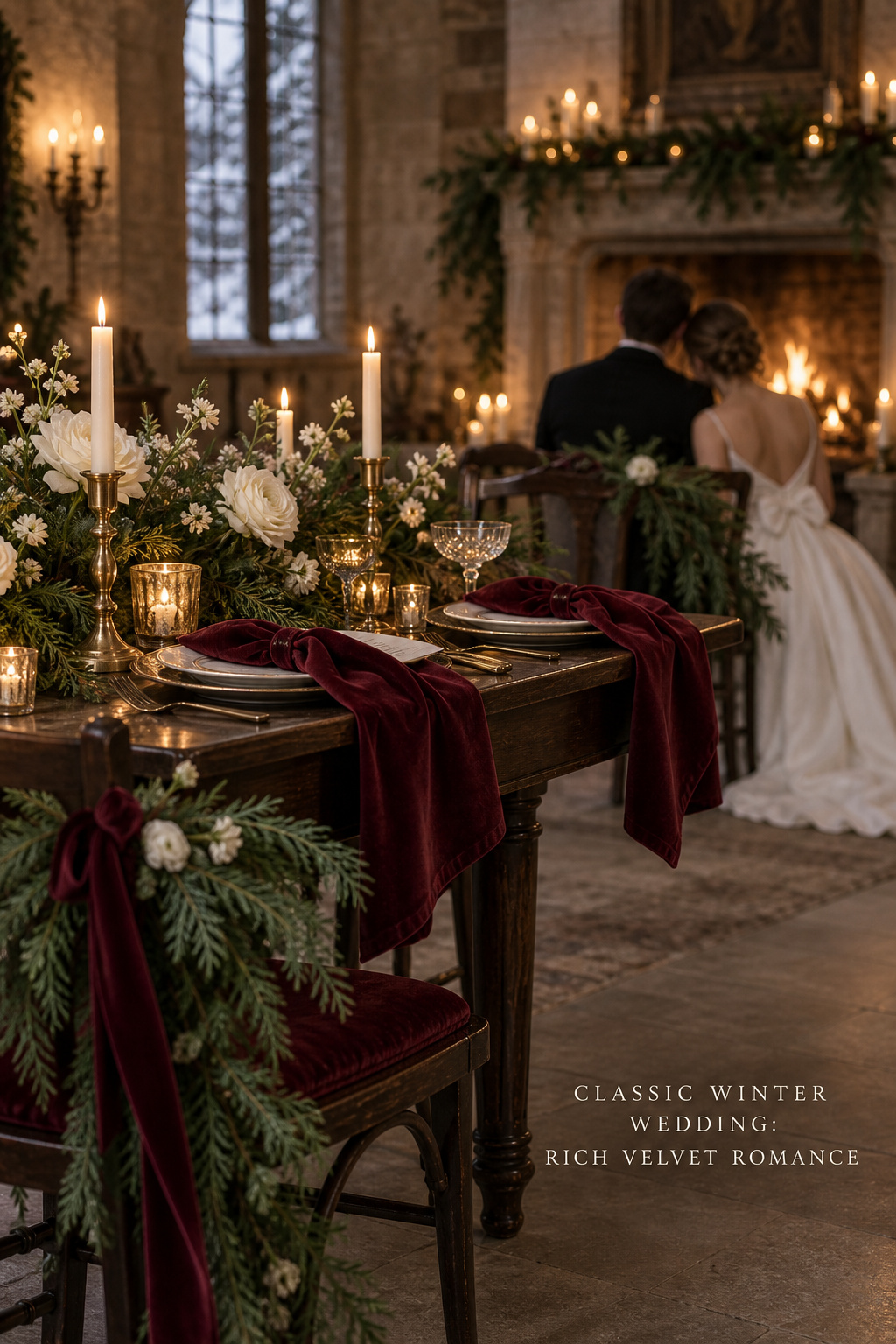
Burgundy and emerald are ideal when you want your winter wedding to feel enveloping and romantic. Use burgundy as the intentional focal color, then let evergreen, moss, or deep olive provide the natural counterpoint. Velvet napkins, satin ribbon, dark wood, brass, and candlelight support the palette without requiring novelty decorations. White or blush flowers can soften the design, while dark berries and winter branches add structure.
This direction suits a restaurant, country club, library, historic home, or lodge with strong architectural character. It is also the most likely to drift into a Christmas look. Keep the styling bridal by limiting literal holiday motifs, avoiding equal amounts of bright red and bright green, and choosing one refined metallic. Burgundy should read as wine, not candy apple. Emerald should read as foliage, not a seasonal costume.
All-white with greenery: quiet, modern, and distinctly seasonal
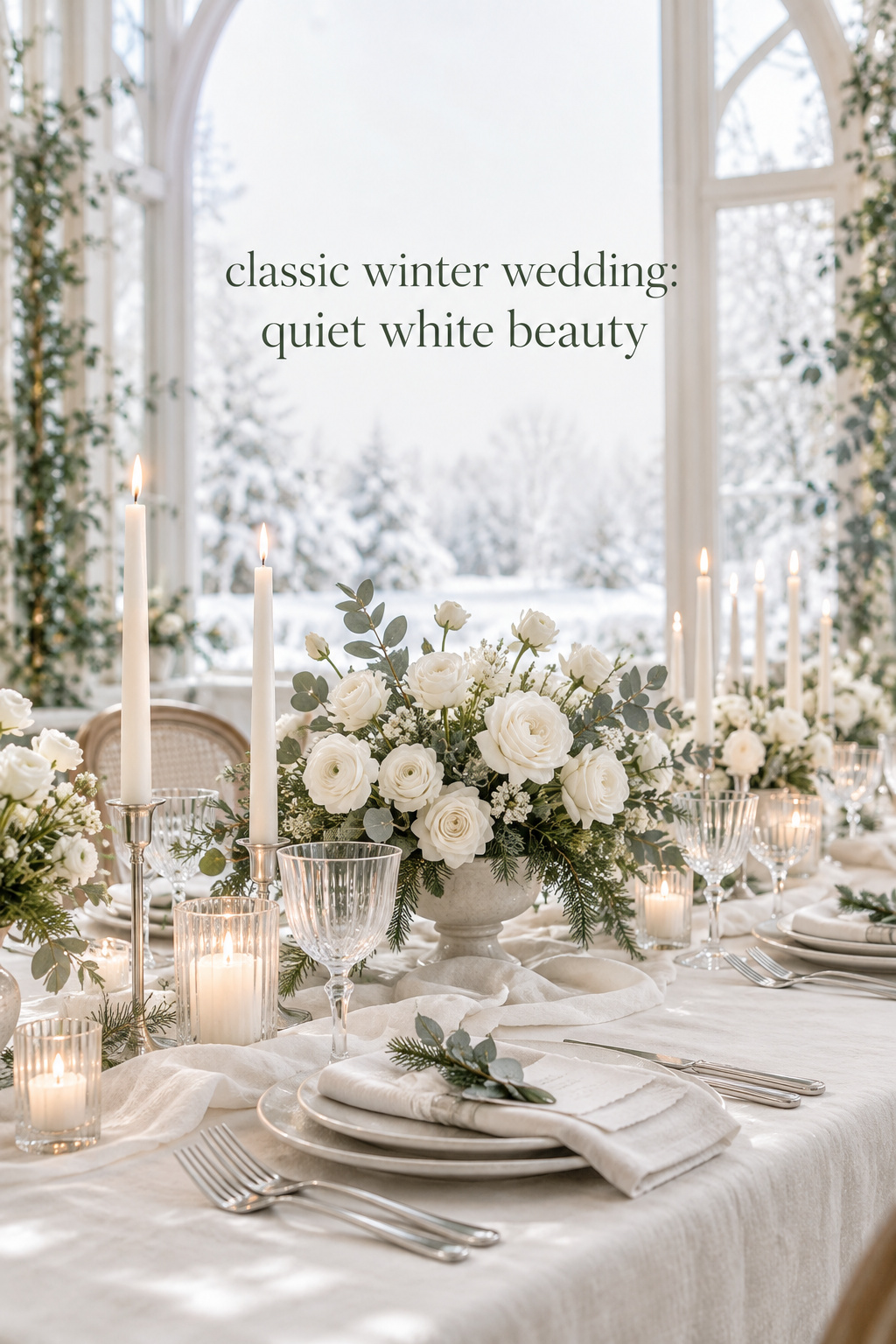
An all-white winter wedding with greenery is the most restrained of the four systems. White linens, white flowers, white candles, and ivory paper create a calm foundation, while eucalyptus, olive, cedar, pine, or fir provide the only significant color. The result can feel modern and editorial, but it is not necessarily minimalist. Layering texture becomes the source of visual interest.
Choose this system for a bright gallery, conservatory, restaurant, or blank-space venue where the design can create atmosphere without competing with existing architecture. Use varying flower shapes, matte and glossy ceramics, linen, handmade paper, and different candle heights. The risk is a flat or washed-out room. Test the palette under the actual reception lighting, and add a small amount of warm wood, brass, or stone if the space needs grounding.
Match attire, flowers, lighting, and paper to the winner
Once you choose a style system, resist the temptation to treat each wedding category as a separate decision. Classic winter wedding design looks expensive when the same visual logic appears in several places. The bouquet does not need to match the tables exactly, but it should belong to the same material and color world. The attire does not have to copy the invitations, but it should make the formality level legible.
Attire: use fabric and coverage as seasonal signals
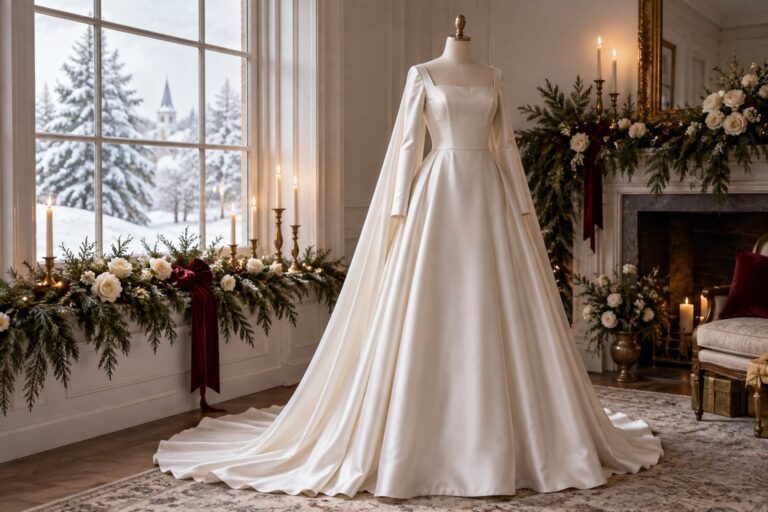
Winter is one of the best seasons for fabrics with presence. Velvet, satin, mikado, wool, crepe, and brocade can make a simple silhouette feel intentional. For the couple, choose one texture to repeat rather than putting everyone in competing finishes. A velvet jacket, velvet ribbon, or velvet shoes can be enough. For bridesmaids, a shared color with varied necklines often looks more timeless than identical dresses in a complicated fabric.
Outerwear deserves design attention. A tailored wool coat, cape, faux-fur wrap, or structured shawl should look considered in photographs and during arrivals. Plan shoes for actual surfaces, especially if guests or the wedding party will cross wet pavement, stone, or snow. A classic winter look is still successful when people can move comfortably.
Flowers: let shape and foliage carry the season
Winter flowers do not need to be unusual to feel seasonal. White roses, anemones, ranunculus, hellebores, amaryllis, and garden roses can all work, depending on availability and the date. Ask your florist to build the seasonal feeling through foliage, branches, berries, and texture rather than relying on a single color. This makes the design more resilient if a particular flower is unavailable.
Use the style system to set the floral shape. White and gold benefits from rounded, romantic arrangements. Navy and silver can handle clean white blooms, airy branches, or crystal-like accents. Burgundy and emerald suit loose, abundant arrangements with dark foliage. All-white with greenery benefits from negative space and a limited number of flower varieties. If guests need to talk across the table, keep the centerpieces low or place tall arrangements above eye level.
Lighting and paper: repeat the same promise
Lighting is not an afterthought in winter. Earlier darkness means candles, sconces, chandeliers, and warm string lights may shape the room for most of the celebration. Ask the venue about open-flame rules, dimmer controls, and the color temperature of existing bulbs. A beautiful palette can look gray or yellow if the lighting has not been tested.
Stationery should preview the experience without spelling out a theme. Use letterpress, a narrow border, a wax seal, deckled paper, or a single metallic foil depending on your system. White and gold can take classic typography and a formal crest. Navy and silver can use clean type with generous spacing. Burgundy and emerald can support deep ink and a velvet ribbon. All-white with greenery benefits from uncoated paper, botanical line work, and restraint.
- Repeat your primary color in at least three categories, such as attire, paper, and florals.
- Repeat your strongest texture in only two or three places so it stays special.
- Use metallics as punctuation, not as a substitute for a color story.
- Photograph one sample table under evening lighting before approving the full order.
Weigh the trade-offs before you finalize the plan
The best classic winter wedding is not the one with the most details. It is the one whose details solve the right problems. Before you commit, compare each direction against the practical realities of your date, guest list, venue, and budget. This short review can prevent expensive changes later.
- Formality: Navy and silver usually reads most formal, while burgundy and emerald can move from elegant to cozy depending on the venue. White and gold is flexible, and all-white with greenery can feel either editorial or traditional.
- Lighting: Dark palettes need thoughtful illumination. White palettes need enough contrast and warmth. Ask to see the venue after sunset before choosing.
- Budget: Greenery, candles, and a restrained palette can create impact without a large floral count. However, specialty linens, abundant candles, and custom paper can add up quickly.
- Weather: Build a plan for wet shoes, delayed transportation, coat storage, photography windows, and a ceremony backup. Winter beauty should never depend on perfect weather.
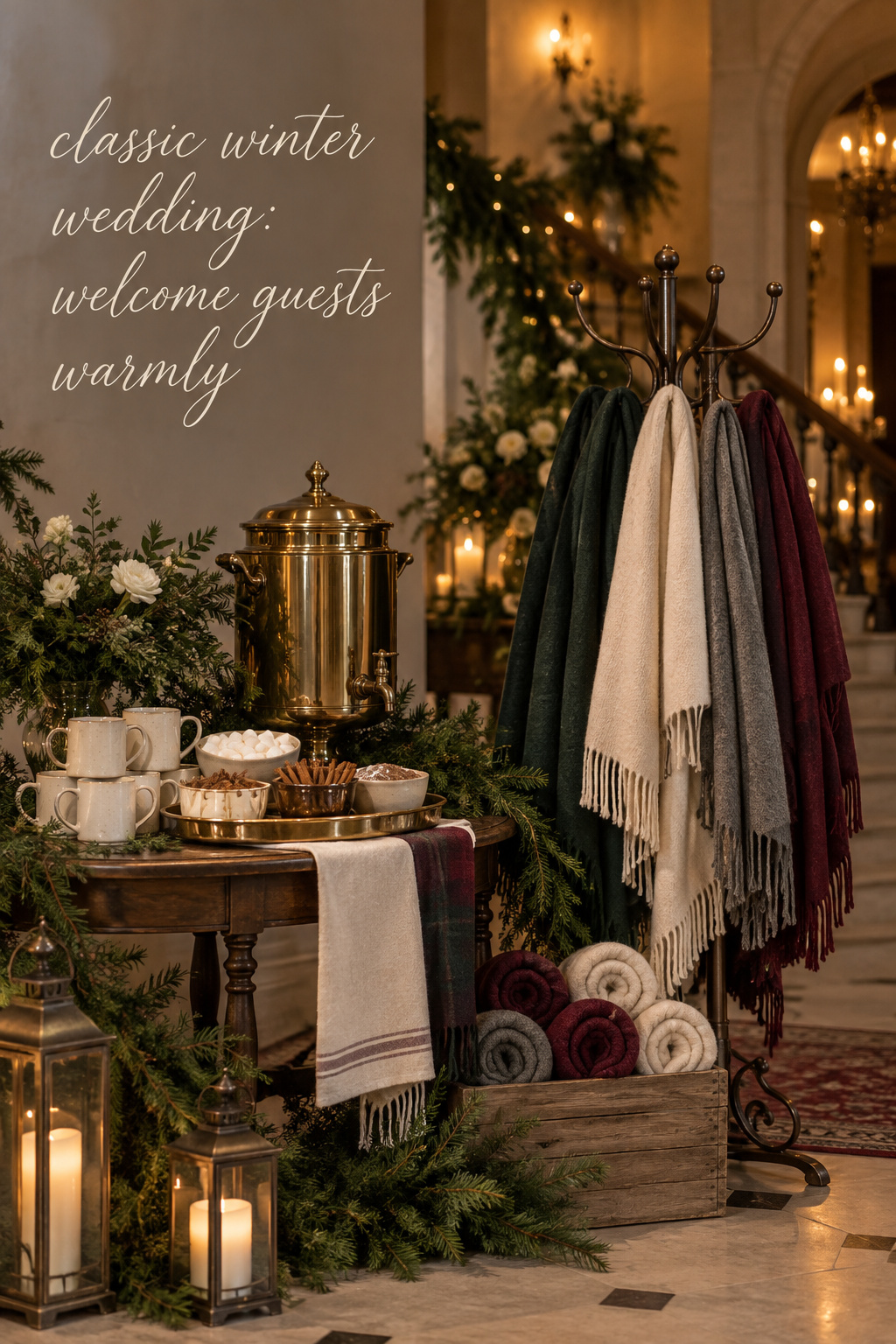
- Guest comfort: Offer a coat check, clear directions from parking, warm drinks, and indoor waiting space. Blankets and heaters are useful for brief outdoor moments, but they do not replace a weather plan.
There is also a useful test for holiday overlap: remove every ornament, snowflake graphic, and explicitly seasonal prop from the mood board. If the design still feels coherent through its colors, textures, flowers, and lighting, you have a winter wedding rather than a holiday party. Seasonal references should support the marriage celebration, not take over its identity.
Finally, write a one-page design brief for your vendors. Include the chosen direction, three anchor words, the palette, the materials to repeat, the details to avoid, and the guest experience you want. This gives your florist, stationer, rental team, photographer, and venue coordinator the same decision-making tool. It also makes it easier to say no to attractive ideas that belong to a different wedding.
FAQ
What colors are best for a classic winter wedding?
White and gold, navy and silver, burgundy and emerald, and all-white with greenery are dependable classic directions. Choose based on your venue, lighting, dress code, and the mood you want. The most important step is limiting the palette to a few repeated colors rather than combining every seasonal shade.
How can a winter wedding feel seasonal without looking like Christmas?
Use candlelight, winter foliage, velvet, branches, metallic accents, and rich or icy colors without relying on ornaments, stockings, Santa imagery, or equal amounts of bright red and green. A restrained palette and bridal flowers will keep the design focused on the wedding.
Which classic winter wedding style is best for a formal ballroom?
White and gold or navy and silver usually fit a formal ballroom best. White and gold adds warmth and traditional luxury, while navy and silver creates stronger evening contrast. Review the room’s carpet, chairs, chandeliers, and lighting before making the final choice.
What should the wedding party wear for a winter celebration?
Choose seasonally substantial fabrics such as velvet, satin, crepe, mikado, or wool, and use rich neutrals or jewel tones that suit the dress code. Plan coordinated outerwear and practical shoes, especially if photographs or arrivals involve cold, wet, or uneven surfaces.
Are candles practical for a classic winter wedding?
They can be both beautiful and practical when the venue approves them and the layout is safe. Ask about open-flame rules, use stable holders, and consider quality flameless candles where necessary. Varying heights of candles can provide more atmosphere than adding another large floral arrangement.
Which winter flowers work for a timeless wedding design?
Roses, anemones, ranunculus, hellebores, amaryllis, and garden roses can all support a timeless winter design. Availability changes by location and date, so ask your florist to create the seasonal feeling through foliage, branches, berries, and texture rather than depending on one exact flower.
What guest-comfort details matter most at a winter wedding?
Prioritize clear transportation information, coat storage, an indoor waiting area, warm drinks, sensible paths from parking, and a realistic weather backup. If you include an outdoor moment, keep it brief and provide wraps, heaters, or blankets while still making the indoor plan the dependable option.