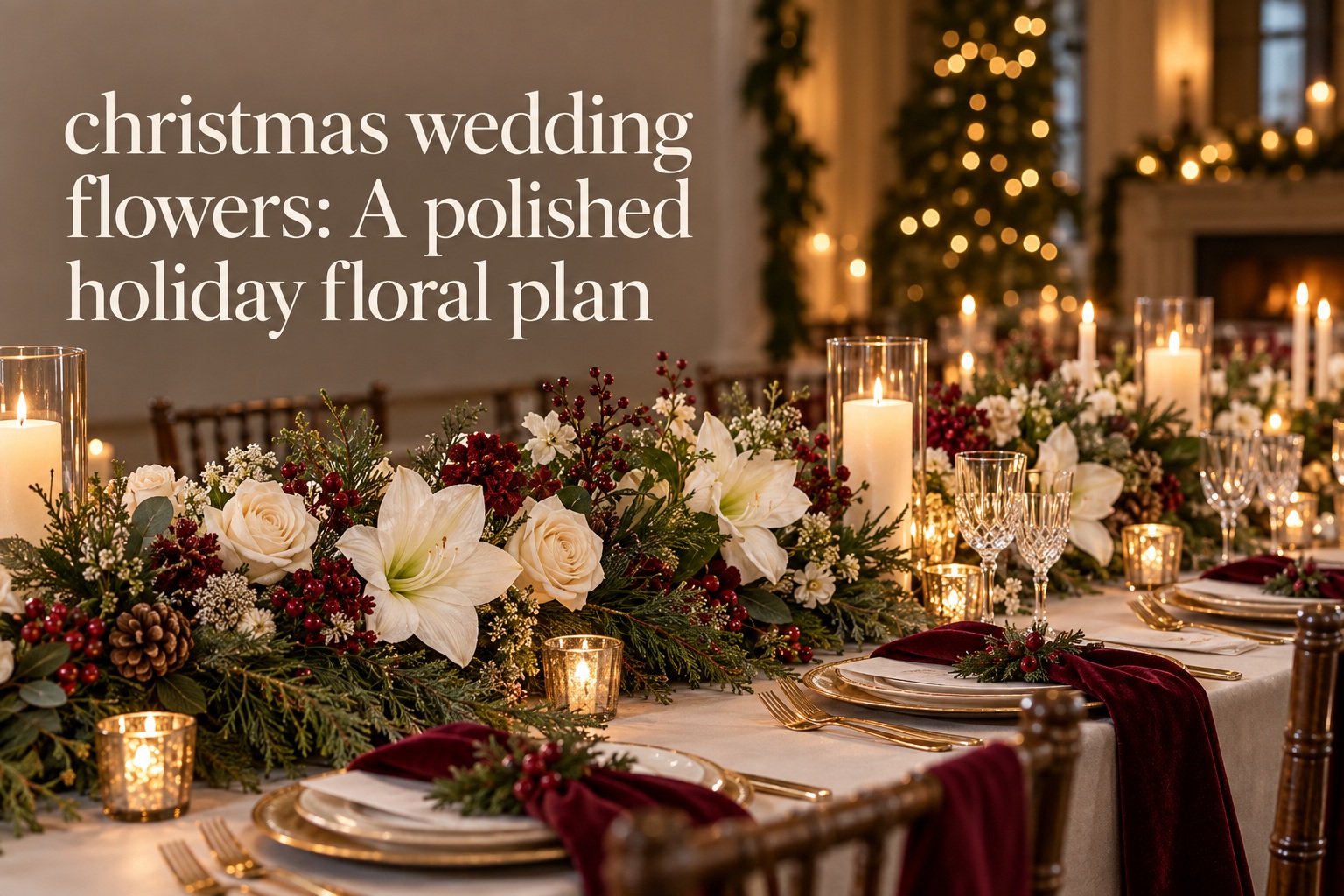
Christmas Wedding Flowers: A Practical Plan
Christmas wedding flowers can make a December celebration feel warm, memorable, and unmistakably yours. They can also become expensive and visually busy when every arrangement tries to do the same job. The most reliable plan starts with a few clear decisions: how much holiday symbolism you want, which flowers your florist can source for your date, where guests will actually notice the flowers, and how one design can serve more than one part of the day.
This checklist gives you a practical route from first mood board to final florist brief. It covers the floral system, palette, bouquet, ceremony, reception, wedding party, budget priorities, and wedding-week logistics. Use it to create a celebration that feels festive without looking like a retail display, and seasonal without depending on a flower that is difficult to obtain in December.
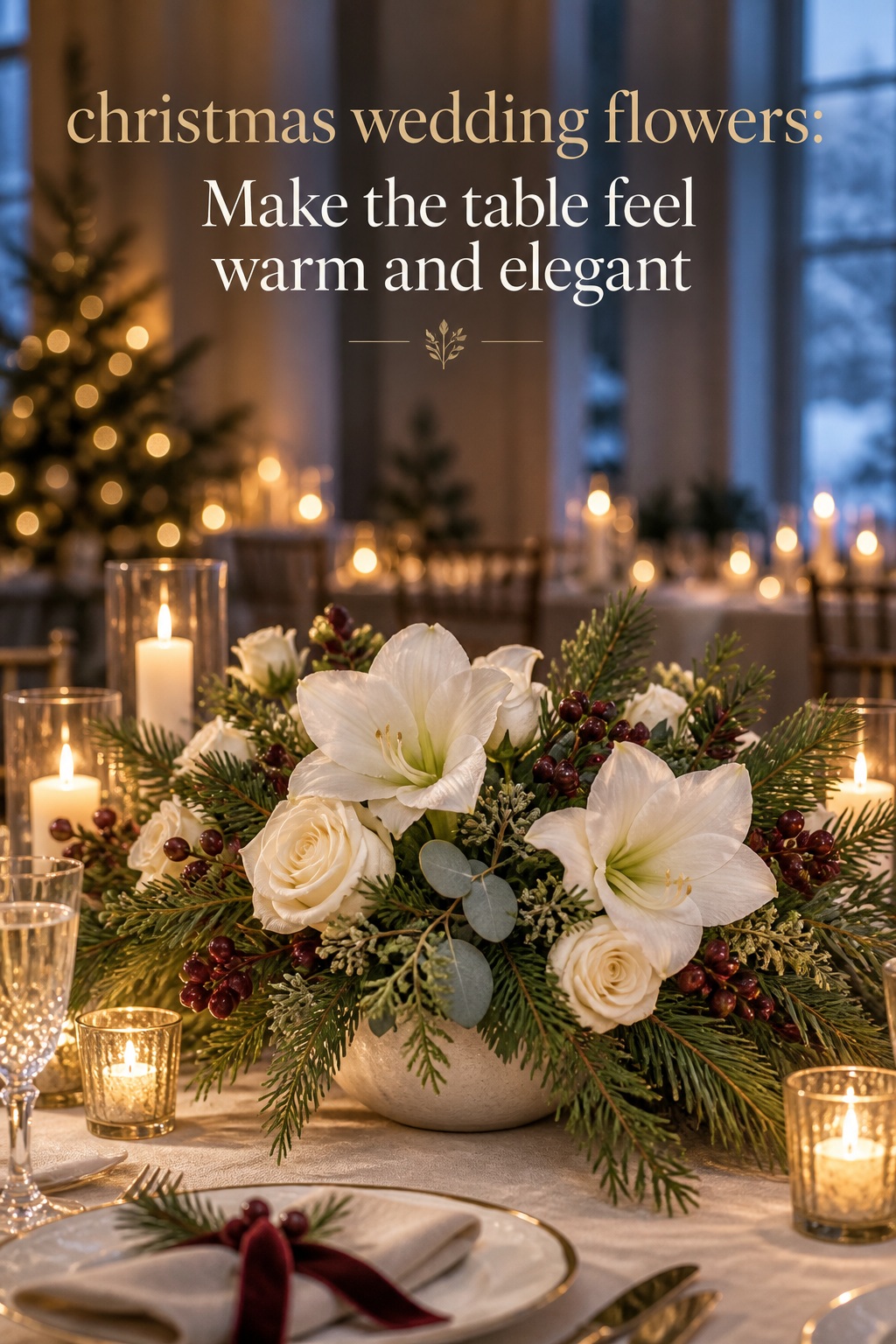
1. Set the Christmas Wedding Flowers Brief
Begin with the feeling you want guests to take away. Maybe it is candlelit and intimate, grand and traditional, modern and restrained, or woodland and relaxed. Write three adjectives before you collect flower photos. This small step prevents your Pinterest board from becoming a pile of unrelated red, white, metallic, and evergreen images. A florist can design more accurately when the desired atmosphere is clear.
Your wedding look is only the beginning.
Keep your guest list, vendors, timeline, and every important detail together with Zarellea — so your day feels as considered as your style.
Next, define the amount of Christmas you want to show. There is a wide range between a barely seasonal winter wedding and a full holiday celebration. You might use only evergreens and candlelight, add burgundy berries and velvet ribbon, or embrace amaryllis, poinsettias, pinecones, and a strong red palette. None of these is automatically more festive. The best choice is the one that fits your venue, clothing, ceremony, and personality.
- Choose the mood: select three words such as glowing, elegant, and natural.
- Choose the holiday level: decide whether Christmas appears as a quiet texture, a color story, or a central theme.
- Choose the visual scale: note whether the venue is a small dining room, a church, a barn, a ballroom, or an outdoor setting.
- Choose the floral priorities: rank bouquet, ceremony backdrop, reception tables, welcome area, and wedding-party flowers.
- Choose the practical limits: record the date, location, guest count, indoor or outdoor conditions, and working budget.
Ask your florist to separate the proposal into impact areas. A bridal bouquet is seen in photographs and carried throughout the day. Ceremony arrangements frame the couple for a short period but may be moved later. Reception flowers remain in front of guests for hours. This distinction helps you spend on the places with the highest visibility instead of distributing a small amount of money thinly across every possible surface.
Also identify what the venue already provides. A fireplace, staircase, Christmas tree, stone wall, or evergreen garland may supply much of the seasonal atmosphere before your florist adds a single stem. If the room already has strong holiday decor, use flowers to edit and connect the space rather than compete with it. Photograph the venue in the same lighting you expect on the wedding day and share those images at the consultation.
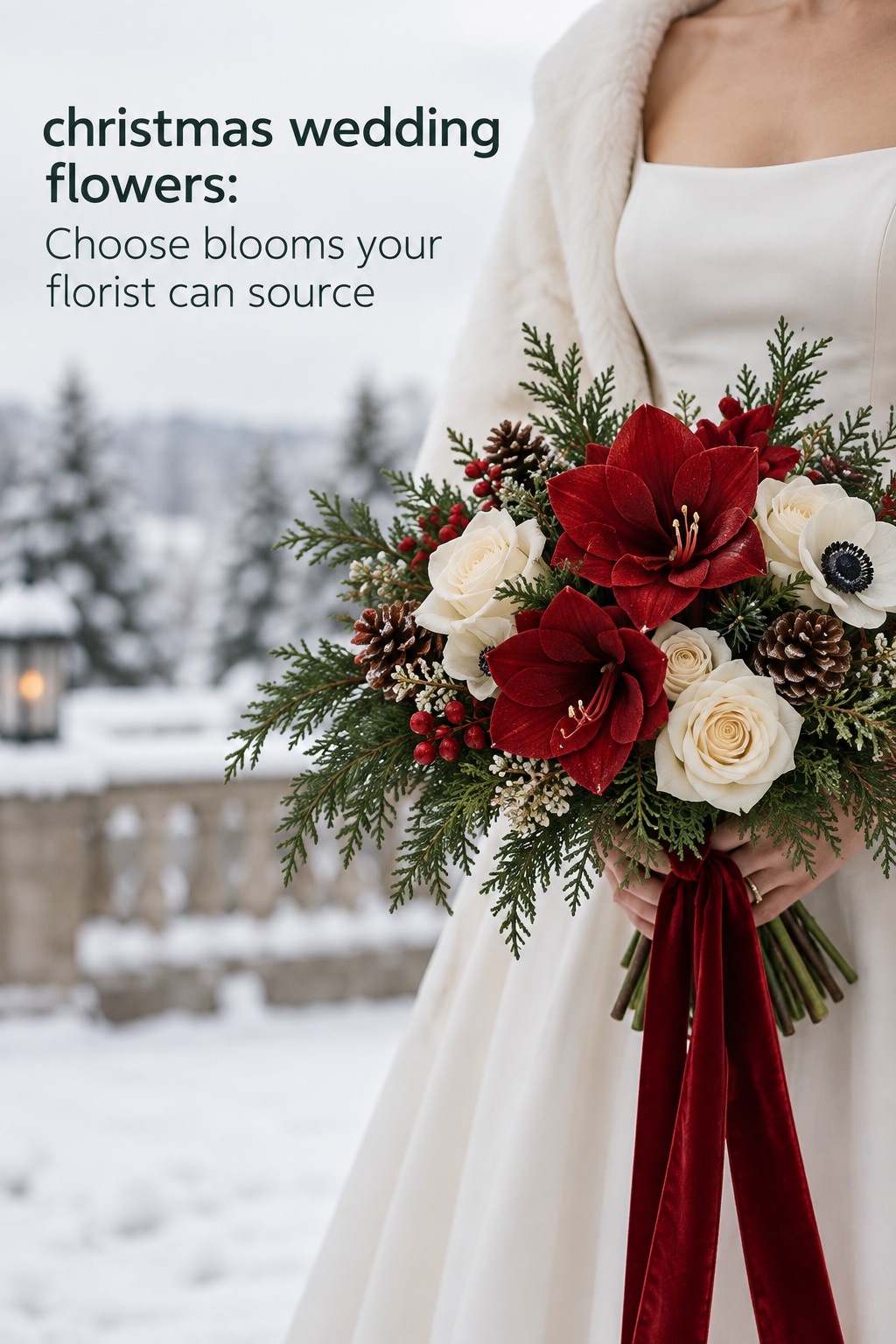
2. Choose a Flower and Foliage System
A flower system is more useful than a single inspiration bouquet. It combines a few focal flowers, supporting blooms, foliage, texture, and one or two seasonal accents. For a Christmas wedding, that might mean white or cream roses as the dependable base, amaryllis or anemones as focal points, ranunculus for softness, cedar or pine for structure, and berries or pinecones for the holiday note.
Availability depends on your wedding location, exact date, importer schedules, and the florist’s supplier network. A flower shown in a winter photograph may have been imported, grown under protection, preserved, or used in a different climate. Ask which ingredients are locally reliable, which are available year-round, which require advance ordering, and which have a realistic substitute. A flexible plan often looks more polished than a rigid request for one exact flower.
Build around dependable focal flowers
Roses are a practical foundation because they are available in many colors and forms, from compact spray roses to open garden shapes. Amaryllis gives a Christmas wedding an unmistakable winter focal point, especially in white, burgundy, or red. Anemones bring graphic dark centers and can make a pale design feel more defined. Ranunculus, when available, adds layered petals and a romantic scale between roses and smaller filler.
Use one or two focal flowers rather than asking every stem to be the star. If the bouquet includes amaryllis, garden roses, anemones, protea, berries, and dramatic foliage at equal intensity, the eye has nowhere to rest. Choose a lead flower, a supporting flower, and a texture. This hierarchy is especially helpful when your dress, veil, jewelry, or venue already has visual detail.
Let greenery create the winter feeling
Evergreen foliage often carries the seasonal message more effectively than extra red flowers. Cedar, pine, fir, juniper, eucalyptus, magnolia leaves, dusty miller, and lamb’s ear each create a different surface and silhouette. Pine feels crisp and traditional. Cedar can look soft and feathery. Magnolia leaves bring a glossy, sophisticated note. Dusty miller gives a frosted effect without glitter or artificial spray.
Check the scale and scent of greenery before approving it. Some varieties are visually beautiful but release a strong fragrance in a small room. Others shed, wilt, or become brittle when exposed to heat. A florist can recommend conditioned foliage for your venue and show you how it looks after several hours. Keep greenery away from open flames and confirm that the venue allows natural materials in aisle arrangements.
Add seasonal accents with restraint
Berries, pinecones, cotton, dried elements, seed pods, velvet ribbon, and metallic details can make the design feel connected to Christmas. Use them as punctuation. A few berry clusters can lead the eye through a centerpiece, while too many can make the flowers resemble a holiday wreath. Pinecones work well in a woodland or rustic design, but they may feel out of place beside a very minimal silk gown and clean-lined venue.
Decide whether accents should be natural, preserved, or decorative. Natural berries and foliage have a beautiful irregularity, but they need conditioning and may vary in size. Dried ingredients offer stability and can become keepsakes, but they may need careful placement so they do not look dusty. Metallic spray, glitter, and faux snow should be tested under flash because reflective particles can appear harsh in close-up photographs.
3. Build the Look Across the Wedding
Once your system is chosen, repeat it with variation. Repetition creates cohesion, while variation keeps the wedding from looking like the same centerpiece copied everywhere. Use the strongest version in the bridal bouquet, a simpler version for attendants, low arrangements for tables, and a more durable foliage-forward recipe for areas that need to be moved.
Start with the bridal bouquet
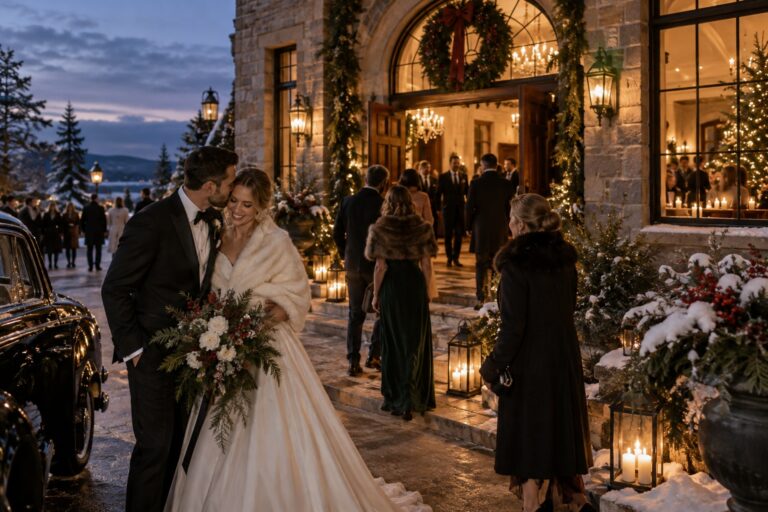
Choose the bouquet shape with your dress and photographs in mind. A rounded bouquet feels classic and keeps attention near the waist. A loose garden shape looks romantic and works with soft fabrics. A cascading arrangement creates drama, but it needs a secure handle and a clear plan for how it will be carried, placed, and photographed. A smaller bouquet can be more practical for a petite frame or an intricately detailed gown.
Give the bouquet one memorable detail. It could be a burgundy velvet wrap, a cluster of amaryllis, a line of silver brunia, a magnolia leaf edge, or a few trailing ribbons. The detail should be visible from the front and comfortable in your hand. Ask for a mock-up of the handle, especially if you are sensitive to texture or expect to carry the bouquet for a long ceremony.
Frame the ceremony without blocking it
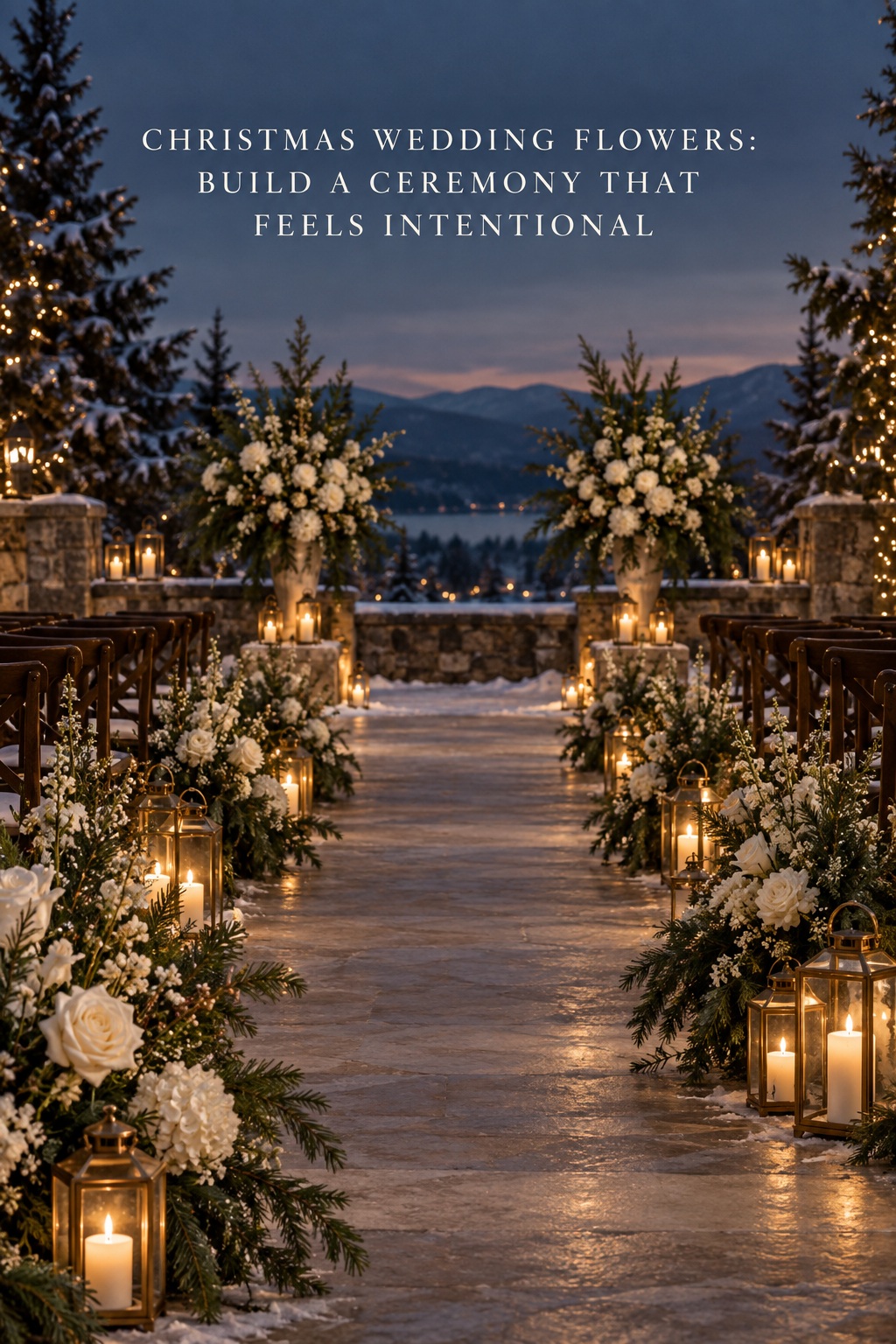
Ceremony flowers should support the vows, not turn the couple into a backdrop. Two asymmetrical arrangements can frame an altar or arch while keeping the sightline open. Low meadow clusters can soften an aisle and then move to the reception. A fireplace installation may need fewer flowers than expected because the architecture already supplies a focal point. Ask how every large piece will be transported and repurposed before approving it.
For outdoor ceremonies, protect delicate flowers from wind and freezing temperatures. A bouquet or arrangement that looks perfect indoors may lose petals or become difficult to handle outside. Choose hardy ingredients for exposed areas, keep stems hydrated, and create a weather plan. If guests will walk through snow, ice, or wet grass, avoid placing low arrangements where they can be kicked, soaked, or covered by coats.
Design reception tables for conversation
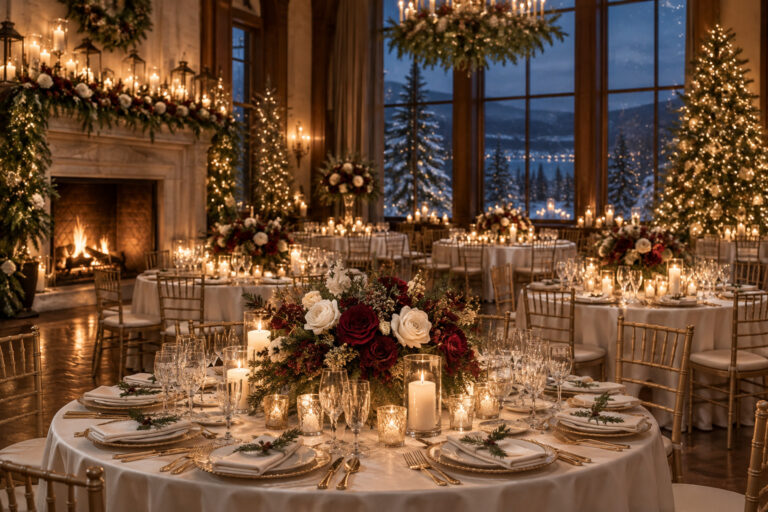
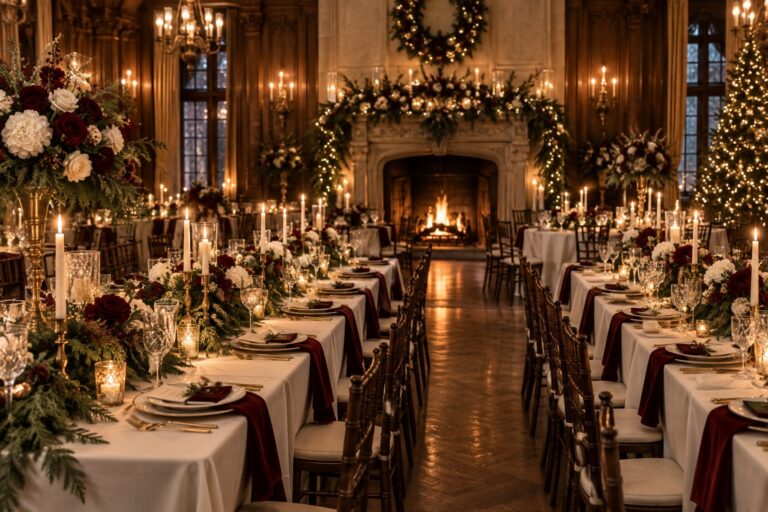
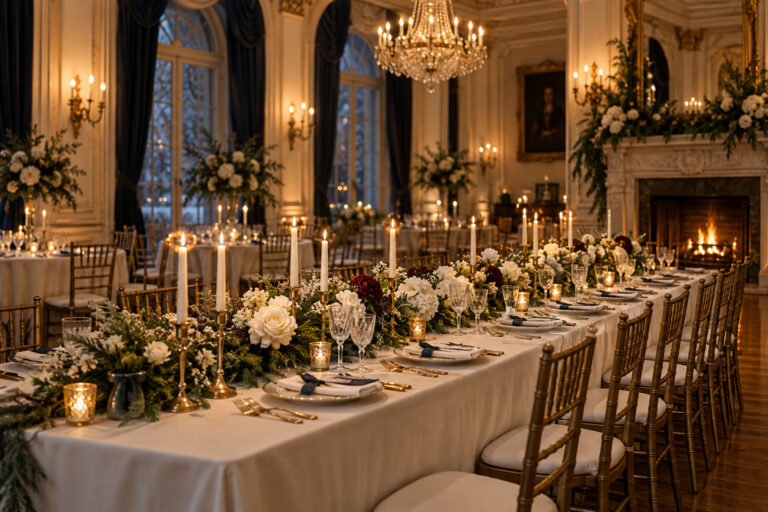
Low centerpieces are usually the safest choice for a dinner where guests need to see one another. A long floral runner can create abundance without blocking faces if it stays below eye level. Clustered bud vases use fewer focal stems and can be moved easily. Tall designs can work in a ballroom, but confirm that the base is stable and the flowers do not interrupt sightlines to speeches or the dance floor.
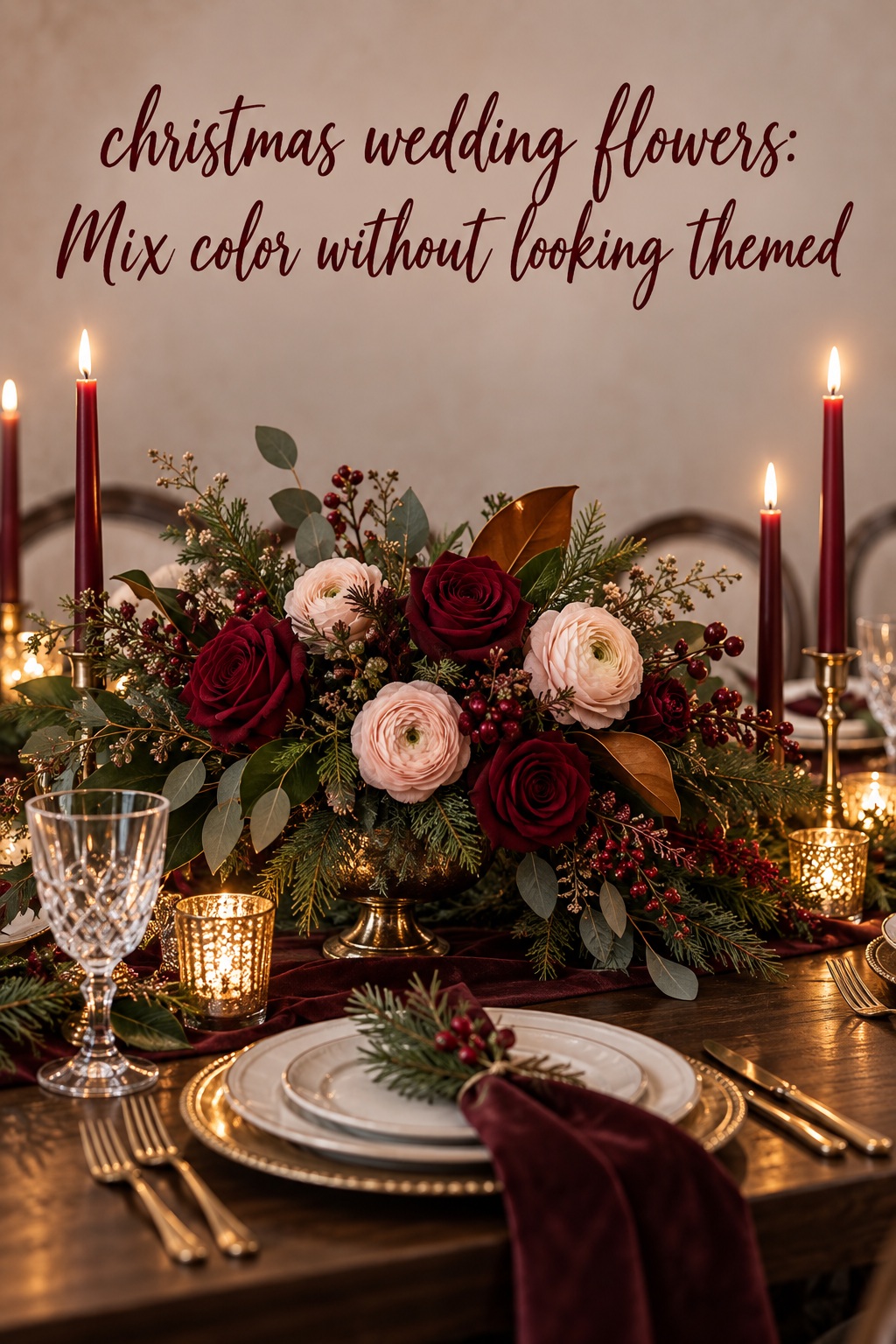
Coordinate the flowers with candlelight, linens, plates, and glassware. Burgundy flowers can look richer against ivory linen than bright white. Evergreen may appear almost black in a dim room, so add pale flowers or reflective glass when you need the foliage to read. Gold chargers and warm candles support cream and champagne palettes, while silver details can sharpen white, blue, lavender, and cool green.
Connect the wedding party
Attendant bouquets do not need to be smaller copies of the bridal bouquet. Keep the same flower family or foliage, then vary the color or shape. For example, the bride might carry white amaryllis and burgundy roses, while attendants carry cream spray roses with cedar and a few berries. Boutonnieres can use a single rose, an anemone, a small evergreen sprig, or a pinecone detail that repeats the bouquet without becoming bulky.
Consider corsages, children, and pets only after the main system works. A small floral accent on a coat, shawl, or collar can be charming, but it needs a secure attachment and protection for the fabric. Ask about magnets or alternate fastenings when pins could damage clothing. Keep fragrant or fragile materials away from a pet’s mouth and confirm that the venue permits animals and loose natural materials.
4. Use the Final Sourcing and Wedding-Week Checklist
The most beautiful Christmas wedding flowers still need a logistics plan. December includes holiday closures, delivery pressure, winter weather, and busy travel schedules. Confirm the exact delivery window, who receives the flowers, where they will be stored, and how arrangements move from ceremony to reception. If your florist is handling setup and strike, include those labor costs in the proposal rather than treating them as a last-minute detail.
- At booking: share the exact date, venue address, guest count, ceremony location, reception room, and access restrictions.
- At the design meeting: bring dress, veil, jewelry, linen, invitation, and venue references, plus your three mood words.
- Six to eight weeks before: confirm the flower system, approved substitutions, color range, candle policy, and repurposing plan.
- Two to three weeks before: reconfirm delivery timing, setup access, weather backup, final guest count, and payment milestones.
- Wedding week: keep the florist’s contact information with the planner, prepare a clean storage area, and keep flowers away from heaters and direct sun.
- Wedding morning: photograph the bouquet before it is carried, check ribbons and boutonniere pins, and keep arrangements hydrated as directed.
Ask for a substitution policy in writing. The goal is not to force the florist to find an impossible stem. The goal is to protect the design’s role. If a white amaryllis is unavailable, an open white rose or lily may preserve the scale and color. If a particular berry cannot be sourced, another burgundy or red texture may deliver the same visual weight. Approve substitutions by category: focal flower, supporting flower, foliage, accent, and color.
Review the proposal for hidden complexity. A floral installation may require mechanics, vessels, transport, teardown, water changes, candles, ladders, or rental returns. A bouquet may require a hand-tied wrap, ribbon finish, pins, and a vase for safekeeping. A ceremony arch may need venue approval and a strike team. Understanding these items early gives you more control than cutting flowers at the end of the process.
Use repurposing as a design decision, not an emergency. Tell the florist which arrangements can move after the ceremony, who will move them, and where they will land. Aisle clusters can become the head table or bar flowers. Ceremony urns can frame the reception entrance. Bridesmaid bouquets can rest in vases around the room. Repurposing works best when the vessels, water, staff, and timing are all part of the original plan.
Before you approve the final design, look at the wedding as a guest would. Is there a clear floral moment when guests arrive? Can they see one another at dinner? Does the bouquet photograph well against the dress? Do the ceremony flowers connect to the reception without repeating every detail? Is the palette visible in both daylight and warm evening light? A polished Christmas wedding uses flowers to guide attention, create atmosphere, and make the season feel intentional.
Final Review: Your Florist-Ready Brief
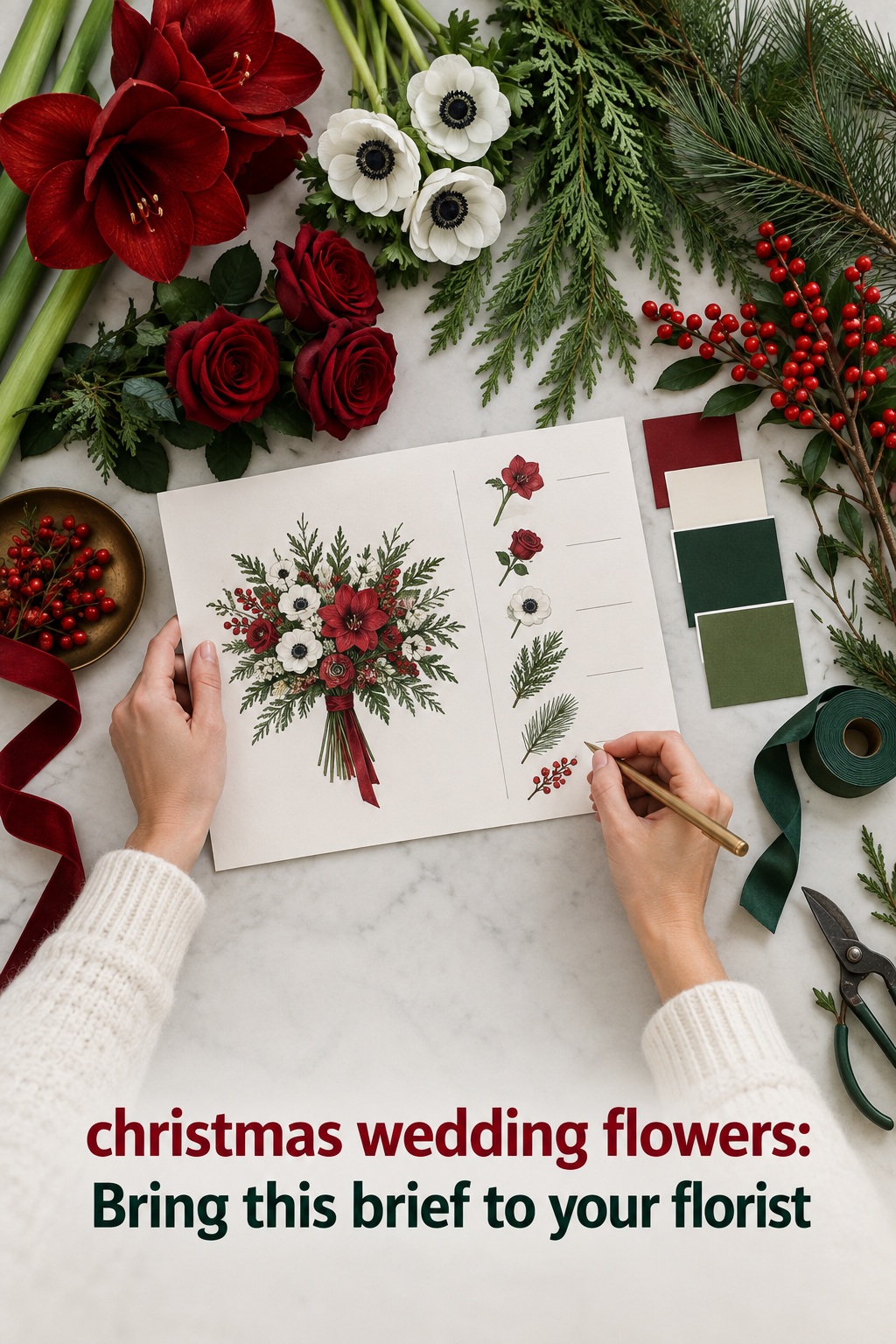
Put your final decisions on one page. Include your three mood words, holiday level, color palette, lead flower, supporting flower, foliage, seasonal accents, bouquet shape, ceremony priorities, reception priorities, wedding-party notes, budget range, approved substitutions, and repurposing plan. Add venue photographs and the lighting conditions that matter most. This brief gives the florist a clear creative direction while leaving room for professional sourcing judgment.
- Our wedding feels: __________________
- Our Christmas reference is: quiet texture / color story / full holiday theme
- Our lead colors are: __________________
- Our focal flower is: __________________
- Our foliage system is: __________________
- Our highest floral priorities are: __________________
- Our approved substitutions are: __________________
- Our repurposing plan is: __________________
The strongest Christmas wedding flowers are not necessarily the most traditional or the most abundant. They are the flowers that fit the date, venue, scale, budget, and people getting married. When the system is simple enough to source and distinctive enough to feel personal, the result can be festive, elegant, and easy to carry through the whole celebration.
FAQ
What flowers are best for a Christmas wedding?
Roses, amaryllis, anemones, ranunculus, paperwhites, camellias, and orchids can work well, depending on your location and date. Pair them with cedar, pine, juniper, eucalyptus, dusty miller, berries, or pinecones to add a recognizable winter feeling. Always ask your florist which stems are actually available from local suppliers.
How can I use Christmas colors without making the wedding look themed?
Use tonal versions of holiday colors and let flowers provide the emphasis. Burgundy instead of bright red, olive or deep evergreen instead of flat green, and ivory instead of stark white can feel more sophisticated. You can also use Christmas through texture, candlelight, velvet ribbon, berries, or foliage while keeping the main palette neutral.
Are poinsettias appropriate for wedding flowers?
Yes, especially when you want a clear Christmas reference. Their large scale can work well in an altar arrangement or a dramatic installation. Ask your florist about varieties, conditioning, placement, and whether the plant’s proportions suit your bouquet. Cream or pale varieties can create a quieter interpretation than the most familiar bright red type.
Can I have Christmas wedding flowers that are not red and green?
Absolutely. Ivory and gold, white and silver, blush and burgundy, deep green and cream, blue and white, or lavender and plum can all feel wintry. Add evergreen texture, candlelight, or a small seasonal accent if you want the design to retain a Christmas connection without relying on the classic palette.
How far in advance should I book a Christmas wedding florist?
Book as early as your venue and date allow, especially for a weekend near Christmas or a location with limited florist availability. Early planning gives your florist time to reserve imported stems, discuss substitutions, design installations, and coordinate holiday delivery schedules. Your final flower quantities can be confirmed closer to the wedding.
How do I keep winter flowers fresh on the wedding day?
Follow your florist’s conditioning and storage instructions. Keep arrangements away from heaters, direct sun, freezing drafts, and fruit that releases ripening gas. Store bouquets upright in clean water when appropriate, avoid crushing petals, and plan delivery close enough to the event that flowers are not waiting for hours in an unsuitable room.
Can ceremony flowers be reused at the reception?
Often, yes. Aisle clusters, urns, welcome arrangements, and arch flowers may be moved to the head table, bar, entrance, or lounge. Decide this before the wedding and assign a florist, planner, or venue team to handle it. Repurposing requires compatible vessels, water, transport time, and labor, so include those details in the original proposal.