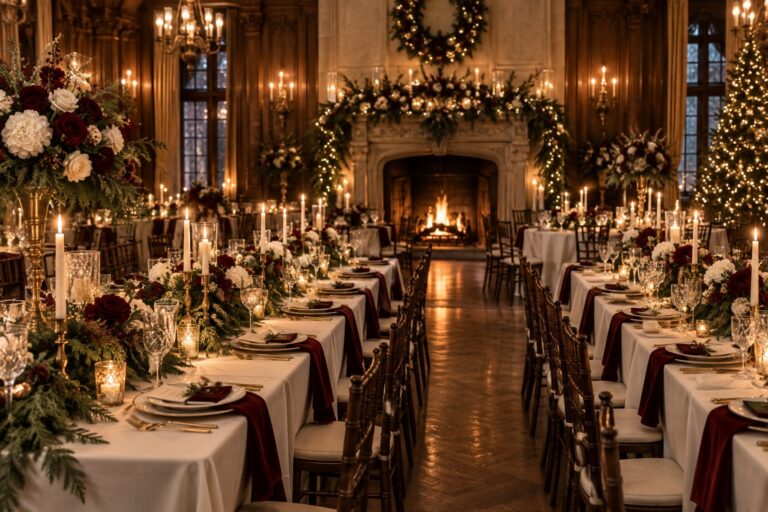

Christmas Wedding Dresses: 5 Modern Holiday Looks
Christmas wedding dresses are moving beyond the obvious holiday costume. The strongest looks borrow the season’s most beautiful qualities, such as candlelit warmth, rich texture, soft sparkle, and a sense of occasion, then translate them into a gown that still feels unmistakably bridal. That can mean a velvet detail rather than a head-to-toe red dress, a detachable cape instead of a heavy coat, or a clean satin silhouette styled with a winter bouquet and crystal earrings.
The shift matters because a December celebration asks more of a wedding dress than a summer ceremony does. You may move between a heated venue and cold portraits, stand in low winter light, wear layers for travel, and choose accessories that need to work from ceremony through dancing. The most useful way to think about Christmas wedding dresses is as a complete styling system. Fabric, silhouette, coverage, color, outer layer, and venue should support one another instead of competing for attention.

What Is Changing in Christmas Wedding Dresses
Current winter bridal styling is less about adding every seasonal symbol and more about editing the mood. Velvet, Mikado, satin, heavy crepe, textured lace, and beading bring depth that looks especially beautiful in low light. Long sleeves and higher necklines provide coverage, but they also create a more architectural frame for the face and bouquet. Detachable capes, overskirts, sleeves, and boleros make it possible to create a dramatic ceremony entrance and a lighter reception look.
That does not mean every Christmas bride needs a traditional ball gown or a full winter-white palette. A simple crepe sheath can feel deeply seasonal when paired with a velvet ribbon, a dramatic veil, or a deep green bouquet. A champagne gown can glow beneath warm string lights. An ivory satin dress can become more festive through crystal buttons and a faux-fur wrap. The holiday reference can live in the texture and styling rather than in a literal Christmas color scheme.
Your wedding look is only the beginning.
Keep your guest list, vendors, timeline, and every important detail together with Zarellea — so your day feels as considered as your style.
- Richer surfaces: Velvet, brocade-like texture, lace, satin, and controlled sparkle give the gown dimension in candlelight and indoor photographs.
- Strategic coverage: Long sleeves, illusion panels, high necklines, and capes can add warmth without making the silhouette feel bulky.
- Convertible styling: Detachable layers help the bride adjust between outdoor portraits, a formal ceremony, and a warmer reception.
- Softly festive color: Champagne, blush, silver, winter white, pale blue, and deep berry can complement Christmas details without overpowering the bride.
- More attention to movement: A gown needs to work with stairs, snow, cars, hugs, dancing, and the practical realities of a winter schedule.
The best inspiration is therefore not a single trend report or a saved photograph. It is a question: what should the season change about your bridal look? If the answer is atmosphere, use texture. If it is warmth, plan layers. If it is glamour, use reflective details. If it is a storybook feeling, consider a cape, full skirt, or delicate embroidered motif. This approach keeps the final dress personal.

Choose the Gown by Venue, Climate, and Winter Light
A Christmas wedding in a heated ballroom has different dress requirements from a ceremony at a mountain lodge, a historic church, or a destination venue with mild weather. Start with the actual route you will take on the day. Note how long you will be outside, whether you will walk on snow or wet pavement, how much time is planned for portraits, and whether the reception room will be warm enough for a lined sleeve or substantial fabric.
For a formal ballroom or hotel wedding
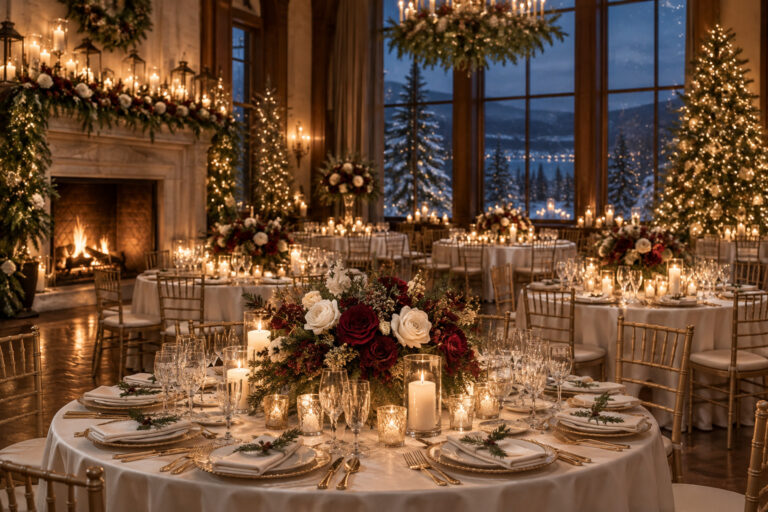
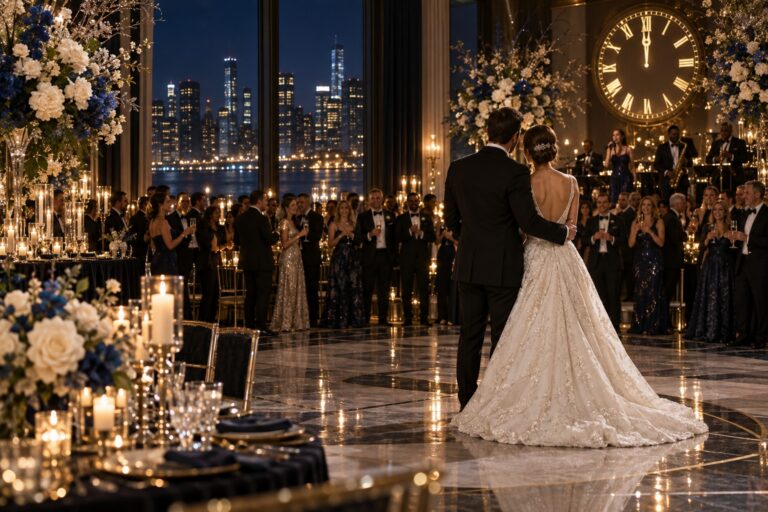
This is the setting for a gown with visual scale. A structured A-line, ball gown, cathedral train, or sculptural fit-and-flare can hold its own against high ceilings and evening lighting. Mikado and satin create a polished surface, while lace, covered buttons, beading, or a detachable overskirt add detail close to the camera. If the room is warm, you can choose a dramatic cape or bolero for the entrance and remove it once the dancing begins.
For a church, chapel, or historic venue
Long sleeves, a high neckline, an illusion panel, or a graceful cape can feel appropriate without looking severe. Lace is especially effective when the architecture already has carved stone, wood, stained glass, or vintage detail. A high-neck gown with covered buttons can create an heirloom feeling, while a simpler dress can be elevated with an embroidered veil. Consider how the neckline looks from the back because guests may see you from that angle for much of the ceremony.
For outdoor portraits or a mountain celebration
Here, the outer layer is part of the look, not an afterthought. A faux-fur stole, lined cape, wool wrap, bridal coat, or fitted jacket can keep the shoulders comfortable while making the photographs feel intentional. Choose a hem that can be lifted safely and shoes with enough grip for the terrain. A full skirt may photograph beautifully against snow, but it can become difficult on stairs or slush if there is no bustle plan.
For a destination or mild-weather Christmas wedding
You can reference Christmas through color, accessories, and finish rather than thermal weight. A satin slip dress, lightweight crepe gown, or airy A-line may work better than velvet or heavy sleeves. Add a detachable bow, crystal belt, pearl veil, or rich bouquet for the seasonal note. If the wedding is warm but the reception is formal, heavier satin can provide holiday polish without requiring a winter coat.
Winter light also changes how fabrics appear. Satin can reflect a window or candle, while matte crepe absorbs light and emphasizes a clean silhouette. Beading and sequins may sparkle beautifully in an evening room but look too busy in direct midday sun. Ask your stylist or photographer to test the gown in the lighting you will actually use. A fabric that looks flat in the fitting room may become luminous in a candlelit venue, and a highly reflective finish can show every crease under flash.

Five Usable Directions for a Christmas Bridal Look
These directions are starting points rather than strict categories. Each one can be made classic, modern, romantic, minimalist, or dramatic depending on the silhouette and accessories. Choose the direction that matches the feeling you want guests to remember, then edit the details until the look still feels like you.
1. Velvet or textured luxury
Velvet is the quickest way to bring depth and warmth into Christmas wedding dresses. A full velvet gown creates a rich, fashion-led statement, especially in ivory, champagne, emerald, or deep burgundy. If that feels too heavy, use velvet in a sash, bow, covered buttons, shoes, or a short jacket. The texture looks beautiful beside satin, pearls, evergreen foliage, and candlelight, but it needs careful fitting because its weight can change how a skirt hangs.
Keep the rest of the look edited. A velvet belt with a heavily beaded bodice may create too many competing surfaces, while a velvet ribbon on a clean crepe gown can look refined. For photographs, test whether the nap reads evenly from different angles. Ask the tailor how the fabric should be steamed and stored because velvet can mark when compressed.
2. Lace, sleeves, and heirloom romance
Long-sleeve lace is a classic for a reason. It offers visual coverage while allowing skin to show through in a delicate, controlled way. Try all-over lace for a vintage or romantic mood, lace sleeves over a simpler bodice, or a detachable lace topper that changes the dress after the ceremony. High necklines, buttoned backs, and softly flared sleeves can add an old-world feeling without requiring a historical costume.
Pay attention to how the sleeve is lined. An illusion sleeve may look elegant but provide little warmth, while a lined sleeve can feel more substantial. Check the wrist opening, especially if you plan to wear gloves or a bracelet. You should be able to bend your arms, hold a bouquet, hug guests, and move through the reception without constantly adjusting the fabric.
3. Satin, Mikado, and sculptural simplicity
A minimalist gown can look more festive than an overtly themed dress because its shape lets the winter setting do some of the storytelling. Satin and Mikado create clean lines, soft shine, and enough structure for a formal Christmas venue. Consider an architectural bow, a square neckline, a basque waist, a long train, or a detachable overskirt as the one memorable detail.
This direction works particularly well when the venue already has visual drama. A stone chapel, decorated ballroom, or candlelit estate may not need a highly embellished gown. Use accessories to add the seasonal note: crystal drop earrings, a pearl-edged veil, a silver shoe, a deep red lip, or a bouquet with winter foliage. The result feels polished and current rather than overloaded.
4. Winter sparkle and snow-light detail
Sequins, crystal embroidery, beaded motifs, and fine glitter tulle can echo snow and holiday lights. The most wearable version places sparkle where it supports the silhouette: along the bodice, scattered through the skirt, on a veil, or around the edge of a cape. A softly shimmering fabric can be enough for a New Year’s Eve reception or a formal evening celebration.
Use proportion to avoid visual fatigue. If the gown is heavily embellished, choose a simple veil and restrained jewelry. If the dress is clean, a crystal cape or sparkling overskirt can provide the transformation. Take test photographs with flash and movement because some embellishments look subtle in person but become very bright on camera. Also check the inside of the gown for scratchy beads that could become uncomfortable after several hours.
5. Color or accessory-led holiday style
You do not have to wear red or green to make the dress feel connected to Christmas. Champagne, blush, pale blue, silver, and warm ivory can look seasonal against winter scenery. For a bolder choice, a burgundy or deep red gown can be dramatic and deeply personal, particularly for an intimate candlelit wedding. A white gown with a red sash, berry lip, or colored floral applique offers a middle ground.
Accessories are often the easiest place to experiment. A velvet bow, jeweled belt, faux-fur muff, red shoes, crystal hairpiece, or evergreen-inspired earrings can be removed or changed without altering the gown. This is useful if you want traditional bridal portraits and a more festive reception entrance. Coordinate one or two seasonal notes, then leave space for the dress, face, and movement to remain the focus.

Make the Dress Work Through Fittings, Weather, and the Reception
The right Christmas wedding dress is not finished when it looks beautiful on a hanger. It is finished when you can move, sit, walk, stay comfortable, and be photographed in it. Winter gowns often involve sleeves, layers, trains, heavier fabrics, or removable pieces, so plan enough time for alterations. A realistic schedule may include an initial fitting, a second fitting after structural changes, and a final appointment with shoes, undergarments, and all accessories.
- Bring the real shoes: Hem length and bustle placement depend on the height and shape of the shoes you will wear.
- Test the full layer system: Try the dress with the cape, coat, gloves, veil, and underlayers so you know what creates bulk or restricts your arms.
- Plan for the hem: Ask how to protect the train on wet ground and who will manage the bustle after portraits.
- Choose practical underlayers: Warm tights, a slip, or a supportive bodysuit may be useful, but every layer should be tested for lines and comfort.
- Check the transition: Practice removing a topper, overskirt, or cape without disturbing hair, makeup, or jewelry.
- Photograph the details: Take front, back, side, close-up, flash, and movement photos before approving the final combination.
Warmth also depends on the schedule. If you will be outside for only a short portrait session, a beautiful outer layer may be enough. If you are walking between venues or waiting in an unheated space, choose a coat or cape that genuinely insulates the areas that become cold first. Do not rely on a thin fashion wrap if it will leave your shoulders and hands uncomfortable. Gloves, a muff, lined boots for travel, and a second pair of reception shoes can protect the look without changing the gown.
Finally, keep the Christmas reference intentional. A holiday wedding can support sparkle, velvet, color, and drama, but the gown should not compete with the decorations. If the venue already has red florals, evergreen garlands, and gold lights, an ivory dress with one rich texture may be more memorable than a literal red-and-green ensemble. If the room is modern and minimal, a dramatic cape or crystal veil can supply the atmosphere. The strongest styling feels seasonal when you notice it, and timeless when you look at the photographs years later.

FAQ
What fabrics work best for Christmas wedding dresses?
Velvet, Mikado, satin, heavy crepe, and textured lace are strong choices because they provide structure, visual depth, or more coverage. The best fabric depends on your venue and climate. A heated ballroom may suit satin or Mikado, while an outdoor mountain ceremony may call for sleeves and a substantial outer layer.
Do I need long sleeves for a Christmas wedding?
No. Long sleeves are useful for warmth and a classic winter mood, but a sleeveless or strapless gown can work with a cape, wrap, jacket, bolero, or faux-fur stole. Choose coverage based on the actual time you will spend outdoors and whether the added layer fits your ceremony and reception plans.
Can I wear a colored wedding dress for Christmas?
Yes. Champagne, blush, pale blue, silver, burgundy, and deep red can all feel bridal when the silhouette, fabric, and styling are intentional. If you want a softer change, keep the gown ivory and add color through a sash, shoes, veil detail, bouquet, or jewelry.
How can I stay warm in a wedding dress without hiding it?
Plan warmth as part of the outfit. Consider lined sleeves, a detachable cape, a tailored bridal coat, a faux-fur stole, gloves, tights under a fuller skirt, and practical shoes for travel. Make sure each layer is tested during fittings so it does not crush the bodice, change the hem, or restrict movement.
When should I order a Christmas wedding dress?
Start earlier than you might for a simple gown because winter details can require extra tailoring and removable layers. Give yourself time for the dress to arrive, two or more fittings if needed, final steaming, travel, and weather-related delays. Your bridal salon can set the best date based on the designer and the complexity of the gown.
How do I make a Christmas wedding dress feel festive but not costume-like?
Choose one or two seasonal signals and edit the rest. Velvet, a crystal veil, a rich bouquet, a cape, champagne color, or a subtle red accent can be enough. Keep the silhouette and fit aligned with your personal style, and avoid matching every decoration in the venue. Seasonal styling works best when it adds atmosphere without replacing your identity.