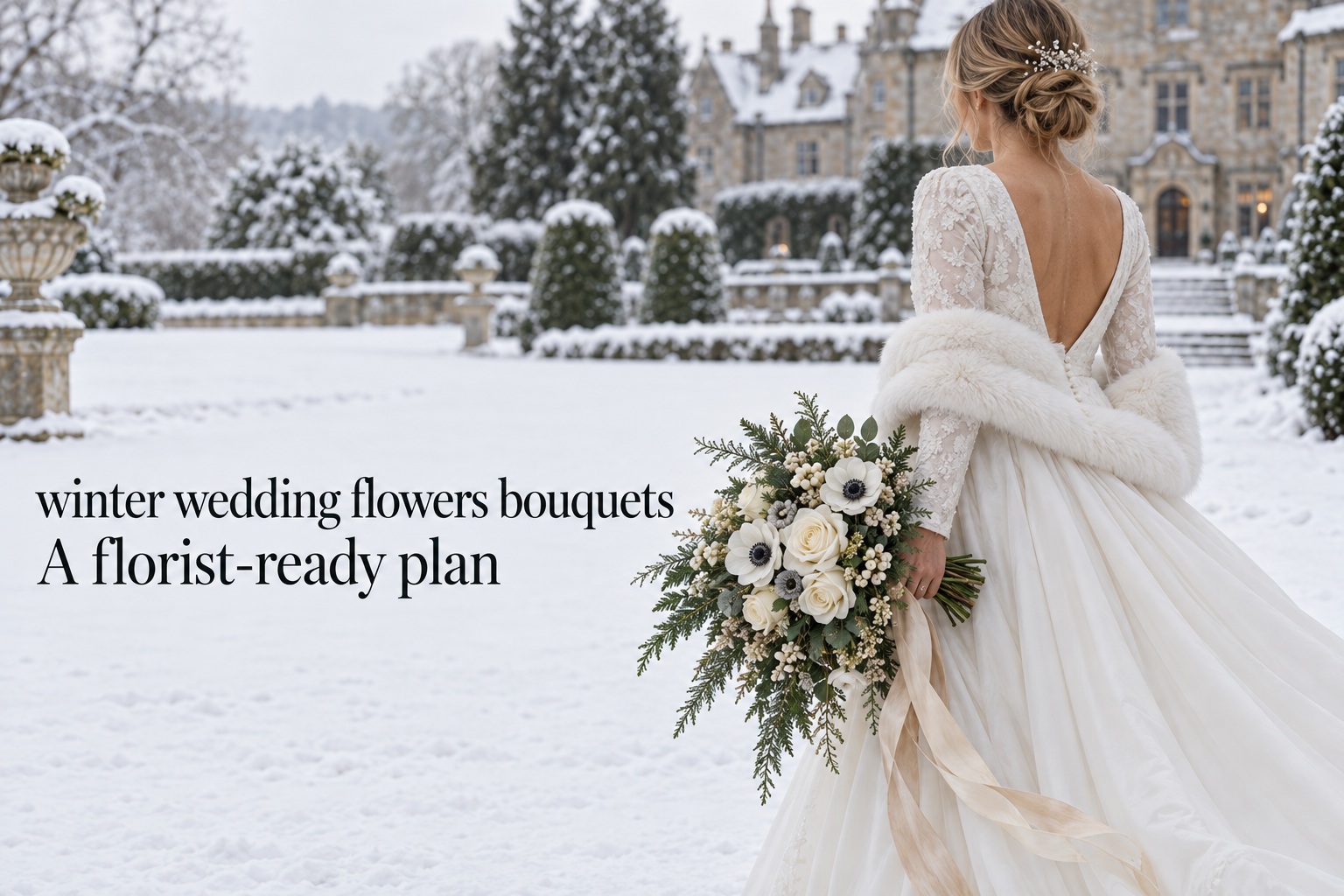
Winter Wedding Flowers Bouquets: A Florist-Ready Plan
Winter wedding flowers bouquets can feel harder to plan than summer flowers because the season brings a strong visual personality before you choose a single stem. Snow, dark afternoons, candlelight, evergreen fragrance, velvet, and holiday décor can all influence the picture. That is not a problem to solve with more Pinterest saves. It is a reason to make a few deliberate decisions in the right order.
The most useful bouquet is not the one with the longest flower list. It is the one that has a clear job: it connects the bride to the room, works with the dress, remains beautiful in photographs, and feels comfortable to carry. Use this playbook to move from a vague winter mood to a brief your florist can interpret well, including when a preferred stem needs a substitute.
1. Start With the Job Your Bouquet Needs to Do
Before discussing varieties, decide what you want guests to notice first when they see you. Some bouquets are meant to disappear into a classic white look, adding softness and texture without drawing focus from the gown. Others are meant to create a strong color moment against a simple dress. Neither approach is more bridal. They simply require different choices about contrast, scale, and movement.
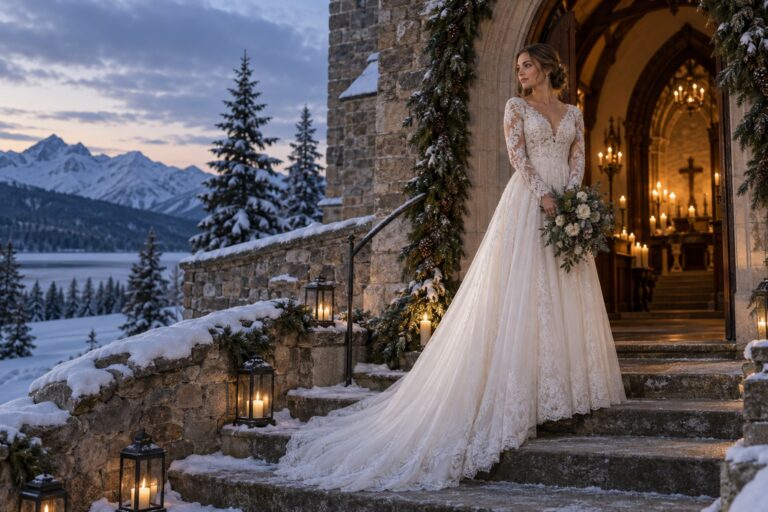
Look at your dress from a normal conversation distance, not only in a fitting-room mirror. A highly detailed lace gown, crystal belt, embroidered sleeve, or dramatic cape already carries visual information. It may need a cleaner bouquet shape and fewer competing colors. A minimal satin gown can often handle a larger silhouette, a longer ribbon tail, or a deeper palette. The bouquet should make the whole image more coherent, not compete for attention.
Your wedding look is only the beginning.
Keep your guest list, vendors, timeline, and every important detail together with Zarellea — so your day feels as considered as your style.
Then consider where the bouquet will appear. In an outdoor ceremony, its color needs enough separation from snow, stone, or winter greenery. In a candlelit restaurant, light blooms and reflective foliage can keep it visible. In a dark ballroom, a pale bouquet can be elegant but may need a little depth from foliage, a dark center, or a ribbon so it does not become one bright blur in photos. Your florist can translate this into flower choices, but only if you describe the setting.
- Support role: choose a compact, tonal bouquet when the dress, veil, or jewelry is the visual focal point.
- Color role: choose a defined berry, red, plum, or warm neutral when you want the bouquet to anchor portraits.
- Texture role: choose layered petals, berries, branches, or foliage when the room is visually simple.
- Shape role: choose a trailing, asymmetric, or horizontal design when you want movement in full-length photographs.
Write one sentence that describes the job. For example: “I want a quiet ivory bouquet that softens a structured gown,” or “I want a berry-toned bouquet that gives our indoor evening portraits warmth.” That sentence is more useful than asking for something that is simply wintery, romantic, or expensive-looking.
2. Choose the Winter Signal You Actually Want
Winter does not have one color palette. It can be crisp and pale, rich and candlelit, wooded and textural, or softly romantic. The fastest way to avoid a generic bouquet is to choose the seasonal signal that feels right for your celebration. Once that signal is clear, the florist has room to use what looks best at the market while protecting the overall feeling.
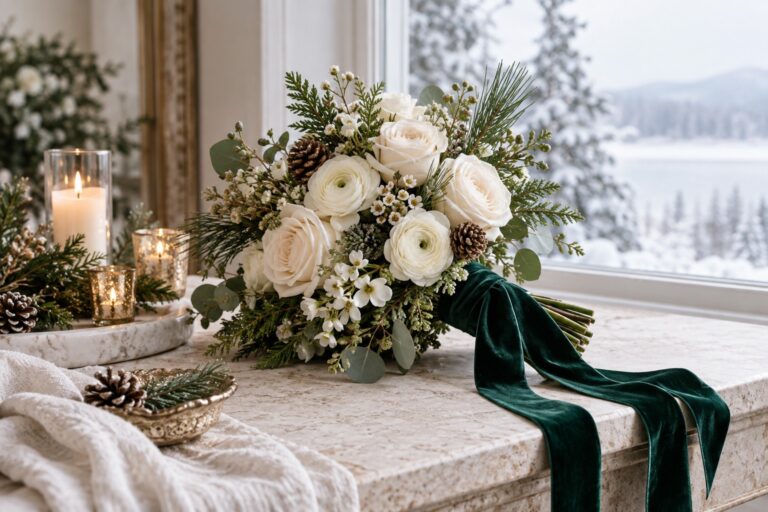
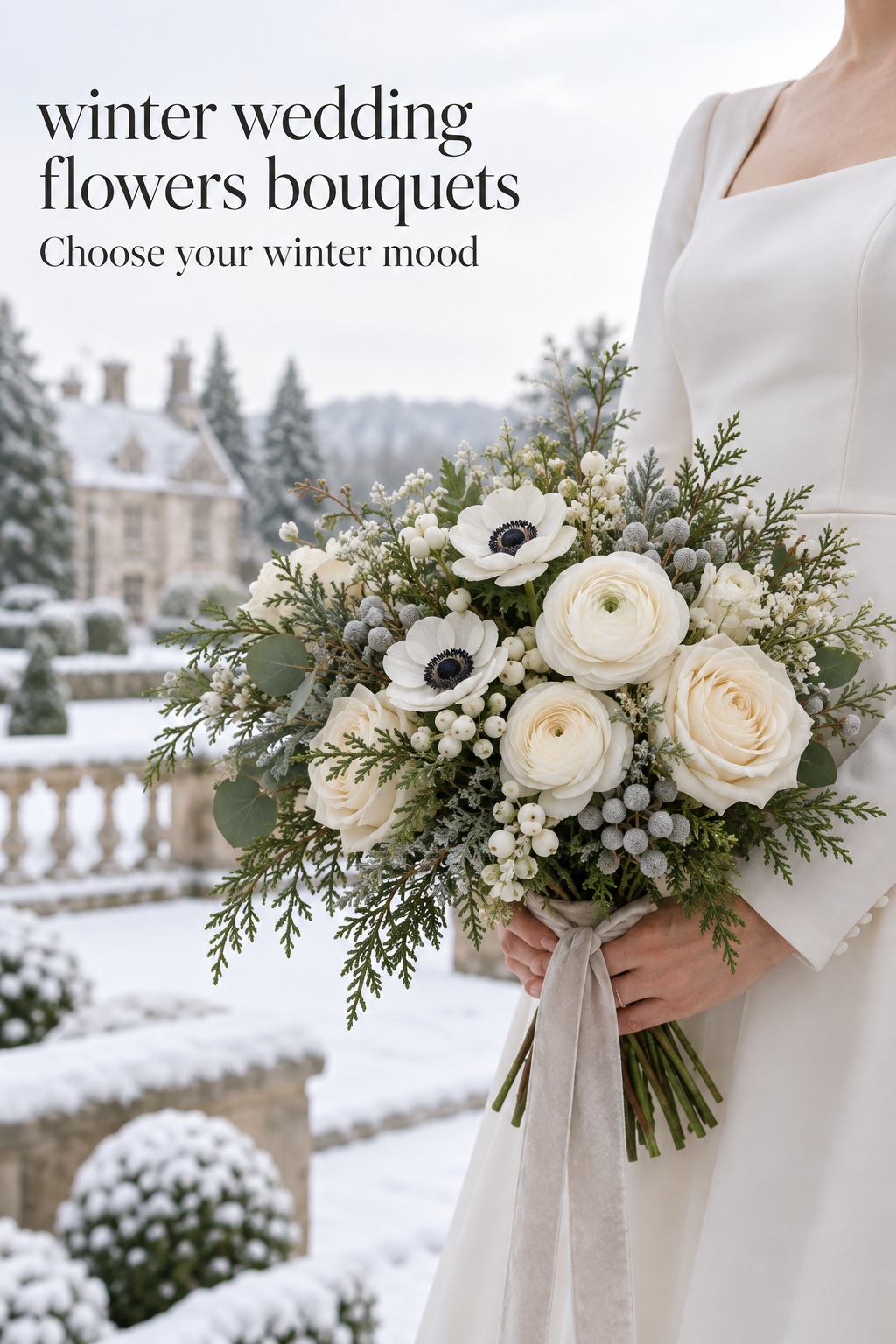
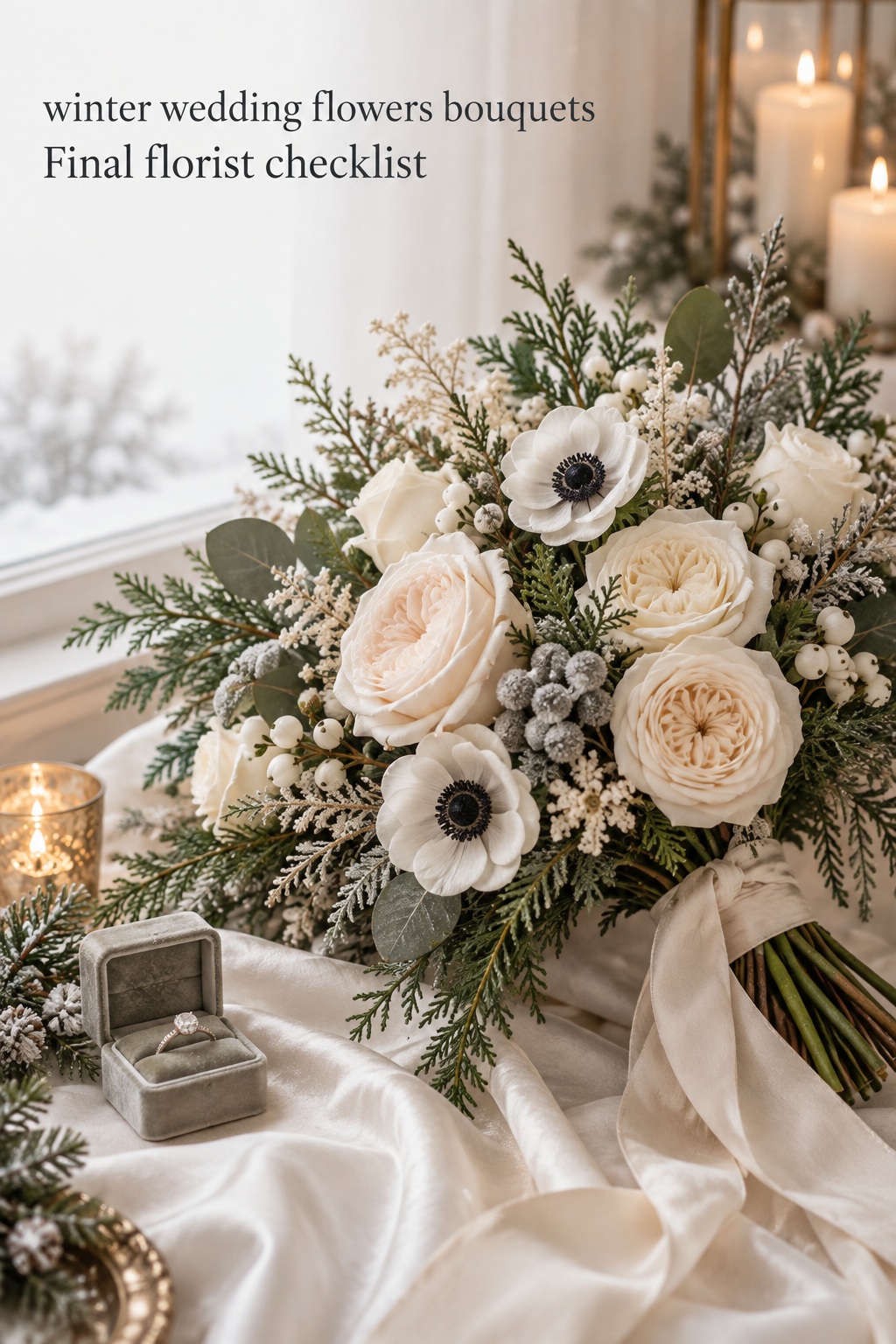
For a snow-inspired look, work with ivory, cream, white, soft gray, and muted green. This is not the same as requesting every possible white flower. Ask for different petal shapes and a few quiet textural notes so the design has depth. A soft ribbon, silver-toned foliage, or a darker flower center can make a pale design feel intentional rather than flat.
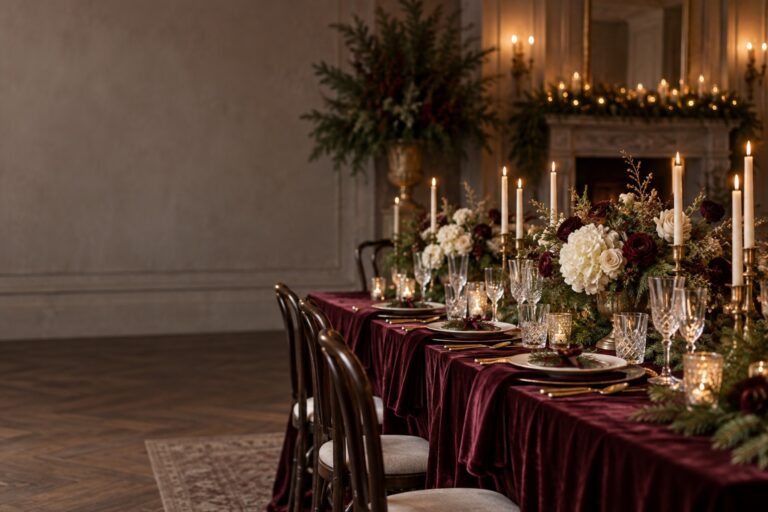
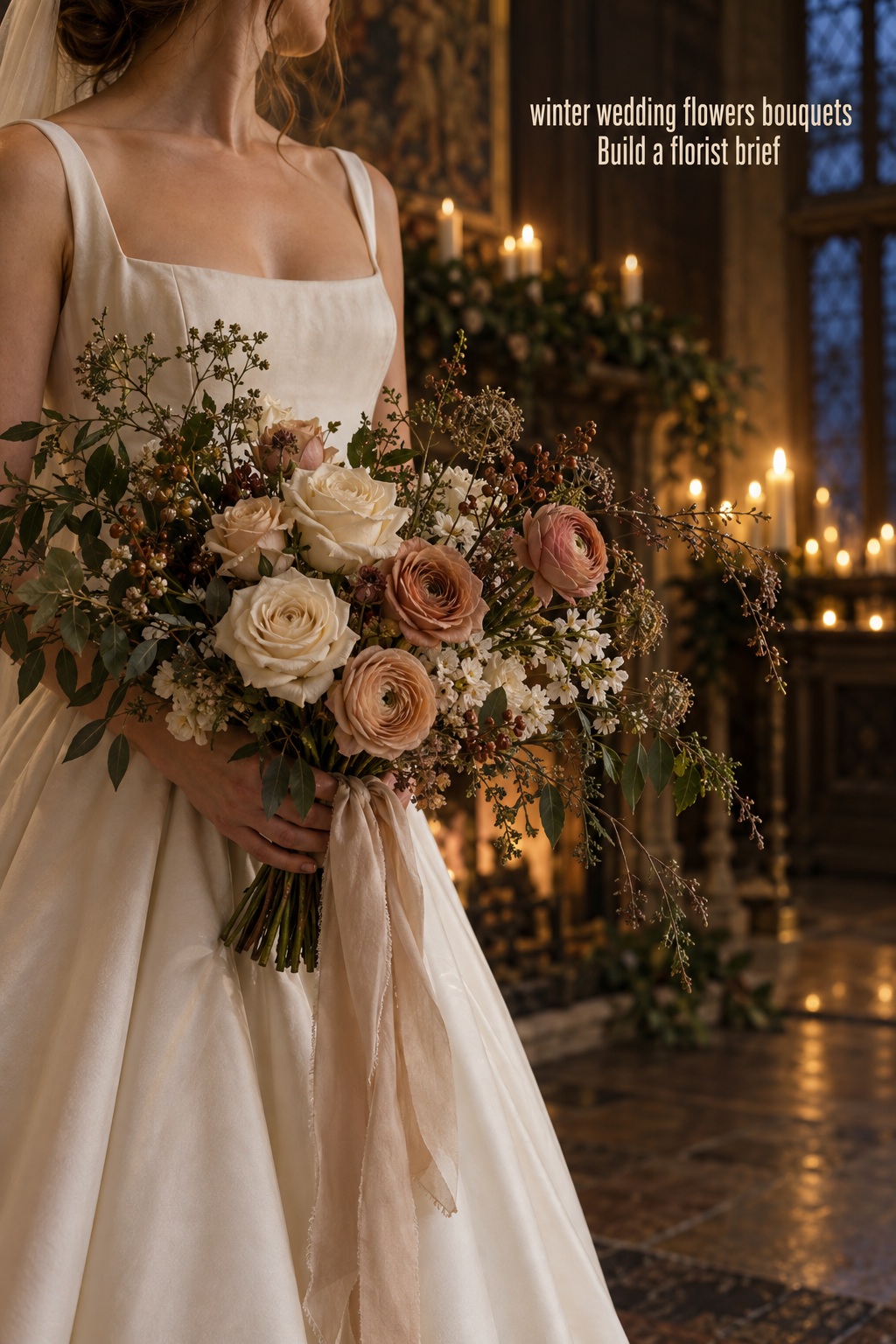
For a candlelit look, choose warmth over literal holiday color. Cream, caramel, antique rose, cinnamon, muted peach, and deep wine can make a room feel inviting without becoming red and green. A bride who likes this direction may prefer a garden-like bouquet with loose edges, a silk ribbon that moves in photographs, and a few stems that create a gentle shadow against the lighter blooms.
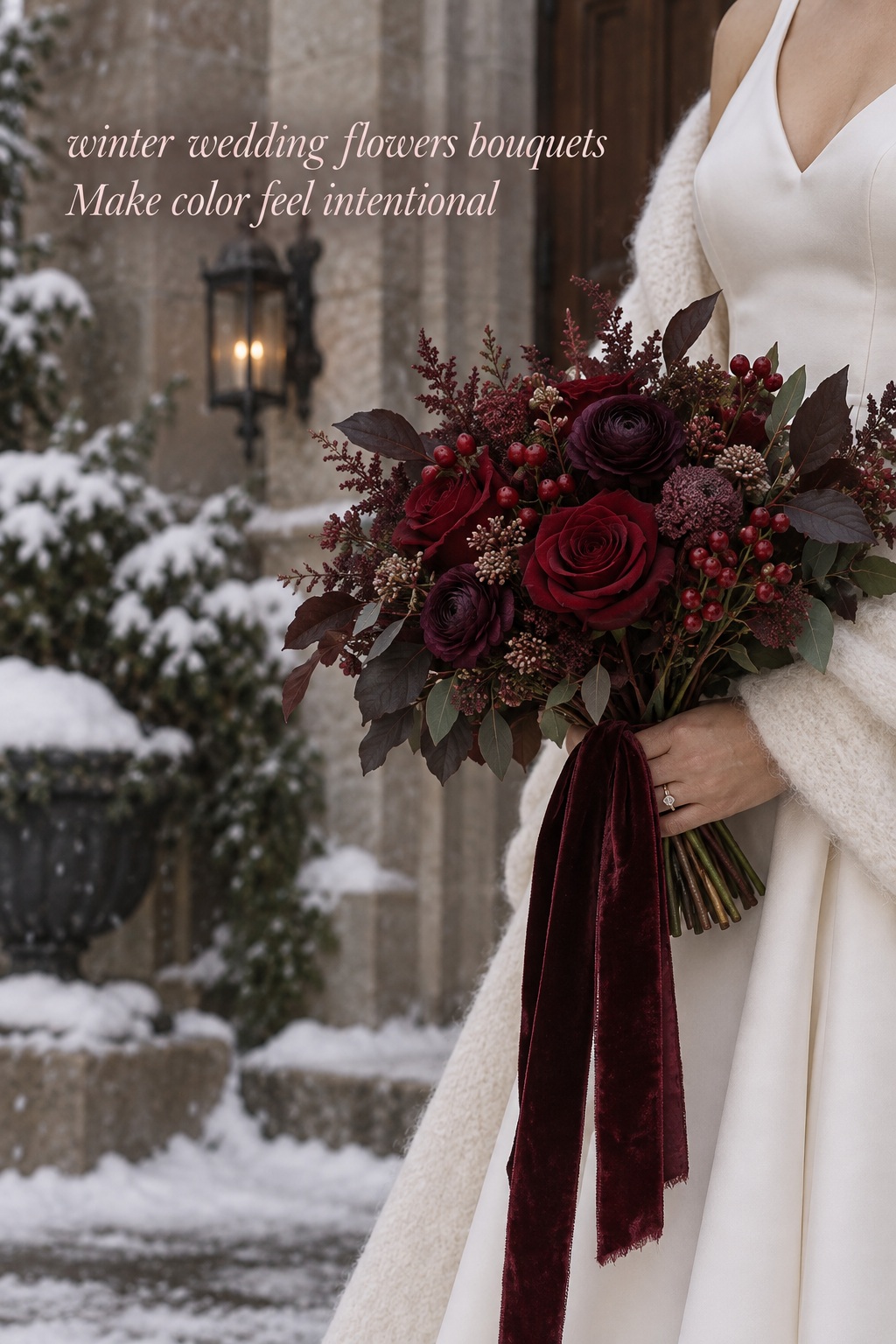
For a berry-toned look, decide whether you want contrast or softness. Burgundy, plum, deep red, and black-centered blooms can create strong definition, especially with a white gown. Add blush, dusty rose, or neutral foliage if you want the result to feel romantic. Keep the color family focused. Four saturated colors usually read as busy, while two related dark tones plus one light note can read as deliberate.
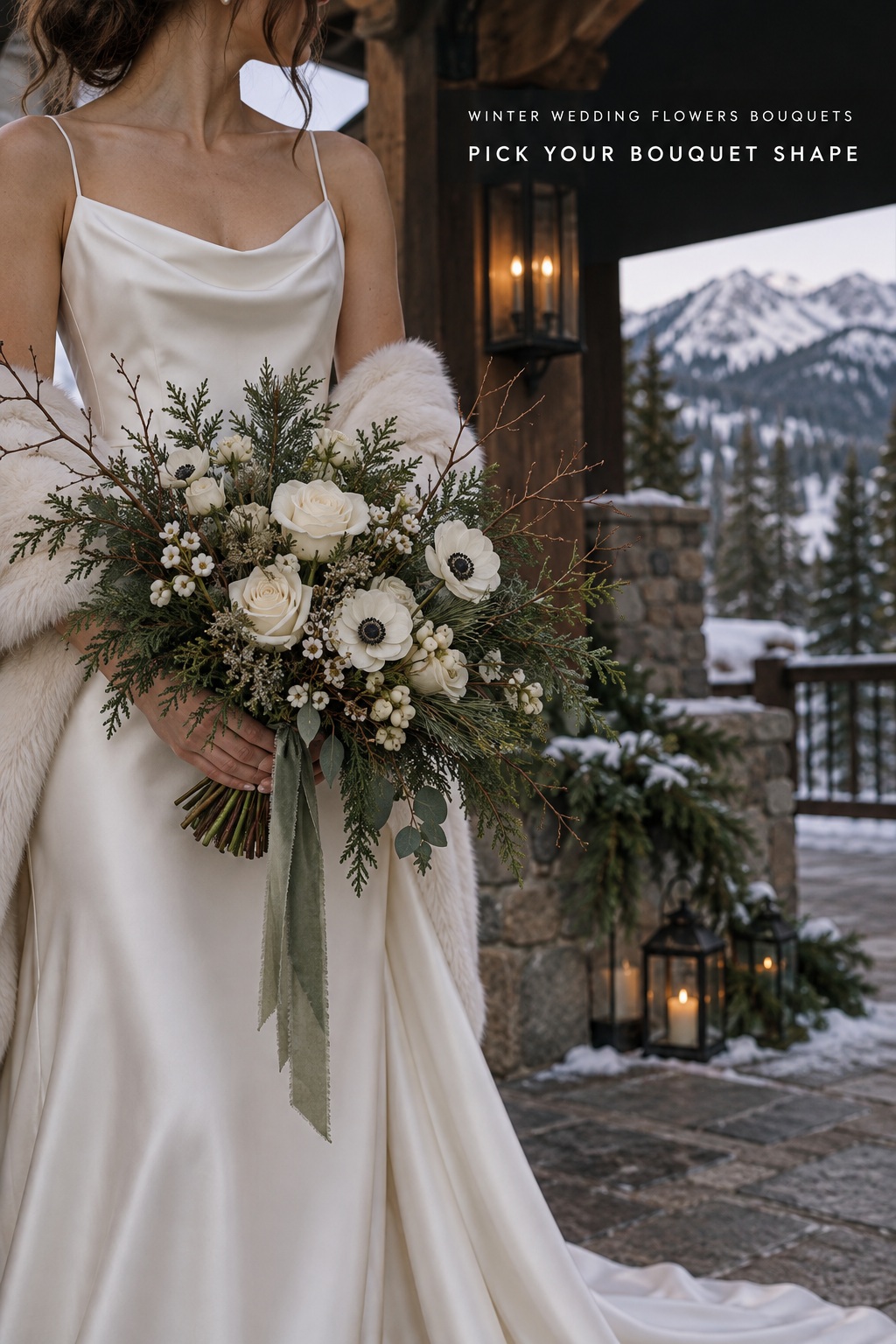
For a woodland look, treat foliage and line as part of the design, not as filler. Cedar, pine, branches, berries, seed heads, and interesting leaves can create a seasonal rhythm. This direction works especially well for lodges, estates, outdoor ceremonies, and receptions with natural wood or stone. It can also feel modern when the palette stays restrained and the silhouette is clean.
If you are marrying near the holidays, make one conscious choice about holiday references. You can embrace red berries, evergreen, and a velvet ribbon. You can use winter texture but skip recognizable holiday colors. Or you can create a separate New Year’s mood with white, champagne, metallic details, and sculptural flowers. The issue is not whether a bouquet looks festive. It is whether it looks like your celebration.
3. Build a Florist Brief in Four Decisions
A florist does not need a rigid stem-by-stem recipe to create a beautiful bouquet. They need boundaries that explain what matters most. Build your brief around palette, contrast, silhouette, and texture. This method gives you a useful vocabulary without pretending you need to become a flower expert before the consultation.
Palette: Choose three or four color words, including one neutral. “Cream, soft green, dusty blue, and a touch of black” is clearer than “winter colors.” “Burgundy, plum, blush, and deep green” tells the florist both the direction and the balance. Bring one or two images that show the palette in wedding lighting, then explain which colors are essential and which are flexible.
Contrast: Decide how much separation you want between the bouquet and the dress. A white bouquet against a white gown needs texture, shadow, or shape to be visible. A saturated bouquet creates instant contrast but may require calmer accessories. Think about your partner’s suit and your wedding party too. A bouquet can link the group through one repeating color without exactly matching every dress.
Silhouette: Rounded bouquets feel classic and controlled. Loose, meadow-like bouquets feel relaxed and have more movement. A small clutch feels refined and keeps the attention on the gown. A trailing or asymmetric design feels editorial and can add drama to simple columns or capes. Do not select a silhouette only from a close-up photo. Ask to see full-body examples, because the scale needs to work with your height and dress shape.
Texture: Describe the surface you enjoy: layered petals, crisp star-like flowers, soft berries, architectural branches, dark centers, or evergreen needles. Texture is what makes a limited winter palette feel rich. It is also an easy place for a florist to adjust if a specific bloom is unavailable. If the mood depends on contrast between smooth petals and airy foliage, the overall design can survive a substitution much better than a bouquet built around one exact flower name.
- State your wedding month, city or region, ceremony setting, and portrait location.
- Share the dress fabric, veil length, bouquet hand position, and any cape, coat, or dramatic sleeve.
- Name two must-have qualities, such as “airy but not wild” or “moody but not Christmas themed.”
- Name one or two flower preferences, then invite equivalent substitutions.
- Ask how the bouquet will be protected during travel, outdoor portraits, and the time before the ceremony.
4. Four Bouquet Briefs You Can Adapt
The clean snow bouquet
Choose this if you want a timeless winter look without obvious holiday cues. Ask for ivory and white blooms with soft gray-green foliage, subtle variation in petal shape, and a compact to medium rounded silhouette. The important instruction is “dimension, not sparkle.” A florist can use layered flowers, airy accents, and a few shadowy details to keep the design visible against a white gown. An ivory silk wrap makes the finish feel polished without asking the bouquet to carry too much color.
The candlelit garden bouquet
Choose this for an intimate restaurant, historic venue, or evening ceremony. Ask for cream, antique rose, muted peach, and warm wine tones, with a loose garden shape and one flowing ribbon. The bouquet should look warm in low light, not overly dark. Request depth at the center and softer petals at the edge. This is a good answer for a bride who likes romance but does not want a perfectly round, formal arrangement.
The berry and velvet bouquet
Choose this if the bouquet needs to make a clear statement in photographs. Ask for burgundy, plum, berry, and a small amount of blush or cream, with dark foliage or a few berry-like accents. Keep the shape medium and slightly asymmetric so the palette has movement. Finish with a wine, cocoa, or deep green velvet ribbon. The key is restraint: let the ribbon repeat the dark tone instead of adding several more colors through ornaments or holiday decorations.
The modern woodland bouquet
Choose this for a mountain, lodge, forest, or architectural venue. Ask for a neutral flower base with cedar or pine-like texture, a few branching lines, and a relaxed but intentional shape. Include only one or two tactile details, such as berries or seed pods, so the bouquet still feels bridal rather than like a centerpiece. This direction looks especially good with a clean gown, wool coat, or long-sleeved dress because the organic materials provide contrast against simple fabric.
These are briefs, not formulas. A talented florist may recommend a different bloom, a smaller scale, or a more weather-aware construction once they know your date and budget. That is a sign the consultation is working. Keep the visual priorities steady and let the mechanics stay flexible.
5. Run the Final Winter Bouquet Check
Before approving the design, review it as an object you will hold, photograph, transport, and set down throughout a long day. A bouquet can be beautiful in a studio image and still be awkward for your ceremony if it is too large, too heavy, or too fragile for your timeline. The final check is where you turn a good mood board into a dependable plan.
Ask about scale in relation to the dress. If your gown has a fitted waist or narrow skirt, a very wide bouquet can conceal the silhouette in portraits. If you are wearing a voluminous ball gown, an overly small bouquet can disappear. Ask the florist to describe the approximate finished width and to show a comparable bouquet held at waist height. The goal is proportion, not a universal size rule.
Confirm the ribbon choice and length. Ribbon is a quiet but powerful part of winter wedding flowers bouquets because it moves in wind, frames the stems in close-ups, and can repeat a color from the room. Choose a material that suits the mood, then make sure it will not snag, drag through snow, or become distracting when you walk. A shorter tail can feel as elegant as a dramatic one when the dress has intricate detailing.
Finally, make room for a substitution plan. Availability can vary by location, supplier, and exact week, so ask which qualities the florist will preserve if a requested flower cannot be sourced in good condition. The best answer names the visual qualities: layered cream petals, dark-centered contrast, airy movement, or evergreen texture. That protects your design better than insisting on a single stem at any cost.
- Does the bouquet have one clear visual job in relation to the gown and venue?
- Can you name the palette, silhouette, contrast level, and texture in one short brief?
- Will it remain visible in your planned portrait lighting?
- Does it match your preferred level of holiday reference rather than accidentally becoming themed?
- Is the scale comfortable to carry and proportionate to the dress?
- Do you understand what may be substituted while preserving the intended mood?
When those answers are clear, stop collecting competing ideas. Your bouquet does not need to represent every beautiful winter flower. It needs to make one coherent visual promise and keep it from the first photograph through the last dance.
FAQ
What colors work best for winter wedding flowers bouquets?
Choose colors that serve the role of the bouquet. Ivory and green create a quiet snow-inspired look, while burgundy, plum, and berry create contrast. Warm cream, antique rose, and muted peach suit candlelit settings. Keep the palette focused and include a neutral so the bouquet has room to breathe.
How do I make a winter bouquet feel seasonal without looking like Christmas?
Use winter through texture and atmosphere instead of literal symbols. Soft foliage, branches, muted berries, sculptural flowers, velvet, or a restrained palette can feel seasonal. Skip bright red and green together, pinecones, and overtly festive accents if those do not match your vision.
Should my bouquet match the bridesmaids’ bouquets?
They should relate, not necessarily match. The bridal bouquet can have more scale, a richer shade, or more textural detail, while the attendants carry a simplified version. Repeating one color, foliage type, or ribbon treatment is usually enough to create cohesion.
What should I bring to a winter bouquet consultation?
Bring photos of the dress, venue, ceremony setting, and portrait location, plus a few bouquet references. Write down the month, location, palette, preferred silhouette, and two essential mood words. Explain which elements are must-haves and which can change if the florist finds a better seasonal option.
How can I choose the right bouquet size?
Choose size in relation to your body, dress silhouette, and how you will hold it. Ask to see full-length examples rather than close-ups. A florist can recommend a finished width that looks balanced and remains comfortable during the ceremony, portraits, and travel.
Can I request specific flowers for a winter wedding?
Yes, but frame them as preferences rather than inflexible requirements. Tell the florist what you love about each flower, such as layered petals, a dark center, or a soft airy line. That gives them a useful way to preserve the look if the exact stem is not available in excellent condition.