What to Wear to a Winter Wedding: A Capsule Guide
What to wear to a winter wedding becomes much easier when you stop treating the invitation as a one-outfit shopping emergency. Start with the dress code, then build a small capsule around one polished anchor piece, one removable warmth layer, one reliable shoe, and a few accessories that can change the mood. The result is an outfit that looks intentional at the ceremony, feels practical on the way there, and still works once the dance floor gets busy.
This approach also helps you avoid the two most common winter guest mistakes: buying something beautiful that cannot handle the journey, or adding so many cold-weather pieces that the original outfit disappears. The sections below show how to plan the capsule in the right order, create combinations for different dress codes, and make the same pieces useful for more than one celebration.
Start the Capsule With the Invitation
The invitation is the first filter for your winter wedding wardrobe. Before you think about color, fabric, or a new dress, identify the requested dress code and the parts of the day that could affect your comfort. A formal evening reception in a heated hotel asks for a different capsule from a casual daytime ceremony at a barn, even if both take place in January.
Read the wording literally, but also note the venue, start time, ceremony location, and any outdoor transition. A wedding can be mostly indoors and still involve a long walk from parking, photos outside, a receiving line on a terrace, or an unheated cocktail hour. Those details determine whether your warmth layer needs to be decorative, genuinely insulating, or easy to remove and check.
Your wedding look is only the beginning.
Keep your guest list, vendors, timeline, and every important detail together with Zarellea — so your day feels as considered as your style.
- Dress code: Translate black tie, formal, cocktail, semi-formal, or casual into the level of polish your base outfit must reach.
- Time of day: Evening invitations usually support deeper colors and more shine, while daytime celebrations may call for a lighter hand even in winter.
- Venue: A city hotel, country house, restaurant, mountain lodge, and backyard all change the balance between elegance and practicality.
- Weather exposure: Look for the moments when you will stand, walk, wait, or take photos outside, not just the predicted temperature at the reception.
- Travel needs: If you are flying or taking public transportation, prioritize pieces that resist wrinkles and layers that pack without taking over your bag.
Once you have those answers, write a one-sentence outfit brief. For example: “Evening formal, indoor ceremony, short outdoor transfer, jewel-tone base, polished coat, shoes that can handle a few blocks.” This sentence keeps you from shopping by isolated product appeal. Every new piece should solve one part of the brief.
Build the Four Core Pieces
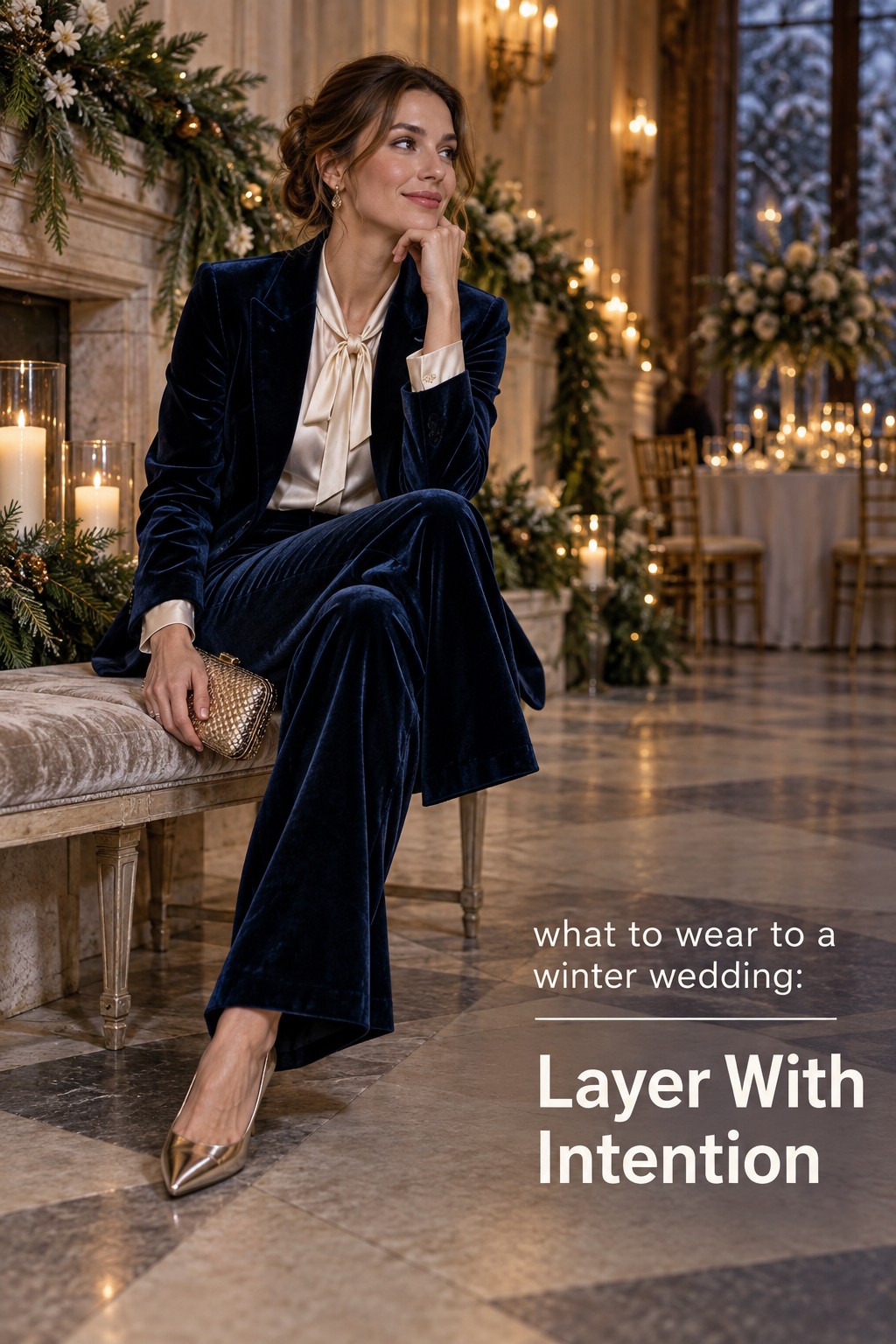
A winter capsule does not need to be large. It needs a clear hierarchy. Choose the piece that carries the dress code first, then add warmth and finish around it. If you reverse that order, a practical sweater or coat can push you toward a casual look that no longer suits the invitation.
1. Choose one anchor outfit
Your anchor can be a long-sleeve midi dress, an evening gown, a velvet jumpsuit, a tailored suit, or a coordinated top and trouser combination. The right choice depends on the dress code and on what you already wear confidently. A simple silhouette in a substantial fabric often creates more outfit mileage than a highly specific party piece.
For a dress-led capsule, look for a shape that can accept more than one finishing layer. A clean neckline works with a shawl, a blazer, a short jacket, or a long coat. A skirt with enough movement lets you add tights or slim thermal layers without making the outfit feel crowded. For suiting, choose a jacket and trouser that can be worn together for one wedding and separately for another event.
2. Add one removable warmth layer
The best warmth layer has two jobs. It protects you during the coldest part of the journey, and it looks intentional when you enter the venue. A long wool coat, dressy suit-inspired coat, velvet jacket, faux-fur wrap, tailored cape, or refined shawl can all work. Choose based on whether the layer will stay on for photos and drinks or be checked as soon as you arrive.
Try a color sandwich when you are unsure how to connect the layers. Repeat one small color from the coat in your shoes, bag, belt, or jewelry. A black coat can feel deliberate with black shoes and a black clutch. A camel coat can connect to warm metallic jewelry or tan shoes. A burgundy wrap can echo a berry dress without requiring every item to match.
When the ceremony includes outdoor time, put practical warmth underneath or over the look rather than relying on a thin decorative layer alone. A close-fitting base layer can disappear under a relaxed silhouette. A longer coat can cover the hem of a dress and make the trip between locations more comfortable. The goal is not to prove that you can tolerate cold. The goal is to arrive ready to celebrate.
3. Select one polished shoe strategy
Shoes are where a winter outfit often fails. Delicate heels may look perfect in a mirror and feel wrong after a slippery sidewalk, wet pavement, or an outdoor photo session. Start with the venue surface and travel distance, then choose the dressiest option that you can actually walk in.
- For a formal indoor wedding, choose a pointed pump, refined slingback, embellished flat, or sleek low heel that supports the base outfit.
- For a city wedding with walking, consider a closed-toe block heel, polished ankle boot, or elegant flat with a clean profile.
- For a rustic or outdoor venue, select a stable heel or dressy boot and keep a more delicate shoe for the reception only if changing is realistic.
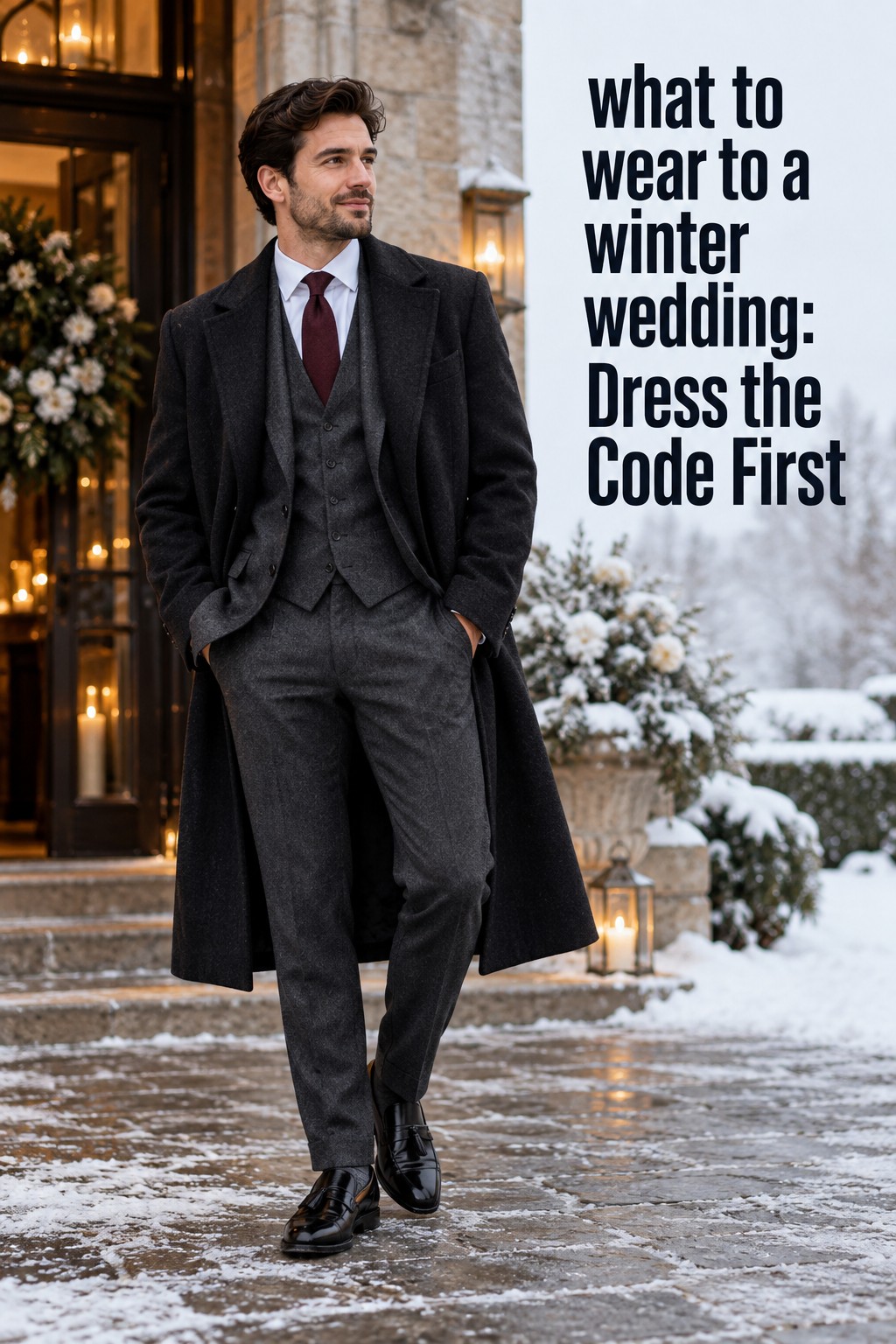
- For men’s suiting, coordinate the shoe finish with the formality of the suit. Clean leather or polished loafers usually look more intentional than casual winter footwear.
If you need boots for weather, treat them as part of the outfit rather than hiding them as an afterthought. A sleek knee-high boot can support a midi dress, while a refined ankle boot can work with trousers or a jumpsuit. Keep the line simple and let the fabric, jewelry, or bag provide the event-level finish.
4. Keep accessories compact and purposeful
A small winter wedding accessory set can include a compact evening bag, one pair of earrings, a wrap or scarf, hosiery, and a weather-ready outer layer. You do not need a different accessory for every styling problem. Instead, choose pieces that can shift the outfit from restrained to festive or from travel-ready to reception-ready.
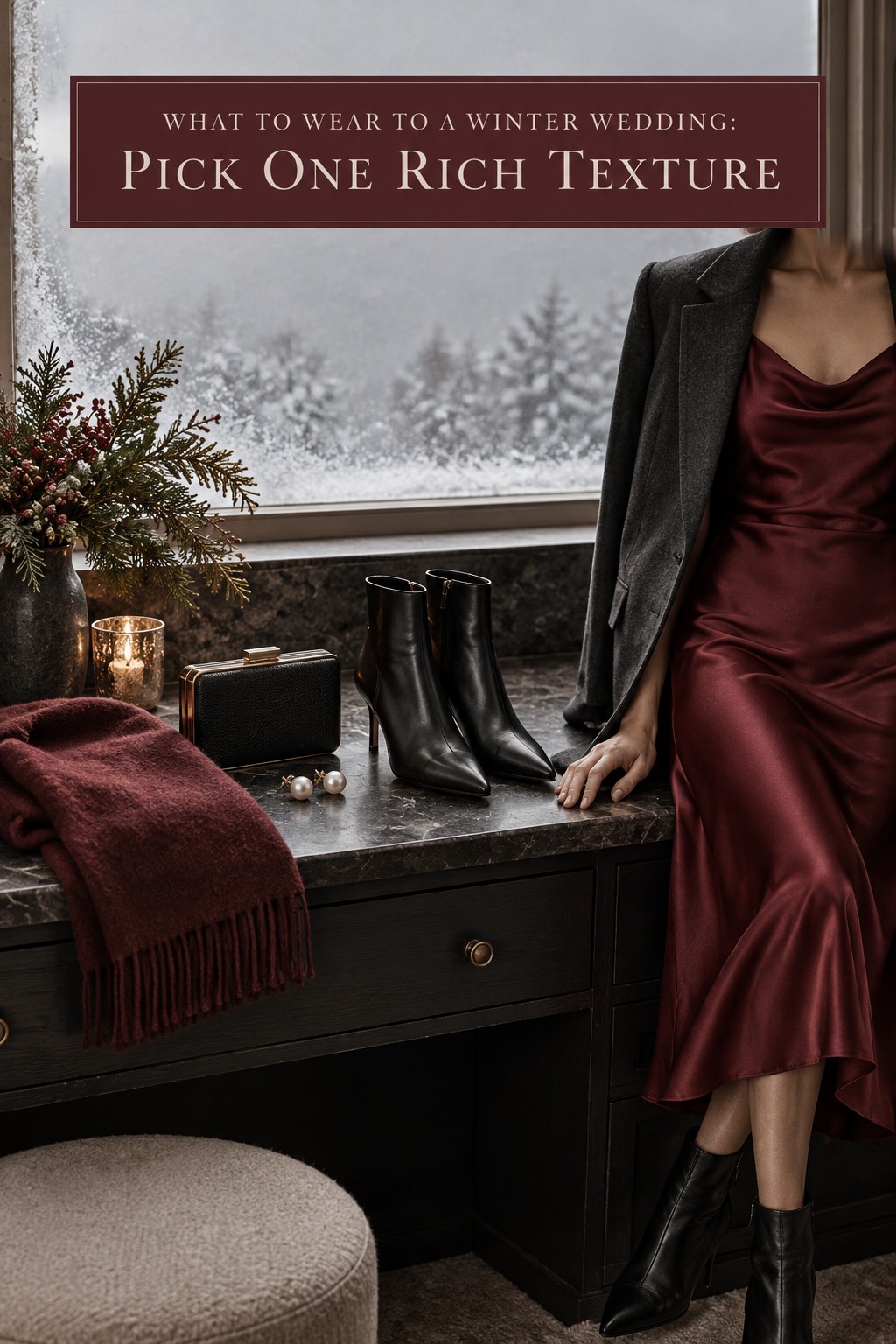
Texture is especially useful in winter. Velvet, satin, metallic finishes, pearls, polished leather, and subtle embellishment can make a covered-up outfit feel celebratory. If the base outfit is already shiny or detailed, let the accessories become quieter. If the base is matte and simple, use one richer texture to create depth.
Create Outfit Formulas for Each Dress Code
Once the four core pieces are clear, use formulas instead of starting over for every invitation. A formula is a repeatable relationship between a base outfit, a warmth layer, shoes, and accessories. It gives you a useful answer to what to wear to a winter wedding while leaving room for your personal style.
Black tie: one dramatic anchor, quiet warmth
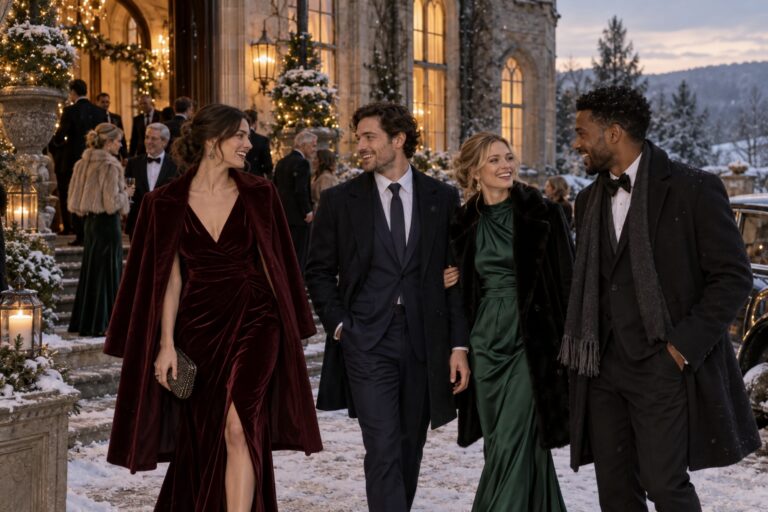
For black tie, begin with a floor-length gown, a refined column dress, or a formal jumpsuit with enough presence for the invitation. Velvet, satin, and controlled shine can feel naturally seasonal, but the silhouette still matters more than the fabric alone. Keep the outer layer elegant and simple so it does not compete with the base outfit.
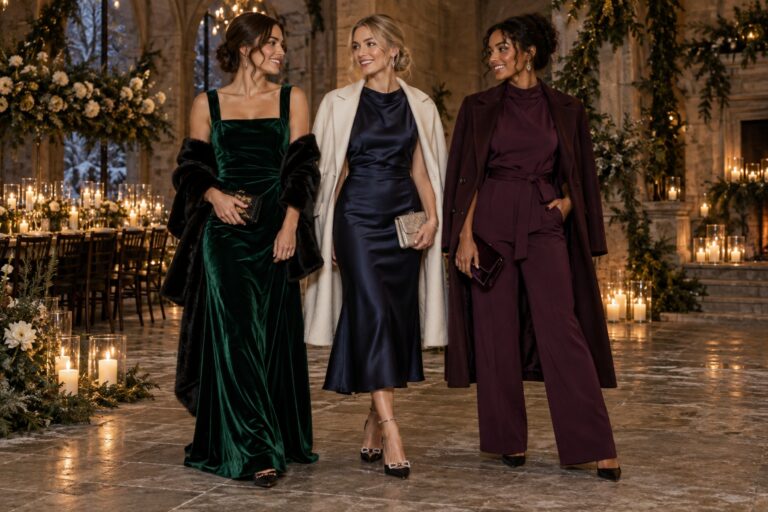
Try this formula: dark or jewel-tone gown, long coat or velvet stole, closed-toe heel, and one statement earring. If you prefer trousers, choose a fluid formal jumpsuit or a sharply tailored suit with a dressy shirt and evening accessories. The capsule principle remains the same: one strong base, one removable warmth solution, and minimal but deliberate finishing.
Formal: rich texture with controlled coverage
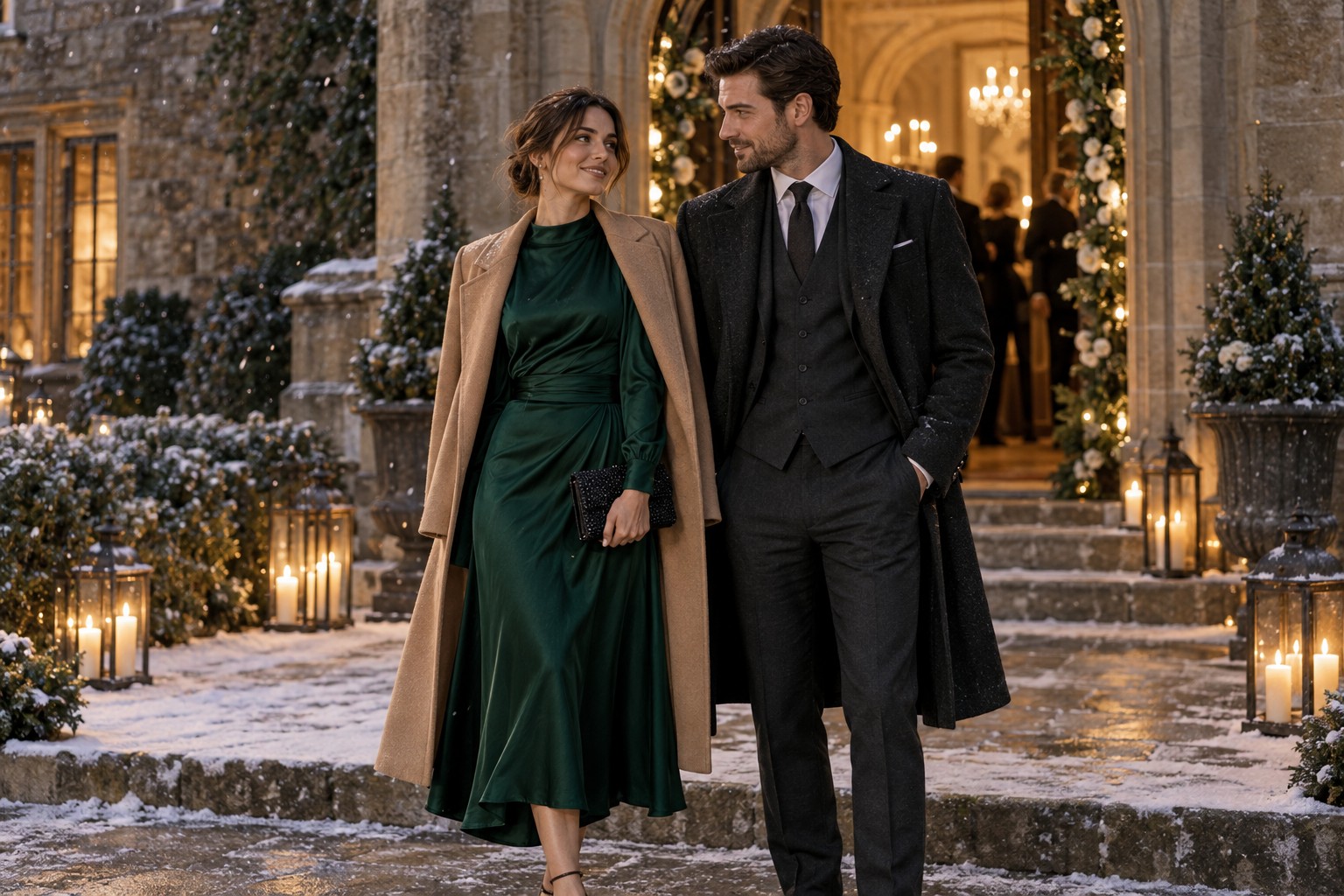
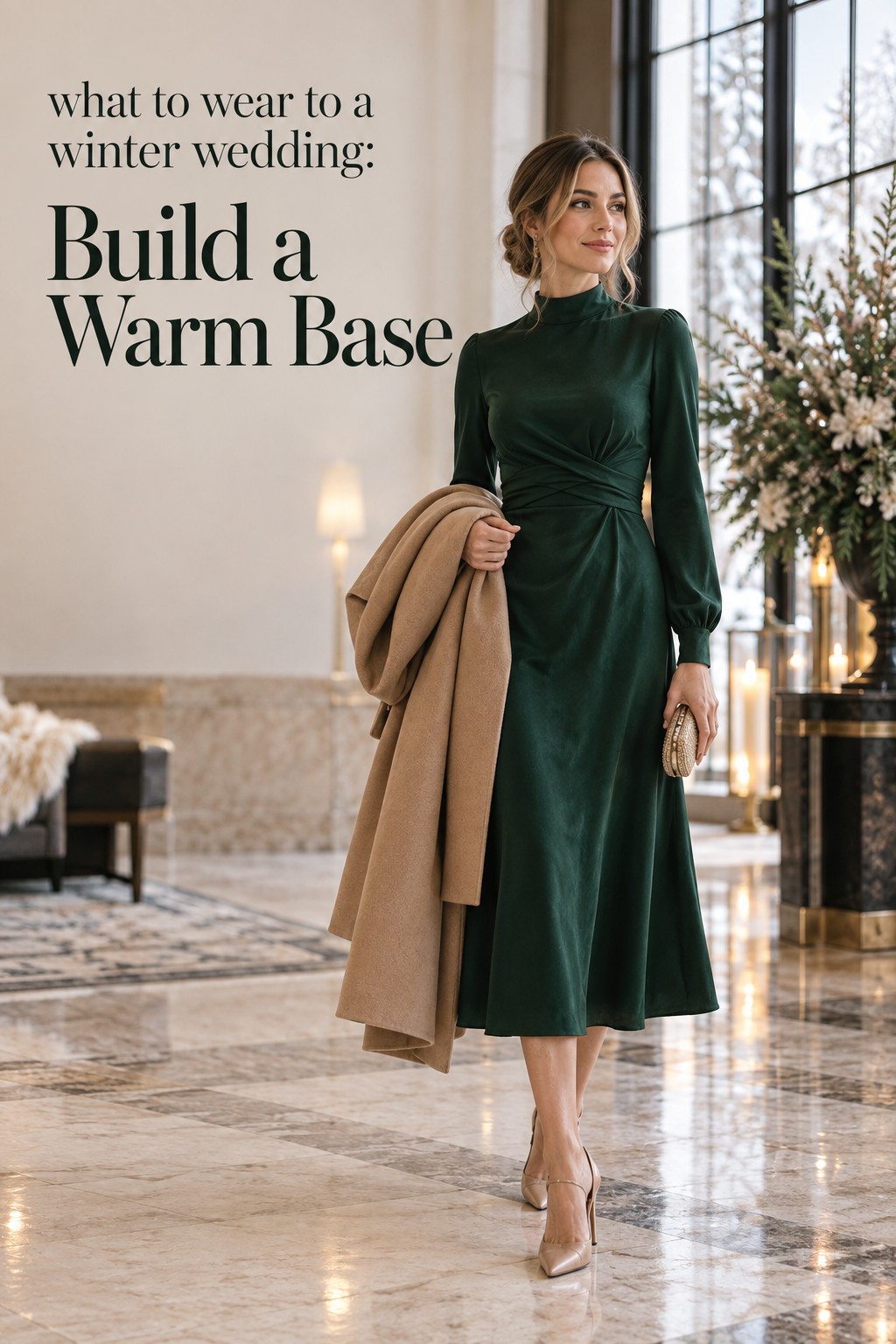
Formal dress codes give you room to use a long-sleeve midi, a sophisticated maxi, a velvet suit, or a satin dress with a polished coat. Choose coverage where you want it, such as sleeves, a higher neckline, or a longer hem, and let one detail provide interest. This might be a gathered waist, an asymmetric drape, a strong color, or a textured jacket.
Try this formula: long-sleeve midi in navy, emerald, burgundy, or black; tailored wool coat; low pointed heel; small metallic bag. For a men’s look, a dark suit in a substantial fabric, a dress shirt, a tie with subtle texture, and a topcoat creates a complete capsule without resorting to novelty.
Cocktail: let one festive detail lead
Cocktail attire is a useful place for a shorter hem, a polished jumpsuit, a velvet blazer, a sequined detail, or a saturated color. Winter does not require every piece to be dark. It does reward thoughtful texture and a clear sense of occasion. Keep the look balanced by pairing one festive element with cleaner supporting pieces.
Try this formula: jewel-tone midi or tailored jumpsuit, cropped jacket or shawl, sleek ankle boot or block heel, and compact clutch. If the base has sparkle, use a plain coat and simple jewelry. If the base is solid and matte, a metallic shoe or embellished bag can provide the celebration cue.
Semi-formal: use a polished day-to-evening base
Semi-formal winter weddings are ideal for a midi dress, a coordinated knit and skirt, tailored trousers with a satin blouse, or a neat suit without the most formal accessories. The outfit should look finished, but it does not need the visual weight of black tie. Use your layer and shoe choice to adjust the level of polish.
Try this formula: long-sleeve midi, fine-gauge wrap or cropped jacket, closed-toe low heel, and small earrings. For trousers, pair a fluid blouse with a straight-leg trouser and a tailored blazer. Keep the color story tonal so the outfit feels considered rather than assembled from unrelated warm pieces.
Casual: make everyday pieces event-ready
Casual does not mean ordinary clothes with a wedding invitation added. It means a more relaxed version of polish. A sweater dress, a turtleneck with tailored trousers, a knit skirt with a refined blouse, or a simple dress with suede accessories can work when the venue supports it. Improve the look through fit, neatness, and one elevated texture.
Try this formula: sweater dress or knit top with tailored pants, long coat, polished boot, and a small structured bag. Avoid the temptation to wear your warmest casual coat if it overwhelms the outfit. A clean wool coat or a simple scarf can keep the capsule comfortable while preserving the sense that you dressed for a celebration.
Make the Capsule Work From Door to Dance Floor
The final test is not whether the outfit looks good in a static photo. It is whether each layer behaves across the full event. Winter wedding guests move through several temperature changes, so your capsule should include a clear plan for arrival, ceremony, reception, and departure.
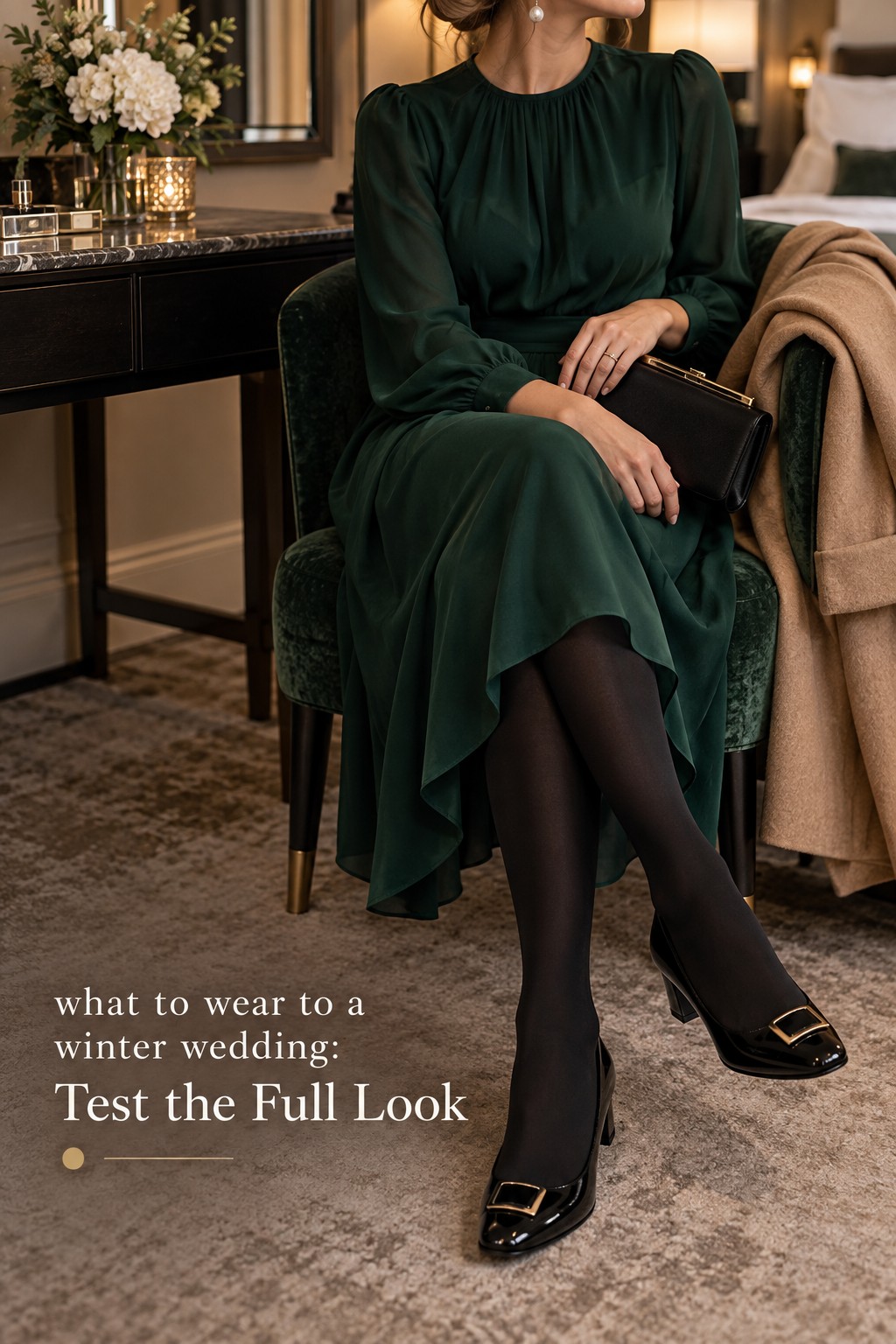
Run a complete try-on, including the coat
Put on the base outfit, underlayer, hosiery, shoes, bag, jewelry, and outerwear at the same time. Walk, sit, climb a few steps, and lift your arms. Check that the coat does not crush the sleeves, the bag does not catch on the fabric, and the hem does not drag over your shoes. A five-minute test can reveal more than a mirror check.
If you plan to remove a layer, practice the handoff. Decide where the wrap goes during dinner, whether the coat can be checked, and whether your bag can hold gloves or a folded scarf. The less you improvise at the venue, the more polished the outfit will feel.
Use hidden warmth without changing the silhouette
Close-fitting base layers, opaque tights, a camisole, or a thin bodysuit can add comfort beneath an outfit without competing with the visible styling. Test them under the actual fabric first. You want smooth lines at the neckline, armhole, waist, and back. If the underlayer changes the fit, choose a different base garment instead of forcing the system.
Build a small weather kit
A winter wedding kit can stay compact: a foldable umbrella, tissues, a small shoe-care item, blister protection, a hair tie, and a way to secure a wrap. For a longer outdoor ceremony, add gloves that coordinate with the coat. These are not glamorous purchases, but they protect the details that make the outfit work.
Think about the route as well as the forecast. Snow, rain, wind, and dark sidewalks can all affect footwear and hems. If the outfit depends on delicate shoes or a long skirt, plan a practical travel option and change only when it is easy. A capsule is successful when it protects your comfort without creating a second complicated outfit to carry.
Choose colors that can repeat
A repeatable palette makes a small wardrobe feel larger. Start with two neutrals, then add one or two winter accents. Navy with black, camel with chocolate, charcoal with burgundy, or cream with emerald can create several combinations without looking identical. Use the accent in a dress, jacket, shoe, bag, or jewelry rather than buying an entirely new color story for every event.
Be cautious with colors that look too close to bridal white or ivory, especially when the couple has not specified a more relaxed dress code. The invitation and couple’s preferences always come first. A rich color or a print with depth is usually an easier way to make a winter look distinctive while keeping the capsule useful.
Common Capsule Mistakes to Avoid
The capsule approach is meant to simplify the decision, but it can fail if every item is chosen for a different reason. Keep the system coherent by checking the relationships between pieces rather than judging each item alone.
- Buying the coat first: A warm coat cannot rescue a base outfit that misses the dress code. Choose the anchor outfit before the outer layer.
- Using one warmth solution for every venue: A shawl may work for a heated hotel, while an outdoor ceremony may require a real coat and covered shoes.
- Adding too many textures: Velvet, faux fur, sequins, metallics, and heavy knits can compete. Let one or two textures lead.
- Ignoring the bag: A large everyday tote can make a formal look feel unfinished. Choose a compact bag or make the travel bag clearly separate.
- Skipping the movement test: The hem, sleeve, shoe, and layer must work while you sit, walk, dance, and carry a drink.
- Shopping for novelty: A single dramatic piece may be fun, but your core purchases should connect to other events and existing wardrobe pieces.
The most reliable winter wedding capsule is not the one with the most options. It is the one where each item has a defined job and at least two possible partners. If you can name the dress code role, warmth role, shoe role, and finishing role of every piece, you are ready to get dressed without starting from zero.
Sources and Methodology
This guide was built from a review of ten Google US organic results covering winter wedding guest attire, dress-code guidance, seasonal fabrics, layering, coats, and men’s suiting. The Knot’s winter wedding guest guide was useful for comparing dress codes, heavier fabrics, and removable layers. Who What Wear’s winter wedding clothing guide supported the focus on layering, sleeves, jumpsuits, pantsuits, and cold-weather accessories.
Recommendations here are styling guidance, not a claim of firsthand product testing. Prices, stock, and regional weather were intentionally excluded so the capsule remains useful beyond one shopping season.
FAQ
Can I wear a black dress to a winter wedding?
Usually, yes, unless the invitation or couple’s guidance says otherwise. Make the look feel celebratory with texture, jewelry, a polished shoe, or a rich-toned accessory. Check the dress code first, especially if the event has a specific cultural or color tradition.
What should I wear over a dress to a winter wedding?
Choose a layer that matches both the dress code and the coldest part of your route. A tailored wool coat, dressy jacket, velvet stole, cape, faux-fur wrap, or refined shawl can work. If you will be outside for more than a brief transfer, prioritize real warmth and keep the silhouette clean.
Are boots appropriate for a winter wedding?
Yes, when the boots look intentional and suit the venue. Sleek ankle boots can work with trousers, jumpsuits, and midi dresses. Knee-high boots can support a shorter or midi hem. Choose a polished finish, a stable sole, and a shape that does not make the outfit look like everyday errands.
Can I wear a sweater to a winter wedding?
You can for a casual or semi-formal wedding when the sweater is refined and styled with dressier pieces. Try a fine-gauge knit with tailored trousers, a polished skirt, or a structured jacket. For formal or black-tie invitations, use knitwear only as an underlayer or choose a genuinely formal fabric and silhouette.
What colors work well for winter wedding guest outfits?
Navy, black, charcoal, chocolate, burgundy, emerald, ruby, and other deep jewel tones are dependable starting points. You can also use metallic accents or a considered print. Avoid anything that could read as bridal white or ivory, and let the invitation guide how festive or restrained the palette should be.
How do I dress for an outdoor winter ceremony?
Plan the outfit around the outdoor portion, not only the indoor reception. Add a proper coat, covered shoes, smooth layers underneath, and weather-ready accessories. Test walking and sitting in the complete outfit. If possible, keep the visible base polished enough that removing the coat still leaves a finished look.