Bridal Shower Cake: A Practical Planning Guide
A bridal shower cake can be the prettiest thing on the table and still leave the host with the wrong problem: not enough slices, an awkward serving line, or a design that takes over a small brunch. Start with what the cake needs to do. Is it the main dessert, a photo-ready centerpiece with other sweets doing some of the serving, or a small cake for a close gathering? Once that role is clear, the guest count, size, design, and service plan become easier to settle.
This problem-solution guide helps you choose a cake without relying on a universal size chart or collecting decorations that do not fit the room. You will decide how the cake fits the menu, what to ask the bakery, how to turn a reference image into a usable brief, and who will handle the cake once guests arrive. The goal is a cake that feels personal and is genuinely ready to serve.
When the cake has to do too many jobs
A shower cake is often asked to be a centerpiece, a sweet course for every guest, a theme marker, a photo backdrop, and a take-home extra all at once. Those goals do not always point to the same cake. A tall decorated cake can create a striking focal point but may take more table space and cost more to decorate. A sheet cake can serve a larger group efficiently but may not be the look you want in the photographs. Cupcakes can simplify portions, while a small round cake makes the classic cake-cutting moment possible.
Choose one primary job before you look at cake designs. Write it as a short sentence, such as “the cake is the only dessert for a seated brunch,” “a small centerpiece will sit beside a dessert spread,” or “we want a simple cake-cutting photo, then easy individual servings.” This sentence is the test for every decision that follows. If the cake is the only dessert, serving capacity comes first. If it is a display centerpiece, its footprint, height, and relationship to the other treats matter more.
Your wedding look is only the beginning.
Keep your guest list, vendors, timeline, and every important detail together with Zarellea — so your day feels as considered as your style.
If the cake must serve everyone
Tell the baker the confirmed guest count and ask how many portions their proposed cake will provide using the way it will be cut. A serving chart is only useful when you know whether it describes a party slice or a smaller event portion. Ask if the number assumes one or multiple tiers, and whether the cake will be cut in the kitchen or at the table. Then allow the baker to recommend the dimensions rather than ordering by a photo alone.
Also mention the rest of the menu. If guests will have a meal before dessert, or there will be cupcakes, cookies, fruit, or pastries, the cake may be one choice among several. That does not mean you should guess at a smaller quantity. It means the bakery should understand the whole service plan and confirm a realistic portion count. A useful [bridal shower cake size guide](https://modernmoh.com/bridal-shower/bridal-shower-cake-size/) explains why diameter, tiers, cutting style, and other desserts change the number of slices a cake provides.
If the cake is mostly a centerpiece
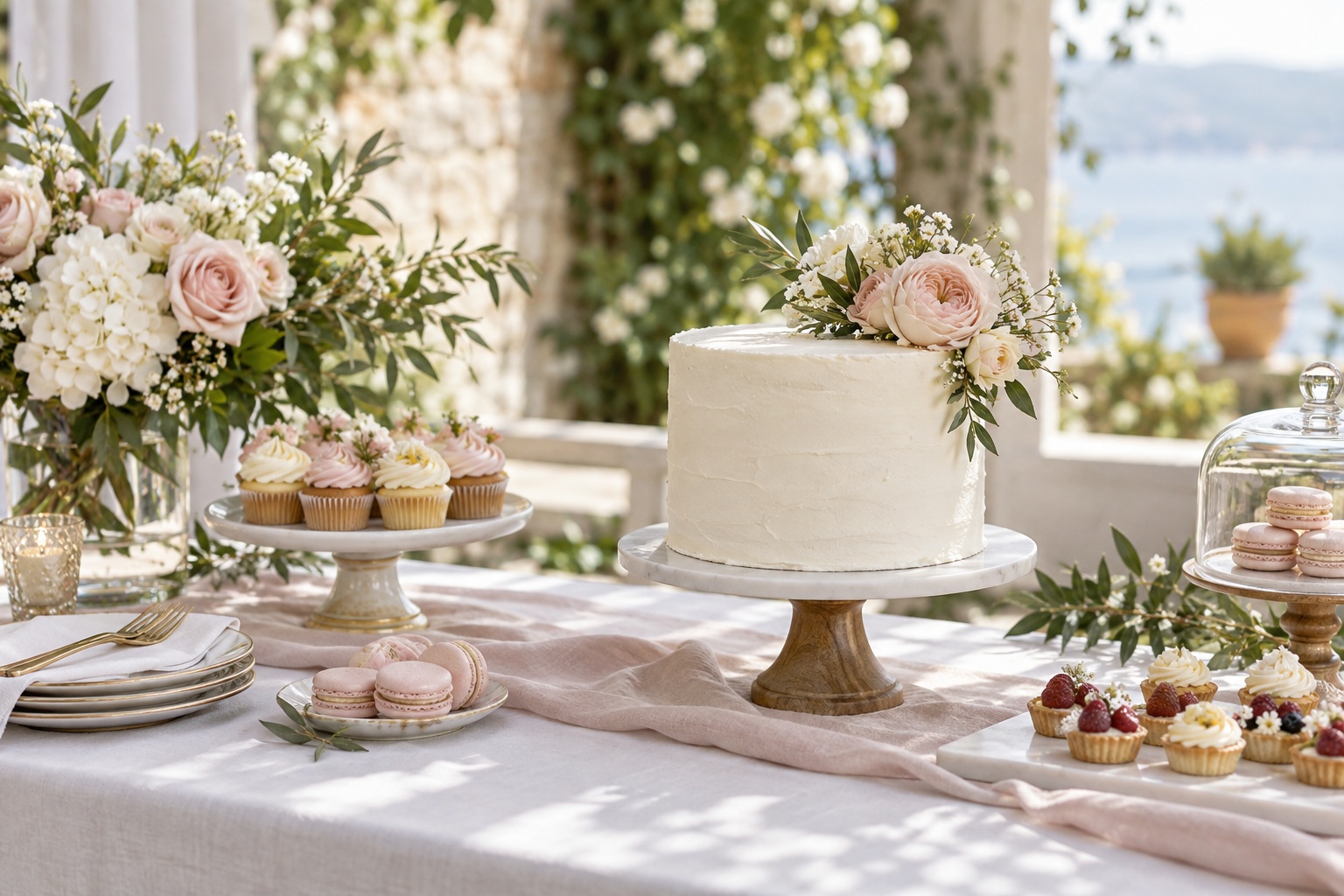
Separate the cake people see from the dessert that feeds the room. A small decorated cake can sit on the display table while a sheet cake or another easy-to-portion dessert is kept nearby for service. This can preserve the classic cake photo without requiring a tall showpiece for every serving. Confirm the arrangement with the bakery and caterer: they need to know which cake gets cut, where it is stored, who brings out the extra portions, and how the two desserts will be identified.
If the cake should be cut in front of guests, a single tier can be enough for that moment. Ask whether it will yield the number of ceremonial slices you want, then plan the rest separately. A small cutting cake does not need to pretend to be a full dessert order. Naming its purpose can help you avoid paying for extra height or servings you will not use.
If the table or schedule is tight
Choose the easiest format for the room. Cupcakes and pre-cut bars reduce the need for a cake knife and a dedicated cutting surface. A single layer cake can be served from the kitchen and carried out in slices. A tiered cake creates a centerpiece but needs a stable stand and enough clearance for setup. If the shower is in a restaurant or shared venue, ask how much table space is actually available before choosing a cake stand or display arrangement.
Keep leftovers in the plan as well. If extra cake is likely, bring containers or ask the host who will package it. That is a small detail, but it prevents the final minutes from turning into a search for boxes while guests are leaving. A good cake plan accounts for arrival, display, serving, and the few slices that may remain.
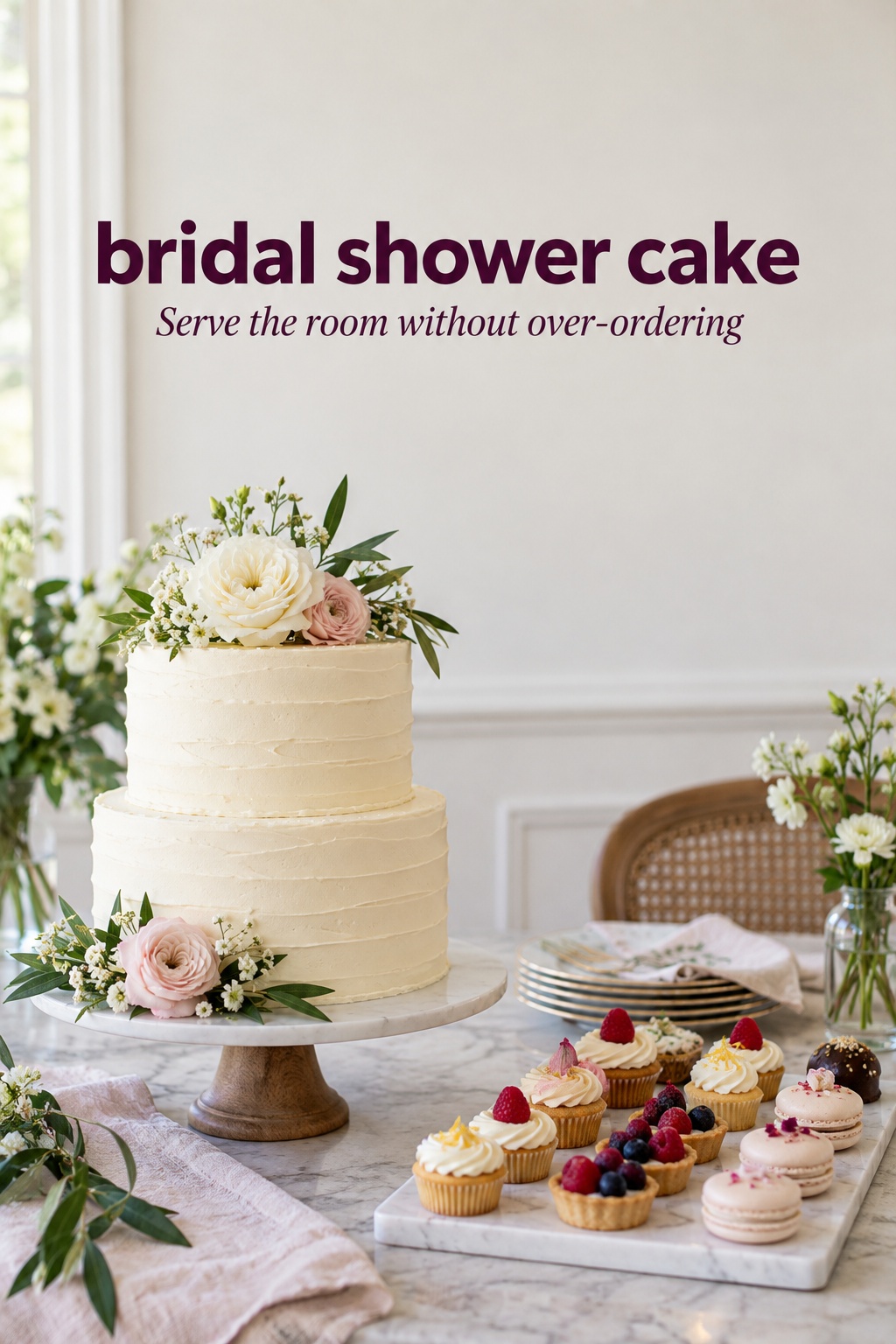
When you are unsure what size to order
Online cake photographs rarely show the dimensions, layer height, or cutting method, so use them for visual direction rather than serving math. Start with four pieces of information: the final guest count, whether cake is the only dessert, the kind of portion you expect, and whether the cake will be cut by a caterer or by the host. Give those details to the baker and ask for the size that matches the serving plan.
If the guest count is not final, tell the bakery when you expect to confirm it and whether the design can scale up or down. Ask what the order deadline is for changing the number of servings. This is more useful than choosing a size based on a general rule from a blog because bakeries can use different recipes, tier heights, and portion standards.
Pick a format that solves the actual serving issue
- One round cake: a straightforward choice for a smaller group or a menu where cake has a clear serving role. Ask the baker for the exact yield and how they recommend cutting it.
- Two tiers: useful when height and a more formal centerpiece matter, or when separate flavors are part of the experience. Confirm how many servings each tier contributes and whether the design will fit the stand and table.
- Sheet cake: practical when a larger number of portions matters more than a tall display. It can be served from the kitchen or placed alongside a small decorated cake.
- Cupcakes or mini cakes: helpful when guests will mingle or when individual portions simplify the serving flow. They do not automatically eliminate display needs, so choose a tray or stand that keeps them reachable.
- Small display cake plus extra portions: a compromise when photographs matter and the cake is not the only sweet. Agree on who stores, cuts, and serves each part.
Do not assume that every tiered cake feeds more people than a single tier of similar width. The number of layers, diameter, serving style, and decoration all matter. Ask the baker to write the expected portions on the proposal and identify which cake format those portions refer to. If the event uses a caterer, share the proposal so the service team can confirm the cutting and plating plan before the day.
Choose a flavor that fits the meal
Think about what guests will eat before the cake. After brunch, a bright fruit, citrus, or vanilla flavor may feel lighter than a dense combination with several rich fillings. For an afternoon tea, a classic flavor can pair easily with tea and coffee. If there are two tiers, you can ask about two flavors, but keep each one legible: cake, filling, and frosting should complement one another instead of competing for attention.
Use the tasting to decide what you actually want to serve, not to audition every popular flavor. Ask the bakery how the filling affects the finished cake and whether a particular flavor is available in the size you need. Tell them about allergies and dietary requirements early. Ask what ingredients and handling procedures they can confirm, and do not describe a cake as allergy-safe unless the bakery confirms the relevant preparation details.
Finally, distinguish a flavor preference from a guest requirement. One person may simply prefer chocolate; another may need an ingredient avoided. If the bakery cannot accommodate a requirement in the main cake, ask whether a separate dessert from a suitable provider is possible and how it will be labeled. Keep the label and serving plan clear so guests do not have to guess.
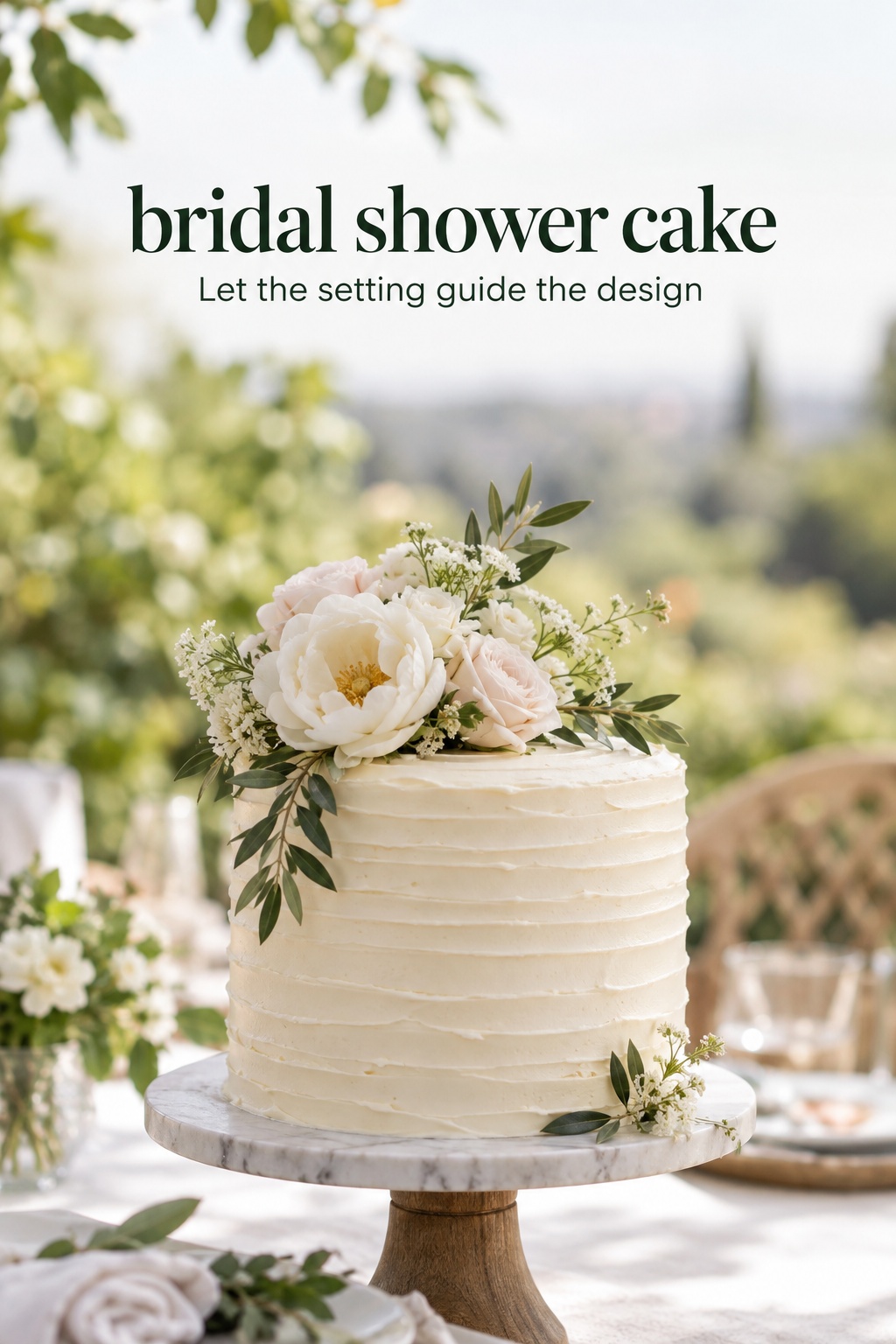
When the design looks right online but wrong for the shower
A cake can look beautiful in a photograph and feel oversized, too formal, or visually busy once it reaches the shower. The fix is to translate the inspiration into ingredients of a design: palette, finish, shape, message, and one decorative feature. Share a few reference photos, then tell the baker which parts you like. “I like the soft blush color and piped border” is easier to interpret than “make it exactly like this,” especially when the cake size or serving format differs.
Look at the invitation, flowers, table linens, and room before choosing color. The cake does not have to repeat every shade. Two colors and a neutral finish often create enough connection. A white or ivory base can leave room for one floral cluster, a ribbon, a small topper, or a short message. If the shower already has a strong patterned backdrop, a simpler cake can give the table some visual breathing room.
Choose one finish that matches your time and budget
- Fresh or edible flowers: give a soft garden effect and work well when the shower already includes blooms. Ask the bakery which flowers can safely be placed on or near the cake and whether it will install them.
- Buttercream piping: adds texture, from a small border to a more decorative vintage finish. If you are baking at home, practice one pattern on a plate first. Wilton’s [beginner piping guide](https://wilton.com/baking-inspiration/beginner-piping-techniques/) shows how different tips create swirls, rosettes, and borders.
- Short lettering: makes the cake feel specific without requiring a separate topper. Confirm the exact wording, spelling, capitalization, and placement before the bakery begins.
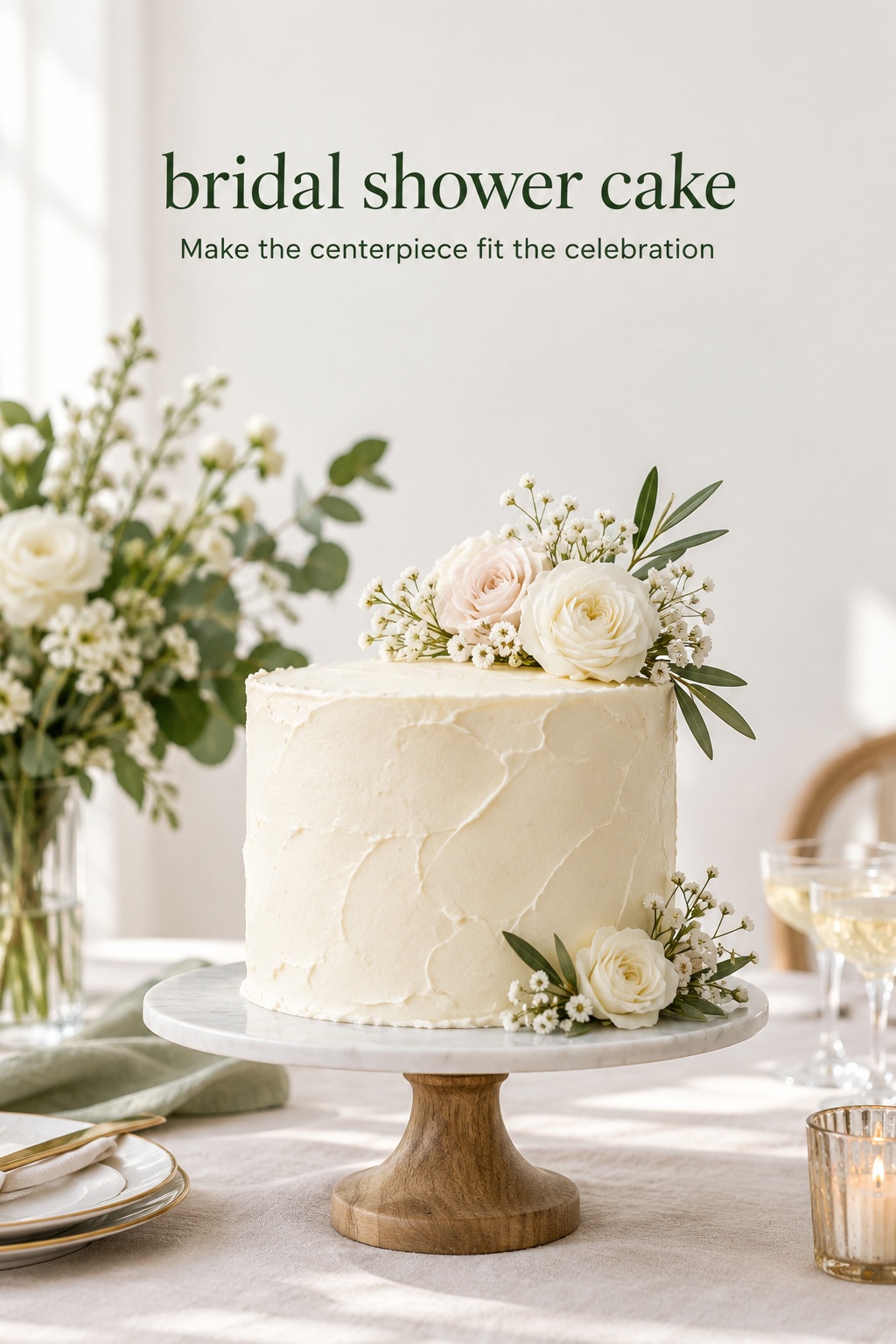
- Minimal finish: smooth frosting with a small cluster of fruit, flowers, or a single accent can feel considered without a complex decoration plan.
Every extra custom detail can add labor, setup time, or a new point to confirm. If the quote is higher than expected, ask the bakery which single detail contributes most to the design. Keep that feature and simplify the rest. A small cake with one refined finish usually reads more clearly than a crowded cake trying to carry the invitation, the wedding colors, a phrase, several motifs, and a topper at once.
Use the cake table as part of the composition
Before ordering a tall cake, check the table where it will sit. Measure the usable width and depth, note nearby serving dishes, and consider whether guests will approach from one side or several. A cake stand adds height but also raises the center of gravity, so it must be stable and large enough for the base. Leave space for a knife, plates, napkins, and a clear path for whoever serves the cake.
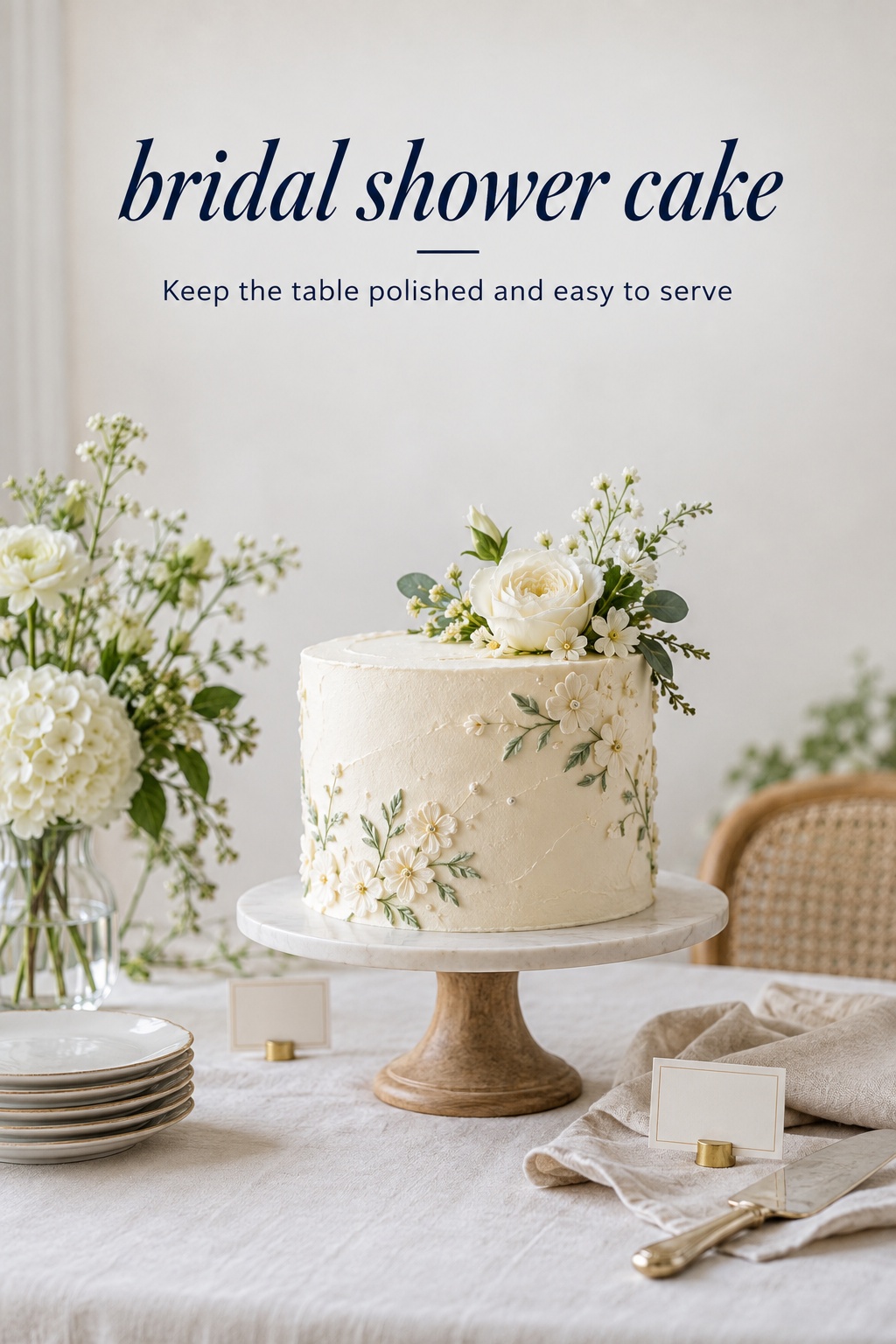
Make the display feel intentional with one or two supporting elements rather than a full set of props. A small vase, a folded linen, or a few coordinated desserts can frame the cake. Keep decorative pieces away from the cutting area and avoid blocking the cake with a sign. If the cake is the visual anchor, give it room to be seen from the main photo angle.
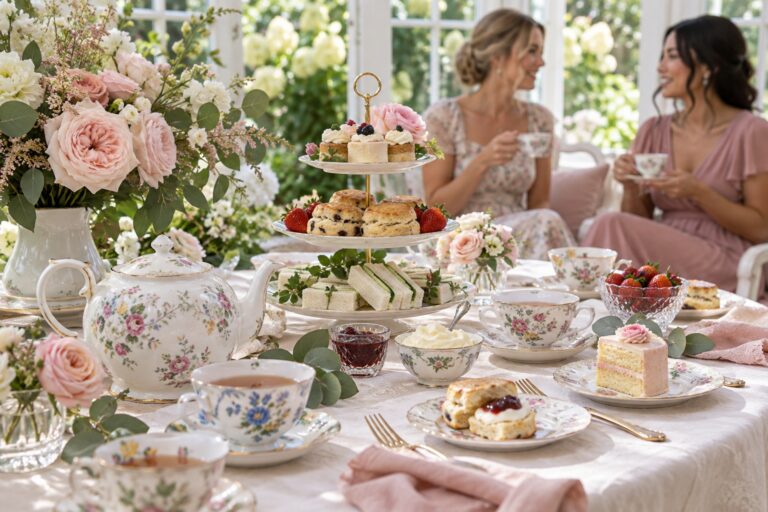
For a dessert table, place the cake where it can be photographed but does not interrupt the line. Keep small treats grouped by type and add short flavor labels if guests would otherwise have to ask. Put plates and forks before the serving point, not behind the cake. If guests will mingle, set out a smaller number of portions at a time and refill from a safe storage area as needed.
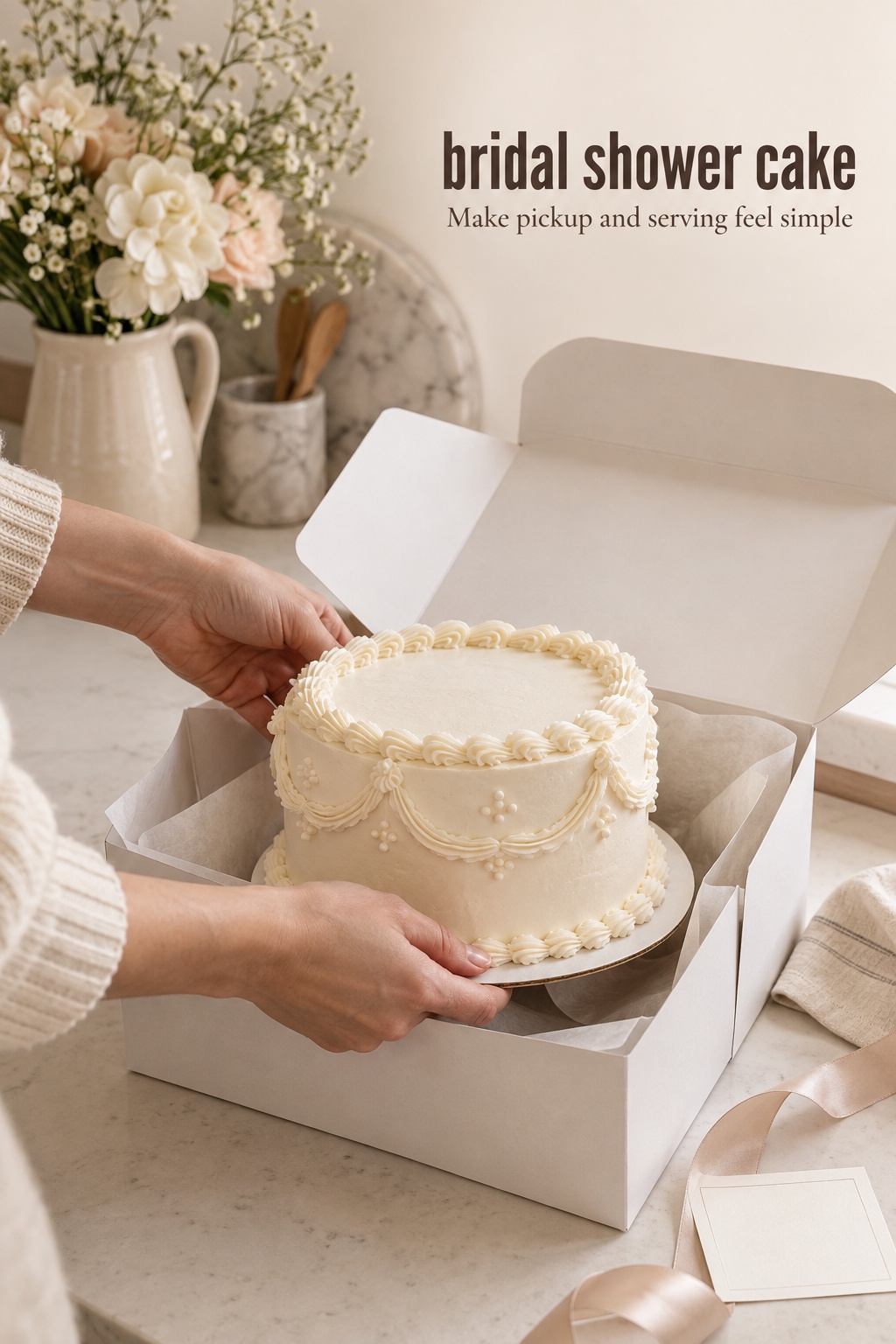
When ordering or serving starts to feel complicated
Once the format is chosen, a bakery conversation can be short and specific. Share the date, venue, guest count, serving role, style references, palette, flavor preferences, dietary requirements, and budget range. Ask which details are included in the quote and what could change the total. Confirm delivery or pickup, arrival time, storage needs, stand or support requirements, and who will set out the cake.
Keep a single written confirmation with the spelling of any message, the flavor and filling, the size and expected portions, the decoration, the pickup or delivery plan, and the name of the person receiving it. A reference image can capture a look, but a written summary prevents a mismatch over words or logistics. If there is a cake stand rental, record who returns it and when.
Use this bakery message as a starting point
“I am planning a bridal shower for about [guest count] guests at [venue] on [date]. The cake will be [the main dessert / a centerpiece alongside other desserts / a small cake-cutting moment]. We expect to serve [other desserts, if any]. Could you recommend a format and portion count for that plan? We like [two visual details] and would like [flavor direction]. Our palette is [colors]. Please confirm the size, portions, total price, order-change deadline, pickup or delivery details, setup needs, and any ingredient or allergy information you can provide.”
Send the message with two or three reference photos at most. If you have a firm spending ceiling, say so before the design is finalized. Ask which change would preserve the overall look while simplifying the work. That gives the baker room to suggest a similar finish, smaller decoration, or different format without leaving you with an open-ended redesign.
If you are making the cake at home
Choose a cake you have made successfully before and decorate it with one technique you can practice in advance. A simple layer cake with smooth frosting, piped shells, or a small flower cluster can look celebratory without introducing unfamiliar baking, stacking, and piping on the same day. Pan size, cooling, frosting, and the style of cake all affect the finished result. Use a recipe and pan combination you already understand.
Make a small sample of the decoration before committing to the whole cake. If the piping is uneven or the message is hard to read, simplify it. Keep the cake on a stable board that fits the stand, transport it in a box that does not touch the frosting, and confirm where it can wait before serving. If you are also hosting, choose a finish that can be completed ahead of time rather than one that requires careful assembly while guests arrive.
A homemade cake does not need to compete with a professional showpiece. It can feel especially thoughtful when it carries a flavor the bride loves, a familiar family recipe, or a small detail connected to the shower. Keep the decoration proportional to the time available and treat a neat, delicious cake as a complete result.
Sources and methodology
This guide combines bridal shower cake and dessert-table examples with baking and decorating instruction. Serving counts vary by bakery, recipe, tier height, and cutting style, so the article recommends confirming portions with the bakery rather than applying one universal chart. Decoration suggestions focus on translating a reference into a practical order and display plan.
FAQ
How big should a bridal shower cake be?
Give the baker your final guest count, the other desserts on the menu, and how the cake will be served. Ask for the expected portions for the specific diameter and tier arrangement, because bakeries may use different serving cuts. Order to the written portion estimate rather than judging size from a photograph.
Do I need a cake if I already have other desserts?
No rule requires a cake, but a small one can provide a traditional centerpiece or cake-cutting moment while other desserts give guests more choices. Decide whether the cake is meant to feed everyone or serve as a display and photo detail, then order the format that matches that role.
What is a good bridal shower cake design?
Choose a design that fits the room and the bride’s taste. A simple buttercream finish with a small flower cluster, a short message, or one textured border can feel personal without competing with the rest of the table. Share a few references and identify the exact details you want the baker to carry over.
Should the bridal shower cake match the theme?
It can echo the theme through a color, flower, ingredient, or small topper without repeating every decoration. Use the invitation, flowers, or linens as a guide, then choose one or two visual cues. A restrained connection usually looks more intentional than putting every theme symbol on the cake.
Can a sheet cake work for a bridal shower?
Yes. A sheet cake can be a practical way to serve portions, especially when a tall centerpiece is not important. If you want a more decorative photo moment, ask about pairing a small display cake with a sheet cake kept for serving. Confirm the handoff with the bakery and caterer.
How many cake flavors should I offer?
One well-chosen flavor is enough for many showers. If you are ordering tiers and the bakery offers separate flavors, two clear combinations can add variety. Check with the bakery about how flavors will be labeled and served, and give it any allergy or dietary information before confirming the order.
Can I make a bridal shower cake myself?
Yes, if you choose a recipe and finish you already know how to make. Keep the design small in scope, practice the decoration first, and leave time for cooling and transport. A smooth finish with a few piped details can be more reliable than attempting a new tiered design on the event day.
What should I ask the bakery before placing an order?
Ask about servings, cake size, flavors, filling, price, order-change deadline, pickup or delivery, setup, stand requirements, and ingredient information. Confirm the exact message and spelling in writing. If you need a special dietary accommodation, ask what the bakery can verify about ingredients and preparation.
How do I keep cake service simple during the shower?
Decide who will cut and serve the cake, where plates and forks will sit, and where extra portions will be stored. If guests will be standing or moving around, consider cupcakes or pre-cut alternatives alongside a small centerpiece. Keep the serving area clear and label flavors when guests may not recognize them.