Bridal Shower Dress: A Guest Guide to Getting It Right
A good bridal shower dress feels celebratory without making you wonder whether it is too formal, too casual, or too close to what the bride may wear. Start with the invitation, then consider where the shower takes place and what you will do while you are there. A dress for a garden brunch where you will help greet guests has different practical needs from one for a seated restaurant lunch.
This guide treats the dress as a decision, not a trend report. You will use the event clues to set a formality level, choose a silhouette that works while sitting and moving, and check color and fabric in the light where photos will be taken. The result can be a dress you already own or a new choice, as long as it fits the celebration and feels comfortable through the whole visit.
Start With the Invitation, Not a Trend
Read the invitation for direct instructions first. Words such as “garden party,” “cocktail attire,” “brunch,” or “casual backyard gathering” are more useful than a general idea of what people wear to showers. A stated color request or theme should guide your choice, too. If the invitation names a palette, you can participate without matching it head to toe: a dress in one of its colors, a print that includes it, or a coordinating accessory is usually enough.
Next, use the venue as a formality clue. A private dining room often suggests a more polished finish than a picnic table at someone’s home. A restaurant patio may sit between the two. The time of day also matters: a daytime shower typically calls for a different level of shine and structure than an evening celebration. The Knot’s guest dress guide similarly recommends starting with the invitation’s dress code and choosing an approachable level of polish when no code is stated.
Your wedding look is only the beginning.
Keep your guest list, vendors, timeline, and every important detail together with Zarellea — so your day feels as considered as your style.
Use these clues to set a ceiling, not a strict uniform. If “cocktail” appears, choose a dress with a more refined fabric or shape, but it need not be a floor-length gown. If the note says “casual,” keep the outfit relaxed while still looking intentional. When the clues disagree, follow the clearest request and ask the host about the uncertain part. A short message works: “I’m choosing between a floral midi and a simple blue dress. Is there a dress code or color you’d like guests to follow?”
If there is no dress code, avoid reading too much into a single clue. A hotel venue does not automatically mean formal attire, and a home does not automatically mean jeans. Consider the invitation design, event time, meal, and the host’s usual style together. If a wedding website or shower details page gives a theme, use that as the stronger signal. Asking one polite question is better than buying a dress for an imagined level of formality.
Turn the details into a quick decision
- Explicit dress code: follow it, then make the outfit personal through color, print, and accessories.
- Venue and time only: choose polished daytime dressing for brunch or lunch, and add structure or a dressier fabric for an evening or formal room.
- Theme or palette: echo one detail rather than wearing a costume or a full matching set.
- Unclear or conflicting clues: ask the host whether guests should dress casually, semi-formally, or to a specific theme.
The goal is to arrive looking like you understood the event, not like you decoded a hidden fashion test. A dress that fits the host’s request and lets you comfortably join the gathering is a stronger choice than a dramatic outfit that requires you to sit carefully or avoid the food table. Once you know the formality ceiling, you can narrow the options without endlessly comparing trend photos.
Choose a Dress for What You Will Do There
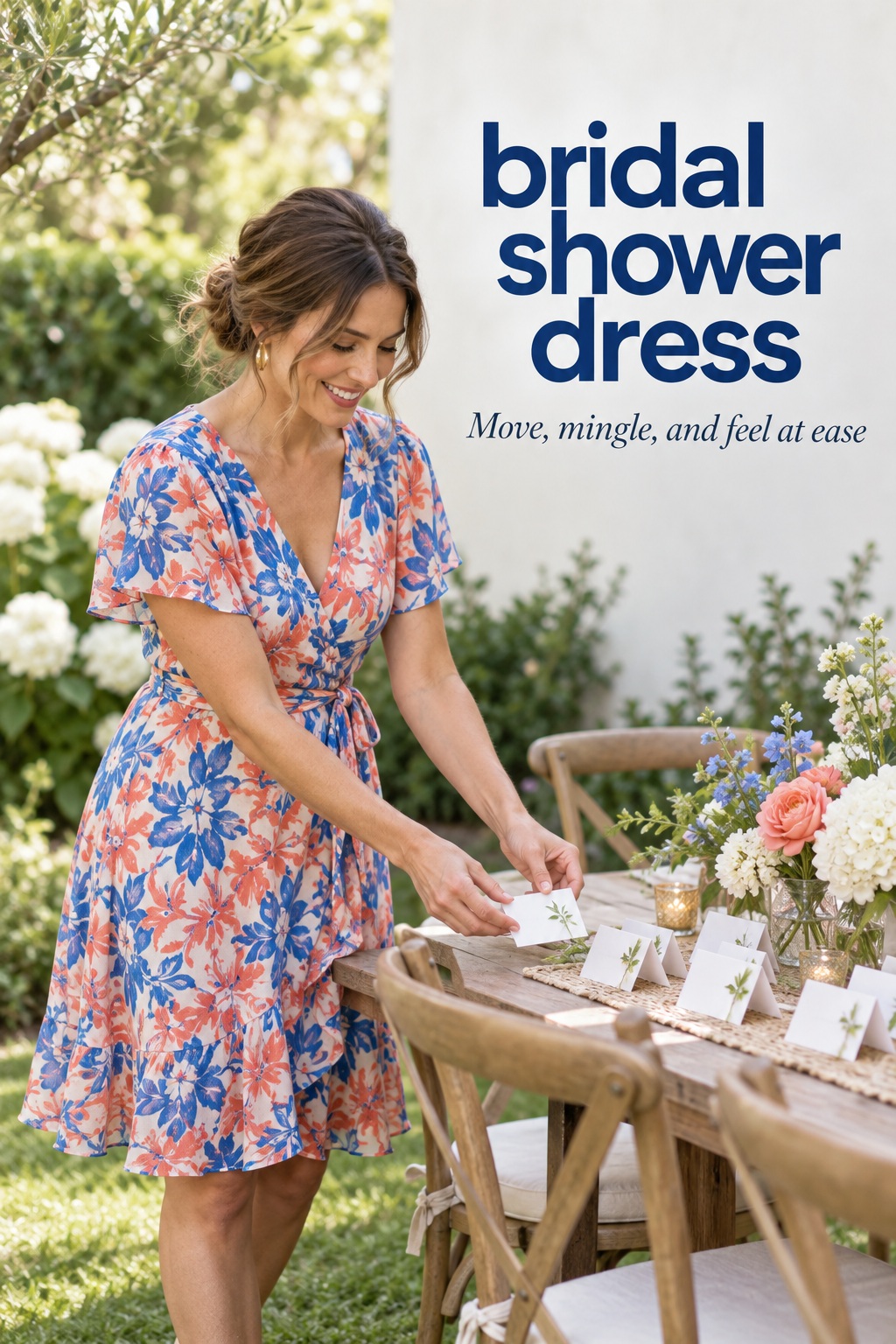
Think about the activities that are likely to shape your day. Many showers include a meal, conversation, photographs, and opening gifts. A guest who is also helping the host may carry place cards, greet people, or stand for longer periods. You do not need a special-purpose outfit for each task, but your dress should allow you to do them without tugging at a hem or adjusting a neckline every few minutes.
Try the dress at home in the movements the event will require. Sit in a chair, lean forward as if reaching for a plate, raise your arms, and take a few steps. Check that the hem stays comfortable when seated and that the neckline and straps remain where you expect. If you will help with setup, test whether you can bend and carry a light bag without the dress shifting. These simple checks reveal more than a mirror pose does.
A midi dress is a useful middle ground for many daytime settings because it can look polished while leaving room to walk and sit. A knee-length style may feel lighter for a casual gathering, while a maxi can suit a more formal or flowing look if the hem will not drag on grass or stairs. Length alone does not decide formality: fabric, cut, shoes, and the invitation all shape the impression.
If you will mostly sit and visit
For a seated brunch or gift-opening portion, look for a waistband and bodice that remain comfortable when you sit. A wrap shape, a softly fitted waist, or a dress with a little ease can be easier to wear through a long meal than a very rigid construction. Check whether the skirt spreads comfortably across your lap and whether a slit, tie, or button opening stays secure. If you plan to wear shapewear or a slip, try the complete outfit before the event.
Pay attention to fabric against the chair and table. A very slippery skirt may shift when you stand, while a delicate fabric may catch on a rough seat or bag hardware. A lining can help a light dress feel more finished, but it should not make the garment too warm or restrict movement. The useful question is not whether a fabric is universally suitable; it is whether it behaves well in the room and in the position you will spend time in.
If you will help host or greet guests
A bridesmaid, close friend, or family member may be asked to arrive early, guide guests, or help with gifts. Choose shoes and a hem you can manage while standing, and keep sleeves or loose details clear of food and decorations. A dress with secure straps, pockets, or a stable wrap closure can make the day simpler. You can still look special; just let ease and coverage guide the details as much as appearance.
If the host has assigned you a task, ask what it involves before choosing shoes. Greeting at the door is different from moving chairs or helping outdoors. A low block heel, wedge, or dressy flat may be more useful than a narrow heel if you expect to be on your feet. The Knot notes that attendants helping with setup or games may want comfortable footwear; this is a practical reason to consider your role, not a rule that every guest needs to dress like a host.
If the shower includes a lawn, patio, or stairs
Check the walking surface before choosing shoes. A thin heel can sink into soft ground, and a long hem can brush against grass or steps. A block heel, wedge, or polished flat may be easier for a garden or backyard. If the invitation does not say whether the event is indoors or outdoors, a quick question to the host can help you avoid carrying a second pair or changing at the venue.
Consider the route, not only the party space. There may be a few steps from a parking area, a walk across a patio, or a narrow staircase to a private room. If your dress is long, try it with the shoes you intend to wear and walk at your normal pace. Bring a light layer if the event moves between indoor and outdoor spaces, but choose one that works with the neckline and sleeves rather than adding it as an afterthought.
Use Color, Print, and Fabric as Guest-Safe Signals
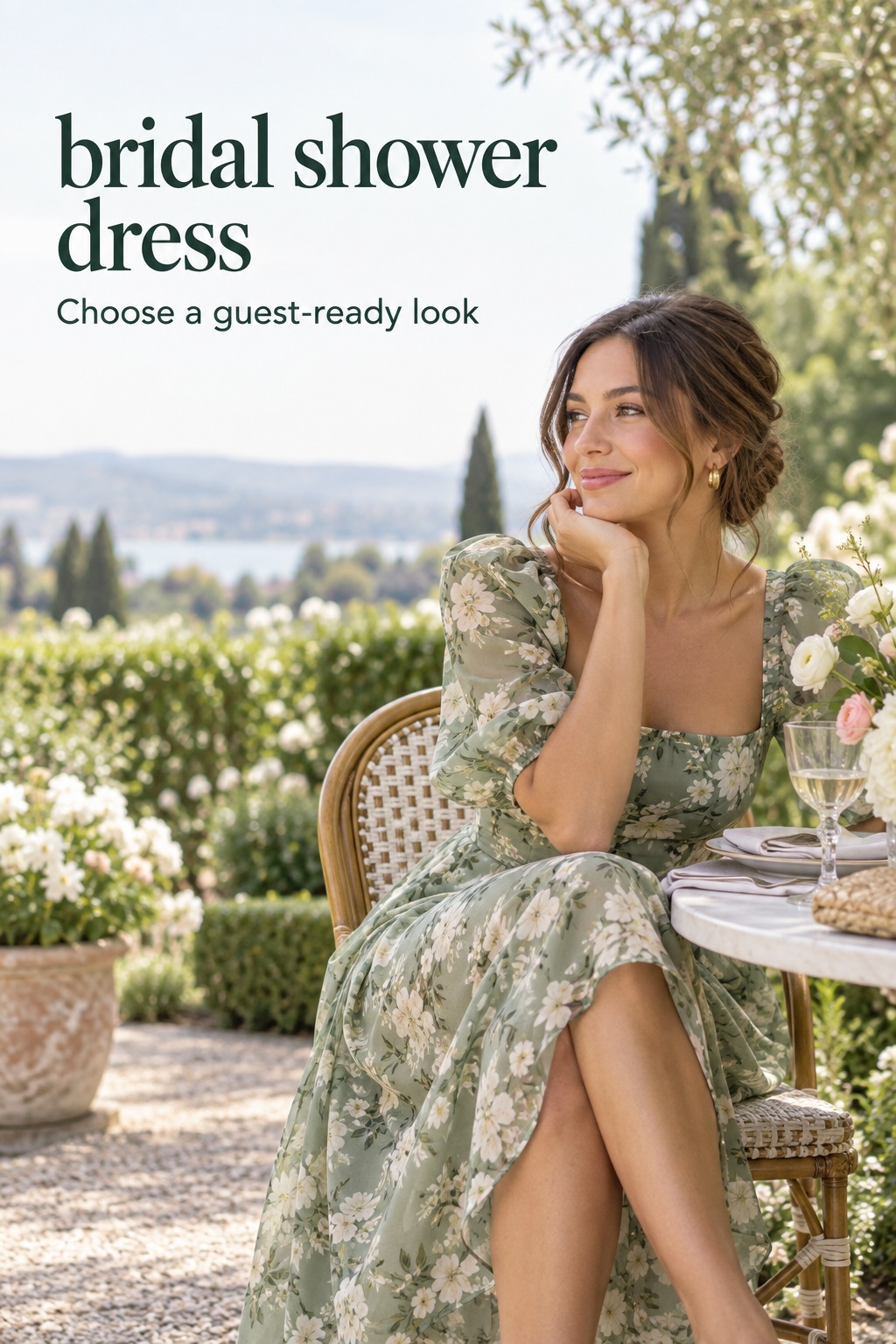
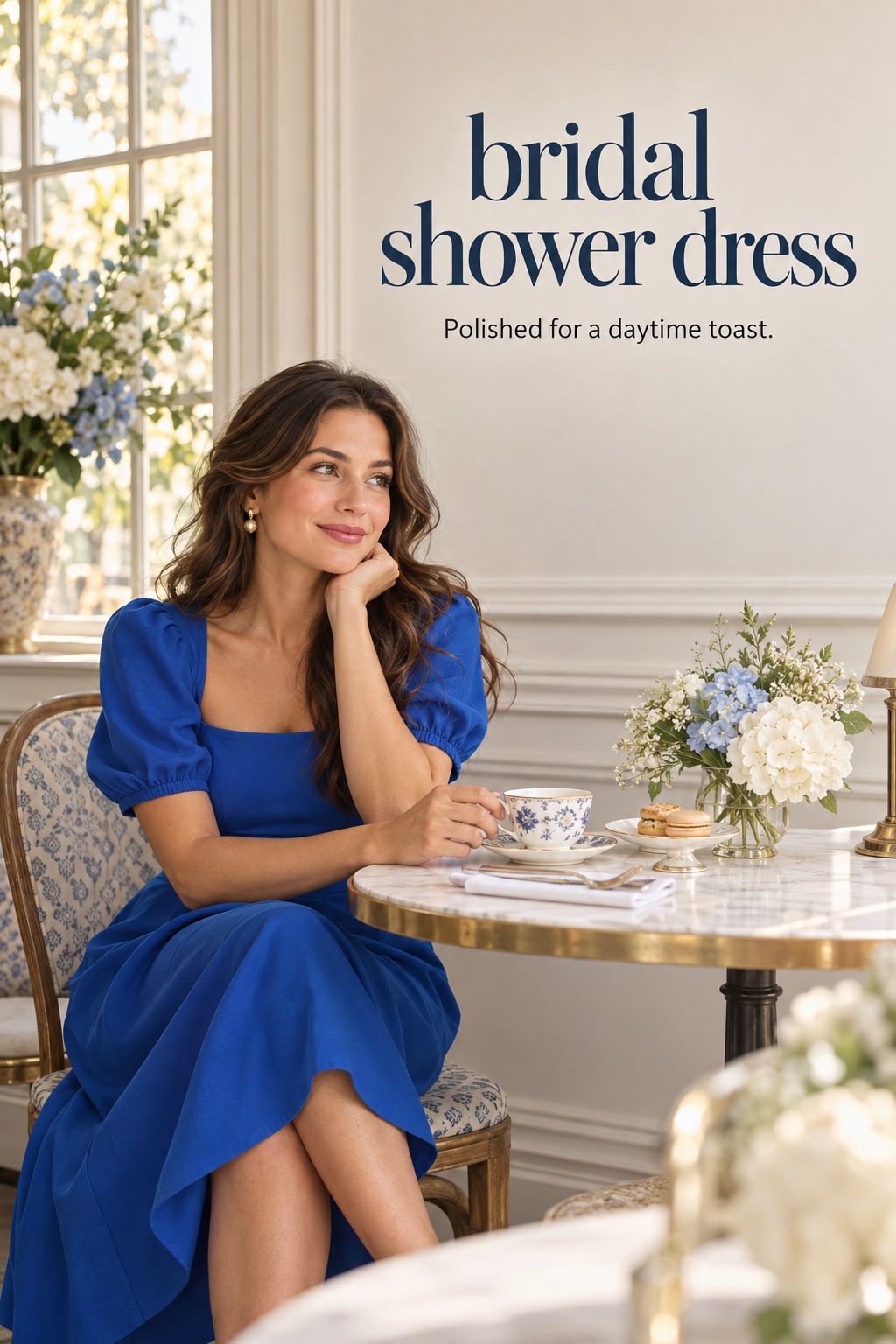
Color is one way to show that you dressed for a celebration, but it does not need to be pastel or floral. Clear blue, green, coral, pink, a small-scale print, or a deeper shade can all feel appropriate when they suit the invitation and setting. If the host has requested a palette, start there. Otherwise, choose a color you like that reads as a guest outfit in the room and does not compete with a specific look the bride has asked guests to avoid.
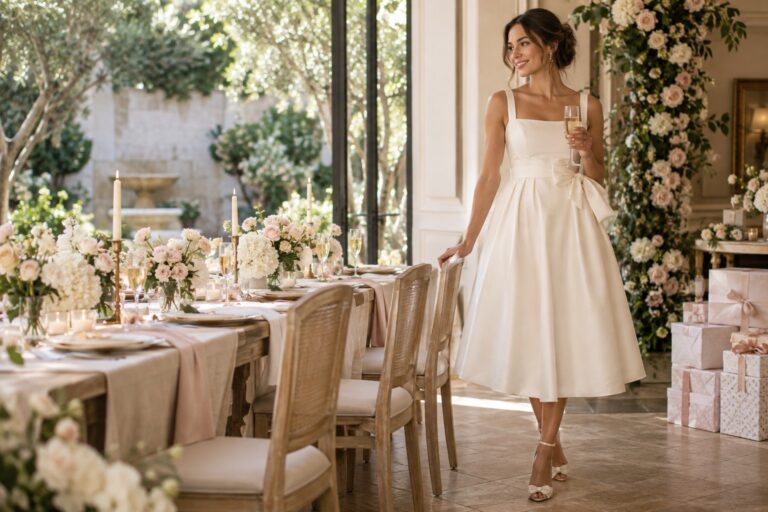
White, ivory, and very pale shades need a little extra thought because some brides wear white to their shower and light fabrics can photograph brighter than they look indoors. Guest guidance commonly recommends avoiding white unless the invitation requests it. David’s Bridal also says to check the invitation for venue and time clues and to ask when the dress code is uncertain. These are useful defaults, while the host’s explicit request should settle a themed or all-white event.
For a pale floral or pastel dress, take a quick phone photo in natural light before deciding. Look at the image in color and, if helpful, in grayscale. Does the garment read mostly white from a few steps away? Does the print disappear at a distance? If it could be mistaken for a bridal look, select a clearer color or a more visible print. This check is especially useful for photographs, where exposure and bright sunlight can reduce the contrast between a subtle pattern and a pale background.
Black is not automatically wrong, though it can feel more evening-oriented than the rest of the event. If a black dress is your best option, soften it with a daytime shoe, a lighter bag, a colorful accessory, or a print. For a fall or winter gathering, a deeper color may make sense with a textured fabric and a lighter layer. Let the invitation and room guide the result; avoid assuming that every shower requires the same color story.
Check the fabric in motion and in a photo
Fabric affects comfort, shape, and how much attention the dress needs. A cotton or linen blend can feel relaxed in a daytime setting, while crepe, satin, or a structured weave can look more dressed up. A light fabric may wrinkle when you sit; a delicate sheer layer may need a slip; a textured material can add visual interest without a bold print. None of these choices is a universal yes or no. Match the material to the event and how you will wear it.
Try a short photo test with the shoes and layer you plan to bring. Stand near a window or outdoors in indirect daylight, then take one full-length and one seated picture. Check for transparency, unwanted shine, visible undergarment lines, and whether the color looks different from the mirror. This is not about chasing a perfect photograph. It is a quick way to catch details that could make you uncomfortable once pictures are being taken.
Print scale also changes the feel of a dress. A small floral can look quiet and classic; a large graphic print can make more of a statement. If the shower is intimate or held in a home, a print that feels like your everyday style may be easier to rewear. For a more formal venue, a defined shape or refined texture may carry enough polish without extra embellishment. Pick one feature to lead: color, print, silhouette, or texture. Several competing details can make an outfit feel less settled.
Build the Outfit Around the Venue
Once you know the invitation and your role, use the venue to finish the outfit. These examples are starting points, not uniforms. Keep the dress you like and adjust the shoe, layer, or accessory to suit the surface and level of formality. If you already own something that fits the plan, there is no need to shop just because the event is a bridal shower.
Backyard or home gathering
Try a printed knee-length or midi dress with a stable flat, low block heel, or clean sandal, depending on the invitation. Add a light cardigan or cropped jacket if the gathering moves outside or the room is cool. Keep the bag small enough to set aside without taking a chair or table space. If the dress has a full skirt, check that you can sit comfortably at the host’s table and move around guests without catching on chairs.
For a casual barbecue-style shower, the outfit can be simpler, but make one element feel intentional: a pressed dress, a neat shoe, or a bright accessory. If you are helping set up, choose a shoe you can walk in and avoid details that could snag on decorations. The goal is to look appropriate for a celebration at someone’s home, not to arrive in an evening look that feels disconnected from the setting.
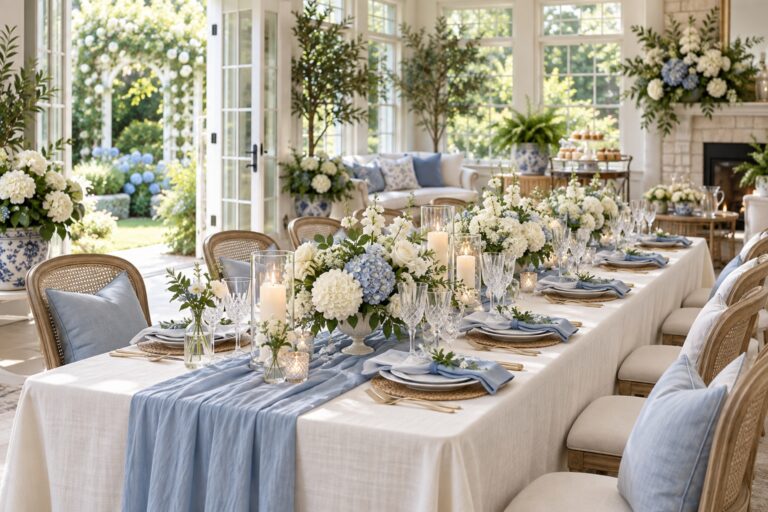
Garden party or outdoor patio
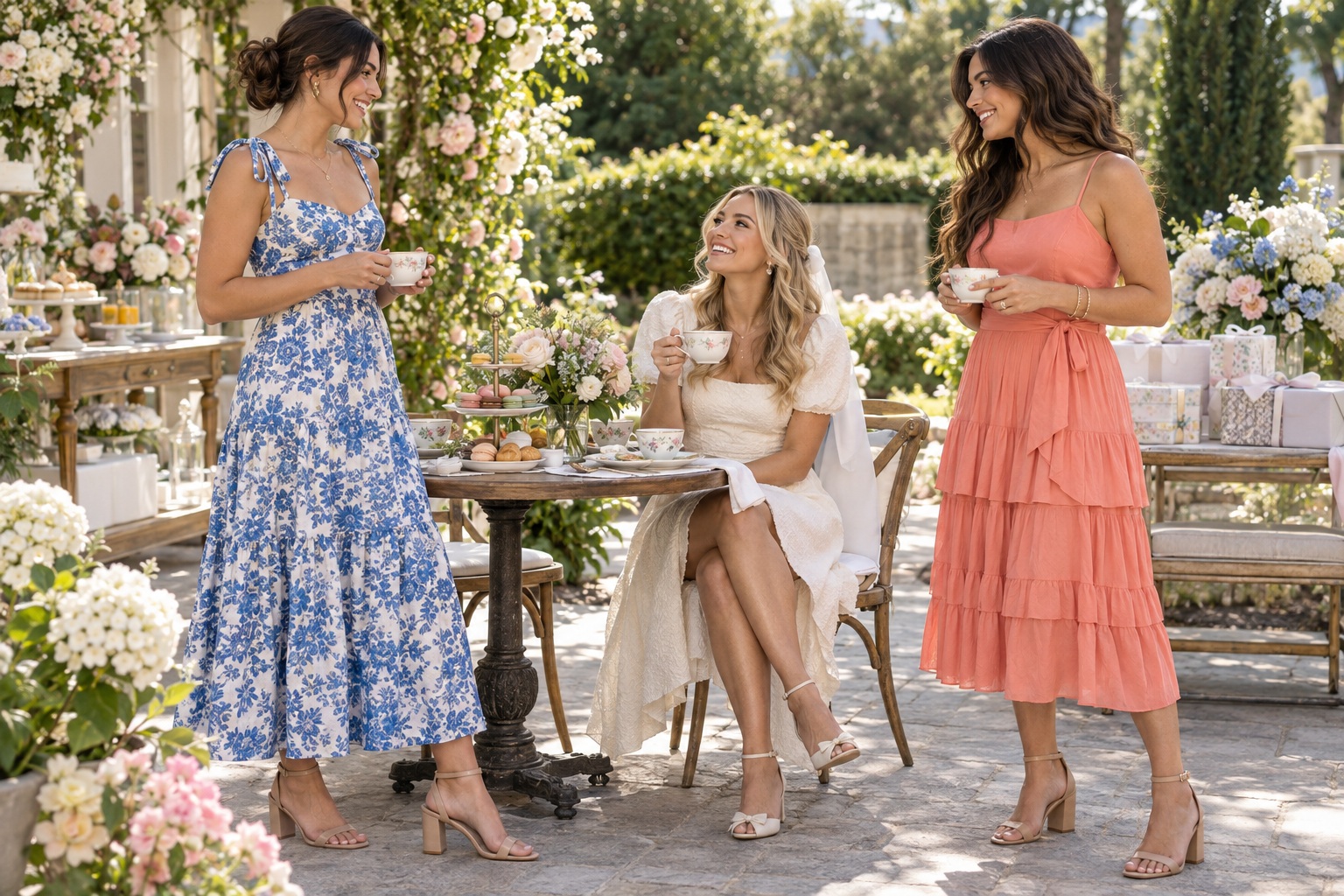
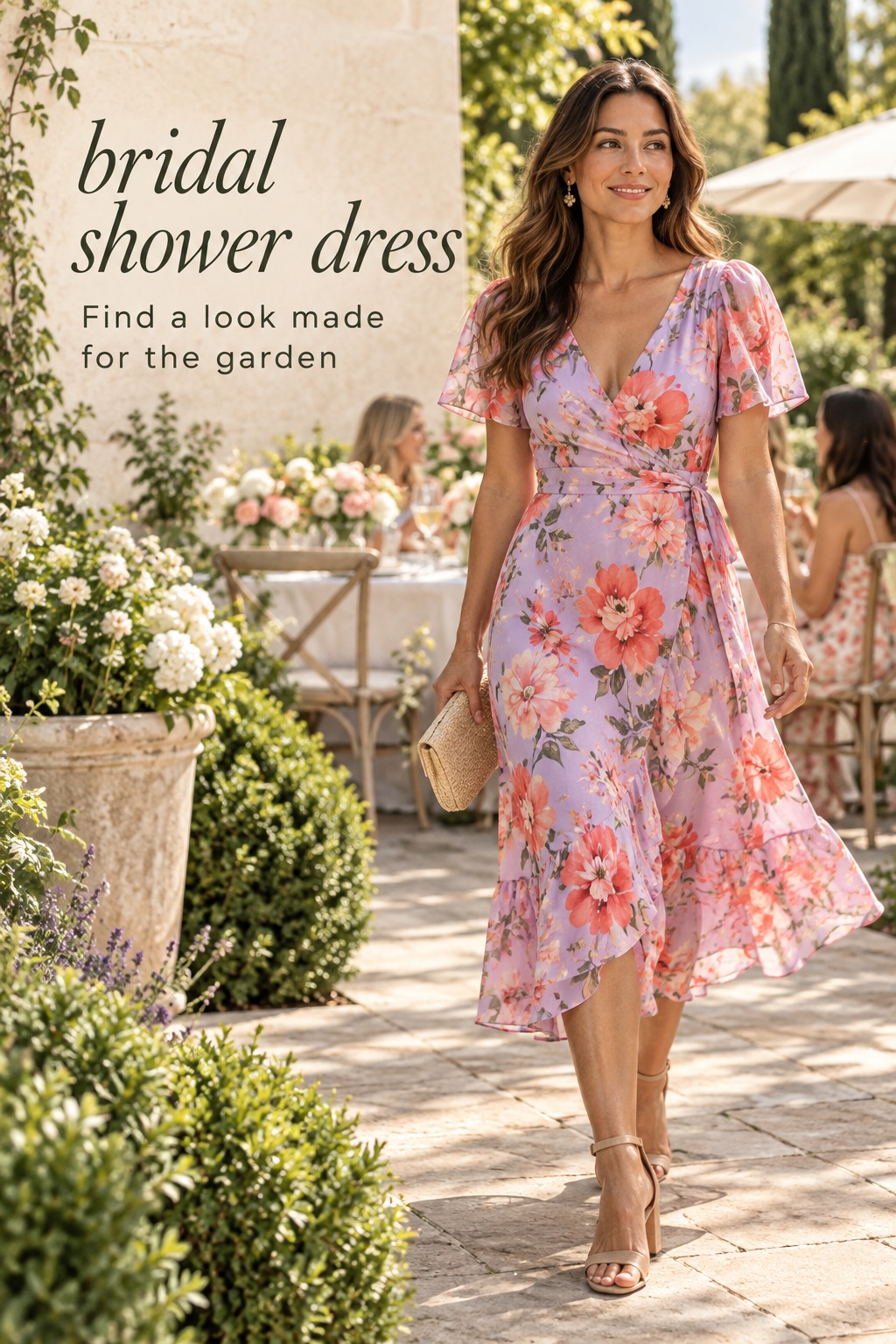
A midi or maxi dress with a visible print or saturated color works well when the invitation suggests a garden mood. Pair it with a wedge, block heel, or polished flat if the surface is uneven. A shorter hem can make walking through grass easier; a longer skirt can still work if it clears the ground in the shoes you will wear. Bring a layer that will not overwhelm the dress and can be carried easily if the sun comes out.
Keep accessories simple enough for the surroundings. A small bag, a secure earring, and one light layer are often easier than a large hat or loose scarf that you must manage while greeting people. If the host has requested garden-party attire, a floral dress is an obvious option, but a solid color with a refined shape can fit just as naturally. Use the stated theme rather than trying to recreate a styled photo.
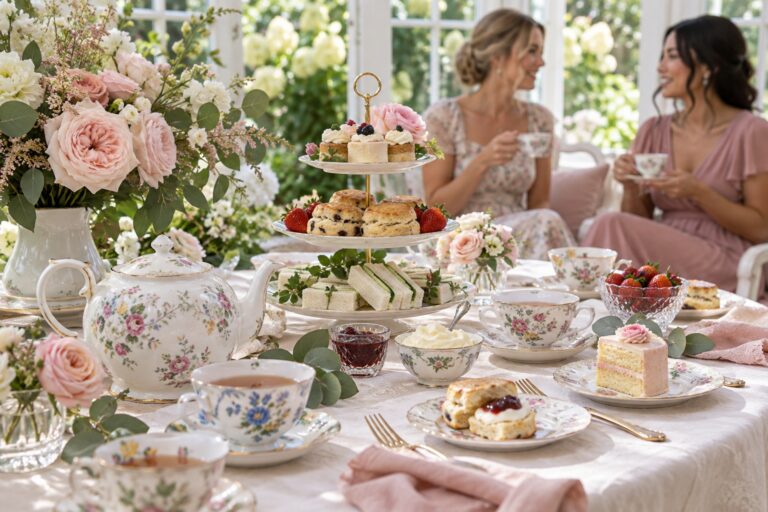
Restaurant, tea room, or private dining space
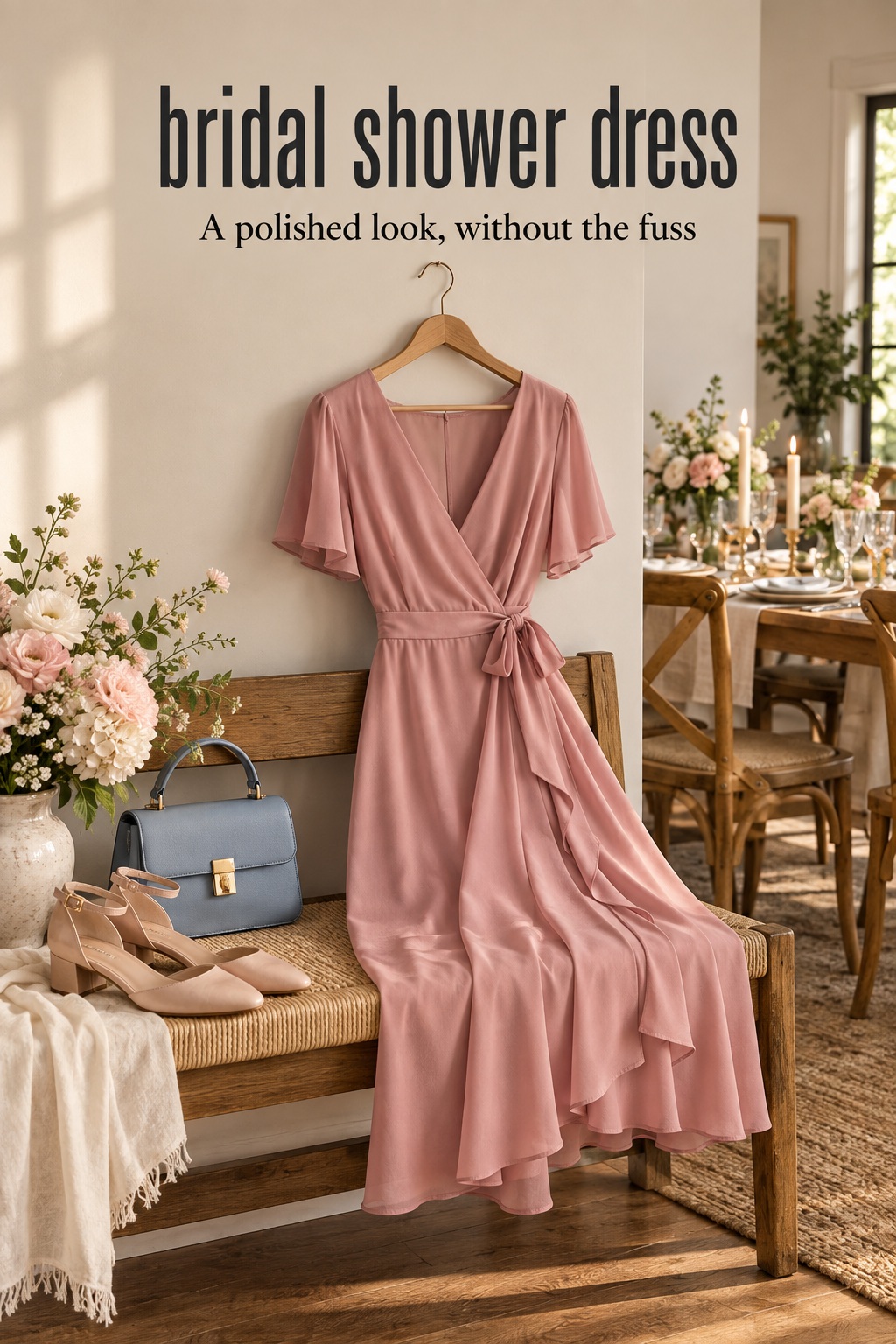
For an indoor meal, a structured midi, a simple wrap dress, or a refined print can give you a polished look without reaching wedding-guest formality. A comfortable heel or dressy flat is useful if you will walk through a lobby or stand during a toast. Choose a bag that sits neatly beside your chair, and check that sleeves and cuffs will not drag near dishes. A soft jacket or cardigan can finish the outfit if the room is cool.
If the invitation mentions cocktail attire, raise the level with a more tailored silhouette, a dressier fabric, or a refined accessory rather than adding every formal detail at once. A knee or midi length can still look polished. If the event is at a relaxed café, a comfortable printed dress and neat shoes may be enough. The invitation should settle the formality; the restaurant name alone cannot tell you how dressed up the group will be.
At-home brunch with a helper role
If you are arriving early or helping the host, choose a dress that allows you to reach, carry a small item, and move between rooms. A stable wrap or button-front dress can be comfortable if it stays closed when you bend. Pair it with a flat or low heel, then add a polished accessory so the outfit still feels occasion-ready once guests arrive. If the host wants help with setup, consider changing after the heavy lifting rather than wearing a delicate dress for both jobs.
A final outfit review can be short: does the dress follow the invitation, can you sit and walk in it, do the shoes suit the ground, and does the color feel clearly guest-appropriate in photos? If the answer is yes, stop comparing options. The best choice is usually the one that lets you pay attention to the people you came to celebrate instead of monitoring your hem or shoes all afternoon.
Sources and methodology
This guide draws on current US editorial and retailer guest-attire guidance, including David’s Bridal’s guest checklist and the linked Knot dress guide above. Their recurring advice supports reading the invitation, checking the venue, and choosing an outfit that suits the daytime event. The outfit examples here translate those cues into movement, seating, footwear, and photo checks; they are practical styling suggestions rather than universal etiquette rules.
FAQ
Can a guest wear white to a bridal shower?
Use the invitation as your guide. Unless it asks guests to wear white or the host confirms that white is welcome, choose another color because the bride may wear white and the shade can draw focus in photos. Avoid pale prints that look mostly white from a distance.
Is a black dress appropriate for a bridal shower?
It can be, especially for an indoor or more polished event. Make it feel daytime-ready with a lighter accessory, a colorful shoe, or a print, and check that the invitation does not request a particular palette.
Can I wear pants instead of a dress?
Yes, unless the invitation specifically asks for dresses. Tailored trousers with a polished blouse or a refined jumpsuit can suit a bridal shower. Match the fabric and shoes to the venue so the outfit feels celebratory rather than office-bound.
Are floral dresses a safe choice for a bridal shower?
Often, but check the invitation and the color of the print. Choose a pattern that reads clearly as a guest outfit, particularly if it has a white background. The print can be subtle or bold depending on the venue and the event’s formality.
What length should a bridal shower dress be?
Knee, midi, and maxi lengths can all work. Choose based on the dress code, your comfort while seated, and whether you will walk on grass or stairs. Try the dress with its intended shoes so the hem is easy to manage.
What shoes should I wear to an outdoor shower?
A block heel, wedge, or dressy flat is often easier on grass, gravel, or patio edges than a narrow heel. Check the venue surface if it is unclear, and choose a pair you can wear while standing and greeting people.
What should I do if the invitation has no dress code?
Use the venue, time, meal, and theme to choose a polished daytime outfit, then ask the host if you are still unsure. A quick question about whether the event is casual or semi-formal is considerate and prevents unnecessary guessing or shopping.