
Bridal Shower: A Simple Host Planning System
A bridal shower does not need a long program or a room full of coordinated details to feel thoughtful. The strongest plans start with a few answers: what kind of gathering the guest of honor wants, who can comfortably attend, and what the hosts can manage. Once those decisions are clear, the meal, setting, invitations, and shared moment have a natural place in the plan.
Think of the event as a small capsule rather than a checklist to complete. A useful bridal shower has three dependable parts: an easy welcome, comfortable hospitality, and one moment that makes the honoree feel celebrated. Everything else can be added only if it suits the people and the host capacity. This guide builds that system in order, with room for different families, budgets, venues, and traditions.

Start with the kind of celebration the honoree actually wants
Before anyone reserves a room or orders invitations, confirm that the guest of honor wants a shower and ask what would make the gathering feel comfortable. This first conversation is not a request for a complete creative brief. It is a way to avoid building an event around an assumption. Some people enjoy opening gifts in front of a group; others prefer a meal and conversation. Some want a small circle, while others would welcome a larger mix of relatives and friends.
Keep the conversation short and concrete. Ask whether the honoree prefers a small or larger gathering, a familiar home or an outside venue, a traditional bridal shower or a couple’s celebration, and whether there are any dates, people, or activities to avoid. Also ask how involved they want to be. One person may enjoy choosing details; another may want to share a few preferences and let the hosts handle the rest.

Your wedding look is only the beginning.
Keep your guest list, vendors, timeline, and every important detail together with Zarellea — so your day feels as considered as your style.
Separate preference questions from execution decisions. The guest of honor can guide the event’s size, tone, invite list, and treatment of gifts. The host or co-hosts can take responsibility for comparing workable dates, checking a venue, keeping spending within an agreed limit, and following up with guests. This division lets the honoree have a meaningful say without making them manage the party in their own honor.
A surprise is not automatically more thoughtful than a planned conversation. A surprise date can conflict with travel or work, and an undisclosed guest list can create an uncomfortable room. If the hosts want to preserve a small surprise, keep it to a detail that does not affect attendance or access, such as a note from a loved one or a favorite dessert. The main format should still reflect information the honoree has chosen to share.
Decide who is coordinating before the group chat fills with ideas. A lead host does not have to pay for or personally complete every task. Their job is to keep decisions moving, summarize what is agreed, and make sure each responsibility has an owner. Co-hosts may be friends, relatives, members of the wedding party, or a combination. Pick people who can communicate reliably and who understand that the plan must fit the host group’s real time and resources.
Write down the shared boundaries early. Agree on the maximum amount the hosts are comfortable spending, what each person is contributing, and whether contributions mean money, time, supplies, or a specific task. Do not treat a suggested contribution as an obligation for someone who has not agreed to host. If the available budget changes, simplify the plan before anyone starts placing orders.
Then state the event’s purpose in one sentence. For example: “A relaxed afternoon for the couple’s closest family and friends to eat together and celebrate the next chapter.” That sentence becomes a useful filter. If a proposed expense, activity, or decorative detail does not help deliver that experience, it may not need to be part of the shower.
Build a bridal shower from three essential blocks
The capsule has three blocks: welcome, hospitality, and a shared honoring moment. They work in a living room, restaurant, community room, garden, or private event space. They also prevent a common planning trap: treating every idea found online as a requirement. The plan should serve the gathering, not make the hosts stage a sequence of extras.
Block one: make arrival easy
Guests should know where to go, when to arrive, and what will happen when they get there. A clear invitation handles most of this work. Include the date, start and end time, address, parking or entry notes when useful, RSVP method and deadline, and a contact for questions. If the venue has steps, limited seating, a long walk, or another access consideration, share relevant details privately or in the invitation so guests can plan.
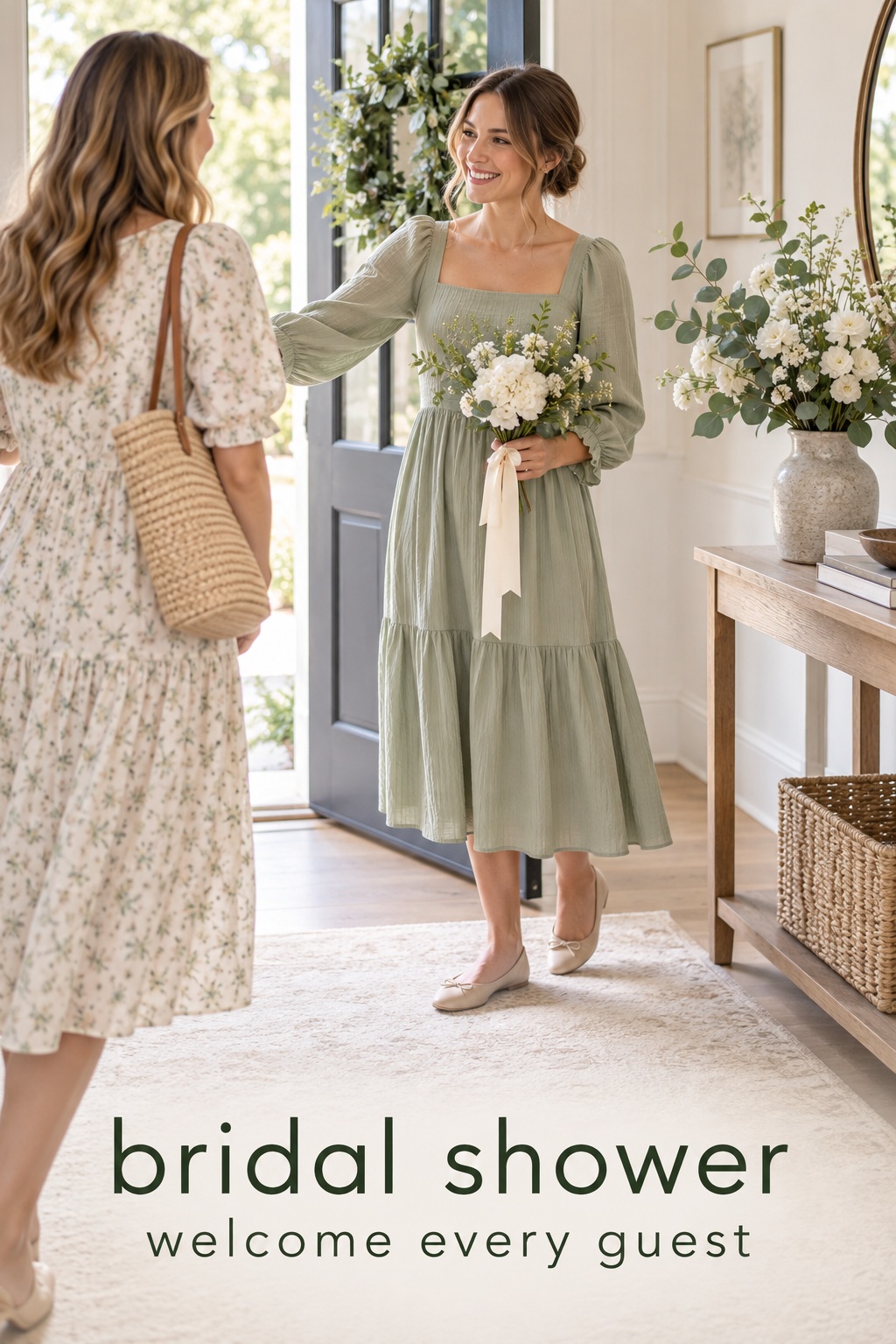
At the event, assign someone to greet guests who arrive while the lead host is busy. A place for coats and bags, a visible restroom direction, and a first drink or snack can make the first few minutes feel relaxed. If the guest list includes people who have not met, a host can introduce them with a small point of connection instead of announcing a formal icebreaker. A comfortable welcome does not require a sign-in activity or a decorated entrance.
Arrival timing should match the group and venue. A home gathering can allow a little flexibility, while a restaurant reservation or a scheduled service may need guests to arrive close to the stated time. Tell guests what applies. Hosts can also plan for the honoree to arrive after most guests if that suits the group, but do not build the entire event around a dramatic entrance unless the honoree wants one.
Block two: offer comfortable hospitality
Food and drink should fit the time of day, venue, and number of people expected. A shower held between meals might need light refreshments, while a gathering that overlaps with lunch should make clear whether a meal will be served. Ask about dietary needs on the RSVP and confirm how the venue or host will handle them. A simple menu that can be prepared or served reliably is more useful than a complicated spread that leaves the hosts unable to greet anyone.
Choose seating with the actual guests in mind. Check that there are enough places to sit, that people can hear one another, and that the honoree has a comfortable spot if gifts will be opened. If the room includes older relatives, children, or guests who may need to step away, leave clear paths and a quieter place to pause. These details help more than a perfect tablescape because they affect how the whole gathering feels.
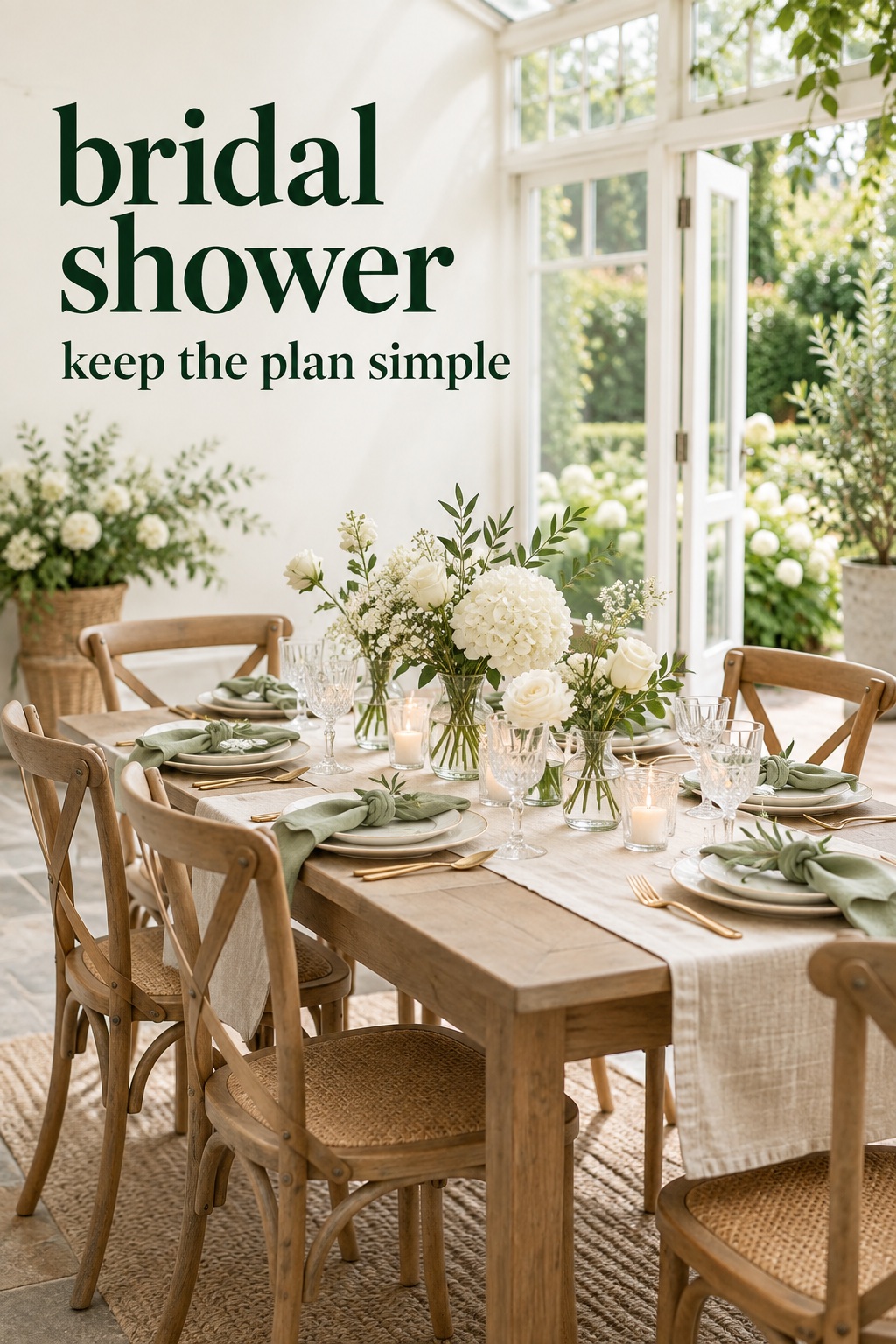
Make a realistic setup plan. At home, identify who will move furniture, chill drinks, set out dishes, manage trash, and reset the room. At a venue, ask what tables, linens, food service, cleanup, and access are already included. Write down arrival and departure times for deliveries or rentals. The same item should not be assumed to be supplied by both the venue and a co-host, and an essential item should not be left without an owner.
Keep gifts, if included, simple to manage. Share registry information in the way the hosts and couple prefer, and place a basket or table where it will not block a walkway. If the honoree plans to open gifts, ask one person to keep a discreet record of the giver and gift so thank-you notes are easier later. A second person can help move opened gifts to a safe spot. If the honoree would rather not open gifts during the event, the hosts can make that clear in advance and choose another shared moment.
Block three: choose one shared honoring moment
A shower feels intentional when guests have a moment to focus on the person or couple being celebrated. That moment may be gift opening, a short toast, a group card, a family recipe collection, or simply a pause for everyone to share a meal and raise a glass. Choose one main moment that fits the honoree. The point is not to perform a tradition because it appears on a checklist; it is to make space for affection and attention.
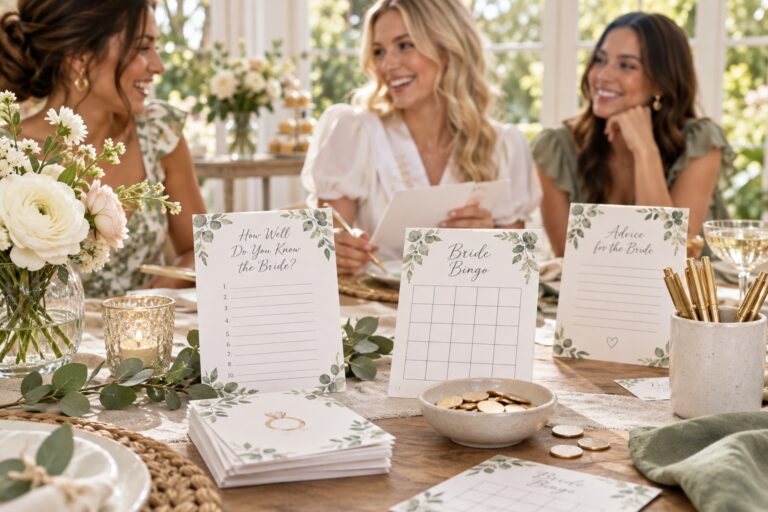
Games are optional. If the honoree and guests enjoy them, choose a single activity that can be explained quickly and does not put anyone on the spot. If games are not a fit, conversation can carry the event. A host might place a few prompts on a table for anyone who wants them, invite guests to write a note, or leave the schedule open. Avoid activities that require guests to disclose private information, spend extra money, or participate in front of the room without warning.
Think about how the shared moment will work in the room. For gift opening, guests need to see and hear without crowding the honoree. For a toast, use a natural pause between food and departure. For a group note, set out pens that work and identify where finished messages go. If guests join remotely, appoint a person to manage the camera and sound so the couple can remain present instead of troubleshooting a device.
A small example can show how the blocks fit. Imagine a Sunday lunch at a relative’s home for a group that includes longtime friends and relatives meeting for the first time. Guests are welcomed with drinks and a clear place for coats. A buffet and enough seating provide hospitality. After lunch, the couple opens a few gifts and the host invites everyone to add a note to a keepsake book. There is no separate game or favor because neither is needed to make the gathering feel complete.
Another group may choose a restaurant and skip gift opening. The same capsule still works: a host greets people at the entrance, the reservation and menu give the group a comfortable shared meal, and a short toast gives the honoree a moment of attention. The form changes while the core stays steady. This is why choosing essentials first makes planning easier than starting with a long list of purchases.

Make the planning decisions in an order that prevents rework
Planning becomes simpler when one decision sets up the next. Confirm the host group’s capacity, establish a spending boundary, and build the guest list with the honoree before choosing a venue. Then compare dates and places that can accommodate the likely group. Only after those decisions are stable should hosts finalize an invitation, food plan, and optional extras. This order avoids paying for a room that is too small or designing an event for guests who were never on the list.
Start with the guest list because it shapes nearly everything else. Ask the honoree which people they hope to include, then check that the hosts can welcome that group in the intended space. For a traditional shower, many hosts use the wedding guest list as a guardrail because a shower invitation carries an expectation of celebration and often a gift. There are variations by family, culture, and workplace, so discuss any exception directly with the honoree and hosts before invitations go out. Avoid making a person feel invited only to provide a present.
Next, set the budget in plain categories: space, food and drink, invitations, supplies, and any optional additions. Decide which categories are essential for this particular plan. If the hosts are sharing costs, record the amount or task each person has freely agreed to cover. Keep a small contingency for an overlooked practical need, but do not use a generic online average as a spending target. Prices depend on location, guest count, menu, and what a venue already provides.
With the guest count and budget in view, choose a date and venue. A date should work for the guest of honor and the people whose presence matters most; a convenient calendar window is more useful than following a single traditional rule. If guests will travel, share a hold-the-date message earlier and provide enough detail for them to decide whether the trip works. The venue should be reachable, sized for the group, and available for the amount of setup and cleanup the hosts can handle.
Compare locations by the work they add or remove. A home can offer privacy and flexible timing, but hosts need to manage furniture, food, serving pieces, cleanup, and possibly parking. A restaurant may provide staff, seating, and a meal, but hosts should confirm the reservation length, menu arrangements, accessibility, payment process, and whether gifts or a toast fit the room. A community space may offer a useful middle ground, though the hosts could be responsible for setup and reset. Ask specific questions before paying a deposit.
Now prepare the invitation as a practical handoff. It should tell guests who is being celebrated, who is hosting, when and where to arrive, how to respond, the RSVP deadline, and what to expect about food or gifts. Include registry details only in the way the couple prefers. If there is a dress suggestion, make it clear and optional unless a venue requires something. Wording such as “garden attire” can be unclear; a plain description like “comfortable shoes for grass” gives guests more useful information.
Set the RSVP deadline early enough to confirm food, seating, and any venue count. Track replies in one shared place, noting attendance, dietary information, and questions that need a response. If someone has not replied near the deadline, follow up once with a friendly message. Do not interpret silence as a confirmed yes when a meal or reservation depends on an accurate count. Send final numbers to the venue or co-hosts by the deadline they provide.
Use a simple decision check before adding a purchase: Does this help a guest find the event, feel comfortable, eat and drink, or take part in the chosen moment? If not, it is optional. This does not mean the shower must be plain. It means that a detail should earn its place through personal meaning or practical use rather than pressure to match a photograph. A few thoughtfully chosen details often create a more coherent room than many unrelated purchases.
Keep a one-page plan with the final decisions: guest count, address, arrival window, venue contact, food details, task owners, event sequence, and the plan for gifts. Share it with the hosts and anyone handling setup. A written summary prevents a familiar problem in group planning: several people assume someone else has confirmed the same detail. Update the plan when a decision changes, and make sure the final version is easy to find on the day.
Give every co-host a clear job and keep the day flexible
A co-hosting plan works best when each task has one named owner and a clear handoff. Instead of asking everyone to “help with everything,” assign roles such as lead coordinator, guest communication, food and venue contact, setup and supplies, and gift or keepsake support. One person may own several small tasks, but make the ownership visible. The lead coordinator should know who to contact if something changes, while each task owner should know what done looks like.
Match roles to people’s actual strengths and availability. The person who lives near the venue may be best placed to receive a delivery. A detail-oriented friend may prefer to manage RSVPs or gift notes. Someone with limited time can still contribute by preparing a playlist or bringing a finished dessert, if that is what the host group agreed. Avoid assigning responsibility based on family status or job title alone. Ask what each person can comfortably do.
Make the money arrangement explicit. If hosts are splitting expenses, agree on whether they will divide the final total or each cover a category. Share estimates before purchases are made and confirm the process for receipts or reimbursement. No one should discover after the event that they were expected to cover a cost they had not approved. If the budget is tight, reduce optional details rather than quietly asking guests to fund the hosts’ plan.
Write a loose event sequence, not a minute-by-minute performance schedule. A comfortable flow might include host setup, guest arrival, time to eat and talk, the shared honoring moment, a closing thank-you, and departure. The sequence gives the hosts a sense of what comes next, but the times can move if guests are enjoying conversation or a meal takes longer than expected. A private cue between co-hosts can help the group transition without interrupting the room.
Separate host duties from guest experience. Hosts should know who will greet arrivals, answer venue questions, check food, introduce people, and keep the shared moment on track. Guests should not have to see the coordination work. If an item is late, choose a backup that preserves the welcome and hospitality rather than pulling the honoree into a logistics discussion. A calm host is often more reassuring than a perfectly timed activity.
Prepare a small contingency for likely disruptions. For a home gathering, consider weather, seating, food storage, and a way to reach the host if a guest cannot find the entrance. For a venue, confirm whom to call if setup access or a delivery changes. For an outdoor space, decide where guests can move if conditions become uncomfortable. The plan need not predict every problem; it should make the next step clear for the most obvious ones.
Think about the end as carefully as the welcome. Let guests know when the gathering is wrapping up, arrange a safe place for gifts, and identify who will help the honoree take items home. Confirm who is responsible for leftover food, rented items, and cleanup. If the honoree is travelling afterward, do not assume they can transport bulky gifts. A plan for the final half hour protects the celebratory mood from becoming a scramble.
Afterward, send a brief thank-you to co-hosts and anyone who provided a specific contribution. Share photos with the honoree in the way they prefer, and pass along the gift record if one was kept. Hosts can also note what worked and what they would simplify next time. These small closing tasks complete the hosting job without asking anyone to produce a formal report or keep a perfect scrapbook of the day.
Sources and methodology
This planning framework was developed after reviewing U.S. search results and opening ten pages from The Knot, Martha Stewart, WeddingWire, and Zola. The sources cover hosting, etiquette, timing, invitations, guest lists, and planning checklists. Their suggested schedules and customs vary, so this article treats them as options and context rather than universal rules. The capsule structure and task map are editorial recommendations intended to help hosts make the decisions fit their own group.
For source context, see The Knot’s bridal shower planning checklist and Martha Stewart’s guide to choosing a shower date.

FAQ
Who usually hosts a bridal shower?
A close friend, relative, member of the wedding party, or group of co-hosts may organize a bridal shower. The right host is someone who has offered or agreed to take responsibility and can plan within an agreed budget. Decide who is coordinating before making bookings, then divide the work so one person does not have to manage every detail.
What happens at a bridal shower?
Most gatherings include a welcome, food or refreshments, time to talk, and a moment to celebrate the guest of honor. Some include gift opening, a toast, a game, or another activity. The couple and hosts can choose the parts that feel right; there is no need to include every tradition in order for the event to feel complete.
Does a bridal shower have to include games?
No. Games are one optional way to bring guests together, but conversation, a meal, gift opening, a toast, or a shared note can create a natural focal point. If a game is included, choose one that is easy to explain and comfortable to decline. Avoid making guests perform or share personal information without warning.
When should a bridal shower be held?
Choose a date that works for the guest of honor, the hosts, the venue, and the guests whose attendance matters most. Some planning guides describe showers as happening several weeks or a few months before a wedding, but schedules differ. If people need to travel, give them earlier notice and avoid treating a customary window as a strict rule.
Who should be invited to a bridal shower?
Ask the guest of honor who they would like to celebrate with, then build a list the hosts and venue can accommodate. Many hosts invite people who are also invited to the wedding, because a shower often involves gifts. Family customs and workplace gatherings can differ, so discuss unusual cases directly before invitations are sent.
How long should a bridal shower last?
Set the length according to the venue, meal, guest needs, and the guest of honor’s preference. Put a start and end time on the invitation so people can plan, then make a loose sequence that allows time to arrive, eat, talk, and share the main moment. A home visit may be more flexible than a reservation or booked space.
Should guests bring gifts to a bridal shower?
Guests commonly bring a gift, but hosts should follow the couple’s preference and communicate clearly. If gifts are part of the event, share registry information in an appropriate way and designate someone to keep a record if gifts will be opened. If the honoree prefers no gift opening or a different approach, make that clear before the event.
How can co-hosts split bridal shower responsibilities?
Assign one owner to each practical area, such as guest communication, venue and food, setup, or gift notes. Agree on spending before purchases and share a short written plan with everyone. Match tasks to each person’s time and location, and let the lead host coordinate updates so decisions do not get lost across several conversations.