October Wedding Ideas: 3 Styles Compared
The best October wedding ideas do more than add leaves to a table. They create a clear visual direction that fits the venue, the ceremony, and the way you want guests to feel. Before choosing centerpieces or favors, decide whether you want the day to feel open and foliage-led, intimate and candlelit, or generous and harvest-inspired.
Each approach can feel unmistakably autumnal without relying on the same rust, pumpkin, and plaid formula. This comparison looks at what each style asks of your palette, flowers, lighting, and reception details, then shows where it works best and what to watch for. Use it to choose one design direction and adapt it to your date, location, budget, and venue rules.
Choose the Mood Before You Choose the Props
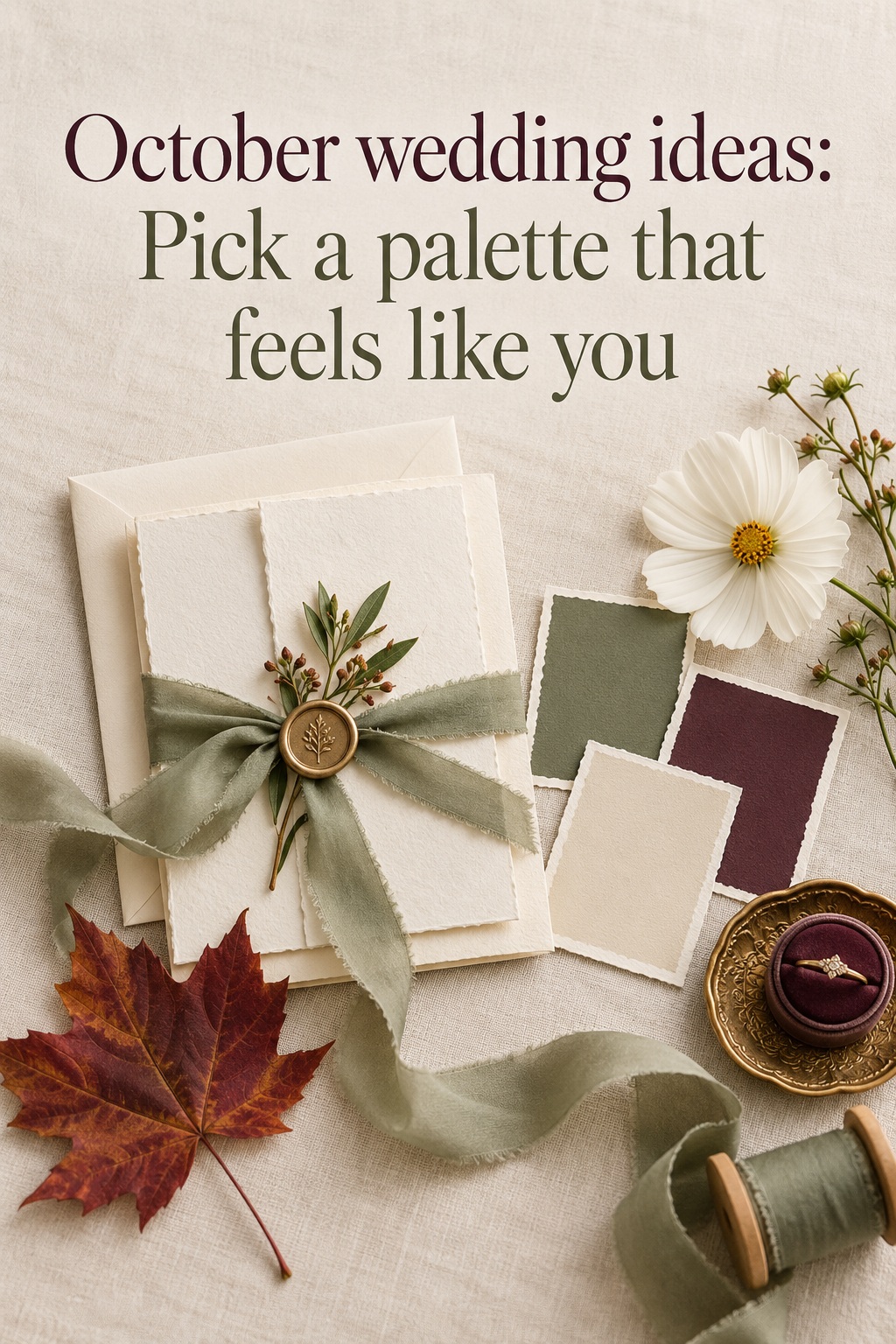
Start with a sentence about the experience you want, not a shopping list. “A garden ceremony that feels airy and personal” leads to different choices than “a candlelit dinner that feels polished” or “a relaxed meal that feels abundant.” A short mood statement is useful when you are reviewing inspiration because it gives you a reason to keep or reject each image.
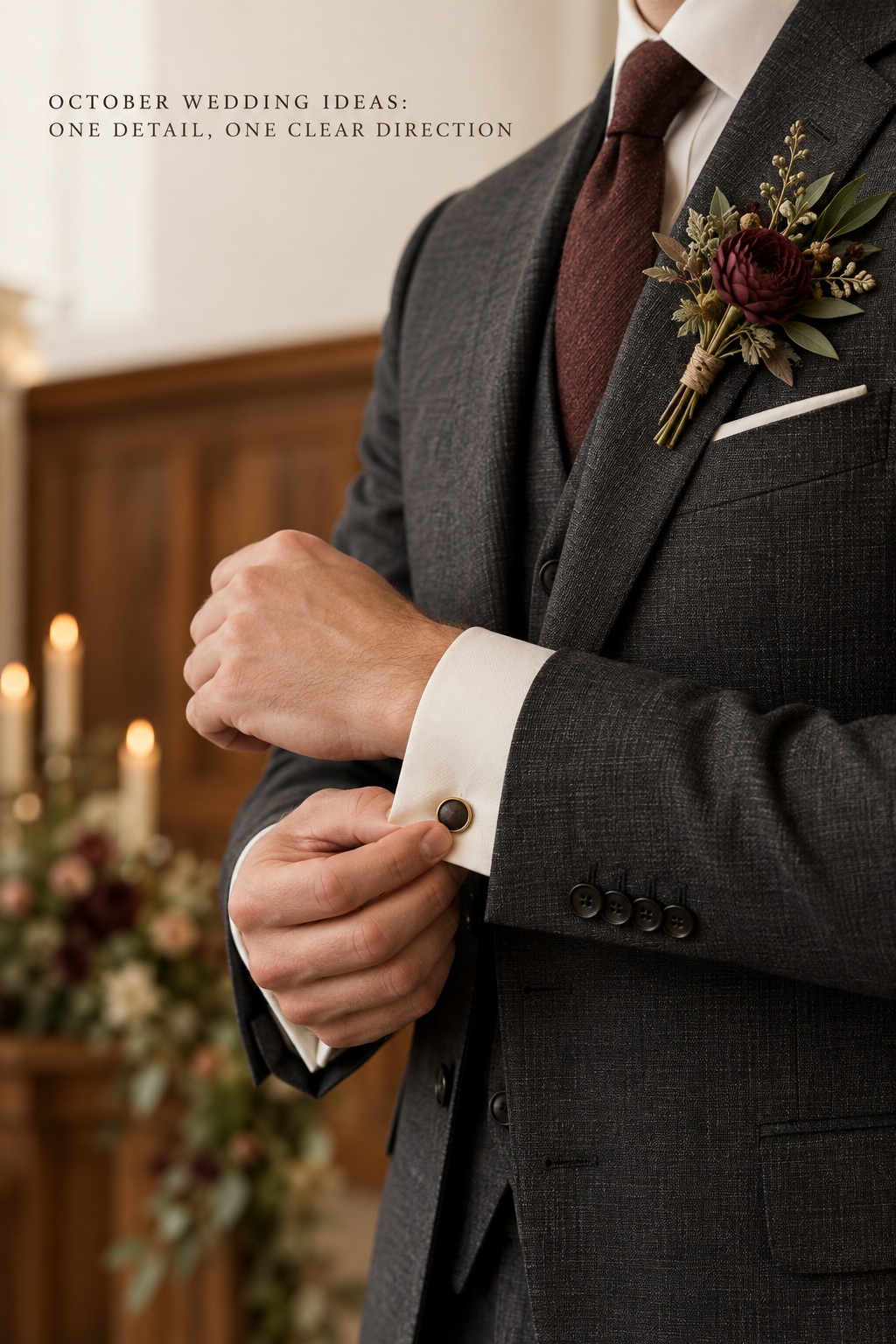
Next, decide which part of the venue should carry the visual weight. If the setting already has dramatic trees, stonework, a terrace, or architectural detail, the design may need only a few accents. If the room is simple, lighting and table styling can establish more of the mood. In either case, select one anchor, such as the ceremony backdrop, an overhead installation, or the dinner table. Let the other details support it. A single outfit detail, such as a boutonniere in the anchor shade, can echo the palette without making the whole celebration feel themed.
Your wedding look is only the beginning.
Keep your guest list, vendors, timeline, and every important detail together with Zarellea — so your day feels as considered as your style.
Use these questions to narrow the direction:
- Do you want guests to spend more time outside, or do you want the celebration centered around an indoor dinner?
- Does the venue already have strong color, texture, or architecture that should stay visible?
- Would you rather invest attention in flowers, lighting, food presentation, or a single focal display?
- Do you picture a formal evening, a relaxed gathering, or something between those moods?
- What setup, flame, sound, access, or cleanup rules should shape the plan?
Your answers should guide the style choice. They do not have to lock every detail. A garden approach can include a formal dinner, and a candlelit room can use fruit or branches. The purpose of choosing a direction is to create a consistent through-line, not to turn the wedding into a strict theme.
Compare Three October Wedding Directions
These three concepts differ in what they ask the venue to do. Foliage-led styling lets the setting provide much of the color. Candlelit modern styling builds atmosphere through light and contrast. Harvest-table styling makes the meal and tabletop the main expression of the season.
Foliage-led garden: let the landscape set the palette
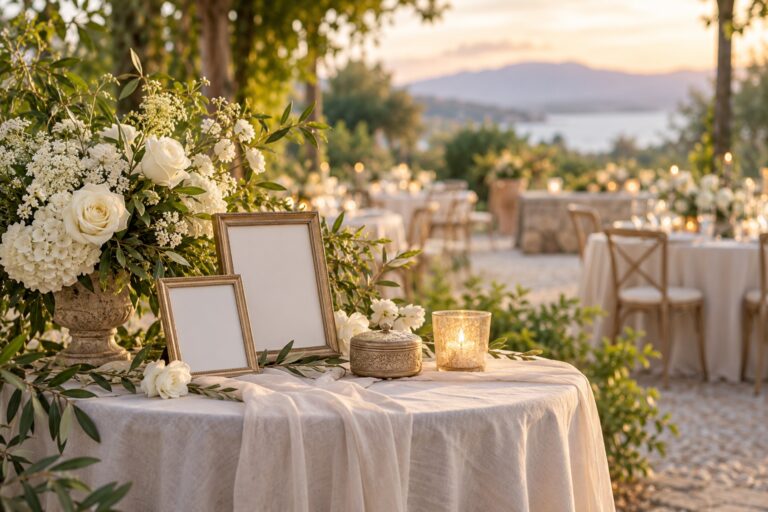
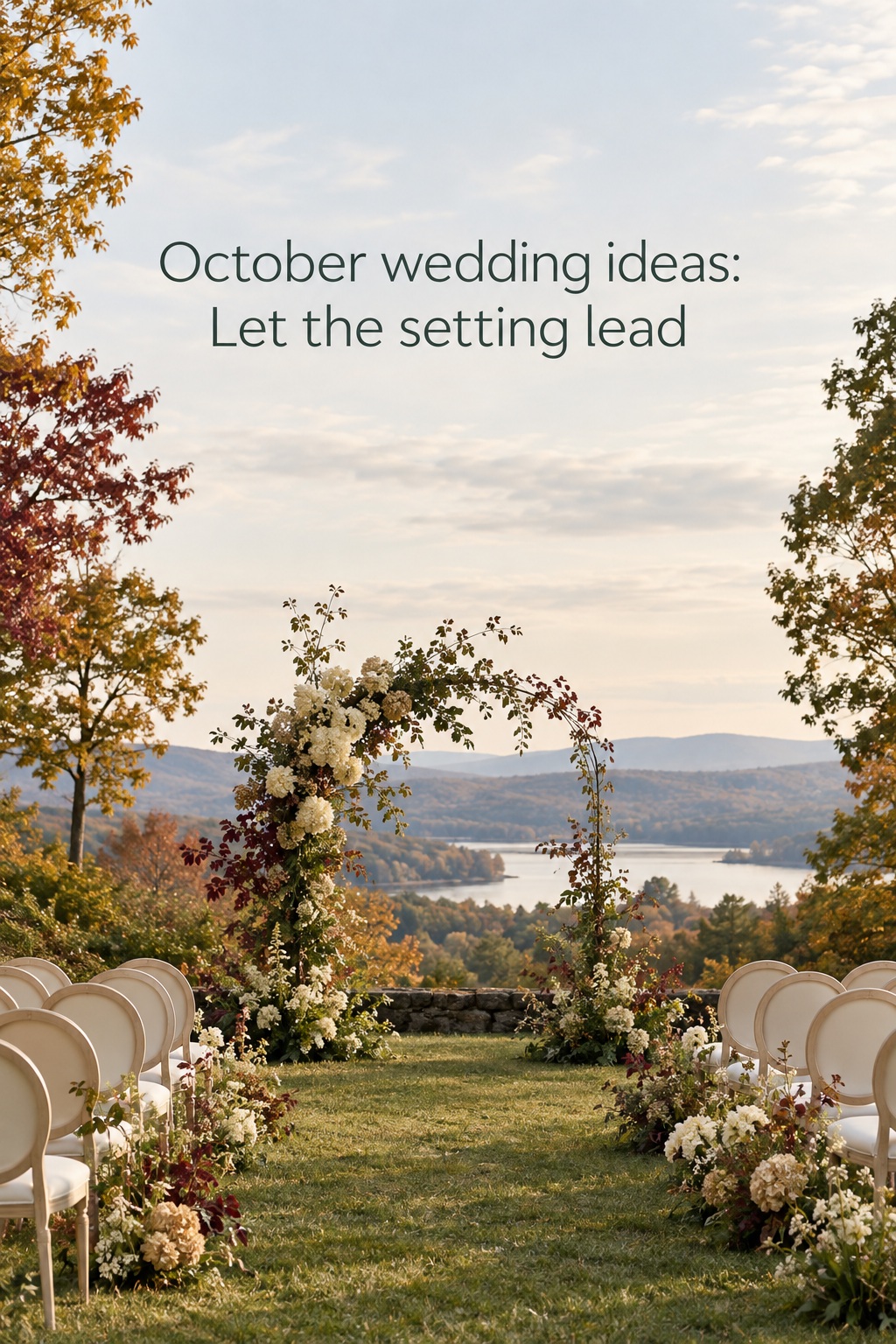
This direction is strongest when the ceremony site has trees, a garden, a courtyard, or a view you want guests to notice. Rather than recreate autumn with piles of props, use the existing surroundings as the backdrop and add a controlled palette of soft cream, muted green, plum, berry, or one warmer accent. The exact colors can respond to what is actually around your venue, rather than to a generic fall mood board.
Keep the ceremony focal point simple. A single floral structure, a pair of grounded arrangements, or a restrained aisle detail can frame the couple without competing with the landscape. Bring that visual note into the reception through place cards, napkins, or a few repeated stems. If the venue already feels richly colored, choose neutral linens and let the view do the work.
Best fit: couples who value the outdoor setting, natural color, and a relaxed sense of space. Trade-off: this look depends on the setting being part of the experience, so the plan needs a comfortable indoor alternative and a decision about what moves if the ceremony location changes. A current report from the Associated Press describes one couple moving an outdoor ceremony indoors when heat became a concern, a reminder that a backup plan should be real and usable, not only a line in the venue contract. Read the AP report on an outdoor-to-indoor wedding pivot.
Candlelit modern: use atmosphere instead of autumn props
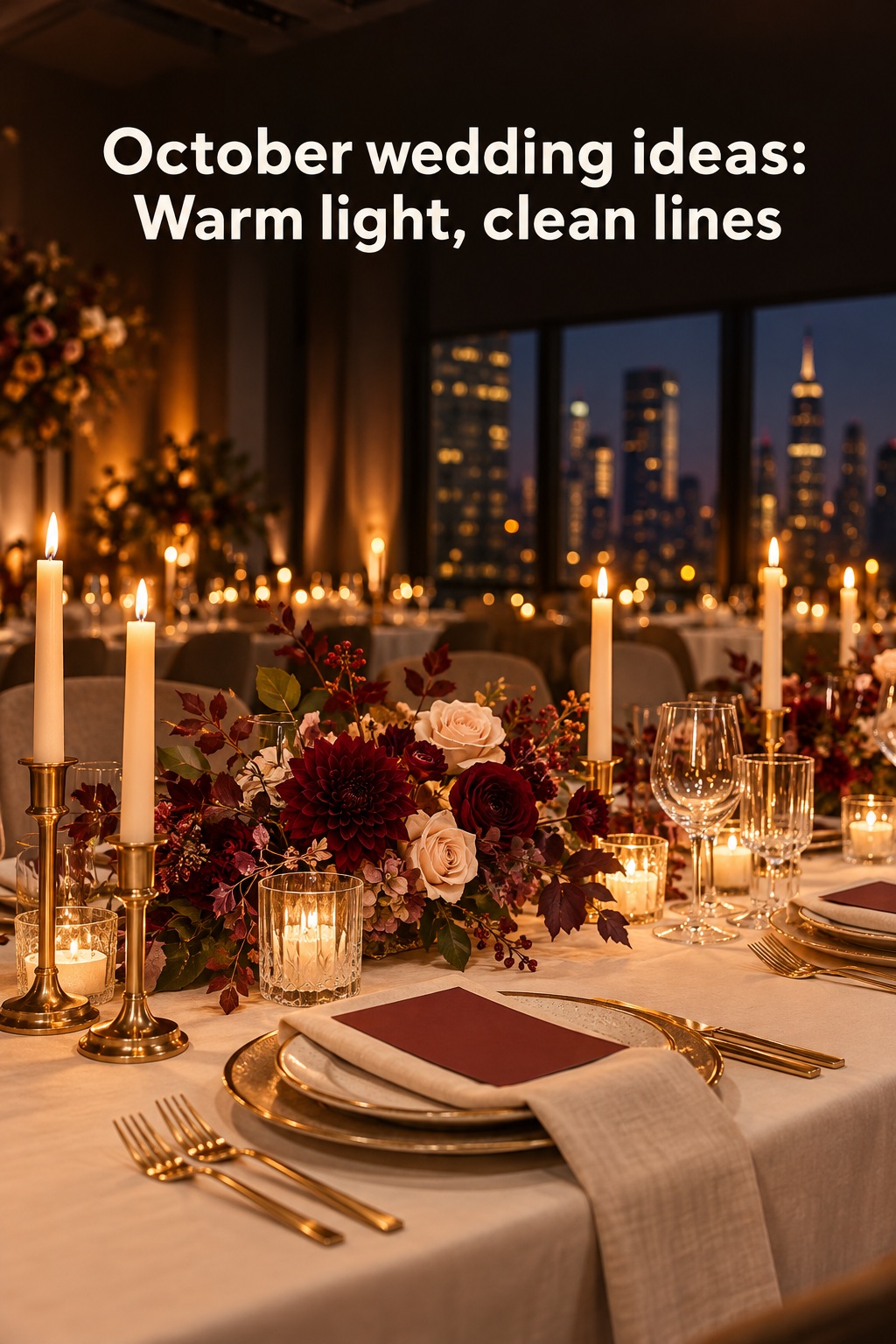
A candlelit modern direction suits a ballroom, restaurant, loft, or historic room where you want an intimate evening mood. Begin with the room’s existing lines and finishes. Add warm pools of light, a grounded palette such as ivory with oxblood, espresso, olive, or muted rose, and a few sculptural arrangements. The effect can be seasonal through contrast and texture without placing a leaf motif on every surface.
Tables can feel refined with crisp linens, simple glassware, menus that echo the invitation suite, and low centerpieces that leave conversation unobstructed. Repeat one finish, such as brushed brass, dark wood, or smoky glass, in a few locations rather than introducing a new metal or vessel at every table. If the room has chandeliers or decorative architecture, test the lighting before adding hanging greenery or another overhead focal point.
Best fit: couples who want an evening celebration with a polished, close-in atmosphere. Trade-off: candlelight and darker colors depend on the room’s actual light level. Ask the venue to show the room at the time guests will use it, then test table samples in that light. Confirm flame restrictions and whether any added lighting requires an approved vendor. If real candles are not permitted, use a venue-approved alternative and make sure its light level suits the room.
Harvest-table: make the meal the seasonal centerpiece
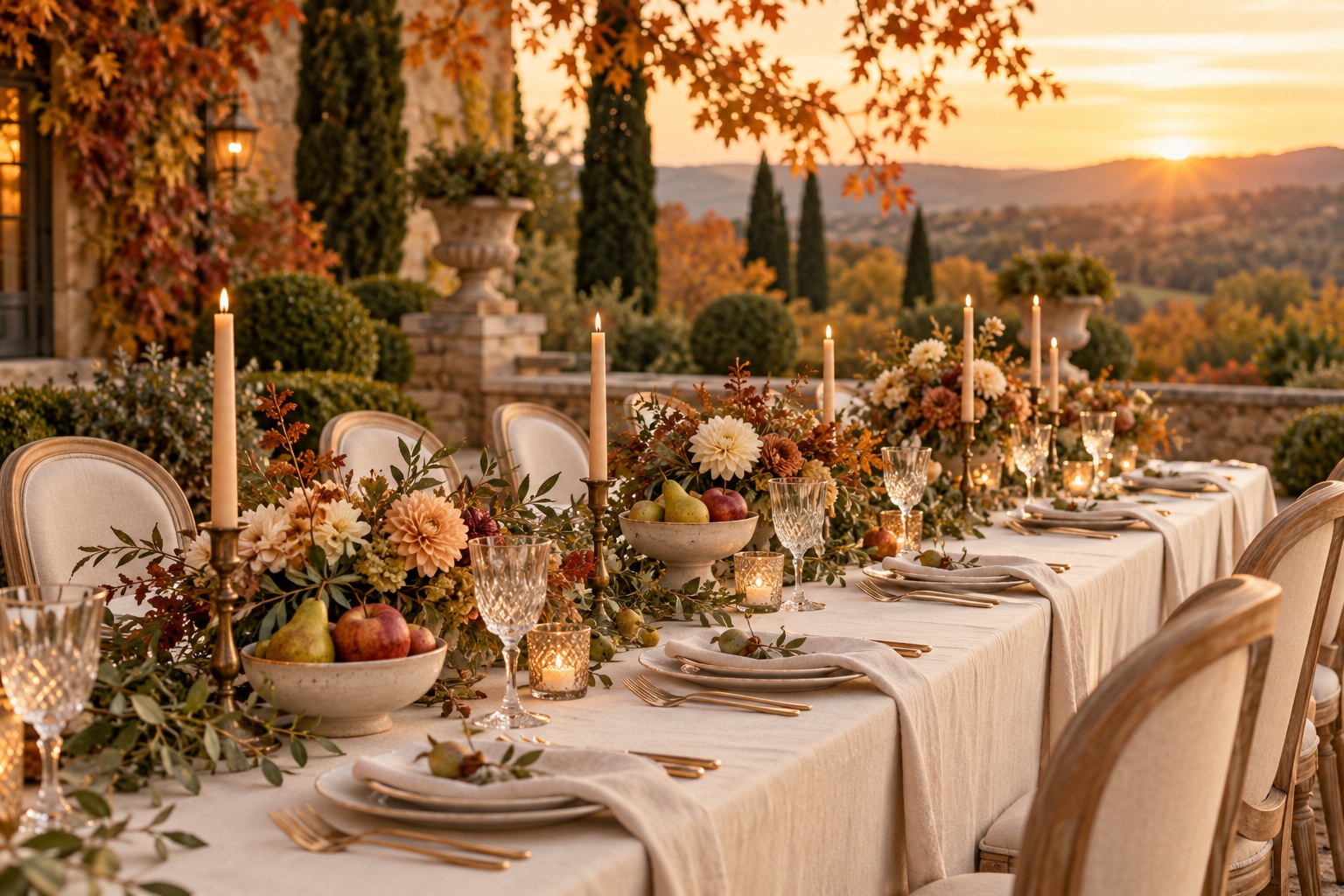
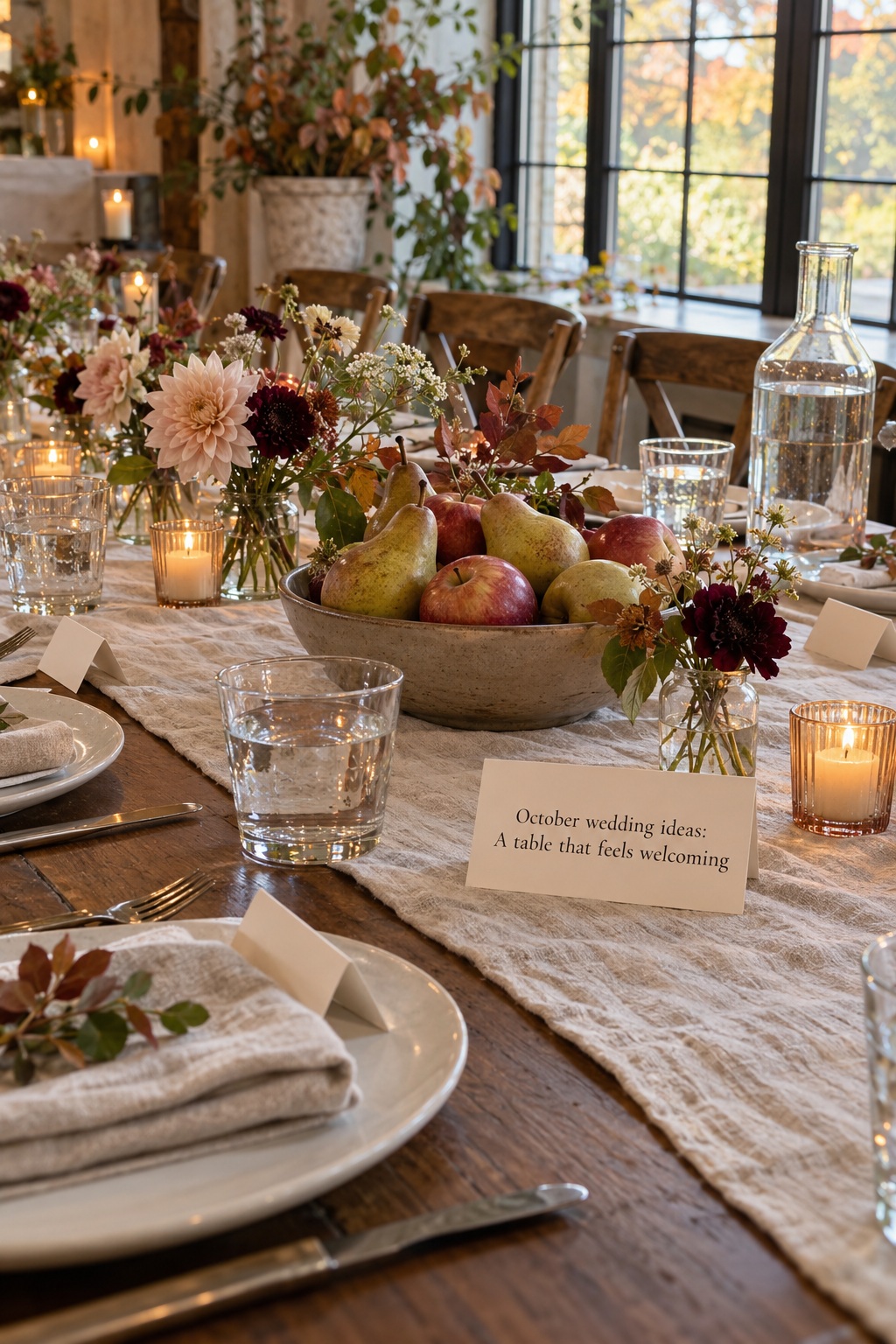
A harvest-table direction works when the reception is meant to feel welcoming and food-centered. Long tables, warm linens, ceramic or wood accents, fruit, branches, and restrained arrangements can give the room a sense of abundance. A palette might combine cream, brown, muted gold, deep green, or a less expected soft blue. The seasonal signal can come from the meal and natural materials instead of literal pumpkins at every turn.
Use edible elements intentionally. A bowl of pears, apples, or grapes can act as part of a centerpiece, but coordinate the quantity, placement, food-safety needs, and clearing plan with the caterer. A signature dessert or a family-style course may carry the harvest idea more naturally than extra decor. Ask what the kitchen can prepare and serve well for your guest count before printing a menu around a specific dish.
Best fit: couples who want dinner, conversation, and shared tables to be the center of the reception. Trade-off: abundant styling can become crowded or create extra setup and cleanup. Keep the table usable, leave serving space, and choose one or two materials to repeat. A beautiful tablescape should still make it easy to pass a dish, read a place card, and talk across the table.
The Knot’s monthly floral guide offers an October-specific starting point, including textured flowers such as celosia, chrysanthemum, and aster. Availability and substitutions depend on the florist, source, and date, so treat a list as a conversation prompt rather than a guarantee. See The Knot’s month-by-month wedding flower guide.
Which Direction Fits Your Venue and Priorities?
Compare the three approaches against the constraints you already know. The easiest concept to execute is usually the one that works with the venue, not the one that requires the most new material.
If the venue is visually distinctive, choose foliage-led styling
A garden, estate, courtyard, or wooded ceremony site may already provide color and texture. Identify what is attractive from the guests’ seats and what appears behind the couple in photographs. Put the ceremony arrangement where it frames that view. Keep the reception palette related but simpler, so guests feel a connection between spaces without seeing the same display repeated everywhere.
This route is also useful if you prefer a lighter design plan. Choose one floral shape and one material, then repeat them in a few intentional places. For example, a loose ceremony arrangement might be echoed by small bud vases and a simple menu accent. The surrounding landscape stays central and the decor remains easy to move if the event plan changes.
If architecture and evening atmosphere matter most, choose candlelit modern
An indoor venue gives you more control over light, backdrop, and placement. That makes a modern candlelit approach a strong option for a restaurant, loft, museum room, or ballroom with visual character. Take a photo of the room from the entrance, ceremony position, and guest tables. Use those views to decide whether the feature should be a lighting change, a floral installation, or a tablescape. Selecting one main focal point can make the room feel deliberate without trying to decorate every surface.
If the room is already ornate, use restrained flowers and let the architecture carry the atmosphere. If it is spare, lighting, linens, and a carefully placed ceremony backdrop can add warmth. The direction does not require dark colors. A light palette can still feel autumnal when paired with wood, textured fabric, warm light, and considered seasonal flowers.
If the reception is the main event, choose harvest-table styling
A reception room with long tables or a generous dining area can make the meal part of the design. This direction is useful when guests will sit, share food, and spend time together. Ask the caterer how the table must function before deciding on centerpiece height, fruit placement, platters, or candles. If staff need a clear service path, reserve it. If guests will serve one another, keep arrangements low and leave space between place settings.
Harvest styling can also flex to different levels of formality. Refined ceramics and edited florals can suit an elegant estate room; natural linens and shared platters can lean casual. Choose the version that matches the invitation and the service style. A mismatch between a highly formal menu and rustic props, or between relaxed service and delicate decor that guests cannot touch, can make the room feel less cohesive.
Make the Details Work Together
After choosing a direction, use a short cohesion check. You are looking for continuity, not identical color on every surface. The invitation, ceremony, flowers, tables, and lighting should feel as though they belong to one celebration.
Choose a palette with one anchor and a supporting range
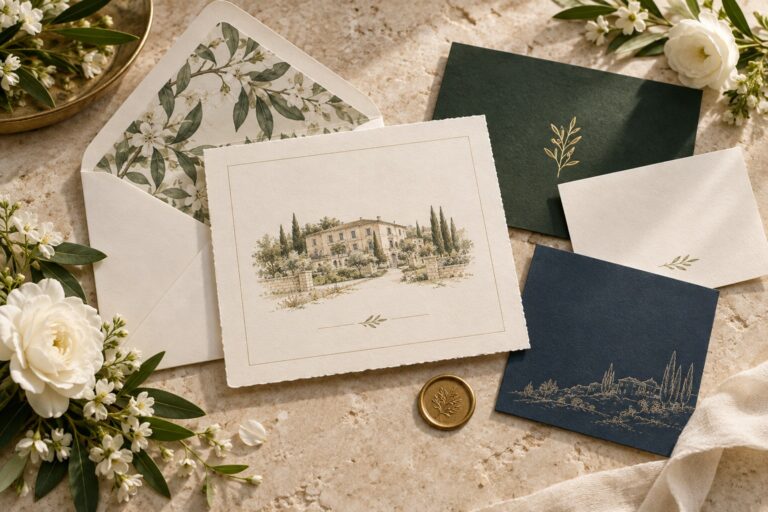
Pick one color or material to anchor the design, then add two or three supporting elements. An anchor could be a warm neutral, a berry tone, a soft green, dark wood, or brass. Bring it into the invitation, linens, floral selection, or signage. Supporting colors can come from the room, landscape, or flowers. This method gives you room for variation without making every item look matched.
Look at samples together. Place fabric, paper, floral references, and a photo of the venue side by side in daylight and under the reception lighting if possible. A digital image is a useful starting point, but it cannot show how every surface will behave in a particular room. If you are using a deep palette, make sure there is enough contrast for menu text, place cards, and the ceremony backdrop to remain clear.
Give flowers a job in the design
Rather than specifying flowers only by color, explain the role you want them to play. Do you need a loose frame around an outdoor view, a sculptural focal arrangement, soft texture on dinner tables, or a few stems repeated through the room? Share a photo of the venue and the mood statement with your florist. Ask what can be sourced for your date, what substitutions keep the shape and palette, and which arrangements can move from ceremony to reception.
Reuse can be an efficient design choice when the timing and labor make sense. A ceremony arrangement may work at the bar or entrance later, but only if the vendor team can move it safely and the new location has enough space. Decide who moves it and when. Do not build a timeline that depends on a guest carrying a heavy floral piece while other guests are arriving.
Plan the visual handoffs from ceremony to reception
Think about what guests see as they move through the day. One repeated detail, such as a flower shape, a ribbon color, or a warm metal finish, can connect the ceremony and reception. Let the scale change with the setting: a focused ceremony arrangement can become smaller details on the tables. Keep the guest path open and avoid a display that blocks signage, accessible routes, service doors, or the photographer’s primary view.
If the ceremony is outdoors, confirm the indoor alternative, decision deadline, and what decor will move with the ceremony. If the ceremony is indoors, check the rules for candles, hanging decor, open flames, and attachment points. Send one clear setup brief to the coordinator with reference photos, the location for each item, who supplies it, and who collects it afterward. This reduces last-minute interpretation and keeps the couple from solving setup questions during the event.
Use this final comparison before you commit
- Choose foliage-led when the setting is already a major part of the visual story and you want the decor to frame it.
- Choose candlelit modern when the indoor room, evening atmosphere, and controlled lighting are central to the experience.
- Choose harvest-table when dinner, conversation, and the table itself should carry the seasonal feeling.
- Mix with care: borrow a detail from another direction only if it supports your anchor. A few seasonal fruits can complement a modern room; a dramatic candlelit dinner can still include foliage.
- Pause if every idea competes: remove one motif, one color, or one focal display before adding another.
The strongest October wedding ideas will still feel personal after the seasonal details are removed. If you take away the leaves, candles, or fruit, the choices should continue to reflect your venue and the kind of celebration you are hosting. Let October guide the palette and texture, then let your own priorities determine how much of the season appears in the room.
Sources and Methodology
This comparison was developed from ten opened US search results on October and fall wedding ideas, including planning guidance, floral references, decor examples, and real-wedding design coverage. The three directions are an editorial framework for comparing choices, not a claim that every October venue or flower market is the same. The linked references appear where they support specific floral or contingency-planning advice.
FAQ
What are some October wedding ideas that do not use pumpkins?
Try a foliage-led ceremony, a candlelit modern reception, or a harvest-style dinner with fruit, textured flowers, and natural materials. These directions signal the season through color, light, and setting without relying on pumpkin motifs.
How can we make an October wedding feel elegant instead of rustic?
Use a restrained palette, clean stationery, refined linens, deliberate lighting, and one strong floral or architectural focal point. You can keep seasonal color while choosing modern materials and edited arrangements.
Which flowers should we ask about for an October wedding?
Bring your palette and desired arrangement shape to a local florist and ask what can be sourced for your location and date. October flower guides can suggest starting points such as celosia, chrysanthemums, and asters, but confirm availability and suitable substitutions with the florist.
How do we choose fall wedding colors without using only rust and burgundy?
Choose one anchor shade, then add supporting neutrals or a contrasting soft color. Cream with muted green, dusty blue with warm wood, or berry with ivory can feel seasonal through texture and lighting even without an all-rust palette.
What decor works best for an October outdoor ceremony?
Let the venue’s landscape provide the backdrop, then add a few secure arrangements or aisle details that will not block views or guest paths. Confirm the indoor alternative and which decor can move if the ceremony location changes.
How can we decorate for fall without making the reception feel cluttered?
Select one main focal point and repeat a small number of colors or materials. Keep table decor low enough for conversation, leave space for service, and remove any prop that competes with the flowers, food, or venue architecture.
Can we combine a modern wedding style with harvest details?
Yes. Keep the modern room, lighting, and stationery as the base, then add a restrained harvest detail such as seasonal fruit or natural branches. Repeating one material or color helps the two directions feel intentional rather than like separate themes.
What should we ask the venue before planning October decor?
Ask about indoor backup spaces, the deadline for a weather decision, candle and flame rules, hanging or attachment restrictions, access paths, setup timing, and decor collection. These answers can determine which design ideas are practical before you order or rent anything.