Wedding Memorial Ideas: A Gentle Planning Checklist
Choosing wedding memorial ideas can bring two feelings into the same planning meeting: a wish to include someone you love and a wish to keep the day emotionally manageable. You do not need to build a large display or explain every private choice to your guests. The useful question is smaller: what kind of remembrance would feel right to you, your partner, and the people closest to the person being remembered?
This checklist turns that question into a plan. First set boundaries, then choose how visible the tribute should be, match it to a natural moment in the schedule, and hand the details to someone else before the wedding day. The ideas can be adapted for a ceremony, reception, courthouse wedding, or celebration with a short timeline.

Start With the Feeling You Want the Tribute to Hold
Before you select a chair, candle, photograph, or song, decide what you want the gesture to do. You may want to acknowledge an absence for the whole room, keep a loved one close in a private way, give family members a shared moment, or recognize a particular part of that person’s life. Those are different outcomes. Naming yours first makes it easier to choose one idea that fits instead of collecting several ideas because they are available.
Set aside a short conversation with your partner. Each of you can answer these prompts separately before comparing notes:
Your wedding look is only the beginning.
Keep your guest list, vendors, timeline, and every important detail together with Zarellea — so your day feels as considered as your style.
- What would I be glad to notice on the wedding day?
- What might feel too public, too long, or too difficult in that moment?
- Would I like guests to participate, simply notice, or not know about the tribute?
- Is there one object, story, sound, food, or place that feels specific to this person?
- Who else may be closely affected by the plan, and should we ask them before deciding?
There is no required amount of remembrance. One partner may want a quiet charm inside a jacket while the other imagines a short acknowledgment during the ceremony. Neither preference needs to be treated as the more loving one. Discuss what each option asks of you emotionally, how much attention it brings, and whether you both want to share it with guests. If your answers differ, look for a small gesture that meets both needs, or choose one shared gesture and one private one.
Decide who needs to be consulted. If siblings, a surviving parent, or another close relative may feel surprised or hurt by a public tribute, a brief private check-in can prevent the wedding from becoming the first time they hear about it. That does not mean every family member gets a veto. It means you can consider their comfort while keeping the final decision with the couple. Zola’s planning guidance also recommends discussing the choice with those directly involved and considering family, cultural, and religious context. Read Zola’s guidance on wedding memorial ideas.
Finally, choose language that sounds like you. “In loving memory” is familiar, but it is not the only option. You might prefer a name and a simple line such as “We carry their love with us,” a line in the program, or no sign at all. If you are unsure, write the words in a draft program and read them aloud. You will hear whether the phrasing feels warm, formal, spiritual, or more public than you intended.
Use This Checklist to Choose the Right Kind of Tribute
Think of visibility as a dial, not a test of how much the person mattered. A private tribute is mainly for the couple. A shared tribute offers a moment to selected family or guests. A visible tribute is easy for most guests to notice. Moving the dial up usually means more coordination and more public attention, so choose the lowest level that gives you the feeling you want.
Private: keep the remembrance close to you
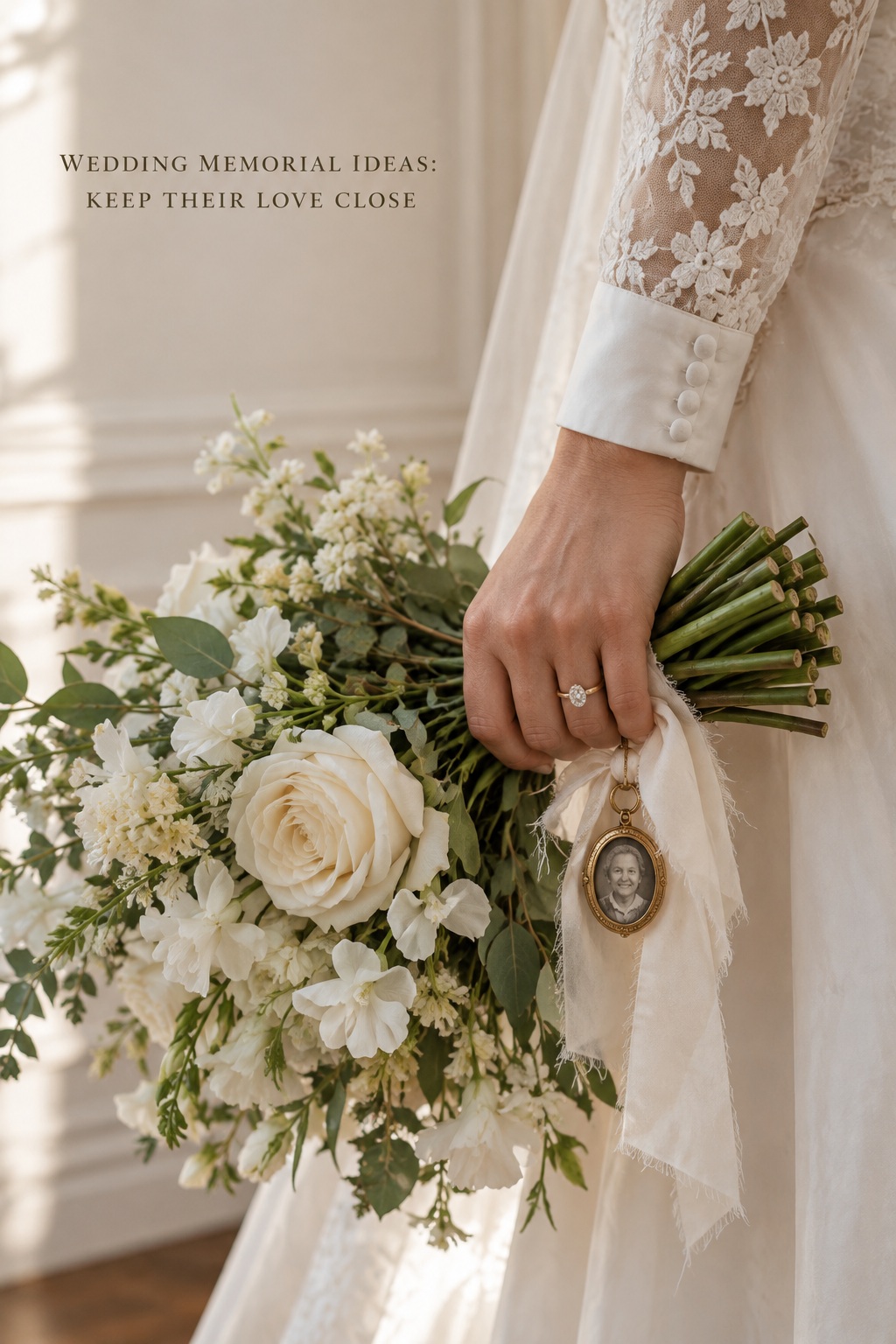
Choose a private approach if you want a meaningful reminder without an announcement or display. Possibilities include wearing a relative’s watch, attaching a small photo charm to a bouquet, placing a note in a jacket pocket, sewing a piece of meaningful fabric into an outfit, or listening to a favorite song while getting ready. A detail can matter even if guests never identify it as a memorial.
Check that the item is secure and comfortable. A charm should not catch on stems or fabric. A borrowed heirloom needs a safe place before and after the ceremony. If a tailor is altering clothing, give them clear instructions and enough time, and decide whether the keepsake can be removed without damage. For a private song, save it to a playlist that will work offline and tell the person handling the getting-ready schedule when to play it.
Shared: include a small circle or a natural wedding moment
A shared tribute is useful when you want a few people to know or participate without making it a focal point for every guest. You could ask the officiant to include one sentence, invite a relative to read a short passage, place a favorite flower in a family bouquet, or serve a dessert connected to the person’s recipe. A toast can also work, especially if the speaker already has a place in the reception program.
Choose an action that has a clear beginning and end. For example, the officiant can make a brief acknowledgment before the vows, then continue with the ceremony. A family member can read one selected passage, rather than being asked to improvise a full remembrance. A favorite dessert can appear on the menu with a short note, without requiring guests to stop and listen. If you want guests to join in, tell them exactly what to do and how long it will take.
Visible: give the remembrance its own place
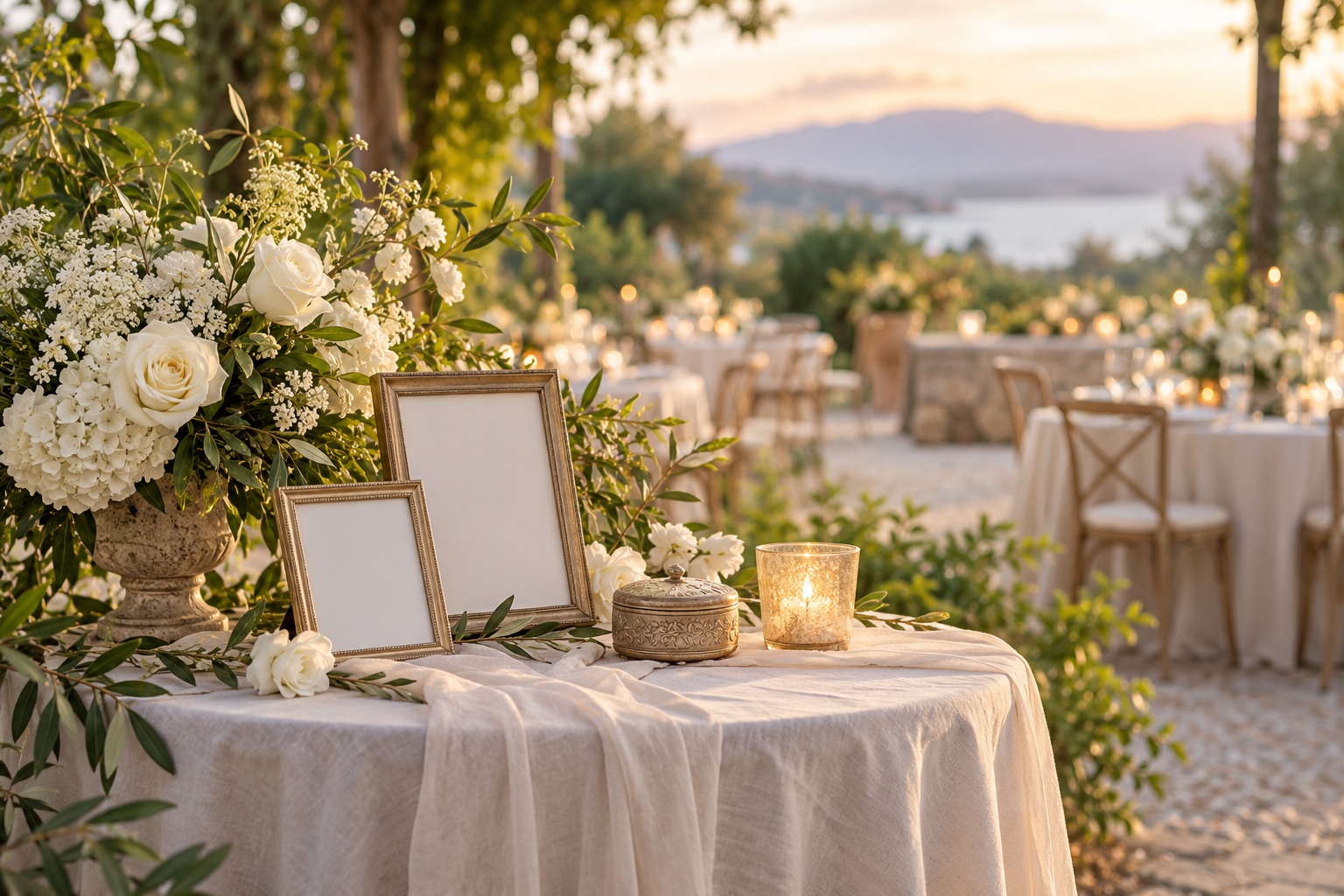
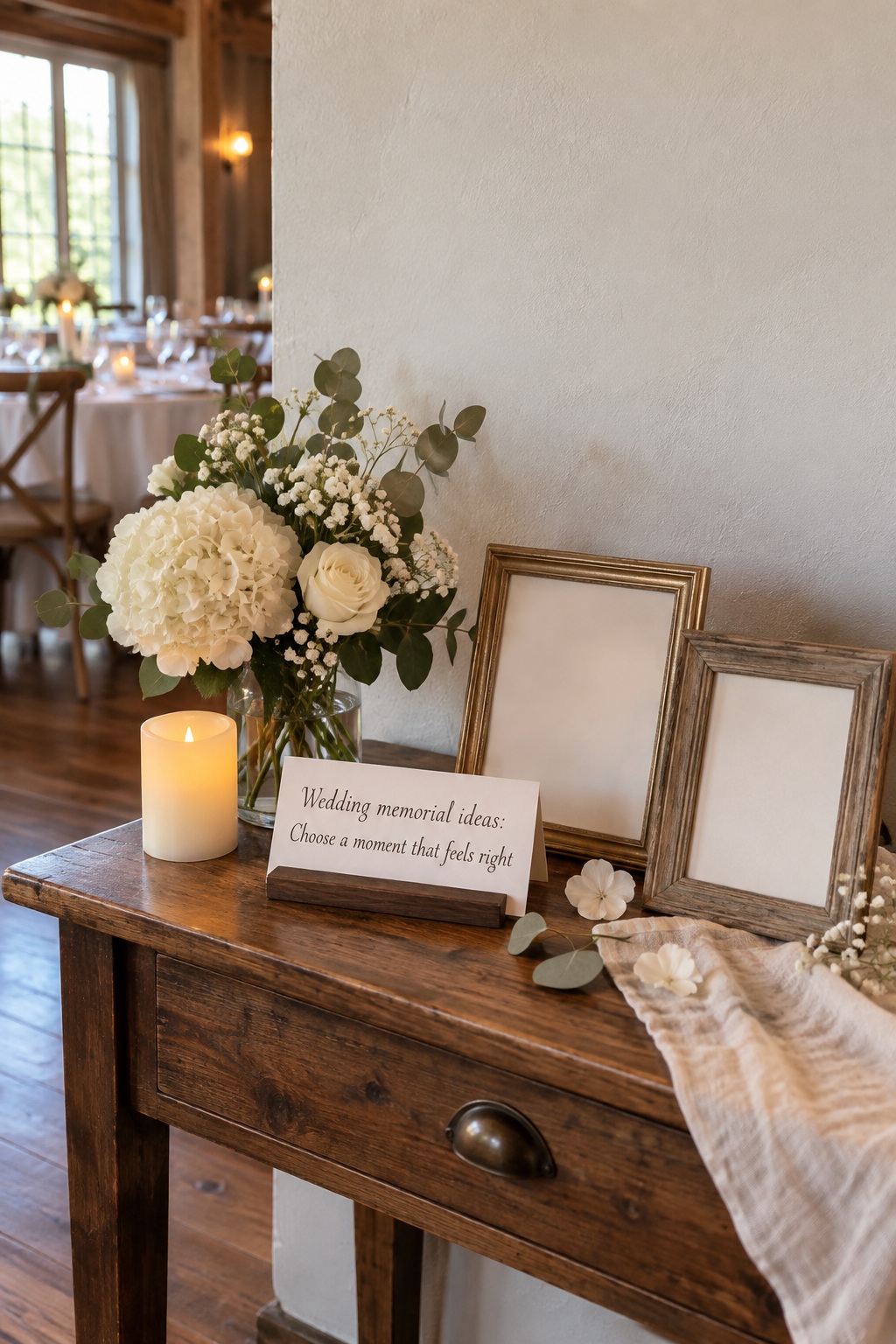
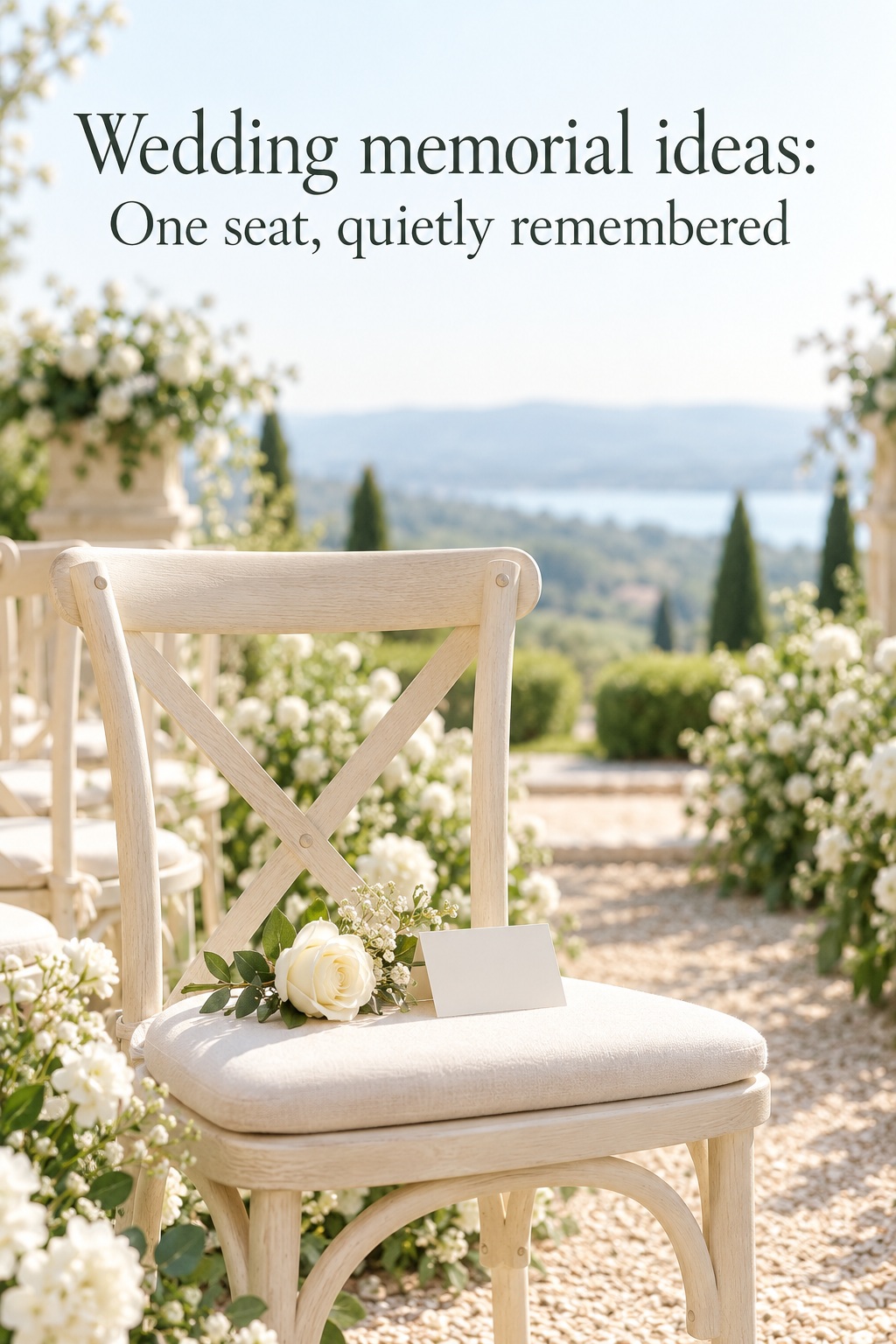
A reserved seat or a small memorial table is a visible choice. It can be right when you want guests to recognize the person and there is a location that feels calm rather than disruptive. A seat might hold one flower, a framed photograph, or a small sign. A table can bring together a few photographs and one or two meaningful objects. If several people are being remembered, a shared display may keep the gesture balanced rather than multiplying separate focal points across the room.
Make the display easy to understand at a glance. Select photographs because they feel like the person to you, not because you think you need to show a complete life story. Keep the surface uncluttered and choose a stable frame or stand. Avoid placing it where a line of guests will form, where catering staff need to pass, or where it blocks a processional, accessible route, or photographer’s main angle. If seeing an empty chair could feel difficult, place it slightly to the side or choose a different gesture.
Use this quick comparison before you commit:
- Private detail: best when the meaning is mainly for you, the setup should be minimal, and you do not want to explain it.
- Shared moment: best when a few loved ones should be included, a natural speaking or music moment already exists, and one person can coordinate it.
- Visible display: best when you want guests to notice, there is a suitable location, and someone else can set it up and care for it.
One small tribute can be enough. If you want more than one, consider pairing gestures that do different jobs. A private keepsake may be for the couple, while a single program line informs guests. Several public tributes that all ask for attention can make the plan feel more complicated than the relationship requires. You can always honor someone in a private ritual before or after the wedding, without adding another scheduled moment.
Place the Tribute Where It Belongs in the Wedding Day
Once you know the visibility level, connect it to a moment that already exists. A tribute does not have to interrupt the vows or create a new event. The simplest placement is often one that shares the same setting or timing as another part of the wedding.
For a ceremony tribute, protect the ceremony flow
A program note requires little time during the ceremony and lets guests read at their own pace. An officiant’s sentence can fit into the welcome or opening remarks. A reading may take the place of another reading rather than extending the ceremony. If you reserve a seat, decide who places the item there, when it is placed, and whether anyone should move it after the ceremony. Give the photographer a heads-up if you want the detail captured, but do not make a photo pose mandatory.
For an outdoor ceremony, check whether wind, rain, heat, or an uneven surface could affect paper, a frame, or a candle. Secure lightweight items and keep the tribute clear of the aisle. If candles are part of your plan, ask the venue what it permits before buying or assigning them. Some venues restrict open flames, and a battery candle can preserve the visual gesture when a real flame is not allowed. The Universal Life Church guide includes a venue-aware candle alternative.
For a reception tribute, choose a calm and useful location
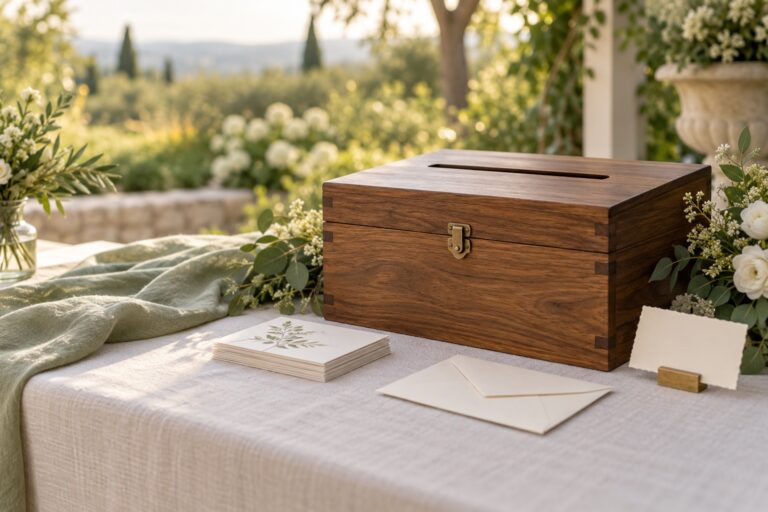
A memorial table may sit near the guest book or in a quiet area guests can approach without blocking the entrance. Ask your venue coordinator to confirm the location and table dimensions. A display should not occupy an accessible route, a fire exit, a service path, or the space needed for the seating chart. If you want guests to write a memory, provide pens, cards, and a container, then decide whether the activity will stay open all evening or close before dancing begins.
You can also connect a tribute to cocktail hour, dinner, or a toast. A favorite song can play at a chosen transition, but tell the DJ its cue and whether it should be announced. A special dessert can be identified on a menu card rather than introduced from the microphone. A toast can fit before another planned toast, but the speaker should know the time limit and whether the couple wants the moment to be solemn, affectionate, or light.
Try these three sample plans
Short ceremony, private preference: Carry a small keepsake in a pocket or bouquet, and add one discreet line to the printed program only if you want guests to know. Ask one trusted person to return the keepsake to its case after photographs. Nothing new needs to be added to the ceremony script.
Family wants a shared acknowledgment: Ask the officiant to read one sentence during the welcome, then continue directly into the ceremony. Let a relative review the wording in advance if that would help them feel included. The couple approves the final text and gives it to the officiant with the ceremony script.
Reception with a visible memory table: Choose a small table near, but not in the path of, the guest book. Use a few photographs, one short sign, and one object that carries a personal connection. The coordinator sets it up before guests enter, the photographer captures it during room details, and a designated person packs it after the reception. The couple does not need to monitor it.
These are planning examples, not rules. If the wedding is a courthouse ceremony followed by dinner, one small object or a line in a toast may fit better than a separate display. If the person was meaningful to one partner but not known by most guests, a private gesture may feel more honest. If multiple loved ones are being remembered, use language and presentation that do not imply one relationship mattered more than another.
Hand Off the Details Before the Wedding
A thoughtful plan can become stressful if the couple is still arranging it while guests arrive. Give each practical task to a named person. Do not rely on “someone will remember” for an item that matters to you.
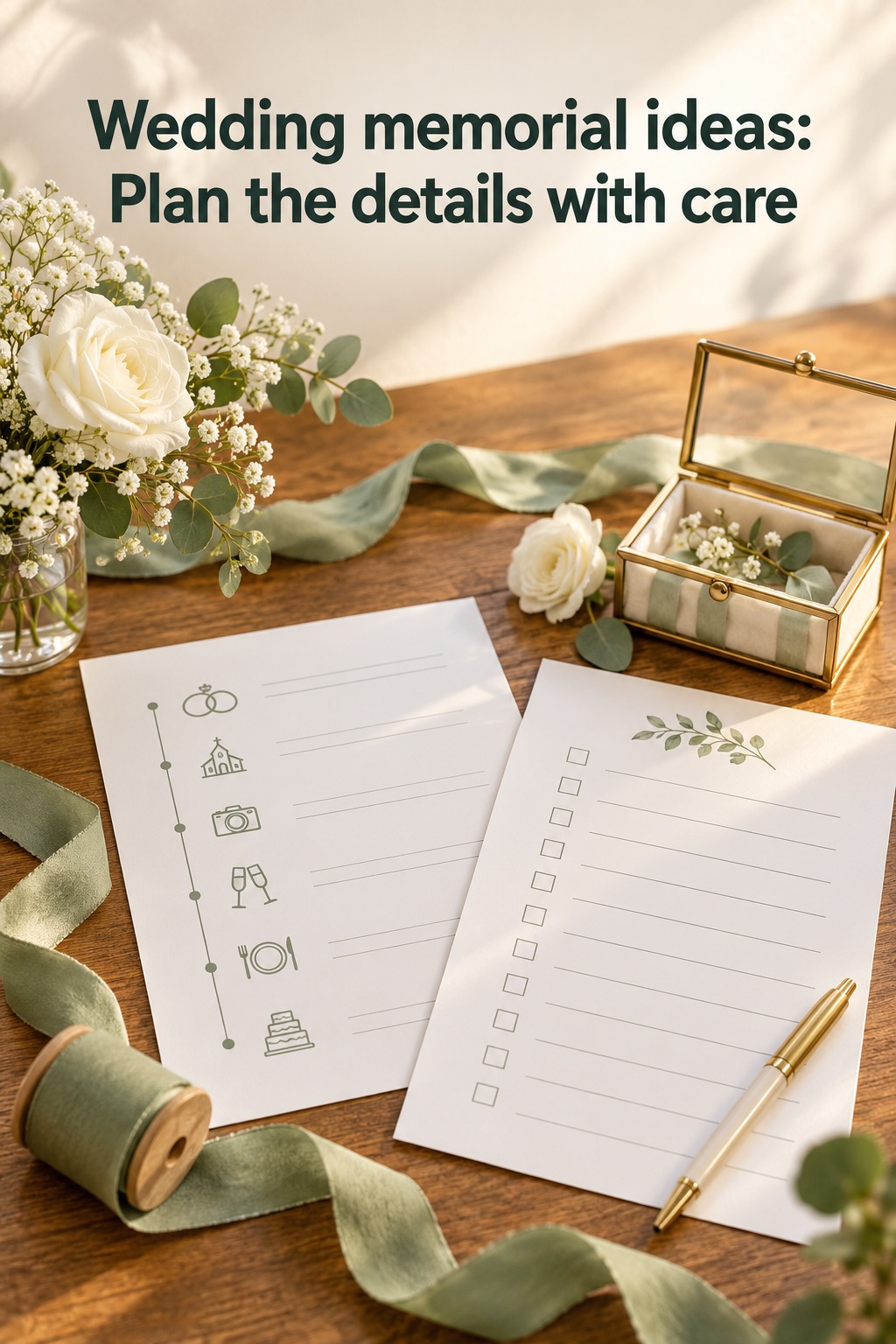
Use this four-part handoff
- Confirm: The venue contact approves the location, table, candle type, access path, and any setup restrictions.
- Prepare: One person packs the sign, frames, keepsakes, matches or batteries, and a small repair kit in a labeled box.
- Place: The coordinator or trusted helper sets up the tribute at a named time and checks that it is stable and visible at the intended level.
- Collect: One person takes responsibility for gathering the items at a named time, returning borrowed objects, and keeping photographs or notes safe.
Share only the information each vendor needs. The officiant needs the approved wording and the point in the ceremony where it belongs. The DJ needs the song, cue, volume preference, and whether to announce it. The photographer needs to know which details you would like documented and whether you prefer candid coverage or no close-up. The coordinator needs the display location, setup photo or sketch, contact person, and collection plan.
For a photo display, confirm that you have permission to use the chosen images, particularly if another relative supplied them. Decide whether guests may take pictures of the table or handle the objects. If you are inviting people to write memories, say whether notes will be private, collected in a book, or read later. Clear instructions keep guests from guessing what to do and allow you to decide how much participation you want.
Build in a backup that preserves the intention, not necessarily the exact object. If rain makes an outdoor display impractical, move a program note or keepsake indoors. If a candle is not allowed, use an approved LED option or place flowers beside the photograph. If a speaker becomes uncomfortable, the officiant can read the approved sentence or the moment can be skipped. Tell the person responsible that skipping is allowed if the couple changes its mind.
Give yourself a final review about a week before the wedding. Check that the wording is correct, the item is packed, the venue has confirmed the location, the vendor brief includes the cue, and a named person owns setup and collection. Then stop revisiting the choice unless something material changes. You are allowed to change the plan or remove the tribute if that feels better as the day approaches.
After the celebration, decide what happens to the objects. A framed program, written memory cards, or a flower from the display can be kept in a memory box. Return family heirlooms promptly. If you would rather put everything away for a while, ask the person collecting it to pack it discreetly and deliver it later. There is no deadline for revisiting the keepsake.
Sources and Methodology
This checklist synthesizes wedding-planning guidance on personal comfort, family consultation, ceremony and reception placement, and coordination with the venue and vendor team. The decision scale and handoff steps are an editorial framework created for this article, not a formal rule or a claim that one memorial format works for every couple.
FAQ
What are thoughtful wedding memorial ideas if I do not want a memorial table?
Try a private keepsake, a line in the program, a favorite flower, a short officiant acknowledgment, or a song placed at a natural point in the schedule. Choose an option that matches how much attention you want it to receive.
How do we honor someone without making the wedding feel too sad?
Agree on your comfort limits, keep the gesture brief or private, and choose wording that reflects the person’s life and your relationship. You can ask the officiant or a trusted helper to handle the moment so you are not responsible for managing it in real time.
Should we tell family before planning a public tribute?
If close relatives may be surprised or strongly affected, a private conversation can help you choose considerate wording and timing. You can listen to their feelings while keeping the final plan with you and your partner.
Where should a wedding memorial table go?
Ask the venue coordinator for a calm location guests can find without blocking an entrance, accessible route, service path, or seating area. Near a guest book can work if there is enough room for people to pause without creating a queue.
What can we use if our venue does not allow real candles?
Ask the venue about an approved battery-operated candle, or use flowers, a framed photograph, or another meaningful object instead. Confirm the rule before buying supplies or putting the candle into the ceremony plan.
How many people should a memorial display include?
There is no required number. You can honor one person, several people together, or choose a private gesture for each. Use a format and wording that feel balanced to you, and avoid adding names simply because you feel pressured to make the display exhaustive.
Who should set up and take down a wedding tribute?
Name one coordinator, relative, or trusted helper for setup and another clear point of contact for collection if needed. Give them a packing list, location, timing, and instructions for returning borrowed items so you do not have to manage the display during the celebration.
Can we change our minds about a wedding memorial idea?
Yes. You can simplify, make the tribute private, or remove it if it no longer feels right. Tell the people handling the schedule and setup so they can adjust the plan without asking you to solve it on the wedding day.