Bridal Shower Cookies: A Simple Planning Capsule
Bridal shower cookies can do several jobs at once: give guests a small sweet to enjoy, make a dessert table feel personal, or become a favor to take home. The easiest way to plan them is to choose the job first. That decision sets the useful details that follow, including how many to order, whether each cookie needs wrapping, and where to put the display.
Then build a small cookie capsule instead of collecting every pretty idea you see. One recognizable design, a couple of simpler shapes, and a limited color palette can feel intentional without turning the table into a second theme. Use the guide below to choose a service format, make a practical assortment, estimate a starting count, and decide what guests should be able to pick up or carry out.
Choose the job your cookies need to do
Before choosing shapes or colors, decide how the cookies fit into the event. Are they replacing another dessert, adding one choice to a larger spread, serving as favors, or giving guests a short activity? One set can cover more than one role, but a clear primary purpose prevents the familiar planning problem of ordering a tray, favor boxes, and activity supplies that all compete for the same cookies.
For a dessert table, plan for tasting and easy reach
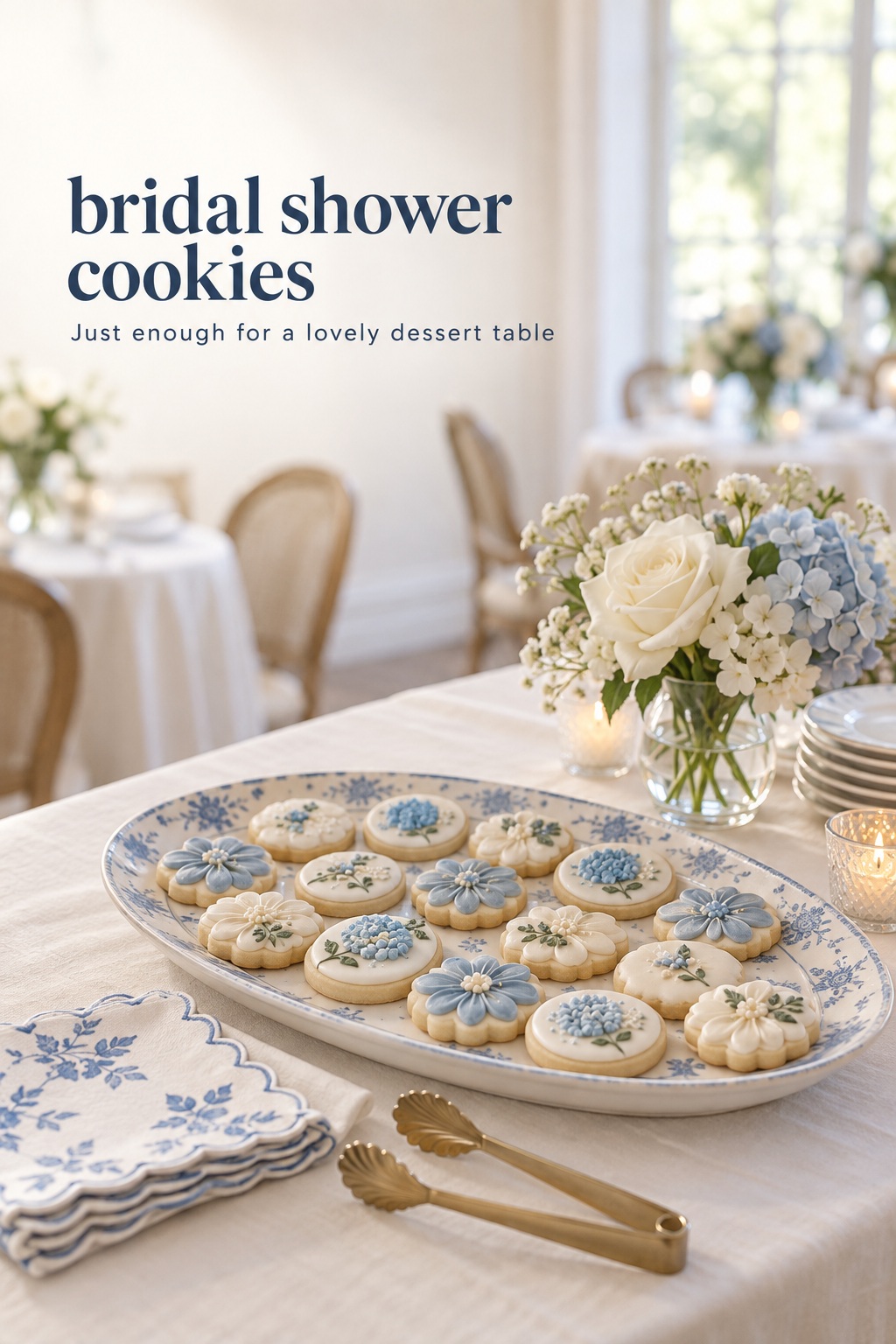
If cookies are one item among cake, fruit, or other sweets, think of them as a tasting option. A few shapes or flavors are enough to make the platter feel varied. Guests should be able to take one without moving a centerpiece or asking someone to cut and serve it. Keep the cookie platter near plates or napkins, but leave a clear edge so people can approach from more than one side if the room allows.
Your wedding look is only the beginning.
Keep your guest list, vendors, timeline, and every important detail together with Zarellea — so your day feels as considered as your style.
When cookies are the main dessert, consider whether guests will want a small cookie alongside coffee or tea, or a more filling serving as part of a dessert course. That is a menu decision as much as a design decision. A single large iced cookie makes a striking focal point, but it may be less convenient to eat during conversation than smaller pieces. If guests will be standing and mingling, choose sizes and a serving setup they can manage with one hand.
For favors, make the handoff obvious
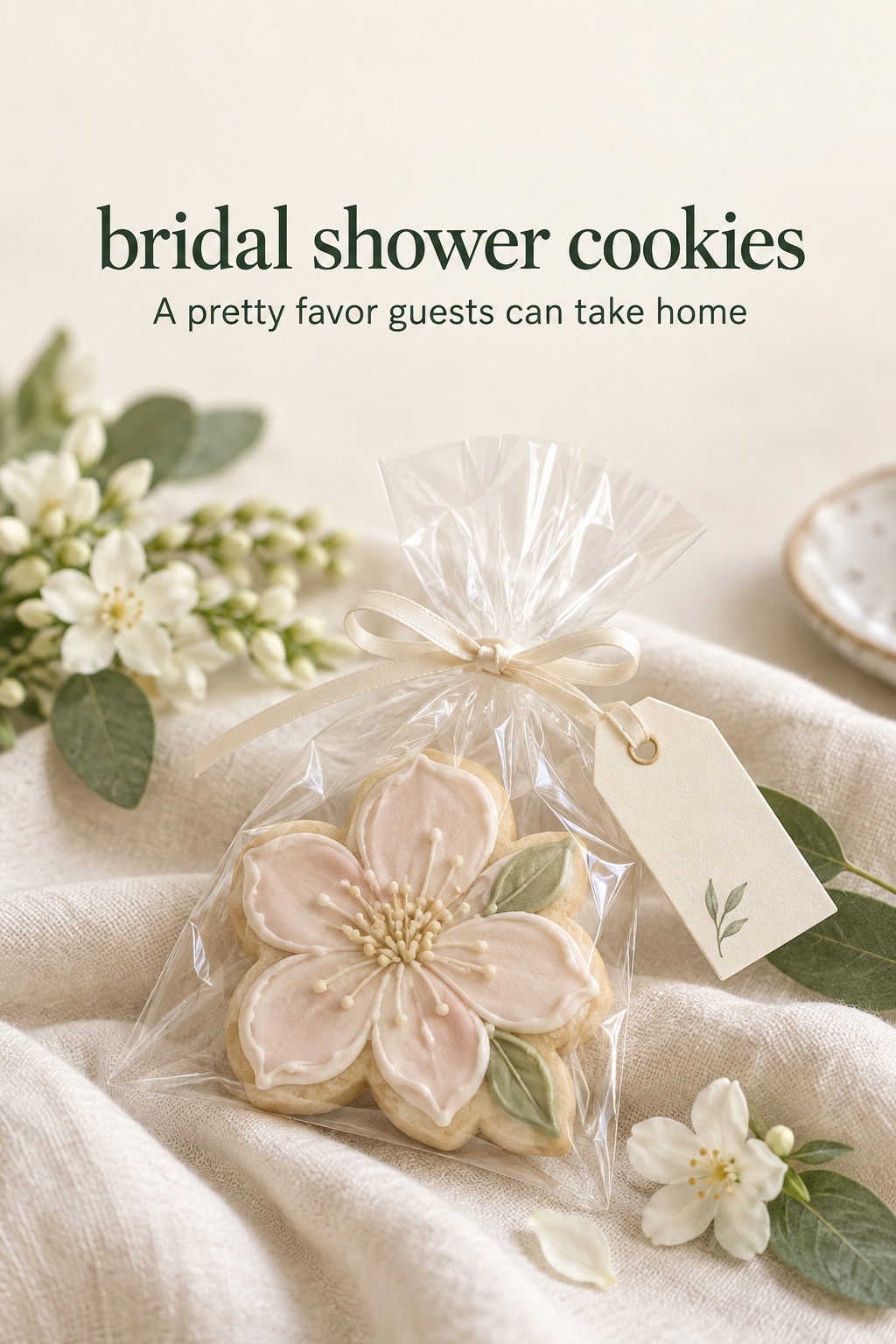
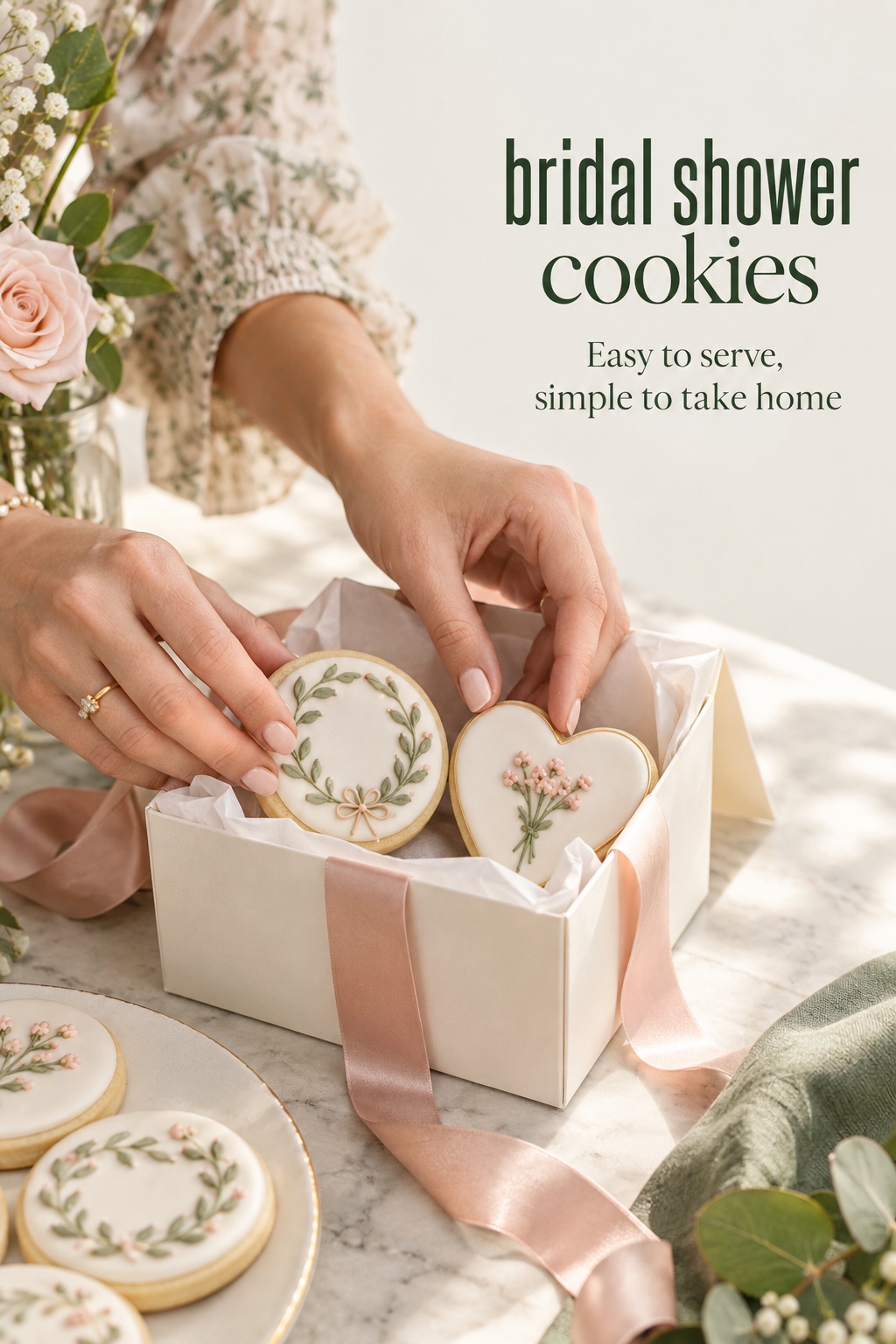
A favor cookie works best when each guest can tell whether it is meant to be eaten now or taken home. You might place one individually wrapped cookie at each setting, or arrange favors on a small table close to the exit. A simple tag can say “thank you” or name the event; the cookie itself does not need a long message. If it is a shared platter rather than an individual gift, provide a few bags or boxes beside it so guests can take extras without wrapping one by one during the party.
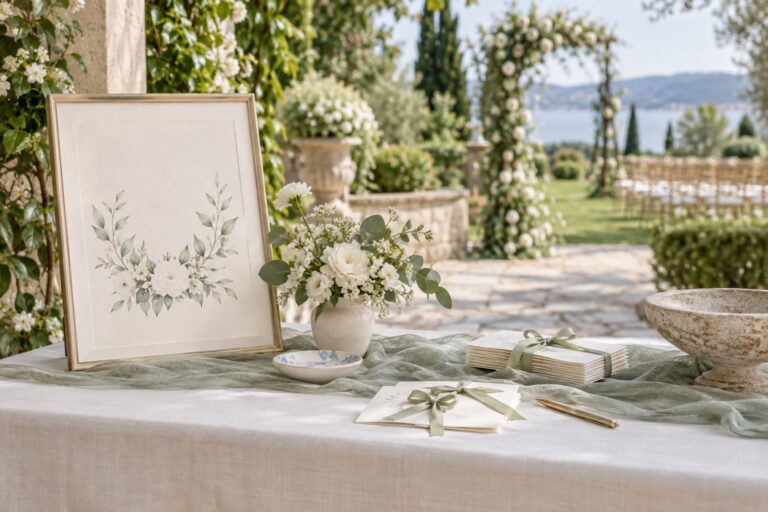
Choose the placement based on the flow of the event. Favors at each place setting are easy to see but can take up space during lunch. An exit display keeps dining tables clear, though a host should make the take-home purpose clear before guests leave. A guest-book table can work when guests naturally pause there, but do not place edible favors where they could crowd notes, cards, or other keepsakes.
For a decorating activity, keep the cookies simple
If guests will decorate cookies, start with undecorated or lightly prepared bases, a small set of icing colors, and a few easy toppings. This works best when the activity is a real part of the schedule, rather than an extra station people are expected to notice and manage themselves. Leave enough table space for plates, drinks, and finished cookies to dry or be carried. A host can explain the activity in one sentence and offer it as an option, so guests do not feel obliged to participate.
Think through cleanup before choosing this format. Cover the work surface, put wipes or paper towels within reach, and keep the decorating area away from gifts, coats, or delicate table linens. If the shower is short or the guest list prefers conversation, a ready-made cookie display may serve the event better. The activity should add a pleasant pause to the gathering, not create a second hosting job.
Build a small cookie capsule around one visual idea
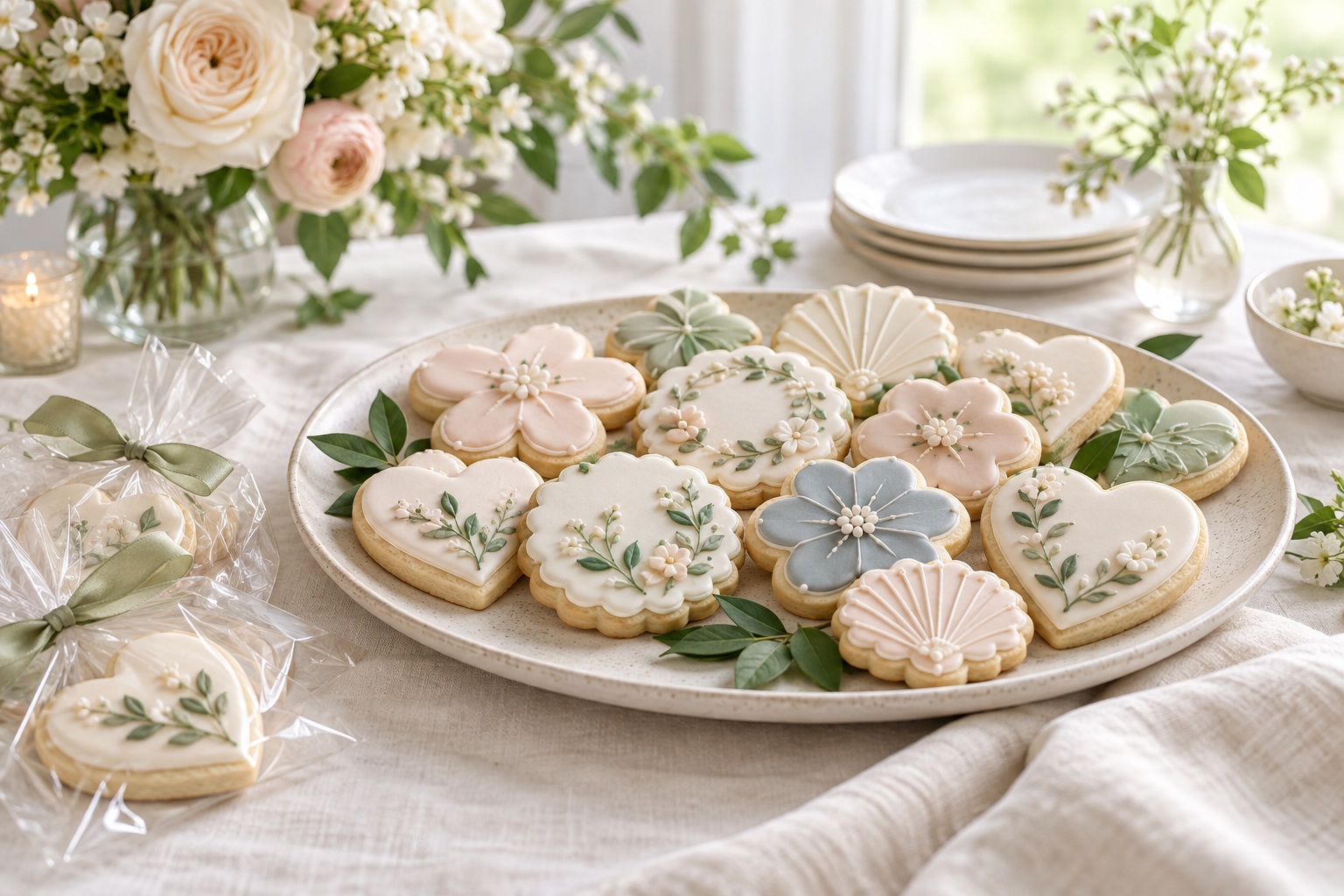
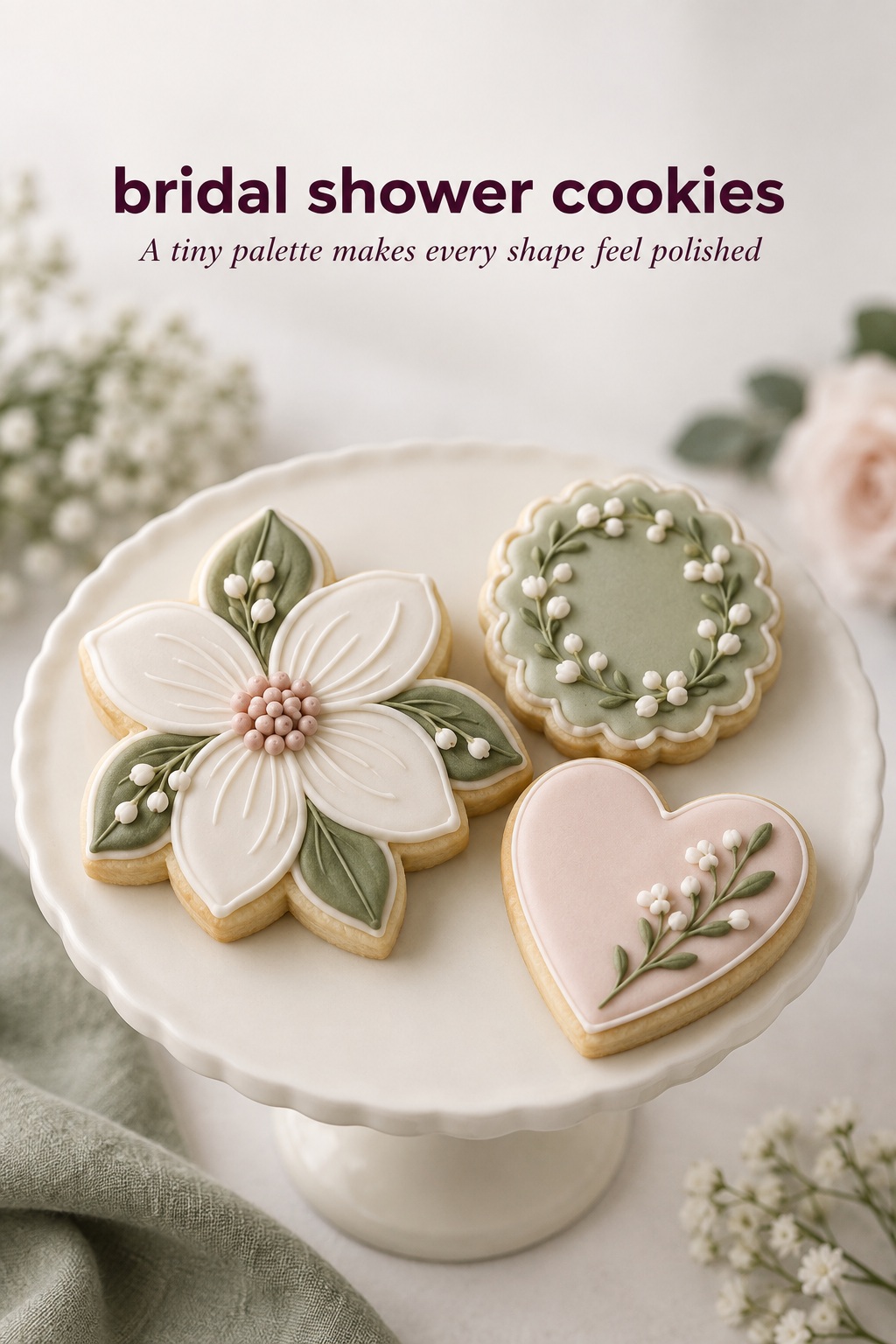
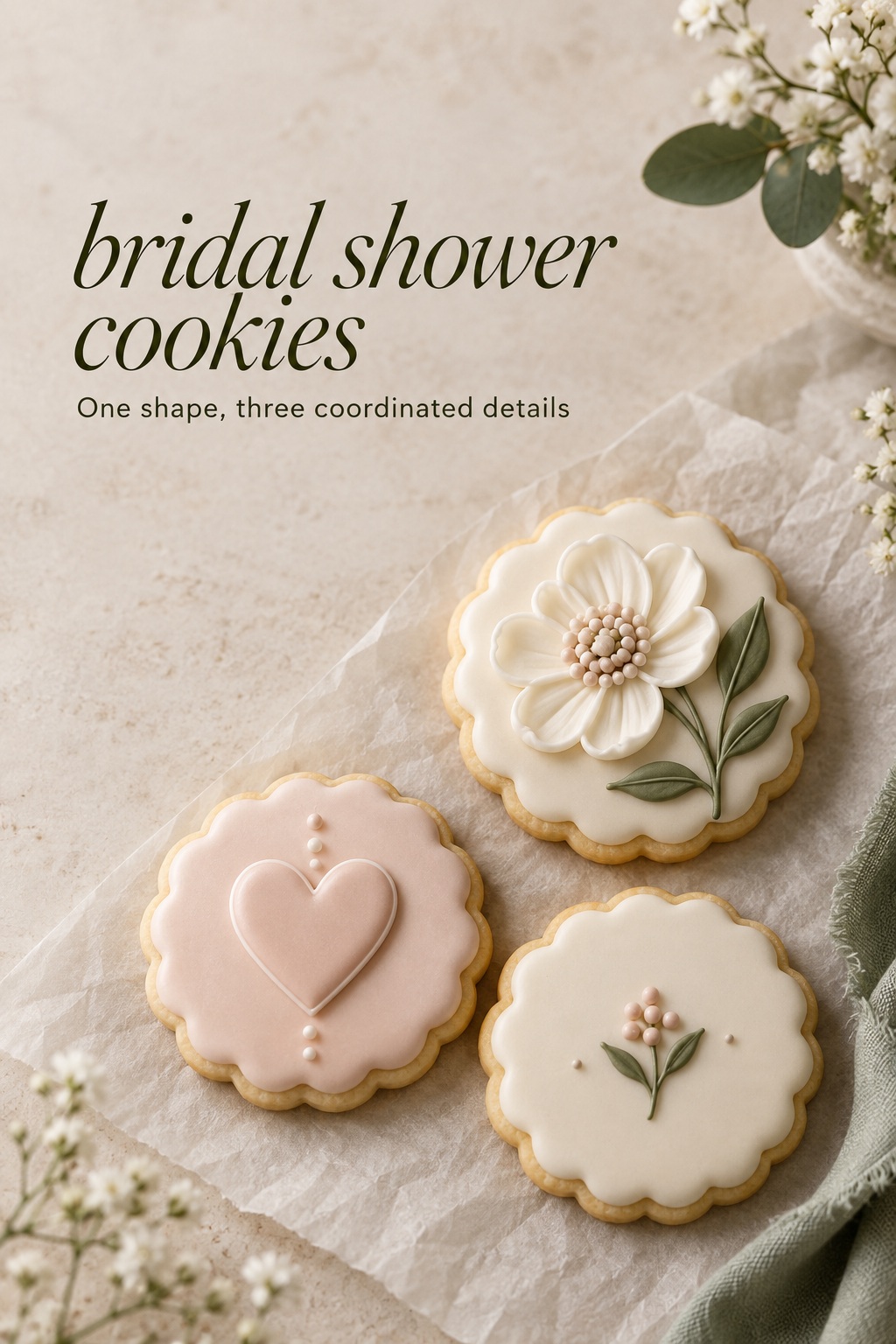
Once you know the cookies’ role, create an assortment that looks related from across the room and still feels relaxed up close. A useful formula is one hero cookie, two supporting shapes, and one repeatable color palette. The hero cookie carries the personal detail; the supporting pieces keep the set from looking like a row of identical favors. You can adjust the number of designs to suit the order, but a small visual vocabulary is easier to plan, display, and describe to a baker.
Choose a hero shape that tells the story
Pick one motif guests will recognize quickly: a flower for a garden shower, a teacup for a tea gathering, a bow or dress silhouette for a bridal detail, or a simple initial for a more personal set. It does not have to illustrate the entire theme. A single well-chosen shape can do that work. If the event already has a monogram, invitation illustration, or meaningful flower, use one as a reference rather than asking every cookie to carry the same symbol.
Before finalizing a custom design, describe it in plain language and ask the baker what can be simplified at the cookie’s actual size. Fine lettering and tiny details may not read well from a display. A larger shape with one clear decoration often looks more polished than several small elements squeezed together. If you are baking at home, choose a cutter you already own or can use again, and save elaborate piping for just a few hero cookies.
Use two supporting shapes for rhythm
Supporting cookies can be simpler: a round or scalloped shape with one icing color, a heart with a small accent, or a flower without lettering. Their job is to repeat the palette and give the hero cookie room to stand out. If every piece is highly detailed, the platter can look busy and take longer to make. If every cookie is identical, the set may feel more like a product sample than a designed assortment.
Try laying out a paper sketch or a few uniced cookies before ordering the full set. Alternate the hero shape with supporting pieces, then see whether the colors and sizes have a comfortable balance. For a small favor order, you may not need all three shapes in every package. One hero cookie can be paired with a simpler companion, while the larger shared platter carries the complete mix.
Limit the palette and personalize one detail
Choose a base color, a light neutral, and one accent. A soft blue with white and a little lemon yellow, warm ivory with blush and muted green, or a clean white set with one metallic-looking detail can all feel celebratory. Match the palette to the invitation, flowers, or the bride’s preferred colors rather than automatically copying the wedding palette. A shower can have its own mood, and a cookie set can echo it without repeating every table detail.
For personalization, use one small element: the bride’s first initial, a short phrase, or a motif tied to a shared interest. Put longer wording on a paper tag instead of trying to pipe it onto every cookie. This keeps the edible design legible and makes it easier to offer an alternate cookie without the personalized text. If you are ordering from a bakery, ask to approve the spelling and color description before production; if you are making them yourself, test one cookie before repeating the design across a batch.
Plan the count and display around the way guests will eat them
There is no single cookie count that suits every bridal shower. A cookie replacing dessert needs a different plan from a wrapped favor or a small extra on a table with several sweets. Start with the confirmed guest count, decide how many cookies each person is expected to receive, and then account for the role of the other desserts. This gives you a planning number you can explain to a bakery or use when baking, rather than relying on a general rule that may not fit the menu.
Use a simple count before adding a small cushion
For individual favors, begin with one cookie per expected guest, plus a small cushion for breakage, late additions, or someone who would like an extra. For a shared dessert table, estimate the cookie portion separately: will most guests take one, or are cookies one of several choices? If other sweets are abundant, a smaller cookie portion may be enough. If cookies are the only dessert, choose a serving size that feels satisfying and ask your baker how many pieces a tray or box includes.
For a decorating activity, count the number of bases by the number of people likely to join, not automatically the entire guest list. Add a few extras for dropped or misshapen cookies. Keep activity cookies separate from ready-to-eat favors so no one mistakes a work-in-progress for a finished treat. If attendance is uncertain, ask the host for a current RSVP count before the order deadline and write down whether the final figure includes the bride, vendors, or children who will attend.
Make the display easy to approach and replenish
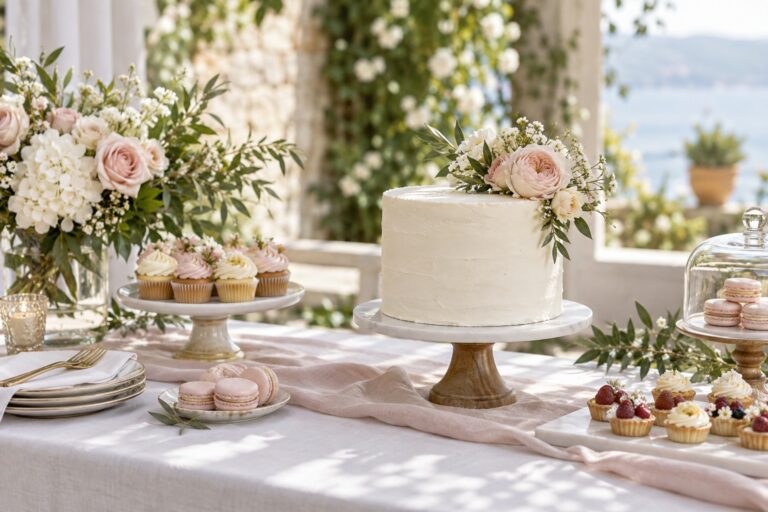
Choose a stable surface that guests can reach without leaning across a centerpiece. A low platter is simple to serve from; a cake stand can add height if it does not make the cookies difficult to reach. Group cookies in small rows or loose clusters, leaving a clear place to set down a plate or napkin. Put tongs or a small serving spatula beside the display if the cookies are not individually wrapped, and place a label where it can be read without lifting a tray.
Think about traffic. A dessert display near a doorway or narrow passage can create a queue, while a table at the edge of the room may be easy to miss. If guests will serve themselves, keep a spare tray behind or below the display so the host can replenish it without searching through boxes. Avoid stacking delicate decorated cookies too high; a few low groupings are easier to pick up and less likely to hide the designs. The arrangement should support serving first and photography second.
Give guests clear ingredient information
Ask the baker for a reliable ingredient and allergen summary before the event, especially if cookies are being served unpackaged. Share that information on a small card or keep the original packaging nearby. Do not label a cookie “allergy-safe” based only on its appearance or a short conversation. A guest with a food allergy may need to check the specific ingredients and preparation details with the person who made it.
The FDA explains that most packaged foods sold in the United States must identify major food allergens, while requirements can differ for foods sold unpackaged, such as bakery goods displayed on trays. That is why asking the bakery directly and keeping its ingredient information available is a thoughtful event-planning step. If you have a dietary question you cannot answer confidently, point the guest to the baker rather than guessing.
Choose a making route, then plan ordering and take-home
With the format and design settled, choose how the cookies will be made. A custom bakery order can provide detailed decoration without adding a long project to the host’s week. Semi-custom or store-bought cookies can still look considered when you choose a shape, color, and simple packaging that suit the occasion. Home baking gives you control over flavor and timing, but it also includes shopping, decorating, drying, storing, and transport. Choose the route that fits the available time and help, not only the ideal photograph.
Compare custom, semi-custom, and home baking
For a custom order, send the baker the event date, estimated count, cookie purpose, palette, one or two design references, and any dietary questions. Ask about the minimum order, pickup or delivery options, packaging, and when the final count is due. Those answers determine whether a detailed set is practical. A design can be beautiful and still be the wrong choice if it needs a long setup window or arrives without the packaging the host expected.
A semi-custom order can offer a useful middle ground: choose a standard shape or flavor, then personalize a tag or one color. Store-bought cookies can work for a relaxed shower if they are fresh, easy to serve, and presented neatly. If you bake at home, select a recipe and decoration level you have already handled comfortably. Try one sample batch early enough to change course if the cookies spread, break, or take more decorating time than expected.
Map the schedule from order to setup
Write down the decision dates: when the guest count is expected to settle, when the bakery needs the order, who will pick it up, and who will place the cookies at the venue. Confirm the bakery’s own lead time instead of relying on a generic number, since custom work and busy periods vary. For home baking, work backward from the event and leave time for cooling, decorating, and packing. Put the pickup plan and contact information in one place so the host is not chasing details on the morning of the shower.
Plan transport as carefully as the decoration. Use a flat, sturdy container that will not slide in the car, and ask the baker how the order should be carried. At the venue, assign one person to place the display and keep the remaining cookies protected until they are needed. If favors are going to each place setting, give the setup person a count and a simple placement note. These small handoffs save the host from having to supervise every cookie individually.
Finish favors with practical packaging
Packaging should protect the cookie and make it comfortable to carry. A clear bag lets the design show; a small box may suit a more delicate cookie or a favor that guests will travel with. Add a short tag, ribbon, or sticker only if it does not make the package hard to open. For favors at a place setting, keep the package low enough not to crowd plates and glasses. For an exit table, arrange them in a tray or basket so guests can take one without asking.
If cookies are part of a larger favor, decide whether the extra item truly adds something. A tea bag with a cookie can suit a tea-themed shower, but a cookie alone may be easier to pack and more likely to be used. Avoid tying delicate packaging into a complicated keepsake if guests need to carry it home. A clear label, an easy grab, and a cookie that stays intact are more useful than several decorative layers.
Sources and methodology
This guide draws on a review of current US search results, custom-cookie menus, dessert-display examples, and host accounts. The count method is a planning framework, not a tested catering standard; confirm portions and order deadlines with the bakery or caterer serving the event. Food-allergen guidance is based on the FDA’s consumer information on food labels and allergen disclosure. Packaged and unpackaged foods may be subject to different labeling requirements.
FAQ
How many cookies should I order for a bridal shower?
Start with the confirmed guest count and the cookies’ job. For individually wrapped favors, plan one per expected guest plus a small cushion. For a dessert table, consider the number and size of other sweets, then ask the bakery how many servings its tray or box provides.
What kind of cookies work best for a bridal shower?
Choose cookies that suit how they will be served. Decorated sugar cookies can carry a personal motif, while simpler cookies are easy to arrange on a shared platter. For a favor, pick a size and package that guests can carry home without extra wrapping at the event.
Should bridal shower cookies be favors or dessert?
Either format can work. Decide whether you want guests to eat the cookies during the shower, take one home, or both. If the cookies serve both purposes, separate the shared platter from the wrapped favors and make the take-home option clear.
How do I match cookies to a bridal shower theme?
Use one recognizable shape, two simpler supporting designs, and a limited palette tied to the invitation, flowers, or the bride’s preferences. A small tag can carry a longer phrase, leaving the cookie decoration clean and readable.
Can I use store-bought cookies for a bridal shower?
Yes. Choose cookies that are fresh and easy to serve, then use a coordinated platter, small label, or simple favor bag to connect them to the event. If you need dietary information, keep the original packaging or ask the seller for ingredient details.
When should I order custom bridal shower cookies?
Ask the bakery for its lead time, minimum order, and final-count deadline as soon as you know the event date. Custom designs and busy seasons can affect timing, so use the baker’s confirmed schedule rather than a general rule found online.
How can I make cookie favors easier for guests to take home?
Package each favor so it protects the cookie and is easy to carry. Place it at each setting or near the exit, and use a short tag to show that it is meant to go home. Keep a few extra bags or boxes nearby if guests may want to take a shared cookie with them.
How should I share allergy information for bridal shower cookies?
Ask the bakery or maker for ingredient and allergen information, and keep it visible near unpackaged cookies or the original package. Do not guess from appearance or promise that an item is allergy-safe unless the maker can confirm the relevant ingredients and preparation details.