Indian Wedding Nails for a Chic, Camera-Ready Bridal Look
There is a particular richness to indian wedding nails that makes them feel less like a beauty detail and more like part of the entire bridal composition. Hands are photographed constantly through mehndi, jewelry styling, vows, and reception moments, so the manicure has to hold its own beside embroidered attire, gold accents, gemstones, and layered bangles. The most compelling bridal nails do exactly that: they echo the mood of the celebration while still feeling refined at close range.
The aesthetic moves between tradition and modern polish. Mehndi-inspired nail art, red bridal nails, jewel-toned finishes, crystal nail art, and soft halo or chrome details all belong in this world, depending on the function and the bride’s wardrobe. Across a multi-day celebration, nails are expected to be beautiful, practical, and durable enough for long ceremonies, dancing, outfit changes, and endless hand-focused photography.
That balance is exactly why indian wedding nails remain so appealing. They can lean ornate for the wedding day, playful for the sangeet, fresh for the mehndi, and luminous for the reception, while still connecting everything through color, texture, and embellishment. A thoughtful bridal manicure feels cohesive with the whole wedding look, not separate from it.
The visual language of indian wedding nails
The signature mood of indian wedding nails is celebratory, detailed, and intentionally coordinated. Traditional bridal references show up through red, gold, ruby, emerald, and other jewel tones, while modern bridal trends introduce chrome nails, ombré French finishes, soft pink bases, and micro details that keep the manicure from feeling heavy. The result is a look that can read traditional glam, soft luxe, or sparkling statement depending on how much embellishment is used.
Your wedding look is only the beginning.
Keep your guest list, vendors, timeline, and every important detail together with Zarellea — so your day feels as considered as your style.
What makes this category distinct is its relationship to wedding functions. A manicure for the mehndi may draw from henna-inspired nails and intricate motifs, while reception-ready nails often shift toward shimmer, crystals, glossy depth, or glazed metallic detail. Instead of choosing one generic bridal manicure, many brides think in terms of a visual story that lasts from mehndi to reception.
That story becomes even stronger when nails are treated as part of the bridal styling ecosystem. Bangles, chura, maang tikka, hath phool, necklaces, and attire colors all influence which finishes, motifs, and accents feel most harmonious. This is where indian wedding nails become truly editorial: they mirror the rest of the bridal look rather than competing with it.
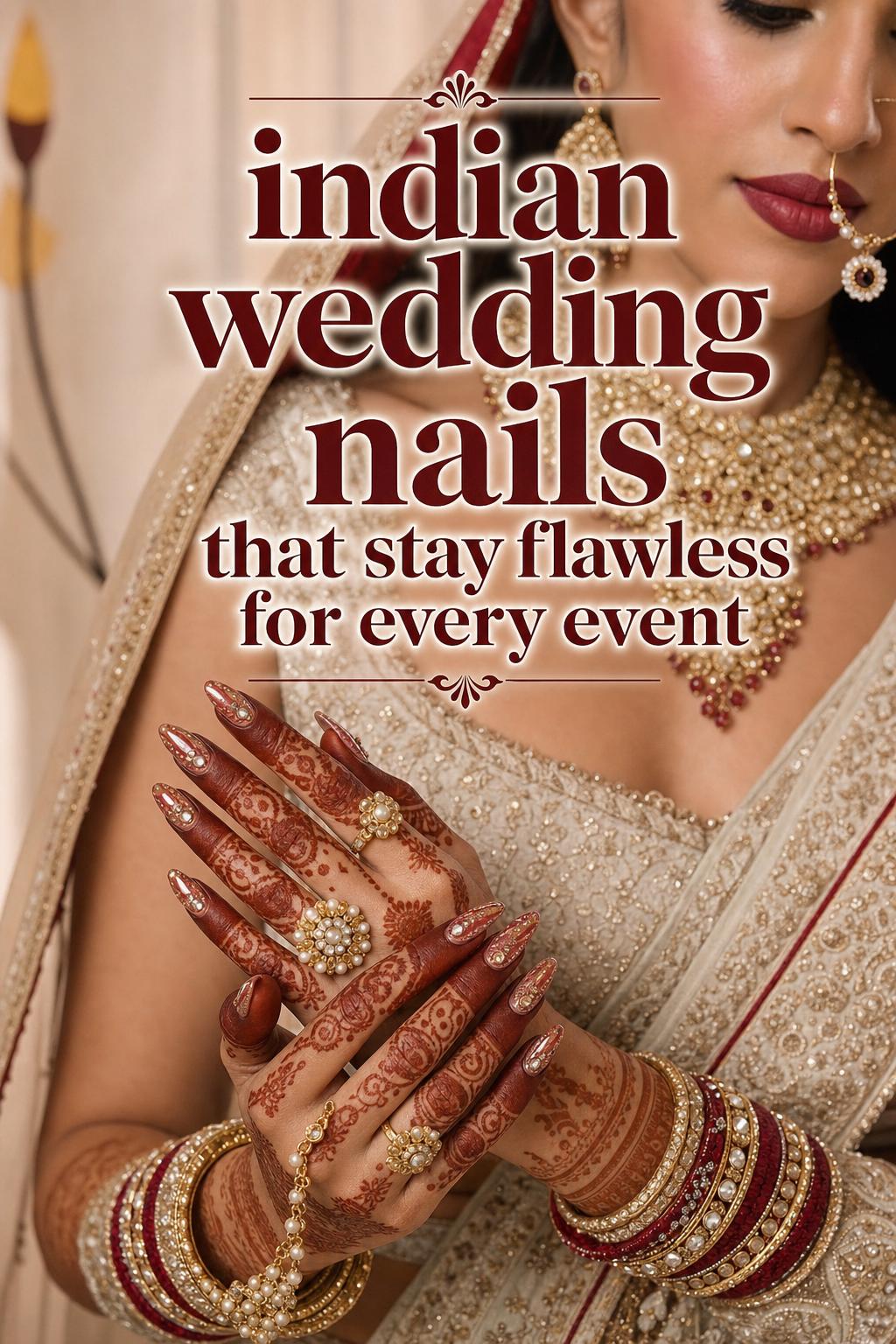
Foundation first: shape, silhouette, and finish
Before choosing motifs or embellishments, it helps to decide on the overall silhouette of the manicure. Bridal nail shapes such as almond, squoval, and coffin create different effects even when the color palette stays the same. Almond tends to soften intricate designs and works especially well with henna-inspired patterns. Squoval feels classic and practical for brides who want comfort through a long wedding schedule. Coffin can support bolder placements of rhinestones, gold foil, and accent details, especially for a more fashion-forward reception look.
Finish matters just as much as shape. A glossy surface makes red bridal nails and jewel tones feel richer. Matte can give mehndi motifs a velvety, editorial finish, especially when paired with gold accents. Chrome nails, shimmer, and halo nails bring a subtle reflective quality that suits evening lighting beautifully. In candlelit receptions or flash photography, these finishes often read more dimensional than a flat polish color.
The practical side should not be overlooked. Multi-day weddings place different demands on a manicure than a single event. Intricate embellishments may be stunning, but they should be considered in relation to outfit changes, jewelry handling, and the amount of movement expected at the sangeet or baraat. A shape and finish that feel elegant but manageable usually age better over the full celebration.
Key pieces for the bridal nail foundation
- almond, squoval, or coffin nail shape
- glossy, matte, chrome, or shimmer finish
- base coat and topcoat for longevity
- gel polish for a longer-wear bridal schedule
- accent placements planned around jewelry and photography
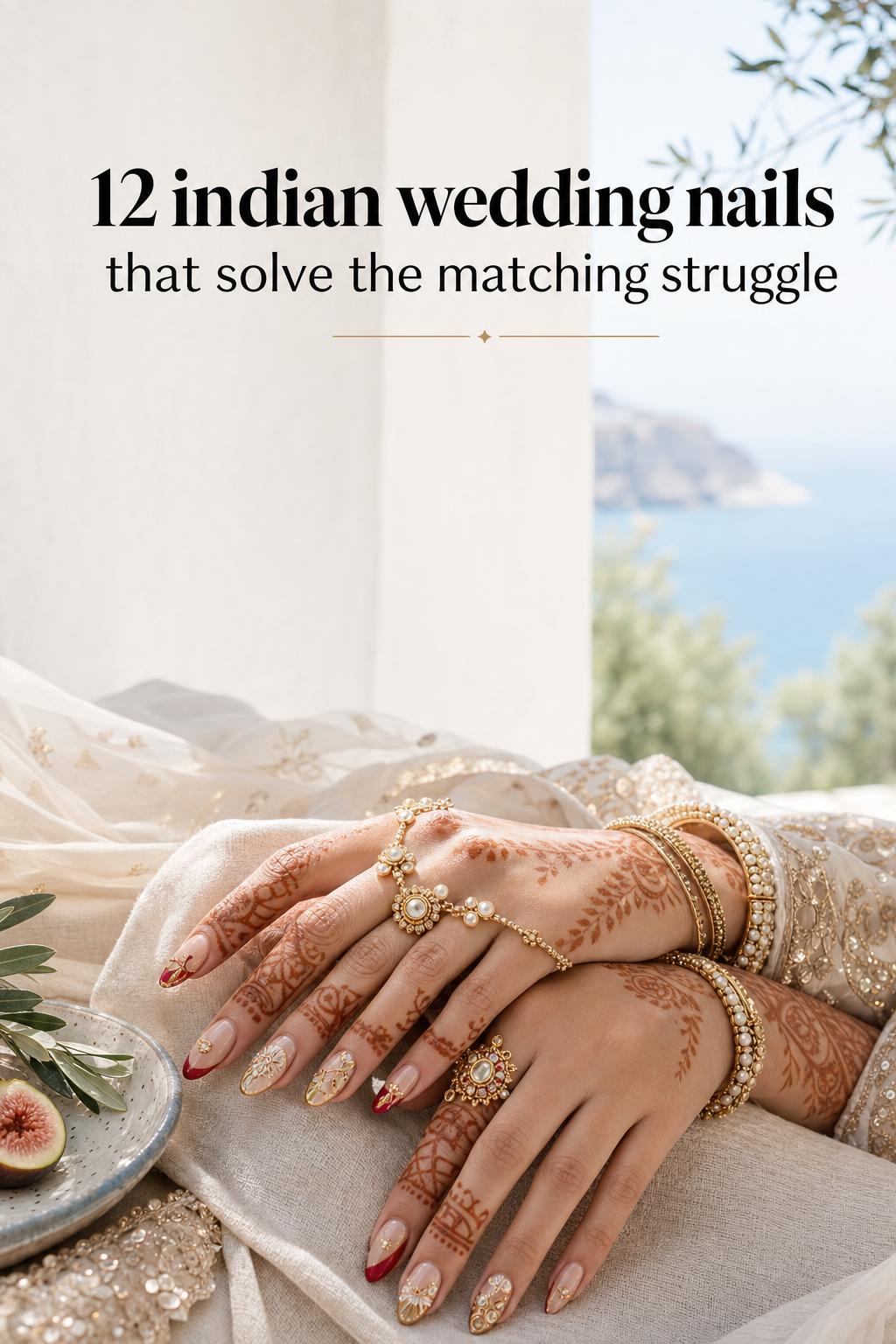
Look: Mehndi muse with henna-inspired detail
This look captures the poetry of the mehndi ceremony itself. The mood is intricate and romantic, with nails that echo the fine-line beauty of bridal mehndi without trying to copy it too heavily. The silhouette works best when the manicure remains balanced: a few detailed nails, a clean base, and motifs that feel deliberate rather than overcrowded.
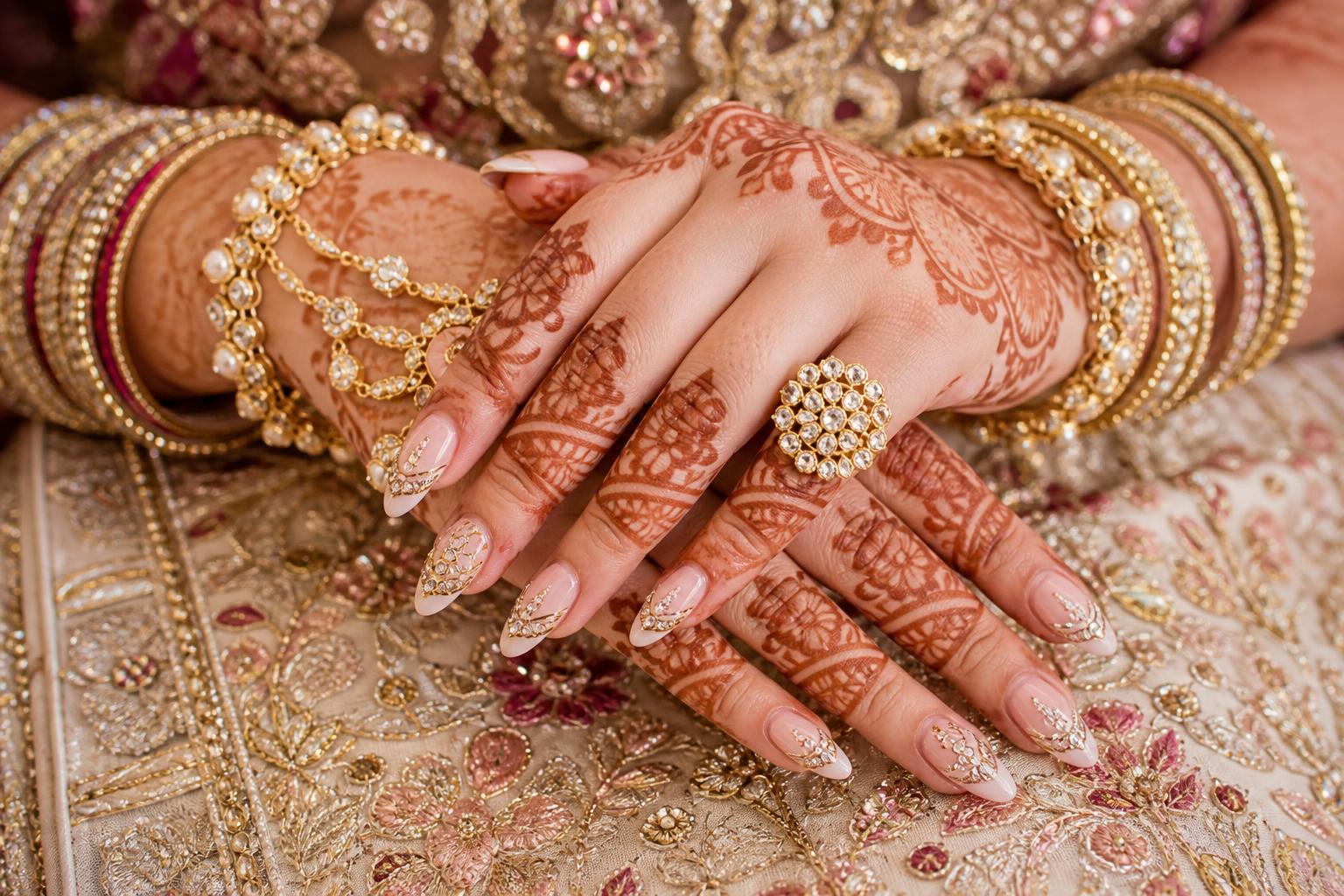
Henna-inspired nails usually sit beautifully on nude, soft pink, or sheer bases, allowing the motifs to stand out with clarity. Gold accents can be layered in as tiny embellishments, while a matte or glossy top layer changes the effect dramatically. Matte tends to make the artwork feel more artisanal and traditional, while gloss gives it a polished bridal finish. This style also pairs naturally with mehndi-heavy hands because it extends the visual story rather than interrupting it.
For brides who want indian wedding nails that feel culturally rooted, this is often the most expressive route. It is also one of the easiest looks to connect with the rest of the day’s styling, especially when the jewelry includes bangles, hath phool, or traditional hand adornment. The manicure feels like part of the ritual atmosphere, not just a beauty add-on.
Style tip
If your mehndi design will already be visually dense, keep the nail motifs lighter and more open. That contrast prevents the hands from looking overly busy in close-up photography and lets both details read clearly.
Look: Classic red and gold bridal drama
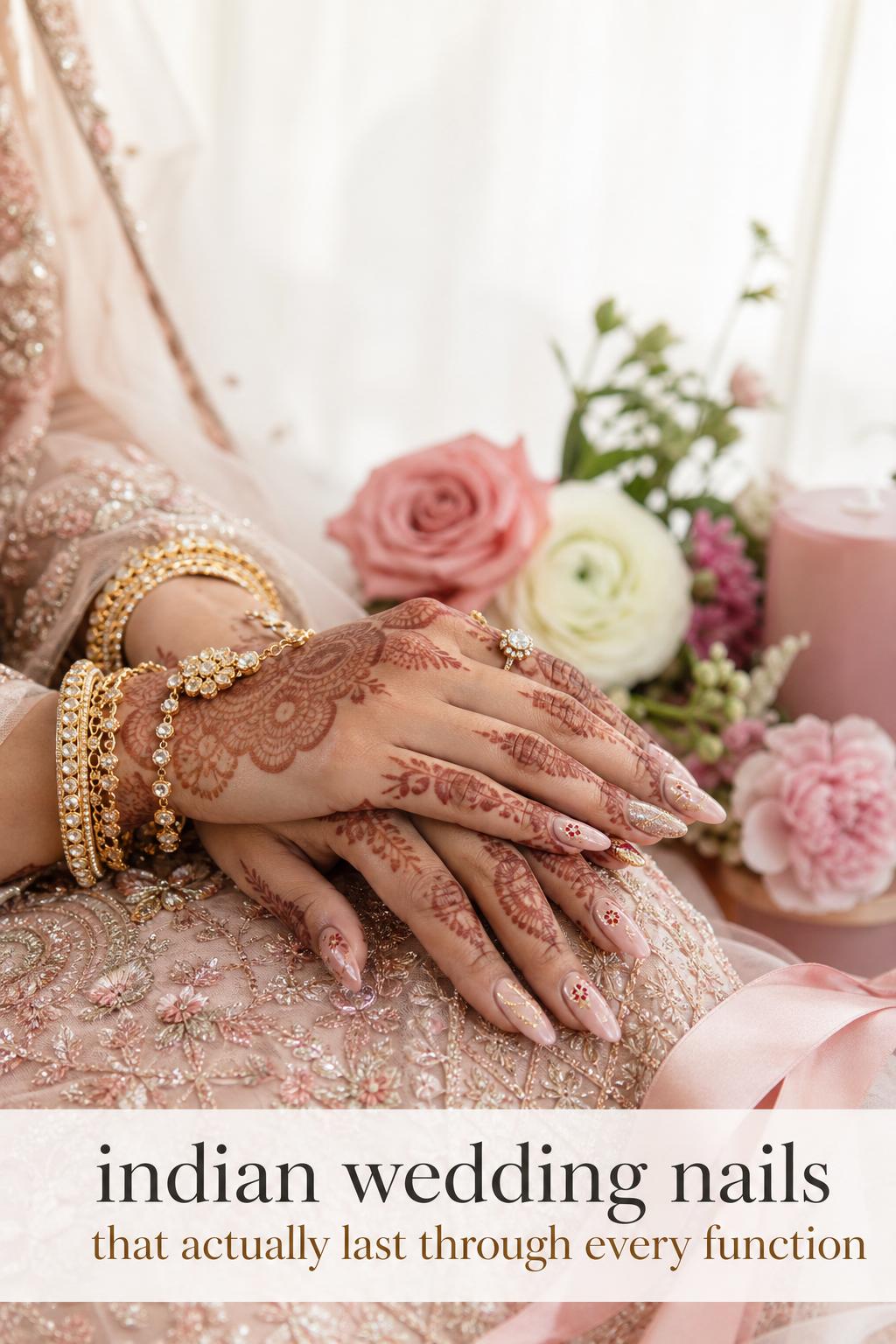
Some bridal aesthetics never lose their hold, and red bridal nails with gold nail art remain one of the strongest examples. The mood here is regal and unmistakably wedding-centered, especially for the ceremony itself. In natural daylight, the color reads rich and intentional; in formal portraiture, it complements the warmth of traditional attire and gold jewelry.
The palette can move from deep red to rose tones depending on the outfit, but gold is the anchor that gives this manicure its traditional glam identity. Gold foil nails, gold accents along the cuticle, or jewel placements at the base create a bridal finish without requiring every nail to be fully embellished. Brides who are wearing heavily worked attire often benefit from this approach because it creates harmony with the wardrobe while keeping the manicure refined.
This style works particularly well for the wedding function itself, where ceremonial details, jewelry, and attire are usually at their richest. It is also one of the most timeless options in the indian wedding nails category because it does not rely on trend alone. Even when modernized with cleaner lines or minimal crystal placement, it still feels fully bridal.
How to keep the look elevated
- use red as the dominant shade and let gold act as the accent, not the distraction
- choose one embellishment direction: foil, rhinestones, or micro glitter
- match the warmth of the gold to the jewelry so the overall styling feels cohesive
Look: Jewel-toned elegance for outfit-led styling
Not every bridal wardrobe centers on red. Many wedding looks move through emerald, ruby, sapphire, pearl, cream, or rose-based attire across different functions, and nails can respond beautifully to that shift. This interpretation feels more wardrobe-led, with color palettes chosen to support the clothing rather than follow a single bridal formula.
Emerald and ruby tones bring a saturated richness that feels ideal for evening functions, while pearl, cream, and soft pink create a quieter elegance for daytime celebrations or lighter outfits. Jewel-tone nails can be worn as full color, but they also translate well into accent work on a neutral base. Brides who want a refined look often choose a controlled palette with one statement shade and one supportive metallic, usually gold or silver embellishment.
This approach is especially useful when each event has a different outfit mood. It allows the manicure to remain bridal while still responding to changing attire. A thoughtful palette also prevents the nails from clashing with embroidered fabrics, stones, or bangles, which is a practical but often overlooked part of wedding styling.
Color direction by visual mood
- red and gold for ceremonial richness
- emerald or ruby for evening glamour
- rose and soft pink for romantic softness
- cream and pearl for understated bridal polish
- jewel-toned accents on nude bases for balance
Look: Halo nails and soft ombré French for a modern bride
For brides drawn to a cleaner bridal aesthetic, halo nails and ombré French designs bring a softer form of luxury. The mood is polished, airy, and modern, with enough luminosity to feel occasion-worthy without leaning heavily ornate. This is the manicure equivalent of choosing elegance through finish rather than excess detail.
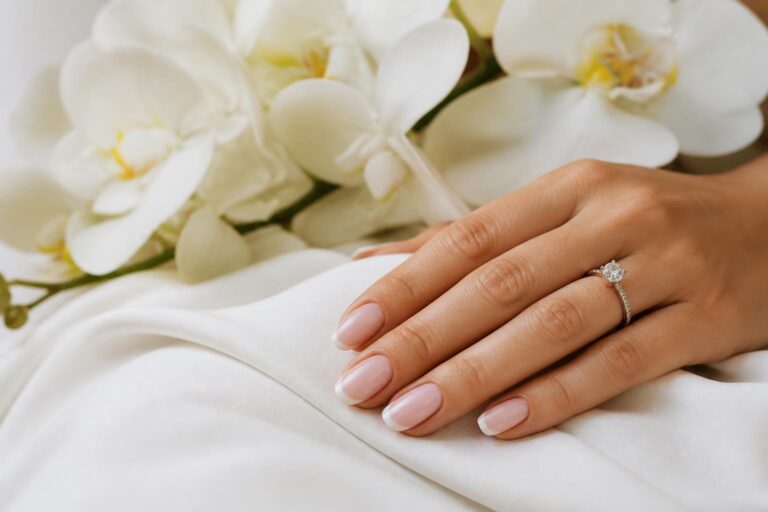
A soft pink base, sheer tones, and blurred French transitions create a manicure that works beautifully with bridal attire that already carries strong embellishment. The understated base also allows jewelry to take the lead. Halo nails, with their subtle luxe effect, can add just enough interest for a reception or wedding day without distracting from the larger bridal styling. In bright daylight, these finishes look fresh; in evening lighting, they catch a gentle glow.
This look is especially effective for brides who prefer balance over statement. If your lehenga, saree, or jewelry set is richly detailed, quieter nails often feel more expensive than another layer of embellishment. It is one of the strongest options for anyone who wants bridal nails that remain timeless in photos.
Look: Chrome shimmer under reception lights
Reception styling often welcomes a little more shine, and that is where glazed chrome, shimmer, and metallic finishes come into their own. The mood shifts from ceremonial romance to evening glamour. Think reflective surfaces, movement, and nails that look especially striking when paired with partywear, richer fabrics, and deeper lighting.
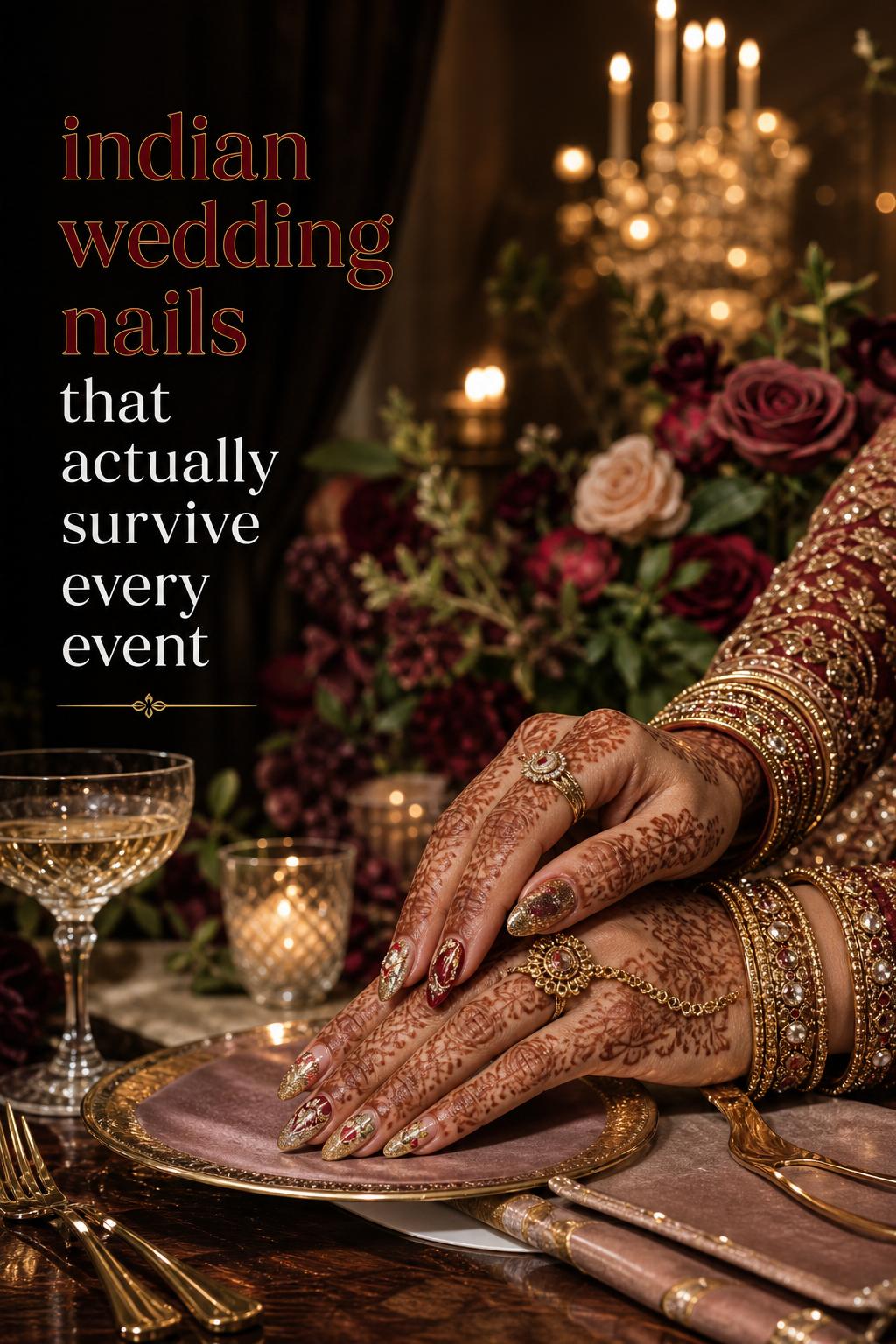
Chrome nails can be done in a restrained way with sheer bases and luminous overlays, or with bolder jewel-toned undertones that feel more festive. Silver embellishments, crystal nail art, and micro shimmer all fit this look, though restraint still matters. The most elegant reception nails usually focus on one reflective element and let the rest of the manicure stay clean.
This is also one of the easiest styles to adapt for a bride who wants a ceremony-to-reception transition. A manicure that begins with a neutral or soft pink base can be elevated through shimmer top layers or accent crystals to feel more evening-ready, rather than starting over with an entirely separate nail concept.
Practical note for long celebrations
Highly reflective finishes can show uneven surfaces more easily than cream polishes, so prep matters. Smooth shaping, careful application, and a durable top coat become more important when the manicure will be photographed under direct flash or close-range video.
From mehndi to reception: a function-by-function nail playbook
One of the smartest ways to plan indian wedding nails is by thinking function first. The emotional tone, lighting, outfit, and level of movement can vary dramatically between mehndi, sangeet, baraat, wedding, and reception. Nails that feel ideal for one event may feel too heavy, too plain, or simply impractical for another.
Mehndi
The mehndi function calls for designs that echo henna motifs, open pattern work, and a sense of artistry. Nude, pink, or soft neutral bases with fine detailing tend to work especially well because they let both the manicure and the mehndi coexist beautifully.
Sangeet
Sangeet nails can take on more sparkle and personality. Glitter wedding nails, jewel-toned accents, and playful embellishments feel at home here because the atmosphere is energetic and movement-heavy. If dancing is central to the evening, a secure gel manicure is usually more practical than delicate add-ons that may lift.
Baraat
Baraat styling often benefits from nails that are bold but not overly fussy. Strong color, a glossy finish, and selective embellishment hold up well in high-energy moments. This is not always the best time for extremely intricate surface work if comfort and durability are the priority.
Wedding
The wedding day manicure should photograph beautifully with rings, vows, and traditional portraiture. Classic red bridal nails, gold accents, jewel-encrusted nails, or elegant neutral bridal nails all work here depending on the attire. The strongest choice is usually the one that feels most integrated with the ceremony look as a whole.
Reception
Reception nails can lean glamorous through shimmer chrome, crystal nail art, ombré French finishes, or metallic accents. Evening lighting tends to reward texture and reflectivity, so this is where halo nails, chrome nails, and polished micro details feel especially effective.
Jewelry-led styling: when nails echo chura, bangles, and maang tikka
A bridal manicure becomes much more intentional when it responds to jewelry. Chura, bangles, maang tikka, and hath phool create visual anchors around the hands and face, so nails that reference those accents feel naturally complete. This does not mean copying every detail. It means choosing tones, finishes, and embellishment placements that reflect the jewelry language already present in the look.
Gold foil nails often make sense when the jewelry set is warm and traditional. Crystal nail art may feel more aligned with a reception look that includes brighter reflective stones. A bride wearing strong red-and-gold bangles may prefer simpler nail art so the hands feel layered but not crowded, while someone in a more minimal jewelry direction may use rhinestones or jewel nails to bring a bit more ornament to the manicure itself.
This is also where bridal styling gains subtle sophistication. When the manicure, bangles, and hand jewelry speak to one another, the result feels edited rather than accidental. It is a small decision, but in wedding photography it reads as a larger sense of polish.
Stylist’s insight
If the hands will carry a lot of visual weight through mehndi, rings, bangles, and hath phool, choose either detailed nail art or heavy embellishment, not both at full intensity. A balanced hand composition usually photographs better than a crowded one.
Embellishments that elevate without overwhelming
Rhinestones, crystals, glitter, gems, and gold foil are central to many bridal nail ideas, but their success depends on scale and placement. Indian wedding nails often look most luxurious when embellishments are treated as finishing touches rather than the entire design. A single accent nail, a cuticle cluster, or a delicate line of stones can feel more refined than full coverage on every finger.
Jewel-encrusted nails are best reserved for moments when the rest of the look can support them, such as a richly styled reception or a statement bridal outfit. For brides who want versatility across functions, selective crystal nail art offers a more wearable path. It keeps the manicure bridal and camera-ready without making it difficult to pair with different outfits.
There is also a durability question here. Embellishments should not only look beautiful; they should endure a schedule that includes dressing, jewelry changes, rituals, dining, and dancing. Long-lasting bridal nails are usually the result of thoughtful editing, not just visual drama.
What often goes wrong with bridal nails
The most common issue is planning the manicure too independently from the rest of the bridal look. A nail design may be beautiful on its own but still feel disconnected from the attire, jewelry, or function. This happens often when trend-forward ideas like chrome nails or negative space are chosen without considering how they sit next to traditional fabrics, red-and-gold styling, or mehndi.
Another frequent problem is overloading the design. Brides naturally want their nails to feel special, but every bridal element is already working hard: embroidery, stones, jewelry, hair accessories, and mehndi all add visual detail. Nails do not need to compete with everything else. They need to complement it. Often, the more polished choice is a focused concept with one strong idea, whether that is henna-inspired art, jewel-toned polish, or a luminous French finish.
The final mistake is ignoring wear time. A multi-day celebration is demanding. Nails need chip resistance, secure embellishments, and a finish that can survive repeated outfit handling. Beauty that lasts is part of bridal styling, not separate from it.
Nail care and longevity for a multi-day wedding schedule
Even the most beautiful design loses impact if it chips early or feels uncomfortable halfway through the celebrations. Indian wedding functions often extend across several days, which means nail prep deserves almost as much attention as the design itself. Long-lasting nails typically depend on a clean foundation, careful shaping, strong adhesion, and a reliable top coat.
Gel polish is a common choice for that reason. It gives color and shine more staying power, especially for brides moving from one function to the next with very little downtime. Base coat, topcoat, and chip-resistant polish matter because the manicure is constantly on display during ring shots, mehndi photos, outfit reveals, and candid moments. Hydration and cuticle care also make a visible difference. Bridal nail art looks more expensive when the surrounding skin is cared for.
There is a styling logic to timing as well. Brides often benefit from treating nail prep as part of the broader beauty calendar, not an afterthought. A well-planned manicure reduces last-minute stress and gives enough time to assess whether the shape, length, and embellishment level truly work with the wedding wardrobe.
Bridal nail care checklist
- finalize shape before detailed art begins
- choose gel polish or another long-wear option if the wedding spans multiple functions
- use a base coat and topcoat for extra protection
- prioritize cuticle care so close-up hand photos look polished
- avoid overly fragile embellishments if outfit changes and dancing are part of the schedule
Look: Minimal nude with bridal sparkle
Minimalist bridal nails have a quiet confidence, especially when the bride’s wardrobe is already visually rich. The mood is soft, elegant, and editorial, with nude or sheer tones acting as a calm base for selective embellishment. Rather than trying to dominate the look, these nails create breathing room.
A nude or soft pink manicure with a few rhinestones, a halo finish, or a touch of gold can feel especially modern for daytime events, intimate ceremonies, or brides who prefer subtle luxury. This is also a strong option for someone choosing a lighter bridal palette or wanting a manicure that transitions naturally from wedding to reception.
The appeal of this style lies in its restraint. Minimalist nude with accents still belongs fully within indian wedding nails, but it interprets bridal beauty through refinement instead of maximal ornament. It often becomes the most memorable choice because it allows every other detail of the bridal look to shine.
Press-ons, kits, and product-led options
Not every bride approaches wedding nails in the same way. Alongside salon-led manicures and gel polish applications, product-led options such as bridal press-on nails and nail art kits have a role in the bridal beauty landscape. Brand-led resources and collections, including Nails India Official, Calyx Nails, Ranara Nails, and Sunshinenails, reflect this practical side of the category by connecting inspiration to products and tutorials.
Press-on nails can be useful for brides seeking a pre-designed look, size options, or a fast transition into a more styled manicure. Nail art kits and gel polishes support brides who want more control over the process or who are exploring different looks from mehndi to reception. The key consideration is still cohesion: a product solution should support the bridal aesthetic, not reduce it to convenience alone.
For some brides, a ready option may be enough. For others, especially those coordinating with multiple outfits and jewelry sets, customization remains the stronger choice. The decision depends on how detailed the overall look is and how much flexibility the schedule allows.
A bridal moodboard in motion: building one cohesive nail story
The most polished approach is not necessarily choosing the most elaborate manicure. It is choosing a visual direction that can carry through the entire wedding wardrobe. Some brides build that story around mehndi motifs. Others center everything on red and gold, on jewel tones, or on modern bridal finishes like shimmer chrome and ombré French. Once that direction is clear, every detail begins to make more sense.
Imagine a bride wearing henna-inspired nails for the mehndi, then carrying a softer version of that motif into the wedding day with red and gold accents, and finally shifting into a more luminous chrome finish for the reception. The exact designs may change, but the mood remains connected. That continuity is what makes bridal styling feel intentional from beginning to end.
Whether the inspiration comes from WeddingForward-style traditional glamour, Who What Wear trend cues, or product-led tutorials from Calyx Nails, Ranara Nails, and Sunshinenails, the strongest result comes from editing. The manicure should belong to the wedding look, not sit beside it as a separate trend experiment.
Tips for choosing your final bridal manicure
With so many bridal nails ideas available, narrowing the options down becomes easier when the decision is made through context rather than impulse. A manicure that looks beautiful in isolation may not be the best fit for long wear, traditional jewelry, or the visual density of a specific bridal outfit.
- start with the wedding function that matters most to you visually, then design around it
- match the manicure to the attire palette before adding embellishments
- consider how the nails will look beside mehndi, rings, bangles, and close-up photography
- choose one main design language, such as henna-inspired art, chrome shimmer, or classic red and gold
- prioritize durability if the wedding includes multiple events with little time for repairs
- save trend-led details like halo nails or ombré French for moments when they truly suit the outfit mood
A well-chosen bridal manicure works because it understands the occasion. It can be soft or dramatic, traditional or trend-aware, but it should always feel anchored to the celebrations around it. That is what gives indian wedding nails their lasting appeal: they are expressive, but they are never random.
FAQ
What are the most popular indian wedding nails styles?
The most popular styles include mehndi-inspired nail art, classic red bridal nails, gold accent nails, jewel-toned manicures, rhinestone nails, and softer modern options such as halo nails, chrome nails, and ombré French finishes.
Which nail colors work best for an Indian bride?
Red and gold remain the strongest bridal classics, but rose tones, emerald, ruby, sapphire, pearl, cream, and soft pink also work beautifully depending on the outfit, jewelry, and function.
Are mehndi-inspired nails a good choice for the wedding day or only for the mehndi function?
They work especially well for the mehndi function, but they can also carry into the wedding day if the motifs are refined and balanced with the rest of the bridal styling. A lighter, more edited version usually feels most elegant for the ceremony.
How can I make my bridal nails last through multiple wedding functions?
Prioritize strong prep, a reliable base coat, long-wear or gel polish, a durable topcoat, and practical embellishment choices. Cuticle care also matters because healthy-looking hands make the manicure look more polished in close-up photos.
Should my nails match my outfit or my jewelry?
Ideally, they should respond to both, but the outfit usually sets the main color direction while the jewelry influences the finish and embellishment style. Gold foil, crystals, and rhinestones often feel more cohesive when they reflect the jewelry language.
What nail style works best if my bridal outfit is already heavily embellished?
A softer manicure usually works best in that case. Nude, soft pink, ombré French, halo nails, or a simple red-and-gold design with minimal embellishment can create balance and keep the overall look from feeling overcrowded.
Are chrome nails suitable for indian wedding nails?
Yes, especially for receptions or modern bridal styling. Chrome and shimmer finishes can look very elegant when paired with a controlled color palette and used in a way that complements, rather than competes with, traditional attire and jewelry.
What nail shape is best for indian wedding nails?
Almond, squoval, and coffin are all popular choices. Almond works well for intricate motifs, squoval feels practical and classic, and coffin suits bolder embellishment, but the best choice depends on comfort, design style, and how long the manicure needs to last.
Can bridal press-on nails work for Indian weddings?
They can, particularly for brides who want convenience, pre-designed looks, or size options. Still, they should be chosen carefully for comfort, wear time, and compatibility with multiple functions, especially if the wedding schedule is long and active.
How do I choose between traditional bridal nails and trend-driven styles?
Start with the mood of your wedding wardrobe and the functions where your hands will be photographed most. Traditional bridal nails like red, gold, and mehndi-inspired motifs feel timeless, while halo nails, chrome, and ombré French are ideal when you want a more modern finish.