Romantic vs Minimal: Wedding Guest Dress Spring, Styled Right
Spring wedding guest dressing, decoded: romantic florals vs sleek minimalism
The week of a spring wedding is rarely just one moment. It’s a rehearsal dinner that runs cooler than expected, a ceremony that begins in bright afternoon light and ends under string lights, a reception where you’ll sit, stand, dance, and pose for photos in quick succession. Choosing a wedding guest dress spring after spring becomes less about chasing a single “pretty dress” and more about choosing a style approach that carries you through the entire celebration with ease.
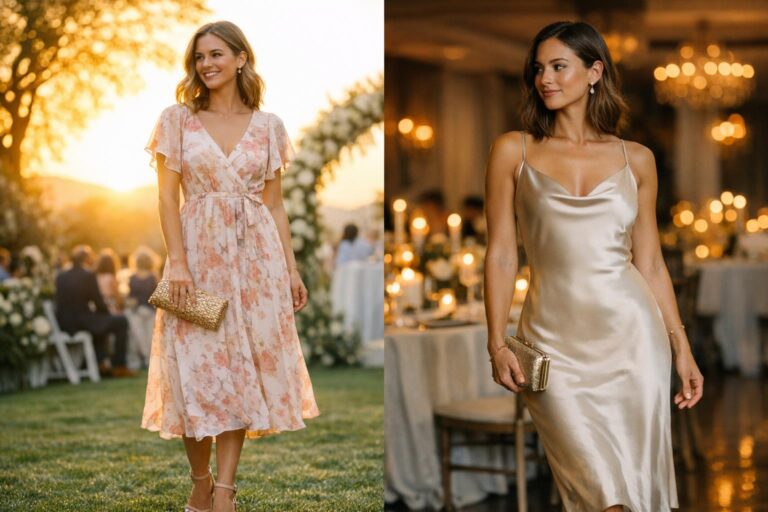
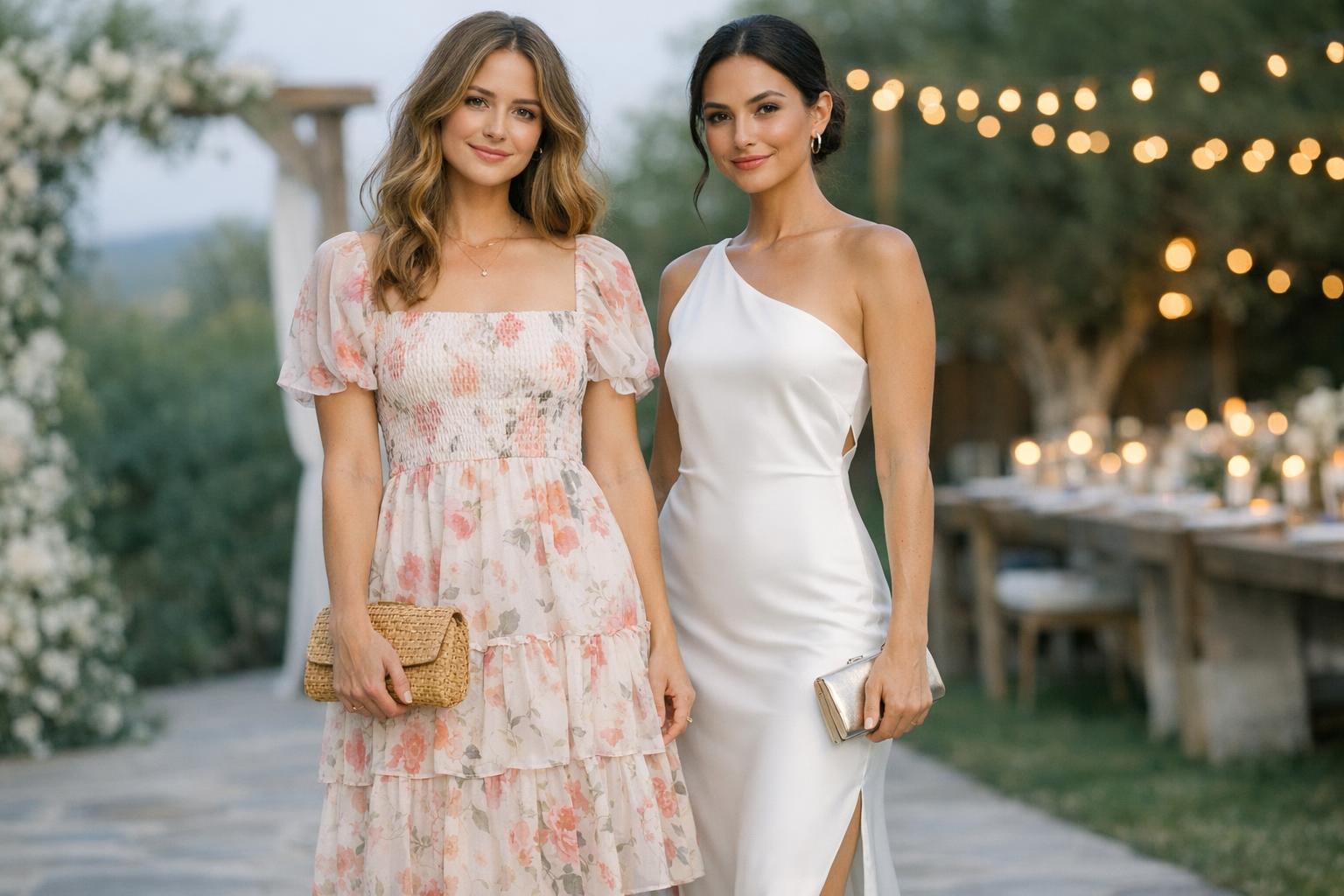
Two aesthetics tend to dominate the conversation because they’re both undeniably “spring,” yet they solve the season in opposite ways: the romantic floral (think garden-party softness, movement, and pattern) and the sleek minimal (think clean lines, satin or silk, and quiet polish). They’re often discussed together because both can work for the same invitations—casual, cocktail, and even formal—depending on silhouette, fabric, and finishing details.
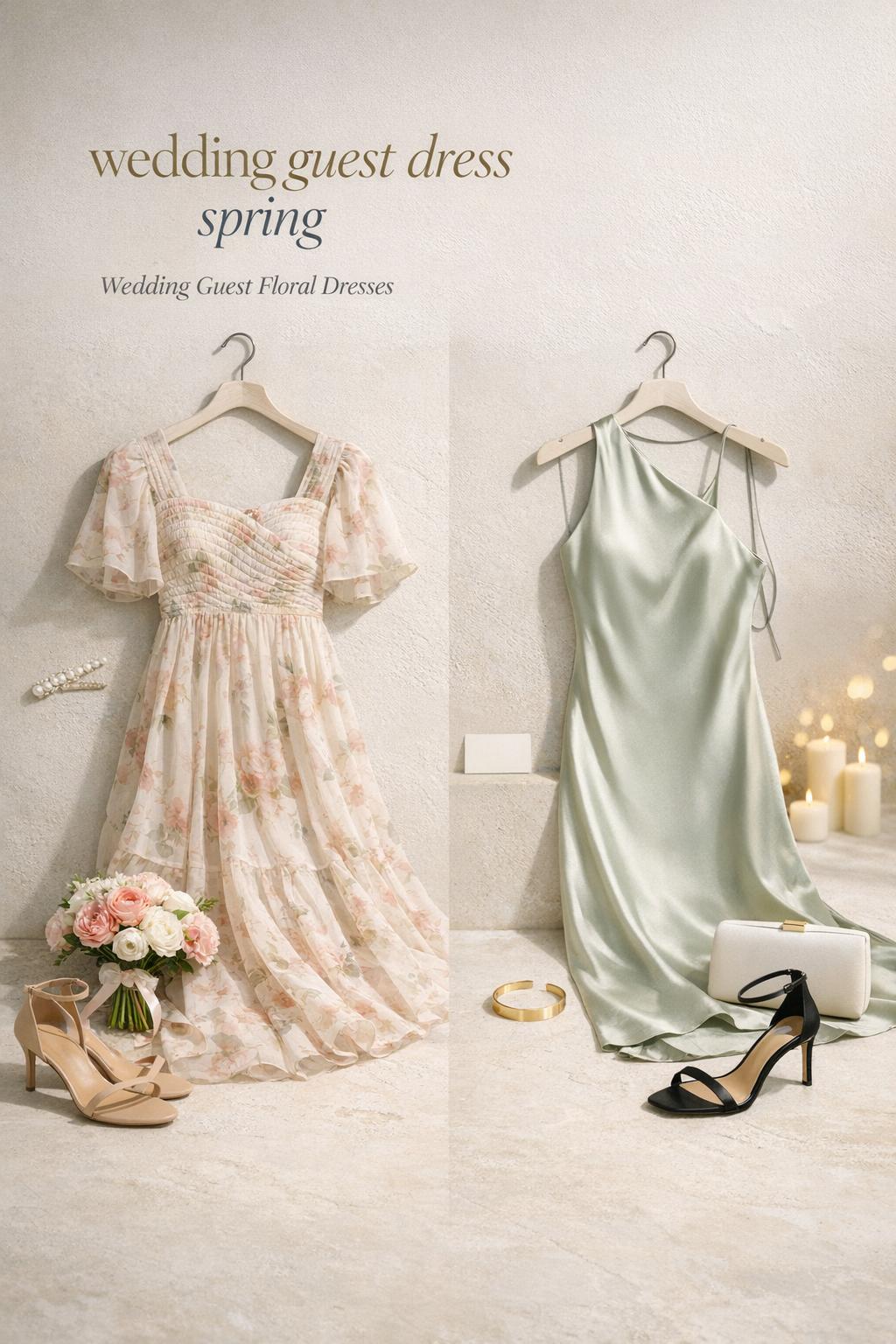
This comparison breaks down how each style behaves across dress codes, venues, and weather swings, with practical guidance grounded in the spring wardrobe staples that show up again and again: maxi and midi silhouettes, breathable linen, luminous silk and satin, and airy chiffon and organza. Along the way, you’ll see how brands like Reformation, ASTR The Label, Hill House Home, Boden, Zara, Quince, Lulus, Anthropologie (including BHLDN), Mac Duggal, STAUD, Cinq à Sept, Milly, ASOS, Petal & Pup, Ever Pretty, Revolve, and Windsor tend to align with one style or the other—and how to shop them intelligently for your dress code.
Style overview: romantic floral spring guest dresses
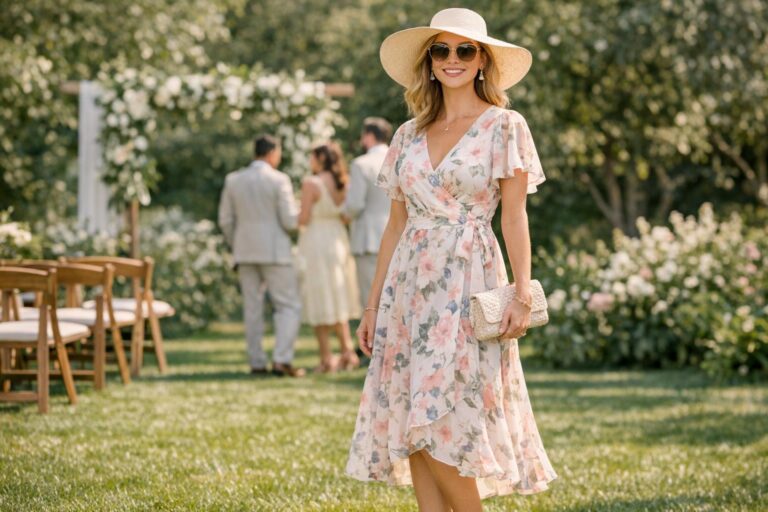
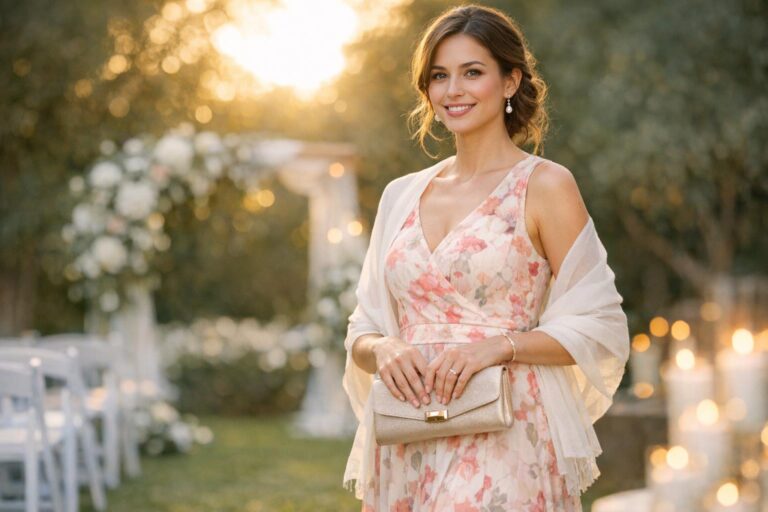
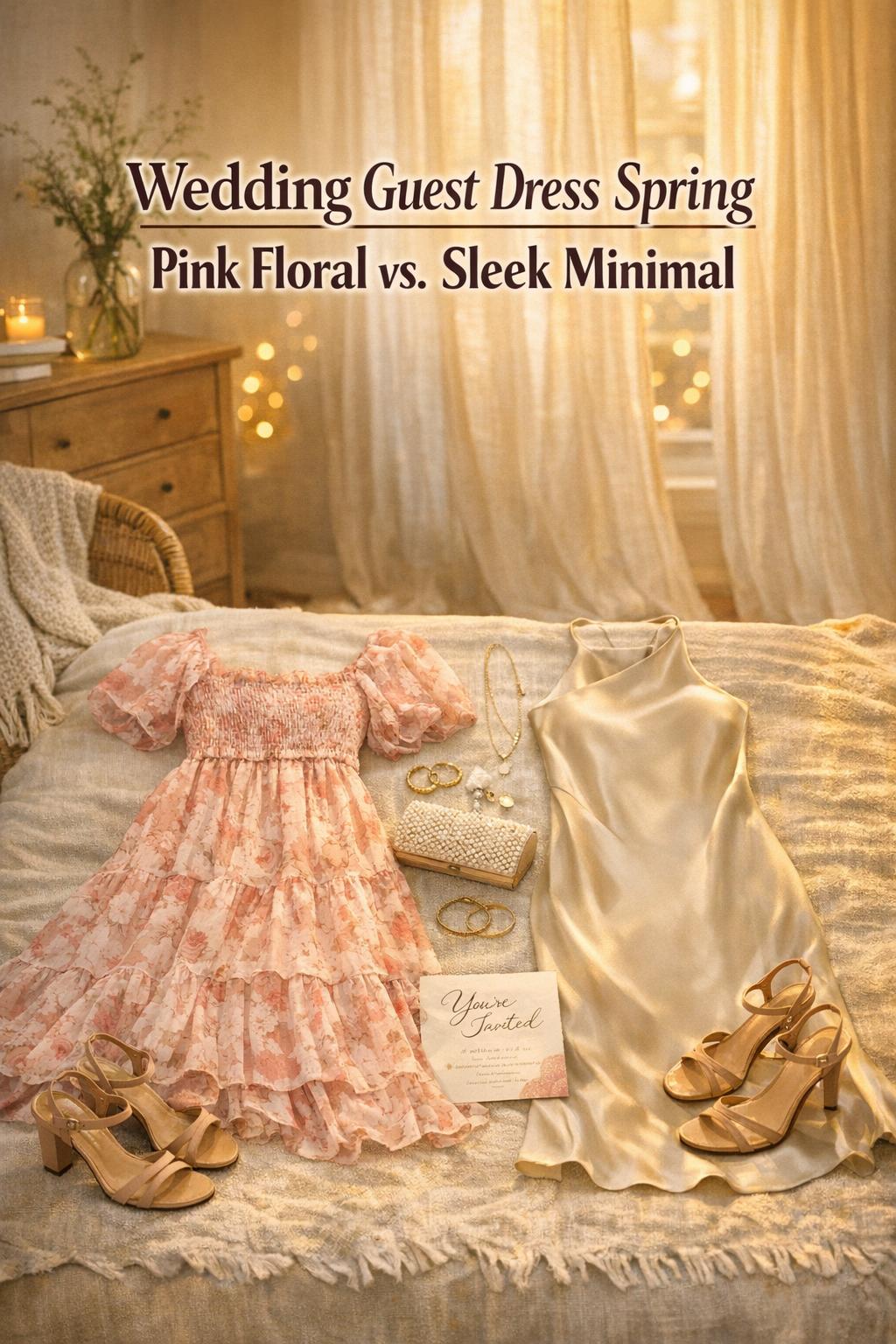
The romantic floral aesthetic is the visual shorthand for spring celebrations: pattern, softness, and that sense of being perfectly at home in a garden ceremony or a vineyard cocktail hour. In this style lane, wedding guest floral dresses are defined by movement—skirts that sway, sleeves with a little volume, necklines that feel gentle rather than severe. Florals can be delicate or bold, but the overall mood is buoyant and seasonal.
Your wedding look is only the beginning.
Keep your guest list, vendors, timeline, and every important detail together with Zarellea — so your day feels as considered as your style.
Typical silhouettes include midi and maxi dresses (the most versatile lengths for spring events), with occasional mini hemlines reserved for more casual settings. You’ll often see A-line shapes, tiered skirts, wrap-inspired lines, or smocked bodices that read effortless. This is where linen can look charming rather than “too daytime,” and where chiffon becomes the quiet hero for outdoor ceremonies with breezes.
Color palettes often orbit pastels and soft brights: the world of pastel wedding dresses translated for guests—think airy, light-reflecting tones paired with floral motifs. A pink floral wedding guest dress sits squarely in this camp, especially when the print is romantic rather than graphic. Textures lean breathable and tactile: linen for daytime, chiffon for flow, organza for an elevated, spring-fresh structure when the dress code calls for it.
Style overview: sleek minimal spring guest dresses (silk, satin, and clean lines)
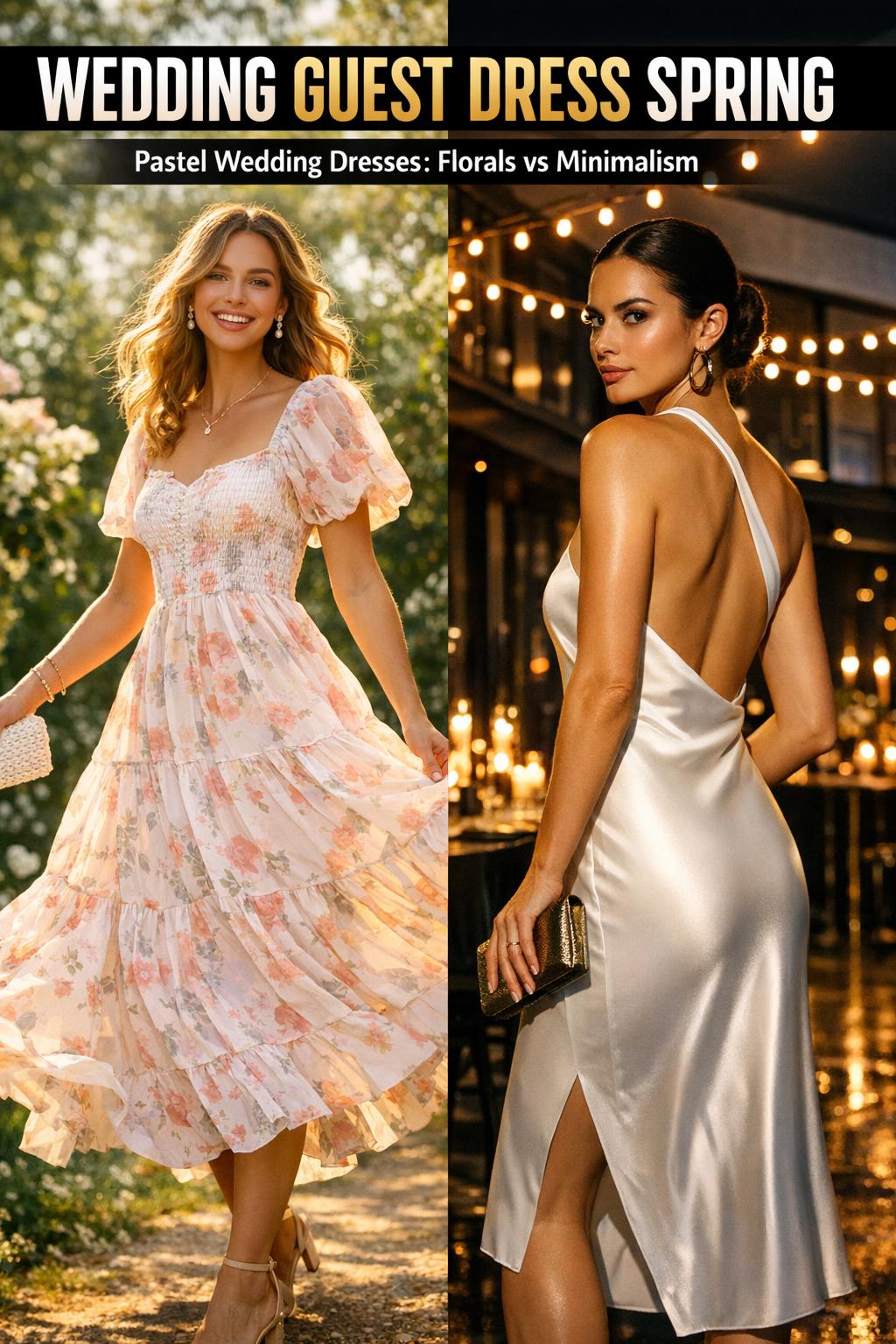
The sleek minimal aesthetic is spring dressing with a tailored mindset. It favors solid or near-solid color, clean seams, and fabric-driven elegance—silk and satin that catch the light at golden hour, or a refined silhouette that looks intentional from every angle. Where florals tell a story through pattern, minimalism tells it through cut: the way a neckline frames the shoulders, the way a skirt falls, the way an open-back detail turns as you move.
Common silhouettes here include slip-inspired midi dresses, bias-cut maxis, one-shoulder shapes, and modern halter necks. Because the design is restrained, small details matter: an open-back spring wedding guest dress can feel perfectly celebratory without any heavy embellishment. This is also the lane where a silk or satin gown can shift from “cocktail” to “formal” simply by length and styling.
Color palettes often overlap with spring’s softer side—sage, seafoam-adjacent lightness, and pastels—but the effect is different: less “garden print,” more “glowing solid.” Fabric choice becomes the main seasonal signal: silk and satin for evening receptions, a lighter finish for daytime, and occasional organza for sculptural spring formality.
Why these styles get confused (and how to tell them apart quickly)
Romantic florals and sleek minimalism are both spring-appropriate because they share the same foundational building blocks: midi and maxi lengths, light-to-medium weight fabrics, and palettes that feel fresh rather than wintry. They also both appear across the same shopping destinations—Anthropologie, Lulus, ASOS, Revolve, Zara, and brand-forward labels like Reformation and ASTR The Label—so the categories blur when you’re browsing quickly.
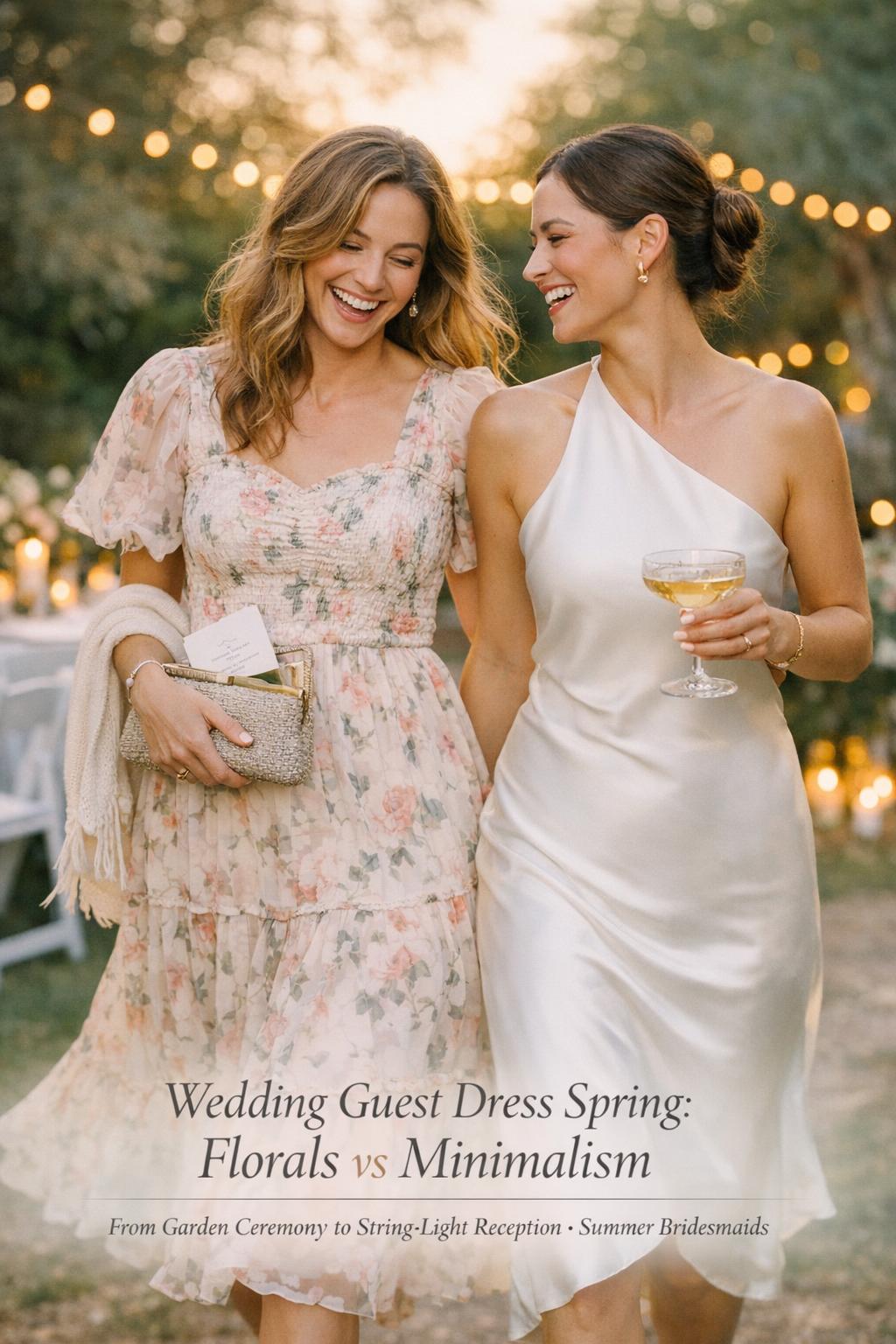
The quickest way to separate them is to look at what does the “work” of the outfit. In romantic floral looks, the print and movement create the statement, so accessories can stay quieter. In sleek minimal looks, the silhouette and sheen create the statement, so accessories (and sometimes outerwear) are chosen to echo that refinement.
Key differences that matter at a wedding: silhouette, formality, and styling philosophy
Silhouette and structure: float vs frame
Romantic floral dresses tend to “float.” Even when fitted at the waist, they often release into a skirt that moves easily—ideal for outdoor ceremonies and long receptions where comfort and breathability matter. Sleek minimal dresses “frame.” They rely on a clean line—sometimes close to the body, sometimes column-like—so the look reads polished and intentional in photos, particularly in evening light.
If you anticipate lots of sitting (ceremony chairs, dinner seating) and a high-energy dance floor later, consider how the dress behaves in motion. Floaty chiffon and easy midis forgive the realities of a long day. A satin slip looks exquisite but can feel more revealing of movement and creasing—gorgeous when you want that modern finish, but worth acknowledging before you commit.
Color and pattern: seasonal storytelling vs quiet glow
Romantic florals naturally connect to spring color stories, including pastel wedding dresses as a guest-appropriate concept: soft hues, floral motifs, and a lightness that matches the season. A pink floral wedding guest dress is the classic example—romantic, photographed beautifully in daylight, and instantly “spring.”
Sleek minimalism often uses similar tones but strips away the pattern. That makes the fabric finish more visible: silk and satin reflect light, creating a quiet glow that can read more formal, especially in a midi-to-maxi length. The effect is often more “cocktail lounge” or “candlelit reception” than “garden party,” even when the color is equally soft.
Formality range: florals can be casual-to-cocktail; minimal can be cocktail-to-black-tie
Both styles can span dress codes, but they do so differently. Romantic florals are naturally at home in casual and semi-formal settings and can reach cocktail when the silhouette is refined (a sleek midi) or the fabric elevates (organza, a more structured weave). Sleek minimalism starts strong in cocktail and can climb into formal and black-tie territory with floor length and luxe fabric—especially silk or satin.
That’s why a formal invitation often nudges guests toward minimal satin or silk, while a daytime garden ceremony encourages florals. Neither is “more correct” universally; the invitation’s dress code and the venue’s mood decide what looks most effortless.
Wardrobe pieces: prints and tiers vs slips and open-back details
In romantic floral styling, the dress itself often includes the detail: a tiered skirt, soft sleeves, a wrap-inspired waist, or a breezy maxi shape. In sleek minimal styling, the dress is often simpler at first glance—but may include a one-shoulder, an open-back, or a clean halter that feels modern and evening-ready.
Dress codes, compared: casual, cocktail, and formal in spring
Spring dress codes can be deceptively nuanced. “Casual” might still mean polished. “Cocktail” can mean anything from a refined midi to a sleek maxi. And “formal” or “black-tie” asks for fabric and length that read elevated the moment you walk into the venue. Here’s how the two aesthetics handle each level, using the silhouettes and fabrics that consistently anchor spring wedding guest dressing.
Casual spring weddings: romantic florals take the lead, minimalism stays relaxed
For casual spring weddings—often daytime ceremonies, outdoor venues, or celebrations with a relaxed invitation—romantic florals feel natural. A midi or maxi in breathable linen or airy chiffon is comfortable and seasonally aligned. Brands that frequently play well in this space include Hill House Home for an easy romantic mood, Boden for polished prints, and Zara for linen-forward options that can read modern and unfussy.
Sleek minimal can still work for casual, but it needs to stay daytime-friendly. A minimal midi in a lighter fabric can feel appropriate, but ultra-shiny satin or a dramatic open-back may read too evening for a casual garden ceremony. In this dress code, minimalism works best when it’s understated: clean lines, softer color, and comfortable movement.
Cocktail dress code: the true meeting point
Cocktail is where these aesthetics truly overlap—and where guests often feel torn between wedding guest floral dresses and sleek solids. Romantic florals can look cocktail-ready when the silhouette is streamlined (a refined midi rather than a very tiered maxi) or when the fabric and finish feel elevated. Sleek minimalism is naturally at home here: a satin or silk midi, a one-shoulder shape, or an open-back spring wedding guest dress can all land perfectly for a semi-formal evening reception.
This is the territory where Reformation and ASTR The Label frequently feel like safe, modern anchors—pieces that read intentional without feeling costume-like. It’s also where shopping destinations like Revolve and ASOS surface a wide range of cocktail silhouettes, from minimalist to subtly embellished, and where Lulus and Petal & Pup offer approachable takes on both aesthetics.
Formal and black-tie: minimal lines shine, florals become refined and fabric-driven
For formal and black-tie spring weddings, the sleek minimal approach tends to look immediately correct because floor length plus satin or silk reads elevated without needing much else. A gown silhouette—especially a clean maxi—feels right for grand spaces and evening lighting. In this lane, brands like Mac Duggal are frequently associated with formal impact, including beading and ornate details that suit a more elevated invitation. STAUD and Cinq à Sept also align well with modern formalwear, where structure and finish do the heavy lifting. Milly can sit in the same elevated conversation when you want a more fashion-forward, event-ready impression.
Romantic florals can absolutely work for formal, but they need refinement. Think less “daytime picnic,” more “evening garden.” A floral maxi in a dressier fabric, a cleaner cut, or with a more polished drape can meet the moment. The key is choosing florals that feel intentional rather than casual—especially in the context of an elegant reception.
Fabric and texture: the spring detail that changes everything
In spring, fabric isn’t just comfort—it’s formality, movement, and weather strategy in one decision. The same silhouette can read entirely different depending on whether it’s linen, silk, satin, chiffon, or organza. If you’ve ever tried to decide between a floral midi and a satin midi, you’ve already felt this difference.
Linen: breathable, daytime-polished, and perfect for casual-to-semi-formal
Linen is the spring classic because it breathes and looks seasonally correct—especially for outdoor ceremonies. It’s frequently tied to a relaxed, tasteful mood, and works beautifully with romantic floral styling when the print is soft and the silhouette is easy. Zara is often associated with linen options in the spring mix, and linen also appears as a specific “best for” category in spring wedding guest shopping.
The trade-off is that linen naturally wrinkles. That’s not a flaw; it’s part of the character. But if your venue is more formal, or you want a more pristine look in photos from ceremony through reception, you may prefer silk or satin for a smoother finish.
Silk and satin: minimalism’s signature, and a shortcut to cocktail or formal
Silk and satin are the fabrics that most effortlessly push a spring look into cocktail or formal territory. They photograph beautifully in evening light and elevate even the simplest silhouette. If your style leans sleek, this is where pieces like the Reformation Casette silk dress (often highlighted as a spring option) and other silk-forward midis come into play. Quince also shows up in the silk conversation with high-neck midi styles that fit the “clean and polished” approach.
The practical note: satin can show creases after long sits and car rides, and some cuts can cling. If you want the shine but prefer ease, look for a silhouette with forgiving drape, or choose a midi length that allows comfortable movement through the full day.
Chiffon and organza: movement vs structure, both unmistakably spring
Chiffon delivers movement—ideal for romantic floral dresses in outdoor settings, where a breeze becomes part of the look. Organza is different: airy yet structured, it creates shape and presence without feeling heavy. Organza often appears as a spring fabric cue in elevated silhouettes, aligning with brands that lean modern and architectural, such as STAUD in the broader spring mix.
Both fabrics can read dressy depending on silhouette. A chiffon floral maxi is romantic and effortless; an organza midi can feel cocktail-ready, particularly for evening celebrations.
Brand “vibes,” compared: who naturally aligns with romantic florals vs sleek minimalism
Most guests don’t shop by abstract aesthetics—they shop by retailers and trusted labels. But once you see how certain brands tend to show up in spring wedding guest dressing, it becomes easier to choose quickly and stay consistent with your style approach.
- Reformation: often aligns with sleek minimal and modern cocktail silhouettes, especially in silk; works well for cocktail through formal depending on length.
- ASTR The Label: frequently appears in cocktail-forward spring edits; a reliable bridge brand if you like romantic details with a more refined, modern line.
- Hill House Home: associated with softer, romantic energy that suits casual spring weddings and outdoor settings.
- Boden: polished prints and spring-friendly maxis and midis; strong for the romantic floral lane, especially when you want a tailored kind of charm.
- Zara: a go-to for linen and modern, relaxed silhouettes; works for casual and some semi-formal spring weddings depending on the piece.
- Quince: shows up in silk and high-neck midi options; aligns naturally with sleek, minimal styling and practical value.
- Anthropologie and BHLDN: a broad spectrum—romantic to refined—often used as a curated destination for spring wedding guest dressing and size inclusivity.
- Lulus: accessible variety across both aesthetics, with open-back, maxi, and midi options that can match casual, cocktail, or even more formal looks depending on fabric and finish.
- Petal & Pup: often tied to romantic, wearable spring styles; useful for guests leaning toward florals and softer silhouettes.
- ASOS: wide range, especially cocktail silhouettes; good for trend-led options like one-shoulder or open-back cuts.
- Mac Duggal: commonly associated with formal impact, including beading; a strong choice when the invitation clearly leans formal or black-tie.
- STAUD: modern, fashion-forward pieces that can suit elevated spring occasions, especially where fabric and structure matter.
- Cinq à Sept: polished event dressing with refined silhouettes; fits the sleek minimal or modern cocktail lane.
- Milly: sits comfortably in the elevated occasion space; a choice when you want a more designer-leaning finish.
- Ever Pretty, JJ’s House, Windsor: budget-friendly catalogs with a broad range of silhouettes, helpful when you need options by length and dress code quickly.
- Norma Kamali: recognized in spring edits with statement silhouettes (like the Diana gown) that read sleek and impactful for cocktail to formal.
One of the most useful shopping strategies is to pick your aesthetic first, then choose your retailer. If you start at “dress code,” you can end up with a dress that technically fits—but feels unlike you. Starting with “romantic floral” or “sleek minimal” keeps the final look cohesive from shoes to accessories.
Visual style breakdown: how each aesthetic looks in real wedding moments
Layering and outerwear: the spring ceremony problem
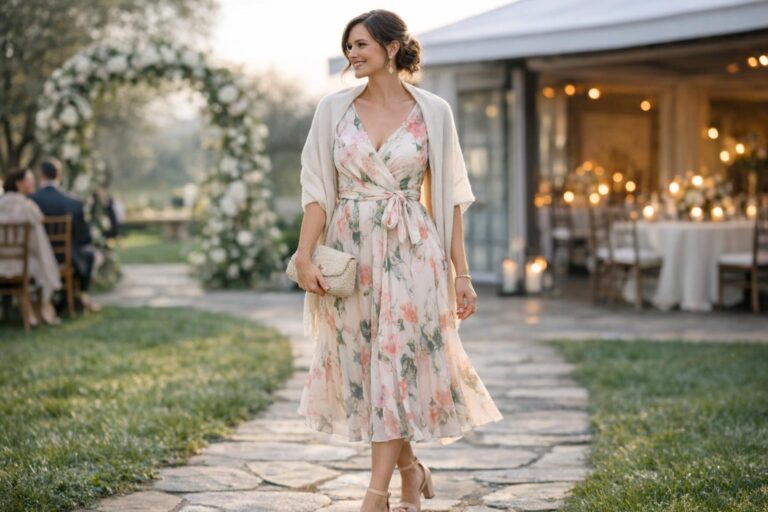
Spring weather can change quickly, and ceremonies often run cooler than receptions. Romantic floral looks tend to layer beautifully with softer toppers—think a light cardigan or a wrap that doesn’t interrupt the movement of the dress. Sleek minimal looks tend to want cleaner, more structured layers so the outfit doesn’t feel “split” stylistically; a wrap can still work, but the best choice is one that echoes the dress’s refined line.
If you’re traveling for a destination wedding—like the Hawaii-adjacent scenarios that appear in spring wedding dress conversations—your layering strategy is also a packing strategy. The goal is to bring one light layer that works for the ceremony and disappears easily for the reception without wrinkling or fighting the dress fabric.
Accessories and finishing details: let the dress lead
Romantic florals already bring visual energy, so accessories can stay simple and intentional—especially if the print is vibrant. Sleek minimal dresses often welcome a touch more definition: jewelry that frames a neckline, or a considered shoe that complements the clean line. The point isn’t to “add more,” but to match the styling philosophy: softness and ease for florals, refined restraint for minimalism.
Footwear and comfort: grass, stone paths, and long receptions
Outdoor venues—gardens, vineyards, and other spring-friendly settings—favor stability. Romantic floral dresses, especially midis and maxis, pair naturally with shoes chosen for walking on grass or uneven paths. Sleek minimal dresses can lean more delicate, but the same practical reality applies: you’ll enjoy the celebration more when you can move confidently from ceremony to reception.
Outfit comparisons: the same wedding, two styling approaches
The most helpful way to choose between aesthetics is to imagine the same invitation and see how each style solves it. Below are scenario-based comparisons designed to clarify the styling logic, not overwhelm you with endless options.
Garden ceremony, late afternoon: wedding guest floral dresses vs sleek satin midi
A romantic floral approach would favor a midi or maxi with movement—chiffon if you want float, linen if the wedding is more casual. This is where Boden’s polished prints or Hill House Home’s softer mood can feel effortless, and where a pink floral wedding guest dress looks especially natural in daylight. The sleek minimal approach would interpret the same garden setting through a clean silhouette—perhaps a silk or satin midi from Reformation or Quince—paired with understated accessories so the sheen reads intentional rather than “too evening.”
Cocktail dress code, city reception: floral refinement vs modern open-back
In a cocktail setting with a more polished atmosphere, romantic florals work best when streamlined: a refined floral midi rather than an extra-tiered maxi, or a print that feels elevated. Anthropologie’s curated range often fits here because it spans romantic and modern in a single destination. The sleek minimal answer is a one-shoulder or open-back spring wedding guest dress—ASTR The Label is frequently associated with this cocktail sweet spot, and ASOS or Revolve can be helpful for finding current silhouettes that still feel wedding-appropriate.
Formal evening reception: floral as couture-light vs minimalist gown energy
For a formal or black-tie spring wedding, the sleek minimal route is often the simplest: a floor-length satin or silk gown silhouette, clean and luminous, with restrained styling. This is also where more formal labels and formalwear-forward options—Mac Duggal for beading and high-impact evening details, or designer-leaning silhouettes from STAUD and Cinq à Sept—become practical, not just aspirational. Romantic florals can still attend formal, but they need a more refined read: a floral maxi in a dressier fabric or a silhouette that looks deliberate and evening-ready rather than casual.
Pastels, florals, and the bridesmaid-adjacent question
Spring color stories often drift close to wedding party palettes, and guests sometimes hesitate around pastel wedding dresses for that reason. The nuance is that pastels are not automatically “bridesmaid”—it depends on silhouette, fabric, and how styled the overall look is. A sleek pastel satin midi can feel modern and guest-appropriate; a very uniform pastel maxi may read closer to spring bridesmaid dresses in photos, especially if the wedding party palette is similar.
The same applies when you’re attending multiple weddings across warm months and you’re thinking ahead to summer bridesmaids styling cues. If your dress looks like it could slot directly into a coordinated bridal party lineup, consider adjusting either the print (romantic florals can help) or the silhouette (a cocktail midi rather than a uniform maxi), so your outfit reads clearly “guest.”
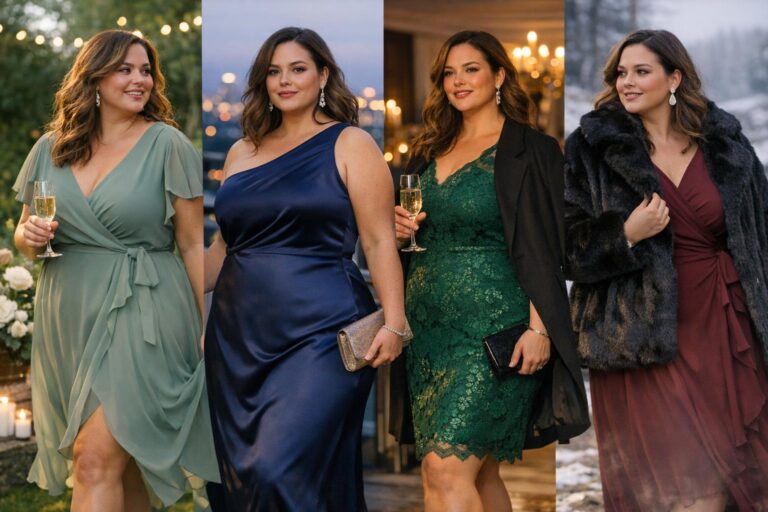
Size inclusivity and fit: how each aesthetic supports different needs
Fit is where style becomes truly personal. A romantic floral dress can be forgiving because movement and pattern soften lines; it’s often easier to wear comfortably across a full day. Sleek minimal dresses can feel incredibly confident when they fit precisely, but they may require more attention to cut and fabric behavior—especially with satin and silk.
If size inclusivity is a priority, focus your search on retailers and lines that repeatedly highlight extended sizing and broad assortments. Anthropologie (including BHLDN) and Boden are frequently referenced in the context of size-inclusive shopping, and Lulus is often part of the extended-size conversation as well. The most practical approach is to shortlist silhouettes you already know you enjoy—midi vs maxi, halter vs one-shoulder—then use those anchors to navigate the most size-flexible collections.
Destination and weather strategy: spring weddings by region (and why it changes your choice)
Spring in the U.S. doesn’t behave like one season. A dress that’s perfect for a warm, coastal destination can feel chilly at a ceremony where rain or cool air lingers. This is where fabric and layering stop being afterthoughts and become the backbone of a good guest outfit.
- Pacific Northwest-style rain and cooler evenings: romantic florals in chiffon can work beautifully if you plan a layer that won’t crush the dress; sleek minimal satin can feel cold without a wrap, so consider ceremony-to-reception comfort.
- Southern heat and sun: linen and breathable silhouettes shine, especially for casual-to-cocktail daytime weddings; romantic florals often feel especially at home here.
- Destination settings (including Hawaii-style coastal ceremonies): prioritize packable fabrics and pieces that can shift from ceremony to dinner; avoid overly fussy structure that travels poorly.
The style takeaway is simple: romantic florals tend to forgive weather swings because the silhouettes and fabrics skew breathable and layer-friendly; sleek minimal looks can be spectacular, but are most comfortable when the fabric weight and the evening temperature are aligned.
Tips from a wedding-styling mindset: choosing fast, avoiding regret later
Tip: start with “venue mood,” then confirm dress code
If the venue cues “garden,” “vineyard,” or “outdoor ceremony,” romantic florals and breathable fabrics like linen or chiffon often look effortless. If the venue cues “ballroom,” “evening reception,” or “formal lighting,” sleek minimal satin or silk tends to read more naturally elevated. Once you choose the mood lane, dress code becomes a simpler adjustment of length and finish.
Tip: decide what you want to be remembered for—print or silhouette
Guests often feel overwhelmed by options because everything looks beautiful on a product page. A grounding question helps: do you want to be remembered for a romantic print (wedding guest floral dresses, a pink floral wedding guest dress, a pastel palette with movement), or for a clean, modern silhouette (a satin midi, an open-back line, a one-shoulder cut)? Both photograph well; the difference is what leads the impression.
Tip: use fabric to “upgrade” without changing your personality
If you love florals but need to meet cocktail or formal expectations, keep the floral identity and elevate with fabric and cut—choose a cleaner midi or a more refined maxi. If you love minimalism but worry it feels too stark for spring, soften the mood with a pastel tone, or choose a spring-friendly fabric like silk that reads light and luminous rather than heavy.
Practical buying guide: where to shop and how to think in categories
Because spring wedding guest dressing blends inspiration with practicality, shopping works best when you think in three filters: dress code, fabric, and silhouette. Then choose retailers and brands that reliably serve that combination.
- For broad variety across budgets: Lulus, ASOS, Windsor, JJ’s House.
- For curated editor energy: Anthropologie’s spring wedding guest curation (including BHLDN for more formal-leaning options).
- For modern cocktail polish: Reformation, ASTR The Label, Cinq à Sept; Revolve as a multi-brand destination for trend-forward silhouettes (including brands like ELLIATT and Bronx and Banco within its orbit).
- For spring fabric focus: Zara for linen-leaning options; Quince for silk-forward minimalism.
- For formal impact: Mac Duggal for beaded and elevated evening options; STAUD and Milly for designer-leaning occasion dressing.
- For romantic floral mood: Boden, Hill House Home, Petal & Pup.
If you’re shopping close to the date, prioritize retailers with clear filters (maxi, midi, fabric, color) so you can quickly isolate what will truly work. It’s also wise to think about return logistics early, especially with satin and silk, where fit and comfort can only be confirmed once you move in the dress at home.
Common spring guest mistakes (and simple fixes)
Most spring wedding outfit regret comes from one of three mismatches: fabric that fights the weather, silhouette that doesn’t match the dress code, or styling that competes with the dress’s core identity. The fixes are usually small—but they’re easier to apply when you know what to look for.
- Mistake: choosing linen for a clearly formal evening. Fix: keep the spring color but shift to silk or satin, or choose a more refined fabric that reads formal instantly.
- Mistake: picking a highly shiny satin for a casual daytime ceremony. Fix: stay minimal but choose a more daytime-friendly finish or a relaxed silhouette.
- Mistake: wearing a very “bridesmaid-adjacent” pastel maxi. Fix: add print (romantic florals) or shift to a cocktail midi to clarify “guest.”
- Mistake: ignoring movement. Fix: sit, walk, and lift your arms at home before committing—especially with open-back, halter, or very sleek silhouettes.
Spring style is at its best when it looks easy. The right dress should feel like it belongs in the venue, in the light, and in the moment—without requiring constant adjustment.
Can you blend the two aesthetics? Yes—here’s how to do it elegantly
Many of the most modern wedding guest outfits live in the in-between: a sleek silhouette in a soft floral print, or a minimalist dress in a spring-forward pastel with romantic details. Blending works when you decide which element leads and which supports.
If you love minimalism but want spring romance, choose a clean midi silhouette from a brand known for modern lines (Reformation, ASTR The Label, or Quince in a silk-forward approach) in a lighter, pastel tone. If you love florals but want to look more polished, choose a floral print with a streamlined cut—think “cocktail midi energy”—and keep accessories refined. Anthropologie’s curated range often makes this blending easier because it naturally spans both sensibilities.
Blending is also a smart solution if you’re navigating multiple events in one season—spring weddings now, summer bridesmaids moments later—because it creates a look that feels special without being locked into one extreme.
FAQ
What does “wedding guest dress spring” usually imply in terms of fabric and length?
It typically implies spring-friendly fabrics like linen, silk, satin, chiffon, or organza and versatile lengths like midi and maxi, chosen to balance seasonal comfort with the formality of the dress code.
Can I wear wedding guest floral dresses to a cocktail dress code?
Yes—florals can be cocktail-appropriate when the silhouette is refined (often a streamlined midi) and the overall finish feels elevated, rather than very casual or overly tiered.
Is a pink floral wedding guest dress too bold for spring weddings?
A pink floral wedding guest dress is often a natural spring choice; the key is aligning the silhouette and fabric with the invitation’s dress code so it reads polished for the venue and time of day.
What’s the safest silhouette for a spring wedding when I’m unsure of the venue?
A midi dress is usually the safest because it adapts easily across casual and cocktail settings, and it works in spring fabrics ranging from linen for daytime to silk or satin for evening.
Are pastel wedding dresses (as a guest) too close to spring bridesmaid dresses?
Pastels can be guest-appropriate, but if the dress looks very uniform and bridal-party-like in a maxi length, consider a midi silhouette or a subtle print to distinguish it from spring bridesmaid dresses.
Which brands are commonly associated with sleek, minimalist spring wedding guest looks?
Brands frequently connected to sleek spring wedding guest dressing include Reformation (especially silk options), Quince (silk midi styles), ASTR The Label (cocktail polish), and designer-leaning labels like Cinq à Sept and STAUD for more elevated events.
Where should I look for affordable spring wedding guest dresses quickly?
Retailers and catalogs like Lulus, ASOS, JJ’s House, and Windsor are commonly used for budget-friendly spring wedding guest dresses, with filters that make it easier to shop by silhouette and occasion.
What’s a practical way to choose between linen and satin for a spring wedding?
Use the dress code and time of day as your guide: linen tends to suit casual daytime and outdoor settings, while satin (or silk) more naturally fits cocktail and formal occasions, especially for evening receptions.
How do I make an open-back spring wedding guest dress feel appropriate?
Keep the overall silhouette refined and the styling balanced—an open-back detail can suit cocktail settings beautifully when the rest of the dress remains elegant and the accessories stay understated.