Romantic vs. Tailored: Wedding Dress Guest Outfit for any venue
Wedding dress guest outfit, decoded: romantic dresses vs tailored guest attire
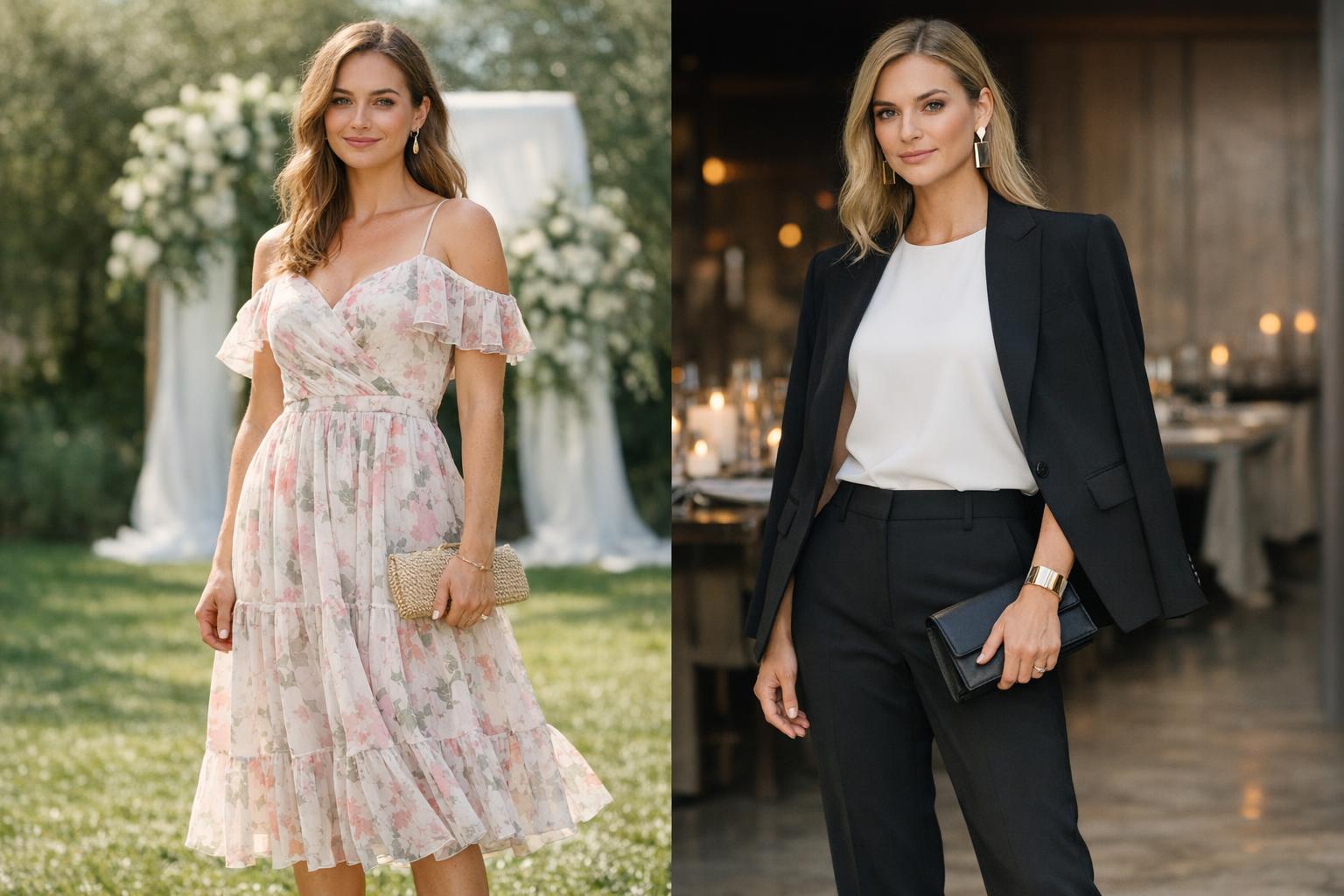
The invitation is open on your kitchen counter, the calendar is filling fast, and the real question isn’t whether you can attend—it’s what you’ll wear once you arrive. A wedding dress guest outfit has to read polished in photos, respectful in the ceremony, and comfortable enough for hours of standing, toasting, and dancing. That balancing act is exactly why two aesthetics keep circling the same conversation: the romantic “wedding guest dress” approach (think florals, flowing movement, and soft silhouettes) and the tailored “guest attire” approach (think suits, separates, and sharp lines).
They’re often discussed together because modern dress codes—cocktail, semi-formal, formal, black tie optional—rarely spell out one single garment. A garden ceremony can welcome a chiffon floral midi as easily as it can welcome a pastel suit. A city reception may favor a sleek midi dress, but a well-cut trouser look can feel equally elevated. Add seasonal shifts, venue surfaces, and color etiquette, and it’s easy to see why the lines blur.
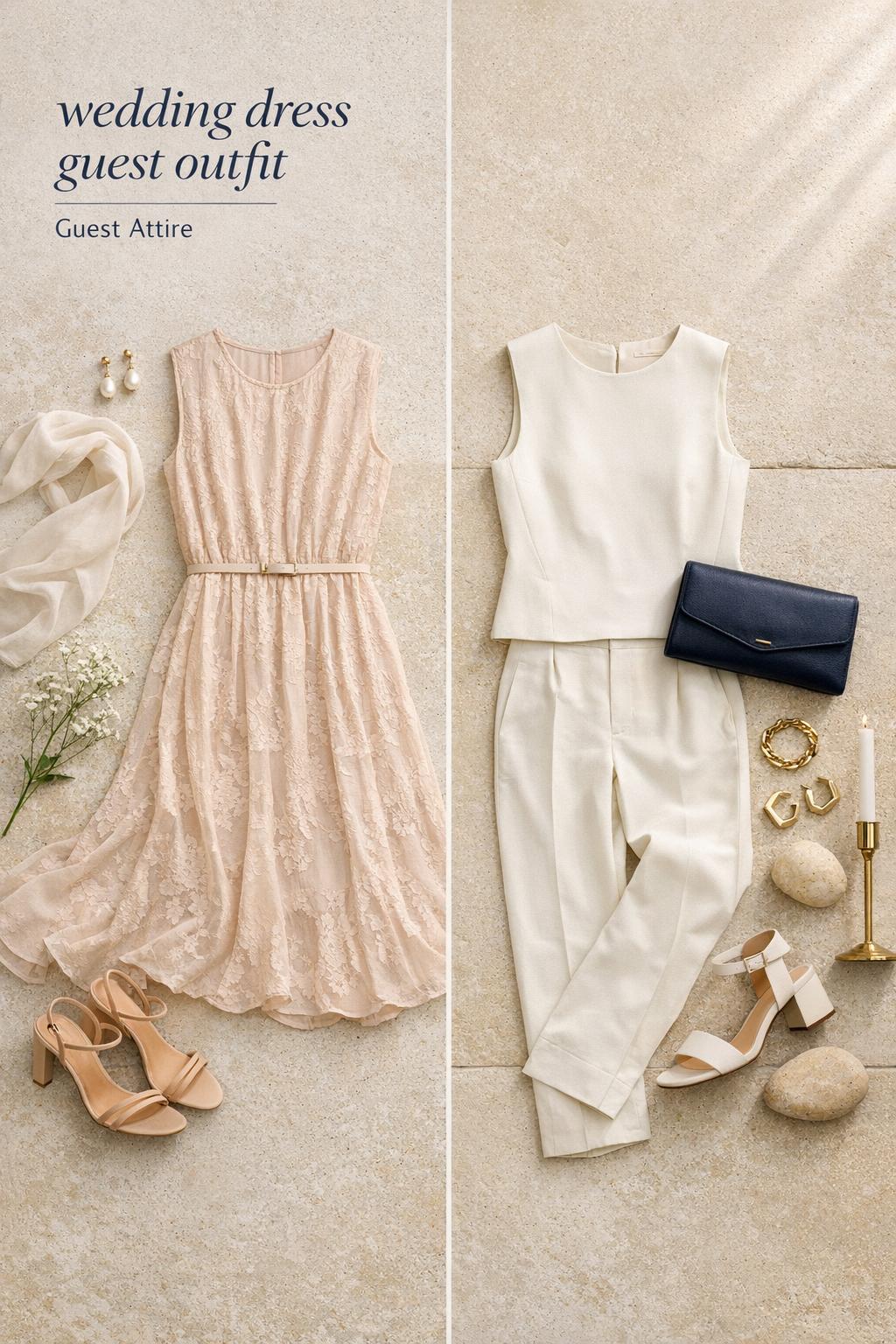
This comparison breaks down the two styling philosophies so you can choose with intention. You’ll learn how each style interprets dress codes, how silhouettes behave across seasons and venues, how celebrity inspiration (Eva Mendes in Rixo, Selena Gomez in a red Cult Gaia moment, Cat Deeley in spring green tailoring, Kaia Gerber’s Mango wardrobe) can guide—not dictate—your decision, and how to accessorize for the realities of grass, sand, and hard floors.
Style overview: the romantic wedding guest dress (movement, softness, and ceremony-ready color)
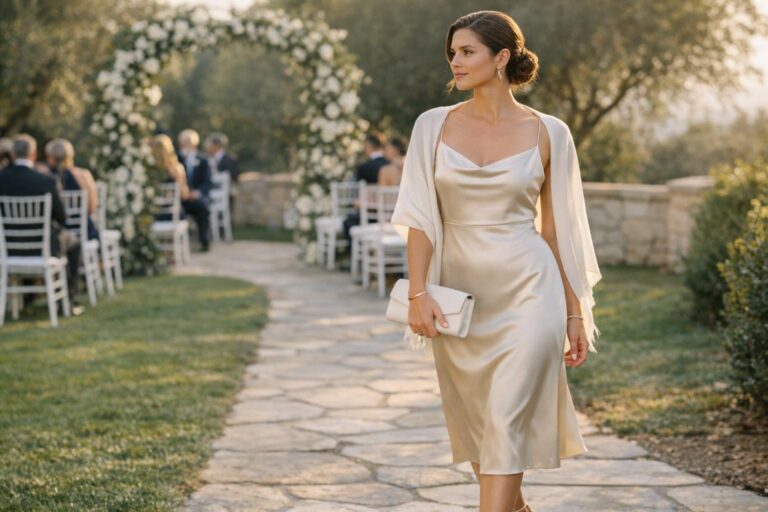
The romantic wedding guest dress is the look many people picture first: a silhouette that moves with you and reads immediately “wedding.” It’s built around dresses—often midi, maxi, or tea-length—chosen for elegance, ease, and how beautifully fabric catches light during golden hour portraits or a candlelit reception.
Your wedding look is only the beginning.
Keep your guest list, vendors, timeline, and every important detail together with Zarellea — so your day feels as considered as your style.
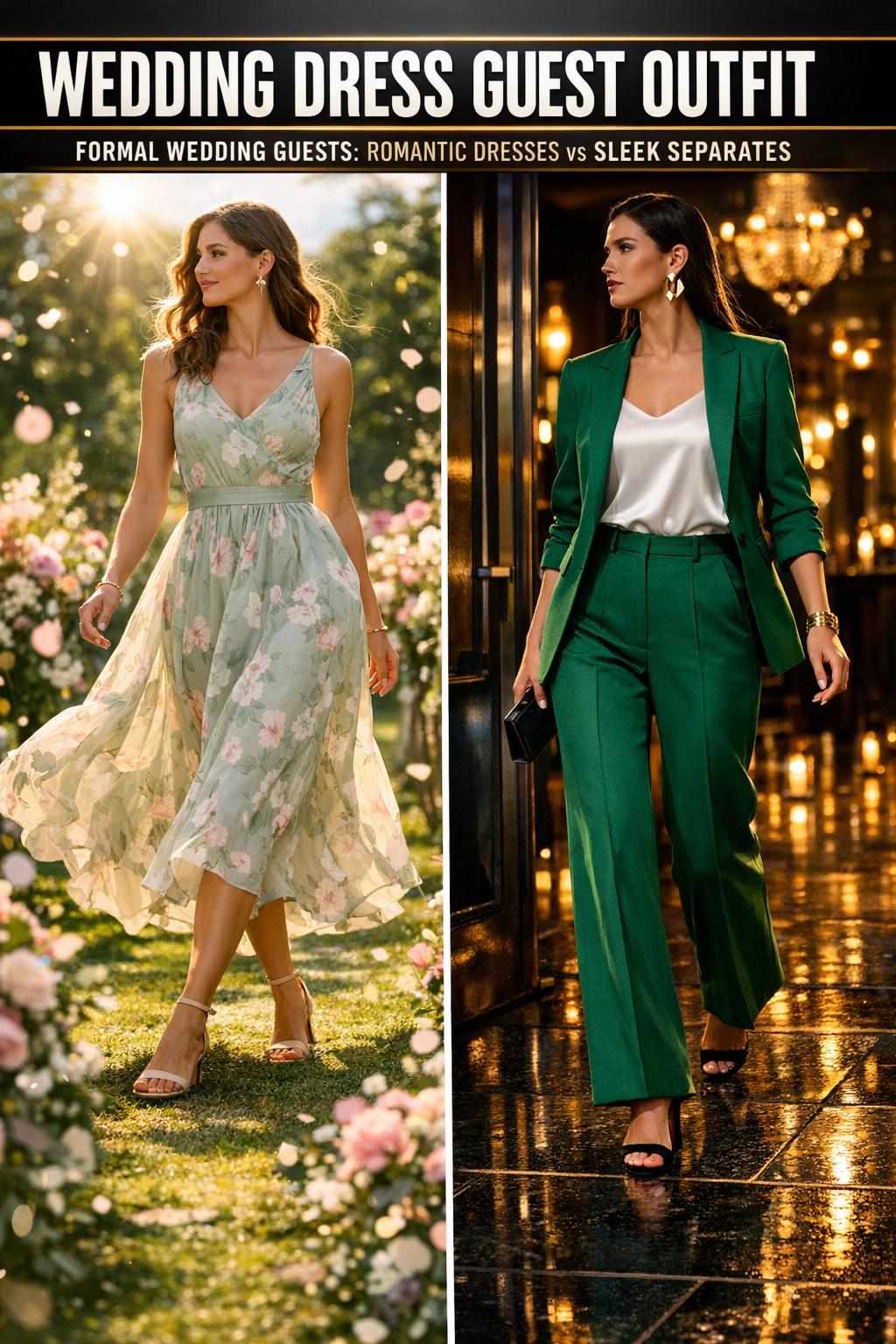
Defining characteristics include fluidity, a gentle waist emphasis, and details that feel celebratory without competing with the couple. In practice, this style leans into florals (including chiffon floral options), soft drape, and a palette that photographs well while still honoring the most common etiquette boundary: skipping white/ivory tones that can read bridal.
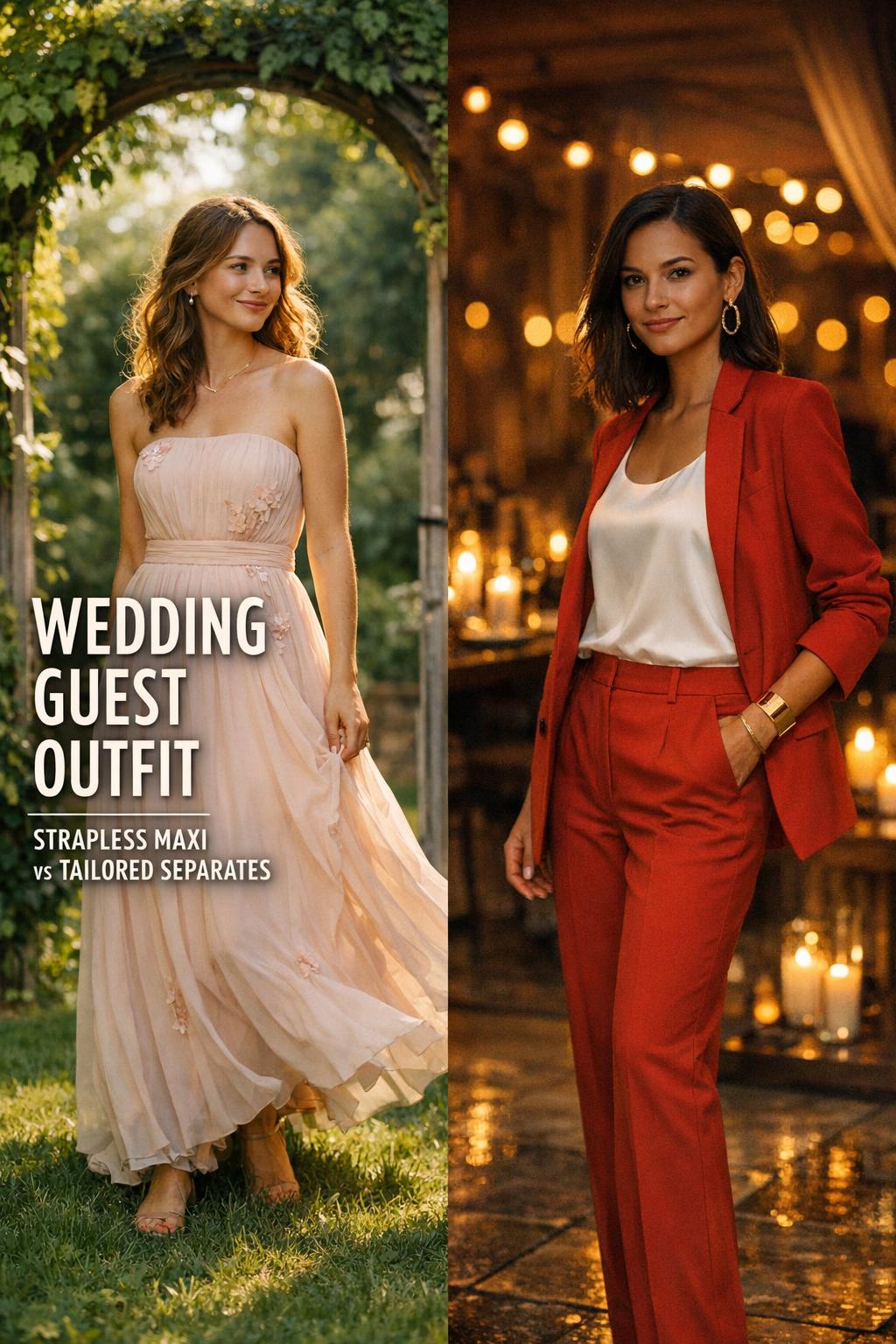
Typical silhouettes within this style include midi and maxi lengths (a strapless maxi can land here when the overall look remains refined), cocktail sheaths for dressier invitations, and dress shapes designed to skim rather than constrict—especially valuable when a celebration includes both ceremony and reception with little downtime.
Style overview: tailored guest attire (structure, versatility, and modern polish)
Tailored guest attire answers the same invitation with different logic. Instead of leaning on softness, it leans on structure: suits, separates, and refined tailoring that can look striking in wedding photos while offering the ease of pieces that may reappear in your work wardrobe later.
This aesthetic is especially visible in celebrity-driven inspiration that reframes “wedding guest outfit” beyond dresses—Cat Deeley’s spring green tailoring is a clear reference point. The defining elements are clean lines, purposeful proportions, and a preference for garments like tailored trousers and shell tops that hold their shape across a long day.
Color in this style often reads as a deliberate statement—fresh greens, saturated blues, or rich tones depending on season—while still staying inside wedding-appropriate etiquette. The overall mood is sleek and confident: a modern interpretation that can look equally at home at a city wedding, a courthouse-style ceremony, or an evening reception where “formal” is more about finish than about sparkle.
Key differences that matter at real weddings (not just in a mirror)
Silhouette and structure: drape vs definition
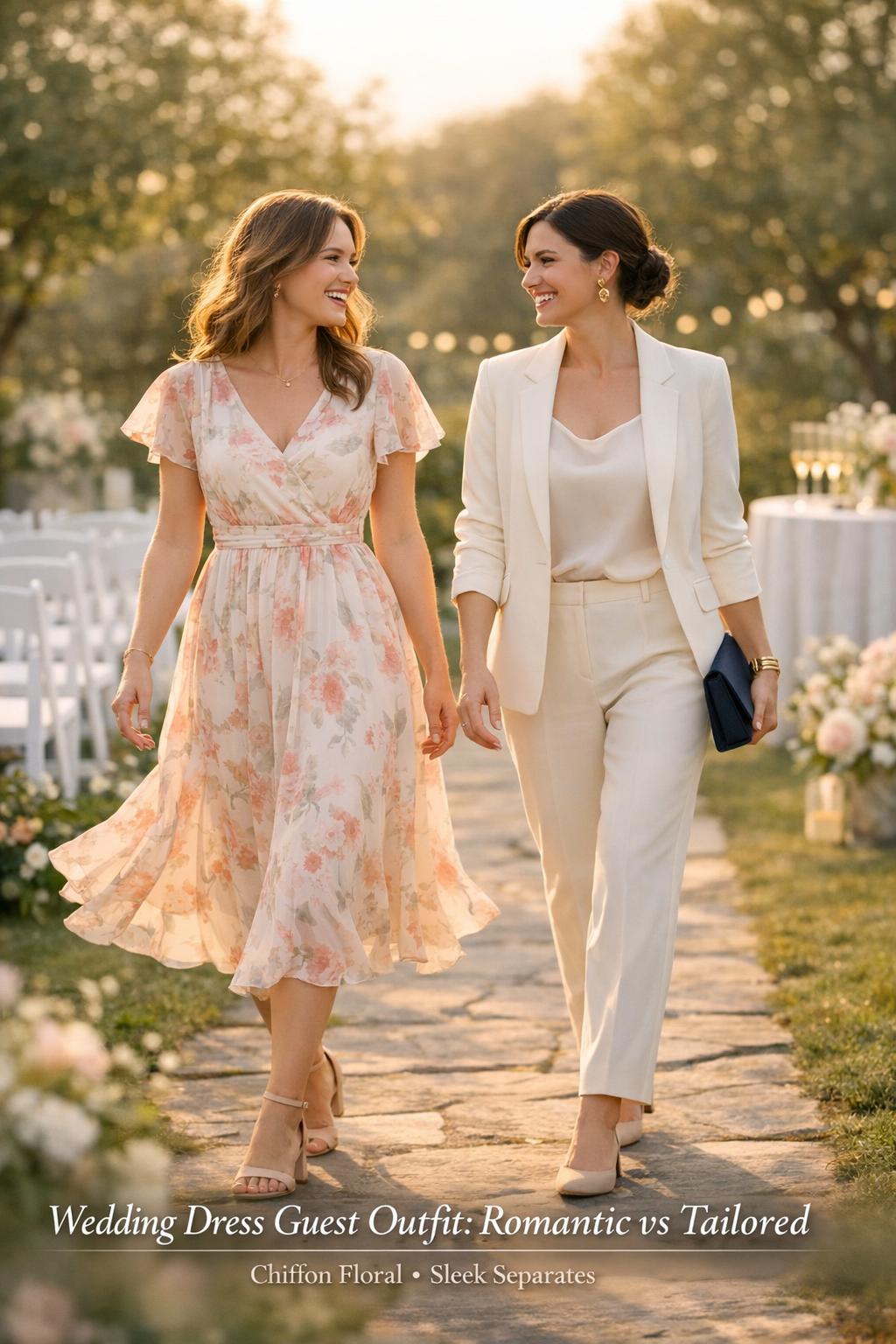
The romantic wedding guest dress relies on drape—fabric that moves, skims, and softens the body’s outline. Tailored guest attire relies on definition—seams, waist placement, and deliberate shaping through trousers or a jacket. The trade-off is feel: drape can be forgiving and breathable; tailoring can feel secure and composed, especially when you want a crisp silhouette in photos from ceremony to reception.
Color palette: painterly romance vs graphic impact
Both styles can honor color etiquette, but they speak in different “volumes.” Romantic dresses often favor softer palettes, florals, and season-led shades; tailored looks often feel more graphic—solid color suiting, bolder greens, or a saturated blue reminiscent of the kind of statement an Eva Mendes-inspired moment can deliver (even when you’re not wearing a specific brand piece). Either way, the guiding rule is consistent: choose tones that celebrate the day without pulling focus from the couple.
Level of formality: how each style interprets the dress code ladder
For formal wedding guests and black tie optional invitations, the romantic dress approach tends to translate easily into a long line—maxi or elevated midi—with refined accessories. Tailored guest attire can meet the same bar, but it must be particularly polished: impeccable fit, intentional styling, and footwear that looks evening-appropriate. In semi-formal and cocktail settings, both aesthetics thrive: the romantic side via cocktail or tea-length dresses; the tailored side via sleek separates and sharp proportion play.
Styling philosophy: “celebration-first” vs “re-wear-first”
A romantic wedding guest dress is often chosen to feel unmistakably occasion-specific. Tailored guest attire is frequently chosen for versatility—pieces that can move from a wedding weekend into future dinners or professional settings. Neither is “better,” but understanding your goal helps: if you want a look that feels like a scene from a garden ceremony, romance leads; if you want an outfit you’ll re-style repeatedly, tailoring may win.
The dress code translator: turning vague invitations into clear guest attire
Most dress codes are social shorthand. The easiest way to avoid underdressing (or unintentionally overdressing) is to translate the phrase into silhouettes, lengths, and finishing details. This is where many guests get stuck—especially when deciding between a dress and tailored separates.
- Black tie / black tie optional: romantic route leans toward a maxi or elevated midi with refined accessories; tailored route leans toward a sharply coordinated suit or formal separates with evening footwear.
- Formal: romantic route favors midi to maxi with elegant drape; tailored route favors sleek tailoring with impeccable fit and a polished top (a shell top can work when the overall look reads formal).
- Cocktail: romantic route favors cocktail/sheath/tea-length; tailored route favors structured separates with a deliberate silhouette (think clean trousers and a dressy top).
- Semi-formal: romantic route can be a midi with lighter texture; tailored route can be softer tailoring—still intentional, but less severe.
- Casual: romantic route can lean toward relaxed dresses; tailored route can be simplified separates—still neat, still wedding-aware.
If the invitation provides no dress code, look to the wedding context you do know—venue, timing, and season. Evening receptions typically invite richer styling than midday ceremonies. Outdoor settings benefit from practical fabric choices and footwear that won’t sink, slip, or strain you before the first dance.
Visual style breakdown: how the two aesthetics read in photos and in motion
Layering and proportion
Romantic wedding guest dresses tend to keep layering minimal—often because the dress itself is the statement. If you need warmth or coverage, the goal is not to interrupt the line of the silhouette. Tailored guest attire treats layering as part of the look: the relationship between jacket, top, and trousers becomes the visual story, and proportion is the main tool for refinement.
Accessories: complement vs define
With romantic dressing, accessories typically complement: subtle jewelry, a refined bag, and shoes chosen to elongate the line without competing with prints or soft textures. With tailoring, accessories can define: a bag that echoes the sharpness of the outfit, jewelry that feels architectural rather than delicate, and footwear that reinforces the clean finish. In both cases, the most wedding-smart approach is restraint—pieces that read intentional, not distracting.
Footwear choices: the venue decides more than you think
Footwear is where styling meets reality. A romantic midi or strapless maxi can look perfect until you step onto grass or sand; a tailored trouser can look impeccable until the hem drags on a damp walkway. The venue surface matters—grass, sand, and hard floors each change what’s comfortable and stable for a long celebration. A truly polished guest look is one that survives the ceremony aisle, the reception floor, and the walk to the car at the end of the night.
Seasonal comparisons: summer wedding guests vs fall/winter formality
Spring and summer: breathable romance vs bright tailoring
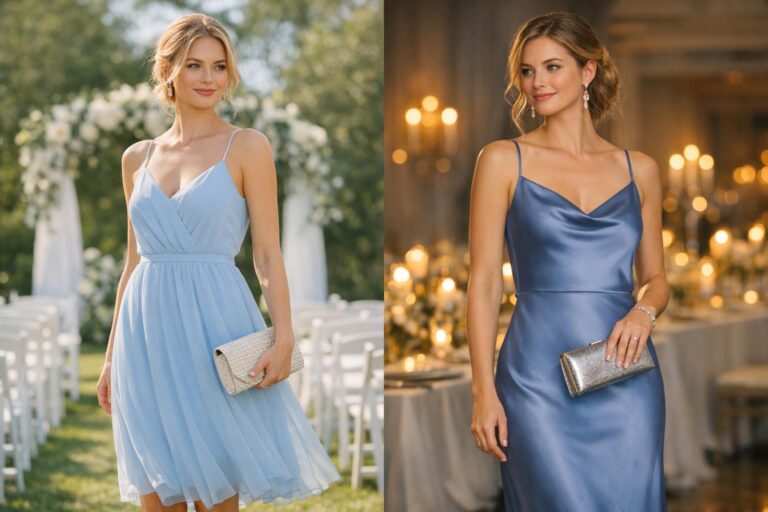
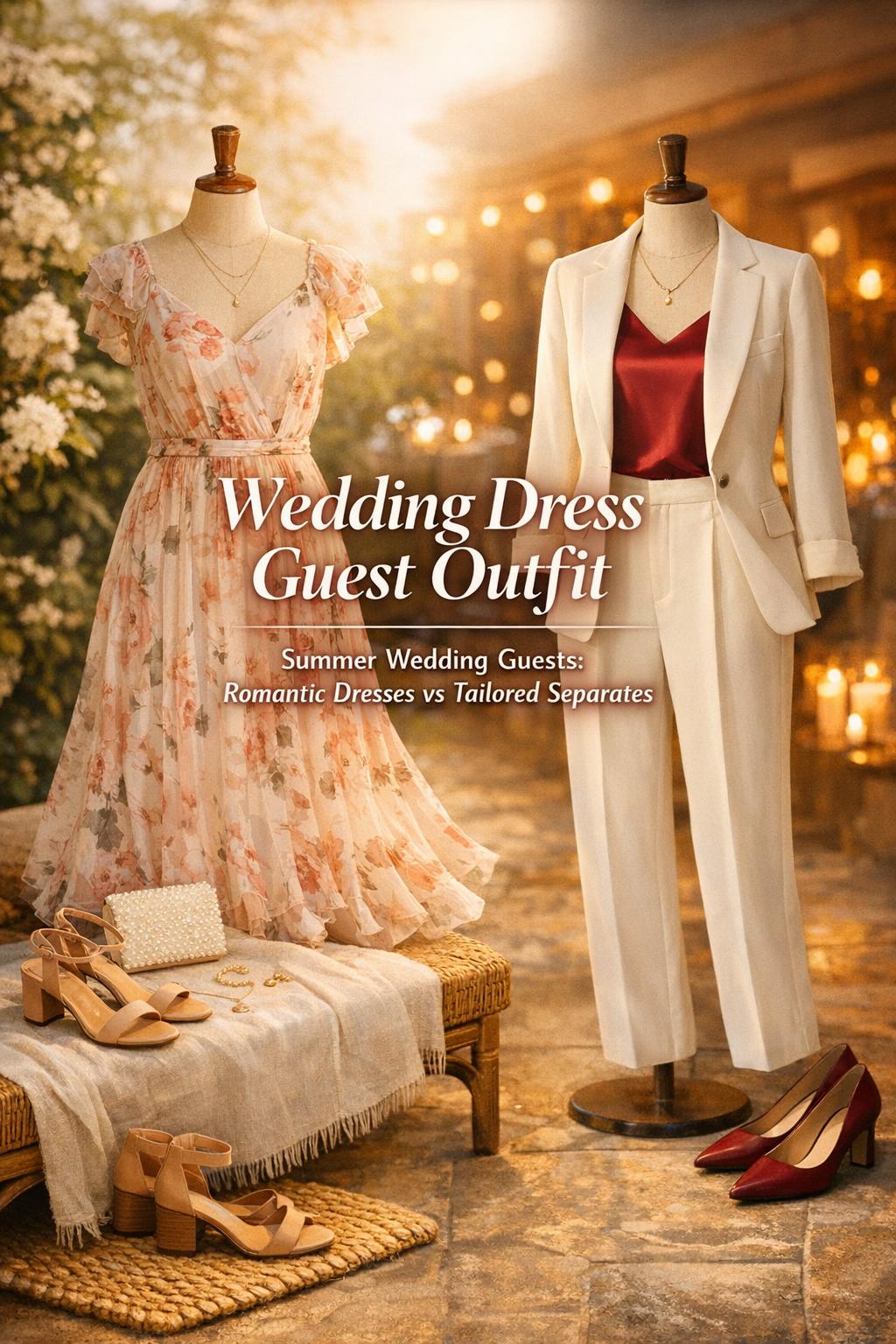
For summer wedding guests, romantic dressing often leans into breathable fabrics and lighter palettes—florals, pastels, and airy movement that suits outdoor ceremonies. A chiffon floral dress is a natural fit for a garden setting, especially when the day moves from sunlit vows to a softly lit reception.
Tailoring in spring and summer can feel unexpectedly fresh, especially in a color-forward suit reminiscent of the spring green tailoring seen in editorial inspiration. The key is balance: keep the structure, but avoid heaviness. When the sun is high and the schedule is long, a clean, comfortable tailored set can feel just as celebratory as a dress—simply more modern in its silhouette language.
Fall and winter: jewel tones, deeper impact, and layering logic
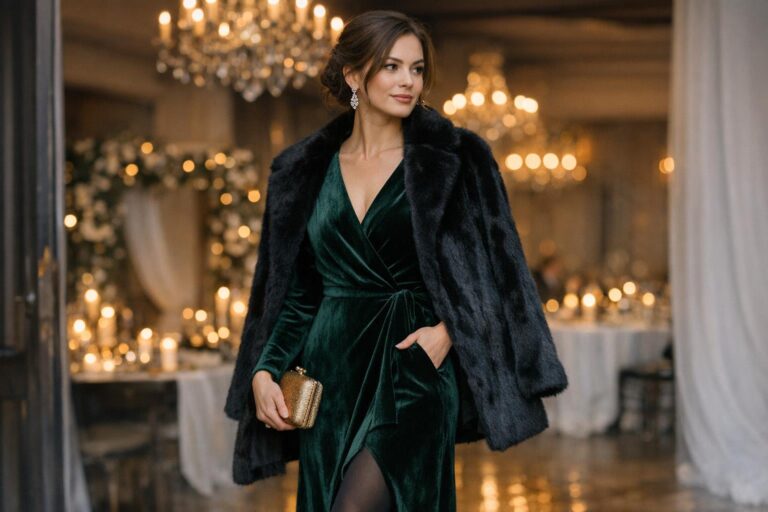
As the season turns, both aesthetics naturally deepen. Romantic dressing often shifts toward jewel tones and richer finishes; tailored outfits become especially compelling because layering looks intentional rather than purely practical. Celebrity inspiration can be a useful lens here: Selena Gomez’s red Cult Gaia wedding guest moment reads like a fall-forward statement—proof that color can carry the entire outfit when the silhouette stays refined.
For formal wedding guests in cooler months, think about the full event arc: arrival chill, ceremony stillness, reception heat. Romantic dresses may need thoughtful outerwear that doesn’t crush the silhouette; tailored outfits may need a fabric weight that holds shape while still allowing movement and comfort through dinner and dancing.
Venue logic: the same guest attire behaves differently at a beach, church, or city wedding
Two outfits can look equally elegant on a hanger and perform completely differently in real wedding conditions. Venue context is the missing piece in much wedding guest advice, and it’s often what determines whether you feel effortless—or distracted by discomfort.
Beach and outdoor ceremonies: lightness, movement, and practical footing
At a beach or outdoor wedding, romantic dressing feels intuitive: lightweight fabrics and soft silhouettes that move gracefully in the breeze. This is a natural home for a strapless maxi, as long as the styling remains secure and composed for a ceremony that may involve wind, uneven ground, and long walks.
Tailored guest attire can absolutely work outdoors, but it needs careful selection—pieces that don’t feel rigid in heat and footwear that stays stable. The point isn’t to avoid tailoring; it’s to choose tailoring that respects the setting, so your look feels intentional rather than “office moved outdoors.”
City and urban receptions: sleek silhouettes and sharper finishing
Urban weddings tend to reward clean lines. Romantic looks often translate best through a sleek cocktail or midi silhouette with refined accessories. Tailored guest attire shines here too—structured separates and crisp proportions feel aligned with city architecture and evening lighting. If you’re deciding between a dress and tailoring for a city venue, ask which one will look more like you: the goal is confidence, not costume.
Traditional indoor settings: ceremony-aware coverage and etiquette-led choices
In traditional indoor settings, etiquette tends to matter more—especially around color choices and overall polish. Romantic dresses offer a straightforward “wedding” read. Tailored outfits can be equally respectful, particularly when the styling stays elevated and the look remains celebratory rather than purely utilitarian. In both cases, consider the full day: sitting through the ceremony, standing for photos, and moving between spaces.
Celebrity and brand inspiration—used thoughtfully, not literally
Celebrity and brand moments are helpful because they make an abstract dress code feel concrete. They show how a color, silhouette, or styling detail might land in a real setting. The trick is to borrow the idea, not the spotlight.
Eva Mendes in a blue Rixo dress captures a romantic direction with a confident print-and-color presence, while still staying within the guest lane: the dress does the talking; the accessories simply refine the message. Selena Gomez’s red Cult Gaia wedding guest styling shows how a single saturated shade can read seasonally appropriate and formal without requiring heavy embellishment. Kaia Gerber’s Mango wedding guest wardrobe curation speaks to the modern guest who wants a capsule approach—pieces that can be styled across more than one invitation.
On the tailored side, Cat Deeley’s spring green tailoring offers a clear template for guests who feel most like themselves in structured pieces. The value of this reference isn’t that everyone needs green tailoring—it’s that tailoring can be festive, photo-ready, and undeniably wedding-appropriate when color and finishing are chosen with the celebration in mind.
Fit, comfort, and wearability: the quiet details that make an outfit feel expensive
The most convincing wedding guest looks are the ones that look calm—nothing pulling, gaping, or constantly being adjusted. Romantic dresses and tailored outfits have different fit pitfalls, so comparing them helps you choose based on the kind of comfort you need for a long day.
Romantic dresses: ease through the torso, freedom through the hem
With a romantic wedding guest dress, pay attention to how the fabric behaves when you sit and stand. A flowing chiffon floral dress can feel light and forgiving, but it should still stay secure at the neckline and waist. Strapless silhouettes (including a strapless maxi) are beautiful in theory and demanding in practice: if you spend the ceremony thinking about whether it will stay in place, it will never feel truly elegant.
Tailored guest attire: precision at the waist, comfort in movement
Tailoring depends on clean lines, which means fit matters immediately. If trousers pinch when you sit through dinner, or a jacket restricts your shoulders on the dance floor, the whole outfit feels less celebratory. When tailored pieces are right, though, they offer a composed silhouette from first photo to last, and they often make a strong case for repeat wear beyond wedding season.
Tips from the styling room: test the outfit like a wedding day
Before you commit, wear the outfit at home for a short “wedding simulation”: sit, stand, walk briskly, raise your arms, and take a few steps like you’re navigating a crowded reception. Small issues—slipping strapless tops, twisting seams, hems that catch—are easier to fix before the day than between the ceremony and cocktail hour.
- Take a quick mirror photo in indoor lighting and near a window to see how the color reads in different conditions.
- Walk on the shoes you plan to wear on a similar surface if possible (hard floors vs grass).
- If you’re wearing a midi or maxi, practice walking and sitting to confirm the hem length is truly manageable.
Accessorizing, compared: finishing romantic dresses vs finishing tailored guest attire
Accessories are where you can keep the outfit firmly in “wedding” territory. The goal is coherence: shoes, bag, and jewelry that align with the dress code and venue while staying comfortably wearable for hours.
Romantic dress finishing: refined, minimal, and photo-friendly
Romantic dresses, especially printed or chiffon floral pieces, usually ask for restraint. Let the fabric and silhouette provide the romance; keep accessories clean so the look doesn’t become busy. If the dress is already full of movement, a quieter accessory story often looks most elevated in wedding photography.
Tailored finishing: sharp details and deliberate contrast
Tailored outfits can support slightly stronger accessories because the silhouette is clean and structured. A bag with architectural lines or jewelry that feels crisp can reinforce the modern polish. Just avoid turning the look into a competing focal point—weddings are social events with a visual hierarchy, and the best guest styling respects it.
Footwear as a styling decision (not an afterthought)
Footwear should be chosen alongside the outfit, not after. Romantic maxis and midis depend on the shoe height to keep proportions elegant; tailored trousers depend on the shoe to keep the hem clean. Add the venue factor—grass, sand, marble-like hard floors—and the “right shoe” becomes the one that looks polished and keeps you steady. A confident walk reads as elegance in every photo.
Outfit examples, compared: same wedding scenario, two styling philosophies
Rather than treating outfits like a checklist, it’s more useful to compare how each aesthetic solves the same moment. Below are a few real-world scenarios where guests typically feel uncertain, especially when dress codes are vague.
Example comparison: summer garden ceremony (semi-formal to cocktail)
The romantic approach centers a chiffon floral midi or a soft tea-length silhouette, styled so the print feels airy rather than loud—ideal for outdoor light and a ceremony that blends into cocktail hour. The tailored approach would translate the same setting into lighter, celebratory tailoring—think tailored trousers with a refined shell top—keeping color fresh (a spring-leaning green is a natural reference point) and the overall line clean for photos among greenery.
Example comparison: city evening reception (cocktail to formal)
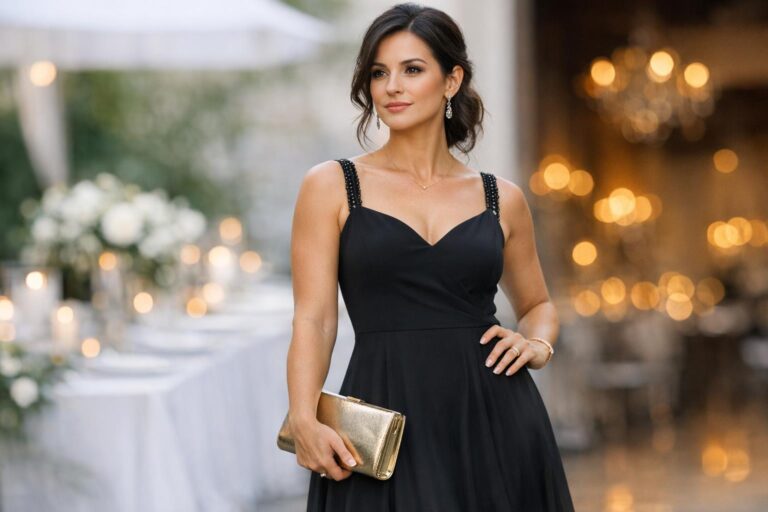
Romantic dressing here becomes sleek: a cocktail sheath or elevated midi, with accessories chosen to look polished under evening lighting. Tailoring answers with a sharper silhouette—structured separates that feel intentionally evening-ready. If you’re taking inspiration from celebrity references, this is where a strong color story can help: a saturated tone echoes the impact of a statement look (like a red fall-leaning moment) while still respecting the occasion.
Example comparison: beach or destination wedding (outdoor, travel-friendly)
The romantic solution often looks like a strapless maxi or a flowing dress that packs well and moves beautifully in a coastal breeze—chosen carefully so it stays secure and doesn’t become a constant adjustment. The tailored solution prioritizes ease: softer separates that still look put together, paired with practical footwear suited to uneven ground. Both approaches succeed when fabric choice stays light and when the overall styling looks deliberate rather than improvised.
Example comparison: “formal wedding guests” with black tie optional cues
The romantic route leans into longer lengths and elegant drape—maxi or refined midi—with accessories that elevate without overwhelming. The tailored route must emphasize finish: clean tailoring, impeccable proportions, and a clearly evening-appropriate top. This is where tailoring can look exceptionally modern, but only if it reads celebratory; if it looks too weekday, it will feel out of place next to formal dresses.
Shopping playbook: comparing brand-led inspiration and wardrobe strategy
Many guests shop with one of two mindsets: find the perfect single outfit for this wedding, or build a small “occasion wardrobe” that can flex across multiple invitations. Brand-led inspiration can support either approach when used as a guide to silhouette and styling logic.
If you’re drawn to romantic guest dresses, you’ll often find your north star in a recognizable dress moment—Eva Mendes in Rixo is a clear example of a romantic, print-forward wedding guest direction. If you prefer modern minimal impact, Selena Gomez’s Cult Gaia reference shows how a single strong color can carry a formal-leaning look. For guests who want range, Kaia Gerber’s Mango wardrobe framing points to a capsule mindset: pieces that can be styled differently for dress code changes from semi-formal to cocktail.
On the tailored side, the lesson from spring green tailoring inspiration is that suits and separates become wedding-ready through color, fit, and finish. A shell top and tailored trousers can shift from workwear to wedding guest attire when the palette feels celebratory and accessories are chosen with ceremony and reception in mind.
Tips: avoid the two most common shopping mistakes
First, don’t shop only for the photo. The ceremony-to-reception timeline is long, and comfort is a form of polish. Second, don’t shop only for the dress code label. “Cocktail” and “formal” are starting points; venue, time of day, and season determine whether a dress needs breathability, whether tailoring needs lighter structure, and whether shoes need stability on grass or sand.
Common guest outfit missteps (and how to correct them without starting over)
Even stylish guests can miscalculate because weddings have their own logic. A few small corrections often make the difference between “almost right” and effortlessly appropriate.
- Misstep: the outfit looks great standing but feels restrictive sitting through dinner. Correction: adjust fit expectations—romantic dresses should skim; tailored pieces should allow movement without pulling.
- Misstep: shoes that are perfect indoors but unstable outdoors. Correction: choose footwear with the venue surface in mind (grass, sand, hard floors) so you can walk confidently all day.
- Misstep: a statement color that feels louder than intended. Correction: keep the rest of the look quiet—simpler accessories and clean lines help a bold shade feel elegant.
- Misstep: tailoring that reads too weekday. Correction: elevate with deliberate accessories and a more occasion-aware top; refine proportions so the outfit feels event-ready.
- Misstep: romantic prints paired with competing accessories. Correction: let the dress lead; choose supportive, not distracting, finishing pieces.
When to choose each style (and when to blend them)
Choosing between romantic dresses and tailored guest attire is less about rules and more about alignment: with the dress code, with the venue, and with how you want to feel. Romantic dressing often excels when the setting is visually soft—garden ceremonies, outdoor receptions, and daytime celebrations—where movement and print feel natural. Tailoring often excels in modern settings—city venues, contemporary receptions, and invitations where you want a confident, structured silhouette that stays crisp.
Blending the aesthetics can be especially effective when you’re navigating uncertain dress codes. A tailored foundation can be softened with romantic color or gentle accessories. A romantic dress can be made more modern with clean, structured finishing. The best wedding guest outfit is the one that looks intentional in context and lets you enjoy the celebration without self-conscious adjustments.
Tips: a quick decision method for last-minute invitations
If you’re short on time, decide in this order: dress code (black tie optional/formal/cocktail/semi-formal/casual), venue surface (grass/sand/hard floors), season (summer wedding guests vs fall/winter), then personal comfort preference (drape vs structure). That sequence prevents the most common mistake: choosing a look that’s beautiful in isolation but mismatched to the setting.
Final take: how to spot the difference at a glance
The romantic wedding guest dress is defined by movement, softness, and ceremony-forward mood—florals, flowing fabric, and silhouettes that look effortless in warm light. Tailored guest attire is defined by structure, proportion, and modern polish—clean lines, refined separates, and a finish that feels composed from ceremony to reception. Once you learn the distinction, choosing becomes simpler: match the style logic to the dress code and venue, borrow inspiration from references like Rixo, Cult Gaia, and Mango without copying them outright, and keep etiquette and comfort at the center of every decision.
FAQ
Is white or ivory always off-limits for a wedding dress guest outfit?
In typical U.S. wedding etiquette, guests are generally expected to avoid white and ivory tones so the overall visual focus stays on the couple; if you want a light palette, choose clearly non-bridal colors that still photograph well and feel celebratory.
What if the invitation doesn’t list a dress code?
Use the clues you do have—venue, time of day, and season—to translate the likely formality: evening and city settings usually skew dressier, while daytime and outdoor settings often welcome lighter fabrics and softer silhouettes, as long as the look remains polished.
Can tailored guest attire be appropriate for formal wedding guests?
Yes, tailoring can work for formal and black tie optional weddings when it’s impeccably fitted and styled with clearly elevated finishing; the key is ensuring the look reads celebratory rather than weekday, with deliberate accessories and a refined overall silhouette.
How should summer wedding guests choose fabrics and silhouettes?
For summer wedding guests, prioritize breathable comfort and easy movement: romantic looks often translate well through a chiffon floral midi or a flowing silhouette, while tailored looks work best when they’re lighter in feel and not overly rigid, especially for outdoor ceremonies.
Is a strapless maxi appropriate as a wedding guest?
A strapless maxi can be appropriate when the dress code supports it and the styling stays refined, but it should feel secure enough for a full ceremony and reception; if you anticipate wind, long walks, or lots of dancing, prioritize stability so elegance isn’t replaced by constant adjusting.
How do I choose between a romantic dress and tailored separates for a cocktail wedding?
For cocktail attire, romantic dressing typically points to a cocktail/sheath/tea-length silhouette, while tailoring points to polished separates with clean proportions; choose the option that fits the venue and the way you want to move through the day, then keep accessories balanced and wedding-aware.
What’s the safest way to pick shoes for different wedding venues?
Let the venue surface guide you: grass, sand, and hard floors each change stability and comfort, so select footwear that keeps you steady for hours and supports the outfit’s proportions—especially with midi/maxi hemlines or tailored trousers where shoe height affects the overall line.
How can I use celebrity inspiration like Eva Mendes, Selena Gomez, Kaia Gerber, or Cat Deeley without overdoing it?
Borrow one element—color impact, a silhouette idea, or the balance of accessories—rather than replicating the exact look; the most wedding-appropriate approach is to use those references as guidance while keeping your outfit aligned with the couple’s dress code, venue, and etiquette expectations.