From Garden Vows to Ballroom Glam: Navy Wedding Guest Dress
Navy wedding guest dress: solving the “what do I wear that feels effortless but event-appropriate?” dilemma
The invitation says “wedding,” the calendar says “two weeks,” and your closet says “nothing feels quite right.” A navy wedding guest dress often becomes the answer because it reads polished without competing with the wedding aesthetic—but choosing the right navy can still feel surprisingly complicated once you factor in dress code, venue, weather, and comfort for a long celebration.
Most guests get stuck in the same place: navy seems safe, yet one dress can look beachfront-casual while another leans black-tie. Add in details like satin material versus chiffon, a midi versus a maxi, lace versus sequins, and suddenly “navy” isn’t one decision—it’s a series of small styling calls that have to work together.
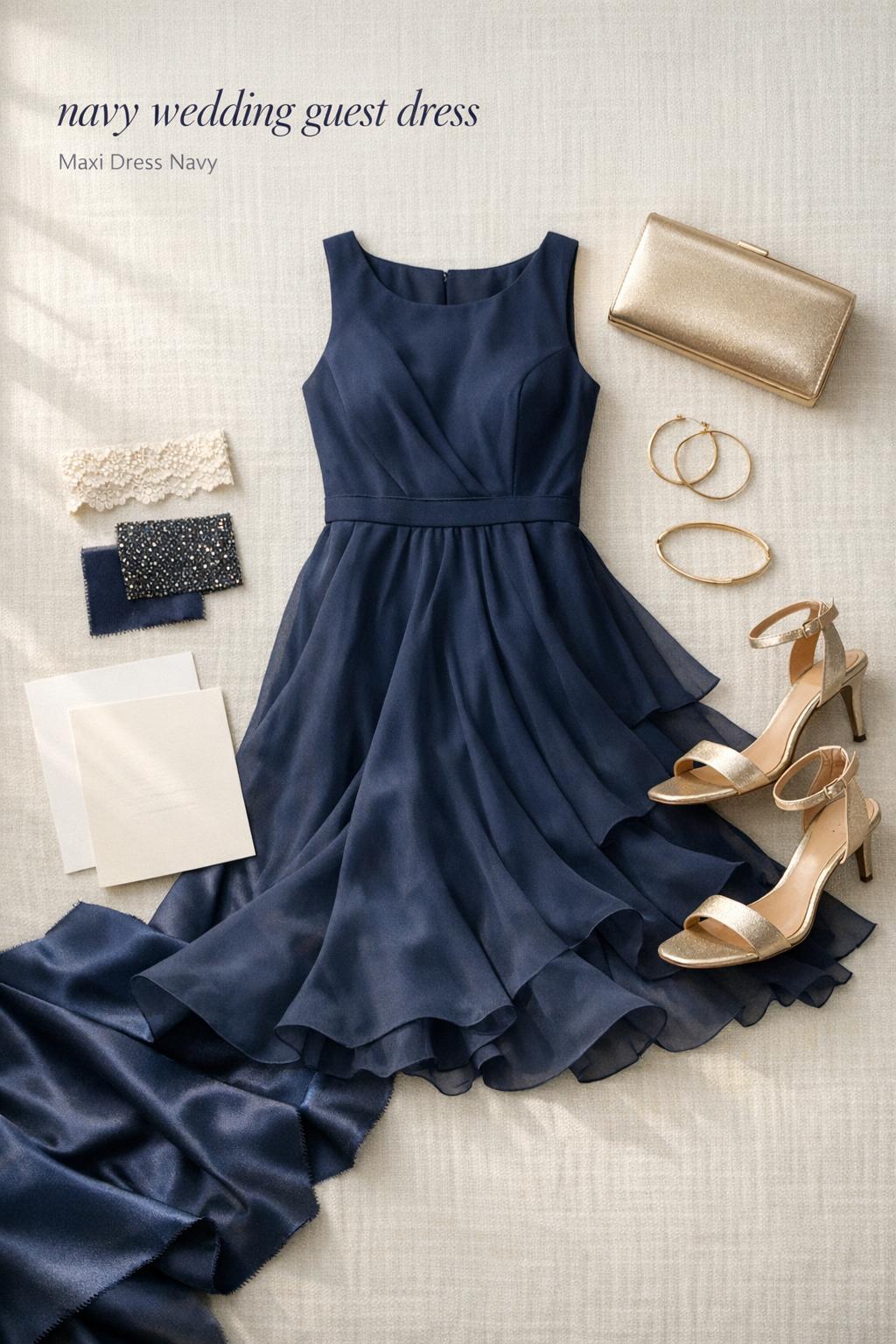
This guide approaches navy the way a wedding stylist would: as a flexible palette you can tailor to a garden ceremony, a candlelit reception, or a destination weekend. You’ll find clear dressing principles, occasion-based outfit solutions, and practical finishing touches—so you can enjoy the day (and the dance floor) without second-guessing your look.
Understanding the styling challenge: why navy can still be tricky
Navy sits in that “nearly universal” category, which is exactly why it’s easy to misjudge. In bright daylight, some navies read lighter and more casual; under evening lighting, the same shade can look deep and dramatic—closer to midnight blue. That shift matters when the couple’s dress code sits on the line between cocktail and formal.
Your wedding look is only the beginning.
Keep your guest list, vendors, timeline, and every important detail together with Zarellea — so your day feels as considered as your style.
Then there’s the practicality: weddings involve walking on grass, standing through ceremonies, sitting for dinner, and often moving between indoor and outdoor spaces. A structured bodycon might photograph beautifully, but it can feel restrictive through a long reception. A sweeping maxi is elegant, but it needs the right hem length and shoes to avoid tripping—especially on uneven venues like gardens or beach paths.
Finally, many guests are shopping online through brand category pages—Goddiva, Windsor, Karen Millen, Ever-Pretty, PrettyLittleThing, and JAUS—and it’s easy to be swayed by a promotional tile instead of thinking through silhouette, fabric behavior, and accessory strategy. The goal is to make your choice with intention: pick a navy dress that matches the wedding setting first, then refine the look with detail and styling.
Key dressing principles for a confident navy look
Principle 1: treat navy as a palette, not a single color
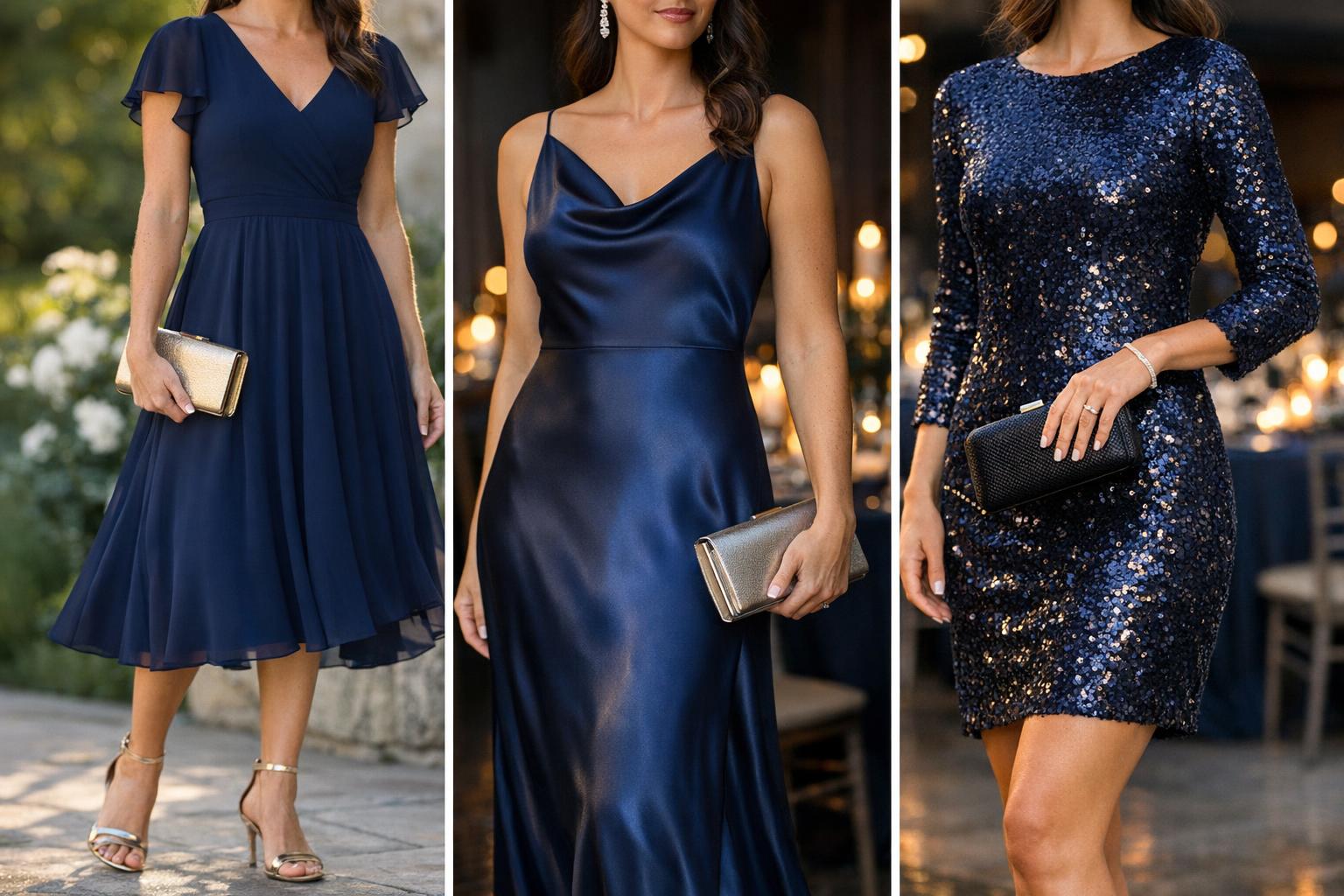
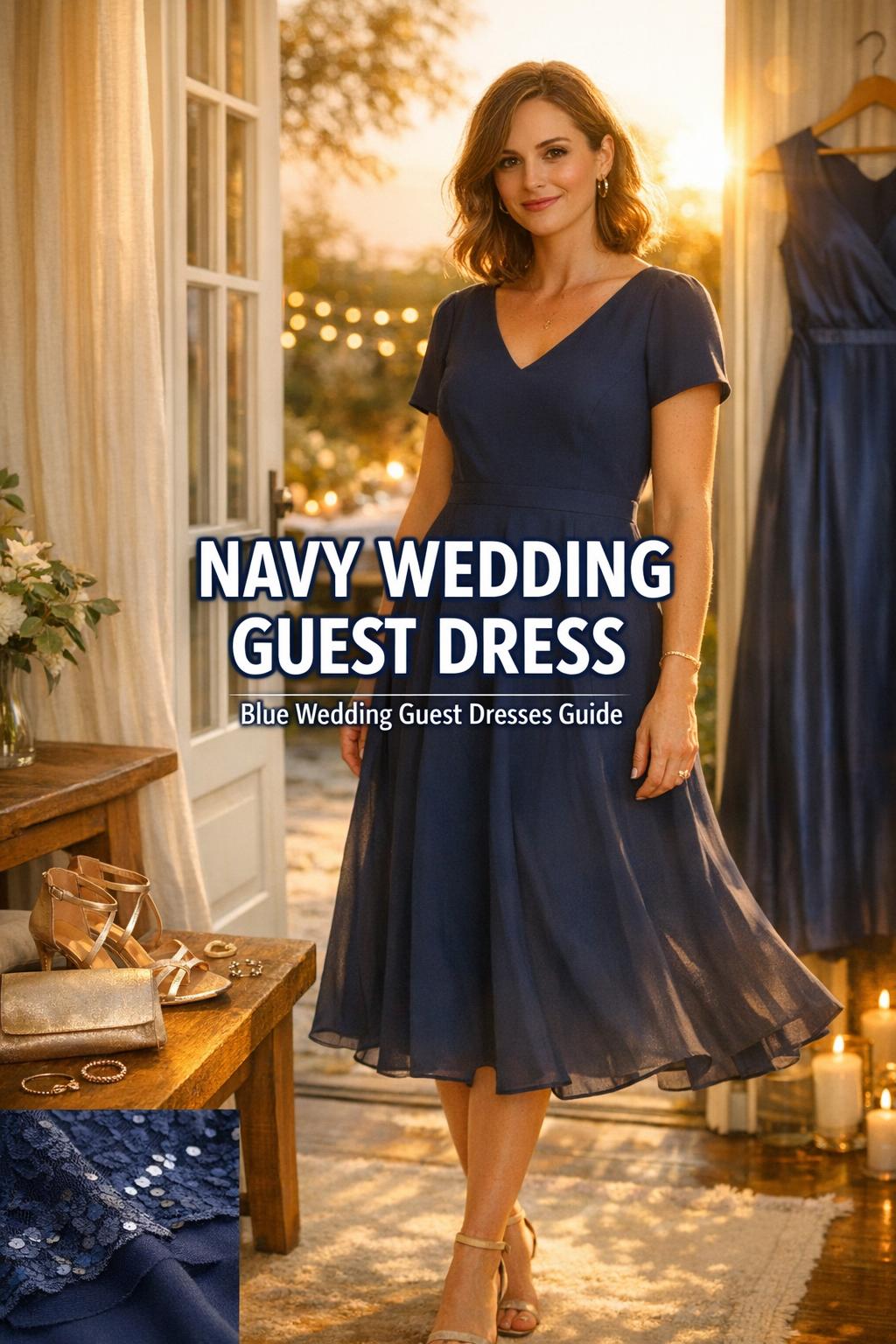
Navy lives alongside related shade language you’ll see while shopping, including midnight blue and cobalt. Even when a product page simply says “navy,” the visual read can vary by fabric and finish—satin material reflects light, chiffon diffuses it, lace adds dimension, and sequins amplify it. If you want a quietly elegant look, a matte or softly textured navy can feel refined; if you want reception-ready drama, shimmer or sequin detail leans festive.
Principle 2: match silhouette to the venue’s movement needs
Silhouette isn’t just about style—it’s about how you’ll move through the day. Midi and knee-length dresses often feel like the easiest “do-everything” shape for weddings because they balance formality with mobility. Maxi styles bring instant occasion energy (especially for formal receptions), but they require careful shoe choice and hem consideration. Mini can work in the right context, yet it becomes more demanding in churches or traditional settings where a bit more coverage may feel appropriate.
Principle 3: let fabric solve comfort and dress code at the same time
Fabric is where practicality meets polish. Chiffon is a frequent choice in blue wedding guest dresses because it drapes, breathes, and photographs softly. Satin material reads more elevated and evening-oriented, but it can show creases and highlights—beautiful when you want that glow, less forgiving if you prefer a subtle finish. Lace can add romance and texture, while sequins immediately push the look toward cocktail and formal territory.
Navy color theory for wedding guests (the quiet power of the right shade)
Why navy works: elegance without stealing focus
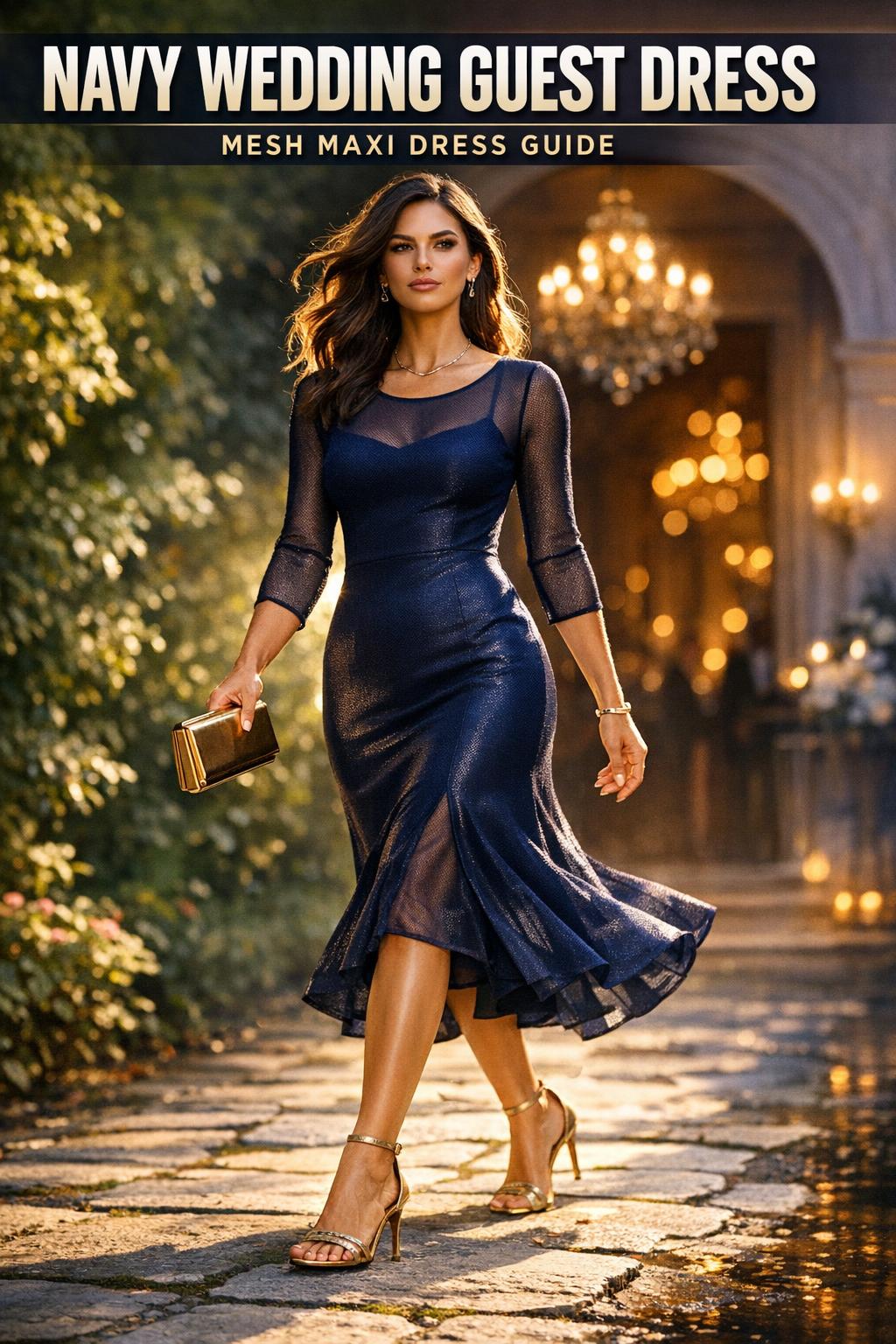
Navy is a classic choice in wedding guest attire because it feels celebratory yet grounded. It pairs easily with refined accessories, works across seasons, and can be styled to look soft or striking depending on your fabric and finish. If you’ve ever felt unsure about brighter colors in photos, navy offers confidence: it tends to look intentional in group shots while still letting bouquets, décor, and bridal details shine.
Navy vs. midnight vs. cobalt: choosing the mood
Think of these names as mood cues. Navy reads classic and versatile; midnight blue pushes darker and often feels more evening-leaning; cobalt suggests a brighter, bolder blue presence. If the wedding is a candlelit reception or a formal event, a deeper navy that behaves like midnight can feel especially fitting. If the venue is bright and airy, consider how your navy reads in daylight—some guests prefer a clearer blue tone so it doesn’t look almost black in photos.
Color pairings that consistently elevate navy
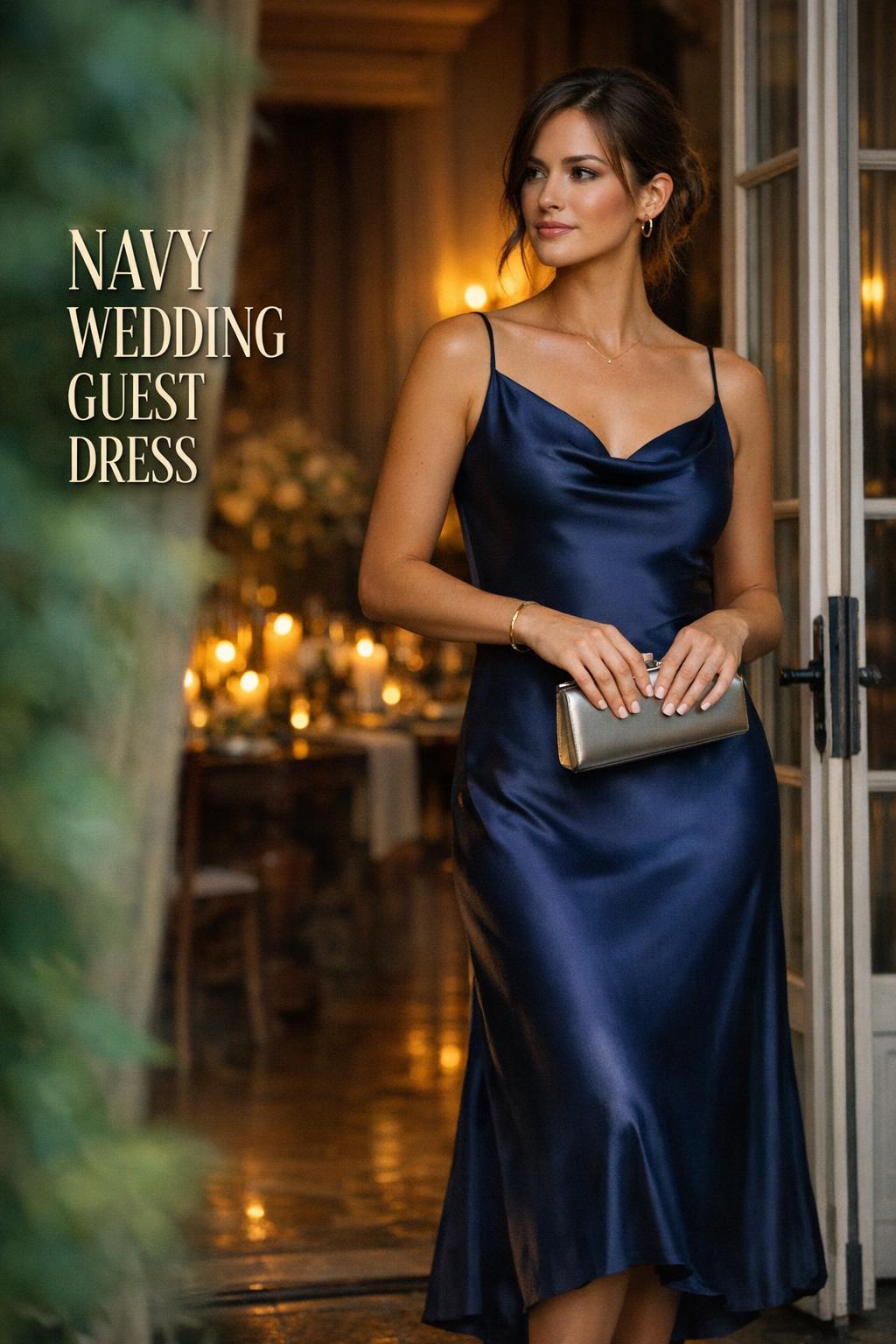
Because navy is such a strong base, accessories do a lot of the storytelling. Gold jewelry can warm navy and feel romantic; silver can sharpen it into a cleaner, more modern finish. Shoe and bag color choices also steer the tone: neutrals keep it understated, while metallics add evening sparkle. This is one reason many shoppers gravitate to elegant navy collections from retailers like Windsor and Karen Millen—those assortments often assume you’ll build the final mood with accessories.
- For a soft editorial finish: navy + gold jewelry + a refined clutch
- For modern simplicity: navy + silver jewelry + sleek shoes
- For a festive reception look: navy + shimmer accents (especially with lace or sequin detailing)
Silhouette decisions: midi, maxi, mini—and what they communicate at weddings
Midi and knee-length: the reliable wedding guest staple
A navy midi is often the most adaptable option for guests who don’t want to overthink every detail. It reads intentional for daytime ceremonies, transitions smoothly into evening, and works across different levels of formality with the right fabric. If you’re considering a dress like a navy ruffled midi with long sleeves—an approach seen in designer options such as Mac Duggal—it can also solve temperature shifts without needing an extra layer.
When you’re browsing category pages (Goddiva, Ever-Pretty, or Karen Millen), scan for keywords like midi, fit-and-flare, or A-line—these silhouettes often provide comfort through the waist and hips while still looking sculpted in photos.
Maxi dress navy: when you want instant formality
A maxi dress navy moment is made for formal invitations, evening receptions, and venues that already feel elevated. The length creates drama, and the silhouette can look especially graceful in movement—walking into a ballroom, stepping into golden hour light, or gliding across a candlelit terrace. Brands like Goddiva and JAUS frequently cluster maxi options within their navy wedding guest dress collections, making it easier to shop by length when you know the event leans formal.
The trade-off is practical: maxi hems demand the right shoe height and a mindful fit so the dress doesn’t drag. If you’re attending a garden wedding, a maxi can still work—just make sure your footwear and hem allow you to move comfortably across grass.
Mini and short silhouettes: best when the setting supports it
Shorter navy wedding guest dresses can feel fresh, especially for contemporary venues. But minis become more dependent on the rest of your styling: a more tailored cut, a refined fabric choice, and thoughtful accessories help ensure the look stays wedding-appropriate. If you’re shopping a trend-forward assortment like PrettyLittleThing, take an extra moment to consider coverage, movement, and whether the venue is more traditional or more modern.
Fabric and detailing: the fastest way to shift navy from daytime to evening
Chiffon and lace: romantic, breathable, and ceremony-friendly
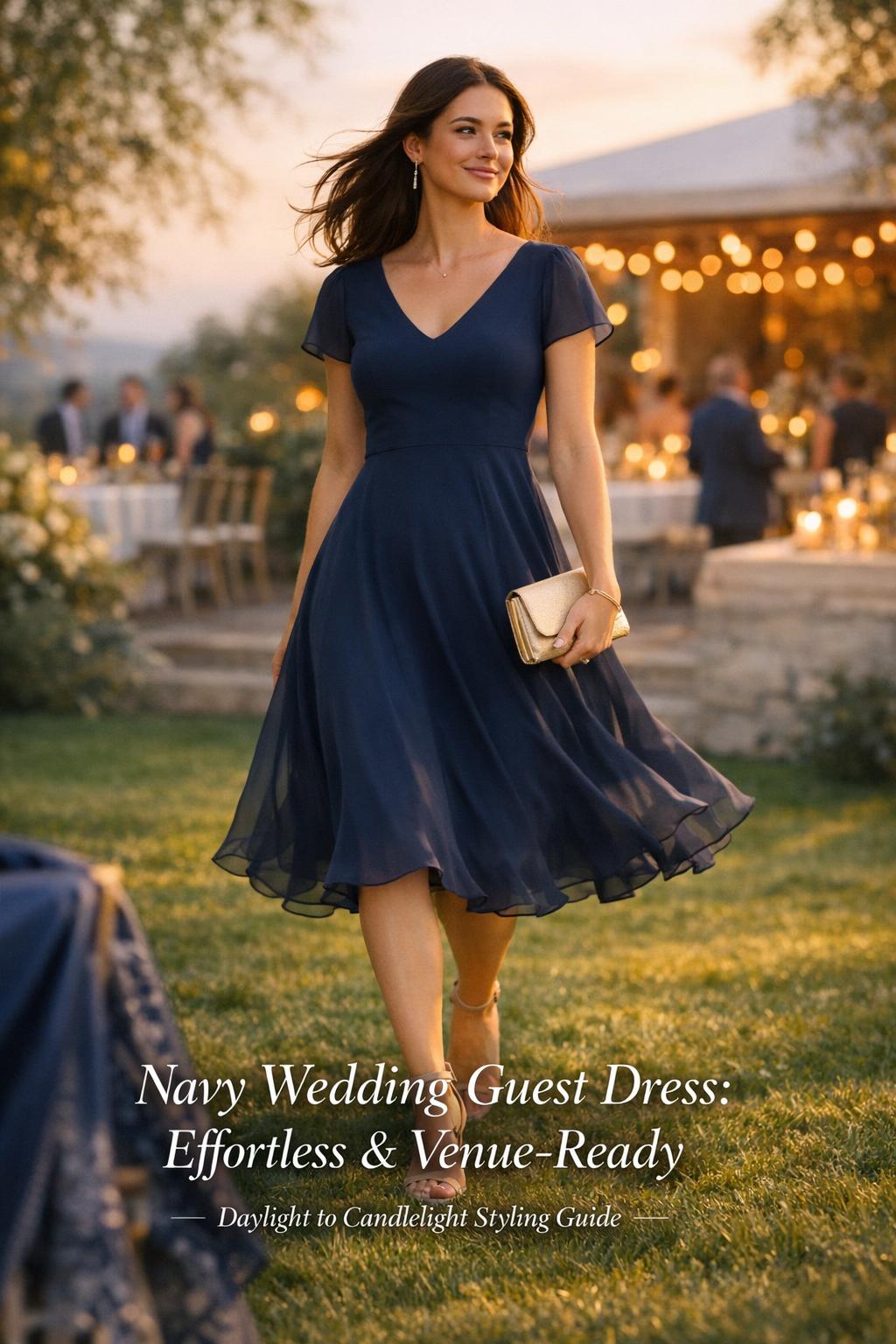
If your priority is comfort and graceful movement, chiffon is one of the most wedding-aligned choices in blue wedding guest dresses. It tends to float rather than cling, which helps in warm weather and feels forgiving through long hours. Lace adds texture and romance, and it can make even a simple silhouette look intentionally dressed for a celebration. Collections like Ever-Pretty often highlight lace and chiffon options, which can be a practical place to start if you want classic wedding styling.
Satin material: sleek, elevated, and photo-ready (with a few considerations)
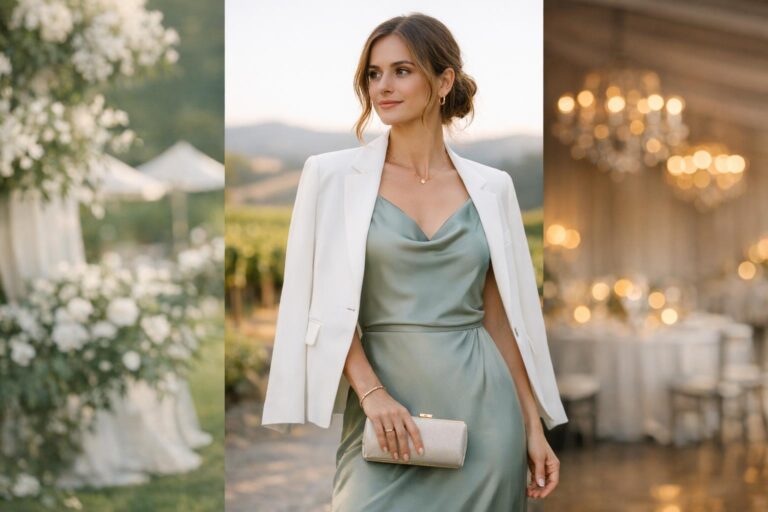
Satin material is a direct route to an evening-appropriate navy look because of the way it reflects light. It’s especially striking for formal receptions and candlelit venues, where navy takes on a richer depth. The practical side: satin can show creasing and may highlight lines more than chiffon or lace, so fit becomes more important. If you love the satin look, prioritize a silhouette that allows comfortable movement—especially if the day includes a seated ceremony and dinner before dancing.
Sequins, ruffles, and embellishment: choose one hero detail
Detailing determines how “special occasion” your navy reads. A navy sequin dress—like a knee-length deep V style from Mac Duggal available through PromGirl—signals cocktail to formal immediately. Ruffles bring softness and motion, especially in midi lengths. Lace overlays read romantic and timeless. The styling trick is to let one hero detail lead: if you choose sequins, keep accessories refined; if you choose lace, you can play more with jewelry; if you choose dramatic ruffles, keep the rest of the look clean so it doesn’t feel overdone.
Occasion playbooks: navy styled for real wedding settings
Garden ceremony: breathable elegance that moves with you
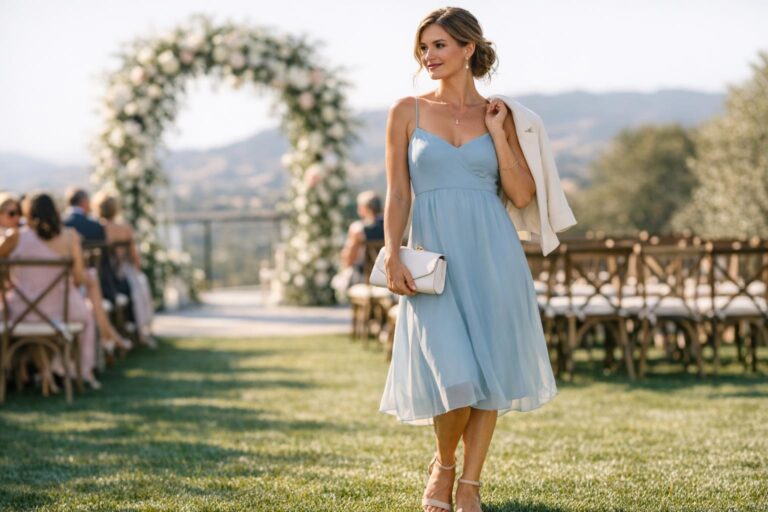
A garden wedding asks for ease—walking across lawns, sitting outdoors, and transitioning from sun to shade. This is where chiffon and lace shine, especially in midi or softly flowing maxi silhouettes. A navy dress in a light, airy fabric feels romantic against greenery and florals, and it doesn’t demand constant adjusting as you move between ceremony seating and cocktail hour.
Tip: if you’re drawn to a maxi dress navy option for a garden setting, prioritize a hem that won’t sweep the ground. A slightly raised hemline or a less voluminous skirt can look just as elegant while staying practical.
Beach wedding: keep the silhouette unfussy and the styling intentional
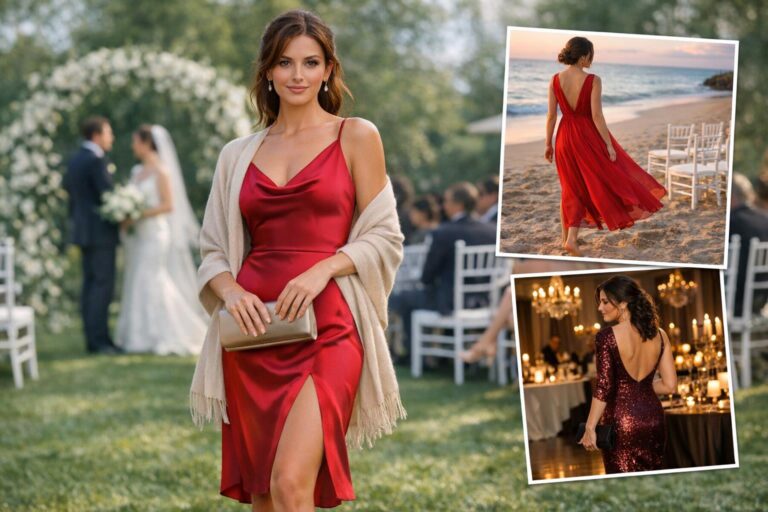
Beach weddings are beautiful—but they’re demanding. Sand, wind, and bright light all influence your choice. Navy works well here because it feels classic and doesn’t look overly precious, but fabric matters: lighter materials and simpler shapes keep you comfortable. A midi often feels like the most effortless compromise—easy to walk in, easier than a maxi in sand, and still polished for photos.
If you love the drama of a longer line, consider a mesh maxi dress approach only if it stays breathable and doesn’t feel heavy; the priority is movement and comfort, not stiffness. Navy can look striking against an ocean backdrop, but the silhouette should be stable in wind—less fussy volume, more secure fit through the bodice.
Black-tie or formal evening reception: deepen the navy and elevate the finish
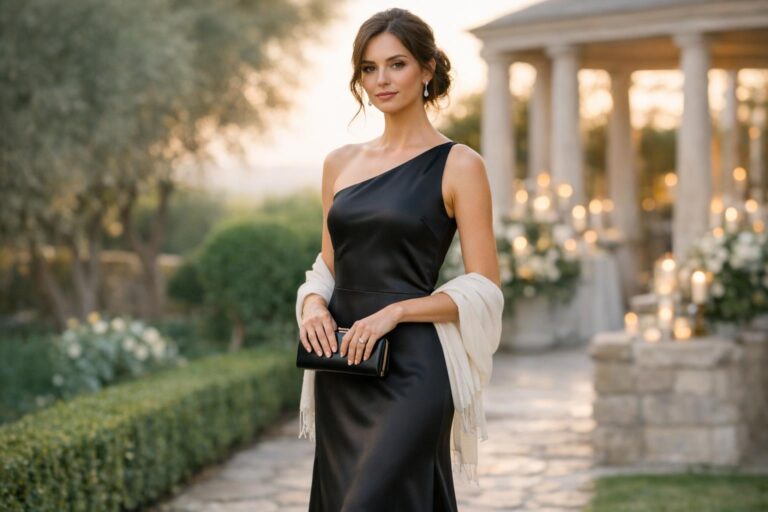
For black-tie-leaning weddings, navy becomes especially powerful when it reads closer to midnight. This is where satin material, embellishment, and floor-length silhouettes feel at home. A navy sequin dress can be a direct answer to “formal but festive,” especially when the invitation suggests an elevated evening mood. You’ll see this logic reflected in formal-occasion options from designers like Mac Duggal.
Tip: if you choose sequins or a deep V neckline, keep the rest of the look elegant—clean shoes, a simple clutch, and jewelry that supports rather than competes. Navy already has presence; your goal is balance.
Church ceremony or traditional setting: coverage choices that still feel modern
In more traditional venues, navy is a natural fit because it reads respectful and refined. Sleeves—whether long sleeves or a more covered shoulder—can make the outfit feel aligned with the setting without losing style. A navy ruffled midi with sleeves (a silhouette seen in designer-led product options) can be a graceful solution: romantic in detail, practical in coverage, and comfortable for a ceremony-first schedule.
Outfit solutions: styled navy looks that solve specific wedding-day problems
Outfit solution: the “all-day wedding” midi that stays comfortable through dinner and dancing
Choose a navy midi or knee-length silhouette with a forgiving shape—A-line or fit-and-flare are common favorites in collections like Ever-Pretty—and let the fabric do the work. Chiffon keeps you cool during daytime moments and still looks polished after hours of wear. Add refined jewelry in gold or silver and a small clutch to keep the outfit event-ready without adding bulk.
Why it solves the challenge: you get a balanced hemline for walking and sitting, a fabric that won’t feel heavy, and a silhouette that photographs well from ceremony to reception.
Outfit solution: the maxi dress navy look for a formal invitation (without feeling overdressed)
Start with a navy maxi in a luxe finish—satin material if you want glow, or a refined alternative if you prefer subtlety. Keep the lines clean and let the length carry the elegance. Pair with sleek shoes and a structured clutch to echo the formality. This is where browsing dedicated navy collections at Karen Millen, Goddiva, or Windsor can streamline your search by filtering for long silhouettes that already read “occasion.”
Why it solves the challenge: it meets formal expectations immediately, and navy keeps the look sophisticated rather than attention-grabbing.
Outfit solution: a reception-ready sequin moment for cocktail-to-formal weddings
If the wedding is evening-forward—think low lighting, music, and a lively dance floor—a navy sequin dress in a knee-length silhouette can feel celebratory without drifting into “night-out” styling. A designer option like Mac Duggal (as seen through PromGirl product listings) signals that cocktail/formal sweet spot: special, clearly wedding-appropriate, and photogenic under reception lights.
Why it solves the challenge: sequins provide built-in styling interest, so you can keep accessories minimal and still look finished.
Outfit solution: the long-sleeve navy midi for temperature swings and more traditional venues
A long-sleeve navy midi—especially with a soft detail like ruffles—works beautifully when the day moves from an outdoor ceremony to an air-conditioned reception, or when you want a bit more coverage. It’s a calm, elegant answer to “I want to look dressed up, but I also want to feel comfortable and appropriate in every moment.”
Why it solves the challenge: sleeves reduce the need for an extra layer, and the midi length stays practical across venues.
Outfit solution: a modern navy mini styled to stay wedding-appropriate
For contemporary venues and fashion-forward crowds, a navy mini can be a sleek choice—especially when the cut is tailored and the accessories are refined. To keep it firmly in wedding guest territory, lean on polished elements: clean shoes, a structured bag, and jewelry that looks intentional rather than oversized. Collections at retailers like PrettyLittleThing can offer short styles quickly, but the finishing choices are what make the look feel elevated.
Why it solves the challenge: you get a fresh silhouette while navy keeps the overall effect sophisticated and grounded.
Accessorizing navy: jewelry, shoes, and bags that complete the story
Navy is one of the easiest colors to accessorize, but weddings demand restraint. The most polished outfits usually follow a simple rule: if your dress has texture (lace, sequins, heavy ruffles), keep accessories quieter; if your dress is minimal (clean satin or chiffon), you can add a touch more shine.
Jewelry pairing: gold vs. silver
Gold jewelry warms navy and can feel romantic—especially for sunset ceremonies and candlelit receptions. Silver jewelry reads cooler and more modern, which can be striking with crisp silhouettes. Neither is “more correct”; the best choice is the one that matches your dress detailing and the mood of the wedding.
Shoes and comfort: the venue decides more than the trend does
Heel height should be chosen with the venue in mind. Gardens and beaches reward stability; ballrooms give you more freedom. With maxi lengths, ensure your shoe works with the hem so you’re not lifting your skirt all night. With midi and knee-length dresses, you have more flexibility, so you can prioritize comfort without sacrificing elegance.
Clutches and small bags: a practical wedding guest upgrade
A clutch (or a small structured bag) is often the most functional choice for weddings because it keeps essentials close without interrupting the silhouette of your dress. Navy pairs well with metallic finishes, but a simple neutral bag can look equally refined—especially if your dress is already embellished.
Size, fit, and shopping strategy: how to avoid “almost perfect”
Most navy wedding guest dress shopping happens through category pages with product tiles, quick descriptions, and promotions—exactly the environment where it’s easy to buy quickly and regret later. Before you check out, slow down for the fit details: length, sleeve comfort, and how structured the fabric is. If the dress is satin material or heavily embellished, fit precision matters more; if it’s chiffon or A-line, you may have more flexibility.
Use brand structure to your advantage. Goddiva, Windsor, Karen Millen, Ever-Pretty, PrettyLittleThing, and JAUS all present navy as an occasion-driven category, which makes comparison easier: filter by midi or maxi, then choose fabric and detailing based on the wedding setting. If you’re looking at a specific designer dress through PromGirl—like Mac Duggal styles—focus on the features (neckline, length, embellishment) and decide whether you want that level of statement for the couple’s celebration.
- If you’ll be seated for long periods: prioritize comfort through the waist and bodice.
- If the wedding spans outdoors to indoors: sleeves or a more substantial fabric can reduce temperature stress.
- If you’re choosing sequins: plan quieter accessories so the look reads elegant, not loud.
A note on “navy bridesmaid dress” overlap: how to avoid looking like the wedding party
Navy is also a common color family for bridal parties, which is why some guests worry about accidentally echoing a navy bridesmaid dress. The simplest way to sidestep that look is to choose a silhouette and detail level that feels distinctly “guest”: a different hemline (like a knee-length sequin cocktail shape), a fashion-forward sleeve, lace texture, or a more editorial cut can separate your outfit from the uniformity bridesmaids often wear.
If you suspect the wedding party may be in navy or midnight tones, avoid overly uniform styling—matching satin from head to toe can read bridesmaid-adjacent. Instead, aim for contrast through texture (lace, chiffon movement, subtle embellishment) and accessories that feel personal.
Tips that make navy look styled (not simply “safe”)
Tip: use one intentional focal point. With navy, that focal point can be a neckline, a sleeve shape, a lace overlay, or a sequin finish. When everything is a statement, the look can feel busy; when one element leads, the outfit feels curated.
Tip: decide whether your navy is “day” or “night,” then style accordingly. Daytime navy tends to look best with airy fabrics and lighter, refined accessories; evening navy comes alive with richer texture—satin material or sequins—and more polished finishing details.
Tip: when in doubt, choose movement. Chiffon, soft ruffles, and flowing midi or maxi silhouettes create the kind of romantic motion that reads wedding-ready in photos, whether you’re stepping through a garden aisle or turning under reception lights.
Common mistakes with navy wedding guest dresses (and how to fix them)
Mistake: choosing navy without considering lighting
Some navy shades look almost black in evening lighting, which can feel heavier than you intended. Fix it by selecting texture (lace, chiffon, subtle sheen) or accessories that lift the look—metallic jewelry and a refined clutch can prevent navy from reading flat.
Mistake: pairing a dramatic dress with equally dramatic accessories
A navy sequin dress already carries the styling. If you add oversized jewelry and high-contrast accessories, the outfit can overwhelm. Fix it by choosing one hero element—sequins or statement earrings, not both—and keep the rest streamlined.
Mistake: selecting a maxi without planning shoes and hem
Maxi dress navy styling falls apart when you’re stepping on the hem or holding your skirt all night. Fix it by finalizing shoes early, checking the hem length, and choosing a silhouette that allows comfortable walking—especially for garden or beach settings.
Mistake: accidentally matching the bridal party’s vibe
If navy bridesmaid dresses are a possibility, a very uniform satin look can blur lines. Fix it with a guest-leaning silhouette (midi cocktail, textured lace, or a tailored mini) and accessories that feel personal rather than coordinated.
Pulling it all together: your navy decision framework
Choosing a navy wedding guest dress becomes simple when you make the decisions in the right order. Start with the wedding setting and formality, then pick a silhouette that supports movement, then choose fabric and detailing to fine-tune the mood. Navy is forgiving—but the best navy looks are never accidental. They’re quietly intentional: the right shade for the lighting, the right hemline for the venue, and the right texture for the celebration.
Whether you’re browsing a dedicated navy collection from Goddiva, Windsor, Karen Millen, Ever-Pretty, PrettyLittleThing, or JAUS, or considering a designer statement like a Mac Duggal sequin or ruffled midi through PromGirl, the goal stays the same: feel comfortable enough to enjoy the day, and polished enough to honor the occasion.
FAQ
Is a navy wedding guest dress appropriate for most weddings?
Yes—navy is widely considered a wedding-appropriate color because it looks polished, photographs well, and can be styled to suit everything from daytime ceremonies to formal evening receptions.
How do I choose between navy, midnight blue, and cobalt for a wedding?
Use the wedding’s mood and lighting as your guide: navy feels classic and flexible, midnight blue reads deeper and more evening-oriented, and cobalt leans brighter and bolder; fabric finish also shifts how each shade appears in photos.
What’s the safest silhouette if I’m unsure about the dress code?
A navy midi or knee-length dress is usually the most adaptable because it balances comfort and formality, and you can easily adjust the look with accessories and fabric choice.
Can I wear a maxi dress navy style to a daytime wedding?
You can, especially for a more formal daytime wedding, but choose a practical hem length and a fabric that doesn’t feel overly heavy; airy movement (such as chiffon) often reads more daytime-friendly than a high-shine finish.
Is a navy sequin dress too much for a wedding guest?
A navy sequin dress can be appropriate for cocktail or formal weddings, particularly evening receptions, as long as you keep accessories refined so the overall look remains elegant rather than overwhelming.
What fabrics should I look for in blue wedding guest dresses for warm weather?
Lightweight fabrics like chiffon are often comfortable in warm conditions and still feel wedding-appropriate, while lace can add breathable texture depending on the construction.
How should I accessorize navy—gold or silver?
Gold jewelry tends to warm navy for a romantic finish, while silver jewelry creates a cooler, more modern feel; the best choice depends on your dress detailing and whether your overall look is minimal, lace-textured, or sequin-embellished.
How can I avoid looking like I’m wearing a navy bridesmaid dress?
Choose a guest-forward silhouette or texture—such as a cocktail-length dress, lace detailing, ruffles, or a statement finish like sequins—and avoid overly uniform head-to-toe satin styling that can resemble coordinated bridal party looks.
Where do people typically shop for navy wedding guest dresses?
Many shoppers start with navy-specific collections from retailers such as Goddiva, Windsor, Karen Millen, Ever-Pretty, PrettyLittleThing, and JAUS, or choose designer-focused options like Mac Duggal styles available through PromGirl.