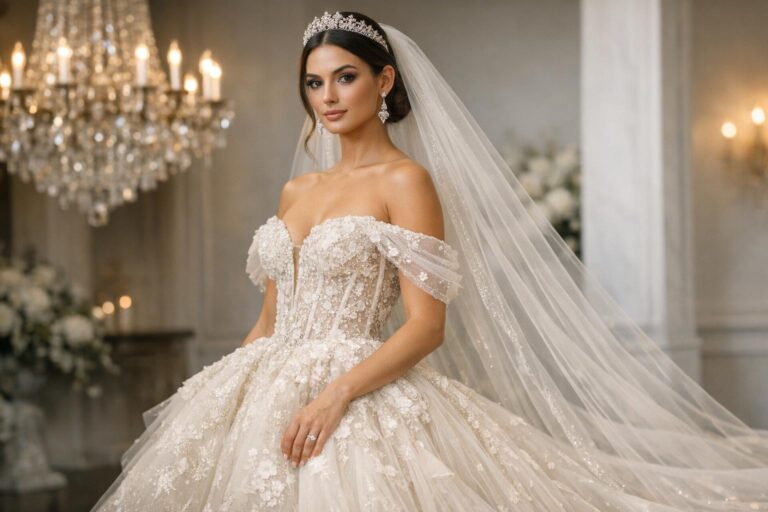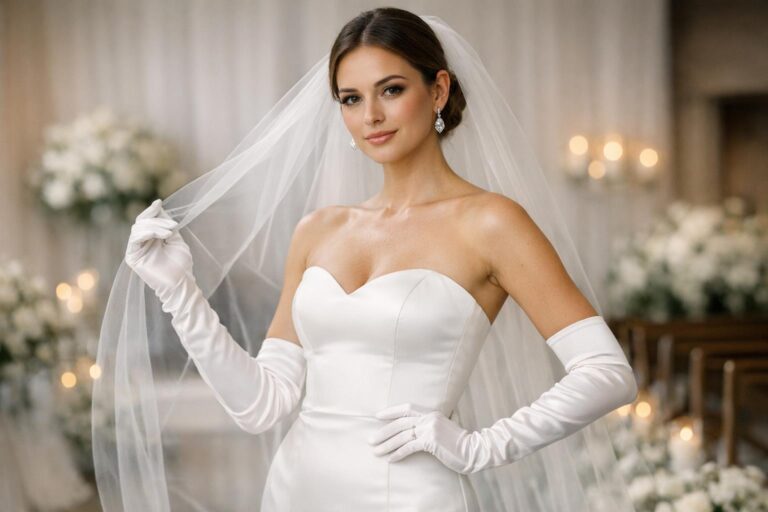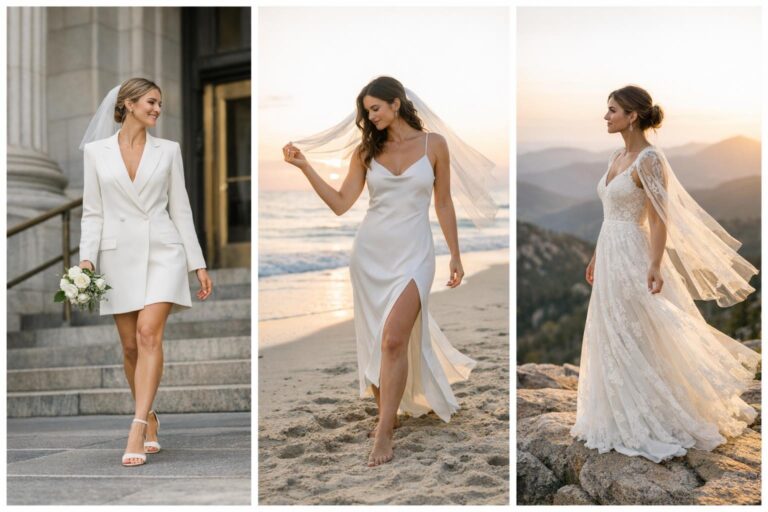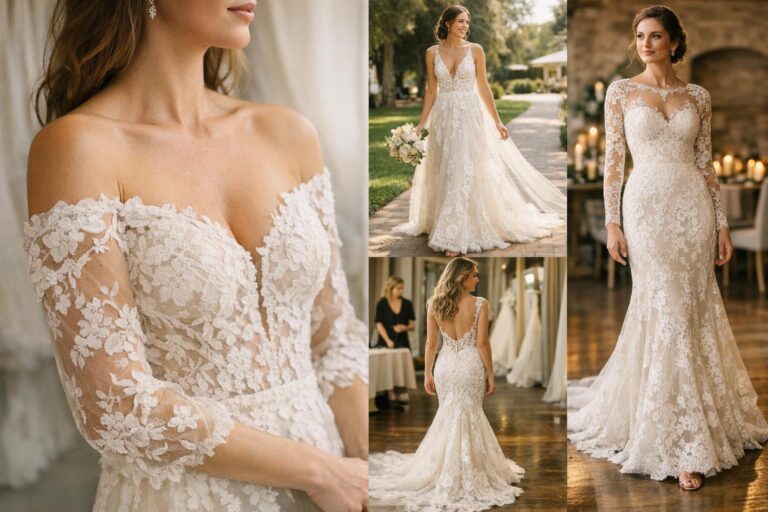
Why The Midi Wedding Dress Feels Right for Modern Brides
There is something quietly confident about a midi wedding dress. It does not sweep the floor with the ceremony drama of a full-length gown, yet it brings far more polish than a casual short silhouette. Hitting around mid-calf, the midi length feels especially at home in modern American bridal style: a city hall ceremony in New York, a candlelit dinner reception in Los Angeles, a garden celebration at golden hour, or a fashion-forward courthouse moment followed by dancing. For brides who want elegance with movement, structure with ease, and a shape that feels distinctly contemporary, the midi wedding dress has become one of the most compelling choices in today’s bridal wardrobe.
What makes this category so appealing is its versatility. A lace midi can read romantic and softly traditional, while a sleek crepe or satin design feels minimalist and architectural. Embellished styles bring a celebratory finish, and details such as a v-neck, bow-shoulder, full skirt, long sleeves, or a refined boat neck shift the mood from playful to formal. Whether you are browsing labels carried by The Knot, Macy’s, ASOS, DorrisDress, Coast, or Karen Millen, the appeal remains the same: a midi wedding dress offers a fresh bridal line that can adapt beautifully to venue, season, and personal style.
Understanding the midi wedding dress length
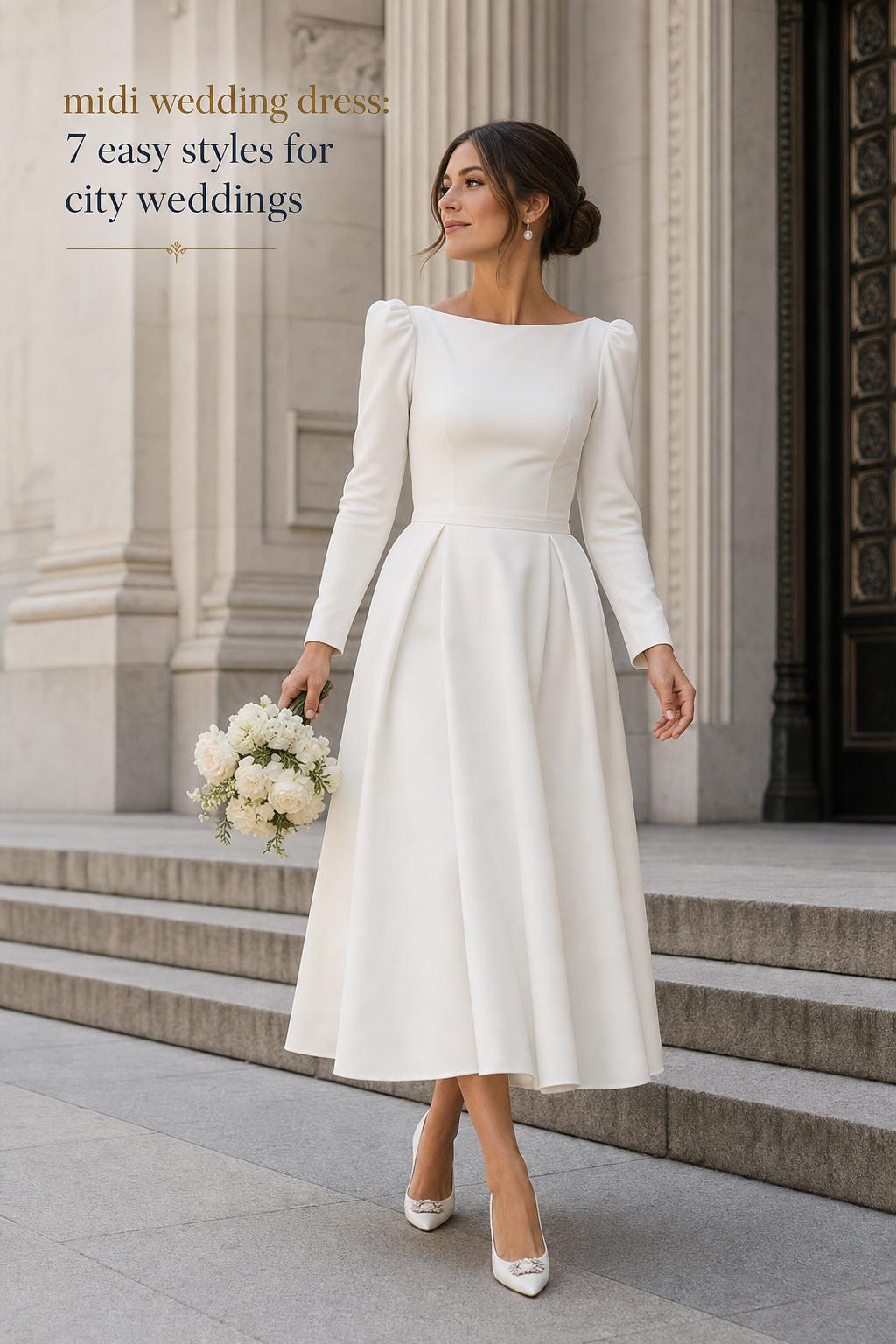
A midi wedding dress generally falls to the mid-calf, placing it between knee-length and full-length gowns. That distinction matters, because dress length shapes not only the visual proportion of the look but also how formal, practical, and expressive it feels. In bridal dressing, the midi length often sits in a sweet spot: elevated enough for a ceremony, easy enough for movement, and distinctive enough to feel styled rather than expected.
It is also helpful to understand how brides often compare this silhouette with adjacent categories. Tea-length and midi are closely related in conversation, while knee-length and ankle-length dresses are often considered during shopping. In practical terms, the reason many brides land on midi is balance. It allows shoes to be part of the styling story, creates visible movement through the calf and ankle, and often suits receptions, civil ceremonies, and venues where a train or floor-length hem may feel too formal or cumbersome.
Your wedding look is only the beginning.
Keep your guest list, vendors, timeline, and every important detail together with Zarellea — so your day feels as considered as your style.
That does not mean a midi wedding dress is only for informal events. Fabric, structure, embellishment, and silhouette determine the final impression. A mikado-inspired shape with clean seam placement and a full skirt can feel strikingly formal. A slim sheath in crepe may suit a minimalist city ceremony. A lace style with careful lining can feel romantic enough for a traditional setting. The length is only one part of the equation; the finish is what defines the mood.
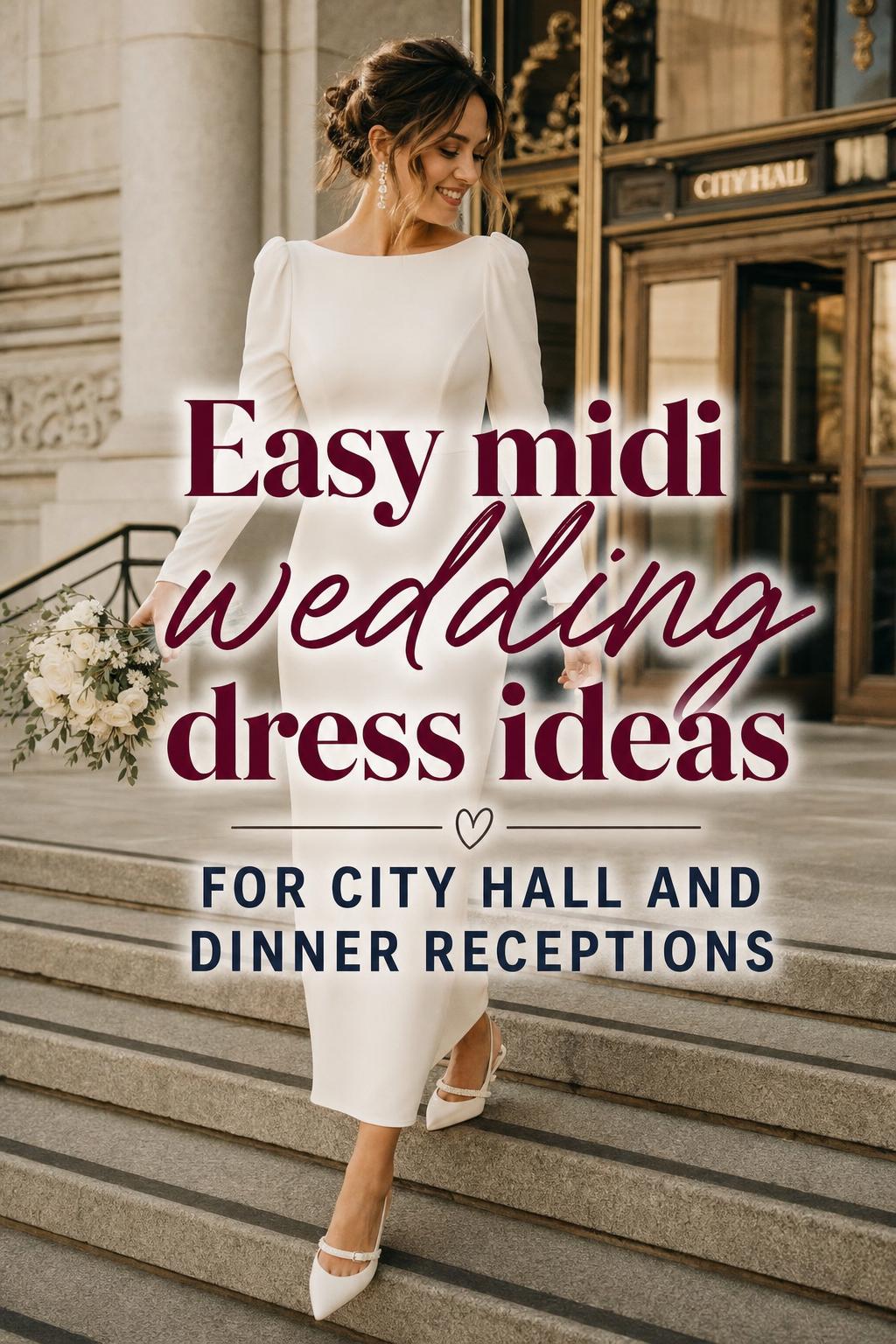
Why modern brides are drawn to midi silhouettes
The strongest midi styles tend to feel intentional rather than simply shorter. That is why they resonate so well in the current bridal landscape. Brides are increasingly interested in dresses that reflect the setting and flow of the day, not just a conventional expectation of what a gown should be. A midi wedding dress supports that kind of thoughtful dressing. It can move effortlessly from ceremony to dinner, from photographs on city streets to a late reception entrance, and from romantic bridal portraiture to comfortable hours on your feet.
There is also a strong visual reason this hemline photographs beautifully. Mid-calf length creates a defined line through the skirt, giving lace, embroidery, beading, or a fuller shape space to register in images without disappearing into the floor. In motion, this can be especially compelling. A structured satin or crepe midi catches light differently than a full gown, while tulle or softer layers can create airy movement during an outdoor ceremony.
For brides planning more than one wedding look, midi also makes sense as a second dress or reception dress. A fuller bridal gown may suit the ceremony, while a midi style offers freedom for dinner and dancing. Just as often, though, brides choose it as the main dress because it reflects their personal style more clearly than a traditional full-length silhouette.
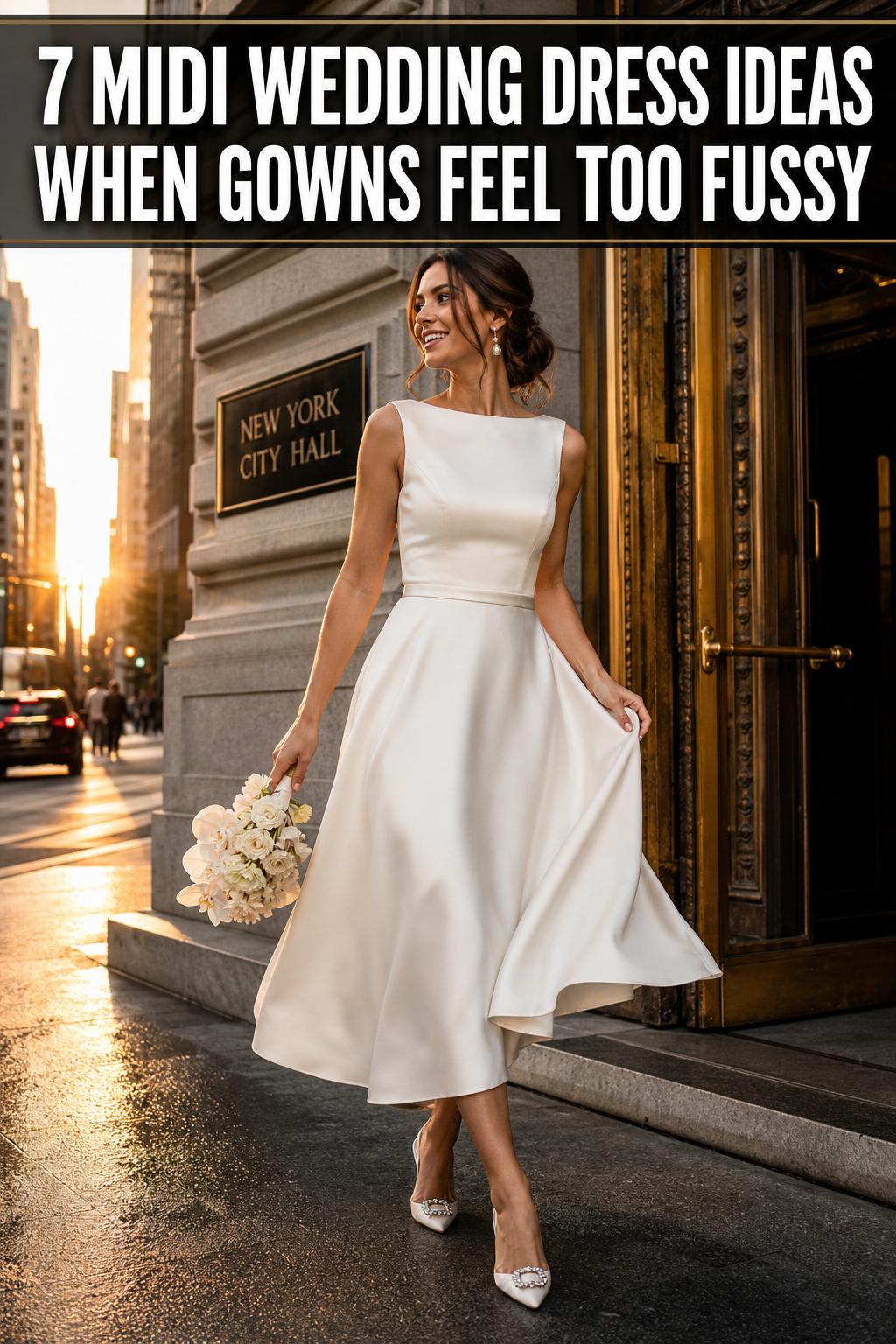
Style directions that define the midi category
The most useful way to shop this category is not by hemline alone, but by aesthetic direction. The midi wedding dress can be romantic, minimalist, embellished, sculptural, or softly retro depending on fabric and construction. Looking at it through that lens makes decision-making much easier.
Lace midi wedding dresses for romantic ceremony settings
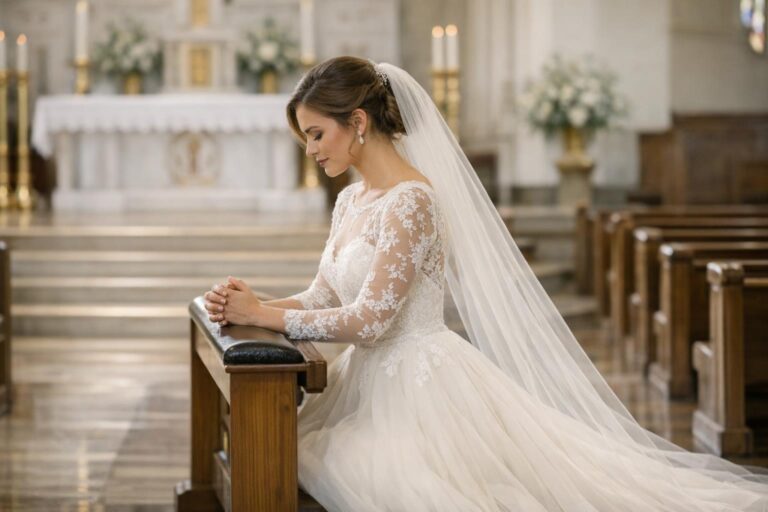
Lace remains one of the clearest bridges between classic bridal language and the modern midi shape. A lace midi wedding dress feels especially fitting for garden ceremonies, intimate chapels, and outdoor celebrations where romance matters but heaviness does not. The shorter hemline keeps the look fresh, while the lace itself carries bridal symbolism and texture.
The key with lace is proportion. Dense lace across a narrow sheath can feel sleek and refined, while lace over a fuller skirt reads softer and more expressive. If sleeves are involved, the balance becomes even more important. Long sleeves in lace can create a graceful, editorial feel for cooler weather or evening ceremonies, while cap sleeves or lighter coverage tend to keep the mood airy.
Embellished midi dresses for receptions and evening light
Beading, embroidery, and embellished finishes appear often in high-visibility midi styles, and with good reason. Because the hem sits above the floor, detailing becomes more visible at a glance. An embellished midi can feel celebratory in a way that suits a reception entrance, a formal dinner, or a candlelit ballroom where texture catches the light. A bow-shoulder embellished dress from Coast, for example, points to how one detail can shape the whole mood of a bridal look.
This is where moderation matters. Heavy embellishment paired with a complex neckline, dramatic sleeve, and very full skirt can overwhelm the elegance of midi length. The most polished versions usually let one or two details lead. If the dress has beading, keep the silhouette clean. If the shoulder detail is sculptural, allow the fabric and hem to remain restrained.
Minimalist and simple midi styles with editorial appeal
Some of the most sophisticated midi wedding dress options are the simplest. Clean crepe, satin, or more structured fabric with precise seam placement can feel incredibly modern, particularly for courthouse weddings, city celebrations, and brides who prefer line over ornament. The appeal here is not plainness but clarity. A simple midi asks the cut to do the work.
In this category, details such as boning, lining quality, and the drape of the fabric matter more than obvious embellishment. A minimalist midi should skim or shape the body with intention. If the construction is weak, simplicity can look unfinished. If the tailoring is strong, even a very pared-back silhouette can feel luxurious and bridal.
Sleeves, necklines, and the finishing mood of the dress
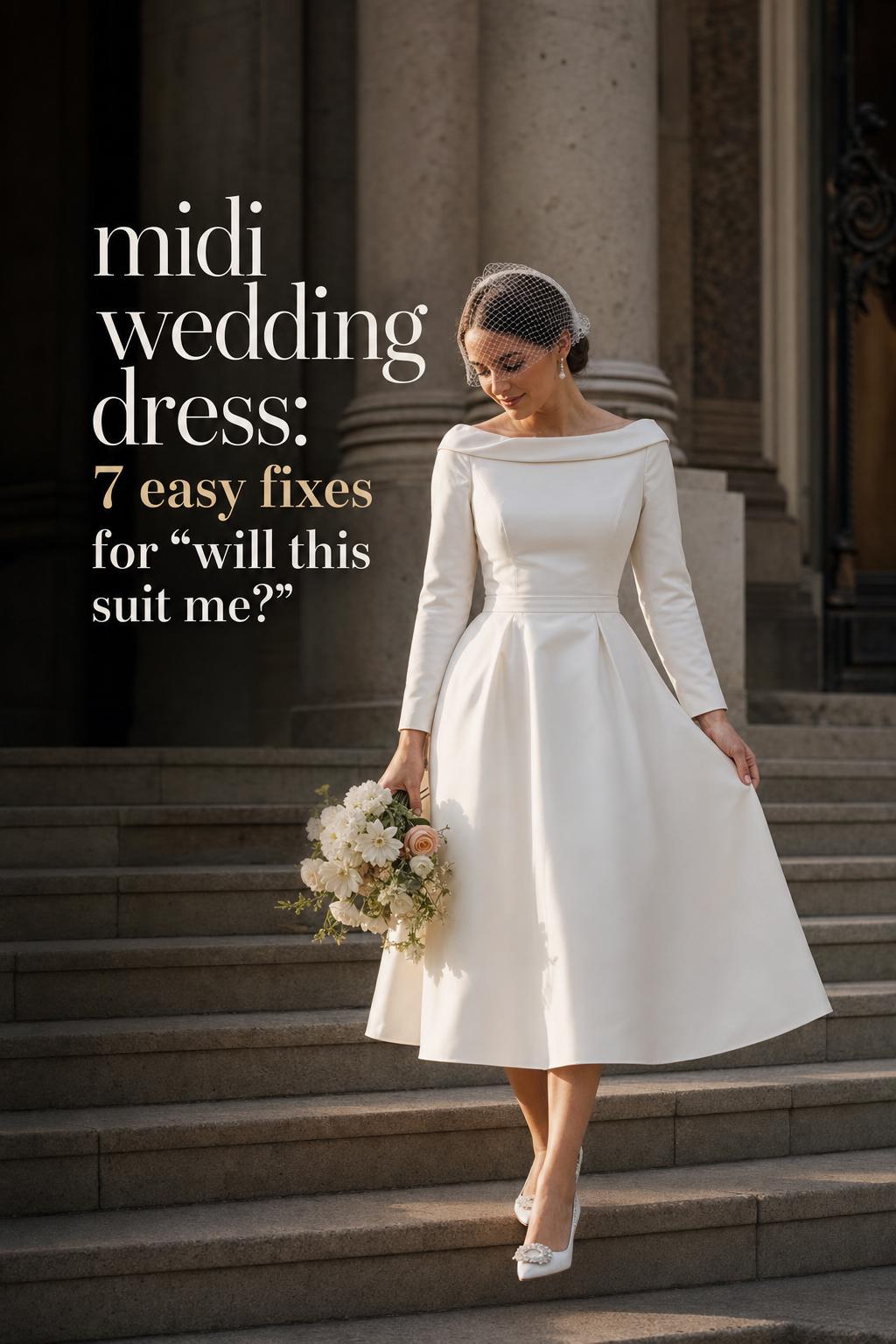
A neckline changes the message of a midi wedding dress immediately. A v-neck introduces openness and elongation, as seen in styles such as the ivory v-neck full skirt midi wedding dress associated with Karen Millen. A sweetheart neckline leans softer and more romantic. A boat neck often feels refined and architectural, especially in cleaner fabrics. Sleeves, meanwhile, can shift the look from daytime to evening or from lighthearted to polished.
For brides concerned about ceremony formality, these elements often matter more than length alone. A midi with sleeves, thoughtful structure, and elevated fabric can feel entirely ceremony-ready. By contrast, a sleeveless design in a simpler fabrication may read better for a reception, rehearsal-adjacent celebration, or a relaxed wedding setting.
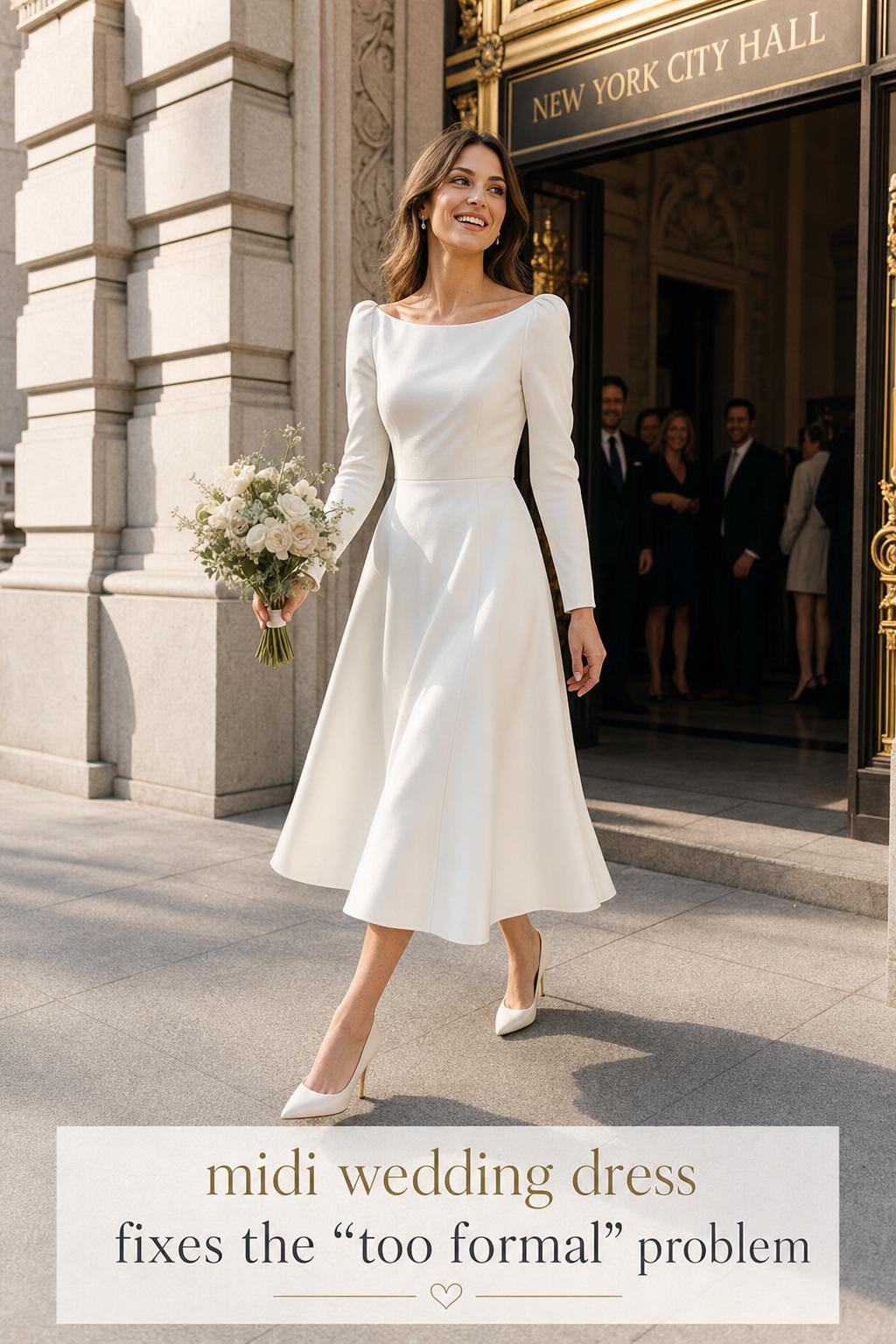
Fabric is where a midi wedding dress becomes truly bridal
Because the hemline is shorter, the fabric of a midi wedding dress is especially visible. This is one of the most overlooked parts of shopping, and it often determines whether a dress feels occasion-ready or merely white. Brides comparing styles across retailers such as Macy’s, ASOS, DorrisDress, The Knot’s featured selections, Coast, and Karen Millen will notice that similar silhouettes can look dramatically different depending on material and structure.
Crepe, satin, mikado, lace, and tulle
Crepe tends to emphasize clean lines and a smoother, more modern finish. It works beautifully for sheath or column-inspired midis and suits city ceremonies or minimalist receptions where restraint feels chic rather than understated. Satin introduces more light play and fluidity, often giving simple dresses a dressier finish. In photographs, satin can feel particularly striking in evening settings.
Mikado is useful when a bride wants shape and formality. It supports fuller skirts and more sculptural silhouettes, helping a midi feel substantial rather than abbreviated. Lace, by contrast, softens the line and adds bridal texture without requiring volume. Tulle creates air and movement, making it especially appealing for outdoor weddings, garden settings, and dresses designed to feel light on the body.
These fabrics are not interchangeable, even when the silhouette seems similar. A full-skirt midi in satin can feel glamorous. The same shape in tulle reads softer and more romantic. A sleek midi in crepe may suit a modern courthouse setting, while lace over lining can better serve a traditional ceremony with a feminine tone.
Construction details that change fit and movement
Construction deserves close attention in a midi wedding dress because the hemline reveals proportion so clearly. Boning can provide shape through the bodice, especially in strapless or structured styles. Lining affects comfort, opacity, and drape. Seam placement matters because it determines where the eye travels and how balanced the dress feels on the body.
When the length ends at mid-calf, poor drape becomes noticeable very quickly. A skirt that kicks out awkwardly or clings in the wrong area can alter the entire look. This is why brides often find that a dress with fewer embellishments but stronger construction looks more expensive and more flattering than a busier design with weaker tailoring.
Venue changes everything: styling midi by wedding setting
One of the strongest advantages of a midi wedding dress is how well it adapts to the setting. Rather than choosing the dress in isolation, it helps to imagine the full scene: the path to the ceremony, the flooring, the weather, the photographs, and the way the celebration will move from one space to another.
Garden weddings and outdoor ceremonies
A garden ceremony calls for softness and practicality in equal measure. Lace midi dresses, tulle layers, and lighter fabrics tend to feel right here because they echo the romantic atmosphere without becoming too heavy for daylight or warm weather. A fuller midi skirt can move beautifully in an outdoor breeze, while the shorter hem is easier to manage on grass or garden paths than a full gown with volume at the floor.
For spring and summer celebrations, brides often appreciate sleeves only if the fabric remains breathable and the construction light enough for movement. A lace midi wedding dress with sleeves for a summer wedding can work beautifully, but the comfort factor needs careful consideration across ceremony, photographs, and reception.
City ceremonies in New York or Los Angeles
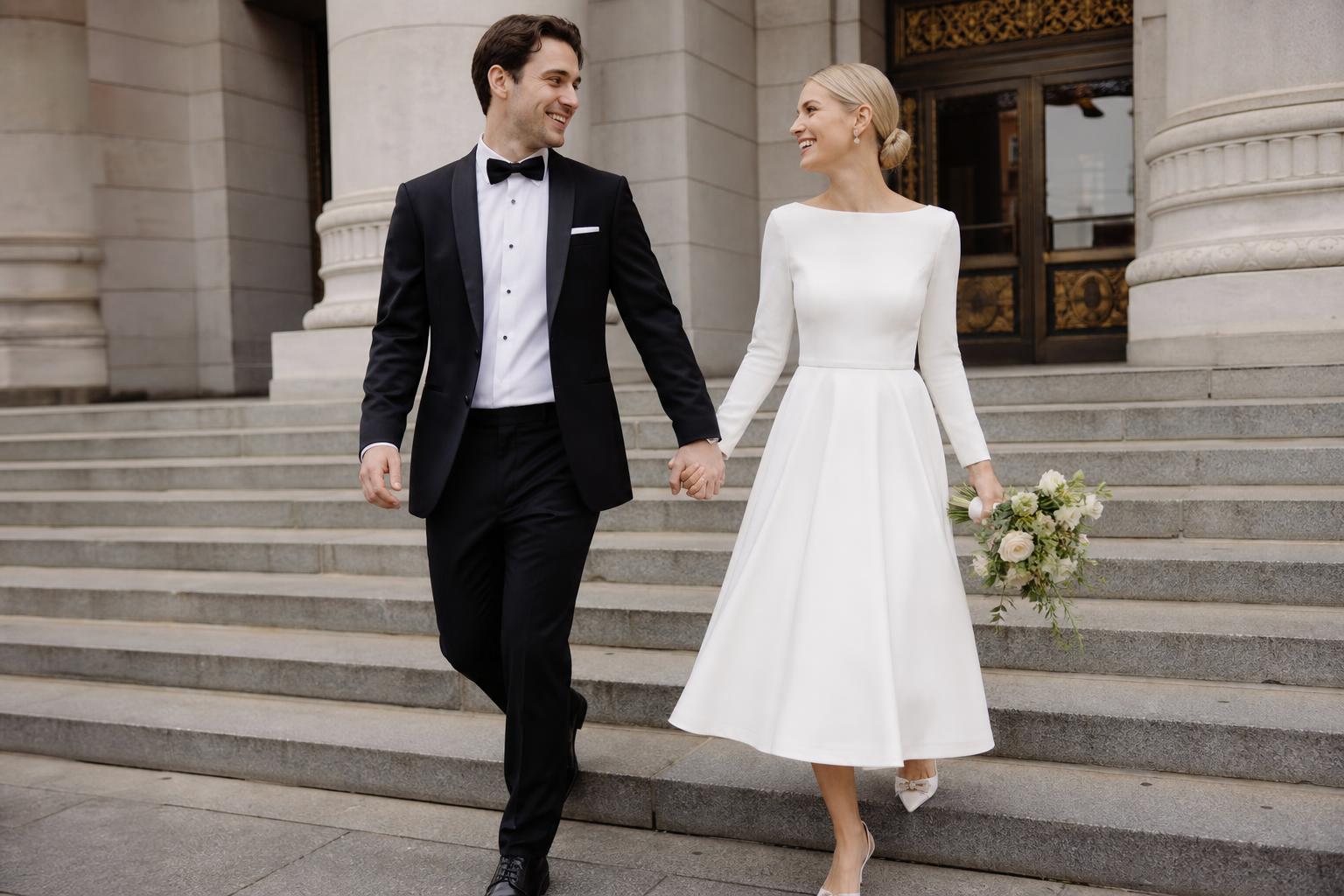
Urban weddings often suit a sharper bridal line. In New York, a clean crepe or satin midi with a boat neck or v-neck can feel especially aligned with city hall architecture, polished streetscapes, and editorial portraiture. In Los Angeles, where the mood may shift from sunlight to ballroom glamour, a fuller skirt or refined embellished finish can bridge day and evening elegantly.
These settings reward simplicity with precision. A midi that feels deliberate in shape and proportion often looks stronger than one with too many decorative additions. If the venue itself carries visual impact, the dress does not need to compete with it.
Ballrooms, formal dinners, and candlelit receptions
For a formal indoor setting, the question is not whether a midi wedding dress can work, but how to make it read formal enough. Structure, richer texture, and elevated detailing become important here. Satin, mikado-like body, beading, embroidery, and a fuller skirt can all help a midi hold its own in a ballroom or evening reception environment.
This is also where styling restraint is wise. If the room is already ornate, a clean full-skirt midi with a strong neckline may feel more sophisticated than a dress overloaded with details. Candlelight is especially flattering to sheen and texture, so fabric choice becomes part of the atmosphere.
Where to shop in the U.S. for midi wedding dresses
American shoppers searching for a midi wedding dress will usually encounter a mix of editorial curation and direct retail catalogs. That mix can be useful. Editorial pages provide inspiration and style direction, while category pages and product listings make comparison easier across budget, size, and silhouette.
- The Knot offers a broad editorial view of midi wedding dresses, often grouping styles by mood such as embellished, lace, or simple.
- Macy’s presents a category-based shopping experience with filters for brand, price, size, and style, which can be helpful for narrowing options quickly.
- ASOS provides a fashion-forward catalog approach, often useful for brides interested in modern silhouettes and accessible browsing.
- DorrisDress centers its own collection, making it easier to compare that brand’s approach to lace, satin, and bridal silhouettes.
- Coast and Karen Millen surface product-led options with strong individual design identities, including details such as bow shoulders, v-necks, and full skirts.
- Stillwhite offers editorial inspiration through a midi-focused blog format that connects dresses with broader bridal style ideas.
The best shopping strategy is often to begin broadly, then narrow by silhouette and fabric rather than by trend alone. A bride who knows she wants a minimalist city look should compare clean crepe or satin midis first. A bride planning a romantic garden ceremony may be better served by starting with lace, tulle, or softer full skirts. That approach prevents decision fatigue and keeps the search grounded in the actual event.
Brand notes: what different names in the midi space suggest
Brand recognition can help interpret style language, even before trying a dress on. Across the current midi wedding dress landscape, certain names recur because they align naturally with the category’s most searched aesthetics.
Mac Duggal and AW Bridal appear in curated bridal listings that spotlight variety across embellishment, lace, and silhouette. Coast is associated with occasionwear-driven detail, including statement features such as bow shoulders and embellishment. Karen Millen speaks to cleaner, more polished lines, with pieces such as an ivory coast v-neck full skirt midi wedding dress reflecting a balance between occasion dressing and bridal structure. ASOS Design enters the conversation through accessible fashion-led variety, while Macy’s functions as a multi-brand retailer for broader comparison.
There is also growing interest in designer-led midi conversations around names such as Sareh Nouri, Berta, Galia Lahav, Ines di Santo, and Monique Lhuillier. For brides who think in terms of designer perspective, these names help frame the dress not only as a garment but as part of a broader bridal aesthetic. Even when a bride ultimately shops through a retailer, understanding those style references can sharpen the search.
Choosing the right silhouette for your proportions and your day
Midi length interacts strongly with silhouette, perhaps more than many brides expect. The same hemline can feel dramatically different depending on whether the skirt is sleek, fit-and-flare, or full. This is one area where trying to match the dress to both your body and the event pays off.
A sheath or slim silhouette tends to feel modern, clean, and understated. It suits minimalist bridal styling and often pairs well with crepe or satin. A fit-and-flare can introduce shape while maintaining movement, especially for brides who want a little definition through the waist and skirt. A full-skirt midi, meanwhile, creates a more overtly bridal moment and often works beautifully in formal or highly photographed settings.
Body type conversations are most useful when they remain practical rather than prescriptive. For example, a bride who wants more structure through the bodice may prioritize boning and seam placement. A bride who wants softness through the skirt may lean toward tulle or a fuller cut. A bride who is concerned about where the hem lands on the calf should remember that alterations can be significant here; a hem that hits the wrong point can change the visual balance of the entire dress.
Tips for choosing by fit rather than fantasy alone
- Pay attention to exactly where the hem falls on your calf, not just the listed category name.
- Let the venue guide the silhouette: a garden may welcome lighter fullness, while a city ceremony often favors cleaner lines.
- If you prefer simple dresses, inspect construction details closely because tailoring carries the look.
- If you love embellishment, choose one statement direction instead of stacking multiple dramatic elements.
- Consider how the dress will feel after several hours, not only how it looks in a fitting room mirror.
Alterations, sizing, and why midi length needs precision
Alterations matter for any wedding dress, but they are particularly important for a midi. Unlike a floor-length gown, where small changes may disappear into the overall volume, a midi hem is visible and proportion-defining. A shift of even an inch can influence whether the dress looks balanced, modern, and flattering.
Sizing should be approached with patience. Retailer categories at Macy’s, ASOS, DorrisDress, Coast, or Karen Millen can make comparison convenient, but each brand may interpret fit differently. The safest approach is to think in terms of tailoring potential. Bodice support, waist placement, and hemline are often more important than the number on the label. If a dress is close in overall shape and structure, those details can usually determine whether the final result feels bespoke or compromised.
One practical reality brides often discover late is that midi length should be tested with the actual shoe height intended for the wedding. Since the hem and shoe remain visible together, their relationship is part of the design. A change in heel height can subtly alter the line of the dress, the way the skirt swings, and even how formal the look appears in photographs.
Common styling mistakes brides make with midi wedding dresses
The midi wedding dress is versatile, but it is not forgiving of every styling choice. Because the hemline sits in such a visually active part of the body, proportion and finish become more obvious than they would on a full gown. That is why the most successful midi looks are often the ones with the clearest point of view.
- Choosing a hemline that lands at an awkward point on the calf, which can interrupt the silhouette.
- Overloading the dress with lace, beading, sleeves, statement shoulders, and a full skirt all at once.
- Ignoring fabric behavior and selecting a dress that wrinkles, clings, or loses shape during a long celebration.
- Assuming shorter automatically means less formal, and overlooking structured fabrics and refined construction.
- Shopping only by trend terms rather than by venue, season, and comfort across the full wedding day.
A thoughtful midi should feel coherent. If the dress itself is rich in detail, let the silhouette remain simple. If the silhouette is architectural, allow the fabrication and cut to carry the elegance. The polished result usually comes from editing, not adding.
How a midi wedding dress fits into different bridal moods
One of the reasons this category keeps growing is that it accommodates very different bridal identities. A romantic bride can find that in lace, embroidery, and softer fullness. A minimalist bride can build an entire wedding look around a smooth satin or crepe midi with almost no ornament. A fashion-led bride may gravitate toward a bow shoulder, an interesting neckline, or a sculpted skirt that feels more directional than traditional.
That flexibility also explains why midi works across multiple wedding moments. Some brides wear it as the ceremony dress. Others reserve it for the reception or civil ceremony. Still others choose it because it fits a more intimate wedding scale better than a dramatic gown would. The most convincing choice is the one that reflects the event truthfully. If the celebration is elegant but mobile, personal, and design-conscious, the midi wedding dress often feels exactly right.
Tips for building a bridal look around the dress
Start with the dress mood, then let every other choice support it. A lace midi usually benefits from softness elsewhere, while a sleek crepe style can handle a sharper, more polished finish. Think about movement from ceremony to reception, indoor to outdoor, daylight to evening. The stronger the styling logic, the more elevated the dress will feel.
Budget and value: what to compare when shopping
Price ranges vary widely across midi wedding dress listings, which is why comparison should focus on value rather than cost alone. A lower-priced option may be ideal if the fabric drapes well, the lining is comfortable, and the silhouette requires minimal alteration. A more expensive midi may justify itself through stronger construction, richer fabric, or a clearer design identity.
For brides searching for the best midi wedding dresses under $500, retailer-led categories can be especially useful because filters surface practical options quickly. But the lower budget question should always include hidden costs such as alterations. A dress that looks affordable at first glance can become less attractive if the hem, bodice, and lining all need significant adjustment.
On the other hand, a dress with a cleaner cut and stronger fit may need less intervention and wear better throughout the day. The wiser purchase is often the one that reduces uncertainty.
Softer gaps in the market brides should pay attention to
Some of the most interesting midi wedding dress conversations extend beyond style alone. Brides increasingly want to know about sustainable options, ethical fashion credentials, size inclusivity, and how a dress relates to a specific place or wedding atmosphere. These are not fringe concerns; they are part of how many women now make bridal decisions.
If sustainable midi wedding dresses in the U.S. matter to you, fabric sourcing and manufacturing notes become part of the shopping process. If inclusive sizing is a priority, it is worth looking beyond a single retailer page and comparing how brands present fit and availability. And if your wedding has a strong location identity, whether that means New York city polish or Los Angeles evening glamour, use that context as a styling filter. A midi wedding dress is at its best when it belongs naturally to the world around it.
FAQ
Is a midi wedding dress formal enough for a wedding ceremony?
Yes, a midi wedding dress can be formal enough for a ceremony when the fabric, construction, and styling support that level of polish. Structured satin, crepe, mikado-inspired fabrics, lace, boning, sleeves, and refined necklines can all make a midi feel distinctly bridal rather than casual.
What is the difference between a midi wedding dress and a tea-length dress?
The two terms are often compared because both sit above the floor, but a midi wedding dress is generally understood as landing around mid-calf. Brides often evaluate midi against tea-length, knee-length, and ankle-length styles to understand proportion, formality, and how much leg and shoe they want visible.
Which fabrics work best for a midi wedding dress?
Crepe, satin, mikado, lace, and tulle are all strong options, but each creates a different effect. Crepe feels clean and modern, satin adds sheen, mikado supports structure, lace adds romance, and tulle creates softness and movement. The best choice depends on the venue, season, and silhouette you want.
Where can I shop for midi wedding dresses in the U.S.?
Brides in the U.S. commonly browse editorial and retail sources such as The Knot, Macy’s, ASOS, DorrisDress, Coast, Karen Millen, and Stillwhite for midi wedding dress inspiration and shopping options. Each offers a slightly different experience, from curated style guidance to direct category filtering.
Are lace midi wedding dresses a good choice for outdoor weddings?
Lace midi wedding dresses are often especially well suited to outdoor weddings because they feel romantic without the weight or sweep of a full gown. They work beautifully for garden ceremonies and spring or summer celebrations, provided the lining, sleeve coverage, and fabric weight feel comfortable for the weather.
How important are alterations for a midi wedding dress?
Alterations are very important because the exact hem placement shapes the entire look. A midi that falls at the wrong point on the calf can change the proportion of the silhouette, so hem length, waist placement, and bodice fit all deserve close attention before the wedding day.
Can I wear a midi wedding dress as my only bridal dress?
Absolutely. Many brides choose a midi wedding dress as their main ceremony look, especially for city weddings, intimate celebrations, garden settings, or modern receptions. Others reserve it for a second look, but it can work beautifully as the primary dress when it reflects the tone of the event.
Which details make a midi wedding dress feel more bridal?
Lace, embroidery, beading, sleeves, a v-neck or sweetheart neckline, fuller skirts, and strong construction details such as boning and lining can all make a midi wedding dress feel more bridal. The most effective designs usually combine elevated fabric with one clear style direction rather than too many competing details.