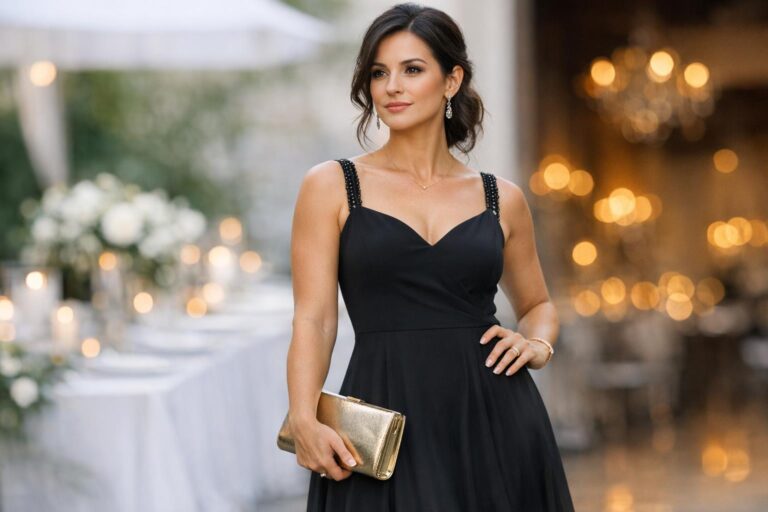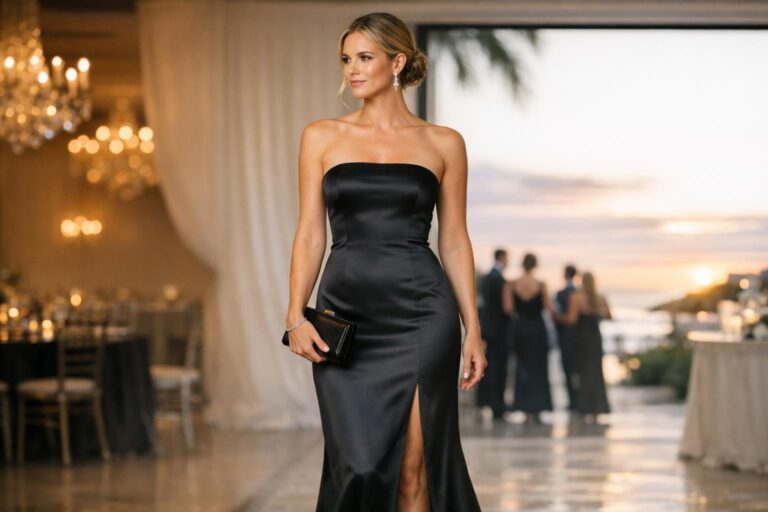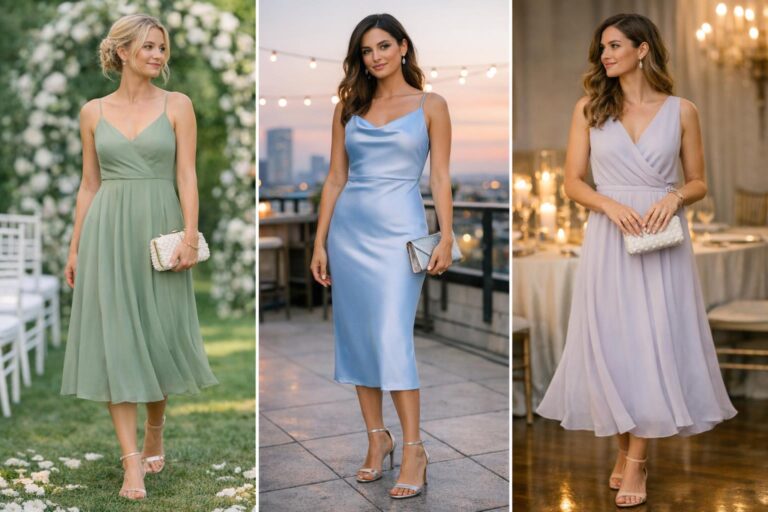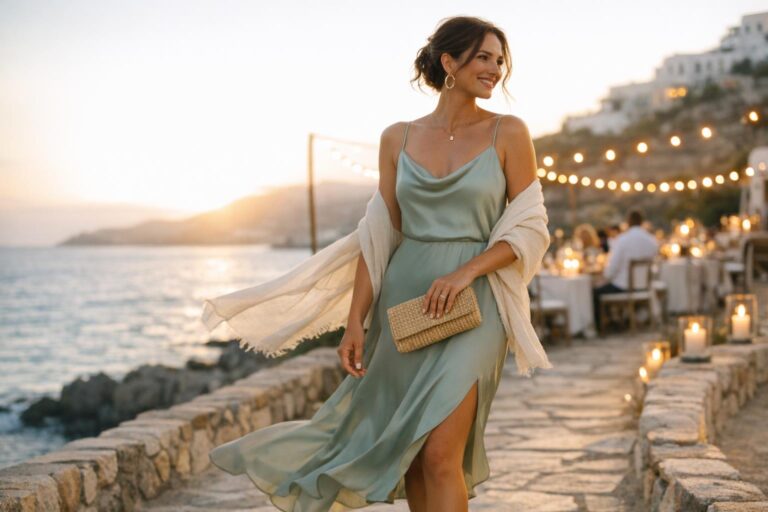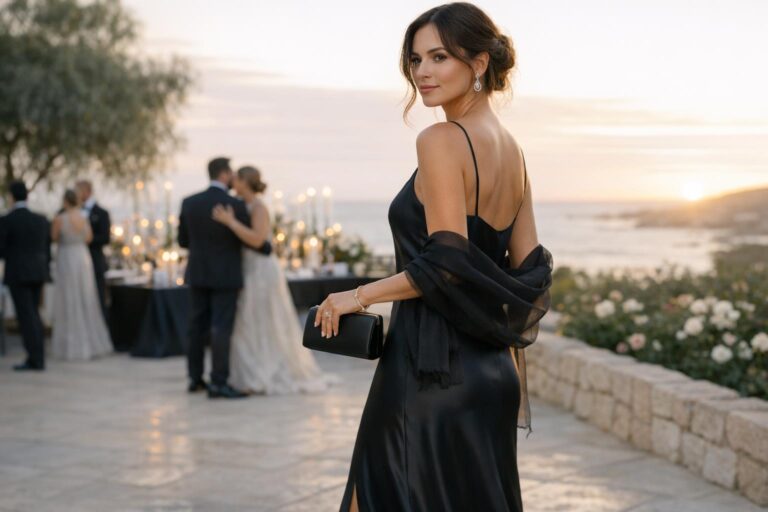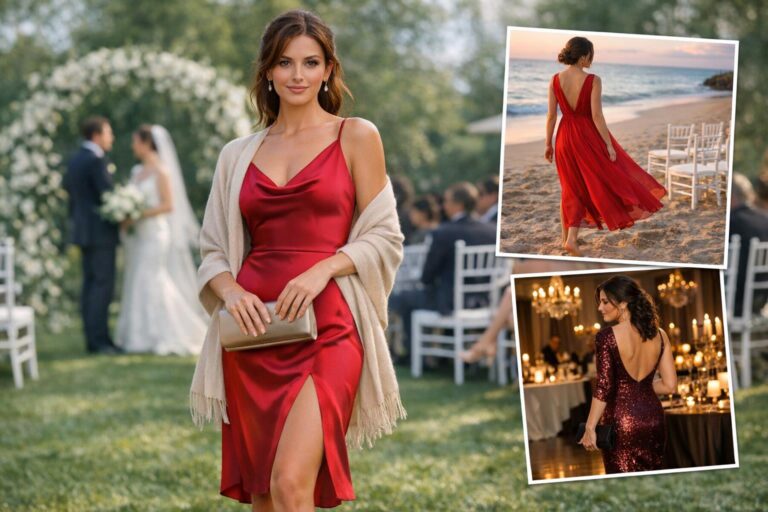
A Polished Wedding Guest Dress for a Long Day to Night
The wedding guest dress decision starts before you even pack
The hardest part of choosing a wedding guest dress usually isn’t finding something “pretty”—it’s finding something that works for a long day that changes locations, light, temperature, and expectations. You might be getting ready in a hotel room with unpredictable lighting, stepping onto grass for a ceremony, sitting through speeches under strong uplighting, then ending the night on a dance floor where your hem, straps, and fabric suddenly matter a lot. A good choice looks polished in photos, respects the couple’s tone, and still feels like you by the third hour—when comfort stops being optional.
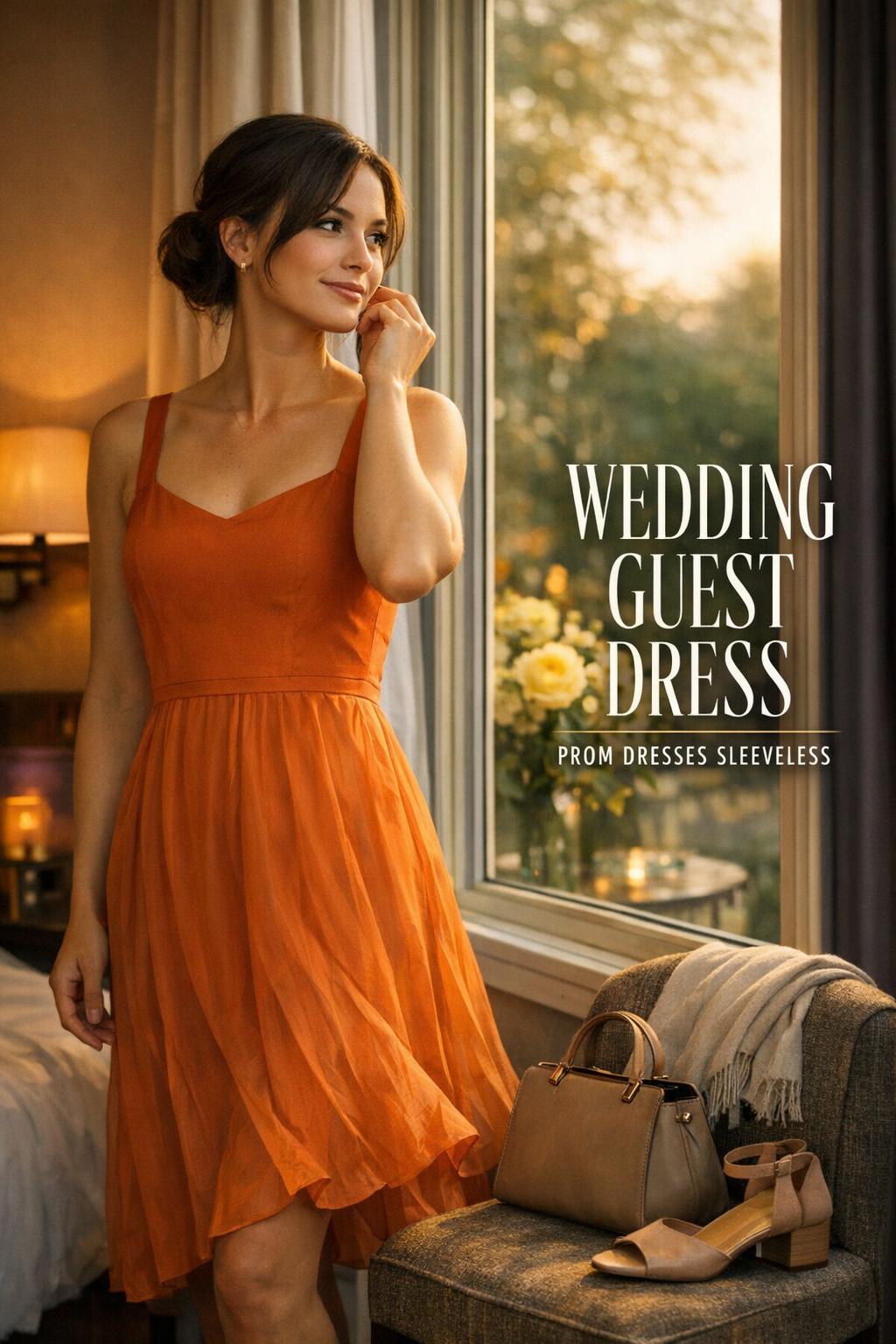
This article focuses on practical, real-world decision-making: how to read the invite, how to match a venue’s realities, and how to select fabrics and silhouettes you can actually wear for an entire wedding. You’ll also see guidance on guest attire styling details—shoes, layers, and flowers like yellow peonies as an aesthetic cue—plus a few trend-adjacent notes such as orange chiffon and prom dresses sleeveless options that can translate beautifully when the dress code allows.
Guest attire basics: decode the invitation without overthinking it
“Guest attire” isn’t a single rule; it’s a set of signals. The invitation, venue, and start time usually tell you more than any one dress-code phrase. Your goal is to land in the right level of formality and mood so your look feels intentional—never accidental and never attention-seeking.
Start with three anchors: formality, setting, and season
Before you browse colors or trends, decide what the event requires on a practical level. Formality tells you length and polish, setting tells you fabric and shoe strategy, and season tells you how to handle temperature and daylight.
Your wedding look is only the beginning.
Keep your guest list, vendors, timeline, and every important detail together with Zarellea — so your day feels as considered as your style.
- Formality: Does it read more elevated or more relaxed? This guides hemline, fabric richness, and accessory refinement.
- Setting: Indoors vs. outdoors, garden vs. ballroom, beach vs. city—all of these change what “works.”
- Season: Think about warmth, humidity, wind, and the reality of layering for air conditioning or evening chill.
Tip: treat the dress code as a range, not a single point
If the invite language feels vague, aim for a “center of the range” outfit: a dress that looks composed without being maximal. In practice, that often means a clean silhouette, a fabric that doesn’t look overly casual, and accessories that can be adjusted up or down. This approach reduces the risk of underdressing while keeping you from competing with the wedding party’s level of formality.
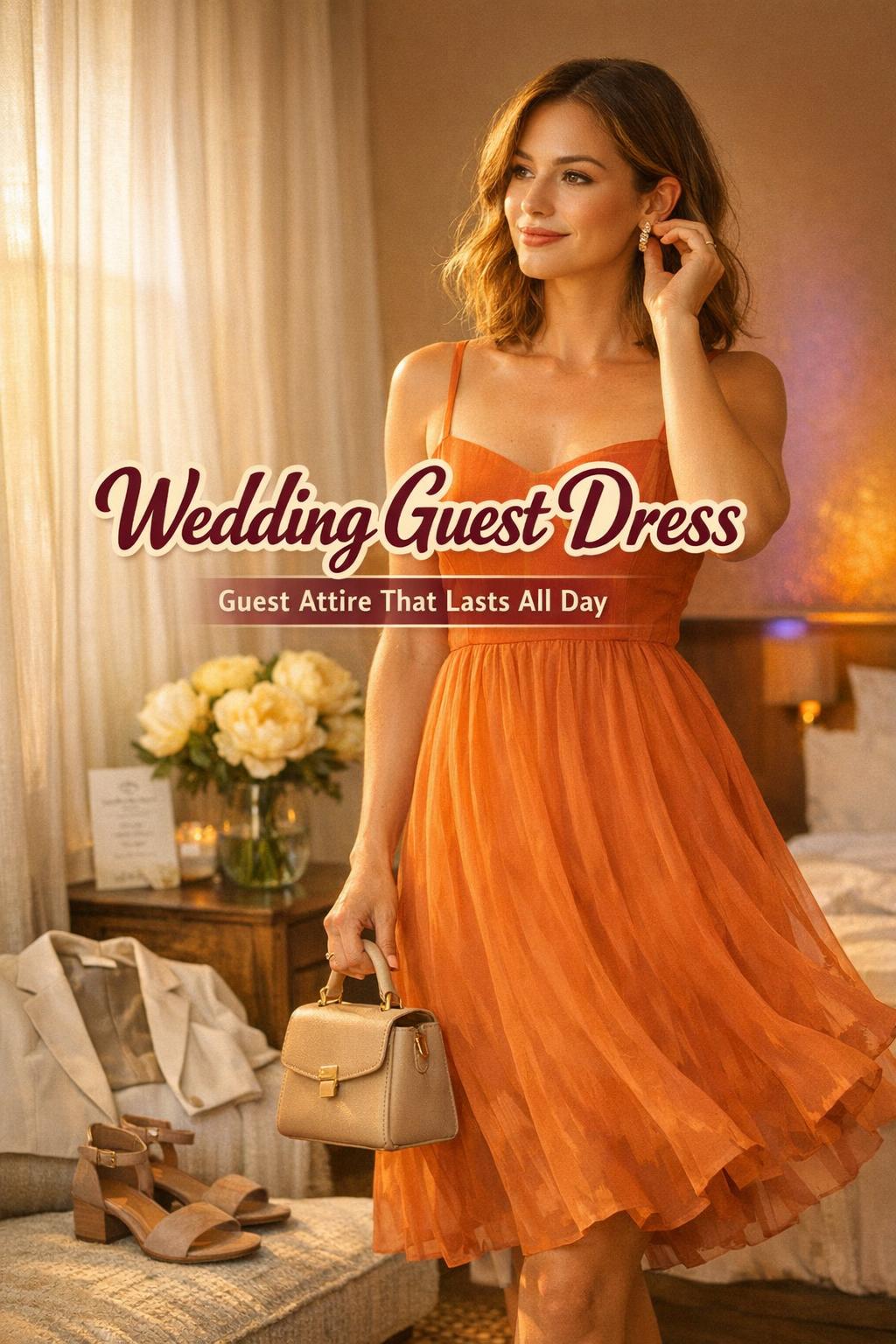
Where the wedding is held changes everything (and your hemline knows it)
Venue is the most underused styling tool. A look that feels effortless at a city venue can feel impractical outdoors; the reverse is also true. The best wedding guest dress choice acknowledges surfaces, seating, airflow, and photo backdrops.
Garden ceremonies and floral cues like yellow peonies
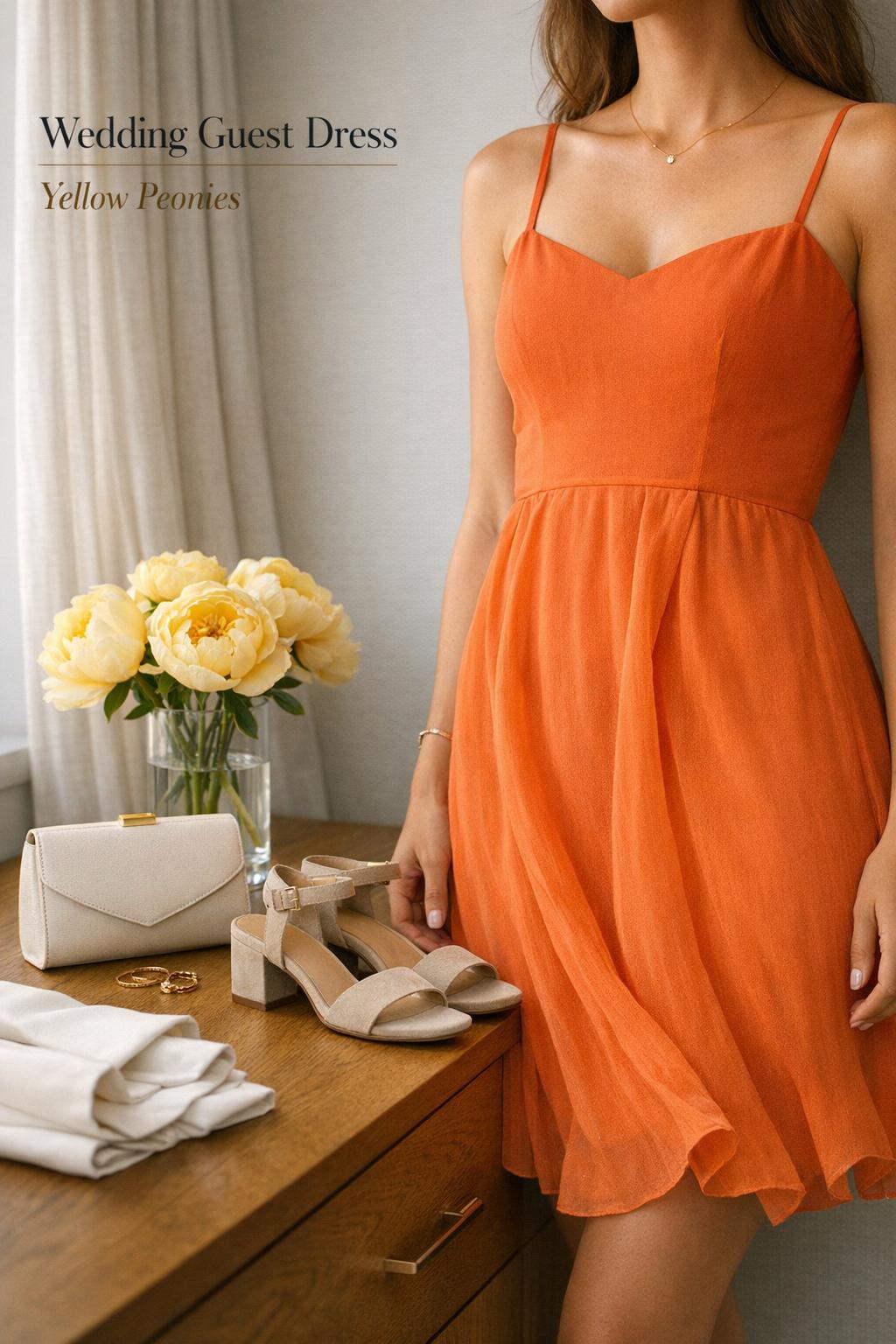
Garden weddings often come with floral design that sets the visual tone. If the décor leans romantic—imagine soft arrangements featuring yellow peonies—your outfit can echo that feeling without becoming costume-y. Think gentle structure, breathable fabric, and movement that looks good in breezes and walking shots. Shoes matter here: grass and gravel punish stilettos, and a sinking heel can turn a confident entrance into an awkward shuffle.
Indoor venues: climate control and lighting are the real dress code
Indoors, the comfort challenge is usually air conditioning and lighting. Air-conditioned venues can make lightweight outfits feel chilly during dinner, while uplighting can exaggerate sheen or wrinkle patterns. For indoor events, fabrics that hold shape and resist creasing tend to look more composed later in the night. Consider bringing a layer that still looks intentional in photos rather than a last-minute throw-on.
Destination travel: packability and reliability over novelty
If you’re flying, your dress needs to survive a suitcase and still perform. Packability isn’t just about wrinkles—it’s also about straps that stay put, closures you can manage without help, and fabric that won’t cling in humidity. Choose a piece you can steam quickly, and avoid anything that demands constant readjustment. The best travel wedding guest dress is the one you don’t have to babysit.
Fabric and movement: why orange chiffon keeps showing up in guest attire
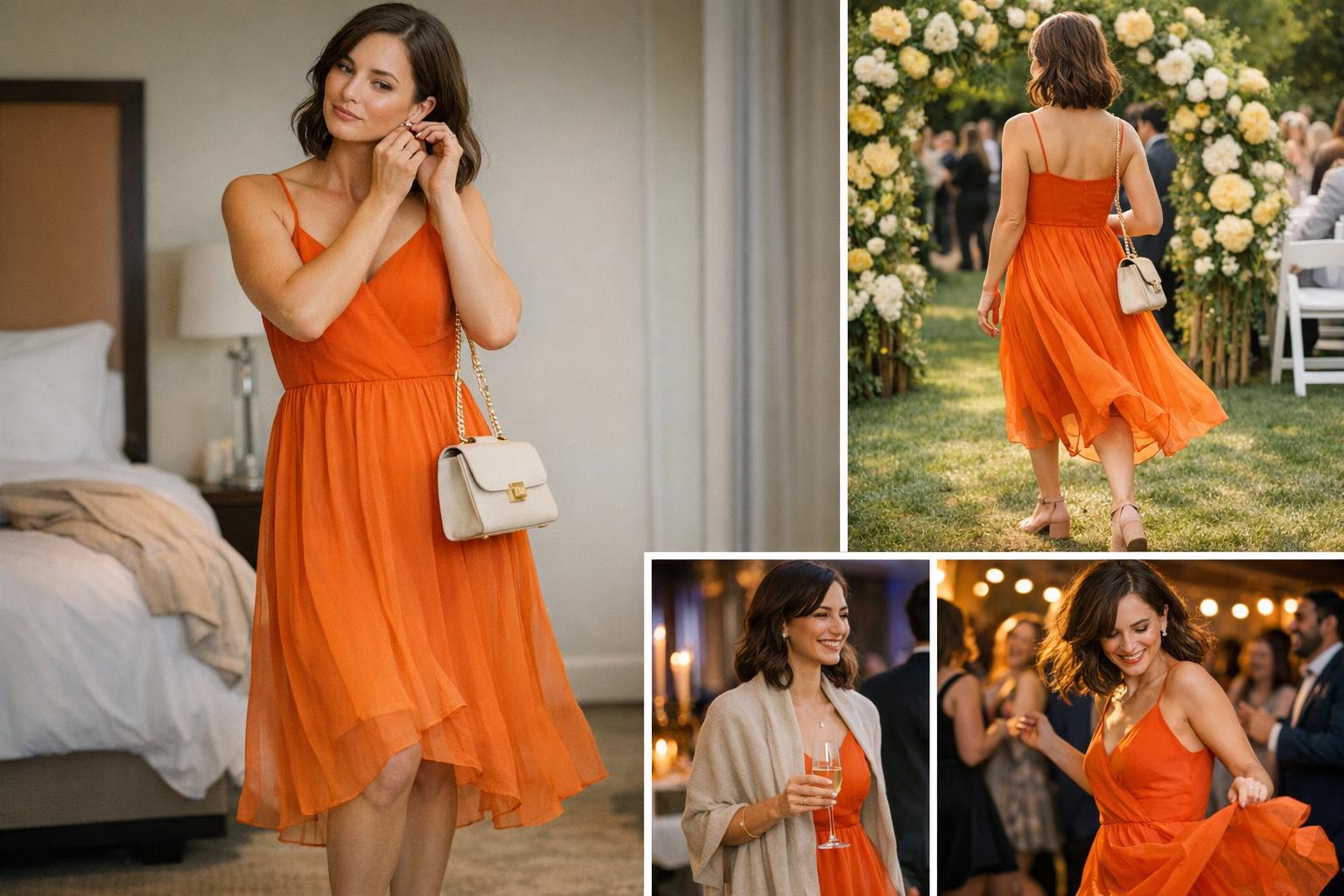
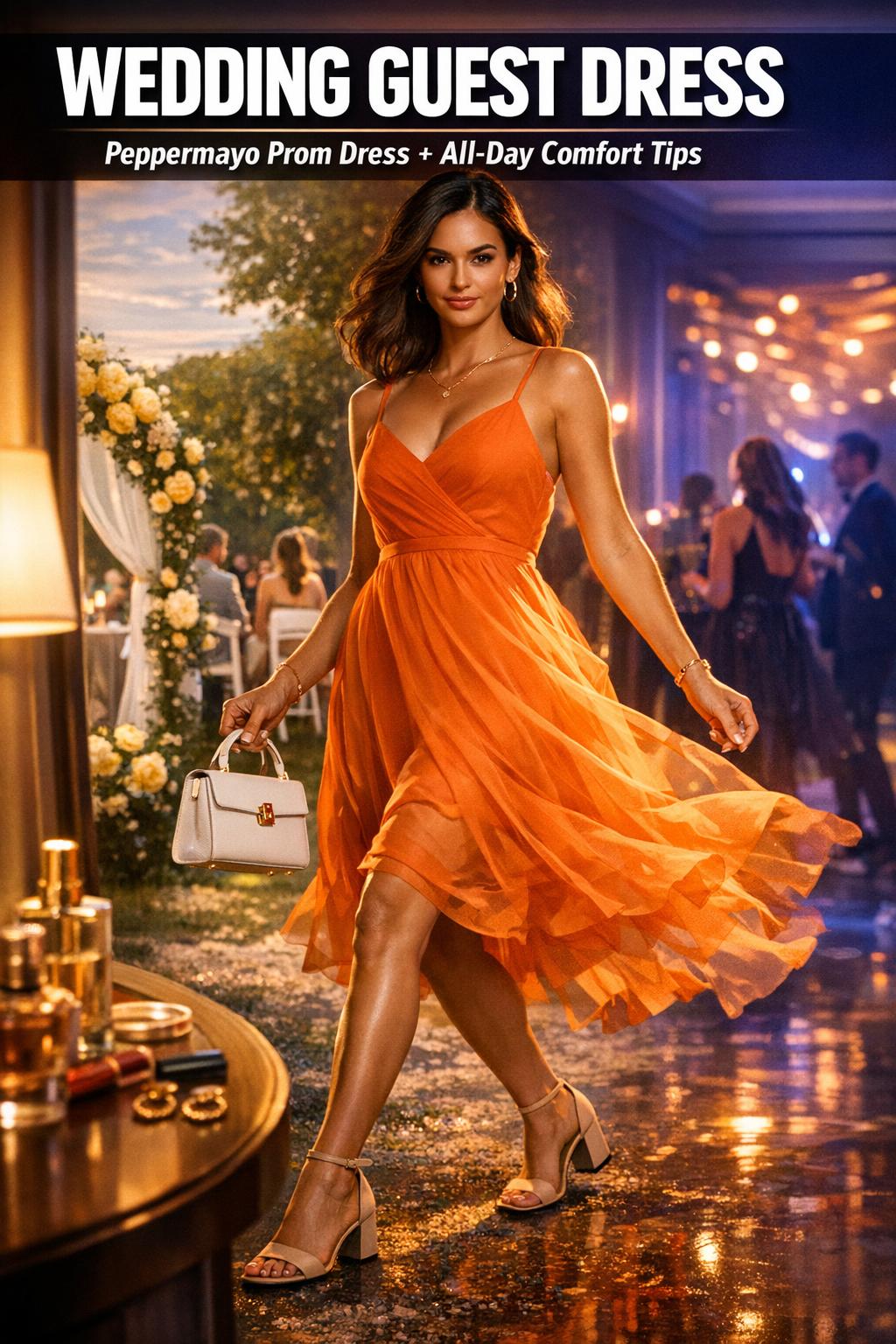
Fabric is where outfits either succeed quietly or fail loudly. A dress can be the perfect color and still feel wrong if the material behaves badly in wind, heat, or flash photography. That’s why lightweight, floaty options like orange chiffon can be so appealing: they photograph with movement, feel airy, and often read festive without heavy embellishment.
When chiffon works beautifully—and when it doesn’t
Chiffon shines when the wedding includes outdoor moments, warm temperatures, or dancing—any setting where you want ease and flow. The limitation is that chiffon can catch on rough surfaces and may require thoughtful underlayers to avoid sheerness in bright daylight. If you choose orange chiffon, pay attention to lining and how the color looks in both sun and indoor lighting; vibrant tones can shift depending on the venue.
Tip: test “sit, stand, dance” before committing
Before the wedding, do a quick three-step try-on test at home: sit down as if you’re at dinner, stand and walk as if you’re greeting people, and do a few dance-floor movements. You’ll immediately notice if the neckline shifts, the slit opens more than you expected, or the fabric rides up. This is the fastest way to catch problems that don’t show up in a mirror selfie.
Silhouettes that support real-life comfort (not just a fitting-room moment)
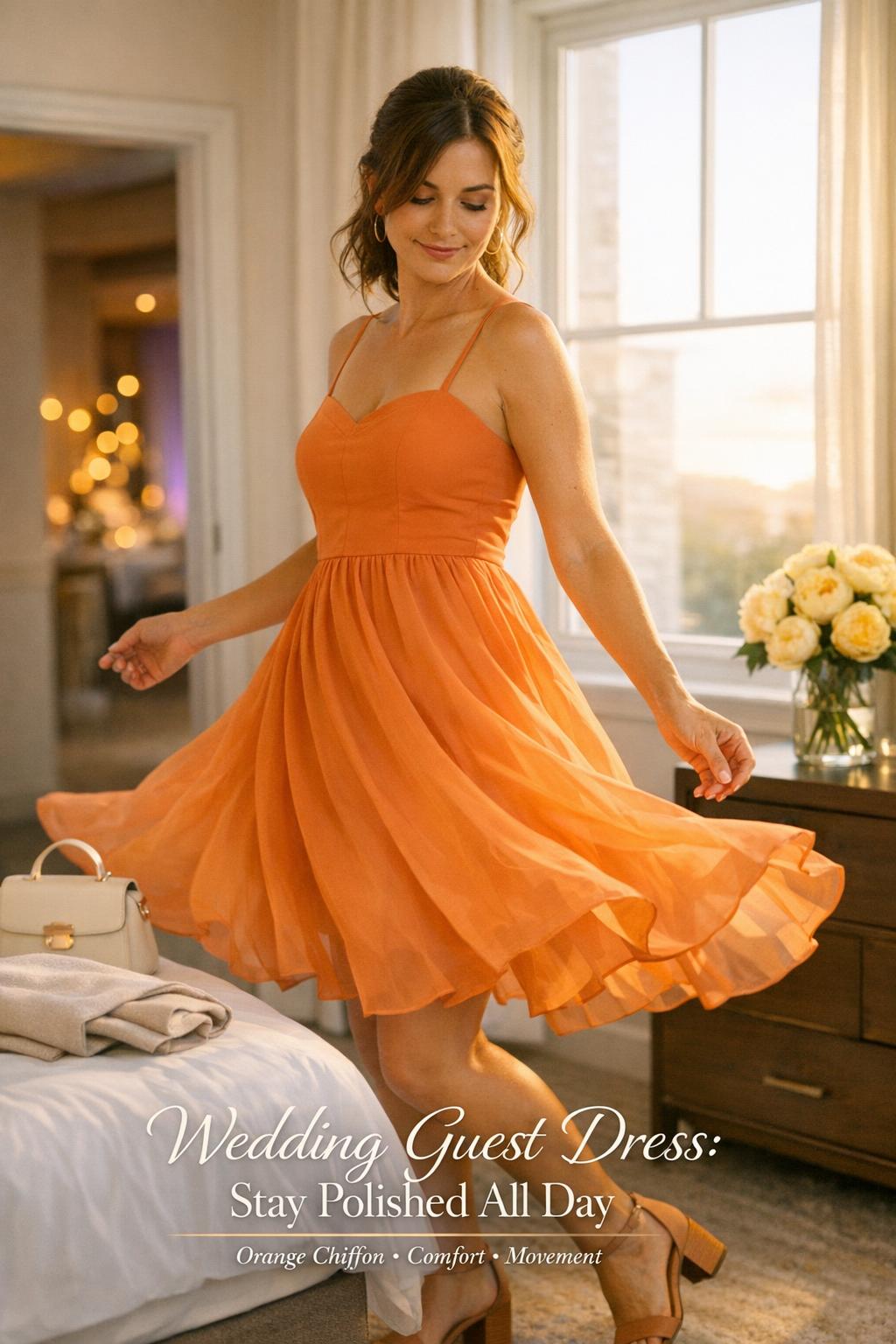
Silhouette is about balance: how the dress distributes visual weight and how it allows you to move through a full day without constant adjustments. The most reliable wedding guest dress silhouettes tend to offer structure in the bodice or waist and freedom through the skirt—or a streamlined shape that doesn’t restrict steps.
Strap and sleeve strategy: prom dresses sleeveless as guest attire
Prom dresses sleeveless styles can translate into guest attire when they’re not overly theatrical and when the overall styling stays refined. Sleeveless designs are especially practical for warm-weather ceremonies and crowded dance floors. The key is support: if the bodice relies on constant pulling-up, it’s not a wedding-all-day option. Pair sleeveless cuts with an intentional layer for cooler venues so you’re not stuck choosing between being cold and looking unfinished.
Necklines and closures: the details that decide your confidence level
Necklines affect how secure you feel while hugging relatives, leaning in for photos, or sitting through a ceremony. Closures matter just as much: a zipper that’s difficult to reach can create a stressful getting-ready situation, especially if you’re traveling solo. Prioritize designs that feel secure and manageable—you’ll enjoy the event more when you’re not preoccupied with the mechanics of your outfit.
Color and mood: choosing tones that feel celebratory without stealing focus
Color is emotional and contextual. It’s also heavily influenced by setting: a tone that feels soft in daylight can look bold at night, and a color that’s vibrant in a garden can feel intense under indoor spotlights. The goal isn’t to disappear; it’s to harmonize with the wedding’s atmosphere.
Yellow peonies as a palette cue (without looking themed)
If the wedding design leans into florals like yellow peonies, you can take that as permission to wear warm, optimistic shades—soft yellows, muted golds, gentle neutrals, or floral-adjacent prints—while still keeping your look grounded. The trick is restraint: use one standout element (color, print, or texture) and keep the rest clean so you look like a guest, not a centerpiece.
Orange chiffon and warm shades: festive, but consider timing
Orange chiffon reads joyful and high-energy, which can be perfect for daytime-to-evening celebrations. If the event is more formal or evening-focused, the styling should pull the look toward polished: refined shoes, minimal jewelry, and a streamlined bag. Warm colors photograph beautifully outdoors, but they can dominate indoor frames if the cut is also dramatic—so consider keeping either the color or the silhouette as the “loud” element, not both.
Shopping and styling: how to evaluate a dress beyond the product photo
Product photos are designed to sell a mood; your job is to evaluate the reality. The right wedding guest dress is the one that behaves well across multiple environments and feels true to your comfort thresholds. This is especially important if you’re considering trend-driven pieces or crossover styles like a Peppermayo prom dress that you’re adapting for a wedding context.
Peppermayo prom dress energy—how to make it wedding-appropriate
A Peppermayo prom dress can work for guest attire when the styling is adjusted to the wedding’s tone. If the dress has a youthful or statement feel, keep accessories and beauty more restrained so the overall look reads intentional and adult. Choose a simple hairstyle, a small bag, and shoes that fit the venue. If the wedding is formal, prioritize elevated finishing: clean lines, neat tailoring, and a composed overall silhouette.
Tip: check three “reality” factors before you keep it
- Sheerness in daylight: Stand near a window and assess whether you need different underlayers.
- Wrinkle behavior: Sit for five minutes, then stand—does it crease heavily at the waist or hips?
- Movement and noise: Walk and turn; some fabrics swish loudly or cling unexpectedly.
These checks take minutes and prevent the most common regrets: feeling exposed, looking rumpled by dinner, or spending the night tugging at fabric.
Accessories that solve problems: shoes, layers, and bags that earn their place
Accessories shouldn’t be an afterthought—at a wedding, they’re often what makes your outfit functional. The right shoe choice can keep you comfortable for hours; the right layer can keep you present at dinner instead of distracted by cold air; the right bag prevents you from juggling essentials.
Shoes: plan for surfaces, not just photos
Pick shoes based on where you’ll walk, stand, and dance. Outdoor venues punish narrow heels, while indoor venues can demand traction and comfort for long periods. If your dress is long, make sure the hem doesn’t drag when you step up stairs or move across uneven ground—your shoes and hemline work as a system.
Layers: the quickest way to make sleeveless feel intentional
If you’re wearing prom dresses sleeveless styles as guest attire, a layer can be the difference between “unfinished” and “styled.” The most reliable layers are those that keep the dress’s proportions balanced and don’t fight the neckline. Choose something you’d be happy to wear in photos; weddings include lots of candid shots where a purely functional cover-up becomes the focal point.
Bags: small, structured, and hands-free when possible
A wedding is a social event, and you’ll be greeting people, holding a drink, and moving between spaces. A small bag that closes securely helps you keep essentials without worrying about spills or items slipping out. If you’re traveling, also consider how your bag fits into your packing plan—bulky styles can be frustrating to manage all day.
Common wedding guest dress mistakes (and what to do instead)
Most guest-attire missteps aren’t about “rules”—they’re about misjudging practicalities. Here are the issues that come up repeatedly in real-life weddings, along with straightforward fixes that keep you comfortable and appropriately dressed.
- Choosing a dress that needs constant adjustment: If you’re tugging at straps or smoothing fabric in the mirror, you’ll do it all night. Choose better support or a more secure neckline.
- Ignoring venue terrain: Grass, sand, and cobblestones change shoe and hemline requirements. Plan for walking paths, not just the ceremony.
- Overcommitting to a trend without balancing it: A bold color like orange chiffon can be perfect, but keep the silhouette or accessories quieter so the look feels guest-appropriate.
- Forgetting temperature swings: Sleeveless can be ideal, but indoor air conditioning can be intense. Bring a layer that looks like part of your outfit.
- Buying for one photo angle: Weddings include sitting, standing, dancing, and hugs. Test your dress in motion, not only front-facing.
Practical “tips” for the week of the wedding
Tip: do a full outfit rehearsal, down to underlayers
Try on your dress with the exact bra or underlayers you’ll wear, plus the shoes you plan to stand in. This prevents last-minute scrambling and helps you catch fit issues that only appear when everything is worn together—especially with chiffon or lighter fabrics that reveal lines and seams more easily.
Tip: plan a “comfort contingency”
If you’re traveling or the wedding spans multiple locations, pack one small backup item that can save the day: foot cushions, heel grips, or a discreet wrap. These aren’t dramatic changes, but they protect your mood and your posture—two things that show up in photos as much as the dress itself.
Tip: treat florals like yellow peonies as inspiration, not instruction
If the wedding aesthetic is floral-forward, you don’t need to match it literally. Let it guide the softness or warmth of your styling choices—perhaps a romantic fabric, a gentler color story, or a more natural finish—while keeping the overall look clearly “guest” rather than “theme.”
Making a dress feel like you: finishing touches that stay tasteful
A wedding guest dress should feel aligned with your personal style; otherwise, you’ll feel like you’re wearing someone else’s outfit. The finishing touches—hair, makeup, jewelry—aren’t just decoration. They’re tools to set the tone and to balance the dress’s personality, whether that’s minimal, romantic, bold, or modern.
Balance is the rule: one statement at a time
If the dress is already expressive—say, an orange chiffon silhouette with lots of movement—keep other elements composed. If the dress is simple, you can add interest with texture or a more defined beauty look. This keeps your outfit from feeling chaotic and helps it translate well in different lighting throughout the day.
Guest attire and confidence: the “no distractions” standard
A reliable standard is to remove distractions. If an earring catches on hair, if a shoe rubs, if a neckline shifts, you’ll think about it constantly. The most stylish guests often look effortless not because they did less, but because they edited their choices until nothing fought for attention.
FAQ
How do I choose a wedding guest dress if the dress code isn’t clear?
Use the venue, start time, and overall formality cues as your guide, then aim for a polished middle-ground dress that can be styled slightly up or down with accessories and a refined layer.
Can orange chiffon work for wedding guest attire?
Yes, orange chiffon can feel festive and photograph beautifully, especially for daytime or outdoor weddings, but it helps to keep the silhouette or accessories more understated so the overall look remains guest-appropriate.
Are prom dresses sleeveless acceptable for a wedding guest dress?
They can be, as long as the fit is secure and the styling is refined; adding an intentional layer for cooler indoor spaces helps sleeveless dresses look complete and practical throughout the event.
How can I make a Peppermayo prom dress feel appropriate for a wedding?
Keep the overall styling polished and balanced by choosing restrained accessories, venue-appropriate shoes, and a clean, composed finish so the dress reads elevated rather than overly youthful or attention-grabbing.
What should I consider if the wedding is outdoors in a garden?
Plan for uneven ground and grass by choosing stable shoes and a hemline that won’t drag, and consider breathable fabrics that move well in wind while staying comfortable during long periods of standing and walking.
How do I avoid feeling uncomfortable after a few hours in my dress?
Choose a silhouette that allows sitting and dancing without constant adjustment, test the dress with your real underlayers and shoes, and bring a layer or small comfort item so temperature shifts and friction don’t ruin the experience.
What’s the fastest way to tell if a dress will be a problem on the wedding day?
Do a quick “sit, stand, dance” test at home and check the dress in natural light; if it shifts, creases heavily, feels sheer, or restricts movement, it’s likely to demand attention during the event.
How do I use floral themes like yellow peonies without looking like I’m matching the décor?
Take the flowers as a mood cue—softness, warmth, romance—then reflect that through one subtle element such as color tone or fabric movement while keeping the rest of your look simple and clearly guest-focused.