How to Style a Black Dress for Wedding Guest, Festively
The invitation says “wedding,” the dress code is vague (or firmly “black tie”), and you’re standing in front of your closet asking the same question so many guests quietly ask: can a black dress for wedding guest style really feel celebratory? Black is elegant and reliable, but at weddings it can also feel like a tightrope—especially when the ceremony is daytime, the venue is outdoors, or you’re dressing for a full day that moves from sunlight to candlelight.
This is exactly why black wedding guest attire is tricky: you’re balancing etiquette, comfort, and the visual tone of the event while still wanting a look that photographs beautifully. The good news is that black is one of the most versatile colors in occasionwear, and with the right silhouette, fabric, and styling choices, it can read romantic, modern, and perfectly appropriate across wedding types.
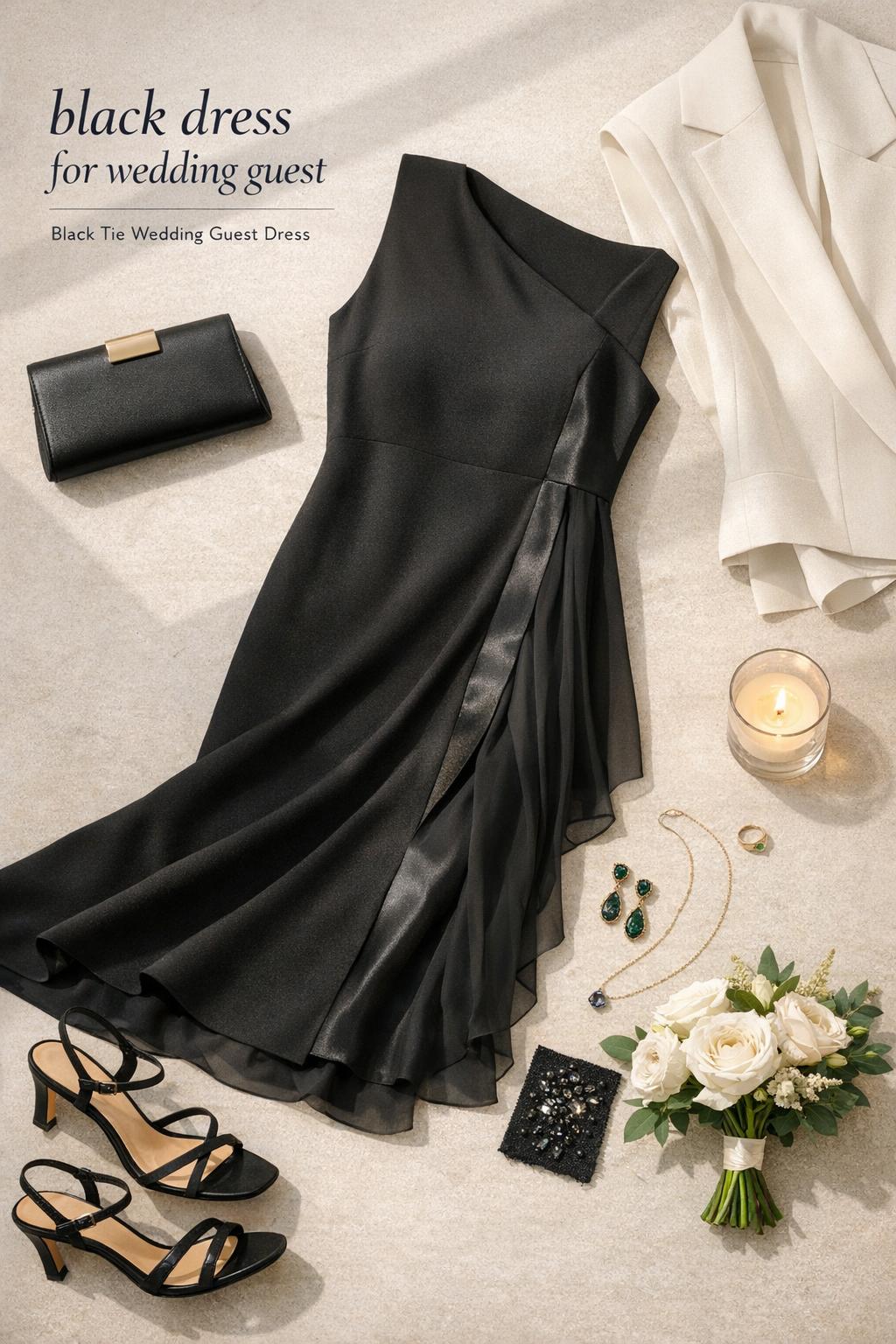
Below is a problem-solving fashion guide designed the way a wedding stylist thinks: start with context, choose a silhouette that matches the formality, select a fabric that behaves well through the celebration, then build accessories, layers, and color accents that soften black (or make it luxe) depending on the wedding setting.
Understanding the styling challenge: black at weddings, real-world constraints
Most wedding guest dilemmas aren’t about whether black is “allowed” in theory—they’re about whether your specific black dress works in practice. A garden ceremony can mean heat, grass, and long walks; a ballroom reception can mean colder air conditioning and hours of sitting; a black tie wedding can require a longer hemline and elevated finishing details. Meanwhile, you still need to move, dance, sit comfortably, and feel like yourself.
Your wedding look is only the beginning.
Keep your guest list, vendors, timeline, and every important detail together with Zarellea — so your day feels as considered as your style.
Black also amplifies design details. A neckline, sleeve shape, cutout, sheer panel, or embellishment like beading can look refined in one setting and overly dramatic in another. The styling challenge is to keep black looking intentional—never like default—and aligned with dress codes and the couple’s tone.
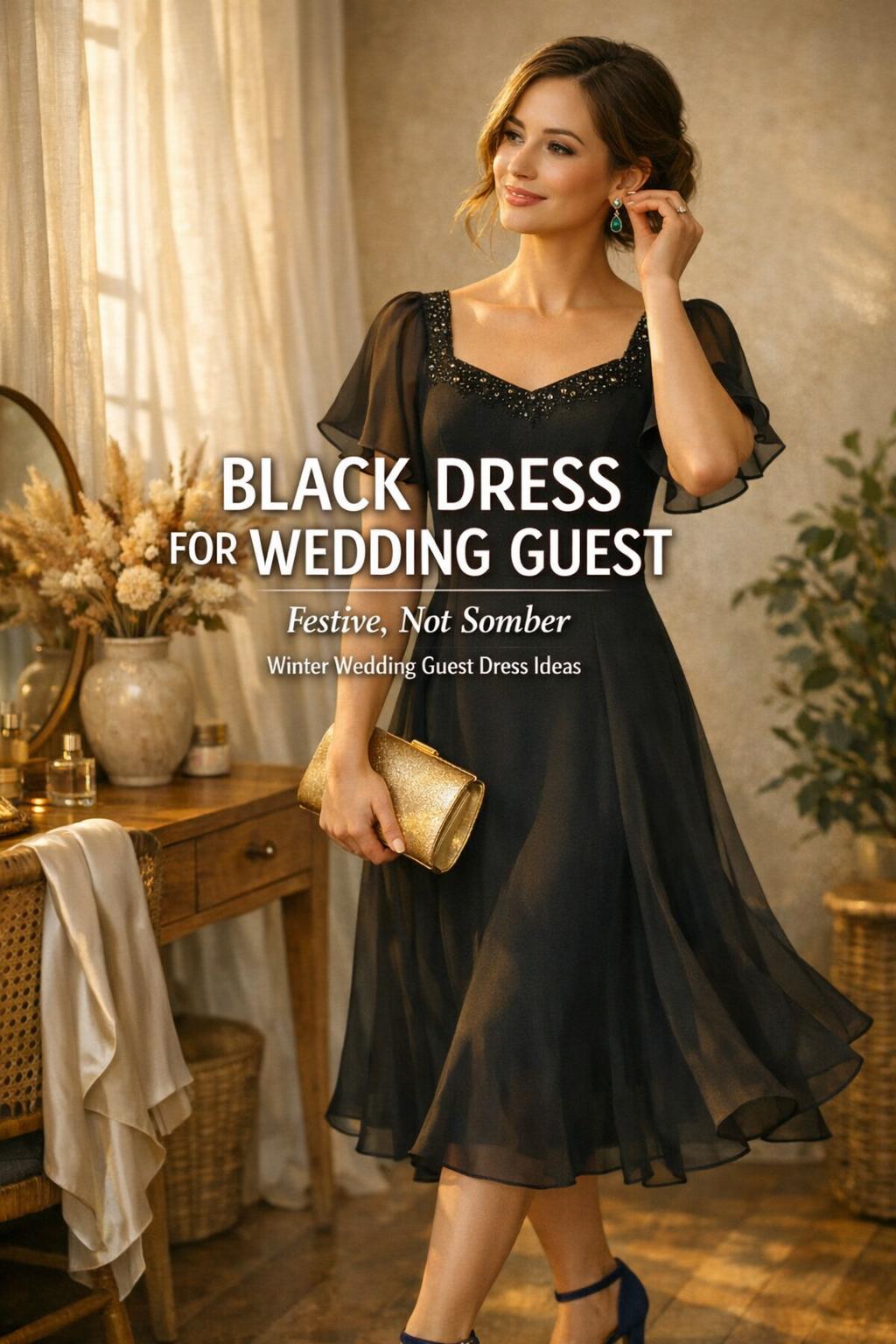
Key dressing principles that make a black wedding guest look feel right
Think of these principles as your decision filter. They keep you from buying a dress that looks gorgeous on a product page but feels off once you’re navigating ceremony seating, group photos, and a late reception.
1) Match silhouette to formality before you think about accessories
Silhouette is the quickest visual cue for dress codes. Cocktail lengths and structured shapes can read semi-formal; midi dresses often transition beautifully from day to evening; maxi dresses carry the elegance expected at more formal celebrations. Within those lengths, classic silhouettes—like A-line or a sleek sheath—tend to be the safest for a wide range of weddings, while a mermaid silhouette is typically more statement-driven and best reserved for clearly formal settings.
2) Let fabric do the heavy lifting (especially in black)
In black, fabric texture becomes the “color.” Chiffon can feel light and romantic, satin reads glossy and evening-leaning, and crepe often looks polished with a clean drape. For long celebrations, fabric also determines comfort—how it moves when you sit, whether it wrinkles, and how it holds shape across hours.
3) Use neckline and sleeves to control the mood
If you’re worried black might feel too severe, soften it with an airy neckline or sleeve detail rather than relying solely on jewelry. Conversely, if you need your look to rise to a black tie wedding, a more sculpted neckline, long sleeves, or elevated detailing like embroidery or beading can deliver formality without changing color.
4) Build a “ceremony-to-reception” plan
Weddings are long. The best black wedding guest outfits are designed in layers: a dress that stands on its own, plus an outer layer for temperature shifts, plus footwear you can actually walk in across the venue. Even a simple clutch choice matters because you’ll want your essentials without juggling bags during photos and toasts.
Choosing the right length: mini, midi, or maxi for the wedding you’re attending
Before you shop brands or obsess over necklines, choose the length that best fits the wedding’s formality and timing. Length is also the simplest way to avoid feeling underdressed or overdressed when you arrive.
Short dresses (cocktail length): semi-formal celebrations and city venues
A black cocktail dress wedding guest look works beautifully for semi-formal invitations, especially in urban settings where the vibe is sleek and modern. The key is refinement: choose a clean silhouette (think A-line or sheath), avoid anything that reads like a night-out mini, and let the styling feel wedding-appropriate—polished shoes, a structured clutch, and thoughtful jewelry.
Midi-length black dresses: the most versatile day-to-evening option
Midi dresses are often the easiest solution when you’re unsure about the dress code or you’re moving between venues. A flowing midi in chiffon can feel light for daytime, while a satin or crepe midi can skew more formal with the right accessories. If you’re attending a ceremony that starts earlier and ends late, midi length also tends to be comfortable—less fussing with hems, easier movement, and a balanced silhouette for photos.
Maxi black dresses: formal receptions and black tie wedding guests
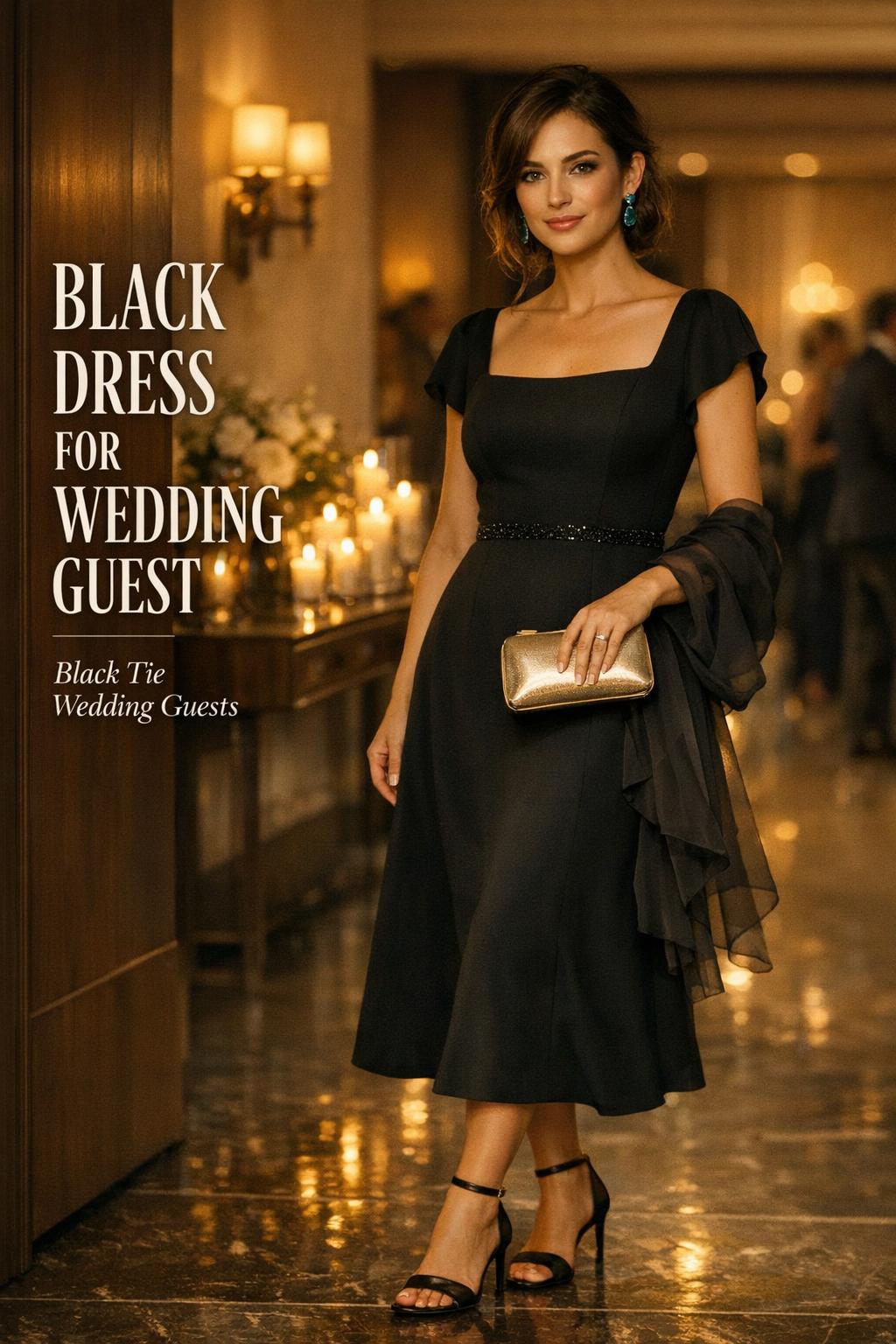
For a black tie wedding, a longer hemline is often the simplest way to meet expectations. A black tie wedding guest dress doesn’t need to be overly ornate, but it should read evening: consider satin for a luminous finish, crepe for streamlined elegance, or chiffon for a softer, romantic drape. If you gravitate toward a mermaid silhouette, ensure the event’s formality truly supports it—mermaid can be stunning, but it is inherently more dramatic.
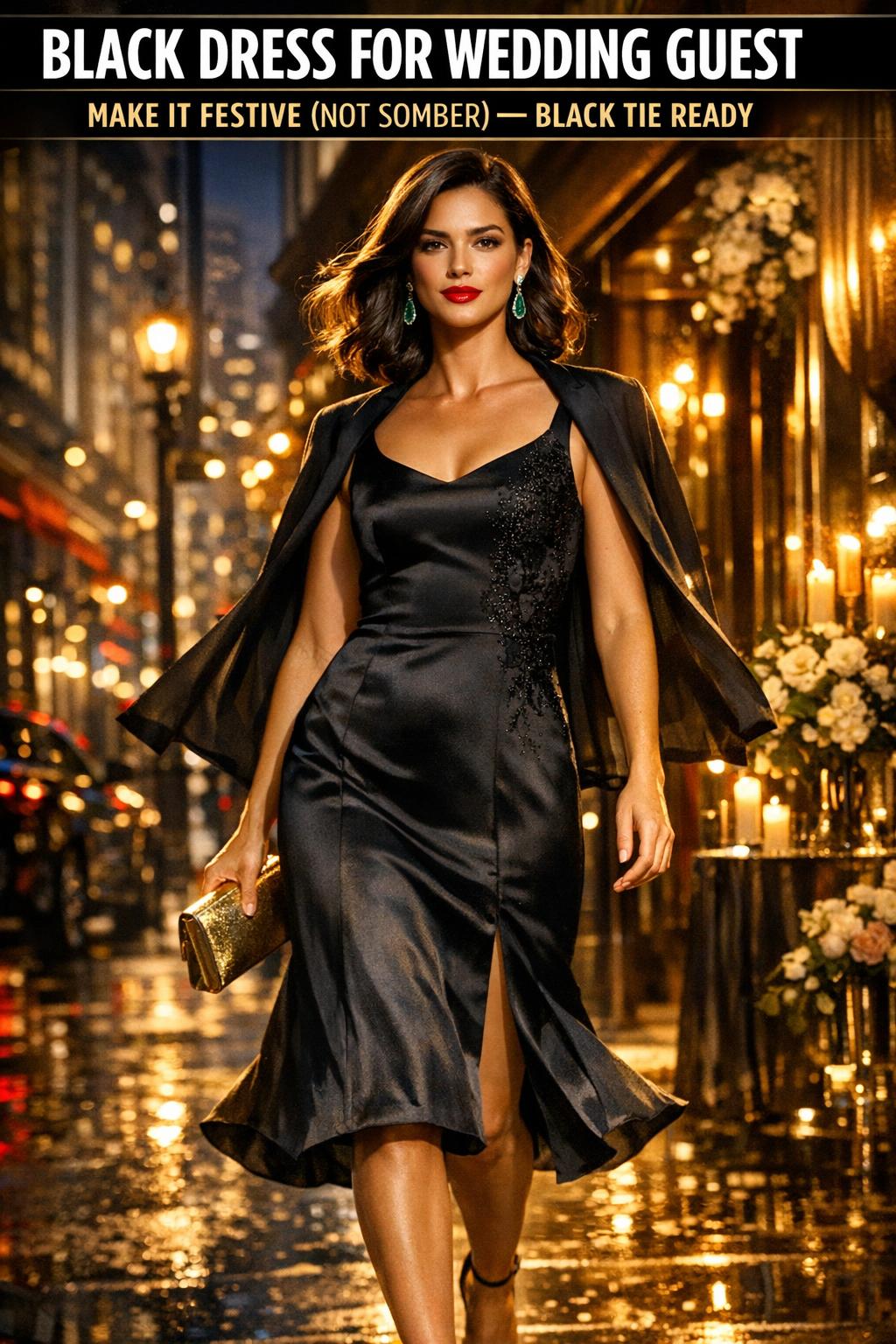
Fabric and care: chiffon, satin, crepe—and what they mean for a long wedding day
Fabric is where comfort meets polish. In black, it’s also where your outfit’s “personality” lives: matte versus shine, float versus structure, minimalist versus embellished.
Chiffon: airy movement for romantic ceremonies
Chiffon is a natural ally for weddings because it moves beautifully and feels light. It’s especially helpful when you want black to look soft rather than stark—perfect for garden settings, vineyards, or any ceremony that leans airy and romantic. Chiffon also pairs well with delicate accessories and subtle sparkle.
Satin: elevated shine for evening and black tie wedding settings
Satin immediately signals eveningwear. In a candlelit reception or ballroom setting, it catches light in a way that looks intentional and formal—ideal for black tie wedding guests. Because satin can highlight seams and contours, fit becomes more important; tailoring or careful sizing matters if you want a smooth, confident finish.
Crepe: clean, modern drape with a polished feel
Crepe tends to read modern and refined, making it a dependable option for guests who love understated elegance. It’s also a smart choice when you want your accessories—statement jewelry, a bold clutch, or special shoes—to take center stage without competing textures.
Care notes to consider before you commit
Wedding guest dresses often come with care requirements like dry-clean only or hand wash, and that matters more than people expect. If you’re traveling, attending multiple events, or planning to rewear the dress, care should be part of your decision. A dress that looks perfect but requires constant fussing can add stress to an already full day.
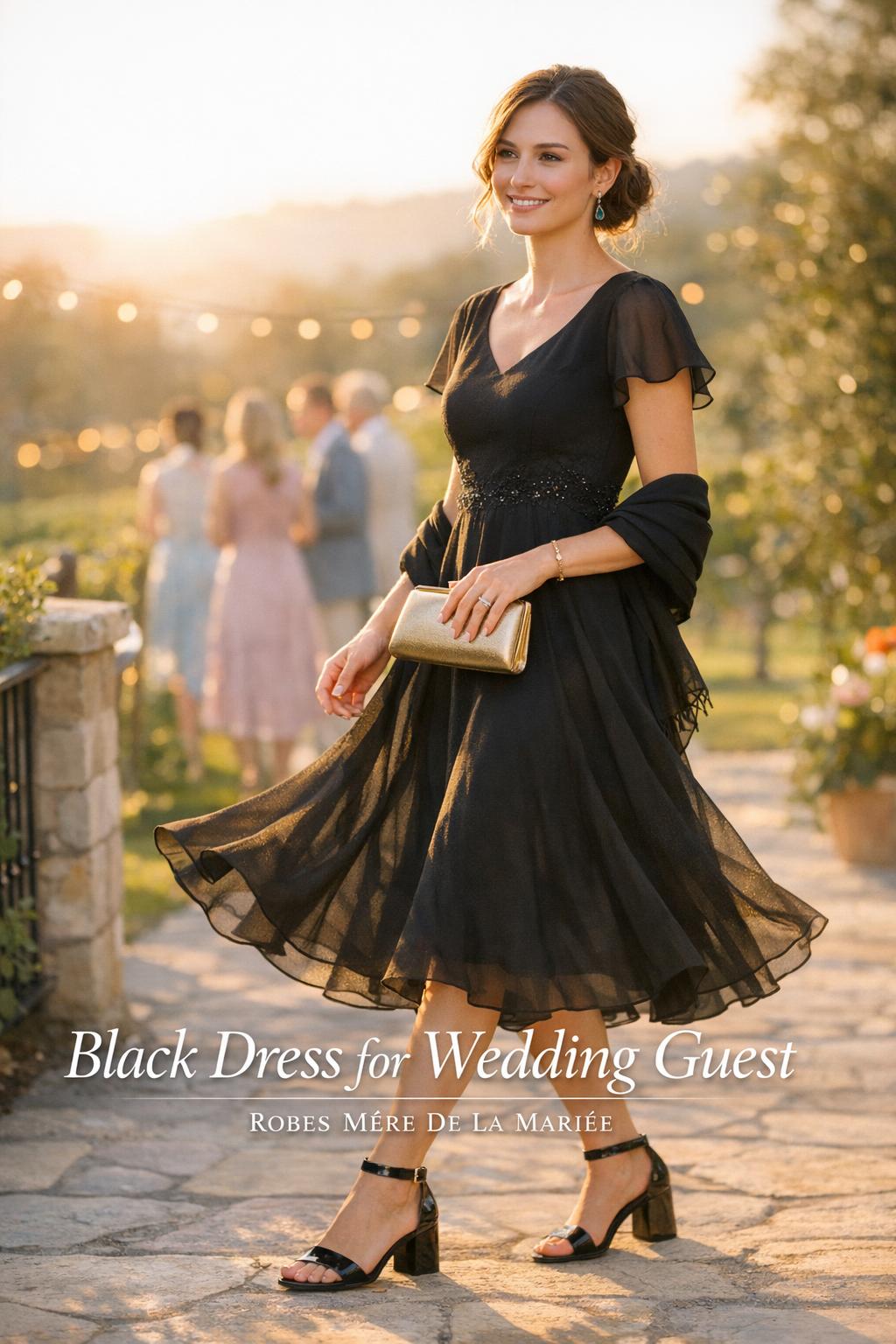
Outfit solutions: black wedding guest looks that solve common scenarios
These outfit solutions are designed around the situations that tend to create last-minute wardrobe panic: unclear dress codes, changing temperatures, and the desire to look elegant without feeling like you’re wearing “just a black dress.” Use them as formulas and swap silhouettes (A-line, sheath, mermaid) or fabrics (chiffon, satin, crepe) based on your preferences.
Outfit solution: modern cocktail polish for a city ceremony
For a semi-formal wedding in a downtown venue—think gallery-like spaces or a chic restaurant reception—choose a black cocktail-length dress in crepe with a clean neckline and a tailored shape (A-line or sheath). The polish comes from restraint: a structured clutch, refined shoes, and a single focal accessory. This solves the “too fun vs. too serious” problem by keeping the silhouette wedding-appropriate while letting black feel modern and intentional.
Outfit solution: day-to-evening midi in chiffon for a garden-to-reception timeline
A daytime ceremony that leads into an evening reception can make black feel risky—until you choose a midi dress in chiffon. The movement reads romantic in daylight, and the length stays elegant once the lights dim. Add a light layer for the ceremony if you anticipate temperature shifts, then let your evening accessories—shimmering jewelry or a more dramatic shoe—carry it into reception territory. This approach solves the common issue of black looking “too heavy” earlier in the day by emphasizing softness and motion.
Outfit solution: black tie wedding guest dress in satin with minimalist glamour
When the invitation clearly says black tie wedding, keep the message equally clear in your outfit: a satin maxi dress with a refined neckline, clean lines, and impeccable fit. Satin does enough on its own; you can keep accessories sleek and still look fully formal. If you love detail, subtle beading or embroidery can add dimension without overpowering the room. This solves the “do I look formal enough?” question without resorting to fussy styling.
Outfit solution: winter wedding guest dress with sleeves and elevated texture
A winter wedding guest dress needs warmth without bulk. Look for a black midi or maxi with sleeves—especially in crepe for clean structure or satin for evening shine. Sleeves and a longer hemline naturally feel seasonal, and black looks especially rich in winter lighting. Plan for layering so you stay comfortable during transitions between ceremony, cocktail hour, and reception. This solves the practical problem of staying warm while maintaining an elegant silhouette that still photographs beautifully.
Outfit solution: detail-forward elegance with beading or embroidery for statement-loving guests
If your style leans expressive, black is the perfect canvas for embellishment. A black dress with beading or embroidery can look stunning at evening weddings where lighting brings out texture. Keep the silhouette aligned with the dress code—midi for many semi-formal settings, maxi for formal—then let the detailing act as the centerpiece. This solves the “black feels plain” problem without relying on over-accessorizing.
Color coordination: how to make black feel celebratory, not somber
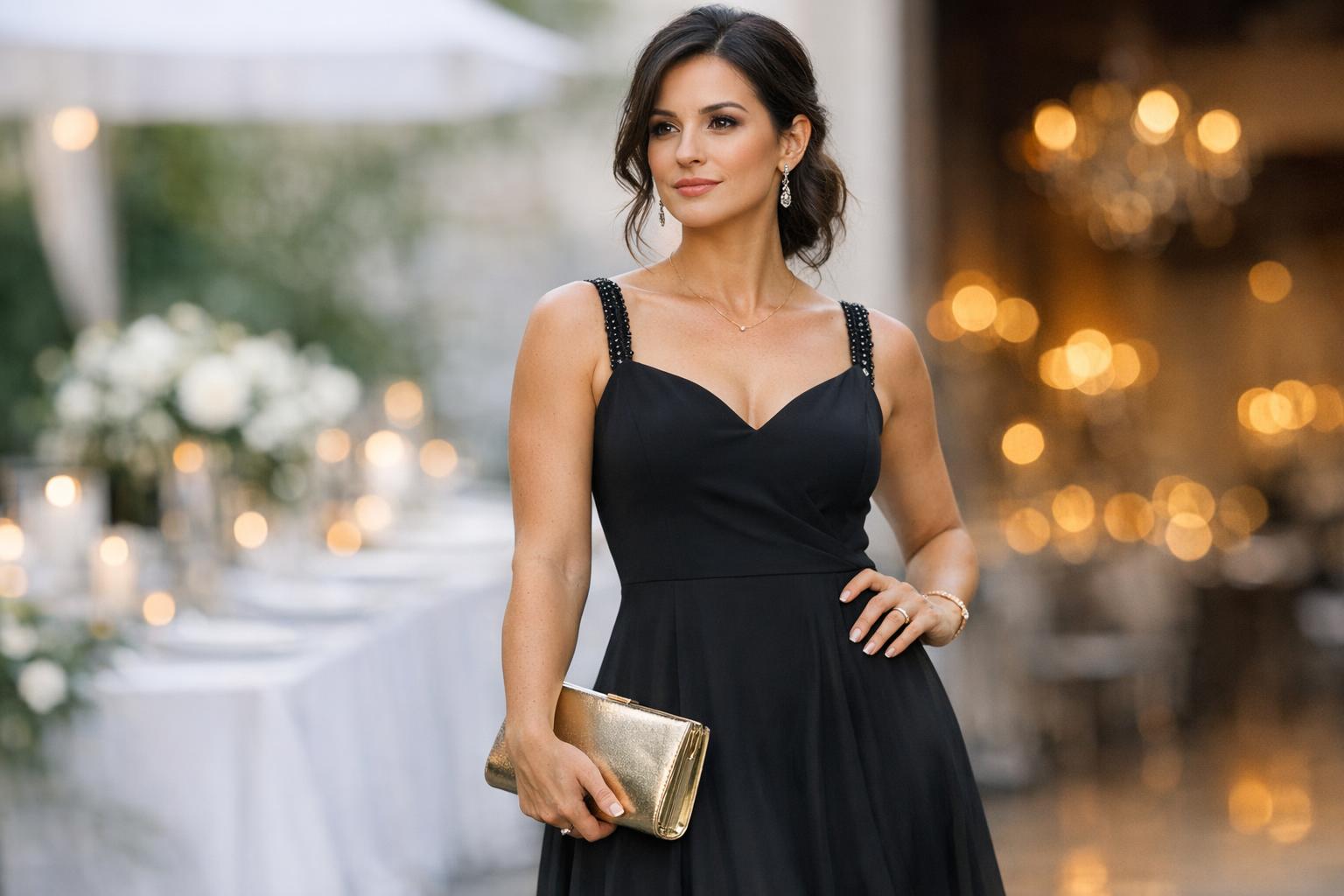
The secret to a wedding-ready black look is tonal balance. You’re not changing the dress; you’re changing the message around it. This is where palettes come in—especially metallics and jewel tones, which naturally complement black while still feeling festive.
- Black with metallics: a classic approach for evening receptions and formal venues; metallic accessories add light and dimension.
- Black with jewel tones: rich accents can make black feel lush and celebratory, especially when the venue lighting is warm.
- Black with blush-inspired softness: lighter, romantic accents soften black for daytime ceremonies and spring/summer settings.
If you’re attending a wedding where color coordination matters, aim for harmony rather than matching. Black is neutral, but your accessories can echo the wedding’s mood—romantic, modern, or classic—without pulling focus from the couple.
Brand pathways: where guests often start when shopping black wedding guest dresses
Shopping for a black dress for wedding guest moments typically falls into two tracks: you either want a curated category page that helps you browse quickly by length and neckline, or you want an editorial-style shortlist to spark ideas. In the U.S. market, many guests begin with dedicated collections from established retailers and occasionwear brands, then refine based on silhouette, fabric, and dress code.
If you like to browse by length and filters, collections from Lulus, JJ’s House, and GemGrace are structured around silhouettes like maxi, midi, and cocktail lengths, with fabric cues such as chiffon, satin, and crepe. For inspiration-led shopping, editorial roundups like PureWow often help guests visualize specific styles—wrap dresses, the little black dress (LBD), and seasonality—before committing to a particular silhouette.
If etiquette is your primary concern—especially if you’re unsure how black will be perceived—brand education content like Bella Bridesmaids can help frame the “how to wear black” question through a wedding-appropriate lens, including styling and palette considerations.
Fit, sizing, and tailoring: the invisible difference between “fine” and unforgettable
A black dress is unforgiving in the best way: it reveals whether the fit is intentional. A hem that hits the wrong point on the leg can change the entire formality level. A neckline that shifts when you sit through the ceremony can distract all day. And fabrics like satin, in particular, reward precision.
Measuring and choosing size with real life in mind
When you’re between sizes, think about where you need ease: sitting through dinner, lifting your arms for photos, walking across the venue. If a retailer offers detailed sizing support or customization options, that can be especially helpful for formal silhouettes where the line of the dress matters. Even without formal tailoring, choosing the size that allows comfortable movement—and then refining fit if needed—will usually look more elegant than squeezing into a smaller size.
Alterations that make the biggest impact
For wedding guest dressing, the most impactful adjustments are typically hem length and strap or sleeve placement. A maxi that skims without dragging feels instantly more formal; a midi that hits cleanly looks intentional rather than accidental. If your dress includes a statement silhouette like mermaid, consider tailoring as a practical choice—it’s the difference between dramatic and restrictive.
Tips from a wedding-stylist mindset: accessories, shoes, and layers that work
Black gives you flexibility, but weddings demand practicality. Your styling should support a full day of celebration—standing, walking, sitting, and dancing—without needing constant adjustments.
- Jewelry: let one element lead. If your dress has beading or embroidery, keep jewelry quieter; if your dress is minimalist crepe, statement jewelry can add dimension.
- Footwear: choose shoes that match the venue reality—grass, stairs, long walkways—so you’re not forced into uncomfortable compromises mid-event.
- Clutch strategy: prioritize a clutch that fits essentials for the timeline (phone, lip color, small touch-up items) so you can stay present without juggling.
- Layering: for seasonal shifts, a refined layer keeps you comfortable at the ceremony and polished in photos, especially for winter wedding guest dress planning.
Tip: If you’re worried your look reads too dark for a daytime wedding, focus on light-catching elements—subtle shine in satin, soft movement in chiffon, or metallic accessories that brighten the overall impression without changing the dress itself.
A note on etiquette and tone: making black feel respectful and aligned
Weddings vary widely, and so do expectations. Some couples love sleek black formalwear; others imagine a lighter, more colorful guest palette. The most respectful approach is to let the invitation and dress code lead. When you’re unsure, choose a classic silhouette, avoid extreme cutouts or overly provocative styling, and build a look that reads “occasion” through fabric and finish.
There are also moments when black is not the only black-related choice you’ll see. In some wardrobes, you might come across terms like robes mère de la mariée in shopping searches and style conversations—especially when people are exploring formalwear categories and French-language descriptors for special-occasion dressing. The takeaway is the same: formality is communicated through silhouette, fabric, and refinement, regardless of the label attached to the outfit category.
Common mistakes that make a black wedding guest dress feel “off”
Most missteps aren’t about wearing black—they’re about wearing the wrong version of black for the setting.
- Choosing a night-out silhouette for a wedding: very short hems or ultra-club styling can clash with the tone of a ceremony, even if the dress is technically “cocktail.”
- Ignoring fabric behavior: a fabric that wrinkles easily or feels restrictive can look tired by the time dinner arrives.
- Overloading accessories to “fix” a plain dress: too many statement pieces can look busy; instead, add one focal element or choose a dress with subtle detailing like beading.
- Skipping the layer plan: discomfort shows in photos; for winter weddings especially, a layering strategy matters as much as the dress.
When you correct these, black becomes effortless: a sophisticated base that can lean romantic in chiffon, sleek in crepe, or formal in satin—always appropriate, never accidental.
Conclusion: the simplest way to choose black with confidence
A black dress for wedding guest dressing works best when you treat it like an occasion look, not a fallback. Start with the wedding’s formality and timing, then choose a silhouette—cocktail, midi, or maxi—that matches the dress code. Let fabric set the mood (chiffon for softness, satin for evening glamour, crepe for modern polish), and finish with thoughtful accessories, comfortable footwear, and a layer plan that supports a long celebration.
Once you approach black as a framework—silhouette, fabric, finish—you can dress for any wedding setting with ease, from garden ceremonies to black tie wedding receptions, feeling elegant, comfortable, and perfectly in step with the moment.
FAQ
Can I wear a black dress to a wedding as a guest?
Yes, black wedding guest attire is widely worn, especially when the silhouette and styling match the wedding’s dress code; the most important step is ensuring the overall look reads celebratory through refined fabric choices, polished accessories, and an occasion-appropriate length.
What length is best for a black dress for wedding guest events?
Choose length based on formality: cocktail length often suits semi-formal weddings, midi is a versatile day-to-evening option, and a maxi is typically safest for formal events and a black tie wedding where a longer hemline reads more elevated.
What is a good black tie wedding guest dress choice in black?
A black tie wedding guest dress in a maxi length is usually the most reliable option, and fabrics like satin or crepe help the look feel evening-appropriate; subtle embellishments such as beading or embroidery can add dimension if you want a more formal finish.
How do I avoid looking “too dark” in a black dress at a daytime wedding?
Use softness and light: choose a flowing fabric like chiffon, consider a midi length for daytime balance, and add brightening accents through metallic accessories or a lighter-toned styling approach so the outfit feels romantic rather than severe.
Which fabrics work best for black wedding guest dresses?
Chiffon, satin, and crepe are common wedding-appropriate options because they each drape well and communicate different moods—chiffon for airy romance, satin for evening shine, and crepe for a polished, modern look.
What silhouettes are most wedding-appropriate in black?
Classic silhouettes like A-line and sheath are widely adaptable across wedding types, while a mermaid silhouette tends to read more statement-driven and is best reserved for clearly formal settings where that level of drama feels aligned.
How should I style accessories with a black wedding guest dress?
Let one element lead: if your dress has detailing like beading or embroidery, keep jewelry simpler; if the dress is minimalist, consider statement jewelry, a refined clutch, and a coordinated palette such as metallic accents to make black feel festive.
What should I look for in a winter wedding guest dress in black?
Prioritize comfort and warmth without bulk by choosing a midi or maxi with sleeves and a refined fabric like crepe or satin, then plan a polished layer for temperature shifts between ceremony and reception.
Are there specific brands that carry black wedding guest dresses in the U.S.?
Yes—many guests browse U.S.-focused collections from brands such as Lulus, JJ’s House, and GemGrace for black wedding guest dresses, while editorial sources like PureWow and brand guidance like Bella Bridesmaids can help with styling and etiquette context.