Winter Wedding Dress Guest Style: Warm, Romantic, Refined
A winter wedding invitation, and the question every guest asks
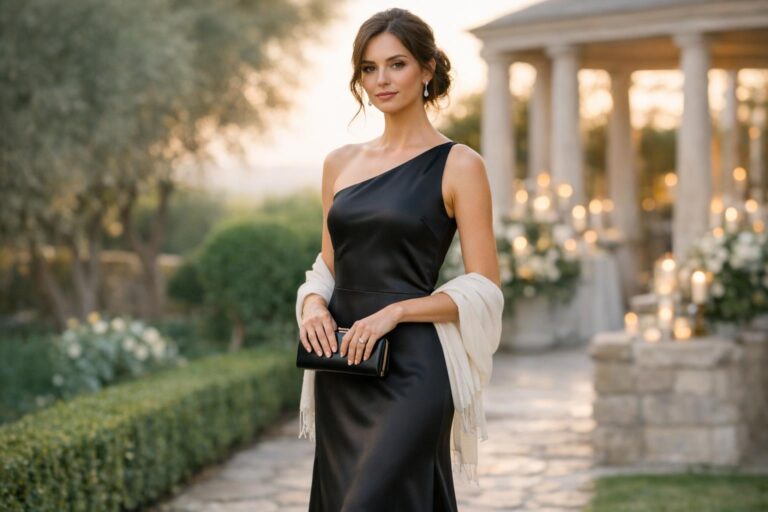
The moment a winter wedding invitation arrives, style planning becomes a little more layered—literally. A winter wedding dress guest look has to hold its own in candlelit reception light, flatter in photos, honor the dress code, and still feel comfortable when the temperature drops between the ceremony and the last dance. Unlike warm-weather weddings, winter guest attire is never just about the dress; it’s about the fabric’s texture, the silhouette’s movement, and how your outerwear and accessories complete the story without looking like an afterthought.
Winter is also the season that rewards intentional choices. Velvet reads instantly elevated, satin and silk catch the light with a quiet glow, and sequins make sense in a way they rarely do outside the holidays. Add the right midi length, a wrap shape that adapts to long celebrations, or a long-sleeve gown that feels polished instead of heavy, and you have wedding attire guest styling that looks romantic and feels pragmatic. The goal is simple: look appropriately dressed for the celebration, and appropriately dressed for the weather.
What makes winter wedding guest attire feel elevated (not just warm)
The best winter wedding guest dresses succeed because they balance depth and refinement. Depth comes from texture—velvet, sequins, satin, silk, and heavier crepe all photograph beautifully under indoor lighting and feel seasonally right. Refinement comes from structure: a clean neckline, a defined waist, a well-chosen hemline (midi and maxi are perennial winter favorites), and sleeves that look intentional rather than purely functional.
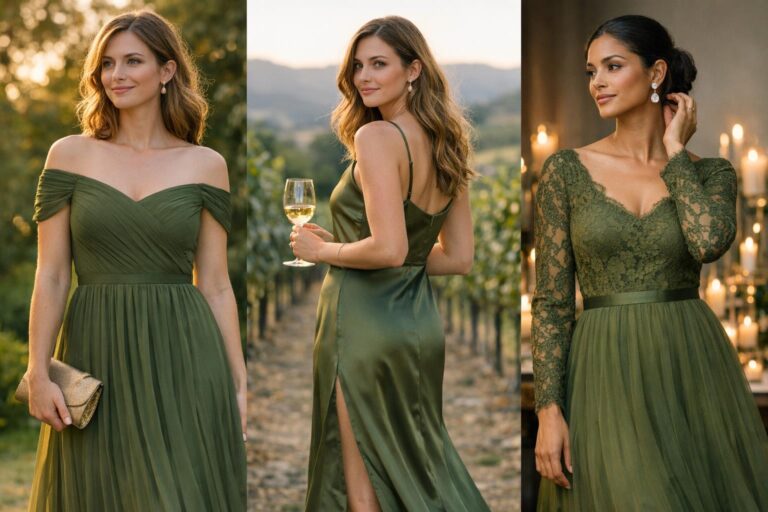
Winter celebrations also tend to lean more formal in mood, even when the invitation says cocktail attire or semi-formal. Richer color palettes—emerald, burgundy, navy, black, and metallics—feel harmonious with winter florals, darker evenings, and the glow of a reception space. When guests lean into those cues, the overall room looks more cohesive, and your outfit feels “of the season” without needing a costume-like holiday theme.
Your wedding look is only the beginning.
Keep your guest list, vendors, timeline, and every important detail together with Zarellea — so your day feels as considered as your style.
The winter fabric shortlist: velvet, satin, silk, sequins, and heavy crepe
If you’re deciding between a few dresses, start by reading the fabric like a stylist would. Velvet is the classic winter wedding dress guest fabric because it offers warmth, texture, and a soft sheen that feels formal. Satin and silk are winter-friendly when they have enough weight to drape cleanly; they look especially sophisticated for evening receptions. Sequins and sparkle—whether all-over or as a focused detail—feel festive and appropriate for cold-weather weddings, particularly when paired with streamlined silhouettes. Heavy crepe (and similarly structured materials) earns its place for guests who want a cleaner, more modern look that still feels substantial in winter.
Silhouettes that style beautifully with outerwear
Winter guest attire has a practical styling constraint: your look often needs to accommodate a coat, cape, wrap, or shawl without bunching at the waist or distorting the line of the dress. This is why midi dresses are so common in winter wedding roundups, and why wrap dresses and A-line silhouettes stay in constant rotation. They’re forgiving, easy to layer, and they don’t rely on bare skin to feel “special.” A long-sleeve dress can be equally elegant—especially when the sleeve shape is considered (sleek, softly draped, or gently structured) rather than purely coverage-driven.
Color palettes that glow in winter light
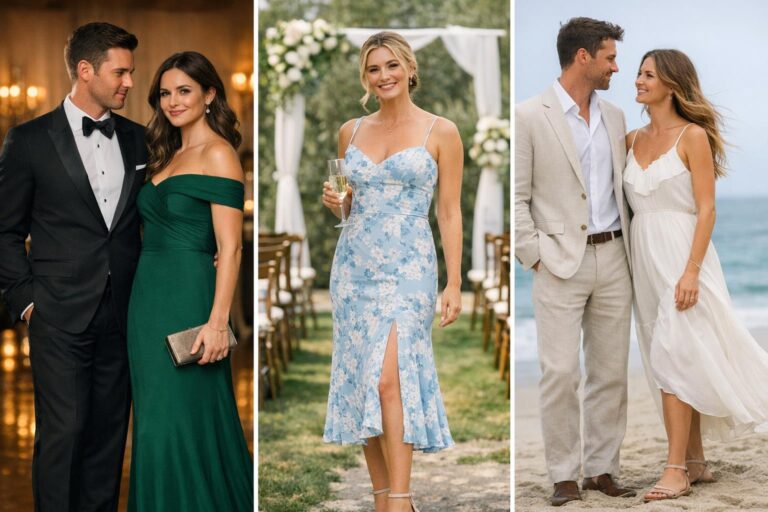
Winter light is different: dimmer afternoons, earlier sunsets, and indoor illumination that can be warm or low. Jewel tones like emerald and burgundy tend to look rich in photos, while navy and black feel timeless for more formal venues. Metallics add brightness without requiring a loud silhouette; they’re particularly effective for cocktail attire when you want to look celebratory but still refined. If you love prints, florals can still work in winter when the palette feels seasonally grounded rather than springlike.
Weather-proofing your outfit without losing the dress
One reason winter wedding guest outfits can look unfinished is that guests plan the dress first—and only later scramble for outerwear and footwear that “sort of” matches. Winter wedding styling works best as a system: base dress, warmth layer, outerwear, and finishing accessories. When those pieces are chosen together, you can move from arrival to ceremony to reception without looking like you’re wearing two different outfits.
Layering logic: coat, cape, wrap, shawl, and faux fur
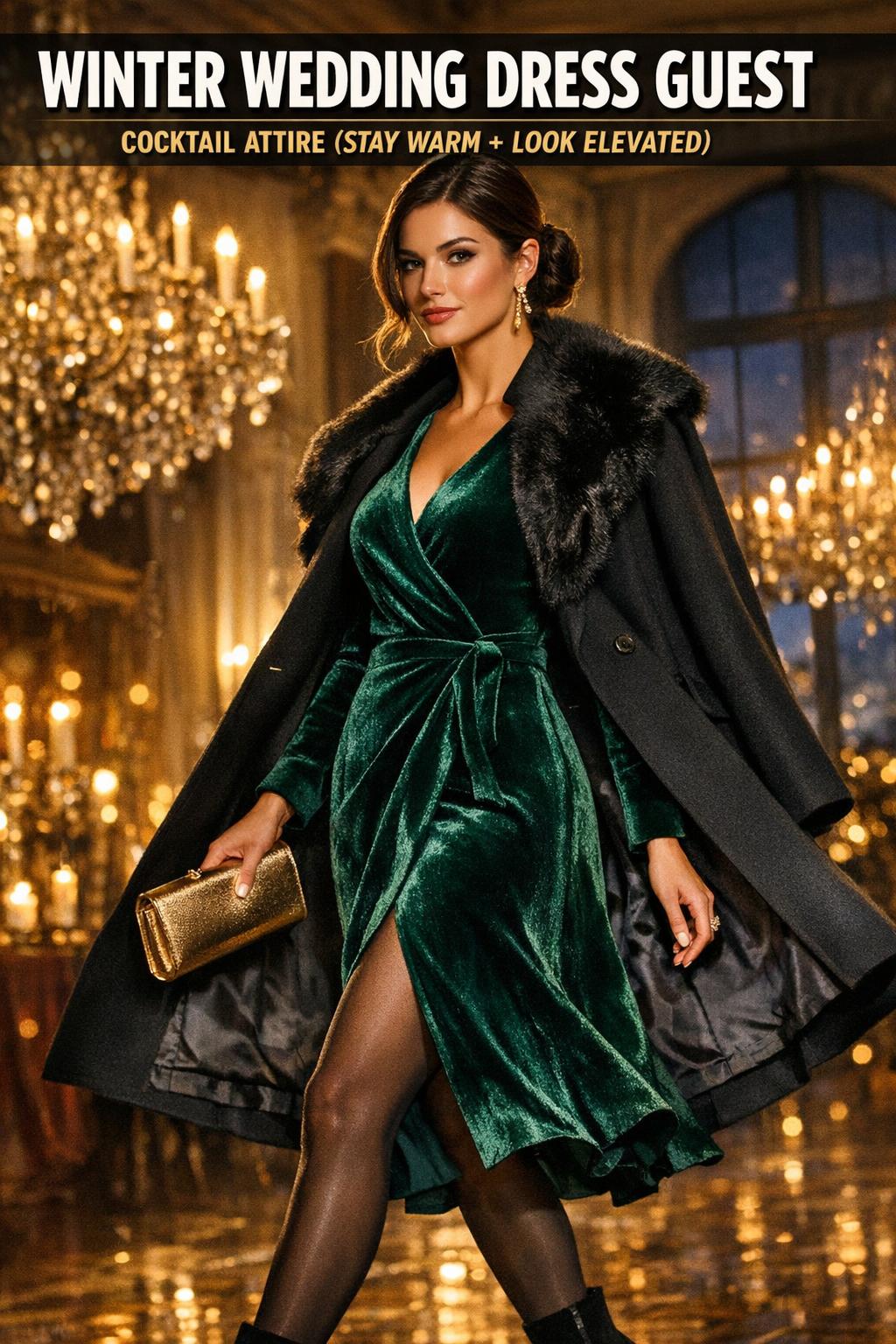
Outerwear is part of the look, especially for outdoor photos and venue transitions. Coats bring clean structure; capes create drama; wraps and shawls soften a silhouette and are easy to keep on during the ceremony. Faux fur is often mentioned in winter wedding styling because it instantly reads “winter formal” and can complement velvet or satin beautifully. The key is proportion: a wrap that sits neatly at the shoulder looks intentional in photos, while overly bulky layers can swallow a sleek dress.
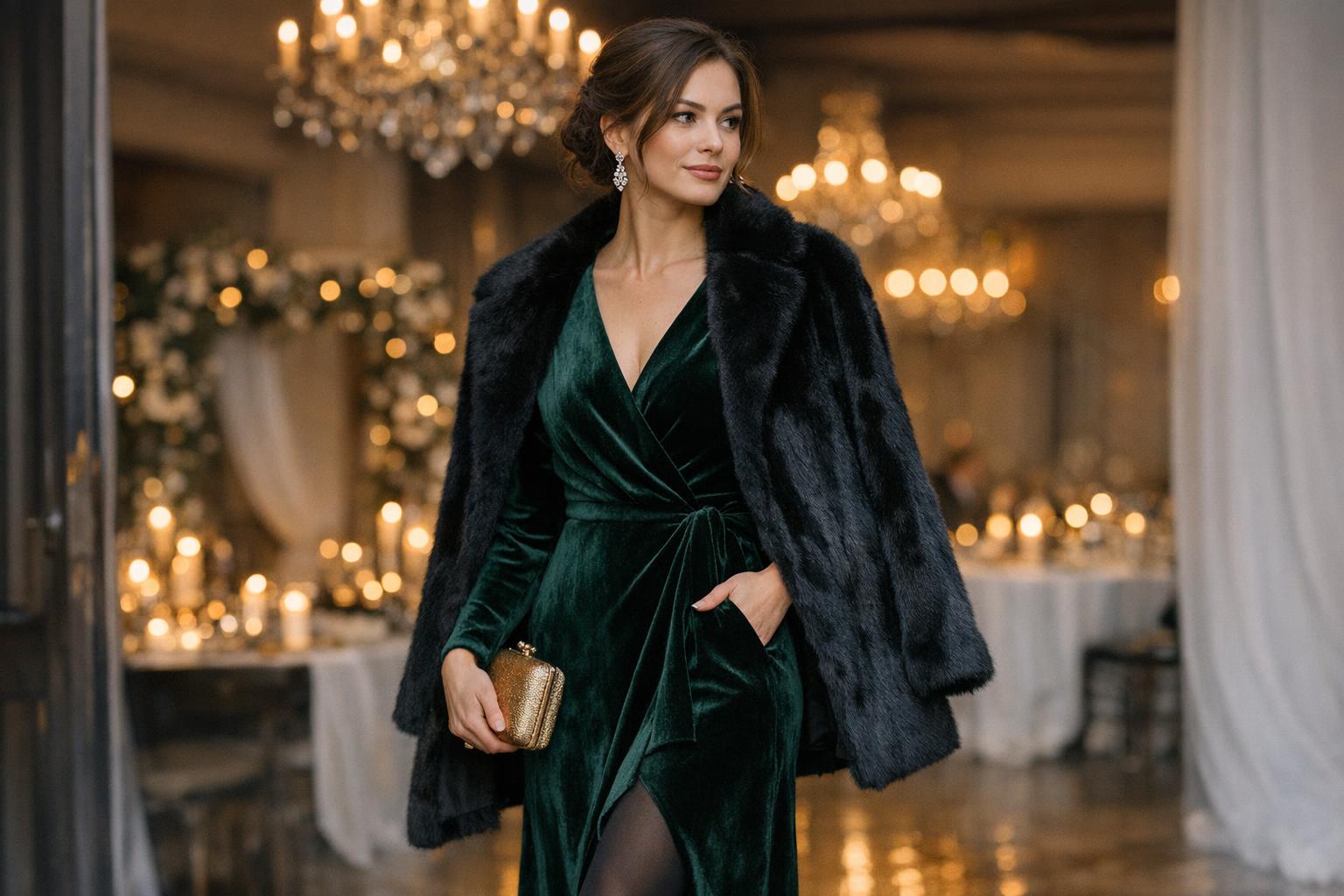
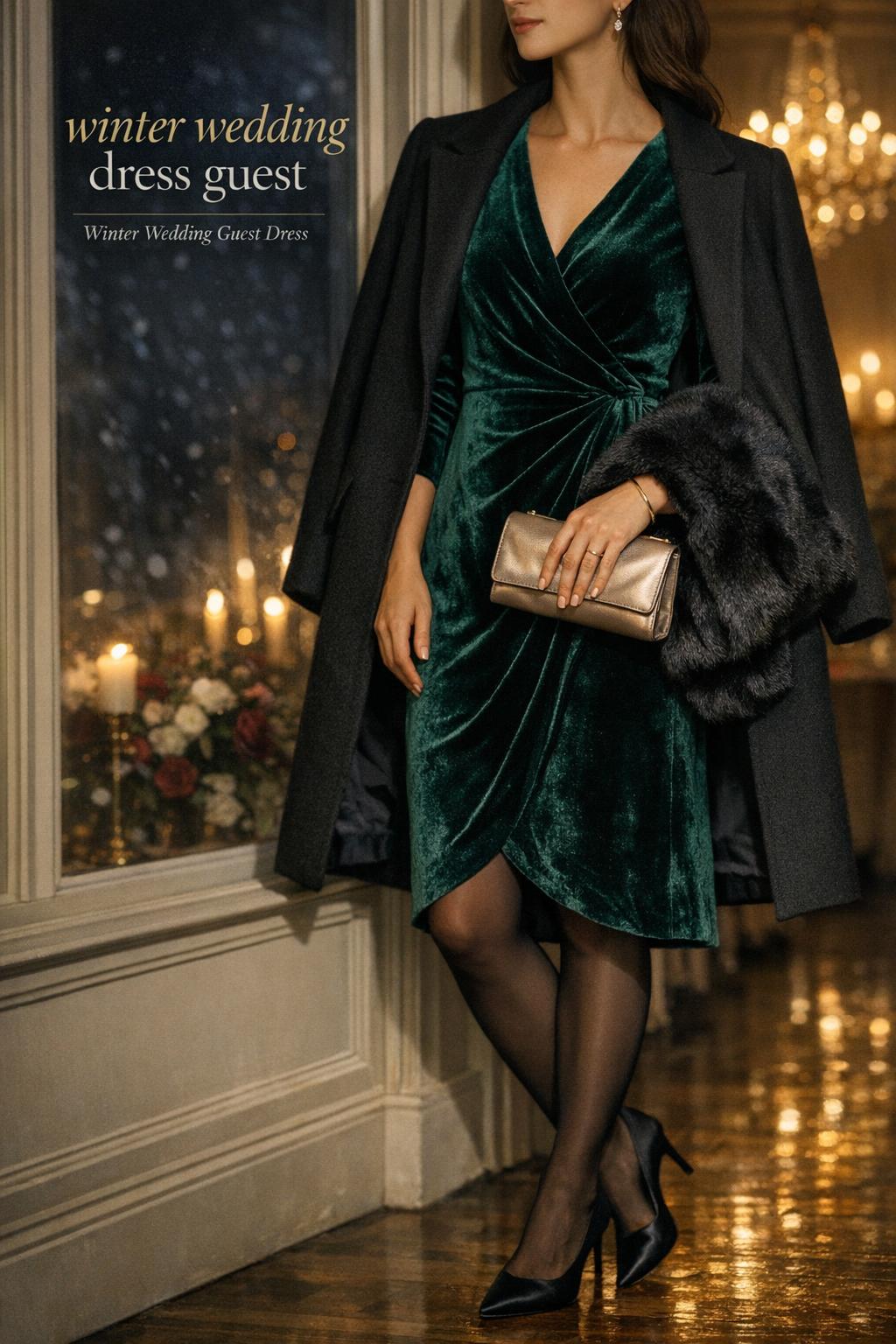
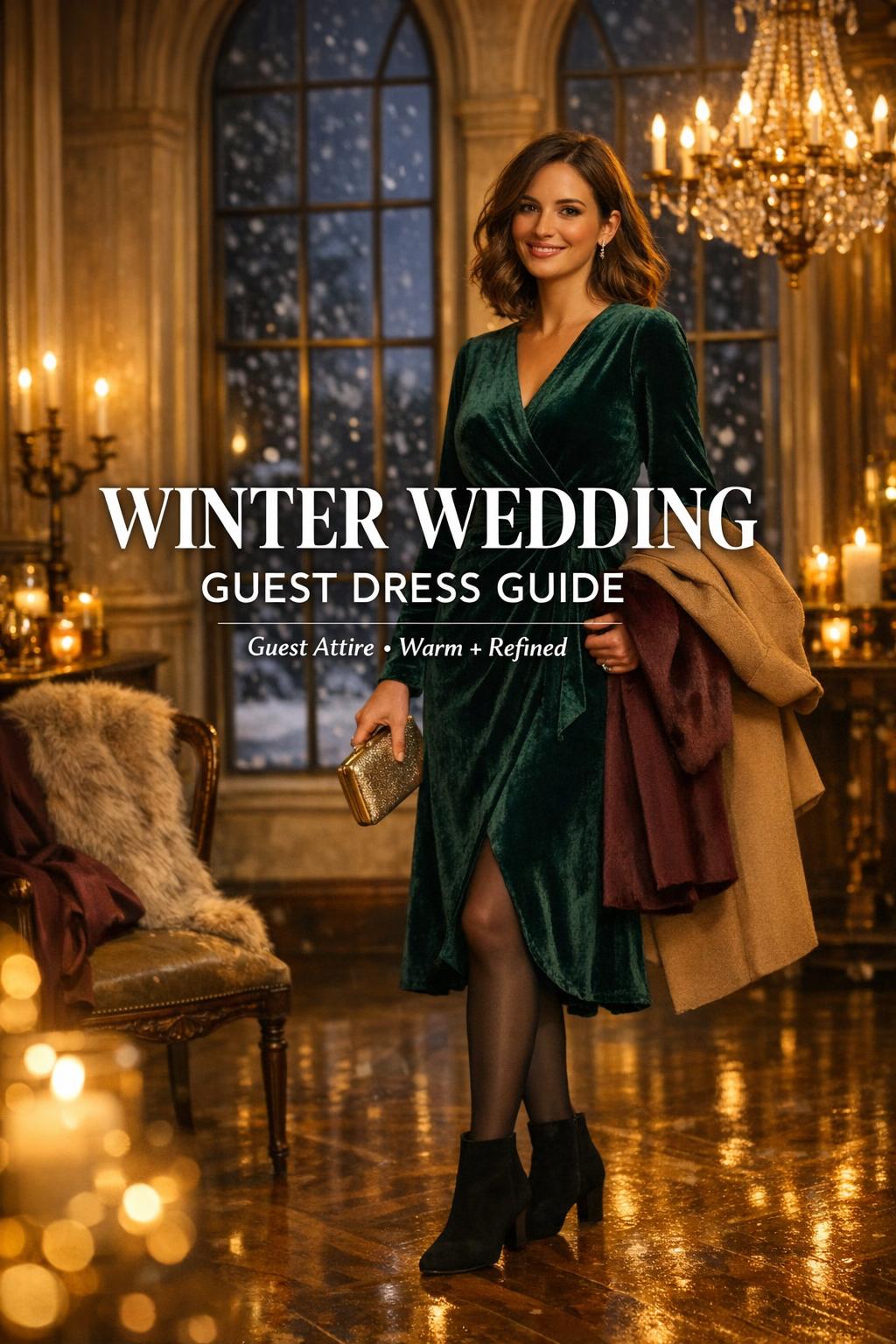
- Velvet dress: pair with a tailored coat for a crisp line, or a faux fur wrap for a more romantic, evening mood.
- Satin or silk dress: a cape or shawl keeps the look fluid, preventing stiff contrast against the fabric’s drape.
- Sequin dress: choose outerwear with a simple silhouette so the sparkle remains the focal point.
Footwear and legwear for winter venues
Winter footwear has to do two jobs: carry you across cold pavement and still look appropriate once you step into the reception. Many guests find that midi lengths make this easier because shoes become part of the styling rather than a hidden compromise. Legwear—especially tights—can be a quiet hero for warmth, but it should be chosen with the same care as jewelry: the finish matters. A thoughtful pairing keeps your wedding attire guest look cohesive from head to toe.
Tips: If you’re wearing a sequin or metallic dress, keep legwear and shoes streamlined so the shimmer reads elegant rather than busy. With velvet, lean into tonal harmony—deep emerald or burgundy velvet looks especially polished with similarly rich, darker accessories.
Accessories that add warmth and keep the look formal
Accessories can solve comfort issues while elevating the outfit. A wrap or shawl provides warmth without requiring a change of dress. Jewelry can reinforce the fabric story: metallic jewelry often echoes sequins or satin sheen, while deeper tones feel natural against velvet. Winter weddings tend to be photographed heavily in indoor light, so accessories that catch subtle highlights can make the entire look feel more considered.
Dress codes in winter: translating the invitation into fabric and length
Dress codes matter year-round, but winter adds nuance. The same cocktail attire guideline can feel different in December than it does in July, simply because the room’s mood is different—darker evenings, more formal venues, and holiday-adjacent celebrations. Understanding how fabric and hemline communicate formality will help you choose a winter wedding guest dress that feels appropriate without feeling overdressed.
Cocktail attire, winter edition
Cocktail attire typically calls for a polished, party-ready dress rather than a full gown. In winter, midi lengths shine for cocktail because they look refined with outerwear and give you flexibility with shoes and legwear. Velvet midi dresses, satin wrap dresses, and sleek sequin styles can all work, depending on the venue. A cocktail attire look feels most modern when it’s intentional about texture—winter is the season where texture does some of the “dressy” work for you.
Black-tie and formal winter weddings
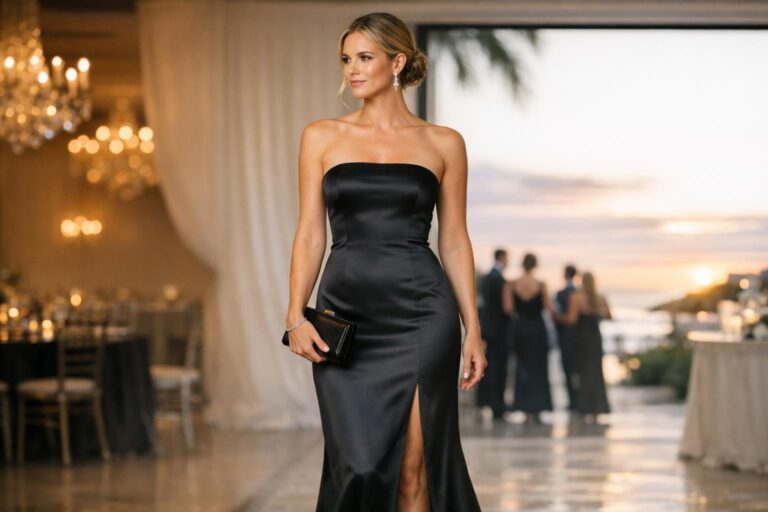
When the invitation leans black-tie, fabric becomes even more important. Velvet gowns feel naturally formal, while satin and silk deliver a more fluid, classic mood—especially for evening receptions. Sequins can fit beautifully in black-tie contexts, but they look best when the silhouette is clean and the styling is disciplined: refined jewelry, minimal competing textures, and outerwear that doesn’t fight the dress’s line.
Color and fabric etiquette: reading the room and the bridal palette
Guests don’t need to match the bridal party, but harmonious color choices can make photos feel cohesive. Deep winter palettes—navy, burgundy, emerald, black, and metallics—tend to complement a wide range of wedding florals and venue aesthetics. If you know the bridal party is wearing a strong color family, consider choosing a tone that coordinates rather than competes. Florals can work as a winter accent when the colors are moody or jewel-toned rather than airy and bright.
Tips: If you’re uncertain, choose a classic winter neutral (navy or black) and let texture do the talking—velvet, satin, or subtle sparkle will keep the look celebratory without risking color clash.
Fabric-focused style moments: winter wedding guest dresses that photograph beautifully
Rather than thinking in terms of one “best” dress, stylists often plan winter guest attire by anchoring the look to a fabric and then selecting a silhouette that suits the venue and dress code. Below are a few fabric-forward directions that consistently work for winter weddings, from intimate indoor ceremonies to grand evening receptions.
Velvet midi dresses for candlelit elegance
Velvet has a way of looking instantly appropriate at winter weddings, particularly in venues that lean romantic: historic halls, softly lit ballrooms, and evening receptions where everything glows a little warmer. A velvet midi dress is especially practical because it balances warmth with movement—long enough to feel seasonally right, short enough to make footwear choices manageable.
Color is where velvet becomes expressive. Emerald velvet feels classic and jewel-like, burgundy reads rich and celebratory, and black velvet is timeless with the right accessories. If you want the look to feel modern, keep the silhouette clean—think a sleek midi line or a wrap detail that defines the waist without adding bulk under outerwear.
Satin and silk: quiet drama for formal receptions
Satin and silk bring a different kind of winter glamour: less texture, more glow. They’re ideal for formal venues where the reception lighting does the work—chandeliers, dimmed ambiance, and a dance floor that keeps the evening moving. A satin wrap dress is one of the most adaptable choices in the category because it allows subtle adjustment through the day and pairs smoothly with wraps, shawls, and capes.
These fabrics do ask for care in styling. Because satin and silk have a reflective surface, they highlight the outfit’s lines and can reveal competing layers. Choose outerwear that glides over the dress rather than gripping it, and keep accessories cohesive—metallic jewelry can echo the sheen, while jewel tones in shoes or a wrap can add depth without overwhelming the look.
Sequins and metallics: festive, but still wedding-appropriate
Winter weddings—especially those near the holidays—often invite a little extra sparkle. Sequins and metallic-thread fabrics can feel perfectly at home in this season’s celebratory atmosphere, as long as the styling is balanced. A silver sequin dress can read chic and modern for cocktail attire; deeper metallics and subtler sparkle can transition smoothly into formal settings.
The refinement lies in restraint. If the dress is doing the shining, keep other choices streamlined: clean outerwear, minimal competing textures, and jewelry that supports rather than duplicates the sparkle. This is one of those moments where winter wedding guest outfits look best when they’re edited, not embellished in every direction.
Long-sleeve dresses that feel intentional, not purely practical
A long-sleeve winter wedding guest dress can be stunning when the sleeve is part of the design story. Long sleeves pair naturally with richer fabrics like velvet and heavier crepe, and they can also elevate sequins—turning sparkle into something more sophisticated and evening-ready. For guests who dislike relying on a shawl, a long sleeve silhouette can feel like the most comfortable path to a polished look.
Pay attention to how sleeves interact with outerwear. A tailored coat can slide smoothly over a slimmer sleeve, while capes and wraps can work with more volume. The goal is to avoid a tug-of-war between dress and coat—comfort matters when the celebration stretches for hours.
The A-line holiday dress question: when it works, and when to rethink it
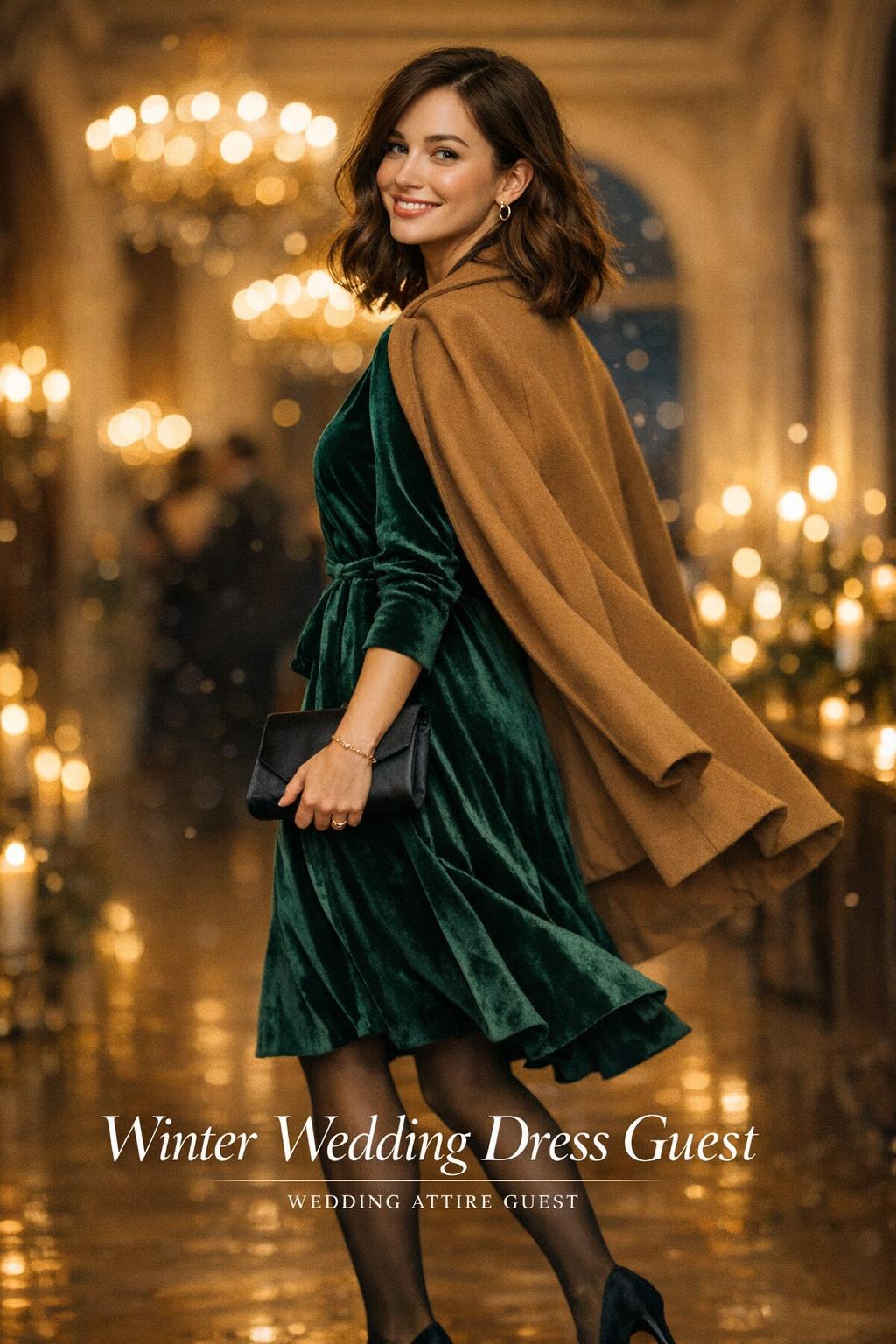
An A line holiday dress can be a beautiful choice for a winter wedding because the silhouette is inherently flattering and easy to move in—ideal for long ceremonies, seated dinners, and dancing. The gentle structure of an A-line also layers well under coats and capes, and it can feel subtly bridal-adjacent in a romantic way without pulling focus.
Where guests sometimes misstep is choosing an A-line that reads “holiday party” rather than “wedding.” The difference often comes down to fabric and finish. Velvet, satin, silk, sequins, and heavier crepe tend to read wedding-ready, while overly casual materials can dull the look. Color matters too: jewel tones and refined metallics generally feel appropriate, while overly thematic holiday palettes can feel less aligned with the wedding’s aesthetic unless the invitation clearly signals that vibe.
Tips: If you love the A-line shape but want it to look more formal, look for a midi length with a defined waist and a fabric with depth. Then choose one statement element—either a bold earring with satin, or a refined wrap with velvet—so the styling feels curated rather than festive-chaotic.
Brand pathways: where to start shopping, depending on your priorities
Winter wedding guest dress shopping tends to fall into two lanes: you either want a specific aesthetic (velvet, satin, sequin, long-sleeve) or you want a price tier and fit approach that makes decision-making easier. A few widely recognized names come up repeatedly in winter wedding guest dress conversations, spanning contemporary mid-market to value-focused collections.
Contemporary favorites for polished winter wedding guest dresses
If your priority is a fashion-forward silhouette or a romantic editorial feel, brands like BHLDN and Reformation often enter the conversation, as do Anthropologie’s wedding line references to Bhldn. These names are frequently associated with event dressing and can be a useful starting point when you’re looking for a specific mood—velvet in jewel tones, satin with elegant drape, or dresses that feel styled rather than purely utilitarian.
One practical approach: choose your venue and dress code first, then use these brands as a visual direction. A satin wrap dress or a velvet midi can shift from cocktail attire to formal with the right accessories and outerwear, so you’re not locked into a single-use purchase.
Accessible, event-ready options for budget and variety
For guests who want broad selection—different sleeve options, lengths, and silhouettes—without overcomplicating the search, collections from Windsor, Ever-Pretty, and JJ’s House are common reference points. These brands are frequently associated with event dressing, including winter wedding guest dresses that emphasize long sleeves, wrap shapes, and maxi options that feel naturally aligned with cold-weather formality.
When you’re shopping value-focused collections, the styling decisions matter even more. A simple dress can look elevated with the right fabric choice and well-planned accessories, while a highly embellished dress can look less refined if outerwear and jewelry compete. Think of your purchase as the base layer of a complete guest attire plan.
Real-world winter wedding scenarios: styling by venue, not just by trend
Two guests can wear the same dress and have completely different experiences depending on the venue and the region. The most memorable winter wedding guest outfits are the ones that anticipate the day’s rhythm: arrival in the cold, a ceremony that may be drafty even indoors, photos outside, then hours of dining and dancing. Planning for those transitions is what makes an outfit feel effortless.
Indoor ceremony, cold climate: the “beautiful coat” strategy
In colder regions, even indoor venues can mean chilly entrances, long walks from parking, and outdoor photo moments. This is where a strong coat earns its place as part of the wedding attire guest look. A velvet midi dress paired with a tailored coat feels timeless; a satin dress with a cape or shawl keeps the line romantic. If the reception is candlelit and formal, jewel tones and metallics feel especially harmonious.
Outdoor moments (photos, ceremony elements): the wrap and shawl approach
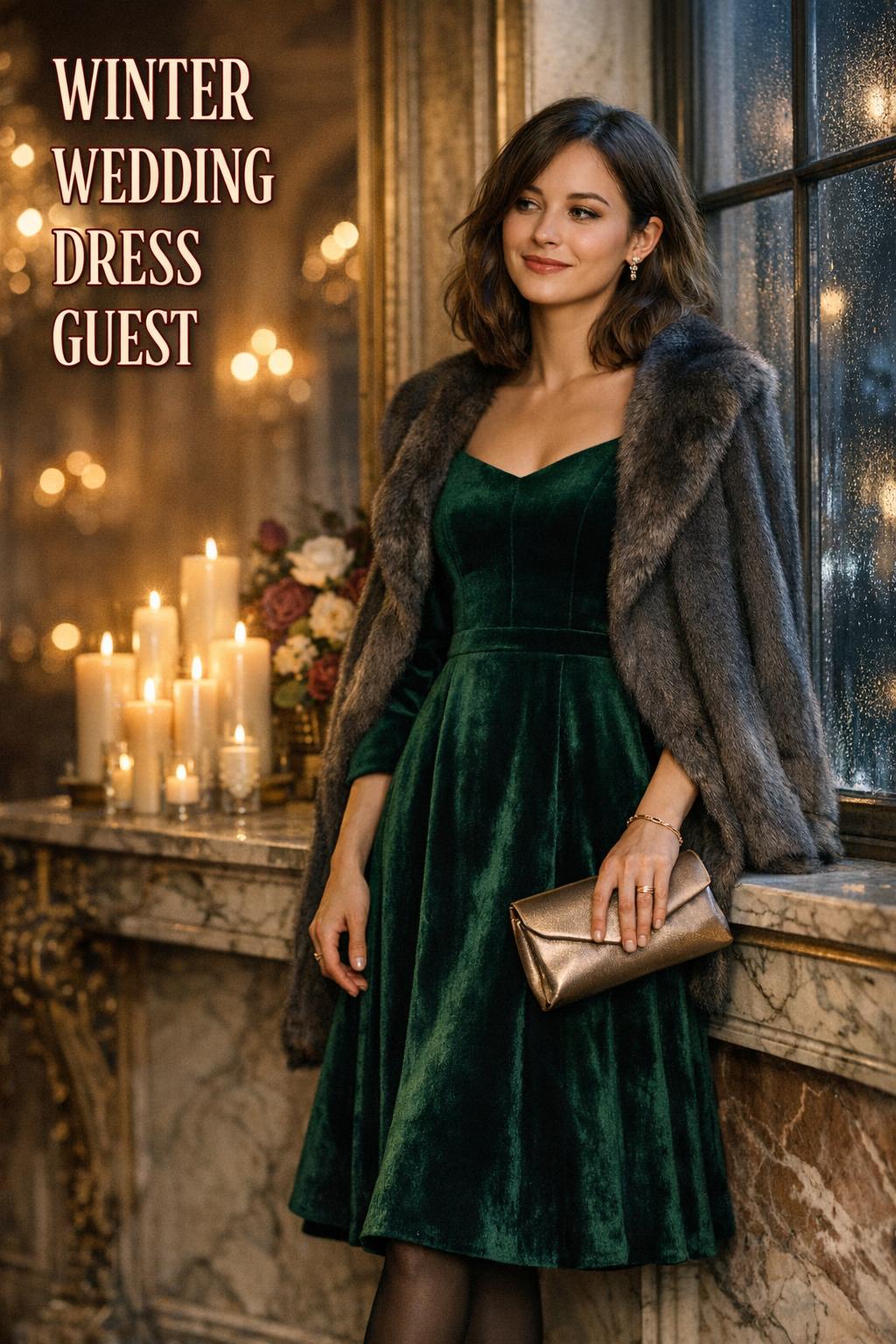
Even when the ceremony is indoors, winter weddings often include outdoor photos—those crisp, cinematic shots that look stunning but feel brief and cold. Wraps and shawls are practical here because they’re easy to remove once you’re back inside, and they don’t change the dress’s silhouette the way a bulky layer can. Faux fur is a classic option in this category, especially when the dress is streamlined and formal.
Destination winter weddings and mild regions: winter textures without the heaviness
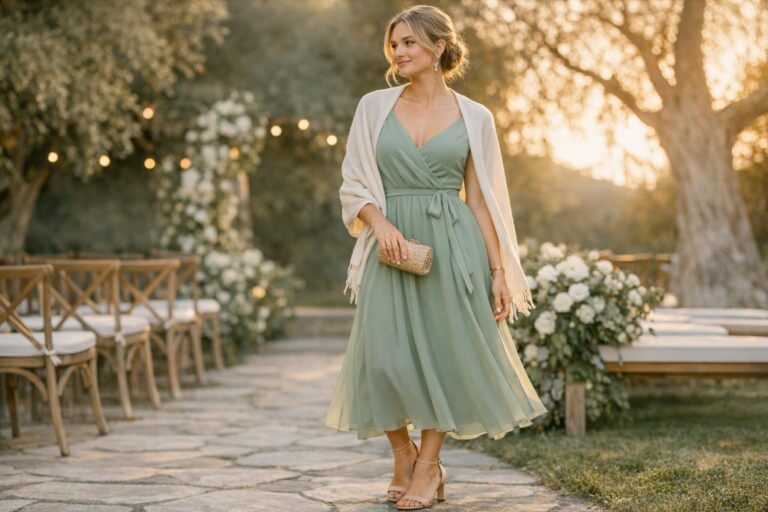
Not every winter wedding happens in deep cold. For milder regions—coastal settings, warmer winter destinations, or climates where evenings are cool rather than freezing—winter textures can still set the mood without requiring heavy layering. Satin and silk can feel ideal here because they read elegant in evening light without adding too much warmth. A sequin dress can also be perfect for a festive destination reception, especially when styled with a light wrap that suits the venue’s atmosphere.
Common winter wedding guest styling mistakes (and how to avoid them)
Winter wedding guest dressing often goes wrong in predictable ways—not because the dress is wrong, but because the overall system wasn’t planned. Small miscalculations can lead to discomfort, constant adjusting, or an outfit that looks disjointed between the ceremony and reception.
- Choosing a dress without a plan for outerwear: if your coat clashes with the dress, the first hour of the wedding (arrivals, greetings, photos) won’t feel cohesive.
- Ignoring how fabric behaves under layers: satin and silk can catch and crease under heavy coats; smoother outerwear and wraps tend to pair better.
- Over-styling sequins: sparkle looks most refined when other elements—shoes, jewelry, wrap—stay edited.
- Picking a hemline that fights the venue: midi and maxi lengths are popular in winter for good reason; they tend to read seasonally appropriate and accommodate footwear choices.
- Forgetting comfort over a long timeline: winter weddings often include extended indoor time; a wrap dress or an A-line silhouette can feel more forgiving from ceremony to dance floor.
Tips: Before you commit to a dress, picture three specific moments: arriving at the venue, sitting through the ceremony, and stepping onto the dance floor. If your choice works in all three, you’re likely on the right track.
Practical styling guide: finishing touches that make the outfit feel wedding-ready
The finishing details are where winter wedding guest dresses become wedding guest looks rather than simply “a nice dress.” Accessories and grooming should reinforce the fabric story and the formality level, not compete with them. If your dress is velvet, lean into rich tones and tactile contrast; if it’s satin or silk, keep the lines clean and the shine intentional; if it’s sequin, let the dress be the focal point.
Jewelry and metallic tones: matching the mood of the fabric
Metallic jewelry pairs naturally with satin, silk, and sequins because it echoes their light-catching qualities. With velvet, jewelry can either blend (deep-toned stones and darker metals) or create contrast (brighter metallics), depending on how dramatic you want the look to feel. If your dress already has sparkle, reduce competing shine and choose one focal point—earrings or a necklace, not both.
Coordinating with bridal party color palettes without disappearing into the background
Coordination isn’t about matching exactly; it’s about avoiding discord. If the bridal party palette is unknown, jewel tones and winter neutrals are safe and sophisticated. If you do know the palette, choose a complementary tone that doesn’t read like you’re trying to join the wedding party. Texture can be your differentiator: a velvet version of a similar color family can feel distinct from a bridesmaid fabric choice, and a satin wrap dress can feel more guest-like when styled with a wrap or cape.
Putting it all together: a stylist’s checklist for winter wedding guest attire
A winter wedding guest dress decision becomes easier when you treat it like a complete outfit plan instead of a single purchase. Use this as a final pass before the event so you’re not troubleshooting on the wedding day.
- Confirm the dress code (cocktail attire vs black-tie) and choose fabric accordingly: velvet, satin/silk, sequins, or heavy crepe.
- Select a silhouette that can handle layering: midi, wrap, A-line, long sleeve, or a streamlined maxi.
- Choose a winter-friendly palette: emerald, burgundy, navy, black, metallics, or moody florals.
- Plan outerwear as part of the outfit: coat, cape, wrap, shawl, or faux fur.
- Decide on footwear and legwear early so hemline decisions are effortless.
- Edit accessories so one element leads and the rest supports.
When you approach guest attire this way, the result feels intentional—romantic in photographs, comfortable through the celebration, and unmistakably appropriate for a winter wedding.
FAQ
What is the best fabric for a winter wedding guest dress?
Velvet is a classic choice because it feels warm, formal, and richly textured, but satin, silk, sequins, and heavier crepe are also excellent for winter weddings when matched to the dress code and venue mood.
Can I wear a sequin dress to a winter wedding?
Yes—sequins and metallic finishes are especially fitting for winter weddings and holiday-adjacent celebrations; keep the rest of your styling edited with simple outerwear and restrained jewelry so the look stays wedding-appropriate.
What does cocktail attire mean for a winter wedding?
Cocktail attire in winter typically points to polished party dressing—often a midi dress in velvet, satin, or subtle sparkle—styled with intentional outerwear like a wrap, cape, or tailored coat to stay refined from arrival through reception.
Are midi dresses appropriate for winter wedding guest attire?
Yes, midi length is one of the most reliable winter choices because it looks formal, layers well with coats and wraps, and makes footwear and legwear decisions easier than very short or very long hemlines.
How do I stay warm without covering my whole outfit?
Plan warmth as part of the look by choosing a winter-friendly fabric and adding a wrap, shawl, cape, or faux fur layer that complements the dress, rather than relying on bulky outerwear that competes with the silhouette.
Which colors are best for a winter wedding dress guest look?
Jewel tones like emerald and burgundy, winter neutrals like navy and black, and metallics tend to photograph beautifully in winter light and feel naturally aligned with the season’s more formal atmosphere.
Can I wear florals to a winter wedding?
Florals can work in winter when the palette feels seasonally grounded—think deeper, moodier tones rather than bright springlike colors—so the print reads romantic and appropriate for cold-weather celebrations.
Where can I shop for winter wedding guest dresses at different price points?
For contemporary event dressing, BHLDN, Reformation, and Anthropologie’s wedding line references to Bhldn are common starting points, while Windsor, Ever-Pretty, and JJ’s House are frequently associated with accessible collections that include long-sleeve, wrap, midi, and maxi options.