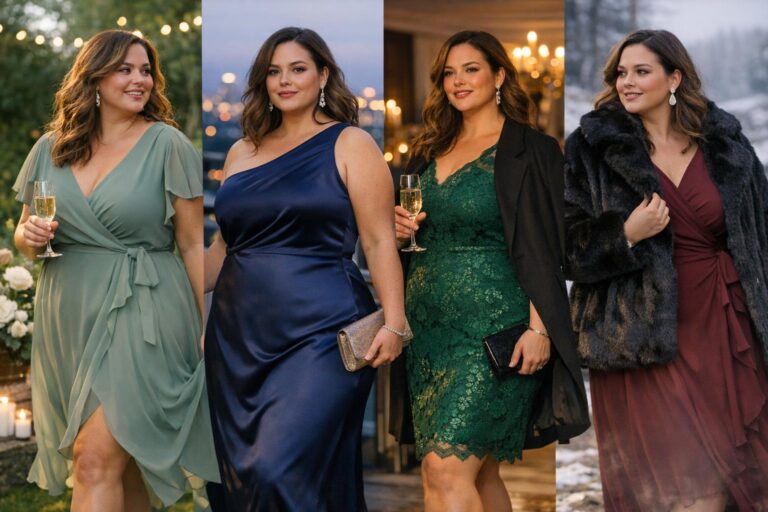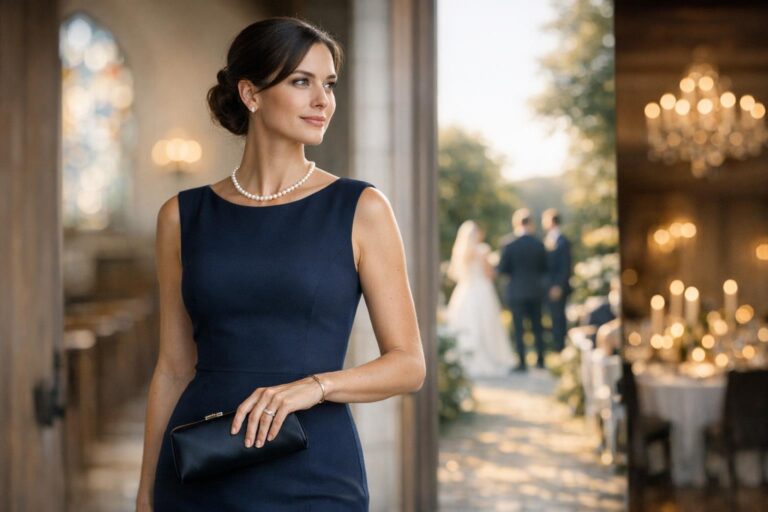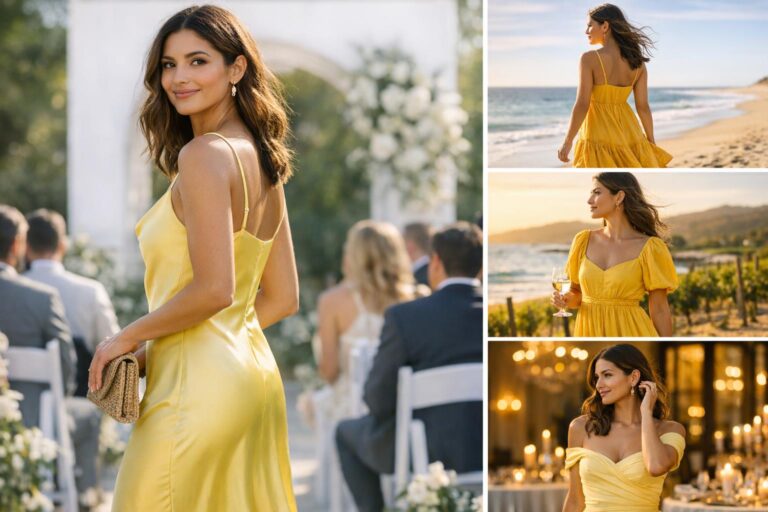
Navy Blue Wedding Guest Dress Ideas for Every Venue, Day to Night
There’s a particular moment on the wedding-guest calendar when navy becomes the quiet hero: you’ve RSVP’d to a ceremony that leans formal, the venue lighting will be flattering but unforgiving, and you want something timeless without drifting into “too bridal” territory. In that space, the navy blue wedding guest dress sits with rare confidence—polished, understated, and undeniably occasion-ready.
Yet navy often gets lumped in with other “blue” choices, and the styling conversations can blur quickly: Is it the same mood as brighter blue wedding guest dresses? Does satin material make navy look more formal, or more night-out? And where do event-adjacent categories like grad dresses or a one shoulder wedding guest dress fit into the picture?
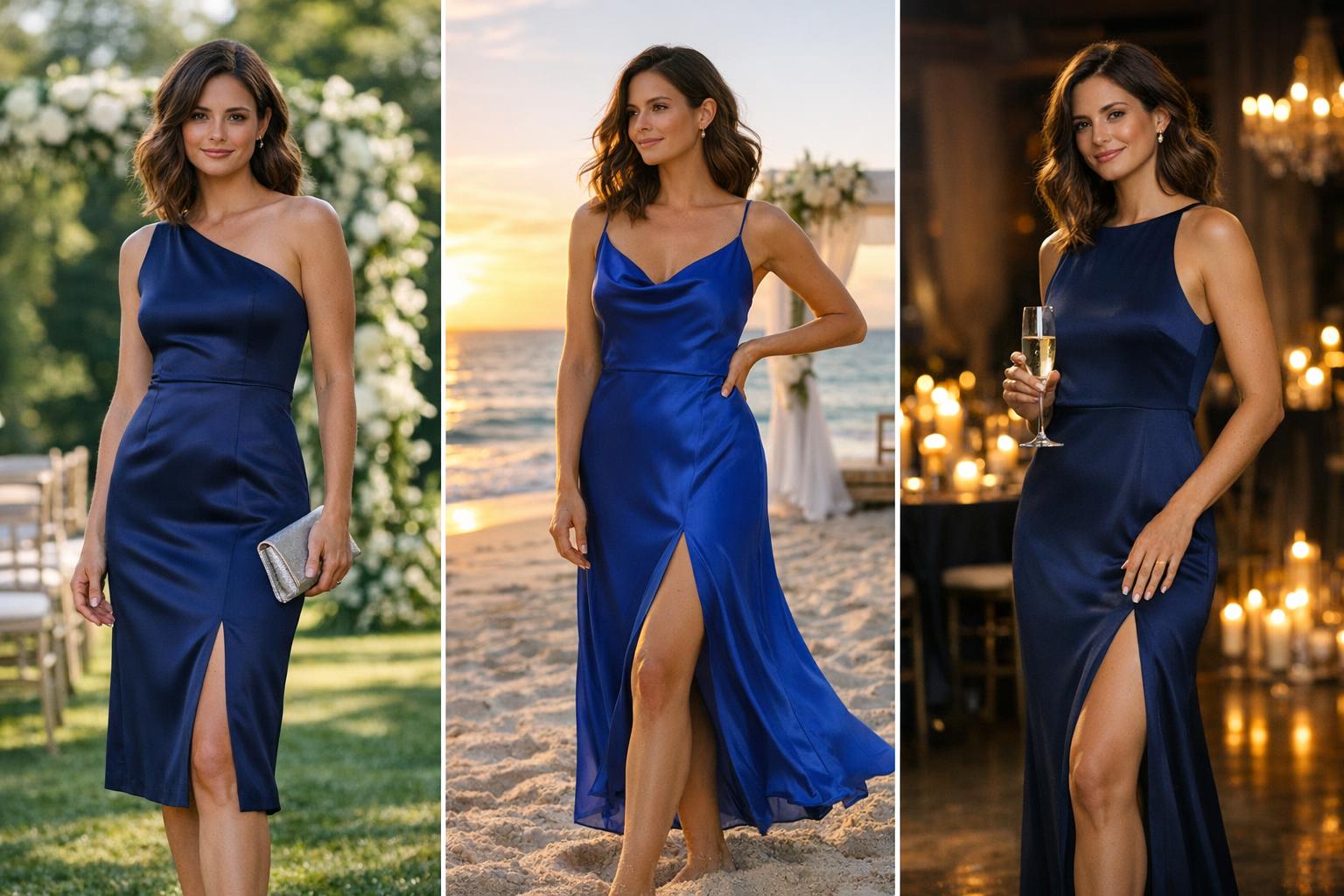
This editorial breaks down two common styling approaches that regularly orbit the navy blue wedding guest dress: a classic, structured navy approach versus a more trend-led “blue-forward” approach (including brighter blues and statement silhouettes). You’ll see how these aesthetics differ in silhouette, fabric behavior, and formality—and how to choose between them for garden vows, beachfront ceremonies, and candlelit receptions without second-guessing your look.
Style overview: The classic navy wedding guest dress (timeless, refined, quietly formal)
The classic navy approach prioritizes elegance that reads instantly “wedding appropriate” across dress codes. Think clean lines, controlled drape, and minimal distractions—an outfit that looks impeccable in photos, sits comfortably through a long ceremony, and still feels elevated once the reception lights dim.
Your wedding look is only the beginning.
Keep your guest list, vendors, timeline, and every important detail together with Zarellea — so your day feels as considered as your style.
- Defining characteristics: restrained details, refined finish, a sense of tailored calm
- Typical silhouettes: midi or maxi lengths; column shapes; gently structured bodices; subtle movement at the hem
- Color palette: navy as the anchor—deep, inky, and intentionally understated
- Fabrics and textures: satin material is common here for its sheen and evening energy, but this style can also lean into matte textures when the setting calls for softness
- Aesthetic mood: composed, romantic in an editorial way, never loud
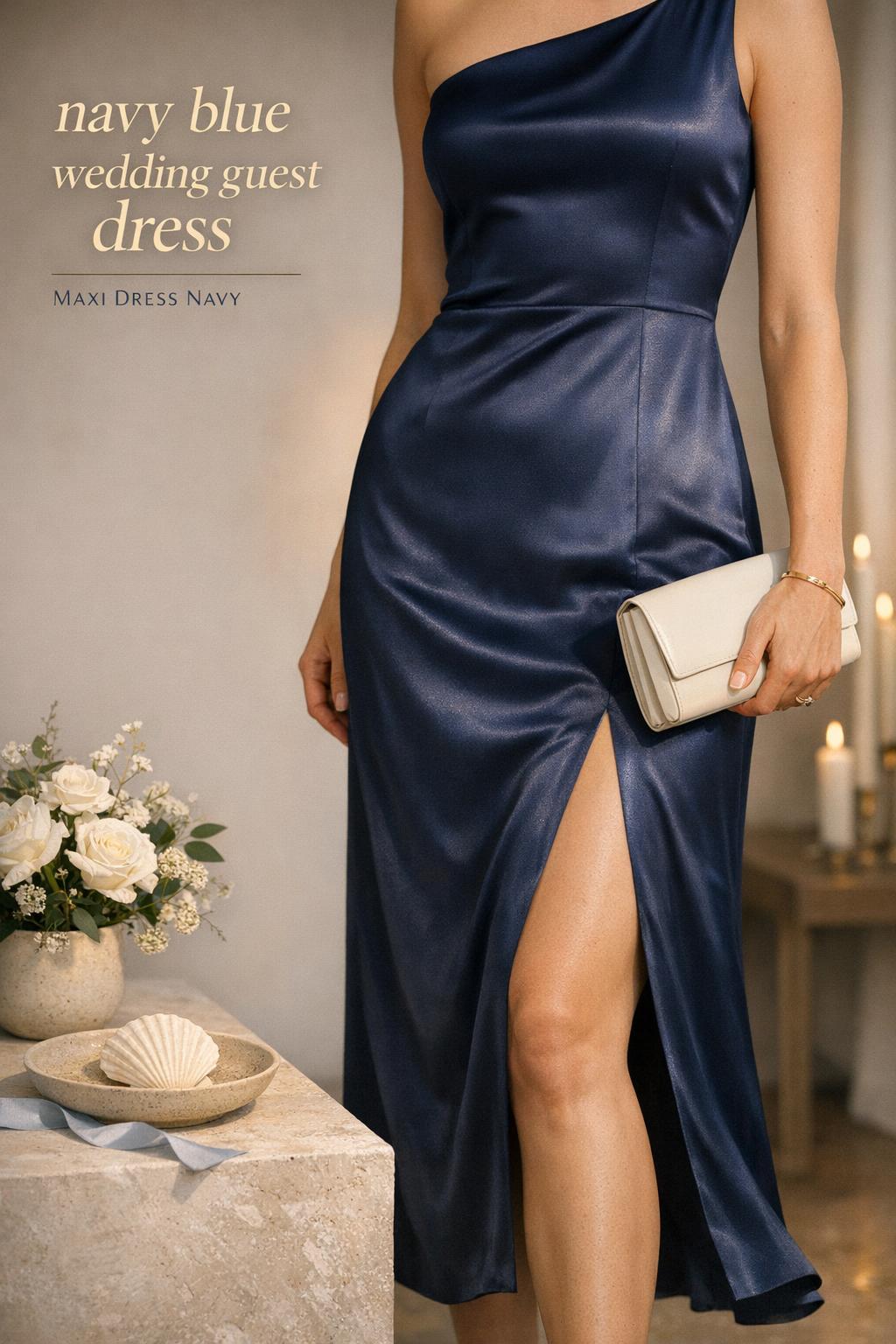
Within this aesthetic, a maxi dress navy can feel especially “destination-ready” if the cut is fluid and the bodice is secure. The key is that everything about the look implies confidence: you’re dressed for a wedding, not dressed like you’re trying to steal the room.
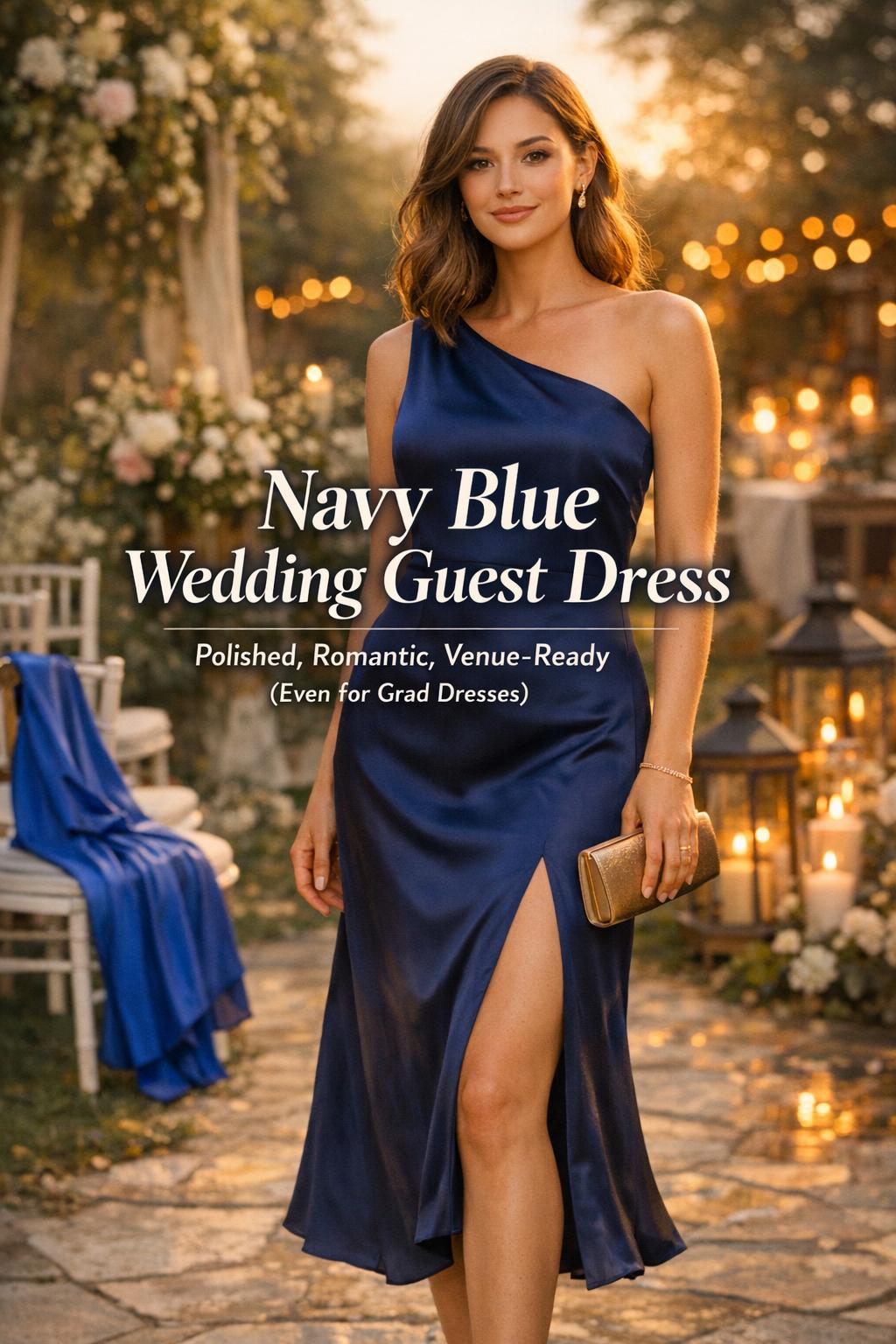
Style overview: The blue-forward wedding guest look (statement silhouettes, brighter blues, modern edge)
The blue-forward approach treats “blue” as a spectrum rather than a single tone. It often overlaps with the energy of grad dresses—more trend-responsive, more dramatic in proportion, and more comfortable with a visible “moment” in the design.
- Defining characteristics: bolder lines, intentional asymmetry, fashion-forward proportions
- Typical silhouettes: statement necklines (including a one shoulder wedding guest dress), higher slits, more pronounced volume or body-skimming shapes
- Color palette: navy may still appear, but it shares space with brighter blue wedding guest dresses that read fresher, lighter, or more playful depending on lighting
- Fabrics and textures: satin material is frequently chosen to amplify color and highlight shape, especially in asymmetrical cuts
- Aesthetic mood: modern, celebratory, slightly bolder—particularly suited to contemporary venues and evening receptions
This style is often discussed alongside the navy blue wedding guest dress because both can feel “safe” in the sense that blue is generally elegant and photo-friendly. But the intention is different: navy classic aims to blend seamlessly into the occasion; blue-forward styling aims to contribute visible fashion energy.
The key differences that change the entire impression
Silhouette and structure: controlled polish vs deliberate drama
Classic navy tends to favor silhouettes that hold their shape without demanding attention—clean columns, softly fitted bodices, or a maxi dress navy that moves in a restrained, elegant way. The blue-forward camp is more comfortable with statement construction: an asymmetrical neckline, a pronounced slit, or a one shoulder wedding guest dress that turns the upper body into the focal point. Both can be formal; the difference is how much the silhouette “speaks” before you do.
Color strategy: navy as a neutral vs blue as a feature
Navy functions like an occasion-neutral in the classic approach—similar in practicality to black, but softer in mood and often more wedding-friendly in photographs. In the blue-forward approach, blue is treated as a feature color. Brighter blue wedding guest dresses can feel more daytime-appropriate in outdoor light, while still looking festive under reception lighting. If you’re deciding between navy and a more vivid blue, ask yourself whether you want your color to whisper (navy) or to be noticed (brighter blue).
Fabric behavior: what satin material actually does to “blue”
Satin material changes the conversation because it amplifies both color and shape. In navy, satin reads luxurious and evening-leaning, with highlights that can make a simple silhouette feel intentional and expensive. In brighter blue wedding guest dresses, satin can push the look more playful—or more dramatic—depending on the cut. The trade-off is practical: satin shows creasing more readily and can spotlight fit details, so the more trend-led the silhouette, the more important clean tailoring becomes.
Formality cues: timeless wedding guest vs event-flexible statement
A navy blue wedding guest dress in a classic silhouette often feels naturally aligned with semi-formal to formal settings, particularly when the hemline is midi or maxi and the fabric has a refined finish. Blue-forward looks can be just as formal, but their “event flexibility” can skew perception—especially if the silhouette resembles grad dresses or evening partywear. The goal isn’t to avoid statement design; it’s to ensure the statement still reads “wedding guest” rather than “prom night” in context.
Visual style breakdown: how these looks appear in real wedding settings
Picture a late-afternoon ceremony with golden-hour light: navy classic looks almost architectural—clean lines against soft scenery—while a brighter blue or one-shoulder silhouette catches the sun and turns more reflective, more “fashion editorial.” The difference isn’t just color; it’s how the outfit interacts with light, movement, and the pace of the day.
Layering approach: quiet finishing pieces vs intentional styling statements
Classic navy tends to layer minimally, choosing one refined topper if needed and letting the dress carry the look. Blue-forward styling often treats layering as part of the moment—more deliberate contrasts, more emphasis on the neckline, and more attention to how outerwear frames an asymmetrical cut like a one shoulder wedding guest dress.
Proportions: long lines vs focal-point dressing
A maxi dress navy in the classic lane usually elongates the body with uninterrupted lines, keeping the eye moving smoothly from neckline to hem. The blue-forward lane often creates focal points: one shoulder, a high slit, or a strategic cut that draws attention to the upper body. Neither is “better,” but they photograph differently—especially in candid dancing shots and seated dinner moments.
Accessories and footwear: subtle elegance vs modern punctuation
Classic navy styling usually prefers accessories that refine rather than compete, maintaining a cohesive, formal impression. Blue-forward styling is more open to punctuation—shapes and finishes that feel intentionally modern. This is where the grad dresses overlap can sneak in: if accessories feel too playful or too youthful, the overall read may drift away from wedding guest elegance. Balance is the difference-maker.
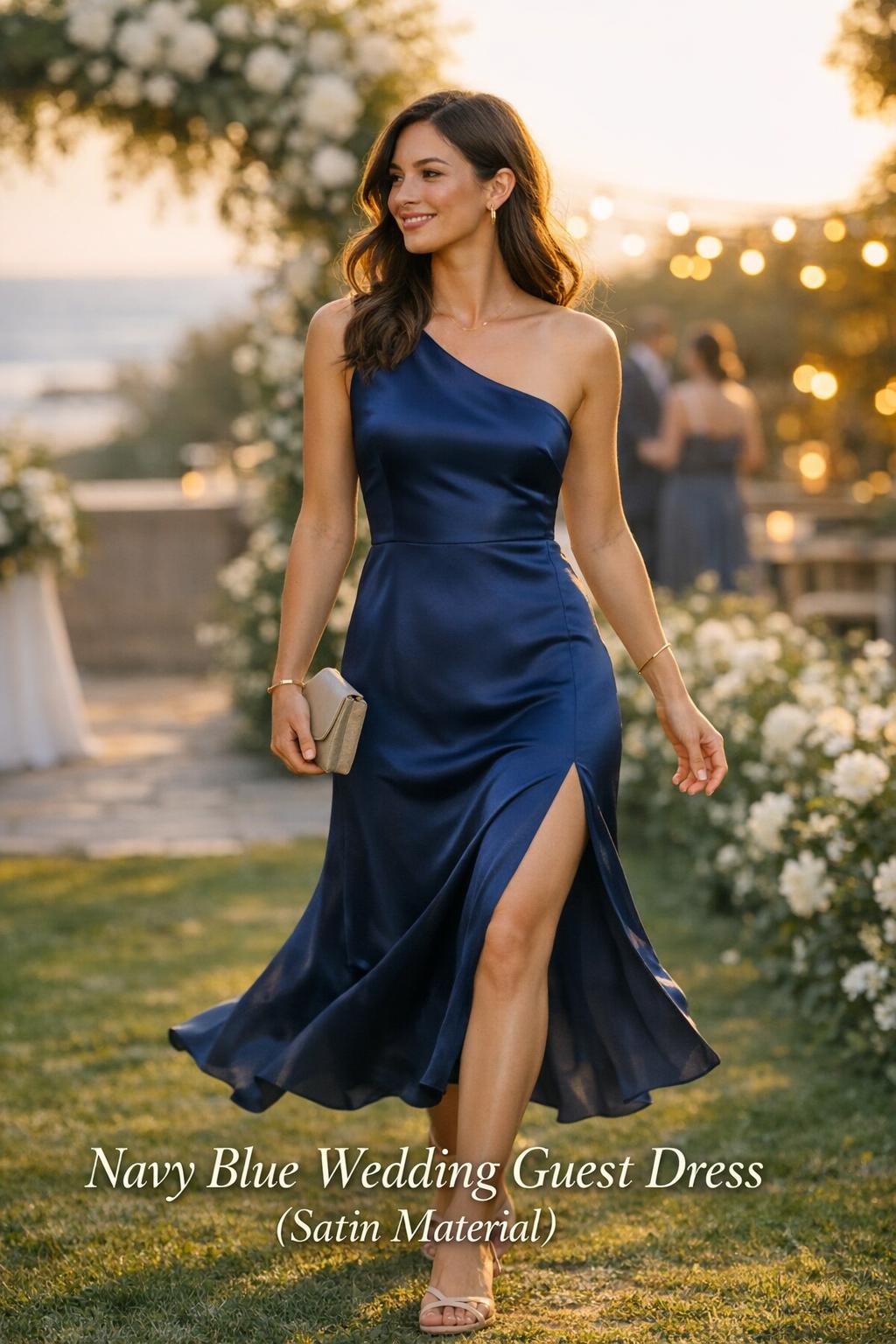
Outfit comparisons: the same wedding, two different styling philosophies
Example comparison: garden ceremony with a relaxed dress code
Classic navy interpretation: a navy blue wedding guest dress in a fluid midi or maxi dress navy silhouette, with the focus on graceful movement as you walk across grass and mingle at cocktail hour. The styling logic is restraint: the dress looks romantic in daylight, and navy reads grounded against florals and greenery.
Blue-forward interpretation: brighter blue wedding guest dresses shine here because outdoor light makes blue feel fresh rather than heavy. A one shoulder wedding guest dress can look especially modern in a garden setting—clean neckline, a little asymmetry, and a shape that feels intentional without needing heavy embellishment.
Example comparison: beach ceremony into a sunset reception
Classic navy interpretation: a long, airy maxi dress navy that moves easily in ocean breeze and stays elegant when sand and salt air are part of the evening. Navy looks sophisticated at sunset, and a simpler silhouette keeps the outfit from feeling weighed down by the environment.
Blue-forward interpretation: a blue-forward look leans into the “vacation energy” of the setting—blue wedding guest dresses that feel brighter can echo the sky and water in a way that reads celebratory. Satin material can be striking at golden hour, but the practical styling consideration is comfort: satin clings more in humidity and shows creases, so the cut needs to allow movement and easy sitting.
Example comparison: formal evening reception with candlelit tables
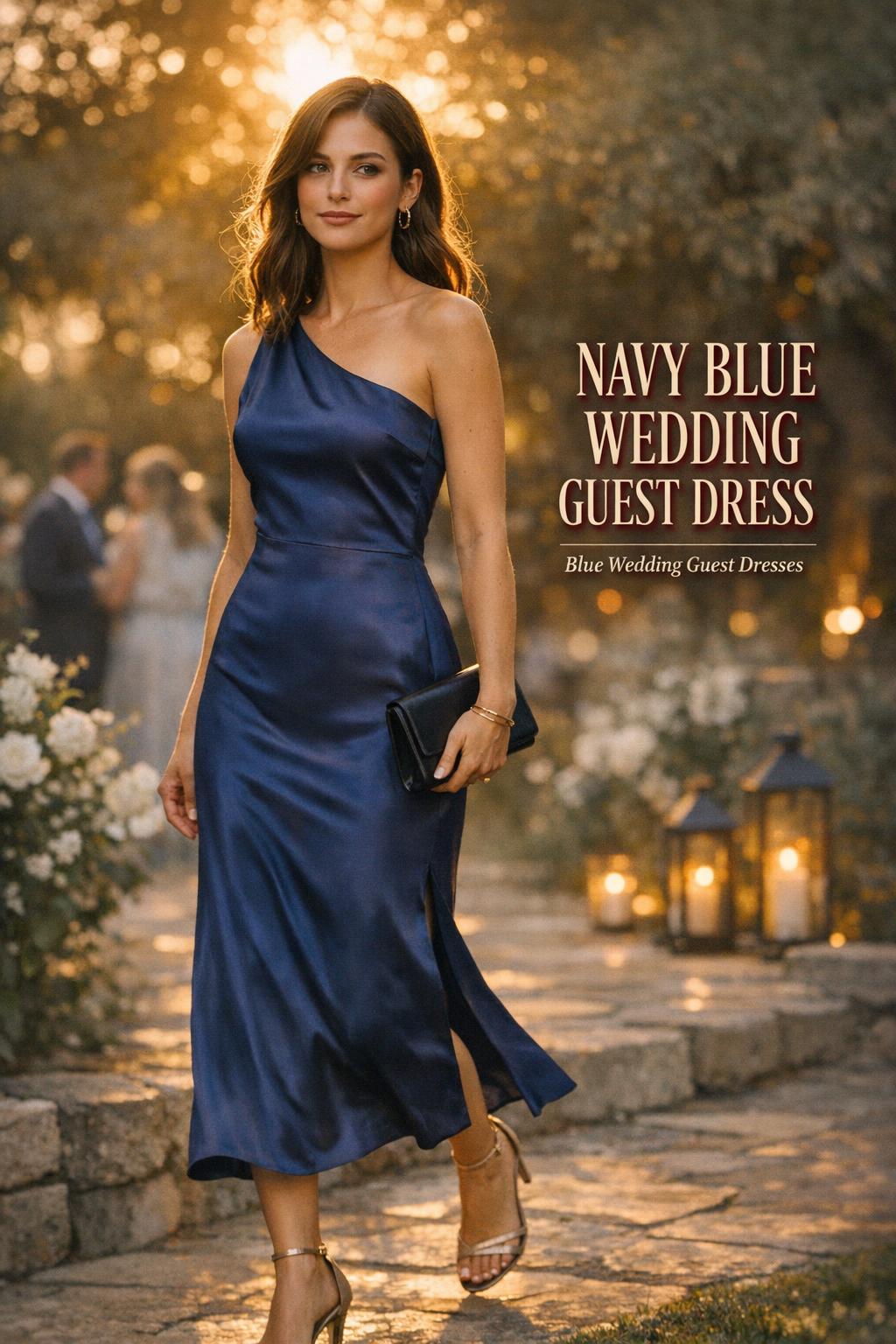
Classic navy interpretation: this is where satin material and navy become an effortless pairing—navy turns rich under dim lighting, and satin highlights create that “evening glow” without relying on sparkle. The overall impression is confident and composed, like you understood the dress code intuitively.
Blue-forward interpretation: evening is also the moment for stronger silhouettes. A one shoulder wedding guest dress can look sculptural under reception light, especially if the fit is precise and the fabric has a polished finish. The goal is not to outshine; it’s to look modern and intentional in a room full of formalwear.
The satin question: when satin material elevates navy—and when it complicates it
Satin material is often treated like an automatic upgrade, but the real story is how it behaves across a long wedding day. Satin reflects light, reveals texture, and can make color appear deeper or brighter depending on the setting. In navy, that reflection can be beautiful: it brings dimension to an otherwise minimal palette and reads instantly formal.
The complication is wearability. A wedding day involves sitting through vows, hugging relatives, stepping into photo lines, and dancing for hours. Satin can crease and show pressure marks, so the more fitted the silhouette, the more you’ll want to consider structure, comfort, and how the dress moves when you sit. This is one reason classic silhouettes and satin pair so well: the simpler the line, the less you’re asking the fabric to do.
Tips: making satin feel effortless at a wedding
- Prioritize a secure bodice, especially in a one shoulder wedding guest dress, so you’re not adjusting all night.
- Choose a silhouette with enough ease to sit, eat, and dance; a graceful line looks more expensive than constant tugging.
- Think about lighting: satin in navy looks richer as the evening darkens, while brighter blue wedding guest dresses can look more reflective in direct daylight.
Where “grad dresses” influence wedding guest style (and how to keep it wedding-appropriate)
Grad dresses and wedding guest dresses can overlap in silhouette—sleek satin, asymmetrical necklines, fitted bodices, and dramatic hems. The overlap isn’t inherently wrong; it’s simply a styling crosscurrent that’s especially noticeable in blue-forward looks. A brighter blue, a high-shine satin, and a dramatic cut can quickly push the outfit into a youthful “main event” vibe rather than a guest role.
The wedding-appropriate adjustment is usually subtle. In practice, it’s about choosing one statement element rather than stacking several: if you go for satin material, keep the silhouette cleaner; if you choose a one shoulder wedding guest dress, consider a more controlled hemline; if you love brighter blue wedding guest dresses, let the color be the statement and keep the rest composed.
Tips: the wedding guest filter for trend-led dresses
Before committing, imagine the full day: standing during the ceremony, moving through cocktail hour, sitting at dinner, and being photographed under mixed lighting. If the dress feels like it’s designed primarily for a short, high-energy event, it may need more grounding—through a more classic shade like navy, a less revealing cut, or a calmer styling approach.
Choosing between classic navy and blue-forward styling by venue and season
Wedding styling is rarely about the dress alone; it’s about the environment the dress will live in for eight hours. Navy is famously adaptable, but the choice between classic navy and blue-forward styling becomes clearer when you anchor it to venue mood and practical conditions.
Ballroom and black-tie-leaning spaces
Classic navy typically wins here, especially in satin material or a refined finish. A navy blue wedding guest dress reads formal without feeling severe, and a maxi dress navy can feel especially aligned with grand architecture and evening lighting. Blue-forward choices can still work, but they benefit from restraint—one strong design feature, not a collection of them.
Vineyard, countryside, and rustic-romantic venues
Both aesthetics can succeed, but the mood matters. Classic navy feels grounded and timeless against natural textures. Blue-forward looks—particularly brighter blue wedding guest dresses—can feel joyful in open landscapes, especially if the silhouette is breathable and the styling remains polished rather than overly playful.
Destination weddings and travel-heavy weekends
Travel introduces wrinkles, packed suitcases, and quick changes. In this context, consider how your chosen fabric and silhouette perform. Satin material can look spectacular but requires more care; a simpler navy silhouette can be easier to manage while still photographing beautifully. If you’re drawn to a one shoulder wedding guest dress, think about how you’ll pack it and whether it needs more attention to keep its shape.
A stylist’s note on “navy as neutral”: why it’s so easy to get right
Navy behaves like a neutral in a guest wardrobe because it balances seriousness with romance. It reads refined in photos, it doesn’t compete with wedding florals, and it transitions smoothly from day to night. This is why the navy blue wedding guest dress remains a consistent recommendation in occasion dressing: it’s adaptable across settings without requiring you to reinvent your personal style.
That said, “easy to get right” doesn’t mean every navy dress is automatically correct. The details—fabric shine, neckline drama, hemline length—shift the message. A maxi dress navy in satin material reads very differently from a simpler matte navy dress, and a one shoulder wedding guest dress changes the focal point of the outfit immediately. The most elegant wedding guest looks are the ones where the dress, venue, and dress code appear to be in conversation.
Common styling mistakes with a navy blue wedding guest dress
Navy is forgiving, but a few predictable missteps can make a carefully chosen dress feel less intentional. Most of these issues show up only after you’re already at the wedding—when you’re sitting, moving, and being photographed—so it’s worth catching them early.
- Overcomplicating the look: navy shines when the styling is coherent. Too many competing elements can flatten the elegance that navy naturally brings.
- Choosing satin material without considering the day’s rhythm: if you’ll be seated often or traveling to the venue, plan for how satin creases and reflects light.
- Letting a trend silhouette override comfort: a one shoulder wedding guest dress should feel secure from the first toast to the last dance.
- Missing the venue’s mood: classic navy and brighter blue wedding guest dresses can both be appropriate, but each suggests a different energy in photos and in the room.
Tips: a quick pre-wedding “movement test” that saves the evening
Do a realistic try-on: sit for several minutes, raise your arms as if greeting people, and walk as if navigating a crowded cocktail hour. If the dress shifts constantly, the issue won’t disappear at the wedding. This is especially important for satin material and asymmetrical designs, where small fit problems become obvious under event lighting.
How to blend the two aesthetics (classic navy + blue-forward) without losing polish
Some of the best wedding guest style happens in the overlap: a timeless color with a modern cut, or a classic silhouette in a slightly brighter blue. If you love navy but want a fashion edge, a one shoulder wedding guest dress in navy can offer the best of both—provided the rest of the styling stays composed. If you love brighter blue wedding guest dresses but fear they’ll feel too youthful, choosing a more classic silhouette can pull the look back into wedding territory.
Think of it as a single dial you turn up, not several. Let either color or silhouette be the “moment,” and let everything else support it. This is also where the grad dresses conversation becomes useful: when a dress feels like it belongs in multiple event categories, it’s your styling decisions that clarify the intent.
Final guidance: which direction to choose for your next wedding
If you want a look that feels consistently appropriate across settings, photographs with calm sophistication, and moves effortlessly from ceremony to reception, the classic navy wedding guest dress approach is your anchor—especially in midi or maxi dress navy lengths and refined finishes like satin material used thoughtfully.
If you’re attending a contemporary celebration, love a stronger silhouette, or want your outfit to carry more visible fashion energy, blue-forward styling—whether through brighter blue wedding guest dresses or a one shoulder wedding guest dress—can feel fresh and intentional. The most polished choice is the one that respects the wedding’s tone while still sounding like you.
FAQ
Is a navy blue wedding guest dress considered formal enough for an evening reception?
Yes—navy often reads naturally formal, especially in longer lengths and refined finishes; in particular, satin material can make navy look richer under evening lighting while still feeling wedding-appropriate.
How do I decide between navy and brighter blue wedding guest dresses?
Choose navy when you want understated elegance and maximum versatility across venues; choose a brighter blue when the wedding feels more modern or daytime-forward and you want color to be a visible feature rather than a quiet backdrop.
Does satin material make a navy dress look too dressy for a daytime wedding?
Not necessarily, but satin’s sheen can read more elevated in direct light; for daytime, keep the silhouette calmer and the styling minimal so the shine feels romantic rather than overly evening-coded.
Is a one shoulder wedding guest dress appropriate for conservative dress codes?
It can be, as long as the overall design feels balanced—secure through the bodice, not overly revealing elsewhere, and styled with polish so the asymmetry reads intentional rather than attention-seeking.
Can a maxi dress navy work for a beach wedding?
Yes—a maxi dress navy can look striking against coastal scenery; prioritize comfortable movement, a hemline that won’t feel cumbersome, and a fabric choice that suits the climate and the long hours of wear.
Why do some blue wedding guest dresses feel more like grad dresses?
The overlap usually comes from combining multiple statement elements—high-shine satin material, dramatic cuts, and bold proportions; dialing back to one focal point helps the look read clearly as wedding guest rather than a different milestone event.
What’s the simplest way to make a navy blue wedding guest dress look modern?
Choose a contemporary silhouette detail—such as a one-shoulder neckline—while keeping the rest of the look composed; navy’s timelessness pairs well with one modern design choice without needing extra complexity.
How can I keep satin from looking messy by the end of the wedding?
Pick a cut that allows easy sitting and movement, make sure the bodice is secure so you’re not adjusting constantly, and remember that simpler silhouettes tend to keep satin looking smoother throughout a long ceremony-to-reception schedule.