Why Dark Purple Bridesmaid Dresses Suit Fall Weddings
Choosing dark purple bridesmaid dresses sounds simple until the details begin to matter. A shade that feels rich and romantic in one setting can read too heavy in another. A fabric that looks striking in a product photo may behave very differently during a long ceremony, under candlelight, or in outdoor golden hour portraits. For bridal parties, the challenge is rarely just finding purple dresses. It is finding the right dark purple, in the right silhouette, with enough styling flexibility to flatter different people and still feel cohesive in the wedding palette.
That is exactly where a more thoughtful approach helps. Dark purple can be dramatic, elegant, formal, modern, and deeply seasonal, but only when the shade, fabric, venue mood, and bridal party styling all support one another. This guide breaks down how to solve the most common decisions around dark purple bridesmaid dresses, from understanding eggplant versus plum to choosing silhouettes, coordinating bouquets and groomsmen attire, and shopping across US retailers and brands with confidence.
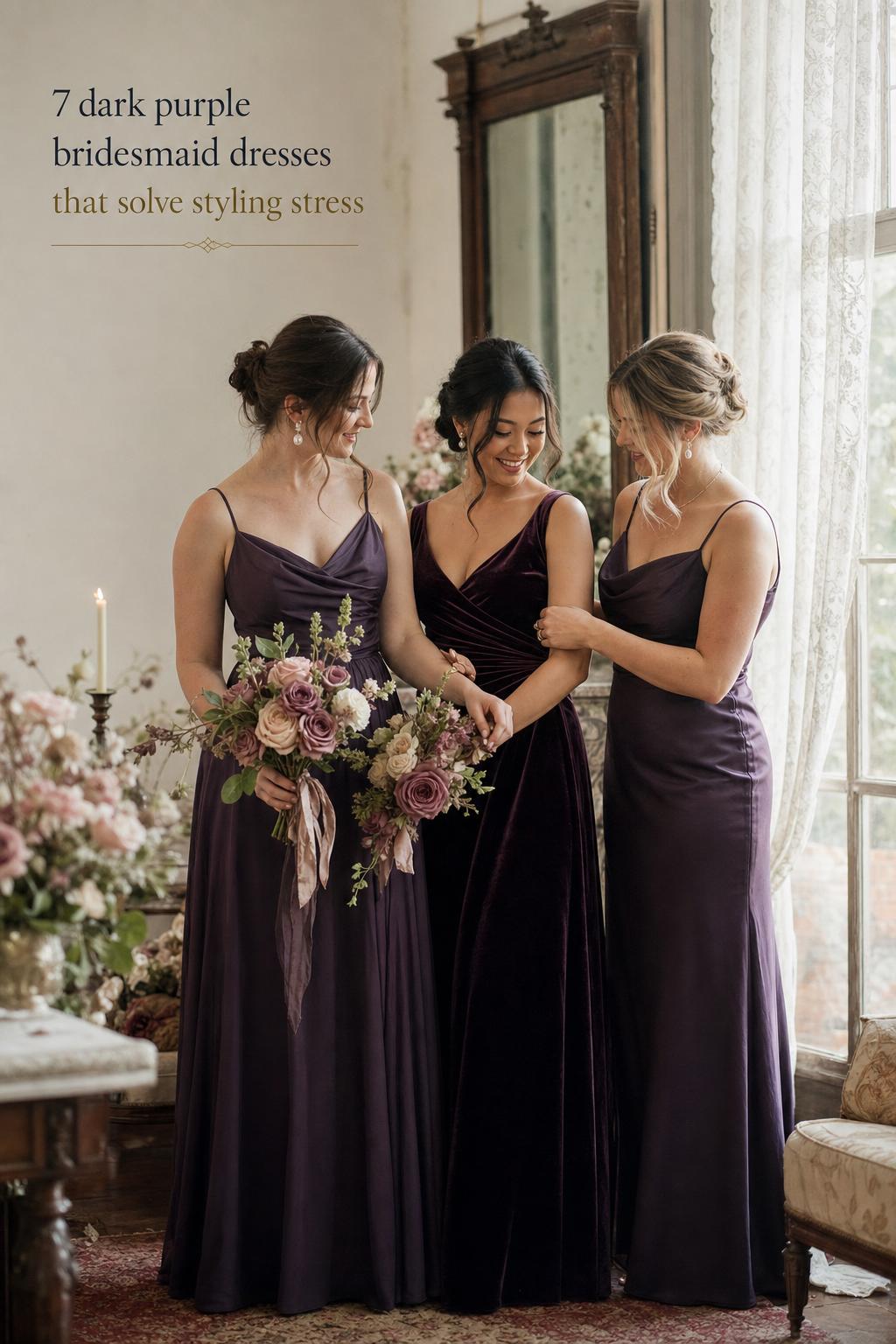
Why dark purple becomes a styling challenge so quickly
Dark purple sits in a visually complex part of the color spectrum. It can lean plum, aubergine, eggplant, or deep purple depending on undertone, fabric, and lighting. That is why bridal parties often run into avoidable problems: dresses that seem mismatched across brands, shades that look flatter than expected in photography, or silhouettes that feel too formal for the venue. Weddings also stretch across multiple moments, from ceremony to reception, so the dress needs to perform beautifully in motion, in photos, and over many hours of wear.
Comfort and practicality matter just as much as color. A ballroom celebration can support more dramatic fabrics and formal silhouettes, while a rustic outdoor wedding or autumn vineyard setting may call for lighter movement and softer structure. Bridesmaids need to sit, stand, walk, pose, dance, and often transition from daylight to evening. The best dark purple bridesmaid dresses solve more than a color preference; they balance elegance, wearability, and cohesion across the full event.
Your wedding look is only the beginning.
Keep your guest list, vendors, timeline, and every important detail together with Zarellea — so your day feels as considered as your style.
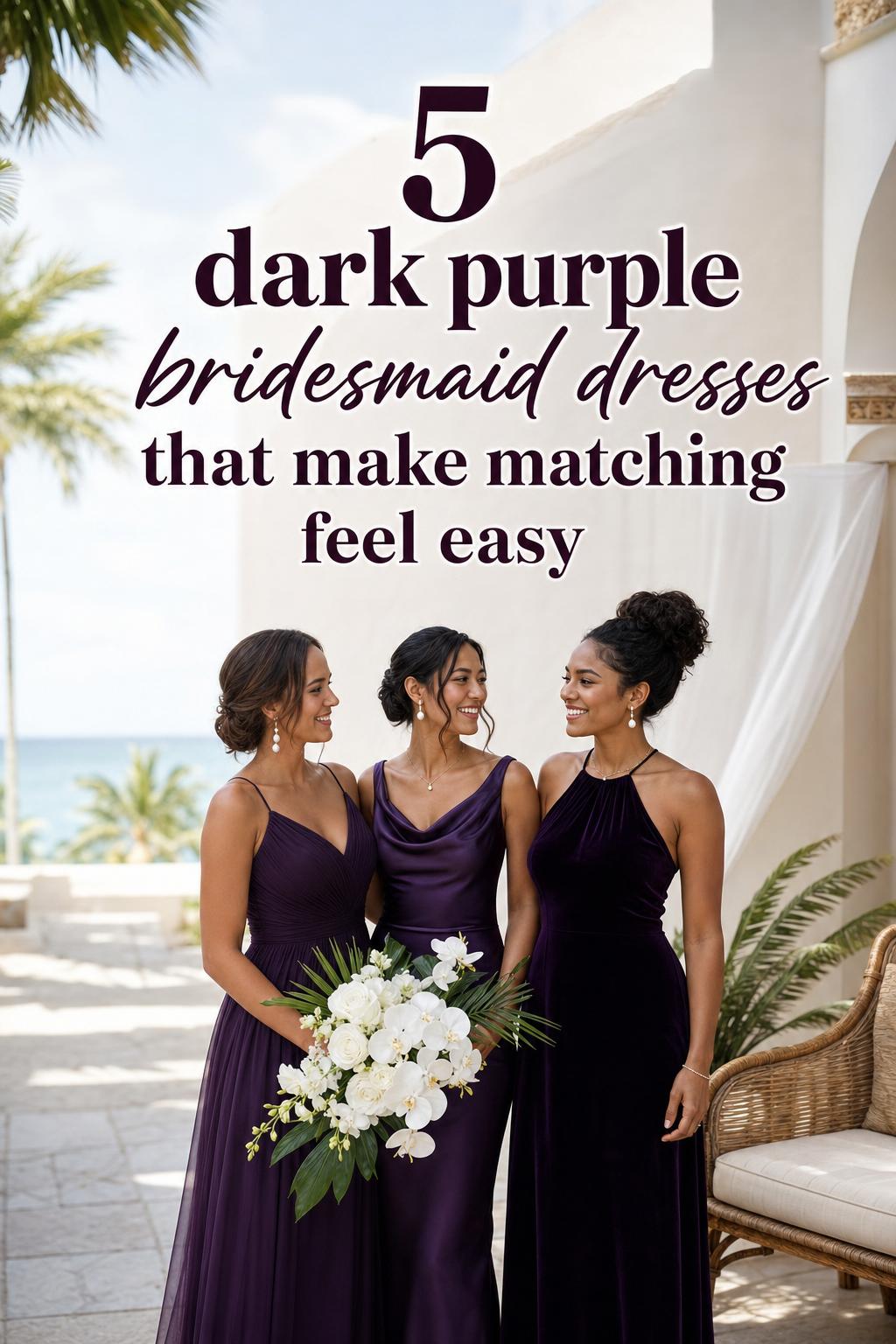
The styling principles that make dark purple work
The first principle is to choose the shade before choosing the dress details. Dark purple is not one fixed color family. Eggplant generally reads deeper and moodier, plum can feel slightly brighter and more romantic, and aubergine often carries a refined editorial quality. Starting with the shade family prevents the bridal party from drifting into near-matches that clash when lined up together.
The second principle is to let fabric guide the mood. Chiffon softens dark purple and gives it movement, which is especially useful for outdoor weddings and mixed-age bridal parties. Satin adds polish and evening depth, making it well suited to formal receptions and candlelit venues. Velvet, where available within a formalwear palette, makes dark purple feel especially rich and seasonal. Even when the color is the same, fabric changes how dark purple reads in real life.
The third principle is to build around setting and seasonality. Dark purple naturally aligns with autumn and winter weddings, but that does not mean it cannot work elsewhere. The difference is in the styling. For cooler seasons, it pairs beautifully with deeper décor and more dramatic evening light. For transitional settings, it benefits from lighter textures, softer bouquets, and cleaner silhouettes so the overall look does not feel visually heavy.
The final principle is to think in relationships, not isolated pieces. Dark purple bridesmaid dresses are at their best when coordinated with bouquets, venue lighting, décor, and the rest of the wedding party. This is where many bridal parties miss an opportunity. A dress may be lovely on its own yet feel disconnected from the wedding atmosphere. The stronger approach is to decide how the dresses will live inside the larger wedding look.
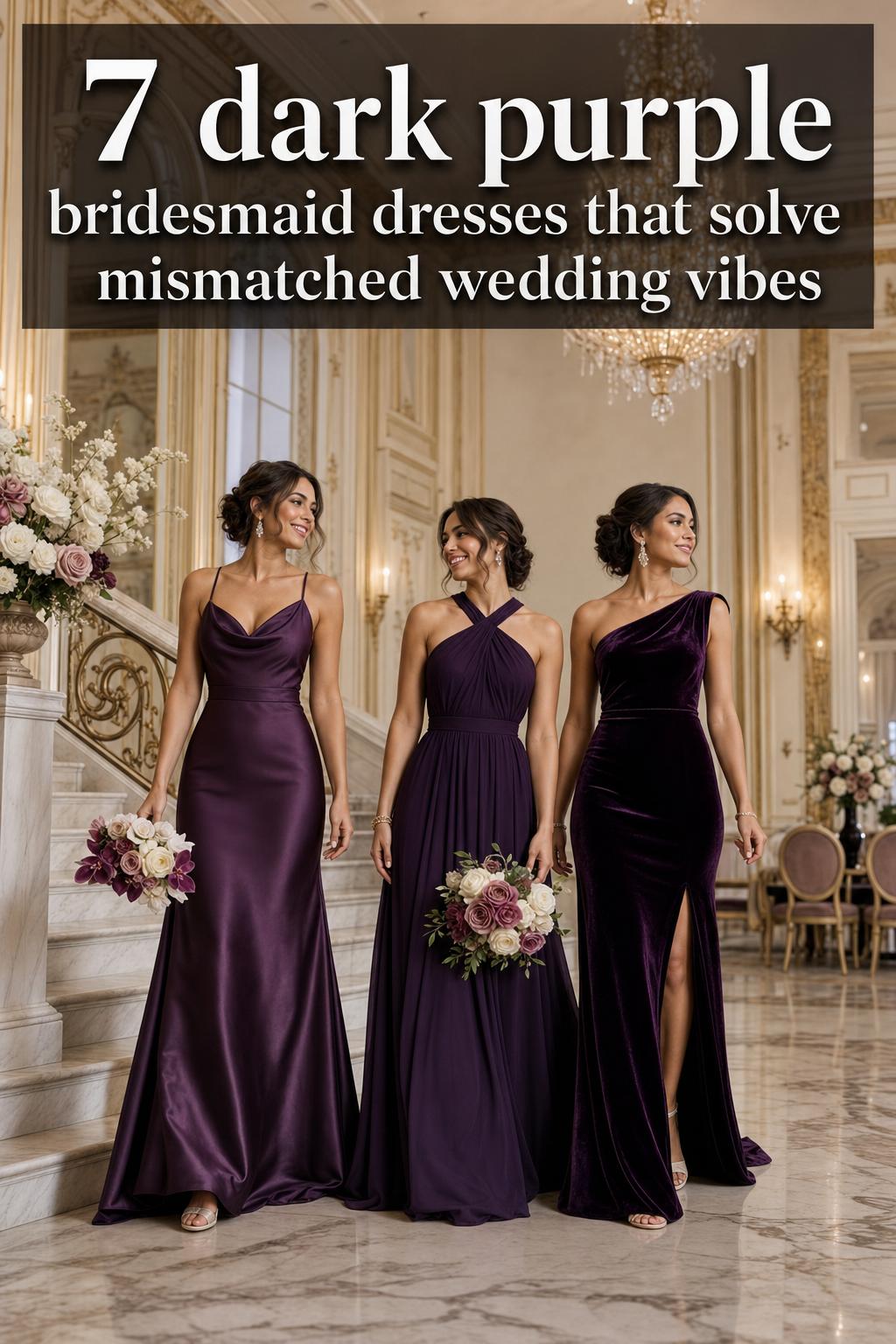
Reading the shade correctly: eggplant, plum, aubergine, and deep purple
One of the most practical ways to avoid disappointment is to understand the language brands use for purple. Across collections from The Knot’s editorial guidance to product pages at Dessy, Kennedy Blue, Ever-Pretty, Karen Millen, Lady Black Tie, PrettyLittleThing, Doll House, and Etsy listings, the same general family appears under different shade names. That naming difference matters because it shapes expectations around depth, warmth, and styling.
Eggplant for a formal, saturated look
Eggplant tends to be the most dramatic version of dark purple. It works especially well for evening receptions, black-tie leaning wedding aesthetics, and celebrations where the bridal party should feel polished and grounded. On a candlelit dance floor or in an elegant ballroom, eggplant has the kind of richness that can anchor the full wedding palette.
Plum for romance with softness
Plum usually feels slightly more luminous than eggplant. It is a strong choice when the couple wants dark purple bridesmaid dresses without a severe or overly heavy impression. Plum often works beautifully in chiffon and in weddings that transition from outdoor ceremony to evening reception, because it keeps depth while retaining softness in daylight.
Aubergine for a refined editorial mood
Aubergine often signals a sophisticated, fashion-aware take on purple. In bridal styling, it suits venues with a more curated atmosphere, such as an elegant city setting or a formal indoor reception. If the goal is a bridesmaid look that feels elevated rather than simply seasonal, aubergine is often the most nuanced direction.
Deep purple when brand naming is less specific
Some collections simplify the category to deep purple or dark purple rather than giving a more specific shade name. That can still work well, but it places more importance on swatches, product photography, and side-by-side comparison within the same retailer. This is particularly important when mixing sources such as a brand site and a marketplace like Etsy, where customization and listing variability can be wider.
Silhouettes and fabrics that solve common bridesmaid concerns
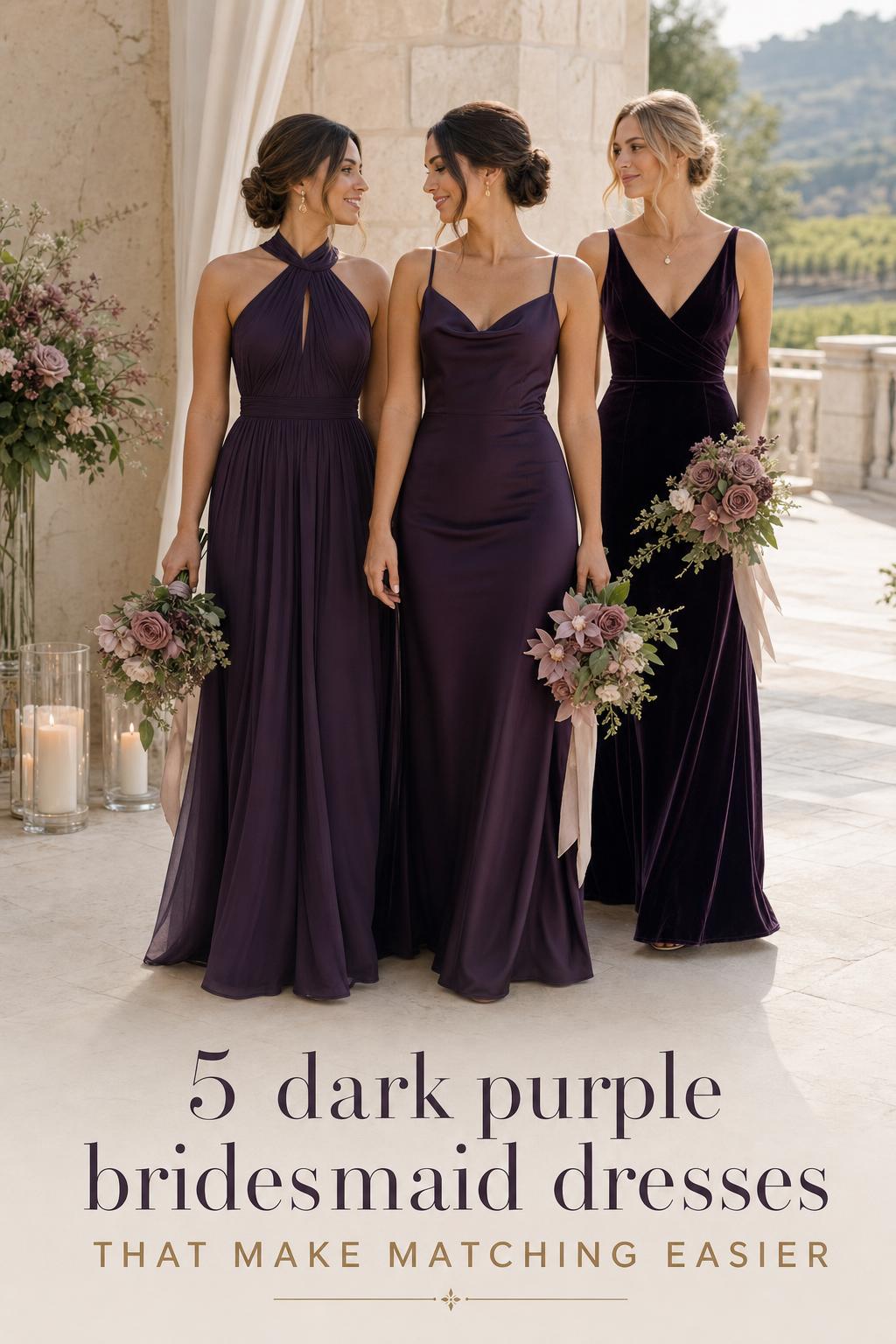
Once the shade family is set, the real styling work begins. Bridesmaids rarely share the same preferences for fit, movement, and coverage, so a successful bridal party look often depends on selecting a flexible silhouette family rather than forcing a single dress shape on everyone. Dark purple is forgiving in some ways, but it also highlights drape and structure more than paler shades do.
A-line for balance and broad appeal
An A-line silhouette is one of the easiest ways to make dark purple approachable across a full bridal party. It creates shape without looking restrictive, photographs well from multiple angles, and suits both formal and semi-formal wedding environments. Retailers such as Ever-Pretty and DollhouseBridesmaids emphasize silhouette variety, and this is often the safest place to start when different body shapes need to feel equally considered.
Sheath and slimmer lines for a more fashion-forward party
A sheath or more streamlined silhouette can look striking in plum or aubergine, especially in a modern venue or evening celebration. The trade-off is that narrower shapes ask more of fit and fabric. They can feel sleek and elevated, but they leave less room for comfort errors during a long day. If choosing this direction, alterations become more important.
Chiffon for softness and movement
Chiffon is one of the easiest fabrics for dark purple bridesmaid dresses because it lightens the visual weight of a deep color. It moves beautifully in outdoor settings, softens group photos, and tends to work well across a range of wedding themes. For autumn weddings, chiffon offers seasonality without making the bridal party feel overly bundled or stiff.
Satin and luxury fabrics for evening drama
Satin gives dark purple more shine and formality. This makes it especially appealing for a polished reception or a venue with moody lighting. Karen Millen’s luxury positioning reflects the appeal of richer fabrics in purple categories. The caution is that higher sheen can make shade differences more obvious, so bridal parties should be careful when mixing satin from different brands unless the variation is intentional.
Length choices that match venue and formality
Knee-length, midi, and full-length options all appear within dark purple collections. Full-length feels the most traditionally bridal-party appropriate for formal weddings, while shorter lengths can work for less formal celebrations or simpler wedding themes. The best choice usually comes down to how the bridal party will move through the venue and how dressed-up the rest of the wedding styling feels.
Where dark purple shines most: venue and season logic
Dark purple becomes especially effective when the venue atmosphere supports its depth. In autumn and winter weddings, the shade feels naturally at home. It responds beautifully to lower light, richer décor, and more dramatic floral styling. It can also hold its own in large venues, where lighter colors sometimes disappear in photographs or feel too delicate from a distance.
Autumn vineyard and rustic outdoor weddings
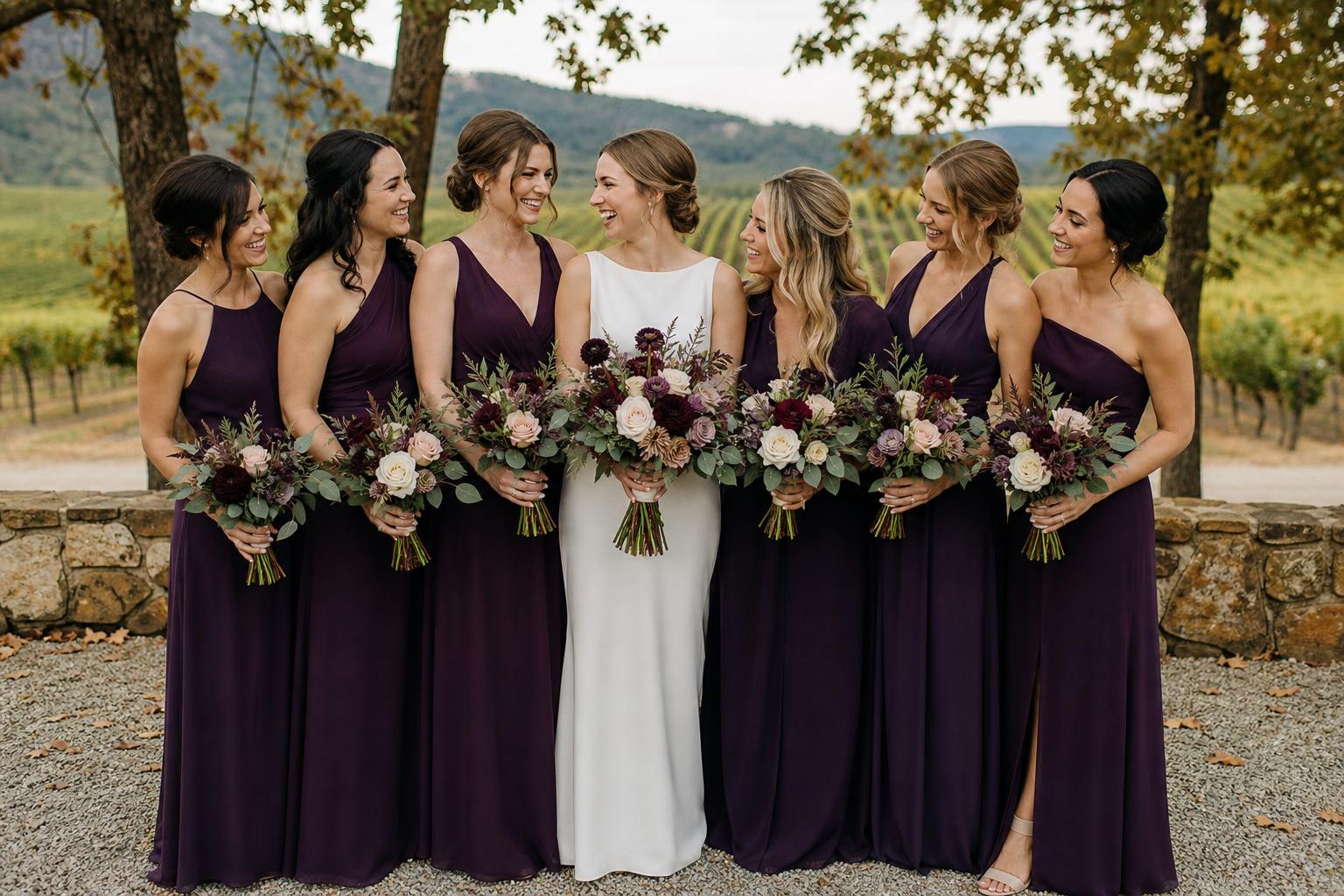
For an autumn wedding, plum or deep purple in chiffon creates a grounded but still romantic bridal-party look. The movement of the fabric keeps the color from feeling heavy, while the shade itself supports a seasonal atmosphere. In a rustic outdoor venue, this balance matters. Too much structure can feel disconnected from the setting, but a flowing silhouette keeps the look elegant and practical.
Winter receptions and candlelit evenings
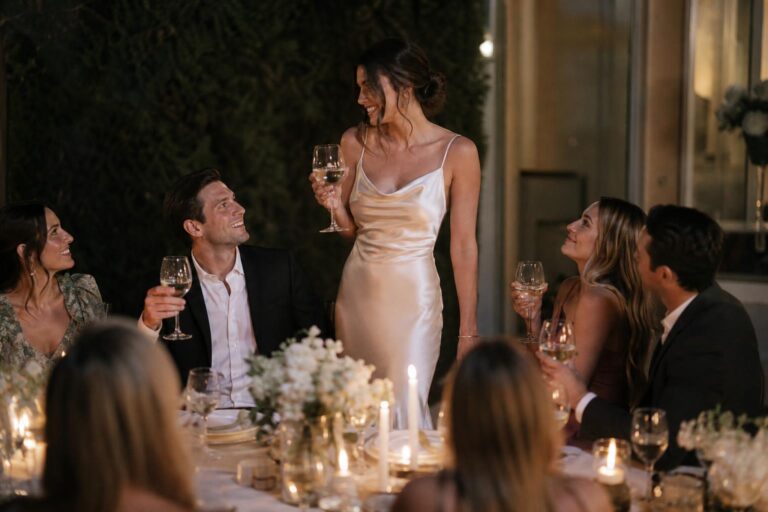
Eggplant and aubergine are especially effective for winter weddings and formal evening receptions. Under candlelight, these tones look layered and dimensional rather than flat. A more polished silhouette and a slightly richer fabric can make sense here because the setting itself supports a stronger visual statement.
Golden hour ceremonies
Golden hour changes how dark purple reads on camera. Softer versions like plum often look especially flattering because the warm light prevents them from appearing too cool or severe. If photography is a major priority, this is a useful point to consider when choosing between a softer deep purple and a more saturated eggplant.
Coordinating the bridal party without making it feel rigid
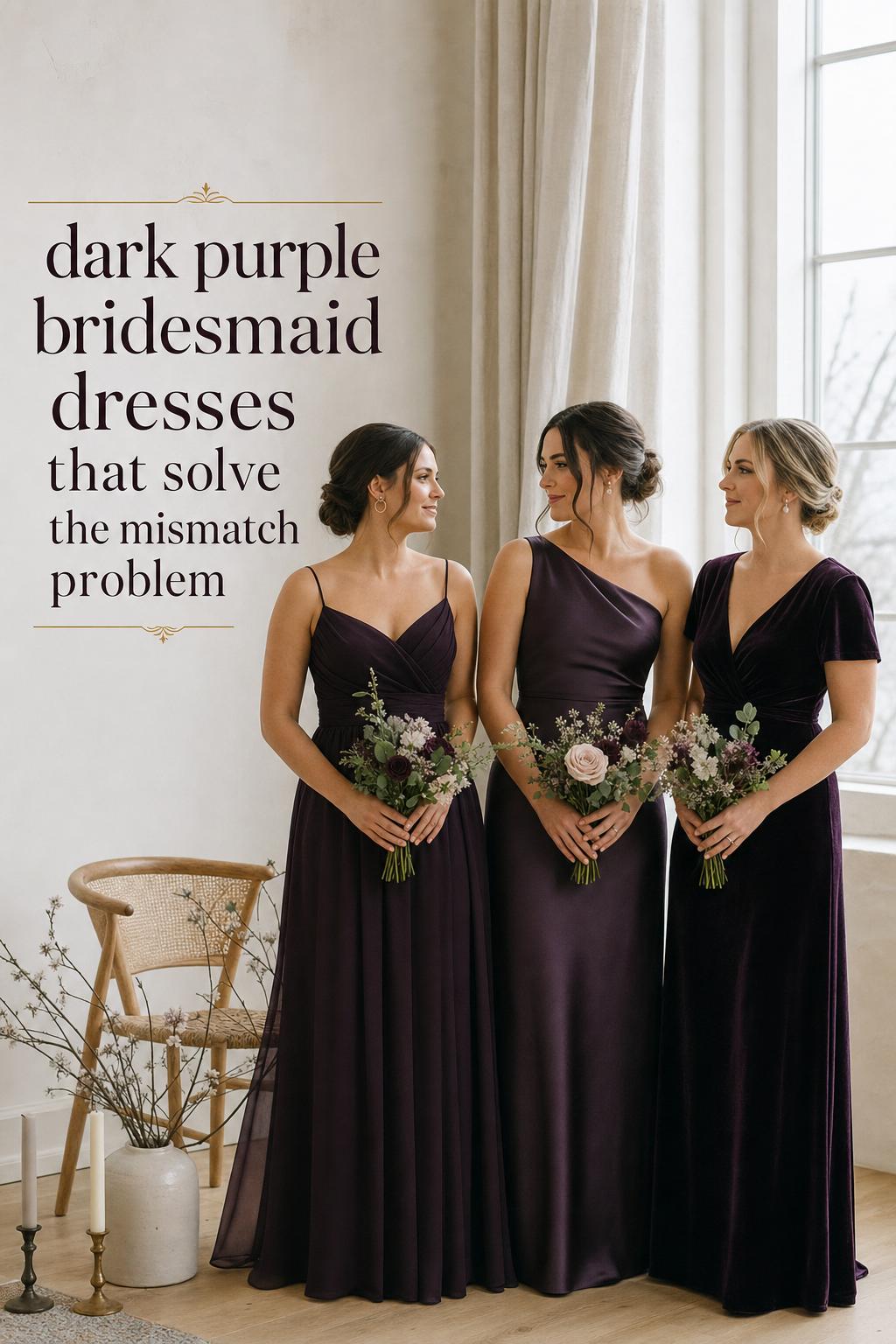
One of the most effective ways to style dark purple bridesmaid dresses is to think beyond a single identical dress and instead coordinate through shade and mood. Brands like Dessy specifically highlight mix-and-match suggestions, and this approach can be very practical for modern bridal parties. It allows different necklines, sleeve preferences, and silhouettes while keeping the visual story consistent.
Dark purple also benefits from support elements around it. Bouquets can soften the overall look, décor can echo the depth of the dresses, and groomsmen attire can either reinforce the formality or create contrast. Venue lighting matters too. What looks bold in direct daylight may become much moodier indoors, so the surrounding styling should feel intentional rather than accidental.
- Use one shade family across the bridal party even if silhouettes vary.
- Keep fabric consistent if color matching is the main priority.
- Let bouquets soften the intensity of darker tones in photos.
- Consider venue lighting early, especially for indoor evening weddings.
- Coordinate with groomsmen and décor so the dresses feel integrated into the full palette.
Skin tone, undertone, and fit: practical decisions that change the final result
Dark purple is widely flattering, but not every version of it flatters everyone in the same way. The practical goal is not to find one universally perfect purple. It is to choose an undertone and fabric finish that feel balanced across the people wearing it. This is why editorial guidance often connects shade choice with skin tones and why it is worth testing the family before finalizing an order.
In real bridal-party styling, the issue is often less about whether dark purple works and more about which dark purple works. A softer plum may feel more approachable on a wider range of people, while a very saturated eggplant can look extraordinary in a formal setting but may require more care with makeup, lighting, and fabric choice. If the bridal party includes a variety of preferences, mix-and-match silhouettes in the same carefully chosen color family are often more successful than one exact dress style for all.
Fit matters just as much as undertone. Deep colors make poor fit more visible because tension points, bunching, and uneven drape tend to show more clearly. Alterations are not a minor finishing step here; they are part of the styling solution. A beautifully chosen shade can lose elegance quickly if the hem, bust, or waist fit is not resolved in time.
Tips for a flattering final look
- Compare shade names carefully when shopping across different brands.
- Choose undertones before choosing accessories.
- Prioritize tailoring for slimmer silhouettes and satin fabrics.
- Allow enough time for alterations if the bridal party is ordering from multiple retailers.
- Use one visual reference point, such as a confirmed swatch or a lead dress, when building a mixed bridal party.
Shopping in the US: how to compare retailers and collections intelligently
The US shopping landscape for dark purple bridesmaid dresses spans editorial inspiration, dedicated bridal brands, fashion retailers, and marketplaces. Each serves a slightly different need. The Knot is useful for broad styling guidance and understanding how purple functions in wedding planning. PrettyLittleThing emphasizes shopping filters, price points, and color variation for users with a stronger transactional mindset. Dessy and Kennedy Blue offer more collection-based browsing tied closely to purple shade families. Ever-Pretty and DollhouseBridesmaids provide practical style and fabric options, while Karen Millen brings a more luxury eveningwear perspective. Lady Black Tie sits in a useful middle ground with elegant presentation and styling context. Etsy adds customization and handmade or vintage variety, but with more variation from seller to seller.
The smartest way to shop is to choose your priority first. If budget and speed matter most, broad retail collections can help narrow the field quickly. If consistency across the bridal party matters most, a dedicated color collection like Kennedy Blue’s dark purple or Dessy’s purple categories may be easier to manage. If individuality matters most, Etsy can be appealing, but only if the bridal party is comfortable with greater listing variability and closer attention to details.
What to compare before ordering
- Shade naming: dark purple, eggplant, plum, and aubergine are not interchangeable in every collection.
- Fabric consistency: chiffon and satin can make the same color appear different.
- Length and silhouette options: especially important for mix-and-match bridal parties.
- US availability and shopping policies: useful when timing matters.
- Customization versus standardization: especially relevant with Etsy sellers.
Outfit solutions for different wedding settings
A bridesmaid dress does not exist in isolation. It becomes part of a full wedding scene, and the most useful styling decisions come from imagining that scene clearly. These outfit solutions focus on how dark purple works in real wedding environments and what details help each version feel complete rather than generic.
Outfit solution: flowing chiffon for an autumn ceremony
For an outdoor autumn wedding, a plum or deep purple chiffon dress with an A-line silhouette solves several problems at once. The color feels seasonal, the fabric moves easily through an outdoor setting, and the shape tends to flatter a broad bridal party. This kind of look works especially well when the wedding atmosphere is romantic rather than highly formal. It gives enough richness for the season without becoming stiff or too dark in daylight.
Outfit solution: polished satin for a candlelit reception
For a formal indoor reception, a darker eggplant or aubergine satin dress creates a more elevated effect. The shine of the fabric helps the color catch low light beautifully, which is particularly useful in evening venues. A cleaner silhouette keeps the look sophisticated. This works best when the full wedding aesthetic leans elegant and when the bridal party has time for tailoring, because satin shows fit decisions clearly.
Outfit solution: mix-and-match shapes in one dark purple family
When bridesmaids have different fit priorities, mix-and-match styling is often the strongest answer. Keep the shade family consistent, ideally within one brand collection such as Dessy or Kennedy Blue, and vary the neckline or silhouette. This preserves cohesion without making anyone feel boxed into a shape that does not suit them. It also photographs more naturally, especially in weddings that aim for a modern editorial feel.
Outfit solution: a softer dark purple for golden hour portraits
If the ceremony or portrait schedule centers on late-afternoon light, choose a softer dark purple such as plum rather than the deepest eggplant available. In golden hour, this tends to look more dimensional and romantic. Chiffon or another light-moving fabric makes the most of that warm light, which is why this approach often feels especially beautiful for outdoor weddings and open-air venues.
Small styling choices that improve the entire look
Accessories and finishing decisions can either support dark purple or compete with it. Because the dress color already has depth, the cleanest styling approach is usually to let the shade lead. This is true whether the wedding is formal, rustic, or somewhere between. The goal is polish rather than excess.
Footwear should be chosen with the venue in mind. A long reception, an uneven outdoor path, or multiple transitions between ceremony and party can make an otherwise elegant look difficult to wear. Bridesmaid styling succeeds when comfort supports confidence, not when appearance is separated from practicality. This is one reason dark purple works so well: it has enough presence that the rest of the styling can stay disciplined.
Extra tips that make a difference
- Steam dresses before the event, especially chiffon and satin, because deep colors show creasing.
- Store dresses carefully before the wedding to protect color appearance and fabric finish.
- Check how the dress looks in daylight and indoor lighting before final approval.
- Keep accessories refined so the shade remains the focal point.
- Plan alterations early enough to avoid rushed fit decisions close to the wedding.
Common mistakes bridal parties make with dark purple
The most common mistake is assuming all dark purple dresses will coordinate automatically. In practice, plum, aubergine, eggplant, and generic deep purple can differ enough to look inconsistent in group photos. This often happens when bridesmaids order individually from different retailers without a shared reference point.
Another frequent issue is choosing a dramatic shade without considering the venue. Very dark purple in a heavily structured fabric can overwhelm a light, relaxed setting. The reverse can also happen: a soft chiffon plum may feel underpowered in a very formal evening wedding where stronger texture and depth would have felt more complete.
Finally, many bridal parties focus on color before fit. Yet with dark colors, tailoring and proportion matter enormously. A beautifully chosen shade cannot compensate for a dress that pulls, puddles, or hangs awkwardly. The dress needs to support the person wearing it, especially over a full day of standing, sitting, and celebrating.
Care, alterations, and wearing the dress beyond the wedding
Practical care is part of making a bridesmaid purchase feel worthwhile. Fabrics associated with these collections, including chiffon and satin, benefit from careful storage and steaming. Color fidelity matters with dark purple, so handling the dress thoughtfully before the event helps it look richer and more polished on the day itself.
Alterations are best treated as standard, not optional. Hem length, bust fit, and strap or shoulder adjustments are often what transform a bridesmaid dress from acceptable to elegant. This matters especially for slimmer shapes and more reflective fabrics. A bridal party that leaves enough time for these adjustments usually ends up looking much more cohesive, even when dresses are not identical.
As for longevity, dark purple is one of the more wearable bridesmaid color families because it already sits close to formalwear and occasion dressing. Collections from brands such as Karen Millen, Lady Black Tie, Ever-Pretty, and PrettyLittleThing show how purple dresses can bridge bridal-party styling and broader event dressing, particularly when the silhouette is streamlined and the fabric feels polished rather than overtly bridal.
A thoughtful approach always looks more expensive
The most successful dark purple bridesmaid dresses are not necessarily the most elaborate or the most expensive. They are the ones chosen with a clear understanding of shade, fabric, venue, and bridal-party comfort. When those decisions align, dark purple becomes one of the most expressive and elegant options in bridesmaid styling. It can feel formal without feeling cold, romantic without becoming overly sweet, and dramatic without losing practicality.
For any bridal party weighing eggplant, plum, aubergine, or another deep purple variation, the best next step is to simplify the decision process. Set the shade family first, match it to the wedding setting, choose silhouettes that respect real bodies and long event hours, and compare retailers with intention. That is how a beautiful color becomes a polished wedding look.
FAQ
Are dark purple bridesmaid dresses better for fall and winter weddings?
Dark purple naturally suits autumn and winter because it pairs well with richer palettes, lower light, and more formal evening atmospheres. That said, it can also work in other seasons when the fabric is lighter, the silhouette is softer, and the surrounding styling keeps the look from feeling too heavy.
What is the difference between eggplant, plum, and aubergine bridesmaid dresses?
These names usually describe different versions of dark purple rather than completely separate color families. Eggplant tends to read deeper and more dramatic, plum often feels softer and slightly brighter, and aubergine usually gives a refined, fashion-forward impression. The exact result still depends on the brand, fabric, and lighting.
How do I choose a dark purple bridesmaid dress that flatters different skin tones?
Start by selecting the shade family before finalizing the style. A softer plum can be easier across a wide bridal party, while a very saturated eggplant may be more dramatic but less forgiving if undertones vary. Mix-and-match silhouettes in one shade family are often the most practical way to keep the group cohesive and flattering.
Which fabrics work best for dark purple bridesmaid dresses?
Chiffon is especially useful because it softens the visual weight of dark purple and moves well in outdoor and all-day wedding settings. Satin creates a more polished evening effect and works beautifully for formal receptions, but it shows fit and shade differences more clearly, so consistency and tailoring matter more.
Can bridesmaids wear different styles in the same dark purple shade?
Yes, and in many cases it is the most flattering solution. A consistent shade family with varied necklines or silhouettes allows each bridesmaid to choose a shape that suits her while keeping the bridal party visually unified. This approach is especially effective when working within one coordinated brand collection such as Dessy or Kennedy Blue.
Where can I shop for dark purple bridesmaid dresses in the US?
There are several useful options depending on your priority. Dessy and Kennedy Blue are strong for coordinated shade collections, Ever-Pretty and DollhouseBridesmaids offer practical style variety, Karen Millen brings a more luxury perspective, PrettyLittleThing focuses on broad shopping options, Lady Black Tie balances editorial style with product discovery, and Etsy is useful for handmade or customized listings.
Do dark purple dresses photograph well?
They can photograph beautifully, but lighting matters. Plum often reads softly and romantically in golden hour, while eggplant and aubergine perform especially well in candlelit receptions and more dramatic evening settings. Fabric also changes the effect, with chiffon appearing softer and satin looking more reflective and formal.
What should bridesmaids coordinate with dark purple dresses?
Focus on the full wedding picture rather than the dress alone. Bouquets, groomsmen attire, décor, and venue lighting all influence how dark purple feels. The most cohesive bridal-party styling usually comes from treating the dress color as part of a larger wedding palette rather than an isolated choice.
Are alterations necessary for dark purple bridesmaid dresses?
In most cases, yes. Dark colors tend to show poor fit more clearly, especially in satin or slimmer silhouettes. Hemming, bust adjustments, and strap refinements often make the difference between a dress that simply matches the palette and one that actually looks polished throughout the event.