Why Nude Bridesmaid Dresses Feel So Elegant Now
Choosing nude bridesmaid dresses sounds simple until the bridal party actually starts trying them on. What looks softly neutral in one photo can read peach, beige, blush, taupe, or nearly champagne in person, and the difference matters once several skin tones, venue settings, and dress silhouettes are involved. A color meant to feel effortless can suddenly become the hardest decision in the lineup.
The challenge is not only finding a flattering nude. It is choosing a version of nude that feels polished in daylight, elegant at the reception, and cohesive beside the wedding palette without washing anyone out. This guide approaches the issue the way a wedding stylist would: by breaking down why nude is tricky, how to make it work across real wedding settings, and which styling choices help the entire bridal party look considered rather than accidentally mismatched.
Why nude can be the most complicated bridesmaid color
Nude is often treated as a single color, but in occasionwear it functions more like a family of tones. Soft beige, rosy sand, warm caramel, pink-leaning neutrals, and muted taupe all live under the same umbrella. That flexibility is exactly why nude bridesmaid dresses remain appealing, yet it is also why they require more intention than an obvious shade like navy or emerald.
Several practical factors create the styling challenge. Light changes everything: a garden ceremony at golden hour softens warm undertones, while bright beach sunlight can make pale neutrals appear lighter than expected. Fabric matters too. Satin reflects tone differently from chiffon, and a matte crepe can ground a nude shade that might otherwise look overly delicate. Comfort also plays a role, since bridesmaids usually wear the dress through the ceremony, photographs, cocktail hour, dinner, and dancing. The most successful choice has to do more than look pretty on a hanger.
Your wedding look is only the beginning.
Keep your guest list, vendors, timeline, and every important detail together with Zarellea — so your day feels as considered as your style.
The styling logic behind a successful nude bridesmaid palette
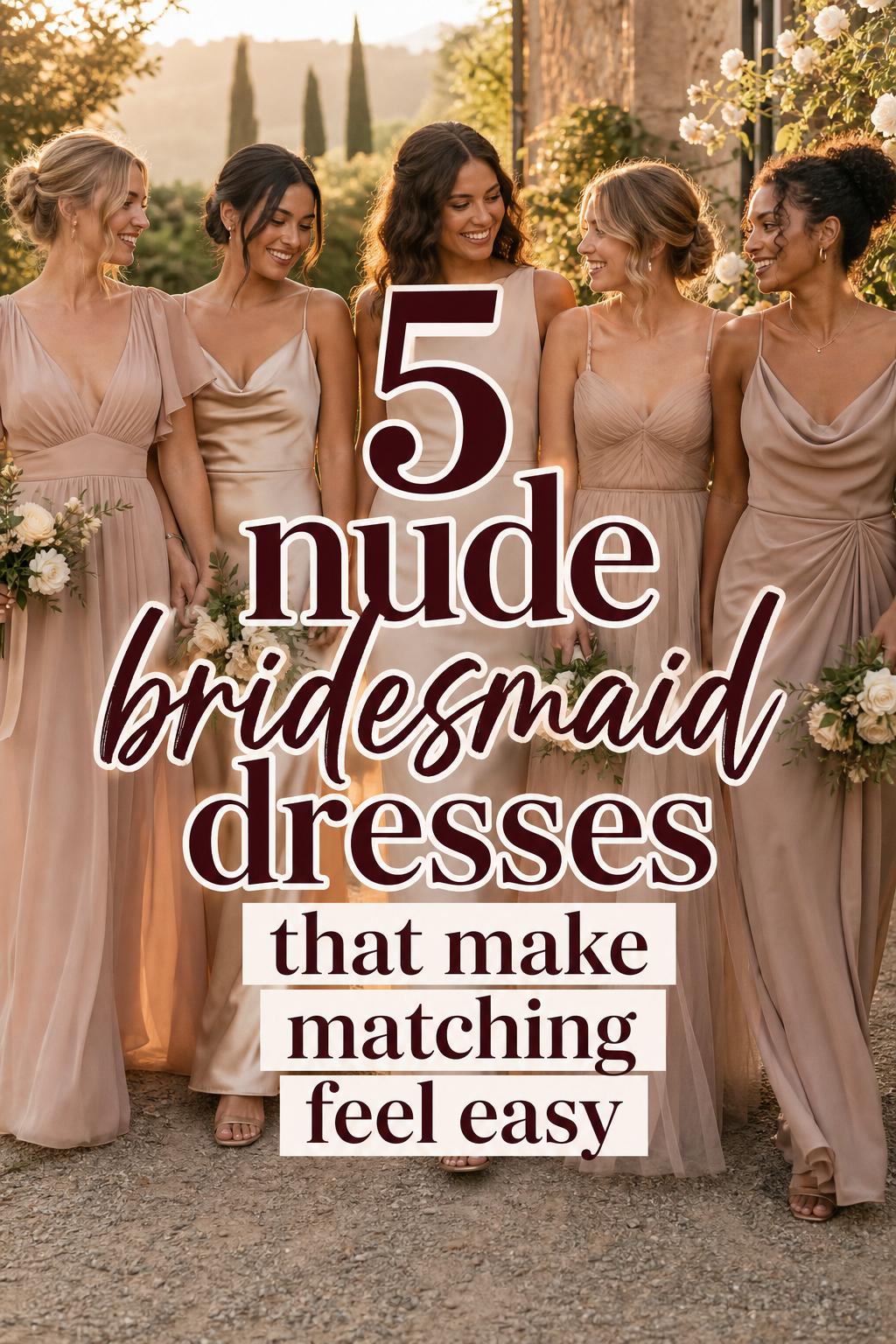
The strongest approach is to think of nude as a balancing tool rather than a fixed target. In bridal styling, nude works best when it supports the larger atmosphere of the wedding: romantic garden, warm destination setting, refined ballroom, or candlelit evening reception. Once the venue mood is clear, the tone, fabric, and silhouette become easier to choose.
There are four principles that make nude bridesmaid dressing feel intentional. First, undertone matters more than the label. Second, movement in the fabric keeps pale neutrals from looking flat. Third, variation can be elegant when it is controlled. And fourth, styling should protect both comfort and polish from ceremony through reception.
- Choose a nude family, not a random mix of beige tones.
- Use fabric to add depth when the color itself is understated.
- Let silhouette create interest if the palette is quiet and refined.
- Check how the dresses read in natural light as well as indoor evening light.
Undertone is the first decision, not the final detail
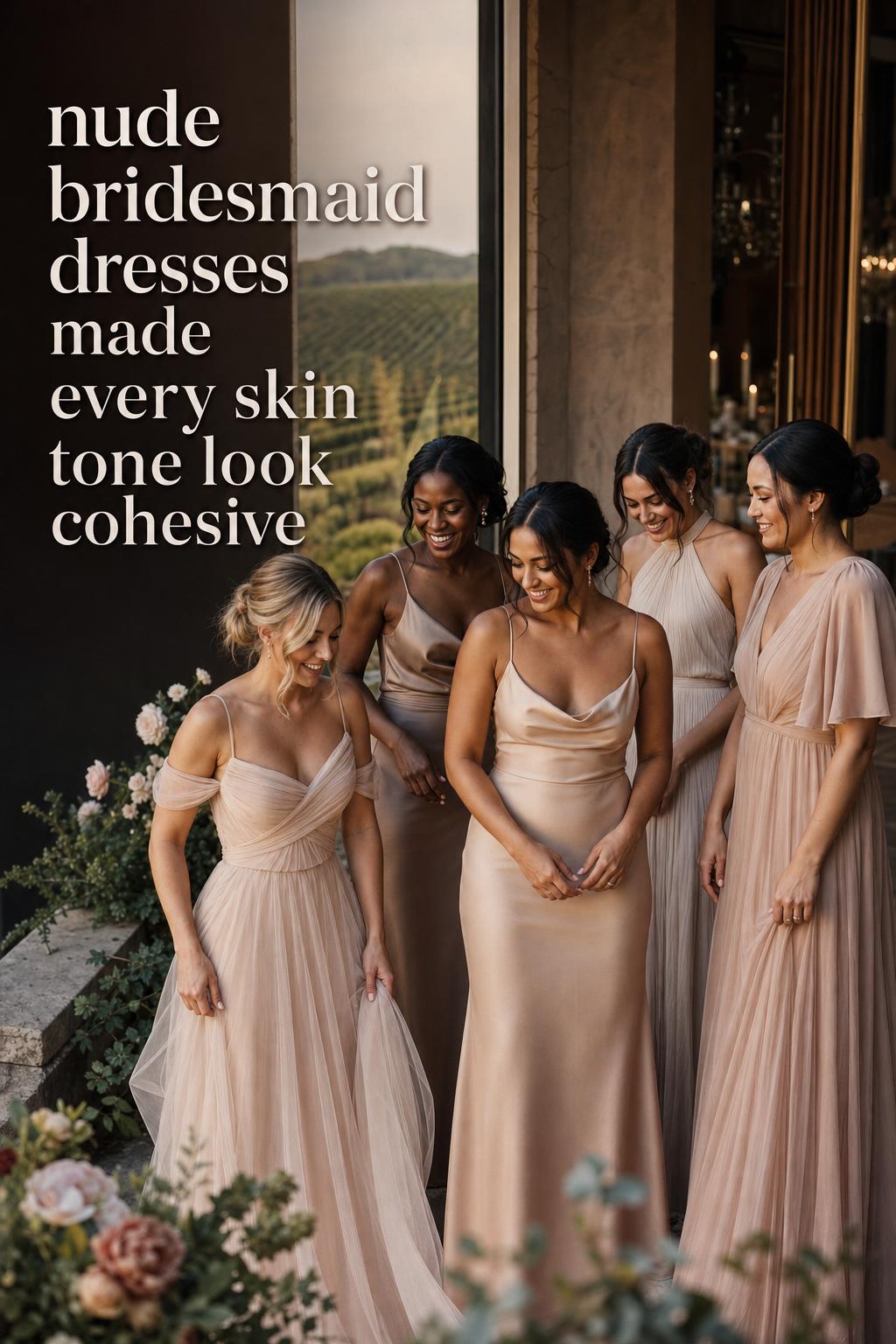
A warm nude can feel luminous at a vineyard or countryside celebration, while a cooler taupe-leaning nude may suit a formal city venue more naturally. If the bridal party includes a wide range of complexions, a single rigid shade may not be the most flattering choice. A coordinated tonal range often looks more elevated because it acknowledges that nude is personal.
Fabric creates depth where color stays quiet
Because nude is subtle, the fabric carries more visual responsibility. Chiffon brings softness and movement for outdoor ceremonies. Satin adds liquid shine for a formal reception. Tulle can feel airy and romantic, especially in a garden setting, while crepe offers a cleaner line for modern bridal styling. When readers struggle with nude looking too plain, the issue is often fabric choice rather than color alone.
Silhouette should support the atmosphere
In a romantic wedding, soft draping, flutter sleeves, and flowing skirts keep the palette delicate and flattering. In a sleek evening setting, a slip-inspired shape or a structured column gown gives nude more presence. The dress should feel aligned with the venue and timing, not chosen in isolation.
How to decide between one nude shade and a mix of tones
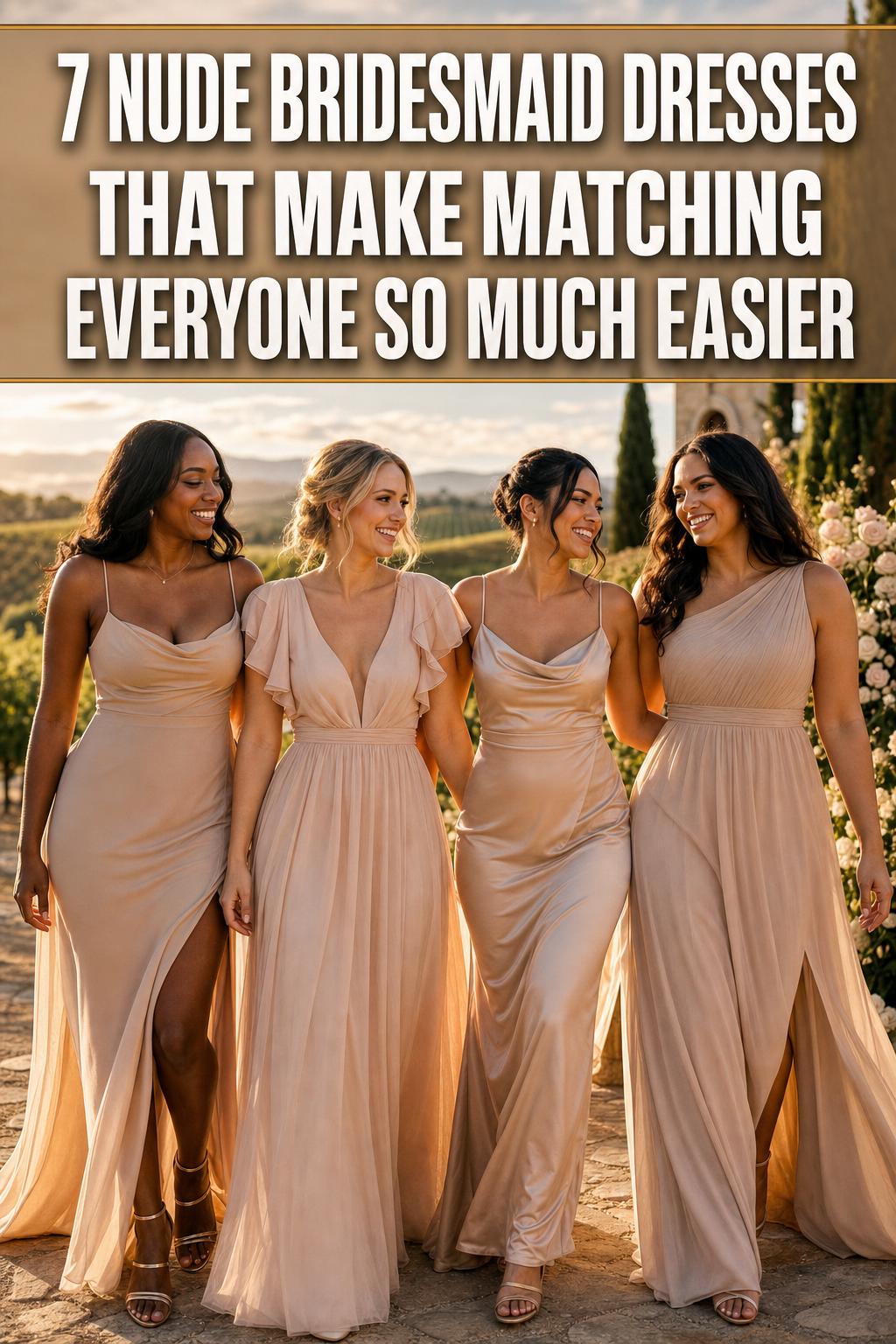
This is one of the most practical questions brides and bridesmaids face. A single shade creates a clean, uniform bridal party, which can be especially effective for formal weddings or minimalist aesthetics. The limitation is that one version of nude does not flatter everyone equally, and a highly specific beige can become more demanding than expected.
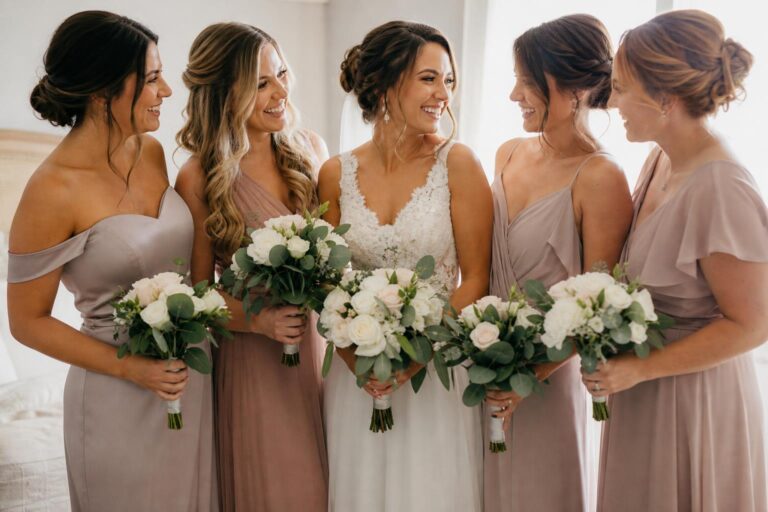
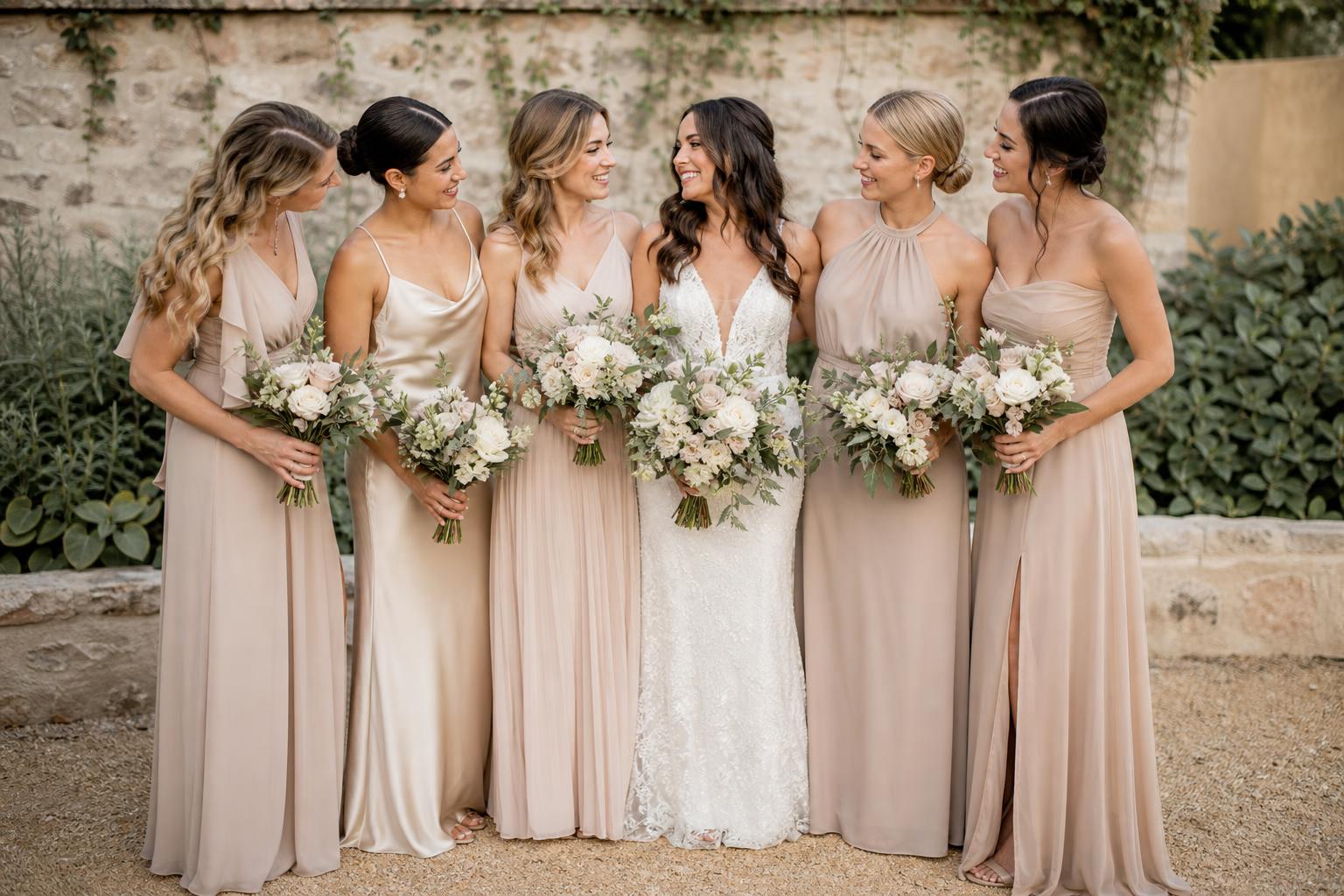
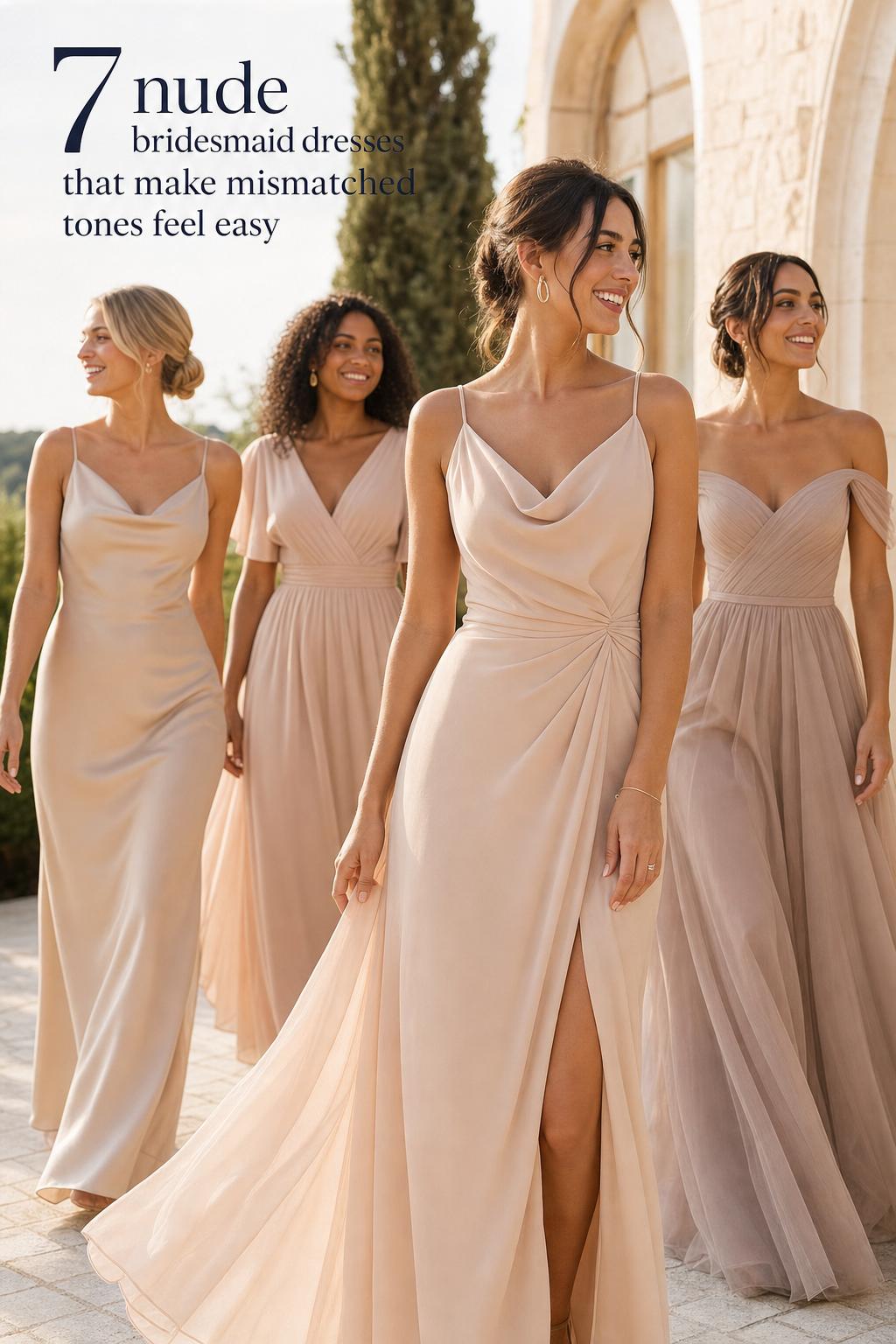
A tonal mix solves that issue when done with restraint. Think of the dresses as belonging to the same visual family: sand, blush-nude, soft taupe, and warm beige rather than several unrelated neutrals. The result feels editorial and modern, particularly in outdoor weddings where layered neutral tones photograph beautifully. The key is consistency in either fabric, hemline, or silhouette so the palette still feels curated.
For bridesmaids themselves, this approach can be more comfortable. It allows each person to wear a shade that complements their complexion without disrupting the overall wedding mood. The dresses do not need to match perfectly to look harmonious; they need to relate clearly.
Venue-based outfit solutions for nude bridesmaid dresses
The most useful way to style nude bridesmaid dresses is to start with the wedding setting. A neutral palette behaves differently in a seaside ceremony than it does beneath chandeliers or in a flower-filled garden. These outfit solutions focus on the real-world conditions that affect how the dresses look and feel throughout the day.
Outfit solution: garden ceremony in flowing chiffon
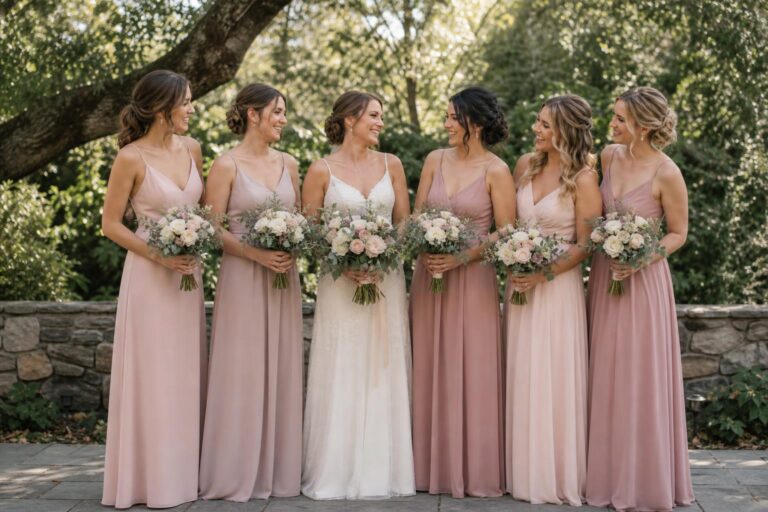
For a garden wedding, a soft chiffon midi or floor-length gown in a warm nude or blush-beige tone creates exactly the lightness the setting calls for. The movement of chiffon prevents the color from appearing static in daylight, and the softness works beautifully among flowers, greenery, and natural light. Delicate straps, gentle draping, or flutter sleeves help the look feel romantic without becoming overly ornate.
This combination solves two common challenges at once: it keeps the bridal party comfortable outdoors and gives nude enough dimension to look intentional in photographs. If the ceremony moves into a cooler evening reception, a light wrap in a matching neutral can preserve the elegance of the palette without introducing a distracting extra color.
Outfit solution: beach ceremony with a lighter, breathable silhouette
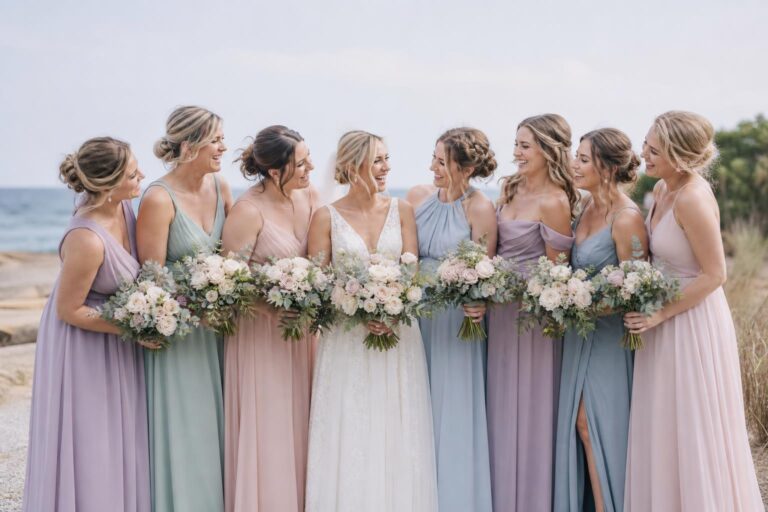
At a beach wedding, nude can be stunning, but only when the fabric and cut account for sun, breeze, and movement. A lightweight dress in a pale sand or sun-warmed beige tone feels natural against the setting, while a fluid silhouette helps the look remain comfortable rather than clingy. Simplicity is an advantage here. Clean lines and breathable fabric keep the bridal party polished without fighting the environment.
The practical benefit is clear: beach conditions make heavy structure and overly embellished surfaces less appealing. A softer nude dress keeps the mood relaxed and elegant, especially in bright daylight, and allows accessories and bouquets to stand out with more clarity.
Outfit solution: vineyard or countryside celebration in warm neutrals
A vineyard or rustic countryside venue often suits richer nude families beautifully. Think warm beige, rosy taupe, or caramel-leaning neutrals in fabrics that move but still hold a graceful line. This is where tonal depth becomes especially useful. The landscape, wood textures, and sunset lighting can support warmer nudes without making them disappear.
To make the outfit feel grounded, a slightly more defined silhouette works well, perhaps through a soft waist seam, draped neckline, or fuller skirt with shape. This gives the bridal party enough visual structure for photographs while preserving the romantic ease associated with outdoor celebrations.
Outfit solution: candlelit ballroom in satin or crepe
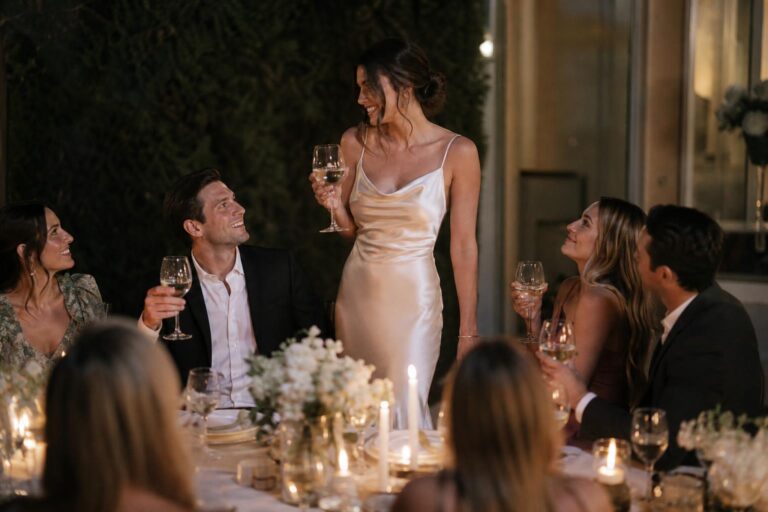
In a ballroom or formal evening reception, nude benefits from a more polished finish. Satin introduces a reflective quality that helps the shade read as luxurious rather than understated, while crepe brings a modern clean line that can feel especially refined under evening lighting. A column shape, slip-inspired gown, or softly structured full-length dress gives nude the definition it needs for a dressier atmosphere.
This setting also highlights one of nude’s strongest qualities: it can look quietly glamorous without competing with the bride. When the reception is candlelit and formal, the balance of shine, drape, and restraint becomes more important than added embellishment.
Making nude flattering across different skin tones
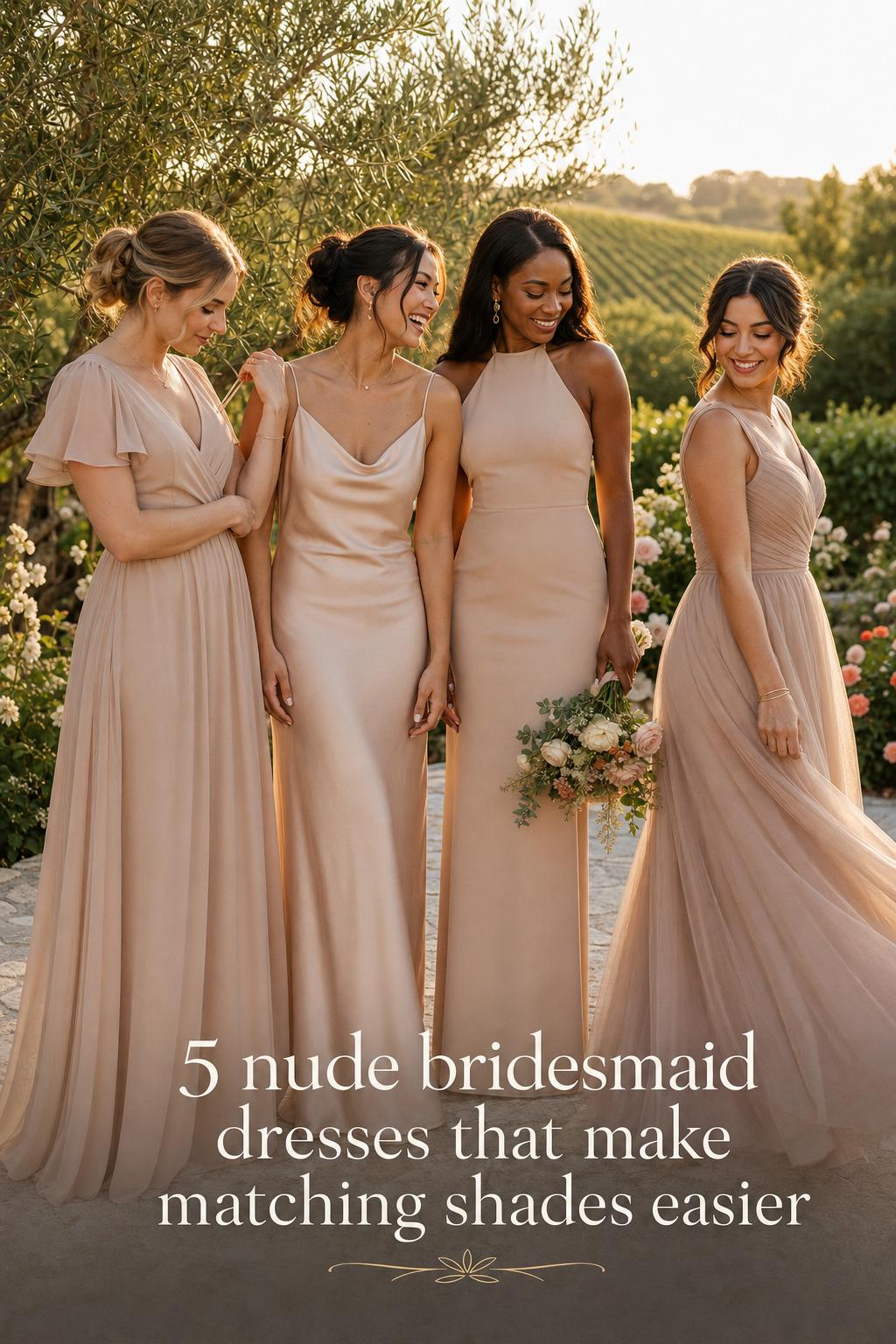
The central concern with nude bridesmaid dresses is often whether the color will flatter everyone. That concern is valid. A shade that is too close to one person’s complexion may appear washed out on another, while a cooler beige can feel elegant on some bridesmaids and flat on others. The solution is not avoiding nude altogether. It is choosing it with more nuance.
One effective strategy is to keep the palette consistent in mood rather than exact pigment. For example, all dresses can stay soft, muted, and romantic, even if one leans rosy, another taupe, and another warm beige. This preserves cohesion without forcing a single tone across the whole party. It also reflects how nude actually functions in fashion: as a tailored neutral, not a one-note color.
If the bridal party prefers matching dresses, fabric and makeup become more important. A soft satin can lift a lighter neutral, while thoughtful makeup and accessories help the dress feel connected to the wearer rather than separate from them. Small details often solve what appears to be a color problem.
Where silhouette does the heavy lifting
Because nude is visually subtle, silhouette becomes one of the most important style tools. A thoughtfully chosen shape keeps the look memorable and flattering without relying on bold color. This is especially useful for weddings with a refined palette or minimalist aesthetic, where the impact comes from line, drape, and proportion.
Soft A-line dresses create balance and are easy to wear through long celebrations. Draped bodices can add dimension near the face, which is helpful when working with pale neutrals. Slip shapes feel modern and elegant for evening events, but they usually work best when the fabric quality is high enough to keep the dress from reading too casual. Fuller skirts or gathered waists can bring romance to a nude palette that might otherwise feel too restrained.
The practical question is never only whether the dress is pretty. It is whether the cut gives the wearer confidence for walking, sitting, posing for portraits, and dancing late into the reception. With nude, confidence often comes from shape more than color intensity.
Styling details that keep nude from feeling washed out
A nude bridesmaid dress is at its best when the surrounding details give it definition. Hair, makeup, bouquet tones, and jewelry all influence how the dress reads. The goal is not to over-style the look, but to make sure the soft color still has presence.
- Choose jewelry that adds light or contrast without overwhelming the dress.
- Use bouquet tones to create separation between the dress and the setting.
- Favor necklines and draping that frame the face clearly.
- Consider evening lighting when deciding how luminous or matte the fabric should be.
Tips for accessories and finishing touches
Metallic accessories can add enough polish to give nude a finished look, particularly for formal receptions. In softer settings, understated jewelry keeps the palette romantic. Footwear should follow the demands of the venue: stable options for grass, lighter choices for beach conditions, and more elevated evening styles for indoor receptions. The right shoe is not only a styling decision but a comfort decision, especially over many hours.
Beauty styling also matters. If a dress is very pale, a little definition around the face helps restore balance. That does not mean dramatic makeup; it means making sure the bridesmaid feels present in the look rather than visually faded by it. Nude is elegant when it supports the wearer, not when it drains the overall effect.
Season, light, and timing: the hidden factors behind the right nude
One of the easiest mistakes is choosing a nude bridesmaid dress without considering when the wedding actually happens. The same tone will behave differently at a spring afternoon ceremony, a summer destination wedding, or an evening celebration with low, warm lighting. This is why nude can feel unexpectedly difficult during fittings and suddenly make perfect sense once the wedding context is considered.
In bright daytime settings, lighter nudes can appear especially airy and romantic, but they need enough depth in the fabric or silhouette to avoid disappearing into the light. For later events, deeper or richer nude families often feel more grounded and sophisticated. Satin, crepe, or a more defined shape can help the dress hold its own once daylight fades and the venue becomes more atmospheric.
Readers often think the problem is whether nude is right or wrong. More often, the real issue is whether that particular nude belongs to that particular time of day.
Common mistakes with nude bridesmaid dresses
Neutral dressing looks effortless only when a few key decisions are made correctly. When nude bridesmaid dresses miss the mark, the cause is usually predictable and fixable.
- Choosing a shade from a screen without checking it in natural light.
- Assuming one nude tone will flatter every bridesmaid equally.
- Using a very pale neutral in a fabric that lacks movement or depth.
- Ignoring venue conditions, especially heat, wind, grass, or sand.
- Adding styling details that are too muted, leaving the overall look without definition.
Another common misstep is treating nude as automatically minimalist. In reality, a neutral dress often needs thoughtful styling to feel complete. A well-chosen neckline, elegant bouquet, or refined fabric can make the difference between softly luxurious and visually unfinished.
A stylist’s approach to choosing with confidence
If the bridal party is undecided, the easiest path is to narrow choices in this order: venue, light, undertone, fabric, then silhouette. That sequence prevents a beautiful dress from being selected for the wrong setting. It also reduces the pressure of treating nude as a single perfect answer.
For a romantic outdoor wedding, prioritize softness and movement. For a formal evening event, prioritize polish and structure. If the group includes several skin tones, allow tonal variation within one controlled neutral family. And if the color still feels uncertain, remember that nude does not need to be invisible to be elegant. It should feel deliberate, flattering, and connected to the atmosphere of the day.
That is ultimately why nude bridesmaid dresses remain so appealing. They can be understated without feeling plain, modern without losing softness, and bridal without overshadowing the ceremony. The success lies in the nuance.
FAQ
Are nude bridesmaid dresses flattering on everyone?
They can be, but usually not as one rigid shade for every person. Nude works best when the undertone suits the wearer, and many bridal parties get a better result from a coordinated tonal range rather than one exact beige.
What is the best fabric for nude bridesmaid dresses?
The best fabric depends on the setting. Chiffon brings softness and movement for outdoor weddings, satin adds elegance for evening receptions, and crepe offers a modern, polished line when a cleaner silhouette is desired.
Do nude bridesmaid dresses work for formal weddings?
Yes, especially when the dress has enough structure or sheen to feel elevated. In a ballroom or evening setting, satin, crepe, and longer silhouettes help nude read as refined rather than overly casual.
Should all bridesmaids wear the same nude shade?
Not necessarily. Matching can look elegant for a minimalist or highly formal wedding, but tonal variation often feels more flattering and modern, particularly when the bridal party includes different skin tones.
How do you keep nude bridesmaid dresses from looking washed out?
Use fabric, silhouette, and styling details to add definition. Dresses with drape, shine, or shape tend to hold color better, and accessories, bouquet tones, and face-framing necklines help the overall look feel more balanced.
Are nude bridesmaid dresses better for daytime or evening weddings?
They can work for both, but the tone and finish should change with the timing. Lighter, softer nudes suit daytime settings, while richer neutrals and more polished fabrics usually feel stronger for evening celebrations.
What venues suit nude bridesmaid dresses best?
Nude is especially effective in gardens, vineyards, beach settings, countryside venues, and formal indoor receptions because it adapts well to romantic, natural, and elegant atmospheres when the undertone and fabric are chosen carefully.
What is the biggest mistake people make with nude bridesmaid dresses?
The biggest mistake is treating nude as one universal color without checking undertone, lighting, and venue. A neutral that seems beautiful in isolation can look entirely different once it is worn in daylight or styled alongside the rest of the wedding palette.