Why Mix Match Bridesmaid Dresses Feel So Modern
Bridal parties rarely dress in perfect unison now, and that shift has changed how brides, stylists, and bridesmaids think about wedding fashion. The conversation around mix match bridesmaid dresses sits right at the center of that change: part styling decision, part practical solution, and part modern expression of individuality. A lineup of identical gowns can still feel timeless, but a carefully coordinated mix often looks softer, more dimensional, and more reflective of the people wearing it.
What makes the topic especially interesting is that several approaches are often grouped together under the same label. Matching colors with different silhouettes, varying fabrics within one palette, using multiple shades in the same color family, or creating a fully mismatched bridesmaid look are related ideas, but they are not exactly the same. Understanding those distinctions is what helps a wedding party look intentional rather than accidental.
This comparison-style guide breaks down the main aesthetics within mix-and-match bridesmaid dressing, explains how color palettes, fabrics, and silhouettes change the result, and shows when each approach works best. It also looks at how brands such as Ever-Pretty, Bella Bridesmaids, DressDora, and JJ’s House fit into the shopping landscape, alongside the editorial guidance often associated with WeddingWire, The Knot, ABC News shopping roundups, Wedding Shoppe Inc., Bridalmusings, and similar wedding style resources in the United States.
The three main ways to approach mix-and-match bridesmaid dressing
Before comparing looks directly, it helps to separate the most common styling frameworks. In practice, most weddings fall into one of three categories: same color with different silhouettes, same palette with different shades, or mixed textures and fabrics within a coordinated color story. Each creates a different mood, and each solves a different styling challenge.
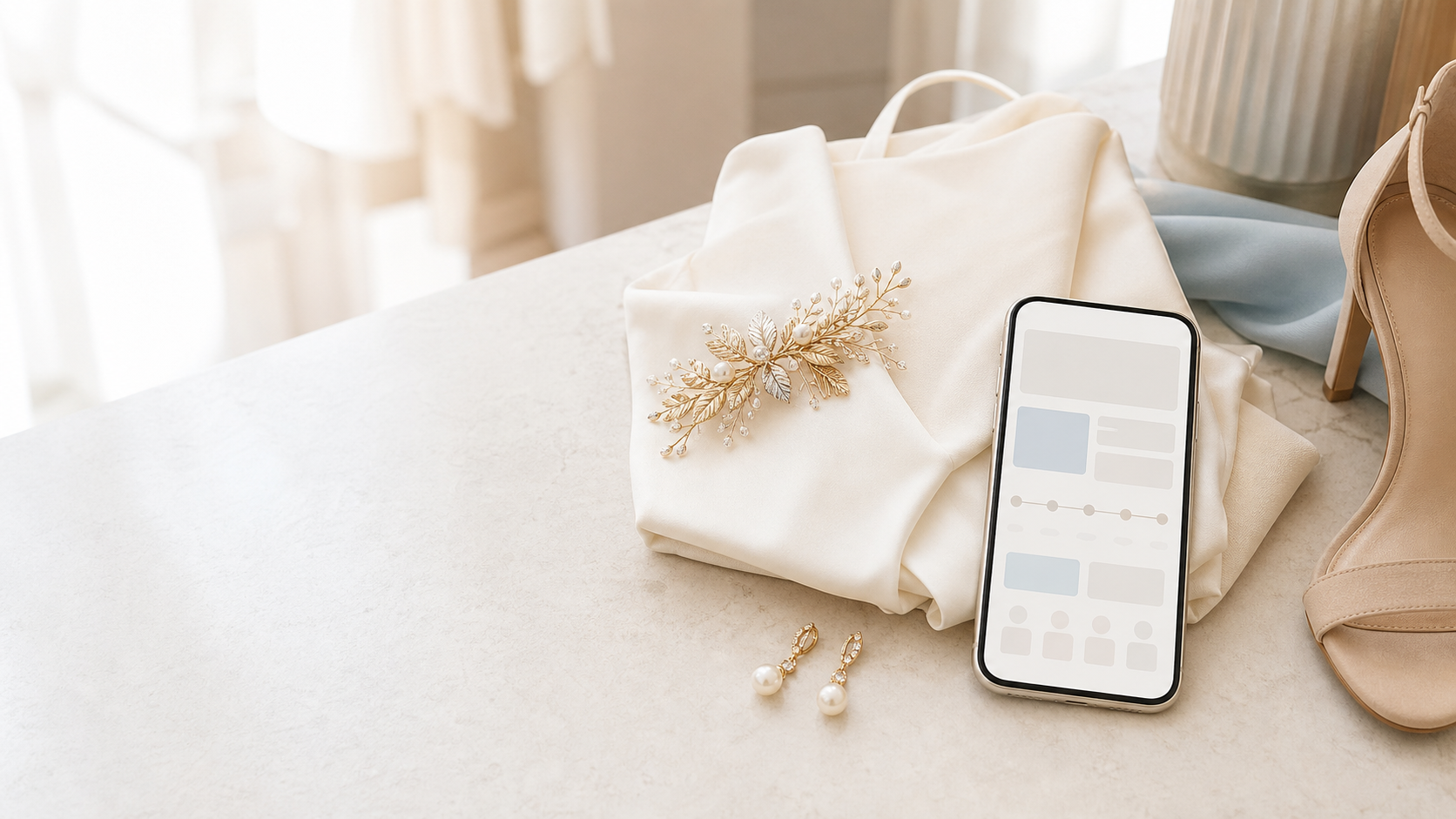
Your wedding look is only the beginning.
Keep your guest list, vendors, timeline, and every important detail together with Zarellea — so your day feels as considered as your style.
Style overview: one color, multiple silhouettes
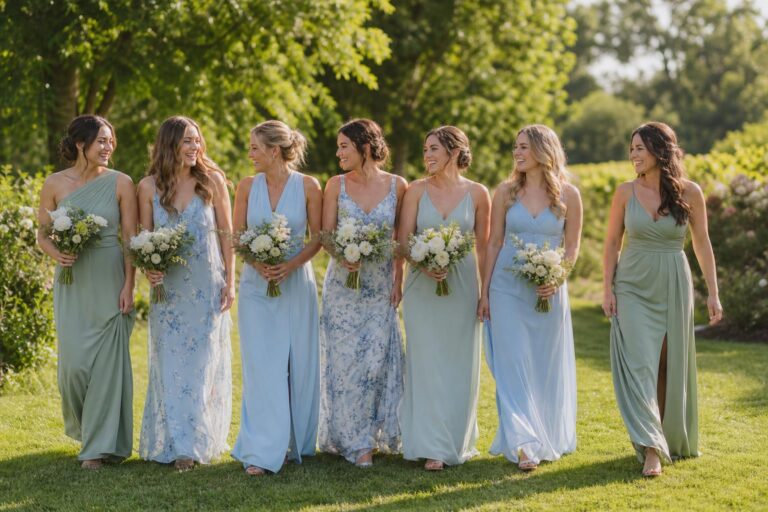
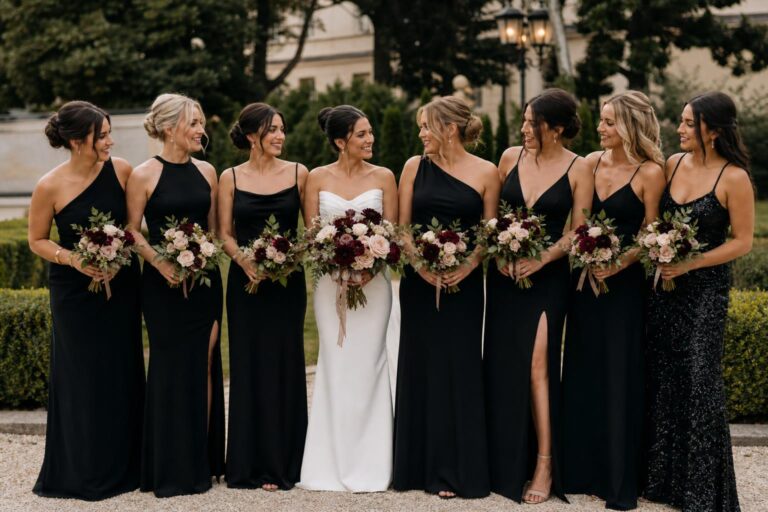
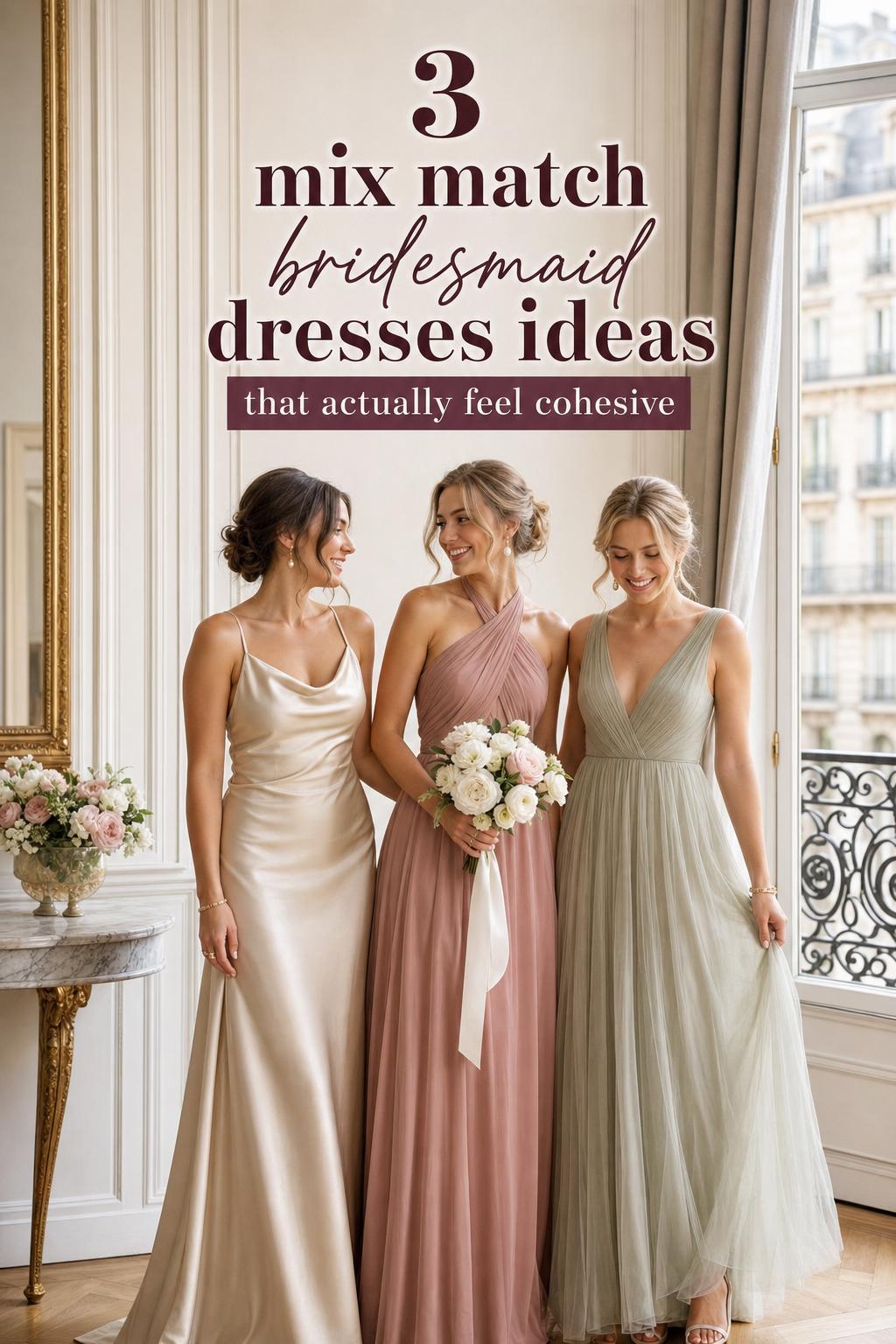
This is often the most approachable version of mix-and-match bridesmaid dresses. Everyone wears the same or very similar color, but the dress shapes vary. The defining characteristic is silhouette diversity: one bridesmaid may choose an A-line gown, another a column shape, and another a softer flowing cut that feels comfortable for a long ceremony and reception. The overall mood is cohesive, polished, and easy to photograph because the uniform color naturally pulls the group together.
Color palettes in this category are restrained because visual variation comes from cut rather than shade. Fabrics may stay consistent, or they may vary slightly, though the cleaner versions of this look usually limit fabric contrast so the silhouette remains the focal point. This approach is especially useful when fit, comfort, and body-shape preferences matter as much as visual consistency.
Style overview: one palette, several shades
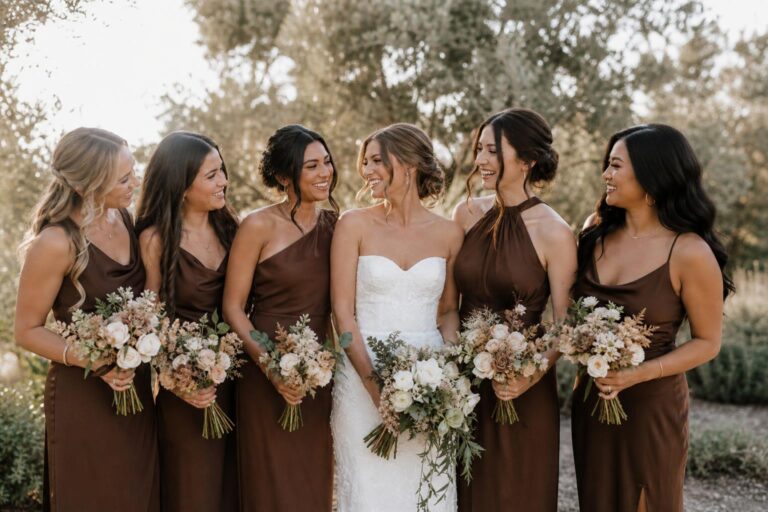
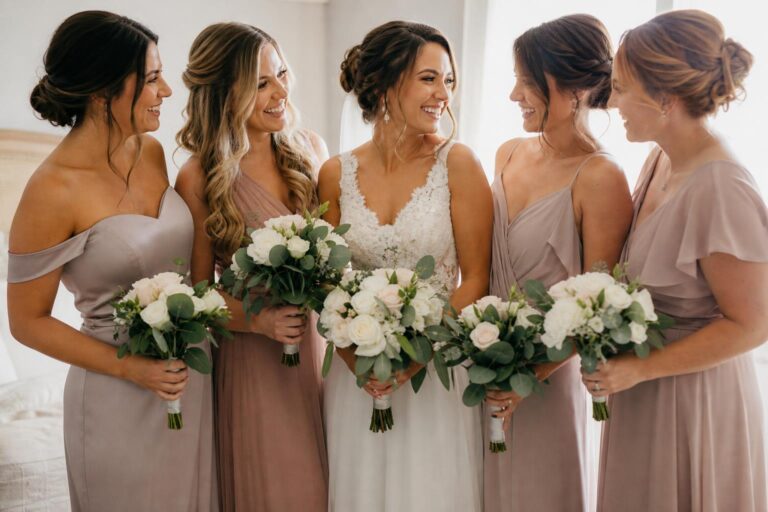
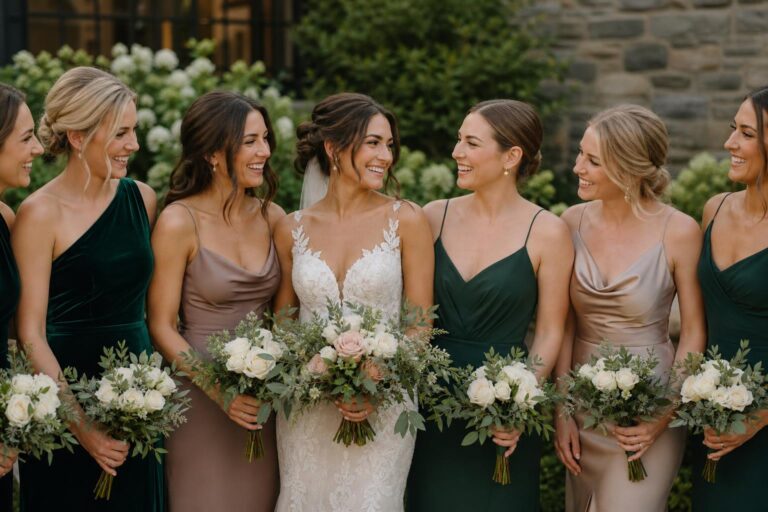
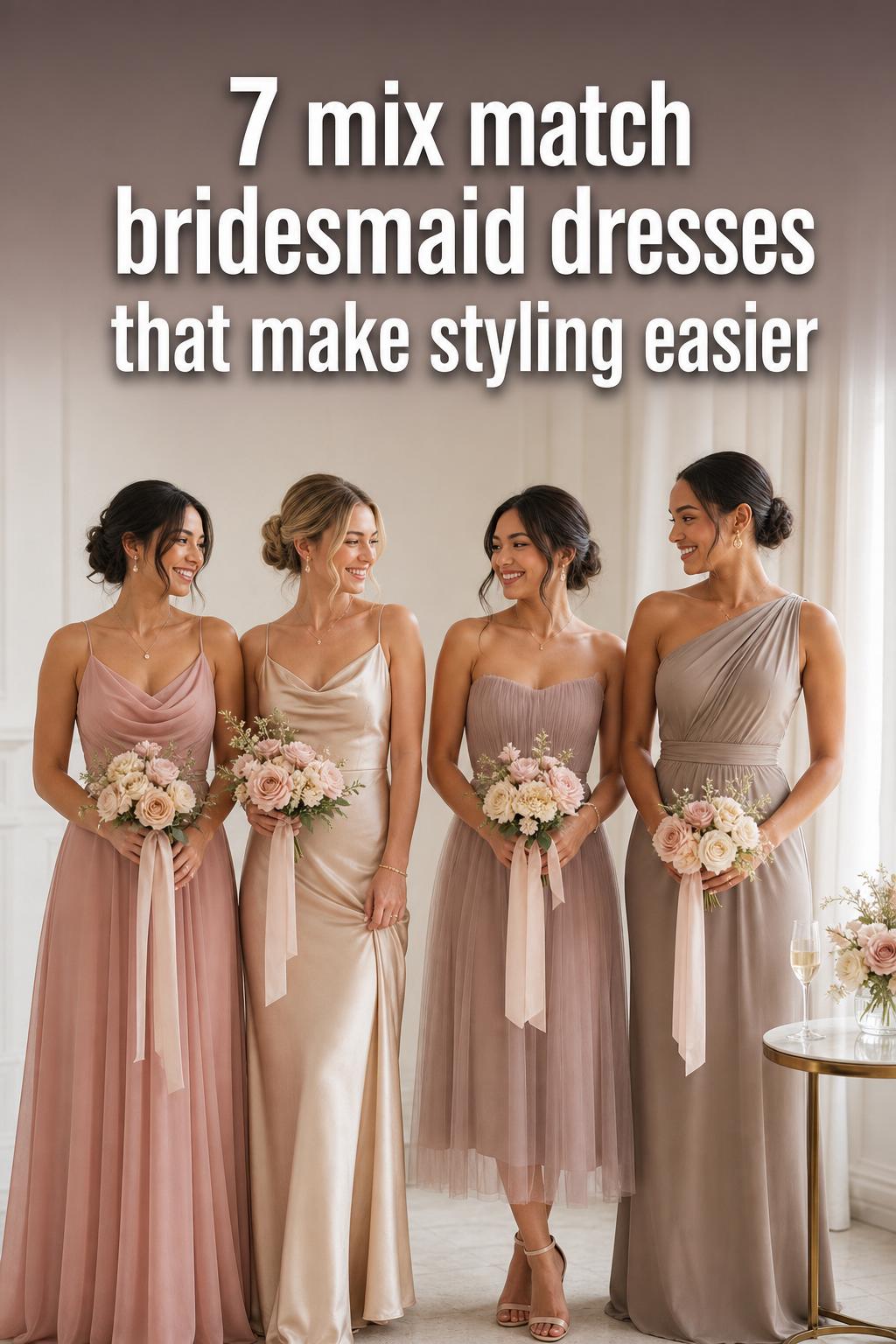
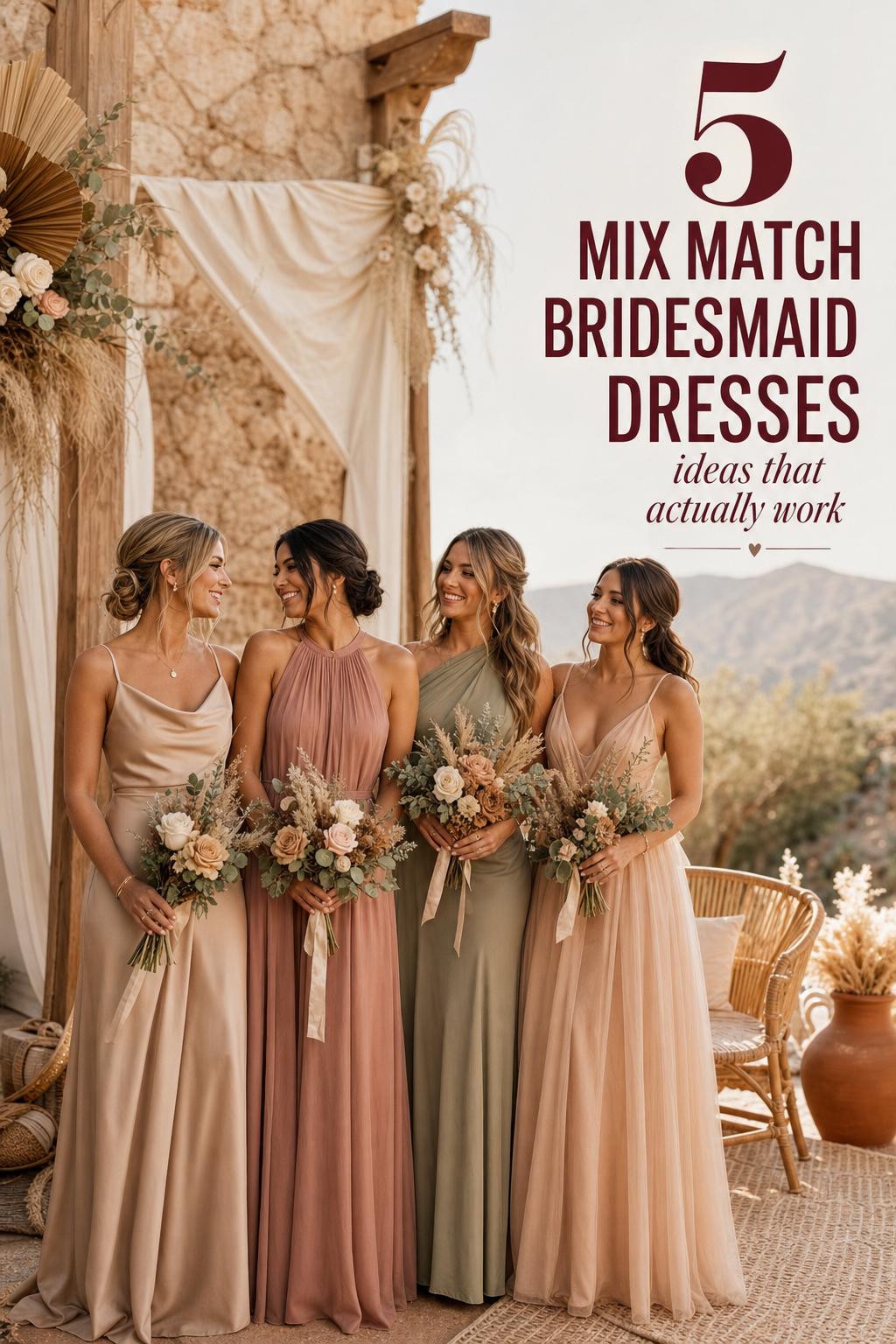
This version leans more editorial. Instead of identical color, the bridal party wears different tones within the same family or a coordinated palette. Think soft neutrals together, jewel tones grouped with intention, or pastels varied across the bridal party. Here, color coordination becomes the central styling tool. Silhouettes may match or differ, but the eye notices the graduated tones first.
The aesthetic mood is romantic and layered, especially in natural light. At a garden ceremony, a soft palette can feel airy and painterly; at a candlelit reception, deeper tones create richness and depth. This approach often looks more fashion-forward than strict single-color styling, but it also requires more care so the palette reads deliberate rather than random.
Style overview: coordinated colors with mixed fabrics and textures
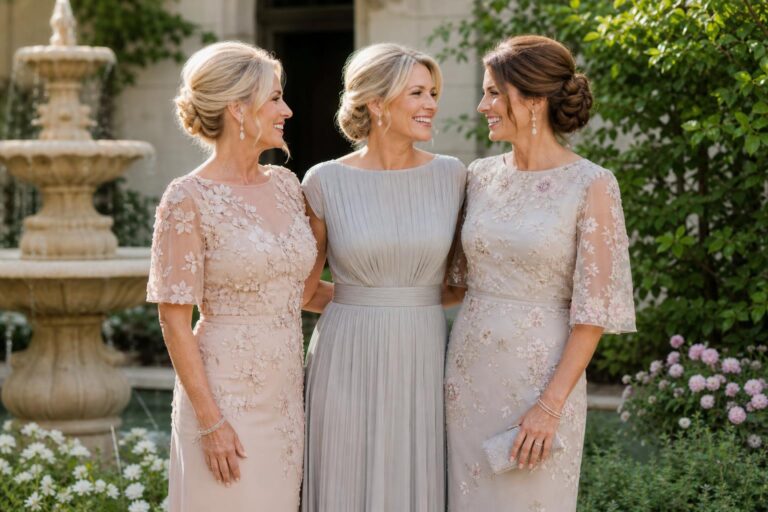
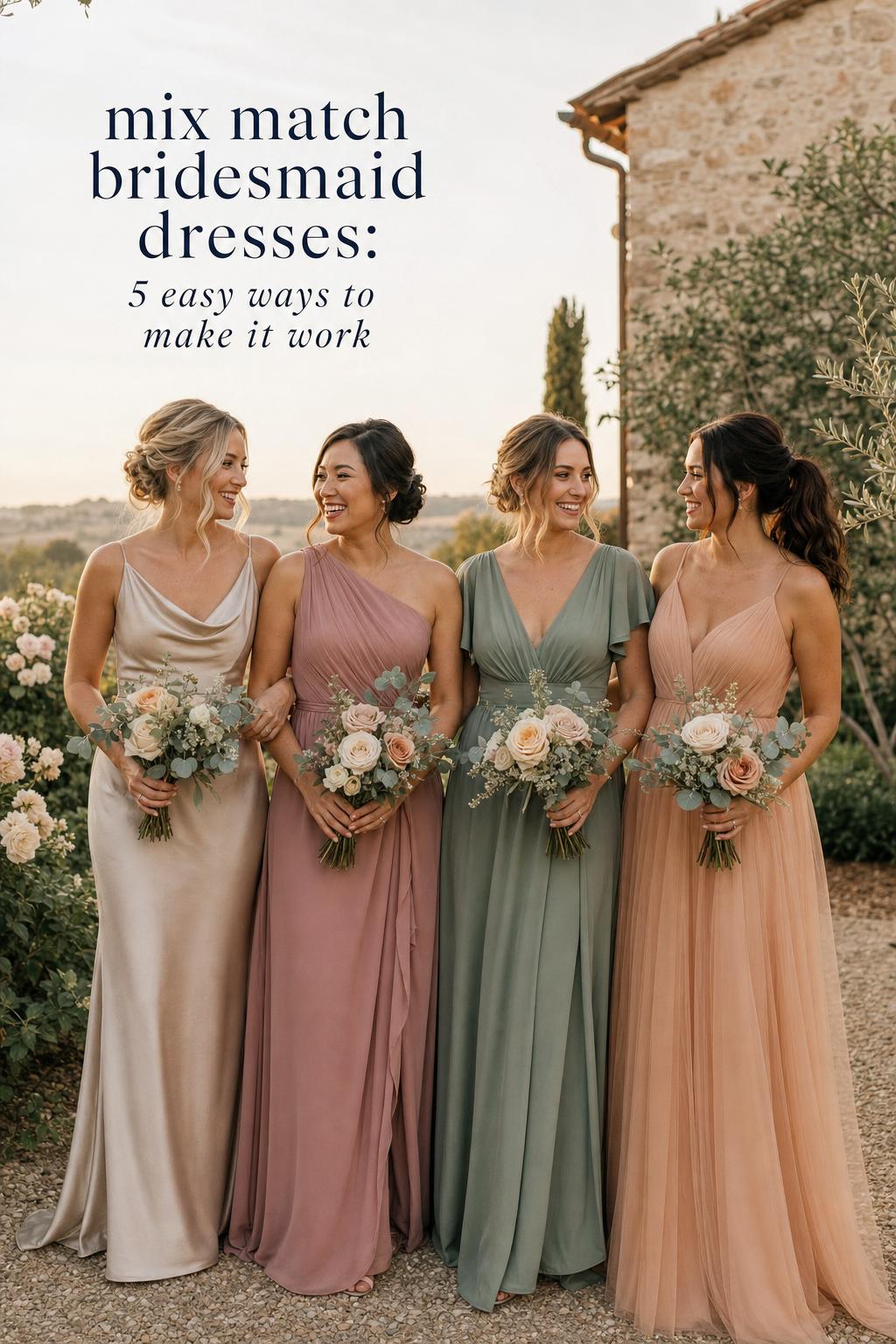
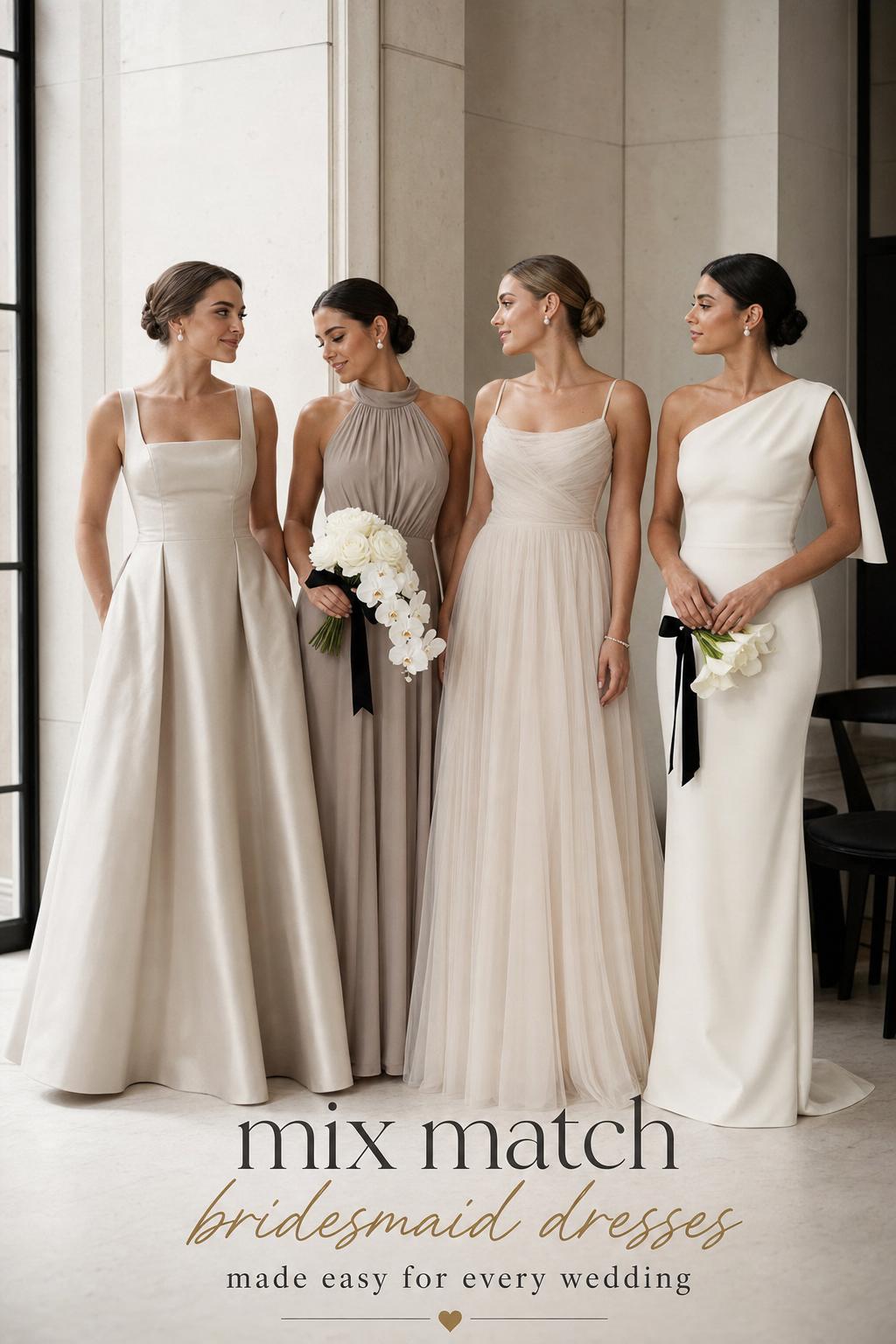
In this style, texture does a great deal of the visual work. Chiffon, satin, and tulle can sit within the same bridal party, sometimes in one color family and sometimes in closely related shades. The defining characteristic is fabric interplay. Chiffon brings movement, satin adds a more reflective finish, and tulle introduces softness and volume. The mood can feel dimensional, modern, and slightly more styled than a purely color-based mix.
This approach often suits weddings where atmosphere matters visually: golden-hour ceremonies, formal evenings, or venues with distinctive lighting. Texture catches light differently, so a lineup with mixed fabrics can feel especially nuanced in photos. The trade-off is that texture is harder to balance than color alone, particularly if the dresses vary too widely in sheen or formality.
Where these styles overlap and why they are often confused
The language around mismatched bridesmaid dresses can be broad. One bride may say “mismatched” when she means different necklines in one exact shade, while another uses the same term for a bridal party wearing several tones of the same palette. Retailers and wedding planning portals often group both ideas together because shoppers are searching for flexibility, coordination, and inspiration rather than a strict technical definition.
That overlap makes sense. All three approaches aim for the same outcome: a bridal party that looks cohesive without feeling overly uniform. They all rely on the same core tools—color palettes, silhouettes, fabrics, and styling consistency—and they all work best when there is a clear decision-making framework behind them. The difference is simply which styling element leads the composition.
In other words, one wedding may prioritize fit, another color depth, and another fabric dimension. The result can look similar from a distance, which is why these styles are often discussed together, even though the styling logic behind them is quite different.
The clearest style differences at a glance
The easiest way to understand mix-and-match bridesmaid aesthetics is to compare what changes and what stays fixed in each approach. That comparison shapes everything from dress shopping to fittings and final photos.
- Silhouette-led styling: color stays mostly fixed, while shape changes from bridesmaid to bridesmaid.
- Palette-led styling: color varies within a coordinated family, while silhouette and overall formality are usually more controlled.
- Texture-led styling: fabrics such as chiffon, satin, and tulle create distinction, often within a shared palette.
- Most formal visual effect: satin and other smoother finishes tend to read dressier, especially in evening settings.
- Most relaxed visual effect: chiffon and softer drape usually feel lighter, especially for outdoor ceremonies.
- Most body-inclusive framework: same color with multiple silhouettes typically gives bridesmaids the greatest fit flexibility.
Those differences matter because they influence not only the bridal party’s appearance, but also how easy the process feels. A bride planning a ballroom reception may be drawn to richer textures and structured lines, while a beach ceremony calls for simpler movement, lighter fabrics, and less visual weight. The style choice is rarely just aesthetic; it is also practical.
Comparing silhouette-first and palette-first bridal party styling
Among all the ways to build a bridal party look, the most common comparison is between same-color different-shape dressing and multi-shade coordinated dressing. Both belong under the umbrella of mix match bridesmaid dresses, but they send different visual messages.
Silhouette and structure
With silhouette-first styling, the eye notices individuality in shape. One bridesmaid may wear a softer, more flowing line; another may choose a straighter silhouette that feels cleaner and more minimal. This creates a tailored, body-aware effect. It tells the viewer that the bridal party was styled around fit and comfort without sacrificing cohesion.
Palette-first styling shifts attention away from the cut and toward the group as a whole. Even when silhouettes vary, the sweep of shades creates the strongest impression. The bridal party feels more like a composed color story. This often appears more editorial, but it also means the palette has to be thoughtfully managed or the dresses can begin to compete with one another.
Color logic
Same-color styling is more forgiving. Since every dress sits inside one hue, there is less chance of visual imbalance. It is a strong option for brides who want a polished lineup but still want each bridesmaid to choose a flattering shape.
Palette-led styling depends more heavily on color harmony. Soft neutrals create a subtle, elegant effect; jewel tones offer richer contrast; pastels paired with texture can feel especially romantic in spring or daytime celebrations. The beauty of this approach lies in depth and layering, but that same depth is what requires more careful coordination.
Overall mood and formality
Silhouette-first styling often feels cleaner and more classic. It works particularly well when the wedding itself has a refined, straightforward dress code and the bride wants the bridal party to look coordinated in a quiet way.
Palette-first styling can feel softer, more atmospheric, and more expressive. It often suits weddings where the visual setting matters deeply—vineyard ceremonies, outdoor receptions, or spaces where color contributes to the romance of the scene. It can also feel more trend-forward, especially when shades are layered intentionally.
Fabric stories: chiffon, satin, and tulle do not say the same thing
Fabric choice changes the entire reading of a bridal party, even before guests notice color or silhouette. Chiffon, satin, and tulle appear repeatedly in mix-and-match guidance because each one creates a distinct visual texture and responds differently to movement, light, and formality.
Chiffon as the softest interpretation
Chiffon is closely tied to movement. In an outdoor ceremony, it catches air beautifully and tends to feel lighter and less structured. That makes it well suited to garden weddings, beach settings, and celebrations where comfort across a long day matters. In a mix-and-match lineup, chiffon often helps unify different silhouettes because its drape softens variation.
The limitation is that chiffon usually reads less formal than a smoother, more lustrous fabric. If part of the bridal party is in chiffon and part is in high-shine satin, the difference in formality can become noticeable unless it is handled carefully.
Satin as the more polished and evening-leaning option
Satin brings a richer finish and a more defined visual presence. Under evening lighting or inside a formal reception space, it can make a bridal party feel elevated and more structured. It works especially well for weddings with a polished dress code, deeper tones, or a more dramatic atmosphere.
Because satin reflects light, differences in fit and cut tend to be more visible. That can be flattering and glamorous, but it also means bridesmaids often need a silhouette that feels secure and comfortable. In a mixed-fabric bridal party, satin generally looks best when there is a clear plan for balancing shine with softer textures.
Tulle as the romantic texture layer
Tulle introduces softness through volume and texture rather than shine. It can feel whimsical, romantic, and particularly effective in bridal parties built around a gentle pastel palette or an intentionally airy aesthetic. In a mix-and-match setting, tulle is often strongest as an accent fabric rather than the dominant texture across every dress.
The practical consideration with tulle is visual weight. Too much volume beside sleek or fluid dresses can disrupt balance, so it tends to work best when the palette is tightly controlled and the rest of the bridal party remains relatively understated.
Color palettes compared: soft neutrals, jewel tones, and pastels with texture
Color strategy is where many bridal parties either become beautifully cohesive or unintentionally scattered. Among the palette directions most often discussed for mix-and-match bridesmaid dresses, three stand out for their distinct visual effect.
Soft neutrals
Soft neutrals create a calm, refined bridal party. This palette tends to feel elegant rather than dramatic, and it photographs with a light touch, especially in daytime or outdoor settings. It is often the easiest palette for brides who want variation without a bold statement because the shades naturally harmonize.
The challenge with soft neutrals is clarity. If the tones are too similar without enough intentional structure, the result can look less designed and more accidental. This is where consistent fabrics or consistent silhouettes can help anchor the palette.
Jewel tones
Jewel tones create depth, saturation, and a more dramatic wedding mood. They often feel especially striking at evening receptions, in candlelit venues, or during colder-season celebrations where richer shades look natural against the setting. A bridal party in layered jewel tones can look lush and luxurious without everyone wearing the exact same dress.
The balance point here is intensity. Because jewel tones are naturally strong, they need disciplined coordination. Too many unrelated shades can pull focus away from cohesion, so this approach usually benefits from tighter planning than soft neutral styling.
Pastels with texture
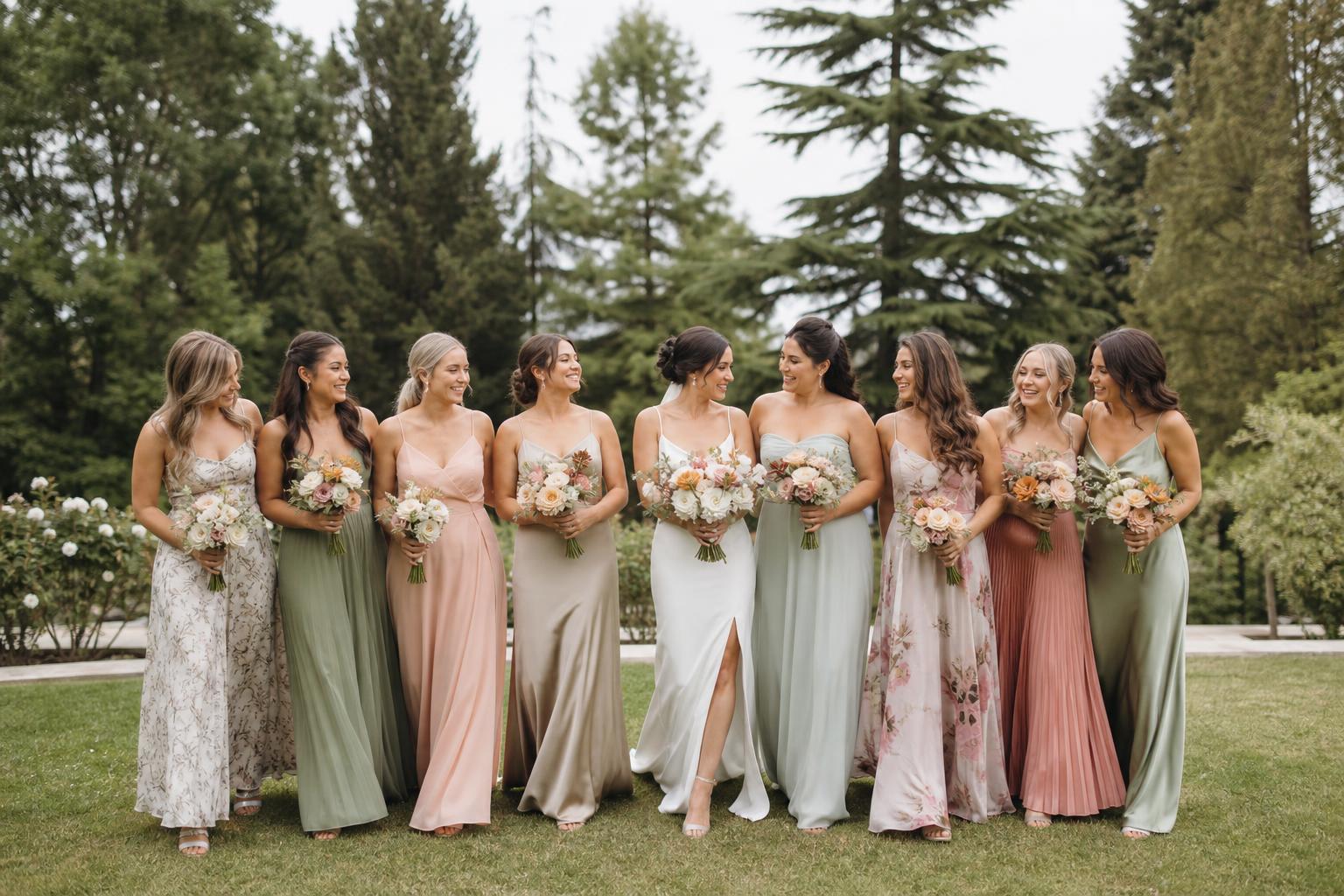
Pastels paired with mixed fabrics create one of the most romantic expressions of mismatched bridesmaid dresses. The softness of the colors allows texture to stand out without overwhelming the bridal party. Chiffon, satin, and touches of tulle can all work here, particularly for spring weddings, garden ceremonies, or celebrations built around a gentle visual palette.
This style is visually delicate, which is exactly why texture matters so much. If every dress is pastel and similarly matte, the lineup can flatten. A thoughtful mix of finishes keeps the look dimensional while still preserving that light, romantic mood.
Visual style breakdown in real wedding settings
The same bridal party strategy can look entirely different depending on venue, lighting, and the rhythm of the day. A stylist looking at mix-and-match options is not only comparing dresses, but also imagining how they will read at the ceremony, in portraits, and on the dance floor.
Garden ceremony at golden hour
For a garden setting, palette-led dressing often looks especially natural. Soft neutrals or pastels with chiffon and light texture sit beautifully in open air and warm light. The visual effect is fluid rather than rigid. Accessories and hair should support that softness rather than interrupt it, which is why many styling-focused guides emphasize consistency in jewelry and overall finishing details.
Ballroom or formal evening reception
Inside a more formal space, satin and deeper color stories often become stronger. A silhouette-first strategy in one rich tone can look particularly sharp and composed, while jewel tones in a coordinated palette create a more atmospheric, editorial result. In these settings, shine, drape, and structure are more visible, so inconsistency in fabric usually stands out faster than it would outdoors.
Beach or destination celebration
A destination or beach wedding benefits from restraint. Soft movement, lighter fabrics, and practical comfort matter more than heavy visual complexity. Chiffon and simpler silhouettes often outperform highly structured dresses because the setting asks for ease. Here, same-color different-silhouette styling can be especially effective because it preserves cohesion while allowing each bridesmaid to choose what feels wearable in heat and open-air conditions.
Accessories, hair, and jewelry: the quiet elements that create cohesion
One of the most overlooked differences between a bridal party that looks styled and one that only looks assorted is the treatment of accessories. Bella Bridesmaids and other styling-oriented sources often frame this well: dresses do not have to match perfectly when the finishing elements create continuity.
Jewelry, hair, and beauty direction should not erase individuality, but they should give the eye a sense of rhythm. If the dresses vary in neckline, color, or fabric, keeping accessories within a related mood helps prevent visual noise. The bridal party can look intentionally diverse while still feeling connected.
- If dresses differ in shape, keep jewelry direction relatively consistent.
- If color varies, avoid introducing too many competing accessory statements.
- If texture is mixed, let hair and jewelry remain refined so the dresses stay central.
- If the wedding has a formal evening atmosphere, smoother and more polished finishing details usually support the dresses better.
- If the wedding is outdoors and relaxed, softer styling can keep the overall look from feeling overworked.
These decisions matter because bridal party style is seen as a group composition first and an individual outfit second. Cohesion often comes from repeated visual signals, not from identical garments.
Shopping paths compared: editorial inspiration, retailer guidance, and brand-led collections
Not every bride shops for mix-and-match bridesmaid dresses in the same way. Some begin with editorial guidance from The Knot or WeddingWire, especially when trying to decide whether bridesmaid dresses have to match at all. Others move straight into product-led pages from Ever-Pretty, DressDora, Bella Bridesmaids, or JJ’s House, where the focus shifts from concept to actual purchasing options. ABC News shopping roundups and inspiration-focused galleries such as Bridalmusings often sit somewhere in the middle, helping readers connect visual ideas with rewearability or shopping direction.
These paths support different priorities. Editorial resources are stronger for understanding the styling logic behind mismatch and cohesion. Retailer-led resources are useful when the goal is to compare fabrics, silhouettes, and product categories. Showroom-oriented brands such as Bella Bridesmaids may appeal to brides who want more hands-on styling support, while broad ecommerce brands can be useful for affordability and variety.
How the shopping approaches differ
- Editorial guidance: best for deciding between matching, mixing, and palette-based coordination.
- Retail collections: best for viewing multiple dress styles within a consistent shopping environment.
- Shopping roundups: useful for inspiration, especially when rewearability or versatility is part of the decision.
- Downloadable guides and planning resources: helpful for brides who want a more structured decision process around color, fit, and coordination.
For many U.S. shoppers, the most effective route is a blend of all three: start with an editorial framework, refine the desired style approach, then move into brand collections with a clearer point of view.
Outfit logic through comparison: how the same wedding can be styled in different ways
The strongest way to understand these differences is to imagine the same wedding styled through different mix-and-match lenses. The dresses may all belong to the same celebration, but the styling philosophy changes the mood completely.
Example comparison: a romantic garden wedding
A silhouette-first bridal party might dress everyone in one soft neutral shade, allowing each bridesmaid to choose a silhouette that suits her comfort and shape. The effect is harmonious and gentle, with movement coming from the cut of each dress rather than from changing colors.
A palette-first bridal party for the same setting could move through several related pastel tones, perhaps with chiffon and a touch of tulle for texture. The result would feel more layered and painterly, especially under natural light, with the group reading as a coordinated color story rather than a single-color lineup.
Example comparison: a formal evening reception
With a silhouette-led approach, bridesmaids might wear one deep tone in different cuts, creating a sleek and composed visual line that feels very controlled and elegant. Satin could heighten that effect if the setting leans formal.
With a palette-led approach, jewel tones would create more visual drama and dimension. Instead of one uninterrupted line of color, the bridal party would look richer and more atmospheric, which can be especially striking under indoor evening lighting.
Example comparison: a destination wedding with long hours on foot
In a practical, comfort-conscious interpretation, same-color different-silhouette styling makes the most sense. It gives each bridesmaid room to choose a shape that works for travel, warm weather, and movement throughout the day. Chiffon often feels aligned with this kind of event because it moves easily and generally reads lighter.
A more fashion-led interpretation could still use a coordinated palette, but it would need restraint. Lighter tones and soft textures could work beautifully, though too many competing details might feel less grounded in a breezy destination setting.
When each mix-and-match style works best
Choosing among these approaches is rarely about which style is objectively better. It is about which one aligns with the wedding atmosphere, the bridal party’s needs, and the bride’s visual priorities.
Choose same color, different silhouettes when fit is the priority
This style is especially strong when bridesmaids have different comfort levels, body-shape preferences, or opinions about necklines and structure. It preserves unity while allowing personal variation. It also tends to be one of the safest approaches for brides who want the bridal party to feel polished without turning the dresses into a major visual statement.
Choose one palette with several shades when the atmosphere matters visually
If the wedding setting itself is part of the romance—an outdoor ceremony, a vineyard, a candlelit reception, a highly styled celebration—palette-led dressing can feel especially beautiful. It creates mood through color and can give the bridal party a softer, more layered presence.
Choose mixed textures when the goal is dimension
Texture-led styling works best for brides who love visual nuance and are comfortable making more detailed styling decisions. It can be stunning, but it benefits from a controlled hand. The most successful versions usually keep either color or silhouette relatively disciplined so the fabric variation has room to shine.
Tips brides and bridesmaids often overlook
Even the most beautiful concept can lose clarity if practical decisions are left too late. A bridal party often spends months choosing dresses, but the most common issues usually come down to coordination details rather than the dresses themselves.
One useful principle is to decide what must stay consistent before anyone starts shopping. If that anchor is unclear, everyone interprets “mix and match” differently. Some will focus on silhouette, others on color, and others on texture, which can make the final group look less intentional than expected.
- Pick one visual anchor first: color, silhouette family, or fabric direction.
- Decide early how much variation is actually allowed.
- Think about lighting and venue before finalizing texture-heavy combinations.
- Remember that comfort affects how polished dresses look over a long wedding day.
- Use accessories and beauty styling to create continuity if dresses vary widely.
Another practical note: affordability changes the conversation. Budget-friendly shopping, highlighted by several retailer-led guides, often makes silhouette-based mixing easier than elaborate palette-building. When cost is a major factor, it can be more realistic to keep the color fixed and let the dress shape vary. That route usually protects cohesion without creating unnecessary complexity.
A stylist’s framework for making the final decision
When bridal parties struggle with mismatched bridesmaid dresses, the issue is rarely too little inspiration. More often, it is too many appealing directions at once. A cleaner decision process helps.
Start with the wedding mood: airy and romantic, polished and formal, or layered and fashion-forward. Then choose the primary styling tool. If the bridal party’s comfort and fit are central, lead with silhouette. If the setting and photography call for a richer visual story, lead with palette. If the bride is drawn to texture and detail, let fabric be part of the plan, but keep another element controlled.
Finally, evaluate the look as a group rather than as individual dresses. A single satin gown may be beautiful, and a chiffon dress may be equally beautiful, but the question is whether they belong to the same visual conversation. That is the real test of mix-and-match success.
Conclusion
The core distinction in mix-and-match bridesmaid dressing is simple: some bridal parties vary shape, some vary color, and some vary texture. Once that is clear, the styling process becomes far more intuitive. Same-color different-silhouette dressing reads classic and body-aware, palette-led dressing feels more atmospheric and editorial, and texture-led dressing adds depth when handled with restraint.
You can identify each approach by looking at what stays consistent across the bridal party. If the color anchors everything, it is silhouette-first. If the tones create the main story, it is palette-first. If shine, drape, and surface contrast stand out most, texture is doing the work.
The most compelling bridal parties often borrow lightly from more than one method: a coordinated palette with gentle silhouette variation, or one shared shade with subtle fabric differences. That balance is where modern wedding style feels most convincing—thoughtful, flattering, and beautifully composed for the celebration at hand.
FAQ
what does mix and match bridesmaid dresses mean?
It generally means the bridal party is not wearing one identical dress. The variation may come from different silhouettes in the same color, different shades within one palette, or a coordinated mix of fabrics and textures such as chiffon, satin, or tulle.
do bridesmaid dresses have to match exactly?
No, they do not have to match exactly to look cohesive. Many modern weddings use coordinated hues, varied silhouettes, or mixed textures to create a bridal party that feels unified while still allowing individuality and better fit for different bridesmaids.
what is the easiest way to pull off mismatched bridesmaid dresses?
The simplest approach is to keep one element fixed, usually the color, and allow variation in silhouette. This creates flexibility for bridesmaids while making the overall group easier to coordinate visually and easier to shop for across different brands and price points.
which fabrics work best for mix-and-match bridesmaid dresses?
Chiffon, satin, and tulle are the most commonly discussed fabrics because each offers a distinct effect. Chiffon feels soft and airy, satin reads more polished and formal, and tulle adds romantic texture. The best choice depends on the venue, lighting, dress code, and how much visual contrast you want in the bridal party.
what are the best colors for mismatched bridesmaid dresses?
Soft neutrals, jewel tones, and pastels are among the strongest options because they create clear visual stories. Soft neutrals feel subtle and elegant, jewel tones look rich and dramatic, and pastels paired with texture create a romantic bridal-party effect, especially in outdoor or daytime weddings.
how do you coordinate different styles of bridesmaid dresses without making them look random?
Set a clear anchor before shopping begins. Decide whether color, silhouette, or fabric will stay consistent, then let variation happen only around that point. Cohesion also improves when jewelry, hair, and overall formality are treated with consistency across the bridal party.
are mix-and-match bridesmaid dresses more affordable?
They can be, especially when the strategy is same color with different silhouettes. That approach allows bridesmaids to choose cuts that suit both comfort and budget. More complex palette-building or mixed-fabric coordination may require more planning and can feel less straightforward from a budget perspective.
where can you shop for mix-and-match bridesmaid dresses in the united states?
Popular paths include retailer and brand collections such as Ever-Pretty, Bella Bridesmaids, DressDora, and JJ’s House, along with inspiration and planning resources from The Knot, WeddingWire, Wedding Shoppe Inc., Bridalmusings, and shopping roundups such as ABC News. Each serves a slightly different purpose, from styling guidance to direct purchasing.
is it better to mix colors or mix silhouettes?
It depends on the priority. Mixing silhouettes is usually better for fit flexibility and a polished classic effect. Mixing colors within a coordinated palette creates a more atmospheric, editorial look, but it requires more careful planning to maintain harmony.