Why Champagne Bridesmaid Dresses Work in Every Venue
Under warm ballroom lighting, at golden hour in a vineyard, or against the soft neutral backdrop of a garden ceremony, champagne bridesmaid dresses shift in character more than many bridal party colors do. That is exactly why they are so often discussed alongside blush, nude, gold, and ivory: they live in the same elegant family of wedding neutrals, yet they do not behave in quite the same way once fabric, silhouette, and light enter the picture.
This style breakdown looks closely at the main approaches within the champagne palette and compares the aesthetics brides and bridesmaids most often weigh against each other: satin versus chiffon, coordinated versus mismatched, and champagne versus neighboring neutral tones such as blush, ivory, and gold. The goal is not simply to admire the color, but to understand how it works in real wedding settings, how different retailers and brands interpret it, and how to choose the version that feels polished rather than indistinct.
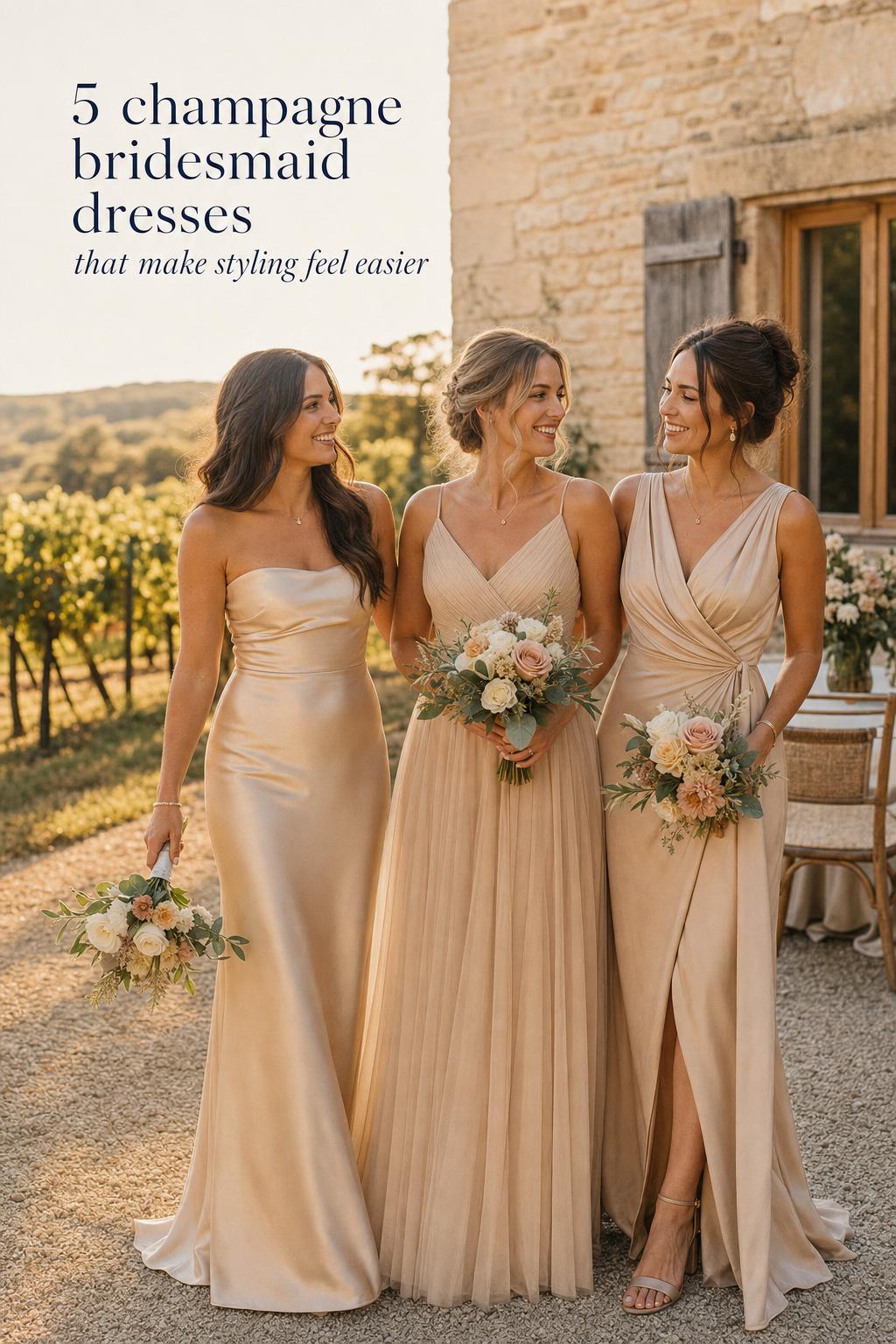
By the end, you will have a clearer sense of which champagne direction suits a modern city reception, a formal hotel wedding, a countryside celebration, or a softer outdoor ceremony. More importantly, you will be able to tell the difference between a champagne palette that feels intentional and one that can drift too close to another neutral without enough contrast.
The many faces of champagne in bridal party style
Champagne is often described as a neutral, but in wedding fashion it functions more like a flexible color family. Some versions lean warm and golden, some carry a faint pink cast, and others read almost coppery depending on fabric and lighting. This range is part of the appeal. It allows a bridal party to feel cohesive without the severity that can sometimes come with darker tones or the sweetness associated with more overt pastels.
Your wedding look is only the beginning.
Keep your guest list, vendors, timeline, and every important detail together with Zarellea — so your day feels as considered as your style.
That flexibility also explains why so many shoppers move between brands such as Birdy Grey, Dessy, Ever-Pretty, Carlyna, Tobi, PrettyLittleThing, Lady Black Tie, and multi-brand catalog sites when comparing options. The question is rarely just “Do I want champagne?” It is usually “Which champagne?” and “In what texture, shape, and styling context?”
Style overview: warm champagne
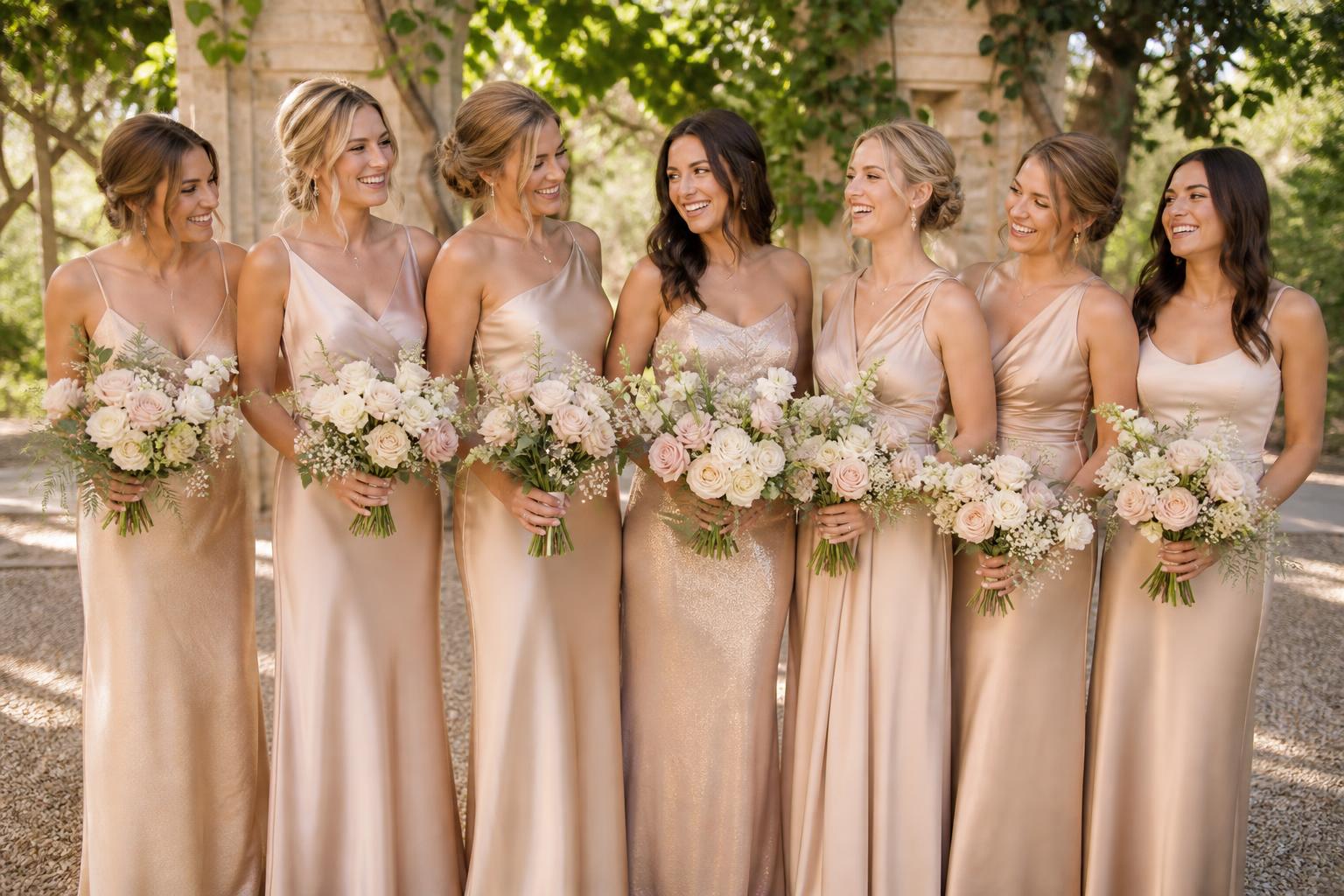
Warm champagne is the most classic interpretation. It has a soft gold undertone and tends to feel especially natural in satin, charmeuse-like finishes, and other light-reflective fabrics. Visually, it suits traditional receptions, black-tie leaning weddings, and formal indoor venues where metallic accents, cream florals, and candlelight deepen the richness of the tone.
Style overview: pink-tinged champagne
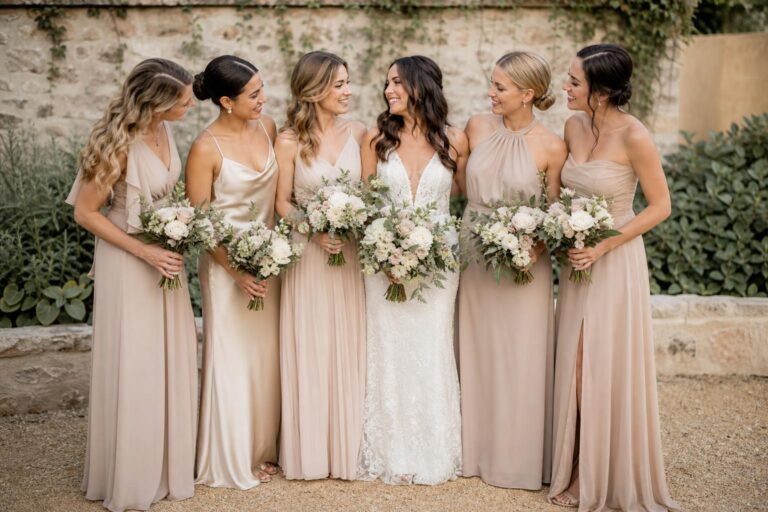
Pink-tinged champagne sits nearest to blush in the neutral spectrum. It still reads as champagne, but with a softer romantic cast that works beautifully in chiffon, tulle, and airy silhouettes. This is often the version that feels most at home in garden ceremonies, spring celebrations, and editorial bridal palettes built around peony tones, ivory roses, and rose gold details.
Style overview: deeper metallic champagne
Some champagne bridesmaid dresses lean more metallic or coppery, especially in satin, sequin, or structured fabrics. These dresses tend to read more fashion-forward and more evening-oriented. In a candlelit ballroom or modern hotel setting, they create a stronger statement than the softer neutral versions and pair naturally with gold accessories and sleek styling.

Champagne versus blush, ivory, and gold
These shades are grouped together so often that the distinctions can blur, especially while shopping online. In practice, the differences matter because each color sets a different mood for the bridal party and photographs differently across daylight, shade, and indoor lighting.
Champagne and blush: close cousins with different moods
Champagne and blush are frequently compared because both feel romantic and wedding-ready, but blush is generally more overtly soft and pastel. Champagne feels more neutral and more adaptable across seasons. A blush bridesmaid lineup often creates a sweeter, floral impression, while champagne tends to look more refined and less theme-specific. If the wedding design includes metallic accents, cream decor, and understated florals, champagne usually integrates more seamlessly.
Champagne and ivory: contrast is the deciding factor
Ivory can enter the conversation because both shades sit within a light neutral palette. The difference is that ivory is cleaner and lighter, while champagne introduces warmth and depth. For a bridal party, champagne typically offers stronger visual separation from the bridal look, especially in photographs. In settings where the bride wears a classic light gown and the decor includes cream and white arrangements, champagne often provides the right level of distinction without becoming loud.
Champagne and gold: understated versus overt shine
Gold is more explicit. Champagne is softer. A gold palette can feel glamorous, festive, and especially dramatic for evening celebrations, while champagne tends to preserve a quieter elegance. If a bridal party wants shimmer without committing to a highly metallic effect, champagne satin or champagne sequin offers a middle ground. This is often the better choice for weddings that want polish rather than spectacle.
Where the fabric changes everything
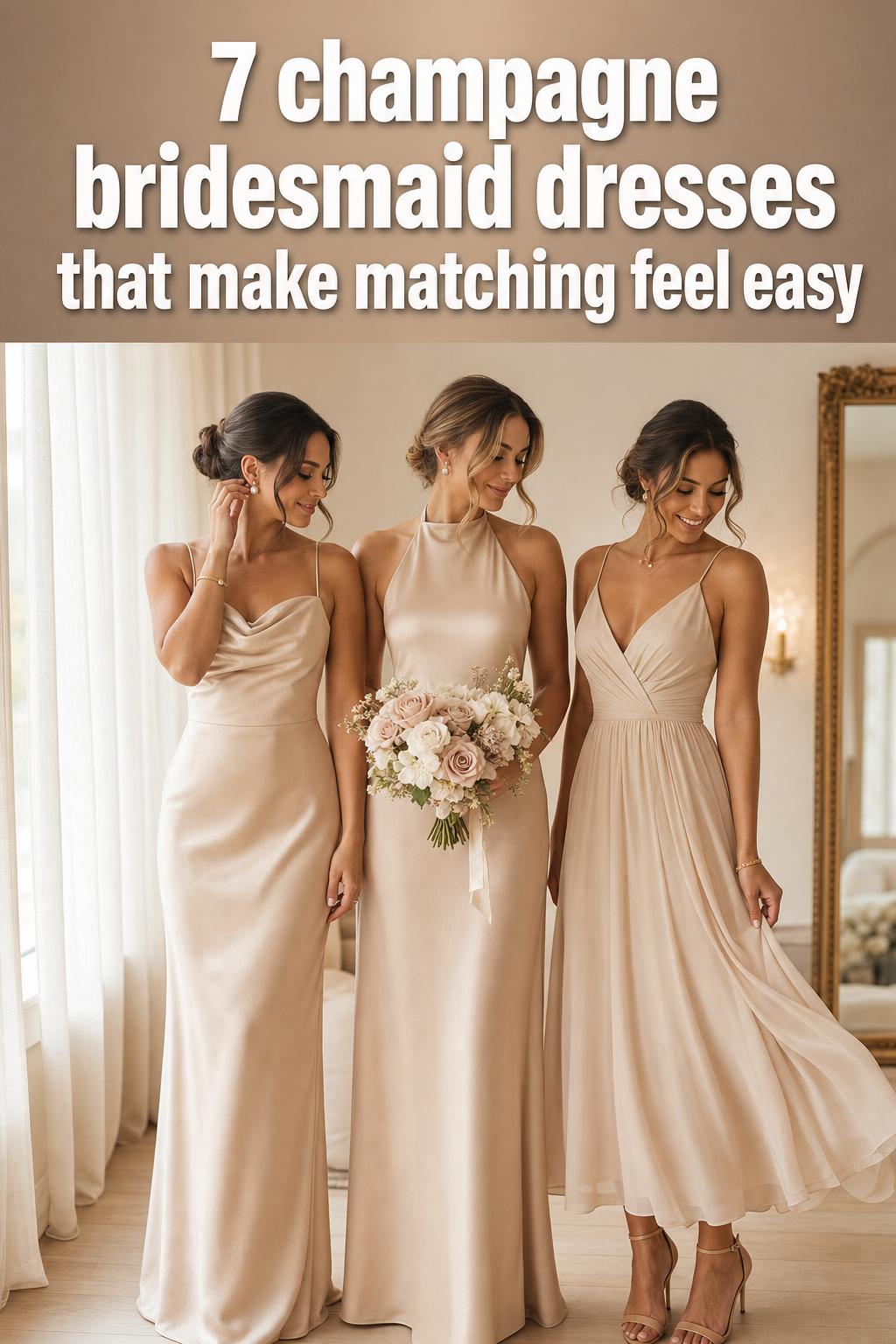
One of the most important style distinctions within champagne bridesmaid dresses is fabric. The color does not exist on its own; it is interpreted through texture and drape. The same shade can feel relaxed, formal, modern, or almost vintage depending on whether it appears in chiffon, satin, mikado, tulle, or sequin.
Satin champagne versus chiffon champagne
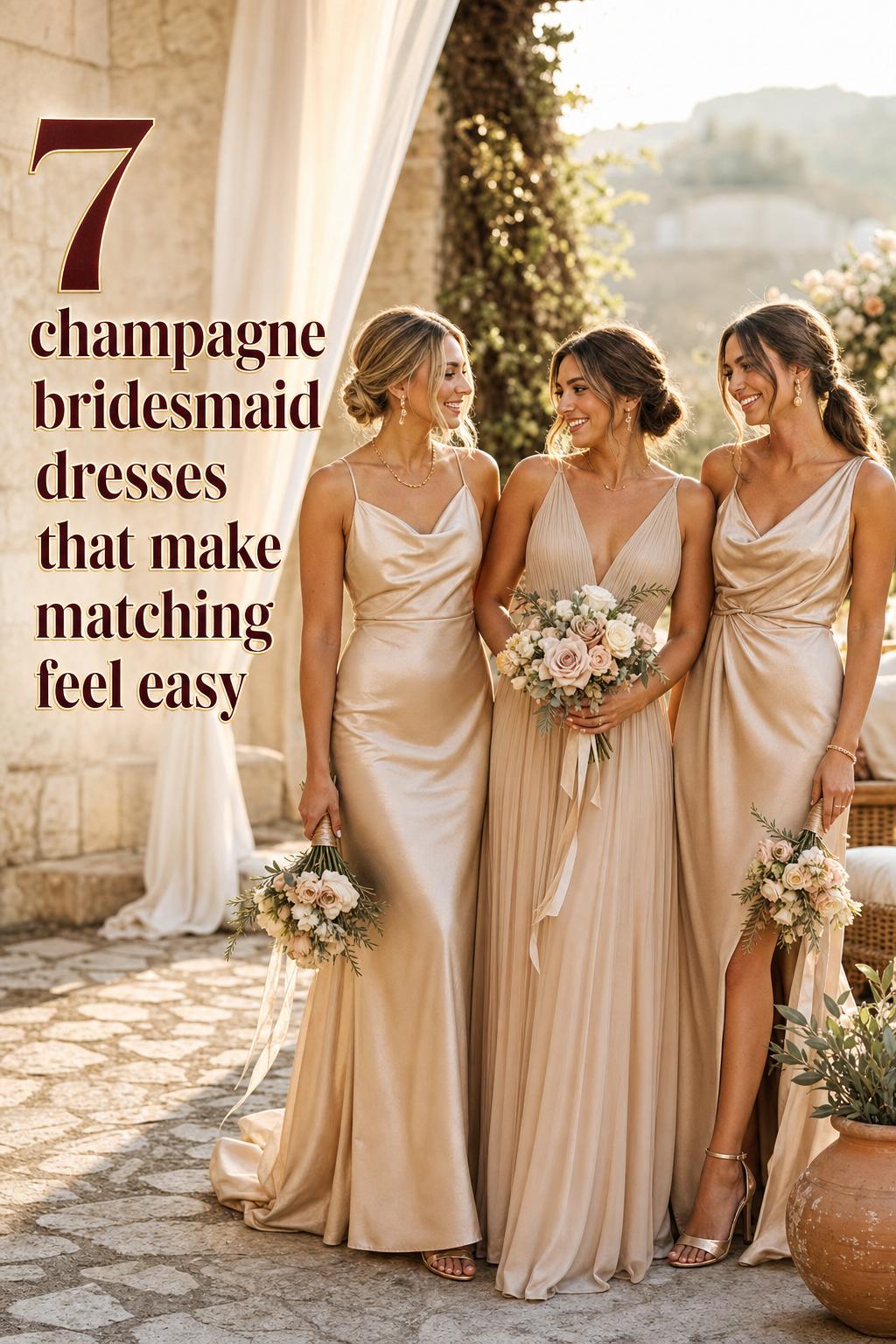
This is perhaps the most useful comparison for bridesmaids choosing between aesthetics. Satin champagne reads richer, sleeker, and more directional. It catches light, which makes the warm undertones more obvious and gives the dress a more evening-ready presence. Chiffon champagne, by contrast, softens the shade. It diffuses color and movement, which often makes it feel lighter, easier, and more romantic.
For a city hotel wedding or formal reception, satin often feels more aligned with the venue. For a countryside, garden, or outdoor ceremony where movement and breathability matter, chiffon usually has the advantage. Neither is universally better; the decision rests on atmosphere, season, and the desired degree of structure.
Mikado and structured textures
Structured fabrics such as mikado bring a sculptural quality to champagne. They are less about fluid drape and more about shape. This works well for bridesmaids who prefer clean lines, more support through the bodice, or a sharper modern profile. The trade-off is that the look can feel more formal and less forgiving in very warm outdoor conditions.
Sequin and embellished champagne
Champagne sequin sits at the more expressive end of the spectrum. It can be beautiful for an evening reception, especially where the venue already leans glamorous, but it asks for restraint elsewhere in the styling. When the dresses provide that much texture, accessories, florals, and beauty choices often look better when they remain streamlined.
Tip: choose the fabric before debating accessories
In practice, many styling difficulties begin when a bridal party chooses accessories before deciding how the dresses behave in light. Satin almost invites metallic jewelry and a cleaner finish. Chiffon can handle softer florals and gentler styling. If the fabric decision is clear first, the rest of the visual story becomes much easier to shape.
Silhouette comparison: soft romance, clean modernity, and body-conscious structure
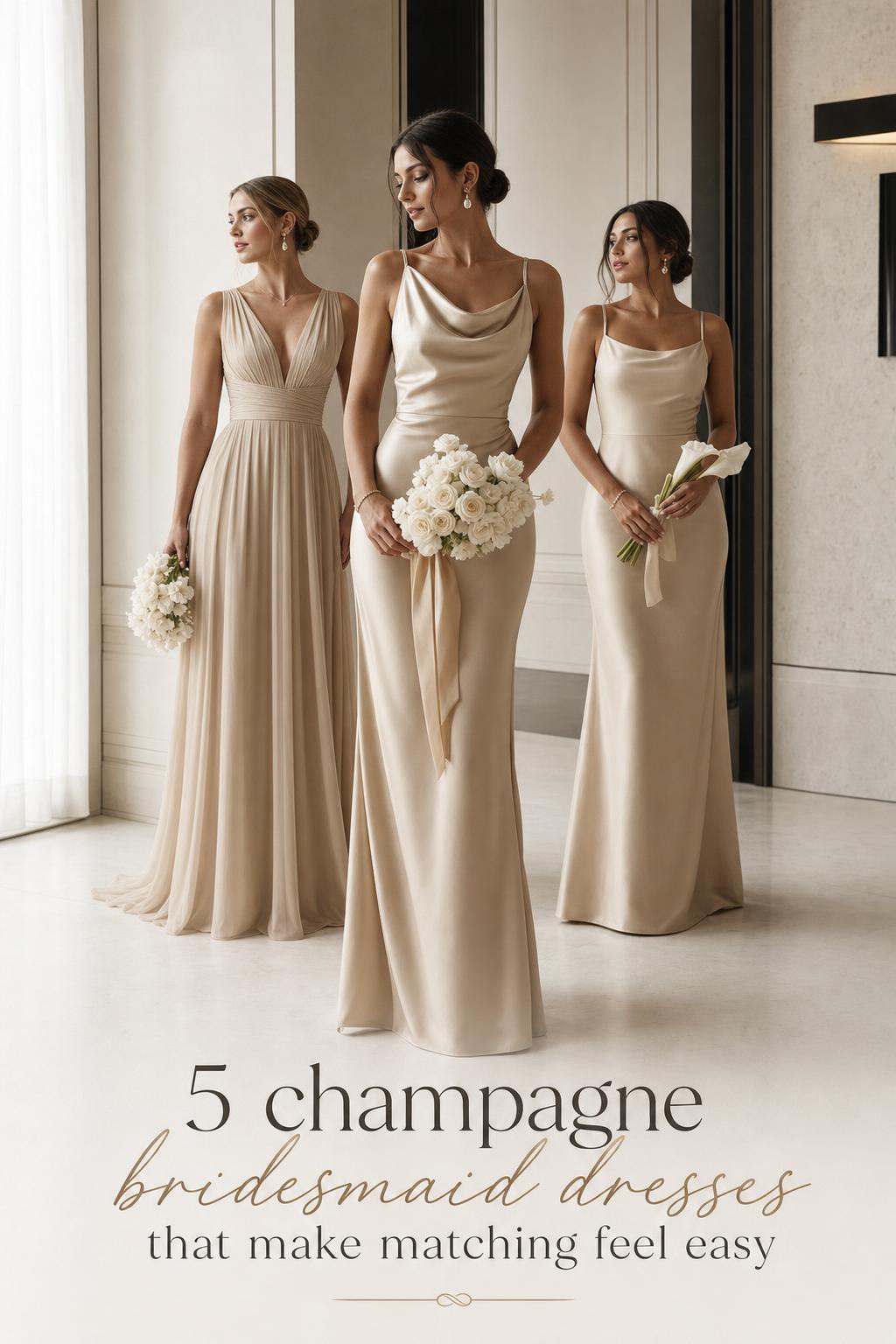
Champagne is unusually responsive to silhouette. Because the color is subtle, shape becomes more visible. A-line, fit-and-flare, column, sheath, maxi, and midi options can all work, but they do not communicate the same kind of elegance.
A-line and flowing maxi shapes
An A-line or soft maxi silhouette is the most universally bridal-party friendly approach. It feels balanced, easy to wear through a long ceremony and reception, and adaptable across body types. In chiffon, it creates movement that suits outdoor weddings and softer palettes. In satin, the same basic shape can become considerably more formal.
Column and sheath silhouettes
Column and sheath dresses make champagne look more modern. The color’s neutrality helps these silhouettes appear polished rather than stark, especially in satin. This is a strong direction for contemporary weddings, minimalist venues, and fashion-conscious bridal parties. The limitation is comfort and ease of movement: a closer cut requires more attention to fit, alterations, and how the dress feels over many hours.
Midi lengths and contemporary bridal parties
Midi styles are less expected than maxi gowns, which is precisely why they can be effective. In champagne, a midi length can feel chic and editorial, particularly for civil ceremonies, intimate receptions, or modern daytime celebrations. The shorter line changes the visual balance of the look, so footwear becomes more prominent and should be considered early.
Fit-and-flare and more defined structure
Fit-and-flare silhouettes bring a more shaped profile to champagne, especially in satin or structured fabric. They can be striking, but they also make consistency in tailoring more important across the bridal party. When several bridesmaids wear this silhouette, uneven fit is more noticeable than it would be in a looser A-line or draped maxi design.
- A-line is the easiest for mixed body shapes and mixed venue types.
- Column and sheath feel the most modern and polished.
- Midi lengths work well when the wedding mood is contemporary or daytime-focused.
- Fit-and-flare benefits most from careful alterations and fabric support.
Coordinated champagne or mismatched champagne?
One of the most current bridal party discussions is whether every bridesmaid should wear the same dress or whether the color should stay constant while silhouettes change. Champagne supports both approaches unusually well because it already reads as cohesive. The choice depends on whether the wedding needs visual uniformity or a softer, more relaxed composition.
The case for matching dresses
A fully coordinated lineup feels formal, intentional, and classic. This approach works beautifully in traditional venues, hotel ballrooms, and weddings with a crisp visual plan. It is also useful when the bridal party wants strong consistency in photographs. Retailers and brands with broad category pages, such as Birdy Grey and Dessy, are especially relevant for this route because style filters, size guidance, and fabric continuity support a cleaner group presentation.
The case for mismatched silhouettes in one color family
Mismatched champagne bridesmaid dresses often feel more personal and more wearable. Keeping the shade family consistent while varying neckline, sleeve, or skirt shape can help different bridesmaids feel like themselves without disrupting the palette. This works especially well when the color itself is the anchor and the wedding mood is romantic, modern, or less rigidly formal.
The challenge is color consistency across fabrics and brands. Champagne can shift noticeably from one material to another, so a mismatched approach usually works best when dresses come from the same retailer or from very closely aligned collections rather than a random mix from unrelated sources.
Tip: if you mix silhouettes, keep fabric close
In real wedding photos, it is usually not the neckline variation that creates visual disruption. It is the difference between one bridesmaid in reflective satin and another in matte chiffon under the same lighting. If the group wants variety, keeping fabric within the same family often preserves cohesion better than focusing only on color names.
How champagne behaves in photos and venue lighting
Few bridal party colors depend on light as much as champagne. In daylight, it can appear airy and neutral. Under tungsten or candlelit evening conditions, it often warms noticeably. Satin intensifies that effect, while chiffon tends to soften it. This is why a dress that looked understated online may read much richer in a reception setting.
For outdoor ceremonies, especially those timed around late afternoon, champagne can look beautifully dimensional without overwhelming the scene. For indoor receptions, the same shade may become more metallic, especially when paired with gold decor and reflective accessories. Neither outcome is a flaw; it simply means the bridal party should choose with the venue in mind rather than based on studio-style product images alone.
Wedding settings where champagne excels
- Ballrooms and hotel receptions where candlelight, cream florals, and metallic details deepen the color.
- Vineyard and garden weddings where warm natural light gives chiffon and satin a soft glow.
- Modern city venues where column or sheath silhouettes keep the neutral palette sharp rather than overly romantic.
- Countryside celebrations where soft champagne works with natural textures and understated decor.
Accessories, florals, and decor: the styling philosophy behind the dress
Champagne styling succeeds when it is treated as part of a larger wedding-day ecosystem. Dresses should not be chosen in isolation from jewelry metals, bouquet tones, venue style, and the atmosphere of the reception. This color is especially responsive to context. It can lean modern with clean metallic accents, romantic with soft ivory and blush florals, or glamorous with richer gold details.
Gold, rose gold, and pearls
Gold jewelry is the most intuitive pairing because it reinforces the warmth in the fabric. Rose gold can work particularly well with pink-tinged champagne, adding softness without shifting too far into blush territory. Pearls introduce a classic bridal finish and are useful when the dresses already have some sheen and the styling needs a quieter note.
Florals in ivory, cream, and blush
Ivory roses, cream arrangements, and peony-inspired softness all sit naturally beside champagne. The key is preserving enough tonal distinction that the dresses do not disappear into the floral palette. A fully monochromatic neutral scheme can be elegant, but it benefits from one grounding element, whether that is greenery, a stronger metallic accent, or slightly deeper textural contrast.
Decor pairings that feel cohesive
Champagne pairs especially well with ivory, cream, blush, and gold accents, and it can also work against deeper anchors such as charcoal or navy when a wedding wants more contrast. The difference is one of mood. With light neutrals, champagne feels ethereal and romantic. With darker companion tones, it appears more tailored and evening-oriented.
A retailer lens: how different brands tend to frame the champagne look
Shopping for champagne bridesmaid dresses is not only a question of price or availability. Different retailers and brands emphasize different interpretations of the style. Understanding those tendencies helps narrow the search and prevents comparing options that are aiming for entirely different moods.
Birdy Grey and Dessy: broad bridal party planning
Birdy Grey and Dessy are strongly associated with the practical bridal party side of shopping: multiple silhouettes, filters by style and length, and attention to size guidance and color continuity. They are especially useful for brides who want a cohesive group rather than a single standout dress. Dessy also tends to sit comfortably in conversations around fabric choice, customer reviews, and style organization, which matters when consistency across several bridesmaids is the priority.
Ever-Pretty and PrettyLittleThing: value and trend direction
Ever-Pretty and PrettyLittleThing are relevant when budget and trend-conscious styling sit high on the list. These routes can be appealing for bridal parties looking for modern silhouettes or fashion-forward textures without centering the search on traditional bridal formatting. The styling logic here is different: the dresses may carry more current-season energy, so brides should make sure that trend details still align with the wedding’s overall level of formality.
Carlyna, Lady Black Tie, and boutique curation
Carlyna and Lady Black Tie suggest a more curated, boutique-driven approach. Here, champagne often appears through satin textures, modern silhouettes, and more editorial styling cues. This can be ideal for a wedding that wants a refined, less standard bridal-party look. It also suits bridesmaids who care deeply about cut and finish rather than treating the dress as purely functional eventwear.
Tobi and multi-brand catalogs
Tobi and larger multi-brand collections widen the field, which can be useful at the inspiration stage. They often bring in occasion-based shopping logic, style filters, and a broader visual range. That breadth is helpful for comparison, though it makes close attention to fabric, shade naming, and silhouette detail even more important.
Visual style breakdown: how the same color reads in real outfits
Even within one palette, styling choices create very different impressions. Champagne can look fluid and romantic, clean and minimalist, or rich and formal depending on how proportion, layering, and accessories are handled.
Soft romantic champagne
This interpretation favors chiffon, gentle drape, and silhouettes with movement. Accessories stay delicate, bouquet tones remain close to ivory and blush, and the overall balance is light rather than graphic. In a garden or vineyard setting, this approach feels natural because the dresses move with the environment instead of standing apart from it.
Modern minimal champagne
Here the focus shifts to cleaner lines: column dresses, sheath shapes, satin surfaces, and restrained accessories. The styling is not sparse, but edited. In a city venue or sleek reception space, champagne becomes less about softness and more about understated luxury. Footwear and jewelry matter more because there are fewer decorative distractions in the dress itself.
Evening glamour champagne
This version relies on shine, texture, and richer reception lighting. Satin with stronger reflection or champagne sequin dresses fit naturally here, especially when paired with gold accents and a more formal atmosphere. The important balance is restraint elsewhere: once the fabric becomes highly visible, the styling is usually strongest when hair, jewelry, and bouquets remain composed.
Outfit comparisons for real wedding scenarios
Garden ceremony at golden hour
A soft romantic champagne approach would usually choose flowing chiffon maxi dresses, perhaps with varied necklines for comfort and movement. The same setting interpreted through a modern minimal lens would likely use sleeker satin slips or column silhouettes, creating stronger contrast against the natural background. Both can work, but the first blends with the setting while the second stands out against it.
Formal hotel ballroom reception
In a ballroom, satin champagne often comes into its own. A classic coordinated bridal party in matching satin A-line or sheath gowns feels polished and venue-appropriate. The alternative would be a deeper metallic champagne or subtle sequin interpretation for a more glamorous atmosphere. The distinction is between elegant formality and visible evening drama.
Rustic countryside celebration
For a countryside venue, chiffon champagne or softer matte textures generally feel more settled in the landscape. A boutique, highly structured satin look can still be beautiful, but it will read as more fashion-forward and less organically tied to the setting. Brides who want the bridal party to echo the relaxed mood of the venue usually prefer fluidity over structure here.
Modern city wedding
In an urban venue, champagne works best when the styling is disciplined. A sheath or column silhouette, minimal jewelry, and a cleaner bouquet palette allow the color to feel sophisticated rather than sentimental. A chiffon-heavy, ultra-soft interpretation in the same setting can still be lovely, but it creates a more romantic counterpoint to the architecture rather than mirroring it.
When each champagne approach works best
The most successful bridal parties tend to choose not only a color but a styling philosophy. Champagne is broad enough to support multiple wedding identities, which makes clarity especially important.
- Choose satin champagne for formal receptions, evening weddings, sleek venues, and bridal parties that want a more polished profile.
- Choose chiffon champagne for outdoor ceremonies, warm-weather celebrations, and softer romantic styling with movement.
- Choose mismatched champagne silhouettes when bridesmaid comfort and individuality matter, but keep the fabric family consistent.
- Choose matching dresses when the wedding aesthetic is classic, structured, and photographically uniform.
- Choose pink-leaning champagne when the palette edges toward blush and rose gold.
- Choose deeper champagne when the decor includes stronger metallic accents and the setting is more dramatic.
Fit, sizing, and the practical side of wearing champagne all day
Champagne often looks effortless in photographs, but wearing it well throughout a wedding day depends on practical details. Because the color can highlight drape and reflection, fit matters more than many bridesmaids expect. A satin dress that is slightly off in the bust or hip will usually reveal that more quickly than a chiffon style with movement.
Alterations are especially relevant for sheath, column, and fit-and-flare silhouettes. More relaxed A-line and maxi styles are often easier across mixed body types, which is part of their enduring popularity. Size guidance from brands such as Birdy Grey and Dessy can be especially useful when coordinating several bridesmaids, but even then, a final tailoring pass may be what makes the dress feel truly intentional rather than simply close enough.
Tip: think beyond the ceremony photo
A bridesmaid dress needs to function through sitting, walking, standing through a ceremony, and several hours of reception movement. A fabric that looks beautiful in a product image may behave differently once the day becomes long. For outdoor weddings, breathability and ease of movement matter. For evening receptions, lining, support, and how the fabric falls under artificial light become more important.
Common champagne styling mistakes that are easy to avoid
Because champagne is subtle, the mistakes around it are rarely dramatic. They are usually issues of tonal confusion, texture imbalance, or styling that pushes the dresses too far toward another palette without intention.
- Choosing dresses that are all called “champagne” but differ too much in undertone across brands.
- Mixing highly reflective satin with very matte fabrics without a clear visual reason.
- Pairing champagne with decor so similar in tone that the bridal party loses definition in photos.
- Assuming champagne will always look the same in daylight and indoor reception lighting.
- Adding too many metallic elements when the dresses already provide shine.
The easiest fix is to view champagne as a tonal system rather than a single flat color. Once the bridal party considers undertone, fabric, and venue together, the palette becomes much easier to control.
A refined glossary of champagne-color terms
Champagne
A warm neutral color family used frequently in weddings, often sitting between ivory, blush, nude, and gold depending on undertone and fabric.
Warm champagne
A more golden version of champagne that appears especially rich in satin and evening light.
Pink-tinged champagne
A softer interpretation with a blush-adjacent cast, often suited to romantic florals and lighter styling.
Metallic champagne
A deeper or more reflective variation that leans closer to gold in sheen, particularly in satin or sequin fabrics.
Nude champagne
A softer neutral interpretation that can overlap visually with nude tones depending on lighting and skin-tone contrast.
The core distinction to remember
The most useful way to understand champagne bridesmaid dresses is not as one fixed look, but as a spectrum of wedding neutrals shaped by fabric, silhouette, and atmosphere. Satin champagne and chiffon champagne do not communicate the same mood. A coordinated ballroom bridal party and a softly mismatched garden lineup do not ask the color to do the same job. Even neighboring shades such as blush, ivory, and gold reveal champagne by contrast: less pastel than blush, deeper than ivory, and quieter than gold.
Once you can recognize those distinctions, shopping becomes much more precise. You can identify whether a dress is aiming for romance, minimalism, or evening glamour, and whether it belongs in a vineyard at golden hour, a modern city venue, or a candlelit reception. Champagne remains one of the most versatile bridal party choices because it allows all of those directions, and the most memorable styling often comes from combining its softness with just enough structure to make the palette feel deliberate.
FAQ
Do champagne bridesmaid dresses photograph well?
Yes, but they are especially sensitive to lighting and fabric. In daylight, champagne often looks soft and neutral, while indoor or candlelit settings can make it appear warmer and more metallic, particularly in satin.
What is the difference between champagne and blush bridesmaid dresses?
Blush generally reads more pastel and overtly romantic, while champagne feels more neutral and versatile. Champagne often works more easily with metallic accents, cream decor, and a wider range of wedding settings across seasons.
Is satin or chiffon better for champagne bridesmaid dresses?
Satin gives champagne a richer, more formal appearance and suits evening receptions or sleek venues, while chiffon softens the color and tends to work beautifully for outdoor ceremonies, garden weddings, and warmer conditions.
Can bridesmaids wear mismatched champagne dresses?
Yes, mismatched silhouettes can work very well in champagne as long as the shade family stays close. The most cohesive results usually come from keeping fabrics similar as well, since matte and highly reflective materials can make the same color look different.
Which accessories work best with champagne bridesmaid dresses?
Gold is the most natural pairing, rose gold works especially well with pink-leaning champagne, and pearls offer a classic softer finish. The more reflective the dress fabric is, the better restrained accessories tend to look.
How do champagne dresses compare with ivory for a bridal party?
Champagne usually provides more warmth and more distinction from the bridal look than ivory. That makes it a strong choice when the bride is wearing a light gown and the wedding palette includes cream or white florals.
Where can I shop for champagne bridesmaid dresses?
Bridesmaids commonly compare brands and retailers such as Birdy Grey, Dessy, Ever-Pretty, Carlyna, PrettyLittleThing, Tobi, Lady Black Tie, and broader multi-brand catalog sites, depending on whether the priority is coordination, budget, trend direction, or a more boutique feel.
Are champagne bridesmaid dresses appropriate for all wedding styles?
They are highly adaptable, but the right version matters. Soft chiffon champagne suits garden and countryside weddings, while satin or more metallic champagne tends to feel stronger in ballrooms, hotel receptions, and modern evening venues.