Blush Flower Girl Dresses for Romantic Wedding Style
The appeal of blush flower girl dresses is easy to understand in theory and surprisingly difficult to get right in practice. A shade that looks romantic in a bridal mood board can read too pale in bright outdoor light, too formal for a relaxed garden ceremony, or too precious for a child who needs to walk, sit, twirl, and stay comfortable through a long wedding day. Add in questions about tulle versus satin, A-line versus ball gown, ivory-blush combinations, and the challenge quickly becomes less about finding a pretty dress and more about choosing the right one for a real event.
That is where a more thoughtful approach helps. The best blush flower girl dresses do more than match a color palette. They support the wedding setting, suit the child’s age and movement, and create harmony with the bridal party rather than competing with it. From soft lace and tea-length silhouettes to fuller ball gowns with bows and sashes, the strongest choices balance sweetness with practicality.
This guide is designed to solve that styling challenge with clear, wedding-focused advice. You will find how to judge blush tones, which silhouettes work best in different venues, how fabrics affect comfort, what details make a dress feel polished, and where brands such as Macy’s, JJ’s House, Dessy, Blush Kids, Victoria’s Queen, and boutique options like Lisa Ann’s Creations or Hannah Rose Vintage Boutique fit into the picture.
Why blush works so well for flower girls
Blush sits in a sweet spot between traditional and fresh. It carries the softness many couples want for weddings, yet it gives more warmth and personality than plain ivory. In ceremonies with a romantic atmosphere, whether that is a garden aisle at golden hour or a candlelit reception indoors, blush photographs as gentle rather than stark. It feels especially natural in floral settings and in bridal parties built around pastel or muted color stories.
Your wedding look is only the beginning.
Keep your guest list, vendors, timeline, and every important detail together with Zarellea — so your day feels as considered as your style.
It is also flexible. Across retailers and boutiques, blush appears as blush pink, blush-toned, ivory-blush, and even blush paired with dusty rose. That variation is useful, but it is also what creates confusion. One family may imagine a barely-there pink with lace overlay, while another may be looking for a deeper dusty-rose expression with vintage-inspired character. Understanding that “blush” is a color family rather than a single exact tone is the first step toward making a better choice.
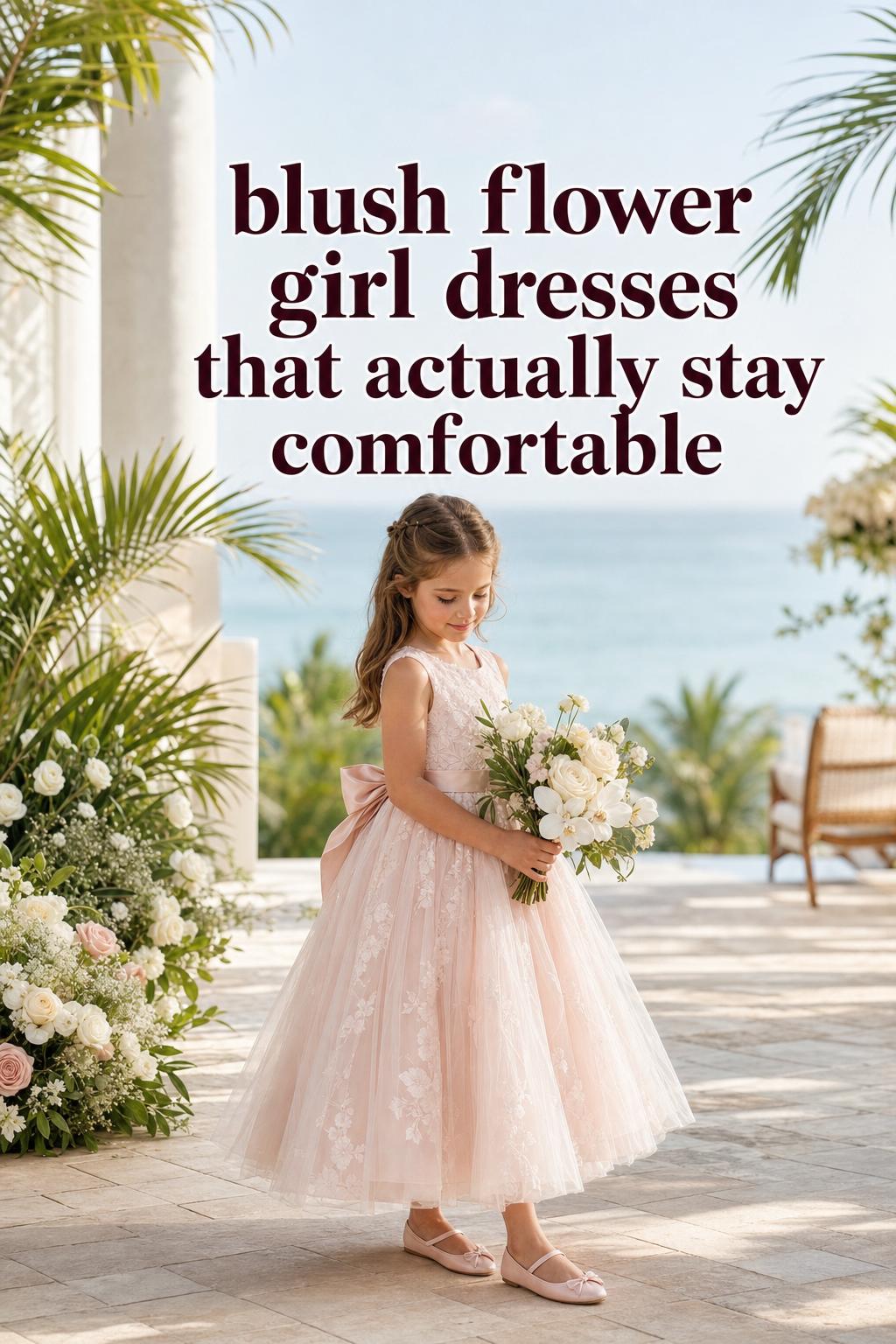
The styling challenge behind a beautiful blush dress
The central problem is balance. A flower girl dress has to feel special enough for a wedding and practical enough for a child. Tulle can create the dreamy volume many people love, but too much fullness can feel heavy or restrictive over several hours. Satin can look polished and refined, though it may feel more formal than the venue requires. Lace adds texture and charm, but the overall look still needs to coordinate with the bride, bridesmaids, and setting.
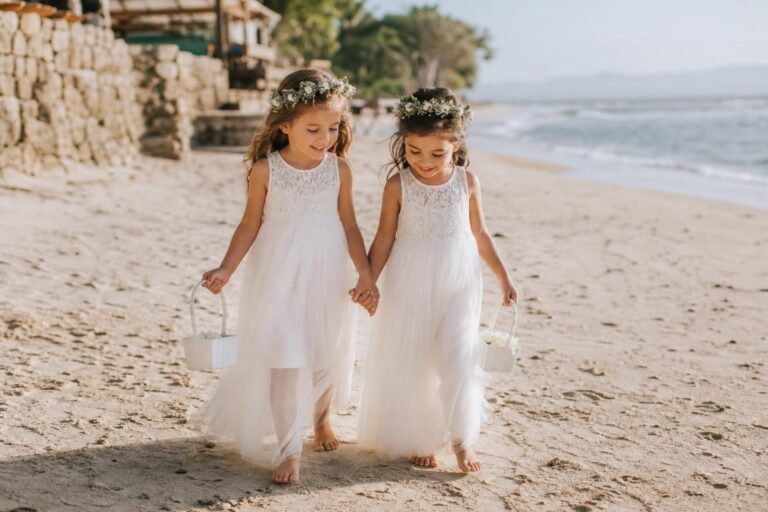
Weather and venue matter more than many shoppers expect. A ballroom celebration can support a fuller ball gown silhouette with beading or appliqué because the environment is controlled and the overall dress code is elevated. A beach ceremony or outdoor summer wedding often calls for less volume and easier movement, which makes tea-length, A-line, or lighter tulle-and-lace combinations more practical.
Comfort is another hidden factor. Toddlers and younger children often respond better to soft fabrics, manageable lengths, and simple closures. Older flower girls may enjoy more structure, a sash bow, or a dress with stronger shape. The prettiest dress on a hanger is not always the most successful once the ceremony starts.
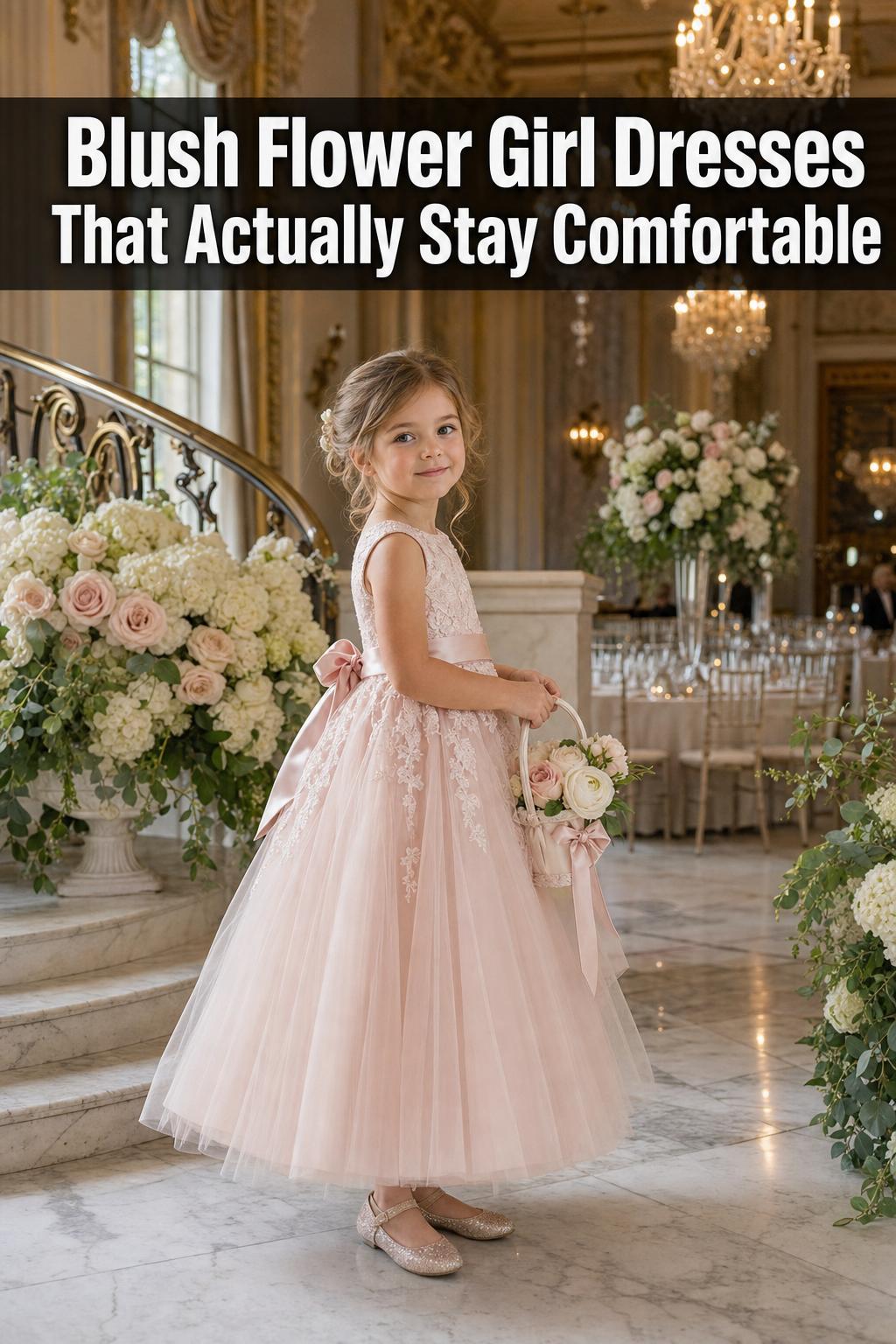
The principles stylists use when choosing blush flower girl dresses
The most polished results usually come from a few simple dressing principles rather than from chasing the most elaborate design. Start with silhouette, then fabric, then detail. In other words, decide how the dress should move before focusing on whether you want lace appliqué, beading, or a dramatic bow.
- Choose silhouette according to venue formality and the child’s age.
- Use fabric to control comfort, texture, and seasonality.
- Let embellishments be the finishing touch rather than the main feature.
- Coordinate the blush tone with the wedding palette instead of treating blush as a universal match.
- Think about the full event timeline, not just the ceremony photo moment.
This order prevents common mistakes. A family might fall in love with a ball gown because the color is perfect, only to realize later that the child will have difficulty walking on grass or climbing venue steps. Another might choose a simpler tea-length dress for convenience but miss the richer texture needed for a formal evening reception. The strongest decisions come from reading the dress as part of the whole wedding environment.
Reading the silhouettes: which styles solve which problems
A-line blush dresses for broad versatility
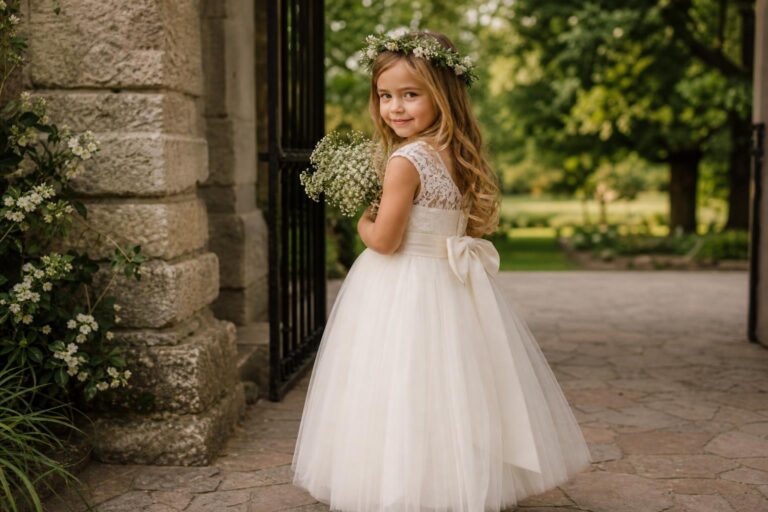
A-line blush dresses are often the safest and smartest option because they suit many wedding styles without looking generic. The shape gives definition through the bodice and ease through the skirt, which means it feels polished but still child-friendly. In tulle or lace, an A-line silhouette works beautifully for garden weddings, vineyard celebrations, and classic church ceremonies alike.
This silhouette is especially useful when the brief is romantic but not overly formal. If the bridal party is dressed in soft, flowing tones, an A-line blush flower girl dress with lace overlay or satin sash usually creates enough presence without looking costume-like.
Ball gown blush dresses for formal ceremony drama
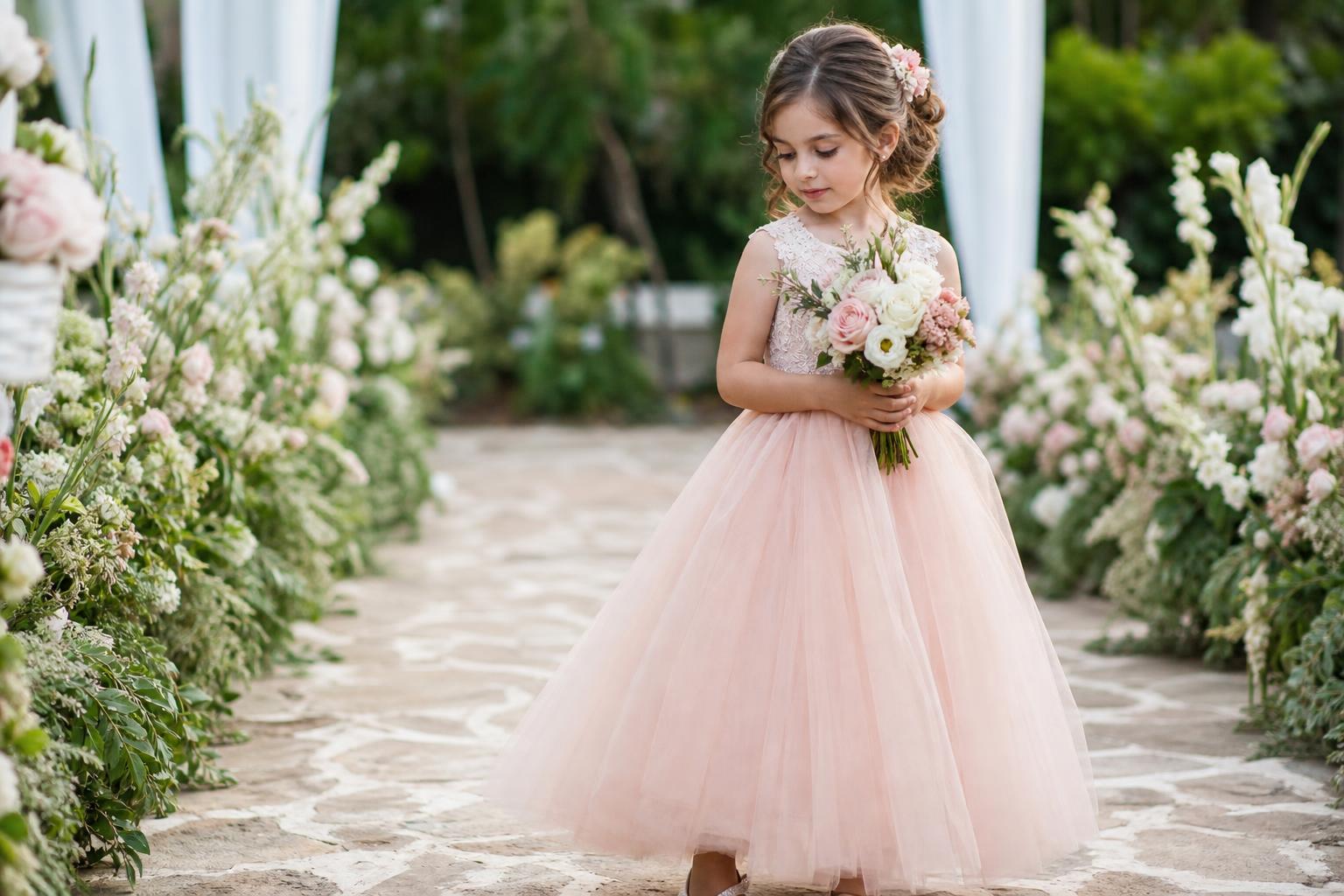
Ball gown silhouettes bring volume, twirl, and a more ceremonial feeling. They are best suited to traditional weddings, grand indoor venues, and moments where the flower girl is meant to echo the occasion’s formality. Tulle is often the fabric that gives this shape its signature cloud-like finish, while satin can provide structure underneath.
The trade-off is movement. Ball gowns look magical in portraits and processional moments, but they require more consideration if the child is very young or the venue includes uneven paths. For a formal ballroom reception or a classic evening wedding, however, a blush ball gown can feel completely at home.
Tea-length and shorter styles for ease and movement
Tea-length blush dresses solve a practical problem many families do not spot until late in the process: long hemlines can be difficult during a full day of walking, dancing, and celebrating. Shorter styles still feel dressy, especially in lace or layered tulle, but they offer easier movement and a lighter visual effect.
They are particularly charming for outdoor weddings, daytime ceremonies, and celebrations with a more relaxed romantic mood. If you want a flower girl look that feels sweet and polished rather than highly formal, tea-length often delivers that balance beautifully.
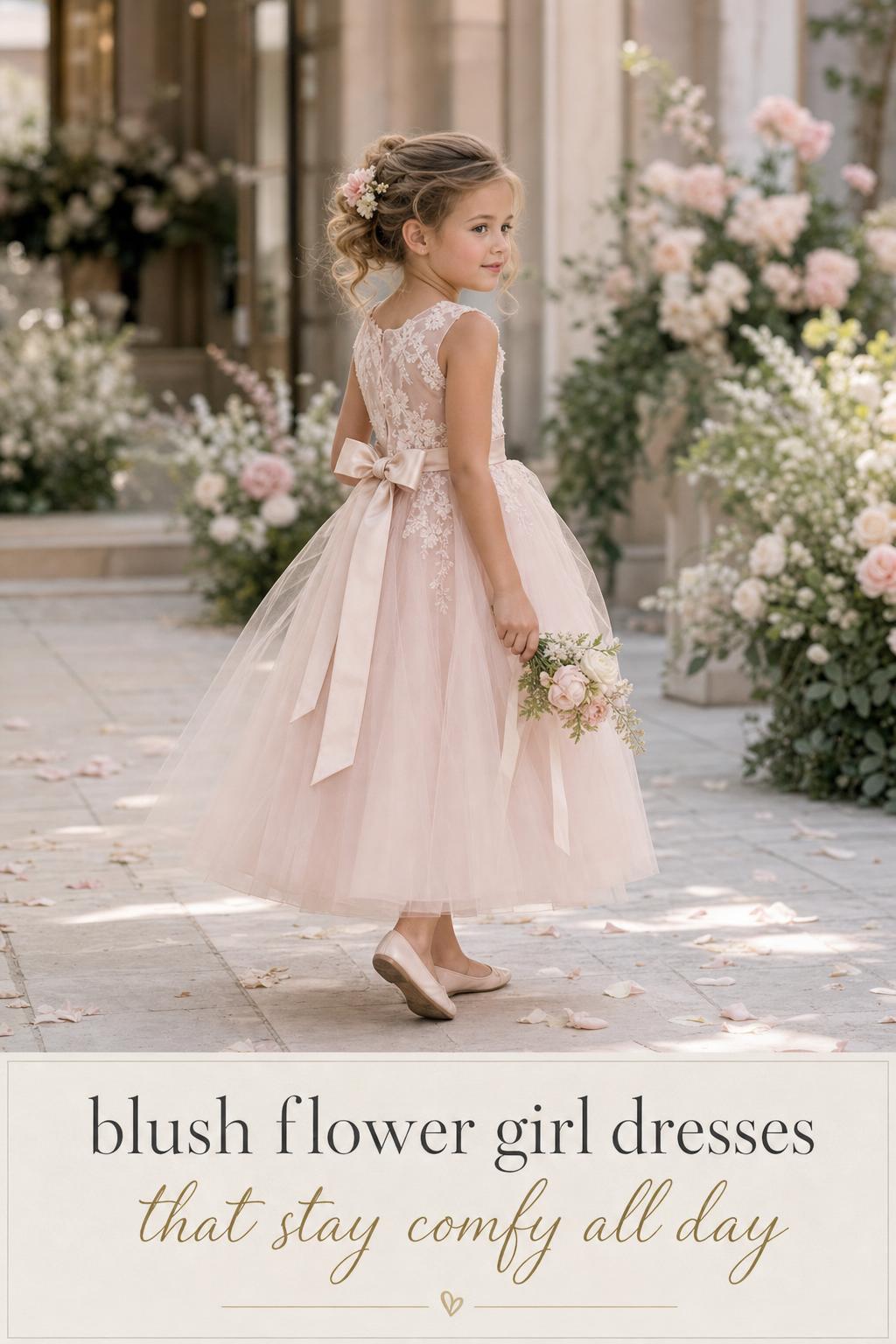
Fabric decisions that change the entire look
Fabric is not a minor detail in flower girl dressing. It controls comfort, movement, shine, and how the blush tone is perceived. A soft blush in matte tulle reads differently from the same tone in satin, and lace can either soften or enrich the overall finish depending on how much of it appears.
Tulle for softness and volume
Tulle is the fabric most closely linked with the romantic flower girl look. It creates airy volume and works especially well in A-line and ball gown silhouettes. In blush, it gives the color a gentle, clouded effect that suits floral ceremonies and pastel wedding palettes. The main advantage is visual softness; the main consideration is making sure the layers do not become overwhelming for a younger child.
Lace for texture and a more detailed finish
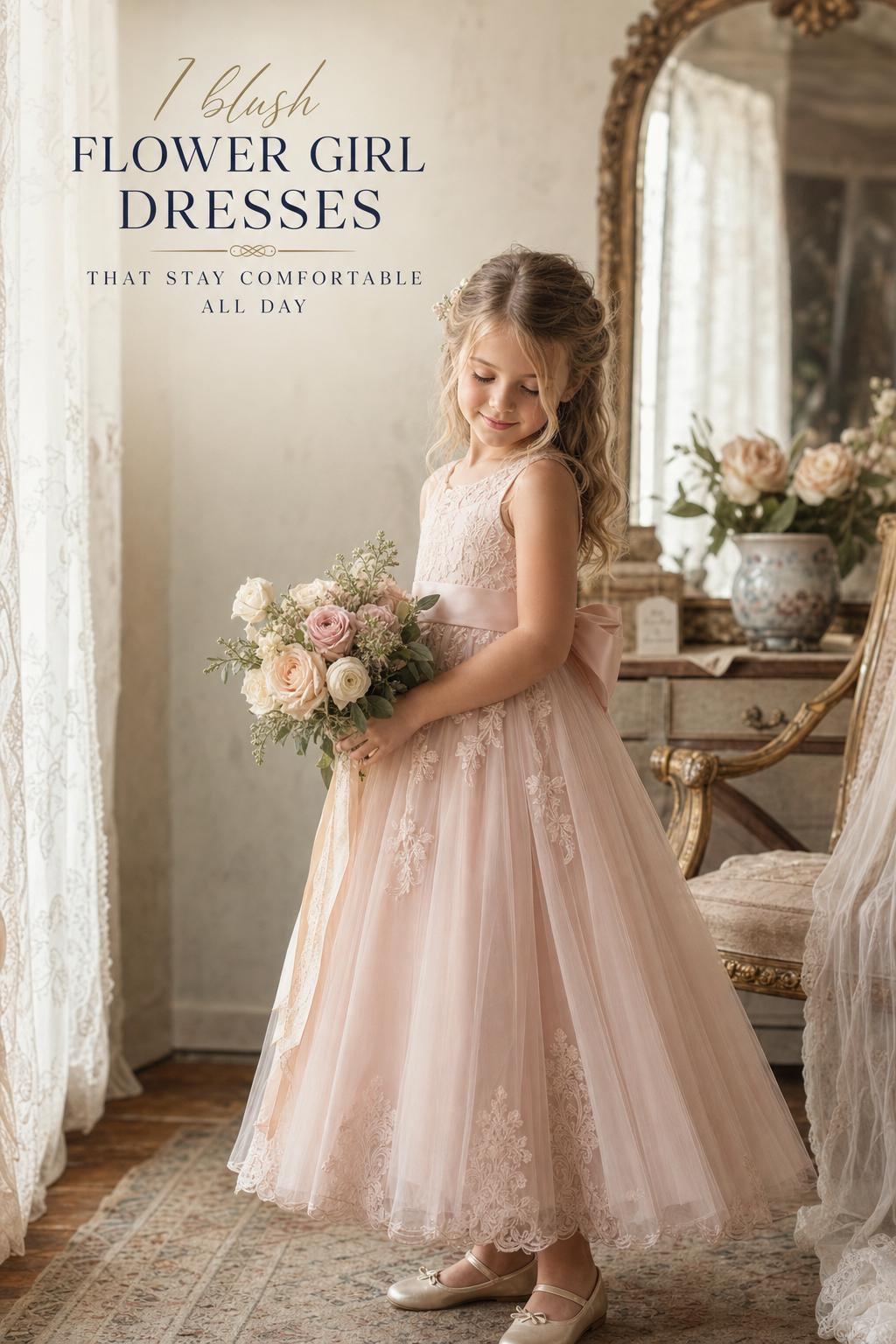
Lace adds depth without requiring a dramatic silhouette. A blush pink flower girl dress with lace can feel refined, vintage-inspired, or garden-party romantic depending on the shape of the dress. Boutique-style options such as the Azalea blush dress from Lisa Ann’s Creations suggest this softer, crafted direction, while marketplace choices on Etsy often lean into handmade and customized lace details.
Satin for polish and structure
Satin gives blush a more formal edge. It reflects light differently from tulle and lace, so the color can appear richer and more defined. Satin works well for structured bodices, sashes, and bows, and it often suits evening weddings or more traditional venues. If the bridal styling is clean and elegant rather than airy and whimsical, satin can bring the flower girl look into alignment.
Details that matter: bows, appliqué, and embellishment
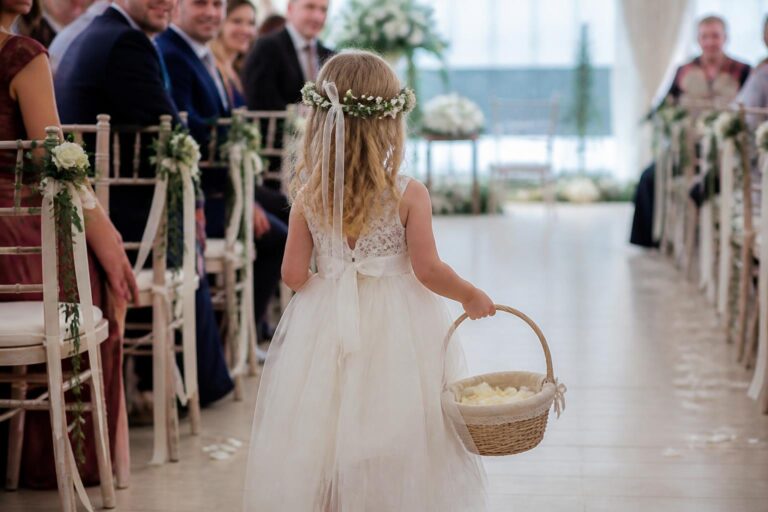
Embellishments should support the dress’s mood, not overtake it. A sash bow, as seen in styles like Dessy’s sleeveless flower girl dress FL4062, can define the waist and add a classic finishing note. Appliqué and beading introduce delicacy, while a simple bow often feels timeless. If the wedding décor is already rich with floral detail, a cleaner dress may look more sophisticated. If the overall styling is minimal, a few embellishments can add the romance that the setting needs.
Matching blush to the wedding palette without guessing
Blush is often chosen because it pairs easily, but “easy” should not mean automatic. The tone should still relate clearly to the rest of the wedding. In many bridal settings, blush works well alongside ivory, champagne, sage, and even navy accents. Ivory-blush combinations, like those associated with certain Dessy colorways, can be especially useful when the bride wants a stronger link between her gown and the flower girl’s dress.
For romantic garden weddings, blush with sage or soft ivory typically feels light and natural. For a more classic evening setting, blush with champagne or satin accents can feel richer and more formal. If the palette leans vintage or muted, blush paired with dusty rose is often the more coherent direction, which is where collections such as Hannah Rose Vintage Boutique’s blush and dusty rose offerings become especially relevant.
One practical way to avoid mismatch is to compare not just the color name but the dress material and finish. A dusty, matte blush in lace may coordinate better with muted florals, while a brighter satin blush can feel more elevated under reception lighting. Tone, texture, and occasion should be read together.
Venue-based outfit solutions for real weddings
Outfit solution: the garden ceremony A-line
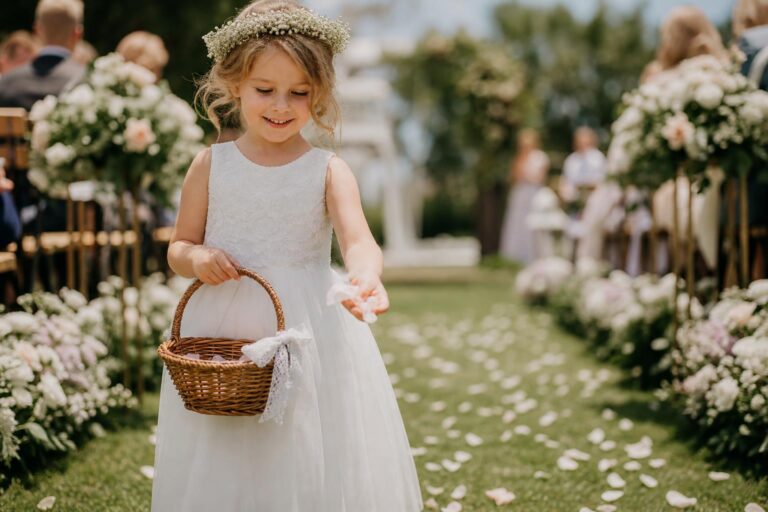
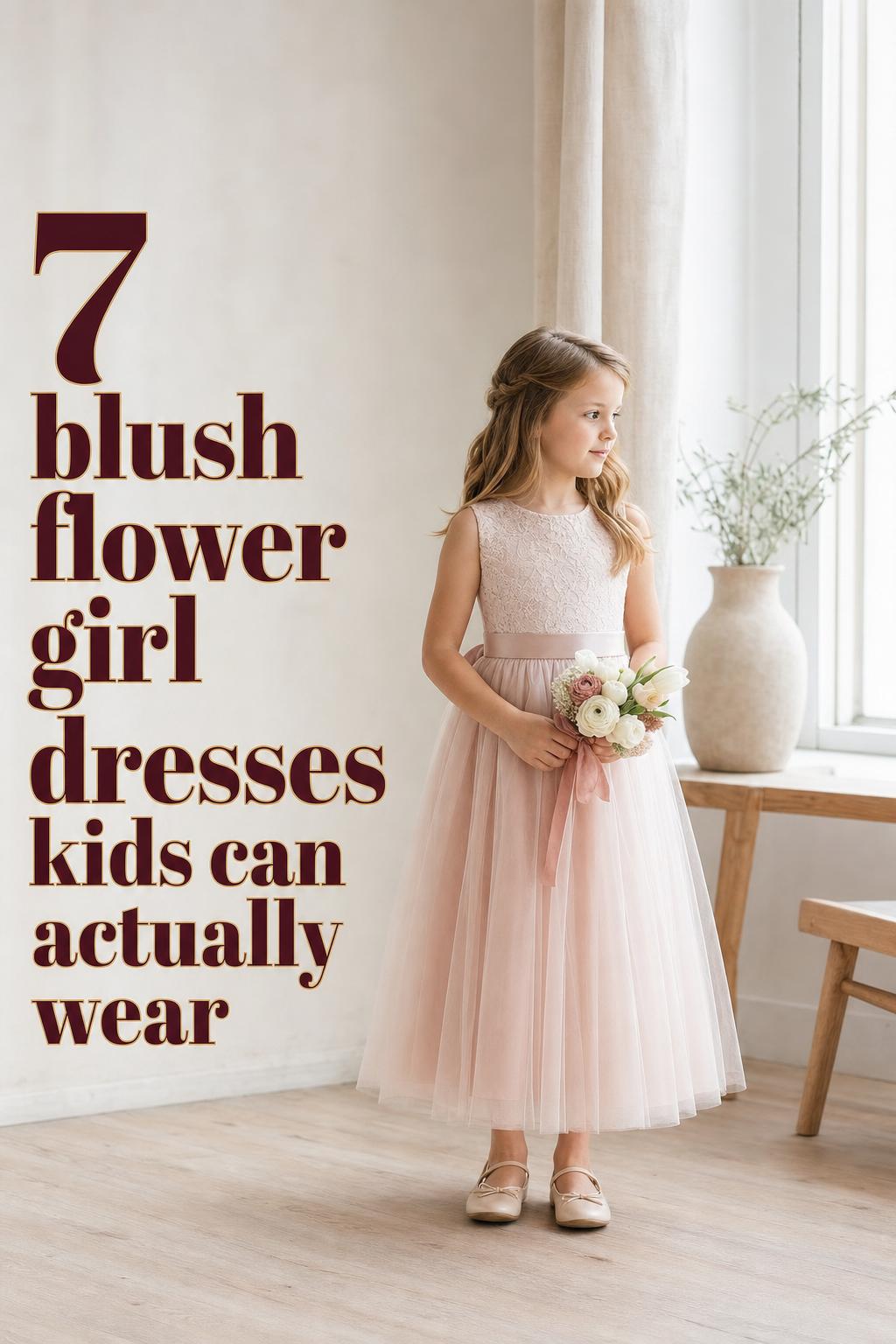
For an outdoor ceremony framed by flowers and natural light, a blush A-line dress in tulle with lace detail is often the clearest answer. The shape is structured enough for photographs but light enough for walking on grass or moving through a petal-strewn aisle. Add a simple headband and comfortable shoes, and the result feels polished without becoming too formal for daytime.
This look solves several problems at once: it keeps the silhouette manageable, suits a pastel palette, and gives the child room to move. Retailers with broad style filtering, such as Macy’s and JJ’s House, are especially useful when a family wants to compare A-line, tea-length, and lace-tulle combinations quickly.
Outfit solution: the ballroom blush ball gown
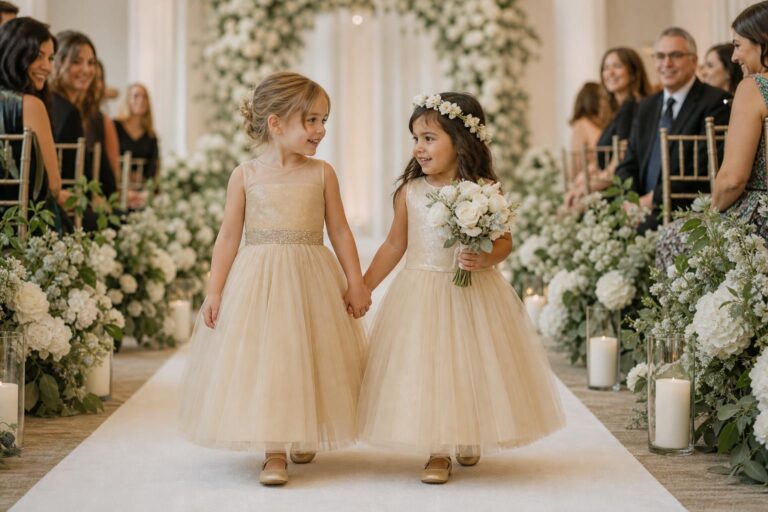
In a formal ballroom or evening reception setting, a fuller blush ball gown with satin structure, layered tulle, or a defined sash bow can look entirely appropriate. This is where volume becomes an asset rather than a challenge. Under candlelight or warm reception lighting, the dress feels celebratory and cohesive with an elevated dress code.
The success of this choice depends on the event schedule. If the flower girl is older and the venue is smooth and indoor, the extra fullness can be a delight. If the child will be moving between indoor and outdoor areas or has a long day ahead, keeping embellishment focused and the hem manageable becomes more important.
Outfit solution: the tea-length dress for a relaxed romantic wedding
For countryside venues, daytime receptions, or weddings with a softer, less formal atmosphere, tea-length blush flower girl dresses often feel especially right. They bring sweetness and vintage charm without the weight of a full gown. A lace bodice with a softly flared skirt can capture the romantic tone while still being realistic for a child who wants to run, dance, and stay part of the celebration.
This direction is often found in boutique and handmade spaces, including Etsy sellers and smaller collections that emphasize a custom or crafted look. It is a strong choice when individuality matters as much as formality.
Outfit solution: the coordinated ivory-blush pairing
If the bride wants the flower girl to echo the gown without appearing too bridal, ivory-blush styling creates a graceful bridge. A dress with an ivory bodice and blush skirt, or blush softened by ivory accents, can tie directly into the ceremony palette. This works especially well in classic venues where cohesion matters and the overall bridal styling leans timeless rather than trend-driven.
The value of this approach is subtlety. It keeps blush in the story while making the dress feel intentionally connected to the wider wedding look.
How to shop by retailer, brand, and budget feel
Different retailers solve different problems, so choosing where to shop can save time. Large e-commerce destinations tend to serve broad comparison needs, while boutiques and small brands often serve aesthetic specificity.
- Macy’s is useful for broad browsing across brands, silhouettes, sizing, price points, and promotions.
- JJ’s House offers a deep color-filtered range with styles such as ball gown, A-line, tea-length, and neckline options.
- Dessy is a strong reference point for more official, formal product styling and classic details like a sash bow.
- Blush Kids presents a collection-driven approach, including featured styles such as Celestina.
- Victoria’s Queen and Misdress are helpful for shoppers focused on blush tone variations, materials, and embellishment-led styles.
- Etsy is best for handmade, vintage-inspired, and customization-minded shoppers.
- Lisa Ann’s Creations and Hannah Rose Vintage Boutique appeal to readers who want boutique personality and a romantic, curated aesthetic.
The right choice depends on whether the priority is speed, broad comparison, collection identity, or custom character. A family that wants transparency across style categories may begin with Macy’s or JJ’s House. Someone looking for a specific boutique mood, such as dusty-rose romance or a handcrafted lace finish, may find better results with Blush Kids, Etsy, Lisa Ann’s Creations, or Hannah Rose Vintage Boutique.
Sizing, fit, and comfort: the decisions that protect the day
Beautiful styling falls apart quickly if the fit is wrong. Flower girl dresses need enough structure to hold their shape and enough ease for natural movement. That is why size charts, fit notes, and return policies deserve attention before color names and embellishments take over the decision.
Retailers commonly organize options by size and offer sizing guidance, but the real consideration is how the dress will function over several hours. A fitted bodice with a full skirt may look lovely in a product image while still requiring more flexibility in real wear. A tea-length cut can reduce hem issues, and adjustable features such as sashes can help fine-tune fit.
Tips for a more reliable fit
- Check whether the dress shape is A-line, ball gown, or tea-length before comparing sizes across brands.
- Review whether the design includes a sash, bow, or waist detail that may affect fit visually and practically.
- Look for clear care, sizing, and returns information, especially on boutique or marketplace listings.
- If the child is between sizes, think about movement and event duration, not just a neat fit in photos.
Alterations can also matter, particularly for formal silhouettes. Even when a dress is nearly right, small adjustments to length or waist placement can improve comfort and proportion significantly.
Accessories that support, rather than compete with, the dress
Blush flower girl dresses tend to look best with accessories that stay within the same romantic language. Headbands, simple shoes, and a soft bolero can complete the look without distracting from the dress itself. The key is restraint. Because blush already carries visual softness, it usually does not need heavily contrasting accessories.
For cooler ceremonies or transitional weather, a bolero or light cover-up can make a tulle or lace dress feel more practical. Shoes should reflect the venue. Smooth indoor floors can support dressier footwear, while outdoor settings call for stability and comfort. If the dress includes a sash bow or embellished bodice, keeping the rest of the accessories quiet often feels more elegant.
A note on real-wedding styling and what photographs well
The most memorable flower girl looks in real weddings are rarely the most complicated. They are the ones that feel coherent in the scene: the blush tone sits comfortably with the florals, the silhouette fits the venue, and the child looks at ease. In practical terms, that means choosing a dress that can still look charming after sitting, walking, and moving through the day.
A garden wedding may favor soft tulle in a light blush that almost melts into the floral palette. A more traditional indoor ceremony may benefit from satin structure and a defined sash. A vintage-inspired celebration can be elevated by dusty-rose notes, lace texture, and a tea-length hem. These are not just aesthetic choices; they are what make the dress feel truly integrated with the wedding rather than simply selected in the right color.
Common mistakes that make blush harder than it needs to be
Many of the disappointments around flower girl dressing come from treating blush as a single solution rather than a range of possibilities. One dress may technically be blush and still feel wrong for the wedding because the fabric finish, silhouette, or detail level is out of step with the event.
- Choosing by color name alone instead of looking at texture and finish.
- Selecting maximum volume for a venue that requires easy movement.
- Ignoring the difference between daytime and evening formality.
- Over-accessorizing an already embellished dress.
- Underestimating the value of size charts, fit notes, and care guidance.
The easiest correction is to return to function. Ask what the child needs to do in the dress, what the venue requires, and how the blush tone fits the bridal palette. That process usually leads to a better choice than chasing the most decorative option.
Care and maintenance for delicate blush fabrics
Care is often overlooked until after the dress arrives, yet blush fabrics benefit from early attention. Tulle, lace, and satin each carry different visual qualities, and that usually means they also require thoughtful handling. Product pages from smaller brands and official retailers often include care guidance, and it is worth reading before purchase, especially when the wedding calendar leaves little room for replacement.
From a practical standpoint, a dress with layered tulle or lace appliqué may need gentler treatment than a simpler satin style. Families considering boutique options or handmade listings should treat care instructions as part of the buying decision, not as an afterthought. A beautiful blush tone only remains beautiful if the fabric can be maintained appropriately before and after the event.
Quick care-minded tips before the wedding
- Read the care section before ordering, particularly for lace, tulle, and embellished designs.
- Avoid assuming that all blush fabrics handle cleaning the same way.
- Store the dress carefully in the lead-up to the ceremony to protect color and texture.
- If time is tight, choose retailers with clear product details and straightforward guidance.
Bringing the whole look together
The best blush flower girl dresses are rarely chosen by trend alone. They emerge from a set of connected decisions: the wedding palette, the venue, the fabric behavior, the child’s comfort, and the level of formality the celebration calls for. A-line, ball gown, tea-length, lace, tulle, satin, ivory-blush, and dusty rose are not just style labels; they are tools for building the right look for a specific day.
Whether you are comparing broad retail selections at Macy’s and JJ’s House, considering a formal style from Dessy, browsing curated collections from Blush Kids and Victoria’s Queen, or exploring handmade and boutique options through Etsy, Lisa Ann’s Creations, Misdress, or Hannah Rose Vintage Boutique, the most reliable path is the same. Choose the blush tone with intention, match the silhouette to the setting, and let comfort carry as much importance as beauty. That is what makes the look feel polished in photographs and effortless in real life.
FAQ
Can blush flower girl dresses work for a winter wedding?
Yes, blush can work beautifully in winter, especially when the dress has more structure or richer texture. Satin, fuller skirts, and thoughtful layering such as a bolero can make the color feel more seasonally grounded while still preserving its softness.
What is the difference between blush, blush pink, and dusty rose?
These names usually describe related but different expressions within the same color family. Blush and blush pink often suggest lighter, softer pink tones, while dusty rose tends to feel more muted and slightly deeper, which can suit vintage-inspired or more subdued wedding palettes.
Which silhouette is best for a younger flower girl?
A-line and tea-length styles are often the easiest choices because they balance structure with movement. They typically feel less restrictive than a full ball gown and can be more manageable for walking, sitting, and dancing during a long event.
Are tulle dresses less comfortable than satin dresses?
Not necessarily, but they create a different wearing experience. Tulle often offers softness and volume, while satin provides polish and structure. Comfort depends on the number of layers, the silhouette, and how the dress fits the child’s age, movement, and the demands of the venue.
How should I coordinate a blush flower girl dress with the bride’s gown?
Look for harmony rather than exact matching. Ivory-blush combinations, soft lace details, or subtle satin accents can connect the flower girl dress to the bride’s gown without making the child look overly bridal.
Where can I shop for blush flower girl dresses in the U.S.?
Well-known options include Macy’s, JJ’s House, Dessy, Blush Kids, and Victoria’s Queen, while Etsy, Misdress, Lisa Ann’s Creations, and Hannah Rose Vintage Boutique offer more boutique, handmade, or collection-driven alternatives.
What details should I check before ordering online?
Focus on silhouette, fabric, sizing information, color description, care notes, and return details. Those factors often determine whether the dress will work well in real life, especially when choosing between tulle, lace, satin, and more embellished styles.
How do I clean blush fabrics after the wedding?
Always follow the care guidance provided on the product or brand page, since tulle, lace, satin, and embellished dresses may require different handling. It is best to treat care instructions as part of the purchase decision, especially for delicate or boutique pieces.
Is a handmade or boutique blush flower girl dress worth considering?
If you want customization, a distinctive romantic feel, or a more vintage-inspired look, boutique and handmade options can be especially appealing. They are often a strong fit for shoppers who care about unique details, but they also require extra attention to sizing, care, and returns.