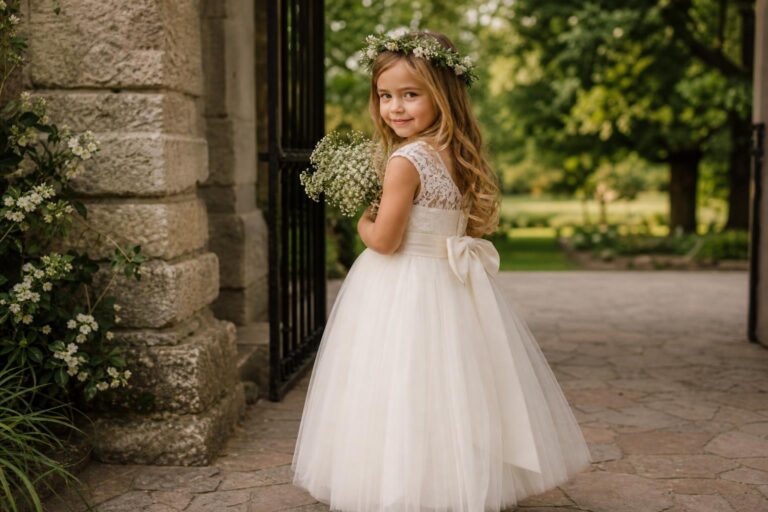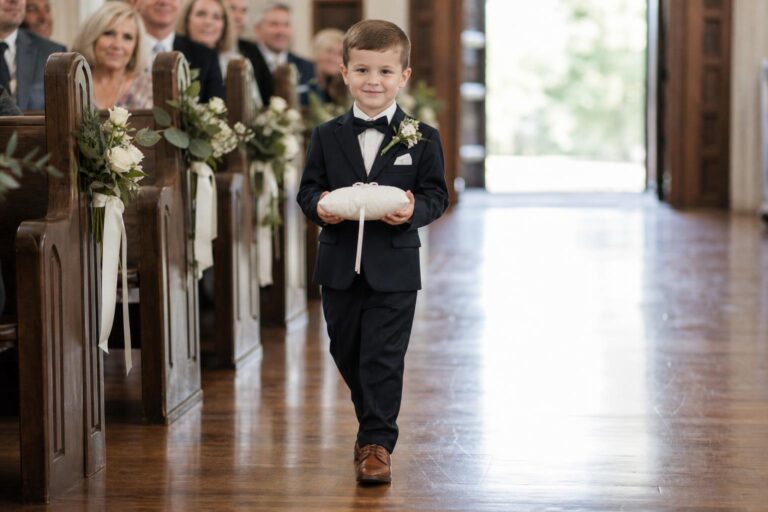
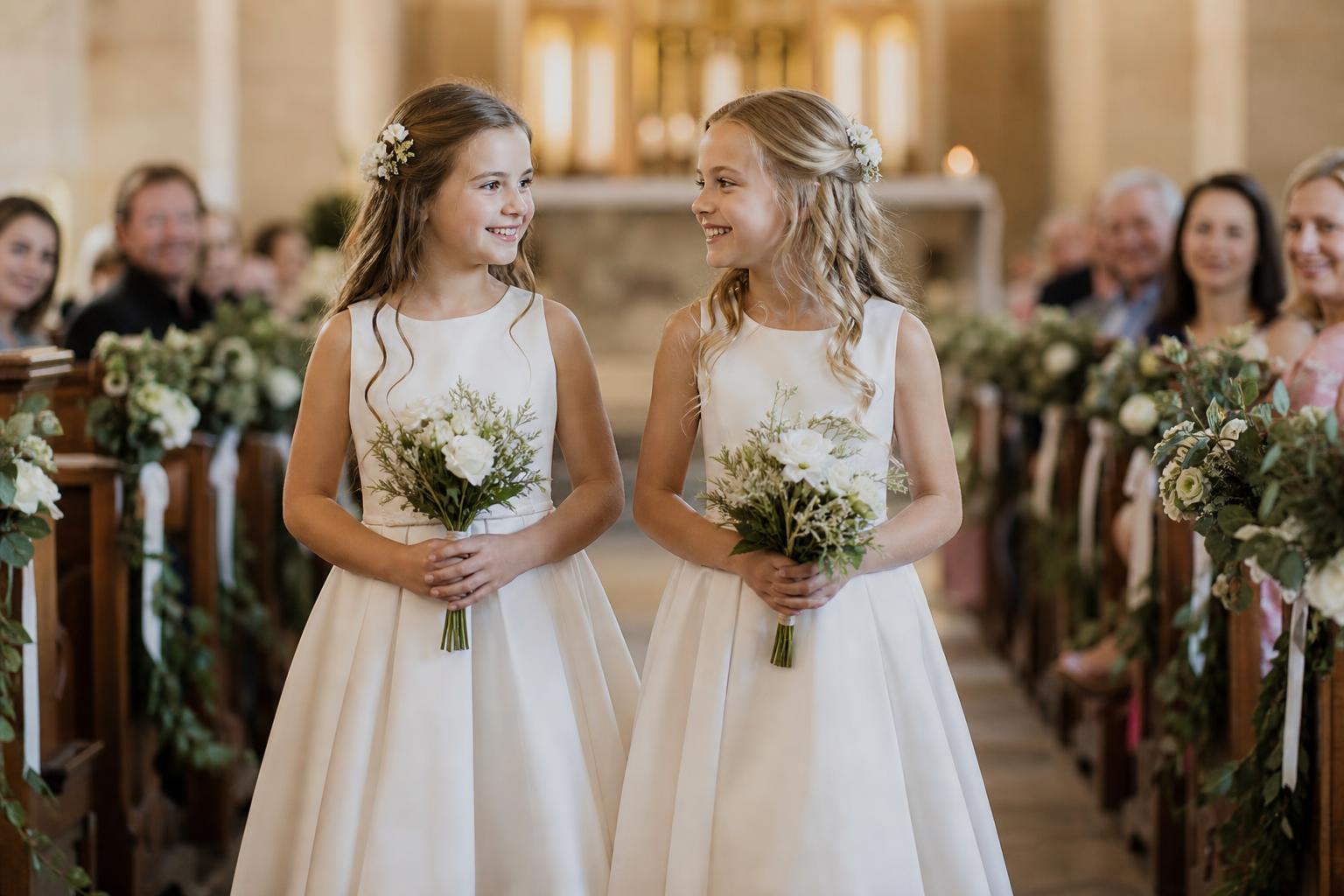
Older Flower Girl Dresses for a Timeless Wedding Look
Some of the trickiest wedding style decisions are not about the bride at all. They happen when a flower girl is no longer a toddler, but not quite a junior bridesmaid either. That in-between age is exactly where older flower girl dresses matter most. The dress needs to feel special enough for a wedding, age-appropriate for a girl who is likely more aware of how she looks, and practical enough for walking, sitting, dancing, and lasting through photos from the ceremony to the reception. The best choices balance elegance with ease: thoughtful length, comfortable fabric, subtle detail, and a color story that belongs naturally alongside the bridal party.
For weddings in the United States, readers usually want two things at once: inspiration and reassurance. They want to picture the look clearly, but they also want to know it will work in real life. An older flower girl may be standing in a church ceremony, walking across a garden aisle, or moving through an outdoor wedding where grass, heat, and long hours change what feels wearable. That is why the most successful styling decisions begin with context first, then move into silhouette, fabric, color, accessories, sizing, and etiquette.
What “older flower girl” usually means in wedding style terms
In most wedding conversations, an older flower girl typically falls around the 7 to 12 age range, with some overlap into the junior flower girl or junior bridesmaid space. This age matters because styling expectations shift. A very young child can often wear fuller, more playful silhouettes without much concern for self-consciousness or comfort preferences. An older child usually needs a look that feels a little more refined and a little less babyish, especially in formal wedding photography.
This is also the stage where the relationship between flower girl dresses and bridesmaid styling becomes more important. The look often works best when it echoes the wedding palette and formality without feeling like a miniature adult copy. That balance is especially helpful for girls who want to feel included, polished, and comfortable at once.
Your wedding look is only the beginning.
Keep your guest list, vendors, timeline, and every important detail together with Zarellea — so your day feels as considered as your style.
Best for: weddings where the flower girl is old enough to care about fit, movement, and whether the dress feels too childish.
Choose this if: you want a dress that bridges the space between traditional flower girl attire and junior bridesmaid style.
How to choose the right length before you choose anything else
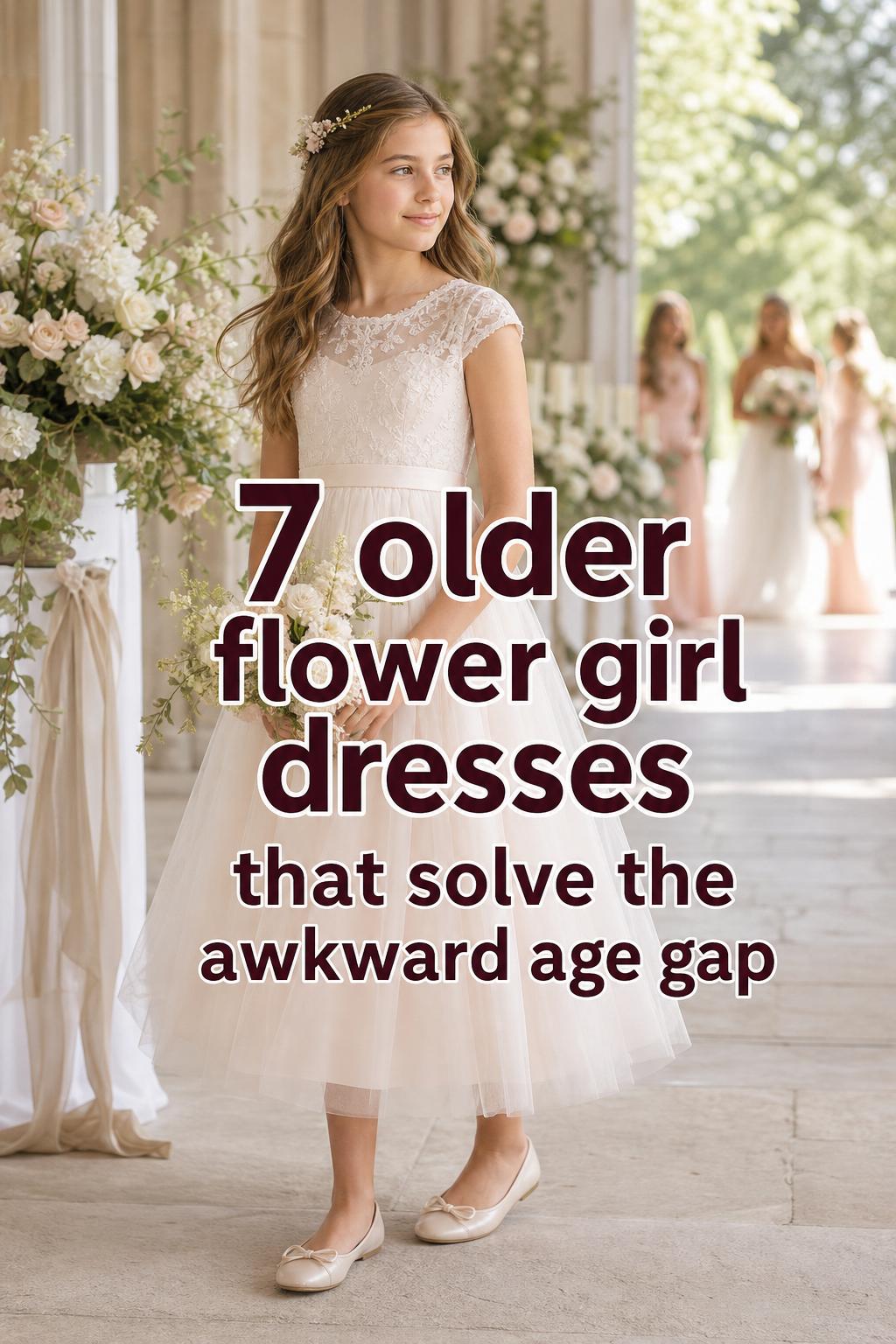
Dress length is one of the clearest markers of age-appropriate styling for older flower girls. Knee-length and tea-length dresses appear again and again as the most useful choices because they feel formal without becoming heavy, fussy, or difficult to move in. They also photograph beautifully. In motion, a tea-length hem has softness and polish, especially during aisle walks and candid reception moments, while knee-length styles feel neat and modern.
Longer dresses can still be lovely in more formal weddings, but they need extra care. A maxi-style look may create a graceful silhouette in photos, yet it can also be harder to manage on stairs, uneven outdoor ground, or a busy reception floor. That trade-off matters more with an older child who will likely be moving independently throughout the day.
Knee-length dresses for a cleaner, lighter look
Knee-length older flower girl dresses tend to suit modern weddings, garden ceremonies, daytime venues, and any event where comfort is a priority. They feel less formal than floor-length gowns, but often more age-right for girls who are on the edge of junior sizing. They also make shoes and accessories more visible, which can be useful when coordinating with the rest of the wedding party.
Works especially well with: A-line shapes, delicate headbands, simple flats, and outdoor ceremonies.
Avoid this: overly stiff skirts that stand away from the body and read too young.
Tea-length dresses for classic wedding charm
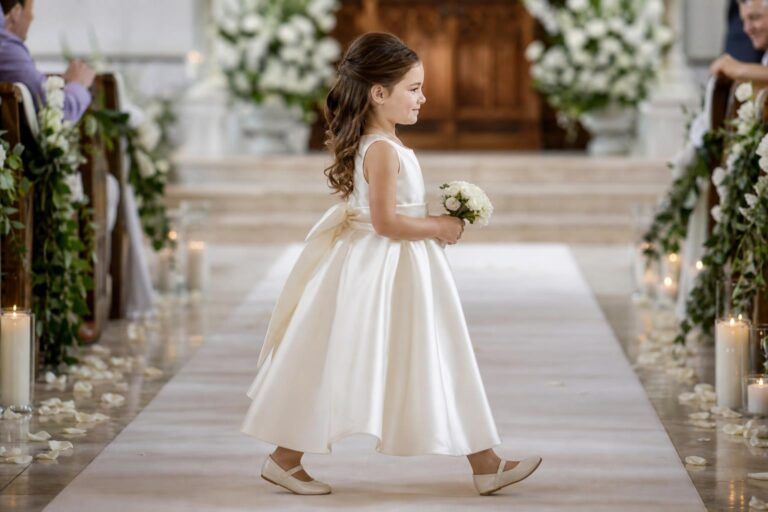
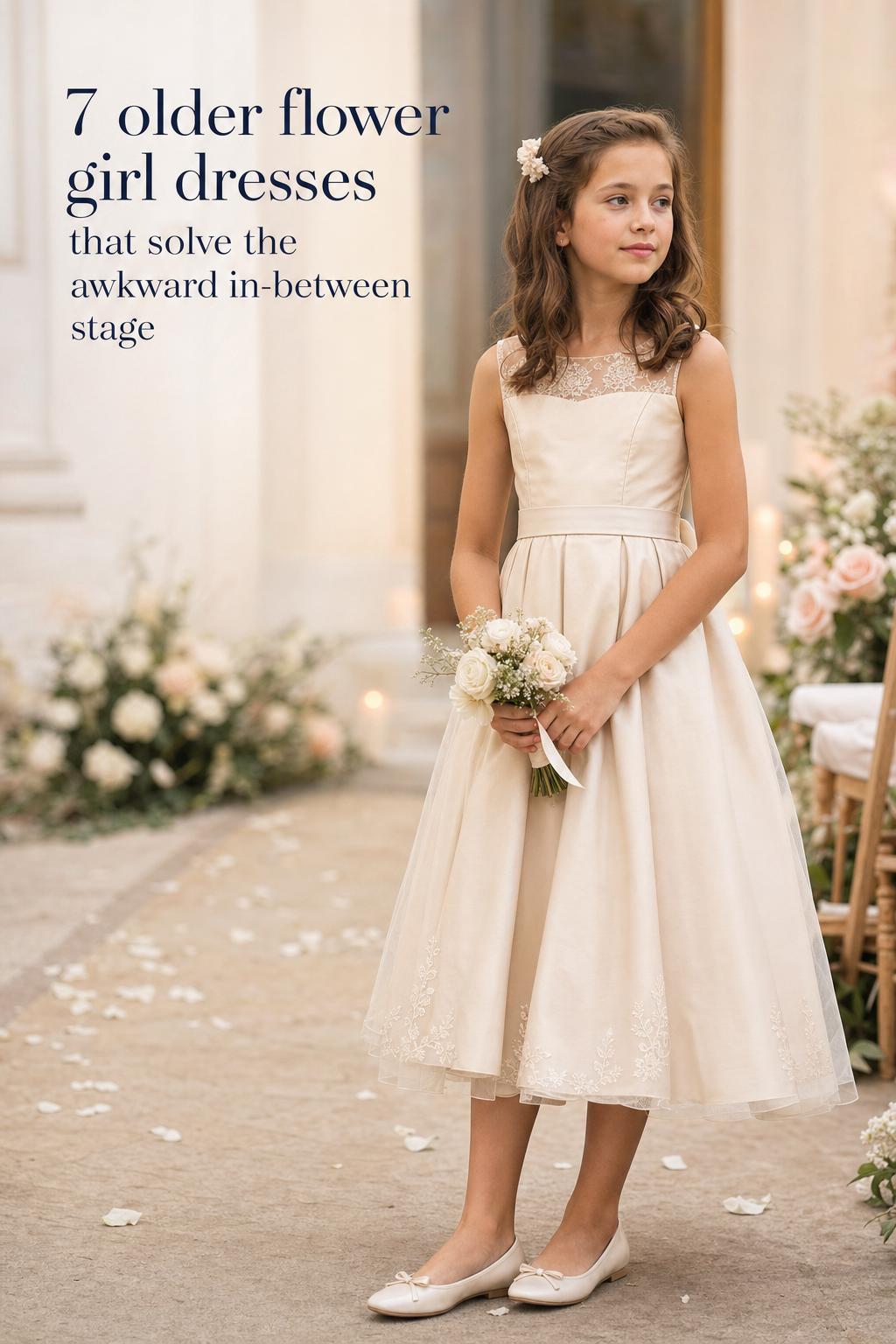
Tea-length is often the sweet spot. It has the softness and romance many families want from flower girl dresses, but it still leaves enough room for easy walking and dancing. In a church setting or a ballroom reception, tea-length brings a traditional mood without overwhelming a smaller frame. In golden-hour photography, a tea-length skirt in satin, chiffon, or organza catches movement beautifully.
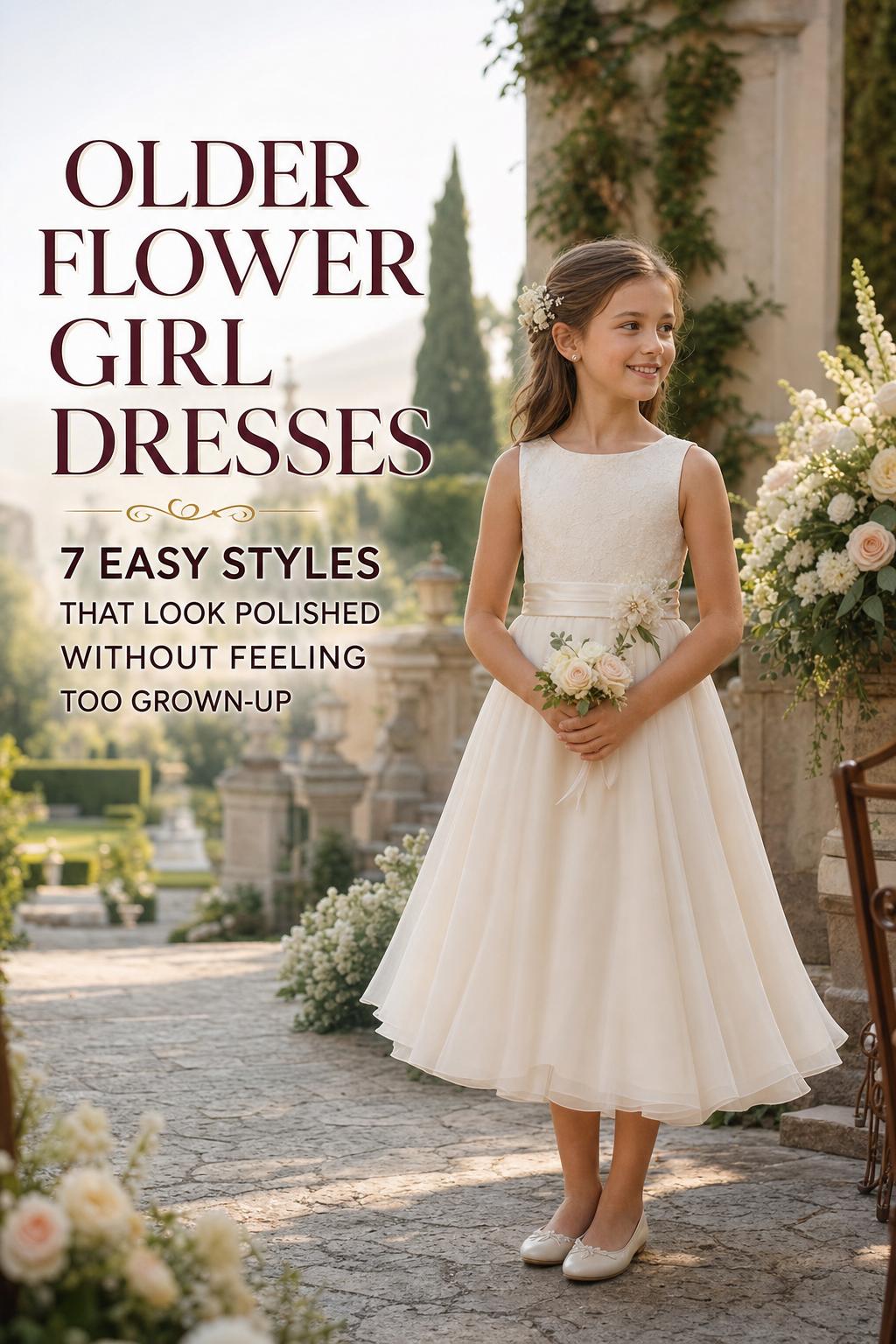
Pinterest-worthy idea: a tea-length ivory or blush dress with a soft sash, low-profile shoes, and a small bouquet that echoes the bridesmaids’ flowers.
The silhouettes that feel polished, not too young and not too grown-up
Silhouette determines how the dress feels almost as much as color or fabric. For older flower girls, A-line and fit-and-flare shapes consistently make the most sense because they offer structure, movement, and versatility. They feel wedding-ready, but they do not force a child into a miniature adult fashion shape that may be uncomfortable or visually out of place.
Why A-line remains the easiest choice
An A-line dress narrows gently at the top and opens through the skirt, creating a classic wedding silhouette that works across many venues and themes. It flatters a wide range of builds, gives room to move, and adapts well to satin, tulle, chiffon, and organza. It also coordinates easily with bridesmaid dresses because it feels timeless rather than trend-driven.
When fit-and-flare makes sense
Fit-and-flare silhouettes can work especially well for older girls because they look a little more refined and less toddler-like. The key is subtlety. The fit should never feel restrictive, and the flare should still allow movement. This style is especially strong when the wedding has a modern or more tailored visual direction, or when the bridal party is wearing sleeker silhouettes.
Style tip: if the bridesmaids are wearing clean lines, an older flower girl often looks most cohesive in a simpler silhouette with soft detailing rather than a highly embellished ballgown shape.
Fabric choices that look beautiful and still feel wearable through the day
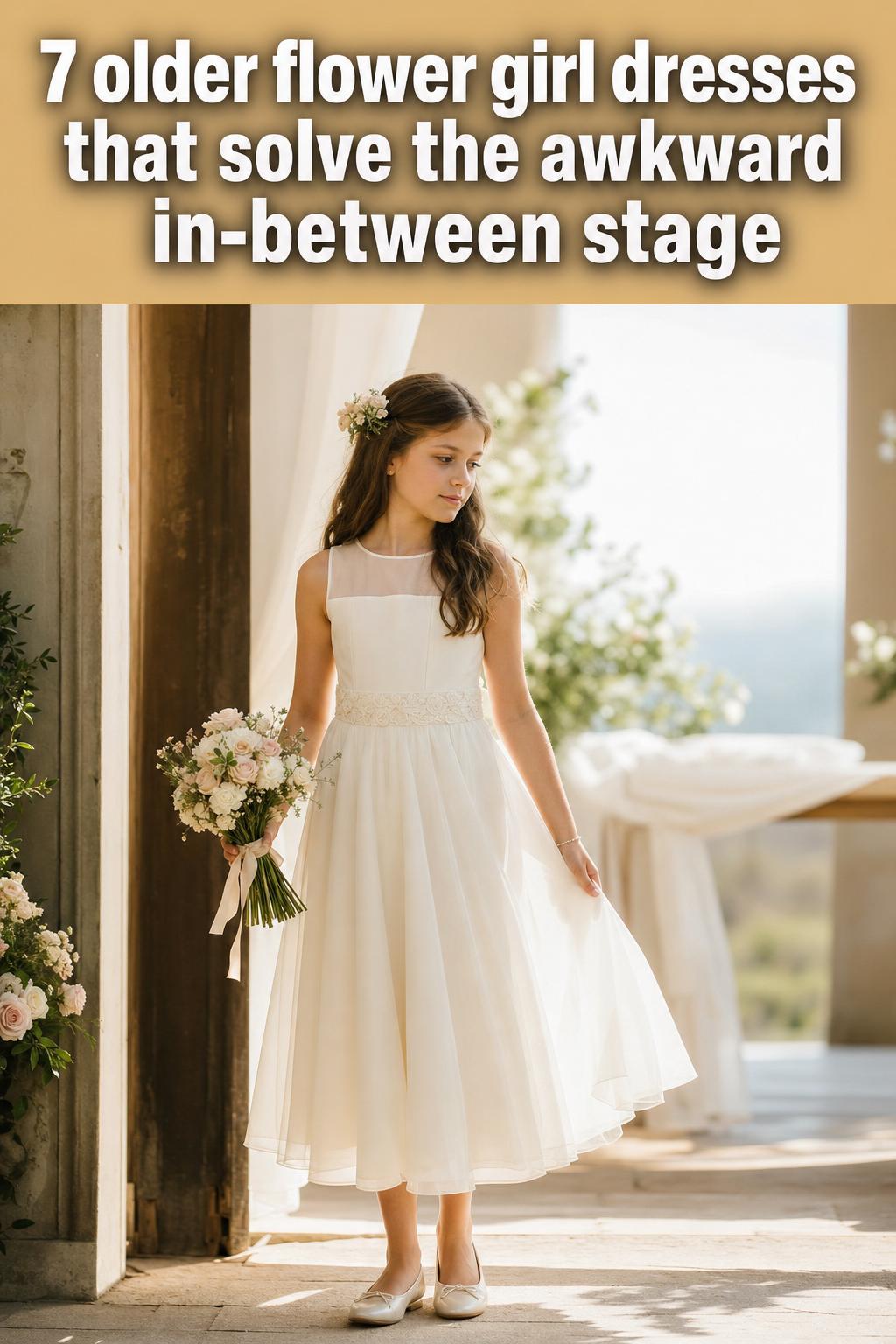
Fabric is where wedding styling becomes practical. The prettiest dress on a hanger may not be the best dress after hours of ceremony, photos, dinner, and dancing. For older flower girls, the most useful fabrics are the ones repeatedly associated with wedding formality and child-friendly wearability: satin, tulle, organza, chiffon, and light illusion lace. Each creates a different visual effect, and each carries a different comfort level.
Satin for structure and timeless polish
Satin has a smooth surface and elegant shine that immediately reads formal in wedding photography. It works especially well for church ceremonies, classic ballroom venues, and more traditional events. For older flower girls, satin can feel more grown-up than layers of very fluffy tulle, which is one reason it often looks appropriate in the 9 to 12 age range. The trade-off is that a heavier satin dress may feel warmer or more structured than softer options.
Tulle and organza for softness and movement
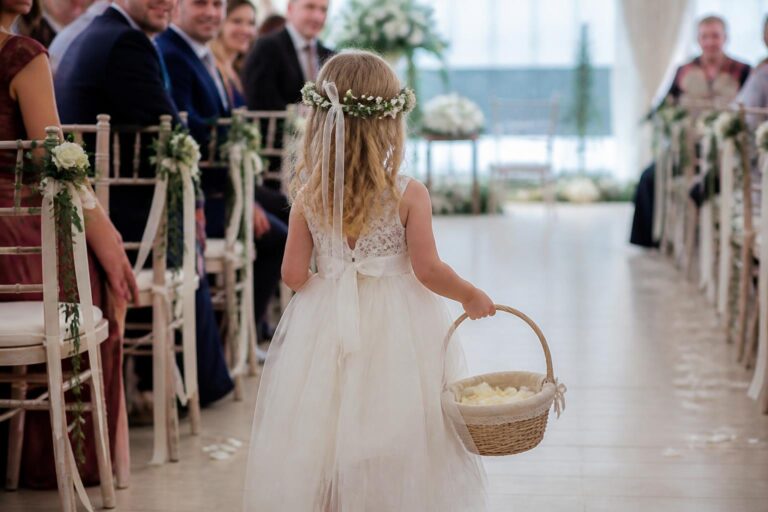
Tulle and organza create that airy, romantic finish many families picture for a flower girl. Used lightly, they can be beautiful on older girls too, especially in tea-length A-line shapes. They bring softness to ceremony photos and a floaty quality during the walk down the aisle. The key is moderation. Too many layers can start to feel very young or become bulky during a long event.
Chiffon and light lace for an understated, mature feel
Chiffon tends to feel especially graceful for older flower girl dresses because it drapes more naturally and moves beautifully without adding bulk. Light illusion lace can also add delicacy when used sparingly, particularly on sleeves or bodice details. These fabrics make sense when the wedding style is soft, elegant, and less princess-like. They are often easier to coordinate with bridesmaid styling because the finish feels closer to the fabrics used elsewhere in the wedding party.
- Best for: chiffon for warm-weather ceremonies, satin for formal indoor weddings, organza for a crisp romantic silhouette, and tulle for gentle volume.
- Choose this if: you want the dress to look elevated in photos but still allow easy movement.
- Avoid this: fabric combinations that create too much weight, scratchiness, or stiffness for a long wedding day.
Color palettes that photograph well and connect naturally to the bridal party
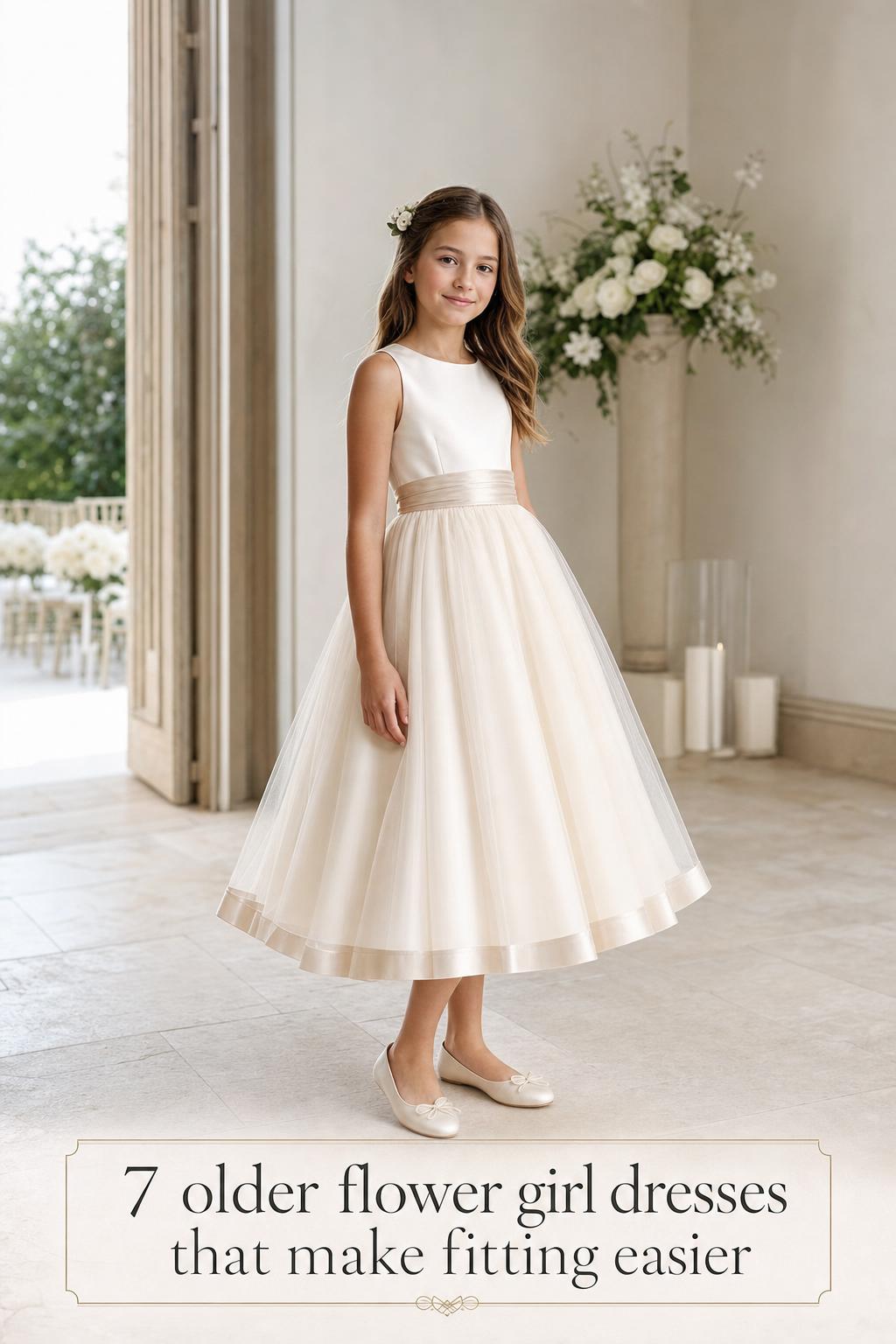
Color coordination is one of the easiest ways to make older flower girl dresses feel intentional rather than separate from the rest of the celebration. Across wedding styling, subtle and timeless shades consistently work best: ivory, blush, champagne, and soft pastel tones. These colors sit comfortably beside bridesmaid palettes without overpowering them, and they tend to age well in photographs.
For older flower girls, color often matters as much as cut. A dress in a soft, refined shade can make a very simple silhouette feel special. It can also prevent the look from reading too young. A blush chiffon dress at a garden wedding, an ivory tea-length satin style in a church ceremony, or a champagne organza A-line for an evening reception all feel wedding-specific without seeming overly dramatic.
How to coordinate with bridesmaids without matching exactly
One of the smartest styling approaches is visual echo rather than exact duplication. If the bridesmaids are in a soft pastel palette, the older flower girl can wear a complementary tone in a lighter or gentler version. If the bridal party is wearing satin, choosing satin trim or a satin sash can create harmony without making the child look like a scaled-down bridesmaid. This approach tends to feel more age-appropriate and more elegant in group photos.
Style tip: repeat one key wedding element across the bridal party, such as fabric, color family, or bouquet ribbon, instead of trying to repeat every detail.
Works especially well with: blush, ivory, champagne, and soft pastel weddings.
Design details that elevate the look without overwhelming it
Older flower girls usually look best in dresses with subtle embellishment rather than heavy decoration. A simple sash, delicate lace overlay, soft sleeve detail, or refined neckline can be enough to make the dress feel memorable. This is especially true when the child is approaching junior sizing. At that stage, restraint often looks more stylish than excess.
Necklines and sleeves should be chosen with both formality and comfort in mind. A wedding in a church or more traditional setting may call for a little more coverage, while an outdoor summer event may benefit from lighter construction. The goal is not to make the dress plain. It is to make sure every detail supports the overall wedding atmosphere rather than competing with it.
Accessories that make sense for an older child
Accessories should finish the look, not complicate it. Comfortable shoes, a simple headpiece, discreet jewelry if any, and possibly a small bouquet are usually enough. Headbands and hair clips often feel fresher than anything too formal or oversized. Shoes matter more than many people expect. If a child cannot walk confidently in them, the entire look suffers, no matter how beautiful the dress may be.
- Choose low-profile shoes that work for walking down an aisle and standing through photos.
- Use headpieces as a soft accent rather than a statement piece.
- Keep jewelry minimal so the dress remains the focus.
- Coordinate accessories with the wedding palette, especially ribbon, shoes, or floral accents.
Pinterest-worthy idea: a champagne tea-length dress with a narrow satin sash, ivory flats, and a delicate floral hair clip for an outdoor wedding at golden hour.
How venue and wedding setting should influence the dress
One of the most useful ways to narrow down older flower girl dresses is to stop thinking about the dress in isolation. The venue answers practical questions quickly. A church ceremony often favors classic silhouettes, modest detailing, and polished fabrics such as satin or organza. A garden wedding usually benefits from lighter movement, softer color, and easier lengths. A ballroom reception can support more formal structure and richer texture, while an outdoor setting requires more caution with hem length, shoes, and fabric weight.
Church ceremonies and traditional weddings
These settings often suit tea-length dresses, A-line shapes, and classic colors such as ivory or champagne. The mood is formal, the photographs tend to be timeless, and clean styling usually feels most appropriate. In this context, understated elegance is often stronger than highly trendy details.
Outdoor ceremonies and garden weddings
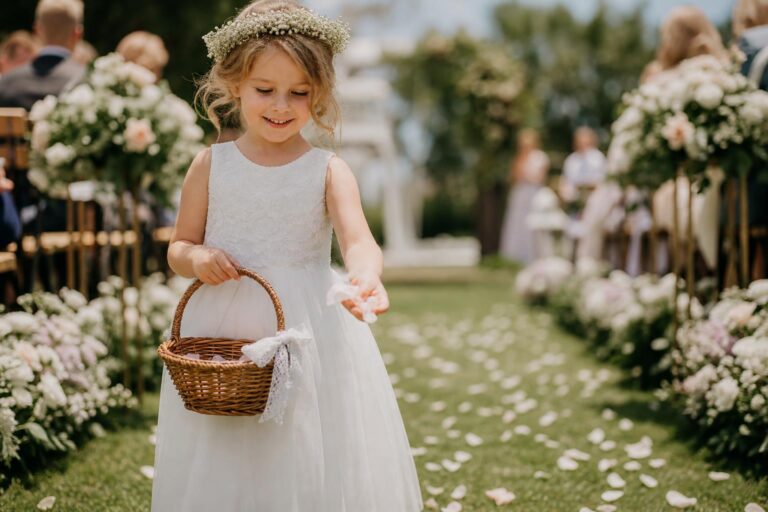
For a garden aisle or any outdoor wedding, movement and comfort become central. Knee-length and tea-length styles are easier to manage on grass, uneven paths, and warmer days. Chiffon, lighter tulle, and softer pastel tones can look especially romantic here. The visual effect is airy and natural, particularly in golden-hour light.
Formal evening receptions
Evening weddings can handle a little more structure and sheen. Satin, elegant organza, and slightly richer styling details often feel right in candlelit spaces and ballroom settings. That said, the same comfort rules apply. An older flower girl still needs to sit comfortably, move easily, and remain confident throughout the event.
Choose this if: you want the dress to look perfectly placed in the venue rather than simply pretty on its own.
Where older flower girl style starts to overlap with junior bridesmaid style
This overlap is one of the biggest reasons shopping can feel confusing. Once a flower girl is in the 11 to 14 age range, some families begin looking at junior flower girl dress options or even junior bridesmaid-adjacent styles. The reason is simple: older girls often want a dress that feels more sophisticated and less childlike, but they may still have the ceremonial role of a flower girl.
In these cases, the best approach is usually to keep the sweetness of flower girl styling while borrowing the cleaner lines of junior bridal party fashion. A tea-length chiffon dress in blush, an A-line satin silhouette with restrained embellishment, or a fit-and-flare style in a soft pastel can bridge that gap beautifully. This is where age-appropriate styling becomes more nuanced. The dress should still suit the role, but it can absolutely reflect the maturity of the child wearing it.
Avoid this: choosing something so youthful that the child feels uncomfortable, or so mature that it no longer fits the spirit of flower girl attire.
Brand and retailer inspiration for the U.S. shopper
Shopping in the United States often means moving between editorial inspiration, bridal retailers, and product catalogs. A few names stand out in this space for different reasons. Suite Bridal approaches flower girl dresses through a bridal retail lens, with attention to age-appropriate wedding attire styles and coordination with bridesmaids. Stylewe presents an older flower girl dresses category with visual product-led inspiration, including more fashion-oriented options. Etsy appeals to families looking for handmade or vintage-inspired choices and often works well when customization matters.
Broader wedding style inspiration also comes from established names in wedding publishing and fashion retail. The Knot is useful for understanding how age-adapted wedding attire can be discussed with a more editorial eye, including designer and retailer context. Brands and retailers such as Jenny Yoo, Staud, and Saks Fifth Avenue appear within that broader wedding fashion conversation and help frame what more polished, occasion-aware dress styling looks like, even when the specific focus is not flower girl attire alone.
For families comparing options, the most helpful mindset is not brand loyalty alone but fit for purpose. A marketplace like Etsy may be especially appealing for a vintage-inspired ceremony or for custom sizing concerns. A bridal retailer such as Suite Bridal may make coordination easier if the rest of the wedding party is also being styled through bridal channels. A catalog-style retailer like Stylewe may help visualize category-specific looks quickly.
- Suite Bridal: useful for age-appropriate wedding attire styles and coordination-minded shopping.
- Stylewe: useful for browsing a dedicated older flower girl dresses category with visual style cues.
- Etsy: useful for handmade, customized, or vintage-inspired options.
- The Knot: useful for broader wedding fashion perspective and style framing.
- Jenny Yoo, Staud, Saks Fifth Avenue: helpful reference points for polished occasionwear language and more refined wedding style inspiration.
Sizing and fit: the part families regret rushing
One of the clearest gaps in many shopping experiences is age-specific sizing guidance for older flower girls. This matters because a child in the 9 to 12 range may not fit neatly into toddler-based flower girl sizing, yet may not be fully aligned with junior categories either. That is why fit should be approached carefully, with measurement and movement both considered before ordering.
A dress can look perfect in a product image and still fail in real use if the bodice is too restrictive, the skirt too heavy, or the length awkward for the child’s height. Older flower girls are also more likely to notice these issues. If a dress pulls, scratches, slips, or limits movement, that discomfort tends to show quickly in posture and photographs.
A simple measurement-first approach
Before buying, focus on a basic fit checklist: overall size category, likely dress length on the child’s height, and how the silhouette will sit through the shoulders and waist. Retailer size charts and return policies are especially important here. This is less glamorous than choosing color, but it prevents the most common regrets.
- Check the dress length against the child’s actual height, not just the product description.
- Consider whether the fabric has structure or softness, since that changes how fit feels.
- Allow room for sitting, walking, and dancing, not just standing still.
- Review retailer size charts and returns before ordering.
Style tip: if choosing between two silhouettes, the one that allows easier movement usually photographs better over the course of a real wedding day.
Practical etiquette and budget decisions that affect the final look
Flower girl dress decisions are rarely just about style. They are also shaped by who is choosing the dress, who is paying, and how closely the flower girl needs to coordinate with the rest of the wedding party. Practical etiquette matters because it affects whether the final choice feels smooth or stressful.
For an older flower girl, involving the child to some degree is often wise. At this age, personal comfort and confidence matter. A dress can satisfy every wedding mood board requirement and still fail if the child feels awkward in it. The strongest choices tend to come from clear direction from the couple or family, paired with a realistic understanding of what the child will actually wear well.
Budget also shapes the decision differently for older girls than for very young children. Because the styling may lean closer to junior occasionwear, prices, fabrics, and alteration needs can vary more. If there are multiple flower girls, consistency in silhouette or color may matter more than exact matching. This can help keep the group cohesive without forcing identical purchases that do not flatter each child equally.
Best for: families trying to balance wedding aesthetics, child comfort, and realistic spending.
Choose this if: you want a polished result without creating unnecessary pressure around one dress.
Mistakes to avoid when styling older flower girl dresses
The most common styling mistakes are not dramatic. They are usually small mismatches that add up: a dress that feels too childish for the age, a hem that is hard to walk in, a fabric that looks beautiful but wears poorly, or accessories that matter more in theory than in real life. Older flower girls benefit from a more considered balance.
- Do not choose length based only on formality; think about walking surfaces and movement.
- Do not rely on decorative detail to make the dress feel special if the silhouette is wrong.
- Do not overmatch the bridesmaids so closely that the flower girl loses her own role.
- Do not ignore shoe comfort just because the dress is the main event visually.
- Do not treat older girls like younger toddlers in styling decisions; their comfort awareness is different.
One of the easiest ways to avoid these mistakes is to imagine the entire wedding day, not just the ceremony entrance. Can she sit through dinner comfortably? Can she move naturally in reception photos? Will the dress still feel right under indoor lighting and in outdoor portraits? That broader view usually leads to better choices.
Pinterest-worthy ideas to save for later
Sometimes it helps to think in styled scenes rather than product categories. Older flower girl dresses become easier to choose when the whole visual story is clear. The following ideas work because they connect silhouette, fabric, color, and setting into one cohesive image.
Soft blush chiffon in a garden ceremony
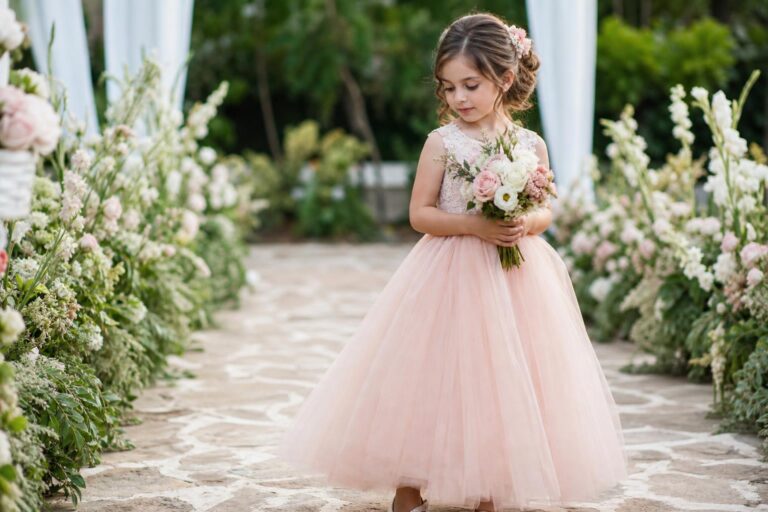
Picture a tea-length blush chiffon dress moving lightly along a garden aisle, finished with simple flats and a floral hair clip. This works because chiffon suits an outdoor setting, blush feels romantic but understated, and the tea-length hem keeps the look graceful without becoming impractical on grass.
Ivory satin for a classic church wedding
An ivory satin A-line dress with minimal embellishment creates a timeless, polished look for a traditional ceremony. In photos, satin gives enough structure to feel formal, while the clean silhouette keeps the styling age-appropriate. A narrow sash and neat headband are often all it needs.
Champagne organza for an evening reception
Champagne organza catches evening light beautifully and feels especially elegant in a ballroom or candlelit setting. In a knee-length or tea-length shape, it remains practical while still offering that slightly dressier mood families often want for formal receptions.
Pastel A-line styling that echoes the bridesmaids
If the bridesmaids are in a soft pastel palette, an older flower girl in a lighter complementary tone creates visual harmony without exact matching. This is one of the easiest ways to make group portraits feel cohesive and editorial rather than overly styled.
Pinterest-worthy idea: save one image each for length, silhouette, fabric, and accessory direction. That is often more useful than saving twenty dresses that all solve different problems.
Quick styling tips before you decide
- If the child is closer to junior sizing, lean toward simpler silhouettes and subtler embellishment.
- If the venue is outdoors, prioritize manageable hems and easy shoes before decorative extras.
- If bridesmaids are wearing a strong fabric statement, echo it lightly rather than copying it exactly.
- If the wedding is formal, let fabric and fit create elegance instead of adding too much trim.
- If you are unsure between knee-length and tea-length, tea-length is often the safest middle ground.
The safest, most stylish choices nearly always combine three things: a length that supports movement, a silhouette that feels age-appropriate, and a fabric that suits the venue. From there, color and accessories can refine the mood. For many weddings, that means an A-line or fit-and-flare dress in satin, chiffon, organza, or light tulle, in ivory, blush, champagne, or another soft pastel aligned with the bridal party.
Older flower girl dresses work best when they do not try too hard. The look should feel special, comfortable, and visually connected to the wedding without losing the child’s own ease. If the dress feels natural in the venue, flattering in photos, and easy enough to wear from ceremony to reception, it is very likely the right choice.
FAQ
What is considered an older flower girl?
An older flower girl usually falls around the 7 to 12 age range, though some girls closer to 11 to 14 may overlap with junior flower girl or junior bridesmaid styling. That age range matters because dress choices often need to feel more refined and less toddler-like.
What dress length is best for older flower girl dresses?
Knee-length and tea-length are typically the most practical and age-appropriate choices. They offer enough formality for weddings while making it easier to walk, sit, and move comfortably during the ceremony and reception.
Should an older flower girl match the bridesmaids?
She does not need to match exactly. The most polished approach is usually to coordinate through color family, fabric, or a shared detail such as a sash or bouquet ribbon. That keeps the look cohesive without making the flower girl feel like a miniature copy of the bridesmaids.
Which silhouettes are most flattering for older flower girls?
A-line and fit-and-flare silhouettes are the strongest options in most cases. They feel polished, allow comfortable movement, and adapt well to classic wedding fabrics such as satin, chiffon, organza, and light tulle.
What fabrics work best for an older flower girl dress?
Satin works well for structured, formal weddings, while chiffon, organza, and lighter tulle create softer movement for garden or daytime ceremonies. Light lace can also be beautiful in small amounts, especially when the goal is a more understated, mature feel.
How do I make sure the dress is age-appropriate?
Start with length and silhouette. Knee-length or tea-length styles in A-line or gentle fit-and-flare shapes are usually safer than very full or overly grown-up designs. Soft, timeless colors and restrained embellishment also help the dress feel elegant without looking too young or too mature.
Where can I shop for older flower girl dresses in the U.S.?
Families often browse bridal retailers such as Suite Bridal, fashion-led category pages like Stylewe, and marketplaces such as Etsy for handmade or vintage-inspired options. Editorial wedding sources like The Knot can also help clarify overall style direction before buying.
How should I think about sizing for an older flower girl?
Sizing should be handled carefully because older flower girls may not fit neatly into toddler categories and may not yet align fully with junior sizing. Use retailer size charts, check likely hem length against the child’s height, and prioritize ease of movement as much as visual fit.
What accessories are best with older flower girl dresses?
Simple accessories tend to work best: comfortable shoes, a neat headband or hair clip, and possibly a small bouquet. The goal is to complement the dress and the wedding palette without adding anything too heavy, distracting, or difficult to wear.
Can an older flower girl wear a junior bridesmaid-style dress?
Yes, especially if she is at the upper end of the age range. The best version of this approach keeps the role in mind by using softer flower girl styling cues, such as a lighter color palette or a more delicate finish, while borrowing the cleaner lines of junior bridesmaid fashion.