Champagne Flower Girl Dress Styles for Every Wedding Mood
Champagne has a particular kind of quiet presence in a wedding setting. It is softer than metallic gold, warmer than stark white, and more dimensional than a flat neutral. That is exactly why the champagne flower girl dress has become such a closely considered choice: it sits at the intersection of bridal tradition and modern styling, often compared with ivory, cream, blush, and gold-accented occasion wear.
The confusion usually begins with color, but it rarely ends there. Once you start looking, the conversation quickly expands into silhouette, fabric, finish, age appropriateness, and how the dress will actually read during a ceremony, in portraits, and under reception lighting. An A-line tulle dress in champagne tells a very different story from a tea-length organza style or an embroidered lace design with flutter sleeves.
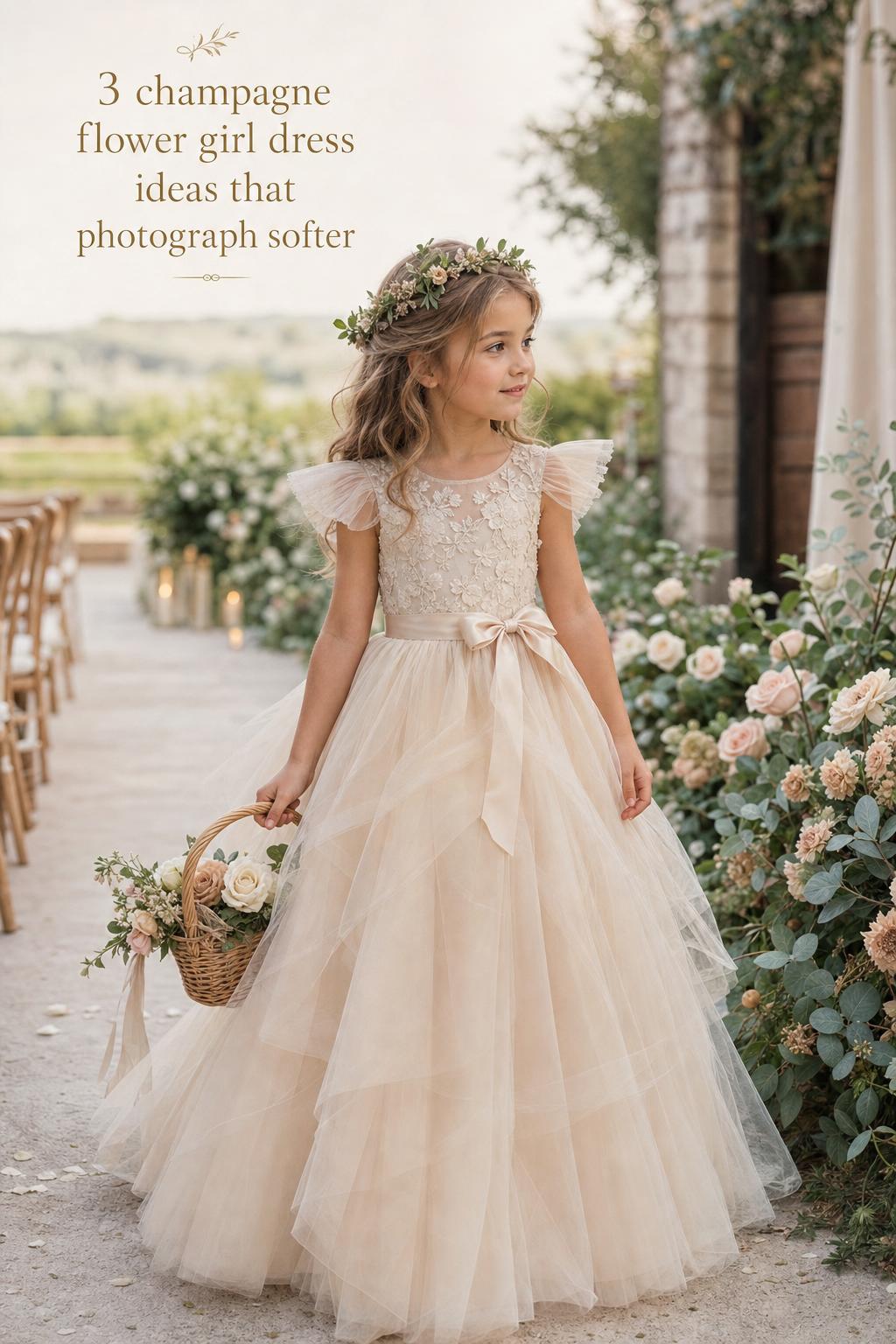
This editorial comparison breaks down the main champagne flower girl dress styles side by side, from ball gown to tea-length, from satin finish to matte tulle, and from brand-led catalogs like Dessy and Azazie to more specific product-led options from Mia Princess, Dorris Wedding, KEMDress, SHEIN, BrideLulu, Flower Girl Dresses, and UK Flower Girl Boutique. The goal is not simply to admire the look, but to understand which version works best for different weddings, palettes, and practical needs.
The champagne dress family at a glance
Not every champagne flower girl dress belongs to the same visual category. In current wedding shopping, the term covers a broad family of looks: soft cream-champagne styles, richer gold-based champagne gowns, lace dresses with embroidered detailing, airy tulle ball gowns, satin twill designs with bows or sashes, and tea-length organza silhouettes that feel slightly more classic and structured.
Your wedding look is only the beginning.
Keep your guest list, vendors, timeline, and every important detail together with Zarellea — so your day feels as considered as your style.
Because the color itself is adaptable, the strongest difference between one champagne dress and another is often the way the fabric carries the shade. Tulle diffuses it. Lace softens it. Organza gives it shape. Satin and satin-like finishes reflect it. For weddings, that distinction matters as much as the color name on the product page.
Style overview: champagne A-line dresses
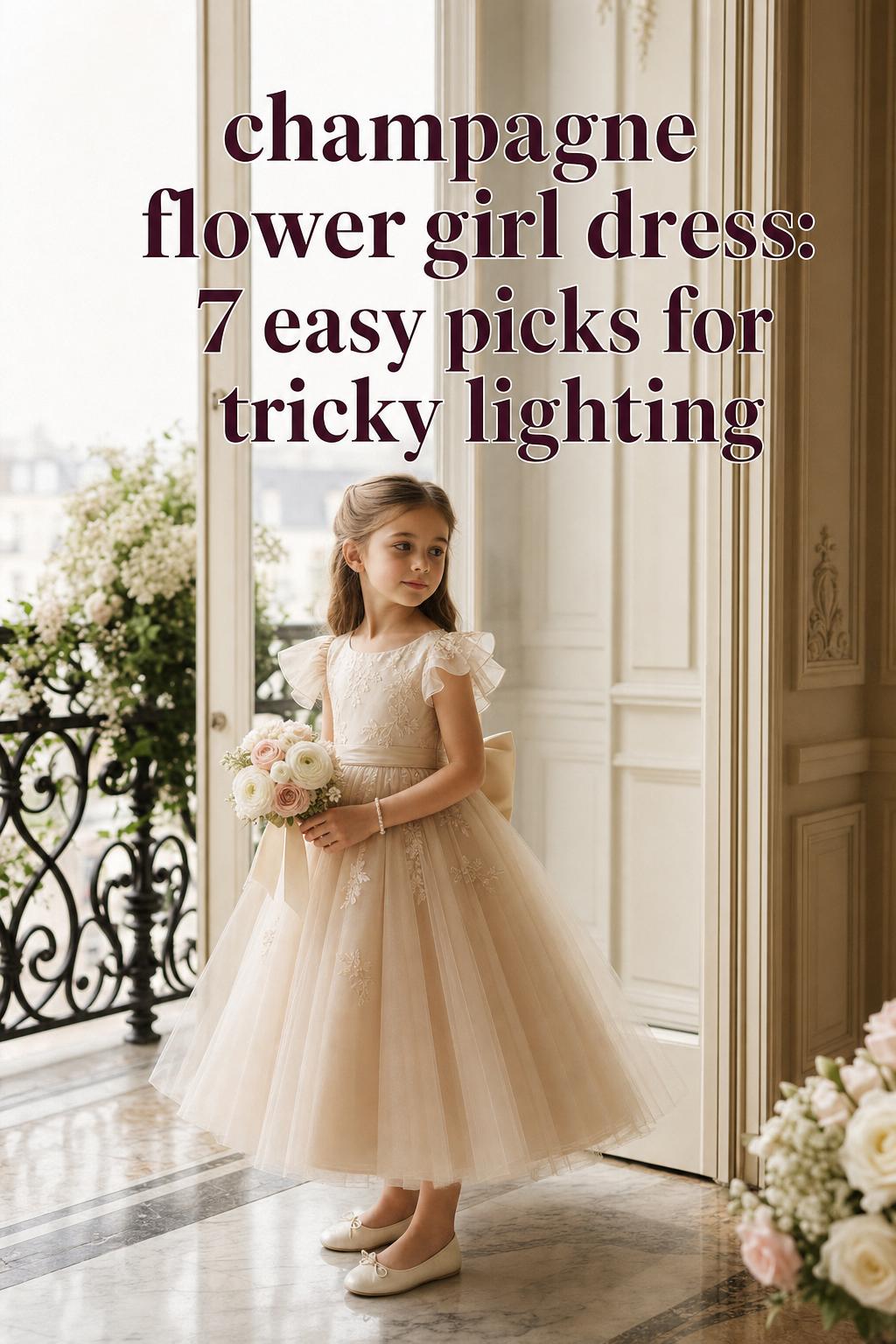
The A-line champagne flower girl dress is one of the most versatile interpretations of the color. It typically has a fitted bodice and a skirt that opens gradually rather than dramatically, which makes it appropriate for ceremonies that call for elegance without excess volume. Dorris Wedding’s champagne A-line lace flower girl dress with floral details and a bow sash captures this direction clearly, pairing an A-line shape with lace and decorative accents for a polished, formal look.
In mood, the A-line style feels balanced and bridal. It works especially well when the wedding palette leans toward ivory, white, and champagne rather than a more theatrical gold story. Azazie also reflects this approach with champagne A-line options in bow tulle and lace-focused designs, reinforcing how the silhouette suits both simple and embellished styling.
Style overview: champagne ball-gown dresses
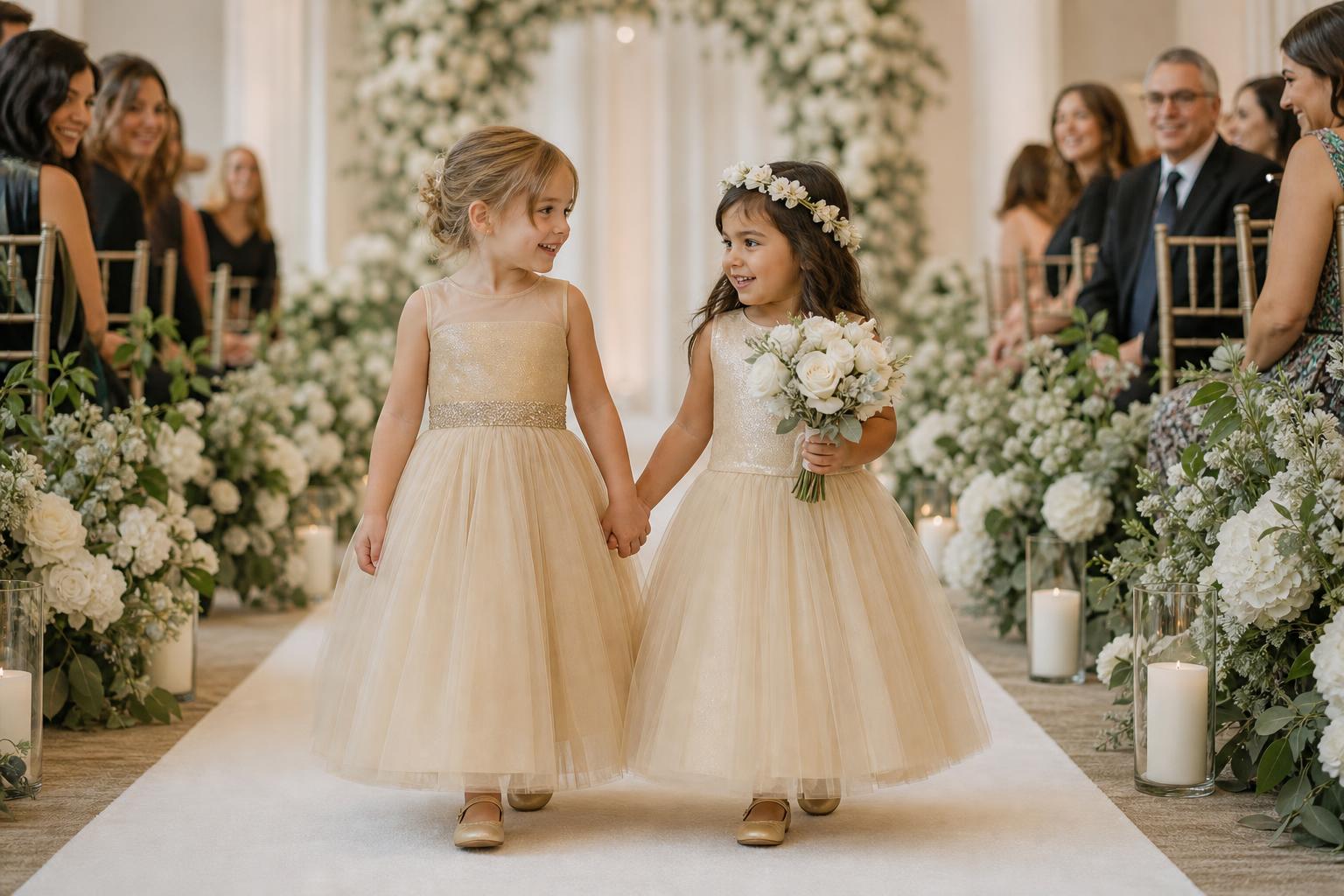
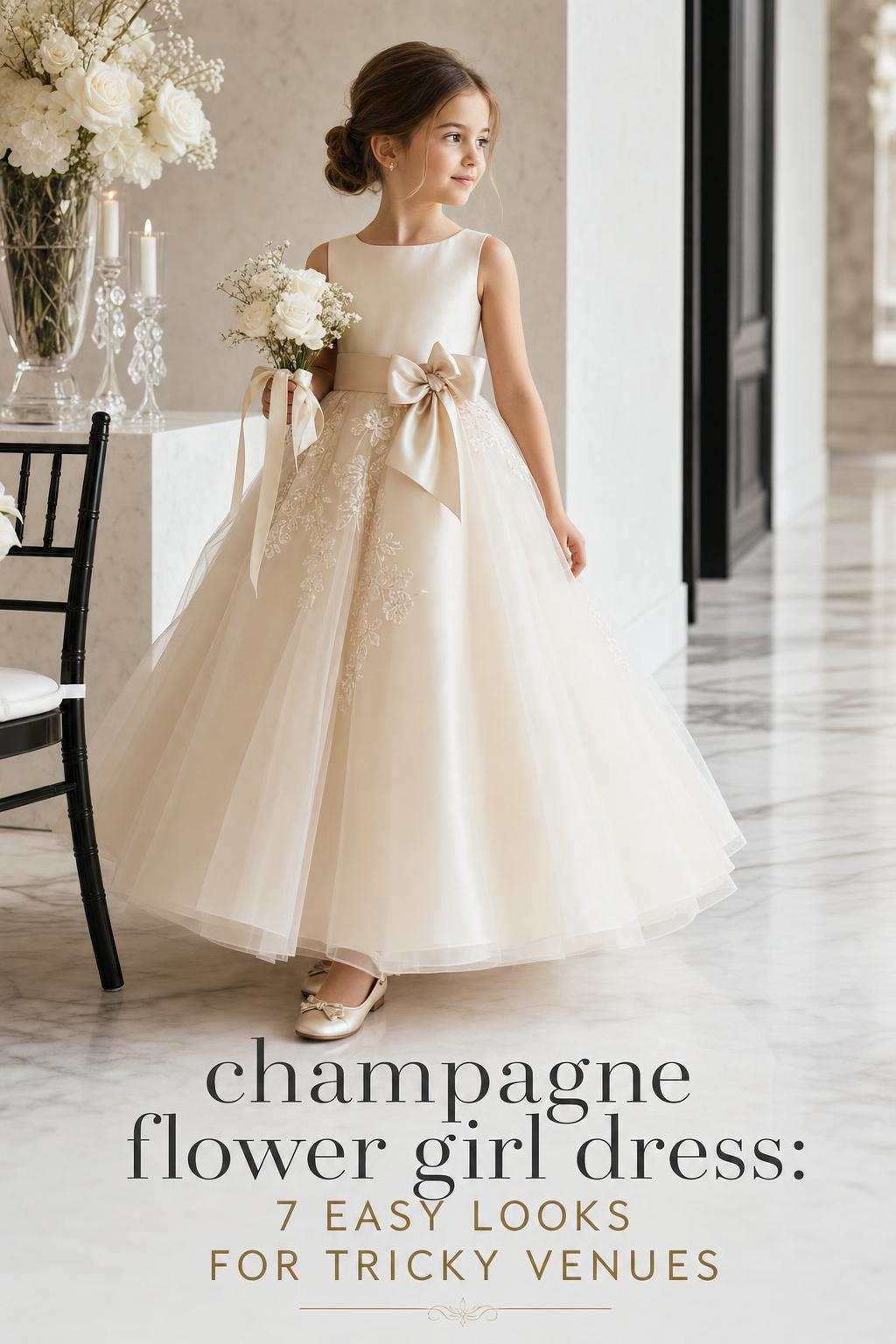
The ball-gown version of a champagne flower girl dress creates a more ceremonial image. This is where layered tulle, pleated volume, and fuller skirts become central to the look. Azazie’s champagne ball-gown pleated tulle entries and KEMDress’s champagne tulle flower girl dress both sit in this category, where the emphasis is on movement, presence, and a storybook finish.
Visually, this style reads most strongly in larger venues, formal church ceremonies, or ballroom receptions where scale matters. Champagne in a ball gown can look especially rich because the extra fabric gives the tone depth. The trade-off is that it can feel more formal and more styled, which may not suit every wedding or every age range.
Style overview: tea-length champagne dresses
The tea-length champagne flower girl dress offers a different sort of charm. Mia Princess’s princess round tea-length organza flower girl dress in champagne is a useful example: the shorter length shifts the mood away from grand bridal drama and toward classic occasion dressing. It still feels wedding-ready, but it brings more ease and a slightly lighter visual rhythm.
This style is often the right answer for brides who want a flower girl look that feels polished without overwhelming a smaller ceremony. A tea-length hem also changes how the color is perceived. With less fabric, champagne can appear cleaner and more delicate, particularly in organza, where structure and lightness coexist.
Style overview: lace-led champagne dresses
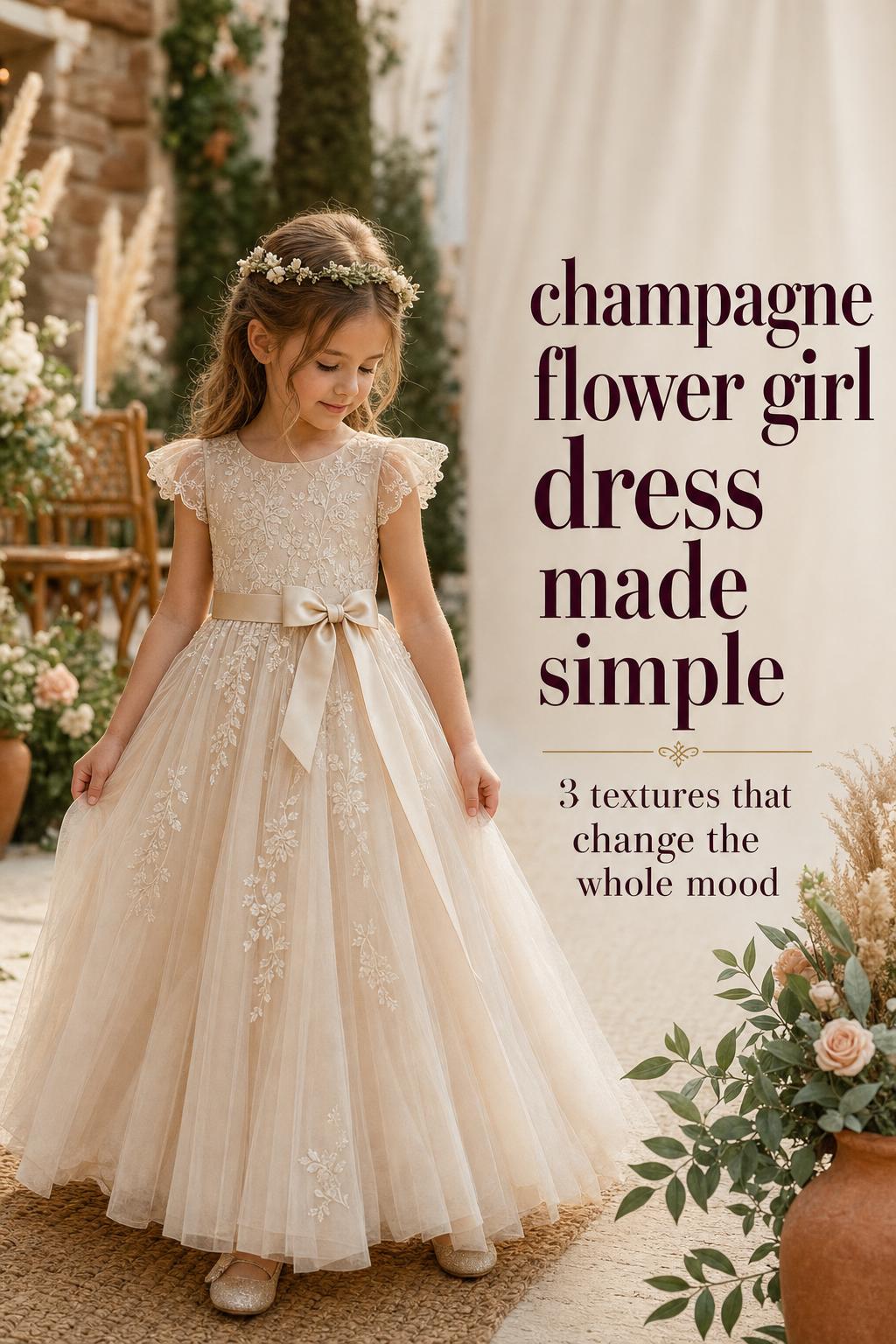
Lace changes the emotional register of champagne almost immediately. It introduces texture, pattern, and softness, which is why lace styles often feel more romantic than satin-led options. Dorris Wedding’s lace A-line dress, Flower Girl Dresses’ cream-champagne collection emphasis, and the embroidered champagne lace direction from UK Flower Girl Boutique all point to the same aesthetic: delicate surface detail over shine.
When people compare champagne with ivory, lace is often where the distinction becomes most interesting. An ivory base can feel brighter and more traditional, while champagne lace tends to look warmer and slightly more decorative, especially when embroidery or flutter sleeves are added. The result is gentle but visually rich.
Style overview: satin, satin twill, and bow-focused dresses
Some champagne dresses lean less on softness and more on finish. Dessy’s category pages reference satin twill, faux-wrap shapes, pleated skirts, and bow or sash details, while SHEIN’s tween girls champagne wedding flower girl dress highlights a maxi silhouette with a big bow and a satin-like appearance. These dresses are less about texture layering and more about clean structure, polished sheen, and decorative emphasis.
This family of styles often feels more modern, especially when the lines are simple and the shine is noticeable. A bow-backed or sash-tied champagne dress can also coordinate well with a wedding that uses gold accents and a more styled reception setting. The risk, however, is that the finish can read differently under flash or indoor lighting than it does in daylight.
Where the styles separate most clearly
Champagne dresses are frequently grouped together in shopping filters, but in practice they diverge across silhouette, texture, and visual weight. Understanding those differences makes it far easier to choose a dress that suits the ceremony rather than just the product photo.
Silhouette and structure
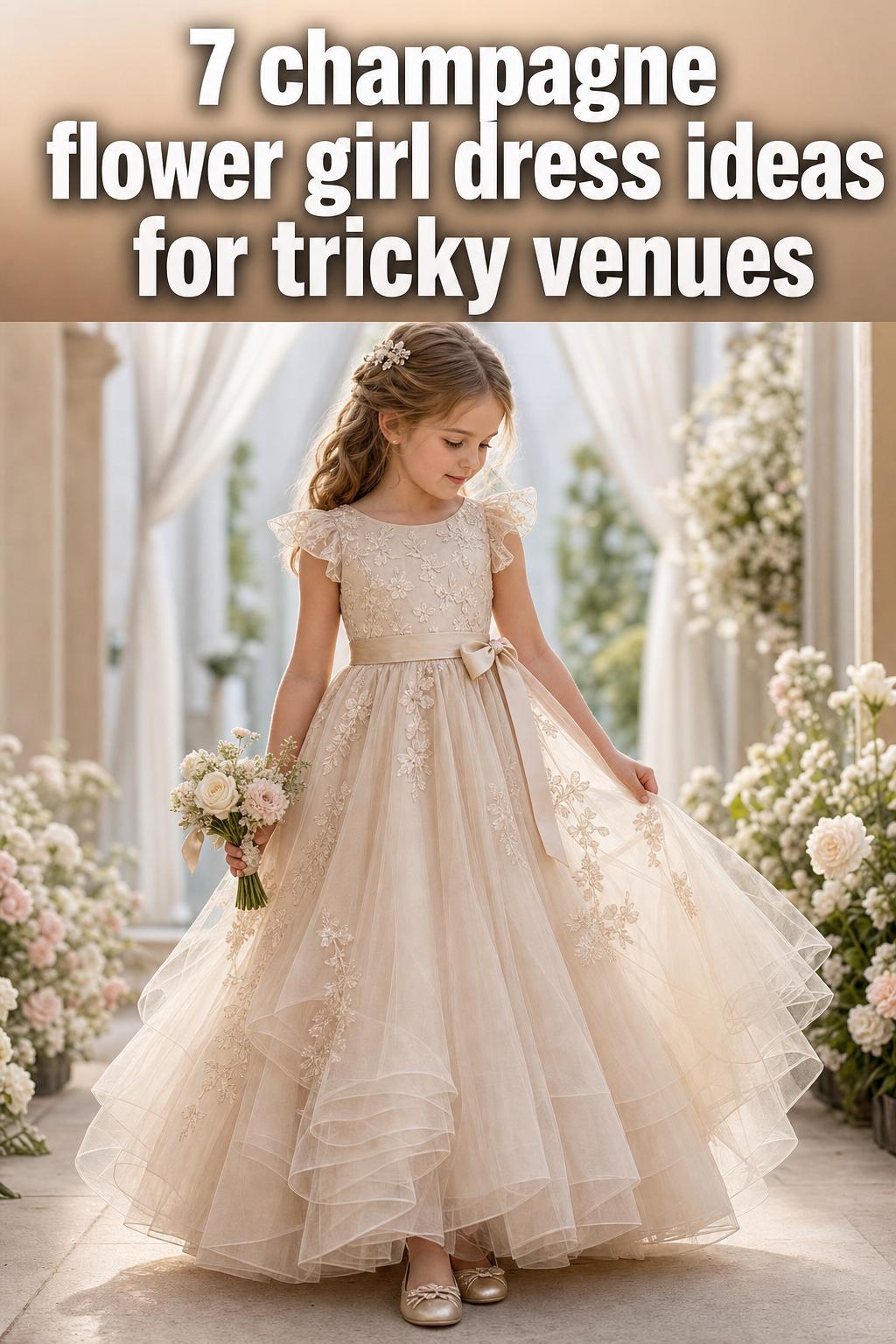
An A-line silhouette tends to feel poised and universally appropriate. It gives shape without turning the flower girl into the focal point. Ball gowns, by contrast, create volume and greater visual drama. They are memorable and photogenic, but they also occupy more space in the bridal composition. Tea-length styles feel the least formal of the three, though still unmistakably occasion-focused when done in organza or lace.
For a wedding with a soft, understated aesthetic, A-line and tea-length dresses usually blend more easily into the broader palette. For a more formal ceremony, a ball gown may echo the grandeur of the setting more naturally.
Color palette and undertone
Champagne is not a single fixed shade. Some dresses sit closer to cream or ivory-champagne, as seen in collections that bridge cream and champagne tones. Others carry a stronger gold undertone, while some appear slightly pink-warm depending on the base fabric and finish. That is why two dresses labeled champagne can look completely different when placed beside white bridalwear.
If the bridal palette is built around ivory and white, a softer champagne with matte or lace texture often integrates more quietly. If the styling includes gold accents, richer satin or fuller tulle champagne styles can look more intentional and celebratory.
Formality level
Fabric and length often determine formality faster than color does. A tea-length organza dress from Mia Princess feels polished but not as ceremonially grand as a pleated tulle ball gown from Azazie. An embroidered lace style with flutter sleeves from UK Flower Girl Boutique reads romantic and refined, while a bow-heavy maxi dress from SHEIN introduces a more budget-conscious, trend-oriented interpretation.
The practical lesson is simple: do not evaluate the dress by shade name alone. A champagne flower girl dress can be softly classic, highly formal, or playful depending on the construction around it.
Styling philosophy
Lace-led champagne styling is usually about texture and sentiment. Tulle-led styling is about movement and visual fullness. Organza styling favors crisp shape. Satin and satin twill styles focus on sheen, smoothness, and decorative details such as bows, sashes, or pleats. Brands tend to organize their collections around these distinctions, even when the customer first arrives through a color filter.
This is where category pages from Dessy, Azazie, and BrideLulu are helpful in principle: they show how many interpretations can exist within a single color family. The most successful choice is usually the one whose styling philosophy matches the wedding atmosphere, not simply the one with the most embellishment.
How champagne behaves in tulle, lace, organza, and satin
If there is one area where shoppers often underestimate the difference between dresses, it is fabric. In wedding styling, fabric is not only a matter of comfort or price point. It controls drape, volume, softness, and how champagne appears in photographs.
Tulle: airy, layered, and storybook
Tulle tends to make champagne look lighter and more atmospheric. Because the fabric is sheer and often layered, it diffuses color instead of presenting it as a solid field. This is why champagne tulle dresses, including fuller designs from Azazie and KEMDress, often feel especially bridal for flower girls. They create softness in motion, which is ideal for a processional and for portraits where the skirt needs visible movement.
The trade-off is volume. Tulle can become visually dominant if the wedding style is restrained, especially in a ball-gown shape. For a minimalist or intimate setting, too much tulle may look more theatrical than intended.
Lace: romantic texture and warmth
Lace gives champagne a more nuanced surface. Instead of reading as a single tone, the eye registers pattern, embroidery, and soft contrast. This is evident in the lace-driven options from Dorris Wedding, Flower Girl Dresses, and UK Flower Girl Boutique. Floral details, embroidered finishes, and flutter sleeves all deepen the visual story without requiring dramatic volume.
For garden ceremonies, chapel weddings, or any bridal vision built on softness rather than shine, lace often feels the most naturally integrated. It pairs particularly well with ivory and cream, where a stronger satin finish might feel slightly more assertive.
Organza: crisp and classic
Organza carries champagne with more structure. Mia Princess’s tea-length organza design illustrates the appeal well: the fabric holds shape, keeps the silhouette tidy, and creates a classic occasionwear mood rather than a cloud-like one. Organza is useful when you want the dress to feel neat and formal without relying on heavy embellishment.
In real wedding use, organza can be especially effective for shorter lengths because it preserves the shape of the skirt. That makes it a strong option for daytime ceremonies, smaller venues, and weddings where the flower girl look should feel polished but easy to move in.
Satin and satin twill: reflective and dressed up
Satin and satin twill bring out the richer side of champagne. Dessy’s references to satin twill, faux wrap styling, and pleated skirts suggest a cleaner, more tailored interpretation of the color. SHEIN’s satin-like maxi with a big bow sits in the same broad family, though with a more budget-focused, trend-led angle.
This finish can be beautiful in evening light and more formal interiors, but it also places greater emphasis on lighting. Under flash or strong indoor lighting, a reflective champagne fabric may read more gold than expected. That is not necessarily a drawback, but it does make swatch comparison and visual coordination more important.
A closer comparison of leading shopping approaches
The current champagne flower girl dress market is shaped by two main shopping experiences: broad color-filter catalogs and highly specific product pages. Each serves a different kind of bride or family member, and each creates a different decision-making path.
Catalog-first brands: Dessy, Azazie, and BrideLulu
Dessy and Azazie present champagne as a complete category rather than a single hero dress. That means the shopper can compare A-line, ball gown, lace, tulle, and bow-led styles within one color family. Dessy’s champagne flower girl pages emphasize multiple silhouettes and fabric directions, while Azazie’s color-filtered catalog makes it easy to see how the same shade behaves across different dress lines such as Lior, Bev, Esme, Junebug, and Winnie.
BrideLulu brings a similar category-led breadth, with attention to lengths, halter variations, lace options, and sale sections. This kind of shopping experience suits readers who know they want champagne but have not yet decided whether the wedding calls for tea-length organza, a fuller tulle skirt, or a simpler lace look.
Product-first retailers: Dorris Wedding, Mia Princess, KEMDress, SHEIN, and UK Flower Girl Boutique
Other retailers lead with one dress at a time. Dorris Wedding focuses on a highly specific lace A-line statement with floral details and a bow sash. Mia Princess offers a defined tea-length organza option. KEMDress centers the tulle silhouette. UK Flower Girl Boutique highlights embroidered champagne lace and flutter sleeves. SHEIN frames its dress around affordability, maxi length, and a prominent bow detail for tween styling.
This product-first approach tends to work best when the wedding vision is already clear. If you know you want embroidered lace, tea length, or a budget-conscious big-bow look, a focused product page can make the decision feel more immediate. The limitation is that comparison becomes harder unless you open multiple tabs and mentally reconstruct the broader market.
Visual style breakdown in real wedding settings
A dress that looks ideal on a white background can behave very differently in a vineyard aisle, a candlelit ballroom, or a bright outdoor ceremony. Champagne is especially sensitive to atmosphere because it sits between neutral and luminous. The surrounding setting can pull it warmer, softer, or more golden.
Garden and outdoor ceremonies
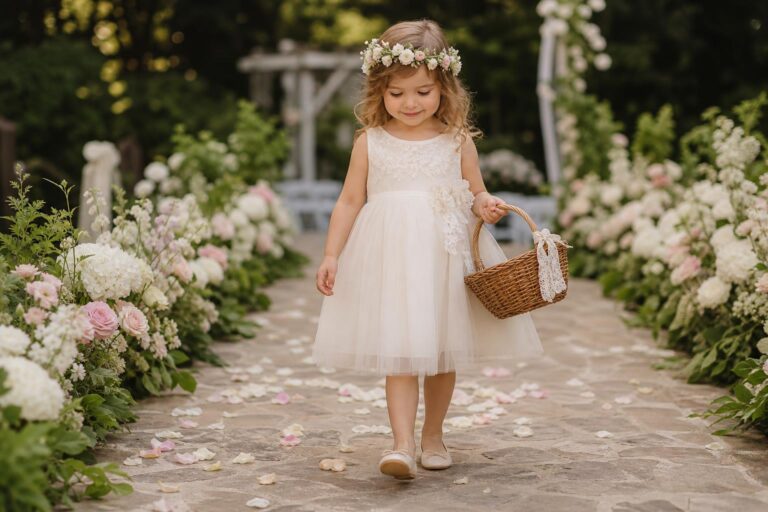
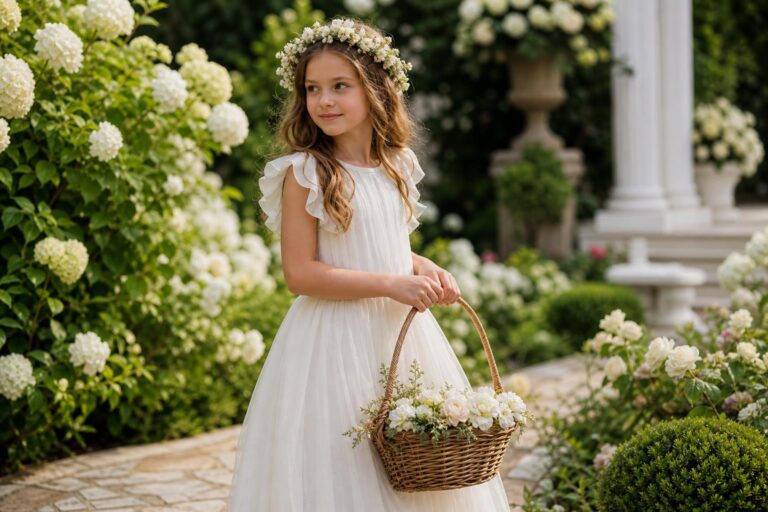
In natural light, champagne often appears gentler and closer to cream, especially in lace and tulle. A-line lace styles and tea-length organza dresses tend to feel very natural here because they do not overtake the setting. Tulle works beautifully too, but the fuller the skirt, the more storybook the impression becomes. If the wedding mood is airy and romantic, that can be a strength. If the mood is minimal and tailored, it may feel too dressed.
For outdoor aisles, proportion matters. Long skirts and fuller ball gowns are picturesque, but they can feel visually heavier than a simpler A-line when paired with a soft floral palette in ivory, white, and champagne.
Ballroom or formal evening receptions
Evening interiors tend to reward dresses with richer surface interest. Satin twill, fuller tulle, floral lace, bows, and pleats all stand up better in lower light. A champagne ball gown or a polished satin-led silhouette often feels more at home here than a very understated tea-length style, particularly if the room includes gold accents and a more formal decorative scheme.
This is also where structure reads beautifully. A faux-wrap shape or a pleated skirt can appear very refined under warm reception lighting, while matte fabrics may seem quieter by comparison.
Smaller ceremonies and intimate venues
In a smaller room, scale becomes more important than decoration. A tea-length organza dress or a modest A-line lace design usually feels proportionate and intentional. The child still looks part of the wedding party, but the styling remains in harmony with the venue rather than competing with it.
This is often where champagne has its greatest subtlety. Instead of reading as a formal statement color, it becomes a warm bridal neutral that softens the entire visual composition.
Outfit logic: how each style interprets the same wedding moment
A processional look for a romantic ceremony
An A-line lace champagne flower girl dress approaches the moment with restraint. The lines are clean, the waist is defined, and the floral or embroidered detail offers interest without overwhelming the bridal party. It works especially well when the ceremony has a soft ivory-and-white palette and the flower girl should feel coordinated rather than theatrical.
A champagne ball gown handles the same processional differently. It creates movement first, then detail. The skirt becomes part of the scene, particularly in layered tulle. For a formal wedding, that added presence can be beautiful. For a pared-back ceremony, it may become more visual emphasis than the setting needs.
A daytime reception with easy movement
A tea-length organza style solves this moment through practicality and charm. The shorter hem makes movement easier, the shape remains crisp, and the overall impression is polished without being too grand. This is one of the clearest examples of style logic matching occasion: the dress still feels bridal, but it also respects the rhythms of a long daytime event.
A full-length satin or tulle gown can still work for daytime, but it changes the mood. The look becomes more formal and more composed, which may suit a more elaborate reception but feels less effortless than tea length.
A wedding palette built around gold accents
When the décor already includes gold accents, richer champagne tones and satin-like finishes become easier to justify. A Dessy-style satin twill dress, a bow sash, or a fuller gown with pleating will echo the decorative warmth of the wedding more directly. The flower girl outfit becomes part of the atmosphere rather than a separate neutral note.
In the same palette, a cream-champagne lace dress offers a softer counterpoint. It can still coordinate beautifully, but the result is more romantic than polished-glamorous. Neither is inherently better; they simply tell different versions of champagne.
Choosing between champagne and its closest cousins
Many shoppers do not begin by asking which silhouette they want. They begin by asking whether champagne is too close to ivory or too warm against white. That concern is understandable, because the distinction is subtle and very dependent on fabric.
Ivory tends to read lighter and more bridal-classic. Cream-champagne blends soften the line between neutral and warm. Gold-based champagne feels more decorative. A pink-warm champagne undertone can look especially gentle in lace or tulle. The safest approach is not to assume one universal shade, but to compare undertone and finish together.
Tip: judge color through context, not label alone
A champagne flower girl dress in lace may look closer to ivory than a satin version with the same color name. A cream-filtered collection can sit naturally beside white bridalwear, while a more reflective gown can pull warmer under reception lighting. If the wedding palette is delicate, prioritize softer finishes. If it includes visible gold accents, a richer champagne may look more intentional.
Size, fit, and the practical side of elegance
In category pages and product listings, sizing and quick-ship options appear repeatedly for a reason. A flower girl dress has to survive more than the ceremony itself. It must allow walking, sitting, standing for photographs, and moving through a long day without constant adjustment. That makes fit just as important as visual appeal.
Fuller tulle or ball-gown shapes can be forgiving in the skirt but still require attention at the bodice. Tea-length organza styles are often easier to manage visually if hem proportion matters. A-line dresses remain the most flexible for fit because their structure is defined without excessive bulk. Product-driven brands like Mia Princess, Dorris Wedding, and KEMDress help by making silhouette expectations clear, while broader catalogs such as Dessy and Azazie allow more comparison across shapes and sizing paths.
Tips for fit and alterations
- Use the size chart carefully before falling in love with a silhouette, especially for structured bodices and formal necklines.
- If the wedding timeline is tight, quick-ship visibility can matter as much as the style itself.
- A tea-length dress usually makes hem proportion easier to assess than a floor-length ball gown.
- Bow sashes, pleated skirts, and lace overlays should be evaluated not just for beauty, but for how they sit when the child moves.
- If minor adjustments are needed, simpler silhouettes are often easier to alter cleanly than heavily layered gowns.
Accessories change the reading of champagne
A champagne flower girl dress rarely stands alone in the final styling. Shoes, hair accessories, bouquet tones, and even the surrounding bridesmaid palette influence how the color is perceived. That is why accessorizing should not be treated as an afterthought.
With lace and cream-champagne dresses, softer finishing touches usually preserve the romantic mood. With satin or bow-led styles, more polished accessories can feel coherent. The same dress can look more classic or more festive depending on whether the details lean airy and understated or structured and decorative.
Visual balance in accessories
A fuller ball gown generally benefits from restraint elsewhere. If the skirt carries the drama, accessories should support rather than compete. A lace A-line or tea-length organza dress can accommodate a bit more visible detail because the dress itself is quieter. For embroidered champagne lace with flutter sleeves, the texture already does substantial work, so additional decorative emphasis is best kept light.
Coordination also matters across the wedding party. Champagne tends to sit comfortably near ivory and white, but the exact undertone should still be checked against bridesmaid dresses and the broader décor. A warm champagne beside a cool neutral can look unexpectedly separate, while the right match creates seamless harmony.
Tip: let one element lead
If the dress has a strong bow, floral embroidery, or a pleated full skirt, let that be the statement. If the dress is simple and matte, accessories can take on a slightly larger styling role. This keeps the overall look refined and avoids the layered-over-layered effect that can make a flower girl outfit feel busier than the bridal aesthetic around it.
Common selection mistakes brides and families make
The most common mistake is assuming all champagne dresses coordinate equally well just because they share the same label. In reality, a cream-champagne lace dress from Flower Girl Dresses and a satin-like bow dress from SHEIN may occupy very different visual worlds. One is texture-led and gentle; the other is shine-led and more overtly decorative.
The second mistake is choosing solely by front-facing product imagery. A dress may look ideal in a catalog, but if the wedding is outdoors, deeply reflective fabric can read more golden than expected, and a very full tulle skirt may feel larger in person than on screen. Lighting and scale matter.
The third mistake is overlooking age and proportion. Tween-targeted styles, such as the maxi bow direction seen at SHEIN, may suit some wedding parties well, while younger flower girls often look more naturally styled in softer A-line, tea-length, or lightly embellished lace silhouettes. The best choice is the one that feels age-appropriate and in step with the ceremony.
When each champagne style works best
Style decisions become easier once the wedding context is clear. Champagne is flexible, but each version of it shines under different circumstances.
- A-line champagne dresses: best for balanced formality, traditional ceremonies, and weddings built around ivory, white, and soft neutrals.
- Ball-gown champagne dresses: best for formal venues, larger processional moments, and weddings that benefit from volume and movement.
- Tea-length organza dresses: best for daytime celebrations, smaller ceremonies, and settings where elegance and ease need equal weight.
- Lace champagne dresses: best for romantic styling, garden venues, and bridal palettes that favor texture over shine.
- Satin or satin twill champagne dresses: best for evening receptions, polished interiors, and gold-accented decorative schemes.
- Bow- or sash-focused styles: best when the wedding look can support a more decorative statement detail.
A refined shopping framework for the final decision
When narrowing down options, it helps to move in a specific order: first venue mood, then silhouette, then fabric, then undertone. Starting with color alone can make every dress seem interchangeable. Starting with context reveals which champagne version actually belongs in the wedding.
For broad comparison, catalog-driven destinations such as Dessy, Azazie, and BrideLulu are useful because they let you see multiple constructions under the same champagne filter. For targeted decisions, individual styles from Dorris Wedding, Mia Princess, KEMDress, UK Flower Girl Boutique, Flower Girl Dresses, or SHEIN can clarify whether lace, tulle, organza, satin-like finish, embroidery, flutter sleeves, bows, or tea length are the true priority.
Tip: compare three things side by side
Before choosing, compare one lace option, one tulle option, and one satin or organza option in champagne. Even if one category seems like the obvious winner, this side-by-side view often reveals what you actually want the dress to contribute to the wedding: softness, structure, shine, volume, or texture.
FAQ
Is champagne the same as ivory for a flower girl dress?
No. Champagne and ivory are closely related in wedding styling, but champagne is usually warmer and can lean cream, gold, or softly pink depending on the fabric and finish. Ivory tends to read lighter and more classic, while champagne adds a touch more warmth and dimension.
What is the most versatile champagne flower girl dress silhouette?
The A-line silhouette is generally the most versatile because it balances structure and softness without excessive volume. It works across formal and semi-formal weddings, coordinates well with lace or tulle, and usually feels appropriate in both intimate and larger venues.
Which fabric makes champagne look the softest?
Tulle and lace usually make champagne look the softest. Tulle diffuses the color through layers, while lace breaks it up with texture and detail. Satin and satin twill tend to make the same shade appear richer and more reflective.
How do I choose between a ball gown and a tea-length champagne dress?
Choose a ball gown if the wedding is formal, the venue is larger, or you want a more ceremonial, photo-ready silhouette with visible volume. Choose tea length if the celebration is smaller, more daytime-oriented, or if ease of movement and a lighter visual effect are more important.
Will a champagne dress clash with bridesmaid dresses?
It can if the undertones are not considered carefully. Champagne usually works well with ivory, white, and gold accents, but some versions are creamier and others are more golden. Matching the undertone and finish to the broader wedding palette helps prevent the flower girl look from feeling separate.
Are lace champagne flower girl dresses more formal than tulle ones?
Not always. Lace often feels more romantic and textured, while tulle feels softer and more voluminous. Formality depends on the full design, including length, embellishment, and silhouette. A lace A-line can feel very refined, while a layered tulle ball gown can feel more dramatic and ceremonial.
Which brands are commonly associated with champagne flower girl dresses?
Commonly seen names in this category include Dessy, Azazie, BrideLulu, Dorris Wedding, Mia Princess, Flower Girl Dresses, KEMDress, SHEIN, and UK Flower Girl Boutique. Some offer broad category filters for champagne, while others focus on specific lace, tulle, organza, or bow-detailed dresses.
What details should I check before ordering a champagne flower girl dress online?
Focus on silhouette, fabric, undertone, size chart details, and any notes related to shipping, returns, or quick-ship availability. It is also helpful to consider how the dress will look under the wedding’s expected lighting, especially if the fabric has a satin or satin-like finish.
How many flower girl dresses should be purchased for a wedding party?
The number depends on how many flower girls are in the ceremony, but the key decision is usually consistency rather than quantity. Some weddings use one shared style across ages, while others adapt the silhouette slightly for toddlers, children, or tweens so the overall look remains coordinated and age-appropriate.