Spring Flower Girl Dress Ideas That Feel Soft and Refined
At a wedding, the flower girl often appears for only a few moments, yet her look carries remarkable visual weight. She introduces the aisle, softens the formality of the bridal party, and frequently becomes one of the most memorable figures in the photographs. That is why flower girl dress ideas tend to center on a familiar set of style questions: should the look feel classic or boho, formal or playful, white and ivory or gently coordinated with the bridesmaids?
These styles are often discussed together because they share the same romantic purpose while expressing it differently. A tulle princess silhouette and a boho lace dress can both feel wedding-appropriate, yet they create very different moods once placed in a garden ceremony, a rustic vineyard setting, or a candlelit ballroom. The most thoughtful choice is rarely about picking the prettiest dress in isolation. It is about comparing silhouettes, fabrics, colors, and accessories in relation to the wedding theme, the child’s comfort, and the visual language of the day.
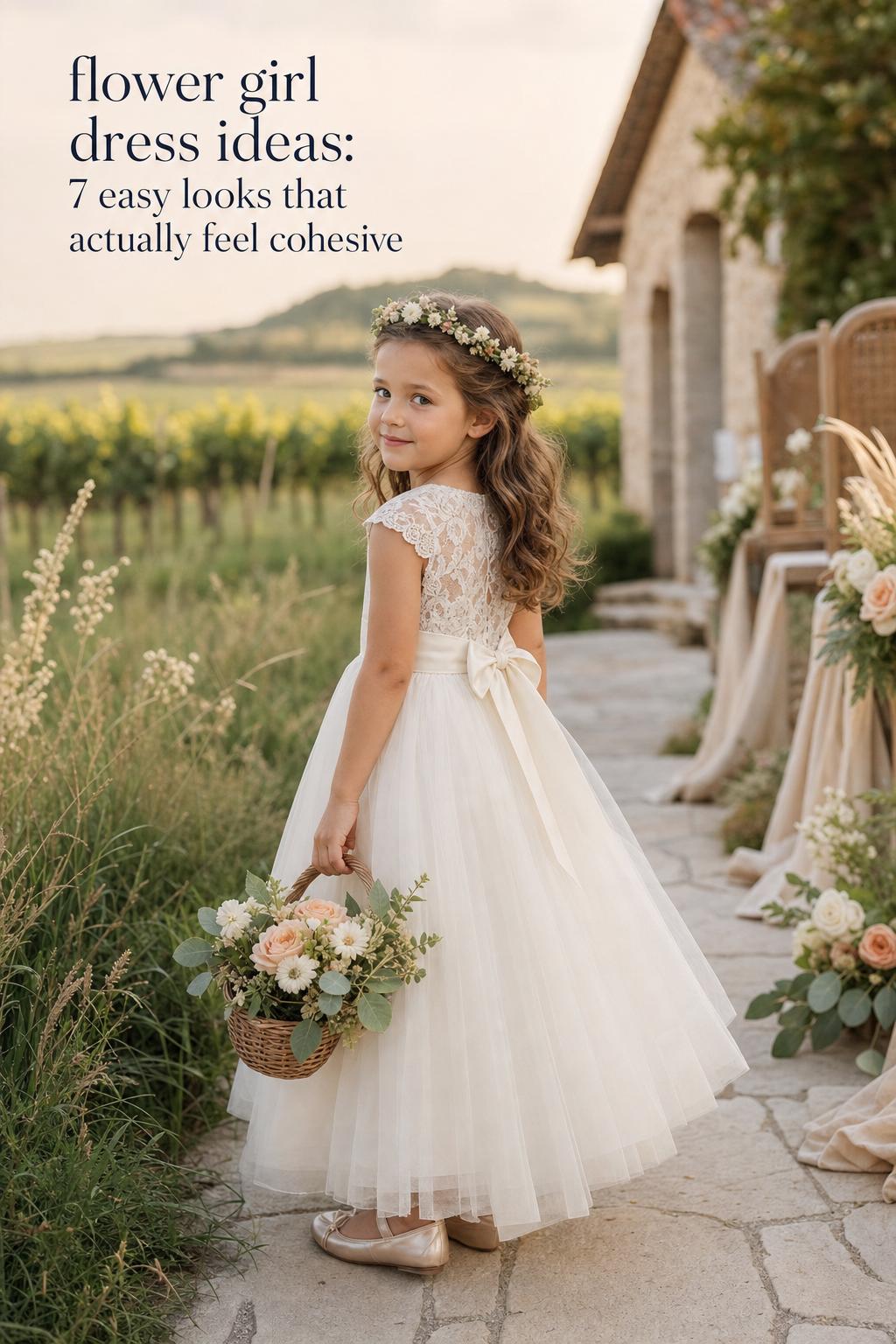
This guide breaks down the leading styling approaches in a clear, editorial way. You will see how classic, boho, preppy, and modern hybrid flower girl looks differ, where they overlap, and how to choose between them with confidence. Along the way, we will compare lace, tulle, and satin, look at white versus ivory and color-coordinated palettes, and weigh practical questions such as sizing, comfort, alterations, and budget.
The wedding scene each style creates
Before comparing details, it helps to think about flower girl dressing as part of a wedding atmosphere. A classic dress tends to echo ceremony, tradition, and timeless portraiture. A boho look feels lighter, more relaxed, and often more organic in outdoor settings. Preppy styling introduces neat structure and polish, while modern hybrids balance softness with updated shapes or separates. None of these approaches is automatically better. Each simply frames the flower girl’s role differently within the wedding party.
Your wedding look is only the beginning.
Keep your guest list, vendors, timeline, and every important detail together with Zarellea — so your day feels as considered as your style.
In practice, this matters because the flower girl is visually connected to the bride, the bridesmaids, and the broader wedding palette. The Knot often emphasizes color coordination and bridal party harmony, while David’s Bridal leans into theme-based dressing such as traditional, boho, and preppy interpretations. Bridal Guide, Glamour, and Wedding Forward reinforce the same idea from different editorial angles: the dress must feel right for the event, not just attractive on its own.
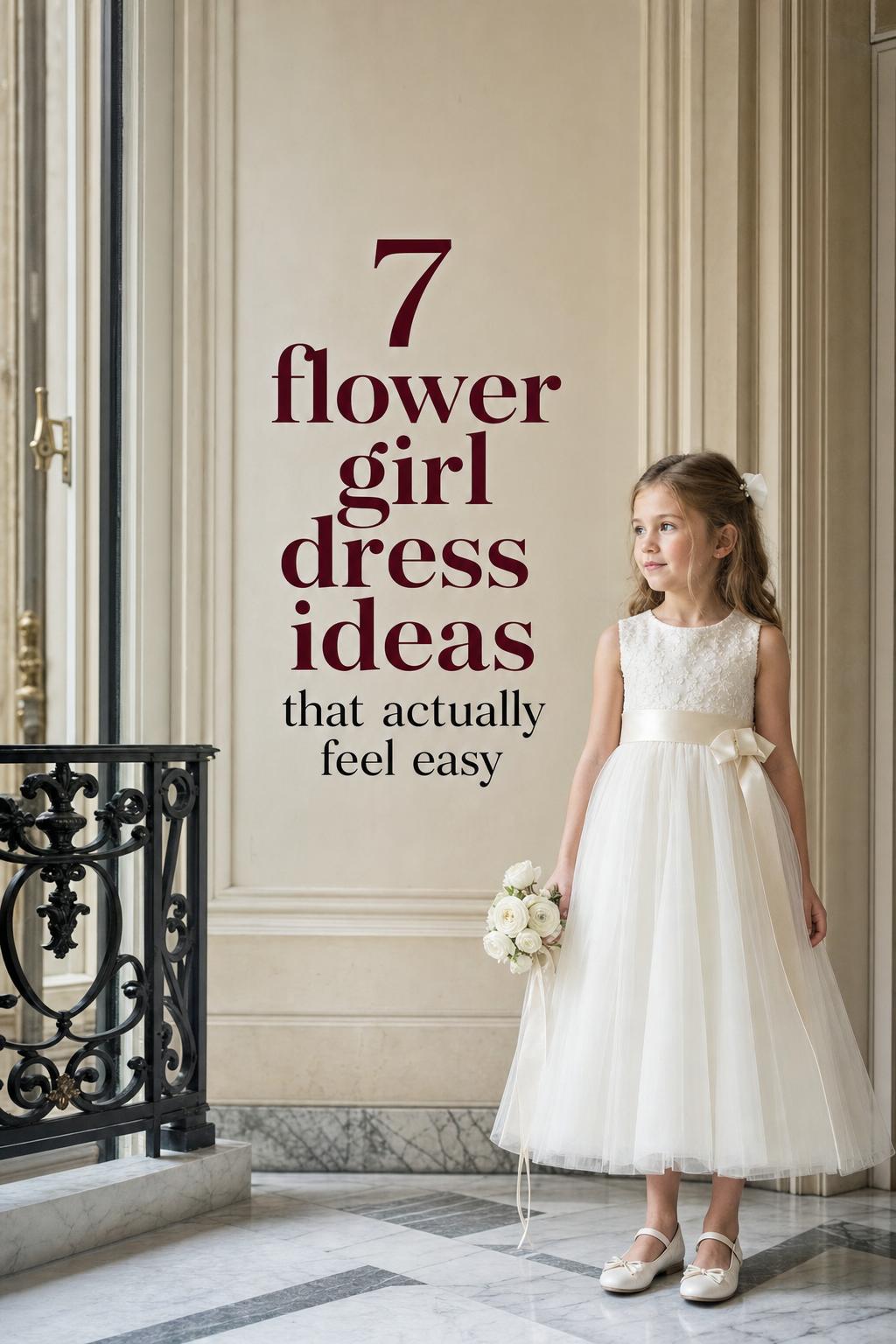
Style overview: classic flower girl dressing
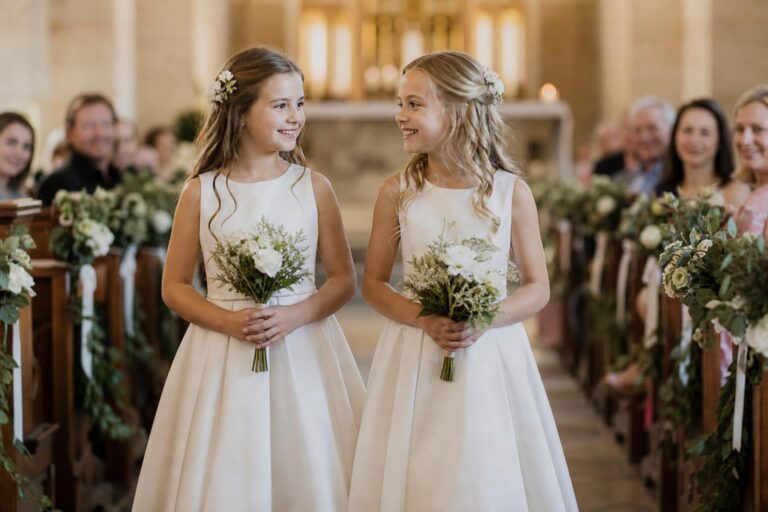
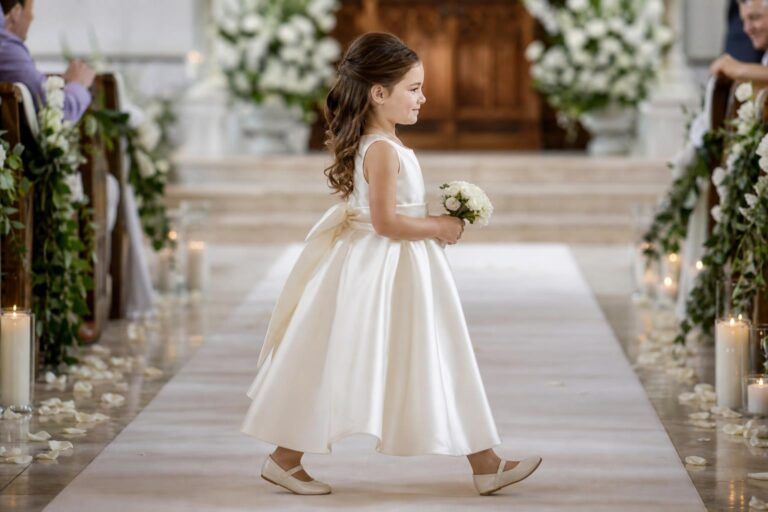
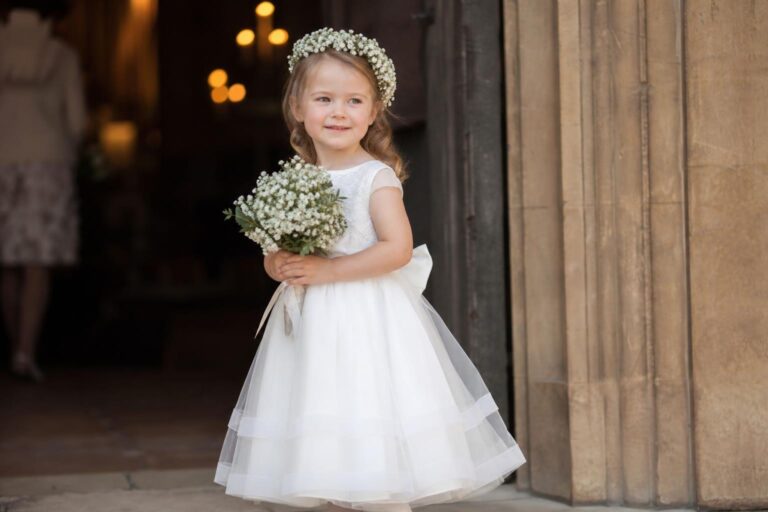
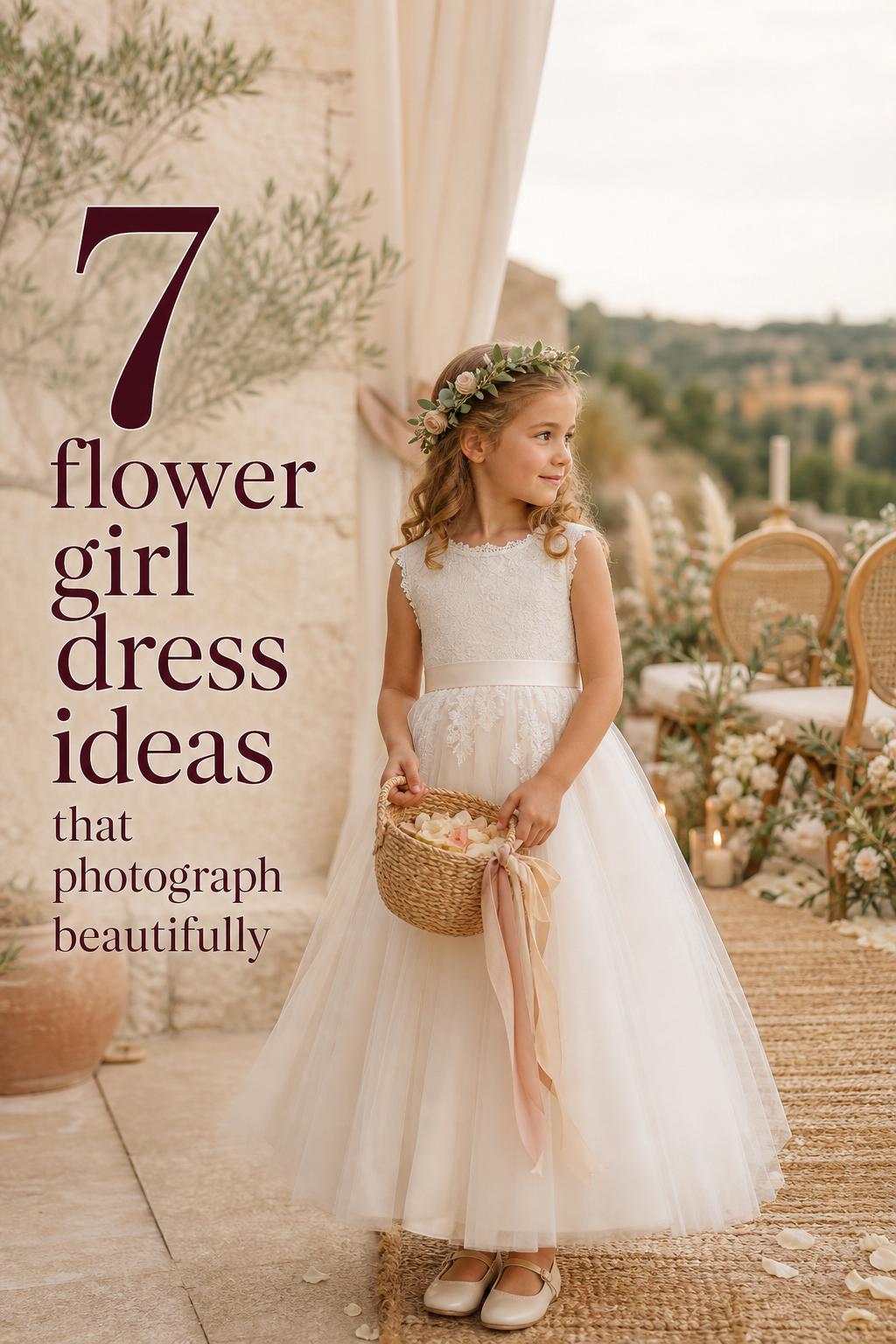
Classic flower girl dressing is defined by familiar wedding silhouettes and a polished, ceremonial mood. Think A-line cuts, tea-length skirts, and fuller princess shapes in fabrics such as satin, lace, and soft tulle. White and ivory are the natural anchors here, especially for weddings where the flower girl subtly echoes the bride’s gown. The overall impression is timeless, graceful, and photograph-friendly, particularly in church ceremonies, formal hotel receptions, and black-tie ballroom celebrations.
Style overview: boho flower girl dressing
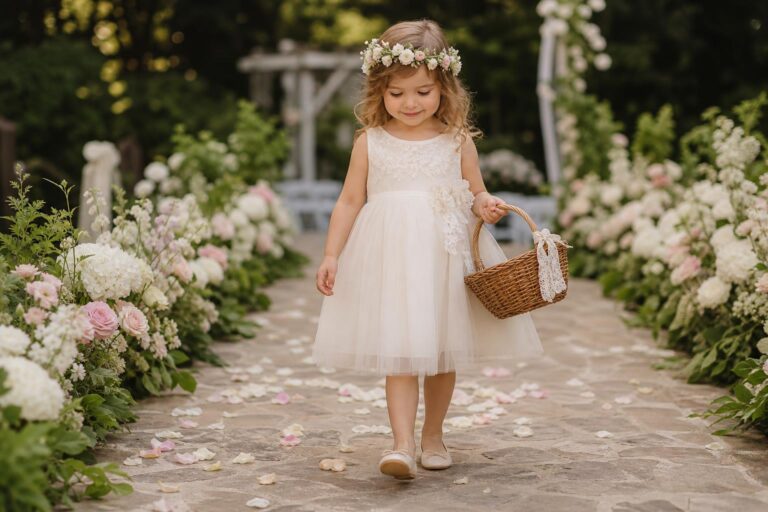
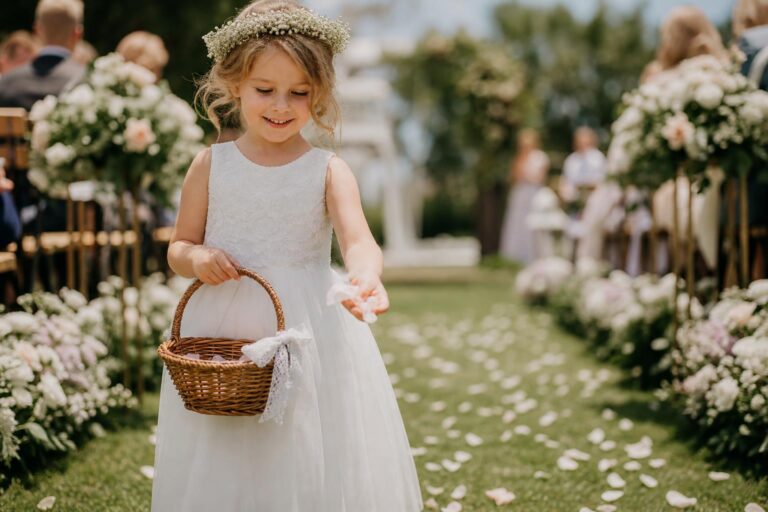
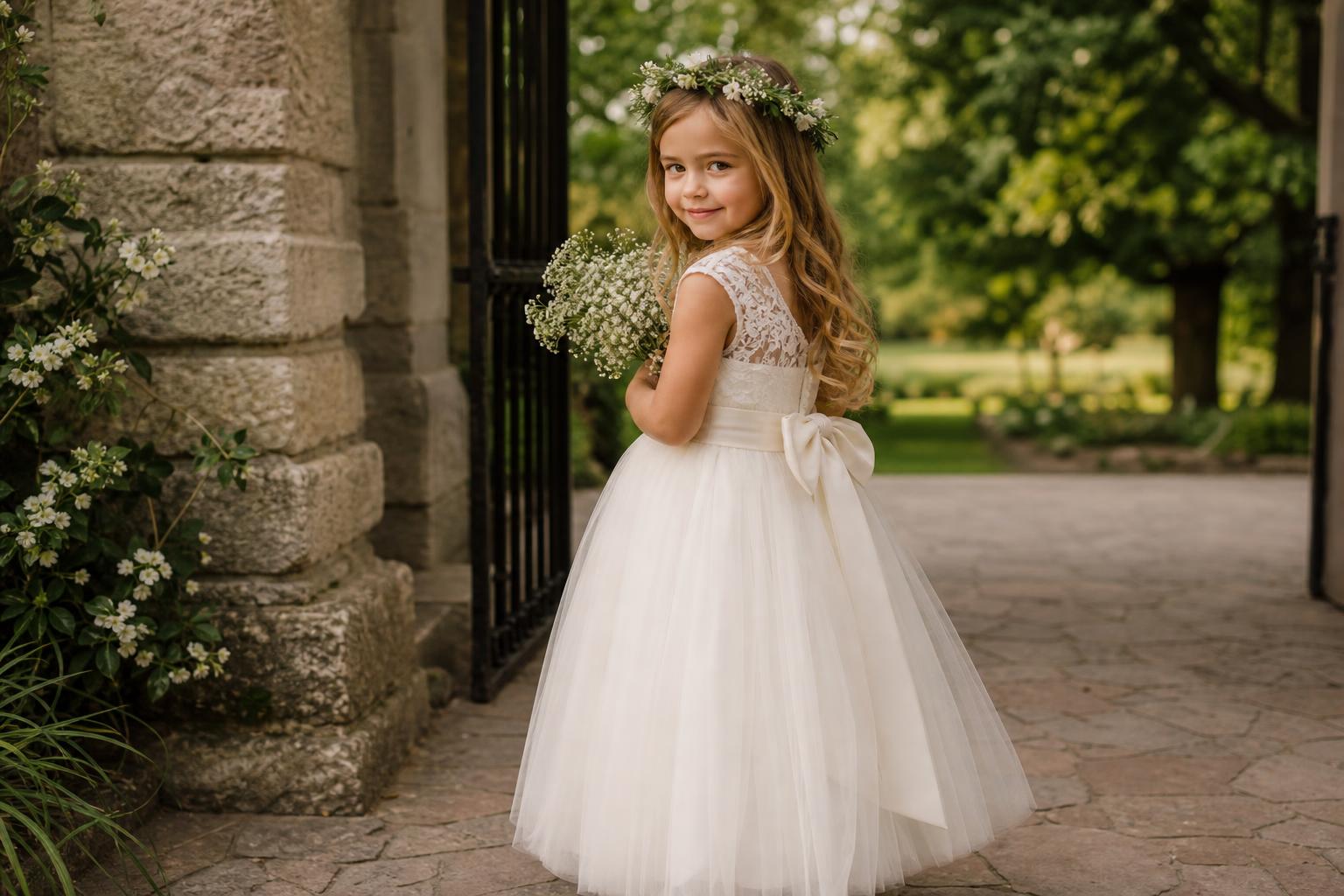
Boho flower girl styling keeps the romance but loosens the structure. Lace, eyelet-inspired textures, and airy fabrics create movement rather than formality. The silhouette is usually less rigid than a princess dress, and accessories such as flower crowns or soft headpieces become more important to the final effect. This approach feels especially natural at outdoor weddings, vineyard celebrations, and garden ceremonies where soft light, natural florals, and relaxed elegance shape the mood.
Style overview: preppy flower girl dressing
Preppy flower girl style is tidy, structured, and intentionally refined. It often overlaps with classic dressing but leans more into crisp lines, clean trims, and tailored polish. Satin and smooth fabrics can take center stage, sometimes with simple sashes or neat bows rather than heavily embellished details. The aesthetic feels orderly and bright, making it especially suitable for daytime weddings, country club settings, and celebrations where the bridal party styling is elegant but not overly ornate.
Style overview: modern hybrid flower girl looks
Modern hybrid looks bring together traditional wedding cues and contemporary practicality. Wedding Forward points toward this territory with outfit ideas that move beyond only one silhouette family, including more comfort-focused choices and the possibility of two-piece sets. These looks may still use lace, tulle, or satin, but the styling philosophy is less about strict tradition and more about balance: enough formality for the aisle, enough ease for a child to move through a long celebration comfortably.
Classic vs boho vs preppy vs modern: the clearest differences
Silhouette and structure
The most visible difference lies in shape. Classic silhouettes often include the lace-trimmed A-line, the tulle princess dress, and the satin tea-length style. These shapes feel deliberate and composed. Boho silhouettes soften the outline and reduce stiffness, allowing the dress to feel more fluid in motion. Preppy styles return to cleaner structure, though usually with less volume than a full princess look. Modern hybrids vary the most, borrowing from all three while emphasizing ease, wearability, and a less fixed dress code.
Color palette and bridal party coordination
Color is where many families hesitate, especially when deciding between white or ivory and a shade that coordinates with bridesmaids. The Knot’s guidance around white and ivory classics reflects the traditional instinct to visually connect the flower girl with the bride. That approach remains especially strong in formal weddings. A coordinated palette, however, can be just as elegant. Blush, sage, lavender, and navy support the broader wedding palette and create harmony in group photographs. Boho and modern styles tend to welcome these softer or moodier color directions more easily, while classic and preppy styling often remain closest to white and ivory.
Level of formality
Classic and preppy styles usually read as more formal at first glance. They suit bridal parties where the bride’s gown, bridesmaid dresses, and ceremony setting all lean polished and traditional. Boho styles can still be refined, but their charm lies in softness rather than ceremony. Modern hybrids move comfortably between the two, which is why they work well for weddings that mix formal photography with a more relaxed reception atmosphere.
Styling philosophy
Classic styling asks, “How does the flower girl echo the wedding?” Boho styling asks, “How does the flower girl soften the wedding?” Preppy styling asks, “How does the look stay neat and tailored?” Modern styling asks, “How do we preserve the romance while making the outfit easier for a child to wear?” Once these questions are clear, choosing among flower girl dress ideas becomes far less overwhelming.
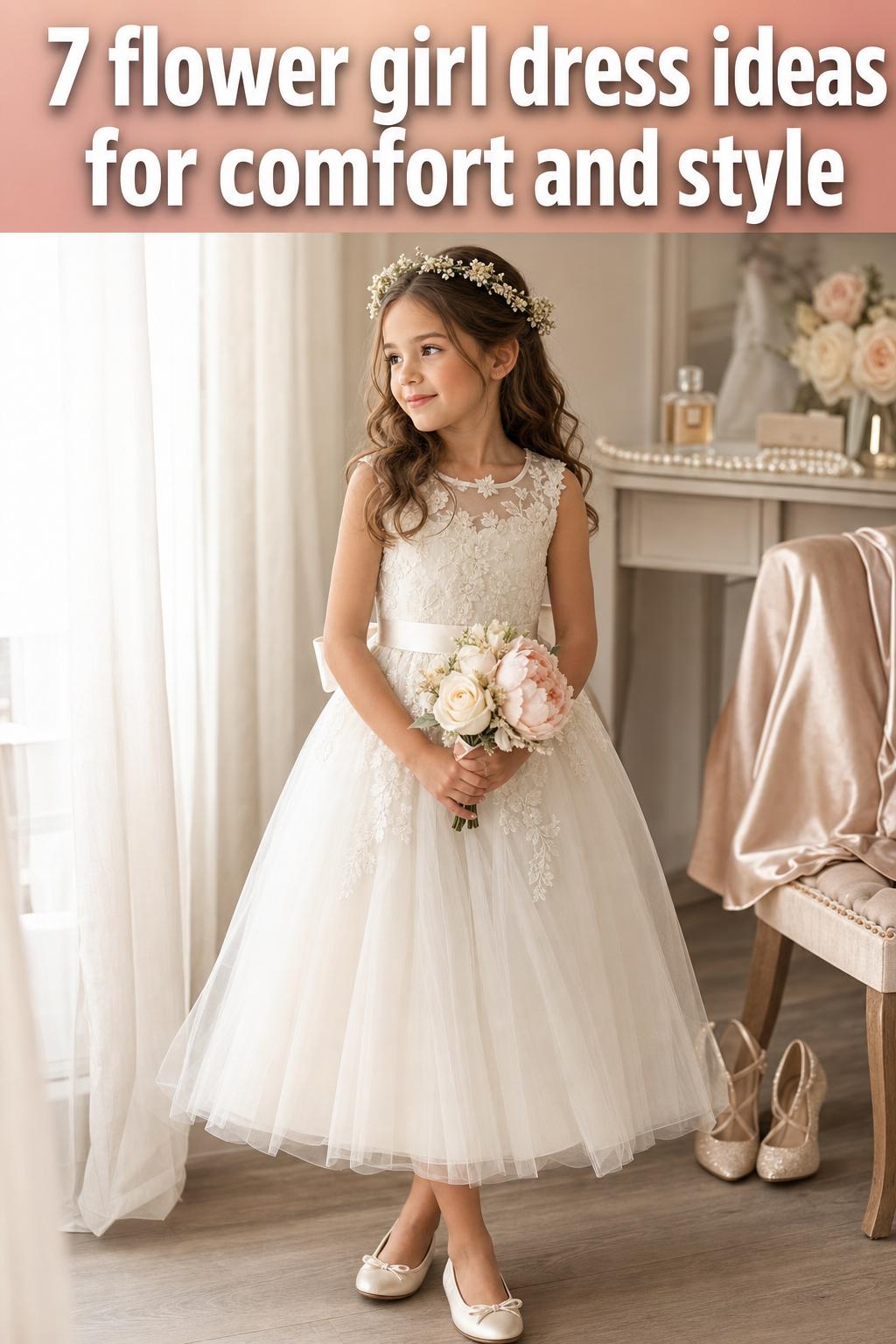
Fabric tells the story before the accessories do
Many flower girl dress ideas are really fabric decisions in disguise. Bridal Guide and Glamour both highlight the continuing importance of lace, tulle, satin, and embellishment because texture changes the entire tone of a look. Even when two dresses share a similar shape, fabric determines whether the outfit feels airy, formal, vintage-leaning, or modern.
Lace for romance and detail
Lace carries decorative depth without requiring much additional styling. In a garden ceremony at golden hour, a lace flower girl dress can look especially soft and dimensional in photographs. It is often associated with classic and boho categories at once, which is why these two styles are frequently confused. The difference is in the cut and finish: classic lace tends to appear more structured and bridal, while boho lace feels lighter and less formal.
Tulle for volume and fairy-tale softness
Tulle is closely tied to the princess silhouette and to the kind of flower girl styling that people instantly recognize from traditional weddings. It creates shape, movement, and that unmistakable ceremonial sweetness. The trade-off is that fuller tulle can feel more formal and, depending on construction and lining, sometimes less effortless than a simpler dress. For ballroom weddings or any setting with a grand aisle moment, however, tulle remains one of the strongest choices.
Satin for polish and preppy refinement
Satin gives a flower girl dress visual smoothness and clean light reflection. It is often the fabric that makes a tea-length silhouette or a neatly cut bodice feel distinctly preppy or classic rather than whimsical. In a formal reception space with crisp floral arrangements and a more tailored bridal party, satin supports that polished direction beautifully. It can also be easier to style with simple sashes and understated shoes because the fabric already carries enough presence on its own.
Tips for choosing fabric with comfort in mind
- For long wedding days, breathable fabrics and soft lining matter as much as appearance.
- If the child will move between ceremony and reception, a lighter fabric often feels more practical than a heavily layered skirt.
- Comfort-focused choices become even more important when the look includes embellishments, fitted bodices, or multiple accessories.
- Where possible, pay attention to seam feel, fabric weight, and whether the dress allows natural movement.
White and ivory or color-coordinated palettes?
This is one of the most common comparison points because both directions can look right. White and ivory preserve a strong connection to the bride. In formal portraits, they create a quiet visual echo that feels timeless. For many classic weddings, this remains the most intuitive route. It also works especially well when the bride’s gown has lace, tulle, or satin details that can be mirrored in miniature without looking overly matched.
Color-coordinated flower girl dresses, however, introduce a different kind of elegance. They link the child to the bridesmaids and to the wider palette of the wedding rather than to the bridal gown alone. Blush, sage, lavender, and navy each suggest a distinct tone. Blush softens, sage feels natural and understated, lavender can read romantic and seasonal, and navy brings polish and contrast. In photographs, these shades can create a more cohesive wedding-party composition than white alone, especially when the bridesmaids are not wearing pale tones.
White vs ivory
White tends to feel crisp and ceremonial. Ivory often reads softer and warmer. In isolation, the difference may seem small, but beside the bride’s dress and under wedding photography lighting, it becomes more noticeable. For traditional styling, deciding between the two is less about trend and more about harmony. If the bridal palette leans warm and romantic, ivory often feels natural. If the celebration is more polished and bright, white may look cleaner.
Coordinating with bridesmaids
When bridesmaids are central to the visual story, tying the flower girl into their palette can make the full aisle procession feel more intentional. This does not always mean an exact color match. A sash, floral accent, or accessory can reference the bridesmaid shade while keeping the dress itself softer and more childlike. That balance is often more graceful than dressing the flower girl as a miniature bridesmaid.
Seasonal palette thinking
Seasonal wedding styling can gently influence the decision. Lighter palettes feel natural in spring and summer garden settings, while deeper tones such as navy may suit more formal celebrations later in the year. The key is not to chase color for its own sake but to ask whether the chosen shade supports the wedding’s atmosphere and remains flattering in group photographs.
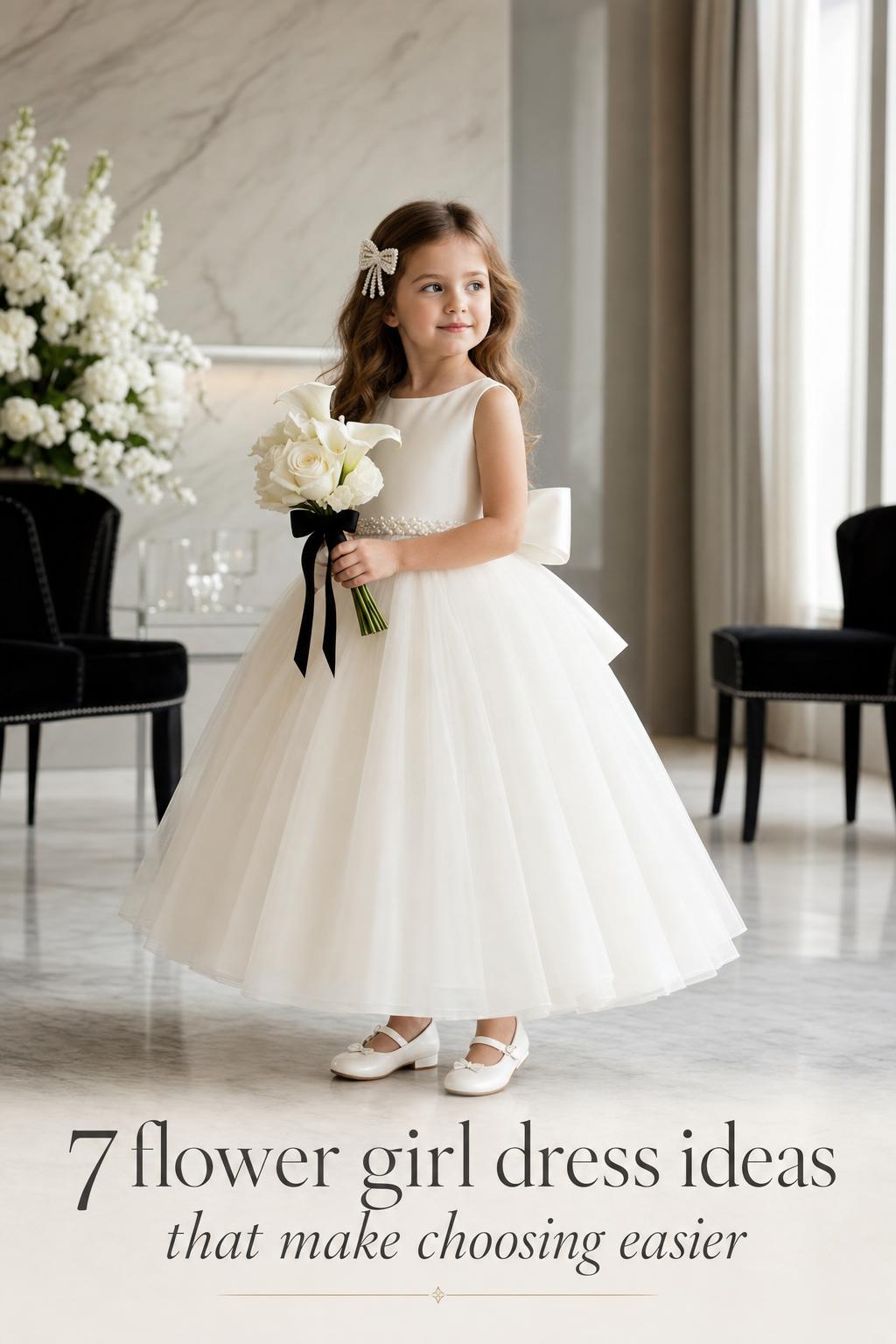
How the styles read in real wedding settings
A dress never appears against a blank backdrop. Venue, light, and mood shape how flower girl style is perceived. A gown that feels perfectly balanced in a ballroom may look too rigid on a breezy lawn, while a boho lace look that sings in a vineyard ceremony may feel underdressed against a black-tie reception line. Seeing the style through setting is often the easiest way to narrow the options.
Garden ceremony
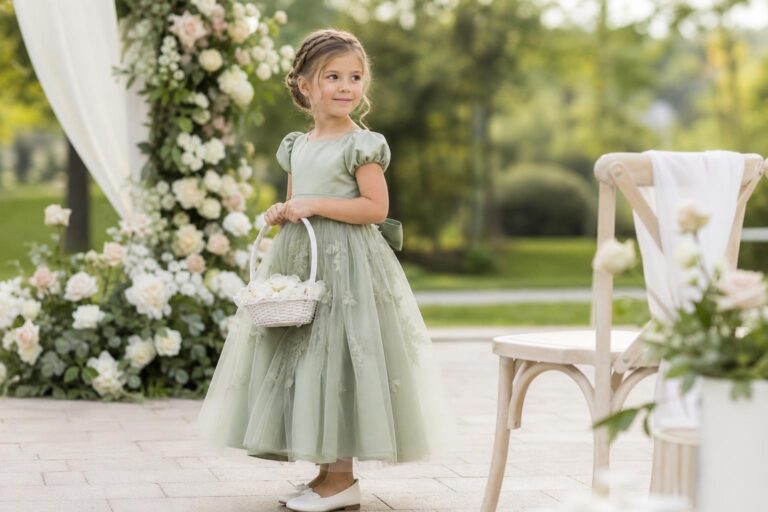
A garden ceremony calls for soft silhouettes and breathable fabrics. Boho lace, light tulle, and delicate floral accents feel visually at home among natural greenery and pastel florals. Blush, sage, and ivory tend to integrate especially well here. Accessories such as flower crowns or subtle headpieces can finish the look without making it feel overly formal.
Rustic vineyard wedding
At a vineyard celebration, texture matters more than excess volume. A lace dress with a gentle A-line or a modern hybrid with soft movement often feels better suited than a very structured princess silhouette. The mood is romantic but not stiff. This is where boho and classic styles frequently overlap most successfully, especially when floral details and sashes are used thoughtfully.
Classic ballroom or black-tie setting
Under chandeliers or candlelight, fuller tulle, satin tea-length dresses, and lace-trimmed formal silhouettes gain visual strength. White and ivory look especially striking in these spaces, and preppy detailing such as neat sashes or polished shoes can elevate the effect. In this context, classic and preppy styles generally outperform more relaxed boho dressing because the venue itself asks for greater ceremony.
Visual style breakdown: proportions, accessories, and finishing touches
The difference between one flower girl look and another is often less about the dress alone than about how the whole outfit is finished. Wedding Forward and David’s Bridal both give accessories a meaningful role because they clarify the style category quickly. A flower crown can push a lace dress toward boho. A satin sash can return the same dress to a classic or preppy register. Accessories do not merely decorate; they define.
Layering approach and garment balance
Classic styling usually favors balanced volume: a shaped bodice with a full but controlled skirt. Boho styling lightens that relationship and avoids looking too built-up. Preppy dressing keeps proportions neat and readable, often with less dramatic fullness. Modern hybrids may use a softer top, a cleaner skirt, or even separate pieces to reduce stiffness. The best proportion is the one that supports movement while still feeling celebratory.
Hair accessories
Hair accessories are one of the easiest ways to direct the mood. Headbands and neat hair accents suit preppy and classic styling. Flower crowns and softer headpieces naturally align with boho looks and outdoor weddings. The best choice depends on whether the wedding aesthetic asks for polish, softness, or a balance of both.
Belts, sashes, and floral accents
Sashes work especially well when color coordination is important. They can tie the flower girl subtly to the bridesmaids without changing the dress itself. Floral accents tend to feel more organic and romantic, especially in garden or vineyard settings. In classic and preppy styling, restraint usually looks strongest. In boho styling, a little extra texture can feel entirely appropriate.
Shoes and bouquet details
Shoes should support the venue as much as the dress. A polished pair complements classic and preppy looks, while softer styling works well with more relaxed dresses. Bouquet details, if included, should echo rather than compete. The flower girl’s role is to enrich the bridal story, not to carry a second focal point.
Outfit comparisons that show the styling logic
Example comparison: a garden wedding at golden hour
A classic interpretation might use an ivory A-line dress with lace trim, a soft sash, and understated hair accessories to mirror the bride’s gown in a gentle, age-appropriate way. A boho interpretation would shift the emphasis to lighter lace, a less structured skirt, and a flower crown, making the look feel woven into the landscape rather than formally staged against it.
Example comparison: a formal evening reception
For a candlelit ballroom, a preppy or classic look often leads. Think satin tea-length styling, polished shoes, and a clean silhouette that reads clearly in low, elegant light. A modern hybrid could still work here, but it would need enough structure and finish to hold its own beside a more formal bridal party. A very relaxed boho dress may lose visual presence in this setting.
Example comparison: a rustic vineyard celebration
Here the distinction becomes more nuanced. A classic approach might rely on lace and an A-line shape, preserving bridal formality without adding excessive volume. A boho approach would relax the silhouette, perhaps keeping the same romantic texture but allowing more softness in the overall line. This is often the setting where modern hybrid flower girl outfit ideas feel most convincing, because they can blend romance, comfort, and a sense of place.
The brands and editorial references shaping the conversation
Several names appear repeatedly around flower girl styling because they represent different corners of the category. David’s Bridal frames the conversation through theme-based dress ideas and accessories, making it especially useful for traditional, boho, and preppy comparisons. The Knot brings authority around color questions and visual galleries, helping readers think in terms of bridal party coordination and photography. Bridal Guide emphasizes silhouettes, textures, and trend-sensitive details. Glamour contributes a fashion-forward gallery perspective, while Wedding Forward adds etiquette, outfit variety, and designer references.
Among the brand and designer names associated with the space are Smock London, La Coqueta, Arabella and Rose, and Ivy City Co. These references matter less as labels alone and more as style signals. Smock London and La Coqueta suggest a refined children’s fashion sensibility. Arabella and Rose appears in a more designer-led editorial frame. Ivy City Co. supports the gallery-driven habit of browsing by look rather than by category only. For U.S. readers, these names help distinguish whether they are gravitating toward a polished, romantic, or more fashion-led interpretation of the flower girl role.
What stylists tend to notice first: comfort, fit, and movement
The most successful flower girl dress ideas are not only visually beautiful; they are realistic for a child during a full wedding day. This is where many attractive options become less convincing. Fabric weight, lining, seam feel, and ease of movement determine whether the flower girl looks relaxed or distracted. A dress that photographs beautifully but feels restrictive can quickly become impractical between ceremony, photos, and reception.
Sizing and age-appropriate balance
Age-appropriate styling does not mean plain styling. It means keeping the proportion, fit, and level of embellishment aligned with the child’s role. Dresses should feel celebratory without looking overly formalized or difficult to wear. A fitted bodice, for example, may look lovely, but if the child cannot move comfortably, the styling logic breaks down. Practical sizing guidance and room for tailoring matter, especially for weddings scheduled well in advance.
Breathable fabrics and long celebrations
Breathability becomes especially important in U.S. weddings where ceremony and reception may stretch across several hours. Lighter fabrics, comfortable lining, and manageable layers help preserve the look throughout the day. This is one area where modern hybrids and softer boho silhouettes can have a practical advantage over more heavily structured dresses.
Tips for a smoother fit decision
- Prioritize movement before extra embellishment.
- Allow time for alterations, especially with formal silhouettes.
- Think about ceremony and reception as separate comfort moments, not one continuous photo opportunity.
- If using accessories, keep them secure and lightweight enough for a child to wear happily.
Budget, rental, purchase, and the value question
Budget is often discussed less openly than color or silhouette, yet it shapes almost every decision. The strongest comparison is not simply cheap versus expensive, but purchase versus rental versus borrowing, and how each route supports the wedding theme, fit, and practical wear. The research around top-ranking content points to a clear opportunity here: families want concrete value thinking, not just inspiration.
Affordable flower girl dresses under $100
For readers focused on affordable flower girl dresses under $100, simplicity becomes an advantage. A clean silhouette in tulle, satin, or lace-inspired detail can look elegant without requiring extensive embellishment. This is often where preppy and straightforward classic styles perform well, because they rely on shape and polish more than on intricate decoration.
Rental vs purchase
Renting can make sense when the wedding is especially formal, the desired silhouette is more elaborate, or the dress is unlikely to be worn again. Purchasing may be the better choice when alterations are needed, comfort is a priority, or the family prefers the flexibility of trying the outfit multiple times before the event. Borrowing can work beautifully when the style already aligns with the wedding, though it leaves less room for exact coordination.
Alterations and overall value
A lower initial price can stop being economical if the fit requires extensive tailoring. Conversely, a slightly more expensive dress with a better cut and easier wear may offer stronger value. When comparing options, the real question is whether the final look serves the wedding and the child with minimal friction. Value is not only about cost; it is also about confidence, comfort, and how smoothly the outfit performs on the day.
New directions in flower girl styling
Beyond the familiar lace-and-tulle conversation, several newer considerations are becoming more relevant. Sustainability and eco-friendly fabrics are still underrepresented in mainstream flower girl coverage, yet they are increasingly logical for families who want beautiful attire with a lighter footprint. Comfort and accessibility also deserve more attention, including breathable materials, soft construction, and sensitivity to how dyes, seams, or heavy layers may feel on a child.
Cultural and heritage-aware variations in flower girl attire are another meaningful area. In a U.S. wedding context, that can translate into adapting the flower girl’s look so it reflects family symbolism, color preferences, or ceremonial cues while still fitting the broader bridal party. The important principle is harmony. The flower girl can honor a specific tradition without appearing disconnected from the overall wedding aesthetic.
Regional wedding style also plays a quiet role. Coastal celebrations, inland garden venues, and more formal city settings often call for different levels of structure and fabric presence. Even when the core categories remain classic, boho, preppy, or modern, the local venue mood helps determine which version of that style feels most convincing.
How to choose between the styles without second-guessing
If the bride’s gown and the ceremony are deeply traditional, classic flower girl dressing is usually the clearest choice. If the wedding palette, florals, and venue feel organic and relaxed, boho styling often looks more integrated. If the bridal party has a tailored, crisp sensibility, preppy dressing keeps the visual line clean. And if the event mixes elegance with a more informal celebration rhythm, modern hybrids offer welcome flexibility.
A useful way to decide is to filter every option through four questions: Does the silhouette suit the venue? Does the color support the bridal party? Does the fabric make sense for the season and length of the day? And can the child move comfortably from aisle to reception? Once those answers align, the best style usually becomes obvious.
The most memorable flower girl look is rarely the most complicated one. It is the one that feels coherent in the room, gentle in photographs, and easy for the child to wear. That is the point at which inspiration becomes good styling.
FAQ
What color should a flower girl dress be?
The most common choices are white and ivory for a classic bridal connection, or coordinated shades such as blush, sage, lavender, or navy to tie the flower girl into the bridesmaids and overall wedding palette. The best option depends on whether you want the flower girl to echo the bride more closely or support the bridal party color story.
Should the flower girl match the bride or the bridesmaids?
Either approach can work, but they create different effects. Matching the bride through white or ivory feels more traditional and ceremonial, while coordinating with the bridesmaids tends to create stronger group harmony in photographs. A middle ground, such as a neutral dress with a sash or floral accent in the bridesmaid color, is often especially elegant.
What are the most timeless flower girl dress styles?
Lace-trimmed A-line dresses, tulle princess silhouettes, and satin tea-length dresses remain the most timeless options. These styles stay relevant because they work across many wedding themes and pair easily with classic accessories, polished shoes, and bridal party styling.
Are boho flower girl dresses appropriate for formal weddings?
They can be, but the dress needs enough finish and structure to suit the setting. A softly romantic lace dress may work beautifully at a formal wedding if it still feels polished in fabric and proportion. In a ballroom or black-tie environment, a very relaxed boho silhouette may appear less connected to the overall formality.
What fabrics work best for flower girl dresses?
Lace, tulle, and satin are the core fabrics because each supports a different styling mood. Lace brings romance and detail, tulle adds volume and fairy-tale softness, and satin creates polished structure. The best choice depends on the wedding theme, level of formality, and how much comfort and movement the child will need.
How do I make sure a flower girl dress is comfortable?
Focus on breathable fabrics, soft lining, manageable layers, and enough room for natural movement. Comfort should be checked in real use, not only by appearance. If a dress feels too stiff, heavy, or restrictive before the wedding, it is unlikely to become easier during a long ceremony and reception.
Is it better to rent or buy a flower girl dress?
Renting makes sense for very formal looks or one-time wear, while buying is often more practical when fit, comfort, or alterations matter. The better option depends on how specific the desired style is, whether the dress will need tailoring, and how much flexibility the family wants before the wedding day.
What accessories complete a flower girl look best?
Headbands, flower crowns, sashes, polished shoes, and subtle floral accents are the most useful finishing pieces. The right accessory depends on the style direction: classic and preppy looks suit cleaner, neater details, while boho styling often welcomes softer headpieces and more organic texture.
Can a flower girl wear a two-piece outfit instead of a dress?
Yes, especially within a modern hybrid approach. A two-piece flower girl outfit can feel fresh and practical while still looking wedding-appropriate, particularly if the fabrics and colors remain aligned with the bridal party. The key is ensuring that the final look still reads as part of the wedding rather than everyday occasion wear.
How far in advance should a flower girl dress be chosen?
It is wise to choose the dress with enough time to compare colors, confirm sizing, and allow for any alterations. Because children’s fit and comfort can change the final decision, leaving room for adjustments helps avoid last-minute compromises in both style and wearability.