Spring Kids Hairstyles For Wedding That Feel Polished
Wedding mornings tend to move quickly, and styling a child’s hair can become one of the most unexpectedly stressful parts of the day. Parents and caregivers often want something polished enough for portraits, soft enough for the ceremony, and comfortable enough to last through hugs, dancing, and the long stretch between vows and reception. That is exactly why so many people search for kids hairstyles for wedding events with a mix of inspiration and urgency.
The challenge is rarely about finding pretty ideas. It is about choosing a style that suits the child’s age, hair length, texture, and temperament while still feeling appropriate for the celebration. A flower girl walking down a garden aisle needs different styling logic than a toddler attending a family wedding or a junior bridesmaid standing through formal photos. The most successful wedding hair for children balances elegance with practicality.
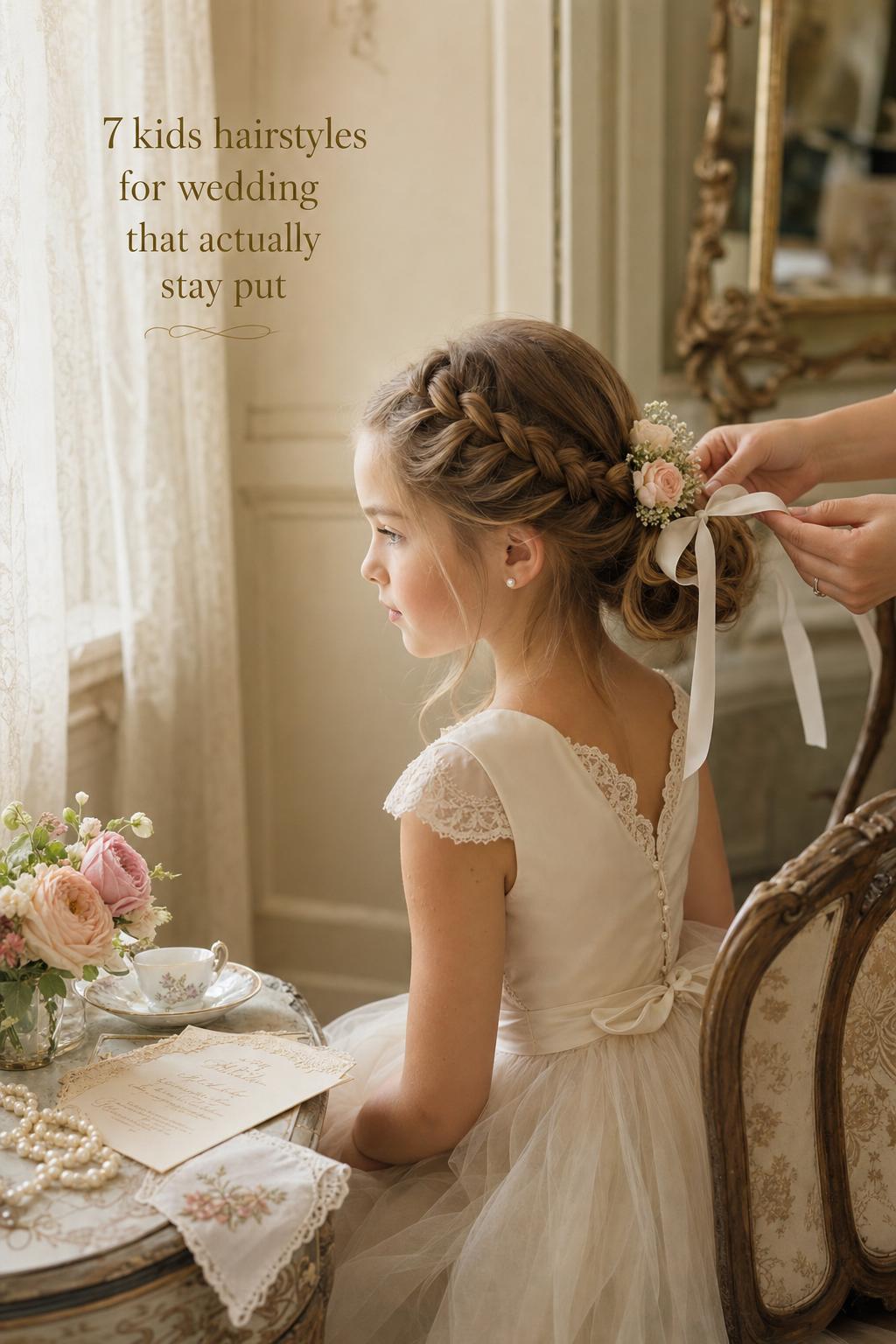
This guide approaches the subject the way a wedding stylist would: by narrowing the decision first, then matching the child to a style family, accessories, and wedding setting. From crown braids and soft curls to bubble ponytails and low chignons, the goal is not simply to choose a beautiful look, but to choose one that will still feel beautiful an hour later.
Why kids’ wedding hair can be harder than it looks
Children’s hairstyles for weddings sit at the intersection of appearance, movement, and comfort. A look may appear lovely in a single image, yet feel too tight by the ceremony, slip apart in humidity, or irritate a toddler who is not interested in sitting still. That is why wedding hair decisions for kids need more than inspiration alone.
Your wedding look is only the beginning.
Keep your guest list, vendors, timeline, and every important detail together with Zarellea — so your day feels as considered as your style.
There are several pressures happening at once. Weddings are long events, often with changing conditions between ceremony and reception. Outdoor settings introduce wind and humidity. Indoor venues can still mean warmth, extended wear, and frequent touch-ups if the style was not secured thoughtfully. Add in delicate accessories like floral pins, ribbons, or headbands, and suddenly a charming idea needs much stronger practical reasoning behind it.
Age matters too. Toddler wedding hairstyles usually need to be simpler, softer, and easier to maintain than styles for older children. Hair texture matters just as much. Straight, wavy, and curly hair all respond differently to braids, buns, and curls. The best approach is to choose a hairstyle family first, then refine it based on who the child is and what the wedding day will actually require.
The styling principles that make wedding hair work
Before choosing between a flower crown braid and a twisted half-updo, it helps to understand the logic behind a successful wedding hairstyle for children. The prettiest styles tend to be the ones that respect the child’s comfort, the event schedule, and the natural behavior of the hair.
- Choose security without stiffness. A style should stay in place, but not feel rigid or overly sprayed.
- Let the hair’s natural texture guide the finish. Wavy, straight, and curly hair each create a different kind of softness.
- Match the formality of the hairstyle to the wedding role. Flower girls can carry more romantic detail, while guests may suit easier, lighter styling.
- Use accessories to elevate, not rescue, the look. Floral pins, ribbons, clips, and headbands should complement the hairstyle, not compensate for poor structure.
- Keep age in mind. Older kids can often wear more intricate braids and updos, while toddlers usually need simpler shapes and less tension.
A helpful way to think about wedding hair is this: the base style does the work, and the accessory adds the mood. If the bun, braid, ponytail, or curls are well chosen for the child’s hair, the final look will read polished even before the finishing details are added.
A quick way to choose the right style before you start
Start with hair length and texture
Longer hair gives more room for crown braids, waterfall braids, bubble ponytails, and low chignons. Medium lengths often work beautifully in half-up styles, side-swept braids, or pinned curls. Shorter lengths may rely more on headbands, clips, tidy waves, or a neatly shaped ponytail. Straight hair tends to show braid detail clearly, wavy hair gives softness with little effort, and curly hair often creates volume and romance naturally.
Then think about the child’s role
A flower girl hairstyle can be slightly more decorative, especially with floral accents, ribbons, or a princess bun with sparkle pins. A wedding guest may be better suited to an easy side pony, soft curls with a headband, or a simple bun. A junior bridesmaid can often wear a more refined half-up style or a braided bun that feels aligned with the bridal party without looking overly grown-up.
Finally, consider comfort over the full day
The right hairstyle should survive the ceremony, family photos, meal, and dancing with minimal fuss. If a child dislikes hair around the face, tied-back looks such as a low chignon, high bun, or double Dutch braids into a bun tend to work better. If the child is sensitive to pressure, a softer half-up style or loose curls with a comfortable headband may be the better choice.
Braids for the ceremony: romantic structure that stays put
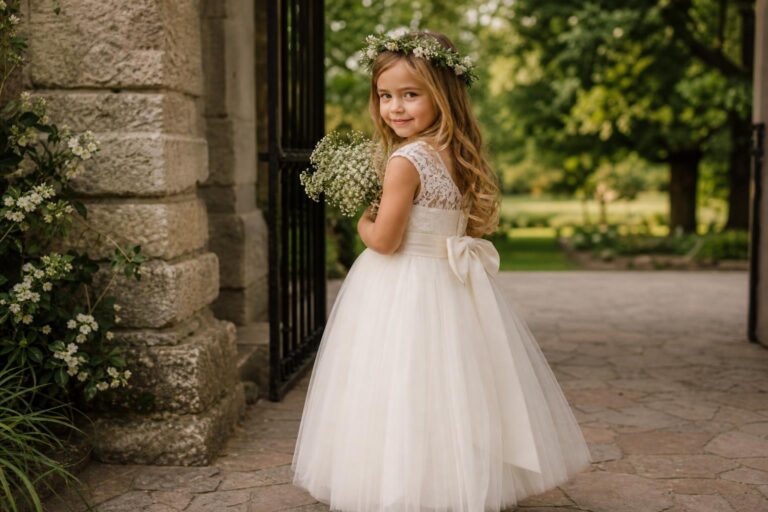
Braided wedding hairstyles for kids remain a favorite for good reason. They feel classic in photos, they hold shape well, and they can be adapted for many ages and hair lengths. In a garden ceremony at golden hour, a braid catches light beautifully while still keeping the face open and tidy.
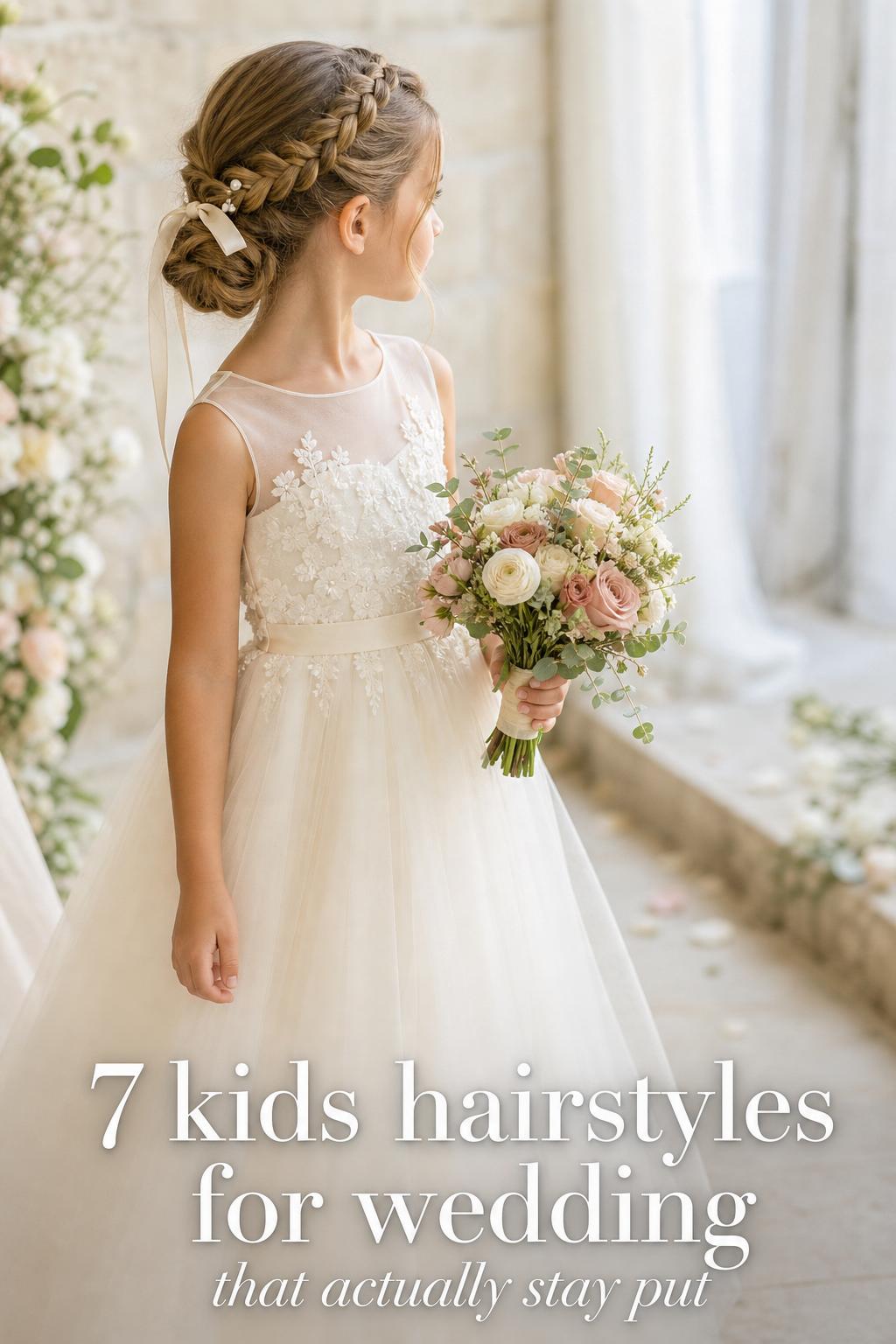
Classic flower crown braid
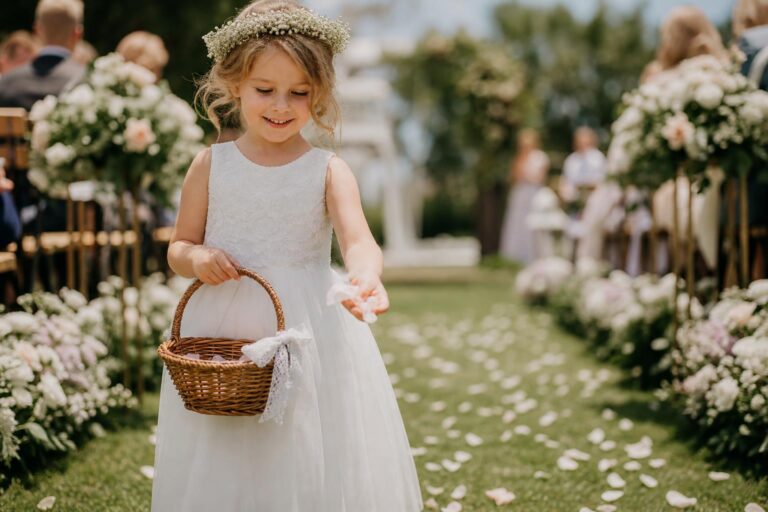
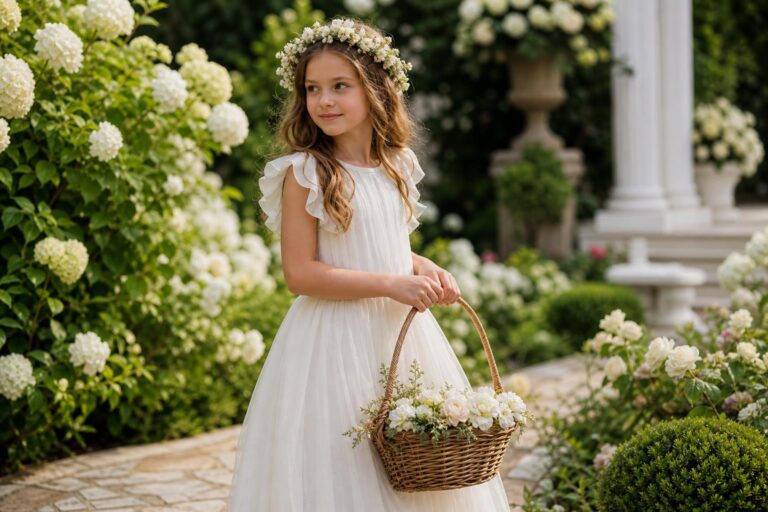
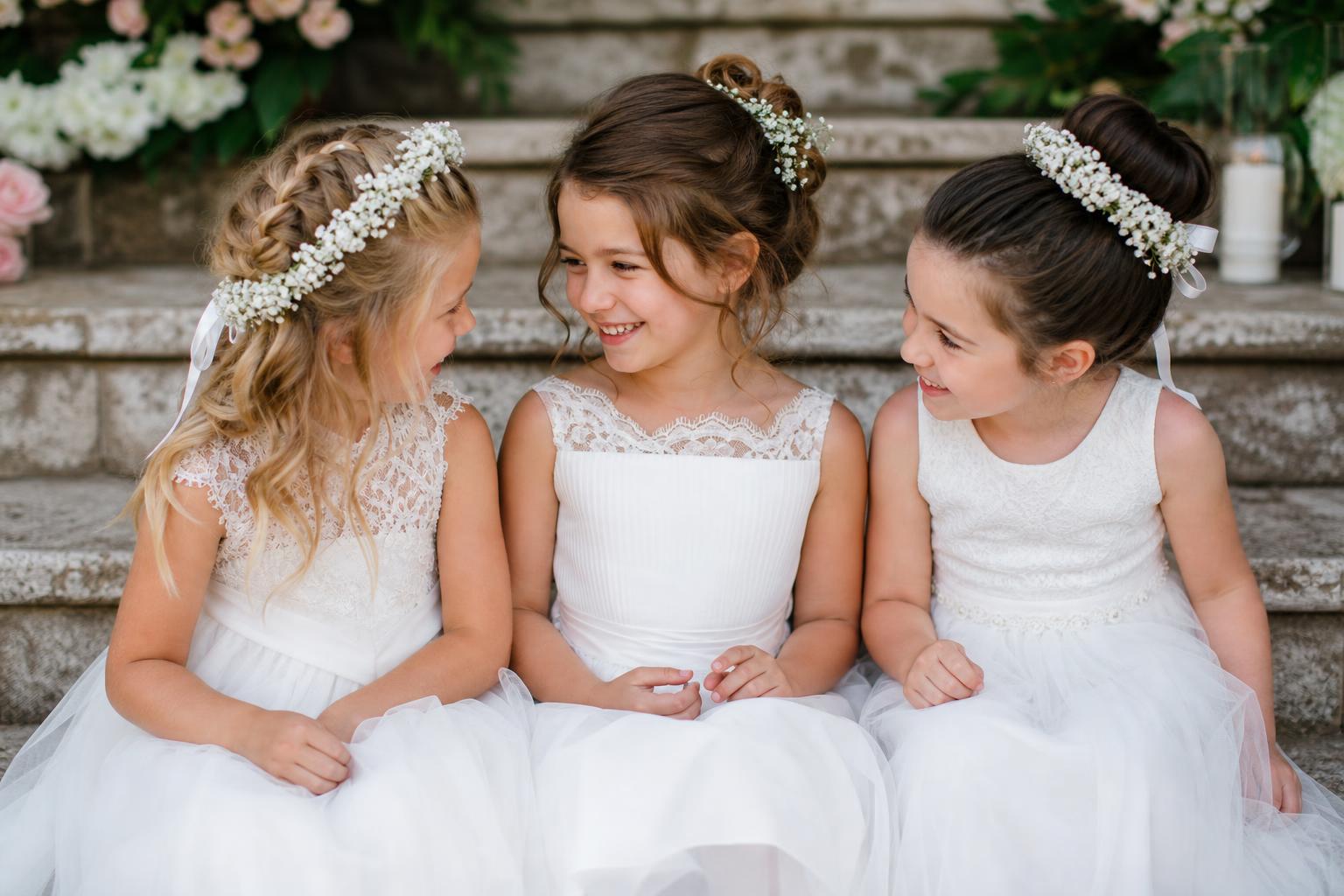
This is one of the most wedding-specific options because it blends hairstyle and accessory into a single romantic statement. The braid itself frames the head with softness, while small flowers or floral accents reinforce the ceremony mood. It works especially well for flower girls and children with medium to long hair. The reason it solves the styling challenge is simple: it looks special from every angle and keeps hair controlled throughout the event.
Side-swept waterfall braid
For families who want something more delicate than a full updo, a side-swept waterfall braid offers movement without looking casual. It allows some hair to remain down, which creates softness in portraits, but still introduces enough structure to feel wedding-ready. This is particularly helpful when the child dislikes fully pinned hair but still needs a polished shape.
Double Dutch braids into a bun
This style is one of the most practical choices for active children. The braids anchor the look, and the bun keeps the ends secure. For outdoor weddings or long receptions, it offers more reliability than loose curls alone. It feels playful yet formal, which makes it especially useful when a child needs freedom to move without losing the hairstyle halfway through the celebration.
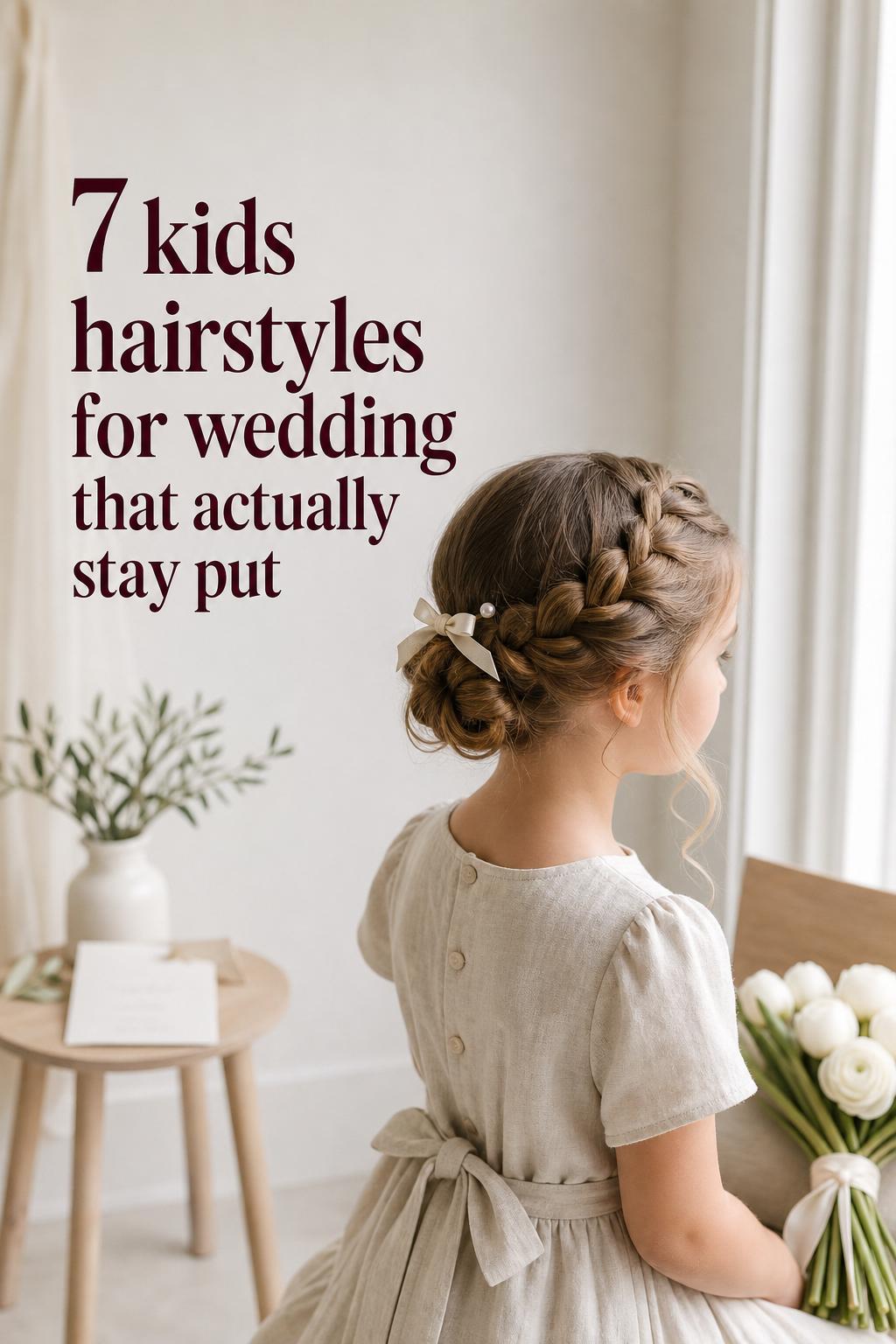
Crown braid with ribbon
Adding ribbon to a crown braid creates a gentle decorative finish that feels sweet rather than overstated. This works well when the wedding palette includes a soft accent color, or when the family wants a more styled look without relying on larger hair accessories. Ribbon can also add visual interest to simpler hair textures, making the hairstyle feel more intentional in close-up photographs.
Tip: braided styles tend to perform best when built on neatly brushed hair and secured with soft elastics. A little structure at the start usually reduces the need for fixing later.
Updos that feel formal without feeling too grown up
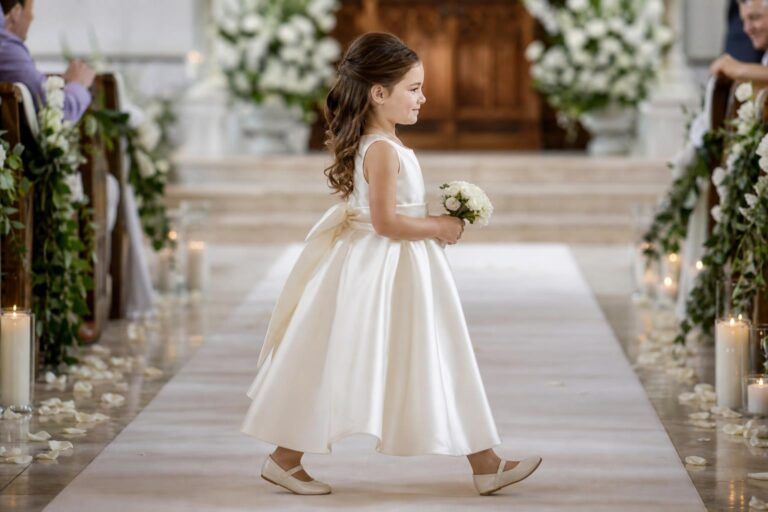
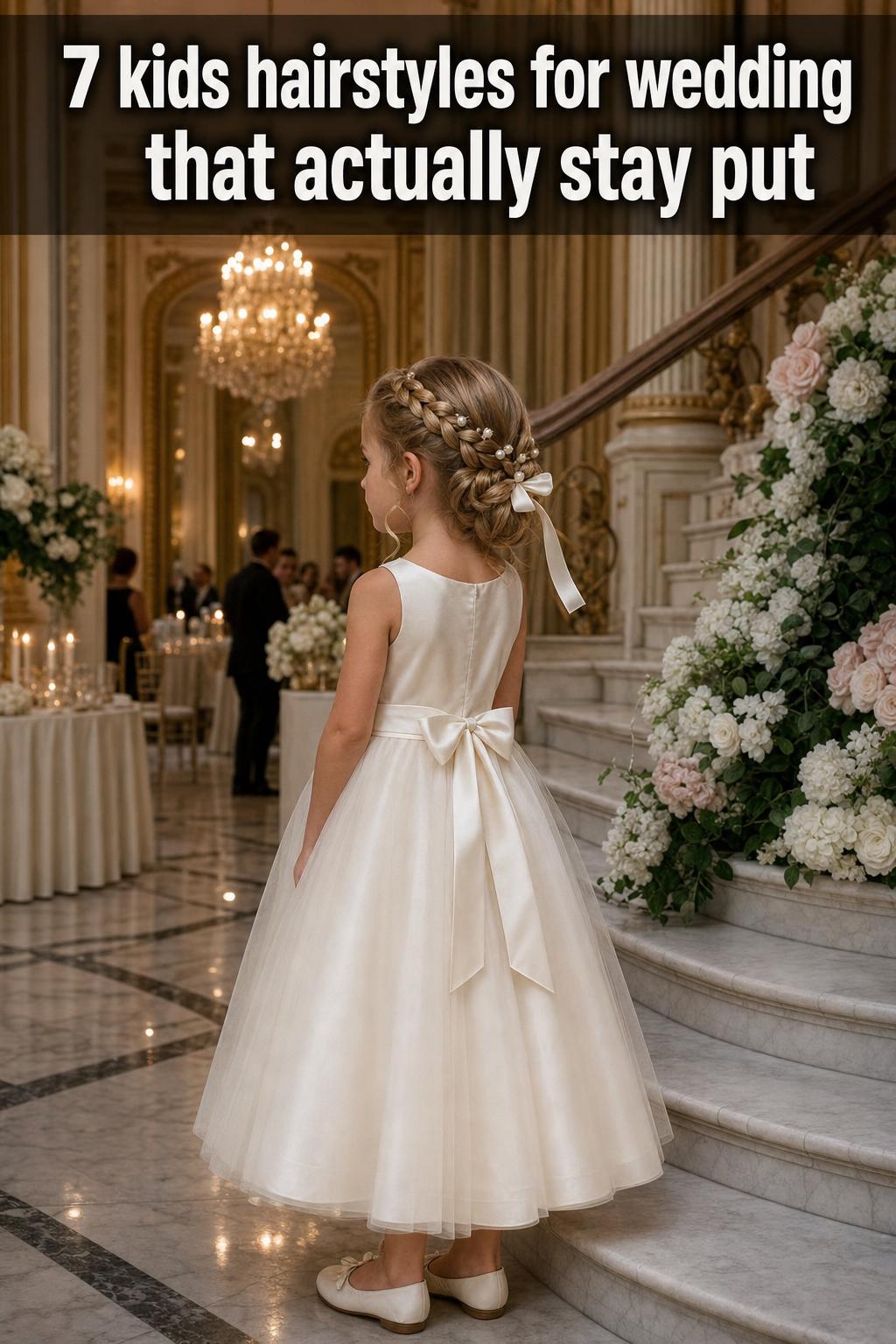
Some weddings call for a more polished finish, particularly in a ballroom, church, or candlelit evening reception. In those settings, updo wedding hairstyles for kids create a clean silhouette that looks elegant beside formal dresses, sashes, and occasion shoes. The key is to keep the shape youthful and comfortable.
Low chignon with a bow
A low chignon is one of the most graceful choices for a formal wedding. Positioned at the nape, it feels neat and classic, and a bow softens the look so it still suits a child. This hairstyle works especially well when the dress has detail at the neckline or shoulders, because the hair does not compete with the outfit. It is also a smart option for children who tend to touch or play with their hair during events.
Princess bun with sparkle pins
For a child who is thrilled to dress up, a princess bun with sparkle pins can feel magical without becoming impractical. The bun keeps the shape stable, while a few sparkle pins add wedding-day charm. This style suits evening celebrations especially well, where soft lighting catches the embellishment in a subtle way. The important balance here is restraint: the bun remains the base, and the pins provide the finish.
Messy side bun with floral pins
A slightly looser side bun introduces softness and a more modern, editorial feel. It can work beautifully at vineyard, countryside, or garden weddings where the atmosphere is romantic rather than rigidly formal. Floral pins help tie the hairstyle back to the event while keeping the overall impression light and age-appropriate.
French braided side bun
This style combines the visual detail of a braid with the durability of a bun, making it one of the most balanced choices for a long wedding day. It is especially useful for little girls with medium to long hair who need a hairstyle that feels intricate in photos but remains manageable through movement. It also solves the common problem of hair loosening around the face because the braid helps guide and contain the front sections.
When soft curls and natural texture are the better answer
Not every child needs an updo or braid-heavy style. Sometimes the most flattering wedding hair is the one that works with the natural texture rather than trying to override it. Soft curls, tousled waves, and pinned-back texture can feel especially right for daytime weddings, beachside ceremonies, or more relaxed celebrations.
Soft curls with a headband
This is a strong option for children who want to wear their hair down but still need a touch of structure. The headband keeps the style anchored and clears the face, while the curls add softness and movement. It is particularly useful for younger wedding guests and flower girls because it looks delicate without requiring a highly complex setup.
Headband curls and pinned-back curls
For straight or lightly wavy hair, adding curls and pinning back the front pieces can create a refined but easy finish. It works well in settings where the dress code is elevated but not extremely formal. This style also offers a practical compromise: the child still feels like she is wearing her hair down, but the face remains visible for photos and the shape appears intentional rather than everyday.
Neat tight curls or natural curly texture
Curly hair often brings built-in romance to a wedding look. Neat tight curls can be celebrated rather than hidden, especially when paired with a carefully placed clip, headband, or floral pin. The styling logic here is important: rather than forcing curls into a shape that fights their texture, it is often more comfortable and more visually successful to define them and use accessories for framing.
Tip: loose styles can be charming, but they need at least one anchoring element. A headband, clip, or pinned section often makes the difference between softly styled and simply undone.
Polished ponytails for children who need something easy
Ponytails are sometimes overlooked in wedding styling, yet they can be among the most useful easy kids wedding hairstyles for long hair or medium lengths. The trick is to choose a ponytail that feels elevated enough for the occasion. With the right shape and accessory, it can look festive, comfortable, and surprisingly elegant.
Bubble ponytail
The bubble ponytail is playful, tidy, and very practical for active children. It keeps the hair controlled section by section, which can help it last longer than a simple loose ponytail. It suits daytime weddings especially well, where the mood is cheerful and movement matters. If the child will be running between the ceremony and reception, this style earns its place.
Side pony with braid detail
A side pony with a small braid offers just enough visual interest to feel occasion-worthy. It is ideal for children who dislike buns or pinned-up hair but still need a more styled result than an everyday ponytail. In photos, the side placement can look soft and charming, particularly with ribbon accents or a delicate clip.
Simple high ponytail with polished finish
A neat high ponytail can work when the wedding style is modern, simple, or less traditional. The polished finish matters more than complexity here. Smooth brushing, balanced placement, and a well-chosen accessory can make a high pony feel intentional rather than rushed. For children with shorter attention spans, this can be one of the most realistic solutions.
The accessory playbook: what adds charm and what adds comfort
Hair accessories are woven through nearly every strong wedding hairstyle for children because they instantly signal occasion dressing. Flowers, pins, ribbons, and headbands all appear again and again for a reason: they transform a hairstyle from party-ready to ceremony-ready. But the most useful accessories also help with comfort and hold.
- Headbands help frame the face and support loose curls or half-up styles.
- Floral pins add romance to buns, braids, and side styles without overwhelming the child’s features.
- Ribbons soften braids and ponytails, making simpler hairstyles feel more wedding-appropriate.
- Clips and sparkle pins provide detail for evening weddings or more formal settings.
- Soft elastics and a gentle detangler support the styling process, especially for children who are sensitive during brushing.
There is also a safety and comfort side to accessorizing. Non-toxic and hypoallergenic options are especially sensible when accessories will be worn for several hours. Non-slip choices can be helpful too, particularly for toddlers or children with very fine hair. Beauty should never come at the cost of irritation, distraction, or constant readjustment.
Toddlers, little girls, and older kids need different styling logic
Toddler wedding hairstyles deserve their own category because they answer a different set of needs. Very young children often tolerate less handling, shorter prep time, and fewer accessories. What looks enchanting on an older child may feel impossible on a toddler five minutes into the ceremony.
For toddlers
Choose easy-to-maintain looks with light structure: a tiny half-up style, soft headband curls, a comfortable headband, or a simple ponytail with a bow. The goal is not complexity. It is a sweet, secure look that still allows the child to move freely and remain comfortable.
For little girls
This age group often suits the widest range of styles, from flower crown braids to low buns, waterfall braids, and pinned curls. They are usually old enough to sit for styling but young enough that comfort still determines success. This is the ideal stage for balancing decorative detail with a realistic wear time.
For older kids and junior bridesmaids
Older children can often carry more polished shapes such as a French braided side bun, a twisted half-updo, or a neat side high bun. The hairstyle can become slightly more refined, especially if it is coordinated loosely with the bridal party. Even so, the finish should remain youthful and not drift into an adult bridal look.
Wedding setting matters more than most people expect
A hairstyle does not exist in isolation. It lives inside a venue, a season, and a timeline. That is why a style that feels perfect in a living room mirror may behave differently in outdoor wind or warm afternoon humidity. Considering the setting in advance often prevents the most common wedding-day hair frustrations.
Garden and outdoor ceremonies
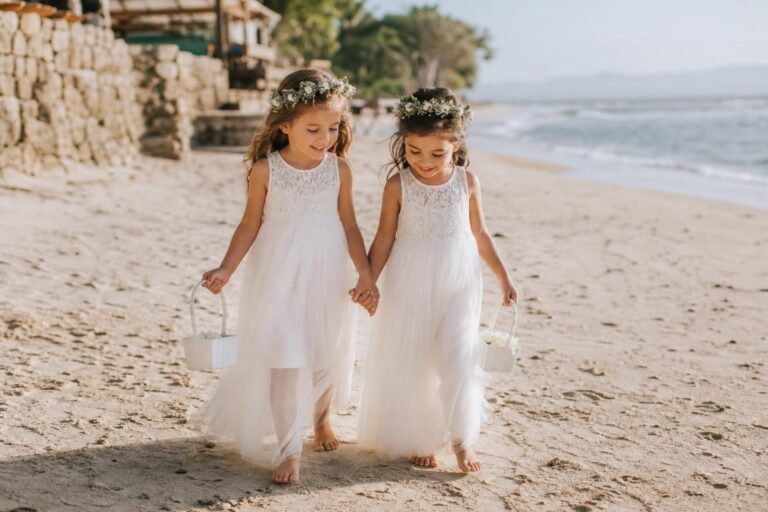
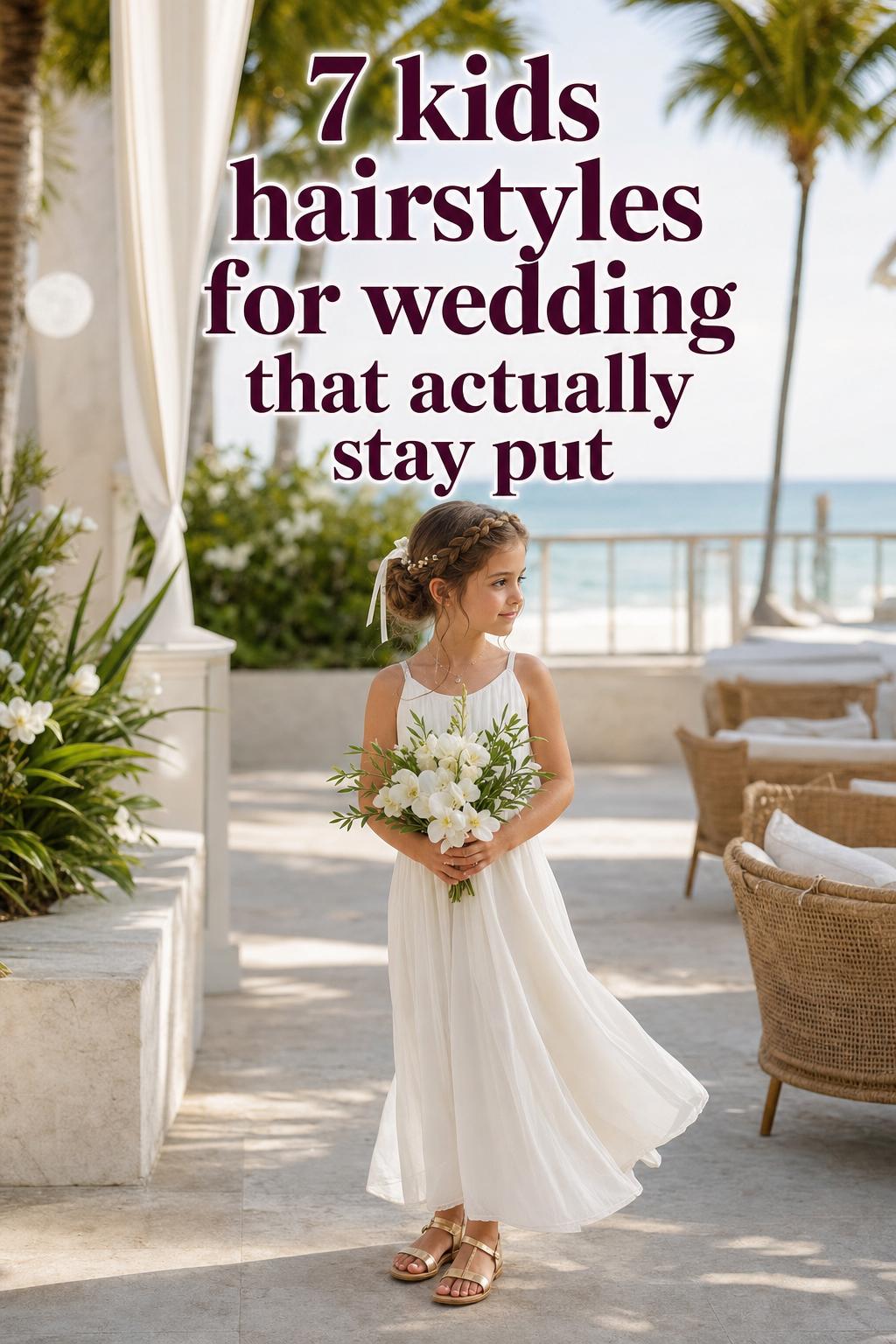
Outdoor weddings usually favor braids, buns, and anchored ponytails over fully loose hair. A crown braid, low chignon, or braided bun holds its shape better and remains graceful in movement. Floral accents feel especially at home here, but they should be secured carefully so they enhance the look without slipping.
Indoor formal receptions
Formal interiors allow for slightly more polished finishes, such as a princess bun with sparkle pins or a French braided side bun. Because wind is less of a concern, softer framing details can work well. Still, a wedding reception is long, so durability remains important even in controlled settings.
Warm weather and humidity
Humidity can quickly soften curls and create flyaways around the hairline. In those conditions, tied-back looks generally outperform loose styles. If the family wants curls, it helps to anchor them with a headband, clips, or pinned sections. The more the hairstyle relies on controlled shape rather than free-falling hair, the better it usually wears.
A few wedding-day styling scenarios that solve real problems
The flower girl for a romantic garden aisle
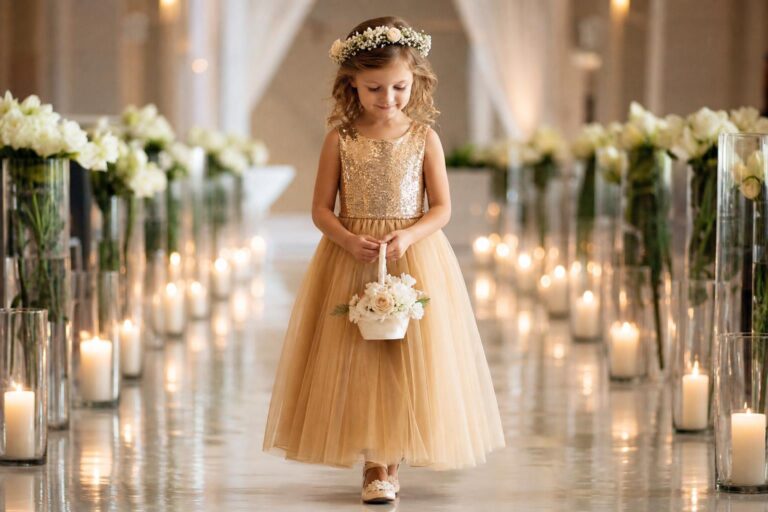
A flower crown braid or crown braid with ribbon works beautifully here because it echoes the softness of the setting while keeping the hair fully contained. Add small floral pins if desired, but keep the scale delicate. This combination is visually charming in daylight and practical enough for processional, photos, and play afterward.
The toddler at a family wedding with a long reception
A simple half-up style or soft curls with a headband is often the smartest route. It gives the child a dressed-up finish without requiring too much tension or too many pieces to manage. If the toddler is especially active, a tiny ponytail with a bow may ultimately be the more successful choice, even if it is simpler.
The older child in a formal bridal party
A twisted half-updo, French braided side bun, or neat side high bun feels elegant without looking too mature. These styles also photograph well from multiple angles, which matters during formal portraits. If the dress has embellishment, keep the accessory light so the overall look stays balanced.
The child guest who dislikes hair being pinned up
A side-swept waterfall braid or pinned-back curls can solve the problem nicely. These styles preserve movement and softness while still clearing the face. They are especially effective when paired with a comfortable headband or clip that prevents constant brushing away of loose strands.
Practical tips that make the hairstyle last longer
Even a beautiful style can lose its shape if the prep is rushed or the finish is poorly matched to the child. A few thoughtful adjustments can make a significant difference in how the hair wears from ceremony to final dance.
- Brush and detangle thoroughly before beginning, especially if using braids or structured updos.
- Use a gentle detangler and soft elastics to reduce tugging and improve cooperation.
- Test accessories before the wedding morning so you know whether they slip, pinch, or distract.
- For children with sensory sensitivity, prioritize fewer pins and simpler shapes.
- If the wedding is outdoors, lean toward styles with built-in hold, such as braids into buns or anchored ponytails.
- Keep one backup accessory on hand in case a headband or ribbon needs replacing.
One of the most overlooked choices is timing. Hair styled too early may loosen before key photos, while styling too late can create stress. The ideal window depends on the child’s role, but in general, the hairstyle should be close enough to the ceremony to feel fresh and far enough ahead to avoid rushing.
Common mistakes that make children’s wedding hair harder to manage
The most frequent mistake is choosing based on appearance alone. A hairstyle may look enchanting in inspiration images, but if it does not suit the child’s texture, age, or patience level, it can turn the getting-ready process into a struggle. The better approach is to choose a style that the child can actually wear comfortably.
Another common issue is over-accessorizing. Too many floral pins, oversized headbands, or multiple decorative pieces can make the hairstyle feel heavy and unstable. Wedding hair for children usually looks best when one focal accessory supports a strong base style.
Families also sometimes underestimate weather and venue conditions. Loose curls for an outdoor humid ceremony may look lovely at first and then quickly lose shape. A child who loves movement may dismantle a loosely pinned style without even noticing. Thinking through these realities in advance helps avoid disappointment and unnecessary touch-ups.
How to think about style inspiration without getting overwhelmed
There are many beautiful little girl wedding hairstyles, and that abundance can make choosing harder rather than easier. A useful editing method is to narrow your options into three questions: does the style suit the child’s hair, does it fit the wedding setting, and will it remain comfortable through the day? If the answer is yes to all three, the style is probably worth considering.
It can also help to group inspiration by style family instead of collecting disconnected images. Compare braids with braids, updos with updos, and curls with curls. That makes trade-offs easier to understand. For example, a low chignon may offer more staying power than loose waves, while a bubble ponytail may be more practical than a decorative bun for a very active child. Once you see styles this way, the decision becomes less emotional and more useful.
If you want a final rule to guide the choice, let the hairstyle support the celebration rather than compete with it. A child who feels comfortable and can move naturally will almost always look more polished than one wearing a more elaborate style that never quite settles.
FAQ
What are the easiest kids hairstyles for wedding events?
The easiest options are usually soft curls with a headband, a bubble ponytail, a simple half-up style, or a neat ponytail with a bow. These styles are easier to create, comfortable for children, and still feel appropriate for a wedding when finished with a thoughtful accessory.
Which hairstyle works best for a flower girl?
A flower girl often suits romantic braided styles such as a flower crown braid, crown braid with ribbon, or a low bun with floral pins. These looks feel ceremonial and photograph beautifully while keeping the hair secure during the walk down the aisle.
How do I choose between braids, curls, and an updo?
Start with the child’s hair texture, length, and comfort level. Braids are ideal when you want structure and hold, curls work well when you want softness and movement, and updos are usually best for formal settings or children who do not want hair touching their face.
Are toddler wedding hairstyles different from styles for older kids?
Yes, toddler wedding hairstyles usually need to be simpler, faster to create, and easier to maintain. A comfortable headband, small half-up style, or simple ponytail is often more successful than an intricate braid or heavily pinned updo.
What accessories are best for kids at weddings?
Headbands, floral pins, ribbons, clips, and sparkle pins are the most versatile choices. Soft elastics and a gentle detangler also help during styling, and non-toxic or hypoallergenic accessories are especially useful for long wear and sensitive children.
How can I keep a child’s hairstyle in place during a long wedding day?
Choose a style with built-in structure, such as braids, buns, or an anchored ponytail, and avoid relying entirely on loose hair. Careful brushing, secure elastics, and a well-placed accessory usually help the style last longer with fewer touch-ups.
What hairstyles are best for outdoor weddings?
For outdoor weddings, styles like crown braids, Dutch braids into a bun, low chignons, and bubble ponytails tend to hold up better against wind and humidity. Loose curls can still work, but they usually need a headband, clips, or pinned sections for support.
Can kids wear their hair down to a wedding?
Yes, but it usually looks and wears better when at least part of the hair is controlled. Pinned-back curls, a side-swept waterfall braid, or soft curls with a headband give the prettiness of wearing hair down while still keeping the style polished.
What should I avoid when styling children’s hair for a wedding?
Avoid choosing a style that is too tight, too complex for the child’s patience, or too dependent on accessories alone. It is also wise to avoid styles that ignore weather, movement, or the child’s natural texture, because those are the looks most likely to become uncomfortable or fall apart.