Romantic Hairstyles For Wedding That Suit Every Venue
On a wedding morning, hair becomes more than a finishing detail. It has to hold through photographs, movement, weather, a veil, hugs, dancing, and the emotional rhythm of the day. That is why hairstyles for wedding celebrations are so often discussed through the same small group of ideas: updos, loose waves, half-up styles, braids, and sleek polished looks. They all belong to the same bridal conversation, yet they create very different effects once hair type, texture, length, accessories, and venue enter the picture.
Some brides are choosing between Hollywood waves and a classic chignon. Others are deciding whether half-up, half-down hair will give them the softness they want without sacrificing hold. These styles are often grouped together because each can feel timeless, romantic, or modern depending on how it is styled, but the practical differences matter. A low knot behaves differently from loose curls in humidity, and a veil sits differently on a polished bun than on a crown braid.
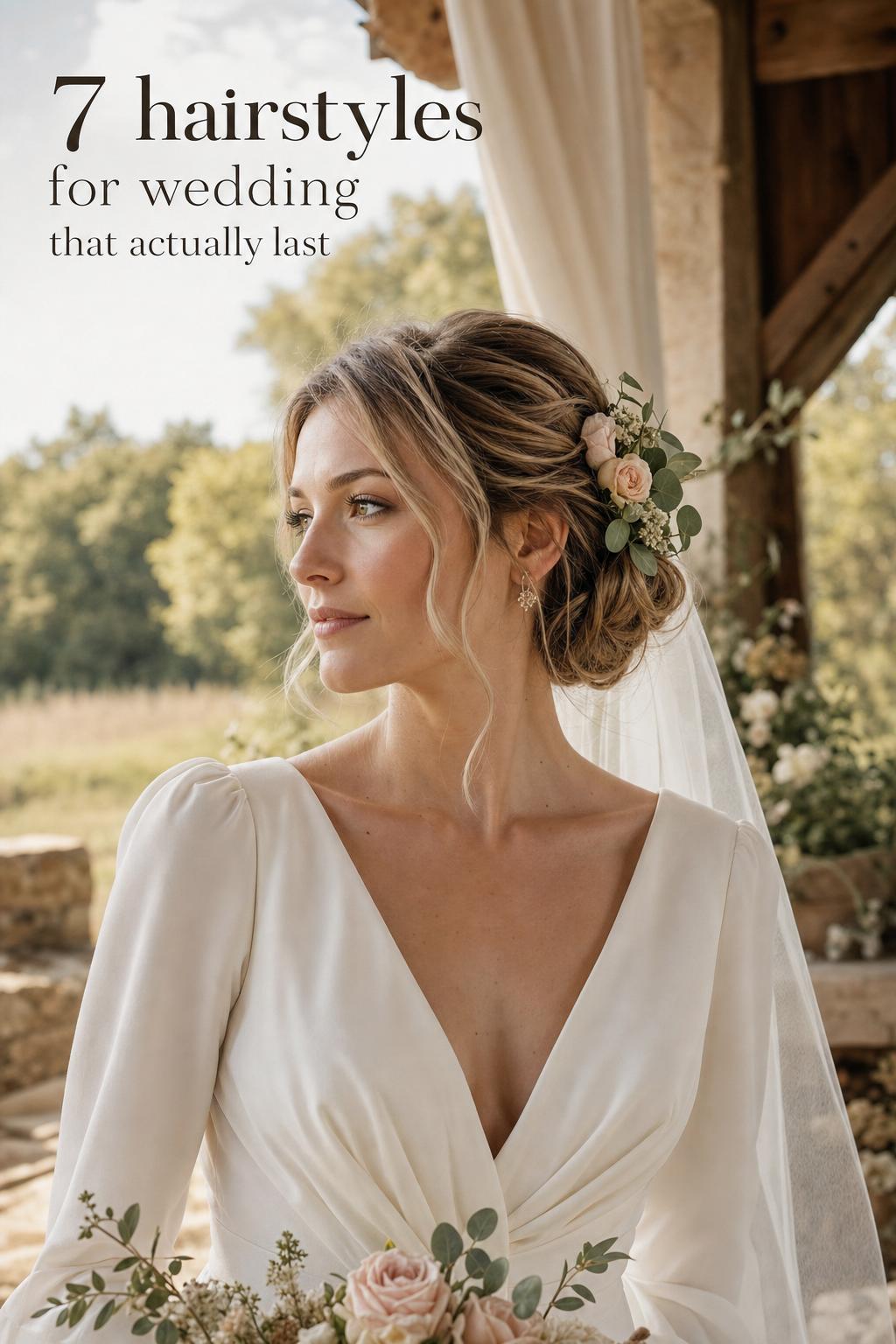
This guide compares the major bridal hair directions in a clear, editorial way. You will see how core wedding hairstyles differ visually, which hair textures and lengths they tend to suit best, how accessories such as veils, florals, ribbons, and jewelry change the final look, and when each approach makes the most sense for a beach ceremony, ballroom evening, city celebration, or destination wedding.
The bridal hair families at a glance
Most wedding hair falls into five broad style families. Understanding them first makes the comparison easier, because what looks like a small difference in a saved inspiration photo can actually signal a different styling philosophy. Some styles prioritize structure and longevity, while others prioritize softness, movement, or natural texture.
Your wedding look is only the beginning.
Keep your guest list, vendors, timeline, and every important detail together with Zarellea — so your day feels as considered as your style.
Style overview: updos
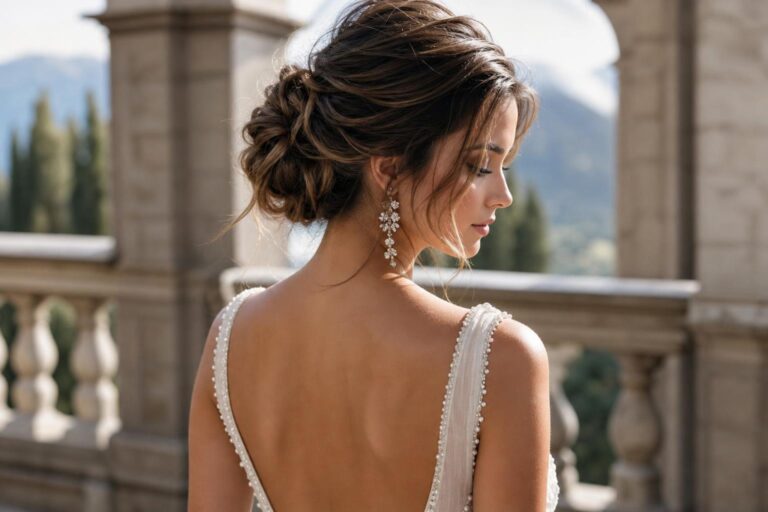
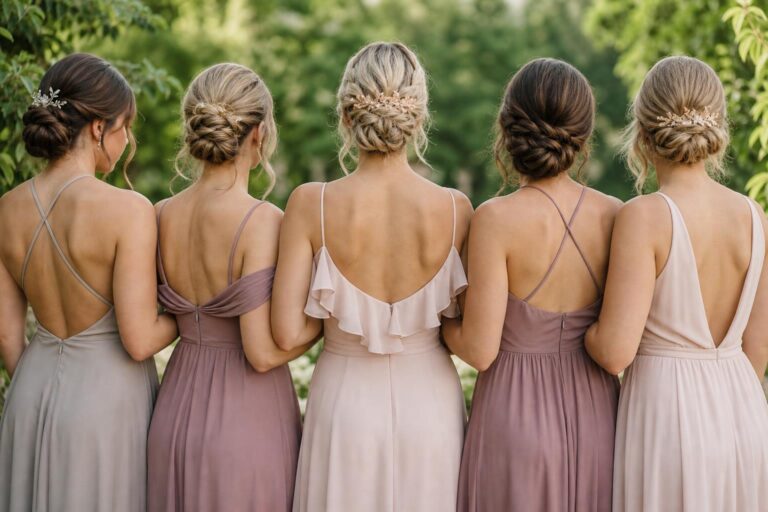
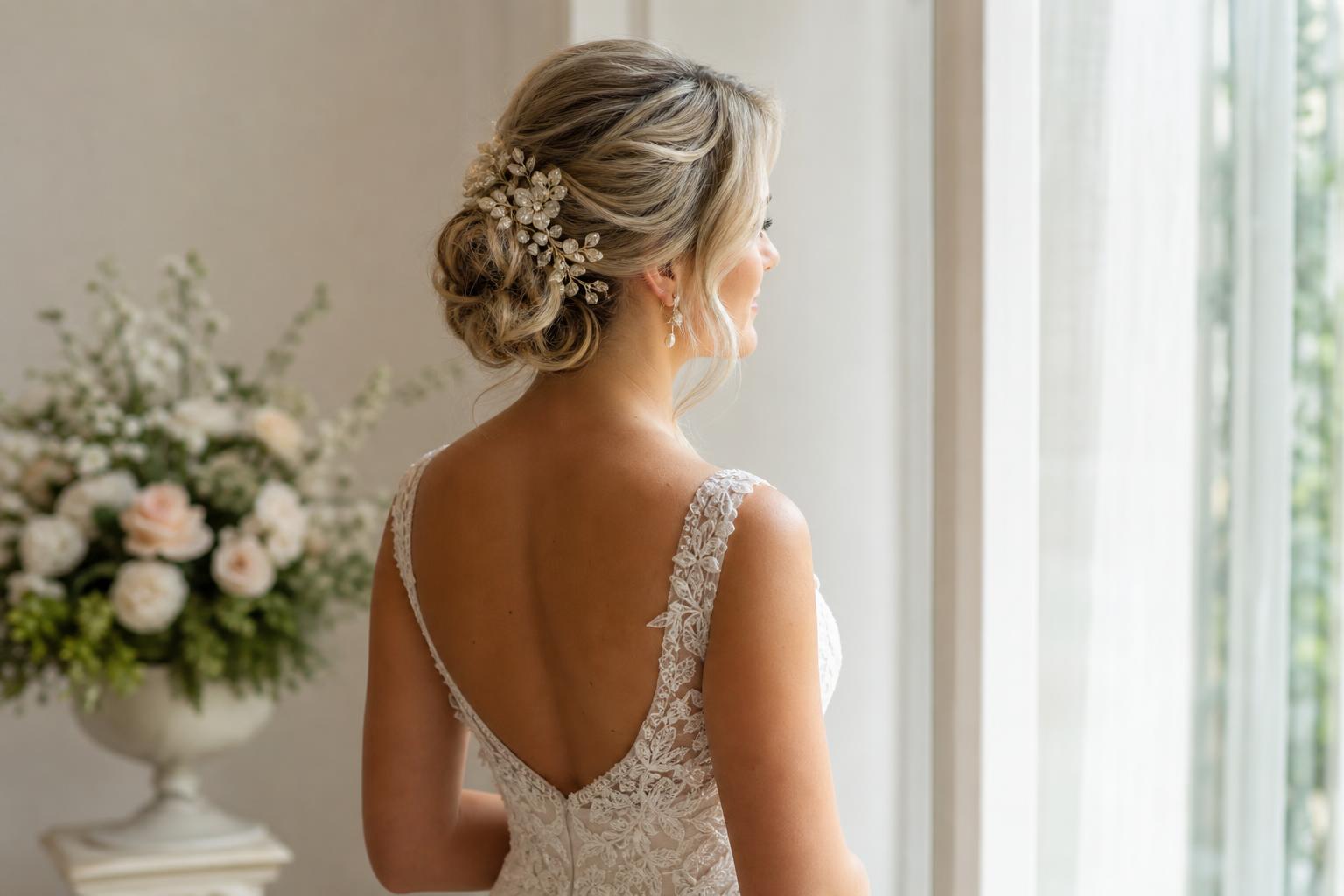
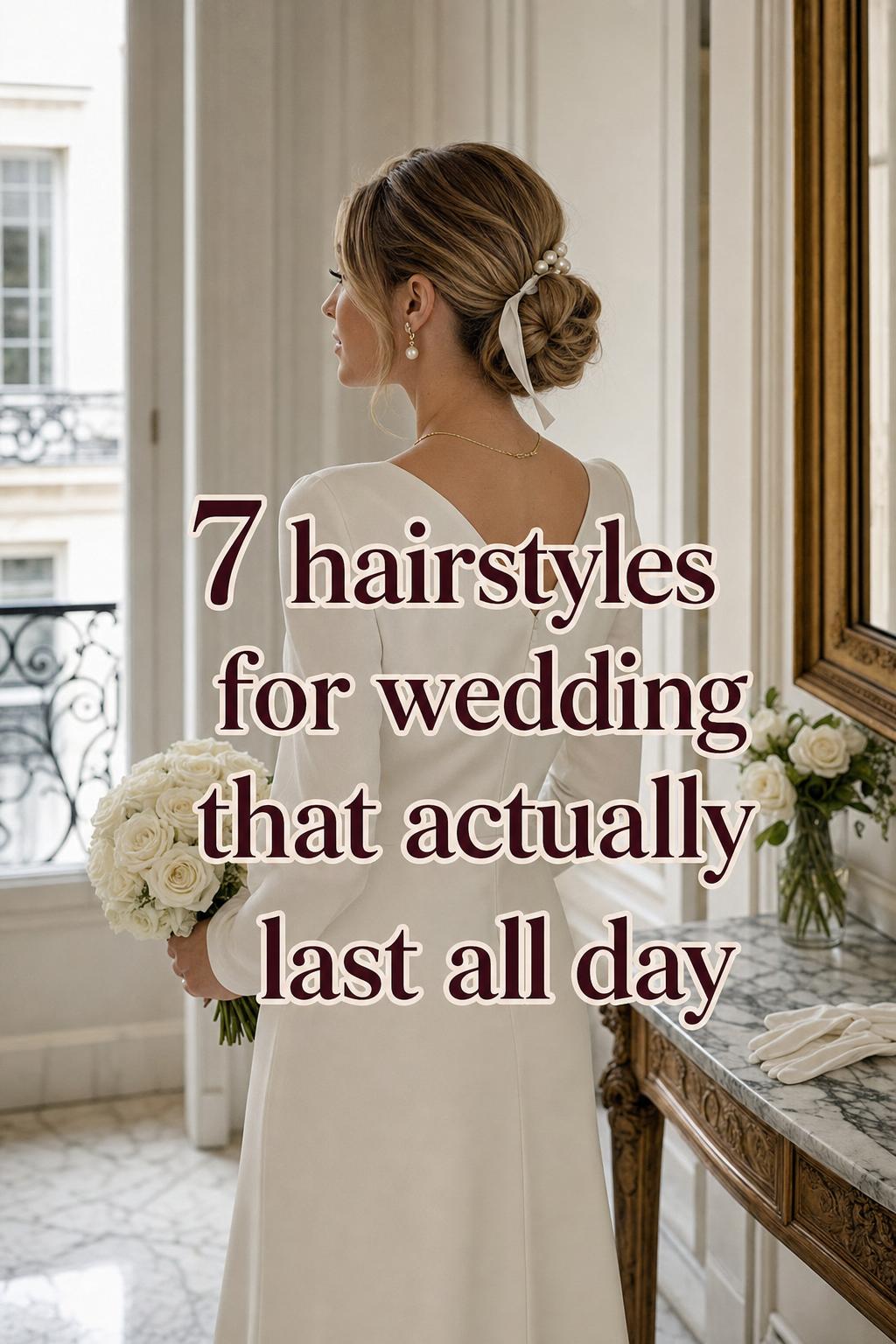
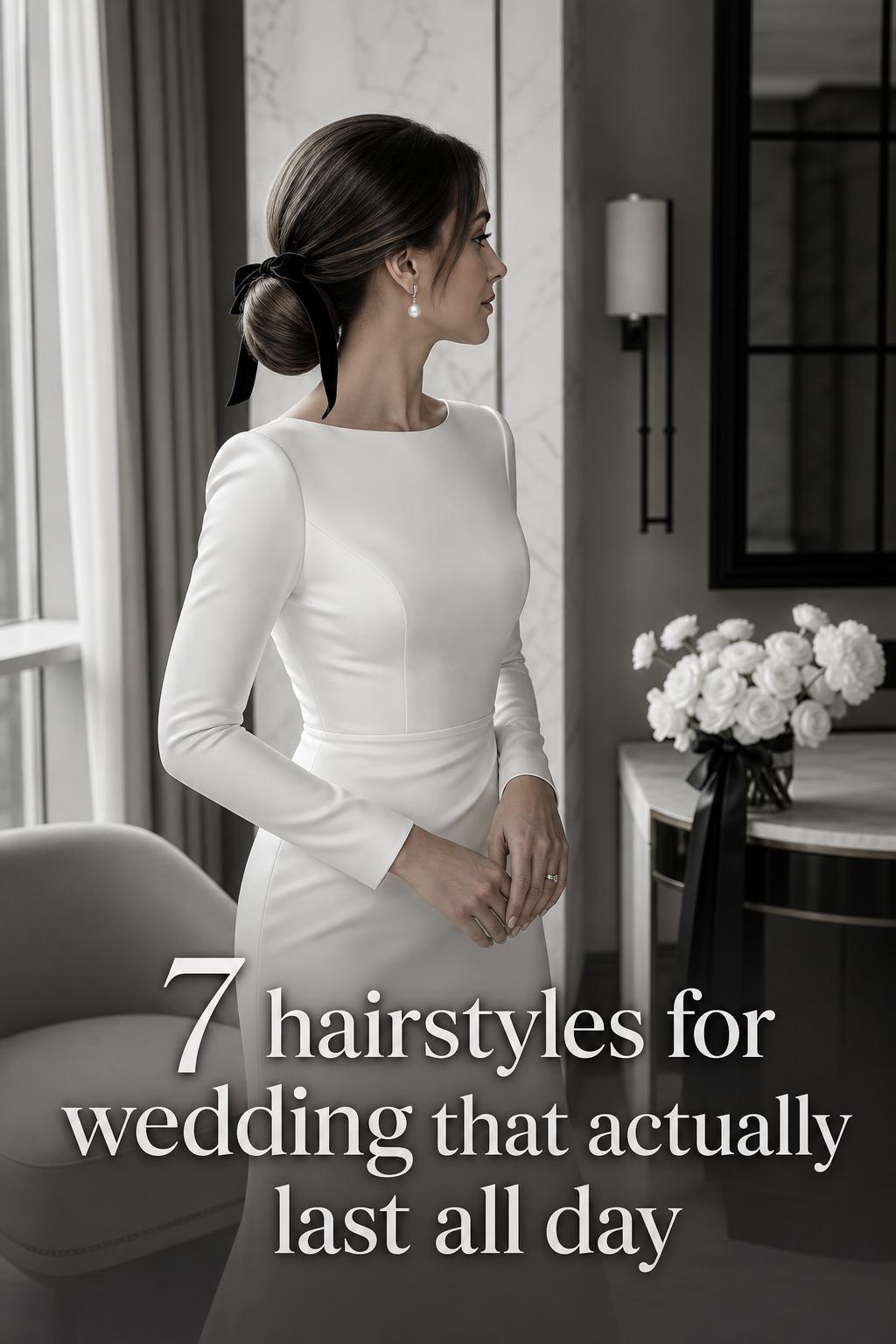
Updos include the classic bun, chignon, low knot, and other pinned styles that lift hair away from the neck and shoulders. Their defining characteristic is structure. They usually feel polished, formal, and ceremony-ready, whether the finish is sleek or softly curled with a few hanging strands. Visually, updos create a cleaner neckline and often leave more room for statement jewelry, a veil placement, or a detailed dress back.
Style overview: half-up, half-down
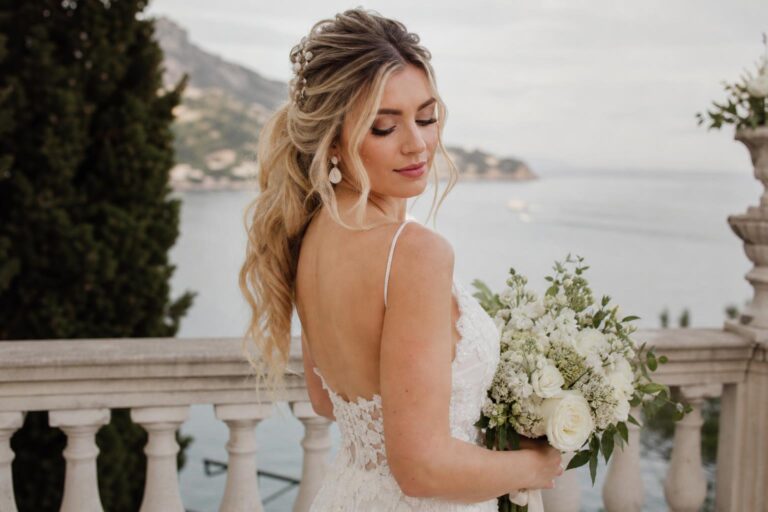
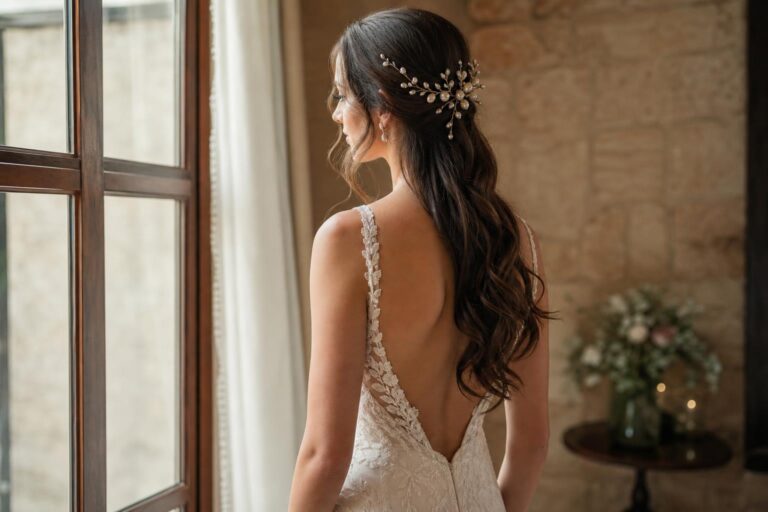
Half-up, half-down wedding hair sits between polish and ease. The upper section is secured with twists, braids, or pinned volume, while the rest of the hair falls in waves, curls, or a smoother finish. The mood is romantic and flexible. It works especially well when a bride wants visible length and movement but still wants the face framed in a controlled way.
Style overview: loose waves and curls
This family includes soft beach waves, classic waves, and the more defined glamour of Hollywood waves. The silhouette is open and fluid, with a strong focus on shine, bend, and softness through the lengths. These styles often feel cinematic and modern at the same time, especially when paired with tucked-behind-the-ear styling, a side part, or a minimalist accessory.
Style overview: braided bridal hair
Braids can appear as the main hairstyle or as a supporting detail inside another look. Fishtail braid styles, crown braids, and boho twists tend to add texture, dimension, and a handcrafted feel. They often sit beautifully in outdoor settings, where a little texture looks intentional rather than overly rigid, and they pair naturally with florals or soft headpieces.
Style overview: sleek and straight looks
Sleek wedding hair relies on smoothness, shape, and precision. It may be worn down, tucked behind the ears, or styled with a controlled accessory placement. Compared with curls and textured looks, this direction feels more architectural and refined. It can read minimalist, city-ready, and quietly dramatic, especially for brides whose dress and jewelry already carry strong detail.
Why updos, waves, and half-up styles are often confused
Bridal inspiration tends to blur categories because stylists often combine techniques. A soft updo may include curled face-framing pieces. A half-up style may borrow the crown volume of an updo. Hollywood waves may be pinned slightly on one side to create a shape that feels almost sculpted. On a vision board, these can appear similar. In wear, they behave differently.
The distinction usually comes down to three things: how much of the hair is secured, how much movement is visible through the lengths, and how the style interacts with accessories and weather. That is why a bride can love two saved images equally yet find that only one works with her veil, texture, or venue.
Hair type, texture, and length change the comparison
Before comparing aesthetics alone, it helps to anchor the discussion in hair reality. The broad texture categories often referenced through the Andre Walker Hair Typing System are Type 1 straight, Type 2 wavy, and Type 3 curly. These categories do not dictate a single wedding hairstyle, but they do affect how a style holds, how much product support is needed, and whether the final result feels natural or forced.
Type 1 straight textures
Type 1 hair often showcases shine and sleekness beautifully, so straight polished styles and classic waves can look especially striking. The trade-off is that some brides with straighter textures may need more support for grip and longevity if they want an updo with softness or a half-up style that resists slipping. This is where mousse, texturizing products, and a thoughtful hair trial become especially useful.
Type 2 wavy textures
Type 2 hair tends to adapt well across bridal categories. It can lean into loose waves, support braids attractively, and transition into half-up, half-down styling without losing softness. For many brides, this is the easiest texture family for romantic bridal hair because natural movement is already present. The key decision becomes whether to define that movement or smooth it into a more formal finish.
Type 3 curly textures
Type 3 hair can be incredibly expressive in bridal styling, particularly in half-up looks, curly updos, and protective wedding hairstyles. Rather than treating curl as something to suppress, many modern bridal looks work best when curl pattern and volume are allowed to shape the style. Curly textures can create striking dimension in pinned looks, and they often carry accessories beautifully because the hair itself provides structure.
Short, medium, and long hair comparisons
Hair length shifts the comparison just as much as texture. Short hair often benefits from sleek styling, controlled waves, or accessory-led looks. Medium hair is versatile enough for low buns, half-up styling, and soft curls. Long hair opens the door to more dramatic lengths in braids, Hollywood waves, and larger chignons, though extra length also means more attention to hold and weight. In some cases, extensions may help create a desired shape, particularly when a bride wants fullness rather than simply more length.
Updo versus wearing hair down
This is one of the most practical bridal beauty decisions because it blends style with endurance. An updo and a down style can both be elegant, but they support different wedding-day experiences.
What an updo communicates
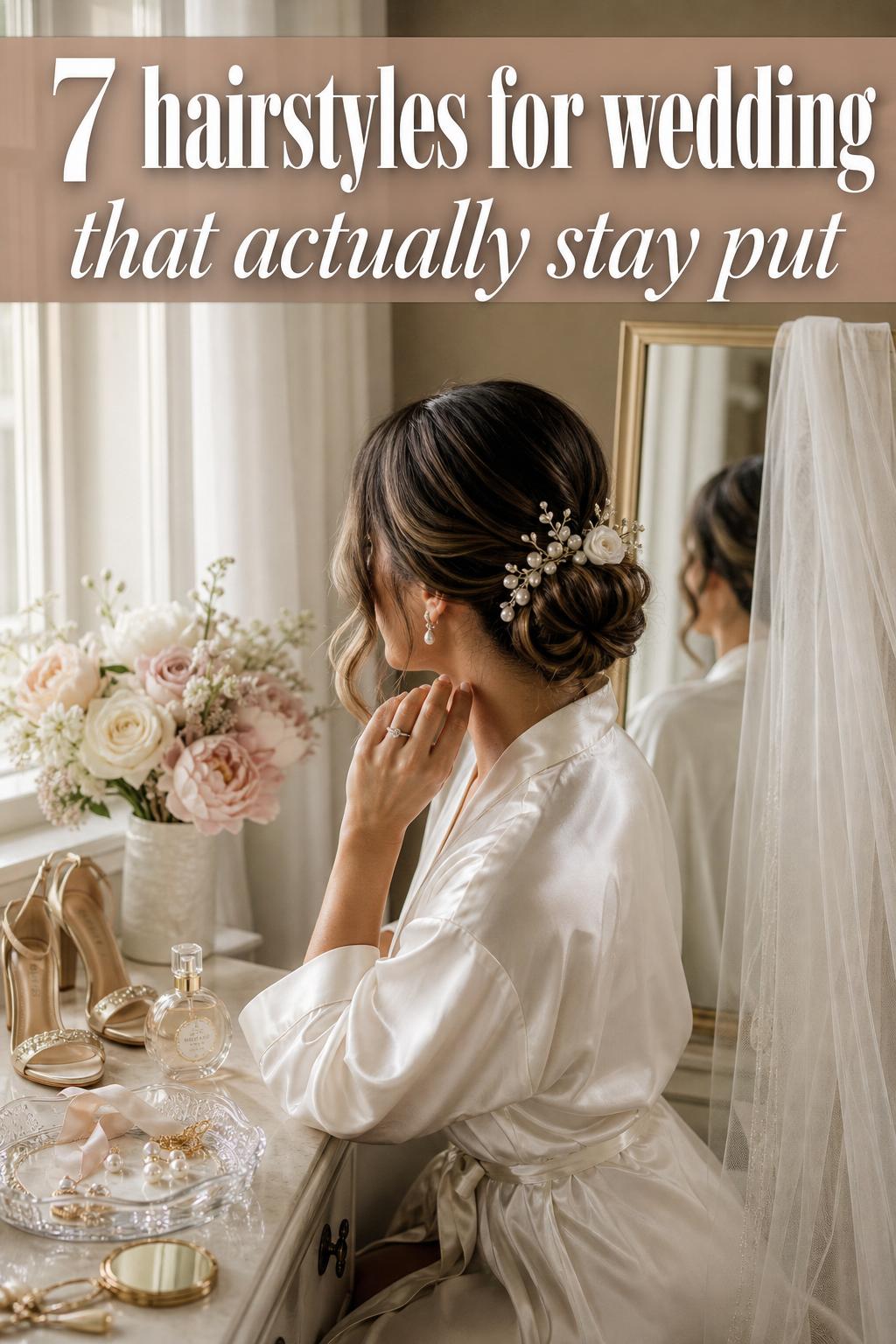
A classic updo, low bun, or chignon tends to read polished first. It suits formal ceremonies, dresses with intricate necklines or backs, and brides who want a style that stays visually composed from first look to final dance. In warm weather, an updo also keeps hair away from the face and shoulders, which can be as much about comfort as appearance.
What wearing hair down communicates
Loose curls, side-parted waves, or Hollywood waves create softness and movement. They often feel more relaxed, even when highly styled, and they photograph beautifully in still moments. The trade-off is exposure to wind, humidity, friction from clothing, and gradual shape changes over the day. For brides who value touchable movement more than strict structure, that trade-off is often worth it.
Where half-up, half-down fits between them
Half-up, half-down wedding hair offers a middle path. It secures the face-framing area, supports accessory placement, and still leaves visible length. Brides who feel too formal in a full updo and too undone in fully loose hair often end up happiest here. It is especially effective when the wedding spans multiple settings, such as an outdoor ceremony followed by an indoor reception.
The visual differences that matter in photographs and in person
Bridal hair is seen from more angles than everyday hair. A style has to work in profile, from the front, from behind, and under a veil. It also has to stay balanced against the dress, bouquet, and jewelry. That is why the visual logic of each style family matters.
- Updos concentrate volume at the crown or nape and create a cleaner overall silhouette.
- Half-up styles divide the silhouette, giving height or detail above with softness below.
- Loose waves and curls spread visual interest through the full length of the hair.
- Braids add pattern and texture, which can make the hairstyle feel more dimensional from a distance.
- Sleek styles rely on line, shine, and controlled shape rather than movement.
In real life, this affects not only the mood of the look but also proportion. A strapless or open neckline often welcomes more visible hair movement, while a high-detail bodice or statement earrings may benefit from the restraint of a bun or tucked style. That balance is what makes bridal styling feel intentional rather than crowded.
Accessory compatibility: where each hairstyle wins
Wedding accessories do not sit on hair in a neutral way. They change shape, weight, and emphasis. A veil can soften one hairstyle and overwhelm another. Fresh flowers can make one look feel romantic and another look feel overly busy. Choosing the hairstyle first without thinking about the accessory often leads to a mismatch during the trial.
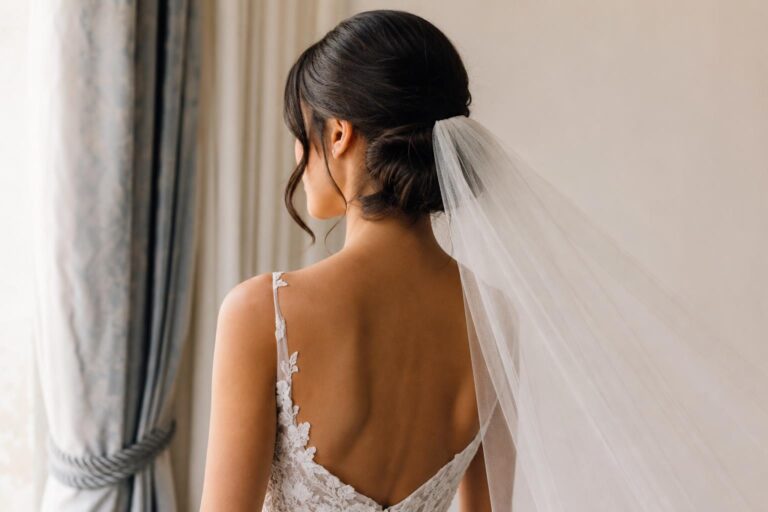
Veils with updos
Veils tend to integrate naturally with updos because the pinned structure gives a clear anchor point. A low bun or chignon is especially helpful when the bride wants the veil to sit securely and come off cleanly later without disturbing the overall hairstyle too much. This makes updos a strong choice for ceremony-to-reception transitions.
Veils with half-up styles
Half-up, half-down hair often supports a romantic veil placement, particularly when the top section has enough structure to hold it. The result can feel airy and bridal without becoming overly formal. The important consideration is whether the lower lengths will tangle or flatten under the veil over time.
Florals, ribbons, and headpieces with braids and waves
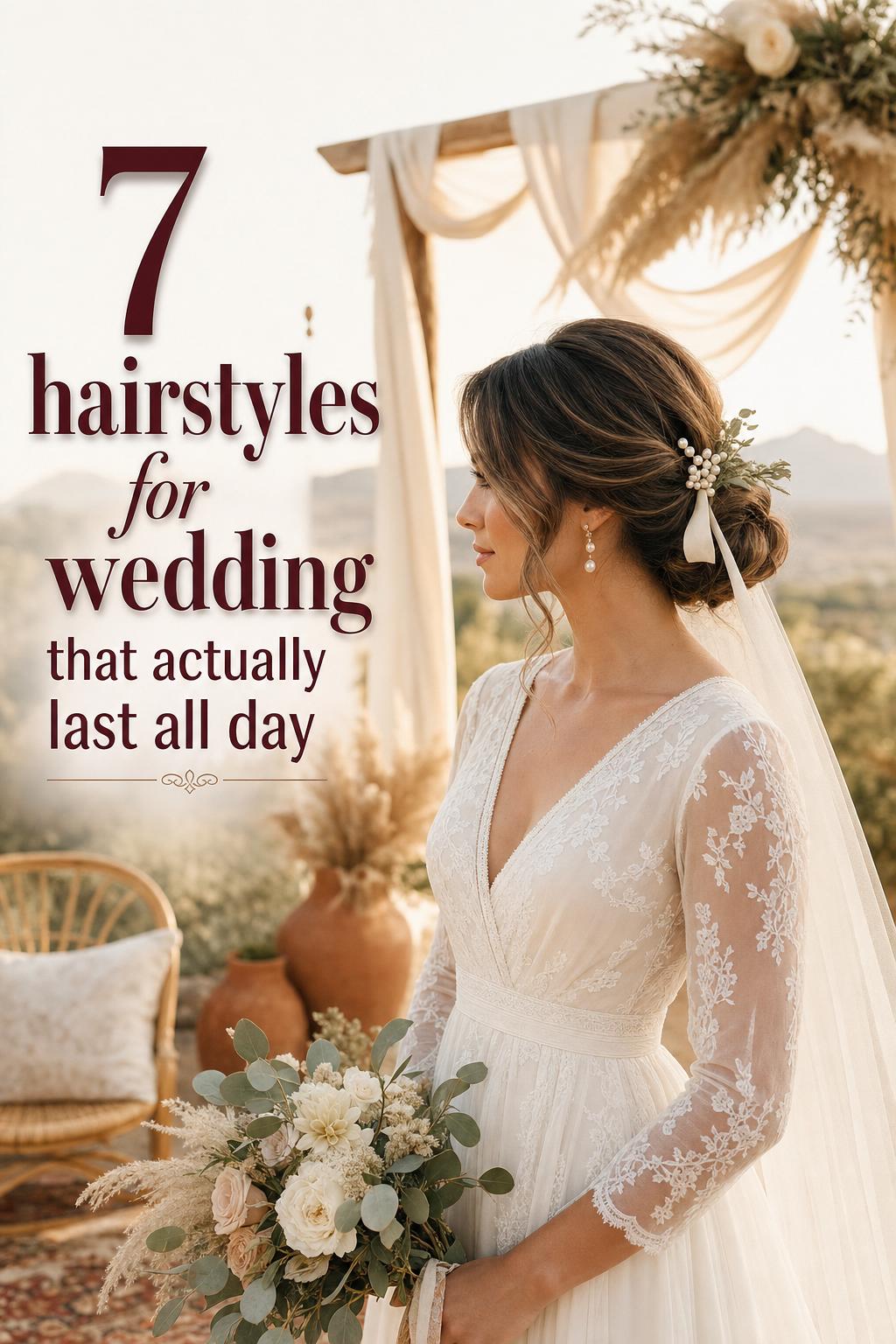
Floral hair accessories and fresh flowers pair beautifully with textured styles because the placement looks organic rather than rigid. A half-up style with loose waves and fresh flowers feels especially at home at a garden ceremony, coastal wedding, or countryside venue. Braids also hold floral accents gracefully because the texture gives petals and pins somewhere to sit.
Jewelry and sleek tucked styles
Hollywood waves with bangs tucked behind the ears, or sleek straight hair worn close to the head, can create a refined frame for earrings and necklace lines. This is where bridal hair starts to behave almost like dress styling: the hairstyle steps back slightly so shine, silhouette, and accessories become more visible.
Theme, neckline, and venue: the comparison brides often skip
Even the most beautiful bridal hairstyle can feel slightly wrong if it ignores the wedding setting. Hair does not exist separately from atmosphere. A ballroom evening with candlelit formality asks for different visual discipline than a breezy beach ceremony at golden hour.
Ballroom and formal evening weddings
Classic updos, polished low knots, chignons, and defined Hollywood waves all translate well in formal spaces. These settings can support stronger shape, cleaner finishes, and more visible glamour. If the gown has a dramatic neckline or heavily detailed bodice, a controlled hairstyle often gives the entire look breathing room.
Garden, barn, and countryside celebrations
These venues tend to flatter texture. Half-up styles, braids, boho twists, and loose curls can feel more in tune with the setting. Fresh flowers or floral accents often look natural here rather than ornamental. The mood is softer and more atmospheric, so a little movement in the hair usually enhances the editorial effect rather than diminishing it.
Beach and destination weddings
For a beach ceremony or destination wedding hair plan, wind, heat, and humidity become decisive. A bride may love fully loose waves in theory but find that a partially secured style is more practical. Half-up, half-down hair, textured low buns, and braids often strike the best balance because they preserve softness while reducing exposure to the elements.
City celebrations and minimalist styling
Urban ceremonies, city hall settings, and modern receptions often pair beautifully with sleek hair, tucked-behind-the-ear waves, or understated chignons. The overall effect tends to be cleaner and more directional. This is where a minimalist bridal aesthetic feels strongest, especially when dress lines are sharp and accessories are concise.
An editorial comparison of the core styles
Updos versus Hollywood waves
An updo is about containment, while Hollywood waves are about controlled release. The updo places attention on bone structure, neckline, and dress details. Hollywood waves place attention on hair itself: shine, bend, and glamour. The former usually offers more security for long hours and accessories. The latter offers more softness and visual drama through movement. Brides choosing between them are often deciding whether they want the dress or the hair to lead.
Half-up, half-down versus fully loose curls
These styles can look similar in inspiration photos, but half-up hair introduces architecture. It holds the face open and creates a bridal focal point around the crown or back of the head. Fully loose curls feel freer and less managed. If your priority is softness with some practical control, half-up usually wins. If your priority is maximum movement and a more relaxed silhouette, loose curls take the lead.
Braided looks versus sleek straight styles
This is perhaps the clearest aesthetic divide. Braided hair celebrates texture, dimension, and hand-finished romance. Sleek straight bridal hair emphasizes polish, shine, and restraint. One feels organic and often venue-sensitive; the other feels sharp and deliberate. Brides with strong accessories or modern dresses often appreciate sleek styling, while brides leaning toward florals or softer wedding settings may prefer braid-led looks.
Outfit logic for hair: how bridal styles balance the dress
Bridal hair works much like styling a full look. It needs proportion, contrast, and a point of emphasis. A hairstyle should not duplicate every detail of the gown. Instead, it should either echo the mood or create balance.
- A structured gown often pairs well with softer hair, such as loose waves or a softened updo.
- A romantic dress with movement can handle a cleaner hairstyle, such as a low bun or sleek tuck.
- A detailed neckline usually benefits from more exposed space around the shoulders and neck.
- A simpler neckline can support more visible hair volume or decorative accessories.
Dress neckline guidance is especially useful here. While bridal taste remains personal, the general principle is simple: if the upper half of the look is already busy, hair often works best when it edits rather than adds. If the dress is visually quiet, hair can take on more expressive styling.
Scenario comparisons brides can actually use
Golden-hour garden ceremony
In a garden setting with soft light and natural movement, a half-up, half-down style with loose waves and fresh flowers feels intuitive. The same wedding could also support a loose braided crown. An updo would still work, but it would read more formal and less atmospheric. If the bride wants softness in photos and comfort through a long outdoor ceremony, the partially secured option usually gives the most balance.
Candlelit ballroom reception
Here, a classic chignon, low knot, or polished Hollywood wave tends to rise to the occasion. The room itself supports drama and elegance. Loose beachy texture may feel underdressed against the setting unless the overall bridal style is intentionally relaxed. In this environment, hair that holds shape and reflects formal styling choices generally looks more coherent.
Coastal destination wedding
For a ceremony near the water, the comparison becomes practical very quickly. Fully down hair may look lovely at first but can become high-maintenance in wind. A textured low bun, braid, or half-up wave pattern usually performs better while still feeling romantic. This is one of those wedding contexts where a small compromise in freedom can create a much calmer experience over the full day.
Modern city celebration
A city wedding often welcomes sharper lines. Sleek straight hair, tucked-behind-the-ear waves, or a controlled low bun can all feel at home. If the bridal look includes minimalist tailoring, this cleaner hair direction often appears more intentional than a highly textured boho style. The mood is less pastoral and more refined.
Practical bridal hair planning that changes the outcome
The most stylish choice is not always the one that survives the day best, and the longest-lasting style is not always the one that feels most like the bride. Good bridal hair planning lives between those two truths. This is where the process matters just as much as the inspiration image.
Why the hair trial matters
A hair trial is where abstract preference becomes real-world decision-making. A bride may discover that the style she thought she wanted changes the balance of her neckline, sits awkwardly with the veil, or feels too heavy after a few hours. Trials are especially important when comparing up versus down, when considering extensions, or when trying to preserve natural texture in a more formal shape.
Protection, longevity, and product logic
Wedding hair needs both beauty and endurance. Heat protection, supportive mousse, gels where needed, and finishing products all contribute to longevity. Good Housekeeping-style practical thinking and wedding-planner advice meet in this area: tools and products are not separate from aesthetics. They are what make a chosen hairstyle wearable through ceremony, portraits, and reception.
Protective wedding hairstyles
Protective wedding hairstyles matter for brides who want elegance without compromising hair health or natural texture. For curly hair especially, protective options can maintain shape, reduce stress, and still deliver a polished bridal finish. Rather than viewing protection as purely practical, it helps to see it as a styling category with its own beauty language and long-day advantages.
Tips from a bridal styling perspective
Brides often focus on front-facing inspiration images, but wedding hair is experienced in motion. It is seen while walking, turning, embracing guests, and removing a veil. A hairstyle that looks perfect in one still image can feel less successful if it falls apart from the side or competes with the dress from the back.
- Choose the hairstyle after considering the veil, not before.
- Bring dress neckline references to the trial so the shape of the hair is judged in context.
- If you are deciding between two styles, compare them after several hours, not only immediately after styling.
- For outdoor weddings, give weather equal weight to aesthetics.
- If your natural texture already has character, consider enhancing it rather than replacing it entirely.
Celebrity stylist authority often enters bridal advice through practical reasoning rather than trend alone. Nick Stenson, cited in wedding beauty guidance through L’Oréal, represents that professional approach: the hair needs to suit the person, the texture, and the event. In the same spirit, the Andre Walker framework is useful not as a rulebook, but as a shortcut to understanding how Type 1, Type 2, and Type 3 textures may respond differently to the same bridal idea.
Regional mood and venue cues
While bridal hair trends are not locked to geography, location often changes the styling mood. References to places such as New York, Los Angeles, Miami, New Jersey, and NYC suggest the wider reality that wedding hair often adapts to venue culture and pace. A city celebration may lean cleaner and more editorial. A coastal destination wedding may call for a softer style with weather resilience. A countryside event may welcome texture and florals more naturally.
Even salon context matters. A professional setting such as Love Lane Salon in New Jersey points to the value of translating inspiration into local reality. The right hairstyle is not only the one that photographs well in a magazine mood board. It is the one that makes sense for the actual ceremony environment, timeline, and hair behavior on the day.
How to know which bridal hairstyle is right for you
The best choice usually emerges from a sequence of questions rather than a sudden favorite image. Start with texture and length. Then consider whether you want to wear a veil, flowers, a headpiece, or visible jewelry. After that, look at the venue, likely weather, and how formal the wedding feels. Only then compare style mood: polished, romantic, boho, classic, minimalist, or glamorous.
If the answer still feels unclear, simplify the decision. Brides who care most about longevity often prefer updos or partially secured hair. Brides who care most about visible length and softness often prefer waves, curls, or half-up styles. Brides who want their accessories and dress details to stand out often benefit from cleaner hair. Brides who want the hair itself to make more of a statement usually gravitate toward Hollywood waves, braids, or more expressive texture.
A quick-reference bridal hair gallery in words
For short hair
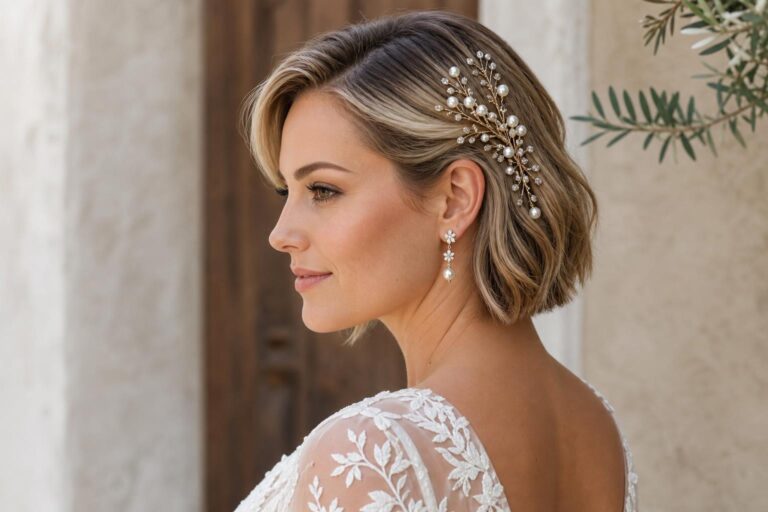
Short wedding hair often looks strongest when the styling is intentional rather than overworked. Sleek shapes, soft classic waves, and accessory-led looks tend to outperform styles that try to imitate the volume of long hair. A veil or headpiece can become especially important here because it adds bridal punctuation without fighting the haircut.
For medium hair
Medium hair is often the easiest length for crossover styling. It can become a low bun, a half-up romantic style, a braided look, or polished curls without excess weight. Brides with medium hair often have the broadest range of realistic options during trials, which is why this length benefits from a clear sense of overall wedding mood.
For long hair
Long hair showcases bridal styling dramatically, especially in Hollywood waves, fishtail braid ideas, and fuller updos. The main consideration is not lack of options but editing. More hair can mean more visual impact, but it can also create heaviness, overheating, or imbalance with the dress. Often the most elegant long-hair styles are the ones that control volume rather than displaying all of it at once.
For straight, wavy, and curly textures
Straight textures often excel in sleek styling and defined waves. Wavy textures move naturally between polished and relaxed looks. Curly textures can shine in updos, half-up shapes, and protective wedding hairstyles that let natural dimension remain visible. The strongest bridal result usually feels like an elevated version of the bride’s hair, not a disconnected replacement for it.
The final comparison in one view
If bridal hair had a central tension, it would be this: structure versus movement. Updos sit closest to structure. Hollywood waves and loose curls sit closest to movement. Half-up styles mediate between the two. Braids add texture and personality, while sleek looks refine and simplify. Once you understand which side of that spectrum feels most like you, the rest of the styling decisions become much easier.
The most convincing bridal hairstyle is rarely the trendiest or the most complicated. It is the one that fits the texture, supports the accessories, honors the venue, complements the neckline, and still feels right after many hours. That is what turns a beautiful hairstyle into a wedding hairstyle that truly belongs to the day.
FAQ
What wedding hairstyles are popular in 2025 and beyond?
The most consistently popular bridal directions include updos such as low buns and chignons, half-up, half-down styles, Hollywood waves, loose curls, and braided looks with soft texture. These styles remain popular because they adapt well to different dress styles, accessories, and hair textures rather than belonging to only one bridal aesthetic.
Should I wear my hair up or down for my wedding?
Choose an updo if you want stronger hold, easier veil placement, and a cleaner neckline, especially for warm weather or formal settings. Choose hair down if you prefer softness, movement, and a more visible hair statement. If you want both control and romance, half-up, half-down is often the most balanced option.
How do I know which bridal hairstyle is right for me?
Start with your hair type, texture, and length, then consider your venue, dress neckline, accessories, and how formal the wedding feels. The right style is the one that works with these elements together, not just the one that looks beautiful in a single inspiration image.
Are Hollywood waves better for certain hair types?
Hollywood waves are especially striking on hair that can hold a defined, glossy shape, including many straight and wavy textures. They can work on different lengths as well, but they usually require careful styling support and are best chosen by brides who want the hair itself to be a focal point.
What wedding hairstyles work best for short hair?
Short hair often looks strongest in sleek styles, controlled classic waves, or accessory-led bridal looks. Rather than trying to mimic long-hair volume, the most polished short wedding hairstyles usually emphasize shape, shine, and a clear styling direction.
Can curly hair wear protective wedding hairstyles without losing a bridal feel?
Yes. Protective wedding hairstyles can still look elegant, romantic, and highly polished, especially when they preserve the natural beauty and structure of Type 3 curls. Many brides find that protective styling offers both visual impact and better comfort over a long wedding day.
How important is a hair trial before the wedding?
A hair trial is very important because it shows how the hairstyle actually behaves with your texture, accessories, and dress direction. It can reveal whether a style slips, feels too heavy, competes with the neckline, or needs changes in product support, veil placement, or overall structure.
Do veils work better with some hairstyles than others?
Veils usually integrate most easily with updos and half-up styles because they provide a secure anchor point. They can also work with hair worn down, but that typically requires more planning so the veil does not flatten the shape or disturb the lengths when removed.
What is the best wedding hairstyle for an outdoor ceremony?
For outdoor weddings, styles that combine softness with security tend to perform best. Half-up, half-down hair, braids, textured low buns, and pinned looks usually handle wind, heat, and humidity more gracefully than fully loose hair while still feeling romantic and natural.
Do I need extensions for my wedding hairstyle?
Not always, but extensions can help if you want extra fullness, a larger updo shape, or more dramatic length in waves or braids. They are most useful when the goal is to support the silhouette of the hairstyle rather than simply add more hair.