Bridal Hairstyles for Long Hair That Feel Fresh and Romantic
Long hair has a particular presence on a wedding day. It catches candlelight at a ballroom reception, moves softly in a beach breeze, and transforms under a veil, a comb, or a line of delicate barrettes in a way that feels instantly bridal. That is why bridal hairstyles for long hair remain one of the most searched beauty decisions in the wedding world: long length offers freedom, romance, and a wide visual range, from polished updos to undone waves.
The aesthetic is less about choosing one “correct” style and more about building a cohesive bridal look. A sleek bun creates modern minimalism, loose waves lean softly romantic, and a braided half-up style can shift the mood toward boho or garden-party elegance. Across wedding season inspiration in the United States, from editorial portals such as The Knot and Bridal Guide to beauty-led guidance from L’Oréal Paris USA and visual galleries from Wedding Forward, the appeal is consistent: long hair acts as a canvas for shape, texture, volume, and accessories.
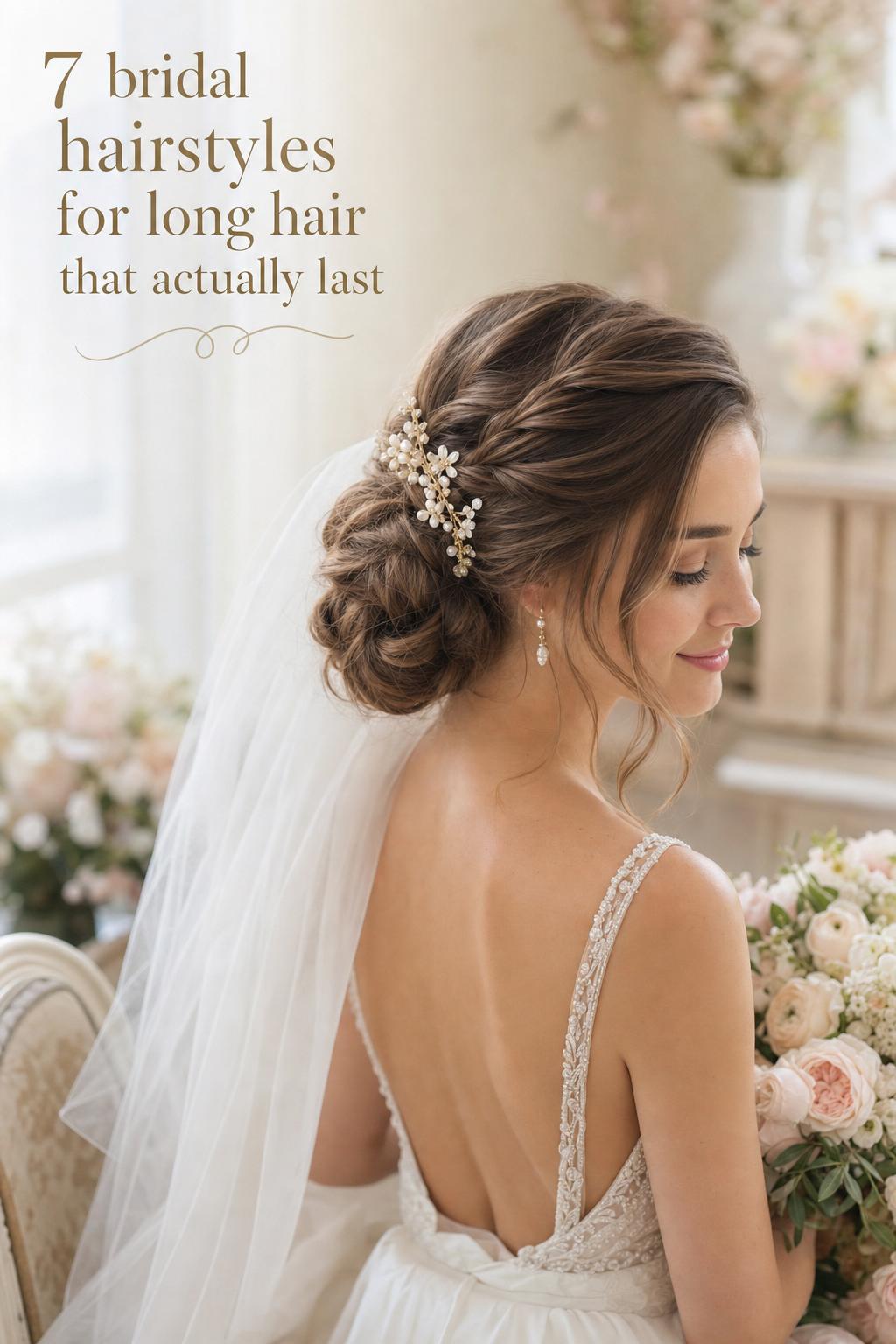
What makes these wedding hairstyles for long hair so enduring is their versatility. They can be styled for a formal evening ceremony, a relaxed outdoor celebration, or a fashion-forward bridal portrait session. The most successful look is rarely about trend alone. It is about how the hairstyle works with your texture, your dress neckline, your veil, and the realities of a long celebration that includes hugging, dancing, humidity, and hours in front of a camera.
The long-hair bridal mood: shape, movement, and finish
Before narrowing down specific bridal hair ideas, it helps to think in visual terms. Long hair can read soft and fluid, structured and sculptural, or textured and expressive. In bridal styling, these three qualities matter because they influence how your look feels in person and how it photographs. A softly waved style creates motion and ease. A classic updo delivers refinement and stay-power. A half-up silhouette balances the two, preserving the romance of length while keeping hair away from the face.
Your wedding look is only the beginning.
Keep your guest list, vendors, timeline, and every important detail together with Zarellea — so your day feels as considered as your style.
Finish matters just as much as silhouette. Smoothness gives a style an elegant, polished effect, while volume and texture make it feel lived-in and modern. This is where wedding day hair becomes more nuanced than a simple inspiration image. The same long hair can become a sleek chignon, a crown of loose waves, or a braid-forward statement depending on hold, preparation, and the accessories chosen to complete the look.
Understanding your long-hair canvas before the trial
Texture and density change the result
Long hair is not one category. Straight hair behaves differently from wavy hair, and curly texture responds differently to pins, volume, and finishing spray. Density matters too. Fine long hair may need extra texture support for a full updo, while dense or thick long hair may need better weight distribution to stay comfortable through a ceremony and reception. This is why a hairstyle that looks effortless in a gallery image may need adaptation in real life.
A practical bridal trial should focus on how your own length holds shape over time. Loose waves can look luminous at the start of the day but may soften quickly without the right prep. A bun may appear secure but feel too heavy if it is placed poorly for your density. A braided style can add beautiful structure to long hair, yet it needs thoughtful tension so it looks refined rather than overly tight.
Veil placement and dress neckline deserve equal attention
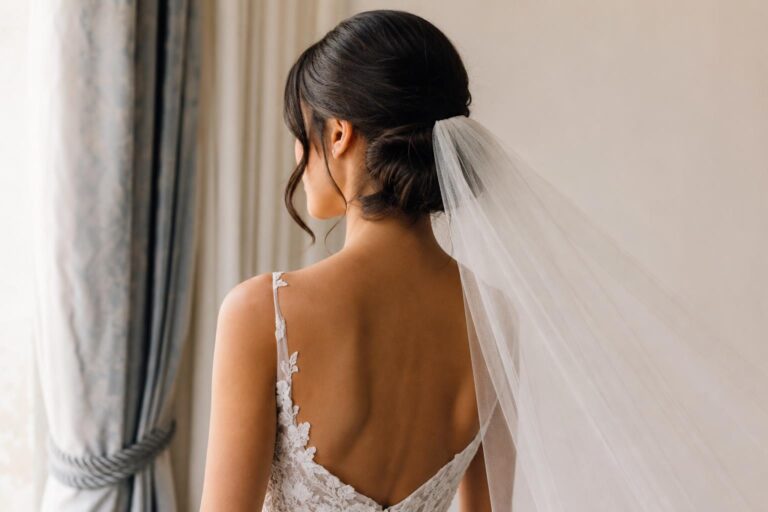
Among the most overlooked decisions in long hair wedding looks is how the hairstyle works with the gown. A high neckline often benefits from lifted hair or a half-up shape that opens the shoulders and collar area. A lower or softer neckline can support hair worn down in waves, especially when the overall bridal mood is romantic or relaxed. Veils also change the architecture of the style. A veil anchored above an updo creates a different effect than one tucked beneath it, and long hair needs enough support at the base to carry that added layer gracefully.
Accessories should not compete with these elements. A statement headband, pearl-inspired barrette, or floral comb works best when it has a clear role in the design. If the veil is the centerpiece, the hair should support it. If the accessory is the focal detail, the hairstyle should leave visual space around it. This balance is what makes a bridal look feel intentional rather than crowded.
Look: classic updos with ballroom polish
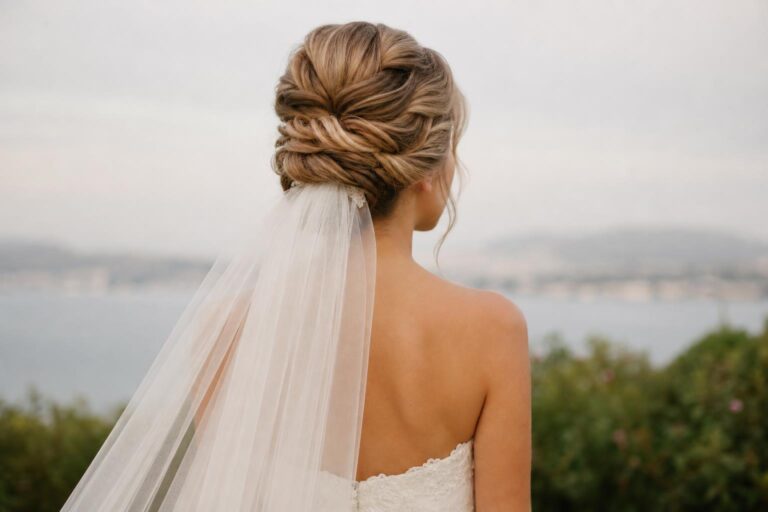
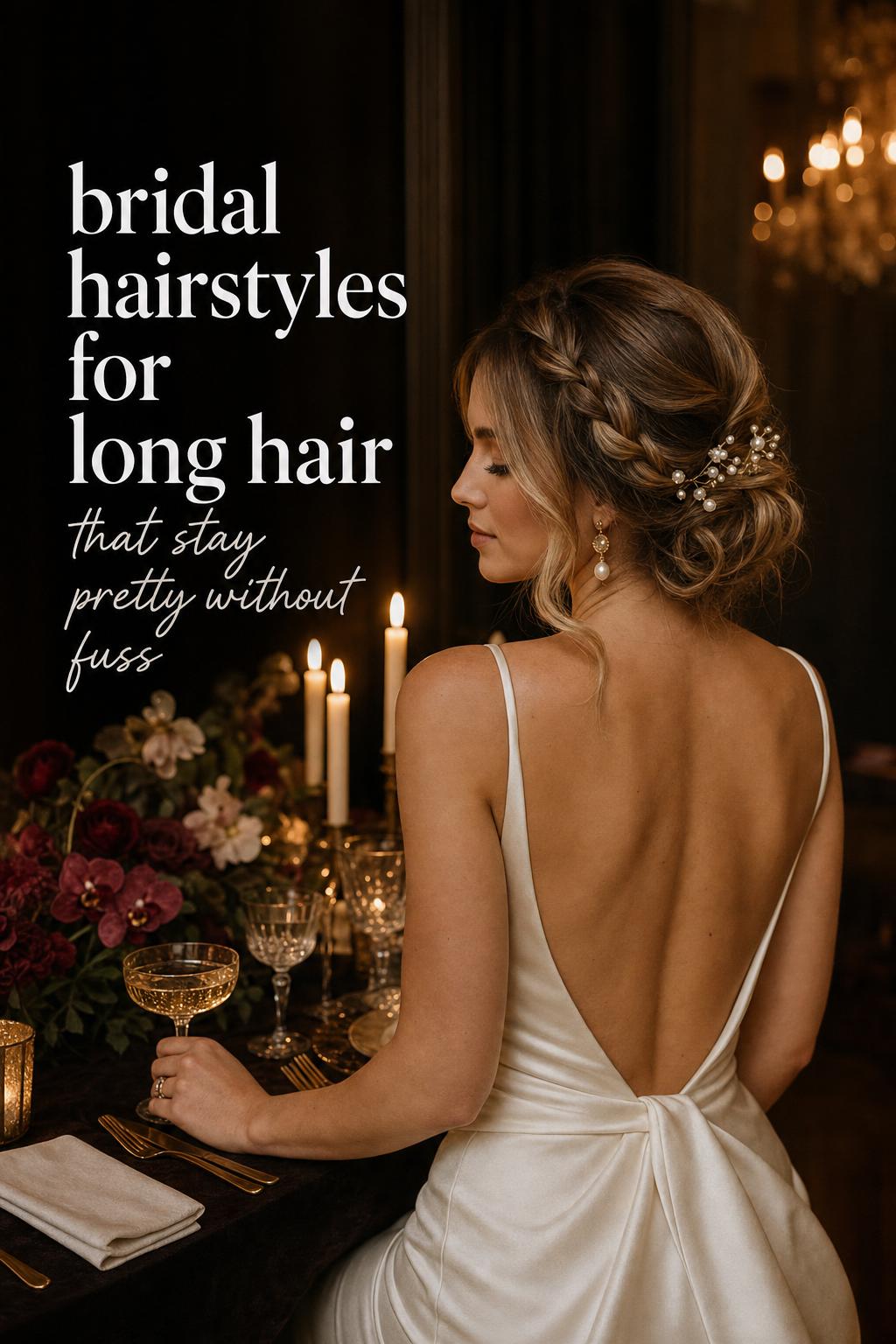
There is a reason the updo remains central to bridal hairstyles for long hair. It carries a sense of occasion that feels particularly at home in formal venues, evening ceremonies, and candlelit receptions. The silhouette is refined, the neckline stays visible, and the hair remains controlled through portraits, dinner, and dancing. For brides who want elegance without distraction, an updo offers one of the clearest visual statements.
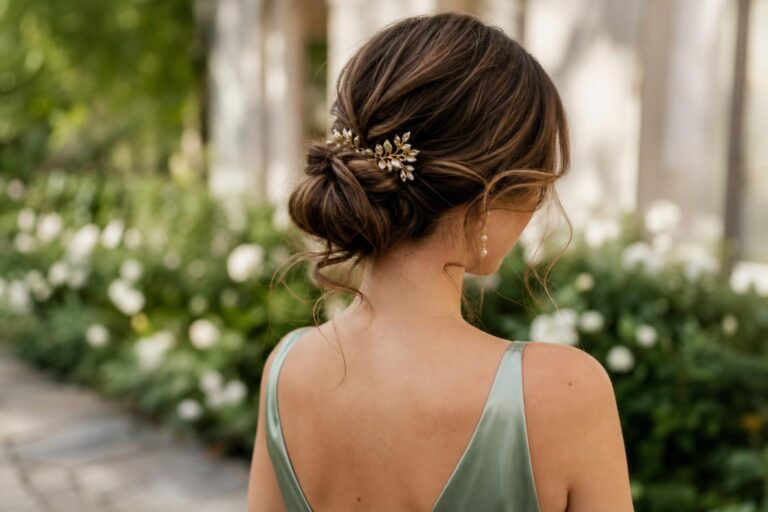
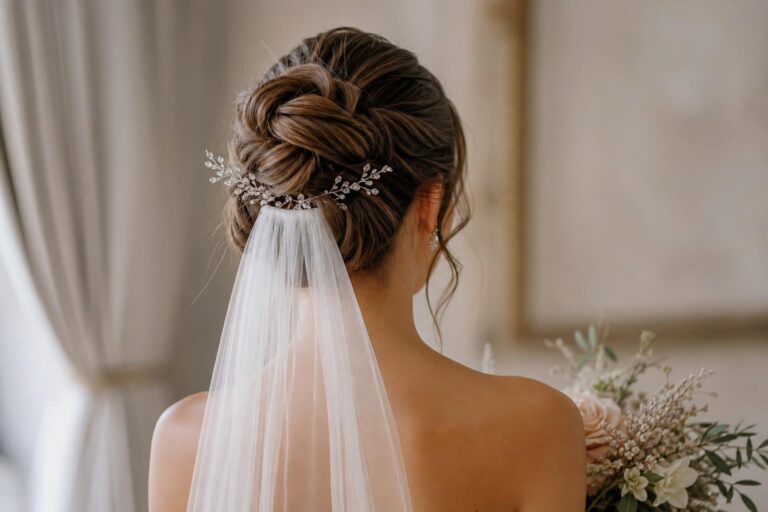
Within that polished family, the chignon and the elegant bun are especially enduring. A low chignon feels timeless and quietly luxurious, while a fuller bun can create more drama and volume. Long hair gives both styles depth; there is enough length to shape the form smoothly or to leave a few softened pieces for a gentler finish. The overall palette here is often less about color and more about sheen, contour, and detail: smooth strands, subtle fullness, and carefully placed pins or combs.
- Best mood: classic romance, black-tie elegance, modern formal bridal styling
- Key accessories: pins, barrettes, veils, understated combs
- Helpful products: mousse for structure, hairspray for hold, shine serum for the final finish
The strength of this look is longevity. It keeps hair secure, reduces movement against the gown, and tends to handle long event hours better than fully down styles. The trade-off is that it can feel more formal than some brides want for a beach ceremony or boho setting. If you love the sophistication of an updo but want softness, ask for a less rigid finish with texture at the crown or a few romantic bends around the face.
Look: loose waves for a soft, luminous ceremony
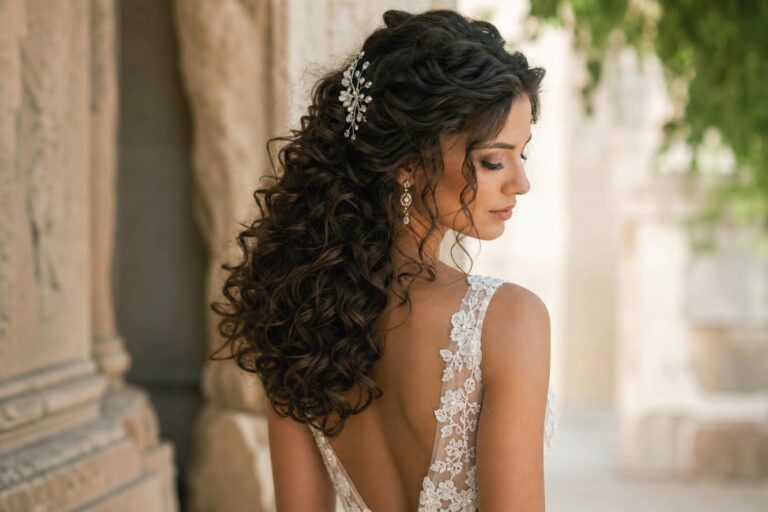
Loose waves remain one of the most beloved wedding hairstyles for long hair because they deliver immediate romance. They suit golden-hour portraits, garden weddings, coastal ceremonies, and any setting where movement is part of the atmosphere. This style lets long hair read as soft, touchable, and graceful, which is why it appears so often in bridal galleries and editorial features.
The silhouette is open and flowing, with long lengths falling over the shoulders or down the back in a way that feels light rather than overly styled. Accessories can shift the mood dramatically. A crown detail or headband gives it a more styled ceremony finish, while a discreet barrette or comb keeps the look minimal. The texture should feel deliberate: not everyday casual, but not too lacquered either. Smooth roots paired with airy lengths often create the most bridal result.
This is one of the most beautiful bridal hair ideas for brides who want to keep their length visible, but it does require realism. Fully down hair may be more vulnerable to humidity, wind, and gradual flattening over a long day. That does not make it the wrong choice; it simply means preparation matters. Product support such as mousse, finishing spray, and a flexible hold approach can help preserve shape without making the hair look stiff.
Style tip: when waves work best
Loose waves are often strongest when the wedding mood itself is relaxed, romantic, or nature-led. Think outdoor ceremonies, vineyard celebrations, or a reception where movement and softness feel more fitting than strict structure. They also pair well with dresses that benefit from gentle continuity rather than sharp contrast. If you plan to wear a heavy veil for most of the day, however, test how the waves sit underneath it during your trial.
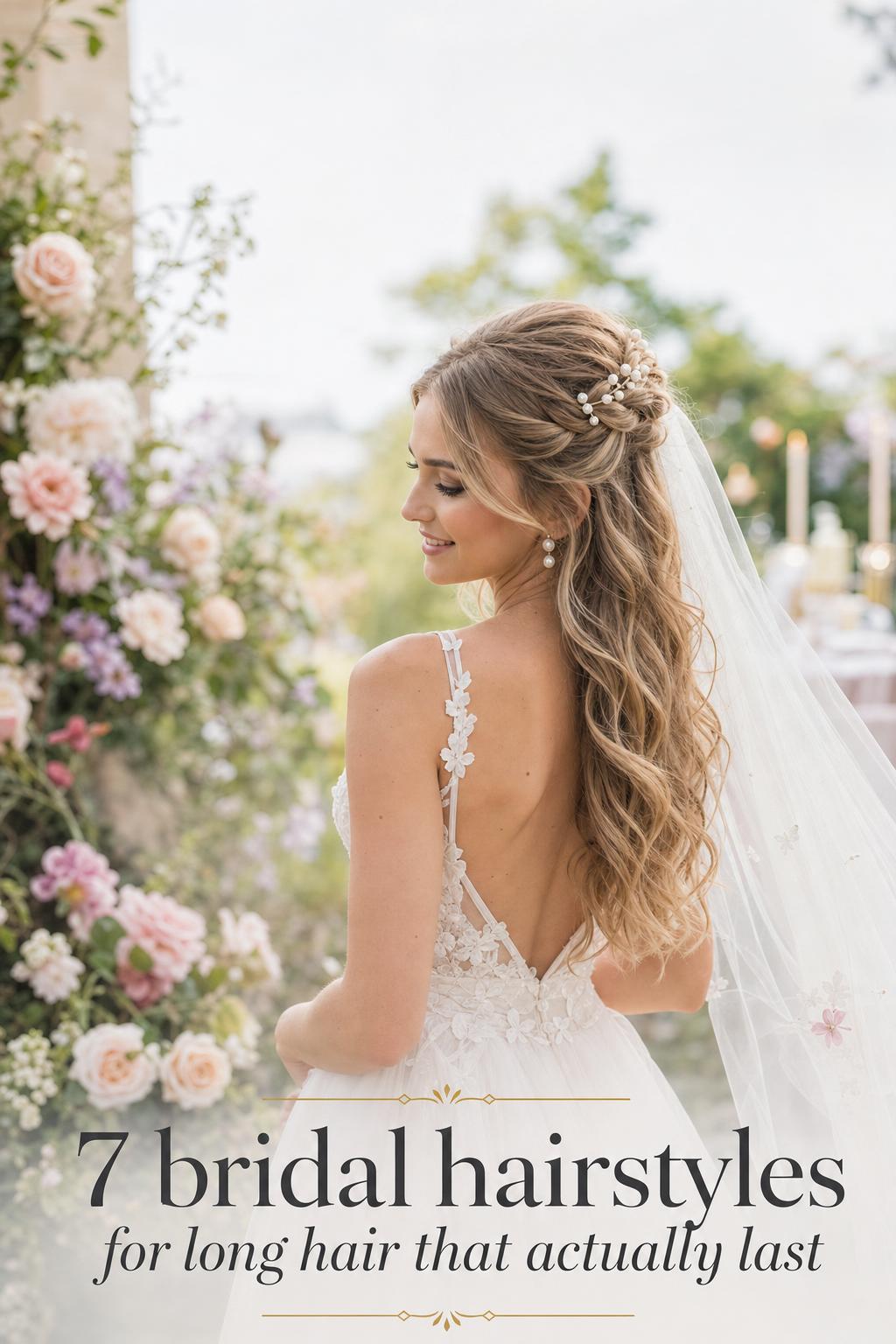
Look: half-up, half-down for balance and versatility
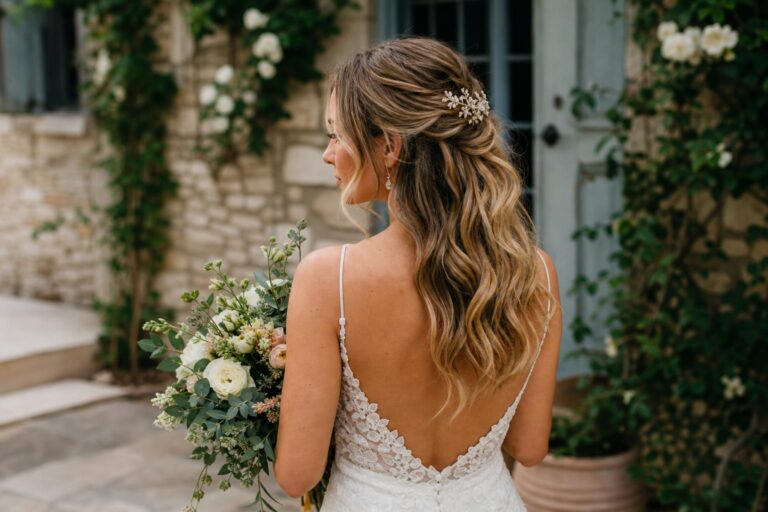
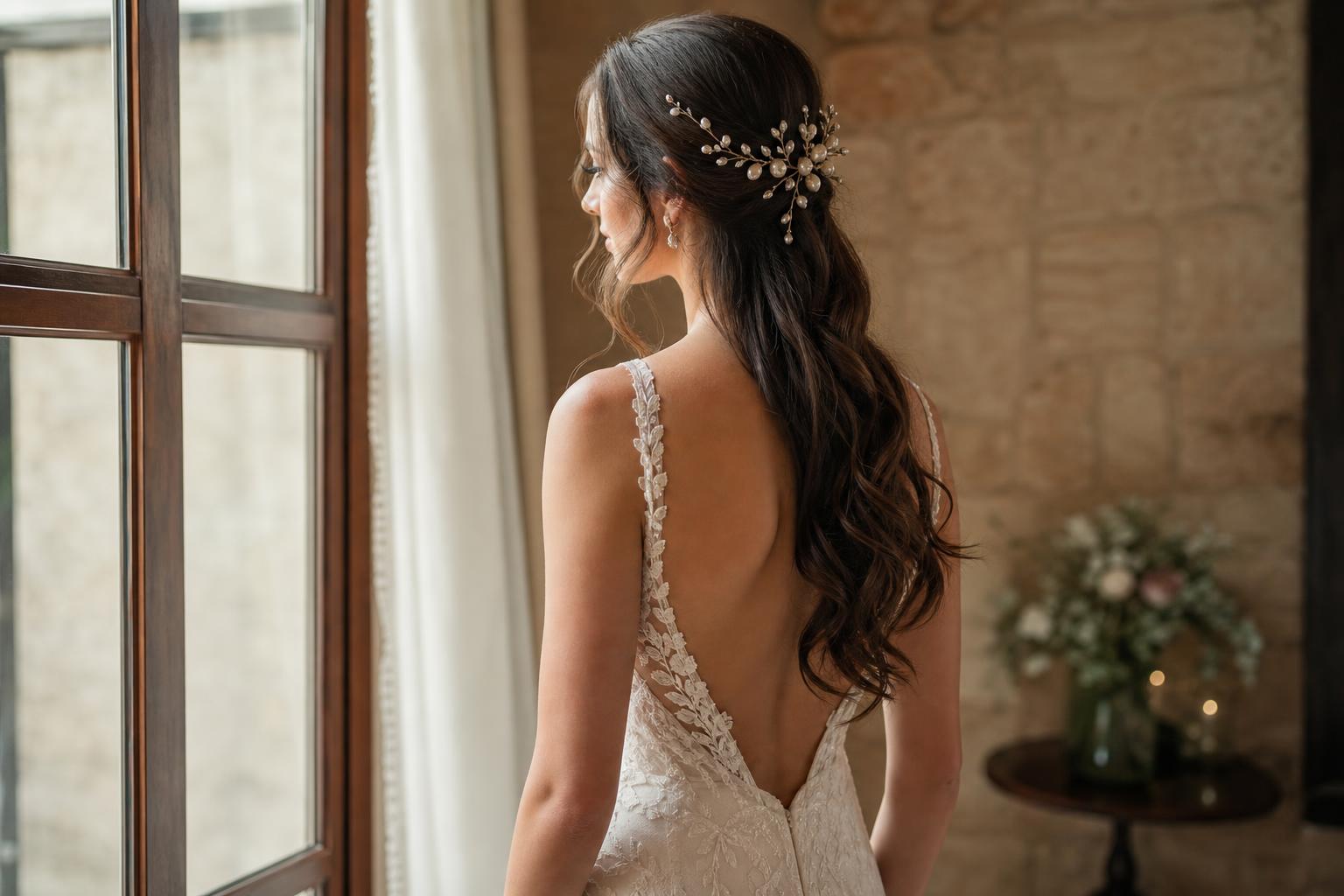
Half-up hairstyles are often the most versatile answer for long hair. They hold the face open for the ceremony, preserve visible length for photos, and create a balanced silhouette that feels neither too formal nor too casual. For many brides, this is the sweet spot between structure and softness, especially when they want movement but also want their style to last beyond the first hour.
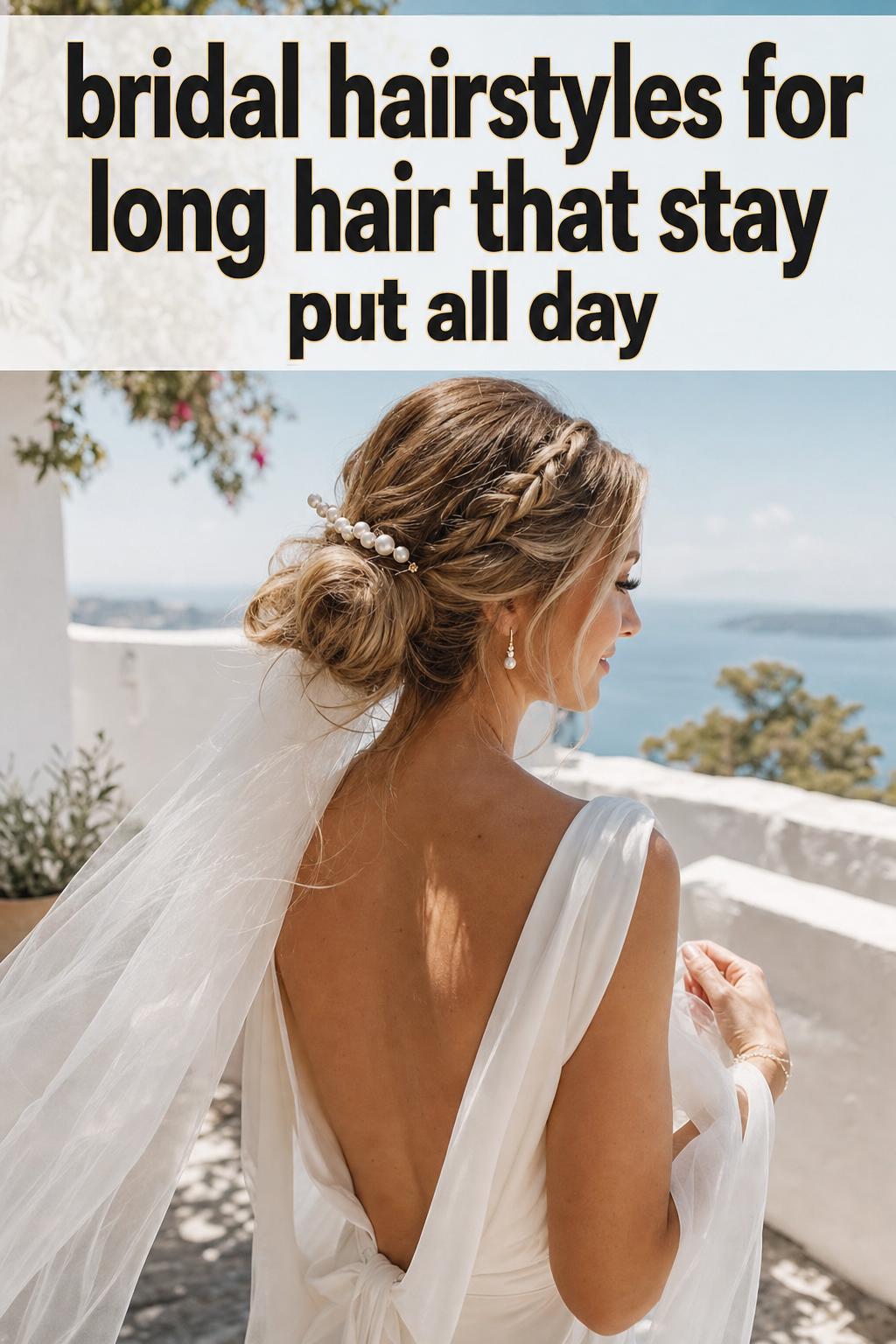
Visually, the half-up shape gives the crown and sides some architecture while allowing the lower lengths to remain loose in waves or natural texture. Braids can be woven into the upper section for added detail, or the style can stay cleaner and more minimal with gentle twist work and a polished barrette. Long hair is particularly well suited to this look because there is enough length to keep the lower portion expressive while still creating visual interest above.
This category also adapts beautifully across settings. A modern city wedding may call for a sleeker half-up profile with controlled shine, while a countryside or boho celebration can support a softer, more textured version. That range is part of the style’s appeal. It is easy to personalize without losing bridal refinement.
- Works well for brides who want both hold and movement
- Adapts easily to braids, waves, and accessories
- Often photographs beautifully from both the front and back
Look: braided romance with boho energy
Braids bring a different kind of texture to bridal hairstyles for long hair. They create pattern, shape, and an artisanal feeling that suits boho styling, garden ceremonies, and brides who want their hair to feel expressive rather than overly polished. In visual terms, braids can soften a look or make it more striking depending on scale and placement.
French braids, Dutch braids, and fishtail details all offer different moods. A braid woven into a half-up style feels romantic and wearable. A fuller braid-forward design becomes more of a statement, particularly on long, dense hair where the plait can show dimension clearly. Floral accents, pins, and bands can enhance the look, though restraint is helpful. When too many decorative elements are added, the braid’s structure gets lost.
This look is especially compelling for brides who love the softness of waves but need more shape and support. Braids can help anchor the hairstyle, improve visual interest from every angle, and tie the hair more naturally into bohemian or outdoor wedding aesthetics. The key is polish. Even when the mood is relaxed, the finish should still feel bridal and intentional.
How to recreate the mood without overcomplicating it
If your inspiration leans braid-heavy, simplify the design by choosing one focal braid instead of several competing details. Let that braid frame the crown, connect into a half-up shape, or accent a bun. This keeps the hairstyle elegant and easier to maintain over a long celebration while preserving the boho or romantic identity you want.
Look: modern minimal bridal hair with sleek structure
Not every long-hair bridal look needs softness or volume to feel special. Modern bridal styling often leans toward cleaner lines, reduced ornamentation, and a more deliberate sense of polish. In that setting, a smooth bun, a sleek half-up style, or controlled long lengths with refined texture can feel incredibly current. This mood is ideal for contemporary venues, city celebrations, and brides whose gown already carries visual drama.
The appeal of minimal styling lies in precision. Shine becomes more noticeable. Placement matters more. A single comb, headband, or barrette stands out because the hair around it is restrained. Product choice also becomes more visible in the result, which is why smoothing serums, hold sprays, and finishing aids are so important in this family of looks. Brand-led beauty guidance from L’Oréal Paris USA often highlights this connection between technique and finish, especially when long hair needs both control and lightness.
This aesthetic can be deceptively difficult. If the style is too flat, it may feel severe. If it is too loose, it loses the clean effect that defines it. The most successful version keeps the silhouette refined while preserving some softness around the face or within the shape itself. For brides who love fashion-forward simplicity, this balance is what makes the look feel elevated rather than strict.
Accessories that complete the hairstyle rather than compete with it
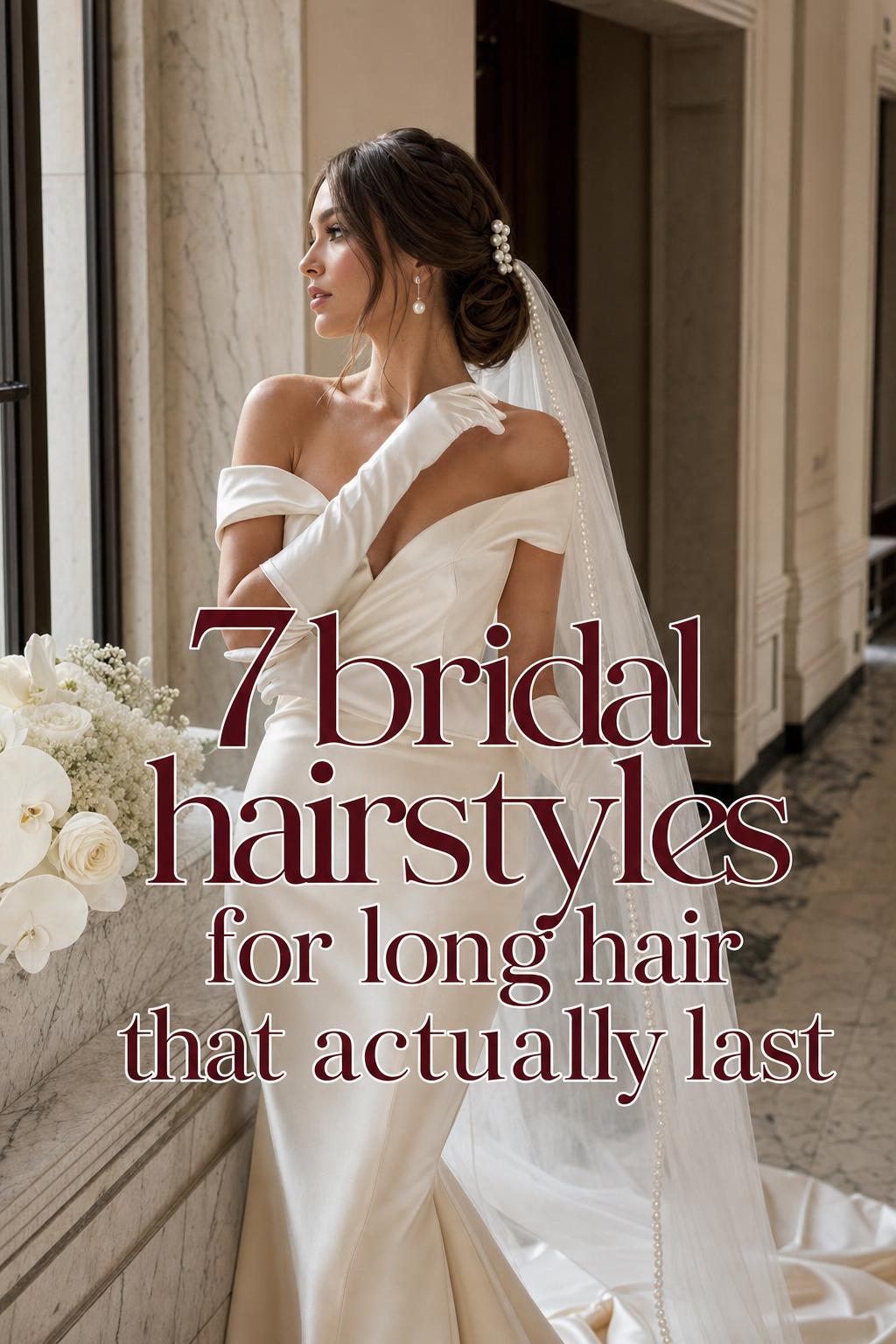
Hair accessories sit at the center of many long-hair bridal looks, but they work best when they clarify the style instead of crowding it. Barrettes, headbands, hairpins, combs, crowns, and floral accents all appear across bridal inspiration, yet each one creates a different visual story. A slim barrette adds polish. A crown or headband introduces ceremony and presence. Floral details shift the mood toward boho or outdoor romance. Veils, of course, remain a category of their own, adding movement and tradition to nearly any hairstyle family.
Long hair can support accessories beautifully because there is enough length and volume to create a backdrop for them. Still, proportion matters. An ornate headpiece paired with heavily braided hair and a dramatic veil may feel overworked. By contrast, a simple low bun with one elegant comb often looks complete immediately. Brides choosing half-up styles or waves should pay particular attention to placement. The accessory should help anchor the shape, not just sit on top of it decoratively.
- Use pins when you want support without visible decoration
- Choose barrettes or headbands when the accessory should read as part of the design
- Let the veil guide the accessory scale, especially if both will be worn during the ceremony
Season and setting also influence accessory decisions. Floral accents may feel especially natural for spring and summer wedding season styling, while more polished metallic or pearl-inspired details can suit a formal indoor celebration. What matters most is that the accessory belongs to the same visual language as the dress and hairstyle.
A bridal gallery mindset: choosing by venue and atmosphere
The most useful way to narrow long hair wedding looks is often to imagine the wedding scene itself. Hairstyle selection becomes easier when you think about environment, dress mood, and movement rather than trends in isolation. A style that looks perfect in a studio image may feel less convincing once you factor in wind, heat, or a neckline that deserves to be seen.
Look: classic romance for a formal reception
In a ballroom or similarly formal setting, classic updos and elegant buns often feel most at home. They complement candlelight, tailored gowns, and evening structure. The silhouette reads polished from every angle, and the style is less likely to shift during a long, layered event. If your dress has intricate shoulder or back details, this category is especially compelling because it lets the gown remain visible.
Look: boho luxe for an outdoor celebration
Garden and countryside weddings often support braid-led half-up styles, soft waves, and floral or banded accents. The mood is romantic, textured, and slightly freer. Long hair has room to move here, but some upper structure helps keep the style intact through changing weather and open-air photographs. This is where braids become particularly useful, offering both aesthetic detail and practical support.
Look: modern minimal for a city or contemporary venue
A sleek bun or controlled half-up style pairs naturally with modern architecture, cleaner dress lines, and a more edited bridal wardrobe. The mood is less about softness and more about confidence, shape, and precision. Hair accessories should stay restrained here, allowing the finish of the hair and the cut of the gown to do most of the talking.
Practical prep: what helps long hair last through the day
Long hair is beautiful on a wedding day, but it also carries more weight, more movement, and often more vulnerability to slippage than shorter lengths. Practical prep is what turns a lovely idea into a wearable reality. This includes not only choosing a style but also choosing the right support system: texture at the roots, hold through the mid-lengths, and finishing products that preserve shape without making the result look rigid.
Beauty-led sources such as L’Oréal Paris USA emphasize this relationship between style and product for good reason. Mousse can support lift and internal structure. Hairspray helps preserve the silhouette. Smoothing serums refine shine and surface control. For brides working with stylists or salons in the United States, these basics are often less glamorous than the inspiration image, but they are what make the finished look durable across hours of ceremony, portraits, dining, and dancing.
Tips for long-wear bridal hair
- Trial the exact silhouette you want rather than a vague version of it
- Test veil placement during the hair trial, not after the style is finalized
- Consider how the hairstyle will feel after several hours, not only how it looks at first
- Use products according to the finish you want: hold for structure, serum for polish, texture support for grip
- Choose a style with some built-in support if your venue is humid, windy, or especially warm
One practical insight brides often appreciate after a trial is comfort. A hairstyle can be visually beautiful yet tiring if it places too much tension in one area or if the volume is too heavy. Long hair should feel secure, not burdensome. That is a worthwhile test before the wedding day itself.
Common styling missteps with long hair bridal looks
Many bridal hair disappointments come from mismatch rather than poor styling. The hairstyle may be beautiful on its own but not suited to the dress, the venue, or the bride’s natural texture. Long hair makes these mismatches more visible because there is more length, more shape, and more opportunity for the overall look to feel unbalanced.
One common issue is choosing a fully down style when the event conditions call for more control. Another is adding too many accessories at once, which can make the hairstyle feel busy. A third is ignoring how the neckline changes the visual proportions of the entire bridal look. Even a style as flexible as half-up hair can feel wrong if the crown is too bulky for the gown or too flat for the intended mood.
A more thoughtful approach is to edit. Start with the main shape: updo, half-up, waves, or braid-led styling. Then decide whether the finish should be smooth, textured, or airy. Only after that should accessories and veils enter the conversation. This order keeps the bridal look cohesive and prevents decorative elements from driving the hairstyle without enough structural logic.
Editorial inspiration from bridal and beauty voices
Across the bridal media landscape, a few patterns emerge clearly. Bridal Guide and The Knot consistently present long hair as a flexible canvas for updos, half-up styles, waves, braids, and accessories. Wedding Forward emphasizes broad inspiration with boho braids, classic updos, soft waves, and practical styling cues. L’Oréal Paris USA brings a beauty-magazine perspective, connecting loose waves, soft updos, braids, and ceremony accessories to product support and finish.
That range of perspectives is useful because it reflects how brides actually choose. Some start with a visual mood. Others start with dress details. Some want a real-wedding feel, while others prefer a fashion-editorial finish. Byline voices such as Lauren Whalley and Reece Andavolgyi contribute to that editorial framing, but the core takeaway remains the same: the best bridal hairstyles for long hair combine inspiration with practical compatibility.
Choosing between updos, half-up styles, waves, and braids
If you are torn between categories, it helps to think in terms of priorities rather than trends. Updos usually offer the strongest hold and the clearest neckline visibility. Half-up styles offer balance and are often easier to personalize. Loose waves preserve the full beauty of long hair but may need more maintenance support. Braids add detail and structure, particularly for boho or garden aesthetics, yet should still feel polished enough for the ceremony.
The right answer is often the style that solves the most needs at once. A bride who wants movement, some hold, and room for an accessory may land on a braided half-up style. A bride planning a formal evening celebration with a dramatic gown may prefer a smooth bun. A softer outdoor wedding might invite loose waves with a crown detail. Once you frame the decision this way, the hairstyle becomes part of the whole wedding wardrobe rather than an isolated beauty choice.
Final styling note: let the hair support the bridal identity
The most memorable long-hair bridal looks do not overwhelm the bride wearing them. They reinforce her style identity, the atmosphere of the wedding, and the details of the gown with clarity. Whether you are drawn to an elegant chignon, soft waves, a braid-threaded half-up look, or a sleek minimal bun, the goal is not simply to wear one of the many bridal hairstyles for long hair. It is to choose the version that feels visually coherent, comfortable over time, and unmistakably yours.
FAQ
How do I choose the best bridal hairstyle for long hair?
Start with the overall bridal mood, then narrow by dress neckline, veil plans, and how much hold you need. Updos usually suit formal settings and visible necklines, half-up styles balance softness with structure, waves highlight length and romance, and braids add texture and detail. The best choice is the one that fits your hair texture, venue conditions, and comfort over a full wedding day.
Are updos better than wearing long hair down for a wedding?
Neither option is automatically better; they solve different needs. Updos generally offer more security, longevity, and neckline visibility, which can be especially helpful for formal receptions or long event schedules. Wearing hair down in loose waves creates a softer, more romantic effect and keeps the full length visible, but it may require more preparation and can be more affected by humidity, wind, or movement.
Do half-up wedding hairstyles work well for long hair?
Yes, half-up styles are often one of the most versatile choices for long hair. They keep hair away from the face while preserving length and movement, and they can be adapted with braids, waves, or accessories. This makes them especially useful for brides who want a look that feels romantic but still has enough structure to hold through the ceremony and reception.
What accessories pair best with bridal hairstyles for long hair?
Barrettes, headbands, combs, pins, crowns, floral accents, and veils all work well, but the best option depends on the hairstyle’s shape and the role the accessory should play. A simple bun can carry a more visible comb or veil beautifully, while waves or half-up styles often benefit from lighter accessories that anchor the look without overpowering the hair’s movement.
How can I make long hair stay in place all day on my wedding day?
Long-lasting bridal hair usually comes down to thoughtful preparation and the right products. Mousse can help with internal structure, hairspray can support hold, and smoothing serums can refine shine and control. It is also important to choose a style that suits the weather and your hair type, and to test comfort, veil placement, and durability during your trial rather than waiting until the wedding day.
Are braids a good choice for long hair wedding looks?
Braids are a strong option for long hair because they add texture, shape, and support. They work especially well for boho, outdoor, or romantic bridal aesthetics and can be incorporated into half-up styles, updos, or more statement-led looks. The key is to keep the braid polished enough to feel bridal rather than too casual or overly busy.
How far in advance should I trial my bridal hairstyle?
A trial should happen early enough for adjustments but close enough to reflect your real wedding plans, especially if your dress, veil, or accessory choices are already decided. The most useful trial is not only about whether the hairstyle looks good at first; it should also help you assess how the shape, comfort, and finish hold over time on your specific hair texture and density.
Will humidity ruin loose waves or an updo?
Humidity can affect both, but it tends to show differently. Loose waves may soften, expand, or lose definition, while an updo may develop surface frizz or slight movement if it is not prepared properly. This does not mean you need to avoid your preferred style; it simply means product support, texture prep, and a weather-aware approach become especially important.
What is the most versatile wedding hairstyle for long hair?
For many brides, the half-up style is the most versatile because it combines visible length with practical structure. It works across formal, romantic, and boho aesthetics, adapts well to braids and accessories, and often complements a wide range of dress necklines. It is a strong middle ground when you want both softness and reliability.