Wedding Hairstyles With Veil That Feel Soft and Structured
A veil changes the language of bridal hair. The same bun can read regal, modern, or softly romantic depending on whether the veil is placed at the crown, tucked beneath a knot, or paired with a blusher in airy tulle. That is why wedding hairstyles with veil are so often discussed together: neither choice is fully finished until it is considered alongside the other.
Brides usually compare classic updos with softer half-up styles, or polished chignons with loose waves, because these approaches create very different silhouettes once a veil enters the picture. The right pairing affects not only the mood of the look, but also comfort through the ceremony, movement in portraits, and how the hairstyle transitions into the reception. What follows is a detailed style breakdown of the most important veil-and-hair combinations, with clear comparisons, practical placement guidance, and nuanced advice for different lengths, textures, dress necklines, and wedding settings.
The two main bridal directions: structured elegance and soft movement
Most veil-friendly bridal hairstyles fall into two broad style families. The first is structured elegance: low buns, ballet buns, twisted chignons, and other anchored updos that give the veil a clean base. The second is soft movement: half-up styles, brushed-out curls, loose waves, and braided looks that allow more texture and drape around the shoulders. Both can be beautiful, but they create very different visual effects in photographs and in motion.
These families are often confused because they can share the same accessories, the same veil lengths, and even similar face-framing details. A bride may look at a polished New York City editorial image in Vogue, then save a more undone half-up style from The Knot or All Things Hair, without realizing that each hairstyle supports the veil in a different way. Understanding that distinction makes the choice feel much more intentional.
Your wedding look is only the beginning.
Keep your guest list, vendors, timeline, and every important detail together with Zarellea — so your day feels as considered as your style.
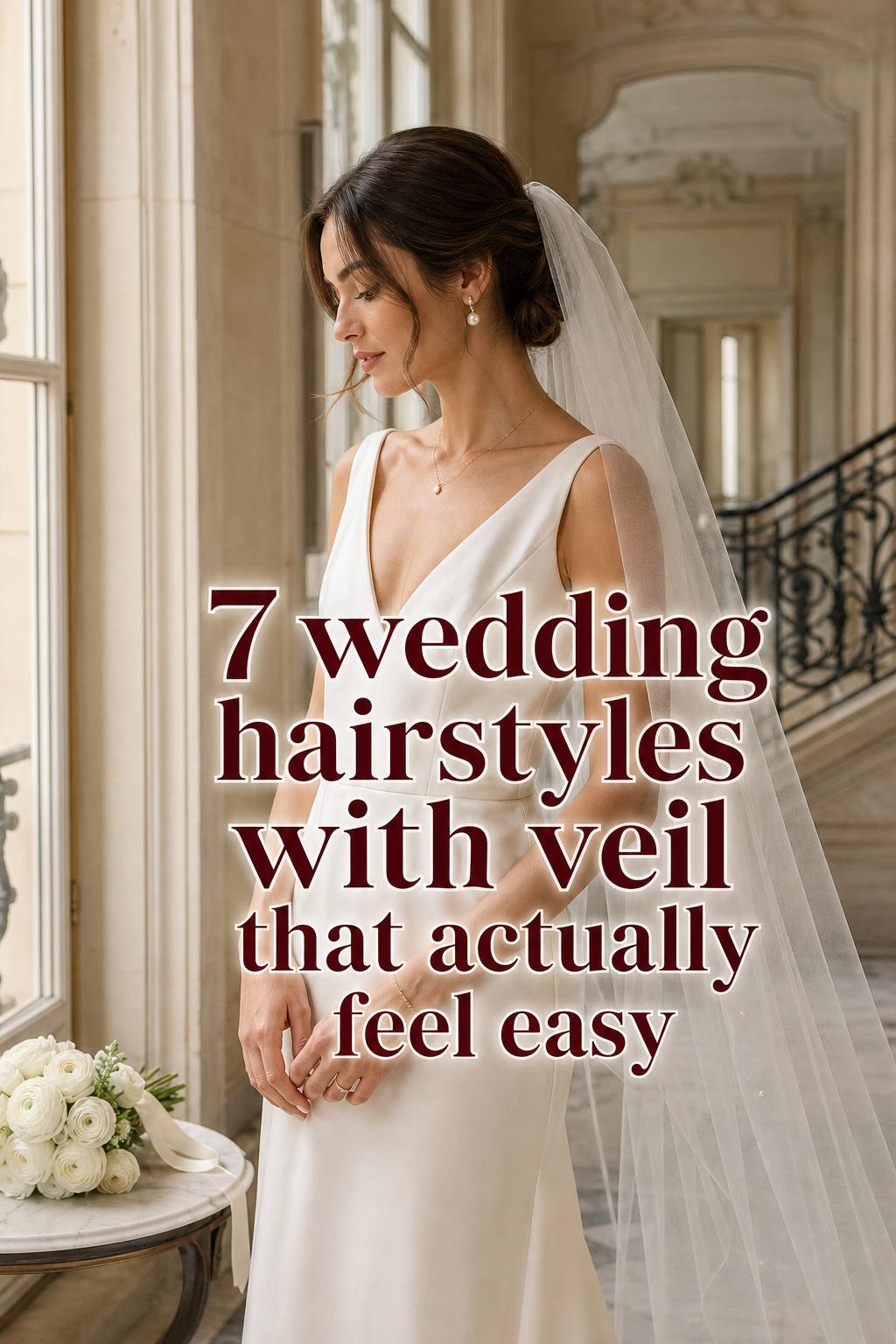
Style overview: classic and structured
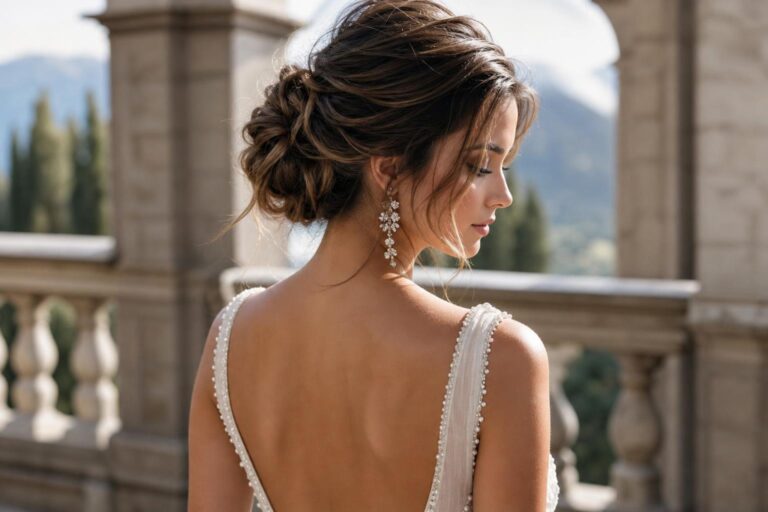
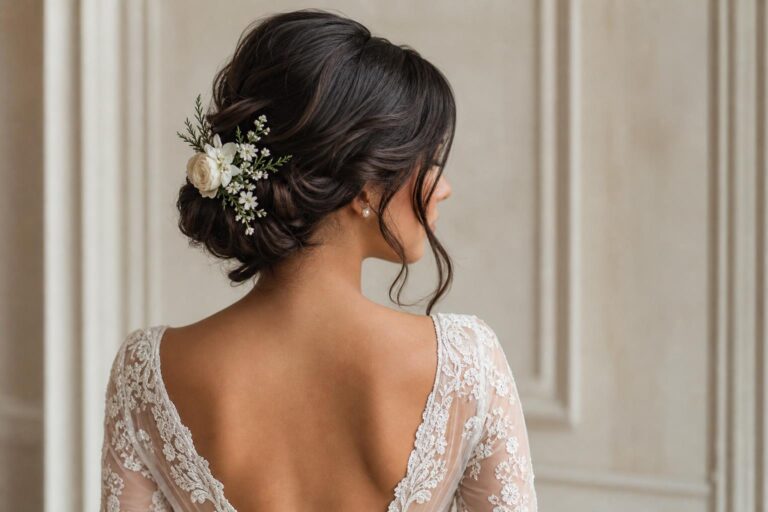
This group includes the low tight bun with a center part, the sock bun, the twisted chignon, the layered chignon, the braided bun, and the ballet bun. The defining characteristic is control. Hair is shaped into a clear form, usually close to the head or nape, giving the veil comb or pins an obvious anchor point. The mood tends to feel timeless, refined, and especially effective for formal ceremonies, cathedral veils, and dresses with strong lines.
Style overview: modern, bohemian, and softly textured
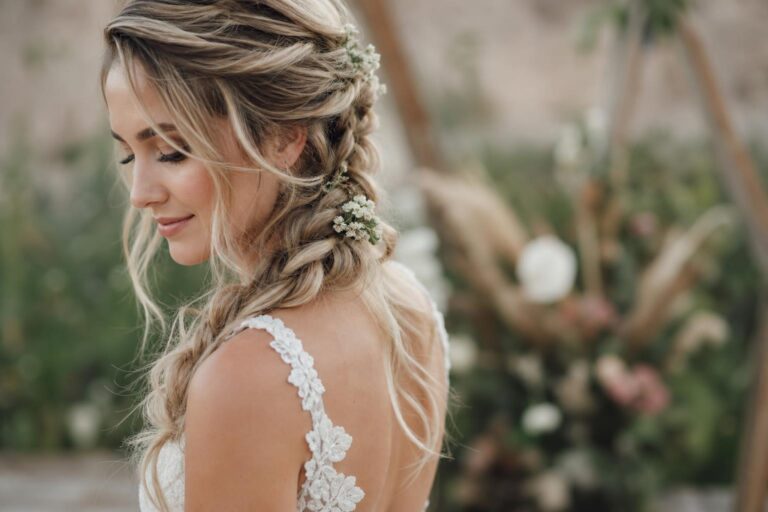
This group includes half-up half-down styles, braids down the back, down styles with brushed-out curls, loose updos with natural curls, and softer ponytail variations. Here the visual priority is movement. Hair frames the face more gently, texture remains visible, and the veil often feels integrated rather than sharply defined. The mood can lean modern, romantic, or bohemian depending on whether the hair is glossy and minimal or airy and intentionally undone.
Before the hairstyle: understanding veil length, material, and visual weight
A useful comparison begins with the veil itself. Brides tend to focus first on the hairstyle, but the veil’s length and material change how any style reads. A lighter tulle veil creates softness and movement, while lace detail introduces visual texture near the hair and shoulders. Illusion-style veiling feels airy and delicate, which can suit both a streamlined bun and a more relaxed half-up arrangement.
Length matters just as much. Blusher, elbow, fingertip, chapel, and cathedral veils do not simply vary in drama; they place different demands on the hairstyle. Longer veils carry more visual presence, so they often sit especially well with a stronger hair shape underneath. Shorter or lighter veils can disappear into loose waves unless placement is considered carefully. In practical terms, veil length and hairstyle silhouette should feel balanced rather than competitive.
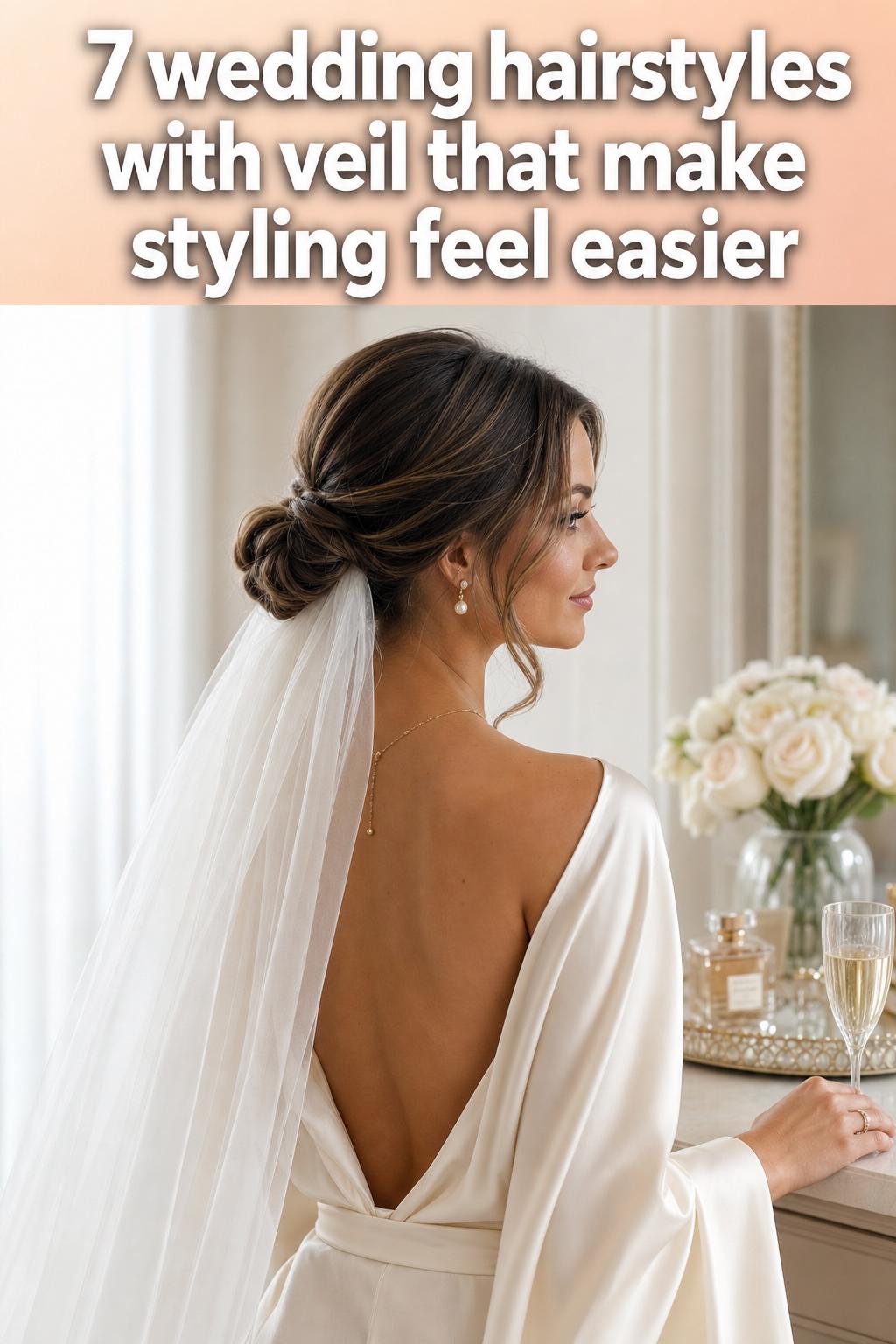
How classic styles respond to veil length
Classic updos generally handle a wider range of veil lengths because their structure gives the veil a natural home. A low bun beneath a fingertip or cathedral veil keeps the back view composed and uninterrupted. A chignon can support a chapel-length veil without the hair getting lost beneath fabric. This is one reason classic veil pairings remain so enduring in bridal editorials from brands and publications such as Pronovias, Wedding Forward, and Vogue.
How softer styles respond to veil length
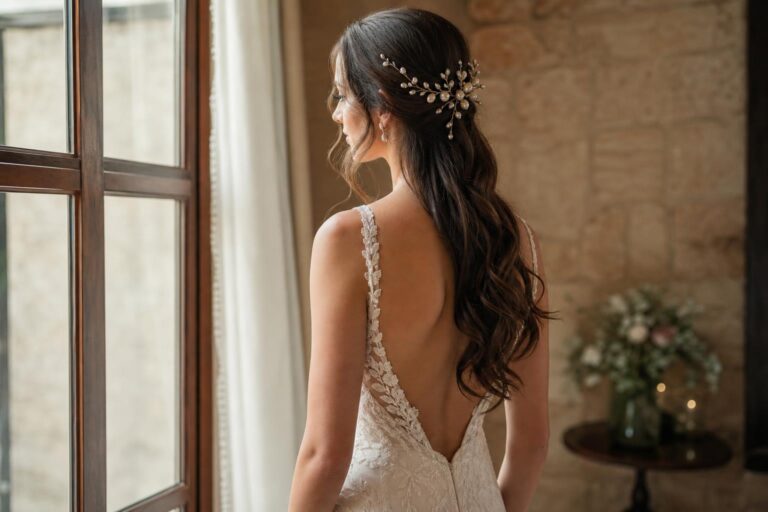
Modern, textural styles can also work beautifully, but they ask for more precision. Loose waves paired with a heavier veil may need a crown placement or a discreet anchor point so the veil does not flatten the hair. A half-up shape supports a fingertip or elbow veil especially well because the upper section creates definition while the lower lengths preserve softness. Braids can bridge both worlds by adding secure structure within an otherwise relaxed style.
Classic bridal hair versus modern bridal hair with a veil
The clearest difference between classic and modern wedding hairstyles with veil is silhouette. Classic styles create a contained shape, often at the nape or mid-back of the head, so the veil appears deliberate and architectural. Modern styles allow the hair to extend into the visual story, with curls, tendrils, or braids visible around the veil. Neither is inherently better; the choice depends on whether a bride wants the veil to frame the hairstyle or blend into it.
Formality also shifts. A low tight bun with a center part feels composed and ceremonial, the kind of hairstyle that suits an evening reception in a ballroom or a stately city wedding. By contrast, brushed-out curls under a light veil feel more relaxed and atmospheric, especially at golden hour in a vineyard, on a coastal lawn, or at a destination celebration where movement and softness are part of the mood.
- Classic styles prioritize shape, polish, and secure veil placement.
- Modern styles prioritize texture, softness, and a more blended finish.
- Classic pairings often suit dramatic veil lengths and formal gowns.
- Modern pairings often suit lighter fabrics, relaxed venues, and visible hair movement.
Where they overlap
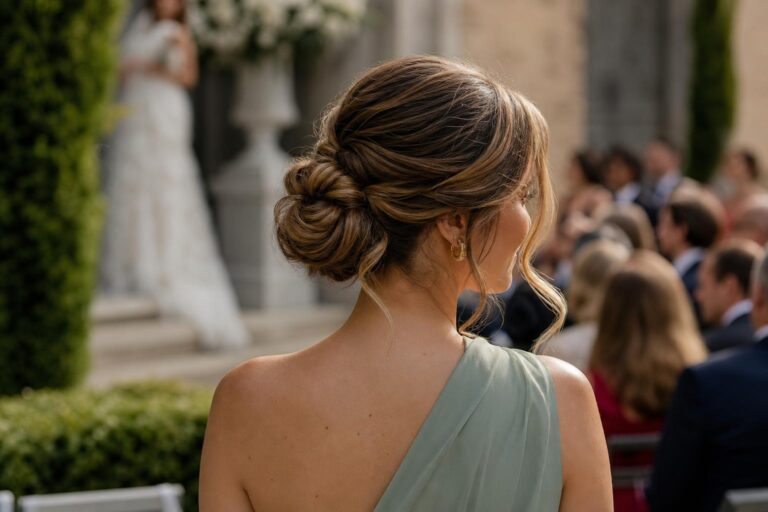
The overlap is where many brides find their ideal look. A chignon with face-framing tendrils softens a traditional base without losing structure. A loose updo with natural curls preserves texture while still giving the veil a secure anchor. This middle ground is often more useful than choosing between “timeless” and “trendy,” especially when a bride wants ceremony polish and reception ease in the same hairstyle.
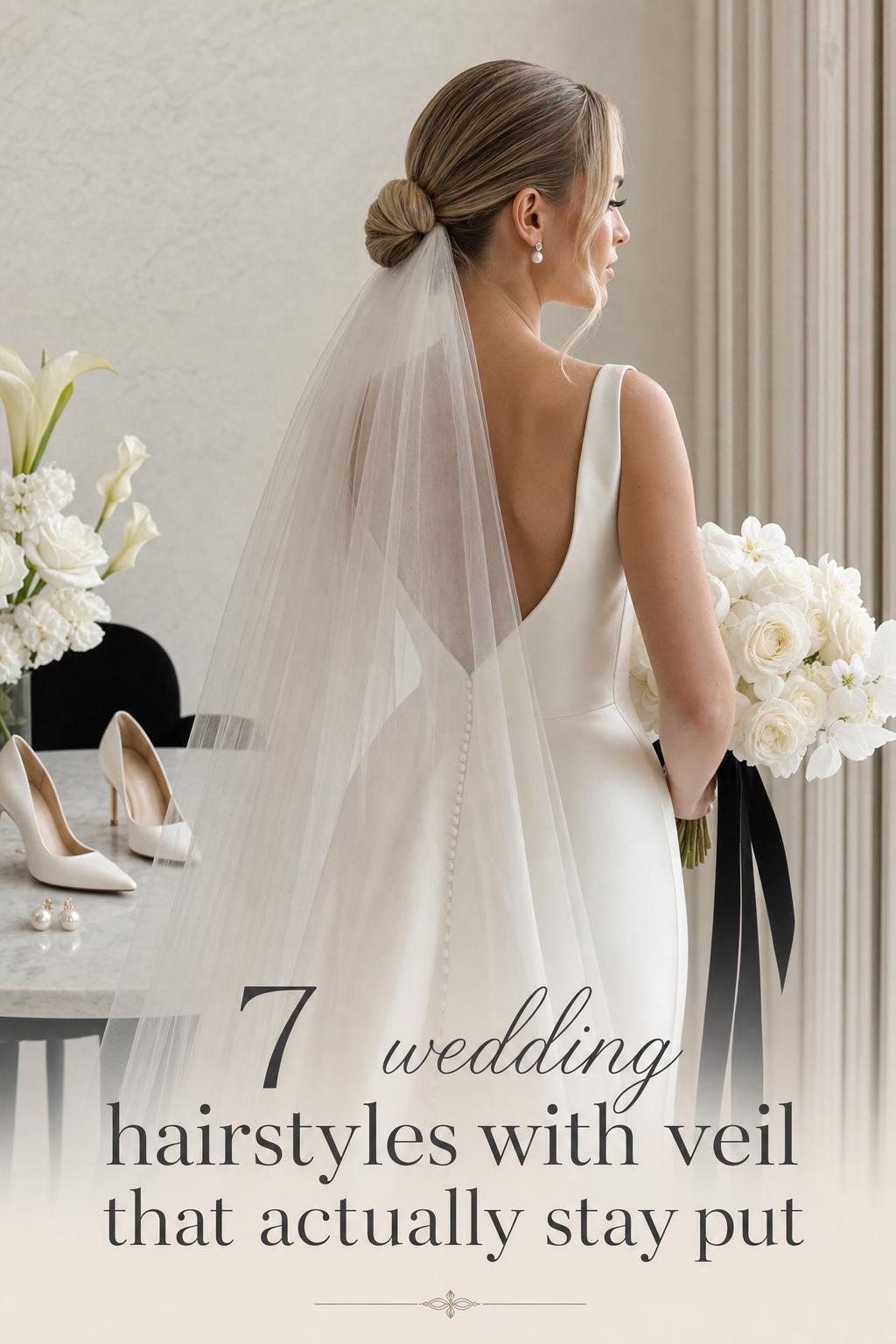
The classic family: low buns, chignons, and ballet-inspired shapes
Classic bridal hair remains one of the most dependable choices for veil wear because the hairstyle and accessory are working toward the same visual goal: clarity. The back profile looks composed, the veil falls cleanly, and the overall effect tends to feel elegant in any setting from Florida sunshine to a Montecito estate ceremony.
Low bun with veil
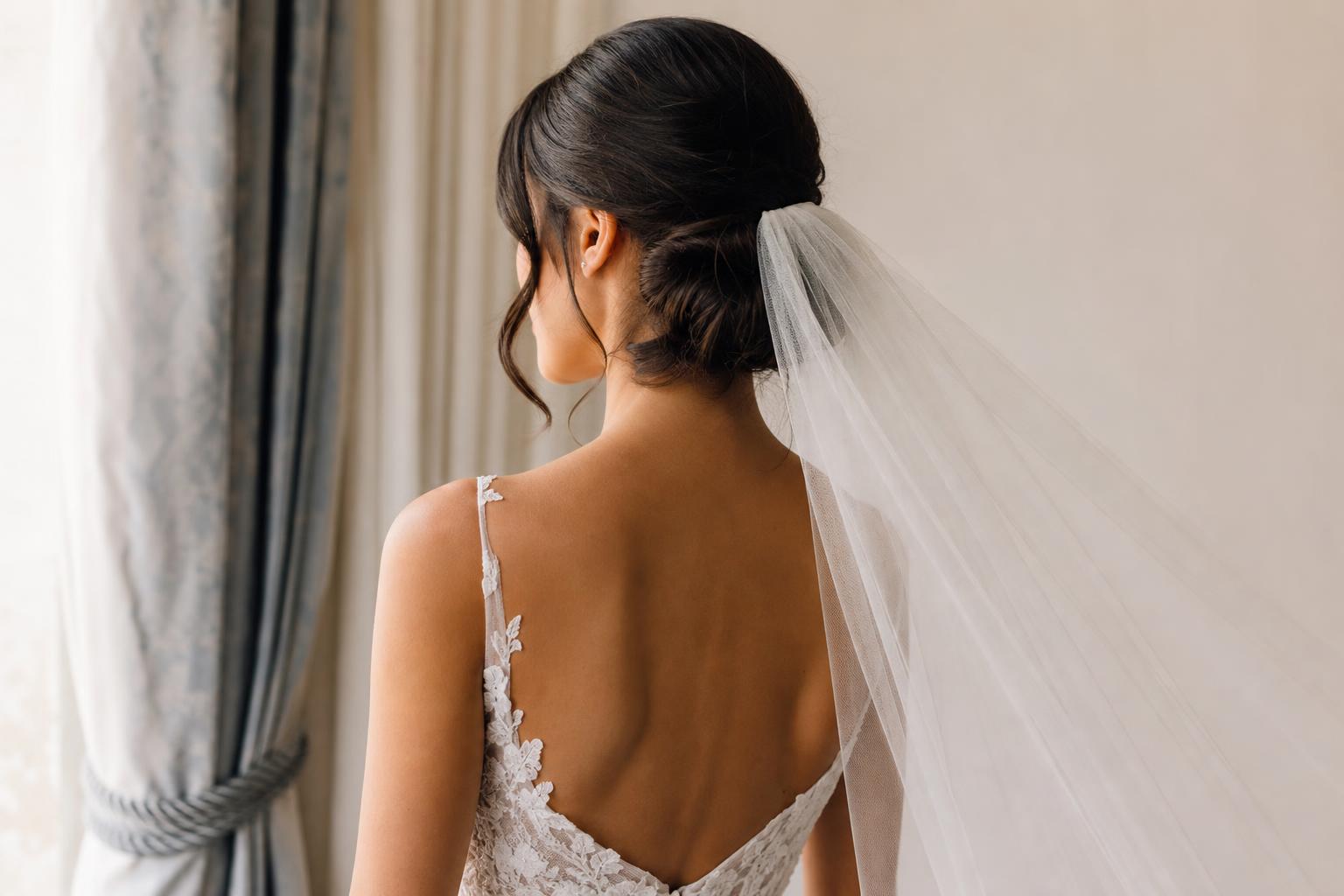
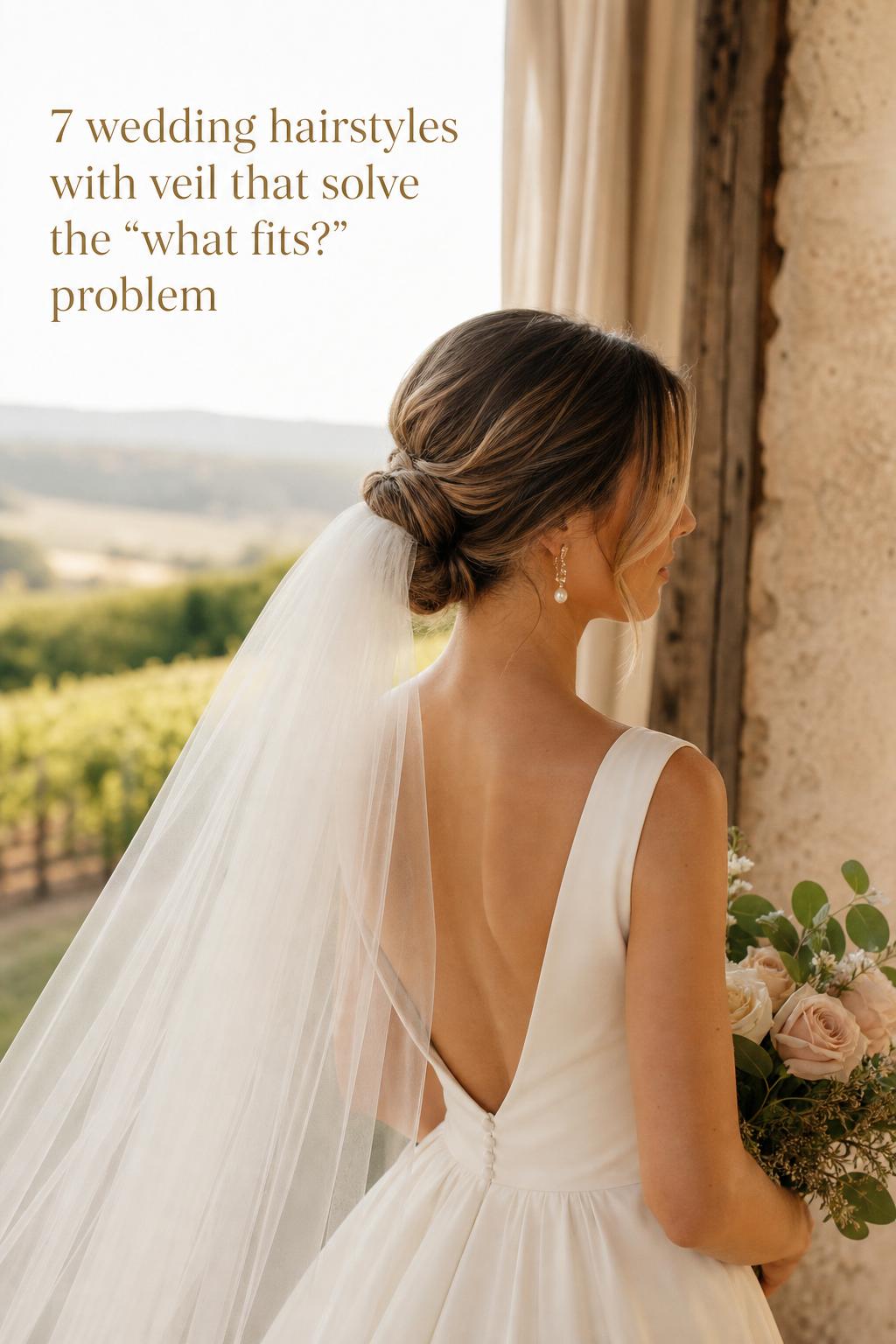
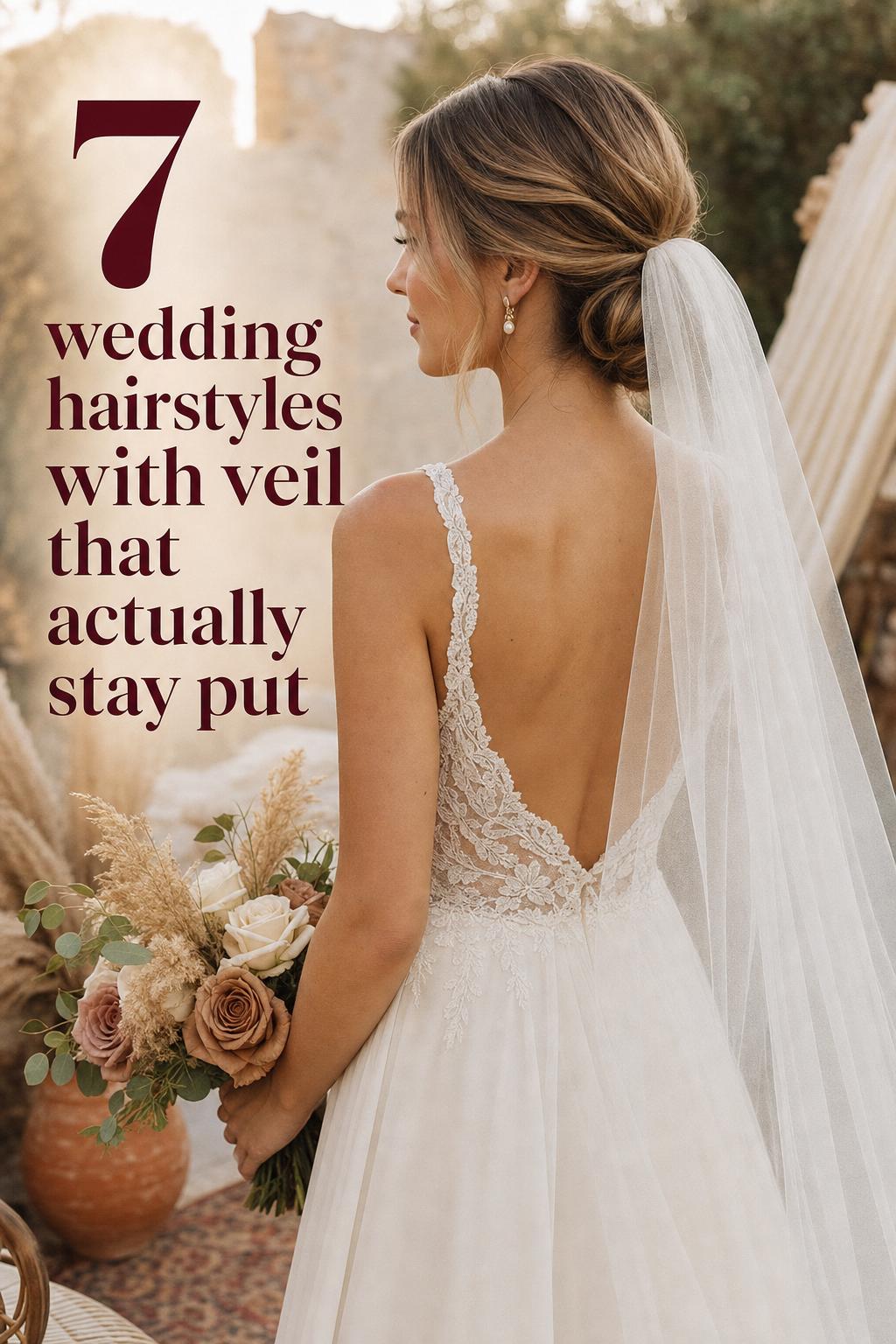
A low bun is one of the most versatile options because it can be sleek or softly textured, but it always offers an obvious base for a veil comb or hidden pins. Compared with a higher bun, it keeps the silhouette grounded and often feels more understated. It suits brides who want the veil to flow from the back of the head without creating excess height.
Chignon with veil
The chignon is more sculptural than a simple bun, which makes it especially appealing for formal bridal styling. A twisted chignon or layered chignon can add detail without cluttering the overall look. When paired with lace-edged or tulle veils, the result feels editorial and polished. This is the kind of pairing often favored in refined bridal imagery, where neckline, gown, and veil all need to feel coordinated.
Ballet bun and sock bun variations
Ballet and sock bun styles create a more pronounced rounded shape. They are clean, symmetrical, and highly compatible with simple veils. Their strength is precision. Their limitation is that they can feel too formal or severe if a bride prefers softness around the face. The easiest way to soften them is with tendrils or a less rigid parting, though that shifts the look away from pure minimalism.
Who this style family suits best
Classic updos tend to suit brides who value long-wear comfort, cleaner portrait lines, and strong coordination with the gown. They work particularly well when the dress neckline matters visually, since the hair can be lifted away to reveal shoulder and neckline shape. A sweetheart, V-neck, or strapless gown often benefits from this clarity, while a high neckline can look especially elegant with a lower, quieter updo.
The softer family: half-up styles, curls, braids, and visible texture
If classic bridal hair is about structure, the softer family is about atmosphere. These styles are popular because they feel romantic without losing bridal presence. They tend to photograph beautifully in motion, particularly during outdoor ceremonies where light, breeze, and movement become part of the visual story.
Half-up half-down with veil
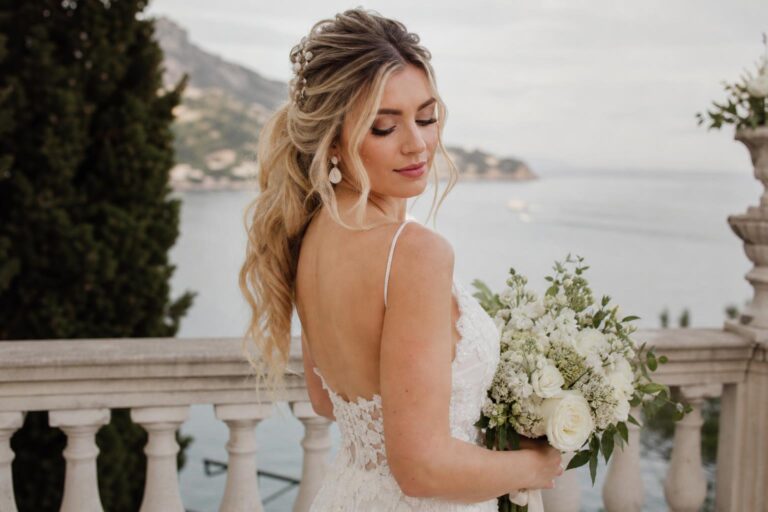
This is one of the most balanced choices available. The upper section creates the support needed for the veil, while the lower lengths bring softness and length into the look. Compared with wearing the hair fully down, a half-up style usually gives better control and a more intentional veil placement. Compared with a full updo, it feels younger, less formal, and more relaxed.
Down with brushed-out curls
Brushed-out curls create a luminous, romantic shape under a veil, especially in soft tulle. The effect is particularly lovely for destination weddings or outdoor ceremonies where the bridal look should feel airy rather than rigid. The trade-off is practical: hair worn fully down may require more careful veil placement so curls are not flattened, and the style can shift more over the course of a long celebration.
Braids down the back and braided bun hybrids
Braids are one of the most useful bridge styles because they carry both texture and function. A braid down the back gives the veil a discreet support structure, while a braided bun preserves the reliability of an updo with added detail. Brides who want a modern or bohemian feel without sacrificing security often find braids especially helpful.
Loose updo with natural curls
This pairing offers one of the strongest examples of modern bridal balance. It keeps curl pattern and texture visible while lifting enough hair to support the veil comfortably. Rather than forcing textured hair into a sleeker silhouette, this approach respects the hair’s natural movement. It also tends to feel more personal and less formulaic, which can be especially important for brides who want the hairstyle to reflect everyday identity while still feeling elevated.
Visual differences in real wedding settings
The easiest way to compare bridal hairstyles is to imagine them in context. Under bright afternoon light at a garden ceremony, a low bun and cathedral veil can look sculptural and serene, the veil falling in a clean line that echoes the dress. In the same setting, half-up waves under a fingertip veil feel lighter and more organic, with the hair participating in the atmosphere rather than sitting apart from it.
At a candlelit reception, polished styles often gain strength. A chignon keeps the profile crisp from ceremony to dance floor and complements more formal gowns. Softer down styles can feel especially beautiful earlier in the day or in destination settings, but they depend more on texture, weather, and the bride’s tolerance for movement through hours of celebration. Neither choice is purely aesthetic; venue and duration matter.
- A ballroom or black-tie evening wedding often favors stronger structure.
- A beach, vineyard, or countryside setting often welcomes visible texture and softer movement.
- City weddings can support either direction, depending on whether the bride wants editorial polish or relaxed modernity.
- For long celebrations, a style with built-in anchor points usually ages more gracefully under the veil.
Placement changes everything
Two brides can wear the same veil and the same hairstyle and still create completely different looks through placement alone. Positioning the veil at the crown creates more drama and visibility. Placing it at the base of a knot or beneath an updo feels more integrated and often allows the hairstyle itself to remain on display. This is one of the most important distinctions in wedding hairstyles with veil, yet it is often overlooked until the trial.
Crown placement versus beneath-the-style placement
Crown placement gives the veil prominence. It works well with loose waves, half-up styles, and some buns when the bride wants the accessory to read clearly from the front and side. Beneath-the-style placement is more subtle and often more elegant with chignons, low buns, and braided buns because it allows the hair shape to stay visible while the veil flows behind it.
Combs, pins, and anchor techniques
Most successful pairings rely on a thoughtful fastening method: combs, pins, and anchor braids all appear across veil-focused bridal guidance for good reason. The correct method depends on hair density, texture, and the amount of weight the veil introduces. Fine hair may need more intentional anchor points. Curly or coily textures often benefit from secure placement that respects the hair pattern rather than compressing it. Brides wearing extensions should also consider whether the veil will sit over or alongside added hair so the final shape remains seamless.
Tips for a more secure and comfortable finish
- Choose the hairstyle and veil together rather than treating them as separate decisions.
- Test whether the veil should sit behind or in front of the hairstyle during the trial, not on the wedding day.
- If the style includes waves or curls, preserve a defined anchor section for the comb or pins.
- Consider wind and movement if the ceremony is outdoors, especially with longer veils.
- Think about the reception transition early, particularly if the veil will be removed after the ceremony.
Dress neckline coordination: the comparison many brides miss
A hairstyle does not exist in isolation from the gown. Dress necklines shape the frame around the face, shoulders, and upper back, so the veil and hairstyle should support that architecture rather than compete with it. This is where many pairings either become beautifully coherent or subtly disconnected.
Sweetheart, V-neck, and strapless gowns
These necklines often pair well with both classic and softer hairstyles, but for different reasons. A low bun or chignon emphasizes the openness of the neckline and creates a clean bridal line. A half-up or softly curled style adds romance and can soften the structure of the bodice. The decision depends on whether the bride wants contrast or continuity: polished hair for a stronger silhouette, or flowing hair for a softer one.
High necklines and more covered gowns
With higher necklines, restraint usually reads better. A lower bun, chignon, or controlled updo often feels balanced because it keeps too much volume from gathering around the collar. A veil in tulle or illusion material can add softness without crowding the upper body. Looser hair can still work, but the visual relationship needs more care so the gown remains visible and the overall shape does not become heavy.
Hair length and texture: where the comparison becomes personal
Broad bridal categories are useful, but real styling decisions depend on hair length and texture. Long hair offers more visible options beneath a veil, from braids to brushed-out curls to half-up styles. Short hair often benefits from strategic placement and cleaner accessory support. Straight, wavy, curly, and coily textures all interact differently with tulle, lace, combs, and pins, so the best pairing is always slightly individual.
Long hair with veil
Long hair gives the widest visual range. Brides can choose a polished updo for definition, wear it down for softness, or split the difference with a half-up shape. The strongest question is usually not whether long hair can support a veil, but whether the bride wants the veil to dominate the back view or share that space with visible hair length. The Knot and similar wedding planning editorials often lean into this distinction because it dramatically changes the final look.
Short hair with veil
Short hair asks for thoughtful proportions rather than volume. A veil can look highly polished with short hair when the placement is clear and the silhouette feels intentional. Brides often assume a veil requires a large updo, but that is not necessary. What matters is finding an anchor method that keeps the veil secure without overwhelming the haircut. Simpler shapes and cleaner lines usually work best.
Curly, coily, and textured hair considerations
Textured hair benefits from recommendations that go beyond generic “updo or down” advice. A loose updo with natural curls can be ideal because it preserves shape and texture while offering a practical support point for the veil. Brides who want to wear curls down may need more intentional anchor braids or strategic pins so the veil sits securely without crushing volume. This is one of the most important areas where thoughtful bridal styling makes a visible difference.
Editorial inspirations and what they reveal about bridal style
Well-known bridal and fashion publications often highlight the breadth of veil-friendly hairstyles rather than one single ideal, and that variety is useful. Vogue’s references to brides and public figures such as Sofia Richie, Huma Abedin, and Carly Rae Jepsen help illustrate how different veil pairings can shift the mood of bridal hair from sleek and ceremonial to softer and more individual. Those references matter less as trends to copy exactly and more as visual proof that veil styling works across very different aesthetics.
Location also affects how these looks are interpreted. A Lisbon wedding, a New York City celebration, a Florida ceremony, or a Montecito event each suggests a slightly different balance of formality, climate, and atmosphere. In a warm outdoor setting, movement and comfort may matter more. In a city or evening context, line and polish may take priority. The same veil can feel airy and relaxed in one location, or dramatically formal in another.
Example comparisons for real bridal scenarios
Ceremony in a formal setting
A classic bride might choose a low tight bun with a center part and a cathedral veil placed beneath the bun, creating a composed back view and clear emphasis on the gown. A softer-style bride attending the same formal setting might wear a twisted half-up style with controlled brushed-out curls and a fingertip veil at the crown. Both are elegant, but the first relies on structure while the second introduces movement and a slightly more relaxed mood.
Outdoor garden or vineyard celebration
For a golden-hour ceremony, the classic interpretation might be a textured chignon with face-framing tendrils and a light tulle veil. The modern interpretation could be loose waves with a crown veil and soft braiding through the upper section for support. The first keeps the silhouette anchored against breeze and movement; the second embraces atmosphere and lightness, which can be especially beautiful in natural settings.
Destination wedding or coastal setting
In a destination context, comfort becomes more visible in the final result. A bride leaning classic may prefer a low bun or braided bun to avoid constant adjustment and keep the veil stable. A bride leaning modern may wear a half-up style or loose natural curls so the look feels effortless and suited to the setting. The distinction is not about effort level; it is about how much movement the bride wants the hair to retain under the veil.
Where mistakes tend to happen
Most disappointment around bridal hair and veils comes from imbalance, not from choosing the “wrong” hairstyle category. A very detailed hairstyle paired with a heavily detailed veil can feel visually crowded. Hair worn fully down with no support section may leave the veil unstable. An updo chosen solely for security can look too rigid if it does not reflect the bride’s broader style.
Another common issue is failing to consider the full timeline of the day. A hairstyle that looks beautiful for the ceremony may not transition comfortably into the reception if the veil is removed and the structure underneath feels incomplete. This is why the strongest bridal styling often begins with practical questions: How long will the veil stay on? Will the event move from ceremony to dance floor quickly? Is the setting windy, humid, or especially formal?
A stylist’s practical perspective
The most successful bridal hair usually comes from editing rather than adding. If the veil is long and dramatic, the hairstyle often benefits from clarity. If the hairstyle is textured and expressive, the veil can be lighter or more discreet. Brides do not need to choose the simplest option, but they do benefit from deciding which element should lead the look and which should support it.
How to choose between styles without second-guessing
A useful decision process starts with three priorities: silhouette, comfort, and setting. If a bride wants a strong bridal line, visible neckline, and dependable structure through a long formal day, classic updos usually make more sense. If she wants softness, movement, and a look that feels less ceremonial and more organic, half-up styles, curls, or braid-based shapes may be the better direction.
- Choose a classic style if your veil is long, your gown is formal, or you want a clean back profile.
- Choose a softer style if texture is central to your look and you want the hair to remain visible beneath the veil.
- Choose a hybrid style, such as a loose updo or braided bun, if you want both movement and security.
- Let the dress neckline and reception plans break the tie when two options feel equally appealing.
For many brides, the best answer is not a strict category but a tailored in-between. That may mean a chignon loosened with tendrils, a half-up style reinforced with braiding, or natural curls lifted just enough to support the veil. Bridal hair is at its strongest when it looks intentional in photographs and feels wearable in real life.
When each style works best
Choose structured styles for polished, ceremonial impact
Low buns, chignons, ballet buns, and braided buns are particularly effective for traditional ceremonies, evening receptions, and gowns where the neckline or back deserves clear visibility. They also suit brides who want the veil to feel secure from processional to portraits without constant adjustment. In practical terms, these styles are often easier to maintain over many hours.
Choose softer styles for romance, texture, and movement
Half-up styles, loose waves, brushed-out curls, and natural-texture updos often shine at outdoor weddings, destination celebrations, and venues with a more relaxed atmosphere. They are especially compelling when the bride wants her hair texture to remain part of the final look. The key is making sure softness does not come at the expense of secure placement.
Choose hybrid styles for all-day flexibility
Hybrid styles are often the most versatile option for modern weddings that move across multiple settings or moods. A loose chignon, braided bun, or softly pinned curl structure can feel refined during the ceremony and still natural once the veil comes off. Brides who want one hairstyle to carry them from vows to reception often find this category the easiest to live with.
Final thoughts on bridal balance
The core distinction in wedding hairstyles with veil is not simply up versus down. It is structure versus softness, visibility versus integration, and polish versus movement. A veil does not just accessorize the hair; it changes the proportion and mood of the entire bridal look.
Once a bride understands that relationship, the choice becomes far clearer. A low bun, chignon, braided style, half-up arrangement, or brushed-out curls can all work beautifully with a veil when the silhouette, placement, gown neckline, and setting are aligned. The most memorable bridal hair often borrows from both directions: enough structure to support the veil, and enough softness to feel personal.
FAQ
How do I secure a veil if I have curly hair?
Curly hair usually benefits from a defined anchor point rather than placing the veil directly into loose curls. A loose updo with natural curls, a braided section, or a carefully pinned upper area can give combs and pins better support while preserving texture and volume.
Can I wear a veil with short hair?
Yes, short hair can look very polished with a veil if the proportions are considered carefully. The key is intentional placement and a secure fastening method that does not overwhelm the haircut, often with a simpler silhouette and a cleanly placed comb or pins.
What veil length works best with an updo?
Updos are versatile and can support everything from shorter styles to chapel or cathedral lengths because they provide a stable base. The most important factor is balance: longer veils often pair especially well with stronger shapes like low buns and chignons because the hairstyle remains visible beneath the fabric.
Is half-up half-down better than wearing my hair fully down with a veil?
Half-up half-down is often the more practical option because it preserves softness while also creating a support area for the veil. Hair worn fully down can be beautiful, especially with brushed-out curls or waves, but it usually requires more thoughtful placement so the veil does not flatten the style.
Should the veil go above or below the bun?
Both can work, but they create different effects. Above-the-bun placement gives the veil more visual presence, while below-the-bun placement often looks more integrated and allows the hairstyle itself to stay visible, which is especially elegant with low buns and chignons.
How should I match my hairstyle and veil to my dress neckline?
Open necklines such as sweetheart, V-neck, and strapless gowns can work with both updos and softer hair, depending on whether you want a cleaner line or a more romantic frame. Higher necklines often look best with more restrained hairstyles so the gown remains visible and the upper silhouette does not feel too heavy.
Are braids a good option for wedding hairstyles with veil?
Braids are one of the most useful options because they add texture and help create practical support for the veil. A braid down the back, a braided bun, or braided sections within a half-up style can make a softer look feel more secure without losing movement.
How do I decide between a classic updo and loose waves?
Think about silhouette, formality, and how long you want the style to hold. A classic updo suits brides who want polish, secure placement, and strong gown visibility, while loose waves suit brides who want softness, texture, and a more relaxed atmosphere, especially in outdoor or destination settings.
What is the most versatile bridal hairstyle for wearing a veil all day?
A hybrid style such as a loose updo, braided bun, or softly structured chignon is often the most versatile because it combines support with movement. It tends to look refined during the ceremony and still feel natural once the veil is removed for the reception.