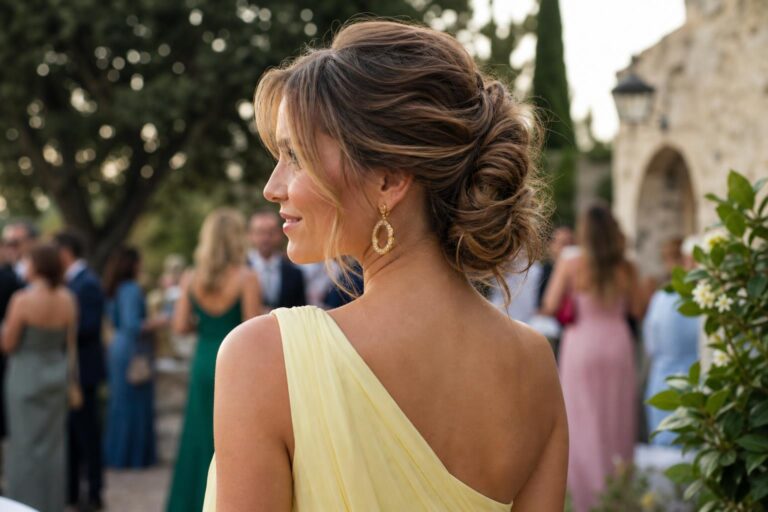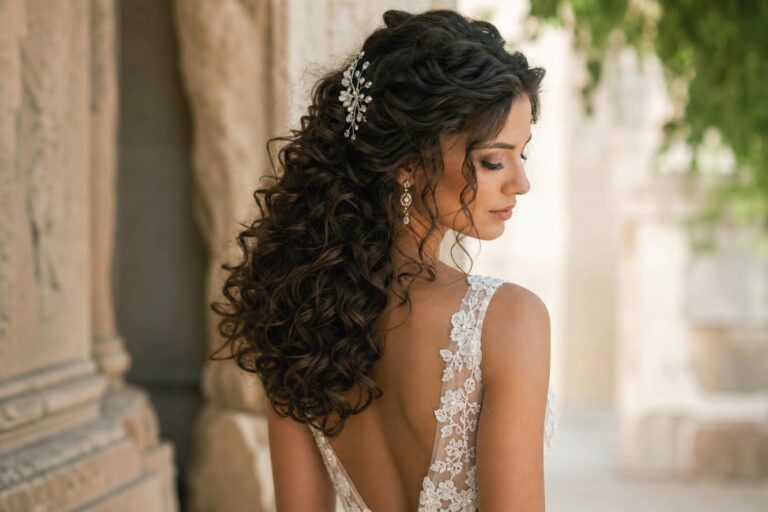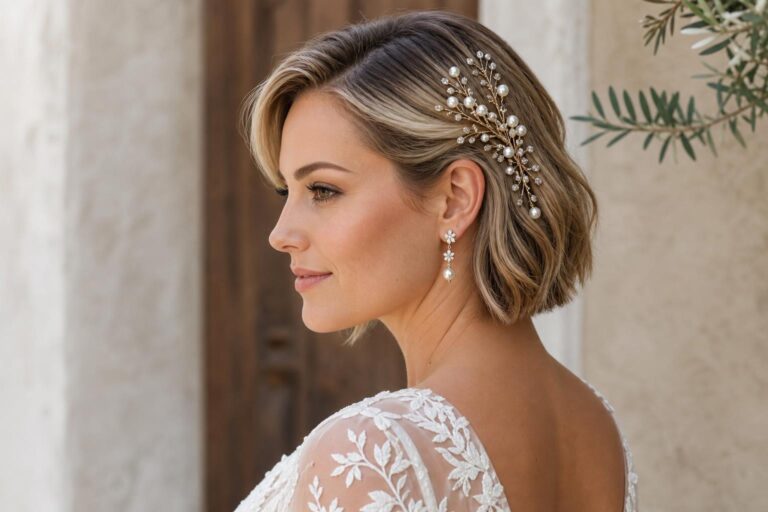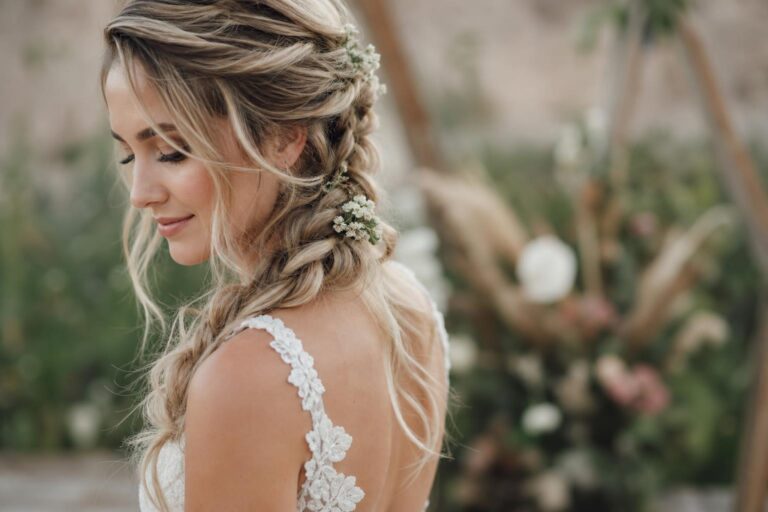
Wedding Hairstyles Half Up Half Down for Romantic Brides
The appeal of wedding hairstyles half up half down is easy to understand the moment you picture the day in motion: the ceremony, the portraits, the first hug, the breeze outside, the reception lights later that evening. Brides often want hair that feels romantic and soft, but also secure enough to last through hours of photographs, greetings, and dancing. That balance is exactly where the half-up, half-down style stands out. It keeps hair away from the face, preserves length and movement, and offers room for waves, curls, braids, twists, pins, clips, flowers, or even a modern top knot.
It is also one of the most adaptable bridal hair directions. A soft crown twist can feel timeless in a ballroom, braided accents can lean bohemian at a vineyard, and a polished hairpin moment can look striking in city wedding portraits. From All Things Hair and WeddingForward to The Knot, Zola, BridalGuide, Marie Claire, Who What Wear, CL Weddings, and Oh The Wedding Day, the most compelling inspiration tends to return to the same idea: this silhouette works because it combines beauty with practical structure.
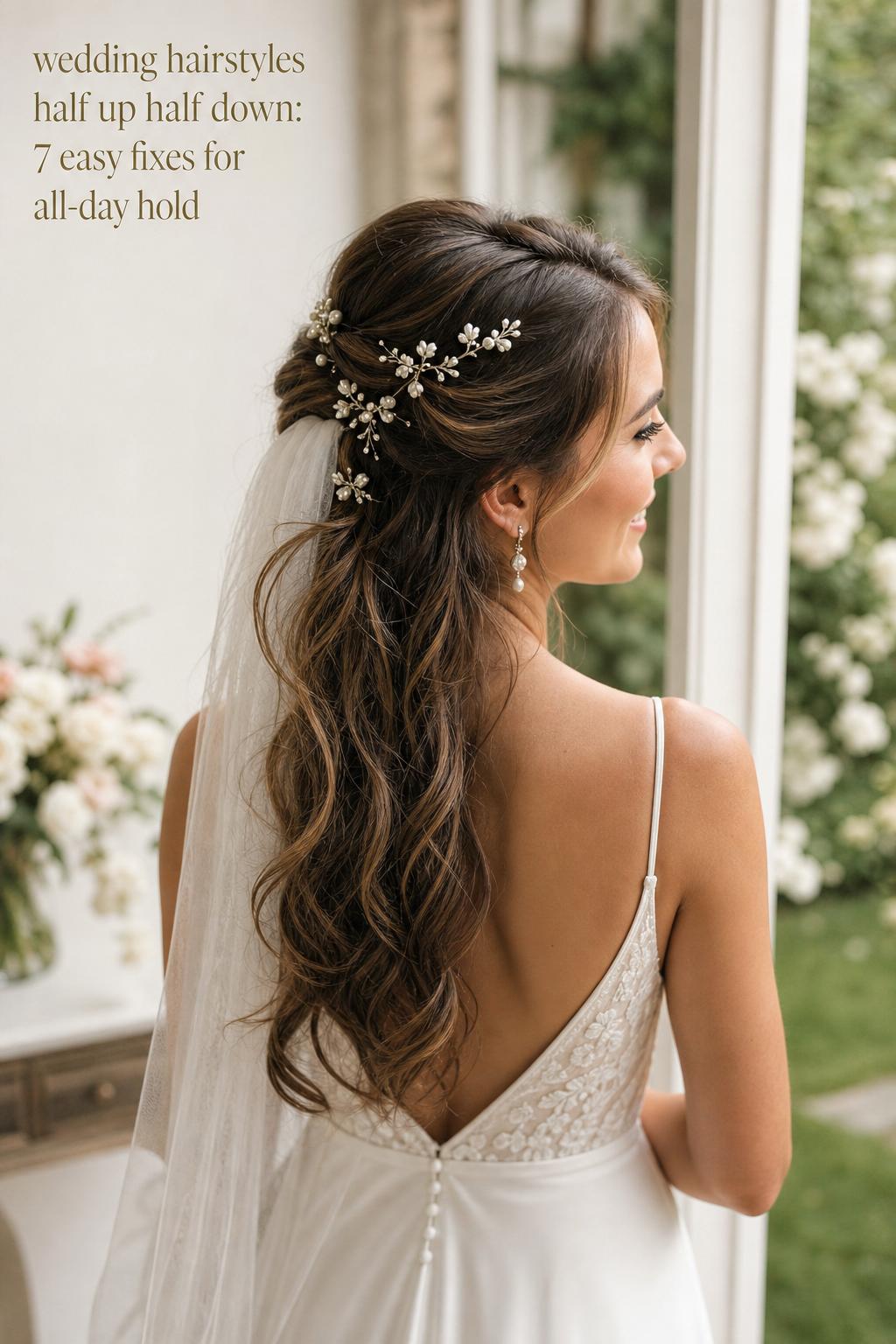
If you are deciding between a full updo and wearing your hair entirely down, this guide will help you narrow the choice with clarity. The goal is not simply to pick a pretty picture. It is to choose a version of the style that fits your dress, your venue, your hair texture, your accessories, and the reality of a full wedding day.
Why this hairstyle remains a bridal favorite
A half-up, half-down wedding hairstyle sits in a particularly useful middle ground. It offers the polish of an updo around the crown and face, while keeping the softness and movement that many brides want in photos. That combination tends to flatter a wide range of face shapes and hair textures, which is one reason it appears so often in bridal galleries and wedding magazine features.
Your wedding look is only the beginning.
Keep your guest list, vendors, timeline, and every important detail together with Zarellea — so your day feels as considered as your style.
There is also a strong practical reason behind its popularity. Hair that is partially pinned has more built-in support than a fully down style, which can help with day-long wear. At the same time, it avoids the severity that some brides feel with a fully structured updo. If your wedding style leans romantic, modern, classic, or softly bohemian, there is usually a half-up variation that can express that mood without feeling overworked.
- Best for: brides who want both structure and softness
- Works especially well with: waves, curls, braided accents, and accessory details
- Choose this if: you want your hair off your face but still visible over the shoulders or back
- Style tip: the half-up portion should feel secure, but not so tight that it loses movement in photos
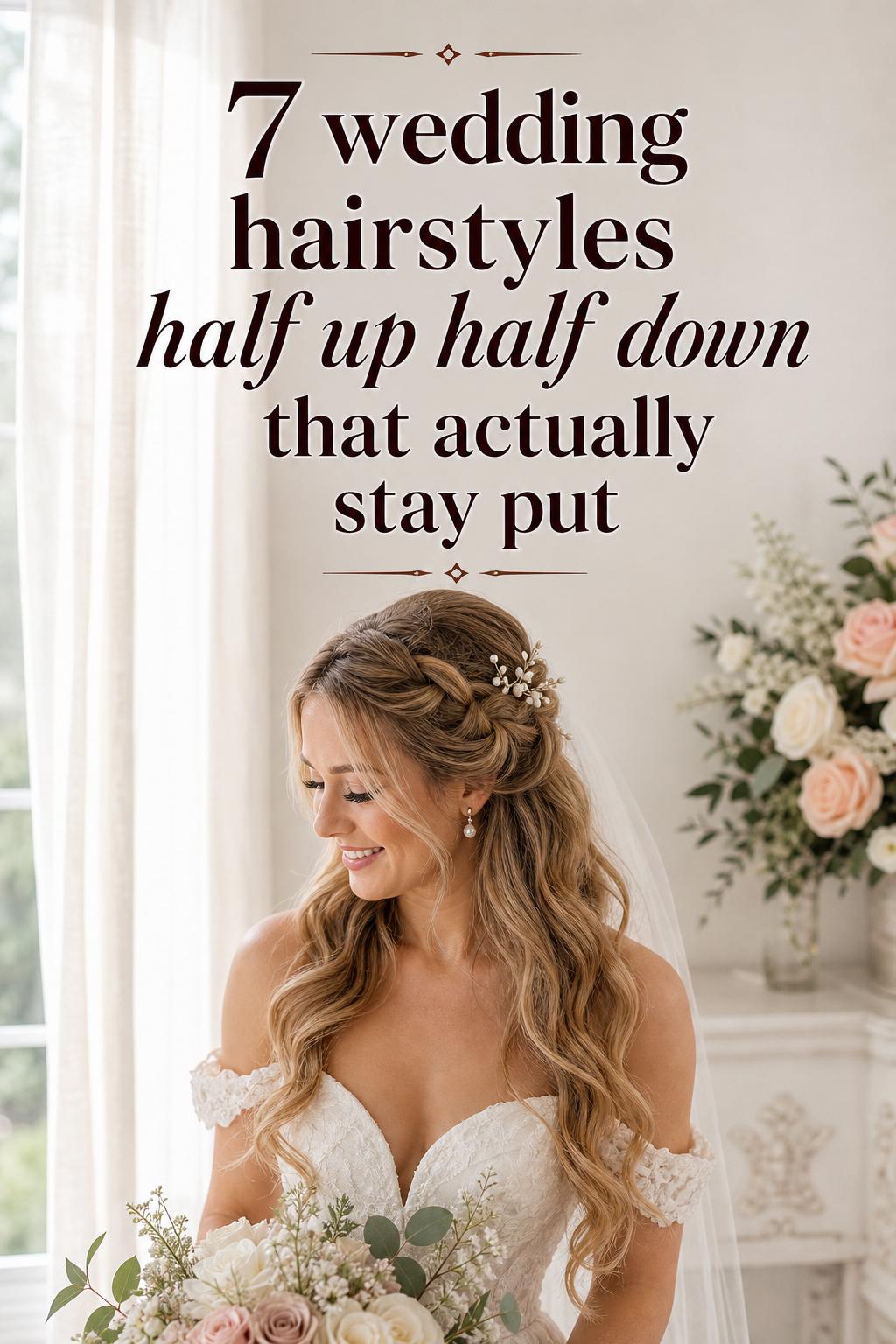
How to choose the right half-up, half-down direction
The smartest way to choose this hairstyle is to begin with the wedding setting rather than the trend alone. A candlelit formal reception may call for smoother structure and gem pins, while a garden or coastal celebration often suits looser texture, soft waves, and floral accents. The hairstyle should support the atmosphere of the day, not compete with it.
Dress details matter just as much. Neckline, veil placement, and the visual weight of the gown all affect how the hairstyle reads. A detailed back, for instance, may benefit from a lighter half-up section that lets the dress remain visible, while a simpler silhouette can carry more volume in the hair. Brides often save many beautiful images on Pinterest, but the final decision becomes easier once they ask a more useful question: which version of this style belongs with the full bridal look?
Romantic waves with a soft crown twist
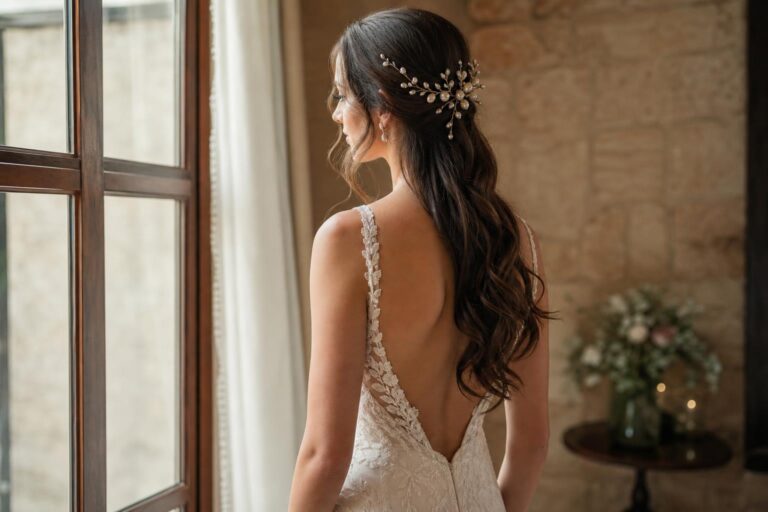
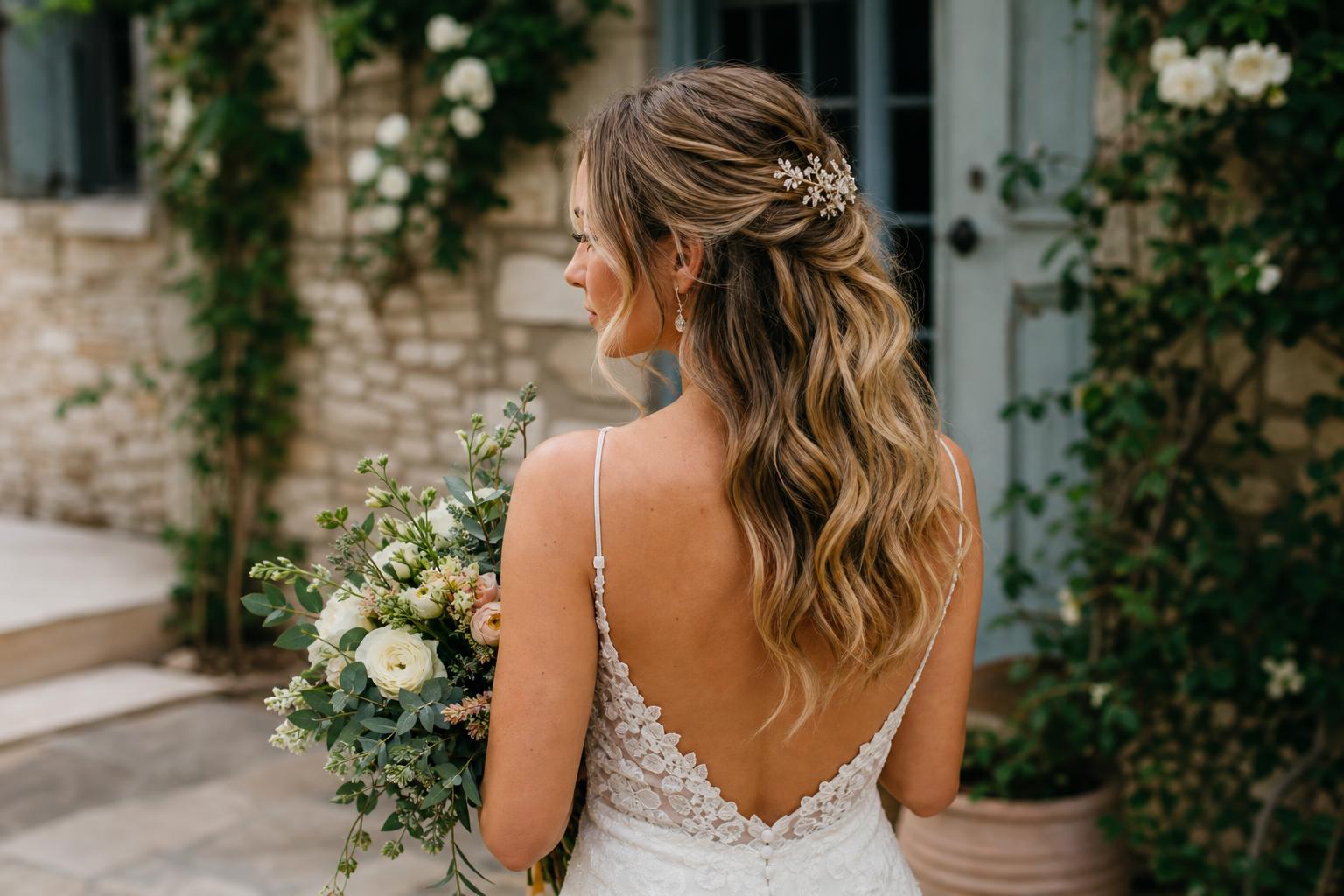
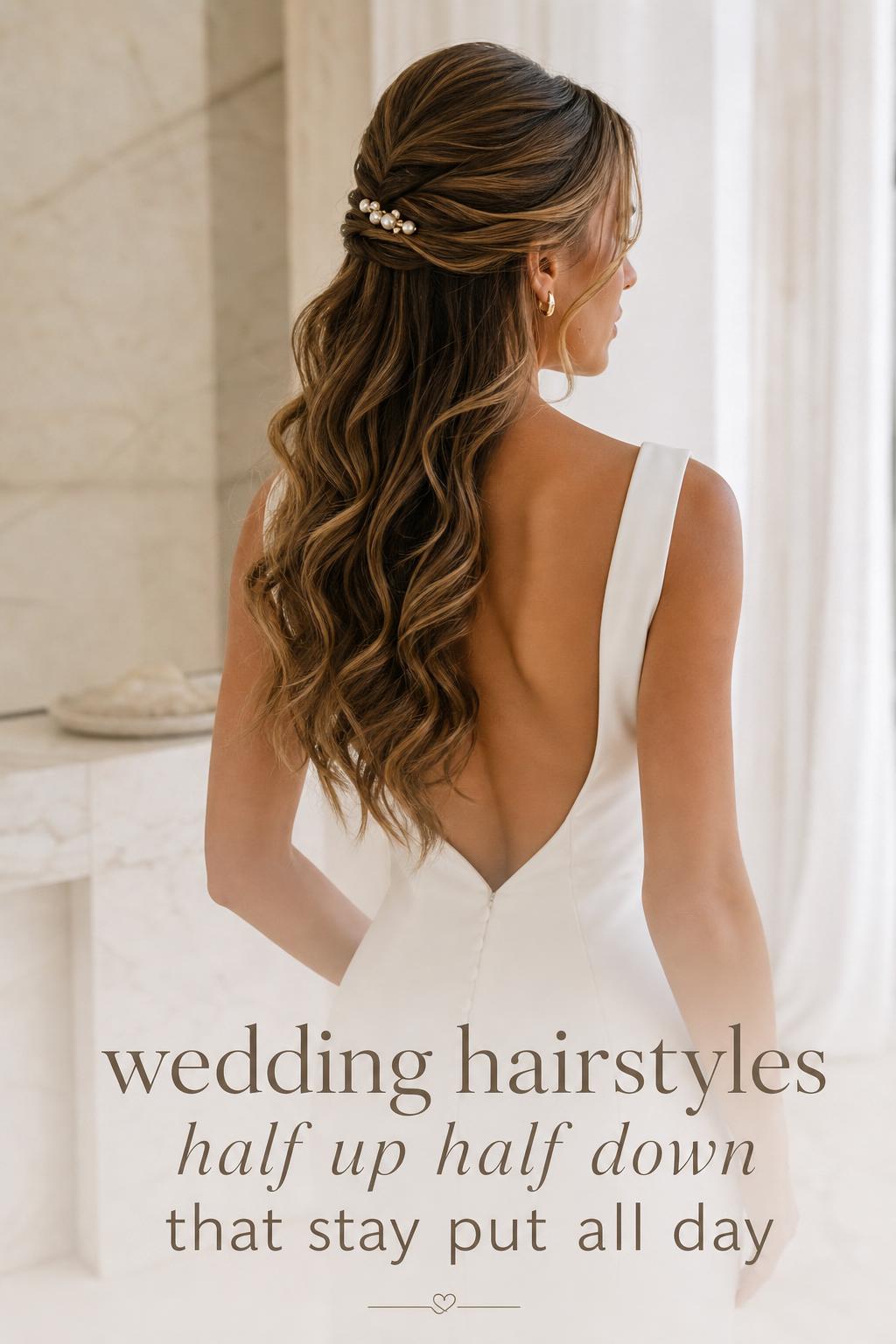
This is one of the most enduring interpretations of the style. The crown is gently twisted or pinned back, while the rest of the hair falls in soft waves or curls. It photographs beautifully because it creates dimension from the front, side, and back. In golden-hour portraits, the texture catches light without looking too rigid.
The reason it works so well is visual balance. The twist gives shape at the top of the head, and the waves create softness below. This can be especially appealing for brides who want a romantic bridal look without committing to a braid or top knot. It also leaves room for subtle accessories, such as small flowers or delicate pins.
Pinterest-worthy idea: a softly twisted crown with cascading waves and a few discreet pins placed where the twist meets, creating a polished focal point without distracting from the gown.
Braided half-up styles that add texture and shape
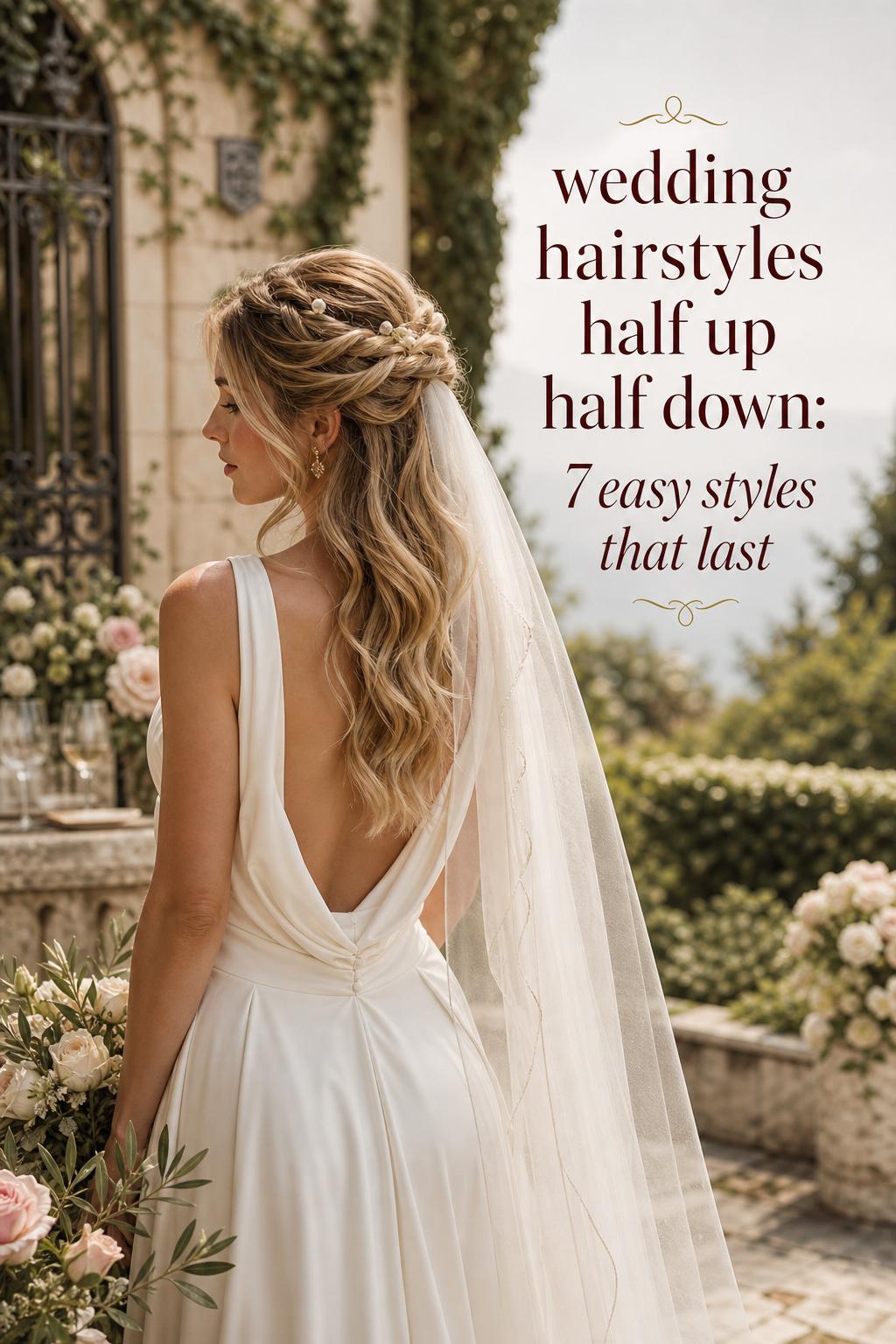
Braids are one of the strongest substyles within bridal half-up hair. They can shift the entire mood of the look depending on how they are used. A finer braid woven into the crown reads delicate and romantic, while a more visible braided accent introduces stronger texture and a slightly more styled finish.
This option is especially effective for brides who want their hairstyle to feel detailed even before accessories are added. Braids build interest directly into the structure, which can reduce the need for larger clips or flowers. They also work well in wedding galleries because they create depth from the back, a useful feature for ceremony photos and veil removal moments later in the day.
- Best for: brides who want texture built into the hairstyle itself
- Works especially well with: loose waves, ribbons, flowers, and romantic outdoor venues
- Avoid this: overly bulky braiding if your dress already has very heavy visual detail
- Choose this if: you like soft bohemian styling but still want a bridal finish
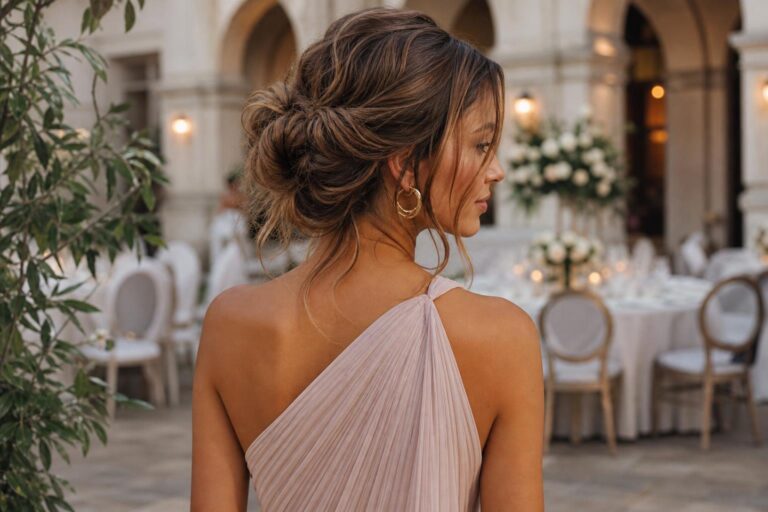
The half-up top knot for a modern bridal mood
The top knot variation takes the same half-up principle and gives it a more contemporary focal point. Instead of a twist or braid at the crown, the upper section is shaped into a knot while the lengths remain loose. The Knot highlights this direction as a practical and photogenic option, and its appeal is easy to see: it feels fashion-forward, but still wearable for a wedding.
This version tends to suit brides who want a cleaner line through the front and crown while preserving movement through the ends. It can feel especially striking with earrings or a more minimal gown because the silhouette has a distinct center of focus. If your wedding style leans modern rather than overtly romantic, this is often the variation worth trying first.
Style tip: a top knot half-up look usually works best when the loose sections still have some wave or bend. That contrast keeps the style bridal rather than overly casual.
Floral accents and gem pins for a softer finish
Accessories are not just decorative extras in this hairstyle category. They often define the final mood. Flowers create softness and romance, while pins and clips can move the style in a polished or fashion-led direction. BridalGuide, All Things Hair, and Marie Claire all reinforce how often pins, flowers, and hair clips become the finishing element that makes the hairstyle feel complete.
Floral accents are particularly effective when the hairstyle itself is relatively simple, such as waves with a light twist. They add visual interest without requiring more structure. Gem pins and hairpins, by contrast, tend to pair beautifully with smoother sections or a more refined crown, where the accessory can be clearly seen and photographed.
A useful way to decide is to think about whether you want the texture or the accessory to lead the look. If the hair has strong braid detail, softer accessories often feel more balanced. If the shape is minimal, a pin or clip can become the statement.
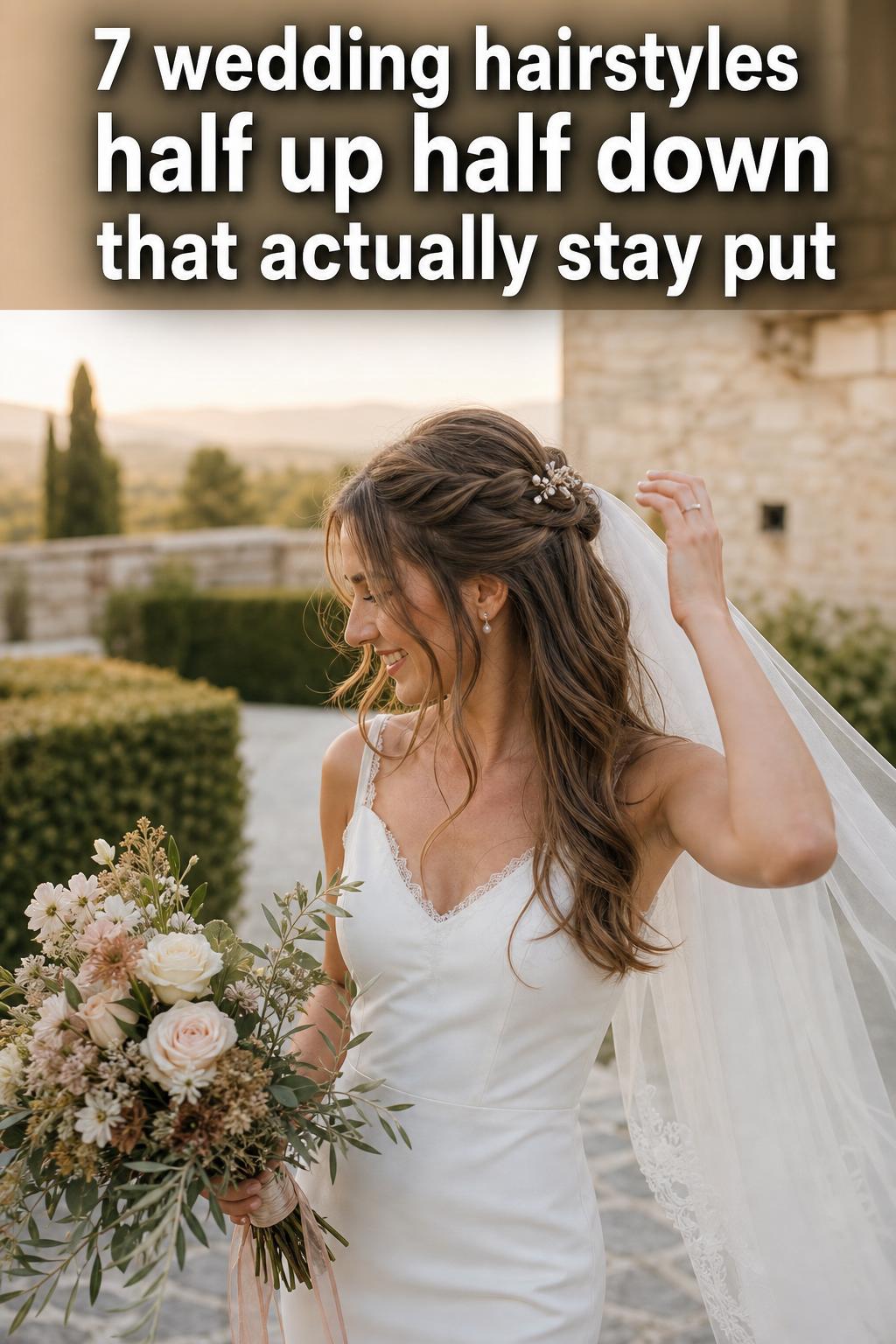
Matching the hairstyle to your dress neckline and veil
One of the most overlooked styling decisions is how the hair interacts with the neckline. Yet this is where a good bridal hairstyle becomes a cohesive bridal look. A strapless or sweetheart dress often welcomes more visible volume around the shoulders and back, so loose waves or curls in a half-up style can feel especially balanced. The open neckline creates space for that softness.
A bateau neckline or a dress with more structure near the collarbone may call for a cleaner half-up approach. In that case, a smoother crown twist, more controlled waves, or a neat top knot variation can prevent the look from becoming visually crowded. The hairstyle should echo the dress silhouette rather than competing with it.
Veil placement matters as well. Because half-up, half-down styles already create an anchor point, they can be practical for securing a veil. The upper pinned section gives support, while the lower lengths stay soft for photographs before and after the veil is removed. If you know the veil will come off before the reception, ask whether the hairstyle still looks complete on its own. The best version should feel finished in both moments.
- Best for strapless or sweetheart: soft waves, curls, and a fuller half-up section
- Best for more structured necklines: a neater crown twist, refined braid placement, or a top knot variation
- Works especially well with veils: styles that have a clearly secured crown area
- Avoid this: choosing a back-heavy hairstyle if the gown’s back detail is the main feature you want photographed
Hair length and texture: what actually works best
The phrase half-up, half-down sounds universal, but the most flattering version changes with hair length and texture. This is where many Pinterest saves start to feel less straightforward in real life. The style can absolutely be adapted, but the shape, accessory scale, and amount of visible detail should respond to your own hair rather than forcing a copy of someone else’s photo.
For long hair
Long hair gives the most room for cascading waves, larger braided accents, and more dramatic movement through the back. WeddingForward particularly emphasizes how well half-up, half-down styles lend themselves to long hair. The advantage is visual impact: the pinned upper section keeps the look bridal and secure, while the length creates softness in portraits and ceremony images.
The main caution with long hair is weight. More hair means more potential pull on the pinned section, so durability becomes especially important. If you love a full, flowing look, it helps to keep the top section structured enough to support the length below.
For medium hair
Medium hair often produces some of the most balanced half-up styles because it holds shape without becoming too heavy. Twists, smaller braids, waves, and pins all tend to show clearly. This length can also be ideal for brides who want movement without the maintenance concerns that very long hair sometimes brings across a full day.
A medium-length half-up look often shines when the styling focus is concentrated near the crown or sides, with enough texture in the remaining hair to feel intentional. It can read polished in an indoor venue and still relaxed enough for outdoor portraits.
For shorter lengths
Shorter lengths can still work beautifully with a half-up approach, especially when the style is built around face-framing structure and carefully placed accessories. The goal is not to mimic the volume of longer hair, but to create a bridal shape that feels graceful and secure. Clips, pins, and subtle twists become especially useful here because they create definition without asking the hair to do more than it naturally can.
Choose this if: you want a bridal hairstyle that feels soft and lifted without trying to force a full updo.
Straight, wavy, and curly texture considerations
Straight hair often benefits from detail at the crown, such as a twist, braid, or visible pin, because that added structure gives the look dimension. Wavy hair naturally suits the style because the texture supports both movement and softness. Curly texture can create a beautifully romantic effect in a half-up style, especially when the upper section is pinned gently enough to preserve shape rather than flatten it.
The key is to work with the texture, not against it. A hairstyle lasts better and looks more convincing in photographs when its shape reflects the hair’s natural behavior. That is one reason waves and curls appear so consistently across bridal inspiration roundups.
Venue, weather, and the real conditions of the wedding day
Some of the most useful bridal hair advice has less to do with trends and more to do with conditions. A half-up, half-down style may look effortless in a still studio image, but weddings happen in outdoor gardens, coastal breezes, warm ceremonies, candlelit rooms, and long receptions. Weather and venue style should influence your choice from the beginning.
For outdoor weddings, especially where there may be movement in the air, a more secure upper section makes a noticeable difference. Braids and twists can help the hairstyle hold shape while still feeling soft. For indoor celebrations, particularly more formal evening settings, a polished crown and accessory-forward finish may read beautifully under lower, warmer lighting.
Humidity and heat resistance are practical concerns that deserve attention. If your hair tends to lose shape, ask for a version of the style that prioritizes durability over excessive looseness. Romantic does not have to mean fragile. In fact, the best bridal hair usually looks slightly more secure at the start so it relaxes elegantly as the day unfolds.
- Garden or vineyard wedding: soft waves, braided accents, and flowers suit the setting naturally
- Coastal or breezy setting: choose a firmly anchored half-up section with controlled texture
- Formal indoor reception: refined twists, polished pins, and a cleaner silhouette often photograph beautifully
- Style tip: think about how the hair should look three hours later, not only in the first mirror check
The day-of timeline that helps the style last
One of the most valuable yet often missing parts of bridal hair planning is timing. A half-up, half-down style needs enough time to be built properly, secured carefully, and checked from every angle before the dress and veil come into the picture. Rushing this style can make it look pretty at first glance but unstable by the ceremony.
A realistic day-of workflow usually includes styling the hair, testing veil placement, checking how the hairstyle sits with earrings and neckline, and making sure the front remains flattering in photographs. This matters because the style has multiple visual zones: front hairline, crown, side profile, and the loose lengths. Each area needs to feel intentional.
The most practical bridal approach is to think in stages. The half-up structure should be secured first, then the waves or curls refined, then the accessories placed, then the veil tested. That order helps preserve the architecture of the style instead of crushing it at the end.
What to check before you leave the getting-ready space
- Does the style still look balanced from both sides?
- Is the half-up section secure enough for movement and hugs?
- Do the waves or curls feel soft but defined?
- Are pins, flowers, or clips visible in the right way rather than disappearing into the hair?
- If a veil is removed later, does the hairstyle still look finished?
Avoid this: choosing a very loose, barely pinned version of the style if you know your wedding includes outdoor time, a long reception, or hair that tends to fall flat quickly.
Accessories and tools that shape the final result
Hair accessories appear across nearly every strong bridal reference for this style because they are both decorative and structural. Pins, clips, and flowers are the most recurring choices. The right finishing detail can reinforce the mood of the hairstyle while also helping define where the half-up section begins and ends.
Marie Claire’s celebrity-led coverage, including the Hailey Bieber hairpin feature, underscores how a single clip or pin can completely modernize a familiar hairstyle. A classic half-up wave becomes more editorial with a visible accessory. Who What Wear similarly ties timeless wedding hair to style validation through celebrity influence, which can be useful if you want a bridal look that feels current without chasing a short-lived trend.
Zola also points toward the practical side of product and service thinking: bridal hair is not just about inspiration imagery. It often involves styling products, pins, clips, and finishing support that help the look stay intact. Even when brands are not the main story, the underlying message is consistent: beautiful bridal hair depends on both design and hold.
Choosing between flowers, clips, and pins
Flowers create softness and a romantic bridal mood, especially with waves, curls, or braided accents. Clips can feel more modern and graphic, particularly in smoother styles or top knot variations. Smaller pins offer the most flexibility because they can disappear into the hairstyle or catch the light subtly, depending on placement.
Pinterest-worthy idea: pair a low-contrast pin placement with softly textured waves for a bridal look that appears effortless in front-facing portraits and more detailed from the back.
Celebrity and editorial inspiration, translated for real weddings
Celebrity inspiration can be useful when you treat it as a styling direction rather than a literal template. Hailey Bieber’s half-up, half-down hairclip moment is memorable because it highlights how accessory placement can make a simple hairstyle feel intentional and fashion-aware. Rosie Huntington-Whiteley and similar references in fashion coverage serve a related purpose: they show how timeless silhouettes remain relevant when styling details are updated.
The most successful translation for a real wedding is usually selective. You might borrow the polished pin placement from a celebrity look, the romantic waves from a bridal editorial, and the braid detail from a real-bride gallery. That layered approach creates something more personal and more believable for your own event.
This is especially important because wedding conditions are different from a public appearance or a magazine feature. Your hairstyle needs to survive ceremony seating, embraces, weather shifts, and hours of wear. Inspiration is valuable, but wearability decides whether the style truly works.
Where brides make mistakes with half-up, half-down hair
The most common mistake is choosing a style purely for the back view. Many half-up, half-down bridal images are saved because the back looks beautiful, but the front and profile matter just as much on the wedding day. The hairstyle should frame the face elegantly, stay balanced from both sides, and sit correctly with the neckline.
Another issue is not accounting for durability. A style can look soft and airy in a still photo while lacking enough internal support for a long event. Slippage, flattening at the crown, or waves losing shape are all practical concerns mentioned across this topic area. This is where pinning techniques, grip, and all-day planning matter more than many brides initially expect.
The third mistake is overloading the look. Braids, waves, flowers, pins, and a veil can all be beautiful, but not necessarily all at once. If every bridal element asks for attention, the result can feel less refined. The strongest looks usually have one leading feature, one supporting detail, and enough restraint to let the dress and face remain central.
- Avoid this: selecting hair from a single photo angle only
- Style tip: decide whether texture, accessory, or silhouette is the hero of the look
- Choose this if: you want lasting elegance rather than maximum detail everywhere
Pinterest-worthy ideas to save for later
Some bridal hairstyles are memorable because they create an immediate visual story. The best half-up, half-down looks tend to do exactly that. They feel easy to imagine in context: a garden aisle, a vineyard at sunset, a city ceremony followed by a candlelit reception, or a soft outdoor portrait with the veil removed and the hair still holding its shape.
Soft waves with tiny floral accents
This look suits romantic outdoor weddings beautifully. The flowers should feel placed, not scattered, so the effect remains bridal rather than overly decorative. In photographs, the soft texture keeps the look airy while the floral detail adds a gentle focal point near the crown.
A braided crown with loose lengths
This is one of the most saveable looks for brides drawn to texture and softness. It works especially well in vineyard, garden, or countryside settings because the braid adds structure while the loose lengths keep the mood relaxed and photogenic.
A polished half-up style with a visible hair clip
For a more fashion-led bridal aesthetic, a visible clip or hairpin can transform a simple style into something editorial. This direction is elegant for city weddings or modern indoor venues where cleaner lines and a refined accessory can stand out under more controlled lighting.
A top knot half-up look with soft ends
This variation suits brides who want a contemporary silhouette without losing romance altogether. The knot creates shape and lift, while the loose sections soften the overall effect. It can be especially effective with statement earrings or a more minimal gown.
Quick styling tips before you decide
- Bring inspiration images that show the style from the front, side, and back.
- Think about your venue conditions before choosing the loosest version of the look.
- Match the hairstyle to the visual weight of your dress rather than treating it as a separate decision.
- If you love accessories, decide whether you want flowers, pins, or clips to lead the styling story.
- For long hair, prioritize security at the crown so the loose lengths do not pull the style down over time.
- For a softer bridal look, waves and curls usually create more dimension than a very flat finish.
- If you plan to remove a veil, make sure the hairstyle still looks complete afterward.
Final checklist before you choose your hairstyle
The safest and most stylish half-up, half-down wedding hairstyle is the one that respects both your inspiration and your actual wedding conditions. Romantic waves with a crown twist remain one of the most versatile options, braided variations are ideal when you want texture and visible detail, floral accents soften the look beautifully for outdoor settings, and a top knot or polished clip can bring a more modern editorial edge.
If you are torn between several saved images, narrow them down by asking four simple questions: does this suit my neckline, will it hold through my venue conditions, does it work with my veil or accessories, and does it still feel like me? That process usually reveals the right answer quickly. Bridal hair should be photogenic, but it should also feel comfortable, secure, and believable on your own wedding day.
In the end, half-up, half-down bridal hair remains popular for a reason. It offers softness without sacrificing structure, elegance without too much rigidity, and plenty of room for personal style. Whether your version includes waves, curls, braids, flowers, pins, clips, or a modern knot, the strongest choice is the one that supports the entire wedding look with ease.
FAQ
how do i choose between a full updo and a half-up, half-down wedding hairstyle?
A half-up, half-down style is usually the better choice if you want your hair away from your face while still keeping visible length and movement. It offers more softness than a full updo and often feels more romantic in photos, while still giving more support and structure than wearing the hair completely down.
are half-up, half-down wedding hairstyles best for long hair?
They are especially popular for long hair because length enhances waves, curls, and braided details, but the style can also work well on medium and shorter lengths. The key is adjusting the scale of the twist, braid, or accessory so the hairstyle feels balanced rather than trying to imitate a longer-hair look exactly.
what accessories work best with half-up, half-down bridal hair?
Pins, clips, flowers, and hairpins are the most versatile options. Flowers create a softer romantic mood, while clips and visible pins can make the style feel more modern or editorial. The best accessory depends on whether you want the hairstyle’s texture or the finishing detail to be the main focal point.
how can i make a half-up, half-down style last all day?
The most important step is building a secure upper section first and treating durability as part of the design, not an afterthought. Twists, braids, strategic pinning, and a well-planned day-of timeline all help. It also helps to choose a version of the style that matches your venue conditions rather than selecting the loosest possible look.
do half-up, half-down hairstyles work with veils?
Yes, they often work very well with veils because the pinned upper section provides a natural anchor point. The most important detail is making sure the hairstyle still looks complete after the veil comes off, especially if it will be removed before the reception.
what is the most romantic half-up, half-down wedding hairstyle?
Soft waves or curls with a gentle crown twist are among the most romantic options because they combine movement, softness, and light structure. Adding small flowers or delicate pins can enhance that effect without making the style feel too busy.
is a braided half-up style better than a twisted one?
Neither is universally better; they simply create different effects. Braids add more visible texture and detail, which can be ideal for outdoor or bohemian-leaning weddings, while twists often look softer and more understated. The right choice depends on your dress, accessories, and how much detail you want near the crown.
can a top knot work for a wedding hairstyle half up half down look?
Yes, a half-up top knot can be a strong bridal option if you want a more modern silhouette. It works particularly well when the loose sections still have some wave or softness, which keeps the overall style elegant and wedding-appropriate rather than casual.
what should i bring to a hair trial for this bridal style?
Bring inspiration photos from multiple angles, along with any planned pins, clips, flowers, or veil details if possible. It is also helpful to know your dress neckline, because that affects whether the hairstyle should feel fuller, softer, smoother, or more structured around the crown and shoulders.