Spring Wedding Hairstyles Bun With Modern Bridal Polish
A wedding bun has a quiet kind of glamour. It frames the face, opens the neckline, and gives the entire bridal look a sense of intention, whether the mood is sleek and modern, softly romantic, boho, vintage, or editorial. Among wedding hairstyles bun ideas, the appeal is lasting because a bun can shift so easily with the setting: polished for a ballroom, textured for a garden ceremony, relaxed for a beach celebration, or adorned with pearls, crystals, flowers, or greenery for a more decorative finish.
That versatility is exactly why buns continue to appear across bridal magazines, beauty publications, and wedding galleries. From a clean low bun and a chic chignon to a braided boho top knot or an elegant French twist, the silhouette adapts to the dress, the veil, the climate, and the bride’s overall aesthetic. It is not only beautiful in still photos; it is also practical through a long celebration, which makes it especially compelling for brides, guests, and wedding parties alike.
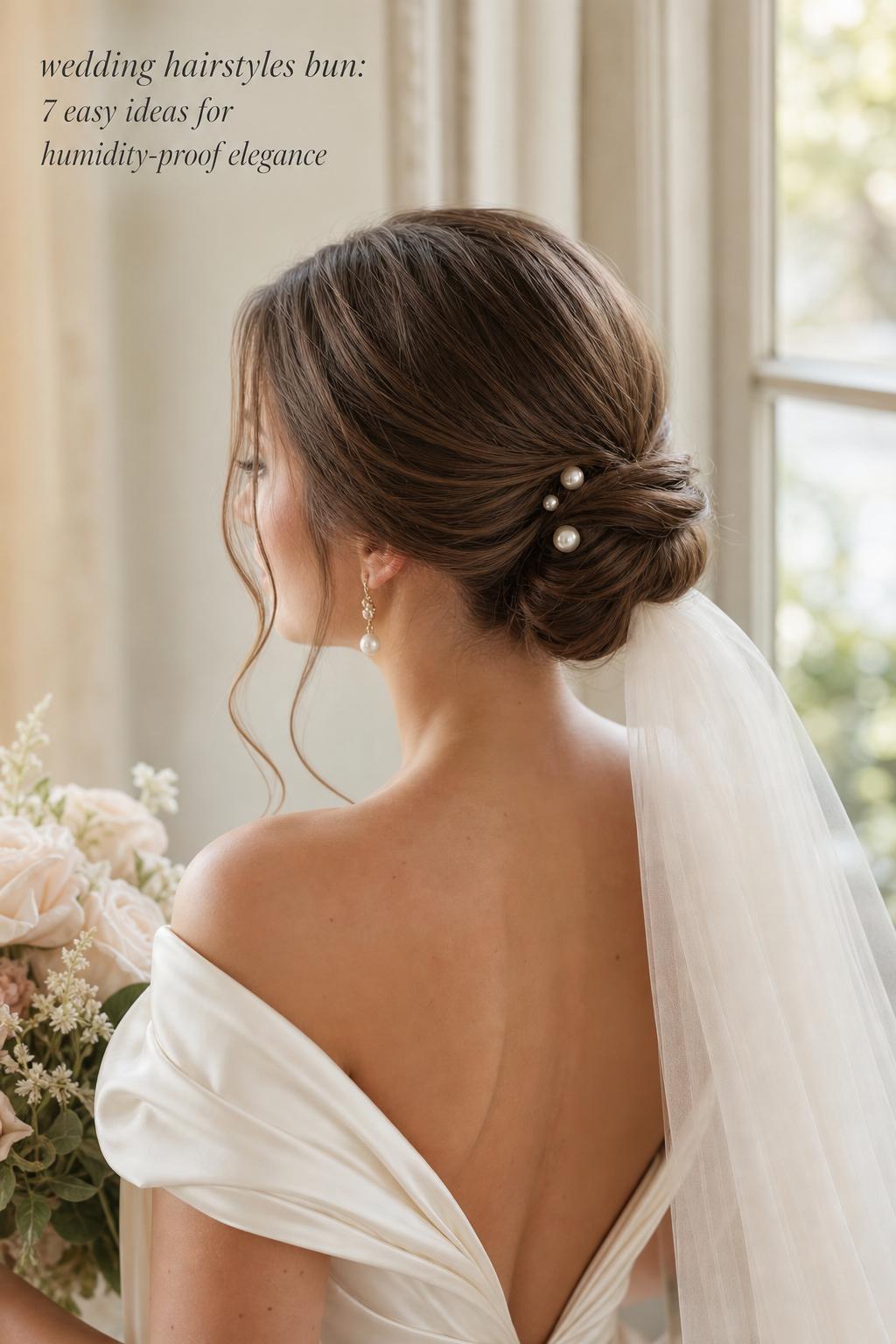
The most memorable bun styles feel curated rather than generic. They echo the shape of the gown, work with the natural texture of the hair, and hold their own from ceremony to reception. That is what makes this category so enduring in U.S. wedding styling: it balances romance, structure, comfort, and visual impact in one of the most timeless forms of bridal hair.
The visual language of a wedding bun
At its core, a bun is an updo built around placement, finish, and detail. Placement determines the mood: low buns feel refined and classic, mid-height buns read bolder, and high buns create a more dramatic line. Finish changes everything as well. A sleek bun feels modern and intentional, while a textured or messy bun brings softness and movement. Add a braid, a twist, a fringe, or a floral accent, and the same silhouette takes on an entirely different identity.
Your wedding look is only the beginning.
Keep your guest list, vendors, timeline, and every important detail together with Zarellea — so your day feels as considered as your style.
In bridal styling, this matters because a hairstyle rarely stands alone. It sits beside the neckline, the veil, the jewelry, and the atmosphere of the wedding itself. A slicked-back low bun can make an off-shoulder or strapless look feel statuesque. A loose French braided side chignon suits a more romantic setting. A floral bun crown or greenery woven through the shape feels especially at home in outdoor ceremonies and garden receptions. The best choice is rarely about what is trending in isolation; it is about what feels visually complete.
How to choose your bun before saving inspiration photos
Before choosing between a chignon, French roll, top knot, side bun, or low twisted bun, it helps to consider four things together: dress neckline, venue, climate, and hair texture. This is often where bridal decisions become clearer. A bride getting married outdoors in heat and humidity may need a more secure, humidity-conscious finish than someone planning a cool-weather indoor ceremony. A sleek low bun may flatter a minimalist gown, while a braided bun with accessories can bring needed dimension to a softer boho look.
Hair texture also changes the way a bun behaves. Straight hair often suits clean lines and smooth finishes beautifully, while wavy, curly, and coily textures can create naturally dimensional buns with less effort toward volume. Fine hair may benefit from a voluminous topknot, sock bun, or textured styling approach. Naturally curly hair often looks especially compelling in a messy bun or soft low shape because the texture becomes part of the aesthetic rather than something to hide.
- Think about whether you want a visible neckline or a softer face-framing effect.
- Decide if your wedding vibe leans modern, vintage, boho, beachy, or formal.
- Consider whether you want a veil, floral accents, pearl pins, crystals, or greenery.
- Be realistic about weather, movement, and how long the style needs to hold.
This early editing process saves time. Instead of collecting every pretty image, you begin filtering wedding bun ideas by what will actually feel balanced on your wedding day.
Look: clean low bun for modern ceremony dressing
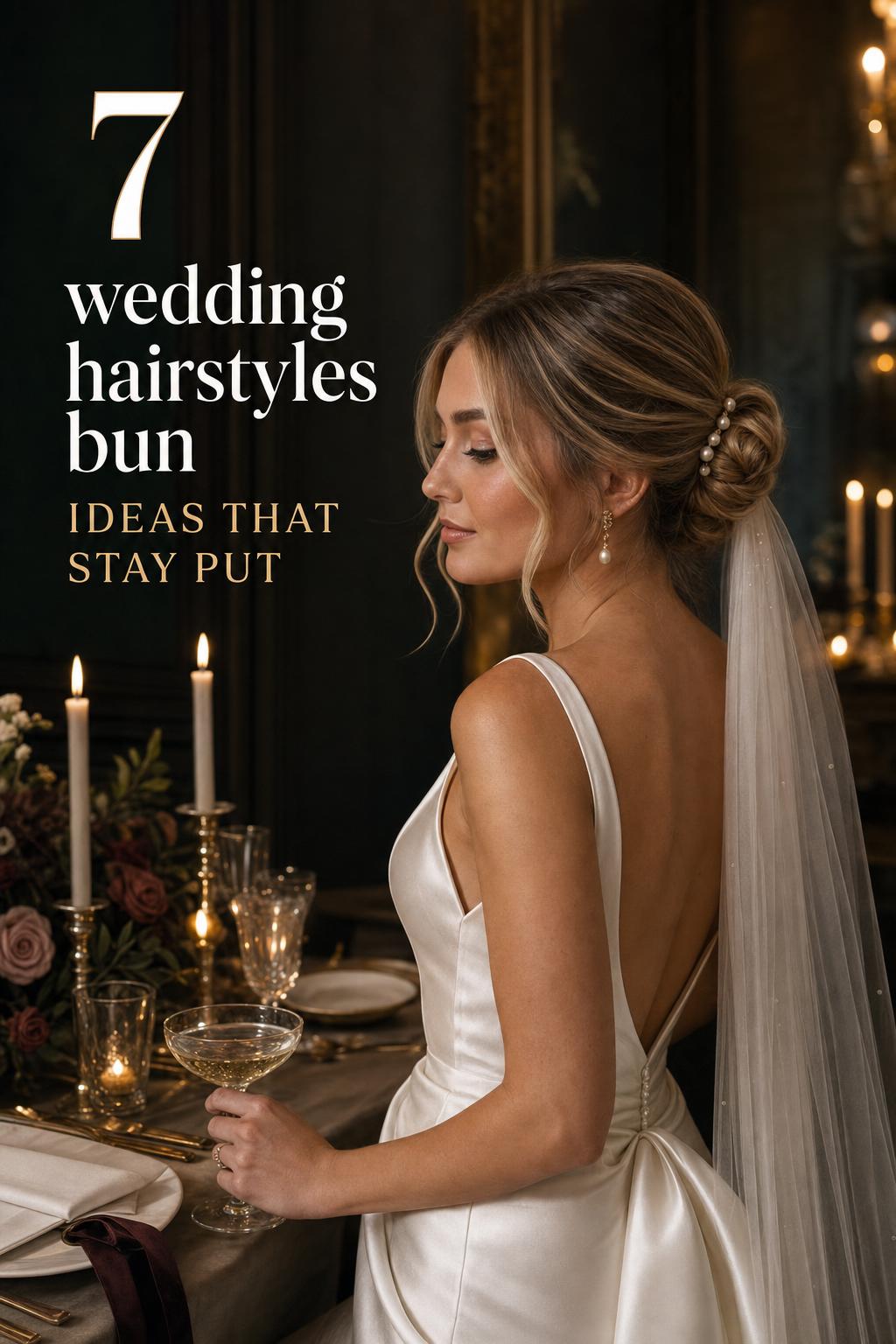
The clean low bun is one of the most enduring bridal shapes because it feels composed without looking severe. Visually, it creates a smooth line from crown to nape, drawing attention to the face and the architecture of the dress. In a candlelit evening reception, this look feels quietly expensive. In daytime light, it photographs with a crisp elegance that works especially well for contemporary bridal fashion.
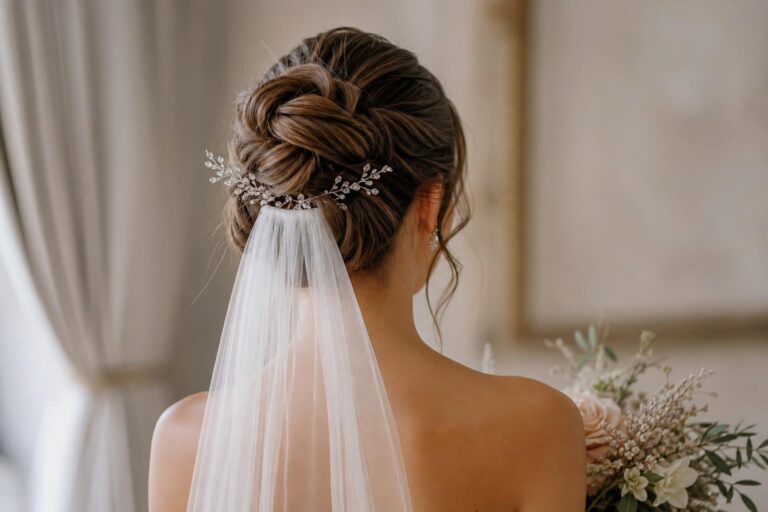
The palette here is not about color so much as finish: glossy hair, precise parting, controlled edges, and a bun positioned low at the back of the head. Pearl pins or crystal accents can be added sparingly, though this style is often strongest when accessories are restrained. It pairs naturally with sleek fabrics and gowns that benefit from a clean neckline reveal. A birdcage veil or a minimalist veil approach can also sit comfortably with this silhouette.
This is the bridal version of understatement. It fits the wedding look editorial mood because it feels polished, intentional, and highly wearable over a full day. It is also one of the most adaptable choices for brides who want their makeup, gown, or jewelry to take visual priority.
Style tip: the power of a precise parting
Who What Wear’s step-by-step slicked-back bun approach highlights a simple truth: prep hair, choose the parting, section the hair, apply pomade, slick it back, tie the hair, twist into a bun, smooth flyaways, and finish with hairspray. That sequence is useful for bridal styling because the parting changes the entire tone. A center part feels sharper and more fashion-led, while a softer or slightly offset part can make the same bun look less formal.
Look: chic chignon with old-world romance
A chignon carries a softer elegance than the sleek low bun, even when the finish is polished. The mood is romantic, timeless, and quietly formal, making it a natural fit for churches, historic venues, and refined garden celebrations. It does not need to look overly fixed; in fact, a little softness around the shape often helps it feel more bridal and less rigid.
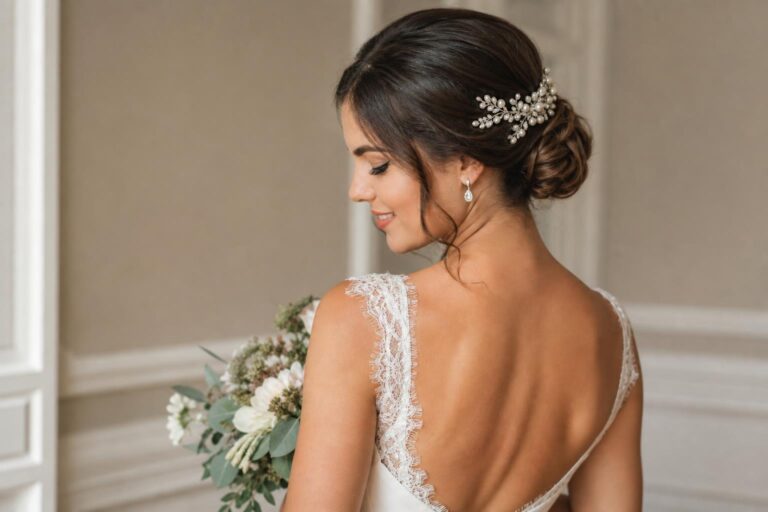
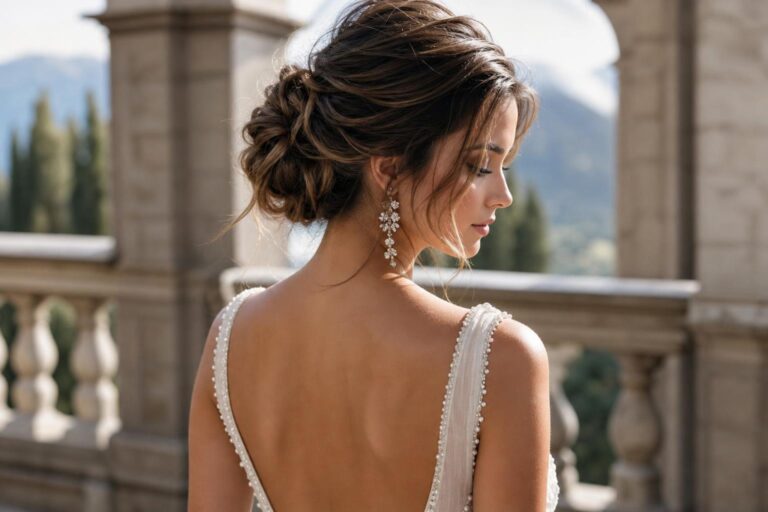
Chignons can be smooth, loose, twisted, or slightly textured, but the key lies in their tucked, sculpted appearance. This is the sort of silhouette that complements pearls, delicate crystals, or a few floral notes tucked close to the bun. It also translates beautifully for brides who want to wear drop earrings or let the back of the gown remain visible. In many wedding galleries, the chic chignon sits among the most versatile classic choices because it balances softness and polish so well.
When brides want timelessness without feeling overly traditional, this is often where the decision lands. It has enough formality for a wedding, but enough flexibility to shift between modern and vintage depending on styling details.
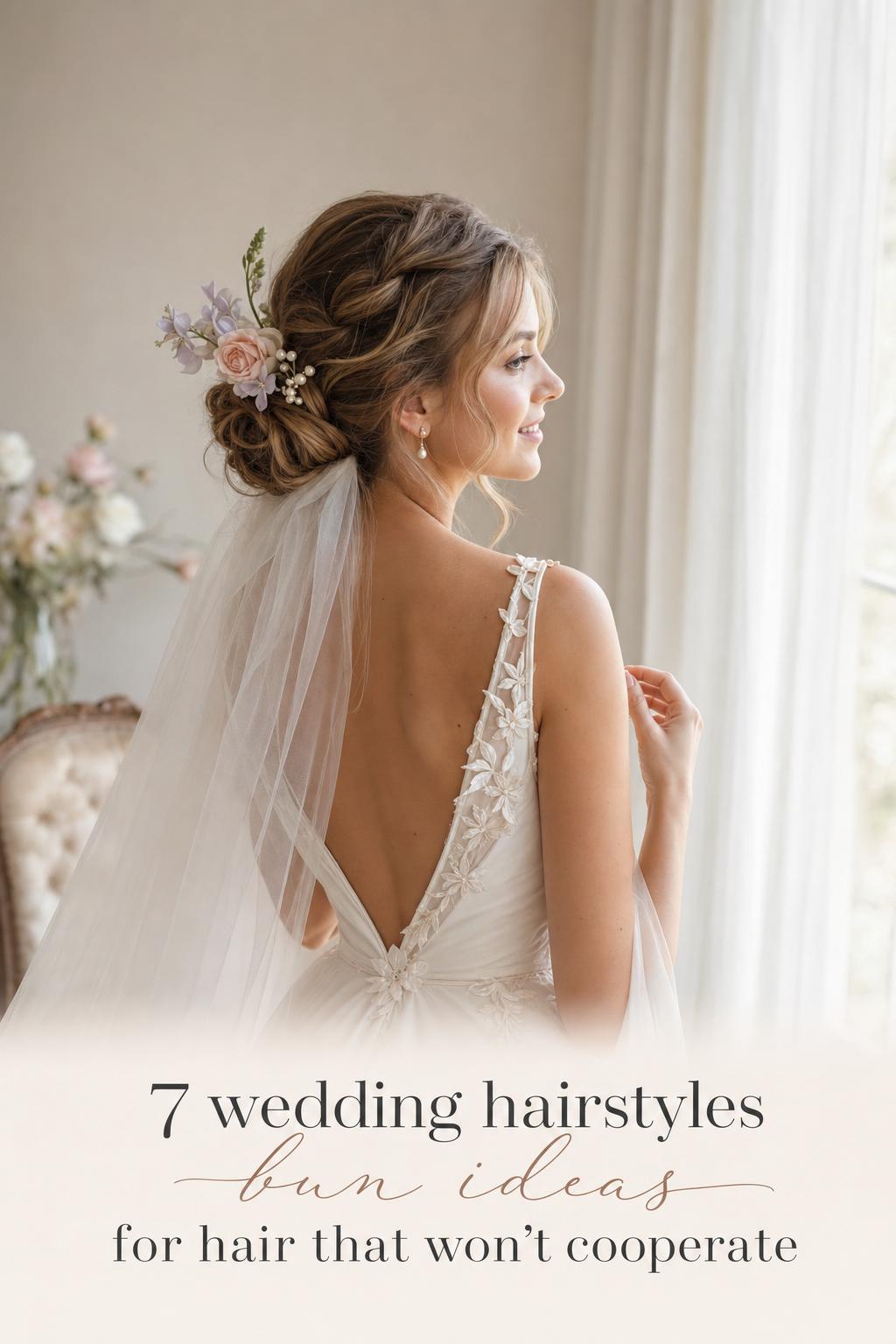
Look: naturally curly messy bun with softness and movement
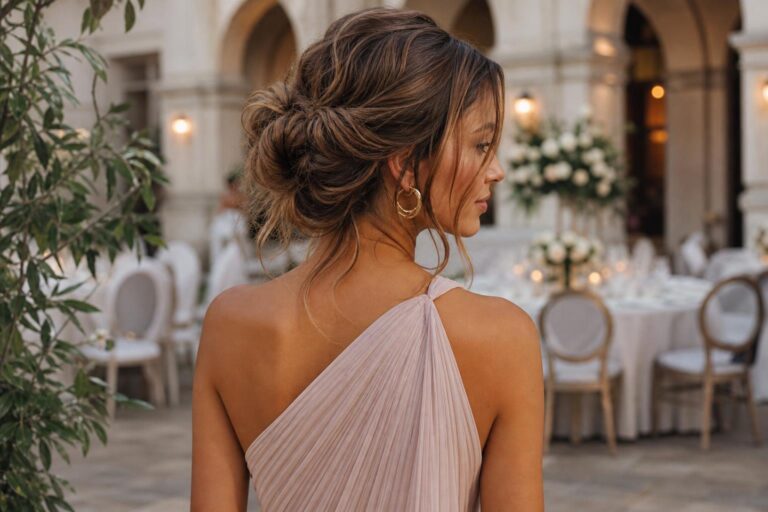
A naturally curly messy bun has a distinctly romantic energy. It feels less engineered than a sleek shape and more atmospheric, especially in golden-hour portraits or outdoor ceremonies where movement in the hair adds life to the images. This kind of bun works well when the goal is softness rather than perfection.
Texture becomes the hero here. Curly and wavy strands create natural volume, subtle tendrils, and a dimensional finish without needing heavy decoration. A few pearls, tiny crystal pins, or small flowers can be enough to elevate the style. For a bride who wants an undone but intentional look, this shape bridges ease and elegance especially well. It also suits a more relaxed wedding vibe, from vineyard settings to beach-adjacent celebrations where severe styling may feel out of place.
The appeal is not that the bun looks casual. It is that it looks alive. In bridal styling, that distinction matters. A messy bun only feels elevated when the texture is purposeful, the silhouette is balanced, and the softness is controlled in the right places.
Look: braided boho top knot for a free-spirited wedding mood
Some weddings ask for a little more personality, and that is where the braided boho top knot shines. This is a more expressive interpretation of the bridal bun: youthful, textured, and slightly playful, yet still appropriate for a ceremony. It feels especially at home in outdoor spaces, destination settings, and celebrations with a more relaxed styling language.
Braids change the surface of the bun, making it look richer and more intricate than a simple twist. A half-braided bun, rope braided bun, twisted bun, or fuller braided bun can all create this effect. Floral accents, greenery, or a more decorative accessory placement make the look feel integrated into the setting rather than merely styled on top of it. This is one of the clearest examples of how a bun can carry a wedding aesthetic rather than just support it.
- Best for brides who want visible texture and a less formal finish
- Works beautifully with floral crowns, greenery, or pearl embellishments
- Feels especially strong in garden, countryside, and beach wedding settings
The boho top knot is not for every dress or every venue, and that is part of its strength. It succeeds when the rest of the wedding look welcomes texture, movement, and a slightly freer silhouette.
Look: sleek & modern low bun for minimalist bridal fashion
Minimalist bridal fashion often asks for restraint, and the sleek & modern low bun answers beautifully. While it shares family resemblance with the clean low bun, this version leans more editorial. It is less about softness and more about intention: smooth roots, controlled shape, and a finish that feels almost architectural against the gown.
This is the kind of hairstyle that aligns naturally with beauty guidance from brands such as L’Oréal Paris, where products like mousse, hairspray, and finishing serums support a polished result. In practical terms, styling support matters because sleek hair reveals everything. A refined finish generally requires careful prep and disciplined product use to prevent flyaways from undermining the effect, especially in climates that challenge smoothness.
For brides who are drawn to a clean silhouette, this look offers strong photographic payoff. It allows accessories to stay subtle and gives the gown’s neckline, shoulder line, and jewelry placement room to breathe.
Look: French twist and French roll for vintage polish
The French twist and French roll belong to the vintage side of bridal styling, but they do not have to feel costume-like. In the right context, they read as elegant, refined, and fashion-aware. Their vertical shape creates a different energy from rounder bun silhouettes, making them a compelling choice for brides who want classic style with a little more formality.
Wedding publications often place these styles alongside fringe, vintage touches, and more editorial inspirations because the silhouette carries historic glamour naturally. A French roll with fringe can soften the look, while a neater twist feels more statuesque. Pearls, birdcage veils, or crystal details work particularly well here, reinforcing the old-world mood without overwhelming the hairstyle itself.
This is a smart option for a formal evening celebration or a bride who wants her hair to feel distinctly dressed up. The trade-off is that it may feel too polished for a very relaxed outdoor wedding, where softer buns tend to blend more naturally with the setting.
Look: floral bun crown and greenery-woven buns
Few bridal details feel more scene-setting than flowers or greenery placed directly into the bun. A floral bun crown creates a romantic halo effect, while greenery tucked into the shape feels organic and slightly less traditional. These looks are especially evocative in garden ceremonies, countryside venues, and outdoor receptions where the hairstyle echoes the environment.
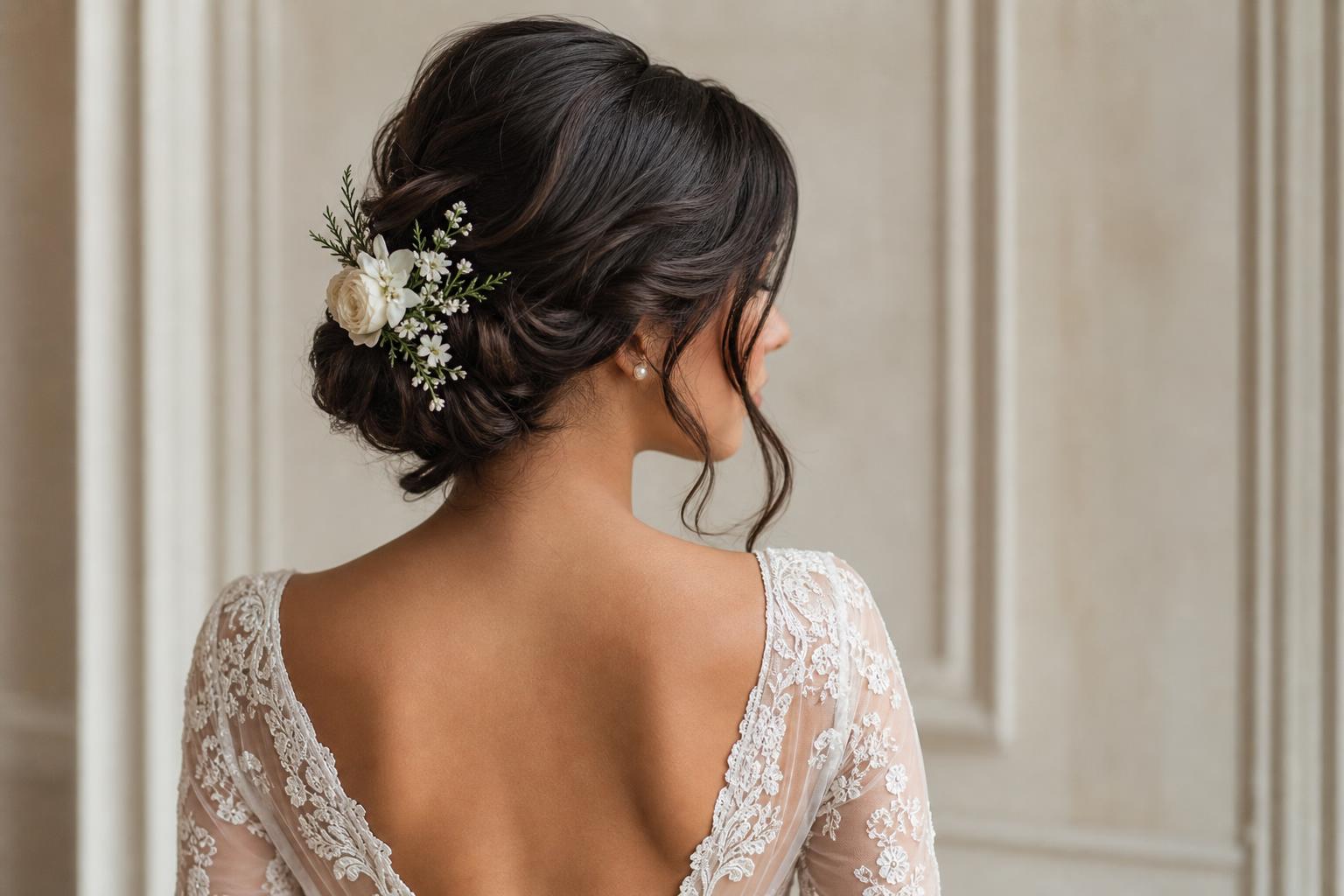
WithLoveLive’s flower bun inspiration and gallery-driven wedding features across editorial sites show how effective these accents can be when they are integrated into the hairstyle rather than simply pinned on at the last moment. Small blooms create delicacy; more visible greenery can make the bun feel fuller and more botanical. The result is often less about precision and more about harmony, which is why these styles work best with softer textures and romantic gowns.
There is also a practical styling judgment here. Floral or greenery-heavy buns are beautiful, but they should support the shape rather than weigh it down. The most elegant versions still preserve a clear silhouette beneath the decoration.
Key pieces for this aesthetic
- Small floral accents for soft romantic styling
- Greenery for a more natural, garden-led finish
- Pearls or crystals when you want bridal shine without a full floral story
- A bun shape with visible texture so accessories feel woven in
Look: the statement high bun and big mid-height bun
A high bun changes the bride’s entire silhouette. It lifts the line of the profile, creates more drama, and brings immediate focus upward. A big high bun or a bold mid-height bun can feel glamorous, youthful, and unapologetically visible, especially in formal receptions or fashion-forward ceremonies where a stronger hair statement feels appropriate.
Unlike the low bun family, these shapes tend to carry more volume and presence. That can be particularly useful for brides who want balance with a fuller dress, a stronger shoulder line, or more expressive makeup. A slicked-back messy high bun offers a modern contrast between polished roots and looser shape, while a more sculptural topknot feels cleaner and more directional. The difference is subtle in theory and dramatic in photos.
These buns are often best when the wedding mood can support their energy. In a grand setting, they feel right at home. In a softer or more rustic venue, they may need textural detail or accessory softness to feel fully in tune with the atmosphere.
Look: side buns, half-up buns, and softer hybrid styles
Not every bride wants the symmetry or formality of a centered bun. Side buns and half-up bun styles create a gentler, more romantic profile, often with a more relaxed feeling around the face. These are useful options for brides who want an updo influence without committing to a fully structured back-of-head silhouette.
A side bun can feel especially pretty in softer light and in venue settings where the hairstyle is seen from multiple angles, such as outdoor ceremonies with more fluid movement and candid photography. A half-up bun introduces a contemporary note while keeping some length visible, which can be appealing for brides who love the idea of an updo but still want a looser bridal feeling. Editorial and beauty roundups from L’Oréal Paris and broader bridal galleries show these hybrid options as strong choices for wedding season because they travel easily between bridal and guest styling.
The styling insight here is balance. These looks work best when the partial looseness feels deliberate. Too much softness without structure can read unfinished, while a well-placed side shape or half-up knot gives the style enough form to remain wedding-worthy.
Hair texture matters more than trend
Bridal inspiration often leads with visual trends, but the more useful decision usually begins with hair texture. A style that looks effortless on one hair type may require far more structure, product, or support on another. That does not mean one texture can or cannot wear a certain bun. It simply means the route to the finished result changes.
Straight hair often excels in sleek low buns, French twists, and polished chignons because the surface naturally supports a smoother finish. Wavy hair works beautifully in textured buns, twisted styles, and soft side chignons because it already offers movement. Curly and coily hair can create especially striking dimensional buns, knotless box braids bun looks, and naturally voluminous shapes that do not need much embellishment to feel complete. Fine hair may benefit from the visual fullness of a sock bun or a voluminous topknot when a larger silhouette is desired.
This is where many brides make more confident choices: not by chasing the most saved image, but by identifying which family of wedding hairstyles bun ideas naturally cooperates with their own hair. That decision usually leads to a more comfortable, longer-wearing, and more convincing final look.
Buns and dress necklines: the pairing that changes everything
A bun does more than keep hair in place. It shapes how the dress is seen. That is why neckline compatibility matters so much in bridal styling. A strapless or off-shoulder gown often benefits from a bun that opens the shoulders and collarbone. A boat neck or illusion neckline may feel more balanced with a clean or tucked style that does not crowd the upper line of the dress. The bun becomes part of the silhouette, not a separate afterthought.
Low buns and chignons are often the easiest to pair broadly because they reveal the neckline while staying understated. High buns add more drama and can elongate the overall line, which may be useful with simpler dress shapes. Softer side buns or textured braided buns can introduce romance when the gown itself is minimal and needs a little visual softness around the face and shoulders.
One practical bridal lesson stands out here: the more intricate the neckline or back detail, the more carefully the bun should be chosen. Hair should frame the gown, not compete with it.
Veils, jewelry, and accessory placement
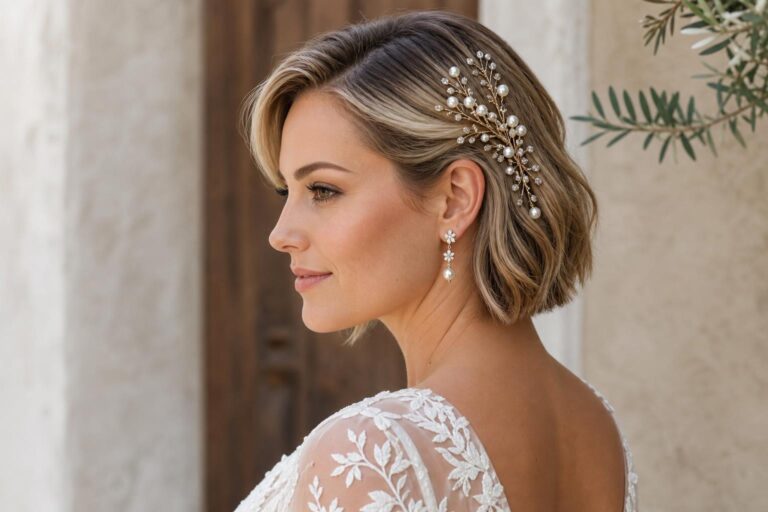
Accessories are often what turn a simple bun into a distinctly bridal one. Pearls, crystals, floral details, and greenery all appear repeatedly across wedding galleries because they add a wedding-specific finish without requiring a completely different hairstyle. The placement, however, is what separates elegant styling from cluttered styling.
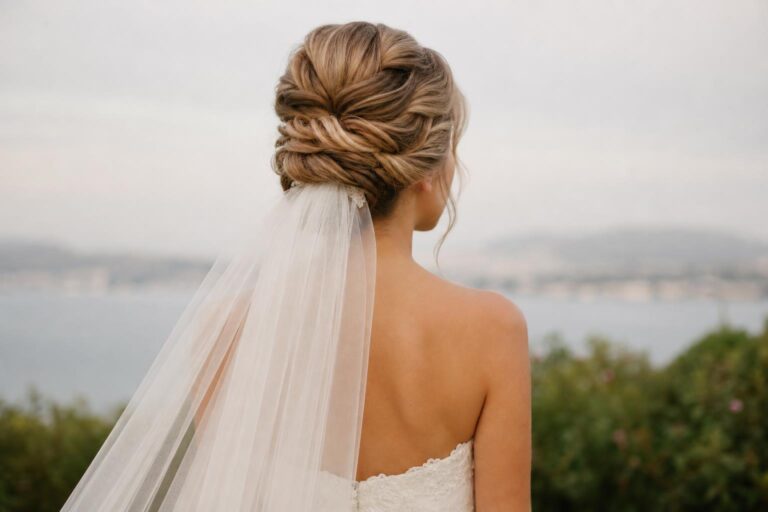
Pearls and crystals tend to suit sleek low buns, chignons, and French twists because they echo the controlled polish of the hairstyle. Flowers and greenery often belong with textured buns, braided buns, and softer top knots where they can look woven in rather than pinned on top. A veil also changes the equation. Some buns are better when positioned low to support veil placement, while others need accessory restraint so the silhouette remains clear once the veil is added.
Jewelry should also be considered in the same frame. If earrings are meant to stand out, a cleaner bun often gives them space. If the hair accessory is the statement, simpler earrings can keep the bridal look from feeling too busy.
From ceremony to reception: choosing a bun that lasts
The wedding day is long, emotional, and often physically demanding in ways that are easy to underestimate. There is usually movement, hugging, dancing, weather shifts, and long hours under lights or outdoors. A beautiful bun should still feel secure deep into the reception, not only in the first portraits.
This is why practical styling guidance from beauty sources matters. Product support such as mousse, texture products, pomade, smoothing formulas, oil-serum finishes, and hairspray is often what gives a bridal bun real longevity. L’Oréal Paris references styling systems in its wedding-season bun guides, and step-based slicked-back bun tutorials from beauty editors show how much hold depends on proper prep rather than just the final shape. A soft bun can still be secure; a sleek bun can still move naturally. The difference is usually in the preparation.
Tips for all-day wear
- Choose the bun family first, then decide on accessories, not the other way around.
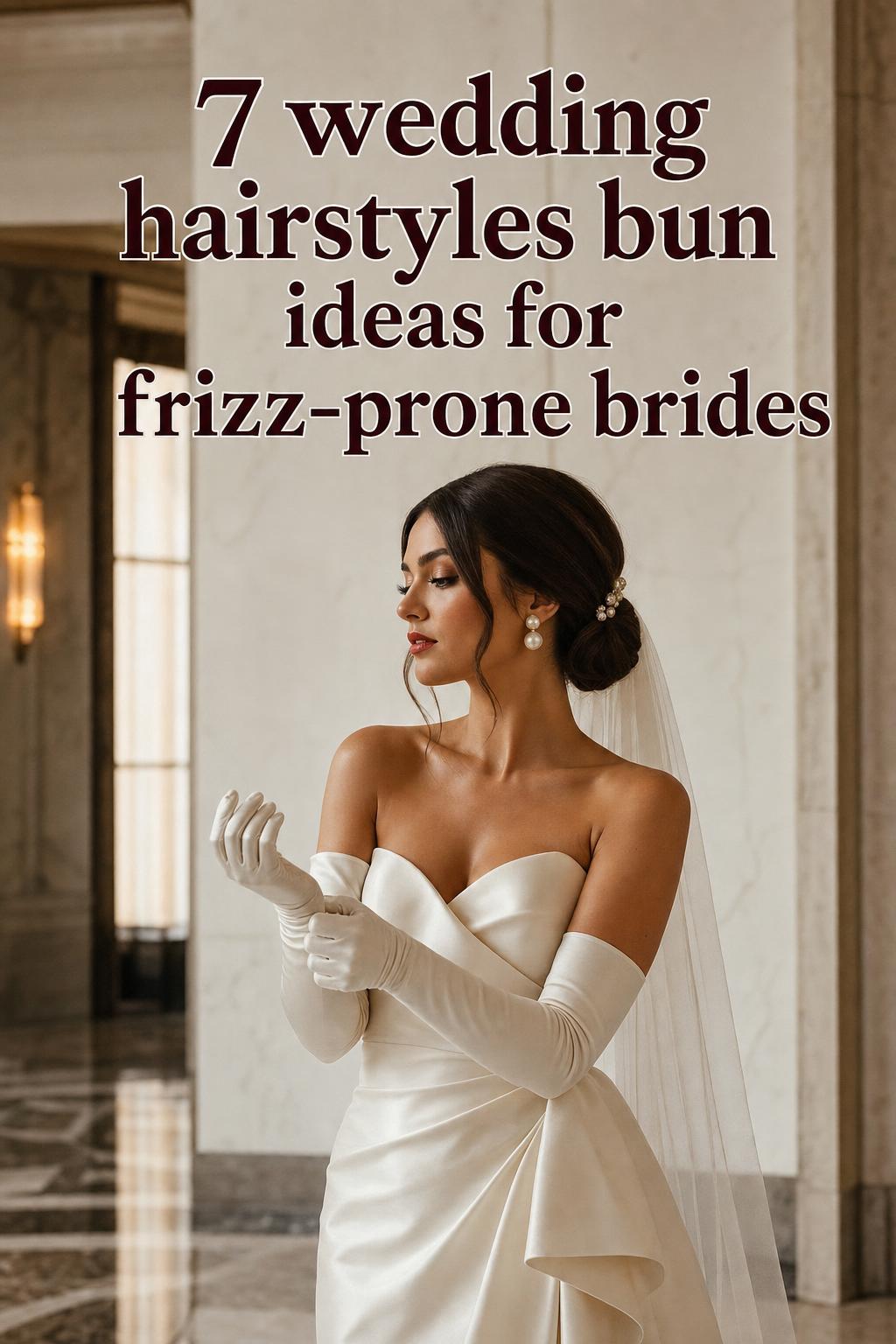
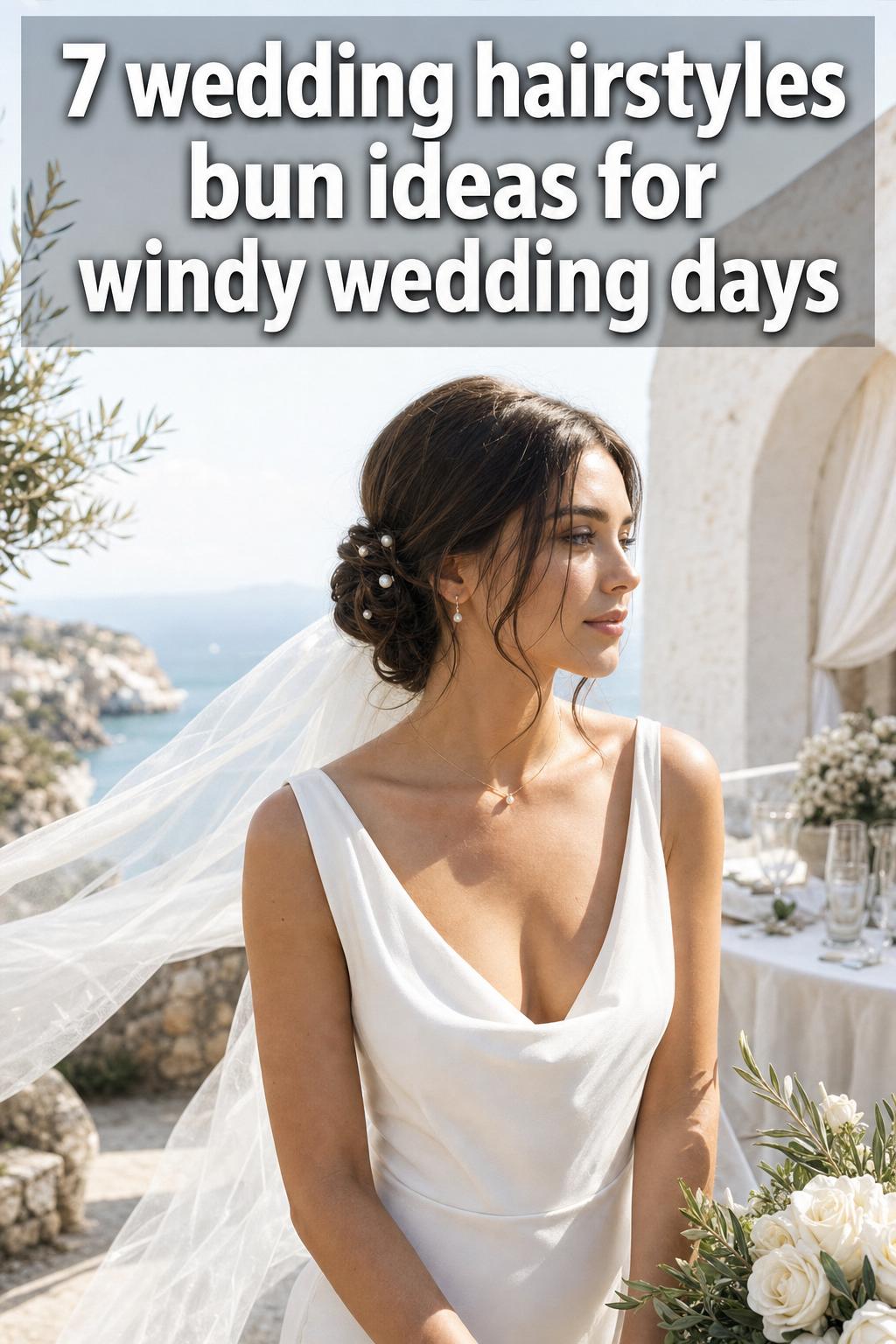
- If the ceremony is outdoors, prioritize hold and climate-conscious finishing.
- For a reception-heavy celebration, avoid a bun shape that feels tight or uncomfortable at the crown.
- Make sure embellishments sit securely so they do not shift as the event progresses.
Seasonal and regional styling: why climate changes the right bun
Wedding hair is never entirely separate from weather. A bun that feels perfect in a dry indoor setting may behave differently in a humid summer ceremony. That is why seasonal and regional considerations deserve more attention than they usually get in wedding inspiration. In U.S. wedding planning, this is especially relevant when comparing heat-heavy destinations with cooler indoor venues.
Humidity-resistant styling usually favors more secure, controlled buns, especially sleek low buns, compact chignons, and polished twists. Softer messy buns and highly loosened tendrils can still be beautiful in heat, but they generally need more thoughtful product support and realistic expectations. In beach or outdoor settings, decorative choices also matter. Big beachy embellishments can feel stunning in concept, but they should not make the hairstyle unstable.
In cooler seasons or indoor evening weddings, there is often more room for shape, volume, and vintage styling because the hair is not fighting the same climate pressures. That can make French twists, larger high buns, and more delicate accessory placement feel easier to maintain over time.
Bride, guest, or wedding party: the bun should match the role
Not every wedding bun should carry the same level of presence. Bridal styling, guest styling, and wedding party styling often overlap, but they are not identical. A bride may choose a more decorated chignon, pearl-studded low bun, or floral crown bun because the hairstyle is part of the overall bridal statement. A guest may prefer a simpler side bun, loose low bun, or polished topknot that feels elegant without drawing too much attention.
This distinction appears across wedding and beauty editorial coverage for good reason. The same bun can be interpreted differently depending on scale, accessories, and finish. A classic low bun with subtle smoothing can feel perfect for a guest at a formal reception. The bridal version of that same shape may include more careful accessory placement, veil compatibility, or a more sculpted finish. Understanding that difference helps keep the look occasion-aware and polished.
For bridesmaids or wedding party members, consistency matters too. Choosing one bun family with slight variation often photographs more elegantly than forcing identical results on different hair textures.
Editorial inspirations that keep showing up
Across bridal and beauty media, certain references continue to shape how buns are styled. The Knot repeatedly spotlights variations such as a clean low bun, a chic chignon, a naturally curly messy bun, a braided boho top knot, a French roll with fringe, a floral bun crown, and a sleek & modern low bun. Those recurring shapes matter because they show the breadth of the category rather than a single trend dominating the space.
L’Oréal Paris brings in a more tutorial-based perspective, framing bun hairdos for wedding season through classic low buns, messy buns, sock buns, voluminous topknots, half-braided buns, chignons, French twists, side buns, rope braided buns, knotted buns, and loose low buns. Who What Wear narrows the lens further with a slicked-back bun tutorial informed by celebrity hairstylist Luke Hersheson, with product context tied to brands such as Hershesons, Got2b, Oribe, and L’Oréal. Meanwhile, bridal galleries from Allure, Bridal Guide, Wedding Forward, Yeah Weddings, Marie Claire, and WithLoveLive reinforce how often buns sit at the intersection of timeless bridal beauty and current trend language.
For readers, the lesson is useful: the strongest bun choices are rarely random. They belong to recognizable style families that have already proven adaptable across venues, aesthetics, and levels of formality.
How to recreate the mood without overcomplicating it
It is easy to make bridal hair feel more complicated than it needs to be. The clearest path is to choose one defining direction and let every detail support it. If the mood is modern, commit to smoothness and restraint. If the mood is romantic, build softness through texture or a low chignon. If the wedding is botanical or outdoor-led, let flowers or greenery play a visible role. If the look leans vintage, consider a French twist, French roll, or a more formal bun shape with carefully chosen accessories.
A common styling mistake is trying to blend too many influences into one hairstyle: sleek roots, beach texture, large flowers, crystal pins, and strong jewelry all at once. Buns look most expensive when the visual story is edited. One clear idea, executed well, almost always feels more elevated than several competing ones.
A practical bridal checklist
- Choose the silhouette: low, high, mid-height, side, half-up, braided, twist, or chignon.
- Choose the finish: sleek, textured, messy, vintage, or floral.
- Choose the support details: mousse, pomade, smoothing products, hairspray, or oil-serum finish.
- Choose the accents: pearls, crystals, flowers, greenery, or a veil.
- Check the hairstyle against the gown neckline and the venue climate.
Why buns remain one of the most trusted bridal choices
A bun works because it solves several bridal needs at once. It can feel formal without stiffness, decorative without excess, secure without sacrificing beauty. It flatters a wide range of wedding aesthetics, from modern city ceremonies to beach celebrations, romantic gardens, and vintage-inspired receptions. Just as importantly, it allows for meaningful variation. A bride can choose from sleek low buns, top knots, braided buns, side buns, French twists, chignons, flower buns, and textured styles without leaving the same overall hair family.
That flexibility is what keeps wedding hairstyles bun inspiration so compelling. The shape is timeless, but the styling language can be entirely personal. Once the choice is guided by dress, venue, texture, accessories, and comfort, the result tends to feel less like a trend and more like a complete bridal identity.
FAQ
What is the most timeless wedding bun style?
A classic low bun or chic chignon is usually the most timeless choice because it feels elegant, works across many dress styles, and can be styled sleek or soft depending on the wedding mood.
Can a wedding bun work with a veil?
Yes, a wedding bun can work beautifully with a veil, especially low buns, chignons, and polished twists, since these shapes often leave enough structure and placement space for the veil without overwhelming the hairstyle.
Which bun is best for a bride with naturally curly hair?
A naturally curly messy bun or a softly textured low bun is often a strong choice because it lets the curl pattern add volume and movement, making the hairstyle feel romantic and dimensional rather than overly controlled.
Are sleek buns better for formal weddings?
Sleek buns often suit formal weddings especially well because their polished finish feels refined and structured, though a formal wedding can also support a chignon, French twist, or elegant textured bun if that better matches the gown and overall aesthetic.
How do I choose between a low bun and a high bun for my wedding?
A low bun usually feels more classic, versatile, and neckline-friendly, while a high bun creates more drama and a stronger profile, so the best option depends on the gown shape, desired mood, and how statement-making you want the hairstyle to feel.
Do braided wedding buns last well through a full day?
Braided wedding buns can last very well when they are properly secured and supported with the right styling products, and they often have the added benefit of making texture and movement look intentional even after hours of wear.
What accessories look best with wedding bun hairstyles?
Pearls, crystals, flowers, and greenery are among the most popular accessories for wedding bun hairstyles, with pearls and crystals often suiting sleek styles and floral or greenery accents pairing especially well with textured or braided buns.
Can a bun work for wedding guests too?
Absolutely, a bun is a strong option for wedding guests because it looks polished and occasion-appropriate, especially in forms like a loose low bun, side bun, or simple topknot with minimal accessories.
What helps a wedding bun hold in heat or humidity?
Heat and humidity usually call for stronger prep and finishing support, including mousse, pomade, smoothing products, and hairspray, along with a bun shape that is secure enough to hold its structure without relying on overly loose strands.