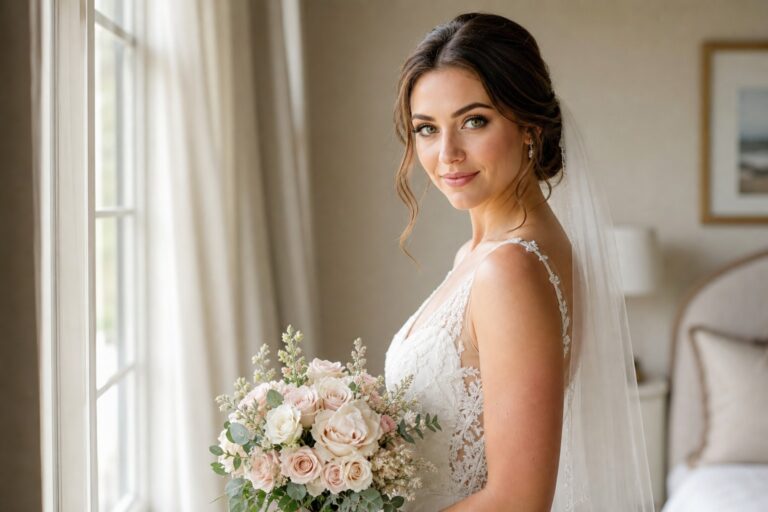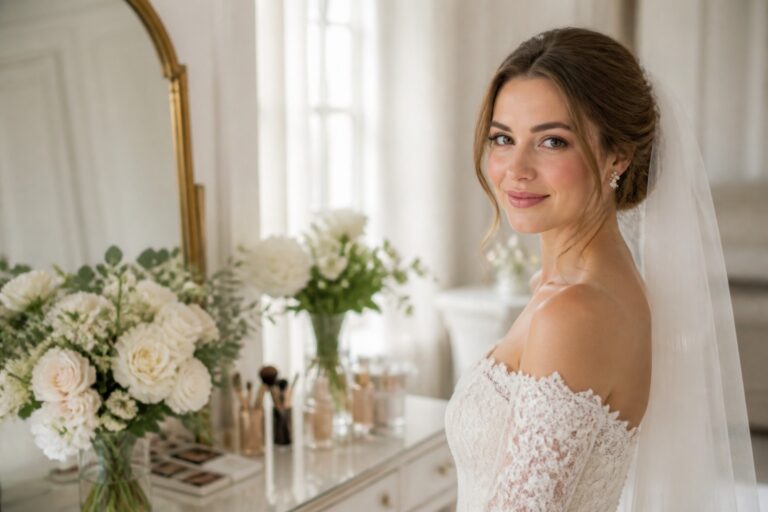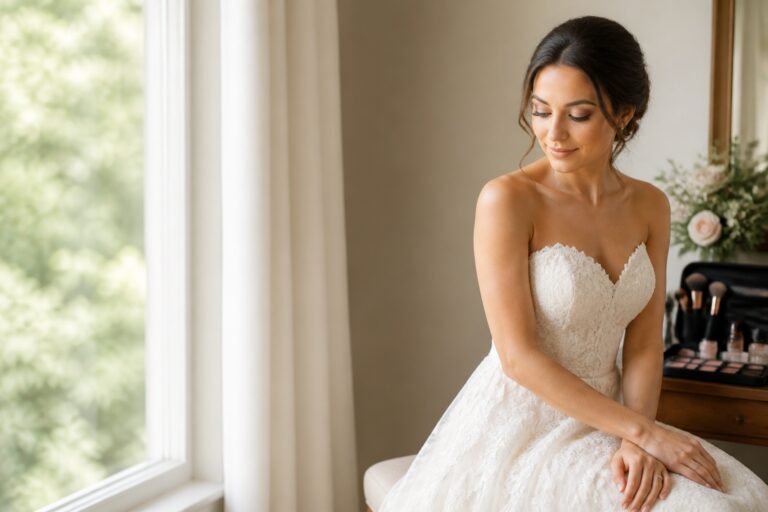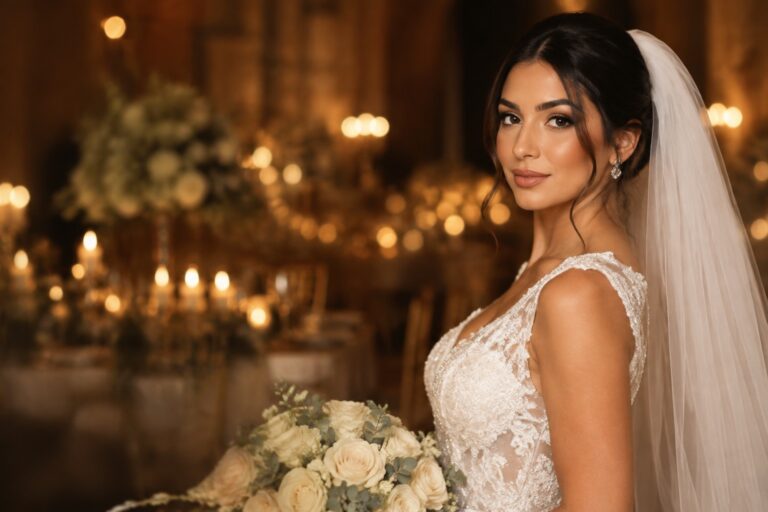
Bridal Makeup for Blondes: Fix Washed-Out Wedding Looks
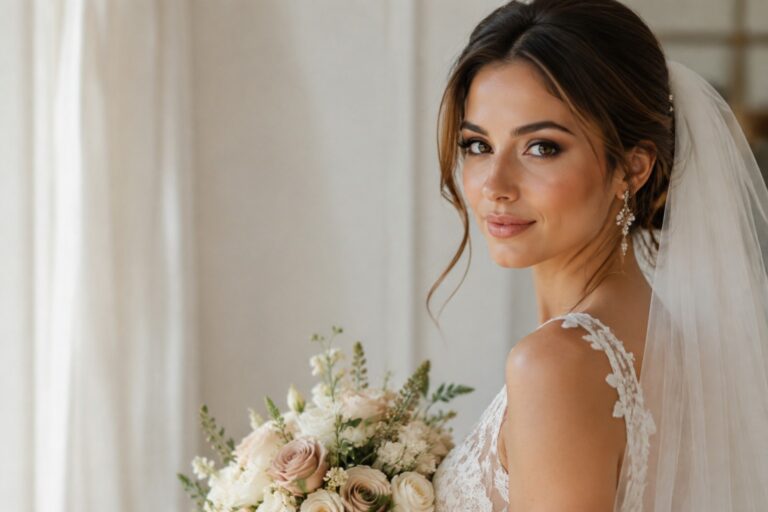
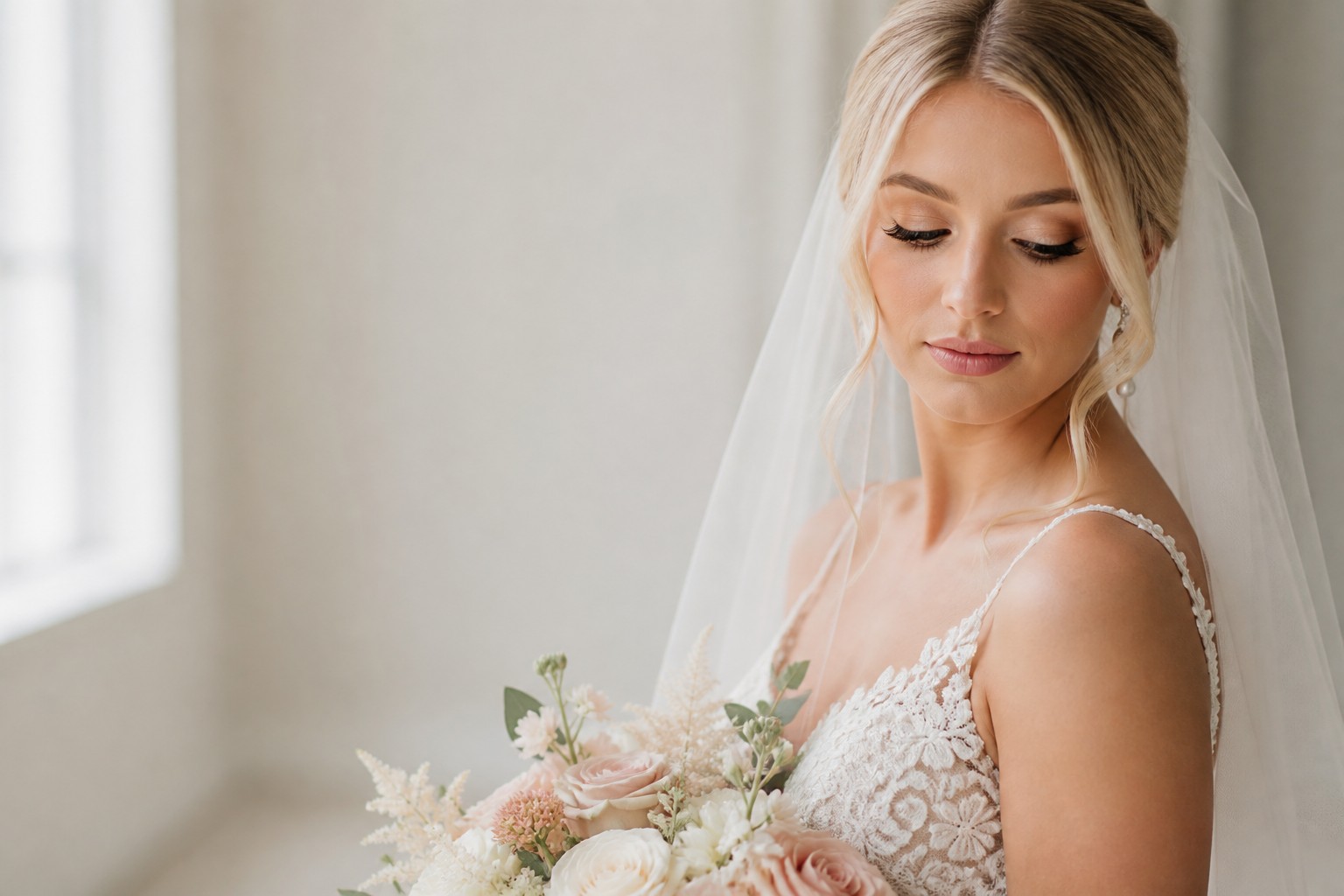
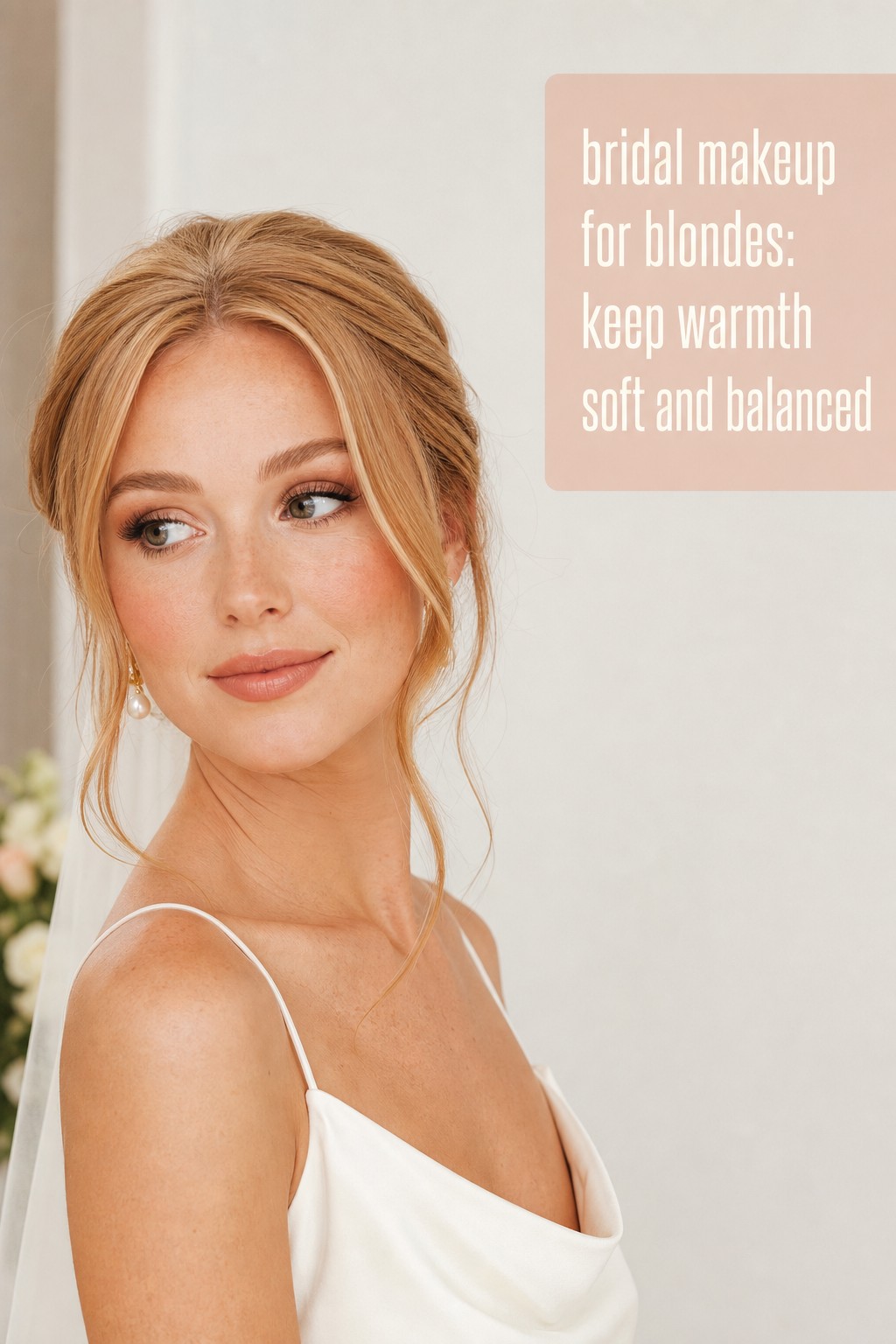
Blonde hair can make a bridal look feel luminous, but it can also create a frustrating makeup problem: the face looks polished in the mirror and almost disappears in photographs. Pale lashes, light brows, fair skin, cool highlights, and a bright dress can flatten the features unless the makeup adds the right amount of contrast. The answer is not automatically darker foundation or heavier contour. Good bridal makeup for blondes creates structure, warmth, and color in places that help the face stay expressive from the ceremony through the last dance.
The most useful place to start is not a saved makeup photo. Start with the issue you want to solve. Do you look washed out beside your dress? Does black liner feel too harsh? Does your skin become shiny in flash photography? Do your brows and lashes vanish when your hair is styled away from your face? This guide uses those real problems to build a wedding makeup plan for ash, golden, honey, platinum, dirty, and strawberry blondes. You will learn how to choose a direction, explain it to a makeup artist, and test it before the wedding day.
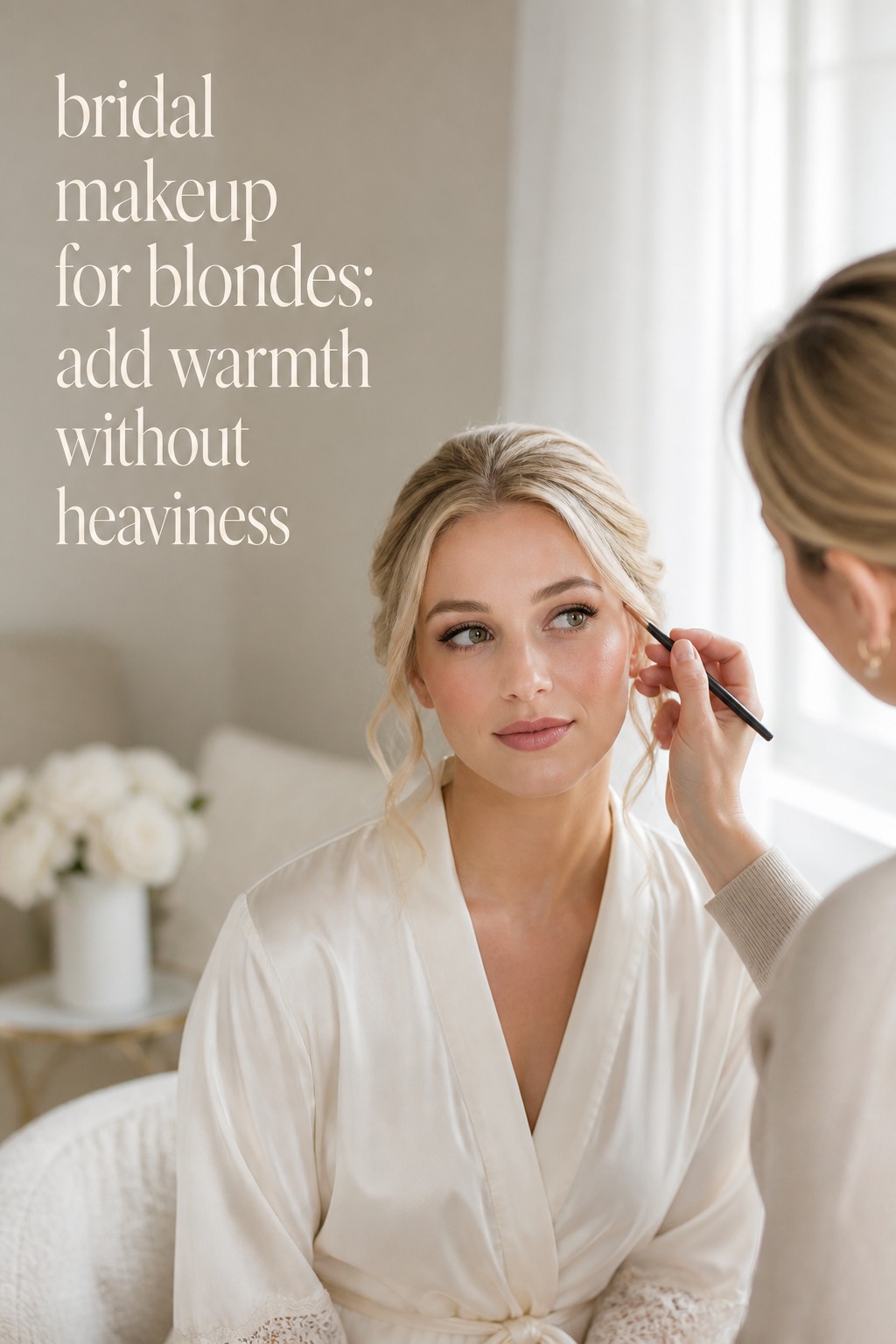
Diagnose Why Your Makeup Looks Washed Out Beside Blonde Hair
Washed-out makeup usually comes from a lack of separation between the lightest elements of the look. Blonde hair, a white or ivory dress, pale skin, and neutral makeup can all sit in the same visual range. That does not mean you need dramatic makeup. It means the face needs carefully placed definition so the eyes, cheeks, brows, and lips remain visible without looking painted on.
Your wedding look is only the beginning.
Keep your guest list, vendors, timeline, and every important detail together with Zarellea — so your day feels as considered as your style.
Look at your features in daylight without trying to label your skin simply as fair or not fair. Notice whether your skin reads pink, golden, olive, peach, or neutral. Then look at your blonde. Ash blonde usually has gray, blue, or silvery qualities. Golden and honey blonde reflect warmth. Strawberry blonde carries copper or red. Dirty blonde can sit between cool and warm, which is why a single rule may not work. Your hair shade is a useful starting point, but your skin undertone determines whether a color looks harmonious or disconnected.
Next, identify the features that need the most support. Light brows may need shape more than strong color. Pale lashes may need a brown-black or soft black mascara so the eyes are visible at a distance. Fair cheeks may need a little more blush than you wear every day, especially if you want them to register in photos. A very pale lip may look elegant in person but disappear beside a bright gown, while a medium rose, peach, pink-beige, or blue-based red can preserve the shape of the mouth.
- If the face looks flat: add soft warmth through bronzer, blush, and a dimensional eye color instead of heavy contour.
- If the eyes vanish: define the lash line, brows, and outer corner while keeping the lid color light enough for your features.
- If the skin looks too pink or red: choose a balanced base and let blush provide the healthy color rather than piling on foundation.
- If the makeup looks harsh: replace solid black shapes with brown, taupe, plum, or soft charcoal and blend the edges.
- If the makeup disappears on camera: increase contrast gradually during your trial and test it with the actual photographer or a similar flash.
Use this diagnosis to write one sentence for your artist. For example: “I want fresh skin and soft warmth, but I need enough brow, lash, cheek, and lip definition to stand beside an ivory dress and photograph well outdoors.” That sentence is more useful than saying only “natural” or “glowy.” Natural can mean sheer skin, sculpted skin, a blush-heavy look, a matte look, or a polished full face. Your problem statement gives the artist a target.
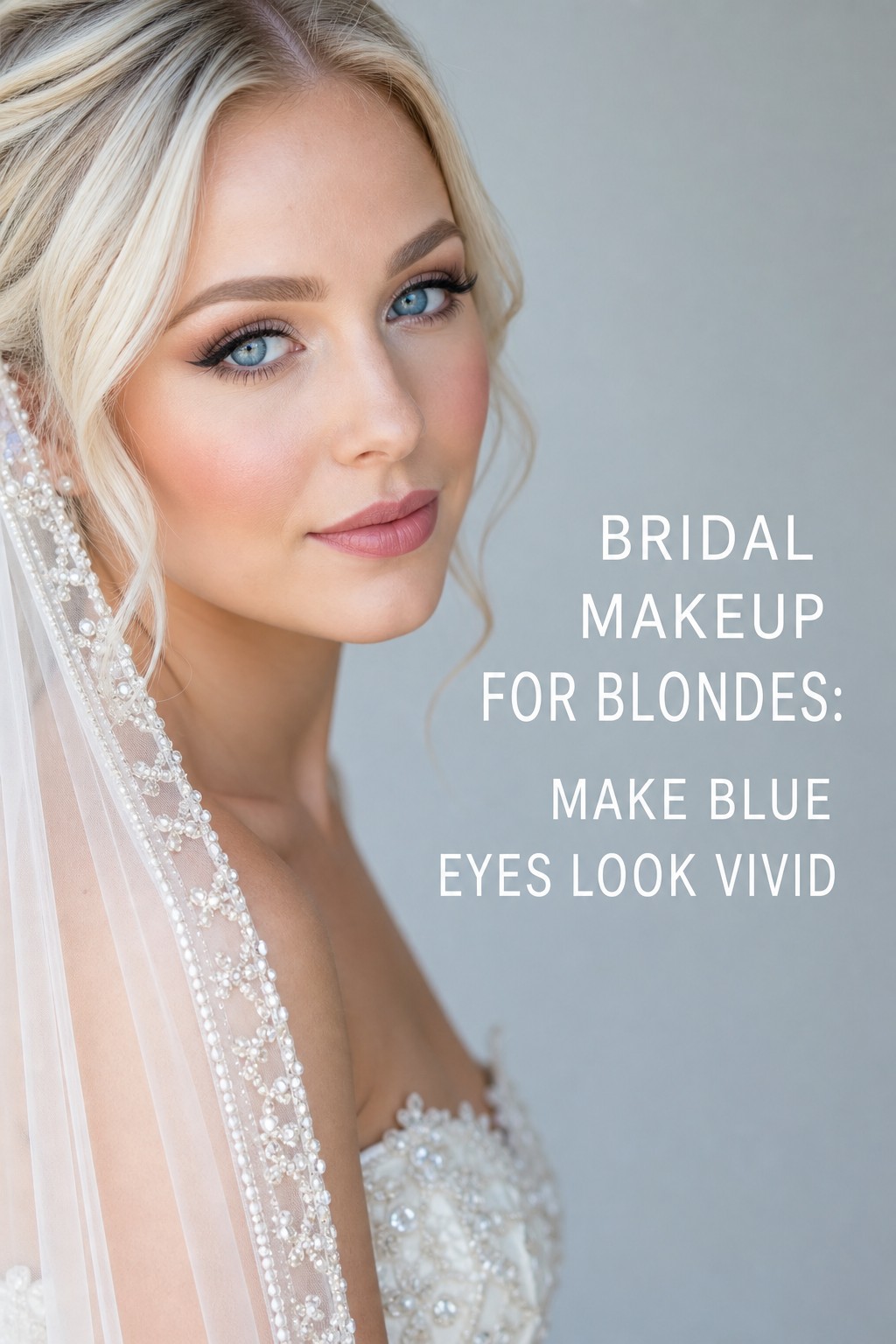
Choose Colors by Blonde Shade, Undertone, and Eye Color
There is no universal makeup palette for blondes. The same peach blush that brings life to warm golden hair may make an ash blonde with cool pink skin look overheated. The same silvery shadow that feels elegant with platinum hair can make a golden blonde look dull. Think in relationships rather than rules. You want enough contrast to make the face readable, plus enough harmony that the makeup appears intentional with the hair and dress.
For ash, icy, or platinum blonde hair, try cool rose, dusty pink, mauve, soft plum, beige, taupe, and balanced neutrals. These colors can prevent cool hair from looking disconnected from the face. You do not have to avoid warmth entirely. A neutral brown crease, a muted peach blush, or a champagne highlight can keep the complexion alive. The key is to avoid turning every part of the face gray or silver, because a completely cool palette may reduce dimension in photographs.
For golden, honey, or warm dark blonde hair, consider peach, apricot, warm rose, bronze, soft gold, caramel, champagne, and warm brown. These shades echo the light in the hair and can make the skin look healthy beside an ivory gown. If your skin is cool, use warm colors in small areas, such as a bronze lid or peachy blush, and balance them with a neutral foundation and a rosy lip. Warm hair does not require an orange face.
For strawberry blonde hair, soft peach, gold, champagne, rose, and gentle terracotta can connect the makeup to the copper in the hair. Avoid assuming that every red-haired or strawberry blonde bride needs a strong warm look. Your skin can still be cool or neutral. Test blush and lipstick next to the hair at the trial, because a shade that looks lovely in a product pan may compete with natural redness or make the complexion look too yellow.
Blue eyes and blonde hair often benefit from warm browns, peach, copper, bronze, gold, champagne, and soft mauve because these colors create contrast with the cool iris. A brown-black or chocolate liner can define the eyes more gently than solid black. If you want a glamorous evening look, a small black wing and fuller lashes can work beautifully, but keep the rest of the face balanced. If your eyes are green, try plum, rose, warm taupe, bronze, or soft brown. Brown eyes can carry pink, plum, gold, bronze, and even a muted purple, especially when the blush and lip stay quiet.
Your dress adds another layer. Bright white can handle a slightly clearer pink, rose, or neutral contrast. Ivory and champagne often pair well with warm beige, peach, bronze, and soft gold, but check the actual fabric. A cool pink may make champagne look warmer by comparison. If your dress has silver beading, you can repeat a controlled cool highlight without turning the whole look icy. If it has gold jewelry or warm embroidery, a champagne or golden highlight may feel more connected.
- Ash blonde with cool skin: dusty rose eyes, taupe liner, cool pink blush, and a rose-beige lip.
- Golden blonde with neutral skin: soft bronze eyes, champagne highlight, peach-rose blush, and a warm nude lip.
- Strawberry blonde with fair skin: peach or soft gold eyes, brown liner, apricot blush, and a rosy peach lip.
- Platinum blonde with blue eyes: champagne lid, mauve or warm taupe crease, defined brows, and a pink-beige lip.
- Dirty blonde with green or hazel eyes: neutral brown, muted plum, rose blush, and a softly defined lash line.
These are starting briefs, not restrictions. If you love a berry lip, blue liner, or strong pink blush, bring it to the trial. A personal color can look bridal when the edges are deliberate, the finish is tested, and the rest of the face supports it. The goal is not to make every blonde bride look the same. The goal is to make your chosen contrast feel like part of you.
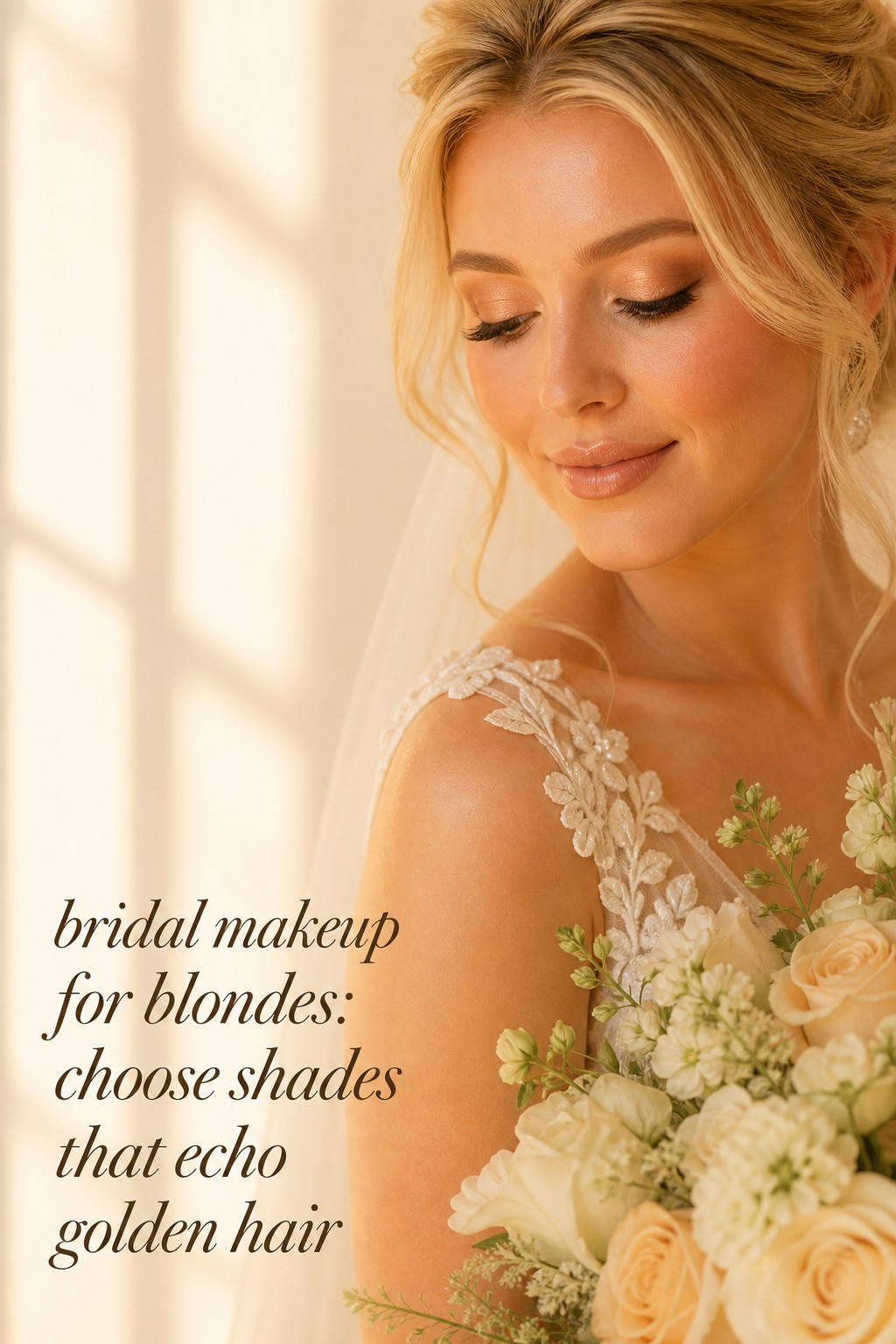
Build a Blonde Bridal Makeup Look That Reads Clearly in Photos
Once you have a color direction, build the face from skin outward. Start with skin preparation that you already know works. Hydrated skin helps makeup sit evenly, but adding a new strong treatment immediately before the wedding can create irritation, texture, or unexpected dryness. Keep the routine familiar and give your artist information about sensitivity, allergies, contact lenses, and products that have caused problems before.
For the base, choose coverage according to what you want to see in real life and in photos. A thin, well-blended layer with targeted concealer often looks more dimensional than a heavy mask. Fair skin can show excess product quickly, especially around the nose, under the eyes, and at the hairline. Ask for a base that matches your neck and chest rather than choosing a shade only from your face. If you use self-tan, test the foundation after the tan you expect to wear for the wedding.
Brows are especially important for blonde brides because light brow hairs can disappear when the face is photographed from a distance. The right brow is not necessarily dark. A softly filled brow in a neutral blonde, taupe, or light brown can create structure while keeping the expression gentle. Ask for hair-like strokes or a tinted brow product rather than a solid block. Take a photo from several feet away, because a brow that looks subtle in the mirror may need a little more definition for the ceremony.
For the eyes, use a transition shade that is visible enough to shape the socket, a medium tone close to the lash line, and a lighter or reflective point where you want light. Warm taupe, peachy brown, bronze, rose, and mauve can add depth without making the eye look bruised or overly smoky. Place shimmer where it will help the eye, usually the center of the lid or inner corner, and keep large particles away from areas where flash could make texture look exaggerated.
Liner should support the eye shape, not become the entire look. Brown, espresso, charcoal, plum, or brown-black can be easier to blend than a hard black line. If you want black liner, ask for a thin line that thickens toward the outer corner, then photograph it with your eyes open and relaxed. Lower-lash definition can help the eyes show up, but too much dark product beneath a fair eye may make the face look tired. Your artist should adjust the placement to your eye shape, not copy a line from a photo.
Blush is one of the most important solutions for a blonde bride who looks washed out. A soft rose, peach, apricot, pink, or muted berry can bring the face back to life. Apply enough for the camera, then blend the edges so the color looks part of the skin. Place it according to your face shape and the mood you want. A higher sweep can feel lifted and editorial, while a little color on the apples can feel fresh and romantic. Ask to see the blush in daylight because salon lighting can make it look stronger or weaker than it really is.
Bronzer should create warmth, not a visible stripe. Use it where the sun would naturally touch the face, and keep the undertone compatible with your skin. A cool fair complexion may need a neutral beige bronzer rather than an orange one. A warm blonde can often carry a golden tone, but too much warmth can compete with a peach or coral lip. Contour is optional. If you want definition, a soft shadow under the cheekbone or along the jaw is usually more natural than a sharply carved shape.
Finish the lips with a shade that preserves their shape. Pink-beige, rose, peach, mauve, soft berry, and blue-based red can all work depending on the rest of the face. If your lips are naturally pale, a completely nude color may disappear next to the dress and blonde hair. Use lip liner to create a clean edge, apply the lipstick, blot, and apply a second thin layer. Gloss can look beautiful, but test whether it moves into fine lines or transfers to a veil, glass, or partner’s face.
- Skin: match the neck and chest, build thin layers, and conceal only where needed.
- Brows: add soft shape and hair-like definition rather than a dark, heavy block.
- Lashes: curl them, use waterproof mascara, and consider natural individual or strip lashes if your eyes need more frame.
- Cheeks: use blush to restore life and bronzer to add warmth, then check both in daylight and flash.
- Glow: keep highlighter on intentional high points and powder areas that become reflective or crease.
- Lips: choose a shade with enough contrast to remain visible and test its wear with drinking and talking.
A strong brief might sound like this: “I want a luminous but controlled base, softly structured taupe and peach eyes, brown-black definition, visible rosy blush, and a pink-beige lip that will not disappear. Please keep the brows and lashes soft but readable.” It tells the artist what the face needs, how much drama you want, and which details matter in photographs.
Solve Trial, Longevity, and Wedding-Day Makeup Problems
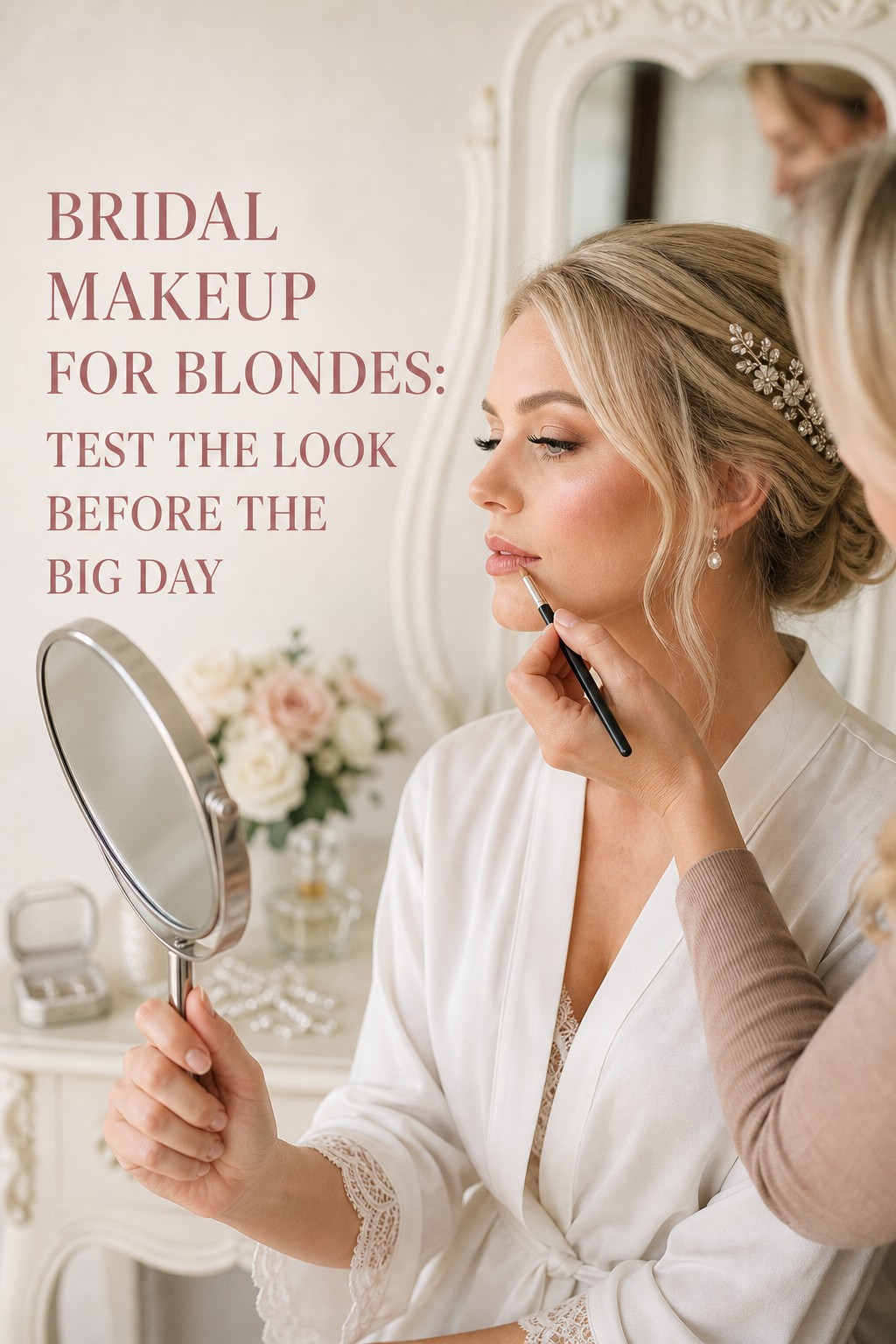
A makeup trial should answer practical questions, not only confirm that the first impression is pretty. Wear the makeup long enough to see where it fades, separates, creases, or becomes shiny. Take photos in daylight, indoor light, backlight, and flash if possible. Photograph yourself from the distance guests will see and in close-up for ring, bouquet, and family portraits. A look can be beautiful in a close selfie and too faint from across the ceremony space.
Bring the actual or approximate dress color, veil, jewelry, and hairstyle reference. Blonde hair can look much lighter when it is pulled away from the face, and a veil can reflect light onto the skin. If you are changing your hair color before the wedding, schedule the makeup trial after the change or tell your artist exactly what will be different. The makeup should work with the final hair tone, not a temporary version that will no longer exist.
Test the products that create the most risk. Waterproof mascara should be checked with tears or humidity, false lashes should be worn long enough to confirm comfort, and lip color should be tested with food and drinks. If you have sensitive eyes, do not wait until the wedding morning to discover that a lash adhesive causes irritation. If your skin is dry, oily, textured, or prone to redness, use the trial to learn which layers help and which ones make the surface look heavier.
Photography changes the balance slightly. A camera can reduce the appearance of blush, brows, and lash definition, while flash or direct light can exaggerate shine and visible shimmer. This is why a bridal look often needs a little more color than everyday makeup but not necessarily more product everywhere. Increase the details that create shape, then keep the skin thin and controlled. Ask your photographer whether the day will involve flash, bright sun, candlelight, or a mix, and share that information with your artist.
Plan your timing around the whole morning. Hair and makeup order depends on your team, but your final look should have enough time for a calm check, lip application, veil placement, and small corrections. Avoid booking a new facial, peel, brow treatment, lash service, or strong active product too close to the wedding unless you have already tested it safely. Consistency is more valuable than a dramatic last-minute fix.
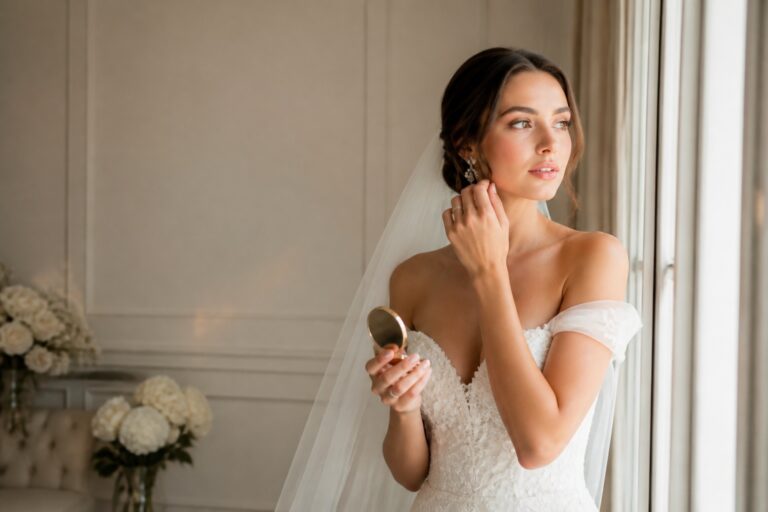
Pack a small touch-up kit that matches the actual look: lip liner and lipstick, a little powder or blotting paper, cotton buds, a clean sponge if your artist recommends one, and a small mirror. Add tissues for tears and a lash adhesive only if you are using lashes and know how to apply it. Ask your artist to write down the lip shade and any emergency steps. A helper can keep the kit available so you do not have to search for it during photographs or dinner.
Before approving the trial, ask yourself four questions. Do I still look like myself? Can I see my eyes, brows, cheeks, and lips in photos? Does the color make sense beside my hair, skin, jewelry, and dress? Can I wear the lashes, base, and lip comfortably for a full day? If one answer is no, the trial did its job. Adjust the specific problem rather than abandoning the entire concept.
FAQ
What is the best bridal makeup for blondes with fair skin?
The best look depends on your undertone, eye color, dress, and personal style, but soft definition usually works well. Try a base that matches your neck, a visible rose or peach blush, softly filled brows, brown-black liner, and a lip with gentle contrast. Test the colors in daylight and photos so the face does not disappear beside light hair and a bright dress.
What eyeshadow looks best with blonde hair and blue eyes?
Warm taupe, peach, bronze, copper, gold, champagne, and soft mauve can create flattering contrast with blue eyes and blonde hair. Use brown or chocolate liner for a softer result, or add a thin black line for more drama. Choose the exact warmth according to your skin undertone, and keep the rest of the face balanced.
How do blonde brides keep their makeup from looking washed out?
Build definition in several light layers instead of applying heavy foundation or contour. Shape the brows, frame the lashes, use enough blush for the camera, add controlled warmth with bronzer, and choose a lip color that remains visible beside the dress. Take photos from a distance during the trial and increase contrast only where the features need it.
Should blonde brides wear black eyeliner?
Yes, if black liner suits your style and eye shape, but it is not the only option. Brown, espresso, brown-black, charcoal, and plum can define fair features with softer edges. A thin black line or small wing can look elegant for an evening wedding, while a blended brown line may feel more natural for daytime or outdoor makeup.
How much blush should a blonde bride wear?
Wear enough blush to remain visible in photos, then blend the edges so it still looks like skin. Pale features often need more color than everyday makeup because cameras and bright dresses can reduce contrast. Choose rose, pink, peach, apricot, or a muted berry based on your undertone and the rest of your palette.
When should I have a bridal makeup trial?
Schedule the trial early enough to adjust the look, test wear, and change products if necessary. It is especially important if you are considering lashes, a new foundation, a stronger lip, airbrush makeup, or a major change from your usual style. Bring dress, hair, and jewelry references, then photograph the complete look in several lighting conditions.
How can I make blonde bridal makeup last all day?
Use familiar skin preparation, thin compatible layers, waterproof eye products, a tested lip routine, and powder only where shine or creasing requires it. Test the complete look for several hours before the wedding. Keep lip color, blotting paper or powder, tissues, and any artist-approved repair items in a small touch-up kit.