Bridal Makeup for Brown Eyes: A Wedding Guide
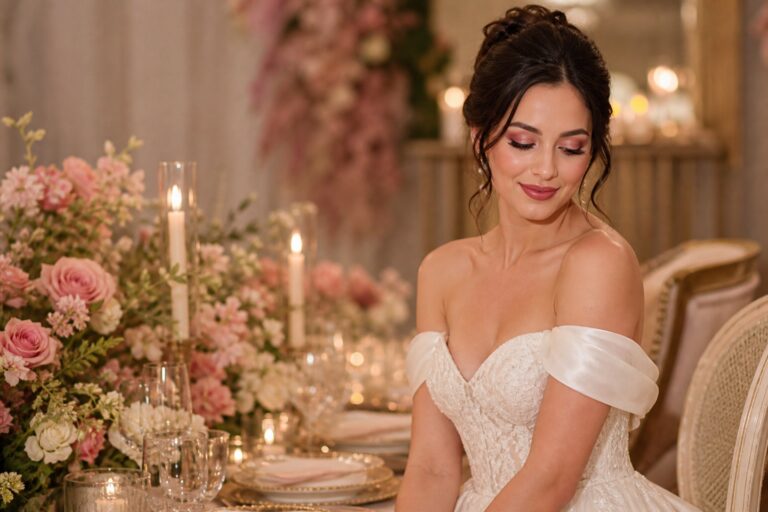
At the makeup trial, the room is usually full of possibilities: a bronze palette opened beside a champagne shimmer, a row of lash styles, and a phone full of saved bridal looks. The bride knows she wants her brown eyes to look beautiful, but she does not want to disappear behind a copy of someone else’s makeup. She wants the color of her eyes to remain recognizable in the ceremony photos, the close-up ring shots, and the late-night images when the light becomes warmer and lower.
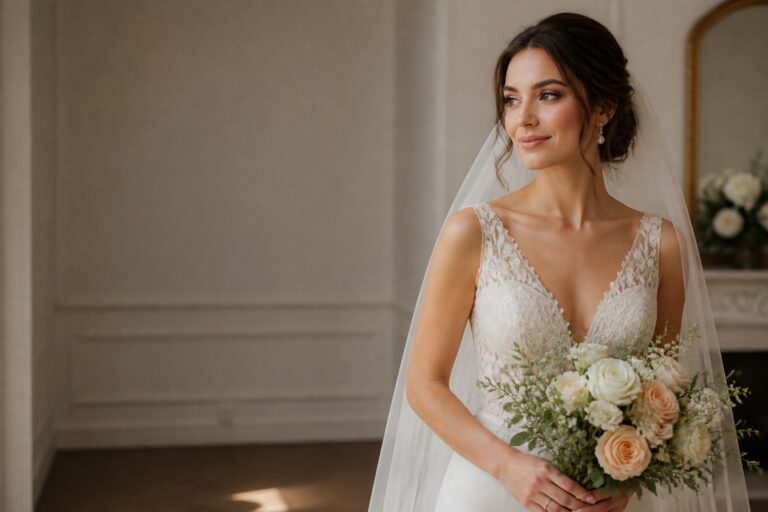
That is the useful starting point for bridal makeup for brown eyes. Brown eyes can support warm bronze, soft chocolate, rose, plum, olive, navy, gold, and champagne, but having many options does not mean every option belongs on the same wedding day. The best choice balances eye depth, skin undertone, eye shape, dress, venue, lighting, and how much definition feels like you. Think of the look as a small visual story: the eyes are the focus, while the skin, brows, cheeks, and lips help the whole face make sense.
Why Brown Eyes Give Bridal Makeup Room to Be Personal
Brown eyes are not a single flat shade. Some read as honey or amber in sunlight, some have a neutral medium brown center with darker edges, and some appear almost espresso until a reflective color catches the iris. A bride may also have brown eyes with olive, gold, or hazel flecks. Those details are worth noticing before choosing a palette because they can guide the makeup toward warmth, contrast, softness, or depth.
The most flattering bridal look usually creates definition without covering the character of the eye. This is why a softly blended brown liner can be more effective than a thick black line. A medium chocolate shadow can deepen the lash line while allowing the iris to stay visible. A small amount of light on the center of the lid or inner corner can bring forward golden flecks, while a muted plum or navy accent can make the warmth of brown look richer by contrast.
Your wedding look is only the beginning.
Keep your guest list, vendors, timeline, and every important detail together with Zarellea — so your day feels as considered as your style.
It also helps to separate the idea of drama from the idea of darkness. Drama can come from a lifted lash, a clean brow, a luminous cheek, a sculpted crease, or a precise pop of color. You do not need a very dark smoky eye to look polished in wedding photographs. In fact, a high-contrast black shape can become more noticeable than the bride when viewed in a series of images. A layered medium palette often gives the photographer more dimension to capture.
- For light brown or honey eyes: try bronze, peach, warm taupe, soft copper, and champagne, keeping the deepest shade close to the lashes.
- For medium brown eyes: consider chocolate, rose gold, caramel, plum, olive, and antique gold, depending on the wedding palette.
- For deep brown eyes: use rich bronze, espresso, copper, burgundy, deep plum, or metallic gold with enough brightness to create separation.
- For brown eyes with hazel or olive flecks: test muted plum, moss, khaki, rose, or bronze to see which hidden tones become more visible.
- For a very natural bride: use one matte transition shade, a softly smudged liner, curled lashes, and a reflective highlight kept away from texture.
The point is not to follow a color rule mechanically. It is to use color as a way of editing the face. Ask what you want people to notice first. If the answer is your eyes, keep the lip and blush in the same general intensity. If the gown or jewelry is already elaborate, a tonal eye with a clean lash may look more intentional than another competing accent.
Choose the Palette by Undertone, Eye Shape, and Wedding Atmosphere
Start with the undertone of your skin, not only the color of your eyes. Warm skin often harmonizes with bronze, caramel, peach, copper, warm gold, and terracotta. Cool or rosy skin may prefer taupe, soft rose, mauve, plum, pewter, champagne, or a neutral brown that does not turn orange. Neutral and olive undertones can move between both families, but a swatch beside the face is more reliable than a label on a palette.
Then look at the eye shape while the eyes are open. On hooded lids, a color placed only in the natural crease can disappear when the bride relaxes her face. A makeup artist may lift the transition shade slightly above that fold and keep shimmer on the visible lid rather than taking it too high. On deep-set eyes, a soft reflective shade can bring the lid forward, while a very dark crease may make the eye look more recessed. On prominent eyes, matte depth and a softly smoked lash line can create balance without needing a thick wing.
Almond eyes can carry many directions, from a classic outer-corner emphasis to a halo of light across the lid. Round eyes often look elegant with liner that extends slightly outward rather than wrapping heavily around the lower lash line. Downturned eyes usually benefit from keeping the outer-corner shadow and lash lift angled upward. None of these are strict rules. They are useful starting points for a trial, where you can see what still looks like you when you are speaking, smiling, and looking down.
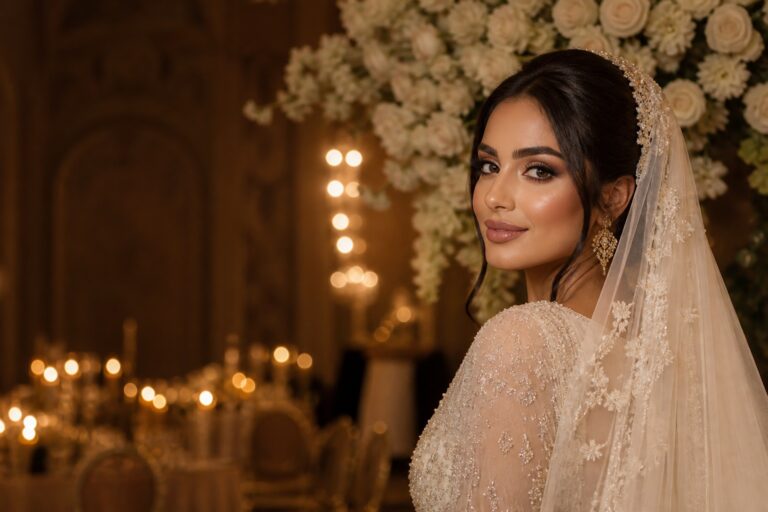
Finally, read the atmosphere of the wedding. A daytime garden ceremony may suit soft peach, taupe, satin bronze, or a brown pencil liner. A candlelit evening reception can handle deeper chocolate, antique gold, copper, plum, or a more defined lash. A beach wedding may call for warm skin, waterproof products, and a restrained golden eye rather than loose glitter. A black-tie venue can support a stronger smoky edge, but the shape should still be tested in flash photography.
- Garden or daytime: soft brown, peach, taupe, satin bronze, brushed brows, and a fresh cheek.
- Beach or destination: warm bronze, waterproof brown liner, lightweight skin, and a lip that can be reapplied easily.
- Candlelit evening: espresso, copper, antique gold, plum, or a defined outer corner with controlled shine.
- Modern city wedding: neutral sculpting, clean liner, pewter or champagne light, and a tailored brow.
- Traditional formal ceremony: balanced brown definition, a classic lash, polished skin, and a lip close to your natural depth.
Bring a photo of the dress fabric, jewelry, bouquet, and venue lighting to the trial if you have them. A creamy ivory gown, bright white satin, champagne beading, and colorful embroidery each change the way a shadow reads. The goal is coordination, not matching every detail. One repeated note, such as an antique gold earring echoed on the lid, can connect the face to the outfit without turning the makeup into a costume.
Five Bridal Makeup Directions That Make Brown Eyes Stand Out
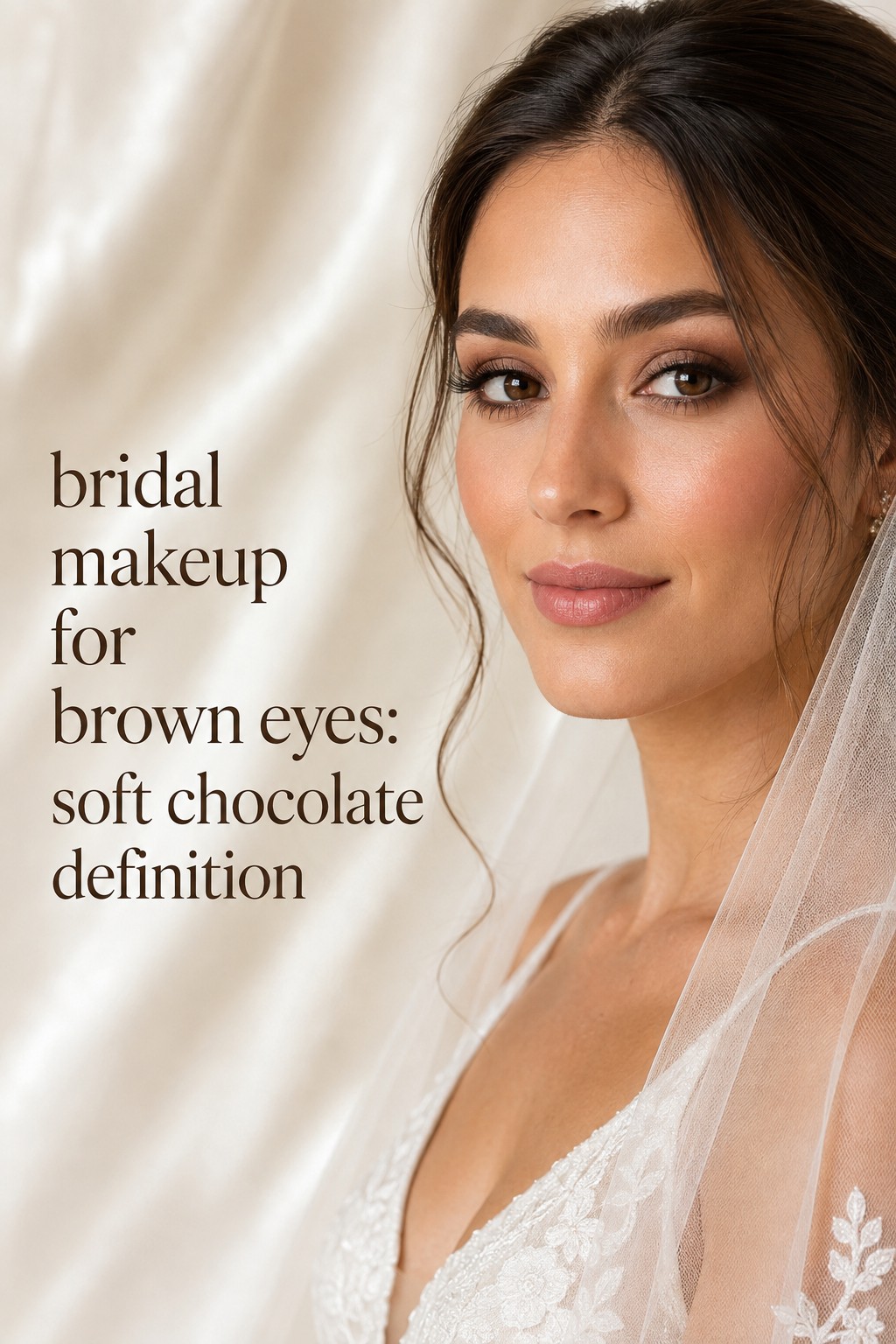
Soft chocolate definition is the most adaptable starting point. Use a neutral or warm matte brown through the crease, a deeper chocolate close to the upper lashes, and a satin vanilla or champagne shade on the lid. Smudge the liner so the lash line looks full rather than outlined. This direction works with a minimalist dress, lace, a veil, or bold earrings because it gives the face shape without adding a new competing color.
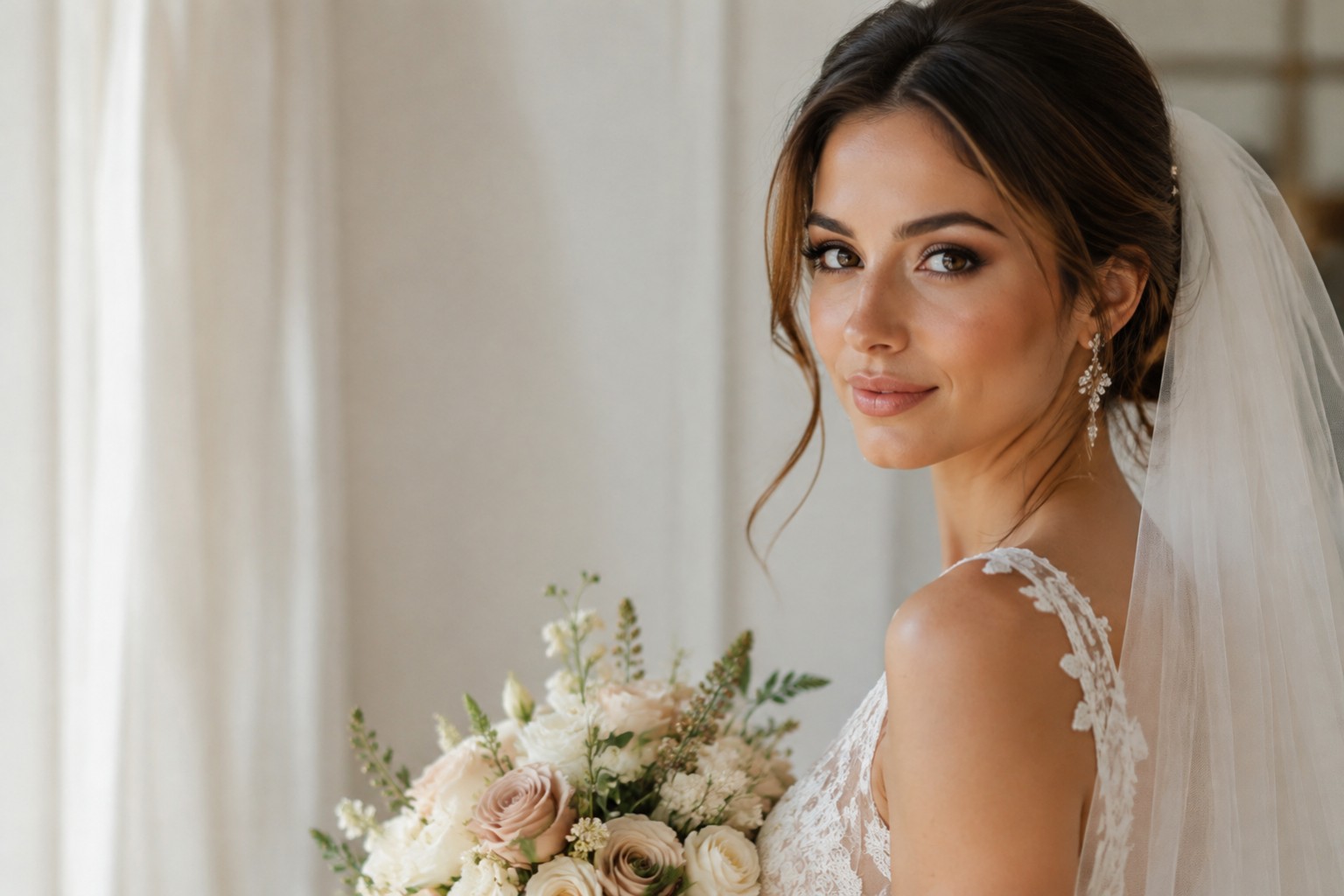
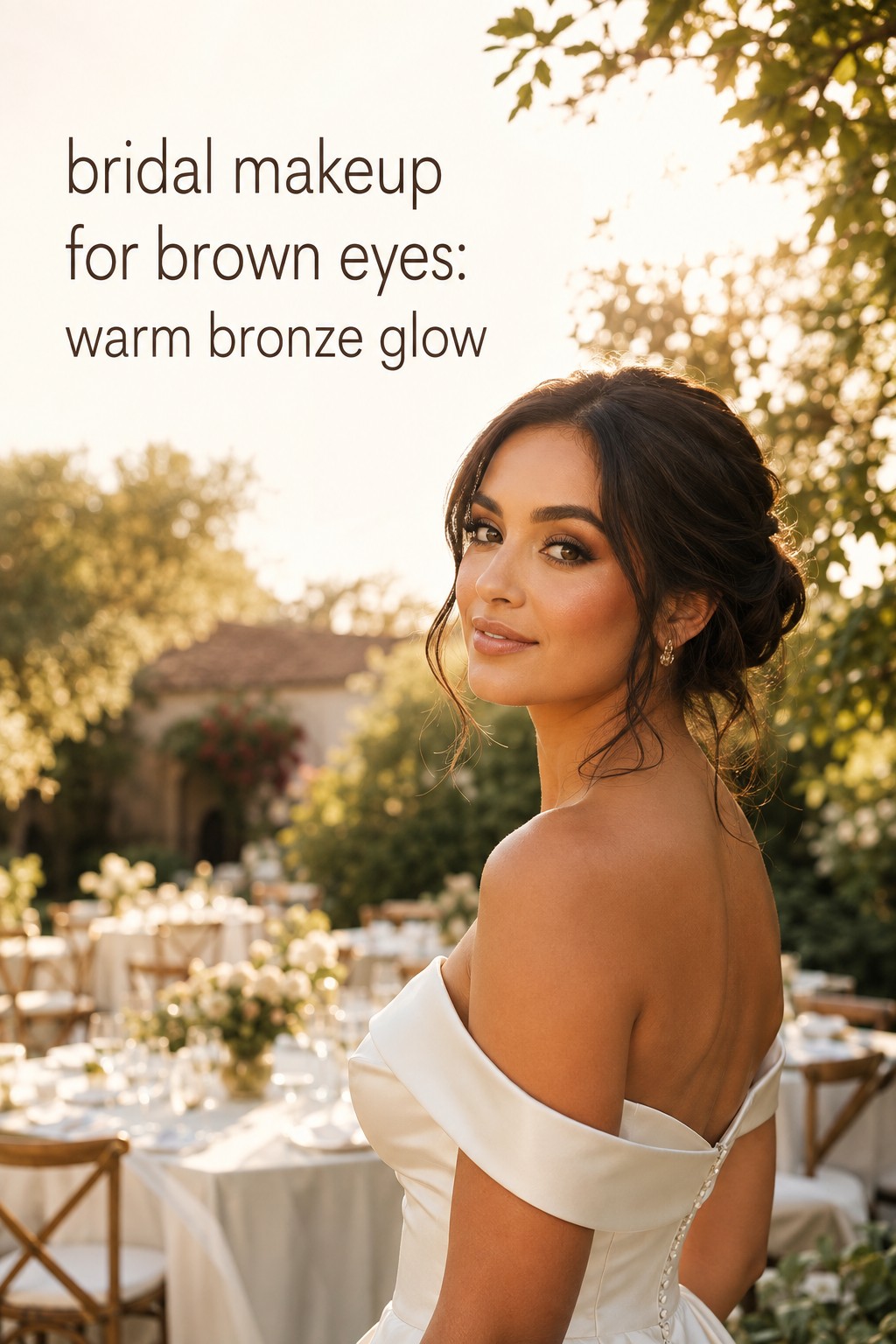
Bronzed bridal glow makes brown eyes look warmer and works particularly well with golden-hour light. Blend a creamy nut brown or bronze across the lid, add a slightly deeper brown at the outer corner, and keep the inner corner bright but not wet-looking. Pair it with softly bronzed cheeks, peach or apricot blush, and a caramel nude lip. If your skin already has strong golden undertones, check that the eye does not become one continuous orange-brown field. A neutral crease shade can create the separation you need.
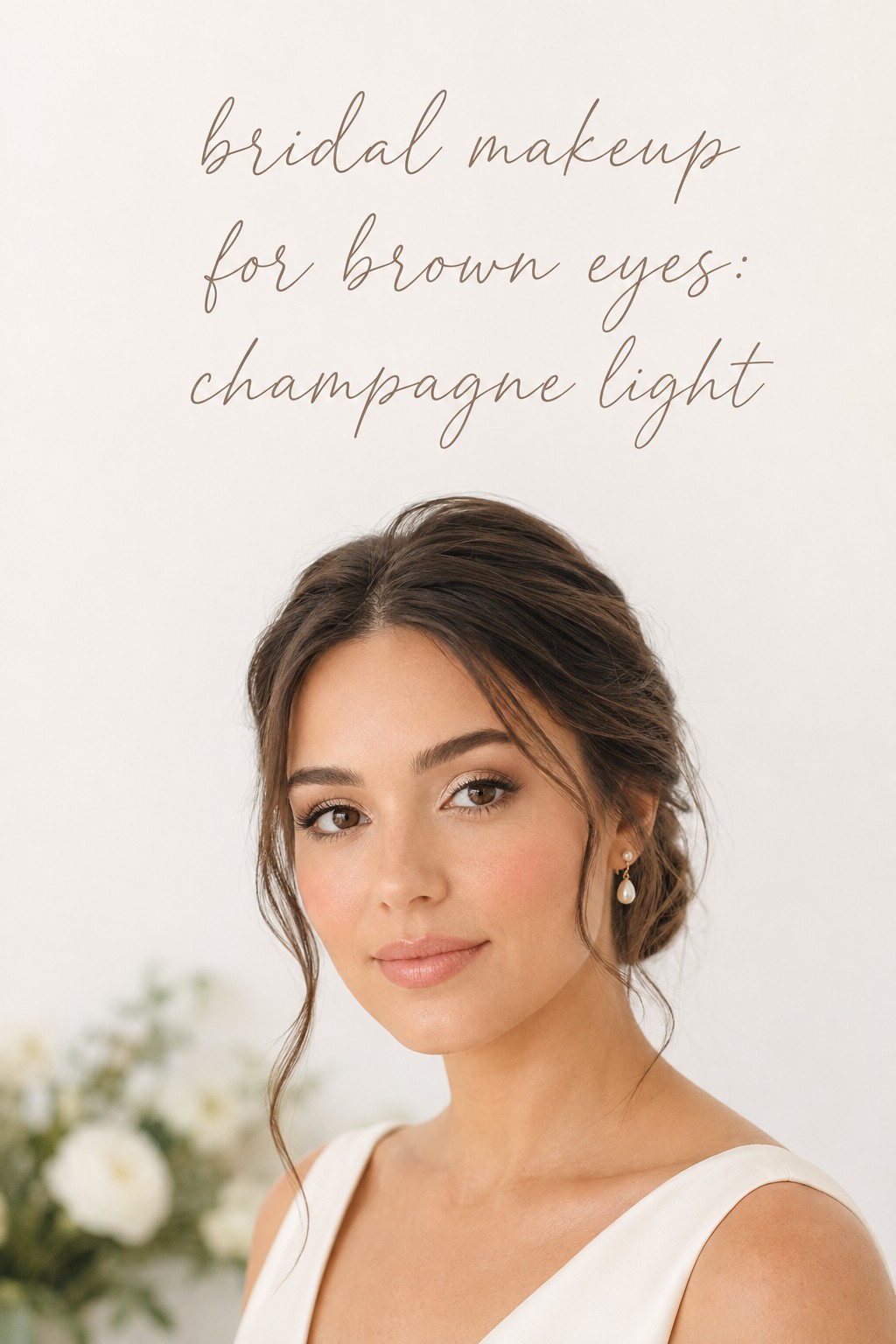
Champagne center light is a polished option for the bride who wants brightness without a full glitter lid. Keep the socket matte and softly defined, then press a fine champagne or pale gold shimmer onto the center of the lid. Use a small amount at the inner corner and stop before it reaches the tear duct if your eyes water easily. The result catches movement in photographs while keeping the overall look clean. A rose or neutral pink lip prevents the look from becoming too warm.
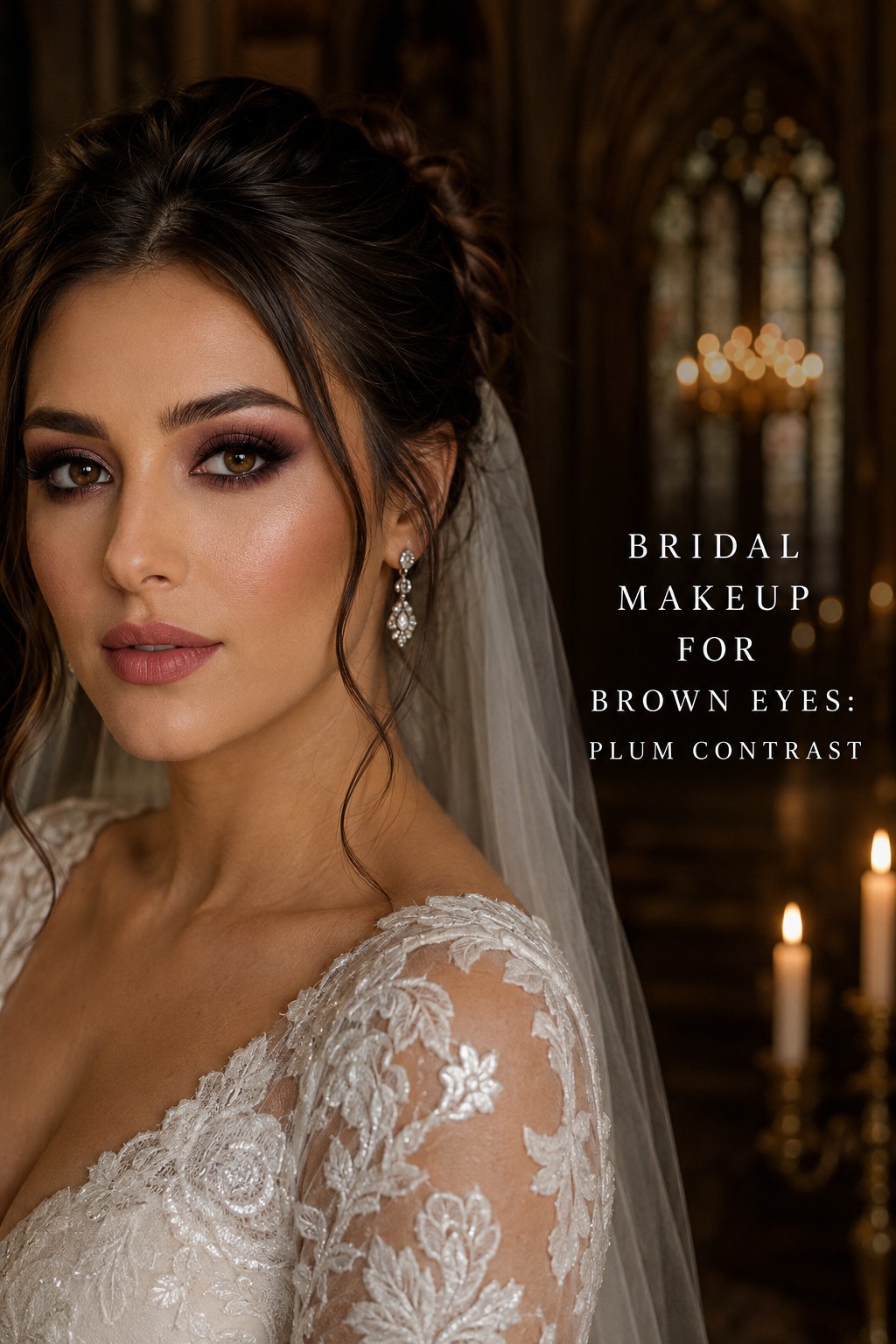
Plum or burgundy contrast gives brown eyes a more editorial edge. Choose a softened wine, aubergine, or muted plum rather than a highly saturated purple if you want the result to remain bridal. Blend it into brown so there is no hard block of color, and repeat only a small amount beneath the outer lower lashes. This look suits an evening wedding, a modern gown, or a bride who normally wears color. Keep the cheek and lip controlled, because the eye already supplies the statement.
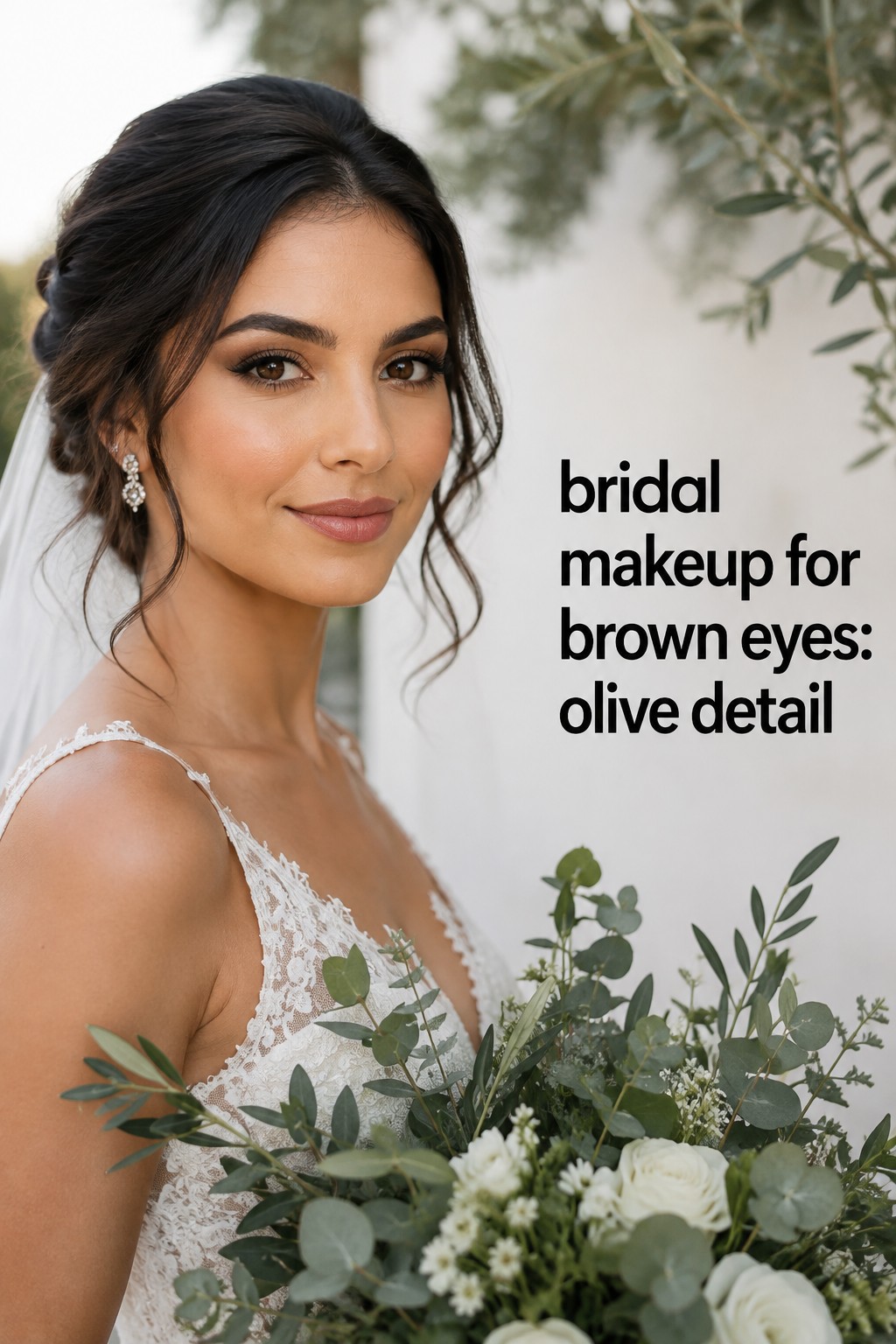
Olive or deep green detail can reveal warmth in brown eyes without looking like a bright fashion shadow. Try a smoked olive pencil along the upper lash line, a khaki wash on the outer lid, or a deep green accent layered over brown. The green should look intentional beside the bouquet, stationery, or jewelry, not disconnected from the rest of the wedding. For a subtle version, keep the green close to the lashes and use brown through the crease.
Whichever direction you choose, build the face in layers that can be evaluated separately. First check the eye at conversation distance. Then check it in a close-up photo, in flash, and in a side angle. Look at the color with your eyes open and closed. Notice whether the shimmer emphasizes texture, whether the liner changes the apparent shape, and whether the lash feels comfortable. A successful bridal eye should look considered from far away and still have detail when the camera comes close.
Make the Look Last Through Tears, Flash, and the Reception
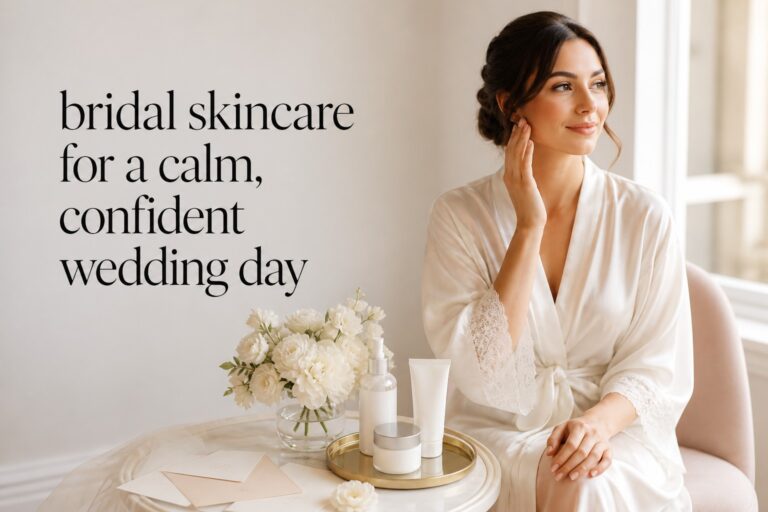
Long wear begins before eyeshadow. Use the skincare routine you already know your skin tolerates, and do not introduce a strong peel, new acid, or unfamiliar adhesive close to the wedding. Hydrated skin can help makeup sit evenly, but excess eye cream on the lids can cause shadow and liner to move. Your artist can adjust the amount of moisturizer and primer around the eye based on dryness, oiliness, and the product system being used.
For the eyes, primer should support the finish you want rather than flattening it. A thin layer can improve grip and reduce creasing, but too much product may make blending difficult. Press shimmer instead of sweeping it repeatedly, and ask whether the formula is suitable for the waterline or only the lid. Waterproof mascara is a sensible default for a ceremony, while a waterproof or long-wearing brown liner can offer definition that is softer than black. If you wear false lashes, test the band, curl, and length before the final appointment.
Under-eye correction needs restraint. Brown eyes often look beautiful with a little brightness at the inner corner, but a very pale concealer or heavy powder can create a visible triangle in photographs. Correct darkness only where needed, use a thin layer, and let the eye makeup remain connected to the complexion. If you expect tears, keep a small clean tissue or cotton swab available for pressing, not rubbing. Touching the eye repeatedly is more likely to move the makeup than the tears themselves.
The rest of the face should support the eye rather than compete with it. If the lids are bronze, a peach or warm rose cheek can repeat the warmth. If the eye is plum or olive, choose a neutral blush and a lip with enough depth to balance it. Set areas that become shiny, but do not powder every reflective surface. A controlled glow on the high points can make the face look alive, while too much highlighter near the eyes can compete with the shimmer and emphasize texture.
- For photography: test the full face in daylight, indoor warm light, and flash before approving the final intensity.
- For tears: use tested waterproof mascara, a secure liner, and a pressing motion with tissue instead of rubbing.
- For oily lids: keep skincare light, use a compatible primer, and place shimmer where it will not gather in a fold.
- For dry or textured lids: use thin layers, finely milled shimmer, and enough flexibility that the surface does not look cracked.
- For DIY makeup: practice the complete look at the same time of day as the wedding and photograph it with your actual camera.
Schedule the trial early enough to change direction. Wear the makeup for several hours, move through normal activities, and note what happens when you look down, smile, hug someone, or dance. If a style looks beautiful for ten minutes but feels heavy after three hours, it is not finished. Ask your artist to document the exact shades, lash type, liner placement, and lip combination so the wedding-day application is repeatable rather than improvised.
FAQ
What eyeshadow colors are best for bridal makeup for brown eyes?
Bronze, chocolate, champagne, gold, taupe, rose, plum, olive, and muted navy can all work well. Choose the shade based on your skin undertone, eye depth, dress, and wedding lighting. Test the color on the full face rather than judging it from a palette alone.
Should I wear black or brown eyeliner with brown eyes?
Brown eyeliner is often softer and easier to blend, especially for a natural or daytime bridal look. Black can work for a more defined evening eye, but use it in a thin line or at the outer corner if you want to keep the iris visible. A deep espresso liner can provide some of the intensity of black with a gentler edge.
Can I wear shimmer if I have hooded eyes?
Yes. Place a finely milled shimmer on the part of the lid that remains visible when your eyes are open, and keep the crease definition slightly higher if needed. Avoid applying a thick reflective layer into the fold. Photograph the eye while open so the placement is based on how the makeup is actually seen.
How do I make brown-eye bridal makeup last through tears?
Use skincare and eye products you have tested, apply thin layers, choose waterproof mascara, and check that the liner is designed for long wear. A secure lash application and a small touch-up kit help too. Press tears away gently instead of rubbing, and ask your artist how to repair the specific products used.
When should I have my bridal makeup trial?
Book the trial early enough to change the palette, lash style, or artist if necessary, and ideally after you have a strong idea of the dress, accessories, and venue. Wear the makeup for several hours and photograph it in more than one type of light. A trial is especially important if you are trying extensions, colorful liner, or a new foundation.
Is bridal makeup for brown eyes suitable for a DIY wedding look?
It can be, particularly when you choose a palette you already know how to blend and a lash or liner style you have practiced. Do a complete timed rehearsal, use products that photograph well, and avoid testing a new technique on the wedding morning. If the schedule or lighting is complicated, a professional artist may provide useful reliability and touch-up planning.