
Bridal Skincare: A Calm Wedding-Day Preparation Guide
At 6:15 on a wedding morning, the room is full of small decisions. The dress is still in its garment bag, the coffee is cooling, and the makeup artist is arranging brushes beneath a window. Your face does not need to look like a different face. It needs to feel comfortable, look well rested, and hold makeup without turning the morning into a skincare experiment.
That is the most useful way to think about bridal skincare. A beautiful wedding complexion is rarely the result of one dramatic facial or a shelf of new products. It is usually the visible result of a calm barrier, daily sun protection, a routine that suits your starting point, and enough time to learn what your skin can tolerate. This guide follows that idea from the first planning conversation to the final gentle cleanse before makeup.
Start with the bridal skincare mindset that makes the day easier
Wedding planning encourages visible solutions. If a seating chart is wrong, you edit it. If a centerpiece feels flat, you add height. Skin is less cooperative. It responds slowly, and it may react to a product that looked perfect in a video. The first decision is therefore not which serum to buy. It is what you actually want your skin to do on the wedding day.
A useful goal is healthy, predictable skin that photographs naturally. That can mean a smoother makeup base, less uncomfortable dryness, fewer unexpected breakouts, or a more even-looking tone. It does not mean erasing every pore, expression line, or mark. Trying to force perfection often creates the very problems brides are hoping to avoid: irritation, flaking, swelling, or a texture that makeup cannot easily disguise.

Your wedding look is only the beginning.
Keep your guest list, vendors, timeline, and every important detail together with Zarellea — so your day feels as considered as your style.
Make consistency more important than intensity
A simple routine performed consistently gives you more useful information than a complicated routine changed every week. Keep a short record when you add a product: the date, where you used it, how often, and whether you noticed stinging, itching, dryness, or congestion. This is not about turning skincare into homework. It helps you and your dermatologist or esthetician identify patterns before the wedding schedule becomes crowded.
- Cleanse gently, especially when removing makeup at night.
- Moisturize according to your skin’s needs, not according to a trend.
- Use broad-spectrum sunscreen during daytime exposure and reapply as appropriate for your plans.
- Introduce only one meaningful change at a time.
- Patch test products when possible and stop if your skin is persistently uncomfortable.
If you have persistent acne, rosacea, eczema, melasma, a changing mole, or a rash, make professional advice part of the plan. A wedding deadline is not a reason to self-prescribe aggressive treatment. It is a reason to give a qualified clinician enough time to understand the condition, discuss options, and leave room for recovery.
Build your routine around your starting point
There is no universal bridal skincare routine because there is no universal starting point. Two brides can want the same soft glow and need completely different support. One may need more barrier comfort, another may need help managing oil and congestion, while a third may be focused on discoloration that becomes more visible in strong photography light. Begin with the pattern you see most often, then keep the routine as focused as possible.
For dry or dehydrated skin
Dry skin tends to ask for comfort and protection. Choose a cleanser that does not leave your face tight, apply moisturizer while skin is slightly damp, and consider whether your environment is contributing to dehydration. Indoor heating, air conditioning, flights, and long days outdoors can all change how skin feels. A richer evening moisturizer may be useful, while the morning layer should work comfortably beneath your makeup artist’s chosen products.
For oily or congested skin
Oil control does not require stripping the skin until it feels squeaky. Over-cleansing can leave you uncomfortable and may make makeup look uneven. Use a gentle cleanser, a lightweight moisturizer, and only targeted exfoliation or acne ingredients that you already know you tolerate. If breakouts are frequent, a dermatologist can help you choose a plan with a better chance of working before the wedding rather than relying on a last-minute spot product.
For acne-prone skin
Acne care rewards patience. Avoid picking, aggressive scrubbing, and stacking several strong actives because you are anxious about a single event. Ask a clinician how to time prescription or over-the-counter treatments around your wedding and makeup trial. Tell your makeup artist about your skin and bring the products you use regularly. A skilled artist can adapt preparation and coverage much more effectively when they know what your skin normally accepts.
For sensitive, reactive, or redness-prone skin
With reactive skin, the best bridal skincare upgrade may be restraint. Favor familiar, fragrance-free or low-irritant options when those suit you, and leave extra time for testing anything new. Do not assume that a product labeled natural, clean, or gentle will be comfortable for you. Your own history is more useful than a marketing category. If redness, burning, or itching persists, seek medical guidance instead of trying to cover the problem with more layers.
For uneven tone, sun spots, or texture
Sun protection is a foundational step for concerns involving uneven tone, and it matters for every skin type. If you are considering vitamin C, retinoids, exfoliating acids, or a professional treatment, begin early enough to assess tolerance. Some ingredients can support gradual improvement, but they can also cause irritation if introduced too quickly. A clinician can discuss which options make sense for your skin, health history, and timeline.

Use a timeline that protects both skin and makeup
The right schedule is less about counting down to a fantasy of flawless skin and more about creating decision windows. Early months are for assessment and measured change. The final month is for stability. The final week is for comfort. The wedding morning is for familiar layers that cooperate with makeup.
Six to twelve months before
Take inventory. Note your main concerns, the products you already use, your wedding climate, the amount of time you spend outside, and whether you have a history of reactions. If you want help with acne, pigmentation, scarring, or a treatment, this is an excellent time to book a board-certified dermatologist or qualified skin professional. Longer timelines create room for gradual changes and recovery.
Build the dependable base first: gentle cleansing, moisturizer, and daytime sun protection. If a professional recommends an active ingredient, follow the introduction schedule rather than increasing frequency because you want faster results. Take notes around your makeup trial as well. A trial is not only for deciding whether you like the eye look. It can reveal whether your base makeup, primer, sunscreen, and skincare layers sit comfortably together.
Three to six months before
Refine what is already working. If you are using a treatment plan, keep appointments spaced according to professional advice. Do not book a strong peel, laser, injectable, or extraction-heavy facial simply because it is popular with brides online. Procedures have different downtime and risk profiles, and your suitability depends on factors that a short social post cannot assess.
At this stage, coordinate with your makeup artist. Share the finish you want, from satin to natural matte to luminous, and ask what kind of skin preparation supports it. If your wedding includes several events, schedule trials for the looks that matter most. Different climates and different outfits may change how much coverage, powder, or glow you prefer.
One to two months before
Move from improvement to maintenance. This is a poor time to begin retinoids, experiment with a new exfoliant, or try a facial for the first time. If you use retinoids or acids under professional guidance, ask when to pause them around the wedding. Keep facial hair removal, brows, spray tan, and other beauty services on a schedule that allows redness or dryness to settle before photographs and makeup.
Pack a travel version of your known routine if you are leaving home. Decanting a product into an unmarked container can create confusion, so label it clearly or use travel sizes you have already tested. Air travel, hotel water, late nights, and sun exposure can all affect skin. The goal is not to add a vacation routine. It is to make your ordinary routine portable.
The final two weeks
Let stability take the lead. Avoid new products and aggressive treatments. Keep cleansing, moisturizing, and sun protection consistent. If you have a facial scheduled, choose a familiar, soothing service and give yourself enough time for any temporary response to disappear. Protect your sleep where you can, keep water and meals regular, and remember that stress management is not a decorative extra. It helps you protect the routine you have built.
The week of and the wedding morning
Keep the week deliberately boring. Skip extractions, strong peels, first-time masks, and product testing. The night before, cleanse gently, moisturize as usual, and avoid picking at any blemish or flake. On the wedding morning, follow the plan you tested with your artist: gentle cleansing if needed, a comfortable moisturizer, and the sunscreen approach your makeup artist and clinician have agreed is compatible with your schedule. Let your artist decide whether an additional primer or hydrating layer is useful.
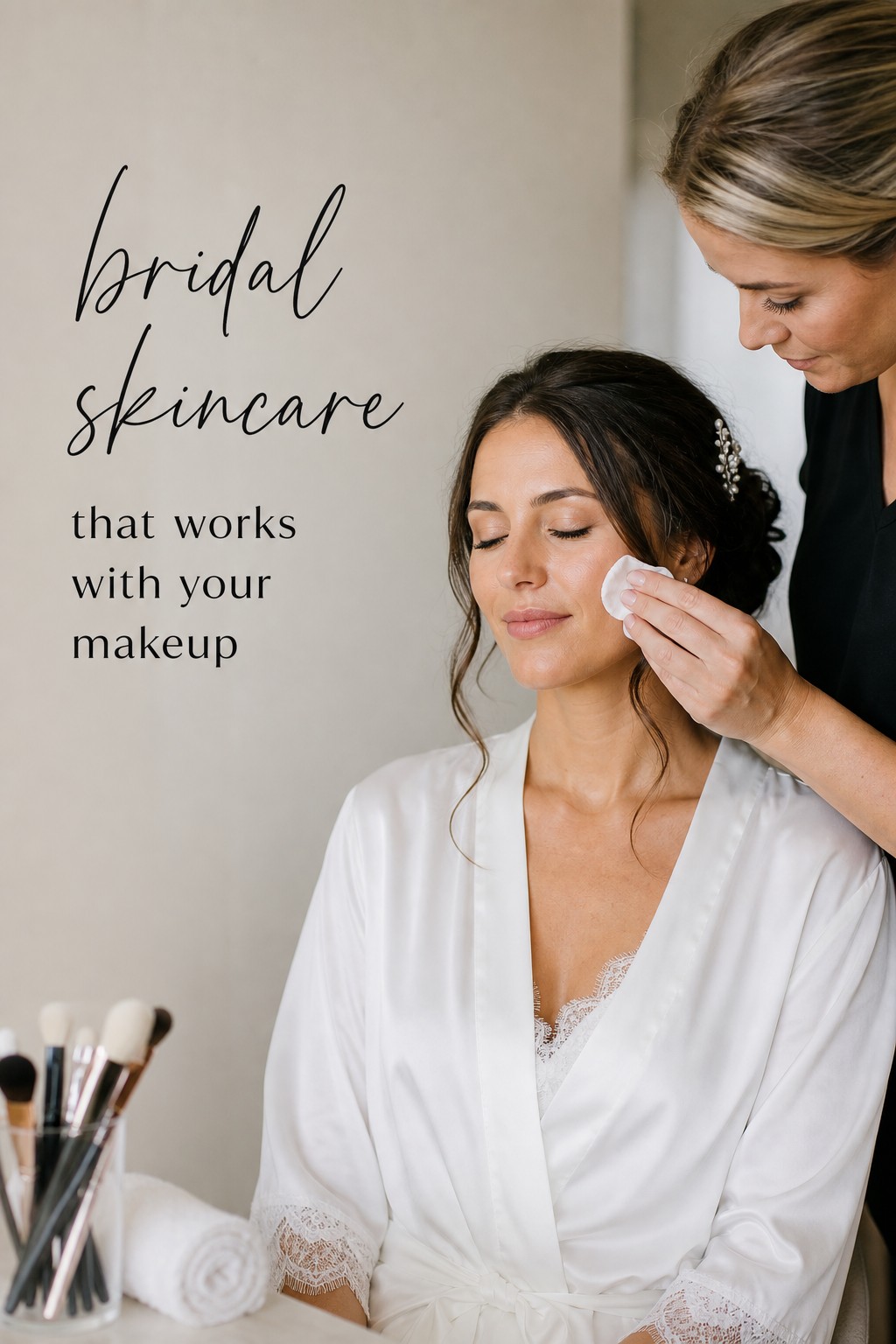
Coordinate treatments, trials, and the real wedding environment
Bridal skincare is not only a bathroom routine. It intersects with the makeup chair, the photographer’s schedule, the venue, the season, and the honeymoon. A plan that looks sensible in a quiet bedroom may need small changes when you are getting married on a humid coast, in a dry mountain town, or under strong summer sun.
Make the makeup trial a skin compatibility test
Arrive with a clean, familiar base unless your artist requests otherwise, and bring a list or photo of your skincare products. Notice how your foundation behaves after several hours, not just in the first mirror check. Look for pilling, separation around the nose, tightness, excess shine, or flakes. Record what was used and how your skin felt the next morning. This information helps your artist adjust the order and amount of preparation without guessing.
Ask better questions about professional treatments
If you are considering a peel, laser, injectable, microneedling, dermaplaning, or another procedure, ask who performs it, what recovery may involve, how many sessions are typical, and what the latest safe timing would be. Ask what happens if your skin reacts and whether the treatment is appropriate for your skin tone and medical history. Never let a countdown create pressure to skip a consultation or accept a treatment you do not fully understand.
Plan for climate, travel, and photography
Humidity can make a rich routine feel heavy, while dry air can emphasize flakes. Cold wind, heat, pool water, and long outdoor portraits create different demands. Tell your makeup artist where the wedding will take place and how much time you expect to spend outside. Keep sun protection in the broader plan, especially for ceremonies and portraits, but make sure the exact wedding-morning layers have been tested under makeup.
For destination weddings, bring enough of your known products for delays and extra nights. Do not rely on a hotel shop for a replacement cleanser or sunscreen. Keep products away from extreme heat, and avoid trying a local treatment during the trip unless it is part of a plan you made well in advance. Travel is already a change for your skin. Familiarity is valuable.
Keep a calm emergency plan for wedding-week skin
Even a thoughtful plan cannot prevent every blemish, dry patch, or flushed cheek. A calm response is more useful than a frantic one. Your emergency plan should be written before you need it, shared with your makeup artist, and limited to actions your skin already knows.
- For a new blemish: do not pick. Use a cool compress briefly for visible redness or puffiness, then use a familiar spot treatment only if it is already part of your routine.
- For flaking: do not scrub aggressively. Use your known moisturizer and ask your makeup artist whether a gentle, damp preparation method can soften the appearance.
- For irritation: stop the suspected new product, simplify to familiar gentle care, and seek medical advice if symptoms are significant or persistent.
- For makeup pilling: reduce layers, allow each product time to settle, and ask your artist to adjust the combination rather than rubbing harder.
- For morning puffiness: use a cool compress if comfortable, keep your head elevated while resting, and let your artist work with the skin instead of adding an untested de-puffing product.
Keep one small kit nearby: your usual moisturizer, lip balm, clean cotton swabs, tissues, a cool compress, and any clinician-approved treatment you regularly use. Do not turn the kit into a new pharmacy. The point is to make familiar care easy to reach when everyone is moving quickly.
Most importantly, do not let one close-up mirror replace the whole day. Wedding photography includes movement, expression, distance, and changing light. A real, comfortable face with a little texture is more alive than skin that has been over-treated into discomfort. Your routine has one job: help you feel ready to be present.
FAQ
When should I start a bridal skincare routine?
Start as early as you can, ideally six to twelve months before the wedding if you want to address acne, pigmentation, texture, or treatment decisions. If your wedding is sooner, focus on a gentle, consistent routine and consult a qualified professional rather than trying to compress several aggressive changes into a few weeks.
What is the most important bridal skincare step?
The most important step is consistency with the basics that suit your skin: gentle cleansing, comfortable moisturization, and daytime sun protection. The best routine also includes avoiding products that repeatedly irritate you and getting professional advice for persistent conditions.
Should I try a new facial before my wedding?
Do not try a new facial close to the wedding. If you want a professional treatment, schedule a consultation early, learn the possible downtime, and test the service with enough time for your skin to settle. In the final two weeks, familiar and gentle care is generally the safer planning choice.
Should I stop retinol before my wedding?
The timing depends on why you use it, your tolerance, and your clinician’s guidance. Retinoids can cause dryness or irritation, so ask the professional who recommended yours when to pause. Never start retinol for the first time shortly before the wedding, and do not change a prescribed plan without medical advice.
What should I do if I get a breakout on my wedding day?
Do not pick or introduce a harsh new product. A brief cool compress may reduce visible redness or swelling, and a familiar spot treatment may be appropriate if you already use it. Tell your makeup artist immediately. They can adjust coverage and texture more safely than a last-minute skincare experiment.
Can I wear sunscreen under bridal makeup?
Discuss the exact sunscreen and application plan with your makeup artist, especially if you will be outdoors. Test the full combination during your makeup trial to check for pilling, shine, flash-related concerns, or discomfort. Do not skip sun protection automatically; make the wedding-day approach part of a tested plan.
How can I make my skin look better in wedding photos?
Prioritize healthy, comfortable skin, sun protection, adequate rest, and a makeup trial in the same general conditions as the wedding. Let your artist know about the venue, climate, photography schedule, and desired finish. Photos look most natural when the skin is calm and the makeup has been tested rather than rushed.