Pink Bridal Makeup: A Wedding-Day Checklist
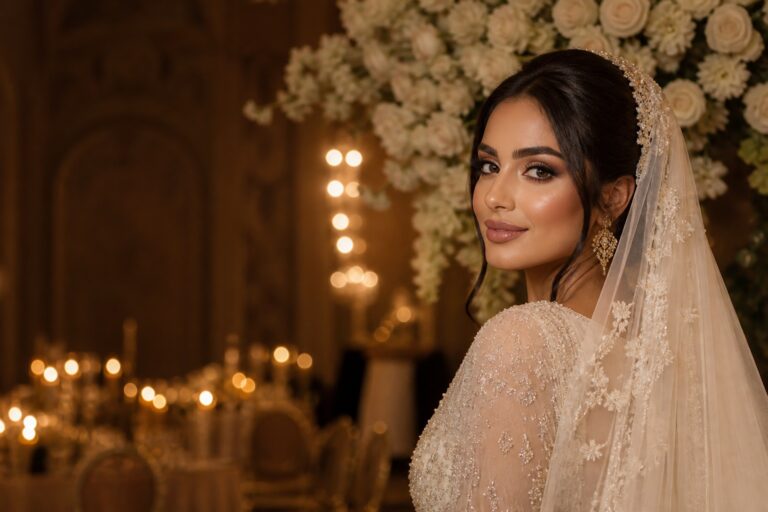
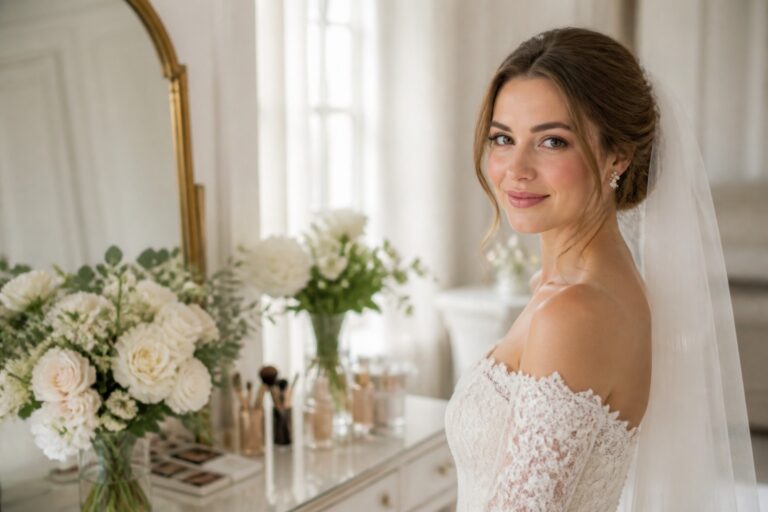
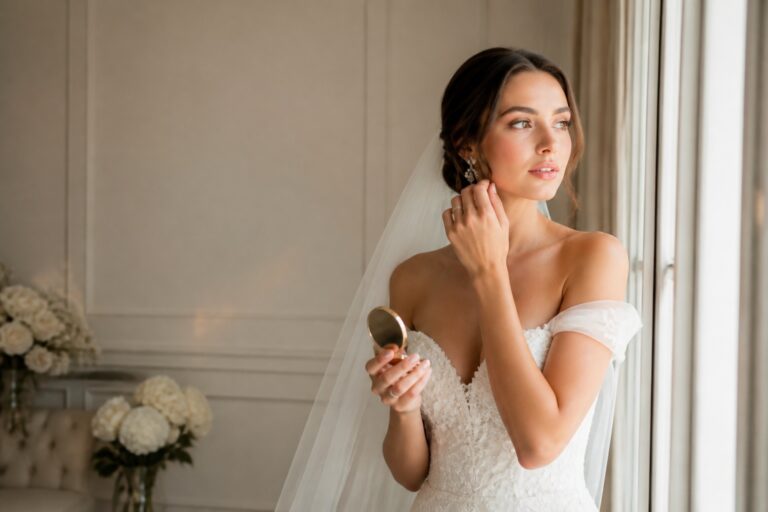
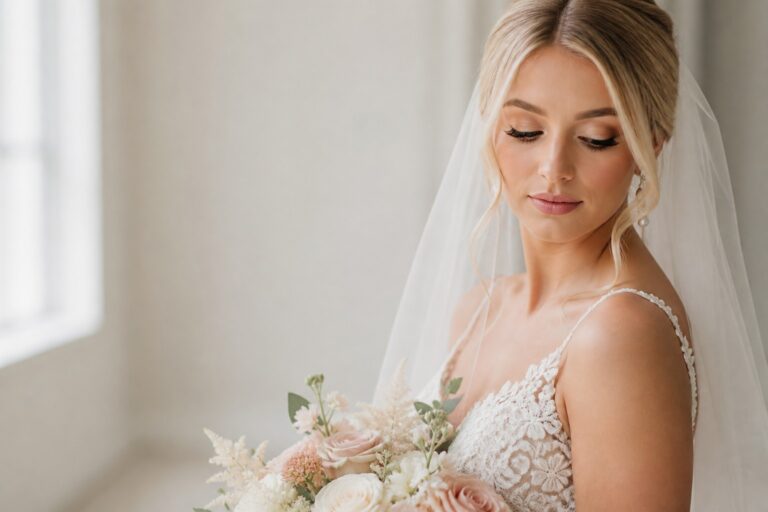
Pink bridal makeup can be romantic, polished, modern, or surprisingly bold. The key is to treat pink as a family of choices rather than one fixed shade. Baby pink, dusty rose, mauve, berry, coral, and fuchsia can all work for a bride when the depth, undertone, finish, and placement are chosen with the rest of the wedding in mind.
This checklist is designed for a bride who wants a clear plan before the trial and wedding morning. It covers the decisions that make the biggest difference: how to choose your pink, where to place color, which feature should lead, how to make the look last, and how to check it in real wedding light. The goal is not to make every product pink. The goal is a cohesive face that still feels like you.
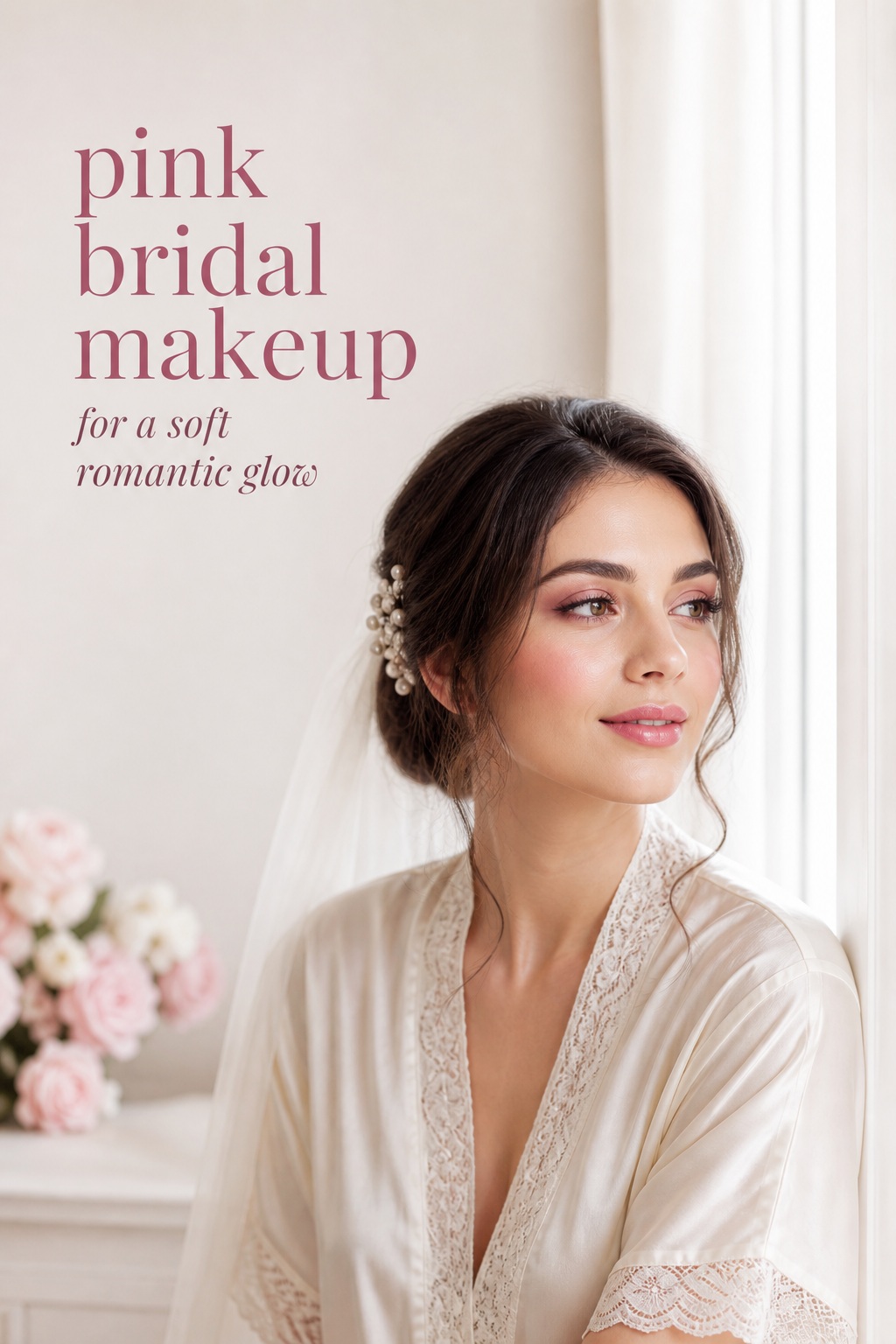
1. Prepare the Pink Bridal Makeup Brief
Start with the outcome, not a product list. Write down three words that describe the finished face, such as romantic, fresh, and defined, or luminous, soft, and editorial. Then add the practical conditions: ceremony time, venue, climate, dress color, jewelry metal, photography style, and how long you expect to wear the makeup. This turns a vague request for pink bridal makeup into a brief an artist can actually use.
Pink tends to look different under daylight, warm indoor bulbs, flash, and phone cameras. A cool baby pink can look crisp near a window but slightly gray under warm lights. A warm rose or coral pink may look balanced outdoors but more orange in a ballroom. A mauve or berry shade can add definition without becoming too bright. Your trial should include the lighting you are most likely to see, not only the makeup chair mirror.
Your wedding look is only the beginning.
Keep your guest list, vendors, timeline, and every important detail together with Zarellea — so your day feels as considered as your style.
- Write the mood: choose three words that describe how you want to feel and look.
- Note the schedule: include getting ready, first look, ceremony, portraits, dinner, and dancing.
- List the light: identify outdoor light, window light, warm venue light, and flash photography.
- Bring the outfit context: show the dress, veil, flowers, jewelry, and any second-look clothing.
- Choose reference photos carefully: favor examples with a similar skin depth, eye shape, and lighting situation.
- Define your comfort limit: say whether you want a barely-there flush, visible color, or a statement pink feature.
Do not use the word natural as a complete makeup brief. Natural can mean skin-like coverage, neutral colors, soft edges, or simply looking recognizable. Tell your artist which of those meanings you want. The same pink lip can look understated with a blurred edge and luminous skin, or more formal with precise liner, structured brows, and a satin finish. Specific language prevents a mismatch during the trial.
2. Choose Your Pink by Undertone and Depth
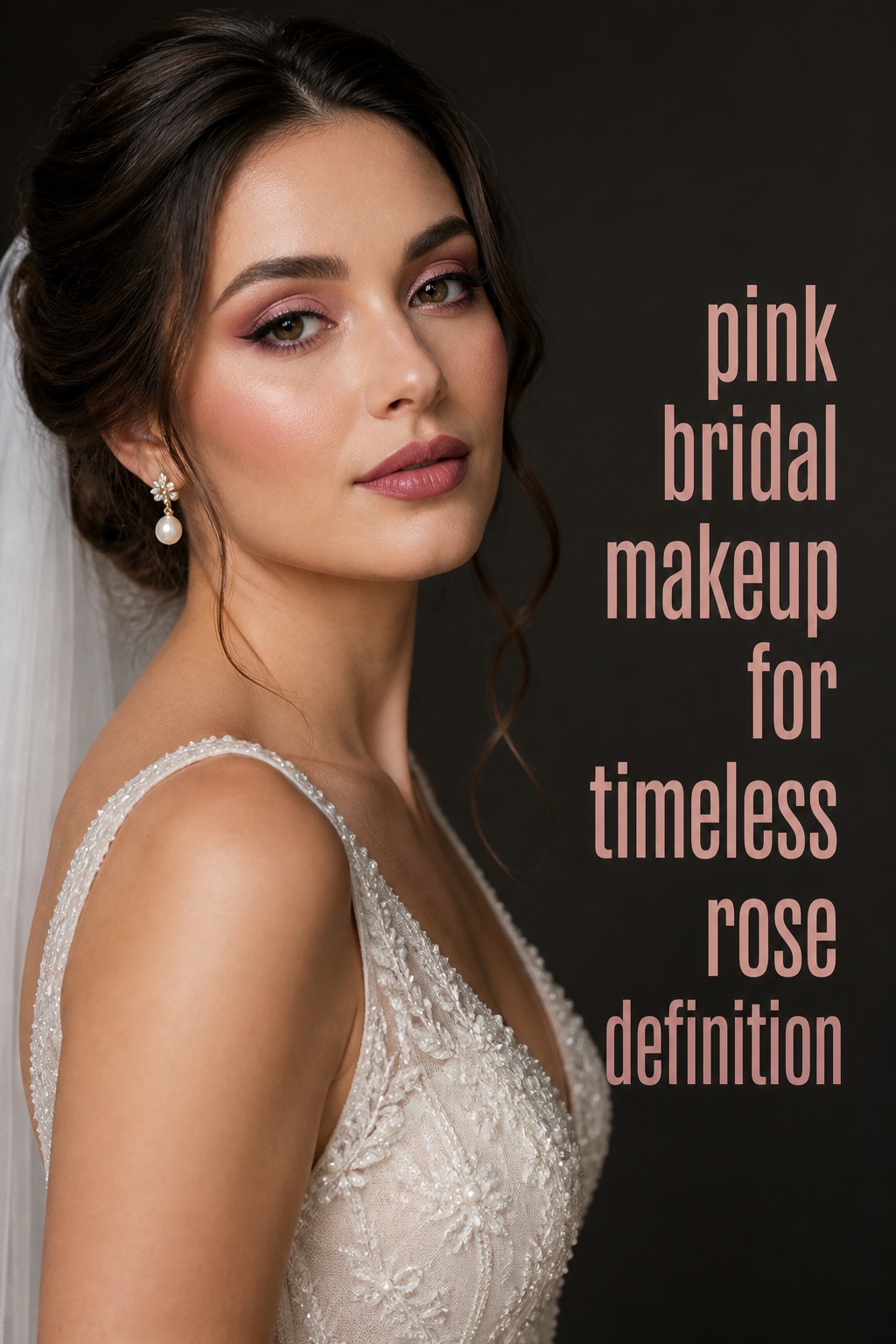
The most flattering pink is usually related to the colors already present in your skin, lips, eyes, and hair. Undertone is useful, but it should not become a strict rule. A bride with warm undertones can wear a cool pink when it is balanced with neutral brown or warm blush. A bride with cool undertones can wear coral or peach pink when the shade is sheer and supported by a compatible lip or cheek color. The trial is where theory becomes personal.
Baby pink and petal pink
Baby pink and petal pink create a light, youthful effect. They work beautifully as a sheer blush, inner-lid wash, or glossy lip tint. Because pale pink can disappear in photographs, pair it with a soft brown lash line, shaped brows, and enough cheek definition to give the face structure. If the shade turns chalky, ask for a slightly deeper rose mixed through the crease or lip liner.
Dusty rose and mauve
Dusty rose and mauve are useful middle-ground shades. They can look romantic without becoming sugary, and they often translate well from daytime portraits to an evening reception. Use dusty rose on the cheeks and lips with taupe or cocoa around the eyes, or let mauve create a softly smoked eye with a neutral pink lip. These colors are especially practical when the bride wants visible pink but not a high-contrast statement.
Rose, berry, and fuchsia
Rose, berry, and fuchsia bring more depth and can be excellent on medium and deep complexions, where a pale pink may not show with enough clarity. They also work for an evening ceremony, a formal ballroom, or a bride who wants the lip to lead. Use the color in a thin layer first, then build it. A blurred berry stain can feel softer than a fully opaque lipstick while still giving the camera something to read.
Coral and warm pink
Coral and warm pink sit close to peach, rose, and terracotta. They can make the complexion look lively at a summer or outdoor wedding, especially when the flowers and jewelry have warm notes. Avoid choosing a coral simply because it looks bright in a palette. Test it on the cheek and lip together, because a shade that is flattering in one area may look too orange when repeated across the whole face.
Depth matters as much as undertone. If the eyes, cheeks, and lips are all the same pale value, the makeup may look flat. If every area is saturated, the face may feel crowded. A useful checklist is one light tone, one medium tone, and one defining neutral. For example, use petal pink on the lid, dusty rose on the cheek, and soft brown at the lash line. Or use mauve eyes, rose blush, and a berry stain with a neutral lip edge.
3. Build One Clear Focal Feature
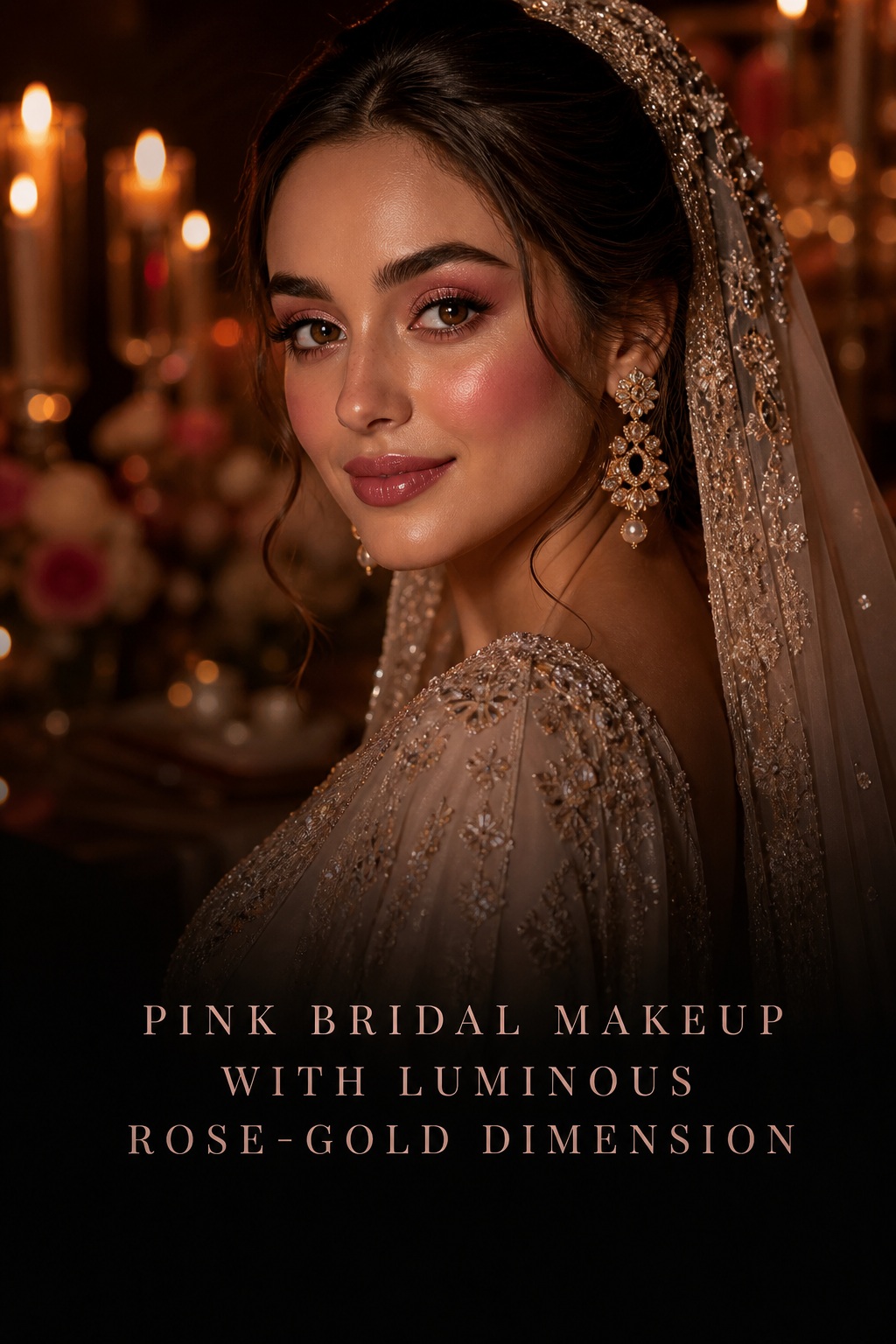
The easiest way to make pink bridal makeup look intentional is to decide which feature leads. The eyes can lead through rose shadow and a lifted lash line. The cheeks can lead through a fresh pink flush and quiet eyes. The lips can lead through a satin rose, berry, or fuchsia color. The remaining features should support the leader with related tones and controlled contrast.
Soft pink monochrome
A monochrome look uses related pink tones on the eyes, cheeks, and lips. It is not about applying one product everywhere. Instead, choose a shared color family and vary the texture. A satin rose eye, cream blush, and sheer pink balm can look cohesive because the colors relate while the finishes keep the face dimensional. Add a neutral brown or plum lash line so the eyes do not disappear.
Pink eyes with a neutral lip
Pink eyes can be romantic when the crease is grounded with taupe, cocoa, or soft plum. Keep shimmer controlled and place it on the lid or inner corner rather than across the entire eye. A neutral pink-nude lip lets the eye remain the center of attention. This option suits brides who love color but want the overall effect to stay elegant and easy to wear.
Rosy cheeks with quiet eyes
A cheek-led look starts with skin that looks even and comfortable, then adds a visible rosy flush high on the cheeks. Keep the eyes in taupe, champagne, or soft brown, and use a pink balm or satin lipstick that echoes the blush without competing with it. This is a good choice for a daytime ceremony, a garden venue, or a bride who wants the face to look fresh in person.
Statement pink lips
A statement pink lip can be classic, editorial, or playful depending on the shade and finish. Use a precise liner, a comfortable long-wear color, and a softer eye with enough definition for photographs. Blush should be related but lighter or more neutral. Before choosing a glossy finish, check how often you are willing to reapply and whether your veil, hair, or partner’s clothing will brush against the lips.
- Eye-led: rose or mauve shadow, soft brown liner, light pink-nude lip.
- Cheek-led: fresh pink blush, neutral eyes, balm or satin lip.
- Lip-led: berry or fuchsia lip, quiet eyes, restrained blush.
- Monochrome: related pink shades with different textures and one neutral defining tone.
When you review trial photos, cover the lower half of your face with your hand and then the upper half. This helps you see whether the eyes, cheeks, and lips are working together or competing. Also look at the makeup from a normal conversation distance. A look can be beautiful in a close-up and feel too intense across a dinner table, or appear subtle in person and photograph perfectly once the camera is several feet away.
4. Lock In the Wedding-Day Checklist
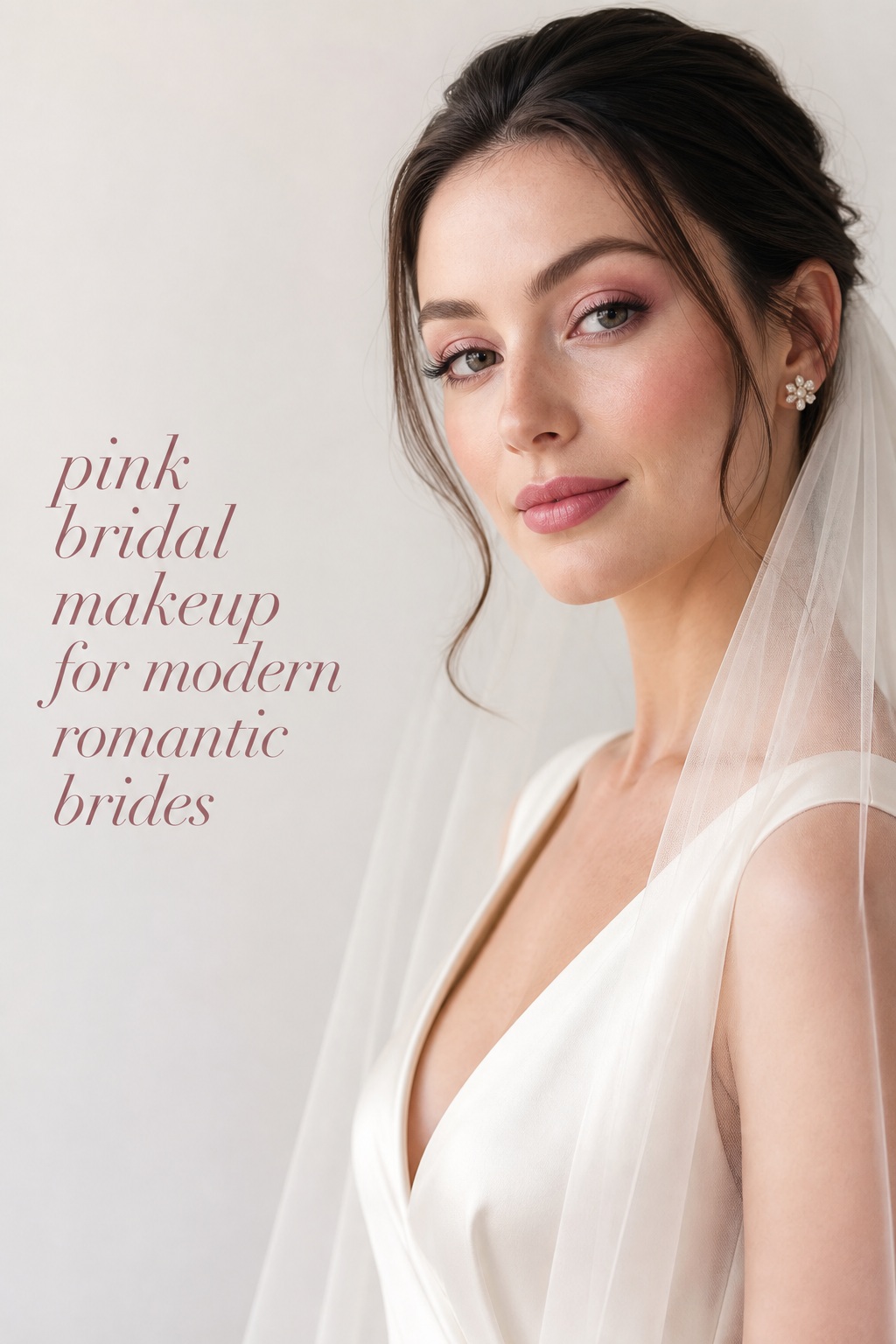
Long-wear pink bridal makeup depends on preparation and layering more than on one miracle product. Start with a calm skin routine and avoid introducing strong actives, peels, or unfamiliar fragrance near the wedding. Your artist should know whether your skin becomes oily, dry, flaky, sensitive, or textured after several hours. The best finish is the one that remains comfortable while preserving the chosen pink balance.
- Two to three months before: settle your skincare routine, book the artist, and collect references that show similar coloring and lighting.
- Several weeks before: complete a full trial with the actual veil, jewelry, neckline, and a hairstyle close to the wedding plan.
- At the trial: wear the makeup for several hours, test normal facial movement, and photograph it in window light, indoor light, and flash.
- One week before: keep skincare familiar, confirm the timeline, and prepare the touch-up products your artist recommends.
- Wedding morning: use the agreed skin prep, allow layers to set, and avoid adding extra pink because the first impression in the mirror feels too soft.
- Before portraits: blot rather than rub, check the lip edge, and make sure blush has not moved upward or become shiny.
- Before the reception: refresh the lip, soften any excess shine, and take one final photo in the reception lighting.
Eye products should be chosen for the schedule and weather. Waterproof mascara, reliable lash adhesive, and a tested liner reduce the risk of pink shadow becoming muddy after tears or heat. If you wear false lashes, test the weight with your eyes open and relaxed. A very dense lash can hide a delicate pink eye or cast a shadow that makes the face look tired in photos. Individual clusters or a lighter outer-corner lash may preserve the lift with more comfort.
Blush placement changes the mood. Higher placement near the outer cheek can lift the face and work well with a modern, editorial style. A soft flush across the apples can feel youthful and romantic. Diffusing the edges into the complexion is essential, especially with brighter pink. Cream blush can create a skin-like base, while a compatible powder blush can improve longevity. Ask your artist how the two formulas will be layered so the color does not become patchy.
Lips need their own plan. Exfoliate only if your lips already tolerate it, then use the preparation your artist recommends. A liner gives shape and helps a pink lipstick fade more evenly. Satin and matte formulas usually last longer than gloss, but comfort matters because a dry, cracked lip is visible in close-up photos. A tinted stain topped with a small amount of balm can be a useful compromise for a bride who wants color without a heavy feeling.
Prepare a compact touch-up kit rather than carrying the entire makeup bag. Include the lip color or stain, a small mirror, cotton swabs, tissues, blotting sheets, and a little powder if your artist approves. Add the lash adhesive or liner only if you know how to use it. Ask a trusted person to hold the kit and to check the lip before photographs. Touch-ups should restore the plan, not change the design during the day.
Final Review Before You Approve the Look
Use this final review at the trial and again before leaving for the ceremony. First, confirm that the pink shade looks connected to your skin and outfit, not simply copied from an inspiration photo. Second, check that at least one neutral tone gives the face structure. Third, confirm that the focal feature is obvious but not overpowering. Fourth, test the look after several hours, because fading and shine can change the balance.
- Does the pink still look flattering in daylight and warm indoor light?
- Does the face have enough definition for photographs without looking harsh in person?
- Are the eyes, cheeks, and lips related without being identical in intensity?
- Can you smile, talk, hug, and wear the veil comfortably?
- Do the lashes, liner, and shimmer stay in place after normal movement?
- Does the lip fade in a way you can maintain easily?
- Do the makeup colors work with your bouquet, jewelry, and dress?
- Do you know exactly what will be in the touch-up kit and who will carry it?
The best pink bridal makeup plan is specific enough to guide the artist and flexible enough to suit the bride. You can keep the romance of pink without making the face overly sweet. You can choose a vivid lip without losing bridal softness. You can wear a rosy eye without sacrificing definition. Once the shade, focal feature, finish, and longevity plan are decided, the wedding morning becomes a sequence of known choices instead of a last-minute experiment.
FAQ
Is pink bridal makeup flattering for every skin tone?
Yes, but the best pink depends on depth and undertone. Fair skin may suit petal, cool rose, or dusty pink, while medium and deep skin can carry rose, berry, coral, magenta, and fuchsia beautifully. Test the color on the actual face and adjust its depth rather than relying on a universal shade rule.
Should I match my pink makeup to my flowers?
Use the flowers as a reference, not a strict matching target. Echoing a rose, blush, or berry note can make the look feel cohesive, but exact matching may look too coordinated. A related undertone with a neutral eye or lip usually creates a more natural connection.
Can pink eyeshadow look elegant instead of childish?
Yes. Ground pink with taupe, cocoa, plum, or soft brown, blend the edges carefully, and control shimmer. Defined brows, a clean lash line, and a satin or softly luminous complexion also make the look feel polished. The right depth matters more than avoiding pink altogether.
What lip finish lasts best with pink bridal makeup?
Satin, soft matte, and stain-based finishes generally last longer than gloss. A comfortable liner and thin layers help color fade evenly. If you prefer gloss, use it for the initial look and keep a matching stain or lipstick for simple touch-ups after eating and during photographs.
How do I keep pink blush from looking too bright?
Start with a small amount, place it according to the desired face shape, and diffuse the edges into the base. A neutral bronzer or soft contour can add balance, while a compatible powder layer can reduce excess sheen. Check the blush in daylight and flash before adding more.
Should I choose pink bridal makeup for a daytime or evening wedding?
Pink works for both. Daytime looks often benefit from sheer rose, cream blush, soft brown definition, and lighter lashes. Evening looks can support deeper mauve, berry, fuchsia, more reflective detail, or a stronger lip. The key is to adjust depth and finish rather than changing the entire color family.
When should I book a pink bridal makeup trial?
Book early enough to compare artists and leave time for a second trial if you change the shade or focal feature. Bring your dress, veil, jewelry, and lighting references when possible. Wear the makeup for several hours so you can assess comfort, fading, shine, and the way pink appears in photographs.