Christmas Wedding Dress: A Smart Winter Choice Guide
A Christmas wedding dress has a particular job. It needs to feel unmistakably bridal, belong in a festive setting, and remain comfortable when the day includes cold air, slippery sidewalks, coats, candles, travel, and long photographs. That does not mean choosing the heaviest gown in the salon or covering a spring dress with a random wrap at the last minute. The strongest winter bridal look is planned as a complete system.
Use this checklist-playbook before you shop or place an order. You will define the real conditions, compare fabric and construction, work through five useful dress formulas, and run a final review before alterations. The goal is not to make your gown look like a Christmas costume. It is to let the season appear through texture, light, color, and thoughtful layers while your personal bridal style remains in charge.
Prepare the Christmas Wedding Dress Brief Before You Shop
Start with the day rather than the dress. Write down the month, ceremony location, reception location, expected time outdoors, and the distance between important spaces. A December wedding in a heated city venue has different needs from a mountaintop ceremony, even if both are described as Christmas weddings. Also note the dress code and the visual language you want: candlelit and formal, snowy and romantic, modern and minimal, or cozy and intimate.
Separate actual warmth from the appearance of warmth. A high neckline may look winter-ready while a sheer, unlined sleeve offers little insulation. A velvet trim adds seasonal texture but does not automatically make a strapless bodice comfortable outside. Sources such as Lutien Bridal’s winter dress guide and Azazie’s winter wedding advice both point toward the same practical conclusion: fabric, sleeve construction, silhouette, and cover-up should be considered together.
Your wedding look is only the beginning.
Keep your guest list, vendors, timeline, and every important detail together with Zarellea — so your day feels as considered as your style.
Make a short constraint list for your first appointment. Include whether you need full arm coverage, whether you want to wear a veil and a cape together, how easily you need to sit, whether you will walk over snow or wet pavement, and whether you plan to change for the reception. Add any personal non-negotiables, such as a defined waist, a low back, a modest neckline, a dramatic train, or the freedom to dance without holding your skirt.
- Temperature: identify every moment you will stand still outdoors, not only the time you spend walking.
- Venue: note whether the room is candlelit, brightly lit, rustic, grand, modern, or decorated with strong holiday color.
- Movement: plan for stairs, bathrooms, cars, photographs, a bouquet, and dancing.
- Seasonal signal: choose whether Christmas appears through velvet, sparkle, greenery, warm ivory, burgundy, a cape, or another intentional detail.
- Changeover: decide whether the ceremony layer stays on, comes off, or becomes a second look.
Bring the real elements that affect color and proportion. A fabric swatch from the bridesmaids’ outfits, a photo of the venue, a picture of your shoes, and the jewelry you already own are more useful than a folder of unrelated screenshots. If the wedding is in the United States, also check the venue’s heating policy and the timing of outdoor portraits. A five-minute walk from ceremony to reception can be manageable, while forty minutes of exposed photographs requires a different plan.
Use a Christmas Wedding Dress Decision Checklist
Choose fabric first because it determines how the dress moves, catches light, and relates to the season. Mikado and satin create a smooth, structured surface that looks beautiful in candlelight and formal interiors. Crepe has a clean, modern drape and can feel less decorative when the venue already carries strong Christmas styling. Velvet is rich and tactile, but a fully velvet gown is a bold choice that deserves careful attention to weight, stretch, and lighting. Heavy lace or layered tulle can provide visual depth without requiring a dark or strongly festive color.
Do not assume a lighter fabric is automatically wrong. Chiffon, tulle, and sheer lace can work for a Christmas wedding when they are supported by lining, a structured bodice, a substantial underskirt, or a planned cape. The key is the complete construction. Ask the consultant to show you the gown with its intended lining and underlayers, not only as a sample hanging on a rack. Prom Boutique Online’s layering guide also emphasizes that a winter gown can be elegant without becoming bulky.
Next, compare sleeves by purpose. A fully lined long sleeve gives the clearest coverage. Lace or embroidered tulle creates a romantic, lighter impression, but it may be more decorative than warm. Bishop sleeves add movement and drama, while fitted sleeves look sleek beneath a coat or cape. Detachable sleeves, gloves, or a bolero can give you two levels of coverage without forcing the reception look to be as covered as the ceremony look. Ask how the sleeve affects raising your arms, holding your bouquet, and fastening jewelry.
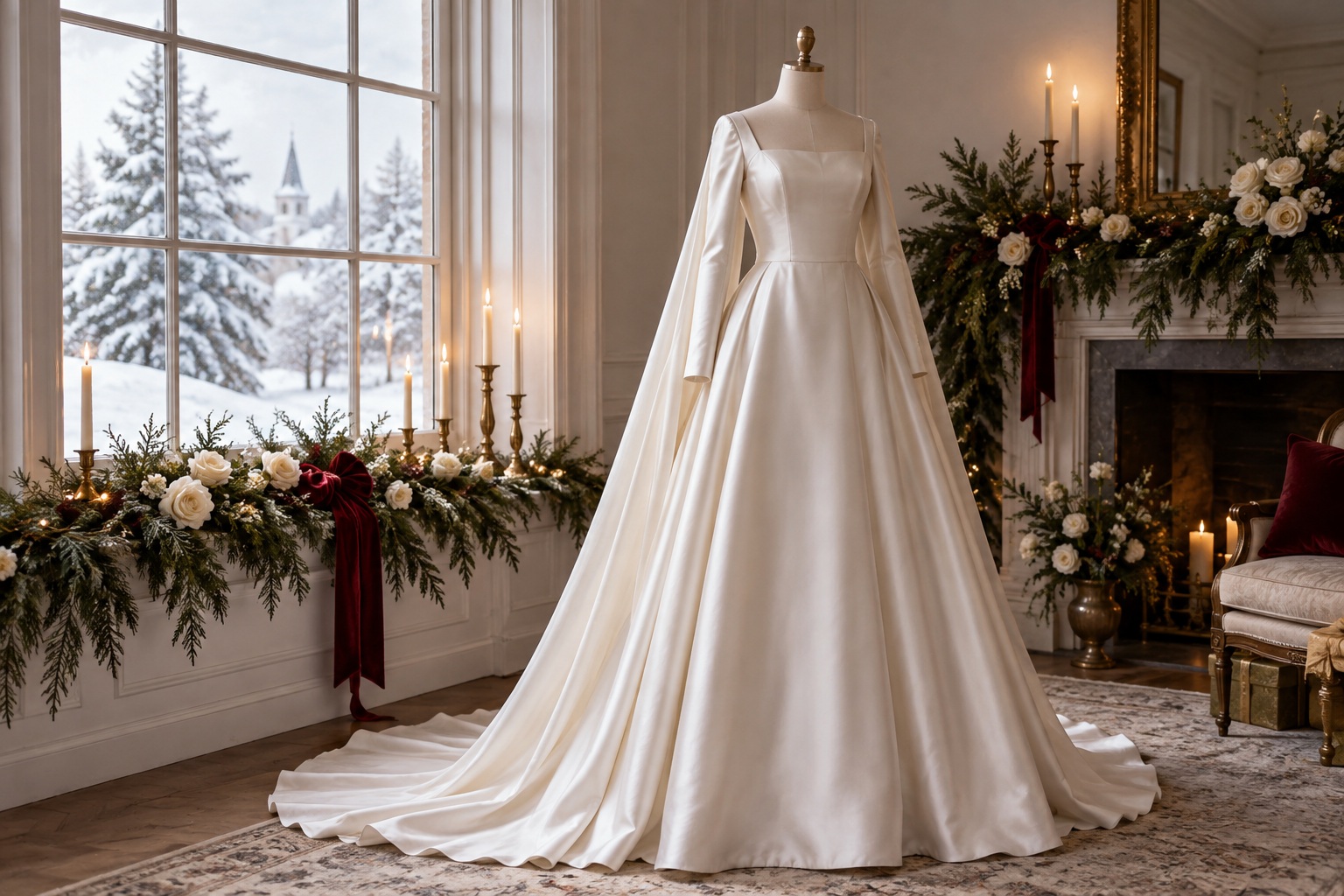
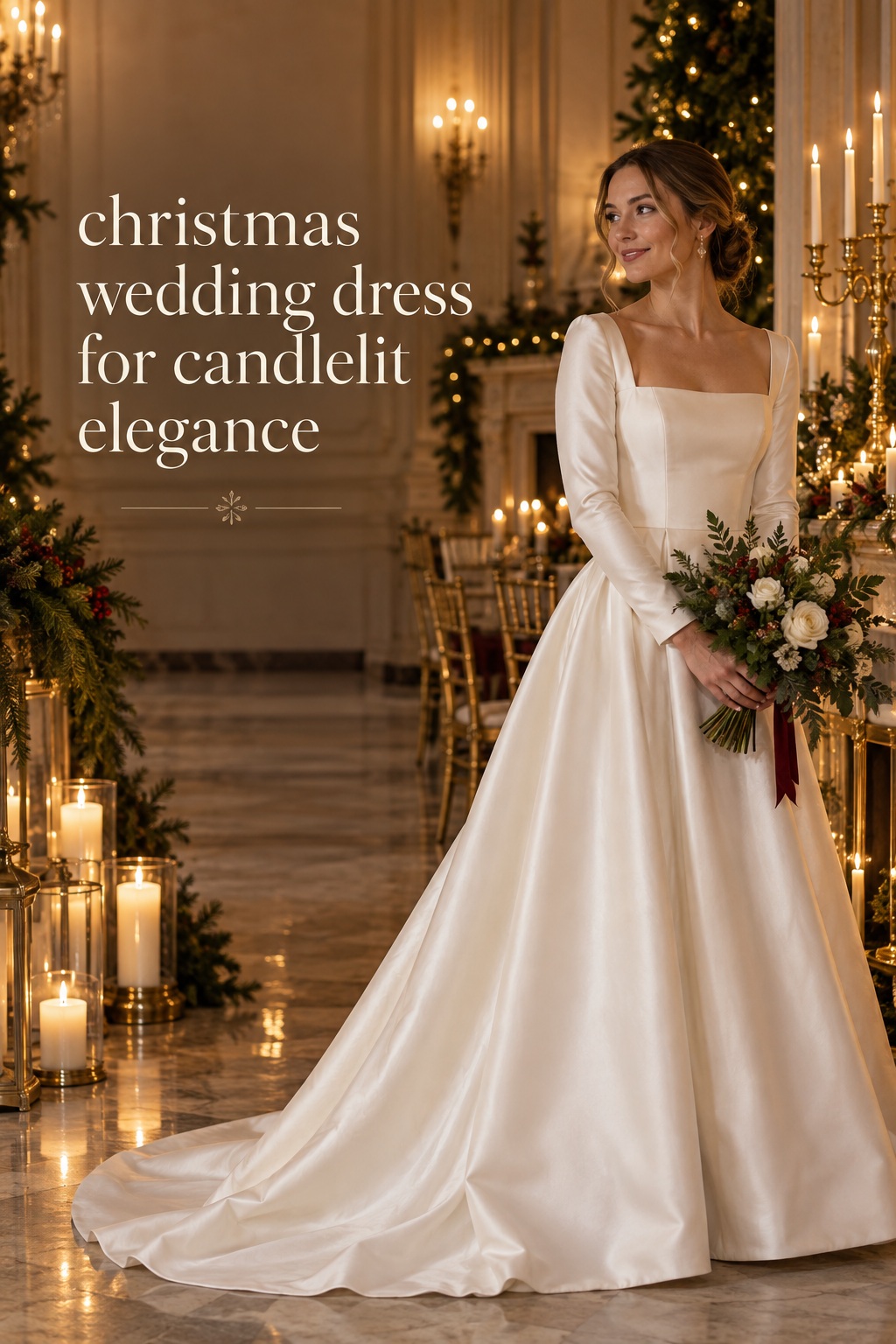
Use the neckline and back to balance the sleeve. A high neck with a low back can feel elegant rather than closed-in. A square neckline gives a structured satin gown a classic frame. A bateau neckline works beautifully with lace or crepe when you want a quieter silhouette. If you love a strapless dress, plan the layer honestly. A cape that stays attached at the shoulders may be more reliable for movement than a small wrap that slips whenever you lift your arms.
Evaluate silhouette in relation to the venue and the outer layer. A full ball gown has natural winter drama and can support a cathedral veil, a cape, or a long coat, but it needs room in cars and narrow aisles. An A-line is flexible and often easier to move in. Fit-and-flare crepe looks polished in a city venue and under a tailored coat. A column gown can feel modern and comfortable, but test whether the hem and fabric allow the stride you need on snow, stone, or stairs.
- Fabric test: sit, turn, and walk in the gown. Notice weight at the shoulders and whether the skirt catches on shoes.
- Sleeve test: lift your arms, hold a bouquet, and put on the planned cover-up.
- Light test: view the dress under salon light, daylight, and direct flash if possible. Emerald Bridal’s fabric notes explain why texture and lighting can change the result.
- Color test: compare bright white, soft ivory, champagne, and blush against your skin and the venue palette.
- Detail test: choose one or two festive signals, such as sparkle and velvet, rather than adding every seasonal reference at once.
Finally, check the train and hem. A dramatic train is beautiful in a candlelit aisle, but it may need a bustle before outdoor portraits or dancing. Ask how the hem behaves over winter footwear and whether the bustle can be operated by someone who has practiced. If you plan snowy photographs, protect the underside with a trusted temporary solution approved by the seamstress. Comfort is not separate from style here. It is what allows the silhouette to look composed in every photograph.
Five Worked Christmas Wedding Dress Formulas
These formulas are starting points, not rules. Each one connects the gown to a particular setting and problem. Use the formula that resembles your day, then replace details until the result feels like you.
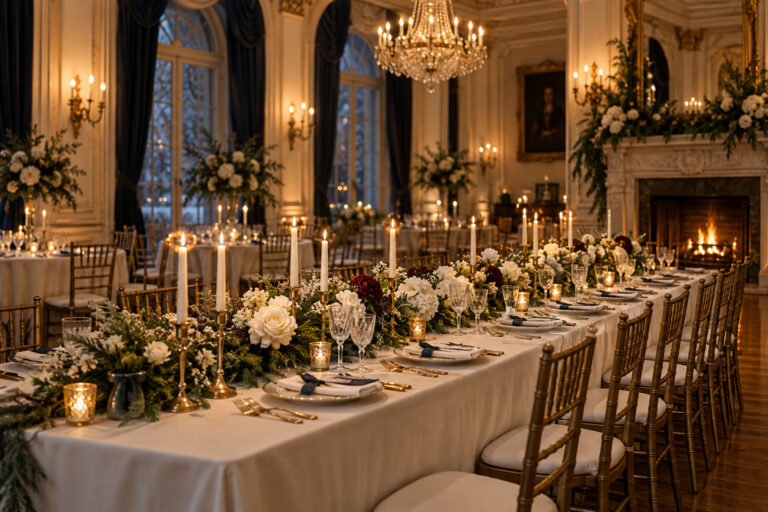
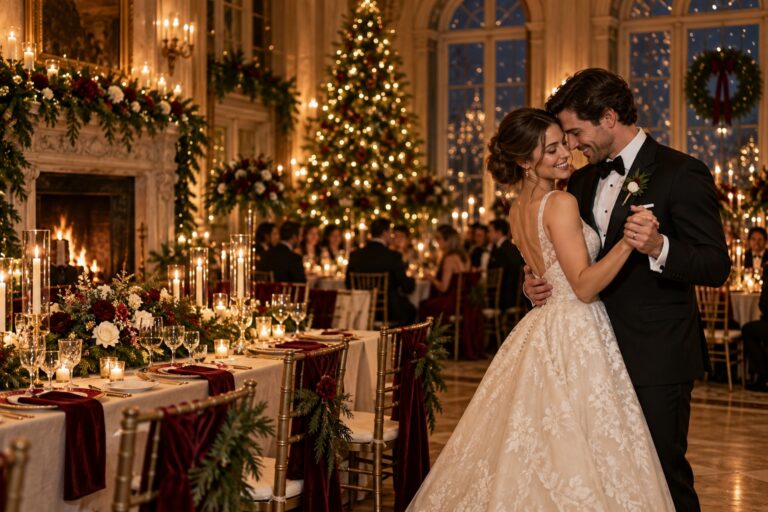
Candlelit ballroom: ivory satin with one rich accent
For a grand ballroom with brass, candles, evergreen, or deep red flowers, begin with an ivory satin or mikado gown. A square neckline, long fitted sleeves, or a clean strapless bodice with a detachable cape will photograph beautifully against warm light. Add one burgundy velvet ribbon, a garnet-inspired earring, or a bouquet with red berries. Keep the rest of the accessories quiet so the dress remains bridal rather than theatrical.
This formula works because smooth fabric reflects candlelight without needing heavy embellishment. It also gives you a clear reception transition: remove the cape, shorten the bustle, or swap a long veil for a simple hair ornament. Before ordering, test the satin in direct flash. A polished surface can look luminous, but creasing and overly bright highlights will show if the fit is not precise.
Snowy portraits: structured gown with a detachable cape
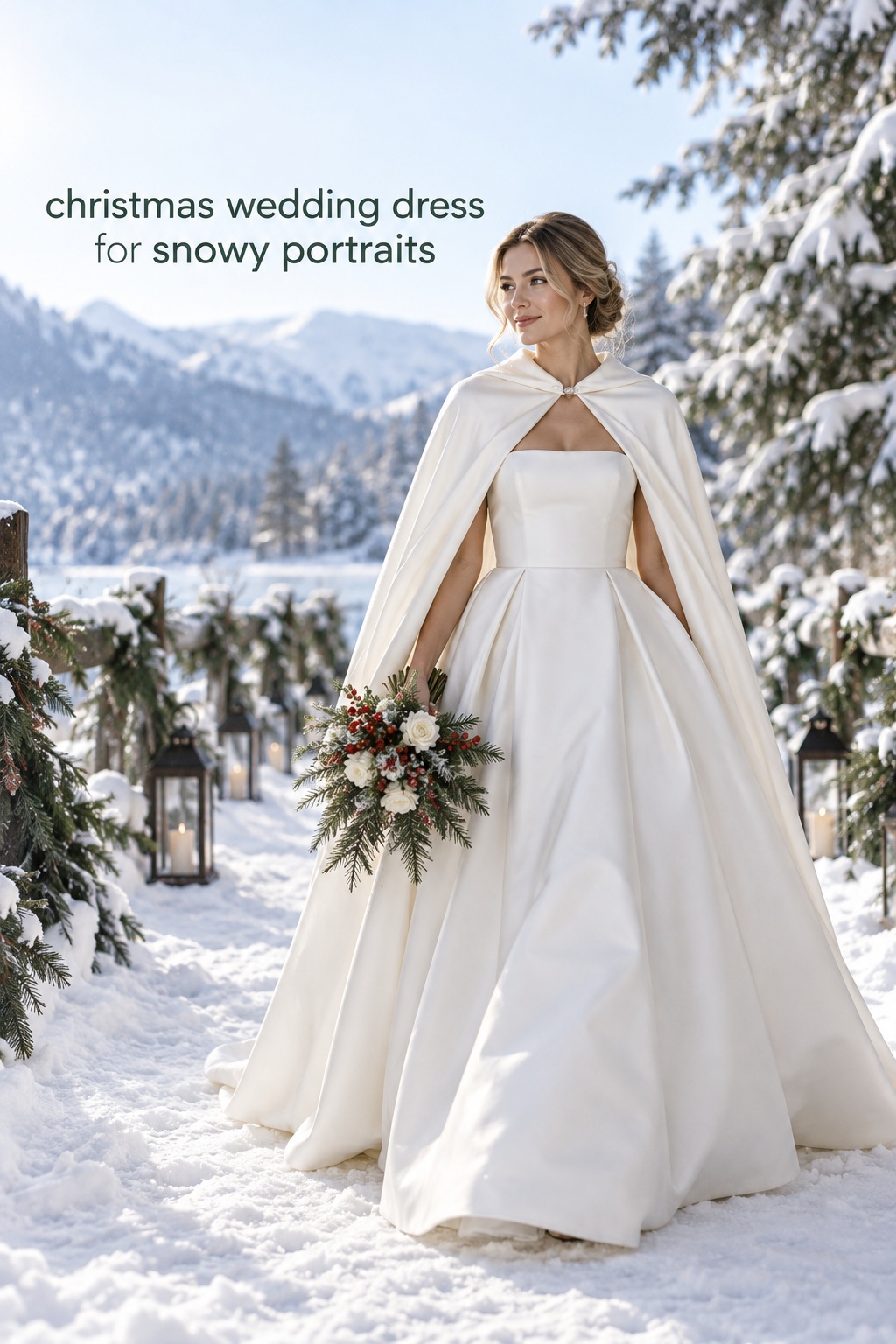
A snowy setting benefits from a clean silhouette that can be seen against a pale background. Choose structured satin, mikado, or substantial crepe with an ivory cape, hooded capelet, or tailored bridal coat. A defined waist and a controlled skirt shape will keep the gown visible when the ground is bright. Use a bouquet with evergreen and berries to create contrast without turning the entire look red and green.
Plan the portrait sequence, not just the outfit. Wear warm layers underneath if the construction allows them, take the outdoor photographs in a short focused block, and keep a dry pair of shoes nearby. A cape can create movement in the wind, but secure the closure before walking. David’s Bridal also highlights wraps, layered gowns, and winter accessories as useful options for brides planning December, January, or February celebrations in its winter wedding dress guide.
Church ceremony: lace sleeves and graceful coverage
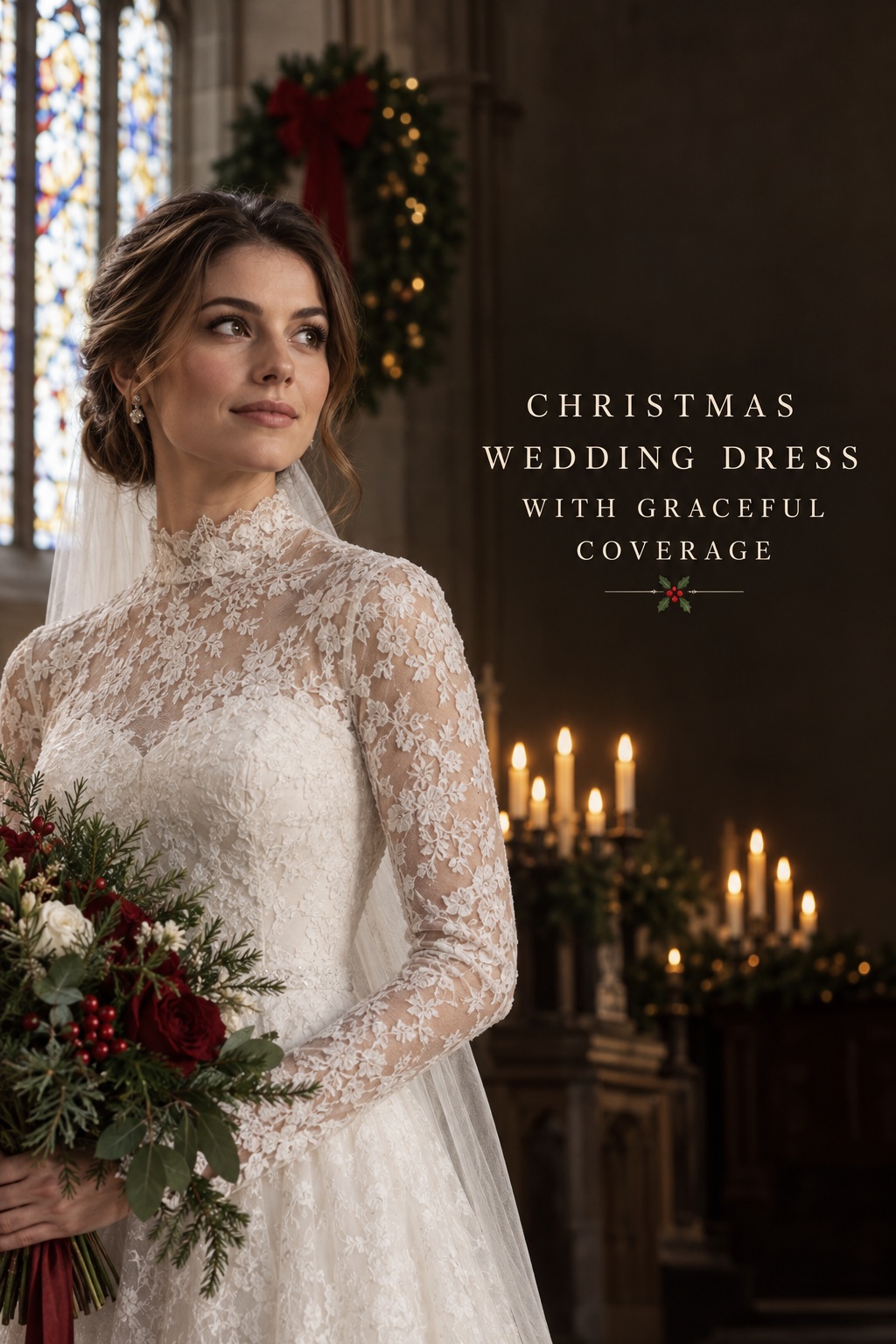
For a church ceremony or a bride who prefers more coverage, try an ivory gown with a high neckline, lace sleeves, or a sheer illusion layer over a structured bodice. You can keep the look delicate through floral lace and a narrow train, or make it more formal with embroidered detail and pearl earrings. A cathedral veil can reinforce the ceremony mood, while a shorter veil or hairpiece keeps the reception lighter.
Ask the fitter whether the sleeve is lined, how the lace is finished at the wrist, and whether the neckline rubs when you move. Long-sleeve wedding dress guidance from Jovani and Emily Bridalwear both distinguish the visual effect of sleeves from their practical coverage. That distinction matters on a cold day.
Modern city venue: minimal crepe with a sculptural detail
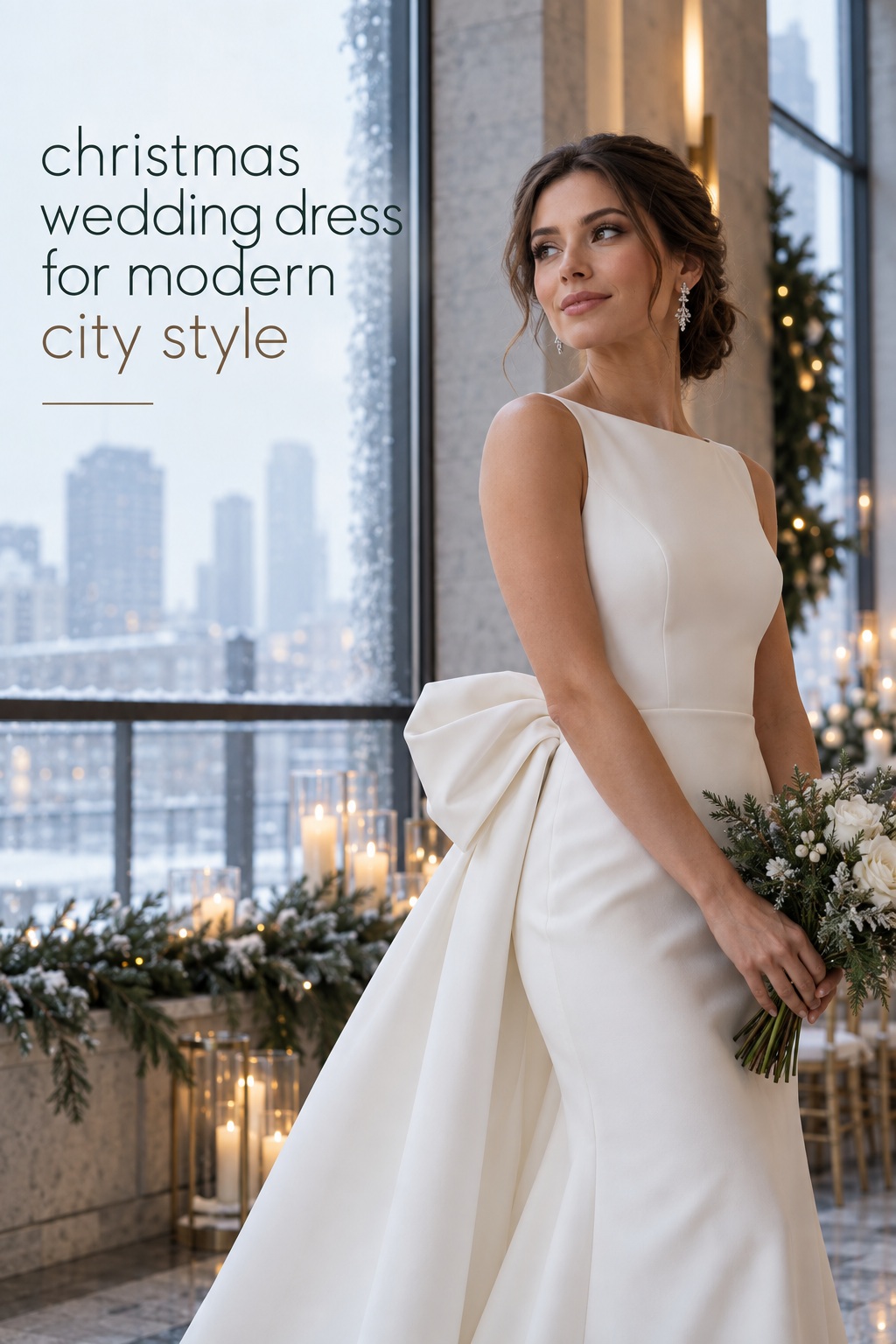
A city wedding does not need a traditional holiday palette. A minimalist silk-crepe gown with an asymmetric neckline, architectural bow, clean back, or subtle crystal detail can feel festive beside frosted windows and candlelight. Add a tailored ivory coat for the arrival and a single winter texture, such as satin shoes or a velvet hair bow. This is a strong choice when the venue already has a view, modern lines, or understated decorations.
Use tailoring as the seasonal element. The coat should fit over the shoulders without crushing the sleeve or bow, and it should be long enough to protect the dress during the entrance. Test the coat while carrying your bouquet and wearing the planned gloves. A clean city formula often looks best when every item has a job and there is no extra sparkle competing with the silhouette.
Intimate lodge reception: velvet detail and a soft wrap
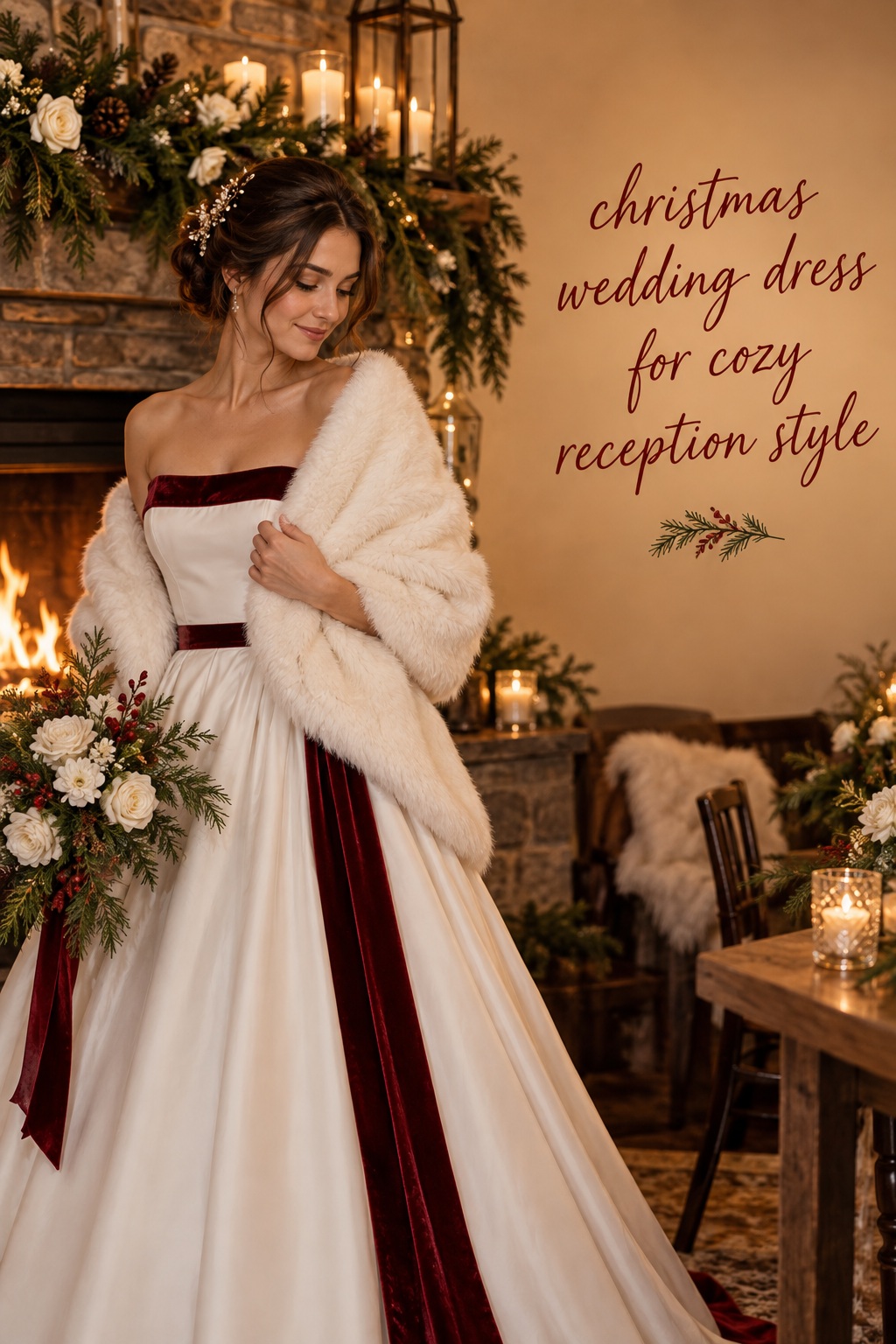
For a lodge, greenhouse, or fireside reception, let texture do more work. An ivory gown with velvet trim, a velvet sash, a warm jacquard overskirt, or a soft faux-fur wrap can create the cozy mood without changing the bridal color. A tea-length or ankle-length second look may be practical after the ceremony, especially when the reception involves stairs, family-style dining, or dancing in a smaller room.
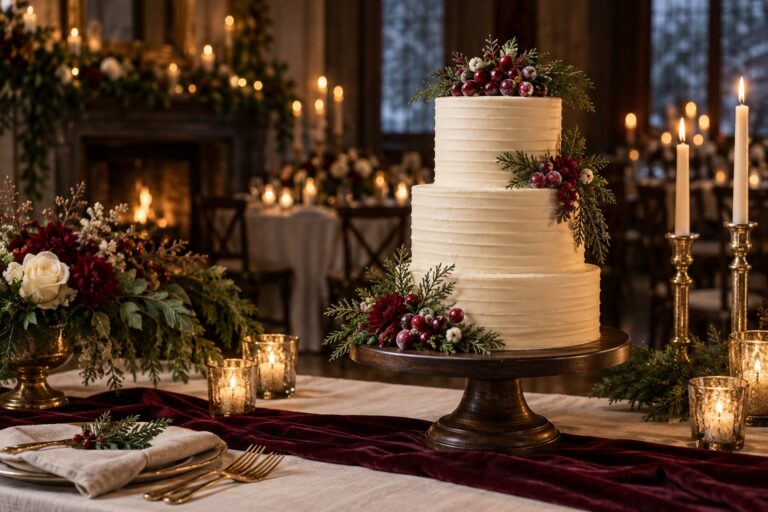
Keep the wrap proportionate to the gown. Oversized faux fur can swallow a delicate lace silhouette, while a narrow stole may look lost against a full skirt. Take photographs from the front and side with the wrap on. If you want a festive color, choose one focused accent such as burgundy, pine, or deep cranberry, and repeat it once in the bouquet, ribbon, or shoe.
Run the Final Dress Review Before You Order
Before you place the order, repeat the entire wedding-day route in miniature. Put on the gown, planned underlayers, shoes, veil, and cover-up. Walk, sit, turn, raise your arms, use stairs, and hold a bouquet. If you will travel by car, practice getting into a similar seat. These small tests reveal whether a sleeve pulls, a neckline shifts, a train catches, or a coat makes the shoulders feel crowded.
Review the alterations plan in writing. Confirm the hem length with the actual shoes, the bustle method, sleeve adjustments, cup or lining changes, closure placement, and when the final fitting happens. If the dress is made to order, ask what happens if the production or shipping schedule changes. Keep every receipt, measurement, and appointment note together. A beautiful Christmas wedding dress still needs a calm project plan.
Check photography from several angles. Ask for a front portrait, a three-quarter view, a seated photograph, and a full-length image with the layer on and off. Look at the dress beside the bouquet, jewelry, and venue images. Winter light can be blue and bright outdoors, warm indoors, and contrasty near candles. You do not need to predict every frame, but you can make sure the fabric, color, and detail remain readable across the main parts of the day.
- Comfort gate: can you stand still outdoors for the planned portrait block without losing focus on the day?
- Layer gate: does the cape, coat, wrap, or bolero stay secure and look intentional with the gown?
- Movement gate: can you walk, sit, hug, hold the bouquet, and dance without constant assistance?
- Weather gate: do you have a dry-shoe plan, a warm holding area, and a backup for wet or snowy conditions?
- Visual gate: does the look feel Christmas-ready through texture and atmosphere without becoming costume-like?
- Timing gate: are the final fitting, alterations, steaming, transport, and emergency contact details confirmed?
Think about the reception before you finalize the ceremony look. A detachable cape, overskirt, sleeves, or train can create a second silhouette without requiring a whole new outfit. If you prefer a full change, schedule it around the first dance, photographs, or dinner so the transition feels purposeful. The most successful plan is the one that gives you a clear winter entrance and enough freedom to enjoy the rest of the celebration.
There is no single correct Christmas wedding dress. The right one is the gown whose fabric, construction, layers, and details answer your actual day. Choose warmth where you need it, drama where the room can hold it, and seasonal references that still feel like your wardrobe. When the practical decisions are settled before the order, the dress can do what it should: make the ceremony feel special, the photographs feel coherent, and the bride feel fully present.
FAQ
What fabric is best for a Christmas wedding dress?
Satin, mikado, velvet, and heavier crepe are useful starting points because they have structure and visual richness. The best fabric depends on the venue, indoor heating, time outdoors, silhouette, and the gown’s lining. A lighter fabric can still work when it is layered or paired with a well-planned cape or coat.
Do I need sleeves for a Christmas wedding dress?
No. Sleeves are one way to add coverage, but a detachable cape, bolero, bridal coat, wrap, gloves, or warm underlayer can do the same job. Choose the solution that lets you move comfortably and preserves the silhouette you love. Remember that sheer lace sleeves may provide less warmth than lined sleeves.
How can I make a wedding dress feel festive without using red and green?
Use texture and light instead of a literal holiday palette. Satin, velvet trim, pearl or crystal detail, candlelit photography, a cape, metallic shoes, or winter flowers can signal the season while keeping the gown timeless. One focused accent usually looks more intentional than several competing Christmas references.
Should I wear a coat or cape over my Christmas wedding dress?
Choose based on coverage, movement, and the shape of the gown. A tailored coat is practical for travel and outdoor arrivals, while a cape can create ceremony drama and show more of the dress underneath. Try the layer with the actual sleeves, veil, bouquet, and shoes before ordering it.
How far in advance should I order a Christmas wedding dress?
Start as early as your designer or bridal salon recommends, then leave time for production, shipping, multiple fittings, and seasonal schedule pressure. A made-to-order gown and a sample bought off the rack have different timelines. Ask for the dates in writing and keep a buffer for alterations.
Can I wear the same Christmas wedding dress for the ceremony and reception?
Yes, especially when the gown has a bustle, removable train, detachable sleeves, cape, or overskirt. These changes can make the reception silhouette easier to move in without losing the identity of the ceremony look. Practice the transition and assign one person to help before the wedding day.