Christmas Wedding Decorations: Compare Five Styles
You can choose a classic Christmas palette, a winter-elegant design, a rustic woodland setting, a modern monochrome room, or a richer maximalist look. Each can be beautiful, but each asks for different materials, lighting, spacing, and budget priorities. Use this comparison to decide what belongs at your wedding, what should stay out, and where one memorable detail will have more impact than dozens of small props.
Start With Mood, Venue, and Visual Scale
Before choosing colors, describe the atmosphere in three or four plain words. You might want warm, traditional, and joyful, or candlelit, refined, and wintery. You might prefer playful, cozy, and family-focused. This language becomes a filter for every decision. A velvet ribbon can belong in an old-world design, a rustic lodge, or a modern room, but the color, quantity, and placement will change with the mood.
Next, study the venue as it exists before any rentals arrive. A historic church may already have seasonal greenery or trees. A ballroom may need height and draping to feel intimate. A barn usually offers texture through wood, beams, and warm surfaces, while a bright loft may be better served by restrained greenery and carefully placed light. Ask what the venue permits, what is already included, and whether candles, hanging installations, real greenery, adhesives, or open flames have restrictions.
- Venue architecture: note fireplaces, staircases, windows, columns, chandeliers, exposed beams, and existing holiday decor.
- Guest movement: identify the entry, ceremony aisle, bar, dinner tables, dance floor, restrooms, and any points where guests naturally pause.
- Camera distance: large spaces need stronger anchors, while intimate rooms can become crowded quickly with trees, arches, and tall centerpieces.
- Light conditions: check daylight, overhead fixtures, colored uplighting, candle policies, and the appearance of the room after sunset.
- Seasonal balance: decide whether Christmas should be the main theme or a quiet layer within a broader winter wedding.
Think in terms of anchors and accents. Anchors are the elements guests notice from a distance, such as a ceremony backdrop, a floral installation, a fireplace arrangement, a welcome display, or a ceiling treatment. Accents are the smaller touches that reward a closer look, including ribbon, menus, place cards, pine cones, berries, and ornaments. A coherent design usually needs only a few strong anchors and a repeated set of accents.
Your wedding look is only the beginning.
Keep your guest list, vendors, timeline, and every important detail together with Zarellea — so your day feels as considered as your style.
Compare Five Christmas Wedding Decoration Directions
There is no single correct way to decorate a Christmas wedding. The five directions below are useful because they are complete visual systems, not isolated Pinterest ideas. Choose one as your lead, then borrow one or two compatible details from another style.
Classic Christmas: red, green, and candlelight
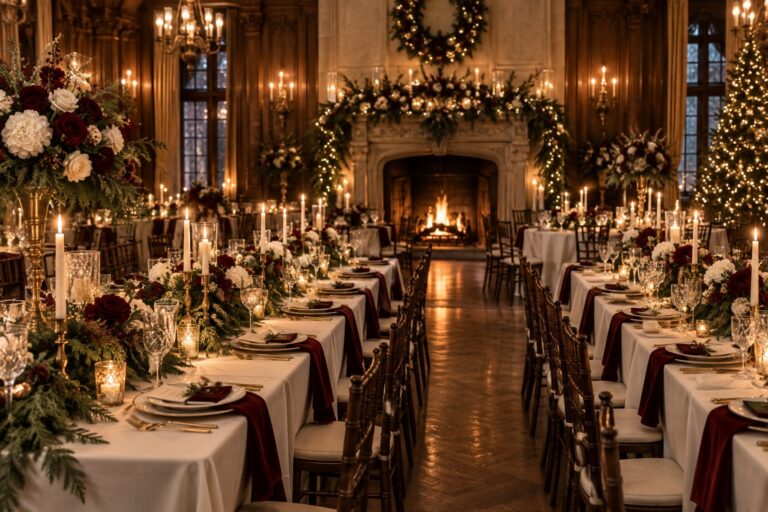
Classic Christmas decor works when you want the season to be immediately recognizable. Use evergreen garlands, red flowers or berries, warm white lights, gold or brass details, and a controlled amount of ribbon. Red napkins, deep green table linens, or red taper candles can carry the palette without making every surface look decorated. The result feels familiar, welcoming, and especially natural for a December reception.
The main risk is repetition. If the ceremony arch, welcome sign, escort display, centerpieces, cake, and sweetheart table all use the same red bow and pine arrangement, the room can feel like a retail display. Give each zone a different job. Let greenery frame the ceremony, candles warm the tables, and a small ornament or berry detail appear at the escort cards. Keep the exact shade of red consistent so the varied details still connect.
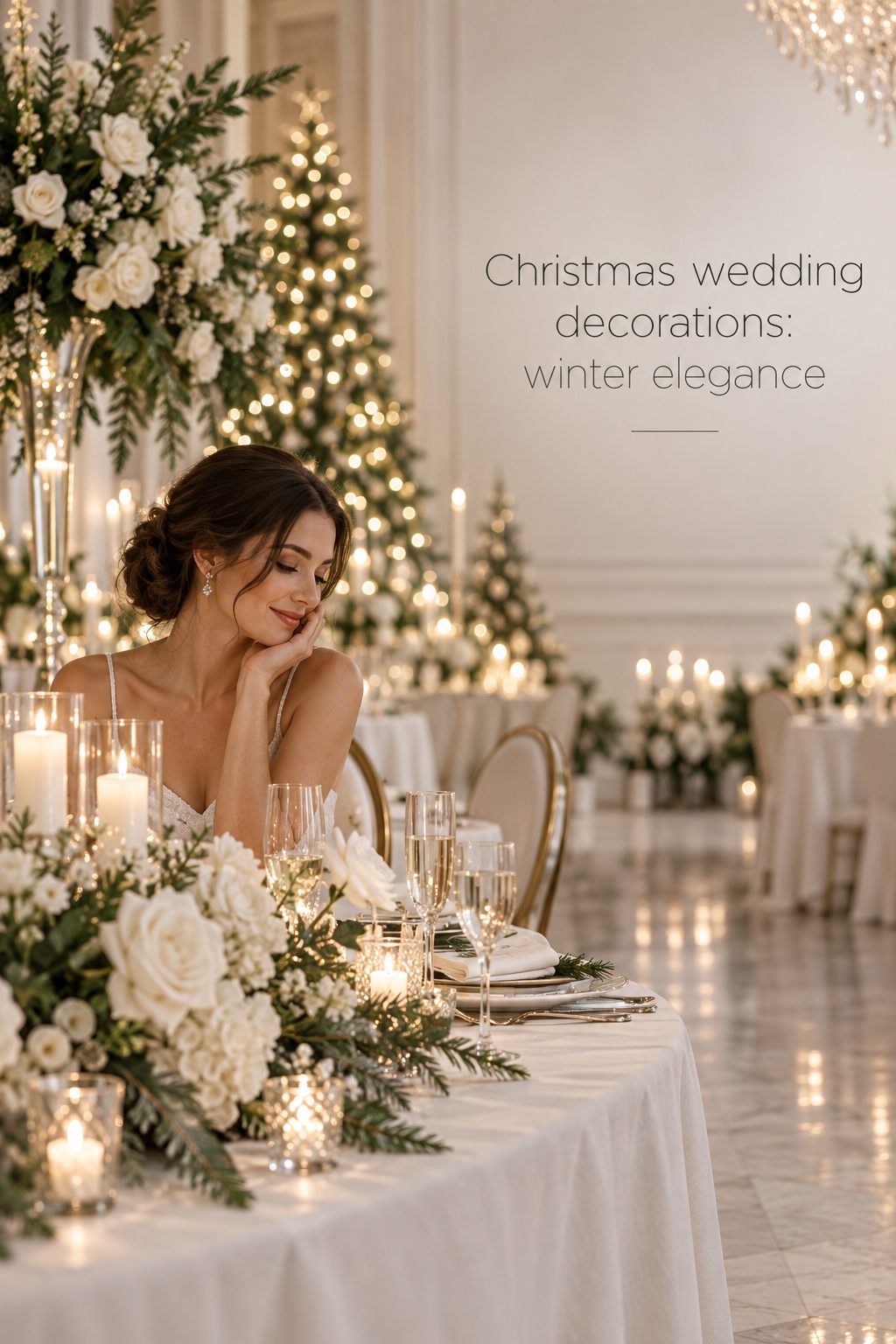
Winter elegant: ivory, greenery, and reflective light
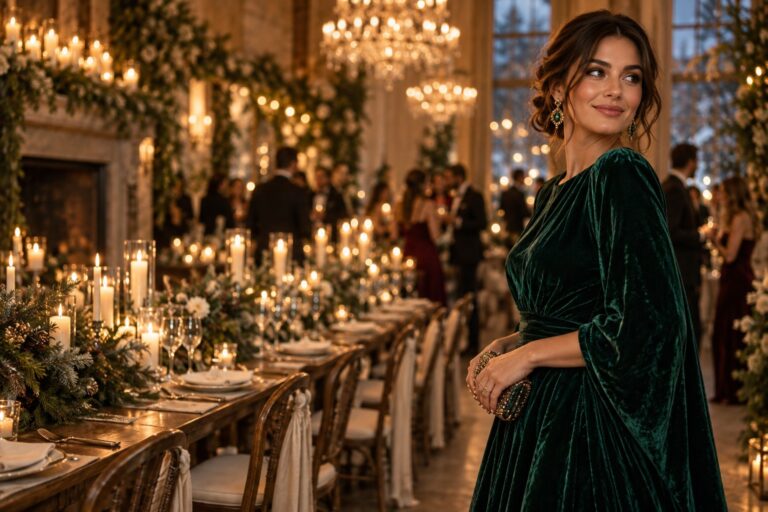
Choose winter elegant when you want Christmas wedding decorations to feel seasonal without looking literal. Build the room around ivory, white, soft green, champagne, silver, or pale gold. Use white flowers, cedar or pine, frosted branches, glass vessels, satin, and clusters of candles. The holiday reference comes from texture, fragrance, and glow rather than a collection of recognizable symbols.
This direction suits a formal ballroom, a bright gallery, a hotel reception, or a ceremony where the outfit and architecture should remain the focus. It is also flexible after the holidays because ivory linens, clear glass, greenery, and brass candleholders can be reused. Add one warmer note, such as a berry-toned ribbon or amber candlelight, if the room begins to feel too pale or cool.
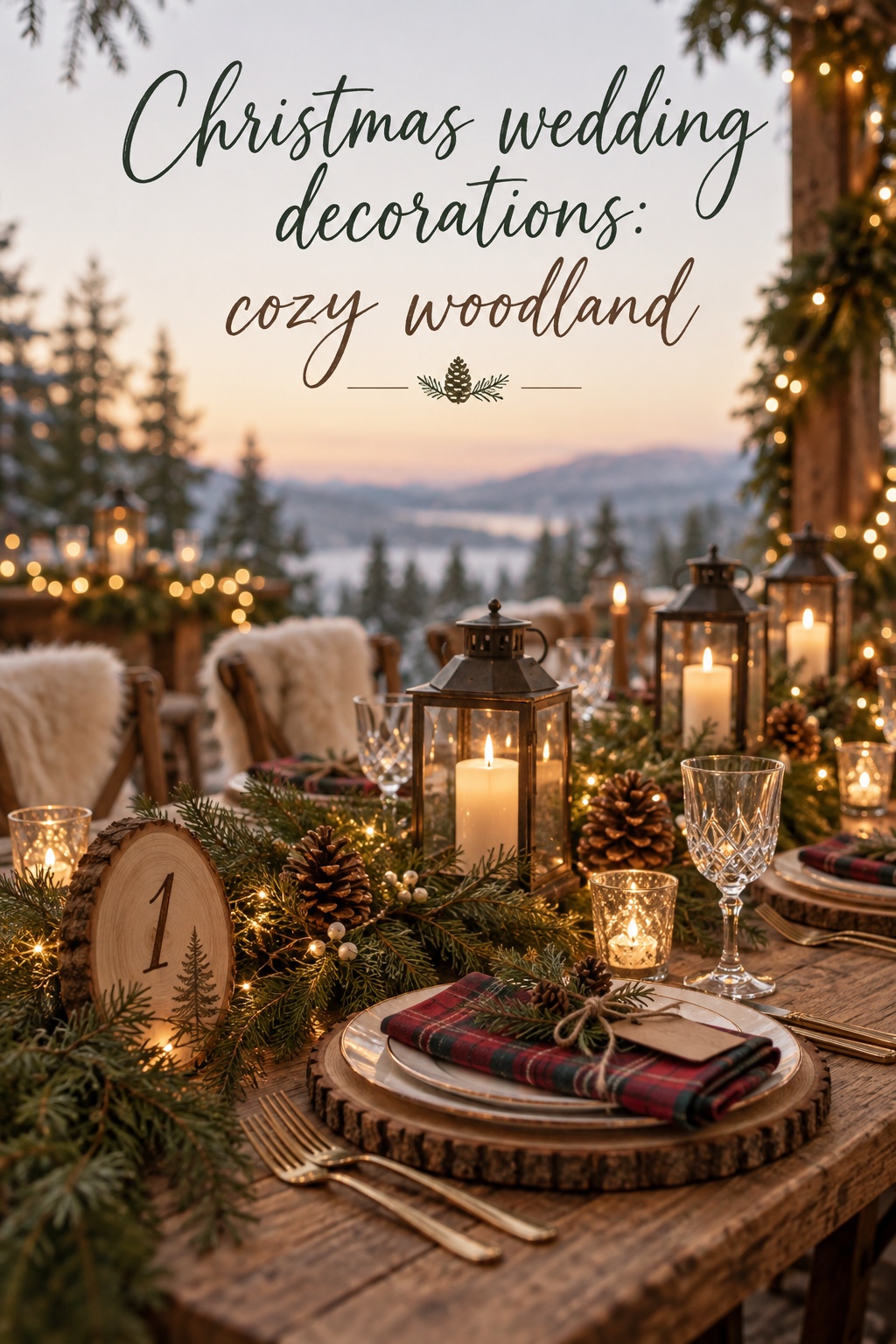
Rustic woodland: pine cones, wood, and cozy layers
Rustic woodland Christmas wedding decorations make the setting feel connected to the landscape. Use loose evergreen, pine cones, birch or reclaimed wood, wool or plaid textiles, lanterns, berries, and simple ceramic or stoneware vessels. A barn, lodge, mountain venue, or historic home can provide much of the visual texture, which means you may need fewer rented structures.
Keep the rustic style edited. Too many antlers, signs, plaid patterns, and unfinished wood pieces can compete with one another. Repeat one or two natural materials instead. Pine cones can appear at the place settings and escort display, while wood is reserved for signage. Add candlelight or warm string lights to stop the palette from becoming flat. If guests will spend time outside, a blanket station can be both a decorative moment and a practical kindness.
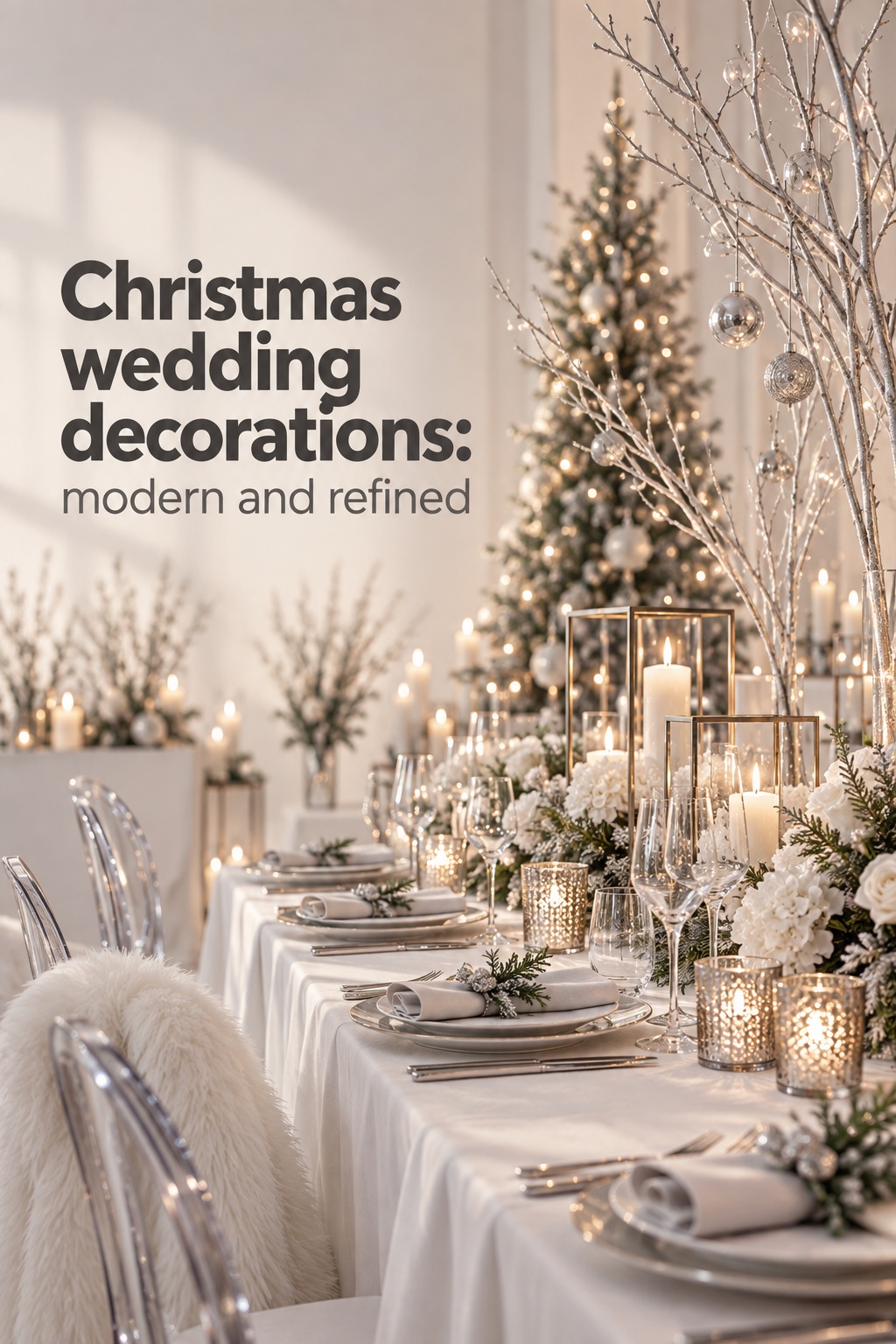
Modern monochrome: one palette, strong silhouettes
Modern monochrome Christmas wedding decorations rely on restraint and shape. Try winter white with silver, black with ivory, forest green with brass, or burgundy with a muted neutral. Instead of filling the room with seasonal objects, choose sculptural branches, low floral arrangements, clean menus, geometric candleholders, and a focused lighting plan. A simple arch with greenery, a single oversized wreath, or a line of identical trees can create a strong visual statement.
The challenge is warmth. A room with only white, metal, and straight lines may photograph sharply but feel cold in person. Introduce softness through velvet, folded napkins, rounded glassware, warm bulbs, or a lounge with upholstered seating. Keep the holiday detail visible in the material story. A small group of trees, a carefully styled wreath, or a candlelit aisle can say Christmas more effectively than scattered novelty ornaments.
Maximalist holiday: layered color and memorable moments
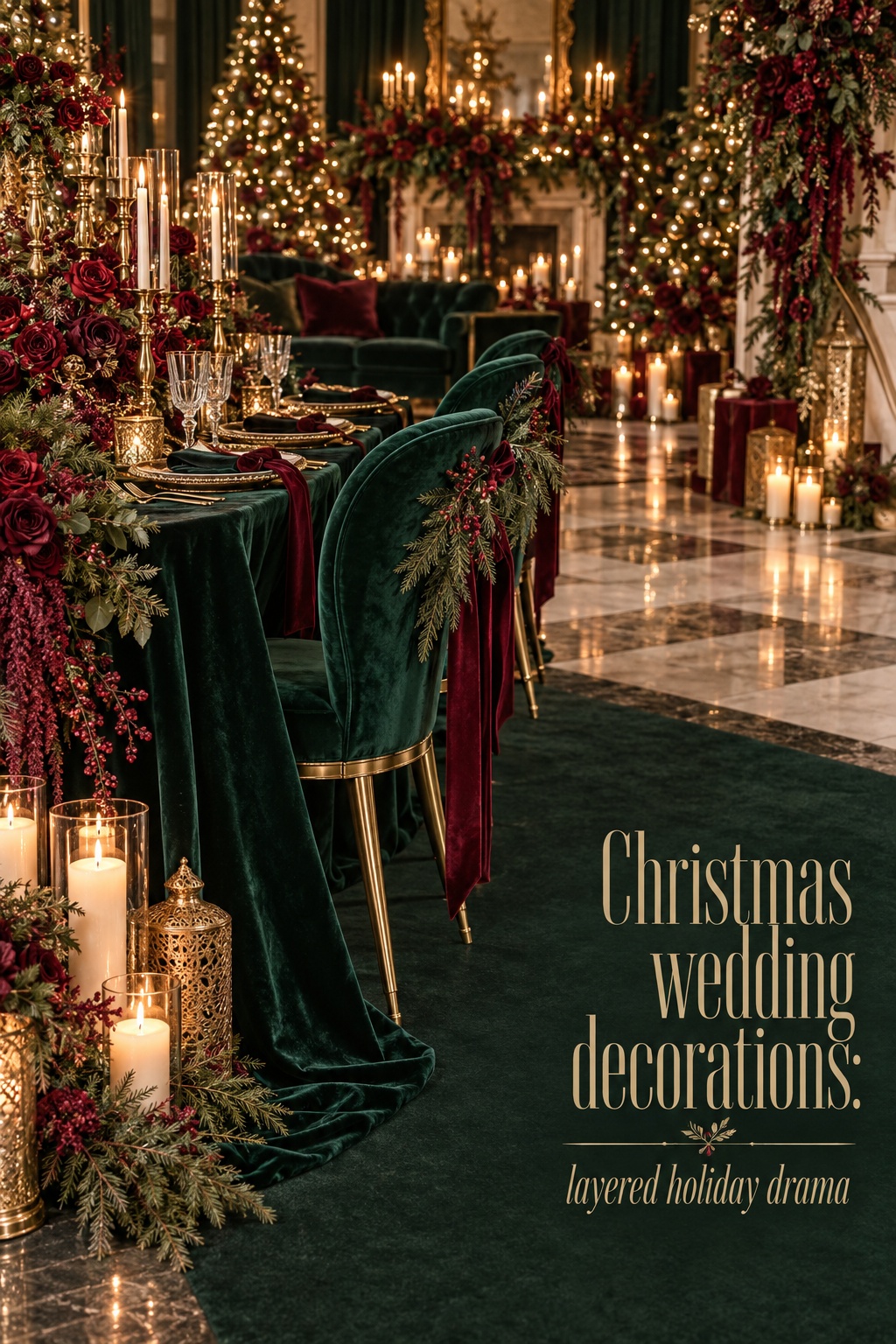
Maximalist decor is the right choice when you love color, abundance, and a room that feels transformed. Use multiple trees, jewel tones, velvet linens, dramatic floral arrangements, ornament displays, saturated draping, or a lounge that looks like a festive drawing room. The look can be glamorous rather than childish when the colors are deliberate and the materials feel substantial.
Scale is the deciding factor. Maximalism needs negative space around its biggest moments, or the eye has nowhere to rest. Select a hero zone such as the dance floor, ceremony backdrop, or sweetheart table. Keep the other zones supportive. A dramatic ceiling installation paired with quiet tables may be more elegant than four competing focal points. Build a detailed rental and installation plan because the labor, storage, transport, and teardown can be more demanding than the visual board suggests.
Translate the Choice Across Every Wedding Zone
Once you choose a lead direction, walk through the wedding in the order guests experience it. This prevents the common problem of having a beautiful reception table that has no relationship to the ceremony or entrance. Use the same palette and one repeated material, then change the arrangement by zone.
Entrance and welcome area
The entrance sets the promise. A wreath on the door, a garland on the welcome table, miniature trees, candle lanterns, or a framed seating display can establish the season before guests reach the main room. Keep the path clear and check that signs remain readable in low light. If the venue already has a decorated lobby, use it as part of the design rather than covering it with a competing installation.
Ceremony backdrop and aisle
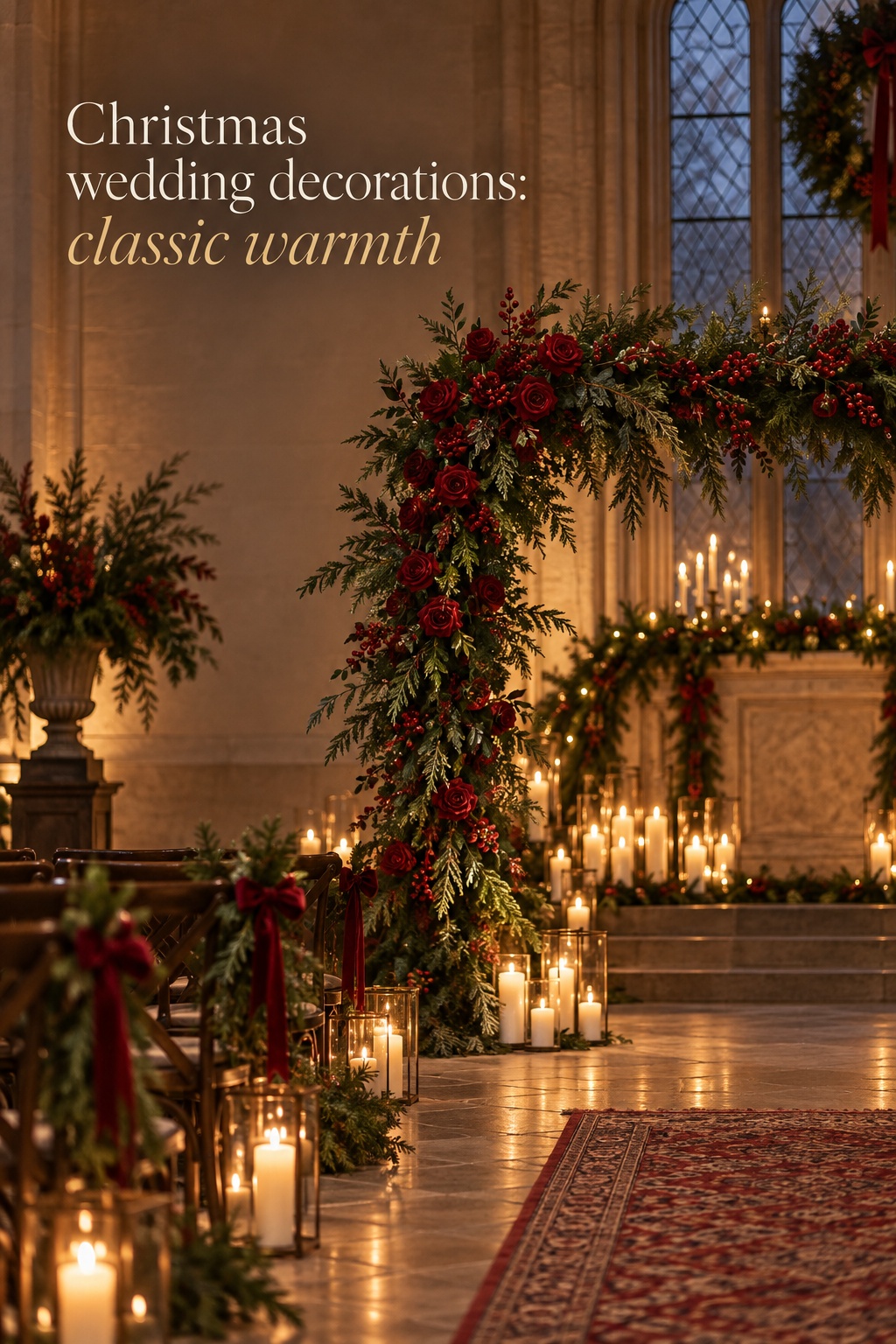
The ceremony needs one focal point that looks good behind the couple and from the guest seats. A green and white arch can feel like a winter garden. Red roses and evergreen can make the Christmas message clear. Lanterns along the aisle can create intimacy, while a fireplace arrangement may be enough in a historic venue. Confirm sight lines, fire rules, aisle width, and the plan for moving large pieces after the ceremony.
Reception tables
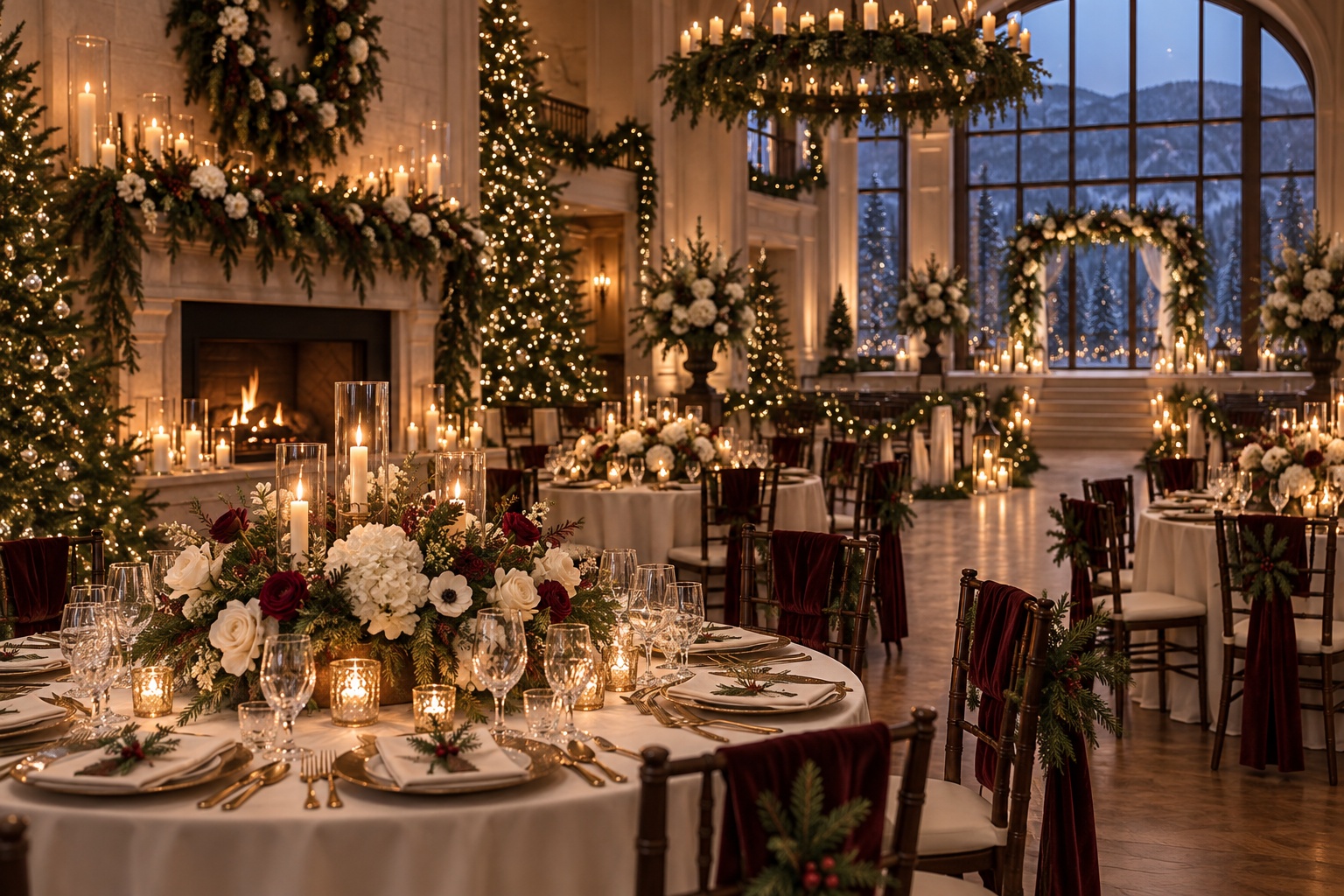
Tables are where guests spend the most time looking closely. Decide first whether conversation or drama is the priority. Low greenery, bud vases, and candle clusters support conversation. Tall branches or elevated arrangements create spectacle but need careful height and stability. Seasonal flowers may include roses, anemones, amaryllis, ranunculus, paperwhites, or poinsettias, depending on availability and budget. Ask the florist what is actually available for your date rather than building the plan around a photograph.
Use linens and place settings to reinforce the chosen direction. Plaid napkins can be a single accent in a classic design. Velvet runners can make a modern room feel richer. Brass chargers, mercury-style glass, colored candles, or clear vessels can catch light without adding another theme. Make sure centerpieces do not block faces and that candles are protected from sleeves, paper, greenery, and enthusiastic dancing.
Lighting and guest experience
Lighting is often the most efficient way to create a Christmas atmosphere. Warm string lights can soften a barn or outdoor structure. Candle clusters can make an all-white room feel intimate. Pin spots can draw attention to the cake, florals, or trees. Ask the lighting team to show the room at the time of your ceremony and dinner, not only in a bright daytime setup. Make sure the color temperature works with the flowers, linens, skin tones, and photography.
Add guest-centered details only when they support the plan. A blanket basket, hot cocoa or warm drink station, personalized ornament escort cards, a fireside lounge, or a small holiday photo moment can be memorable. One useful interaction is usually stronger than five unrelated stations. If a detail requires a sign, staff member, electrical outlet, or constant replenishment, include that work in the event timeline.
Budget Priorities, Trade-Offs, and Mistakes
Start the budget with the elements that change the room from a distance. Lighting, a ceremony focal point, linens, a fireplace or entrance installation, and table arrangements often have more visual impact than a large number of small favors. Ask for two versions from your planner or florist: the full concept and the version that protects the atmosphere with fewer materials. This makes the compromise intentional rather than last-minute.
- Choose reusable anchors: trees, candleholders, neutral linens, vessels, and signage can be used at home or during future holidays.
- Use seasonal greenery strategically: garlands can cover long tables, stair rails, and entry points, but confirm freshness, delivery timing, and cleanup.
- Borrow the venue’s strengths: existing trees, fireplaces, chandeliers, woodwork, or windows may eliminate the need for large rentals.
- Reserve the statement color: use burgundy, red, emerald, or fuchsia where guests will see it clearly, then keep supporting details quieter.
- Plan the teardown: every hanging branch, candle, ornament, and rented tree needs a person, container, and deadline for removal.
The most common mistake is mixing visual languages without a bridge. A rustic pine-cone centerpiece, a glamorous sequin tablecloth, a pastel balloon arch, and a formal black-tie ceremony can all be attractive separately, but they need a shared palette or material to belong together. Choose a connector such as warm candlelight, one ribbon color, a repeated evergreen, or the same typography on the paper goods.
Another mistake is decorating every available surface. Guests do not need a holiday object on every chair, wall, and table. Leave some architecture visible. Empty space gives the meaningful details room to register, improves photographs, and makes cleanup easier. Avoid anything that blocks exits, narrows aisles, creates a trip hazard, or conflicts with venue safety rules.
Finally, do not let a reference photograph decide the plan for your actual room. A styled editorial image may use a huge floral budget, a private installation crew, or a space with different ceiling height and lighting. Use it to identify the feeling, then translate the feeling into materials and quantities your venue can support. The best Christmas wedding decorations look personal because they respond to the couple’s place, schedule, and guests.
Sources and Methodology
This guide was shaped by a Google US search review of ten wedding and lifestyle pages, including The Knot, WeddingWire, Green Wedding Shoes, and Martha Stewart. The sources were used to compare recurring decoration components, venue considerations, seasonal greenery, lighting, ceremony details, table design, and guest-focused ideas. The recommendations here are editorial planning guidance, not a claim of firsthand event testing. Availability, venue rules, safety requirements, and floral pricing should be confirmed with the professionals working on your wedding.
FAQ
What are the best colors for Christmas wedding decorations?
Red and green are classic, but they are not required. Forest green and brass, burgundy and ivory, winter white and silver, black and berry, or emerald and champagne can all feel festive. Choose two or three lead colors and one connecting material so the room stays cohesive.
How can I make Christmas wedding decorations look elegant?
Design around a mood instead of collecting literal holiday symbols. Limit the palette, repeat a few materials, and prioritize texture and lighting. Velvet, evergreen, glass, brass, candles, and carefully placed ribbons can suggest Christmas without making the venue feel like a store display.
What greenery works well for a Christmas wedding?
Evergreen branches, cedar, pine, eucalyptus, holly, berries, and seasonal branches are common choices. Your florist can recommend varieties that are available, safe for the venue, and likely to stay fresh through the event. Confirm delivery and cleanup plans for any fresh installation.
How do I decorate a Christmas wedding on a small budget?
Choose one high-impact anchor, such as a ceremony backdrop or lighting treatment, then use smaller repeated accents. Borrow existing venue trees or fireplaces, use greenery across long tables, rent versatile vessels, and choose a weekday or less-demanded date if it fits your plans. A limited palette makes simple details look intentional.
Should I use real Christmas trees at my wedding?
Real trees can create a strong seasonal focal point, but they require delivery, stable placement, protection for floors, and a clear removal plan. Ask the venue about fire safety, watering, needles, and access. Artificial trees may be easier for a short setup or a venue with strict restrictions.
What Christmas details are useful for wedding guests?
Blankets for an outdoor ceremony, a warm welcome drink, a coat check, clear wayfinding, and comfortable lounge seating can make the seasonal design feel generous. A personalized ornament escort card or small photo moment can add fun, but only if it fits the overall plan and does not slow guest movement.
How many Christmas decorations should I use in each room?
Use enough elements to establish a focal point and repeat the design language, then leave breathing room. Large rooms can support a few stronger anchors, while small rooms usually need fewer, lower details. Walk through the space from the guest’s eye level and remove anything that blocks conversation, movement, or the venue’s best features.