Winter Wedding Table Centerpieces: Fix Common Problems
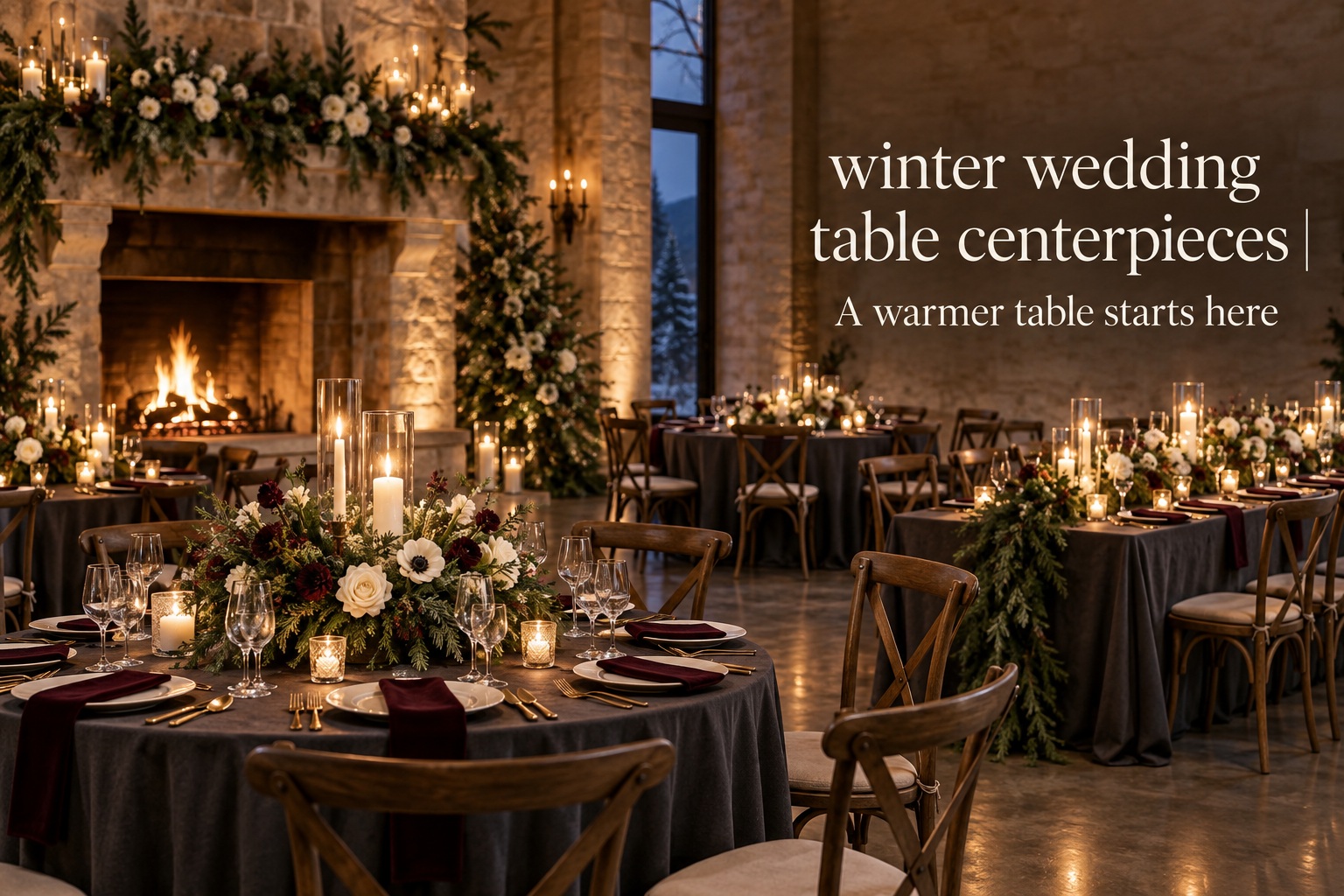
Winter wedding table centerpieces can look beautiful in a saved inspiration image and still fail on the real reception table.
This guide starts with the friction couples actually feel: wanting candlelight and winter texture without a Christmas display, wanting flowers without an inflated floral bill, and wanting a memorable table without making guests work around it. Use the decision rules, recipes, and quick fixes below to choose winter wedding table centerpieces that look intentional from the first table to the last.
Why Winter Wedding Table Centerpieces Are Harder Than They Look
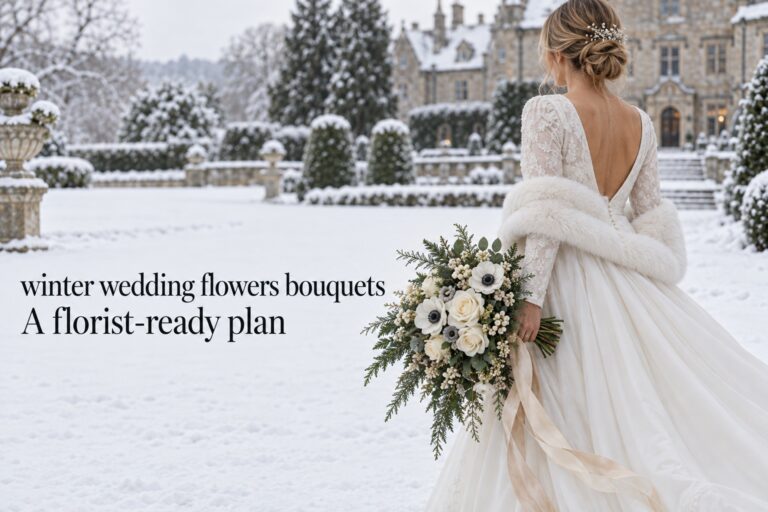
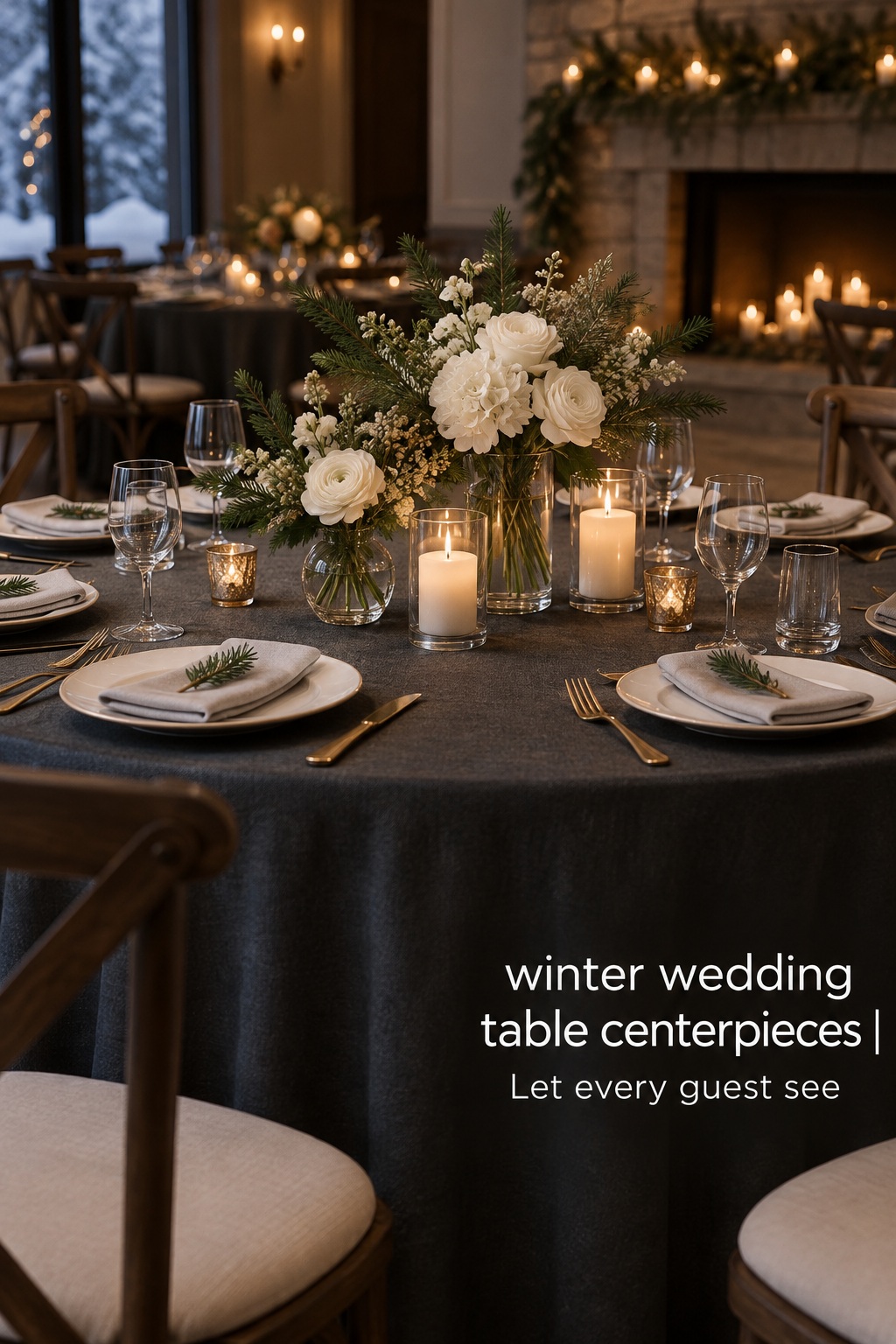
Winter gives you an unusually clear visual vocabulary: evergreen, bare branches, berries, velvet, glass, reflective metal, rich color, pale flowers, and warm light. That abundance is useful, but it can also make a table feel like a collection of seasonal objects instead of one composed design. The first problem is usually not a lack of ideas. It is too many unrelated ideas competing for the center.
Start by writing one sentence that describes the guest experience. For example, “Guests share a candlelit dinner in a warm, modern lodge,” or “Guests sit at a quiet winter-white table with soft reflective details.” That sentence gives every centerpiece decision a job. If an object does not strengthen the mood, help the table function, or carry personal meaning, it does not need to be there.
Your wedding look is only the beginning.
Keep your guest list, vendors, timeline, and every important detail together with Zarellea — so your day feels as considered as your style.
- Choose one seasonal anchor: greenery, candlelight, winter color, bare branches, or a frosted palette.
- Add one supporting texture: glass, velvet, wood, ceramic, metal, or a soft textile.
- Set one contrast: pale flowers on dark linen, warm flames with green foliage, or burgundy against ivory.
- Protect the table: leave space for plates, glasses, menus, place cards, and passing food.
- Decide what happens after dinner: label pieces, assign setup, and plan how everything returns to its containers.
Table shape creates the next constraint. A long banquet or farm table benefits from a repeated line, while a round table usually needs a compact cluster that can be read from every seat. A sweetheart table can carry a more noticeable focal point because it serves two people rather than a full group. A cocktail table needs an even smaller arrangement because guests will be standing, holding glasses, and moving around the surface.
Safety and venue policy are part of the design, not an afterthought. Ask whether open flames are allowed, whether candles must be enclosed, whether fresh greenery needs protection from heat, and who is responsible for extinguishing and removing everything. If the venue says no flame, create the mood with warm LED candles, reflective vessels, and carefully placed lamps. You can still make winter wedding table centerpieces feel intimate without building the plan around a rule you cannot use.
Choose the Centerpiece Solution That Fits Your Table
Instead of choosing a centerpiece by flower name, choose it by the problem it needs to solve. The same palette can become a low runner, a repeated set of small vessels, a raised installation, or a compact cluster. The right format depends on how guests sit, how the meal is served, how much the venue already contributes, and how much setup labor your team can absorb.
For round tables: choose a readable central cluster
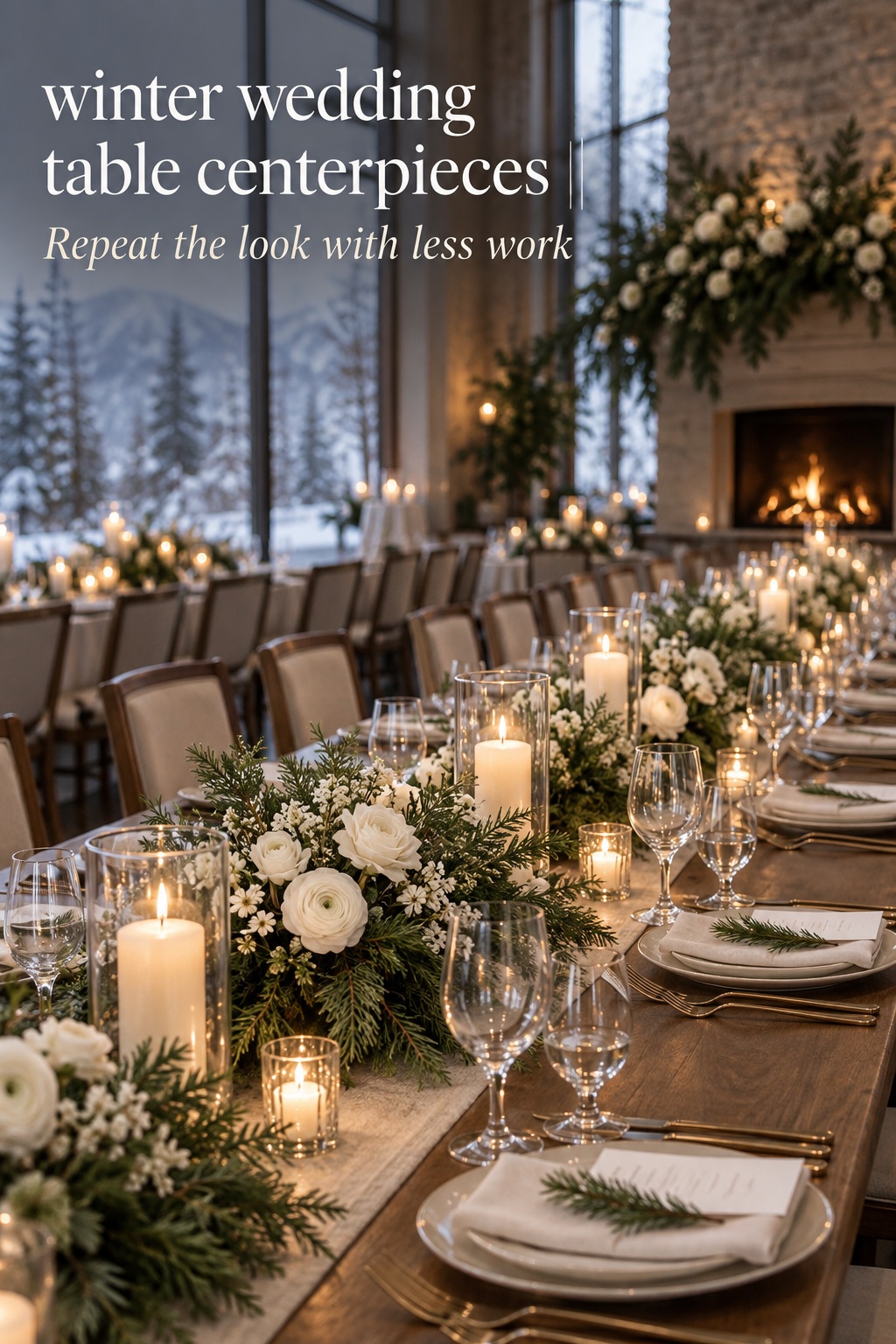
Round tables work well with one centered group of low vessels, a wreath-like ring around a protected candle, or several small arrangements that create one visual unit. Keep the cluster narrow enough that guests can place glasses and lean toward the center without knocking something over. A few vessels with different heights can add movement, but the overall footprint should remain simple.
If the table seats eight or more, repeat a color or material across the cluster so it does not look like one oversized bouquet. Three bud vases with ivory flowers, a low bowl of greenery, and two enclosed votives can read as one centerpiece while leaving more space than a wide floral mound. The Knot’s winter centerpiece examples are useful for seeing how evergreen, candles, and seasonal accents can be combined, but treat the images as a starting point for scale rather than a fixed formula.
For banquet and farm tables: build a repeated line
Long tables are forgiving when the centerpiece is divided into repeatable sections. Try low evergreen sections with candles between them, a sequence of ceramic bowls, or groups of three small arrangements spaced down the table. Repetition makes the room feel cohesive and is easier to transport than one continuous garland that must arrive intact.
Measure the usable length after place settings are added. Leave a clear lane for plates and serving pieces, especially if the meal is family style. A centerpiece that fills the empty tabletop can become too crowded when water glasses, menus, and cutlery appear. Photograph the test table from both ends and from a seated eye level before finalizing the count.
For sweetheart tables: use one intentional focal point
A sweetheart table can support more visual drama because the couple needs fewer clear sightlines across the surface. A low asymmetrical floral arrangement, a short branch installation, or a pair of candle clusters can frame the couple without hiding their faces. Keep the focal point slightly to one side if you want the table to feel editorial rather than perfectly symmetrical.
Do not let the sweetheart centerpiece become a separate design language. Repeat at least one element from the guest tables, such as the candle finish, napkin color, or greenery. The head table should feel special because it is concentrated, not because it introduces a new palette and a new collection of props.
For cocktail tables: keep the footprint light
Cocktail tables need room for hands, drinks, and small plates. Use a single low bud vase, a narrow bottle with one branch, a small protected candle, or a tiny cluster of winter foliage. Repeating a modest arrangement across several tables often looks more polished than placing one elaborate item on each surface.
Use sturdy vessels that will not tip when someone brushes past. Avoid loose pinecones, trailing ribbons, and tall branches at the edge of a table. Those details can be attractive in a photograph but awkward in a moving crowd. When the design needs to survive cocktail-hour traffic, restraint is a form of elegance.
Build Four Winter Centerpiece Recipes Without Holiday Overload
These recipes are flexible frameworks, not shopping lists. Replace flowers based on availability, use rented vessels when that reduces labor, and keep the anchor consistent across the room. If you want winter rather than Christmas, let texture and light do more of the seasonal work than literal ornaments or a red-and-green combination.
Recipe one: evergreen, ivory, and warm candlelight
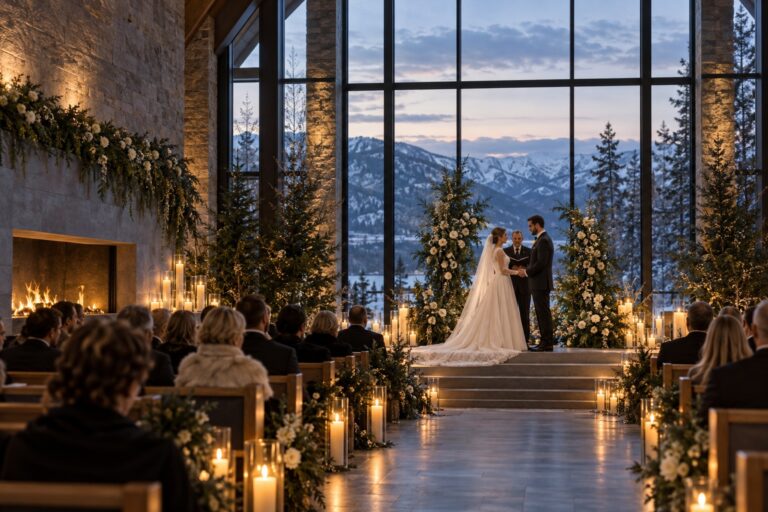
Lay short sections of cedar, fir, pine, or eucalyptus along a long table, then place ivory tapers or enclosed votives at measured intervals. Add a small number of white flowers in low vessels and let the tabletop remain visible between each section. The effect is warm and seasonal without requiring a holiday symbol.
- Palette: evergreen, ivory, warm brass, and natural wood.
- Best format: banquet, farm, or long sweetheart table.
- Replace if needed: use faux greenery or potted herbs when fresh foliage is unavailable or difficult to transport.
- Watch for: fragrance, sap, candle heat, and greenery that spreads into place settings.
Recipe two: winter white with reflective details
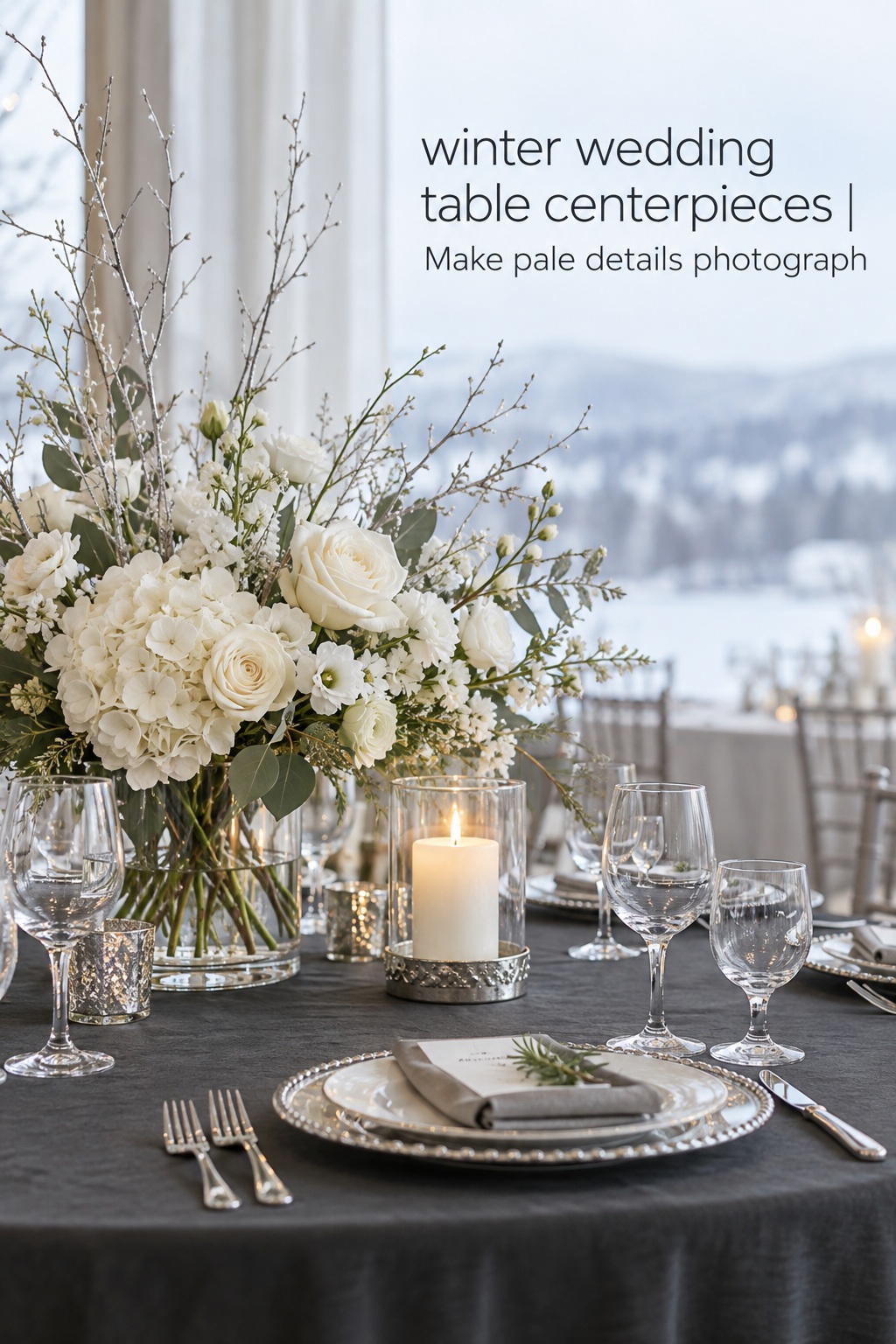
Use white or ivory flowers in low ceramic bowls, clear glass cylinders, or small silver vessels. Add one reflective element, such as silver branches, a pewter charger, or a mirror under a protected candle. The pale palette needs contrast, so consider charcoal stationery, gray-green napkins, dark wood, or warm candlelight.
Keep the flowers varied in shape but edited in color. A mix of rounded blooms, airy stems, and one architectural accent creates depth without making the table busy. Martha Stewart’s simple centerpiece guidance is a helpful reminder that a smaller arrangement can feel complete when repetition and proportion are doing the design work.
Recipe three: burgundy, blush, and dark wood
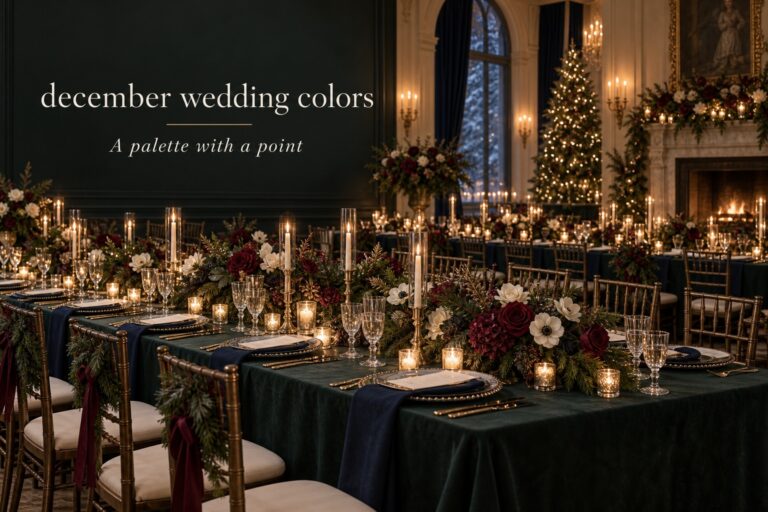
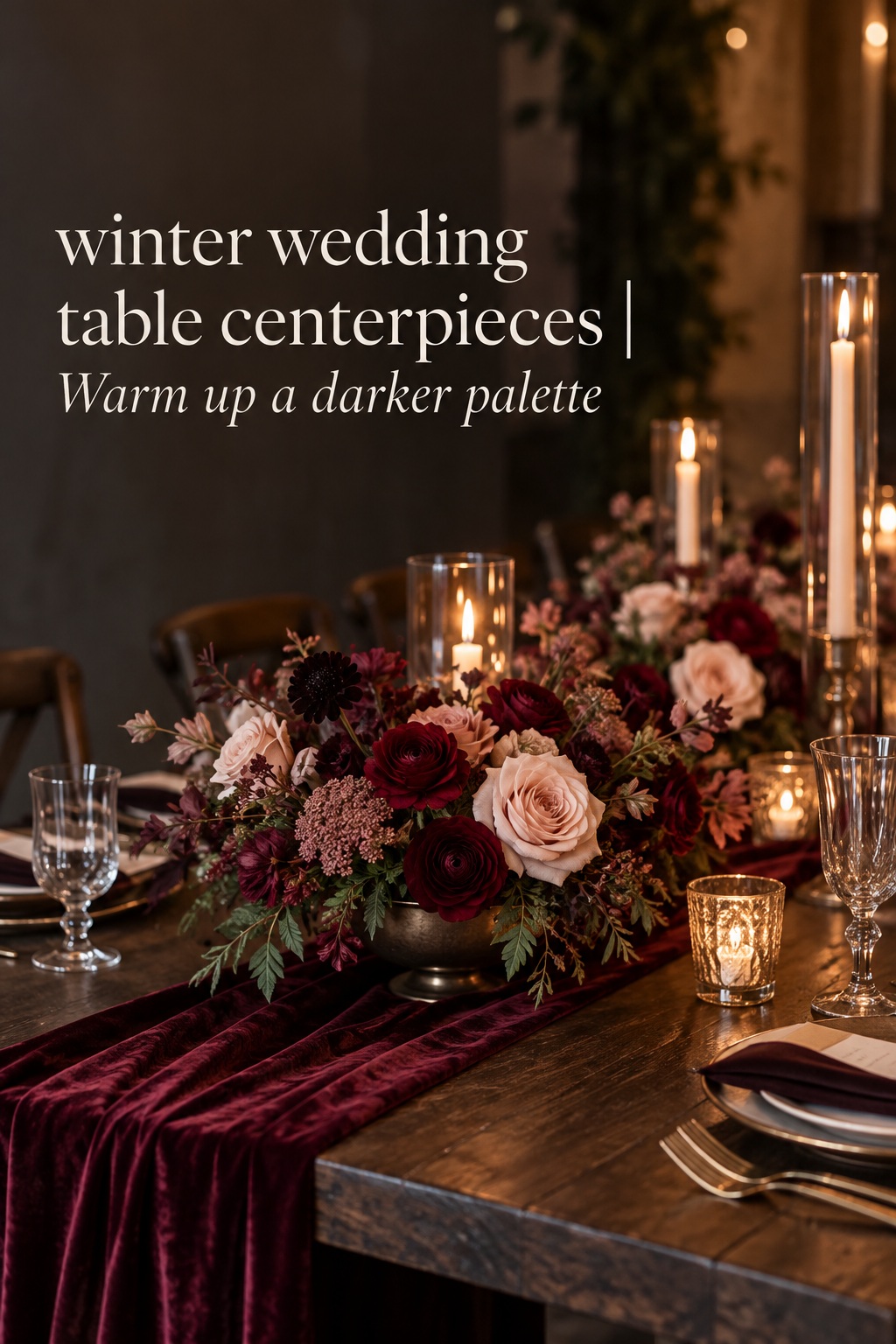
For a richer winter table, pair burgundy or plum flowers with blush, cream, and a dark wood or black accent. Use low bowls or a series of compact arrangements so the color feels deliberate rather than heavy. A velvet runner can provide softness, while clear glass keeps the darker palette from absorbing all the light.
Let one deep color lead and use the lighter shades to create breathing room. If you add berries or dark foliage, keep the place settings quiet. Too many saturated details can make the room feel like a holiday banquet even when the intention is modern romance. Repeat the burgundy in one small guest-facing detail, such as a menu line or napkin, rather than everywhere.
Recipe four: branch, glass, and candlelight without flowers
When floral quantity is the problem, use bare branches, glass vessels, and candlelight as the main composition. Place one branch in a weighted bottle or narrow vase, then group smaller votives around the base. Add a few pinecones, paper details, or a restrained ribbon only if the table needs more texture.
This format works especially well for a modern venue, a wood table, or a reception where guests need generous space. It also creates an easier substitution plan. If a branch style is unavailable, choose another silhouette with a similar height and density. The visual rule matters more than one exact material.
Turn Your Favorite Look Into a Setup-Ready Brief
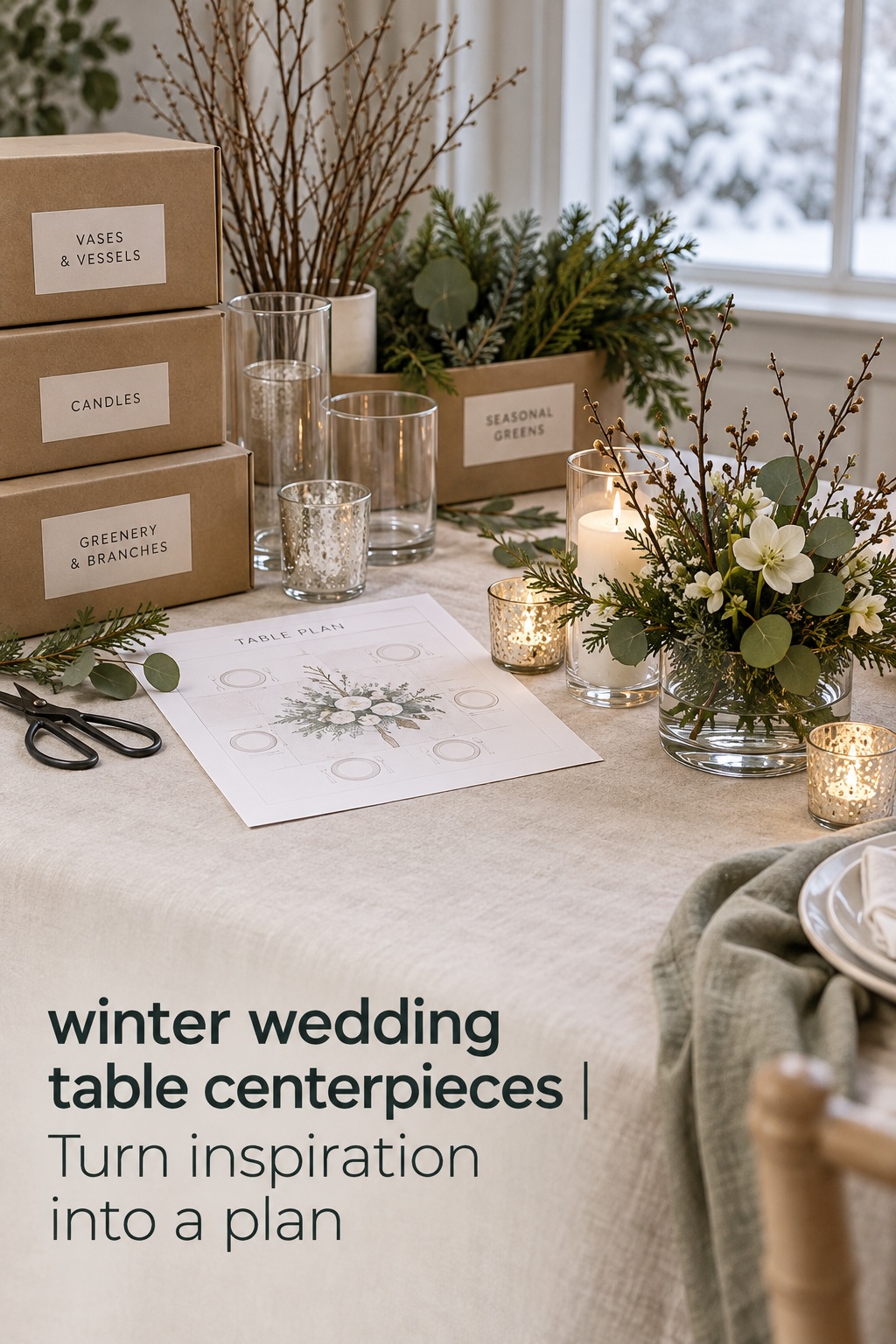
A beautiful idea becomes reliable when another person can build it without asking you to interpret a folder of screenshots. Write the centerpiece brief in plain language and include the table count, table shapes, guest count, usable surface, venue rules, palette, and the one detail you do not want to lose. Then describe the arrangement by role: anchor, support, light, and empty space.
Give the florist or DIY team a measurable recipe
- Anchor: name the main line or cluster, such as low evergreen sections or three ivory bowls.
- Support: specify the secondary texture, such as glass, velvet, wood, or metallic vessels.
- Light: state the number and type of candles, including whether flames must be enclosed.
- Space: note the clear lanes required for plates, glasses, menus, and service.
- Variation: define what may change if a flower, branch, or vessel is unavailable.
- Logistics: list who delivers, assembles, labels, removes, and returns the pieces.
For a florist, include a photo of the actual linen and a rough table diagram. For a DIY team, divide the design into boxes by table number and label each box with a photograph of the finished example. Pack candles, vessels, floral mechanics, and table numbers together rather than asking a setup crew to search through one mixed supply pile.
Build one complete test table before buying everything
A test table should include the real linen, plate, cutlery, glassware, napkin, menu, place card, and centerpiece. Take photographs from a seated eye level at several positions around the table. Check whether the faces of guests are visible, whether the candles create glare, whether the arrangement dominates the menu, and whether someone can reach a water glass without moving the centerpiece.
Test the room lighting too. A centerpiece that looks delicate in daylight may disappear under warm amber light, while a silver vessel can create distracting highlights. Make one small adjustment at a time so you know what improved the result. Once the table works, measure the finished footprint and use it as the standard for every repeated arrangement.
Plan transport, substitutions, and cleanup early
Fresh greenery, flowers, glass, and candles have different handling needs. Decide which items arrive assembled and which are built on site. Create a substitution rule before the wedding week: a replacement should match the intended color, scale, and texture, not simply fill an empty vase. This protects the design when a particular flower or vessel changes.
Cleanup should be visible in the plan. Count how many vessels must be washed, how many rental pieces must be boxed, and where leftover flowers or greenery go. Assign one person to photograph each finished table before guests arrive and one person to check the room after dinner. A centerpiece is successful when it looks good, works well, and does not create an avoidable midnight emergency.
Quick Fixes for Common Centerpiece Problems
Most centerpiece problems can be corrected without starting over. Change the format before changing the entire mood. Lowering the height, reducing the number of materials, or repeating one small arrangement can turn an almost-right design into a table guests enjoy using.
The centerpiece blocks conversation
Lower the floral mass or move height to a narrow, raised vessel with open space beneath it. If a tall design is important, use it only where the venue and table shape allow a clear view underneath. On round tables, prioritize a readable central cluster over a wall of stems.
The table feels crowded
Remove one category before removing random objects. If the table has flowers, greenery, candles, menu cards, favors, and decorative metal, decide which category is least important to the mood. Repeating fewer elements usually looks more intentional than keeping every nice detail.
The winter palette looks too much like Christmas
Keep the seasonal textures and edit the symbols. Replace obvious ornaments with glass, branches, velvet, or candlelight. Shift from bright red and green to ivory, gray-green, burgundy, plum, dusty blue, or warm metallics. One winter cue repeated thoughtfully will feel more refined than several holiday cues layered together.
The centerpiece disappears in photographs
Add contrast at the base and check the arrangement under the actual reception lighting. Pale flowers need a darker linen or warm shadow, while deep flowers need reflective glass or lighter details around them. Keep the visual center clear so the camera can read the shape instead of finding a pile of similar tones.
The design is beautiful but difficult to assemble
Convert it into a repeatable kit. Use fewer vessel types, pre-label each table, photograph one finished example, and write the assembly order on the box. If a centerpiece needs a specialist to place every stem, it may be better suited to a smaller number of focal tables than the entire reception.
FAQ
What are the best winter wedding table centerpieces for round tables?
Choose a compact central cluster made from low flowers, a few candles, and one seasonal texture such as evergreen or glass. The arrangement should be readable from every seat and leave enough room for plates, glasses, and conversation. Several small vessels can create more flexibility than one wide bouquet.
How do you make winter centerpieces feel seasonal without looking like Christmas?
Use winter textures and light instead of obvious holiday symbols. Evergreen, bare branches, velvet, candlelight, winter white, dusty blue, burgundy, and reflective glass can all suggest the season. Edit the palette to two or three main colors and repeat one detail consistently.
How high should a winter wedding centerpiece be?
For a seated table, start with a low design that keeps faces visible. If you want height, use an open structure or a narrow raised arrangement that preserves sightlines. Confirm the finished height at the test table, because vessel width, flower density, and table size affect how high the design feels.
What can replace flowers in winter wedding table centerpieces?
Try evergreen, bare branches, potted herbs, candles, lanterns, glass vessels, fruit, pinecones, paper details, or textured ceramics. Choose a substitute that fills the same visual role as the flowers. A branch can provide height, while candles provide glow and small vessels provide repetition.
How can couples reduce centerpiece costs without making tables look bare?
Use a consistent low format, repeat a small number of vessels, and let candlelight or greenery carry more of the design. Ask whether ceremony flowers can be moved to the reception, and build a substitution list before ordering. A complete test table helps you spend on the details guests actually see.
What should be included in a centerpiece setup brief?
Include table shapes and counts, guest capacity, usable surface, palette, centerpiece dimensions, vessel and candle rules, the approved substitutions, the test-table photograph, setup timing, transport instructions, and cleanup ownership. This turns an attractive idea into a repeatable plan that a florist or DIY team can execute.