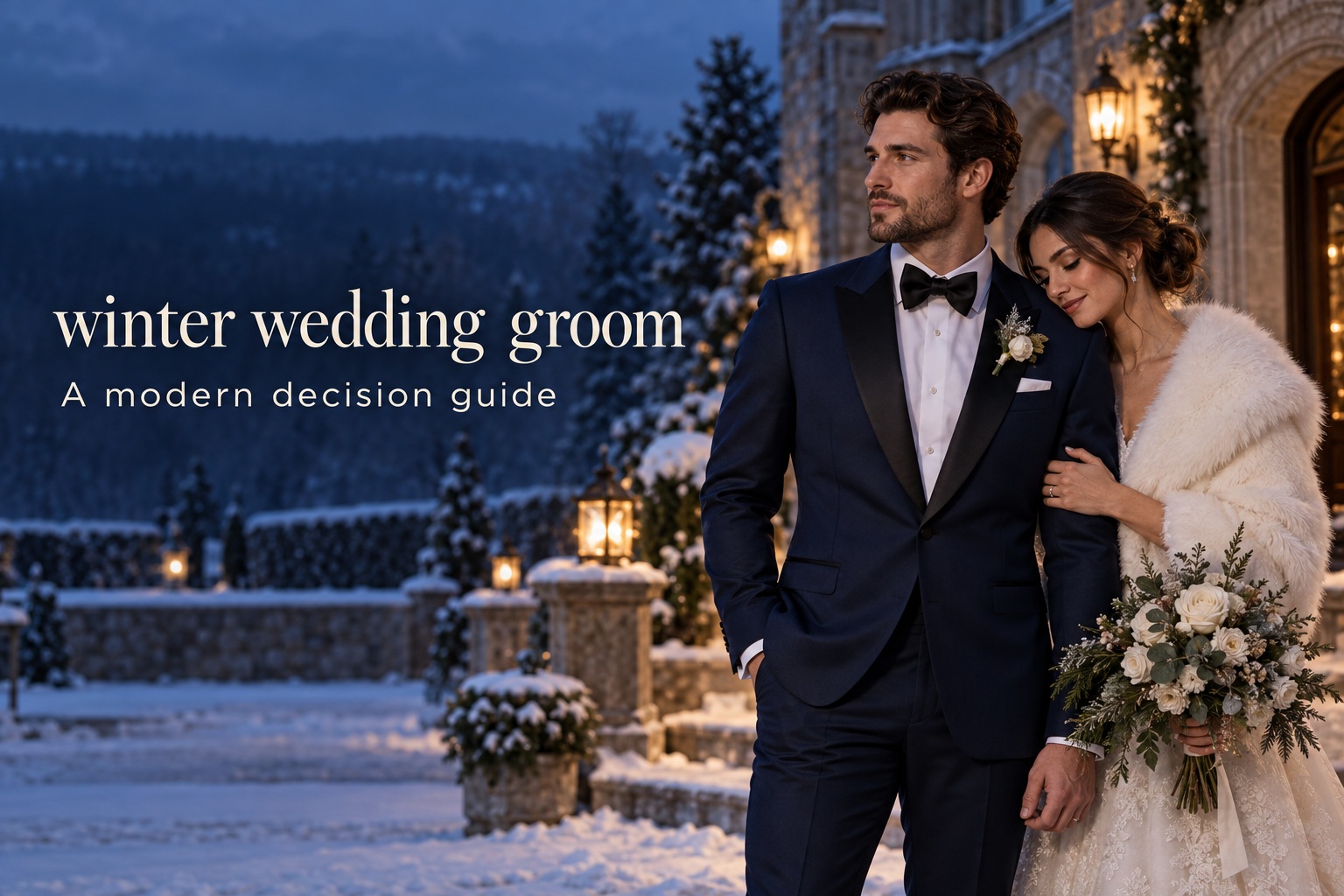
Winter Wedding Groom Style: A Modern Decision Guide
A winter wedding gives a groom more to work with than a darker suit and a heavier coat. The season changes the light, the pace of the day, the texture in the room, and the practical demands of getting from a car to the ceremony without looking as if you dressed for the weather instead of the wedding. A strong winter wedding groom look uses those conditions on purpose. It feels right beside candlelight, evergreen, stone, velvet, or a bright snowy backdrop, while still looking like a personal choice rather than a costume.
The useful question is not, “What is the most wintery suit?” It is, “What level of formality does this wedding need, and how can my outfit carry that decision through the whole day?” Start with the invitation, ceremony time, venue, and the amount of time you will actually spend outdoors. Then decide how you want to stand apart from your groomsmen. This guide turns those choices into a clear system, from a formal tuxedo to a relaxed but tailored three-piece suit.
What Is Changing in Winter Groom Style
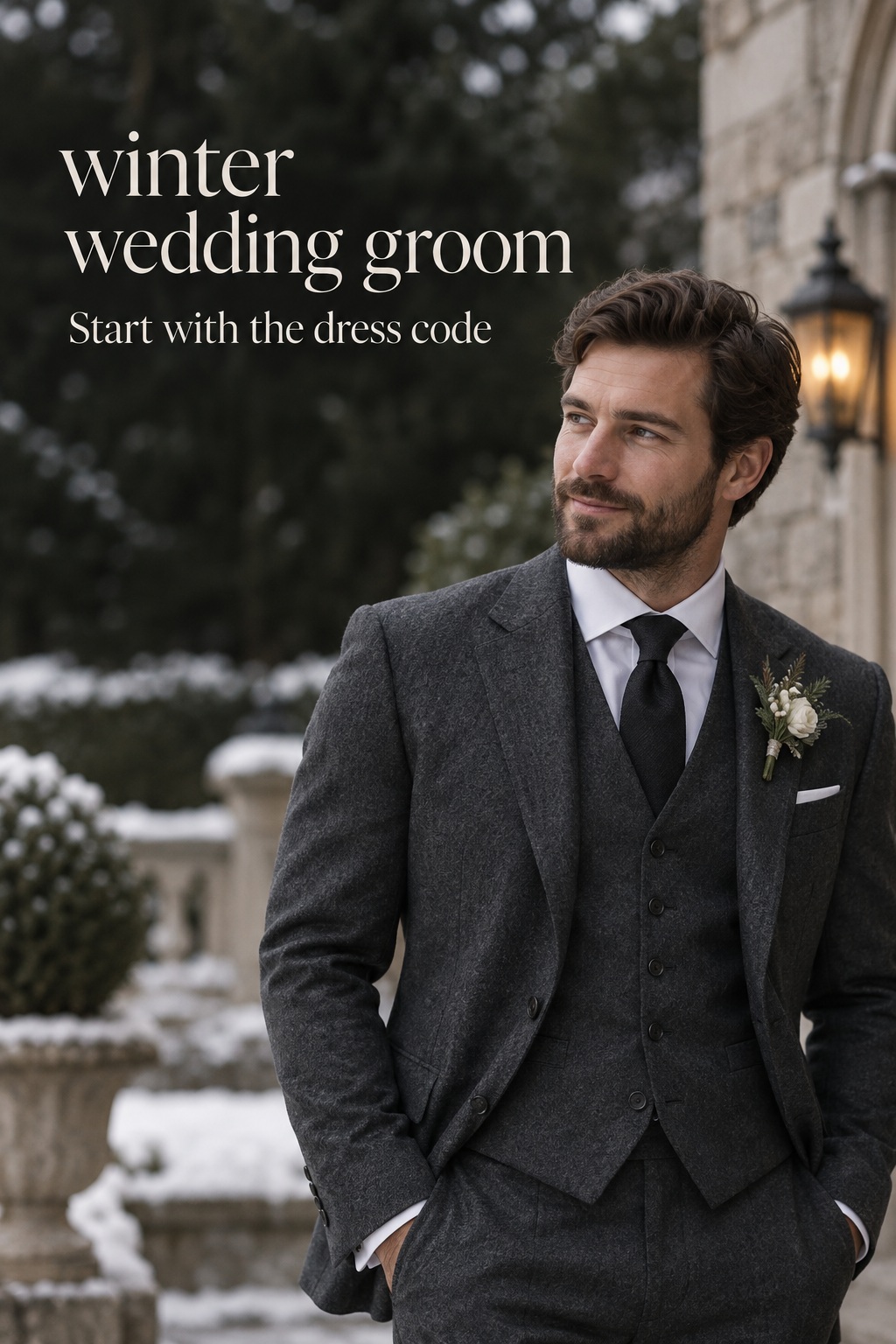
The strongest shift in winter groom style is away from adding a lot of obvious seasonal signals. A novelty holiday tie, matching themed socks, and several competing textures can make a wedding look dated very quickly. The more lasting approach is quieter: let fabric weight, depth of color, and a well-cut silhouette communicate the season. A charcoal flannel suit, midnight-blue tuxedo, or dark green dinner jacket already has enough presence when it fits exceptionally well.
Texture is doing more work now because it photographs beautifully in lower, warmer light. Wool flannel softens a dark suit without making it casual. A velvet dinner jacket adds depth when the celebration is evening-focused and genuinely formal. A subtle herringbone or restrained check can give a daytime country venue character without forcing a theme. The goal is not to layer texture on every piece. Choose one lead texture, then let the shirt, tie, and shoes stay comparatively clean.
Your wedding look is only the beginning.
Keep your guest list, vendors, timeline, and every important detail together with Zarellea — so your day feels as considered as your style.
There is also a more practical understanding of layering. The groom should not be cold during photos, but he should not look bulky when he removes an overcoat indoors. A waistcoat, a properly fitted shirt, and a tailored topcoat solve more problems than a visible thermal layer or a casual knit under formal tailoring. If your ceremony includes outdoor portraits, think of warmth as part of the schedule. Plan one polished outer layer for arrival and photographs, then plan where it goes once you enter the venue.
Finally, winter no longer requires an all-black palette. Black remains excellent for a true black-tie evening, but midnight navy, charcoal, deep brown, forest green, and restrained burgundy can be elegant when their formality matches the setting. Color should support the atmosphere, not compete with the flowers, attendants, or partner. A rich tone is strongest when the cut is classic and the accessories are edited.
Start With the Decisions That Actually Change the Outfit
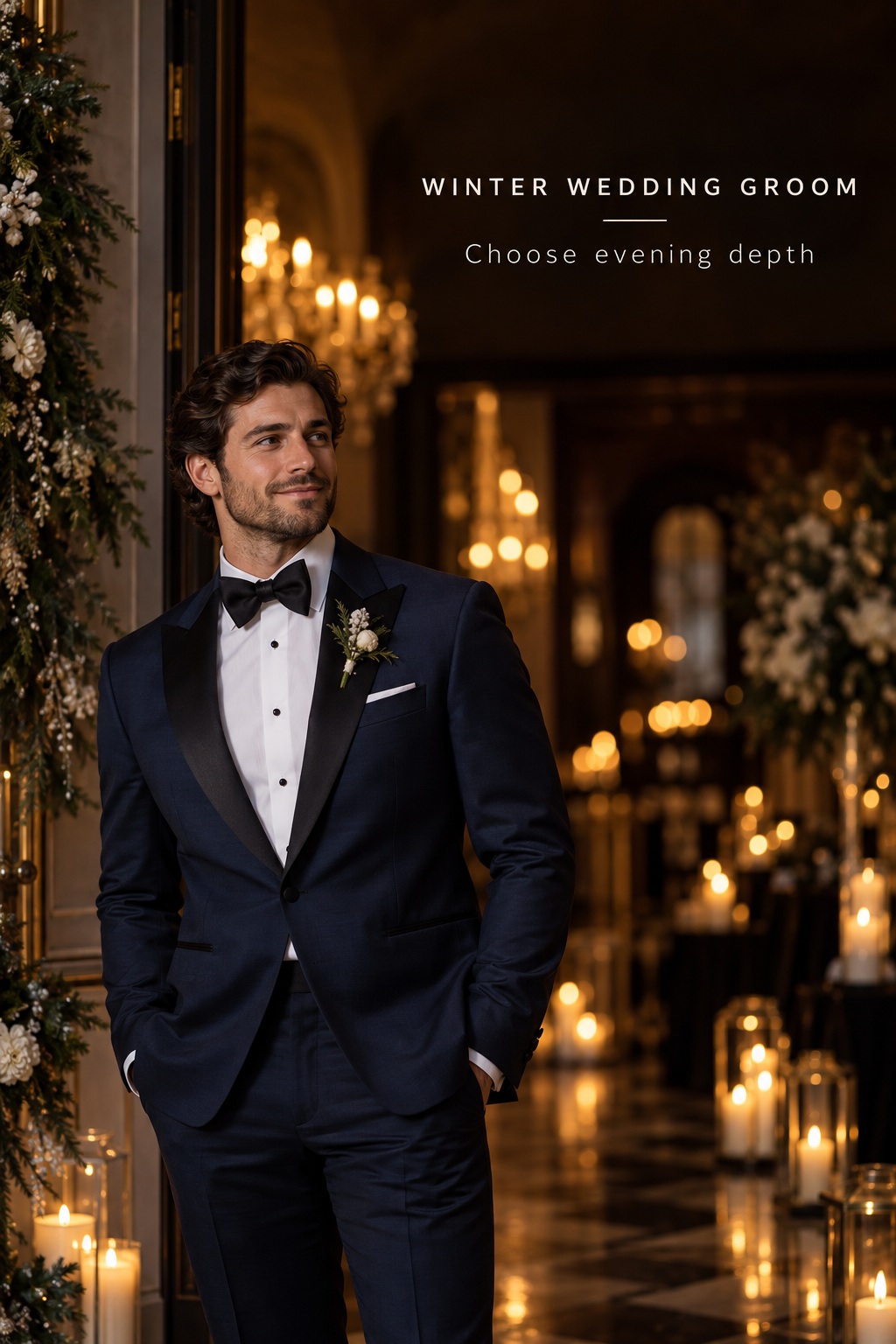
Before you compare lapels or bow ties, decide what the invitation asks of you. If the dress code is black tie, begin with a tuxedo rather than a dark suit. A tuxedo is not simply a black suit with a bow tie. Its formal details, such as satin-faced lapels and coordinating formal trousers, create a cleaner line and a different level of occasion. A black or midnight-blue tuxedo with a white formal shirt, black bow tie, and polished black shoes is the dependable starting point for an evening winter wedding. The rest of the styling should refine that base, not replace it.
For formal or black-tie-optional wording, a dark suit can be the better choice if it is tailored and intentionally styled. Charcoal and midnight navy work especially well because they feel substantial without looking severe. A white or softly textured shirt, dark silk tie, and polished leather shoes make the outfit read as formal. Add a waistcoat if you want a longer, more structured silhouette or expect to take your jacket off at the reception. A three-piece suit is useful only when it fits smoothly across the chest and waist. It should not pull when you sit or create a visible ridge under the jacket.
Venue is the next real decision. A candlelit ballroom, historic hotel, or formal evening restaurant supports a tuxedo, a sharp dark suit, and refined accessories. A barn, lodge, vineyard, or daytime estate can support more visible texture, including tweed or a subtle patterned wool. The setting does not override a stated dress code, but it tells you how much texture and personality will feel natural. A rustic venue is not permission for an underdressed look. It is a reason to choose a tailored, winter-weight suit instead of trying to imitate black tie.
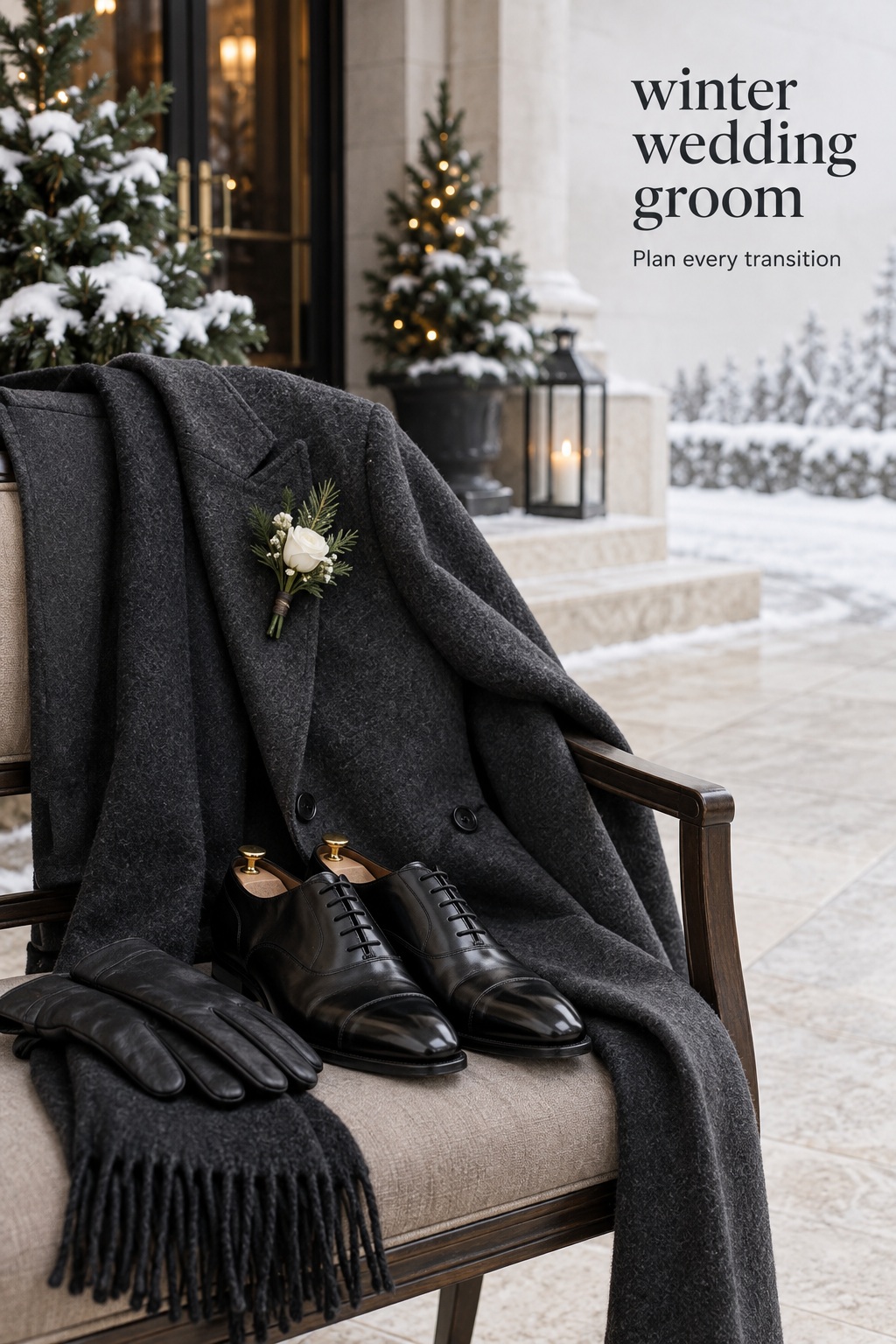
Time outdoors should affect the layers, not downgrade the outfit. A long wool overcoat in charcoal, navy, black, or camel is far more effective than a puffer jacket thrown over formalwear. Pick it early enough that you can try it over the actual jacket. Check the shoulder line, sleeve length, and whether it can close without compressing the lapels. A scarf and gloves can be useful for travel, but remove them before indoor photographs unless they are part of a deliberate outdoor portrait. If the forecast is wet or snowy, bring a clean pair of formal shoes to change into at the venue rather than hoping one pair can handle every surface.
Three Winter Groom Directions That Stay Relevant
The evening tuxedo with depth
This direction is for black tie or a celebration that genuinely leans formal after dark. Choose a black or midnight-blue tuxedo with a clean, well-proportioned lapel. Midnight blue is especially good if you like black tie but want a little softness in photographs. Keep the shirt formal and the bow tie black. The point of difference can come from the fabric, the lapel shape, a beautiful boutonniere, or the quality of the shoe rather than from several colorful accessories.
A velvet dinner jacket can work here, but it needs the right context. It looks most convincing at an evening reception with a sophisticated indoor setting, not as an all-purpose winter shortcut. Pair it with formal black trousers and restrained accessories. If you are uncertain whether velvet will feel authentic to the event, choose wool or wool-mohair instead. A classic tuxedo will never look underconsidered when the fit is excellent.
The charcoal three-piece with quiet texture
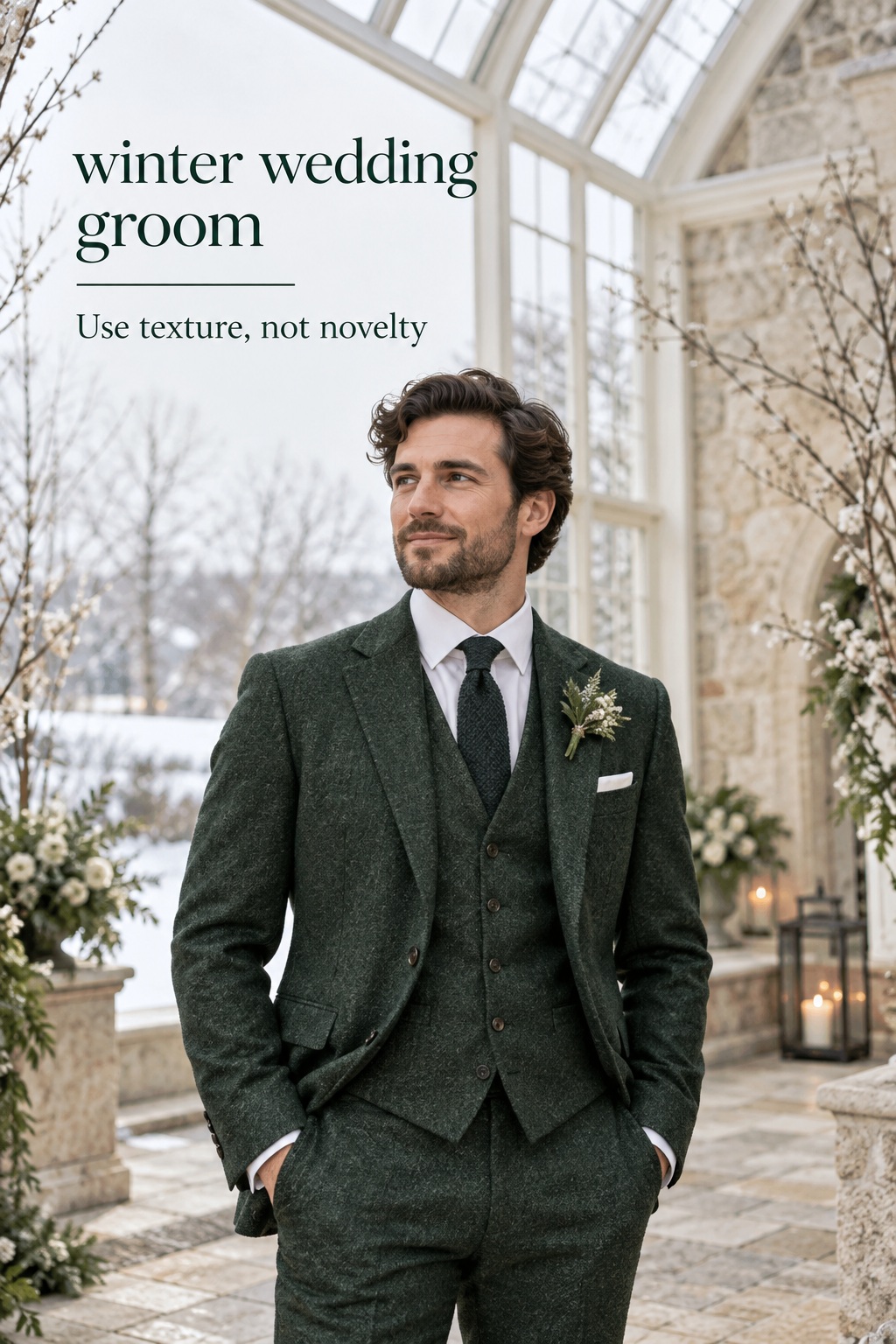
This is the most adaptable route for a formal daytime ceremony, a black-tie-optional wedding, or a venue where you want a refined but less ceremonial look. Start with charcoal flannel, brushed wool, or a very subtle herringbone. A white shirt and dark tie keep the look grounded. A small-scale pattern in the tie, or a pocket square with one quiet color from the wedding palette, is enough detail.
The waistcoat is useful because it makes jacket-off moments look finished. It also gives the groom a slightly more composed silhouette than the groomsmen if they wear two-piece suits. Make sure the waistcoat is cut close without strain, covers the trouser waistband, and does not dip so low that it looks like a separate vest. Choose black shoes for the most formal version, or dark brown leather with navy or charcoal when the setting is a little more relaxed.
The textured suit for a daytime setting
For a daytime lodge, estate, or relaxed winter wedding, a textured suit can look personal and seasonally intelligent. Think deep brown, moss, medium-to-dark gray, or navy in tweed, donegal wool, or a restrained check. The key is to preserve the shape of formal tailoring. The trousers should break cleanly, the jacket sleeves should show a small amount of shirt cuff, and the shirt should still have enough structure for a tie or bow tie.
Use this direction to echo the venue, not to turn the groom into part of the decor. If the room already has a lot of pattern through wood, tartan, florals, or layered tablescapes, choose a solid textured cloth. If the venue is visually simple, a small check can add dimension. Leather oxfords, polished derbies, or sleek dress boots are better partners than casual boots. The result should feel relaxed only in comparison with a tuxedo, not in comparison with ordinary weekend clothing.
Make the Groom Distinct Without Breaking the Party
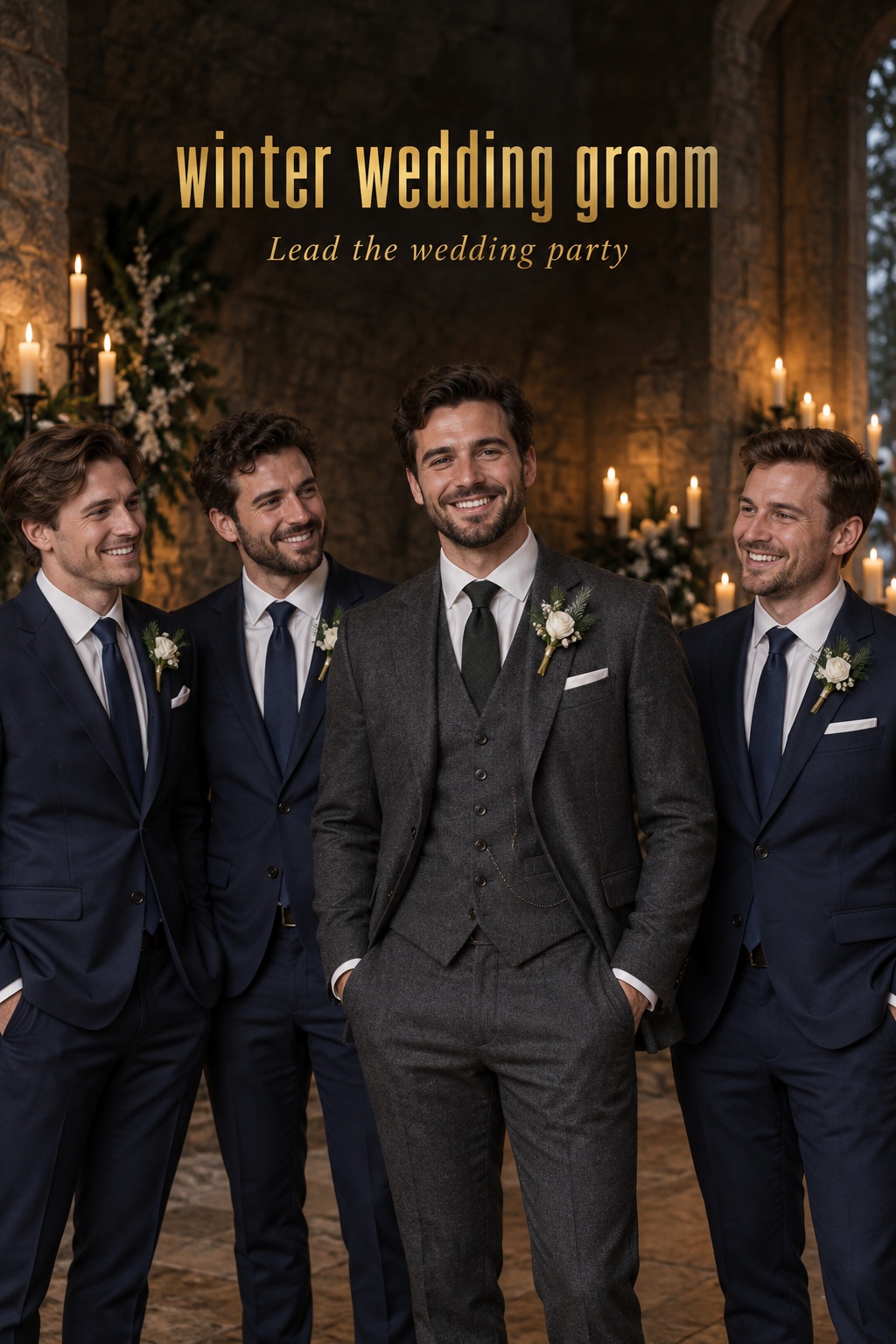
Groomsmen should look connected, but the groom does not need to disappear into a uniform row. The most successful distinction is usually a controlled change in one or two elements. Keep the group within the same level of formality, then give the groom a stronger lapel, a waistcoat, a richer fabric, or a slightly fuller boutonniere. This creates hierarchy in photographs without making the groomsmen look like they were assigned a lesser version of the same outfit.
For example, at a formal winter wedding the groom might wear a midnight-blue tuxedo while the groomsmen wear black tuxedos. The palettes are compatible, but the groom has depth under evening light. At a suit wedding, the groom might wear a charcoal three-piece while attendants wear matching charcoal two-piece suits. At a daytime venue, the groom could wear a solid deep-green suit and the party could wear charcoal or navy, with shared boutonniere elements tying the group together.
Do not try to distinguish the groom through every accessory at once. A contrast jacket, patterned tie, novelty socks, colored shoes, different suspenders, and a large lapel pin all compete for attention. Pick a lead detail and repeat the wedding palette lightly elsewhere. A groom who is clearly, calmly more elevated than the group will look better in close-ups and group photographs than a groom wearing a collection of signals.
Bring the photographer into the plan. If you are wearing an overcoat, ask when the outdoor portrait sequence happens and whether there is a protected place to set the coat down. If you are wearing a three-piece suit, make sure there are a few jacket-off images after the ceremony. If your boutonniere is a key distinguishing element, have it pinned before detail photographs begin. Small timing choices help the outfit appear intentional instead of improvised.
Run the Outfit Through a Cold-Weather Day
A winter wedding groom outfit should work in motion, not only in a fitting-room mirror. Do a full rehearsal a few weeks before the wedding: shirt, trousers, jacket, waistcoat if you have one, shoes, outerwear, and accessories. Sit down, reach for a glass, button the jacket, walk stairs, and get into a car. You are looking for more than comfort. You are checking whether the collar stays clean, whether the trouser hem catches on your shoes, and whether the coat changes the jacket shoulders.
Prepare for temperature changes with pieces that disappear when you no longer need them. A thin, breathable undershirt can make sense under a dress shirt if it cannot be seen at the collar or sleeves. A waistcoat is better than a bulky sweater. An overcoat, scarf, and gloves belong to the arrival and departure plan, not to the reception table. If the venue has an outdoor ceremony, confirm its duration and whether there is a warm holding area. A strong look cannot compensate for shivering through the vows.
Shoes deserve their own preparation. Polish them before the wedding, wear them enough to know they will not hurt, and bring a cloth for salt or water marks. If the forecast is poor, travel in weather-appropriate footwear and change into your formal shoes once you arrive. This is not less elegant. It protects the outfit that will appear in the ceremony and the photographs. The same thinking applies to a spare pair of dark socks, a compact lint roller, and a few safety pins for a boutonniere emergency.
The final test is whether the outfit still looks like you. A wedding is a formal occasion, but it is also a long day of conversation, movement, and photographs. If a particular jacket feels like a costume, if a new color overwhelms you, or if an accessory makes you self-conscious, simplify. Winter gives you plenty of elegance through fabric, tailoring, and light. You do not need every trend at once to look memorable.
Sources and Methodology
This guide was built from a review of ten current organic US search results on winter wedding menswear, groom attire, formalwear, winter fabric, and groomsmen coordination. The consistent practical advice was to match formality to the invitation, use substantial but tailored fabrics, and plan outerwear and footwear for real weather. For a useful reference on the distinction between tuxedo and suit details, see this tuxedo and suit guide. For winter-specific fabric, outerwear, and footwear considerations, see The Knot’s men’s winter wedding attire guide.
FAQ
What should a winter wedding groom wear for black tie?
A black or midnight-blue tuxedo, formal white shirt, black bow tie, formal trousers, and polished black shoes are the clearest starting point. Add a tailored dark overcoat for arrival and outdoor photos.
Is a three-piece suit good for a winter wedding groom?
Yes, especially for formal daytime or black-tie-optional celebrations. It adds warmth and gives a finished look when the jacket comes off, provided the waistcoat fits smoothly and stays proportionate to the suit.
Can a groom wear velvet at a winter wedding?
A velvet dinner jacket can look excellent for an evening indoor celebration with a formal mood. Keep the trousers and accessories traditional so the velvet remains the single statement.
How can the groom stand out from the groomsmen?
Use one or two controlled differences, such as a waistcoat, a richer fabric, a distinct lapel, or a fuller boutonniere. Keep the group in the same formality range and avoid changing every accessory.
What coat should a groom wear to a winter wedding?
A tailored wool or wool-blend overcoat in black, charcoal, navy, or camel works with a tuxedo or suit. Try it over the wedding jacket before the day to ensure it closes comfortably without crushing the silhouette.