Winter Wedding Coat: How to Choose the Right Layer
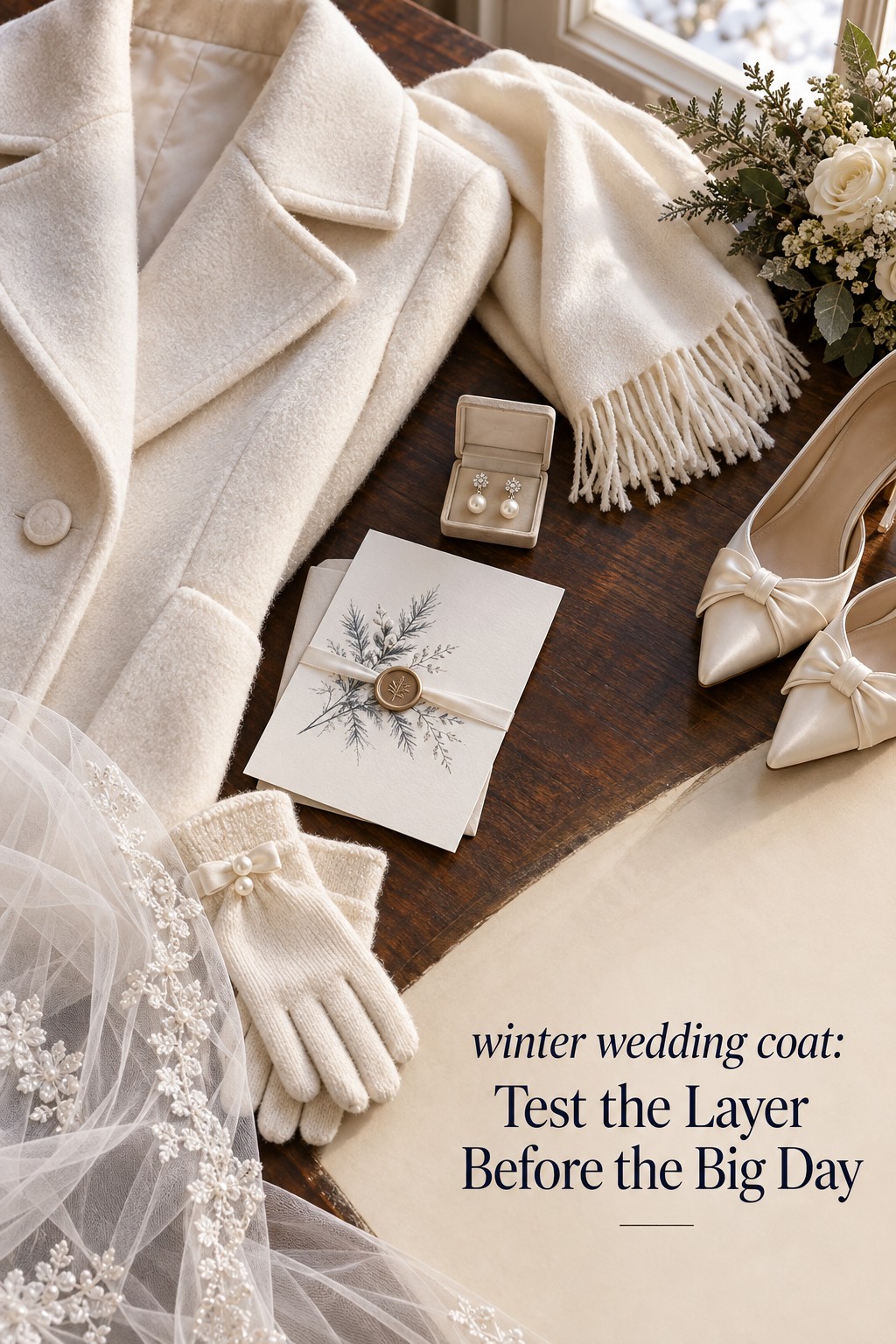
A winter wedding coat has one job that sounds simple and rarely is: keep you warm without making the outfit underneath look forgotten. The right layer should let you move, protect you between the car and the venue, look intentional in arrival photographs, and come off easily when the room warms up. A random everyday puffer may solve the temperature problem, but it can hide the dress, flatten a sleeve, or make a formal outfit feel unfinished. A beautiful cape may look perfect in a portrait yet leave you cold during a long outdoor ceremony.
The easiest way to choose is to stop treating every cold-weather layer as the same thing. You may need a true arrival coat, a lighter ceremony or photo layer, or a removable piece for a drafty reception. Brides, attendants, and guests can all use the same decision logic, but the best answer changes with the dress shape, the venue, the dress code, and how long the layer will stay on.
Why a winter wedding coat feels difficult to choose
The friction usually begins after the main outfit has already been chosen. The gown or dress looks right in the fitting room, but the forecast adds a cold walk, outdoor photographs, a windy entrance, or a ceremony in a stone building. Then the closet offers coats designed for commuting, shopping, or everyday errands. They may be warm enough, yet their collars, hoods, bulky sleeves, or sporty finishes compete with the occasion.
There is also a timing problem. A coat that works on the sidewalk may be too warm indoors. A sheer wrap that looks elegant during dinner may not be enough for a snowy portrait session. A bride may want a layer for the ceremony and photographs but remove it for the reception, while a guest may need a heavier coat only for the journey and coat check. Deciding when the layer is worn is as important as deciding what it looks like.
Your wedding look is only the beginning.
Keep your guest list, vendors, timeline, and every important detail together with Zarellea — so your day feels as considered as your style.
Separate the arrival coat from the visible styling layer
Start by naming the moment that worries you most. If you are walking several blocks, waiting outdoors, or traveling through wet snow, choose an arrival coat that closes securely and covers the outfit. It can be a long wool coat, a tailored overcoat, or another polished weather-ready piece. Its main job is protection. It will usually go to the coat check, so the indoor outfit still needs to work without it.
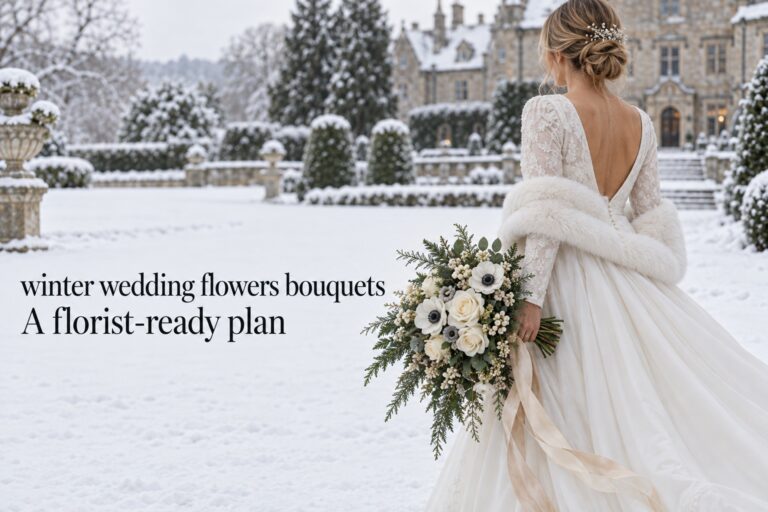
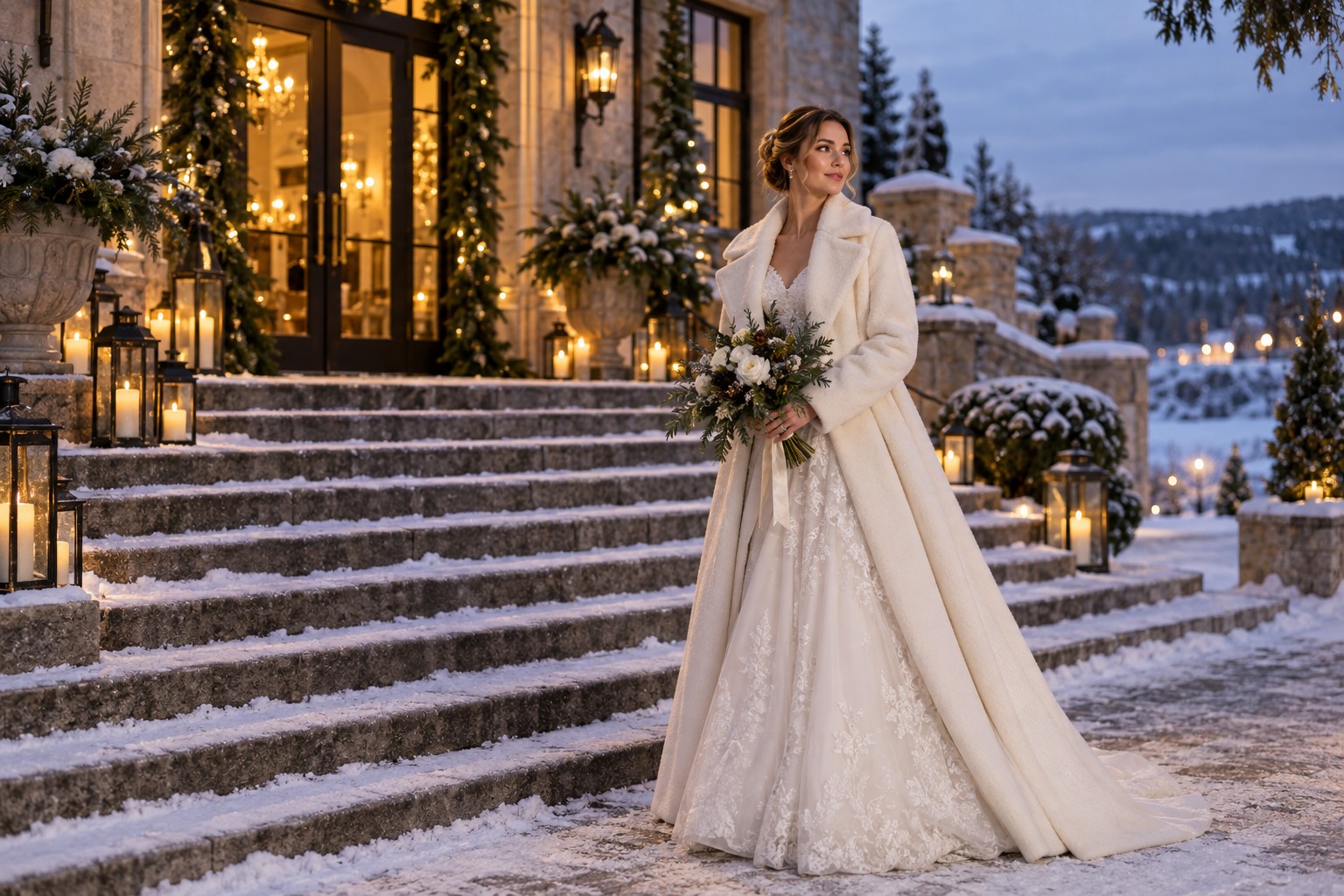
If you want the layer to appear in the ceremony, portraits, or most of the evening, treat it as part of the outfit. A cape, faux-fur jacket, formal wrap, velvet blazer, or bridal overcoat should echo the dress in proportion and finish. These pieces do not have to match exactly. They do need to look chosen, not borrowed in a rush. For additional bridal examples, Wisconsin Bride’s winter outerwear roundup shows how texture and silhouette can make the layer feel like part of the celebration.
Use the dress code as a filter, not as a reason to freeze
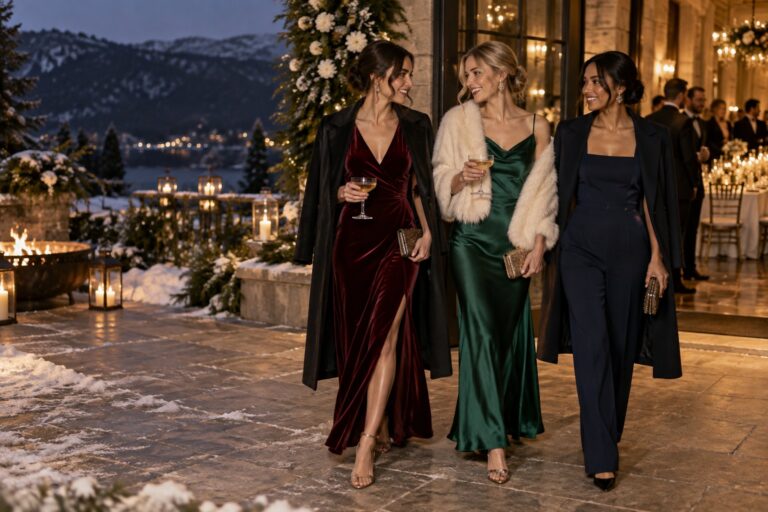
Formality matters, but it does not require you to ignore the weather. For black tie, an evening coat, formal cape, refined stole, or long tailored coat will usually feel more coherent than a casual ski jacket. For formal or semi-formal events, a wool coat, velvet blazer, structured cape, or polished wrap can bridge warmth and occasion dressing. For a relaxed barn or lodge wedding, a substantial knit layer or clean shearling-inspired piece may fit the setting, provided it still looks finished.
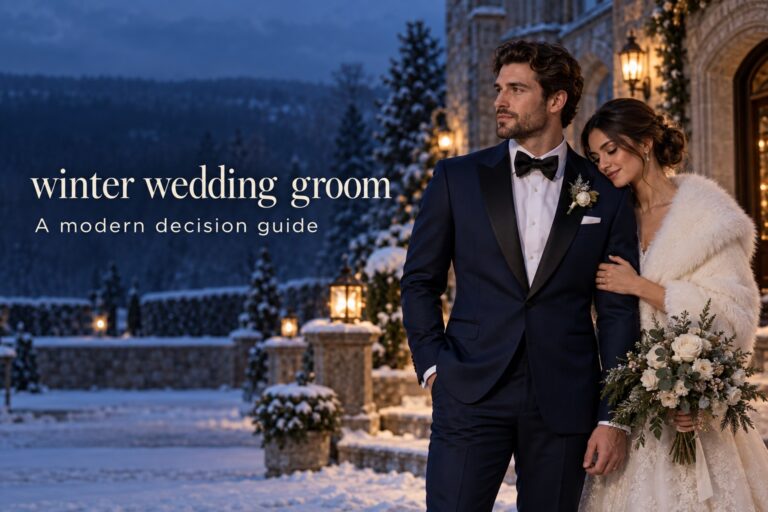
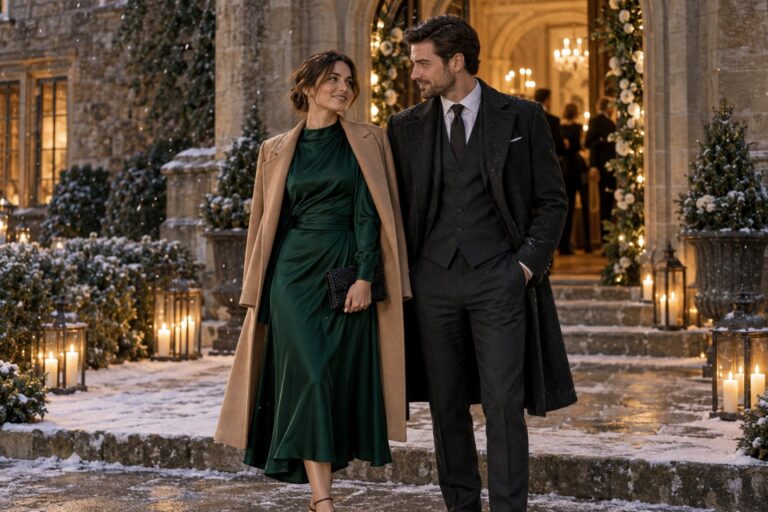
Guests have a little more freedom with the coat worn only to and from the venue. The layer can be practical when it is removed at coat check, but it should still be clean, secure, and appropriate for the arrival. If it will remain on during the ceremony, match its level of polish to the dress and the invitation. A coat is not a loophole that cancels the dress code. It is part of the first and last minutes of the event.
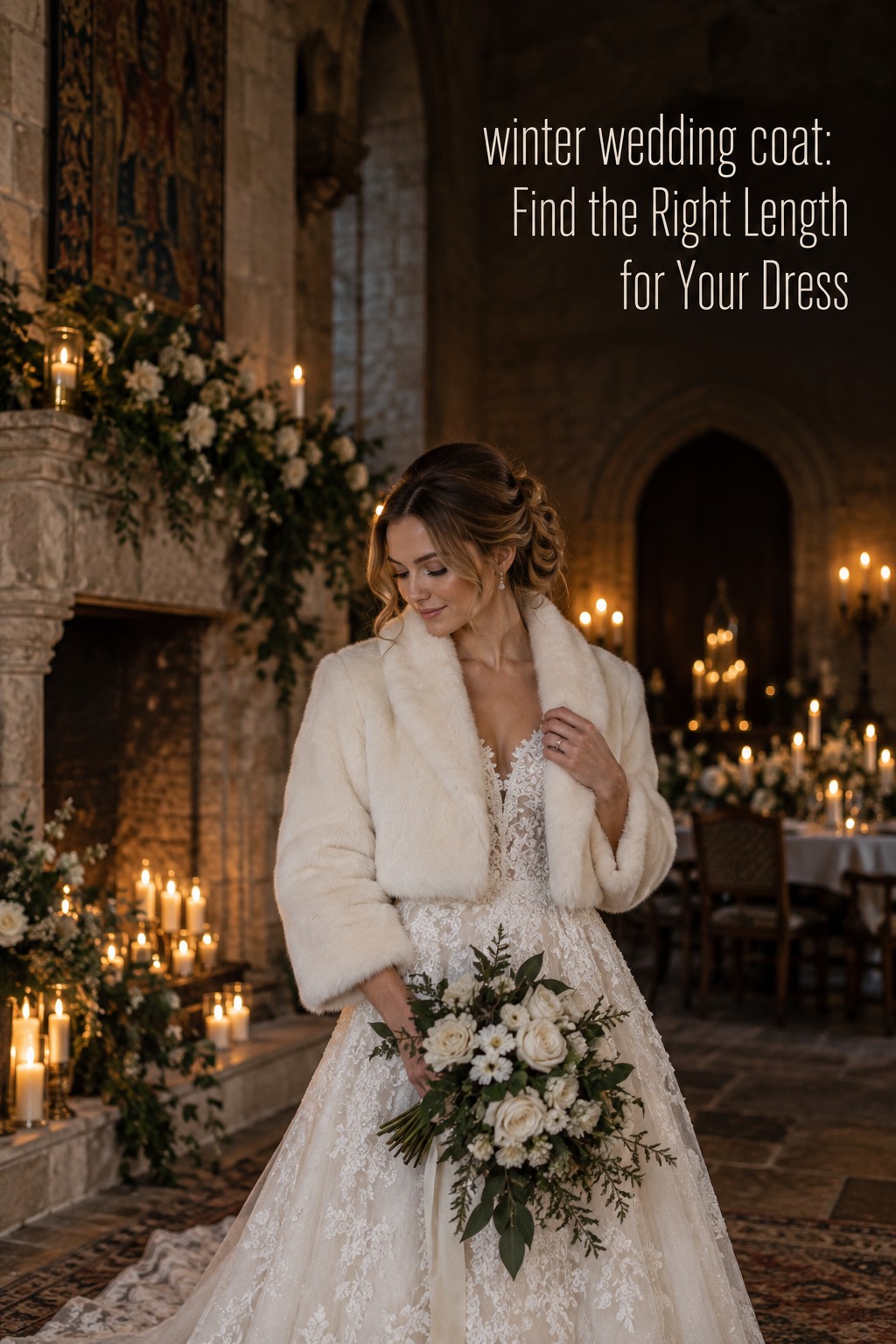
Choose the coat by dress shape, neckline, and hem
The most reliable choice comes from the lines of the garment underneath. Before shopping, take a photo of the full outfit or bring a fabric swatch. Look at where the waist sits, how much volume the skirt has, whether the sleeves need space, and whether the neckline is a feature you want to reveal. A coat that is beautiful on its own may be wrong over a particular dress because it adds volume in the same place or hides the detail you paid attention to during alterations.
Full skirts and ballgowns
A full skirt already creates drama and volume. A short bolero, narrow stole, cropped faux-fur jacket, or shoulder cape can keep the upper half warm without adding another large shape around the hem. If you prefer a long coat, check that it opens enough for the skirt and does not create a stiff column over layers of tulle. A long coat can work for a short bridal dress, but over a very full floor-length gown it may feel heavy unless the fabric is fluid and the shoulders fit precisely.
Column gowns, slip dresses, and sleek satin
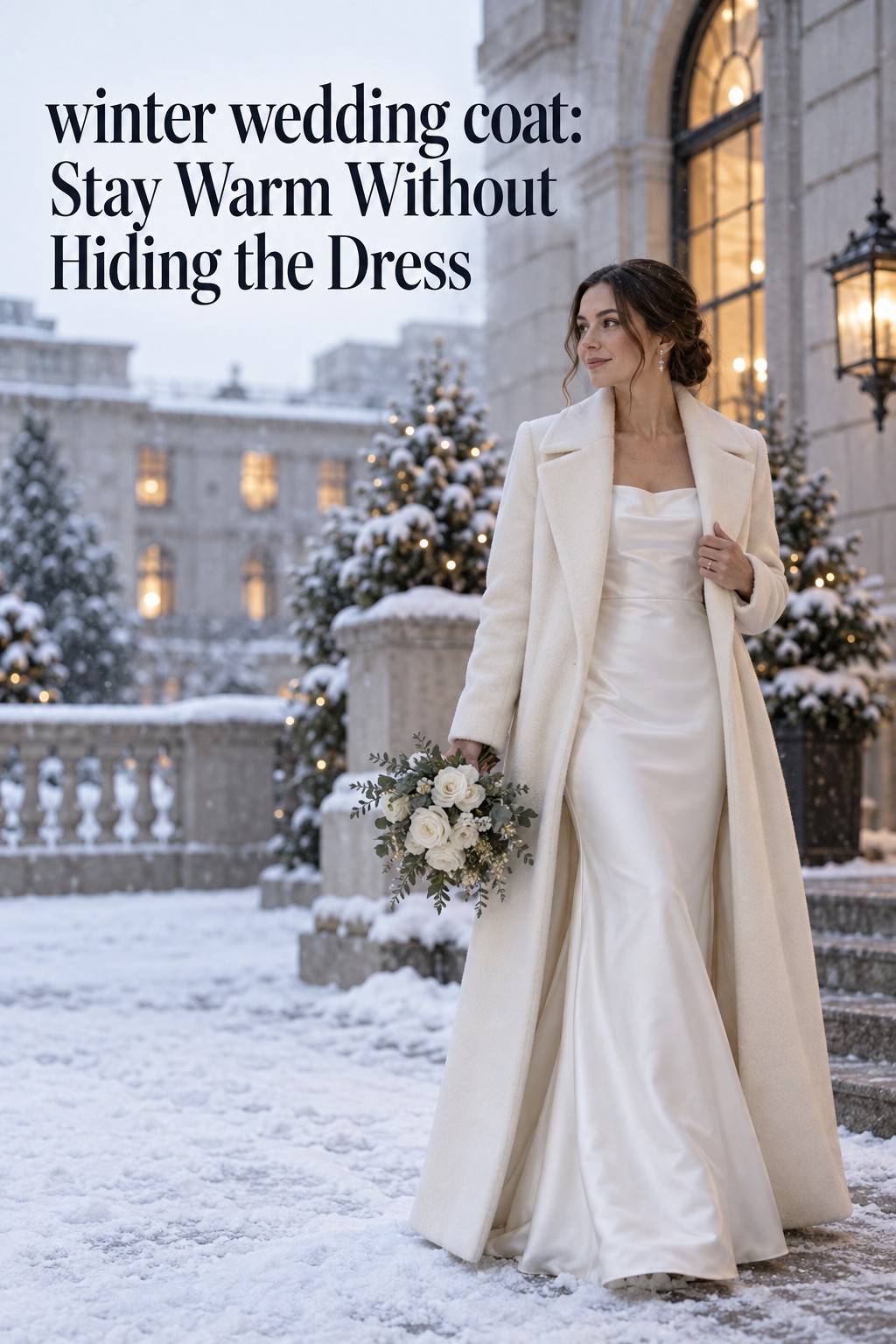
Slim dresses usually benefit from a layer that respects their vertical line. A long wool coat, long cape, formal wrap, or clean overcoat can extend the shape instead of interrupting it. If the dress is satin or silk, avoid rough closures and bulky linings that can snag or create static. A wrap should stay secure at the shoulders, and a coat should slide over the fabric without pulling across the hips.
For a minimalist dress, texture can supply the winter feeling. Faux fur, brushed wool, velvet, or a softly napped fabric can make a simple gown feel seasonal without adding jewelry. Keep the color controlled if the dress already has a strong sheen. A matte charcoal, ivory, camel, navy, or black layer can let satin catch the light while keeping the overall look calm.
Midi dresses, mini dresses, and shorter hems
Shorter hems give you room to use a longer coat as a deliberate contrast. A knee-length or midi dress can look polished under a long tailored coat, especially when the coat is slightly longer than the dress. A cropped jacket can work too, but make sure the waistlines do not fight each other. If the dress is fitted, a structured cropped layer can sharpen it. If the dress has a soft full skirt, a waist-length jacket may emphasize the shape.
Plan the legs as part of the winter wedding coat decision. Tights and closed-toe shoes can make a shorter dress more comfortable, while tall boots may be practical for a lodge or outdoor venue. The boot does not need to be visible to do its job. Walk in the complete outfit to check whether the hem catches, the coat lifts when you sit, or the footwear feels too casual once the coat comes off.
Long sleeves, bare shoulders, and special necklines
Sleeves need room. Try the coat with your actual dress, not a thin top that only approximates the fit. A cape or open kimono can be comfortable over long sleeves because it avoids stacking tight armholes. A tailored coat with narrow sleeves may look elegant but become restrictive when the dress has lace, puff sleeves, or a structured shoulder.
Bare shoulders usually benefit from a capelet, wrap, stole, or cropped jacket that covers the upper body without swallowing the neckline. If the neckline is the main feature, choose a layer that can be worn open or pushed back for photographs. High necklines pair well with clean coats and simple wraps, while a dramatic collar can compete with a high-neck gown. The test is visual balance: the eye should understand both the dress and the layer.
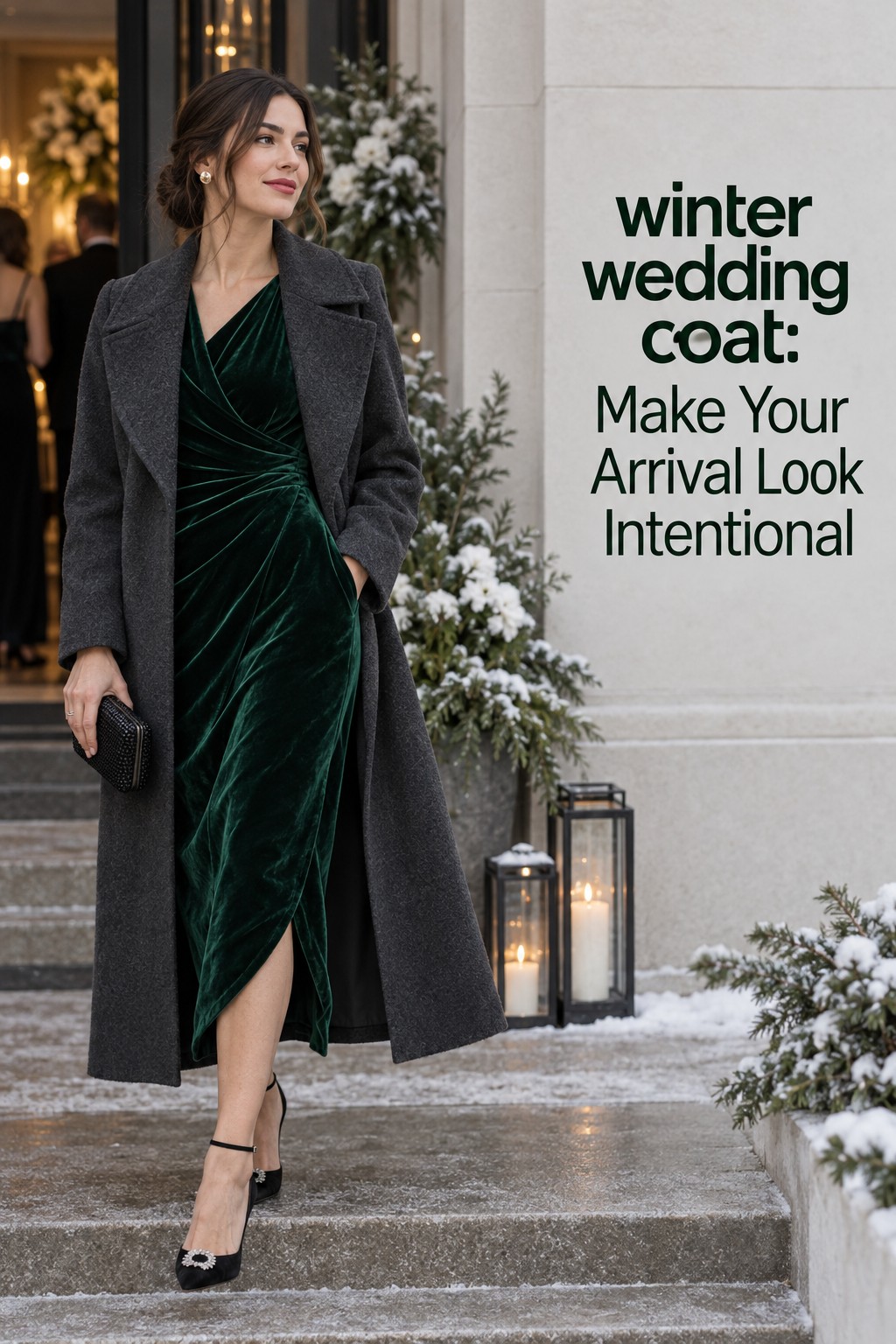
Match the layer to the venue and the part of the day
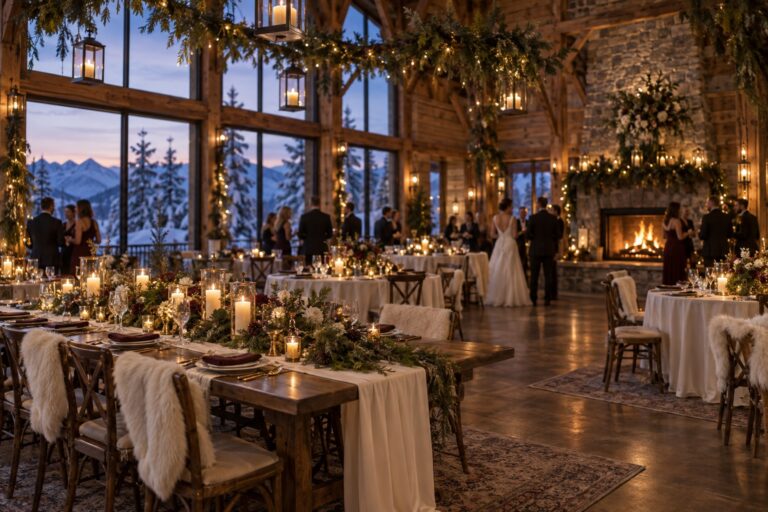
A winter wedding is not one temperature. You may move from a heated car to a snowy sidewalk, from a drafty church to a warm reception, or from a city street to an outdoor portrait location. Build the outfit around those transitions. The best winter wedding coat is often the one that solves the longest uncomfortable part of the day while a second, lighter layer handles the moments that will be photographed.
City venues and short outdoor transitions
For a city venue, a long coat inspired by suiting is hard to beat. It covers the dress, looks polished at the entrance, and can be removed quickly once you reach coat check. Black, charcoal, navy, camel, and deep brown are useful when you want the coat to work beyond the wedding. If the indoor look needs a softer touch, carry a compact wrap or wear a refined blazer underneath rather than trying to make one heavy coat do every job.
Outdoor ceremonies, mountain venues, and snowy portraits
For longer outdoor stretches, warmth and closure become non-negotiable. A cape may look dramatic, but wind can find every open edge. Choose a cape with enough weight, a clasp, or a way to keep it in place. A coat with sleeves may be better when you need to hold a bouquet, use a phone, or walk across uneven ground. A faux-fur collar or trim can add softness, but it should not block your view or catch on earrings.
Think about the photographs before choosing the color and texture. Ivory and winter white can support a bridal look, while a deep jewel tone may give a guest outfit definition against snow or pale architecture. Texture reads well in low winter light, but too many competing surfaces can make the outfit look busy. Take a quick portrait in the full layer, then one with the layer open, to see whether the coat helps the image or hides the main garment.
Indoor ceremonies and drafty historic buildings
A church, gallery, barn, or historic venue may be cold even when the weather outside is manageable. This is where a visible layer earns its place. A wrap, capelet, formal blazer, or soft faux-fur jacket can stay on during the ceremony and come off for dinner. Choose a closure that does not require both hands. If you are carrying a program, bouquet, camera, or drink, a layer that slips constantly will become a distraction.
When the coat goes to check
Do not buy an expensive statement coat only for the arrival unless you are happy with that use. A coat that disappears at coat check still needs to protect the outfit during travel, but the visible styling should happen through the dress, shoes, bag, jewelry, or a lighter layer. If you want the coat photographed, tell the photographer or planner. Otherwise, the most important styling test is the moment after it comes off.
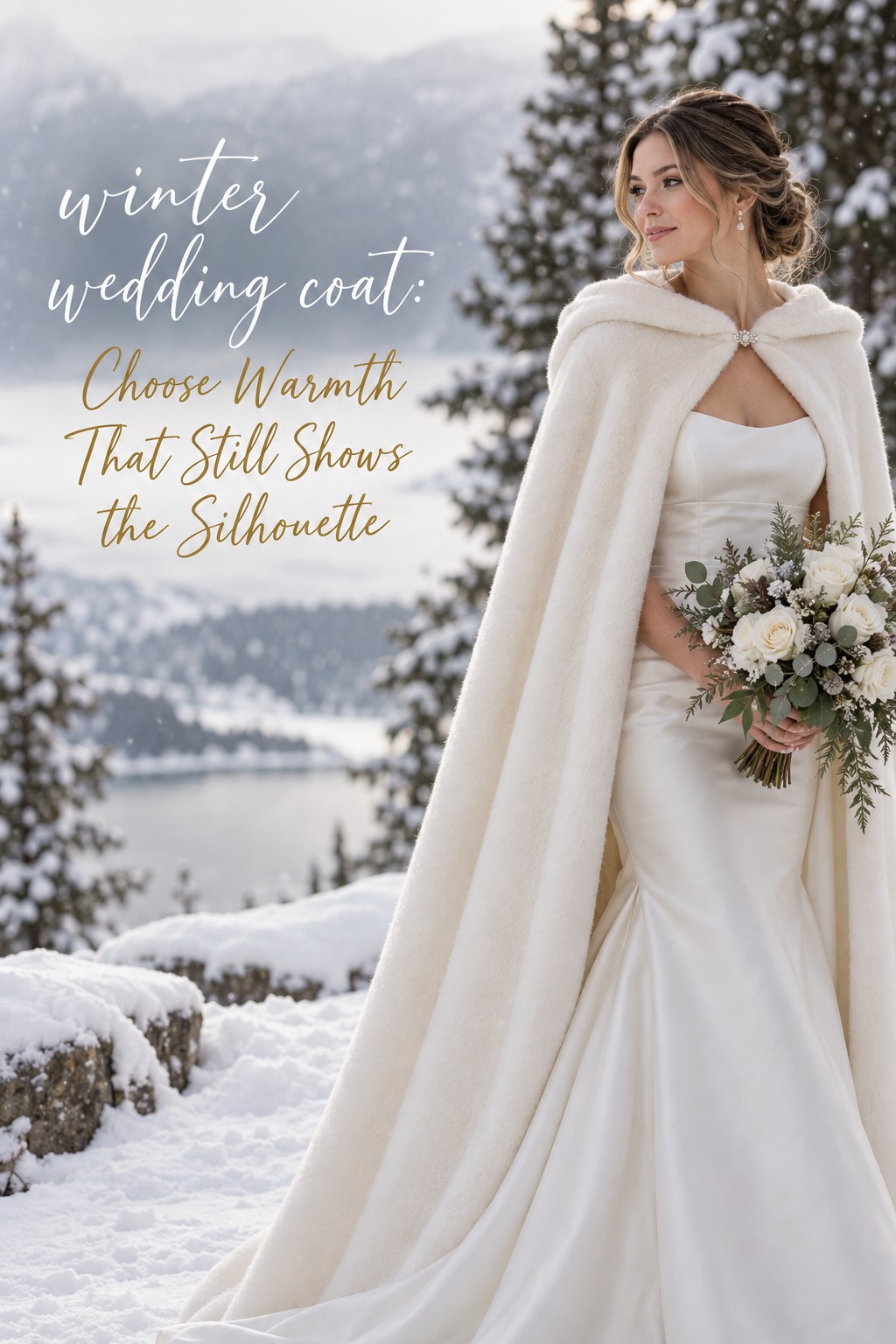
Run the final warmth, movement, and photo test
Try the complete outfit at least once before the event. Put on the dress, underlayers, tights if planned, shoes, jewelry, hair accessories, coat, and bag. Carry the bouquet or a similar object. Stand, sit, walk, lift your arms, turn, and climb a few steps. A winter wedding coat should make the day easier, not introduce a new set of problems.
Check the shoulders, sleeves, and closures
Make sure you can move your arms without pulling the dress at the shoulder or pressing a sleeve seam into your skin. Test buttons, hooks, belts, and clasps with the nails or gloves you plan to wear. A tiny hook can become impossible when your hands are cold. If the layer is open, see whether it stays in place while you walk. If it closes, check that it does not crush the neckline or bunch the waist.
Check the hem, ground, and weather backup
Walk on the actual type of surface you expect: pavement, gravel, grass, stairs, or a polished indoor floor. Check whether the coat protects the dress from wet splashes and whether the hem becomes a tripping risk. Pack a small umbrella or a practical travel layer when the forecast is uncertain, but do not let the backup piece replace the polished layer you want in portraits.
Check the transition from coat to reception look
Practice removing the layer without catching the veil, earrings, hair, or dress embellishments. If you are a bride, decide who will help you and where the coat will go. If you are a guest, make sure the bag, wrap, and coat can be managed without occupying both hands. Try the look under daylight and warm indoor light. Some fabrics look perfect in a mirror but become shiny, flat, or too pale in photographs.
Keep the styling focused
Choose one main winter texture. If the coat is plush, keep the scarf and bag clean. If the dress is velvet, a smooth wool coat can create better contrast than another fuzzy layer. If the dress is embellished, a simple cape or coat will protect the visual hierarchy. You do not need every winter cue at once. Warmth, proportion, and a clear silhouette will do more for the outfit than extra decoration.
Sources and methodology
This guide was shaped by reviewing ten US-search results covering bridal coats, wraps, winter guest layers, dress cover-ups, and wedding jackets. The consistent evidence favored matching outerwear to the dress silhouette, treating the layer as intentional when it remains visible, and testing the complete outfit before the wedding. Product prices, inventory, climate averages, and trend forecasts were excluded because they change quickly and are not needed to answer the coat-selection question.
For a broader reference on formal outer layers and coat-check practicality, see The Knot’s guide to wearing a layer over a wedding guest dress. The advice here narrows that research into a winter wedding coat decision process for brides, attendants, and guests.
FAQ
What is the best winter wedding coat for a bride?
The best coat depends on the gown and the time spent outside. A long tailored coat works for travel and formal arrivals, a cropped faux-fur jacket suits a sleek or detailed gown, and a cape or wrap works when you want the neckline and waist to remain visible. Try the layer with the actual dress before deciding.
Can I wear a regular coat over a wedding dress?
Yes, especially for the journey to and from the venue, but choose the cleanest and most protective option you own. If it will appear in portraits or remain on during the ceremony, select a coat with a formal finish and enough room for the gown. The indoor look should still feel complete after the coat comes off.
Is a cape warmer than a winter wedding coat?
Not automatically. A cape can cover the shoulders and back effectively, but an open shape may let in wind. Choose a weighted cape with a clasp for outdoor moments, or use a sleeved coat when you need secure coverage and freedom to handle a bouquet, bag, or phone.
What coat should I wear over a winter wedding guest dress?
For the journey, a long wool or suiting-inspired coat is a dependable choice. If the layer stays on, consider a faux-fur jacket, formal wrap, cape, or tailored blazer that matches the dress code. Keep the color and texture intentional, and make sure the coat does not crush the neckline or catch on the hem.
Should a winter wedding coat match the dress?
It does not need to match exactly. Similar undertones, a controlled contrast, or one repeated texture can make the look feel connected. Ivory with ivory can feel bridal, while charcoal over satin creates a quiet contrast. Bring a fabric swatch or photograph the full outfit before buying so the colors can be judged together.
How do I keep a winter wedding coat from ruining photos?
Choose a layer with a clean shoulder line, keep the closure secure, and test it from the front and side. Ask for a few portraits with the coat closed, open, and removed. Avoid bulky collars over special necklines, and make sure the coat does not hide the bouquet, waist detail, or key embellishment.
What should I test before wearing a winter wedding coat?
Test the complete outfit while standing, sitting, walking, climbing steps, carrying a bouquet, and removing the coat. Check movement at the shoulders, the fit over sleeves, the hem on the expected ground, the closure with your accessories, and the way the fabric photographs in daylight and warm indoor light.